

Bloomberg

Crypto Bailouts Risk Becoming Cost of Doing Business for VCs

(Bloomberg) — Hacks and scams have long been part of the fabric of doing business in crypto. Is it time for the sector’s venture capitalist backers to start assuming they should expect to cover the losses?

High-profile attacks on the crypto “bridges” that support key activities, like transferring tokens from one blockchain to another or playing the popular game Axie Infinity, have siphoned off more than $1 billion to date. When customers need repaying, recent incidents have shown those platforms’ operators are turning to their wealthy investors for aid — a trend that perhaps signals a new chapter in tech dealmaking.

Sky Mavis, the developer of Axie Infinity, closed a $150 million funding round from the likes of Binance, Andreessen Horowitz and Paradigm on Wednesday — funds it said would go directly to reimbursing customers after the platform lost around $600 million in a hack affecting its Ronin bridge. Two months earlier, Jump Trading Group fully reimbursed more than $300 million in Ether that was stolen from Wormhole, a bridge platform in which it had invested previously. 

VCs use term sheets to lay out the various parts of a deal they will sign with portfolio companies, from how many board seats they’re after, to how long it will be before they can cash out their stakes. But when it comes to crypto, with attacks so prevalent, it may be necessary for Silicon Valley to also think about setting aside contingency funding to bail out victims of hacks as a core part of the agreement.

“These are realities,” said Jump President Dave Olsen on Bloomberg’s “What Goes Up” podcast last month, following the February Wormhole attack. “No matter where you are, that’s kind of the progression that complex software has to go through. Hopefully you don’t have to do too many iterations of that.”

Read More: Giant Ronin Bridge Hack Could Change How VCs Invest in Crypto 

“You do contingency plan for that sort of thing. You hope it doesn’t happen, and if it does, you hope it’s not at that magnitude,” he added. “It’s pragmatic and realistic that you gotta think that way.”

Investors put roughly $4.7 billion into crypto startups globally in the first quarter of this year alone, according to data from PitchBook. Three of the sector’s top 10 deals from the last six years were completed in that period, plugging billions of dollars into industry powerhouses like Fireblocks, ConsenSys and Yuga Labs, the company behind Bored Ape Yacht Club. The money sloshing around in crypto is significant — so it would make sense that a part of that cash could soon be automatically allocated to alleviating its flaws.

Already, VCs have begun thinking about other ways to be more responsible for the investments they make. Animoca Brands co-founder Yat Siu, another Sky Mavis backer, said the attack on Axie’s Ronin bridge platform suggested VC firms should audit the code and security protocols of projects before making investments. While crypto’s deep-pocketed backers typically aren’t the ones whose actual wallets are drained in a heist, they have just as much of a stake in ensuring that users are confident in the sector even as it endures teething problems.

The up-front cost of hacks is already mounting, even without such sheet arrangements. Olsen noted that Jump has issued several $10 million bounties to so-called white hat hackers to find flaws in platforms like Wormhole, before they can be exploited by bad actors. It should be noted, however, that not all bounties are equal: A white-hat reward paid by Coinbase after a bug was discovered in February prompted crypto users to complain complain that solving that weakness was likely of greater value to the exchange’s business, than the $250,000 it paid to the hacker.

If venture capitalists are willing to plough billions of dollars into the growing crypto industry in order to reap its benefits, they may soon find refunding customers when things go wrong is a necessary tradeoff.

(Adds details on “white-hat” bounty payments in penultimate paragraph.)

More stories like this are available on bloomberg.com

©2022 Bloomberg L.P.

Discovery Chief Zaslav Chooses His Post-Merger Leadership Team

(Bloomberg) — Discovery Inc. has chosen the team that will run its business once it completes the $43 billion merger with WarnerMedia, a deal that will transform Chief Executive Officer David Zaslav into one of the biggest players in Hollywood. 

Jean-Briac Perrette, a long-time lieutenant of Zaslav, will run the company’s streaming businesses while Kathleen Finch will oversee its dozens of cable networks, according to people familiar with the plans. HBO programming chief Casey Bloys will report directly to Zaslav, as will Warner Bros. studio chiefs Channing Dungey and Toby Emmerich. The company may announce the new structure Thursday, said the people, who declined to be identified because the deal hasn’t yet closed. 

A spokesman for Discovery had no immediate comment. The transaction is set to be completed this week.

Zaslav pursued the purchase to give the combined company the scale to compete with Netflix Inc., Walt Disney Co., Apple Inc. and Amazon.com Inc. in streaming. WarnerMedia’s HBO Max was one of the faster-growing services in the world last year. With more than 70 million subscribers, drawn largely by high-quality HBO programs and Warner Bros. movies, it’s still small relative to some peers.

Zaslav is leaning on his own executives to run the business and operations of the combined company, while relying on WarnerMedia to supply the creative ideas. Zaslav already said goodbye to WarnerMedia chief Jason Kilar, as well as nine of his 11 direct reports, while eliminating layers of executives between himself and the creative chiefs so he can take a more hands-on role in their work. 

He must still outline a streaming strategy. HBO Max is one of three streaming services WarnerMedia and Discovery operate between them. The combined company will have one of the largest film and television libraries in the world. 

Zaslav has taken on tens of billions of dollars in debt to complete the deal, and pledged to cut $3 billion. He may eliminate staff duplication across advertising sales and TV distribution, among other areas. Though streaming is the future, the company still makes most of its money from linear cable networks and film distribution. 

The executive spent the last decade-plus running cable networks that air reality TV programs, and has spent the last year meeting with top agents and producers to develop his plans for one of the most famous companies in Hollywood. 

More stories like this are available on bloomberg.com

©2022 Bloomberg L.P.
UFC to Start Paying Bonuses to Fighters in Cryptocurrency

(Bloomberg) — The Ultimate Fighting Championship will begin paying a new bonus to its competitors in cryptocurrency, as crypto platforms get more involved in the world’s major sports leagues.

Bitcoin payouts will be awarded to the top three fighters on every UFC pay-per-view event as decided by fan votes, with a total of $60,000 split between the winners. The UFC plans to retain its traditional cash bonuses as well for the night’s best fight and individual performance. 

The UFC has been dipping into crypto since signing a 10-year, $175 million sponsorship agreement with Crypto.com last year to put the brand on its fight kits. In November, it added a multiyear licensing deal for digital collectibles.  

Crypto platforms have poured hundreds of millions in sponsorship dollars into sports leagues over the past year as they pump money into marketing efforts. Crypto.com also has sponsor arrangements with the FIFA World Cup, Formula 1 and several sports franchises.

Transactions will be made through Crypto.com and the fighters will be paid in Bitcoin at a fixed dollar amount. These crypto prizes will debut at the mixed-martial arts promotion’s upcoming event in Jacksonville, Florida, on Saturday.

More stories like this are available on bloomberg.com

©2022 Bloomberg L.P.

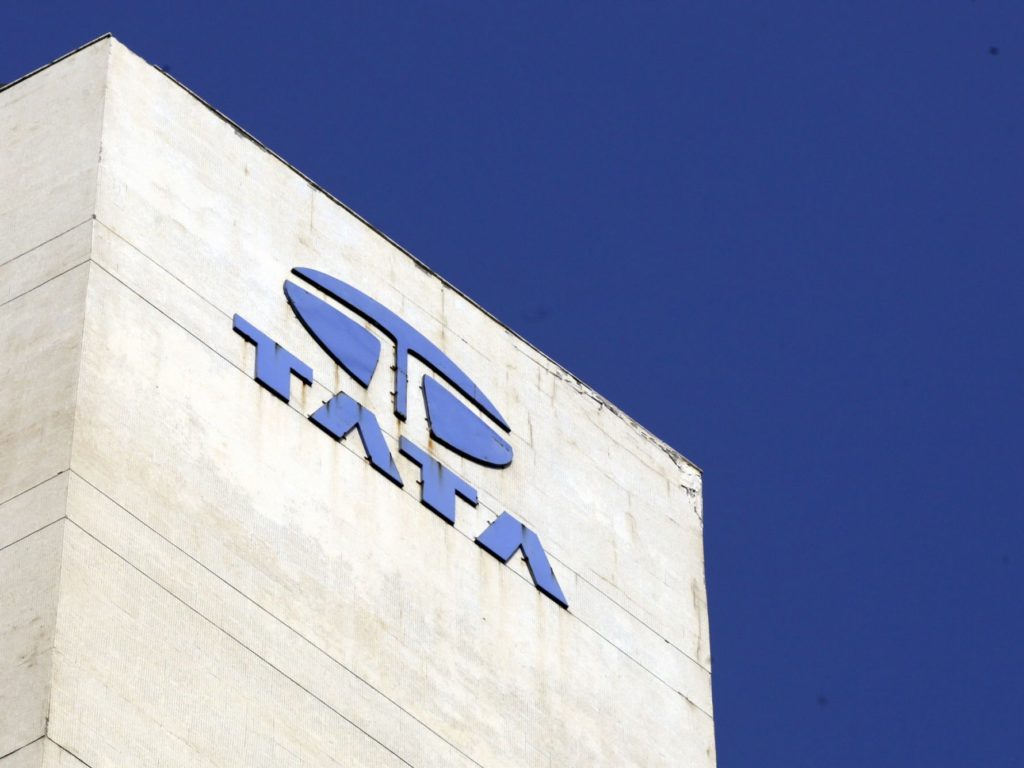
Tata Packs Power Brands in Mega App to Rival Amazon, Ambani

(Bloomberg) — The $103 billion Tata Group rolled out its long-awaited all-in-one e-commerce app allowing users to buy everything from apparel to airline tickets as the sprawling Indian conglomerate vies for a piece of the fiercely competitive sector currently dominated by Amazon.com Inc., Walmart Inc. and Reliance Industries Ltd. 

Mumbai-based Tata Digital Pvt.’s digital services platform, Tata Neu, which went live to consumers on Thursday, will have in-house brands including Croma, Westside, AirAsia India, the Taj chain of luxury hotels and BigBasket, according to the group’s website. Described as a “super-app” and in the pipeline since at least mid-2020, the website called it “a unified platform that connects several brands across the Tata universe like never before.” 

The 154-year-old Tata group, which makes luxury cars, trucks, air conditioners, smart watches, tea besides operating luxury hotels, airlines, utilities, departmental stores and the local Starbucks Corp. franchise, wants to leverage the diversity of its products and services to lure buyers in a country of almost 1.4 billion people, who are increasingly shopping online. India’s e-retail segment is expected to be worth as much as $140 billion by March 2026, Bain & Co. estimates, and is the only large consumer market still open to foreign companies, making it a prize fight for global and local retail firms.

“Tata Neu is an exciting platform that gathers all our brands into one powerful app,” Natarajan Chandrasekaran, chairman of the main holding company Tata Sons Pvt., said in a statement on LinkedIn. Airlines Vistara and the newly acquired Air India, watch maker Titan, jewelry brand Tanishq and automaker Tata Motors Ltd. are some of the other Tata Group firms that are expected to join Neu soon, he said.

The all-in-one app also has a loyalty program for retaining customers. Each brand on Tata Neu is “connected by a common reward called NeuCoins, which can be earned across all brands online and at physical locations and can be used similarly as well,” according to the website.

The e-commerce project was closely overseen by Chandrasekaran who has been championing the digitization drive in the group. Pratik Pal, chief executive officer at Tata Digital, which developed Tata Neu, has helped with digital transformation at some of the world’s largest retail chains including Walmart, Tesco Plc, Target Corp., Best Buy Co. and Marks & Spencer Group Plc.

Tata Neu is expected to give more firepower to the Indian conglomerate against entrenched rivals such as Amazon, billionaire Mukesh Ambani’s Reliance and Walmart-owned Flipkart. Tata Group, founded by Jamsetji Tata in 1868, that has 29 listed companies across ten sectors across steel, automobiles, technology, consumer retail, infrastructure, financial services, trading, defense, travel and tourism.

(Updates with Tata Chairman’s comments in the fourth paragraph.)

More stories like this are available on bloomberg.com

©2022 Bloomberg L.P.

Facebook Finds More Ukraine-Themed Hacking, Disinformation

(Bloomberg) — Meta Platforms Inc.’s Facebook blocked efforts by Russian and Belarus-aligned groups to conduct cyber-espionage and launch a disinformation campaign focused on the war in Ukraine, the company said Thursday. 

Suspected Belarus-backed hackers attempted to compromise Facebook accounts belonging to dozens of Ukrainian military personnel and tried posting videos urging Ukraine’s army to surrender to Russian forces, Facebook said. The campaign, carried out by a documented disinformation group known as Ghostwriter, was largely blocked, according to the company. 

Ghostwriter “typically targets people through email compromise and then uses that to gain access to their social media accounts across the internet,” Facebook said. 

In addition to the suspected Belarus-backed hacking, the Facebook report also detailed the detection and blocking of efforts by Russia’s Internet Research Agency to create fake accounts on Facebook. Researchers determined that Russia’s IRA posed as a Western human rights group and published articles blaming NATO for Russian violence.

The disclosure came as part of a security threat report from Facebook, a regular initiative that started after U.S. intelligence concluded that Russian organizations, including the IRA, exploited social media in the 2016 presidential election. The latest report highlights the range of threats facing social media users, including the spread propaganda and the use of decoy profiles by hackers to ingratiate themselves with targets and get them to unwittingly infect their machines. 

Facebook also identified separate campaigns, which the company blocked, where hackers associated with the Iranian government attempted to create fake profiles. Attackers posed as recruiters, human rights activists or academics, to trick specific targets including dissidents, politicians and journalists into engaging and downloading malicious software to their computers.

The company recommended a series of steps for users to further protect themselves, including the use of virtual private network software and two-factor authentication on their accounts.  

More stories like this are available on bloomberg.com

©2022 Bloomberg L.P.

Gaming Startup Improbable Creates Blockchain Project. VCs Say It’s Worth $1 Billion

(Bloomberg) — One of the most lavishly funded European video game startups of recent years, Improbable Worlds Ltd., said it can bridge the two technologies that venture capitalists are most excited about right now: blockchain and the metaverse. As a result, its backers committed about $150 million to Improbable’s new project, M².

Pronounced “M Squared,” the blockchain-enabled system promises to allow different virtual worlds to connect with one another. The new investment—led by a pair of longtime Improbable backers, Andreessen Horowitz and SoftBank Group Corp.—values M² at $1 billion, Improbable said.

The deal offers a reset of sorts. Over a 14-month period starting in 2017, investors showered Improbable with $550 million and pushed the London startup’s valuation to about $2 billion. Although the blockchain venture is valued at half that, Improbable said M² is an independent entity.

The latest investment is a bet on a future separate from what Improbable was doing in the past, said Herman Narula, the co-founder and chief executive officer of Improbable and the leader of M². “We’ve basically deep-pivoted our tech and R&D and other stuff toward web3 over the last year, and this is the product of that,” he said.

Founded in 2012, Improbable provides software to support large-scale online multiplayer games. Despite strong financial backing, the company has faced numerous setbacks including the failure of multiple games using Improbable’s technology and high turnover among its top leaders. Narula acknowledged that the company’s early technology was expensive and difficult to use. “It was more challenging to operate than it needed to be,” he said.

Last year, Improbable revealed a new product, Morpheus, that allows more than 10,000 players to be in the same virtual space. For comparison, Fortnite, an online battle game with more than 350 million registered players, has a limit of 100 people in individual game sessions. The ability to have more players in a digital world would help make the metaverse a reality, Narula said.

The metaverse became a buzzword in Silicon Valley last year after Facebook changed its name to Meta Platforms Inc. The move reflected a growing focus on creating a more immersive version of the internet, but critics say the concept is overhyped and unproven as a business. Meta reported a quarterly loss of $3.3 billion from its metaverse investments and saw its stock plunge an astonishing 27% in February.

In Improbable’s metaverse plans, Morpheus and M² go together, enabling many people to play together and move between blockchain-based worlds. M² also allows players to use nonfungible tokens that link to virtual objects like toys or outfits in these digital spaces.

There can be risks to linking different games. Axie Infinity, a top crypto game, was affected by a $600 million hack due to a security weakness in a bridge that connects the game to the Ethereum blockchain. Narula called such bridges “a fairly crude solution” for linking blockchains and said his team plans to release a white paper about M²’s approach to cybersecurity.

The use of NFTs in video games is another thorny issue. Many gamers see them as a cash grab. At the Game Developers Conference last month, representatives of  Electronic Arts Inc., Square Enix Holdings Co. and  Ubisoft Entertainment SA were booed after expressing interest in NFTs or discussing their work with the technology.

Gamers might feel differently after trying M²’s implementation, Narula said. It would allow owners of virtual goods to easily transport them across different games. “The assets I purchase, acquire or use really only have value if I can bring them into other spaces,” he said.

Yet another point of contention is in the way the M² deal itself is structured. Like many other crypto investments, the backers will eventually receive large piles of crypto tokens that grant them votes in the network’s management. In addition to Andreessen Horowitz and SoftBank, crypto-native investors, including Digital Currency Group, Ethereal Ventures and CMT, participated in the round. The influence—or, some say, control—of venture capitalists over web3 projects can be at odds with the ethos of decentralization.

In M²’s case, the deal won’t give the investors majority control of the project, Narula said. Eventually, he said, it will be governed by users: “We want to get to a place where the communities that make up the network have a lot more say.”

More stories like this are available on bloomberg.com

©2022 Bloomberg L.P.

Fortnite Maker Epic and Lego Link Up to Offer Metaverse Experience for Kids

(Bloomberg) — Epic Games Inc., the publisher of Fortnite, and Lego Group are teaming up to create a “digital experience for kids of all ages.”

The partnership announced Thursday by two of the best-known entertainment companies for kids, aims to provide tools that will “empower them to become confident creators and deliver amazing play opportunities in a safe and positive space,” Epic said in a statement.

Details on that experience are slim, but Epic notably doesn’t use the word “game” to describe it. The statement adds that Epic will leverage its 2020 acquisition of SuperAwesome, a moderation tool also used by Lego, to protect kids’ online experience.

Epic Chief Executive Officer Tim Sweeney has been one of the most enthusiastic supporters of the metaverse, envisioned as an immersive version of the internet, where people will interact, play games or complete tasks as a digital avatar. But while gaming and tech companies are rushing to establish themselves in the metaverse, the fledgling new environment has also sparked concerns about protecting children interacting with adults in a 3D world. 

Epic’s digital video game storefront currently sells Lego’s video games, including the Lego Batman series. “Kids enjoy playing in digital and physical worlds and move seamlessly between the two,” said Lego CEO Niels Christiansen. “Just as we’ve protected children’s rights to safe physical play for generations, we are committed to doing the same for digital play.”


More stories like this are available on bloomberg.com

©2022 Bloomberg L.P.

Coinbase to More Than Triple India Headcount This Year, CEO Says

(Bloomberg) — Coinbase Global Inc., the U.S. cryptocurrency exchange operator, plans to more than triple its number of employees in India this year to around 1,000, according to Chief Executive Officer Brian Armstrong. 

India will be Coinbase’s technology hub to develop global products and half of the new hires will be engineers, added Pankaj Gupta, the company’s India site head. The South Asian nation will account for a quarter of the total 2,000 people Coinbase plans to hire across product, engineering and design in 2022.

“Last year we decided India is going to be a huge place,” Gupta said. “We understand the complexity of Indian market. It’s a place with a lot of potential.”

Coinbase’s expansion plans in India come against the backdrop of a backlash among local competitors against a draconian new taxation regime. The government is imposing a 1% tax deductible at source, or TDS, on all digital-asset transfers above a certain size — a move executives have warned will deprive the market of much-needed liquidity.

“We are going to invest for the long term in India,”  Armstrong said. 

India, with an estimated 15 million active crypto users, has been stuck in regulatory limbo since the Supreme Court in 2020 overturned a central bank directive banning regulated entities from working with digital-assets companies. 

Read more: Crypto Brain Drain Is ‘Crazy’ in India, Polygon Co-Founder Says

Armstrong, speaking at a Coinbase conference in the tech hub of Bengaluru, also said customers can now use the Unified Payments Interface, the nationwide quick-payments network, to directly purchase cryptocurrencies on its exchange. 

(Updates throughout)

More stories like this are available on bloomberg.com

©2022 Bloomberg L.P.

Payments Provider Bolt Financial to Buy Crypto Startup Wyre

(Bloomberg) — Bolt Financial Inc. said it agreed to acquire crypto infrastructure payments firm Wyre Payments Inc.

The transaction is valued at around $1.5 billion, the Wall Street Journal reported, citing people familiar with the matter. A Bolt spokesperson declined to comment when asked by Bloomberg News to confirm the amount. The purchase is expected to close later this year, Bolt said in a statement Thursday.

The two privately-owned San Francisco-based companies are seeking to provide a one-click cryptocurrency checkout system to simplify digital shopping. Bolt sells online services, while Wyre is a blockchain-based payments provider. 

“This acquisition will pave the way for seamless, secure crypto transactions, and NFT enablement for our retailers,” Maju Kuruvilla, chief executive of Bolt, said in the statement. “Both consumers and retailers will benefit from a friction-free buying experience that supports crypto and NFT natively.” 

More stories like this are available on bloomberg.com

©2022 Bloomberg L.P.

Google Loses Appeal of €150 Million French Fine Over Ad Rules

(Bloomberg) — Alphabet Inc.’s Google lost its court fight to topple a 150 million-euro ($163 million) French fine for mistreating companies using its online advertising platform.

The Paris court of appeals backed a 2019 decision by antitrust regulators who said Google abused its dominant position in search to set unfair rules for its Google Ads platform.

The judges said in their Thursday ruling that the tech company’s rules “have been defined and applied in a non-objective, non-transparent and discriminatory manner.”

While Google’s antitrust run-ins in Europe have cost the tech giant billion of euros, the 2019 decision by the Autorité de la concurrence was its first such fine in France. The company has tried different approaches in the country — it settled another French probe last year digging deeper into its online ad power and weeks after was criticized and fined half a billion euros in a disputed probe over the price of news.

Thursday’s ruling however did offer Google a minor victory, the appellate judges ruled that its French unit didn’t take part in the anticompetitive behavior.

Google said in a statement that it had already made some changes to the rules on its platform after the 2019 fine and is considering further amendments.

The tech giant was also critical of the initial plaintiff in the case, Gibmedia, a company operating weather information. The online search giant said it had suspended its account because it was running ads for websites that deceived people into paying for services available for free, or at a lower cost. 

Hervé Lehman, a lawyer for Gibmedia, disputed Google’s claim that it had acted to protect consumers from harm and said his client didn’t carry out any misleading practices.

(Updates with details on the ruling starting in third paragraph)

More stories like this are available on bloomberg.com

©2022 Bloomberg L.P.

Close Bitnami banner
Bitnami