Bloomberg

Tencent Closes Game Streaming Site After Beijing Blocks Merger

(Bloomberg) — Tencent Holdings Ltd. announced it will shut down its game streaming service, more than a year after Beijing blocked its effort to create China’s equivalent of Amazon.com Inc.’s Twitch through a merger.

The streaming platform, called Penguin Esports, will terminate all services on June 7, after having already suspended new user registrations and in-app purchases, Tencent said in a statement Thursday. The company cited a shift in business strategy for the shutdown and said it will compensate users by giving away digital coupons in games like League of Legends, which is operated by Tencent-owned Riot Games Inc.

In 2020, Tencent proposed combining investees Huya Inc. and DouYu International Holdings Ltd. — China’s two biggest Twitch-like services – but the country’s antitrust watchdog rejected the deal after Beijing stepped up scrutiny of big tech. Penguin Esports would have been folded into the newly combined company as part of the transaction, which was valued at about $6 billion at the time.

Tencent had earlier channeled more resources into Penguin Esports, which featured Tencent properties like League of Legends and Clash Royale. Chinese media reported last month that the company had stopped renewing contracts with streamers on the site.

China’s game-streaming industry was expected to grow into a multibillion-dollar business, but newer formats of online entertainment offered by the likes of Bilibili Inc. and ByteDance Ltd.’s Douyin have lured away users and advertising money. DouYu’s sales plunged last year while Huya grew just 4%.

Beijing’s regulators haven’t approved a single gaming title by Tencent or any other game developer since July, which was followed by the government putting in place stricter controls on playing time for minors. Tencent’s domestic gaming sales grew 1% for the December quarter.

More stories like this are available on bloomberg.com

©2022 Bloomberg L.P.

JD’s Founder Steps Down as CEO of $92 Billion Empire

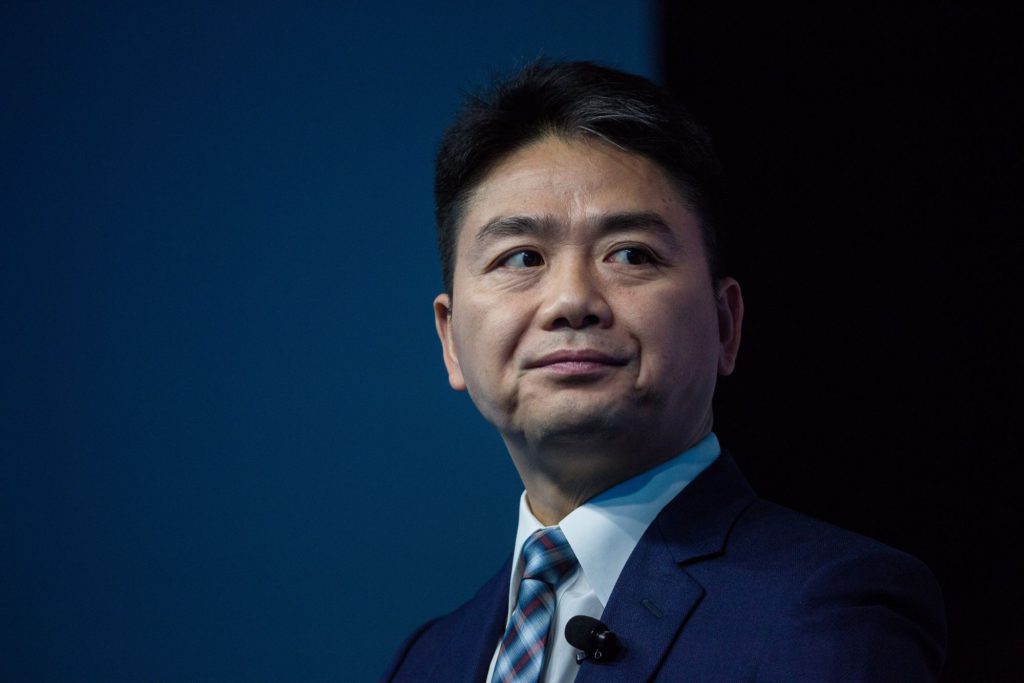
(Bloomberg) — JD.com Inc.’s billionaire founder Richard Liu has stepped down as chief executive officer of China’s No. 2 online retailer, joining tech tycoons that exited top management roles after Beijing’s sweeping internet-sector crackdown. 

Xu Lei, who was recently promoted to president after more than a decade at the company, takes the helm of the e-commerce titan effective immediately. Liu’s lieutenant joins JD’s six-member board while Liu remains chairman, the company said in a filing Thursday. Its shares closed 3.2% lower in Hong Kong.

Some of China’s richest entrepreneurs have relinquished the reins of their companies in the past two years, after Xi Jinping’s administration trained its sights on arenas from e-commerce to gaming, seeking to curb the growing influence of internet firms. 

ByteDance Ltd. founder Zhang Yiming stepped down as chairman last year, months after resigning as chief executive officer of the TikTok owner. Kuaishou Technology founder Su Hua ceded leadership to fellow co-founder Cheng Yixiao. And Colin Huang, who founded e-commerce upstart Pinduoduo Inc., dropped his CEO role in 2020 ahead of Beijing’s crackdown. 

Read more: JD’s Retail Chief Takes Lead as Billionaire Founder Recedes

What Bloomberg Intelligence Says

The stepping-down of JD.com founder Richard Liu as CEO comes as little surprise, as his intent to shift roles after 18 years has been well-telegraphed. Yet, it remains a turning point for one of China’s most iconic internet retailers, and may signal an emerging push for greater investment abroad. The appointment of President Lei Xu as Liu’s successor is a nod to continuity, and a desire for continued stable growth at home. Liu remains JD.com’s chairman, with 76% voting power.

– Catherine Lim, analyst

Click here for the research.

Liu himself had gradually stepped back from day-to-day operations since he was accused of rape in 2018, a charge the billionaire has denied. The leadership reshuffle marks a further retreat from the online shopping empire he founded in Beijing in 2004. 

JD was one of the few Chinese internet titans to avoid a direct hit from the sweeping champaign to rein in Big Tech. In fact, it has benefited from the crackdown by adding new and returning brands like Starbucks and Estee Lauder to its platform, after antitrust watchdogs fined larger rival Alibaba Group Holding Ltd. for antitrust violations and forced it to revamp practices around merchant exclusivity.

But the company has been caught in a broader Chinese tech selloff and economic slowdown. JD’s market valuation has shrunk by nearly 45% from its peak last year to about $92 billion.

Liu will continue devoting his time to guiding the company’s long-term strategies while mentoring younger management, JD said in its statement. He will also contribute to the revitalization of rural China — a priority of Xi’s “common prosperity” agenda.

(Updates with analyst’s comment from the fourth paragraph)

More stories like this are available on bloomberg.com

©2022 Bloomberg L.P.

Suspected Chinese Hackers Collect Intelligence From India’s Grid

(Bloomberg) — Suspected state-sponsored Chinese hackers have targeted the power sector in India in recent months as part of an apparent cyber-espionage campaign, the threat intelligence firm Recorded Future Inc. said in a report published Wednesday.

The hackers focused on at least seven “load dispatch” centers in northern India that are responsible for carrying out real-time operations for grid control and electricity dispersal in the areas they are located, near the disputed India-China border in Ladakh, the report said. One of the load dispatch centers previously was the target of another hacking group, RedEcho, which Recorded Future has said shares “strong overlaps” with a hacking group that the U.S. has tied to the Chinese government. 

“The prolonged targeting of Indian power grid assets by Chinese state-linked groups offers limited economic espionage or traditional intelligence gathering opportunities,” the Recorded Future report states. “We believe this is instead likely intended to enable information gathering surrounding critical infrastructure and/or pre-positioning for future activity.”

In addition, the hackers compromised an Indian national emergency response system and a subsidiary of a multinational logistics company, according to the report.

The hacking group, dubbed TAG-38, has used a kind of malicious software called ShadowPad, which was previously associated with China’s People’s Liberation Army and the Ministry of State Security, according to Recorded Future. Researchers didn’t identify the victims by name.

Jonathan Condra, a senior manager at Recorded Future, said the method the attackers used to make the intrusions — using compromised internet of things devices and cameras — was unusual. The devices used to launch the intrusions were based in South Korea and Taiwan, he said.

Chinese Foreign Ministry spokesman Zhao Lijian said at a regular briefing Thursday in Beijing that his country cracked down on all manner of hacking. “We will never encourage, support or condone such activities,” he said.

He said Recorded Future, “if it really cares about cybersecurity, should pay more attention to the attacks launched by the U.S. against Chinese companies and institutions.”

Indian authorities didn’t respond to a request for comment.

(Updates with comments from China’s Foreign Ministry.)

More stories like this are available on bloomberg.com

©2022 Bloomberg L.P.

SoftBank Tripled Share Buybacks to $1 Billion in March

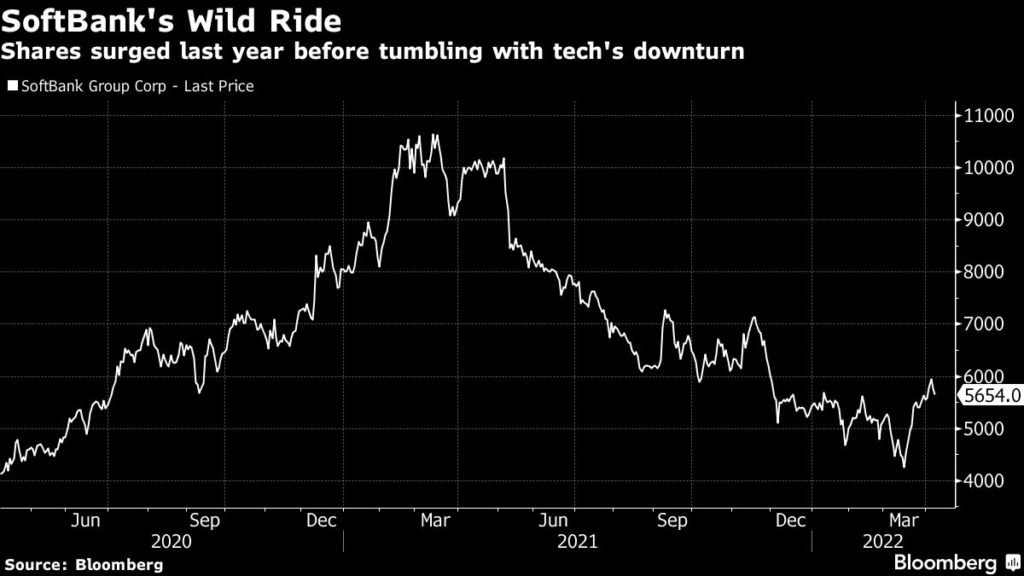
(Bloomberg) — SoftBank Group Corp. more than tripled the size of its share buybacks to about $1 billion in March helping the company’s stock price stage a rebound and cap its best monthly rally in about a year. 

The technology giant bought 141.4 billion yen ($1.1 billion) worth of shares last month, which compares with 46.2 billion yen of shares purchased in February, according to a filing the company made to the government. The buyback combined with a 7.6% jump in Alibaba Group Holding Ltd.’s shares helped SoftBank cap a monthly stock-price gain of 8.5%, its best such performance since February last year. 

SoftBank shares had been hammered due to a selloff in Chinese technology shares led by Alibaba as the country steps up efforts to regulate internet industries while a continued climb in U.S. interest rates bodes ill for the sector’s equities. SoftBank shares tumbled 33% last year. 

Masayoshi Son in November announced plans to buy back as many as 250 million shares, or 14.6%, for as much as 1 trillion yen over the course of the next year, in a bid to appease shareholders getting worried over the continued tumble in SoftBank’s stock price. The decision sent shares 11% higher for its best daily performance since December 2020.

The pace of share buybacks, however, hasn’t been as fast as some in the market have anticipated, with accumulated purchases since the announcement totaling 344.6 billion yen as of end March. Son has said the one-year schedule is not set in stone but a rough guideline. 


More stories like this are available on bloomberg.com

©2022 Bloomberg L.P.

888 Shares Leap After Restructuring Deal for William Hill Assets

(Bloomberg) — Shares in online gambling operator 888 Holdings Plc jumped the most in 18 months after it announced a new financing structure for its now cheaper acquisition of William Hill Ltd.’s international assets.

888 trimmed its enterprise valuation of the William Hill deal, putting it between 1.95 billion pounds to 2.05 billion pounds, down from 2.2 billion pounds, the company said in an update on the deal’s financing Thursday. 

The lower price reflects a “change in the macroeconomic and regulatory environment,” as well as a review of William Hill currently being pursued by the U.K. Gambling Commission, 888 said. The U.K. watchdog is reviewing William Hill’s license, and investors globally have pulled back from big gambling company stocks.

888 also announced an accelerated book build worth about 19% of its issued share capital to pay for the non-U.S. business of 88-year-old British bookmaker William Hill, which has been split off and sold by Las Vegas casino operator Caesars Entertainment Inc. Last year analysts estimated that deal would roughly quadruple 888’s size.

That’s “much reduced” in scale compared to a previous plan of 888 to raise 500 million pounds ($655 million) in equity to pay for the deal, said Jefferies analyst James Wheatcroft in a note to clients.

888 shares rose about 28% in early trading Thursday, the biggest intraday move since Sept. 2020. It expects to hold a shareholder vote for the William Hill deal in May and close the deal in June. 

888’s shares are still about 36% lower than when the company announced the deal in September. That follows a market downturn in the wake of Russia’s invasion of Ukraine and a broader investor pullback from gambling companies.

The company also suspended its dividend after it said the planned acquisition of William Hill Ltd.’s international assets would push debt higher than previously expected.

“Ordinarily we would expect this to drag on share price, but the equity raise overhang has depressed the proforma valuation,” Wheatcroft said, referring to the debt announcement. 

888 is prioritizing repayments to lenders because its net debt to earnings ratio would be “temporarily running at levels slightly above those previously anticipated,” the company said in the statement. It will resume payouts once the leverage ratio moves below 3 times, or earlier if the board considers it appropriate, it said.

(Updates with shares, new context from paragraph 2.)

More stories like this are available on bloomberg.com

©2022 Bloomberg L.P.

Bitcoin Drops Most in a Month as Markets Turn Risk-Averse

(Bloomberg) — Bitcoin fell for a fourth day as expectations for the biggest rise in U.S. interest rates in three decades diminishes demand for riskier assets. 

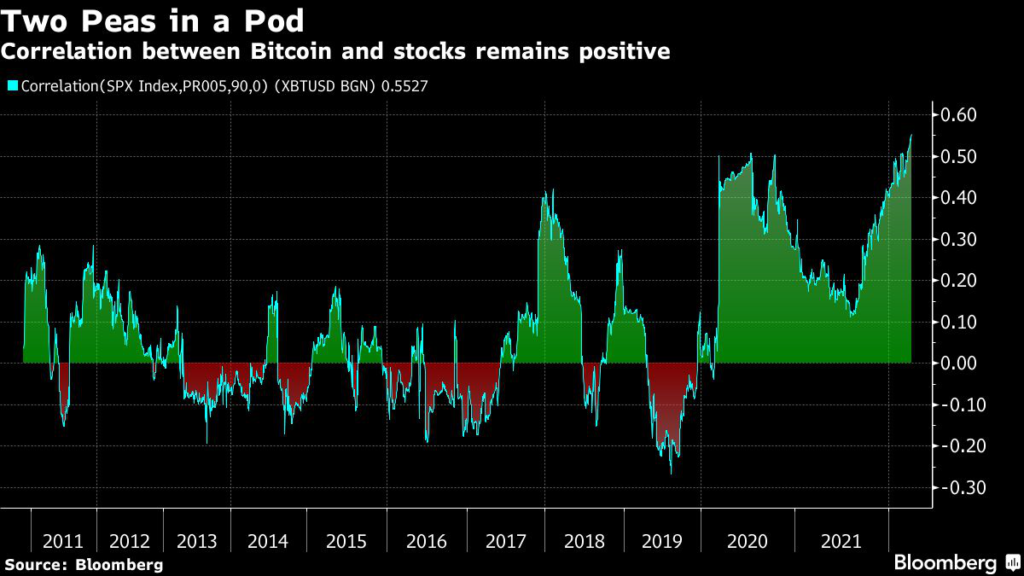
The correlation coefficient between the Bitcoin and U.S. equities have climbed in the past 90 days as investors grow more risk adverse with the Federal Reserve pulling back on the pandemic era stimulus that is credited for helping to fuel the rise of crypto. Alternative coins such as Ether, XRP and Litecoin also fell. 

Minutes from the Federal Open Markets Committee’s March meeting, released Wednesday, showed plans to start reducing the Fed’s balance sheet by more than $1 trillion a year while raising rates “expeditiously” to counter the hottest inflation in four decades.

“The FOMC minutes have reaffirmed our stance that we are likely not free of the turbulent waters” for cryptocurrencies, said Fundstrat digital-asset strategist Sean Farrell in a note Wednesday. “We still find ample reason to be constructive on asset prices in the immediate (relief rally) and long term (second half and beyond).”  

Fed Lays Out Plan to Prune Balance Sheet by $1.1 Trillion a Year

Bitcoin briefly dropped below $43,000 for the first time since March 24 in early Asia trading, before recovering to around $43,400, down 1.1% for the day. It has fallen 6.2% this year. The declines in digital assets mirrored a broad equities selloff, with Japan’s Nikkei Index sliding 1.7%. 


Altcoins have dipped further given their smaller market value and lower trading volume, which usually results in wider price swings. Cardano has fallen 7.2% over the past five days, while Solana is down 7.7%. 

Bitcoin briefly surpassed $48,000 in late March to erase losses since year-end, spurring optimism that it would break out of the tight trading range in which it had been mired. Ether had been outperforming Bitcoin during the rebound due to its upcoming technical upgrade scheduled later this year.


Earlier, Billionaire crypto investor Michael Novogratz says that once the Fed takes a pause, Bitcoin could start to take off again.

Novogratz, who leads Galaxy Digital Holdings, predicted the central bank will remain “very hawkish for a while” due to high inflation, and will likely raise interest rates by 50 basis points soon. But as the economy slows down and the Fed steps back, “Bitcoin goes to the moon,” he said, repeating a popular crypto catchphrase. 

Novogratz was speaking at the “Bitcoin 2022” conference in Miami, which kicked off on Wednesday with the unveiling of a bull statue that commemorates the city’s partiality toward cryptocurrencies and the digital-assets industry. The event has attracted more than 25,000 attendees. 

More stories like this are available on bloomberg.com

©2022 Bloomberg L.P.

Global Energy Upheaval Threatens Years of Natural Gas Shortages

(Bloomberg) — The natural gas market’s delicate balance is crumbling, putting the global economy under further strain as nations struggle to secure enough fuel.

War, the energy transition, severe weather and surging demand are creating a period of upheaval that is tightening supply like never before. Nations and companies are grappling to secure enough gas amid a global power crunch as economies recover from the pandemic. 

Natural gas is a key component in the global economy that keeps factories buzzing, lights on and houses warm. The competition for a finite supply of the fuel will only get worse if current conditions persist, with skyrocketing prices and supply gaps threatening to upend economies, boost inflation and grind supply chains to a halt.

“The market of today is one of the most challenging I’ve ever seen,” said Susan L. Sakmar, a visiting assistant professor at the University of Houston Law Center. “The world needs a bigger energy pie to share. Absent a global recession or more Covid lockdowns that slow growth, I suspect many parts of the world will face energy shortages.”

The world was already facing the risk of gas shortages this winter as a post-pandemic rebound in demand outpaced supply. The crunch was years in the making: countries became more dependent on gas as utilities curbed coal consumption and expanded intermittent renewable sources, while shutting nuclear reactors in the wake of the 2011 Fukushima disaster. Meanwhile, suppliers were slow to boost production.

Luckily, milder temperatures across Europe and parts of Asia this winter curbed demand for the heating fuel and allowed utilities to squeak by on existing inventories. Traders now joke that praying for mild weather will become a seasonal tradition, since a snowstorm in Beijing or heat waves in the U.K. can trigger record-breaking price swings and crippling supply deficits.

And now the war has dealt an unexpected, devastating blow to such a fragile market.

Europe’s effort to halt most imports of Russian gas means that it will be going head-to-head with Asia for spare liquefied natural gas supply, while there isn’t enough investment in new production to meet surging demand. The European Union’s proposal this week to ban Russian coal imports puts further strain on the market, as power producers may need to turn more to gas to generate electricity.

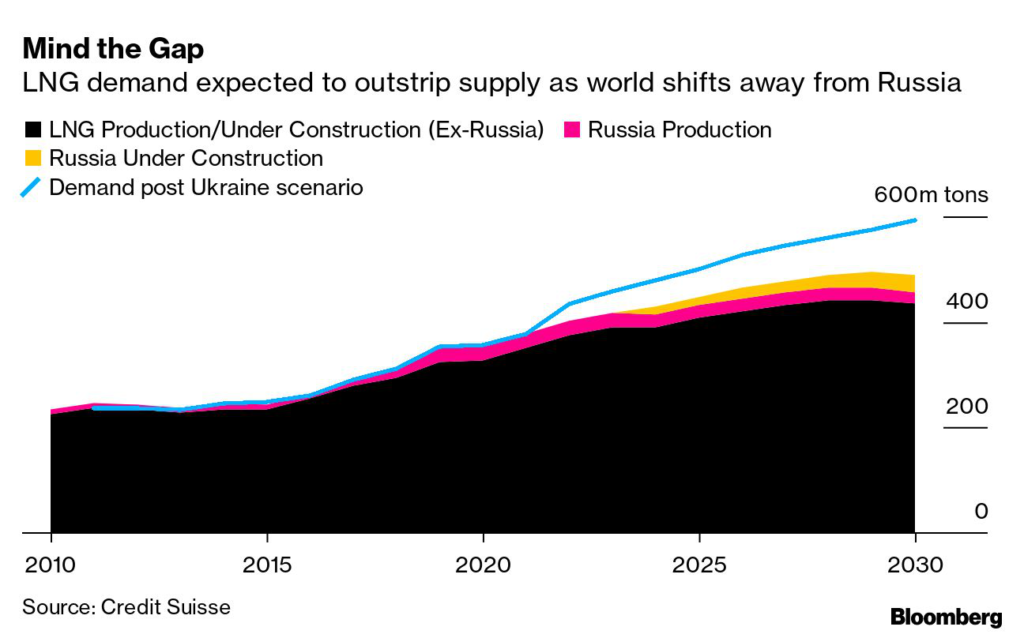
Longer term, the LNG demand-supply balance is expected to get more out of whack, especially if Russian gas is removed. The global market could be short nearly 100 million tons per year by the middle of the decade, according to a Credit Suisse report last month. That’s equal to more than the annual demand of China, the world’s top buyer of LNG.

“Even before the Russia-Ukraine crisis, the global LNG market was tight with record high prices,” said James Taverner, a senior director at S&P Global. “Market tightness is likely to persist over the next few years. Prices are likely to continue experiencing wild swings from day to day.”

Already, natural gas spot prices are so high that the world’s top buyers in North Asia are choosing not to refill inventories with additional overseas purchases. They’re instead gambling that this summer will be mild, or a peace deal between Russia and Ukraine will result in a price drop, said traders, who requested anonymity to discuss private details.

LNG importers in China and India have drastically cut back spot purchases, and are instead maximizing domestic supply and consuming gas in storage, traders said. This strategy will help to save money, but comes with an enormous risk that allows little room for surprises — a bet that hasn’t paid off recently. 

If there is a sudden spike in demand for gas, or if a contracted shipment isn’t able to be delivered due to a production issue, some of Asia’s top consumers may be short of gas this summer or next winter. They will be forced to go back into the spot market and buy very expensive shipments of the fuel, or curtail gas deliveries to customers at home.

Europeans will also be counting on a mild summer in Asia because of the need to pull spot LNG and fill their storage mandates. The European Union is pursuing a target of an 80% storage fill level by November, compared to roughly 26% now. That’s achievable if Russian pipeline gas flows are steady and European prices beat Asian rates to lure available LNG, according to BloombergNEF. 

Right now, Russia is continuing to supply the market and Europe has avoided sanctions on that gas. However, a sudden drop in Russian exports — either through sanctions or a unilateral action by Moscow — would wreak havoc, with demand destruction the only option to keep the market balanced.

Russian gas is so important to Germany that immediately halting imports would trigger a recession, according to Deutsche Bank AG CEO Christian Sewing. That would intensify the global dash for spare gas, sending prices to new heights and leaving many countries without enough fuel to power their economies.

The unfolding global energy crisis poses higher risks than the oil shocks of the 1970s, according to energy historian Daniel Yergin. 

“It involves not only oil, but it involves natural gas and coal, and it involves two countries that happen to be nuclear superpowers,” he said during a Bloomberg TV interview. If there is a disruption in gas deliveries, “you are going to see industries shutting down, you will see prices going up. It means that the macroeconomic forecasts will have to be lowered.”

For cash-strapped emerging nations across South Asia and South America, the situation is dire, as governments may be forced to curb electricity or heating fuels to households. Argentina forked out roughly $750 million for eight LNG shipments for May to June delivery in a tender last month. That’s about 20 times higher than the price they paid for similar shipments in 2020, and threatens to send electricity bills surging. 

Pakistan is also in harrowing position, as the government can no longer afford to buy overseas shipments of the fuel and is struggling to find alternatives. Power plants in Pakistan are running out of fuel, and are pleading with the government to make more supply available, according to local reports. As prices remain elevated, fuel shortages are at risk of spreading to Bangladesh, India and Thailand.

“Energy poverty in parts of Asia could result as Europe sucks LNG cargoes away from their originally intended destinations,” said Saul Kavonic, an energy analyst at Credit Suisse Group AG.

(Updates with comments from Daniel Yergin in the 17th and 18th paragraphs.)

More stories like this are available on bloomberg.com

©2022 Bloomberg L.P.

Didi in Talks With Haima Automobile About EV Partnership

(Bloomberg) — Didi Global Inc. is in talks with Haima Automobile Co. about a partnership to manufacture electric vehicles, according to people familiar with the matter.

The Chinese ride-hailing giant is also discussing potential partnerships with other carmakers including Sinomach Automobile Co., said one of the people, who asked not to be identified because the details are private. Deliberations are ongoing and no final decision on the arrangement has been made, the people said.

Didi, facing a regulatory crackdown in China over its privacy and cybersecurity practices, is one of several of the nation’s big tech companies seeking to break into the growing market for electric cars. The rapidly expanding arena — a key aspect of the Xi Jinping administration’s environmental road map — represents a potent new source of revenue given its main market is saturated and officials are pressuring sharing economy giants to share more of the wealth with their workers. 

Didi launched an EV for ride sharing in late 2020 in partnership with Chinese automaker BYD Co. and has been hiring automobile R&D staff in Beijing and Shenzhen, according to local media reports. A partner like Haima or Sinomach could defray the costs of entry considerably, allowing Didi to focus on developing technologies such as self-driving and in-car software.

A representative for Didi wasn’t immediately able to comment. Haima Automobile said while it had no such cooperation at present, it’s open to external collaboration. A representative for Sinomach Auto didn’t respond to requests for comment.

Haikou, Hainan-based Haima Automobile makes minivans, new energy vehicles and other types of passenger vehicles. It used to have a manufacturing partnership with Chinese EV startup Xpeng Inc., producing Xpeng’s first car the Xpeng G3, but that ended in December.

Didi’s planned Hong Kong stock exchange listing was suspended after the company failed to appease Chinese regulators’ demands that it overhaul its systems for the handling of sensitive user data, Bloomberg News reported last month.


(Adds Sinomach Auto is among carmakers in talks in second paragraph.)

More stories like this are available on bloomberg.com

©2022 Bloomberg L.P.

Shanghai Party Members Urged to ‘Draw Swords’ in Covid Fight

(Bloomberg) — China’s Communist Party issued a rare call imploring rank-and-file members to help contain the coronavirus in Shanghai, showing the strain the locked-down financial hub is under as its worst outbreak to date spreads.

“We must dare to draw our swords and fight against all kinds of behaviors that interfere with and undermine the overall situation of the fight against the epidemic,” the top party branch in Shanghai wrote to members late Wednesday, the same day the number of new cases in the city rose to more than 19,900.

“Wherever there is a need, there must be a Communist Party member,” it added in the open letter posted on an official government social media account.

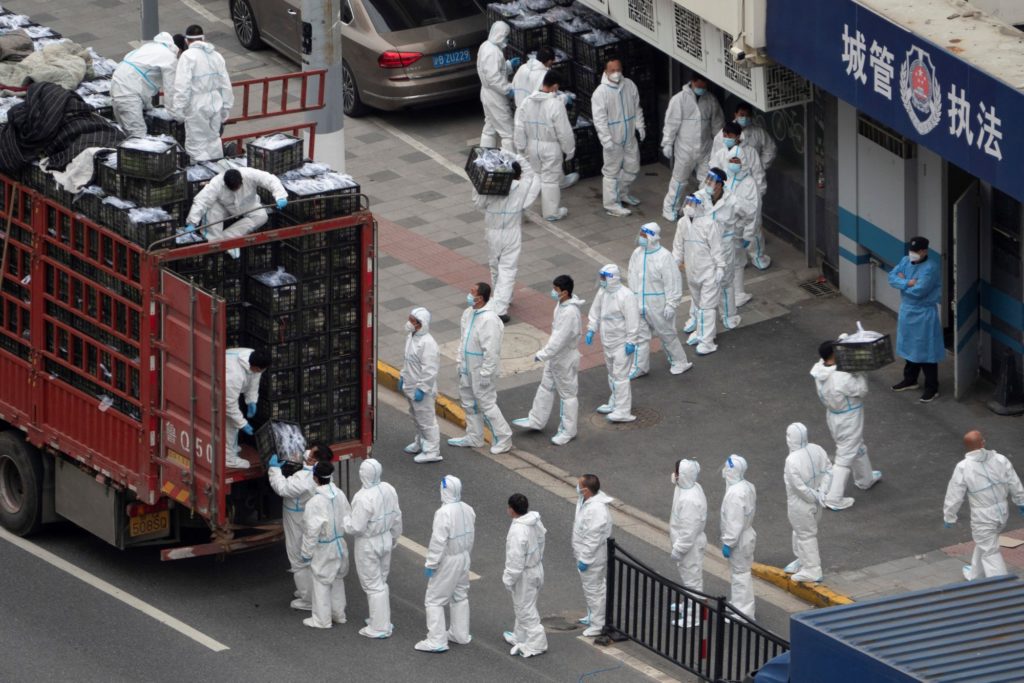
The city of 25 million people has seen food shortages and a lack of medical care in the 10 days since a lockdown started in the eastern half of the city, which was later expanded to include the more populous western side. The outbreak has virtually paralyzed one of China’s most populous and recognizable cities, with businesses shuttered and factories of companies like Tesla Inc. halting production because of the curbs. 

Shanghai Deputy Mayor Chen Tong, leader of a task force created to ensure the public gets everyday supplies, acknowledged at a press briefing Thursday morning that the government faces difficulties delivering goods to people amid store closures and logistical challenges.

He pledged to “unlock” wholesale markets, fulfillment centers, e-commerce warehouses and central kitchens to ease the supply crunch, and to prioritize the delivery of goods like infant formula and items that necessary for the elderly and other vulnerable groups.

Meituan Vice President Mao Fang said at the same briefing that the food delivery company would bring in 1,000 sorting workers from outside the city as part of efforts to speed up deliveries. A government official added that Shanghai’s mass testing efforts would continue.

Tesla Halted, Chips Pile Up as Shanghai Lockdown Upends Business

China’s outbreak is surpassing a level not seen since February 2020, when a one-day correction in the way it tracked cases pushed daily infections past 15,000, largely in Wuhan. The ballooning number in Shanghai, despite the lockdown, underscores the challenge the nation faces in returning to President Xi Jinping’s Covid Zero goal. Jilin province, an automaking and farming hub in the northeast, has been locked down for nearly a month, prompting residents to complain on social media about running out of food, cancer medication and baby formula.

The lockdowns and virus-containment measures threaten to slow China’s economic growth this year to below the government’s 5.5% target, according to Bloomberg Economics. They also risk further havoc on already stressed global supply chains, with companies from chipmakers to a South Korean noodle maker caught in the fallout.

Some firms, including Taiwan Semiconductor Manufacturing Co. and Semiconductor Manufacturing International Corp., and iPhone assembler Pegatron Corp., have kept plants running by having workers live there and get tested regularly. 

China Censors Shanghai Protest Videos as Lockdown Anger Grows

There are rising signs of frustration among residents of Shanghai, which is home to top banks, insurers and the biggest stock exchange in the world’s No. 2 economy. Videos of a rare protest in a locked-down housing compound were said to have been deleted from a social media platform by tech giant Tencent Holdings Ltd., according to Bloomberg News reporting.

The letter from the Communist Party committee in Shanghai hinted at those tensions, urging party members to “take the initiative to speak out against all kinds of noises, especially rumors, to clarify right and wrong, and to unite a strong force to overcome the difficulties together.”

It also appealed to members’ sense of history and patriotism, pointing out that Shanghai was the birthplace of China’s Communist Party.

“Today, we communists in Shanghai must carry forward the founding spirit of the party, and let the party flag stand high on the front line of the fight against the epidemic,” it said.

The Shanghai party committee’s letter was trending on Chinese social media on Thursday, eliciting sarcastic comments from internet users.

“Good stereotypical writing but the policies are a complete mess,” a person using the handle Ancient Things wrote on the Twitter-like Weibo service. “You’re fighting the pandemic without any good leaders but with all positive energy.”

“Where’s the party flag? Where’s your fortress and vanguard?” Weibo user Ah Dai Is Speechless wrote. “We don’t see anything but chaos, disorder and discrimination.”

(Updates with details of government press conference Thursday in Shanghai.)

More stories like this are available on bloomberg.com

©2022 Bloomberg L.P.
Real Yield Rise a Vote of Confidence in Fed, Warning for Stocks

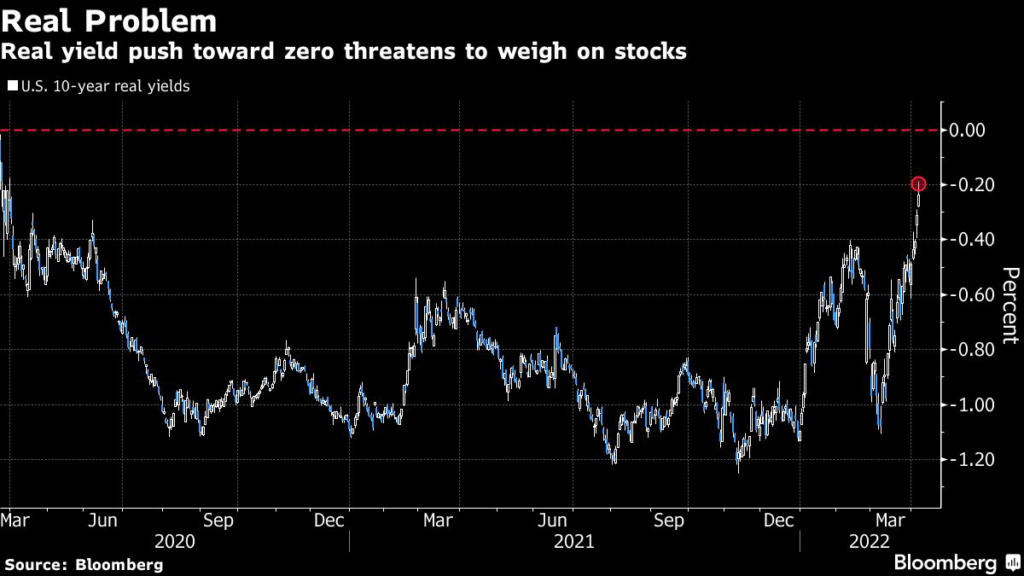
(Bloomberg) — Surging U.S. real yields suggest bond traders believe the Federal Reserve can get a grip on inflation, but are likely to put further pressure on stocks and precious metals.

The benchmark inflation-adjusted Treasury yield has jumped more than 80 basis points in a month and touched a two-year high of minus 0.19% on Wednesday, as the Federal Reserve made it clear it will aggressively tighten policy. The move came even as gauges of expected inflation shrank, showing investors are becoming convinced the central bank will do whatever it takes to rein in rising prices. 

But it’s also a clear danger sign for riskier assets like high-priced tech shares, threatening valuations and stocks’ relative attraction to bonds. Virtual currencies and precious metals are also vulnerable, because their lack of an income stream becomes a disadvantage should real yields climb substantially above zero.

“If real yields are moving higher it should mean a tightening for financial conditions, and that’s not a positive for risk assets,” said Mitul Kotecha, chief emerging market and Europe strategist at TD Securities in Singapore. “Rising inflation has caught markets and policy makers out, now we’re playing catch up.”

A slump in technology shares has led broader markets lower this week as investors reacted to hawkish commentary from Fed officials and real yields pushed higher. Fed Governor Lael Brainard on Tuesday called the task of reducing inflation pressures “paramount,” and confirmed plans for a series of rate hikes and a rapid reduction in the central bank’s bond holdings.

Fed Lays Out Plan to Prune Balance Sheet by $1.1 Trillion a Year

“Looking back to the 1970s, it wasn’t until real yields rose that inflation actually started to moderate,” said Kellie Wood, Deputy Head of Fixed Income, Australia at Schroders Plc in Sydney. “The Fed has to get nominal yields above the rate of inflation to slow the economy and tame inflation. We believe the Fed is well behind the curve.”

The tech-heavy Nasdaq 100 Index has fallen 2.4% this week, thanks in part to pressure from the bond market. Bitcoin has slumped about 6% and gold futures are little changed. 

More stories like this are available on bloomberg.com

©2022 Bloomberg L.P.

Close Bitnami banner
Bitnami