
Bloomberg

Hackers Posed as Flirtatious Women to Target Israeli Officials

(Bloomberg) — Hackers with suspected ties to Hamas targeted Israeli defense, law enforcement and emergency service organizations by setting up bogus accounts that appeared to be women on Facebook, according to the Israeli cybersecurity firm Cybereason Inc. 

The fake Facebook profiles were regularly maintained, conversed in Hebrew and interacted with Israeli citizens to boost their credibility, the researchers said. Attackers befriended connections of targeted individuals, earning the victims’ trust before starting intimate conversations and suggesting the conversations move to WhatsApp, according to a Cybereason report published Wednesday. Ultimately, the hackers tried duping victims into downloading malicious code that would give attackers complete access to their devices, including a phone’s camera, email and text messages. 

“The operators seem to have invested considerable effort in ‘tending’ these profiles, expanding their social network by joining popular Israeli groups, writing posts in Hebrew, and adding friends of the potential victims as friends,” the Cybereason report stated. The purpose of the hacking campaign was to extract sensitive information for espionage, Cybereason said. 

The attackers also urged victims to open a file purportedly containing a video with sexual content. In fact, the file contained malware and infected a victim’s device when opened, according to the researchers. “The video is meant to distract the victim from the infection process that is happening in the background,” according to the report.

Cybereason attributed the attack with moderate-high confidence to an alleged Hamas-supported hacking group called APT-C-23, according to the report. 

In this instance, the group targeted dozens of people and successfully infected devices and computers, according to Cybereason researchers, who declined to identify the victims. The attacks, dubbed Operation Bearded Barbie, reveals the extent that Hamas, the Islamic militant group that rules the Gaza Strip, has improved its cyber capabilities, the researchers said. The company didn’t disclose how many devices were infected. 

“The use of meticulous social engineering combined with sophisticated attack tools may cause great damage to the state of Israel,” Lior Div, chief executive officer of Cybereason said in a statement. 

A representative from Hamas declined to comment. An Israeli military spokesperson didn’t respond to a request for comment before press time. 

Cybereason alerted Meta Inc.’s Facebook abut its findings, resulting in Facebook shutting down the flagged accounts, according to Cybereason. A Facebook representative didn’t immediately respond to a request for comment.

Alleged Hamas-aligned hackers have previously tried romance scams to lure victims in a less sophisticated manner. In 2017, Hamas was accused of using photos of attractive women to trap hundreds of Israeli soldiers into conversations on Facebook’s Messenger in an operation designed to gather information on military plans and deployments. 

In the more recent effort, hackers masquerading as women on Facebook sought to make conversation with their targets during working hours so that they could persuade them to download the software onto the “war computers” at their place of work, thus gaining access to even more sensitive information, according to Cybereason.

More stories like this are available on bloomberg.com

©2022 Bloomberg L.P.
Elon Musk Risks New SEC Fight on Disclosure After Speedy Twitter Rise

(Bloomberg) — Elon Musk’s swift ascent from Twitter Inc. shareholder to board member threatens even harsher scrutiny from the Securities and Exchange Commission at a time when it’s demanding more transparency from big investors and ratcheting up fines for breaking rules.

Musk, a frequent tweeter of ideas for revamping the social-media platform, risked SEC scrutiny this week by disclosing his massive stake days later than regulations allow and because he revealed it in a filing typically reserved for passive investments. Then Twitter made him a director and he signaled in a new document that he does plan to advocate for changes as the biggest shareholder.

SEC Chair Gary Gensler has been pressing to tighten rules for how investors must disclose they’ve taken a stake of 5% or more in a company. He’s called for more transparency, and in February the regulator proposed cutting the maximum time that an investor has to reveal they’d taken a significant position to five days, from 10 currently.

Musk’s April 4 filing announcing his Twitter stake indicated that the billionaire crossed the threshold on March 14. His follow-up filing released Tuesday laid out his purchases in detail, verifying that he passed the 5% mark on that date.

Keith Higgins, who ran the regulator’s corporate filings unit during the Obama administration, said that being a little late to file a form 13G for passive investors, or the longer 13D filing that activist investors make, might not normally cause the SEC to bring a case. However, if there are other rules violations, a missed deadline can fuel action by the agency’s enforcement attorneys, he added. 

“In this context, I wouldn’t characterize it as a mere foot fault,” Higgins said, adding the he expected the agency would look into Musk’s disclosures. “This isn’t your typical late filing. The message that they may want to send here is that if you’re in discussions about becoming a director, then a 13-G is not the appropriate form to file. And you could imagine them pursuing that.”

Twitter Chief Executive Officer Parag Agrawal signaled on Tuesday that the company and Musk had conversations about the billionaire joining the board before this week’s disclosures.

The SEC declined to comment and Musk didn’t respond to questions about the disclosures. A Twitter spokesman declined to comment beyond Tweets from Agrawal and Musk, as well as the firm’s regulatory filings. The company’s shares have surged more than 30% this week. 

Musk is no stranger to dust-ups with the SEC, which has repeatedly sparred with the Tesla Inc. chief executive officer in recent years. The agency was already investigating whether he and his brother Kimbal violated insider trading rules when selling shares in the electric automaker late last year, something Elon has denied. 

The world’s richest person is also fighting in court to exit a 2018 settlement with the SEC over his infamous Tweet that he had secured funding to take Tesla private that limited his freedom to tweet about Tesla.

A clash with the agency, even over an unrelated and relatively minor infraction, could lead to bigger penalties for Musk. The SEC has been pursuing stiffer punishments under Gensler, with top officials discussing the value of higher fines for deterring misconduct.

“He may just enjoy sticking his finger in the SEC’s eye in various ways,” John Coffee, a professor at Columbia Law School, said about Musk’s decision to initially use a form reserved for passive investors.

(Adds Twitter share move in eighth paragraph.)

More stories like this are available on bloomberg.com

©2022 Bloomberg L.P.
Miami Gets Its Own ‘Charging Bull’ Statue for Crypto Week

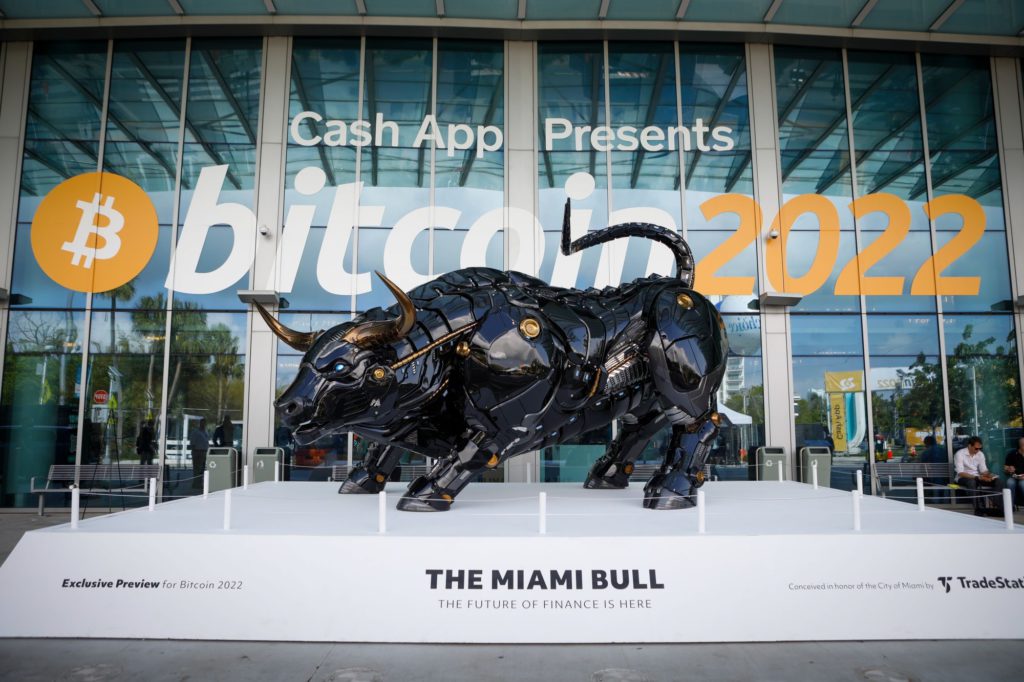
(Bloomberg) — Miami kicked off a multiday Bitcoin conference by unveiling a larger-than-life bull statue, as the city looks to cement its image as a crypto hub. 

The installation, named “Miami Bull,” bears the likeness of Wall Street’s “Charging Bull” — except with Bitcoin “laser eyes.” The statue, which weighs in at 3,000 pounds (1,361 kilograms), was commissioned by Florida-based trading platform TradeStation. 

The bull’s “presence further reaffirms the strength of Miami’s position on the financial world stage,” Miami Mayor Francis Suarez said in a statement. “The future of finance is here, in Miami.”

Florida has long looked to become the Wall Street of the South with prominent financial companies from Ark Investment Management to Elliott Investment Management moving in. Miami is hosting crypto events all week, with the “Bitcoin 2022” conference slated to see more than 25,000 participants. It’s part of what’s become an annual mass migration to the area, with many crypto companies using it as an opportunity to make major announcements. 

Though the 11-foot ( 3.35-meter) “Miami Bull” statue is marking its first public appearance at the “Bitcoin 2022” conference, it will afterward be moved to the Miami Dade College Campus.

Bitcoin itself didn’t add to the conference exuberance. The cryptocurrency dropped for a third day, declining as much as 5.3% to $43,421, as it mirrored Wednesday’s decline in U.S. equities. Bitcoin has declined a similar amount so far this year, trading in a range for much of that time.  

One of the highest-profile Bitcoin boosters canceled his appearance. El Salvador President Nayib Bukele said he won’t be attending “due to unforeseen circumstances,” the conference organizers announced in Tweet that include a letter from Bukele. The nation has been beset by gang violence recently.

Suarez, a Republican, has fully embraced the world of cryptocurrencies and all its tangentials as he looks to build the city into a digital-assets epicenter. He announced last year that he’d be receiving his paychecks in Bitcoin and has since looked to further foster crypto firms and entrepreneurs. Meanwhile, Florida Governor Ron DeSantis, also a member of the GOP, said last month the state was working on a plan to let businesses pay tax in cryptocurrency.

“We need to elect pro-Bitcoin candidates, and yes, the next President of the U.S. has to be a pro-Bitcoin candidate, “ Suarez said Wednesday at the opening of the conference where he dressed all in black to emphasize the yellow Bitcoin logo on his shoes. “What’s at stake is federal legislation that can either propel us into the next generation or can set us back. There’s one thing that the U.S. should never do. It should never agree on anything with Russia and China when it comes to Bitcoin.”

Suarez also said more work needed to be done to integrate Bitcoin into “every aspect” of society so that you can walk into a convenience store and pay with Bitcoin. He said the cryptocurrency has the potential to create wealth for the unbanked and help protect savings amid rising inflation.

“We have to lean into this generational wealth creation opportunity so that the poor in our community don’t get left behind like they always do when government intervenes,” Suarez said. “We have to understand that Bitcoin has the possibility of being able to allow for people to transmit money outside of the banking system, efficiently and quickly.”

(Adds that El Salvador’s president canceled his appearance at the conference.)

More stories like this are available on bloomberg.com

©2022 Bloomberg L.P.

Tiger Global Leads $350 Million Investment in Near Protocol Blockchain

(Bloomberg) — The blockchain developer Near Protocol raised $350 million, more than double what it got just three months ago. The investment, led by Tiger Global, is a sign of the frenzy surrounding crypto startups.

Near Protocol’s market cap as of Tuesday was more than $10 billion, according to data from the cryptocurrency tracker CoinGecko. Near investors plan to announce the new funding on Wednesday.

Its backers see the deal as a signal that a wider variety of investors have faith in the blockchain’s ability to be an underpinning of a decentralized web. A check from a firm like Tiger Global “obviously means they feel Near might be one of the protocols that can take over the world,” said Amos Zhang, a partner at MetaWeb VC, which focuses on investments that are part of the blockchain’s wider ecosystem.

Near’s $150 million round in January was largely funded by crypto-native investors. Near is distinctive, in part, for its emphasis on being easy to use for a broad audience, said Zhang. Over time, he hopes that effort makes the transition from today’s web to a more crypto-based future more seamless.

More immediate, though, is the Russian invasion of Ukraine, which rattled the crypto company. Near’s Ukrainian co-founder, Illia Polosukhin, worked with a team to help move at least 50 people out of the country and organized a charity that raised more than $10 million to pay for medicine, food and evacuation efforts. Ukraine, a country with a thriving crypto scene, has seen entrepreneurs and tech leaders rally to organize grassroots support for troops and refugees. Polosukhin, who is now in Portugal, was part of a wave of millions of Ukrainians to leave the country in recent weeks.

(Updates with charity’s progress in the last paragraph.)

More stories like this are available on bloomberg.com

©2022 Bloomberg L.P.

Four Banks Fined in Nigeria for Allowing Crypto Transactions

(Bloomberg) — Nigeria’s central bank fined lenders for failing to comply with regulations that bar customers from transacting in cryptocurrencies.

The penalties are part of efforts by the central bank to ensure commercial lenders implement a February 2021 order to block trading in cryptocurrencies because of the threat that it says they pose to Nigeria’s financial system. In November, it ordered lenders to close the accounts of two individuals and a company for allegedly trading in the digital coins. 

The West African nation accounts for the largest volume of cryptocurrency transactions outside the U.S., according to Paxful, a Bitcoin marketplace. Africa’s most populous country also has the largest proportion of retail users conducting transactions under $10,000, according to Chainalysis.

The Central Bank of Nigeria fined Stanbic IBTC Bank, the domestic unit of Standard Bank Group Ltd., 200 million naira ($478,595) for two accounts alleged to have been used for crypto transactions, Chief Executive Officer Wole Adeniyi said Tuesday during an investor conference call in Lagos. 

Access Bank Plc, the country’s biggest lender by assets, was fined 500 million naira for failure to close customers’ crypto accounts, according to a filing with the Nigerian Exchange Ltd. United Bank for Africa Plc incurred a 100 million naira penalty for digital-currency transactions by a customer while Fidelity Bank Plc was fined 14.3 million naira, the lenders said.   

While Stanbic IBTC followed the central bank directive, the transactions it was sanctioned for may have passed through its system undetected, Adeniyi said. The central bank was able to detect the relevant transactions using an “advanced capability” that Nigerian lenders don’t have access to, and they’ve asked the central bank to share the technology, he said.

“It doesn’t seem that they are going to entertain a refund, but they are now sharing intelligence with us to be able to kind of deter clients.”


(Updates with additional bank fine in fifth paragraph)

More stories like this are available on bloomberg.com

©2022 Bloomberg L.P.
Escaping an Abortion Desert Isn’t as Simple as Crossing State Lines

(Bloomberg) — As states like Texas and Oklahoma restrict abortion access ahead of a pivotal Supreme Court decision, Americans are being forced to travel farther from home to access care. But leaving town to escape restrictive laws is neither an easy solution nor an equitable one.

Texas is a case in point. Following the signing of a law that bans abortion after about six weeks, an average of 1,400 Texans a month are traveling outside the state for abortions, according to a March study from the University of Texas at Austin’s Texas Policy Evaluation Project. The majority head for New Mexico or Oklahoma — a plan that has now been complicated by the Oklahoma legislature’s April 5th passage of a total abortion ban.

Traveling to access abortions is not new. In 2017, for example, about 12% of pregnant people living in states with restrictive abortion laws sought care elsewhere in the U.S., according to a study in The Lancet. That included over half the patients living in Mississippi, Missouri, South Carolina, and Wyoming. Patients traveling out of state face additional obstacles: clinics can be booked weeks in advance and costs — for childcare, time off work, gas, and travel — can be prohibitive, exacerbating inequality of access.

A 2018 study published in the Journal of Medical Internet Research found that people living in 27 cities with populations above 50,000 would need to travel more than 100 miles to reach the nearest abortion clinic, a distance commonly referred to as an “abortion desert.”  Fifteen of the 27 cities cited are located in Texas. With the U.S. awaiting the Supreme Court decision in Dobbs v. Jackson Women’s Health Organization, such deserts could widen. Ohio residents, for example, would have to travel up to 300 miles to reach the nearest clinic, assuming they could obtain an appointment at all.

Here’s a brief overview on the current state of abortion deserts, and why the concept is far more complex than a simple square-mile radius:

What is an abortion desert?

As the 2018 study illustrated, abortion deserts exist where people have to travel 100 miles or more to reach the nearest clinic.  But other factors, including cost and availability of appointments, are also barriers to access.

“Distance is definitely a crude measure of people’s access that is relatively easy to collect and model,” said Alice Cartwright, one of the study’s authors. “We know that people’s lives are much more complicated.” 

Cities cited in the study tend to be in states that do not cover abortion costs through Medicaid, another reason patients are forced to leave home. 

“Sometimes the closest clinic might be right across the border,” said Mikaela Smith, a research scientist at The Ohio State University. “But sometimes it can mean having to travel really, really far.” 

Of the seven states where Texas residents currently travel to receive an abortion, only New Mexico covers abortion services through Medicaid. In the past five months, people have had to wait as many as 22 days for an appointment at one of the seven clinics available, the University of Texas at Austin study found. Roughly half of women in New Mexico live in counties that don’t have a clinic at all. 

Who can travel to receive an abortion, and who can’t?

According to the Guttmacher Institute, 59% of people seeking abortion care already have at least one child, and three-quarters have incomes that are near or below the federal poverty line. “What those distances mean really depends on the resources of the person who’s seeking abortion care,” said Liza Fuentes, a senior research scientist with the group.

Traveling 10 miles may be prohibitive to someone who doesn’t have a driver’s license, or cannot afford child care or time off work, she said. “The impact of any restriction, any ban, any effort to make it more difficult to get an abortion or shame people for having an abortion, will have a disproportionately negative impact on people who have fewer resources to overcome those barriers,” she said. 

Respondents to the University of Texas at Austin study said they fell behind on bills, and could not afford food after paying for abortions. Others said they were fired from their jobs for missing work, or that their performance at school was impacted because of the timing of their care.

“A very large number of Texas residents have been able to get their abortions out of state, but this is coming at a heavy financial, emotional, and sometimes social costs to people, and I don’t think that that should be forgotten,” said Kari White, an associate professor at the University of Texas at Austin and the lead investigator with the Texas Policy Evaluation Project, which follows the impact of Texas legislation on women’s reproductive health. 

What does the future of abortion access look like?

Depending on how the Supreme Court rules on Dobbs v. Jackson Women’s Health Organization, the already precarious situation for people in states like Oklahoma and Texas may become even less tenable.

“As we heard from people in our interviews, sometimes Oklahoma was just as far as they could go,” said White. If the state’s new abortion ban takes effect, Oklahomans seeking abortions, as well as the 600 Texans who travel there each month, could be left without care.

Meanwhile, the longer people have to wait to receive an abortion, the more difficult it can become to get one — and the more it impacts other elements of their lives. The University of California, San Francisco’s Turnaway Study found that women who were denied abortions and gave birth experienced an increase in poverty levels that lasted for years. 

For those who do eventually manage to get one, delays may change the type of termination required — to a more invasive procedure, for example — which could become quality-of-care issue.

“There’s a lot more to talk about in terms of the impact of abortion restrictions, besides the distance to the nearest clinic.”

More stories like this are available on bloomberg.com

©2022 Bloomberg L.P.
Banks Are ‘Very Far Away’ From Trading Crypto, Genesis CEO Says

(Bloomberg) — Banks won’t be embracing Bitcoin with the same level of enthusiasm that individual investors have exhibited any time soon, the head of crypto prime brokerage Genesis Global Trading said, thanks to continued bearish sentiment from regulators on digital assets. 

Addressing the Bitcoin faithful in Miami, Genesis Chief Executive Michael Moro said banks have so far been mostly limited to taking a hands-off approach to the sector such as investing in crypto startups or derivatives products. 

“It is their best attempt at a proxy for participation in Bitcoin: For one, to make it look like they’re actually doing something,” Moro said on a panel at the Bitcoin 2022 conference on Wednesday. “But two, more importantly, their regulators at the bank-regulator level are looking over their shoulder everything that they’re doing. They are very, very far away from being able to trade actual Bitcoin.”

Institutional adoption of cryptocurrencies has been steadily growing since late 2020, with banks including Goldman Sachs Group Inc. revealing crypto options trading for their clients in recent months. The U.S. Securities and Exchange Commission approved a Bitcoin-linked futures product for the first time in October, but has continued to reject requests by banks and hedge funds to offer similar products tied to crypto spot prices. 

Banks also say they are prevented from custodying their own cryptocurrency holdings, leading some such as Standard Chartered Plc. to set up off-shoot units that can handle tokens directly. 

Moro said products which are cash-settled or offer synthetic exposure to Bitcoin are simply a “safer way” for banks to tell regulators that they’re not touching crypto, while still providing the access to digital markets that their clients are asking for.

Novogratz Says Bitcoin Will Go to the ‘Moon’ Once Fed Pauses

Jenna Wright, managing director of institutional crypto exchange LMAX Digital, said on the same panel that the London-based firm is going to launch a cash-settled derivative for its 35 bank clients, who want to trade the market but are restricted by existing regulation.

“You’ve got an opportunity to use the best of both worlds,” Wright said. “But these guys need to wise up a little bit, the banks, because they’re very much used to a five-day-week market. We’ve been in crypto for a number of years now, and that’s not how it works.”  

More stories like this are available on bloomberg.com

©2022 Bloomberg L.P.
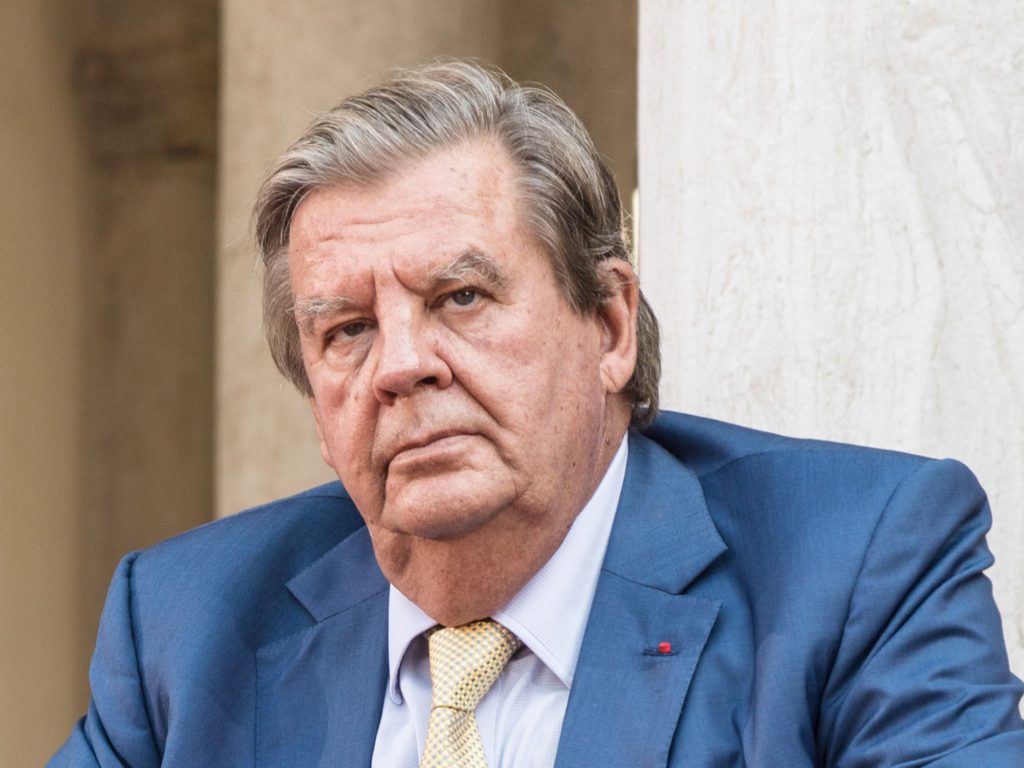
Amplats CEO Says Women Don’t Feel Safe in South African Mines

(Bloomberg) — Natascha Viljoen, chief executive officer of Anglo American Plc’s platinum business, said women don’t feel safe working underground in South African mines. While the mining industry’s toxic culture is no secret, an explosive report from Rio Tinto Group in February laid bare the scale and severity of the problem. The abuse of women …

Amplats CEO Says Women Don’t Feel Safe in South African Mines Read More »

Billionaire Rupert Targeted in South Africa Anti-Colonialism Rally

(Bloomberg) — A South African left-wing party plans to picket outside a wine estate and other farms owned by the nation’s richest man to mark the day colonialism started in the country. The Economic Freedom Fighters, the second-largest opposition party, said its president, Julius Malema, will lead the protest at wine farms in the Western …

Billionaire Rupert Targeted in South Africa Anti-Colonialism Rally Read More »

The Sanctions Imposed So Far on Russia From the U.S., EU and U.K.

(Bloomberg) — The U.S., U.K., European Union and others have ramped up sanctions against Russia following its Feb. 24 invasion of Ukraine. In the latest round, the U.S. tightened penalties on two of Russia’s leading banks, including the country’s largest financial institution Sberbank, while leaving in place an energy carveout that allows them to process payments for oil and gas. The U.S. also sanctioned Russian President Vladimir Putin’s two adult daughters and the wife and daughter of Foreign Minister Sergei Lavrov.

Here is the latest tally. 

The U.S.

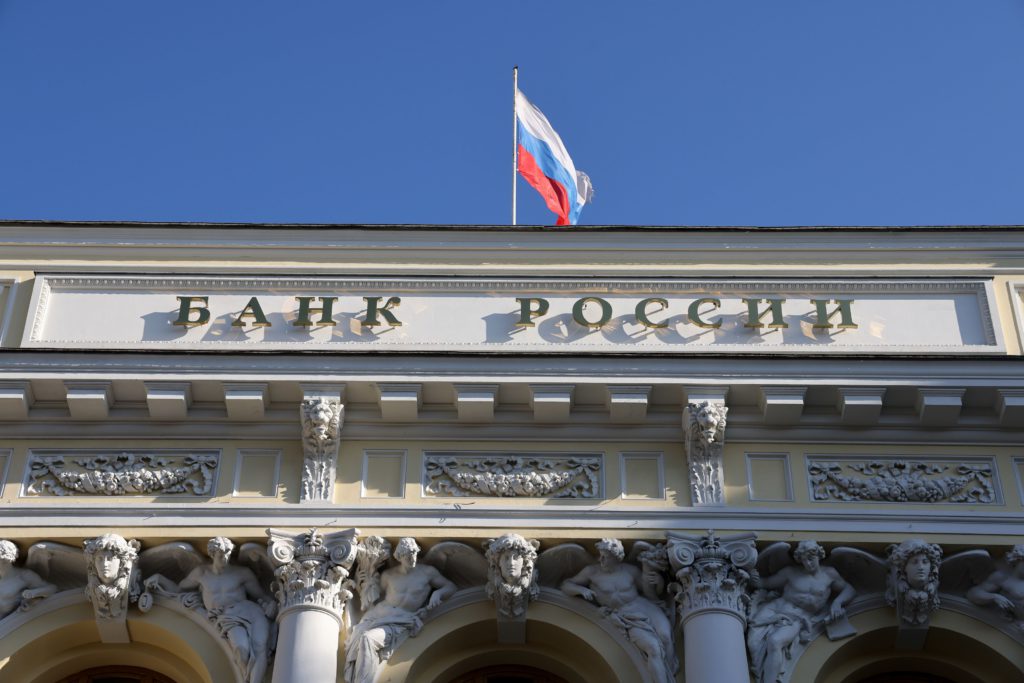
President Joe Biden’s administration has sanctioned Putin and Lavrov. It issued a ban on Russian oil and gas and forbid U.S. people and companies from doing business with the central bank of Russia, a move that has immobilized nearly half of the country’s foreign currency reserves.

  • Biden ordered the banning of all U.S. imports of Russian fossil fuels including oil, a major escalation of Western efforts to hobble Russia’s economy
  • The U.S. Treasury sanctioned Putin’s daughters Mariya Putina and Katerina Tikhonova and Lavrov’s wife and daughter as well as the members of the Russian Security Council; Treasury also sanctioned Belarusian officials and state-owned banks
  • The U.S. banned transactions with the Russian central bank, the Russian National Wealth Fund and the Ministry of Finance
    • The moves will “effectively immobilize” any Russian central bank assets held in the U.S. or by U.S. nationals, according to the Treasury
    • Putin’s war chest is an estimated $630 billion in reserves; Russia’s own data published in January shows that $100 billion of the reserves were held in U.S. dollars as of June
    • On April 4, the Treasury Department took aim at Russia’s effort to avoid a default on its sovereign debt by halting dollar debt payments from the nation’s accounts at U.S. banks
    • The U.S. separately issued a license allowing certain energy transactions with the central bank, an exemption a senior administration official said is aimed at minimizing the effects on energy markets in Europe
  • Biden is expected sign an executive order prohibiting new investment in Russia by U.S. people and companies no matter where they are located
  • Washington also banned major Russian banks from the SWIFT financial messaging service
  • The U.S. implemented full blocking sanctions on Sberbank and Alfa Bank as well as state-owned enterprises such as United Aircraft Corporation and United Shipbuilding Corporation
  • The U.S. issued full blocking sanctions on 328 members of the Russian Duma, the country’s lower house of parliament, more than a dozen Russian elites and 48 Russian defense companies as part of a package of sanctions unveiled during a trip by Biden to Europe to meet with NATO and G7 countries; among those targeted:
    • Herman Gref, the head of Russia’s Sberbank and an adviser to President Vladimir Putin
    • Russian billionaire Gennady Timchenko, his companies and his family members
    • 17 board members of the Russian financial institution Sovcombank
    • Defense companies Russian Helicopters, Tactical Missiles Corporation, High Precision Systems, NPK Tekhmash OAO and Kronshtadt
  • The Biden administration sanctioned the wife of Belarus President Alexander Lukashenko and re-designated him as a penalty for public corruption; Belarus has been hosting Russian troops involved in the invasion of Ukraine
  • The U.S. issued full blocking sanctions on Russian legislators, billionaires, bankers and their family members, including
    • Dmitry Medvedev, former president and prime minister of Russia and a member of the security council
    • Prime Minister Mikhail Mishustin
    • Dmitry Peskov, Putin’s press secretary, his wife Tatiana Navka, and two adult children Nikolay and Elizaveta
    • Ten members of the management board of VTB bank
    • Alisher Usmanov, one of Russia’s wealthiest individuals and a close ally of Putin
    • Nikolay Tokarev
    • Boris Rotenberg
    • Arkady Rotenberg
    • Sergey Chemezov
    • Igor Shuvalov
    • Yevgeny Prigozhin
  • The U.S. targeted Joint Stock Company Mikron, Russia’s largest semiconductor manufacturer and the developer of a chip for the country’s Mir payments system, as well as tech companies AO NII-Vektor, T-Platforms and Molecular Electronics Research Institute, which Treasury said are dependent on Western technologies and connected with the Russian defense industry
  • The U.S. also targeted the plane and yacht of billionaire Viktor Feliksovich Vekselberg, who was originally designated for sanctions in 2018
  • The U.S. also sanctioned seven Russian entities that control media outlets as well as 26 individuals who work at those outlets, an effort it said is aimed at halting Russian disinformation campaigns related to the invasion of Ukraine
  • The U.S. Justice Department unveiled a new “KleptoCapture” task force that will enforce sanctions and export restrictions and to seize luxury assets belonging to Russia’s wealthiest citizens: the first charges of sanctions evasions were leveled April 6 against Russian tycoon Konstantin Malofeev. 
  • The U.S. said sanctions on the Russian Direct Investment Fund would also extend to its CEO, Kirill Dmitriev, a close Putin ally
  • The Biden administration is asking crypto exchanges to help ensure that Russian individuals and organizations aren’t using virtual currencies to avoid sanctions leveled on them by Washington, according to people with direct knowledge of the matter

The U.K.

Prime Minister Boris Johnson ordered an asset freeze against all major Russian banks among a slew of measures. The pace of sanctions has picked up after his government accelerated the passage of an economic crime bill to target illicit Russian money in the U.K.

  • Russian aviation and space companies blocked from U.K. insurance market
  • Russian-owned, controlled, chartered or operated vessels blocked from U.K. ports. Russian-registered aircraft barred from landing in U.K., including Aeroflot planes
  • The U.K. was one of the main drivers to ban several Russian banks from using SWIFT and is calling for a total SWIFT ban for Russia
  • Ban on Russia’s central bank, ministry of finance and National Wealth Fund from accessing U.K. financial services. Asset freeze on Russian Direct Investment Fund
  • The U.K. government has also sanctioned some banks: VTB, Russia’s second largest, Alfa Bank, Rossiya, IS Bank, General Bank, Promsvyazbank and the Black Sea Bank. Russia’s biggest bank, Sberbank, banned from clearing sterling payments through the U.K.’s financial system
  • Legislation to stop all major Russian companies from raising finance on U.K. markets, and also to prohibit the Russian state from raising sovereign debt on U.K. markets.
  • Sanctions on more than 1,000 individuals, entities and their subsidiaries, including Rostec, Russia’s biggest defense company, drone producer Kronshtadt and the Wagner Group of Russian mercenaries. Diamond mining company Alrosa has also been sanctioned
  • Prominent individuals sanctioned so far include:
    • Vladimir Putin
    • Russian Foreign Minister Sergei Lavrov, and his stepdaughter Polina Kovaleva
    • Kirill Shamalov, Russia’s youngest billionaire and Putin’s former son-in-law
    • Roman Abramovich, including the Chelsea Football Club he owns and has now been put up for sale
    • Sberbank CEO Herman Gref
    • Petr Fradkov, head of Promsvyazbank (itself also sanctioned) and son of former head of FSB
    • Oleg Tinkov, founder of Tinkoff Bank
    • Denis Bortnikov, deputy president of VTB
    • Yury Slyusar, director of United Aircraft Corp.
    • Elena Georgieva, chair of the board of Novicom Bank
    • Volga Group founder and Novatek shareholder Gennady Timchenko
    • Stroygazmontazh founder Boris Rotenberg
    • Gazprom Bureniye shareholder Igor Rotenberg, Boris Rotenberg’s nephew
    • Kirill Dmitriev, CEO of Russian Direct Investment Fund
    • Alisher Usmanov
    • Igor Shuvalov
    • Mikhail Fridman, founder of Alfa Bank (which is itself sanctioned)
    • Eugene Shvidler, who the U.K. says has close links to Abramovich
  • Immediate ban on all exports of goods that could have military use, such as electrical components and truck parts
  • Legislation to prohibit a range of technology exports such as semiconductors and aircraft parts as well as goods for the extractive industries, such as oil refinery equipment
  • Limit of 50,000 pounds ($66,000) on deposits by Russian nationals in U.K. bank accounts
  • All sanctions also apply to Belarus; At least four Belarusian officials named for individual sanctions

The EU

The 27-nation bloc imposed four sets of sanctions against Russia, and also targeted Belarus. The most significant include:

  • A ban on all transactions with the Russian central bank and freezing its assets
  • Shutting down EU airspace to all Russian planes, including the private jets of oligarchs
  • Banning Russian state-owned media companies Russia Today and Sputnik
  • Excluding seven Russian banks from the SWIFT international payments system: VTB Bank PJSC, Bank Rossiya, Bank Otkritie, Novikombank, Promsvyazbank PJSC, Sovcombank PJSC and VEB.RF
  • Sanctioning Putin, Lavrov and some of Russia’s wealthiest tycoons, including Chelsea Football Club owner Roman Abramovich, as well as top officials in state companies and media
  • Banning the sale to Russia of luxury goods worth more than 300 euros, and of cars valued at more than 50,000 euros
  • Stopping exports from Belarus of products from mineral fuels to tobacco, wood and timber, cement, iron and steel
  • Sanctioning those Belorussians helping the Russian war effort
  • Stopping financial inflows from Russia into the EU by imposing limits on bank deposits and barring Russians from investing in EU securities
  • In lockstep with the U.S., introducing export controls on dual-use and high-tech goods, with a particular focus on electronics, computers, telecom and information security, sensors and lasers and marine applications
  • Banning exports of aircraft, aircraft parts and related equipment, as well as a ban on the sale of equipment and technology needed to update Russian oil refineries to modern environmental standards

Turkey

  • Turkey will restrict Russian warships from using waterways it controls to transit into the Black Sea due to Putin’s invasion of Ukraine, according to two Turkish officials familiar with the matter

Switzerland

President Ignazio Cassis of Switzerland, a historically neutral state that is not a member of the European Union, said the country would adopt the bloc’s sanctions on Russia, including asset freezes.

  • The Swiss government enforced EU sanctions against hundreds of Russian lawmakers and other officials including Putin and Lavrov
  • Swiss airspace has also been closed to all aircraft “with Russian markings”
  • Export of goods that could contribute to Russia’s military, defense and security sector prohibited
  • Providing technical assistance, brokering services or financing prohibited
  • Export of certain goods and services in the oil sector prohibited
  • Export of certain goods and technology that can be used in aviation and space industry prohibited
  • Providing public financing or financial assistance for trade with or investment in Russia prohibited
  • Other restrictive measures in the financial sector concern securities, loans and the acceptance of deposits
  • Transactions with the Russian Central Bank prohibited

Canada

Canada has matched U.S. and European sanctions on major Russian banks and key Russian individuals, including on Putin himself and his inner circle. 

  • All Canadian banks are prohibited from transactions with the Russian Central Bank, and all Canadians are banned from doing any deal involving new Russian debt
  • Canada has barred Russian airlines from using its airspace, and banned the import of Russian crude oil (although Canada hasn’t imported any since 2019)
  • It has canceled all existing export permits and halted new ones, which primarily affects the aerospace, technology and minerals sectors
  • Canadians are also prohibited from any financial dealings involving the disputed Ukrainian regions of Luhansk and Donetsk

Asia

Japan has joined many of the U.S. and European economic actions. Other Asian nations, including South Korea and Singapore, have indicated they will take some steps designed to deter Putin from continuing Russia’s assault on Ukraine.

Prime Minister Fumio Kishida announced late Sunday that Japan would back measures on SWIFT and freeze the assets of Putin and other Russian officials, including Lavrov. It will also freeze the assets of several financial institutions, including Russia’s central bank. 

  • Japan has also announced export controls, including on semiconductors, and a ban on visa issuance
  • Russia is barred from issuing government bonds in Japan
  • The government is set to sanction President Alexander Lukashenko among other individuals and groups from Belarus, and restrict trade with the country
  • South Korea will strengthen its screening of export control approvals and ban shipments of strategic goods to Russia, according to a foreign ministry statement
    • The country will participate in the SWIFT ban and decide on details after discussion
    • It will seek additional release of strategic oil reserve to help stabilize international energy market and consider resale of LNG to Europe
    • South Korea will increase humanitarian aid to Ukraine
  • Singapore’s government will impose unilateral sanctions against Russia, a move which a former diplomat said was the first time in decades that the city-state was censuring a foreign nation without United Nations Security Council backing
    • Foreign Minister Vivian Balakrishnan said Singapore plans to impose export controls on items that can be used as weapons in Ukraine “to inflict harm or to subjugate the Ukrainians”
    • Singapore will also block certain Russian banks and financial transactions connected to the country; the measures are being worked out and will be announced shortly, Balakrishnan told parliament on Monday
  • Some of China’s buyers have halted purchases of Russian coal due to concerns over Western sanctions that limit money transfers related to Russian exports, according to Chinese consultant Fenwei Energy Information Services Co.

More stories like this are available on bloomberg.com

©2022 Bloomberg L.P.
Close Bitnami banner
Bitnami

