
Bloomberg

Five Takeaways from the UN’s Latest 3,000-Page Climate Report

(Bloomberg) — The UN Intergovernmental Panel on Climate Change has released its latest 3,000-page look at how humanity can avoid compounding catastrophe if nations take sufficient action to do so. So far humanity hasn’t, the report concludes. Left unchanged, the world’s current emissions trend could result in warming of more than twice the target limit set forth in the 2015 Paris Agreement of no more than 1.5° Celsius (2.7° Fahrenheit) above pre-industrial levels. 

The new report updates previous work by the IPCC — its last work on this topic came out in 2014 — as well as assessing the potential of technology and offering evidence that climate action, done right, can improve the health and wellbeing of people around the world. Here are five top takeaways.

1.  1.5°C is almost out of reach 

Nations, cities, businesses and investors raced to reach net-zero emissions by 2050 after the publication of a previous IPCC report in 2018. Yet according to the new report, emissions have continued to drain the “carbon budget,” an accounting tool scientists use to estimate how much time is left before temperature limits are likely to be breached. The short time that’s passed makes keeping the goal much more difficult. While “net-zero by 2050” is a slogan with breathing room, a new factoid puts the challenge into sharper focus: Global greenhouse gas emissions must peak by 2025. 

2.  We know what to do and have the tools to do it 

More than a dozen countries have enjoyed a shrinking emissions rate for more than a decade, the panel said, with some seeing 4% annual declines consistent with a 2°C warmer world. There are cost-effective methods of cutting carbon that together could meet half the 2030 emissions target. Solar and wind costs fell 85% and 55% between 2010 and 2019, making them now cheaper than fossil-fuel-powered electricity generation in many places. Carbon-free and low carbon technologies, including nuclear and hydroelectric power, made up 37% of the electricity generated globally in 2019. The report heralds “digitalization” — robotics, AI, the internet of things — as a powerful way to increase energy efficiency and manage renewable power. ​​​​​​

3.  Carbon removal is “unavoidable” to reach net zero 

Keeping to the 1.5°C or even 2°C warming limit will be increasingly difficult without going into what scientists call “overshoot,” or surpassing the limit and then clawing back down. That means carbon removal is “unavoidable” for a path to net-zero emissions, the IPCC said. There are many ways to draw down CO₂. Some of them are tested by hundreds of millions of years of evolution, like halting deforestation and regrowing dense forests. Others are new and increasingly attracting investment, such as direct-air capture that scrapes carbon right out of the air.

To fall back below the 1.5°C target by 2100, the IPCC wrote, practices and policies — many of them still embryonic — would have to draw down almost a decade of CO₂ emissions, according to scenarios that “are subject to increased feasibility concerns.” 

4.   Behavior matters 

Climate scientists use the term mitigation to encompass all the ways that the causes of climate change can be tamped down. For the first time in an IPCC study focusing on these prevention methods, scientists looked at carbon-cutting from the demand side. Scaled behavioral and cultural changes, they found, can wring out 40 to 70% of emissions compared with recent trends. Beef consumption, air travel and building energy use are all areas where the combined decisions of many people can have a substantial impact.

Social science has rarely been a part of the IPCC process, but that changed as authors reviewed 100,000 relevant papers generated in recent years from those disciplines. The new report chapter dovetails with recent analyses quantifying just how much more wealthy people emit than everyone else: The top 1% of emitters are responsible for 70 times more pollution than people in the bottom 50%. 

5.  Politics shapes the process 

Media coverage of IPCC releases tends to focus on what’s called the “summary for policymakers,” a condensed version of the doorstop assessment. Every line of this document must be agreed on by delegates from 195 countries and the scientists who wrote the report. The approval session for the latest report lasted two weeks and was held virtually with hundreds of participants. Wrangling toward the end led to a 40-hour weekend sprint to push the report through the approval process. The IPCC’s work is scientific, but this layer of geopolitics leads to competition over every word, as negotiators to try to embed in final language protections of their own national interests. Although the summary must always reflect the science in the longer report, they don’t always match perfectly.

Sometimes, scientists lay bare a core problem in a way that diplomats never would. Such as when they write: “The interaction between politics, economics and power relationships is central to explaining why broad commitments do not always translate to urgent action.”

More stories like this are available on bloomberg.com

©2022 Bloomberg L.P.
Ex-Apple Worker Sues for $5 Million, Accusing Firm of Breaching New York Paycheck Law

(Bloomberg) — Apple Inc. was accused in a lawsuit flouting a New York labor law by not issuing weekly paychecks to its store workers who do manual labor. 

Raven Ramos, who worked at Apple’s Fifth Ave. store in Manhattan for more than seven years, claims the company paid her every other week, rather than weekly, as required by state law. 

Filed Monday as a class action on behalf of other workers, the complaint seeks “well in excess” of $5 million from Apple for delayed compensation payments under a law often invoked in lawsuits against employers. Ramos says her job’s manual tasks included unboxing products, emptying cash registers and helping customers on the sales floor.

Apple didn’t immediately respond to a request for comment.

More stories like this are available on bloomberg.com

©2022 Bloomberg L.P.

Venture Capital Giant Sequoia Capital Names New Leader

(Bloomberg) — Storied venture firm Sequoia Capital has named a new leader. Roelof Botha, 48, will become the senior steward of the firm.

Botha’s “keen instinct for innovation has made its mark on our partnership and on our industry,” Sequoia’s current chief Doug Leone wrote in a Twitter message on Monday. He also said that Botha will “set the overall tone and oversee the global centralized functions” of the firm, including its finance and culture, and that Botha will continue to lead Sequoia’s U.S. and Europe business as managing partner.

Leone, 64, said he will remain a general partner in the firm’s existing funds and will keep his board seats.

As part of the announcement, Sequoia said that Neil Shen will continue to lead the firm’s China business as the founding and managing partner. Forbes earlier reported the news of Botha’s new position.

Representatives of the firm are gathered in London for the firm’s annual meeting with limited partners, or institutional investors, kicking off Monday night. During a question and answer session Tuesday, the firm plans to outline its “next chapter,” Leone said in the statement.

Sequoia’s U.S. venture arm is the firm’s oldest business, dating to 1972. The firm has since expanded its U.S. group to Europe and launched separate venture arms in China and India. It also started wealth-management business Sequoia Heritage and public-and-private hybrid Sequoia Capital Global Equities. Over time, the firm’s business entities have been run increasingly independently as each has grown in size and impact. The venture arms share some limited partners, but not all, and make independent investment decisions, a spokeswoman said.

As recently as 2020, Leone used an elaborate metaphor involving mixed nuts to explain to the hosts on the Acquired podcast that the different parts of Sequoia take an equal percentage of profits. “We blend them and then we redistribute them so that we all get a share of mixed nuts but no one gets more nuts,” he said. A spokeswoman said there would be no change to the profit sharing system.

This year, the firm updated its structure so that it can participate in a broader range of investments outside of traditional venture capital and can hold onto invested capital for longer.

Recently, challenges have emerged in Sequoia’s China business as regulatory actions on both sides of the Pacific squeezed China’s technology industry and created unpredictability.

Sequoia has backed many of the world’s leading companies, ranging from Apple Inc. to Airbnb Inc. to Zoom Video Communications Inc. Founded by one-time semiconductor executive Don Valentine, it is one of the few venture firms to consistently out-perform the broader stock market decade after decade.

Botha, a former chief financial officer of PayPal, joined Sequoia in 2003, and became a steward in 2017, according to the letter. He will formally assume the global leadership role on July 5, the day after Leone turns 65.

(Updates with comment in the seventh paragraph. An earlier version of this story misstated Botha’s age due to an editing error.)

More stories like this are available on bloomberg.com

©2022 Bloomberg L.P.
Alibaba, Didi Fuel $93 Billion Rally for Chinese Stocks in U.S.

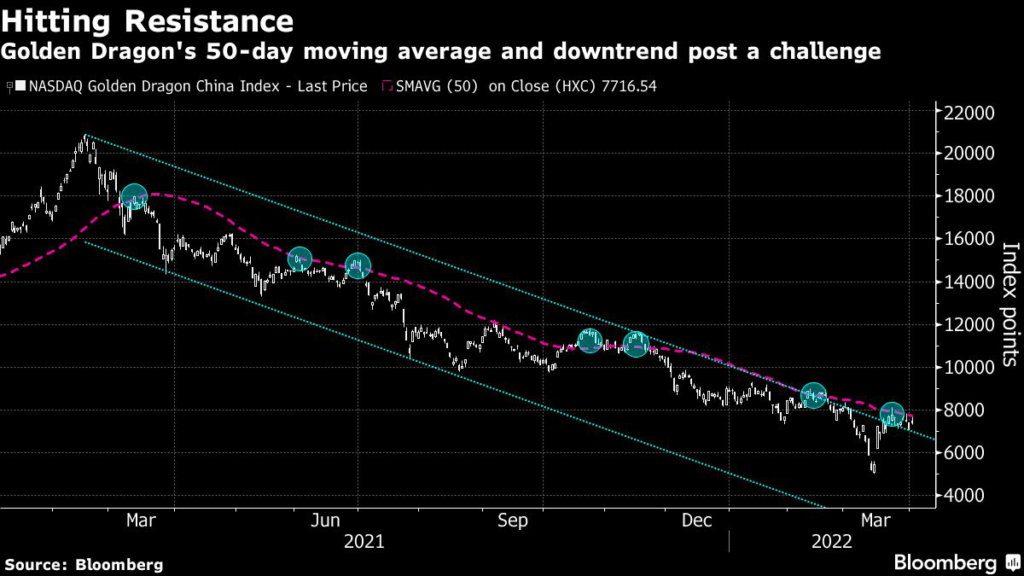
(Bloomberg) — Alibaba Group Holding Ltd. and Didi Global Inc. rallied for a second day, adding $93 billion in value to U.S. listed Chinese stocks as fears of potential delistings eased.

The Nasdaq Golden Dragon China Index jumped 7.4% Monday, adding to Friday’s climb after Beijing regulators published revised draft rules scrapping requirements that on-site inspections should be mainly conducted by Chinese regulatory agencies.

Alibaba rose 6.6% and Didi climbed 6.4%, while JD.com Inc. advanced 7.1%. Pinduoduo Inc., Bilibili Inc. and iQiyi Inc. were among the top gainers, climbing at least 16% each. The advance in American depositary receipts tracked a 5.4% gain in Hong Kong’s Hang Seng Tech Index, the sharpest in two weeks. China was closed for a holiday.

China Removes Key Hurdle to Allow U.S. Full Access to Audits 

“For now, investors are erasing the regulatory risk premium which is helping both markets and sentiment recover,” said Olivier d’Assier, head of APAC applied research at Qontigo. While the regulatory risks is receding, there still leaves a lot of macro risk which is yet unknown, as well as geopolitics, he added.


Beijing’s move could potentially remove a key hurdle to U.S. regulators gaining full access to auditing reports for Chinese companies listed in New York, ending a long-running dispute over data sharing. Last week, Bloomberg News had reported that Beijing is drafting a framework that will allow a majority of Chinese firms to keep their listings.

“We believe this is an important step in clarifying China’s stance on the audit dispute,” Morgan Stanley equity strategists led by Laura Wang said in an April 3 note. “We maintain our view that the likelihood of a final agreement being reached over the ADR audit dispute is now higher.”

China Rule Change to Help Ease U.S. Delistings Risk: Street Wrap

While the latest statement appears to show Beijing is more constructive on this, some remain cautious until the final resolution comes through. 

“I am expecting more twists going forward, as the U.S. and China go back and forth on this,” said Henry Guo, an analyst at M Science LLC. “The regulation overhang for Chinese ADRs should remain in the near future and investors are cautious about investing in them as regulation-related risks are totally out of their control.” 

SEC chief last week dialed down speculation of an imminent deal with Chinese counterpart on the delisting issue. 

(Updates share price moves throughout.)

More stories like this are available on bloomberg.com

©2022 Bloomberg L.P.

Alphabet’s Wing to Begin Biggest U.S. Drone-Delivery Test in Texas

(Bloomberg) — Alphabet Inc.’s Wing is set to begin the largest drone-delivery test program so far in the U.S., starting Thursday in the Dallas suburbs. 

Wing LLC, which had announced its intention to begin the Texas deliveries last October, has obtained permission for the program from the Federal Aviation Administration, the company said in a statement Monday. 

Wing will be selling items from a Walgreens store and is also working with other companies to deliver ice cream, pet medications and first aid kits, the company said.

Wing, Amazon.com Inc.’s Prime Air and United Parcel Service Inc., among others, are trying to remake the retail sales world by using small drones to deliver products to homes. But routine drone deliveries are still years away because U.S. regulations currently don’t permit some of the technologies, such as the robotic flights envisioned by the companies. 

“This is an important milestone for Wing and drone delivery in the U.S.,” Adam Woodworth, Wing’s company’s chief executive officer, said in a blog post.

The deliveries will be available to people living near Dallas in Frisco and Little Elm, the company said. 

The company, which does most of its business in Australia, says it surpassed 200,000 deliveries earlier this year. 

More stories like this are available on bloomberg.com

©2022 Bloomberg L.P.

Cryptocurrency Miner Marathon Digital Open to Sale at Right Valuation

(Bloomberg) — Crypto mining giant Marathon Digital Holdings Inc. is open to the possibility of being acquired for the right price, its chief executive officer said. 

The Las Vegas, Nevada-based company is among the world’s largest publicly traded Bitcoin miners with a market cap of about $2.9 billion. The company forecasts it will have the capacity to generate 10% of the total computing power for the Bitcoin network by early next year. 

“I am always willing to talk but it’s got to be the right price,” Fred Thiel said in an interview with Bloomberg during the Empower industry conference in Houston on March 31. “If somebody offers us a huge premium over our market cap, I have to take it under consideration and that may be the right thing to do for the investors.” 

The market for acquisitions stems from the potential for companies in the energy sector to reap higher margins by mining Bitcoin themselves rather than providing power and infrastructure to the miners. 

“A generating company can sell their electricity to themselves at a lower cost, so they would be the most profitable Bitcoin miner over time,” Thiel said. “How do they scale? They go find a big miner that they are going to acquire and they get scaled overnight.” 

Power companies could also balance electricity load demands to boost income. The mining operations can take up surplus power supplied from renewable generations such as wind and solar during off-peak times, while scaling back when the grid is under stress by high demand. 

For example, in a 500 megawatt power facility, using 200 megawatts to mine Bitcoin can generate additional cash flow, Thiel said. 

So far, however, only a handful of companies have dived into self-mining Bitcoin as it is difficult to gauge investment returns from mining given the volatile Bitcoin price. Energy producers such as Talen Energy Corp. own power and data centers and work with Bitcoin miners without investing more in expensive mining equipment. And building such facilities would require millions of dollars in grid upgrades for sites that are in a remote area, as well as an overhaul on power transmission systems. 

“Energy companies are going to be the companies that at the end of the day consolidate the industry,” Thiel said.  

Shares of Marathon rose 1.3% to $28.92 on Monday. They’ve dropped about 12% this year. 

(Adds the closing share price.)

More stories like this are available on bloomberg.com

©2022 Bloomberg L.P.

Spotify Podcast Union Is Ready to Strike Over Contract Terms

(Bloomberg) — A Spotify Technology SA podcast union said its members are willing to walk off the job if the company doesn’t meet its contract demands, complicating the streaming giant’s effort to build out that business.

The Parcast Union, affiliated with the Writers Guild of America, East, is meeting with management for final contract negotiations this month and said outstanding issues include staff diversity, control of intellectual property rights and pay. 

“While any negotiation is just that, and requires compromise, the Parcast Union believes it has already made significant compromises, and that the impetus now lies with management to make significant movement on at least some of their positions,” the union wrote in a letter to management. 

The bargaining committee told Bloomberg News that Spotify specifically doesn’t want to commit to a request that half of job candidates who make it past the phone interview stage be people of color, people who identify as LGBTQ+ or people with disabilities. They also added they haven’t agreed on acceptable salary minimums.

Some 97% of union members signed the pledge to strike, across the research, writing, fact-checking and production departments. Parcast makes shows like Brené Brown’s “Unlocking Us” and “Dare to Lead,” as well as Ashley Flowers’ “Very Presidential.”

The business is the last of Spotify’s three podcast studios without a final contract. Gimlet Media and the Ringer both ratified their agreements last year and established minimum base pay, as well as annual increases and severance. However, neither secured an agreement on intellectual property that would allow members to own their work or share in the benefits of derivative works. 

A strike would be a first for Spotify and would come at a particularly fraught time for its podcast ambitions. The company laid off the internal team at its fourth podcast studio, known as Studio 4, in January, and has struggled to get much of its headline-driving content off the ground. 

Parcast, for example, was said to be producing Kim Kardashian’s criminal justice show, but has yet to even release the name of the program. Archewell Audio, from Prince Harry and Meghan Markle, only just announced the forthcoming release of a podcast this summer, over a year after their deal began. Meanwhile, Barack and Michelle Obamas’ content arm, Higher Ground, is also reportedly shopping for a new partner after producing multiple shows with Spotify, according to Insider.

More stories like this are available on bloomberg.com

©2022 Bloomberg L.P.
SEC’s Gensler Calls for Watchdogs to Collaborate on Crypto Oversight

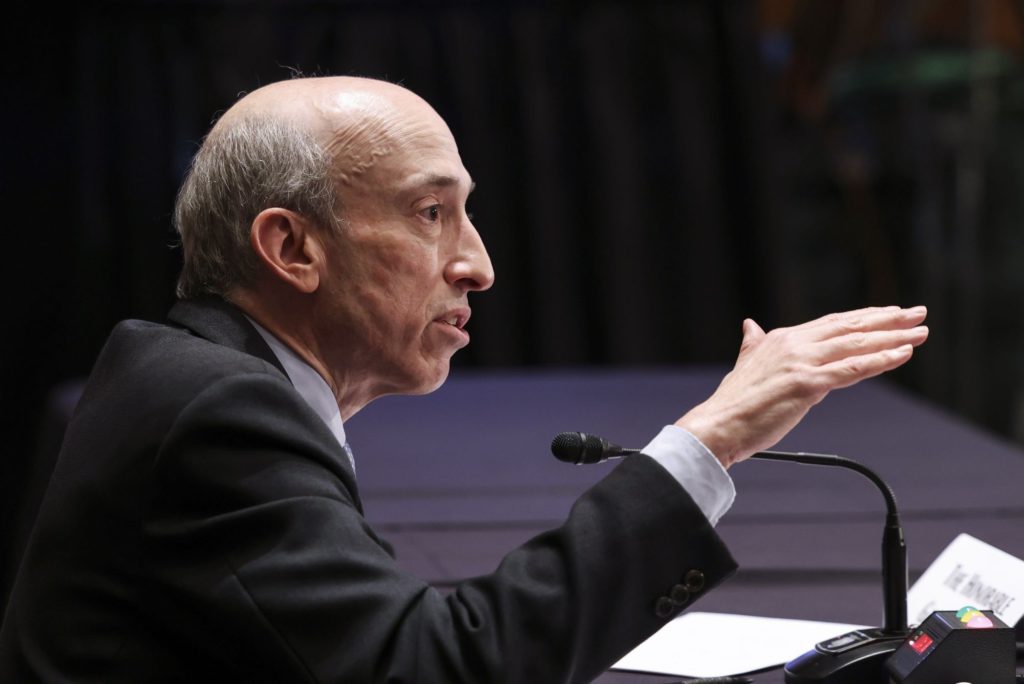
(Bloomberg) — Securities and Exchange Commission Chair Gary Gensler said his agency and the top U.S. derivatives regulator should work together to rein in cryptocurrency exchanges.  

Gensler has asked SEC staff to collaborate with the Commodity Futures Trading Commission to develop a new plan to oversee platforms trading tokens that are a mix of securities and commodities, according to remarks at an event hosted by the University of Pennsylvania Carey Law School. More rules are needed for exchanges because retail investors are currently vulnerable to scams and market manipulation, he said. 

“I’ve asked staff to consider how best to register and regulate platforms where the trading of securities and non-securities is intertwined,” Gensler said on Monday.

While the SEC has jurisdiction over securities, the CFTC regulates the U.S. derivatives market — which has prompted a debate about which agency should take the lead in policing crypto. Exchanges such as FTX Trading Ltd. are pushing for the CFTC to take on an expanded role, while lawmakers on Capitol Hill as well as Gensler and CFTC Chairman Rostin Behnam have been jockeying for control.  

Gensler said the SEC is also looking into whether platforms that take custody of customers’ assets are protecting them adequately, and if that function should be segregated from normal trading operations. The SEC chief has repeatedly said most tokens are securities and should be subject to his agency’s rules.

“The fact is, most crypto tokens involve a group of entrepreneurs raising money from the public in anticipation of profits — the hallmark of an investment contract or a security under our jurisdiction,” Gensler said.  

More stories like this are available on bloomberg.com

©2022 Bloomberg L.P.

Ghana to Invest $25 Million in Tourist Sites to Lure Visitors

(Bloomberg) — Ghana will invest $25 million this year to upgrade its iconic tourist sites to give impetus to a new project that aims to attract one million visitors a year from Europe by 2024, dubbed ‘Destination Ghana,’ Joy FM reported.

The West African nation will rehabilitate the famous Elmina and Cape Coast Castles, the Kwame Nkrumah Memorial Park, the Mole and Kakum National Parks and cultural museums in the Northern, Ashanti, Eastern and Volta regions, the Accra-based radio broadcaster said, citing President Nana Akufo-Addo. Destination Ghana, which was launched by the president in London on April 3, seeks to build on the ‘Year of Return’ held in 2019 and increase activity in the tourism industry after the opening of land and sea borders a week ago, ending Covid-19 restrictions imposed at the beginning of the pandemic.

The country will separately inject $15 million into small and medium-sized enterprises in the hospitality industry to improve their performance and complement the project, Joy FM said.

Read more on the “Year of Return”

More stories like this are available on bloomberg.com

©2022 Bloomberg L.P.

South Africa Ends State of Disaster After More Than Two Years

(Bloomberg) — South African President Cyril Ramaphosa declared an end to the state of disaster he declared more than two years ago to manage the coronavirus pandemic.

Transitional measures, including the wearing of face masks at indoor public spaces and limits on gatherings, will remain in place until new regulations are promulgated next month, Ramaphosa said in a speech broadcast on state radio on Monday. The announcement enables all economic activity to continue as normal.

“The end of the state of disaster is a firm commitment to rebuild our economy even while the coronavirus exists among us,” he said.

The government introduced a series of strict lockdowns under the state of disaster, including restrictions on business activity that led to the biggest economic contraction in at least 73 years in 2020.

South Africa has had 3.7 million confirmed coronavirus cases so far and more than 100,000 of those who were diagnosed with the disease have died, although excess-deaths data show the true toll is probably about three times higher. About 44% of adults have been fully vaccinated.

More stories like this are available on bloomberg.com

©2022 Bloomberg L.P.

Close Bitnami banner
Bitnami
