Bloomberg

Russian Space Agency Head Threatens to End ISS Missions

(Bloomberg) — The director of Russia’s space program said economic sanctions aimed at the country threaten partnerships at the International Space Station and he supports a move to end future cooperation with other agencies.

In a series of social media posts Saturday, Roscosmos general director Dmitry Rogozin shared what he claimed were replies from the respective heads of the National Aeronautics and Space Administration, the European Space Agency and the Canadian Space Agency to his demand that their countries lift sanctions against enterprises involved in the Russia space industry.  

NASA released a statement Monday saying that U.S-Russia civil cooperation will continue on the space station.

“The professional relationship between our international partners, astronauts and cosmonauts continues for the safety and mission of all on board the ISS,” NASA Administrator Bill Nelson said.

Questions regarding Russia’s relationship with the ISS have brewed since the country invaded Ukraine in February. Rogozin told a state-owned television network last month that Russia would end sales of rocket engines to the U.S., and Moscow canceled the launch of three dozen satellites for OneWeb, a London-based satellite internet company partly owned by the U.K. government. 

Rogozin will shortly submit to Russian leaders specific proposals on ending cooperation on the ISS, he said in the social media posts.   

At the moment though, ISS operations seem mostly unaffected by politics on Earth. NASA astronaut Mark Vande Hei returned to earth in a Soyuz capsule on Wednesday, landing in Kazakhstan with two cosmonauts. Vande Hei spent a record 355 days onboard the ISS. Three Americans, three Russians and a German are currently based at the ISS, while Axiom Space plans to send up three space tourists and their captain as soon as April 6. 

NASA plans to operate the space station through 2030. SpaceX and Northrop Grumman Corp. were awarded NASA contracts on March 25 for a dozen more cargo missions to the ISS.  

(Adds comment from NASA in third paragraph)

More stories like this are available on bloomberg.com

©2022 Bloomberg L.P.

Terra CEO Says Bitcoin Can Weather Any Loss of Peg to Stablecoin

(Bloomberg) — Do Kwon, the founder of Terraform Labs, which powers the Terra blockchain, said the Bitcoin market is “liquid” enough to handle any potential de-pegging of its stablecoin.  

“People need to have a little bit more faith in crypto,” the South Korean entrepreneur said during an interview Monday on Bloomberg Quicktake. “If you look at Bitcoin, it turns over more than $20 billion per day and I think with time, it’s going to be even more liquid.”

Terra has been the talk of the cryptocurrency market since Kwon announced last month that it will eventually buy $10 billion in Bitcoin to serve as a reserve to back its decentralized stablecoin. The coins are used to facilitate trading on exchanges by minimizing the volatile price swings seen by most cryptocurrencies. Kwon’s Singapore-based Luna Foundation Guard has helped purchase more than $1.4 billion of Bitcoin so far. 

“Even if a stablecoin were to de-peg over time and those reserves would be used to defend that peg,” Kwon said. “I think [the Bitcoin market] would more than easily be able to absorb the Bitcoin that enters the market.”

The UST stablecoin, now with a market value of more than $16 billion, is not backed by a fiat currency like centralized stablecoins such as Tether. It has been able to maintain its peg to the dollar by issuing and destroying Luna tokens, Terra’s native cryptocurrency. For every new UST created, $1 worth of Luna is burned on the Terra blockchain. A Bitcoin reserve is designed to help improve UST’s ability to keep its dollar peg.

After an initial $3 billion “bootstrap” Bitcoin purchase, Kwon said the reserve will add Bitcoin through seigniorage, or the using of the profit made while issuing a currency because of the difference between the face value of the currency and the production cost. For every UST minted, funds will be used to purchase more Bitcoin for the reserve, he said.

“The important thing to remember about Terra is that is a decentralized stablecoin in the sense that it has no issuer,” Kwon explained. “If you were holding some sort of centralized collateral…bonds, Tether stablecoin, or [Circle’s USDC], in that case, whoever is holding the largest amount of these reserves would be subject to censorship, and would defeat the entire purpose of having decentralized stablecoin in the first place.”      

More stories like this are available on bloomberg.com

©2022 Bloomberg L.P.

China 737 Jet-Crash Clues Awaited as Black Boxes Arrive in U.S.

(Bloomberg) — Investigators trying to figure out why a Boeing Co. 737-800 plunged to the ground in China last month could gain key clues within days from the jet’s black boxes, which were sent to the U.S.

“I’d expect within a week the investigation team would have the information,” said Neil Campbell, a retired air-safety investigator at the Australian Transport Safety Bureau who worked on the Boeing 737 Max disaster in Indonesia in 2018. “For an accident like this, the recorders are critical.”

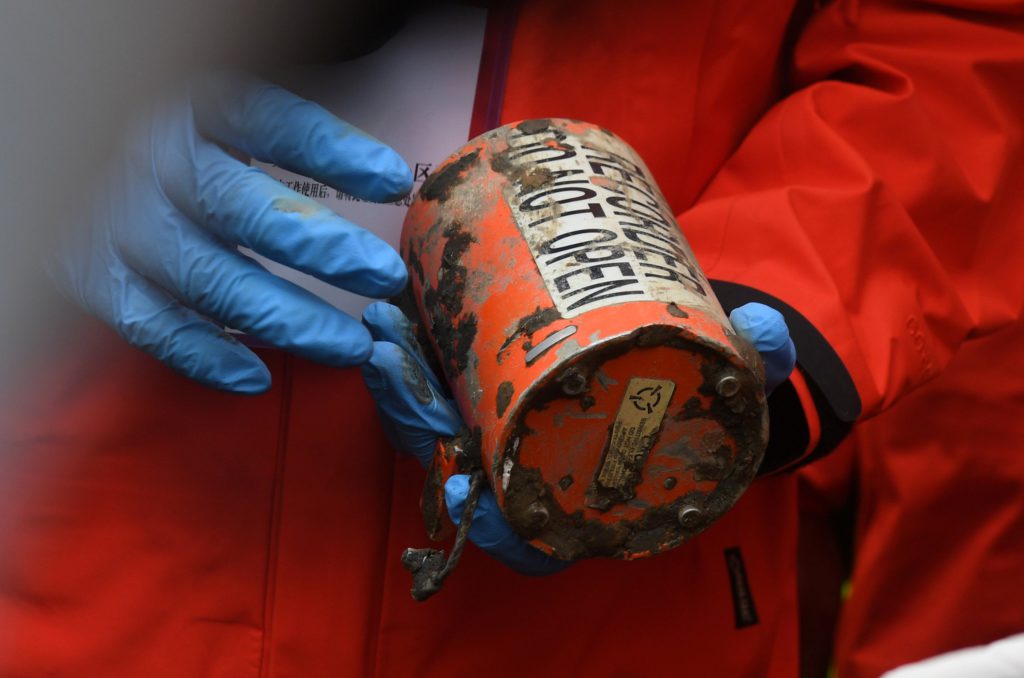
The two flight recorders, built to withstand high-speed impacts, have become central to solving the March 21 mystery considering the China Eastern Airlines Corp. flight disintegrated into more than 40,000 pieces when it slammed into a hillside.

Both Boeing and China Eastern have much hanging on an investigative breakthrough.

More than 200 of China Eastern’s Boeing 737-800 planes have been grounded for two weeks now because there was no obvious reason why the jet entered a sudden nosedive, killing all 132 people on board. And any evidence that clears or implicates Boeing could be critical for the U.S. manufacturer in China, where it’s working to resume deliveries of the 737 Max jet after a three-year halt. 

Read more: NTSB Is Helping China Decipher Black Box Clues to 737 Crash

Results from the black box analysis could take up to two weeks, said Mike Poole, chief executive officer of Ottawa-based Plane Sciences, which helps countries develop air-accident investigation capabilities. 

Poole said he’s never known data to be totally irrecoverable because of the force of a crash but said it still takes time to download it, convert it into useful information and analyze the details correctly.  

China Eastern Flight 5735 from Kunming to Guangzhou was cruising at about 29,000 feet when it suddenly dived at high speeds. It slammed into a forested hillside about 100 miles from its destination.

Fears Alleviated

The dispatch of the black boxes to the U.S. National Transportation Safety Board laboratory in Washington alleviates concerns, at least to some degree, that strained U.S.-China relations might hamstring the investigation into the disaster.

The exact status of the two recorders remains unclear. NTSB spokesman Eric Weiss declined to go beyond the investigation agency’s statements on Friday.

The safety board has said it was assisting the CAAC with the download of the cockpit voice recorder at its lab in Washington, but wouldn’t be releasing any information about its contents. The NTSB also hasn’t commented on whether the download was successful.

The flight-data recorder, which captures hundreds of parameters monitoring an aircraft’s path and systems, was also brought to Washington by the Chinese, a person familiar with the process said last week.

The NTSB has declined to comment on whether it has downloaded the contents of the data recorder.

U.S Team

Chinese authorities have also allowed a seven-person team sent by the NTSB to arrive in China, according to the official Xinhua News Agency. In another sign of cooperation, investigators have been given the green light to avoid quarantine and start work immediately if they limit contact with those outside the probe, the NTSB said.

Even when flight recorders are severely damaged, it’s still possible to extract information from the individual memory chips inside, said Joe Hattley, a former aircraft accident investigator who worked on the disappearance of Malaysia Airlines Flight 370 in 2014. He now teaches the subject at UNSW Sydney’s School of Aviation.  

“I’d be surprised if we didn’t get everything from those flight recorders,” said Hattley.

Damaged Module

The devices are designed to withstand the force of coming to a full stop within two meters from a collision at 500 kilometers per hour, according to retired investigator Campbell.

Photographs of one of the China Eastern black boxes indicates the module that houses the flight information sheared off its chassis.

In order to retrieve the data, investigators would need to open the module, access the circuit board, replace the cable and then plug it into a new chassis, said Campbell. That’s work only a handful of entities around the world, including the NTSB in the U.S., can do, he said.

“It’s not something you want to be doing in anger for the first time,” Campbell said. “It is important to have the right expertise and knowledge.”

(Updates with NTSB comment in 10th paragraph)

More stories like this are available on bloomberg.com

©2022 Bloomberg L.P.

‘Monopolies Must Go’: Tech Giants Feel Rivals’ Antitrust Wrath

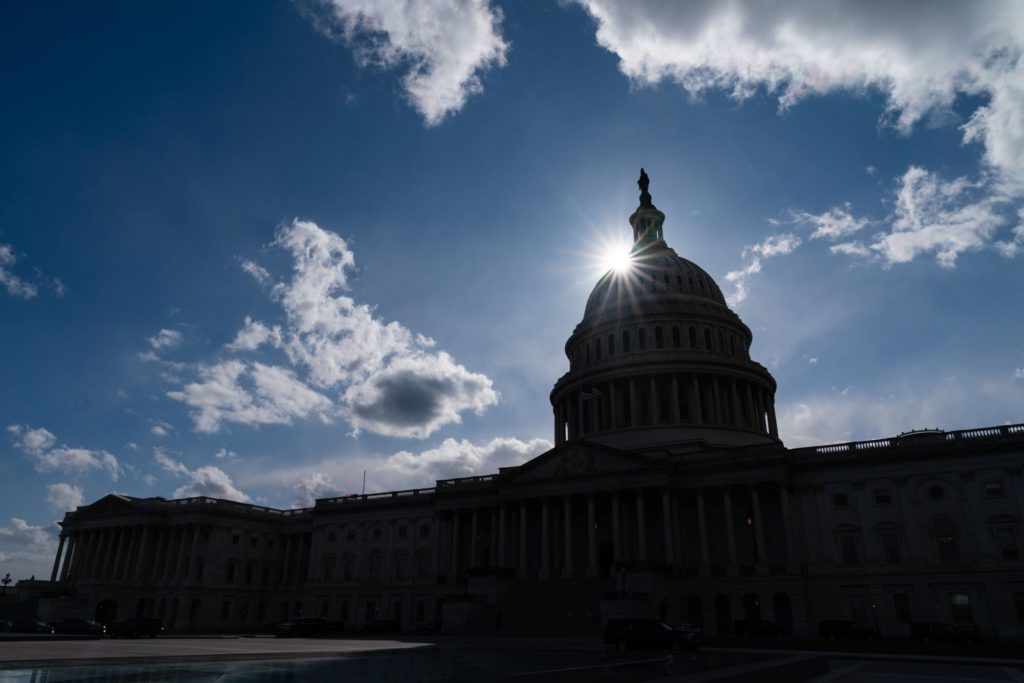
(Bloomberg) — Tonight commuters leaving Capitol Hill will be greeted with a light show projecting a message cast onto buildings: “Monopolies must go.”

The art installation is part of a campaign dubbed “Antitrust Day” to encourage lawmakers to advance tech-focused regulations before a window closes to vote the measures into law.

Companies including Yelp Inc., Match Group Inc., and Spotify Technology SA are urging users to write their representatives encouraging them to pass laws in a package of bills designed to curb the power of giant internet companies. 

The coalition is focusing on two pieces of legislation — the Open App Markets Act and the American Innovation and Choice Online Act. The first would open up app stores operated by Apple Inc. and Alphabet Inc.’s Google, while the second is designed to prevent large internet platforms like Amazon.com Inc. from giving priority to their own products and services. 

More than 100 companies and think tanks are participating in the action organized in part by Fight for the Future, which coordinated online protests in favor of net neutrality in 2012. Advocacy groups involved include the Electronic Frontier Foundation, MoveOn, and Public Knowledge, which was founded by Federal Communications Commission nominee Gigi Sohn. President Joe Biden’s adviser on technology and competition policy, Tim Wu, also tweeted support.

The Justice Department’s antitrust chief Jonathan Kanter wished viewers a “Happy Antitrust Day” during a speech at an enforcers’ summit Monday. Last week, the Justice Department formally voiced support for the American Innovation and Choice Online Act, which would prohibit dominant platforms from giving an advantage to their own products, such as Google Maps or Apple Music. 

Lobbying around the tech-focused antitrust bills is peaking as the window closes for major legislation before the start of midterm campaigns. Two more lobbying events are planned this week by pro-industry coalitions opposed to new antitrust legislation. 

NetChoice, which is funded by firms including Amazon and Google, dubbed Monday “Defend America’s Competitive Edge Day,” and plans to lead industry and civil society groups to meet with lawmakers and lobby against the bills. Later in the week, TechNet, which represents a similar roster of the largest tech firms, will be meeting with lawmakers to support the semiconductor funding bill, federal privacy legislation, and oppose the antitrust bills.

“The conflict in Ukraine, a Supreme Court vacancy, energy policy, and so forth have all understandably been priorities for lawmakers in the last month,” said Matt Fossen of Proton AG, which makes encrypted email and VPN services. “We see this week as a particularly good window to put competition back on everyone’s radar, especially as we move toward potential votes later in the spring or the summer.”

More stories like this are available on bloomberg.com

©2022 Bloomberg L.P.

Your Next Bottle of Vodka Could Be Made From Captured Carbon

(Bloomberg) — Vodka. Jet fuel. Hand sanitizer. Perfume. A growing number of companies are turning carbon dioxide captured from the air or factory smokestacks into everyday products so the greenhouse gas doesn’t escape into the atmosphere and heat the planet — or at least gets recycled a few times before it does.

Carbon capture technology works by separating CO₂ from other gases using expensive solvents that attract the molecules like iron filings to a magnet. Once captured, the CO₂ can be buried deep underground in places such as depleted oil and gas wells, where it remains for centuries. But that process has its challenges. On top of the high cost, companies also have to figure out how to transport the CO₂ and find the right geological structures in which to store it.

That’s why some startups are turning to what’s known as “carbon capture and utilization” (CCU), where the CO₂ is used to make goods that can be sold to fund the scaling up of their technologies. There’s a potential $1 trillion market in the U.S. alone for products made from captured CO₂ emissions, according to non-governmental organization Carbon180, ranging from plastics and building materials to food and drinks.

One replacement product that can really make a difference in the global effort to reach net-zero emissions is aviation fuel, because there’s currently no fossil fuel-free way to make it.

Dimensional Energy is attempting to make useable fuel from waste carbon and sunlight. Their process works by adding water to captured carbon and heating the mixture to high temperatures using electricity generated from solar panels. Catalysts are introduced that combine the carbon and hydrogen atoms from water into a compound that can be turned into fuel for cargo ships and passenger planes.

“What our process does is it takes what has formally been treated as waste and makes it usable,” Chief Executive Officer Jason Salfi told Bloomberg TV.

The company plans to capture and use its first 500,000 tons of CO₂ by the end of the decade, an extremely ambitious goal. By comparison, the largest carbon-capture plant in operation today — the Orca facility in Iceland run by Climeworks AG — can only capture 4,000 tons of CO₂ a year.

The problem for companies such as Dimensional is that CCU was born as a means of raising funding for carbon capture technologies. But today, with scores of governments and companies setting targets to zero out emissions, there’s been a surge in investor interest in companies that simply capture CO₂ and store it away.

It will always be more effective from a climate perspective to trap captured CO₂ underground than attempt to use it again, according to Howard Herzog, a senior research engineer at the MIT Energy Initiative. Turning the gas into something else requires energy and it’s not always easy to get that from completely renewable sources, including hydrogen. That limits the ability of these processes to have a meaningful climate impact, especially when there are other ways to cut emissions from most of these products, he said.

While it can be an effective marketing tool, experts say in most cases there’s no need to replace everyday goods with versions made from captured carbon. When it comes to things like alcoholic drinks and hand sanitizer, they’re at best an educational tool for the benefits of investing in carbon-capture technology and at worst a gimmick that doesn’t do the planet much good.

Brooklyn-based Air Company, for example, says it’s created the “most sustainable alcohol in the world” by mixing captured CO₂ with hydrogen made from water and wind power. Their spirits can be turned into a variety of consumer goods, including vodka, which starts at $65 a bottle.“Using the same area of land, our technology absorbs CO₂ at around 100 times the rate of a well-curated forest” said Air Company Co-Founder Gregory Constantine. 

Several other companies are aiming key to replace a plethora of basic goods.

U.K. startup Adaptavate has created drywall that uses agricultural waste and a lime-based binder that captures CO₂. If its product ends up being widely used, it could cut emissions from the global building sector, which was responsible for as much as 38% of global energy-related emissions in 2019.

Econic Technologies, founded at Imperial College London in 2012, has developed technology that uses captured CO₂ to make polymers that are the starting point for a range of consumer and industrial products. Econic’s catalyst and process, which it licenses to manufacturers, can replace as much as 50% of traditional oil-based raw materials, according to Chief Executive Officer Keith Wiggins.

The company wants to substitute polyurethane, a polymer that’s used to make foams that are found in insulation, mattresses, fridges to coatings and adhesives. Econic announced a co-production partnership with India’s Manali Petrochemicals last year and says that if all polyurethane worldwide was made with their technology, more than 11 million tons of CO₂ emissions would be avoided.

But a study published in the journal Nature in 2017 was less optimistic about the potential of how big CCU can get. The researchers concluded that even if there was enough clean energy available to support large-scale CCU, the actual contribution of the sector to reaching net-zero globally would be negligible, at less than 1%, making it a costly distraction.

“Carbon utilization has advantages as a climate solution,” said Giana Amador, policy director at Carbon180, but it doesn’t permanently eliminate carbon from the atmosphere. “Neither carbon capture nor carbon removal is a license for fossil fuel companies to continue emitting,” she said.

(Corrects location of Orca facility in seventh paragraph.)

More stories like this are available on bloomberg.com

©2022 Bloomberg L.P.

U.K. Signals Crypto Engagement With Stablecoin Regulation, NFT

(Bloomberg) — The U.K. announced a plan for government oversight of stablecoins and said it would consult on regulating a wider set of cryptoasset activities, signaling engagement with an industry it has clashed with at times as digital assets gain mainstream appeal.

The government will amend existing legislation for electronic payments to bring stablecoins —  a form of cryptoasset that is typically pegged to a fiat currency such as the dollar — under the remit of regulators. Stablecoin-based payment systems will also be subject to appropriate competition regulation by the Payment Systems Regulator. Those stablecoin activities deemed to have the potential to be systemic risks will be regulated by the Bank of England, according to the report.

“The government considers that an amended e-money framework can deliver a consistent framework to regulate stablecoin issuance and the provision of wallets and custody services,” the U.K. Treasury said in a report Monday. 

Britain’s top financial authorities, including the Bank of England and the Treasury, have stepped up scrutiny over the crypto sector in recent months, and some in the industry have warned of an exodus of talent without a clearer regulatory framework. The efforts announced Monday are an attempt to address some of these concerns and help make the case for Brtain as a crypto-friendly environment.  

In a speech Monday, Economic Secretary to the Treasury John Glen described  the underlying technology used for crypto – distributed ledger technology and blockchain – as game-changing, and stated the U.K. is open for crypto business. Meanwhile, Chancellor Rishi Sunak asked the Royal Mint to create a nonfungible token (NFT) to be issued this summer. 

“If crypto-technologies are going to be a big part of the future, then we — the U.K. — want to be in, and in on the ground floor,” Glen said at the Innovate Finance Global Summit in London.

Chris Perkins, the president at CoinFund, a blockchain-focused investment firm, told Bloomberg it is imperative that governments around the world remain consistent and transparent when it comes to regulation around stablecoins.  

“This will give founders and entrepreneurs the confidence to innovate, create and drive value.  Stablecoins power web3. With the right policies in place, stablecoins will be a huge opportunity — not a threat — for the global financial system,” said Perkins. 

Former Chancellor of Exchequer Philip Hammond  — now a senior adviser for crypto firm Copper — warned in January that Britain has fallen behind other finance hubs in Europe when it comes to setting clear regulation on the burgeoning crypto industry.  

(Adds more details throughout.)

More stories like this are available on bloomberg.com

©2022 Bloomberg L.P.

DirecTV to Drop One America News on Tuesday Despite Pressure

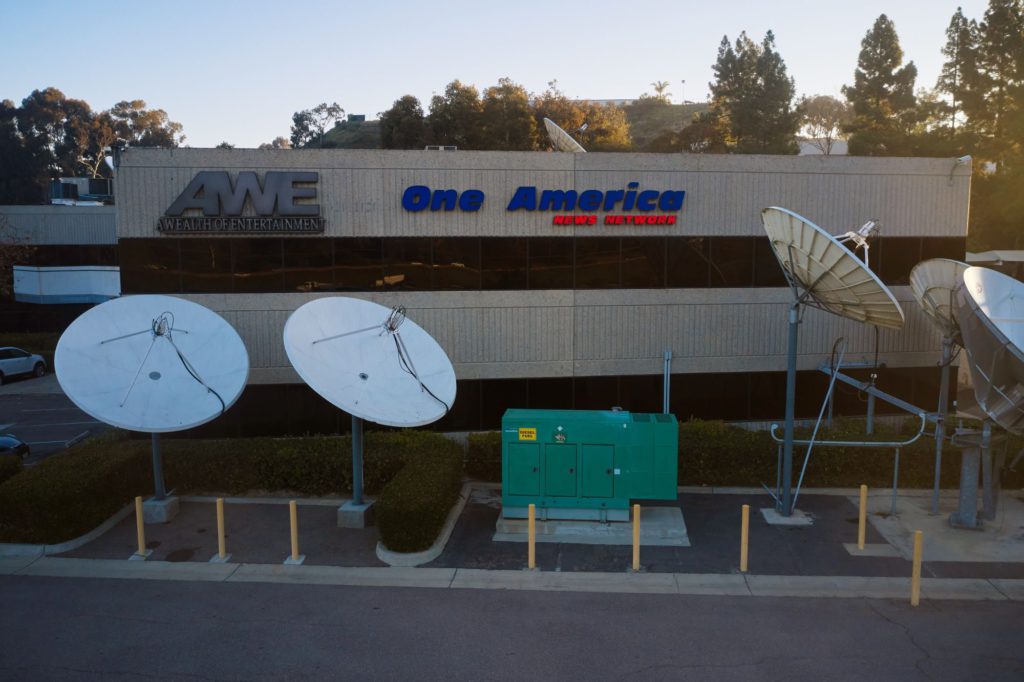
(Bloomberg) — DirecTV plans to drop One America News Network on Tuesday, ignoring pressure to reverse course from the conservative cable outlet and its supporters.

The satellite TV giant has been notifying customers that it will no longer carry OAN or AWE, a high-end lifestyle channel also owned by Herring Networks Inc., after April 4. 

DirecTV, a joint venture between the private equity firm TPG Inc. and AT&T Inc., said in January that it planned to drop OAN, which was criticized for spreading misinformation about the pandemic and the 2020 election, when its contract expires. OAN began airing on DirecTV in April 2017.

Last month, DirecTV said it would begin offering another conservative option, Fox Nation, a subscription streaming app for Fox News fans.

In recent weeks, OAN and its supporters have tried to pressure DirecTV to keep the network. In March, Herring Networks sued AT&T and DirecTV, alleging breach of contract. In the lawsuit, Herring said that “the economic consequences of losing carriage with DirecTV could be devastating to OAN.” 

Also in March, Republican attorneys general in six states sent a letter to DirecTV, saying the company was bowing to pressure from “powerful left-wing voices.” Former President Donald Trump has called for a boycott of DirecTV if it drops OAN, which had been a loyal supporter of his administration.

On its website, OAN says it can still be seen on a few smaller pay-TV services, like Verizon Fios. It’s also available online through its app, One America News Plus, and via KlowdTV, an online bundle of TV channels which is offering a $2.50-per-month package that also includes the conservative networks Newsmax and InfoWars.

More stories like this are available on bloomberg.com

©2022 Bloomberg L.P.

Trouble Is Brewing Under the Stock Market’s Surface, BTIG Says

(Bloomberg) — Cyclical shares tied to the U.S. economy’s health including banks, homebuilders and transports are struggling against the broader stock market, a telltale sign that investors remain hesitant to pour money into riskier corners of the market, according to BTIG, a U.S. brokerage firm. 

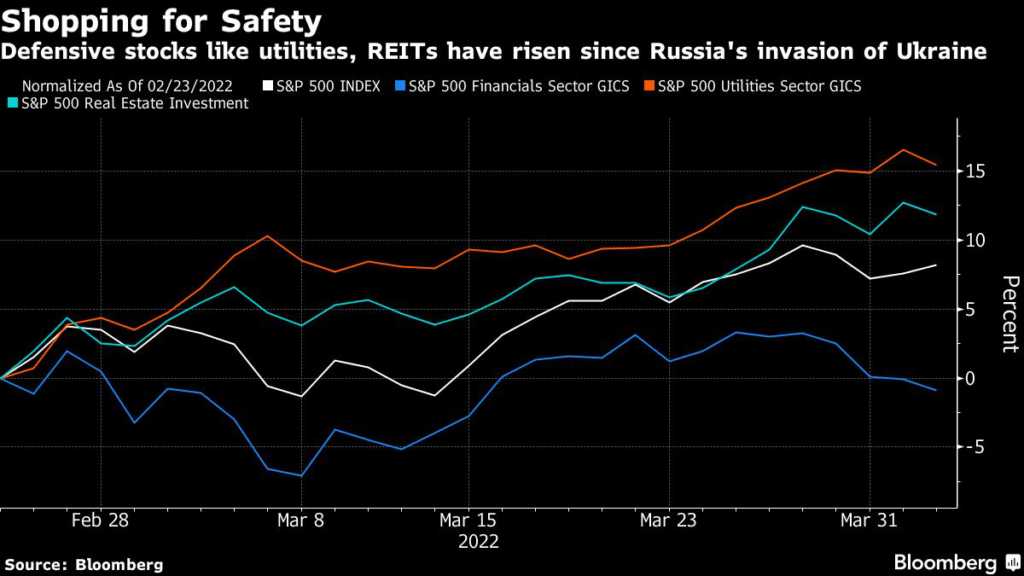
The S&P 500 Index has rebounded 8% since Russia’s invasion of Ukraine on Feb. 24. But sectors perceived as safer such as utilities and real estate have outperformed their cyclical counterparts this year, raising questions about the durability of the benchmark index’s latest rally as investors remain concerned about the trajectory of the global economy. In a note to clients called “Trouble Brewing Under The Hood,” BTIG said it maintains a cautious view broadly on U.S. equities.

“The late March rally broke the market’s downside momentum, but hasn’t thus far done enough to reverse it,” Jonathan Krinsky, chief market technician at BTIG, told clients. “The magnitude and velocity caused many bulls to declare the low is in, and while that could certainly be the case, when we look under the surface, the market is giving a pretty cautious message.”

The recent rally in utilities and REITs has occurred alongside a surge in Treasury yields. Last week, a key part of the yield curve inverted, with the U.S. two-year yield exceeding the 10-year for the first time since 2019. That has triggered worries of an eventual recession. 

Investors who are hungry for yield tend to pour money into utilities and real estate in times of uncertainty because they typically pay higher dividends and have steady cash flow. Banks, however, have struggled during yield curve inversions since it can hinder their net interest margins since they’d be borrowing money at higher rates.

Read: Morgan Stanley’s Wilson Says ‘Bear Market Rally’ Is Now Over

In addition, the Philadelphia Semiconductor Index, which has climbed 4% in the past month, is testing support against the S&P 500 and is threatening to turn in a downtrend, Krinsky pointed out. Chip stocks, used in several hot areas of growth from data centers to artificial intelligence, were swept up in this year’s tech rout amid concerns over rising interest rates and supply shortages, but they have showed signs of demand recently. The Philadelphia Semiconductor Index has shed 14% in 2022. 

To be sure, strategists at JPMorgan Chase & Co. think growth concerns are overblown and have called for more upside to stocks. BTIG’s cautious view on equities comes as Morgan Stanley said the recent rebound in the stock market will prove short-lived. 

More stories like this are available on bloomberg.com

©2022 Bloomberg L.P.

Solomon Partners Names Rich Brail M&A Chair, Promoting From Within

(Bloomberg) — Solomon Partners, the firm previously known as PJ Solomon, is promoting from within for the newly created role of chairman of mergers and acquisitions. 

The New York-based advisory firm named Rich Brail to the position. He was previously co-head of technology, media and telecommunications alongside Joe Valenti, who will now solely oversee that sector group.

“Rich is one of our most seasoned bankers and will now put his fire power behind the whole firm to help fuel our continued growth and support our clients,” Solomon Partners Chief Executive Officer Marc Cooper said in an emailed statement. 

Solomon Partners named Mark Boidman head of media and entertainment within Valenti’s group, a position formerly held by Brail. Boidman will focus on “broadening the scope and reach of the firm’s media and tech services businesses,” according to the statement.

Also in the group, the firm also named digital infrastructure specialist Irtiaz Ahmad managing director. 

Elsewhere, the firm named Jeff Pollard co-head of infrastructure, power and renewables alongside Tim Bath. Pollard will focus on traditional power transactions, and build out Solomon Partners’ renewables efforts with Tim Radcliff, a newly appointed managing director.

Since striking an alliance with Natixis SA in 2016, Solomon Partners said it has more than quadrupled its banker headcount to over 140 from 35, and broadened its industry coverage.

More stories like this are available on bloomberg.com

©2022 Bloomberg L.P.

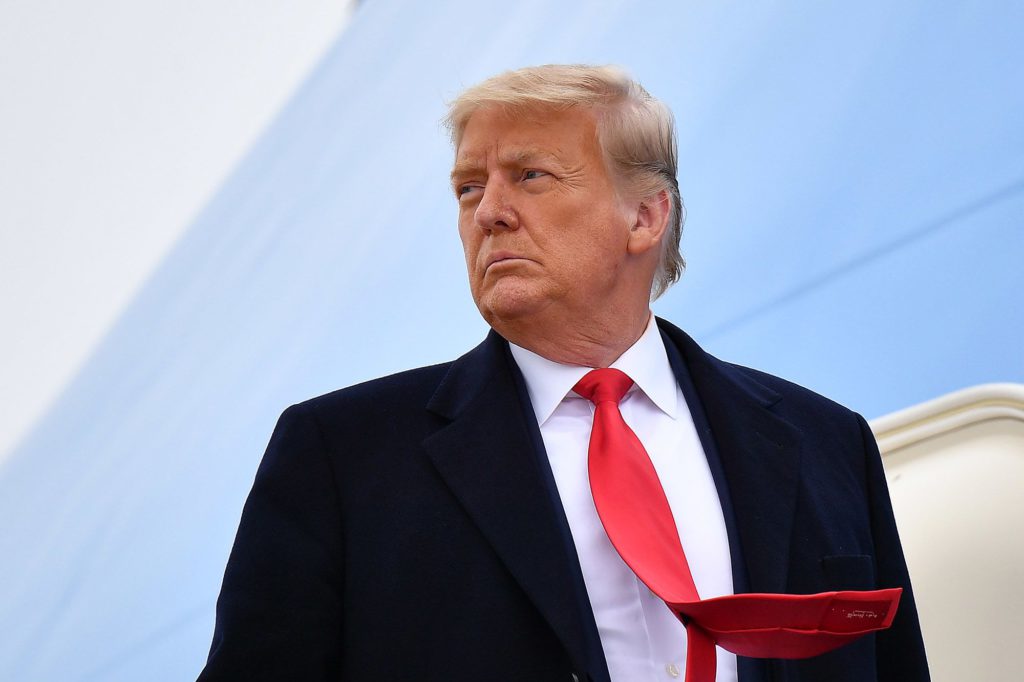
Trump Helped Boost Vaccine Use After Endorsement in Online Ads

(Bloomberg) — An online ad campaign featuring former president Donald Trump boosted vaccination rates in counties where rates of Covid-19 shots were lowest, according to research published Monday.

In a campaign aimed at more than 1,000 counties across the U.S., researchers created an ad using a Trump appearance on Fox News telling people to get vaccinated, and then during October last year ran the video on YouTube in places with low vaccination rates. In the counties where the ad was shown, about 103 more vaccinations were given, on average, than in counties that didn’t get ads.

Trump voters, particularly in rural counties, have been some of the hardest to reach with vaccination despite the former president’s role in helping speed the development of Covid shots during his administration. Many of those areas have been hard hit by the virus, recording large numbers of deaths, yet their vaccination rates lag the rest of the country.

“That’s where so much of the need is,” said Steven Greene, a professor of political science at North Carolina State University, and one of the authors of the paper. “Where are the people speaking to the Trump supporters?”

Greene said that he and colleagues at Stanford University, University of North Carolina Chapel Hill and University of California, Berkeley, began thinking about the problem in 2020, the first year of the pandemic, when it seemed obvious that masks could help stop the spread of the virus, but there were few effective recommendations to get people to wear them. 

Vaccines presented the same problem, and along partisan lines – tracking polls by the Kaiser Family Foundation have consistently found that Republicans are less likely to say they’ve been vaccinated and less likely to say they plan to get a shot. About 66% of the U.S. population is fully vaccinated, according to the U.S. Centers for Disease Control and Prevention, well behind many other wealthy nations in Europe and elsewhere.

When the vaccines became available, the researchers saw a fresh opportunity. While Trump initially touted the development of the shots, in the early months of the rollout after President Joe Biden’s election victory, he did not take part in efforts to persuade the public.

Then, on March 16, 2021, Trump went on Fox News and told people to get vaccinated. “I would recommend it, and I would recommend it to a lot of people that don’t want to get it. And a lot of those people voted for me, frankly,” Trump said.

“When Donald Trump appeared on Maria Bartiromo making those very favorable comments about vaccines, Marc and I looked at each other over Zoom and we said, ‘This is what we need,’” Greene said, referring to his co-author on the paper, University of North Carolina’s Marc Hetherington. 

The researchers crafted an online advertisement showing Trump’s comments in the first seconds, before users could skip past it. They then identified counties with vaccination rates below 50% and less than 1 million residents. Half the counties were targeted for ads, and half were excluded to create a control group. 

YouTube’s algorithm ended up pushing the ad to people who watched Fox News clips, which may have ended up boosting the effect, and to viewers who watched other conservative-learning personalities, the researchers said.

In total, counties where the ad was shown recorded about 100,000 more vaccinations. The team spent about $100,000 to buy the ads, meaning the cost per shot was about $1. 

Around 1 million doses a day were being administered in the month of October when the ads were running, so the overall effect of the campaign was small. But it ran in only a handful of the country’s less-populated counties, on only one social media platform, with a limited number of ad impressions. 

“We were neophytes at how to run an online advertising campaign,” Greene said. “I’m sure professionals could do significantly better.” 

The work was published Monday as a working paper in the National Bureau of Economic Research. It was funded in part by the Vaccine Confidence Fund, a not-for-profit group that looks at how to use online tools to increase vaccine uptake. It’s funded in part by Facebook-parent Meta Platforms Inc. and the drugmaker Merck & Co., which does not have a Covid-19 vaccine on the market.

There were some limitations in the study. The researchers weren’t able to target exactly who received the ads, and it’s possible that people who watched them were more persuadable or more ready to get vaccinated anyways. 

Greene says the research shows that using an influential messenger can help boost vaccine uptake, even after months of politicization.

“There was a lot of talk that what Trump says doesn’t matter, but we just didn’t believe that,” he said.

(An earlier version of this story corrected the spelling ofMarc Hetherington’s first name.)

More stories like this are available on bloomberg.com

©2022 Bloomberg L.P.

Close Bitnami banner
Bitnami