Bloomberg

Ford F-Series Sales Plunge Highlights Industry’s Supply Woes

(Bloomberg) — Ford Motor Co.’s sales tumbled to start the year, led by a 31% first-quarter plunge for its F-Series pickup, as it continued to struggle with the semiconductor shortage.

The manufacturer sold 159,328 vehicles in the U.S. in March across its namesake and Lincoln brands, a 26% decline from a year ago, according to a statement Monday. For the full quarter, sales fell 17%.

“The chip shortage continues to hurt Ford’s output to a higher degree,” researcher LMC Automotive said in a separate statement. “The F-150 was outsold by both the Chevrolet Silverado and Ram 1500 in March.”

The performance is a particular blow to Ford as it prepares to roll out an electric version of its F-150, which had nearly 200,000 non-binding reservations from potential buyers. The F-Series line is the top-selling vehicle in America and Ford’s most profitable product. The company said it has a high number of F-Series trucks in transit to dealers.

“While the global semiconductor chip shortage continues to create challenges, we saw improvement in March sales, as in-transit inventory improved 74% over February,” Andrew Frick, vice president of sales, distribution and trucks, said in the Ford statement.

Ford joined its automaker peers reporting a sales decline to start the year as the war in Ukraine and volatile gas prices add to supply-chain challenges and pandemic upheaval for the industry. Toyota Motor Corp. retained its spot as the No. 1 automobile seller in the U.S. for the first quarter despite a 15% decline.

Following Ford’s release, LMC cut its outlook for U.S. light-vehicle sales industrywide due to “lack of inventory.” It now sees sales this year of 15.3 million, down 500,000 from its prior expectation.

Ford shares were little changed at $16.67 as of 12:15 p.m. in New York. The stock declined 20% this year through Friday’s close, worse than the slide in the S&P 500 Index.

CFRA Research on Monday lowered its earnings estimate for Ford and cut its 12-month price target by $5 to $25. Still, the firm said Ford’s move to embrace electric vehicles gives the stock “expansion potential” as it becomes valued less like a legacy auto manufacturer.

“Clearly, chip shortages are hurting Ford’s volumes (along with all automakers), but we believe there is reason for optimism,” Garrett Nelson, vice president at CFRA Research, wrote in a note to investors.

(Updates with analyst commentary from the third paragraph.)

More stories like this are available on bloomberg.com

©2022 Bloomberg L.P.

Elon Musk Takes 9.2% Stake in Twitter After Hinting at Shake-Up

(Bloomberg) — Elon Musk took a 9.2% stake in Twitter Inc. to become the platform’s biggest shareholder, a week after hinting he might shake up the social media industry.

Twitter shares surged as much as 27% after Musk’s purchase was revealed Monday in a regulatory filing. The gain marked the stock’s biggest intraday increase since its first day of trading following the company’s 2013 initial public offering. The stake is worth about $2.89 billion, based on Friday’s market close.

Musk, 50, polled his more than 80 million followers on Twitter last month, asking them whether the company adheres to the principles of free speech. After more than 70% said no, he asked whether a new platform was needed and said he was giving serious thought to starting his own. 

“Given Elon’s prior comments about wanting to start a social media company, I would say it’s possible that he will increase his stake in Twitter or take a controlling interest in the company sometime soon,” said Tom Forte, an analyst at DA Davidson & Co.

Musk has been one of the biggest personalities on Twitter and has regularly run into trouble on the platform. The Tesla Inc. chief executive officer is currently seeking to exit a 2018 deal with the U.S. Securities and Exchange Commission that put controls in place related to his tweeting about the electric-car maker.

The announcement will be yet another major test for new Twitter CEO Parag Agrawal, who replaced Jack Dorsey after he unexpectedly resigned in November. Agrawal vowed to increase accountability, make decisions faster and to improve product execution. The company set ambitious goals for growth including increasing annual revenue to $7.5 billion and getting to 315 million daily users by the end of 2023.

Musk posted a cryptic meme in December after Twitter announced that Agrawal was taking over from Dorsey as Twitter’s CEO. It depicted Agrawal as Soviet dictator Joseph Stalin and Dorsey as Soviet secret police head Nikolai Yezhov being shoved into water.

“It looks like Elon has his eyes laser set on Twitter,” said Wedbush analyst Dan Ives in a research note, adding that the stake could lead to a “more aggressive ownership role.”

Twitter is particularly vulnerable to outside pressure because unlike Google, Facebook, Amazon and Snap, the company’s founders don’t have special voting control over its future. The company has just recovered from activist pressure by Elliot Management that started in 2020 which led Dorsey, who was serving his second stint as CEO of Twitter, to set a succession plan.

It’s unclear what Musk is planning with his stake. The filing with the SEC shows that the date of the event that triggered the disclosure was March 14. The type of form used often indicates the investor isn’t seeking to acquire control of a company, or to influence who controls it.

Musk, already the world’s richest person according to the Bloomberg Billionaires Index, has made about $1.1 billion on his holding since mid March, based on the pop in Twitter’s shares in early trading Monday.

Twitter is under pressure to move faster in building new products. The company has set ambitious revenue and user growth goals to convince skeptical investors that it was serious about expanding its business. While Twitter has grown steadily for years, its stock gains have lagged behind industry peers.

Musk has lambasted Twitter’s recent development of profile pictures linked to non-fungible tokens, saying the social media company has the wrong priorities.

(Updates share price in second paragraph; adds analyst’s comment in fourth paragraph.)

More stories like this are available on bloomberg.com

©2022 Bloomberg L.P.

Hacker Moves Crypto Stolen From Ronin Breach to Help Cover Its Tracks

(Bloomberg) — A hacker moved some of the roughly $600 million in cryptocurrency stolen from the Axie Infinity play-to-earn gaming platform to a service that helps users mask transactions.  

About 2,000 Ether tokens, valued at around $7 million, that were lifted from Axie Infinity’s Ronin software bridge last month were moved Monday to Tornado Cash, blockchain data shows. Tornado Cash founders did not respond Monday to a request for comment.

Tornado Cash is designed to preserve privacy on the Ethereum blockchain. Its technology breaks the link between the sender and receiver’s addresses on transactions sent to the Ethereum blockchain. The protocol has been used in the past by hackers who took $34 million from Crypto.com. 

“Tracking funds after any mixer, including Tornado Cash, is a probabilistic method and we cannot be 100% certain,” blockchain analysis firm Merkle Science wrote in an email response.

The main Ethereum address used by the hackers who attacked Axie Infinity’s Ronin blockchain sent 2,001 Ether to another Ethereum address earlier Monday. The second Ethereum address then sent 2,000 Ether in batches of 100 Ether each to Tornado Cash, blockchain data shows. The transactions were confirmed by blockchain data firm Nansen.

Ronin is a software bridge built to reduce the traffic and cost on the Ethereum blockchain caused by the popular game Axie Infinity. The bridging technology has been under fire after more than $1 billion worth of cryptocurrencies were stolen in a little more than a year from crypto bridges. 

Sky Mavis, the company behind Ronin and Axie Infinity, said “the investigation is ongoing and we aren’t commenting at this time.”

More stories like this are available on bloomberg.com

©2022 Bloomberg L.P.

Peloton Slashes Price of New Guide Strength-Training Device by $200

(Bloomberg) — Peloton Interactive Inc. has already lowered the cost of a strength-training device that goes on sale this week, a sign that getting more aggressive on prices will be a key part of its comeback plan. 

The new Guide product, originally announced last November, goes on sale at $295. That’s $200 less than the planned price when Peloton unveiled the device — part of a bid to decrease its reliance on exercise bikes and reverse a sales slowdown. 

The New York-based company also said that the subscription required to access its content catalog for the product would cost $24 through 2022 instead of the normal $39. That discount applies to new subscribers who buy a Guide and digital app users. 

The price adjustments suggest that the company is focusing on generating subscription revenue rather than hardware-based margins, fitting a formula that new Chief Executive Officer Barry McCarthy outlined in an interview with Bloomberg Businessweek earlier this year. The company has also started testing a subscription program for its bikes.

Peloton gained as much as 5.6% to $27.78 on Monday in New York, though the shares remain down about 23% this year. 

The Guide, Peloton’s first strength-training device, features a camera with artificial intelligence that can analyze and provide feedback on workouts conducted in front of a TV set. The voice-controlled device can determine which muscles users are working out and guide them through strength training classes with virtual instructors. 

The device is available from Peloton’s website in the U.S., Canada, U.K. and Australia, the company said. 

(Updates with share price in fifth paragraph.)

More stories like this are available on bloomberg.com

©2022 Bloomberg L.P.

U.K.’s Royal Mint to Issue a Non-Fungible Token This Summer

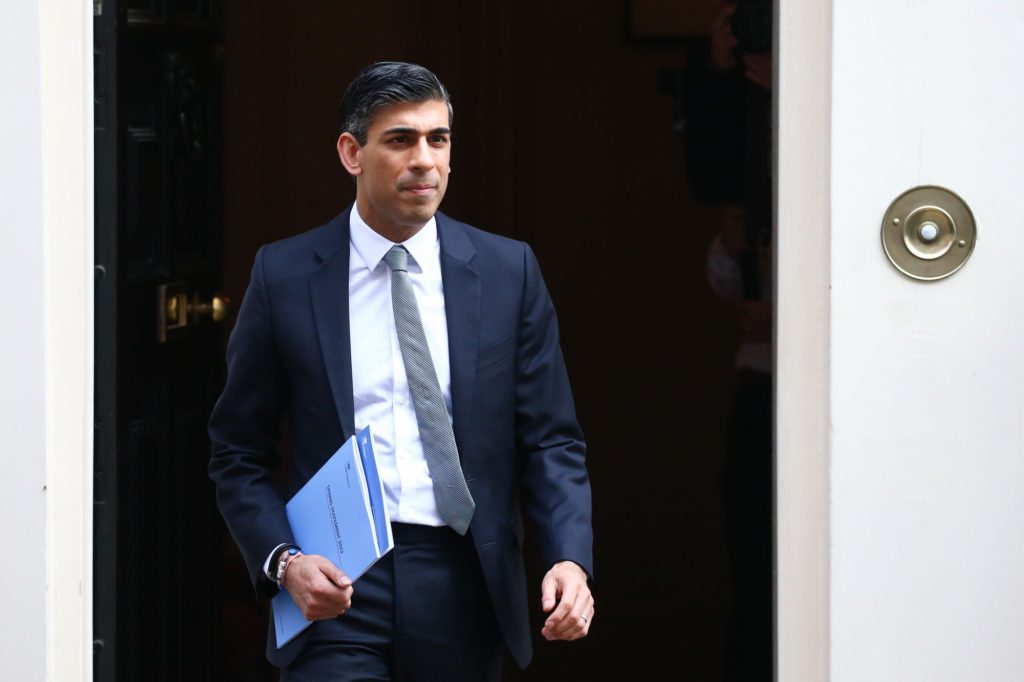
(Bloomberg) — The U.K. government doesn’t want to miss out on the recent blockchain craze of nonfungible tokens. The Chancellor of the Exchequer Rishi Sunak has directed the state-owned Royal Mint to create a NFT, according to a tweet on Monday.

The Treasury expects the NFT to be issued this summer, it said. Its another sign of how digital collectibles are entering the mainstream. The tokens, which combine the world of cryptocurrencies and blockchain with the realm of creative pursuits, are fodder for both retail traders and professional investors.

A U.K. treasury report on Monday also outlined plans to bring stablecoins under e-payments regulation. It said it would consult later this year on regulating a wider set of cryptoasset activities due to their popularity.

More stories like this are available on bloomberg.com

©2022 Bloomberg L.P.

UPS Partnership Fuels 30% Rally in Jumia’s New York Shares

(Bloomberg) — Jumia Technologies AG surged the most in about 20 months after an agreement that will see United Parcel Services Inc. use the pan-African e-commerce company’s distribution network to expand on the continent.

Jumia’s American depositary receipts jumped as much as 30% at 11:07 a.m. on the New York Stock Exchange, the biggest gain since Aug. 3, 2020. The deal will enable Atlanta-based UPS to build a greater presence in a number of African markets and tap into an anticipated boom in online retail, Renzo Bravo, head of strategy for the Indian subcontinent, Middle East and Africa, said in an interview.

“We believe that Africa has the potential to reach around $180 billion in online trade by 2025,” Bravo said. “That will enable growth and commerce, not only across Africa, but also from the continent to the world and from the world to Africa.”  

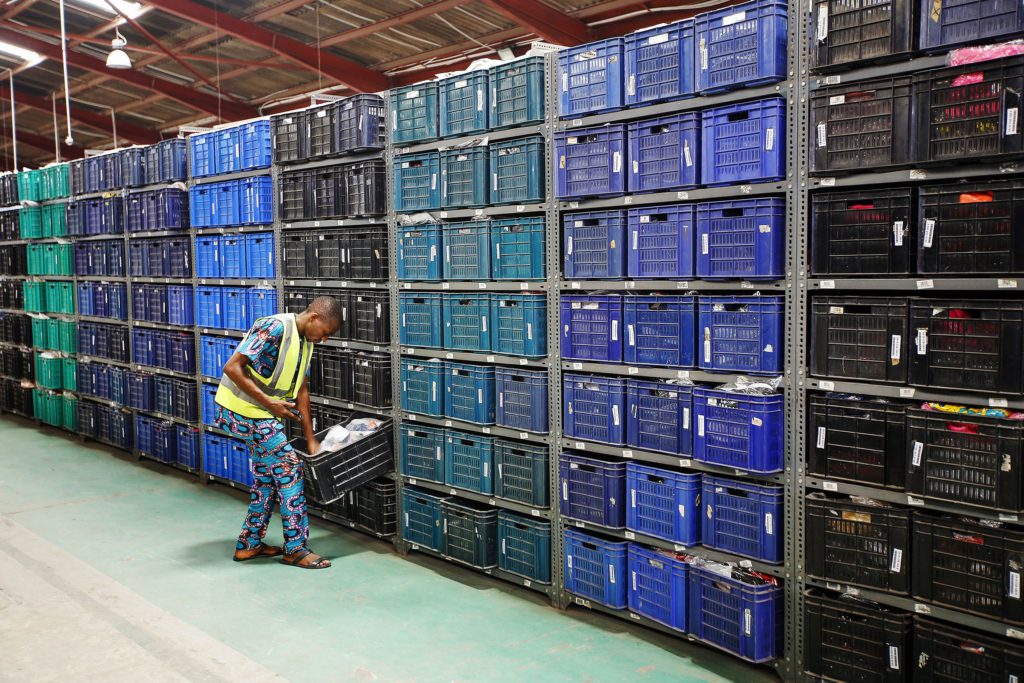
For Jumia, the deal will enable the Berlin-based firm to make use of UPS’s network across 220 countries and territories to help users deliver their packages, according to senior vice president of logistics, Apoorva Kumar. The collaboration will start in Nigeria, Morocco and Kenya, with the aim to add more countries, he said.

The rally helped Jumia become a $1.2 billion company from $934.6 million on Friday. UPS shares fell 1.2%.

The companies didn’t provide financial terms of the deal.

E-Commerce Challenges

Jumia was founded by French entrepreneurs Sacha Poignonnec and Jeremy Hodara in 2012 and has about 8 million customers. The group has aimed to take the lead in e-commerce on a continent that is increasingly connected, though challenges still include a relatively low internet penetration and difficulties with mapping — including in major cities like Lagos. 

“With Jumia’s logistics business, we have managed to build up a fleet and delivery network on the continent that holds some value for an international courier giant like UPS,” Kumar said.

UPS and Jumia remain in discussions about plans such as a rollout of co-branded pick-up stations, they said.

More stories like this are available on bloomberg.com

©2022 Bloomberg L.P.

Planet’s Breakneck Warming Likely to Pass 1.5°C, UN Scientists Warn

(Bloomberg) — The international goal to limit global heating to 1.5° Celsius (2.7° Fahrenheit) is officially on life support. A United Nations-backed panel of climate scientists warned in a new report released Monday that the world may be on track to warm by more than 3°C — twice the Paris Agreement target —in a change that would painfully remake societies and life on the planet. 

The latest report from the Intergovernmental Panel on Climate Change comes after years of net-zero pledges by national governments, cities, businesses and investors, and it sounds a stark warning on the still-unchecked emissions of greenhouse gas emissions pushing to record levels. The focus of this report, the third released since August 2021, is on humanity’s vast arsenal of technology, know-how and wealth that remain insufficiently deployed in efforts to ensure a livable climate in the future. 

Time to limit warming is perilously short. Greenhouse gas pollution must peak “at the latest before 2025” to keep targets alive, the IPCC scientists write. Based on national pledges made before last November’s Glasgow climate negotiations, emissions in 2030 “would make it likely that warming will exceed 1.5°C during the 21st century,” the authors conclude. That puts the loss of the first goal of the Paris Agreement within the lifetimes of many people now alive. 

“This is not fiction or exaggeration,” said UN Secretary General Antonio Guterres in a statement. “It is what science tells us will result from our current energy policies.” 

As bad as that sounds, scientists in recent years have reduced the likelihood of much higher increases, and the report makes clear that solutions are available or foreseeable in virtually every sector: 

  • There are cost-effective carbon-cutting opportunities that together could meet half the 2030 emissions target. Global GDP would be “a few percent lower” in 2050 than on the current trajectory, not accounting for the benefits of climate damage avoided.

  • At least 18 countries have proven that it’s possible to reduce greenhouse-gas emissions for a decade running — in some cases up to 4% a year and potentially in line with a 2°C temperature rise. 

  • Solar and wind costs fell 85% and 55% respectively between 2010 and 2019, making them now cheaper than fossil-fuel-powered electricity generation in many places. 

  • Carbon-free and low carbon technologies, including nuclear and hydroelectric power, made up 37% of the electricity generated globally in 2019. 

  • Transportation, which caused 23% of CO₂ emissions from energy in 2019 (road vehicles alone accounting for 16%) is poised for change, with battery prices dropping 85% the last decade. Low-emitting alternatives to the production of industrial materials are only in pilot or early commercial stages. 

  • The report heralds “digitalization” — robotics, AI, the internet of things — as a powerful way to increase energy efficiency and manage renewable power. 

The report’s parade of numbers shows just how far away countries are from adequately addressing climate change. Greenhouse-gas emissions in 2019 peaked at a new high of 59 billion metric tons. Carbon emissions from 2010 to 2019 are equivalent to about 80% of all the remaining room in the 1.5°C “carbon budget,” an accounting that scientists use to estimate how much more pollution the atmosphere can stand without heating up past the Paris Agreement’s limits of 1.5°C or 2°C. The intensity of emissions, or the energy use per GDP, fell 2% in the last decade, but that gain was overwhelmed by increased GHG pollution. 

Emissions from existing fossil-fuel infrastructure alone would push the climate beyond the Paris Agreement’s lower bar, compounding effects already plain with 1.1°C of warming above the pre-industrial average. Avoiding that fate, the scientists conclude, means stranding trillions of dollars in plans and infrastructure too dangerous to continue operating, unless technology emerges to capture and dispense with their emissions. 

A peak in global emissions before 2025 would require more upfront investment and a faster pace of change than a later peak “but bring long-term gains for the economy,” on top of the benefits of climate damage that was avoided, the authors wrote. As it stands, financing for strategies to prevent climate change must grow three to six times above its current level to keep the 1.5°C goal in play. 

Policy is not helping as much as it could. Only 53% of emissions fall under climate laws, and just 20% fall under carbon pricing regimes of some kind — approaches that “have been insufficient to achieve deep reductions,” the report states. 

In its landmark 2018 special report on 1.5°C of heating, the IPCC found that to have an even chance of staying below the target, the world needed to halve 2010 emission levels by 2030 and eliminate them by 2050. This prompted the “net-zero by 2050” pledges now common among governments, companies and investors. The new report updates those figures, saying that all greenhouse gases, not just CO₂, must fall 43% below their 2019 levels by 2030 and 84% by 2050. For a two-thirds probability of meeting the Paris Agreement’s higher limit of 2°C, all gases would have to be cut 27% below 2019 levels by 2030 and 63% by 2050. 

Methane, the second most important gas after CO₂, has to fall substantially and soon. While it’s difficult to eradicate from agriculture, relatively low-cost fixes to leaky fossil-fuel infrastructure — itself responsible for 6% of global emissions — could wipe out a substantial portion of pollution from those sources. 

The 1.5°C or even 2°C limits will be increasingly challenging without what scientists call “overshoot,” or surpassing the temperature limit and then clawing back down through a combination of forest regrowth and restoration, and emerging carbon-removal (CDR) technologies that are “unavoidable” for a path to net-zero. To fall back below the 1.5°C target by 2100, the IPCC writes, practices and policies — many of them still embryonic — would have to draw down almost a decade of CO₂ emissions, according to scenarios that “are subject to increased feasibility concerns,” they say. 

Differences between the preliminary Summary for Policymakers and the report reveal how negotiations among diplomats change scientists’ underlying conclusions. “The interaction between politics, economics and power relationships is central to explaining why broad commitments do not always translate to urgent action,” the scientists write in their Technical Summary. 

The report’s wording of fossil fuel use is in many places heavily caveated by language suggesting technologies that capture CO₂ pollution and store it underground, under the ocean or in manufactured goods can allow otherwise polluting infrastructure to continue to exist. Coal, oil and gas use without carbon capture and storage must fall 100%, 60% and 70% below 2019 levels by 2050. “Depending on its availability, CCS could allow fossil fuels to be used for longer, reducing stranded assets” that could otherwise total up to $4 trillion in a 2°C scenario. 

In their Technical Summary, scientists cite a study estimating nearly $12 trillion in stranded fossil-fuel assets by 2050, with another decade of delayed mitigation adding almost $8 trillion. They write elsewhere that since their last report it’s become clear that “small-scale technologies (e.g., solar, batteries) tend to improve faster and be adopted more quickly than large-scale technologies,” such as nuclear power or CCS.

The report is the third of four installments that make up the largely volunteer scientific group’s sixth global reckoning since 1990. Focused on prevention — or “mitigation” in the jargon — the report is the IPCC’s most elaborate description yet of how aggressive systemic change must be to transform how civilization powers, moves, feeds and houses itself.

The report highlights the many ways that cutting emissions would also help improve development prospects for billions of people. A new chapter explores how much progress can be made from lowering demand for carbon-heavy lifestyles. The 10% of households responsible for the most carbon output are responsible for about 40% of the world’s total. The bottom 50% of emitters put out only 14% of the total. Emissions track wealth very closely, which is why, for example, the least developed countries put out just 0.4% of historical emissions from fossil-fuel use and 41% of the world’s population emit less than 3 tons of CO₂-equivalent a year, or roughly half the global average. 

Falling demand — including technology and behavioral changes and cultural change — can cut all emissions in key sectors by 40% to 70% by 2050, compared with national policies and commitments made through 2020. These approaches “are consistent with improving basic wellbeing for all.” Many of the steps taken to cut emissions will also reduce air pollution, improve access to water and redistribute wealth. The route to a less warm world is also the creation of a generally better one.

(New details in 9th and 10th paragraphs)

More stories like this are available on bloomberg.com

©2022 Bloomberg L.P.

Ice Cube to Open Up Team Ownership Stakes for Big3 Basketball

(Bloomberg) — The Big3 basketball league will open team ownership to fans in an effort to raise funds and get supporters more involved in league activities.

Investor options include tiers of $5,000 or $25,000 as the league looks to attract tens of millions of dollars in fresh funding. Those who buy in will get voting rights, VIP tickets to all games, a percentage of a future team sale, and first rights to expansion teams, while the higher level also includes certain intellectual property and licensing rights to team names and logos.

Fan ownership has long been used as a way to raise funds and boost fan involvement. The NFL’s Green Bay Packers have occasionally sold shares in the team since the 1920s. The Big3’s version will be blockchain-authenticated arrangements that weren’t possible until recently, with the craze around nonfungible tokens.

“We set out to make people feel like real owners, not just hyped-up VIP fans,” co-founder Ice Cube said in an interview. “There’s more meat on the bone than any other league trying this.”

Ice Cube, the rapper and actor turned basketball businessman, said that when management started the venture in 2017, league ownership of all its teams enabled it to move quickly and have control over decision-making as the sport grew. Half-court three-on-three hoops got a boost last summer when it debuted as an Olympic event at the Tokyo games. Big3 rules are different than those of FIBA — the governing body for international basketball — but the elevated profile of the game can only help, executives said.

Expansion Plans

“This isn’t a cash grab,” said Big3 co-founder Jeff Kwatinetz.  “We’re approaching it as a long-term play.”

The Big3 is trying to attract new devotees by bringing them behind the scenes. Those who take part in the round will get access to team practices, parties, coaches, players and referees. Every month, they’ll be able to get on a call with Ice Cube, Kwatinetz and Commissioner Clyde Drexler.

League executives are now looking for more funding from institutional and other investors as they look to add expansion teams and enter new markets. The 12-team operation considered adding four teams this season but decided to delay those plans due to the pandemic.

“We’re not desperate for it, but we do have a lot of ideas around expansion, especially on a global level,” Kwatinetz said.

More stories like this are available on bloomberg.com

©2022 Bloomberg L.P.

Texas Grid’s Review of Crypto Miners Connection May Take Months

(Bloomberg) — Texas cryptocurrency miners may have to wait up to a few months for approval to connect to the state power grid, according to operator Electric Reliability Council of Texas Inc. 

For now, studies evaluating the miners’ impact to the grid are being performed by transmission service providers and submitted to Ercot for review, the grid operator said in an emailed statement. The process could be as quick as a few weeks or much longer.

“The time Ercot takes for its interim review will vary depending on the site and what concerns may be identified,” according to the statement. 

Miners have been flocking to Texas in part because of cheap power prices and the fact that connecting to the grid was a fairly quick process, barring the need for big utility upgrades. However, late last month, Ercot said crypto miners and other large power users would first need to get approval from the grid operator before receiving “approval to energize.”

More stories like this are available on bloomberg.com

©2022 Bloomberg L.P.

Axie Infinity Was Losing Gamers Even Before Record Crypto Hack

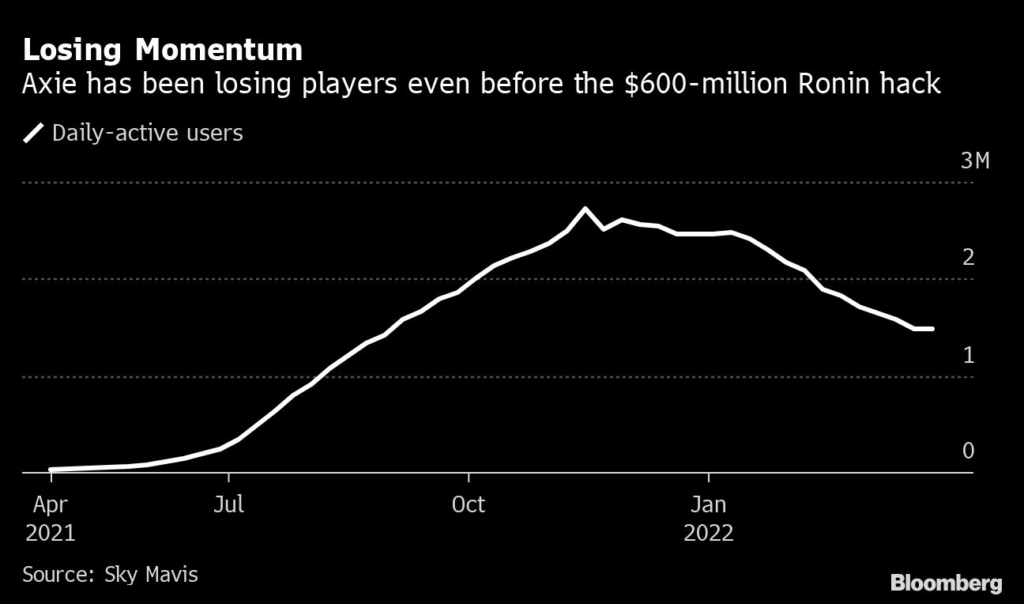
(Bloomberg) — The popular play-to-earn Axie Infinity game had been losing users even before the record cryptocurrency hack disclosed last week restricted the ability of players to move digital money out of the virtual world. 

The number of daily active users, or DAUs, has fallen 45% to 1.48 million from a peak in November, according to data compiled by Axie Infinity owner Sky Mavis. The latest tally is for the week ended March 28, or a day before the roughly $600 million hack was discovered. Current figures weren’t immediately available.

The decrease has been particularly noteworthy since December, when updates to the game were announced, and on March 23, when hackers stole the Ether and USD Coin cryptocurrencies from Axie’s Ronin bridge, a sidechain built to facilitate faster and cheaper transactions for the game.

Sky Mavis, the developer behind Axie Infinity and Ronin, has said that it is committed to reimbursing players as soon as possible but hasn’t given details on how they plan to do it in case lost funds are not recovered. Meanwhile on Monday, the hacker started to hide their tracks by moving around 1,400 Ether to Tornado Cash, a crypto asset mixing service, Coindesk reported.

A broad market sell-off in December led to more downward pressure on the prices on smooth-love potion (SLP), the native currency of Axie, according to Martin Lee, a data journalist at blockchain analytics firm Nansen.  

“Daily earnings dropped and so did interest in the game. Those that bought-in at the highs started to feel fearful and naturally doubt creeped in,” Lee wrote in an email. Lee adds that players are awaiting the game’s “Origin” patch that looks to revitalize, improve and increase the depth of game play.

The concern is that if the developer isn’t able to give a clear timeline on reimbursements, than players will lose trust on the platform and move to other similar games, further accelerating the decline in users and activity.

Read more: Axie Infinity Delays Launch of Origin Online Game After Hack

Vietnam-based Sky Mavis is backed by investors which include Andreessen Horowitz and Alexis Ohanian, the co-founder of Reddit.

More stories like this are available on bloomberg.com

©2022 Bloomberg L.P.

Close Bitnami banner
Bitnami