
Bloomberg

Shein’s $100 Billion Value Would Top H&M and Zara Combined

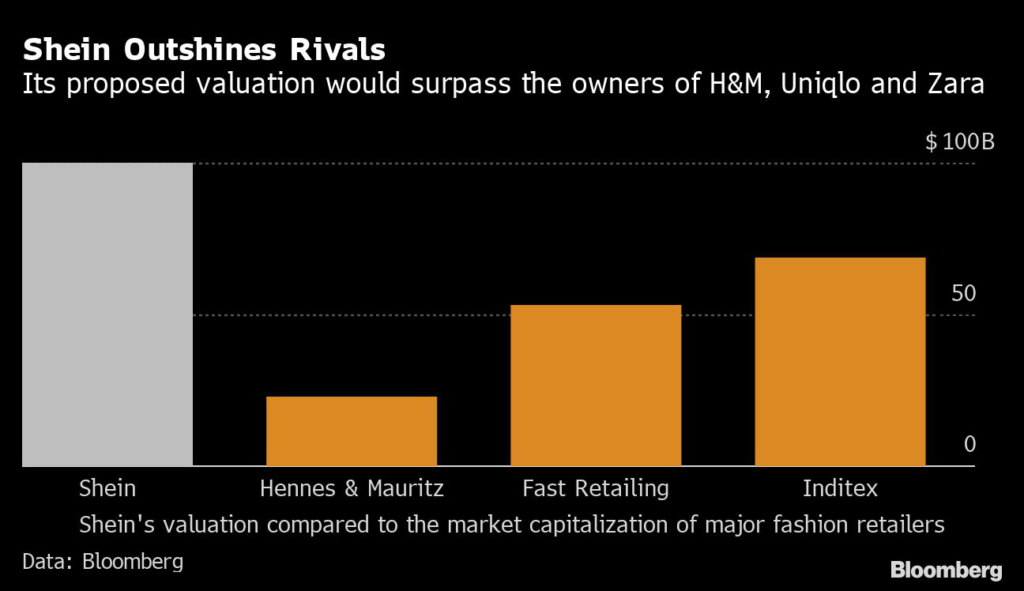
(Bloomberg) — A Chinese fast-fashion company without a global network of physical stores of its own is seeking a valuation that could be more than the combined worth of high-street staples Hennes & Mauritz AB and Inditex SA’s Zara.

Shein, an online-only retailer of inexpensive clothes, beauty and lifestyle products that pumps out over 6,000 new items daily, is in talks with potential investors including General Atlantic for a funding round that could value the company at about $100 billion, Bloomberg News reported Sunday.

Should Shein succeed with the round, it would make the decade-old brand about twice as valuable as Tokyo-based Fast Retailing Co. — the owner of Uniqlo — which last year had more than 2,300 outlets in 25 countries and regions. It would also make Shein the world’s most-valuable startup after ByteDance Ltd. and SpaceX, according to data provider CB Insights.

While funding rounds indicate the value of a business broadly, initial public offerings offer a sharper peek into whether a wider base of investors shares the same enthusiasm, especially after the books are thrown open to the public for scrutiny. Most manage to get the valuation they seek, if not better, but some fail. Shein hasn’t unveiled any plans for an IPO.

Since its launch in 2012, Shein has developed an extensive network of low-cost suppliers in southern China. During the pandemic, it worked with celebrities like Lil Nas X and Katy Perry to boost its profile among Gen Z shoppers outside China.

Early in the pandemic, Shein benefited from changes in consumer behavior, as shoppers made even more of their purchases on phones or computers. Sales more than tripled in 2020 to $10 billion, making Shein the biggest web-only fashion brand in the world.

The new investment round would reflect the impact of a surge in sales for Shein. At the time of a funding round in August 2020, Shein had a valuation of $15 billion, according to PitchBook.

Shein’s potentially astonishing valuation also masks some of the adverse impact the fast-fashion industry has on the environment. Though the closely held company hasn’t commented on its carbon footprint, the sector is often blamed for its heavy reliance on petrochemicals derived from oil. Fashion accounts for up to 10% of global carbon dioxide output, according to the United Nations Environment Programme. It also accounts for a fifth of the 300 million tons of plastic produced globally each year — a product that is the backbone of polyester, which has overtaken cotton as the primary material in textile production.

In its 2021 “Sustainability and Social Impact Report,” Shein said fashion has an undeniable impact on the planet’s health and said it’s striving for zero waste and would announce its goal by the end of this year. In December, it announced a $10 million fund to support global non-profit organizations focused on empowering entrepreneurs, supporting underserved communities, ensuring animal health and welfare, and promoting recycling. 

The Chinese brand is also facing headwinds in the U.S., with lawmakers in Washington considering legislation that could hinder its sales in the world’s No. 1 economy. The House of Representatives in February approved the America Competes Act, which includes language that would prevent Chinese companies from using a current exemption that allows tariff-free imports of packages worth less than $800.

The Senate passed a bill without that change, though, and lawmakers have yet to reveal the terms of the final version.

In a sign that Shein expects to enjoy continued growth in the U.S., the company recently announced plans to open a distribution center in Indiana that will employ 850 workers. Last month, Shein also agreed to a new program with Indiana University to offer fellowships to students in the university’s business school. 

(Updates with environmental impact in eighth paragraph.)

More stories like this are available on bloomberg.com

©2022 Bloomberg L.P.
Telecom Italia Shares Plunge as KKR Weighs Dropping Takeover Bid

(Bloomberg) — Telecom Italia shares tumbled as KKR & Co. plans to drop a 10.8 billion-euro ($11.9 billion) takeover proposal if the ex-phone monopoly doesn’t grant it the due diligence it’s requested since last November.

In a letter expected on Monday, KKR is set to reiterate its interest in making a possible bid while making clear it wants to review the phone carrier’s finances even more urgently than before, as market conditions have changed, according to people familiar with the matter. 

Telecom Italia shares fell as much as 7.4% in Milan on Monday to just below 0.30 euros, cutting the company’s market value to around 6.3 billion euros.

Russia’s invasion of Ukraine and recent downgrades to Telecom Italia’s credit rating are among the reasons for the request, the people said, asking not to be identified because the matter isn’t public. Spokespeople for KKR and Telecom Italia declined to comment.

Single Network

Telecom Italia Chief Executive Officer Pietro Labriola is working on a plan that rivals KKR’s full takeover plan. Under that plan, landline assets would be merged with those of smaller, state-backed rival Open Fiber SpA, aligning Telecom Italia with a government goal of building a single national fiber network while avoiding duplicate investments. The process could take several months and would need approval from European regulators, people familiar with the matter said in March.

Under the plan, state lender Cassa Depositi e Prestiti SpA, Telecom Italia’s second-largest investor, would get a majority stake in the company’s fixed network assets, people familiar with the matter said earlier this year. CDP is also the controlling shareholder of Open Fiber. 

On Saturday, Telecom Italia confirmed in a statement that it signed a non-disclosure agreement with CDP to start preliminary discussions on integrating its network with that of Open Fiber. This deal is also open to KKR and other funds, two other people familiar with the matter said.

Labriola also has a project to separate all Telecom Italia’s commercial services into another unit called ServCo, according to Telecom Italia’s business plan. 

Last month, CVC Capital Partners made a non-binding offer for 49% of Telecom Italia’s new enterprise services unit. Telecom Italia plans to discuss CVC’s non-binding bid at a board meeting scheduled for April 7 after the company’s annual general meeting, the people said.

More stories like this are available on bloomberg.com

©2022 Bloomberg L.P.
LME’s Nickel Market Governance Under Scrutiny: The London Rush

(Bloomberg) — Here’s the key business news from London-listed companies this morning:

London Metal Exchange: The U.K.’s Financial Conduct Authority and the Bank of England will review the LME’s approach to its suspension and resumption of the nickel market, in the wake of a short squeeze that sent prices soaring and resulted in the cancellation of trades.

  • The exchange itself will also start and independent review into the events that led to the suspension of trading in the nickel market
  • Read: The 18 Minutes of Trading Chaos That Broke the Nickel Market

Ryanair Holdings Plc: The airline narrowed its full year loss after tax outlook to the lower end of the previously guided range.

  • It now expects a pre-exceptional net loss of between 350 million euros and 400 million euros, compared to the prior range of 250 million euros and 450 million euros

CareTech Holding Plc: The provider of social care services received an indicative proposal worth £850 million from DBAY Advisors Ltd, rivaling a possible bid from the group’s founders.

Outside The City

Negotiators from Russia and Ukraine may resume video talks Monday even as Kyiv accuses Moscow’s forces of carrying out atrocities in towns in the north. Russia has dismissed images of executed unarmed civilians as fake.

The U.K. will lay out details on its plan to broaden its energy sources this week, with a focus on nuclear and wind, as the war in Ukraine put the country’s reliance on oil and gas imports into focus. 

In Case You Missed It 

Gazprom’s supply arm for the U.K. could be nationalized as soon as this week, Sky News reported, citing a person familiar with the matter.

Meanwhile, NatWest Group Plc is one of several parties considering a takeover bid for wealth manager Tilney Smith & Williamson Ltd, Sky News reported over the weekend.  

Finally, read about the 30-year-old founder of cryptocurrency exchange FTX. He drives a Corolla, sleeps on a beanbag, and wants to give his fortune away.

Looking Ahead

HomeServe Plc is set disclose results tomorrow. The household repairs provider could be subject to a takeover bid from Brookfield Asset Management Inc. later this month. Also on Tuesday, data will show British services sentiment as the sector wrestles with rising costs.

More stories like this are available on bloomberg.com

©2022 Bloomberg L.P.

Turkish Inflation, Fed Seeking Normal, British Fintechs: Eco Day

(Bloomberg) — Sign up for the New Economy Daily newsletter, follow us @economics and subscribe to our podcast.

Welcome to Monday, Europe. Here’s the latest news and analysis from Bloomberg Economics to help start your week.

  • Turkish inflation is galloping toward a fresh 20-year high, leaving the lira increasingly vulnerable by depriving the currency of a buffer against market selloffs
  • Fed Chair Jerome Powell is headed toward an uncertain destination and the terrain may shift as he forges ahead with higher rates
    • Investors will parse the Fed’s minutes this week to gauge its appetite for a half-point increase next month
    • The U.S. added close to half a million jobs in March and the unemployment rate fell by more than expected
  • The ECB is right to press forward with its plan to normalize monetary policy even as the war in Ukraine creates “elevated uncertainty,” Executive Board member Isabel Schnabel said
  • Post-Brexit London is racing to keep its head start in fintechs. Innovate Finance’s summit — part of U.K. Fintech Week — aims to showcase Britain’s financial technology sector and its global ambitions
  • After an extraordinary series of global supply chain snags caused by the pandemic, the next generation of central bankers is taking a page from the business school play book
  • While some say the Bank of Japan can count its historic market intervention as a success, others thinks otherwise
  • The Reserve Bank of Australia is under pressure to tighten policy
    • Bloomberg Economics looks at the RBA and RBI meetings
  • Covid lockdowns and Russia’s war on Ukraine risk pushing China’s growth below 5%, Bloomberg Economics says

More stories like this are available on bloomberg.com

©2022 Bloomberg L.P.
DeFi Expands Exchange-Traded Crypto Push With Three New Vehicles

(Bloomberg) — The universe of cryptocurrency vehicles trading on Europe’s exchanges is poised to get a little bigger.

Valour Inc., a Swiss asset-management company owned by DeFi Technologies Inc., said it is launching three such products tracking the Cardano, Polkadot, and Solana digital currencies. They are set to start trading on the Euronext exchanges in Paris and Amsterdam on April 6.

The launches will add to an increasingly competitive effort to seize on investors’ interest in products that track cyptocurrences, with dozens of such vehicles already traded on European exchanges. There is about $7.3 billion invested in exchange-traded crypto products in Europe, according to CoinShares International Ltd Chief Revenue Officer Frank Spiteri, who expects that to more than double by 2025. 

Valour already has several crypto products listed across European exchanges, including those focused on Bitcoin and Ethereum. The new ones will charge a management fee of 1.9%.

“More large institutions will enter and we expect even greater competition on pricing,” said DeFi Chief Executive Officer Russell Starr. “What will differentiate the winners and losers is expertise in product innovation and a hyper focus on providing added value to investors.”

In Europe, XBT Provider and 21Shares lead the market in terms assets in crypto exchange-traded products, with WisdomTree also a major presence. Fidelity listed its first Bitcoin ETP on the Deutsche Börse and SIX Swiss Exchange this year with a total expense ratio of 0.75%. 

More stories like this are available on bloomberg.com

©2022 Bloomberg L.P.
Indonesia’s GoTo Gives IPO Shares to 600,000 Drivers in Regional First

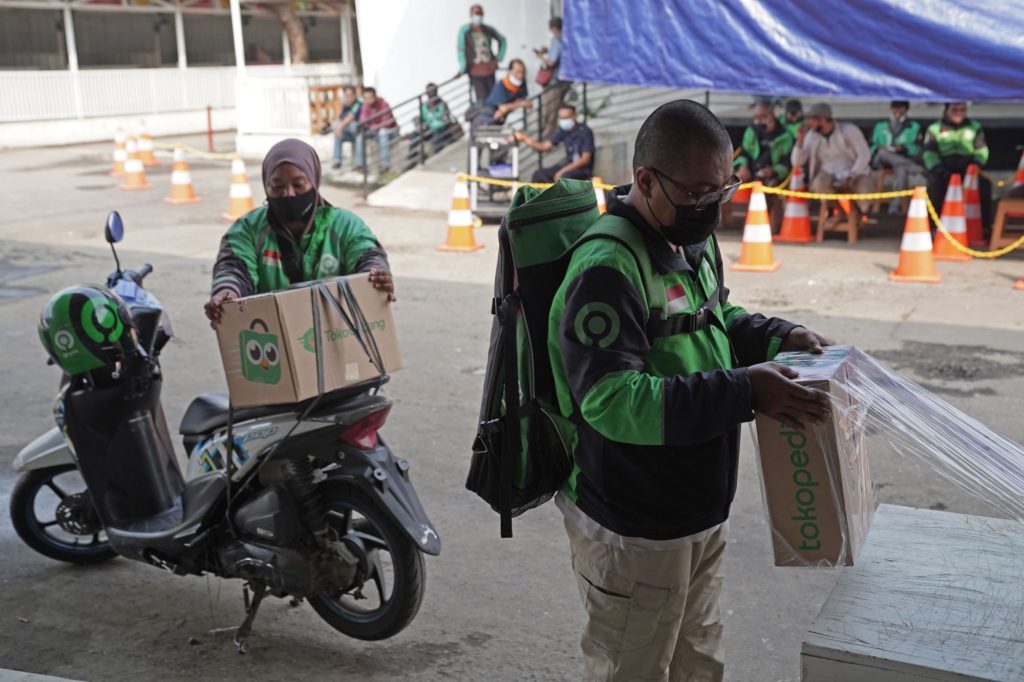
(Bloomberg) — GoTo will give away thousands of shares to each of 600,000 drivers as part of its $1.1 billion Indonesian initial public offering, setting a precedent for Southeast Asia’s sharing economy.

Drivers who registered with the ride-hailing and delivery app between 2010 and 2016 will get 4,000 GoTo shares, equivalent to $94 based on the IPO price of 338 rupiah. Those who registered from 2017 to February will get 1,000 shares, part of a total pool of more than $20 million allocated for drivers, according to a statement on Monday.

GoTo, formed through the merger of Gojek with e-commerce pioneer Tokopedia, raised $1.1 billion in one of the world’s biggest stock debuts this year and is slated to list in Jakarta April 11. While the giveaway represents a token amount, GoTo becomes the first major sharing-economy giant in Southeast Asia to include part-time gig workers in its own IPO windfall. 

“It’s an acknowledgment that our driver-partners are part of our success,” Chief Executive Officer Andre Soelistyo said in an interview. “This is something we’ve wanted to do since the beginning.”  

The mobile boom has minted an unprecedented number of billionaires from Alibaba Group Holding Ltd.’s Jack Ma to Sea Ltd. founder Forrest Li. Yet app-based gig-economy companies are typically built on the backs of low-wage contract workers, who work long hours but continue to lack employee benefits like health care or a safety net. 

Their plight has gained regulatory and public attention in recent years, particularly during the pandemic when internet platforms flourished but social inequities widened. Singapore and other governments around the world are considering legislative changes to protect gig-economy workers.

Uber Technologies Inc. and Lyft Inc., which went public in 2019, gave frequent drivers cash to buy stock in the U.S. But the practice in Asia is rare.

South Korean e-commerce firm Coupang Inc. promised staff and frontline workers about $90 million worth of restricted stock. Goto’s rival Grab Holdings Ltd. — which went public via a merger with a blank-check company in December — handed out rewards equivalent to $1.4 million to drivers and merchant partners in Indonesia ahead of its listing.

A 59-Hour Week Is Common for Singapore Gig Workers, Study Shows

GoTo’s drivers, who aren’t classified as employees but independent contractors, may choose to hold the stocks or cash out after an initial eight-month lock-up period, according to the company’s prospectus.

The “Gotong Royong” share grant to drivers is part of a broader program that includes merchants, consumers and employees. Loyal merchants and consumers of Gojek and Tokopedia got priority access when ordering GoTo shares during the book-building period. All full-time employees have received equity under the program, according to Soelistyo. The company had a total of 8,540 staff at the end of July.

The GoTo Peopleverse Fund, formed to allocate stock options to employees over coming years, will own about 9.03% of the company after its listing, surpassing the stakes of the SoftBank Vision Fund and Alibaba, according to the IPO prospectus. Soelistyo will have a roughly 0.84% stake in GoTo, while Gojek co-founder Kevin Aluwi will hold 0.77% and Tokopedia co-founder William Tanuwijaya, 1.77%.

The company said it’s also set aside more than 9.35 billion shares, valued at roughly $216 million, as an endowment fund to support social and environmental initiatives, reflecting a global trend among tech giants. Airbnb Inc. created an endowment pool to support its hosts with 9.2 million shares, while Grab announced its own fund last April with an initial capital of $275 million to support its partners.

GoTo is tapping the public market as tech firms are getting battered by a far-reaching equities selloff. The loss-making company priced 40.6 billion primary shares in a downsized IPO last week. That represents a projected market value of about $28 billion after the offering, compared with the $35 billion to $40 billion GoTo was said to be targeting last year.

“Although the Indonesian stock exchange might not have as deep a pool of capital as the United States or an investor base that understands tech as well, GoTo has built the most complete tech ecosystem in the country and a huge local fan base,” said Joel Shen, head of Asia technology at global law firm Withers LLP. “That could help to drum up some enthusiasm from retail investors.” 

More stories like this are available on bloomberg.com

©2022 Bloomberg L.P.
Post-Brexit London Races to Keep Its Head-Start in Fintech

(Bloomberg) — At the 600-year-old Guildhall in the City of London, key players in a two-decade-old industry looking to remake finance are gathering. 

Innovate Finance’s summit — part of U.K. Fintech Week — aims to showcase Britain’s financial technology sector and its global ambitions. Its profile has never been higher, with soaring demand from both customers and investors — even if the latter are proving a little harder to find than in the U.S. 

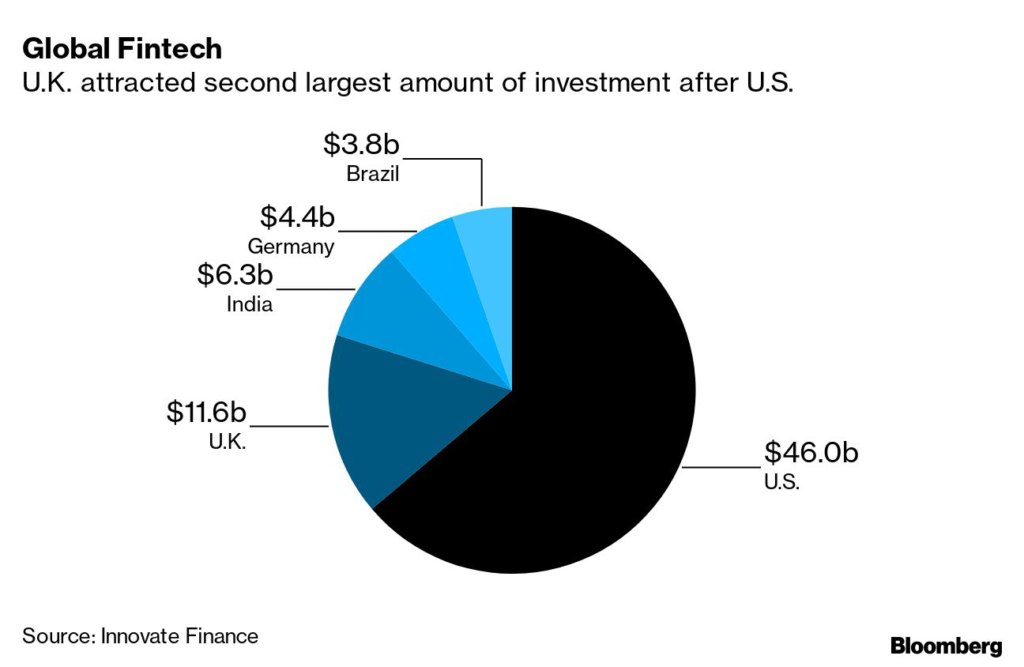
Investments in U.K. fintech companies more than tripled to $11.6 billion last year, according to figures published by Innovate Finance, a trade body for the industry. That’s not including the billions that more traditional banks and tech giants are splashing out to upgrade everything from current account apps to emerging uses for blockchain. 

This week’s conference will discuss “what the U.K. needs to do to remain the world’s preeminent financial services and innovation hub in the coming years,” said Janine Hirt, chief executive officer of Innovate Finance. 

The clock is ticking on this goal. Britain, where the wider finance sector makes up just under 10% of the economy, has some fintech success stories including Revolut Ltd., Monzo Bank Ltd. and OakNorth Bank that command multibillion-dollar valuations. However, few fintechs opt for London when it comes to selling shares on the stock market — something the government is trying to change as it hunts for post-Brexit growth.

We take a dive into who’s shaking up the U.K. fintech landscape, the unicorns to look out for, and the gender funding gap.

The U.K. Picture  

There are about 2,500 fintech companies in Britain, according to research by Deloitte. Most of these are based in London, which according to the accountancy firm is the third-biggest fintech hub in the world.

The term can apply to a wide range of businesses including online banks, technology to help apply regulations, price comparison websites and crypto exchanges. 

British startups have attracted several blockbuster funding rounds in the past year. 

  • Revolut, valued at $33 billion in its last funding in July, has more than 18 million customers worldwide on its app that offers services including money transfers, savings and investments.
  • In December, digital bank Monzo completed its biggest funding round of $600 million, valuing it at $4.5 billion.
  • Copper.co, which helps financial institutions trade cryptocurrencies, has been in talks with investors to raise funds that would value it at around $3 billion.
  • Checkout.com, which processes payments for retailers, in January announced new funding that valued the business at $40 billion. In 2021, the company tripled the volume of transactions processed — for the third year in a row.
  • Finance unicorn Starling Bank Ltd., whose backers include Goldman Sachs Group Inc., is looking for fresh funding a year after its last round, Bloomberg News has reported.

Almost all of the investment is flowing into London and the south east of England, though $696 million went to firms outside this region during last year, according to Innovate Finance. In turn, the U.K. dominates fintech funding across Europe, which itself pales in comparison to the U.S.

The British government thinks it can go further. One untapped source of funding for fast-growing companies is pension funds, which account for about 12% of the venture capital funding in Britain, compared with 65% in the U.S., according to a 2019 report from the British Business Bank. 

Chris Philp, Britain’s minister for technology and the digital economy, said in a February interview that investors are “missing out on the returns opportunity provided by pre-IPO tech.” There’s also a challenge matching small, unknown companies to large investors who’d rather put cash into more established firms. 

Late-stage funding also risks falling behind in Britain, which missed out on the craze for special purpose acquisition companies that brought a wave of firms to U.S. markets in the past few years. Money transfer platform Wise Plc achieved a direct listing in London, only to see its share price struggle since. 

More than a third of privately funded U.K. fintechs expect to list within five years, according to figures from consultancy EY cited in last year’s Kalifa review. That review for the government recommended softening rules on areas such as founders’ stakes to entice fintechs to list here.

Another avenue for growth is collaboration with the so-called legacy banks. Consultancy EY and trade body Tech Nation launched a “fintech pledge” to increase the use of startups in the finance supply chain. All five major U.K. lenders have signed up. 

There’s also still a long way to go for diversity. Kalifa’s report highlighted the importance of skills, access to global talent and strengthening the domestic pipeline to increase diversity and inclusion in the sector. 

Seed stage companies across the U.K. technology industry have approximately 15% representation in the workforce of ethnic minority and other underrepresented communities, falling to 9% at more established firms, according to a report last year by trade body Tech Nation. 

Women fintech founders in the U.K. receive 9% of all capital, and just 3% of venture capital funding goes to all-female teams, the report said. Entrepreneurs from Black, South Asian, East Asian and Middle Eastern backgrounds receive in total 1.7% of VC investment. 

Room for Growth

It’s a sign that the upheaval promised by the industry is yet to come to pass. For Marieke Flament, change isn’t coming fast enough.  

“While fintech was instrumental in improving financial services for consumers, it didn’t really disrupt things in a revolutionary way and the space has become very crowded and mainstream,” said Flament, the chief executive officer of the NEAR Foundation, a non-profit that oversees the development of a blockchain. 

“Some are disillusioned by this and feel as though their work life is in mid-life crisis mode and they need to reboot,” she said.

The solution is for fintech itself to be disrupted, she says, arguing that web3 — the catchall term for new online concepts including decentralized finance — will be the opportunity for developers to “inject adrenaline” and “true disruption” into the industry.

More stories like this are available on bloomberg.com

©2022 Bloomberg L.P.
Russia’s Gazprom Released Five Methane Plumes During Pipe Repairs

(Bloomberg) — Gazprom PJSC released five clouds of super-warming methane gas last month while conducting repairs, highlighting the global warming impact of Russian natural gas European countries want to wean themselves off in response to the invasion of Ukraine.

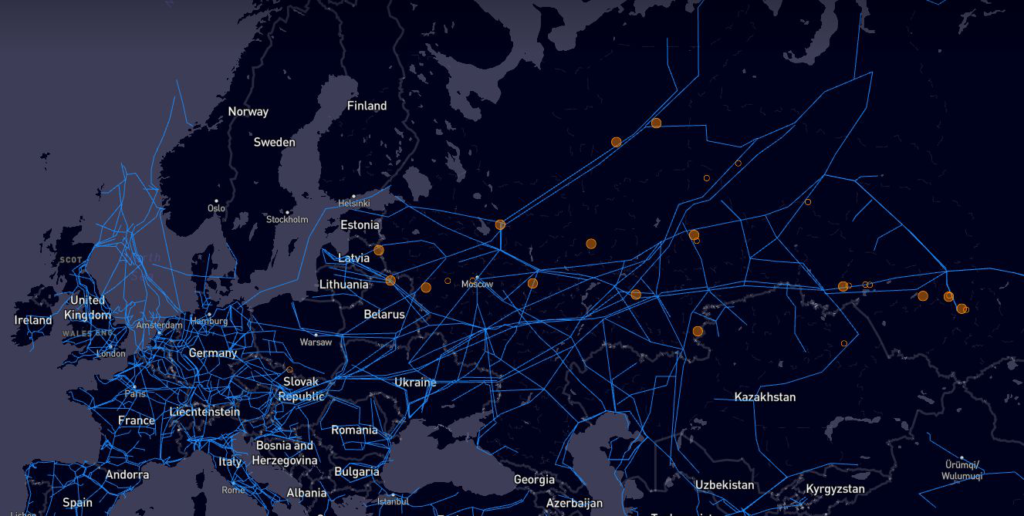
The plumes were identified in European Space Agency Sentinel-5P satellite data by Kayrros SAS. The geoanalytics firm said the data appeared to show a spike in emissions over Russia on March 15 and 18. At least eight other methane clouds were detected in the country over the period which Kayrros attributed to the oil and gas sector but Gazprom said weren’t near its facilities.

Methane, which is the primary component of natural gas, traps 84 times more heat than carbon dioxide during its first 20 years in the atmosphere. Scientists say that curbing the kinds of intentional releases that Gazprom engaged in — known in the industry as venting — is some of the lowest hanging fruit in the fight against climate change. Oil and gas operators can burn the gas so it is converted to less potent CO₂ or, better yet, siphon the gas off before conducting maintenance work which saves them product that can be sold.

Gazprom says it’s working to lower the emissions-intensity of its natural gas. But the fuel that Europe imports from Russia via its pipelines is two to three times dirtier than shipments that come from the U.S. or Qatar by ship primarily because of methane leaks, according to an analysis from nonprofit RMI.

The repairs that caused the methane releases in March only released “residual gas” in “small volumes,” Gazprom said in a statement, and as much as 80% of emissions were avoided. The company also emphasized that venting is a common practice by oil and gas operators globally and was done in line with domestic regulations.

Satellite observations of methane have revealed widespread intentional releases by oil and gas companies across the world, from the U.S. to Kazakhstan. Advances in satellite data analysis have shown that the global energy sector’s methane emissions are much greater than what’s reported by companies, with the IEA estimating that true pollution could be about 70% higher than what nations report to the United Nations.

There’s been intense focus on the flow of gas from Russia to Europe as politicians vow to reduce the continent’s reliance on fossil fuels from President Vladimir Putin’s regime. But the emissions spotted by Kayrros don’t appear to be related to a change in deliveries, which remained stable in March, according to Gazprom data.While the number of emissions events was unusually high to be spotted in just a matter of days, Kayrros cautioned that there could be other explanations for the jump. The European Space Agency last July changed how it filters cloudy pixels, which has boosted the number of methane observations in its data. Clearer-than-normal weather could have also made more methane plumes visible.

Two more releases were spotted on March 18 in Latvia and Belarus near natural gas pipelines linked to Russia’s network. Gazprom didn’t say if the methane in Belarus was due to pipeline work. Spokespeople for Gaso A/S and Conexus Baltic Grid, which manage Latvia’s gas distribution and gas storage, respectively, said the organizations weren’t connected to the release observed in the country.

More stories like this are available on bloomberg.com

©2022 Bloomberg L.P.
Amazon’s Warehouse Plans Keep Being Ruined by French Campaigners

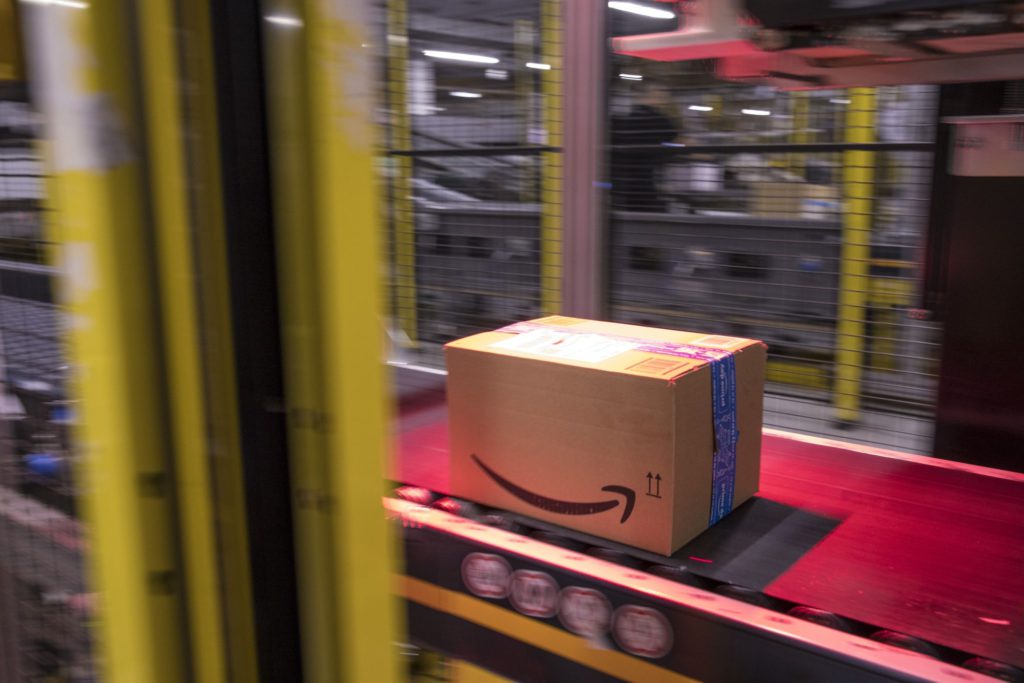
(Bloomberg) — Campaigners are successfully winning support in French courts to block Amazon.com Inc.’s plans to construct distribution facilities in the country.

During the past six months, four large logistics hubs in France have been either blocked by tribunals or abandoned due to local opposition on ecological, economical or political grounds.

The most recent setback came on Thursday when the court of Besancon, in the East of France, revoked permission granted to constructor Vailog for a site near the city of Belfort. It followed opposition from groups including Friends of the Earth and the France Nature Environment.

The 76,200-square-meter project “does not include compensatory measures to offset the destruction of wetlands”, the court wrote in its judgment.

A spokesperson for Vailog said it was too early to say if it would abandon the project. Amazon said in a statement that development of a logistics site was “a long term investment and we don’t speculate on future plans.” 

Other sites blocked include:

  • A 160,000-square-meters (1.7 million square feet) warehouse located on a former oil refinery near Rouen in Normandy, abandoned by property developer Gazeley, which retracted the project because of “too much opposition,” from groups such as Friends of the Earth, the mayor said
  • A 185,000-square-meter facility build was canceled in October following protests from campaign groups. Officials from the Nantes region blamed the “accumulation of technical and legal constraints” for the decision
  • A 38,000-square-meter delivery hub in the South of France was blocked in September after developer Argan decided not to appeal the cancellation of its environmental permit requested by local opposition groups

Still, the setbacks are unlikely to damage Amazon’s broader expansion in France. The company has eight major warehouses in the country and is developing two large automated ones near Paris and Metz. These are expected to grow in capacity and let Amazon function without opening any large additional fulfillment centers in France before 2024, according to a person familiar with the discussions, who didn’t want to be quoted regarding private matters. 

The cancellation of building work will have negligible financial repercussions for Amazon, which rents sites from property developers rather than builds to own them outright. More significant is the accumulation of regional opposition, which specifically targets the e-commerce giant. 

Campaigners, such as Stop Amazon, Friends of The Earth, and Attac, see it as a symbol of globalization that harms the environment and local economy.

“We have won,” Bastien Feudot, a left-wing Belfort city council official, said in an interview. “Our fight is not easy, because people’s first reflex is to think of jobs. But letting e-commerce develop is really letting the wolf in with the sheep.”

Amazon’s challenge in France is echoed in nearby countries. Meta Platforms Inc. said in March it had paused plans to build a large data center in the Netherlands after the tech giant faced opposition over the amount of renewable energy hyperscale data centers consume.

Read more: Europe’s Data Centers Will Gobble Up a Lot More Electricity

More stories like this are available on bloomberg.com

©2022 Bloomberg L.P.
China’s BYD to Stop Producing Fossil-Fueled Vehicles on EV Shift

(Bloomberg) — China’s BYD Co. said it has stopped production of fossil-fueled vehicles since March to focus on electric and hybrid cars amid Beijing’s promotion of greener automobiles to cut pollution.

The Shenzhen-based company will still produce and supply components for gas-fueled vehicles and provide service and after-sales guarantees to existing customers, BYD said in its March output and sales statement to the Hong Kong exchange Sunday.

The carmaker’s Hong Kong-listed shares jumped as much as 5.4% Monday.

The company, which is backed by Warren Buffett, said it was committed to building low-carbon and environmentally friendly vehicles in the Sunday release.

The automaker went further on Twitter, saying that “by doing this, BYD has become the first automotive manufacturer in the [world] to stop the production of fuel combusting vehicles.”

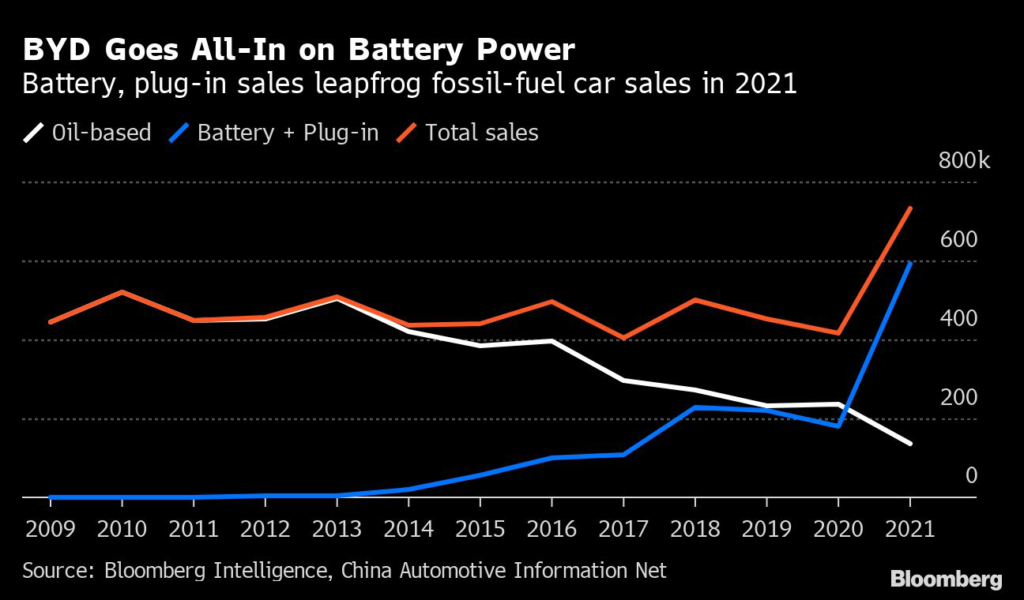
Data compiled by Bloomberg Intelligence shows battery-powered, plug-in hybrid sales overtook fossil-fuel vehicle sales last year for the first time for BYD. 

Read more: China’s EV Stocks Are on a Tear as BYD Leads on Robust Sales

BYD’s vehicle production rose 170% to 292,165 units in the first quarter, including 4,635 oil-fueled units, according to the statement. 

The Chinese automaker, which also makes EV batteries, is the first domestic player to sell 100,000 EV or plug-in hybrid cars a month, according to Beijing-based advisory firm Sino Auto Insights.

“The announcement was pretty ceremonial,” said Sino Auto founder Tu Le. “What we’ll see is their acceleration into the EV sector. It enables them to focus, so they can move a little bit faster.”

Read more: Surging Costs, Price-Conscious Buyers Add to EV Makers’ Woes

BYD’s all-in shift is in contrast to what Ford Motor Co. is doing, Tu added. The U.S. automaking giant said last month it will split its EVs and legacy automaking businesses into separate units within the company as it accelerates its electric shift.

More stories like this are available on bloomberg.com

©2022 Bloomberg L.P.

Close Bitnami banner
Bitnami
