Bloomberg

Panasonic to Spend $5 Billion on EV Cells, Supply Chain Software

(Bloomberg) — Panasonic Holdings Corp. plans to invest 600 billion yen ($4.9 billion) in fields including automotive batteries and supply chain software that the company sees as core to its growth.  

The Osaka-based firm will invest 400 billion yen in “growth areas” including electric vehicle cells, and another 200 billion yen in “technology pillars” such as hydrogen energy over three years through fiscal 2024, according to a statement Friday. Panasonic is also targeting an accumulated operating profit of 1.5 trillion yen in the same period.

Panasonic, a sprawling 104-year-old Japanese electronics company that used to top global consumer electronics sales, is seeking new avenues for growth. The company’s previous Chief Executive Officer Kazuhiro Tsuga spent close to nine years shedding struggling businesses, such as plasma TVs, before handing the reins to Yuki Kusumi in April last year.

Kusumi, head of a leaner company that’s no longer bleeding red ink, is now faced with the challenge of steering Panasonic onto a path of sustained growth. He’s spent the past year shaping Panasonic into a holding company, a structure within which, the CEO maintains, it will be easier to decide where to invest for long-term growth. 

Read More: Panasonic CEO Says Efficiency to Fuel Tesla Business, Growth

Kusumi said in an interview in June that he plans to spend two years “specializing and sharpening” Panasonic’s remaining businesses. Upping efficiency over that period will increase the company’s ability to generate cash, in turn freeing up hundreds of billions of yen to direct toward new initiatives including mergers and acquisitions, he said. 

One of those areas of growth is Panasonic’s business supplying batteries for electric vehicles. There, it’s in talks over a site for a factory in the U.S. where it plans to build next-generation 4680 batteries for Tesla Inc. and potentially other automakers. The multibillion-dollar plant could begin operating as soon as 2024, Bloomberg News reported.

Panasonic also sees opportunities in supply chain software. Last year, it spent $7.1 billion acquiring artificial intelligence software developer Blue Yonder, one of the Japanese firm’s biggest-ever acquisitions. 

Arizona-based Blue Yonder makes supply-chain management software and uses artificial intelligence to predict product demand. The idea is to wrap Blue Yonder software together with Panasonic hardware, like cameras and senors, to offer higher margin solutions to customers. 

More stories like this are available on bloomberg.com

©2022 Bloomberg L.P.

China Home Sales Slump Worsens Despite Vows to Support Market

(Bloomberg) — Sign up for the New Economy Daily newsletter, follow us @economics and subscribe to our podcast.

China’s home sales slump deepened in March, keeping pressure on cash-strapped developers even as policy makers vow to support the property market. 

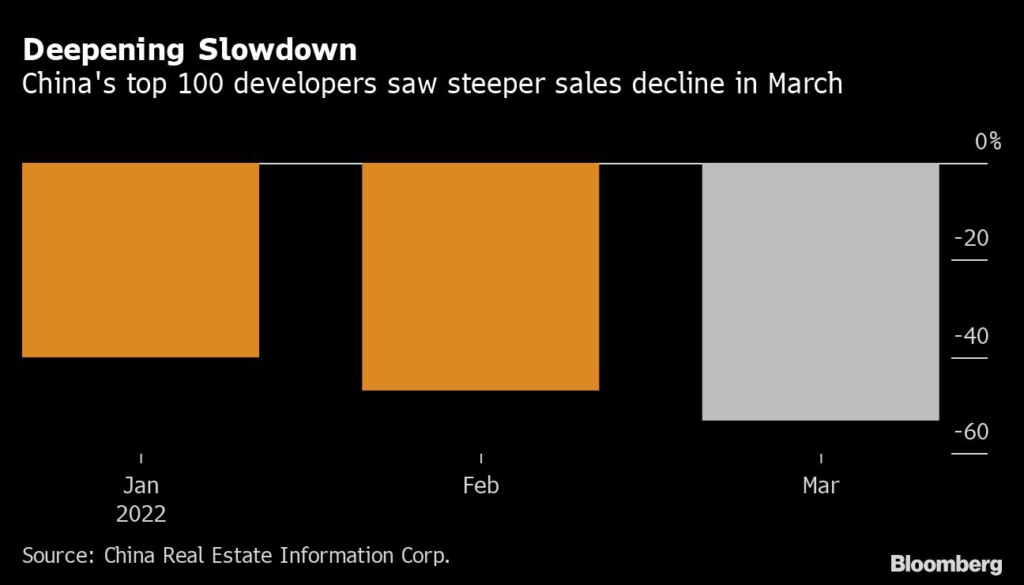
The 100 biggest companies in China’s debt-ridden property industry saw a 53% drop in sales from a year earlier, according to preliminary data from China Real Estate Information Corp. That’s the steepest decline this year.

The enduring downturn contrasts with a two-week rebound in developers’ stocks and dollar bonds after Chinese officials reiterated a pledge to prevent a disorderly collapse in the property market. Regulators have eased their clampdown on leverage in the industry by urging banks to boost lending to builders and cut mortgage down payments for homebuyers. 

In an early promising sign, March sales grew 27% from February, according to CRIC, driven by state-backed and strong private developers. The roll-back of policy curbs may kickstart a “slow and gradual” recovery in developers’ sales, Bloomberg Intelligence analyst Kristy Hung wrote in a Friday note. 

Still, in the first quarter, almost 40 developers saw sales drop by more than half from a year earlier, according to CRIC analysts. Buyer confidence remained subdued and real estate companies turned inactive in marketing new projects, they said. Covid outbreaks and lockdowns in cities including Shanghai added to the gloom. 

A sales revival is crucial to alleviate the cash crunch for developers as offshore bond markets remain prohibitively expensive. Funding difficulties and sizable refinancing needs for the rest of 2022 will further strain liquidity and increase defaults, Moody’s Investors Service analysts led by Daniel Zhou wrote in a note Thursday. 

A slew of battered developers including Kaisa Group Holdings Ltd. and Sunac China Holdings Ltd. failed to report unaudited earnings by a March 31 deadline, adding to pressure on credit ratings and forcing suspensions in trading of their stocks.

The real estate sector is bracing for another challenging month of bond and trust obligations in April, after March saw further signals of investor concern about builders’ repayment capabilities. 

Stressed developers face at least $3.1 billion of payments on dollar and onshore public bonds this month, according to data compiled by Bloomberg. The sector also has 53.6 billion yuan ($8.4 billion) of trust payments due, according to data tracker Use Trust.

More stories like this are available on bloomberg.com

©2022 Bloomberg L.P.

Ukraine Update: UN’s Aid to Mariupol Stymied; EU to Warn China

(Bloomberg) — Talks between Russia and Ukraine were set to resume Friday, a Ukrainian official said, as the United Nations said relief convoys had so far failed to reach Mariupol after the port city was devastated from weeks of shelling by Moscow’s forces. 

Russia agreed to hand back control of the Chernobyl nuclear plant to Ukraine, the International Atomic Energy Agency said, citing Ukrainian officials, after its military gained control of the highly contaminated area still suffering from the effects of one of the world’s worst nuclear disasters.

President Vladimir Putin said Russia would continue supplying gas to Europe even as it demands customers pay in rubles, easing fears the change could lead to damaging disruptions. European Union leaders plan to warn Putin’s key ally China that it will suffer a blow to its global role if it offers support for the Kremlin’s invasion.

(See RSAN on the Bloomberg Terminal for the Russian Sanctions Dashboard.)  

Key Developments

  • Biden Embraces Oil as Ukraine War Overwhelms His Climate Agenda
  • EU to Warn China It Will Damage Global Role by Helping Russia
  • Biden Orders Huge Oil Release, Prods Drillers to Step Up Output
  • Putin Says Russia Will Keep Supplying Gas Amid Shift to Rubles
  • Quitting Russia LNG Proves Tough as Nation’s Exports Stay Strong
  • Russians Embrace Putin’s Ukraine War as Kremlin Muzzles Dissent

All times CET:

EU to Warn China Over Russia (6:00 a.m.)

European Union leaders plan to tell President Xi Jinping in a summit that China will hurt its global stature if it hands Russia an economic or military lifeline. That pointed message will test Beijing’s commitment to keeping the war from damaging its ties with Brussels. 

European Commission President Ursula von der Leyen said China had a “special responsibility” to demand that Russia respect international law and to defend Ukraine’s sovereignty. 

Russia Jamming Jet Navigation, French Official Says (6:00 a.m.)

Russia’s military has been jamming satellite navigation systems used by commercial aircraft since the invasion of Ukraine, highlighting the need for robust alternatives, according to a French safety regulator.

Airline pilots have reported disruptions in regions around the Black Sea, eastern Finland and the Kaliningrad enclave, said Benoit Roturier, head of satellite navigation at France’s civil aviation authority DGAC. The interference appears to be caused by Russian trucks carrying jamming equipment typically used to protect troops and installations against GPS-guided missiles, he said.

Russia Is Jamming Jet Navigation, French Safety Official Says

Stocks Mixed as Crude Oil Drops (5:8 a.m.)

U.S. equity futures pushed higher and Asian stocks were mixed as investors evaluated the economic outlook amid moderating oil prices, tightening Federal Reserve policy and Russia’s war in Ukraine.

Oil held losses on a move by the U.S. to release roughly a million barrels a day from reserves to tackle rising energy costs. Russia’s invasion has disrupted commodity flows, fanning prices for everything from fuel to food.

China Minister Says No One Can Split G20 (4:51 a.m.)

All members of the Group of 20 nations have equal status and no one has the power to split the group, Chinese Foreign Minister Wang Yi said, according to a ministry statement.

The statement comes about a week after President Joe Biden said Russia should be removed from the Group of 20 over its actions in Ukraine

Japan Won’t Exit Sakhalin-1 or 2 (4:00 a.m)

Japanese Prime Minister Fumio Kishida said the country won’t withdraw from the Sakhalin-1 or 2 oil and gas project in Russia.

Resource-poor Japan currently gets 3.6% of its imported crude oil from Russia, while roughly 90% of it comes from Middle Eastern countries, according to trade ministry data. Japan procures 9% of its LNG and 13% of its thermal coal imports from Russia. 

UN Aid Convoy Reached Sumy, Mariupol Blocked (10:40 p.m.)

The United Nations said its aid convoy was able to get through to the northeastern city of Sumy, where it delivered food, medicine and other supplies. But it said that the UN and partners have still not been able to deliver aid to other regions, including the besieged port of Mariupol, “despite extensive efforts and ongoing engagement with the parties to the conflict.”  

Ukraine Says Russian Forces Exposed to Radiation (9:33 p.m.)

Russian troops began leaving the Chernobyl nuclear plant after soldiers got “significant doses” of radiation from digging trenches at the highly contaminated site, Ukraine’s state power company said Thursday as fighting raged on the outskirts of Kyiv and other fronts. 

The International Atomic Energy Agency said it was unable to confirm the reports of radiation exposure and is “seeking further information.” The IAEA said it was told by Ukrainian officials that Russia has transferred control of the facility, in writing, back to Ukraine.

Ukraine Says Less Than 1,500 People Evacuated Thursday (9:08 p.m.)

Just under 1,500 people were evacuated Thursday through three corridors, including 631 from the besieged port city of Mariupol, Ukrainian Deputy Prime Minister Iryna Vereshchuk said.

Despite guarantees from the International Red Cross and Moscow, Russian troops blocked Ukrainian buses from entering Berdyansk, a port about 90 kilometers (56 miles) from Mariupol, and Melitopol, Vereshchuk said. 

At the requests of French President Emmanuel Macron and German Chancellor Olaf Scholz, Russia will open a humanitarian corridor from Mariupol to Kyiv-controlled territory on Friday as well, Ria Novosti reported, citing the Russian Defense Ministry.

White House Jabs Putin, Again (8:21 p.m.)

Biden said there are signs that Putin has fired or detained key advisers.

“There’s a lot of speculation,” Biden said, adding that Putin “seems self-isolated.” Biden also said it’s an “open question” how misinformed Putin is about the status of his military’s efforts in Ukraine.

“But I don’t want to put too much stock in at this time because we don’t have that much hard evidence,” he added. 

Russian Forces Seen Leaving Chernobyl (7:50 p.m.)

Ukraine’s nuclear regulator said the head of Russian troops at the Chernobyl facility said they are departing after taking the facility infamous for its 1986 meltdown in the early days of the war. 

Leonid Oliynyk, Energoatom’s spokesman, confirmed a letter posted on Telegram announcing the departure. Oliynyk — who isn’t at Chernobyl — said he was told that most Russian troops left the facility in two columns and appeared headed toward Belarus. It didn’t appear that all Russian troops had departed, however. 

EU Pushed to Debate Withholding Some Energy Revenue (7:45 p.m.)

Estonian Prime Minister Kaja Kallas asked the European Commission to present a proposal to withhold a share of the revenue that goes to Russia for its energy exports as a possible alternative to a broader energy embargo, according to a document seen by Bloomberg News.

The Baltic nation, which has demanded tougher sanctions on Moscow, is proposing that the money stay frozen in a special account until Russia withdraws its troops from Ukraine, and wants the proposal to be included in the EU’s next sanctions package. Kallas said that the EU has collectively paid more than 22 billion euros ($24 billion) to import energy from Russia since the start of the war last month.

Russian Rail Among Firms to Miss Bond Deadlines (5:59 p.m.)

Russian Railways JSC, EuroChem and Chelyabinsk Pipe Plant have missed deadlines to make interest payments on foreign-denominated bonds after the cash got stuck for compliance checks on its way to investors. 

The companies now face the risk of creditors declaring they’re in default. The specter of default hash shadowed Russia in the wake of sanctions imposed in response to the invasion of Ukraine. Russian Railways said it serviced all debt on time, Tass reported, citing the company. 

Russian Stocks Rise after Short-Selling Ban Ends (5:59 p.m.)

Russian equities rose on Thursday after a short-selling ban on local stocks was lifted, one of the measures that helped limit the declines in the market after a record long shutdown.

The MOEX Russia Index jumped 7.6%, with gas giant Gazprom PJSC and oil producer Lukoil PJSC leading the gains. 

With Dissent Muzzled, Russians Embrace Putin’s War (4:53 p.m.)

Support for Putin has surged among Russians following his invasion of Ukraine, according to the country’s leading independent pollster, even as a Kremlin crackdown on protest raises questions about public willingness to express opposition to the war.

Some 83% approved of Putin’s actions as president in a March 24-30 survey of 1,632 respondents, an increase of 12 percentage points on the previous month and the highest since 2017, the Moscow-based Levada Center reported. 

Congress in Bipartisan Effort on Tracking War Crimes (5:24 p.m.)

The top Democrat and Republican on the House Foreign Affairs Committee introduced legislation on a coordinated effort to collect and preserve evidence of potential war crimes committed by Russian troops in Ukraine. The measure also outlines a process for submitting the evidence to relevant courts or tribunals.

The effort follows passage in the Senate of legislation introduced by South Carolina Republican Lindsey Graham encouraging countries to submit evidence of war crimes committed in Ukraine to the International Criminal Court.

EU to Offer Members 40 Euros a Week Per Refugee (5:22 p.m.)

The European Commission plans to offer member states 40 euros ($44) a week for each refugee they’re hosting from Ukraine as part of a new mechanism to speed up the payment of existing EU funds to cope with the ongoing crisis, a senior EU official said. 

The mechanism was adopted Thursday by the commission and is expected to be signed off by the European Parliament and member states next week, the official said. Some 4 million people have fled Ukraine since Feb. 24, over 9% of the country’s pre-war population, with about 2.4 million entering Poland in the first instance. 

Biden Orders Record Oil Release From U.S. Reserves (5:02 p.m.)

Blaming Russia’s war in Ukraine for a surge in energy costs, the U.S. will release roughly a million barrels of oil a day from its reserves for six months, a historic drawdown that underscores White House concern about rising prices and supply shortages. 

The administration also will push the International Energy Agency to coordinate releases from reserves by other oil-consuming nations. The organization will meet within days, two people familiar with the matter said, and the administration expects other countries will make some reserve releases but not as much as the U.S. 

Putin Says Russia Will Keep Supplying Gas (4:40 p.m.)

Russia aims to keep supplying gas to European customers even as it demands they shift to payment in rubles, President Vladimir Putin said. The comment eased fears that the shift could lead to disruptions from the continent’s biggest supplier.

“We will continue to supply gas in the volumes and at prices set down in the current long-term agreements,” Putin said in televised comments. “Russia values its business reputation.” European officials said the change to rubles isn’t likely to affect supplies. 

U.S. Sanctions Russian Chip Exporter (4:30 p.m.)

The U.S. announced sanctions against what it said was Russia’s biggest chipmaker and largest exporter of microelectronics among a group of 21 entities and 13 individuals. The move constitutes a fresh effort to penalize Moscow’s “war machine,” Treasury Secretary Janet Yellen said in a statement.

The Treasury Department said Mikron, the chipmaker, received tax benefits from Russia’s government to help develop the Mir payment system, which Moscow has used to help insulate it from financial penalties levied by U.S., European and allied governments and the subsequent withdrawal of Visa and Mastercard from the country. 

Scholz Says Russia Must Allow European Companies to Pay in Euros (3:55 p.m.)

German Chancellor Olaf Scholz reiterated that Putin must honor contracts for Russian gas that allow companies to pay in dollars and euros. 

“We looked at the gas supply contracts and there it says that payment is to be made in euros, sometimes in dollars but most of the time in euros,” Scholz told reporters in Berlin on Thursday. “And I made it clear in the conversation with the Russian president that it will remain this way. 

NATO Says Russia Regrouping, Not Withdrawing (1:20 p.m.)

Russian forces are not pulling out of Ukraine, but regrouping to focus their attention on the eastern Donbas region, NATO Secretary General Jens Stoltenberg told reporters in Brussels.

“According to our intelligence, Russian units are not withdrawing but repositioning. Russia is trying to regroup, resupply and reinforce its offensive in the Donbas region,” he said. “At the same time, Russia maintains pressure on Kyiv and other cities, so we can expect additional offensive actions bringing even more suffering.”


Putin Tells Draghi EU May Pay for Gas in Euros, Dollars (12:28 p.m.)

Draghi said the Russian leader told him in a phone call Wednesday that EU companies will still be able to pay for gas in euros or dollars and the ruble conversion will take place internally, echoing statements made to German Chancellor Olaf Scholz that were relayed by the government in Berlin. The Italian premier said switching currencies for such contracts is no simple matter. 

“It is absolutely not easy to change the currency used to pay for key goods internationally,” Draghi said during a press conference Thursday. Converting to euro payments in recent years has been difficult enough, he said. 

More stories like this are available on bloomberg.com

©2022 Bloomberg L.P.

India Will Frame Cryptocurrency Law Only After Global Consensus

(Bloomberg) — India will frame a legislation for cryptocurrencies only after a global consensus emerges on regulating such assets, according to a person familiar with the matter.

The government isn’t planning a law soon to either regulate or tighten provisions, the person said, asking not to be identified as the discussions are private. A finance ministry spokesman wasn’t immediately available for for a comment. 

After years of back-and-forth, Prime Minister Narendra Modi’s administration announced a 30% tax on income from digital assets from April 1, making it costlier to trade and bringing such transactions at par with activities like horse racing and lotteries. It had earlier planned to come up with a legislation to make the government’s stand clear on the matter. 

How India Plans to Develop Crypto on Its Own Terms: QuickTake

A global uniform approach on cryptocurrencies is needed and steps by one nation will not be sufficient, Modi said in his address to the World Economic Forum in January.

The central bank has openly voiced its opposition to private digital currencies, equating them with Ponzi schemes and said they were a threat to financial sovereignty. Crypto investments have flourished in India after the country’s top court set aside restrictions imposed by the Reserve Bank of India in March 2020. An October report from Chainalysis, a crypto-analysis firm, found the Indian market grew 641% from July 2020 through June 2021.  


More stories like this are available on bloomberg.com

©2022 Bloomberg L.P.

Mariupol’s Splintering Loyalties May Be Enough for Vladimir Putin

(Bloomberg) — Before escaping Mariupol, a critical target in Russia’s invasion of Ukraine, “Nataliya” found herself arguing with some of the neighbors in her Stalin-era apartment block. They blamed the presence of Ukrainian defenders for Russian bombs and artillery shells that were raining destruction on their besieged southern city. 

To them, Nataliya said, it didn’t matter which flag they lived under, Ukrainian or Russian, so long as the shelling stopped. They believed Russian troops were targeting Ukrainian soldiers within the city and would, she added, have been happy to surrender it. 

“I was ready to punch them all,” said Nataliya. One neighbor returned from a nearby police station that had been just been abandoned, convinced Russian military would now stop shelling their district as a result. She’d also found a mop to bring home. “They were so happy, so enthusiastic on that day.” 

The shelling didn’t miss a beat. But for the future of a town whose capture now seems only a matter of time, the reaction of Nataliya’s neighbors may be as important to understand as her anger.

They, like the “liberated” Mariupol residents interviewed by pro-Russia Telegram channels to describe how they were used as “human shields,” either have Russian sympathies or believe the ubiquitous propaganda from Moscow-based media blaming Ukraine for the war. Few would have invited the invasion, but nor do all residents want to fight it.

Having left Mariupol on March 18, Nataliya and her partner had to stop while still in Russian occupied territory, due to illness. After speaking with Bloomberg over several days, she shut off her phone before trying to reach Ukrainian-controlled territory a week ago, and has not been contactable since. Nataliya is not her real name. Bloomberg is not identifying her, or her partner, given the potential risks to them of doing so. 

“Russian troops would thoroughly inspect all basements in search of Ukrainian activists” as they moved through Mariupol, Nataliya said before leaving her last undisclosed location. “Most of all I am afraid to be captured.”

If Mariupol falls, it would mark an important moment in the war — a victory for Russia’s forces in an otherwise stumbling campaign. At a stroke it would boost morale, consolidate supply lines and free troops to turn north behind the Ukrainian troops that continue to hold back Russia’s assault from the east.

Any draw-down of troops from around the capital Kyiv, as announced by Russia this week, could be redirected to the war effort in the east, where the capture of remaining territory in Ukraine’s Luhansk and Donetsk Oblasts —  including Mariupol —  has been made the invasion’s number one goal.

Read more: Russian Pullback From Kyiv Is Likely to Be Limited and Tactical

None of that, however, would count for much if President Vladimir Putin cannot consolidate control of territory taken. Mariupol, a Russophone steel town, is by now largely destroyed and no-longer pro-Russian, which a decade ago it may have been. 

The city stands just 60 km (37 miles) from the Russian border, meaningless until the 1991 collapse of the Soviet Union, and most people have relatives on the other side. Economic ties were as deep, with the port’s ship repair business and train carriage manufacturer selling almost exclusively to Russian clients. In Ukraine’s 2010 presidential election, Viktor Yanukovych, the pro-Russia candidate deposed four years later, won 76% of the vote from those living in the Donetsk region, a higher share than anywhere else in the country.

All that started to change in 2014, when ties were cut after Russia annexed Crimea and stoked a war in Donetsk in response to Yanukovych’s removal in a revolution, and still more so since Russia’s Feb. 24 invasion. This week, Mariupol’s Mayor Vadym Boychenko said 5,000 people had died in the siege, with about 160,000 civilians still trapped in the city. 

Read more: Ukraine’s Steel Mills Are a War Zone as Staff Huddle in Bunkers

Yet according to Nataliya, for those inside Mariupol, Russian news sources have been easier to access than Ukrainian ones since the city’s broadcast and cell towers were disabled. Many, like her neighbors, remain at best ambivalent about whether they’d rather live under Kyiv’s rule, or Moscow’s. 

As a result, while Putin’s troops didn’t get the warm welcome in Mariupol their initial campaign strategy assumed, he still has cause to believe he can impose a Russian future on the city. That was done already, in Donetsk, a city twice the size and just 110 km to the north, which has been under the control of Russia-backed separatists since 2014.

Then, as now, passionate pro-Ukrainians such Nataliya fled. Should Mariupol become part the self-proclaimed Donetsk People’s Republic (DNR), or of Russia, they’re unlikely to return.

Based on Donetsk’s experience, Nataliya’s neighbors and others like them are more likely to stay or come back. Draconian law enforcement would ensure obedience. The city’s steel factories —  with 40,000 employees and a combined annual output of 9 million metric tons — would still need labor. Rail links to Donetsk and other occupied territories to the north, severed since 2014, could start working again.

“The moment hostilities end we will begin restoration (of the city) immediately,” DNR leader Denis Pushilin said on his Telegram channel last week, while visiting an aid center set up by Russia’s ruling United Russia party on the outskirts of Mariupol.

In Pushilin’s alternative reality, Russia and aid workers in DNR jump suits were delivering humanitarian aid to grateful fellow Russians rescued from Ukraine’s Azov battalion, a militia that wears neo-fascist insignia and forms part of Mariupol’s defense. Some will want to believe it.

“Azov did not stand on ceremony with civilian objects — they stationed firing points in them and purposefully destroyed them when they retreated,” said Andrey Turchak, secretary general of United Russia, who accompanied Pushilin. “Nobody should be in any doubt that Russia is here forever.”

Read more: Stalled Elsewhere, Russia Focuses on Mariupol in Ukraine Plan B

Evidence that Russian aircraft and artillery were responsible for the devastation of Mariupol, rather than self-sabotage by the defenders, is overwhelming. Yet many have been hearing only the Russian narrative, broadcast over strong FM signals from Radio Russia and Radio DNR. To listen to Ukrainian news channels, Nataliya had to find an old medium wave radio. 

The Russian radio stations spread fake news, according to Nataliya, including repeated reports that Boychenko had fled, or that the Azov battalion had surrendered and were changing into civilian clothes to escape, or that the Ukrainian army was using civilians as human shields by deploying within the city. 

She recalled how on Feb. 27, Mariupol lost access to natural gas, electricity, cell and Internet connections and running water in quick succession. People moved out into the courtyard behind their apartment block to cook on fires fed with wood taken from the furniture in their apartments, or nearby restaurants.

Read more: Russia’s Ruined Game Plan for Ukraine Is Visible in the South

“We cooked food together, we shared water” collected from springs, Nataliya said of her neighbors. “Unfortunately, there were very many pro-Russian people or those who were neutral.” Her neighbors could not be reached for comment.

As time passed, people started burying their dead in the courtyard, some killed by shelling, others by heart attacks or other causes. The sound of the planes was worst, she said, knowing they could destroy a building with a single bomb. 

Almost as bad was the lack of communications and therefore information, whether about her mother and other relatives living on the eastern side of the city, where fighting was heaviest, or about evacuation possibilities, the course of the siege or what was happening in the rest of the country. 

Nataliya and her partner delayed leaving as long as they could, fearful of the journey out and the stories of convoys being shelled. But her partner had become sick from the dirty water they were drinking and was vomiting blood. They had to leave her mother behind.

As they drove out, she said, Russian soldiers made her partner get out of the car and strip, searching for tattoos or weapons that might expose him as a soldier. Eventually they let him go, but his illness meant they hadn’t gone far before they had to stop, in an area still under Russian control. 

In their new location, soldiers were distributing food from Donetsk, trying to bribe people, as Nataliya put it. The aid was adorned with ribbons, formed in the shape of the now iconic ‘Z’ of the Russian forces, as well as a logo. It read: “We don’t abandon our own.”

More stories like this are available on bloomberg.com

©2022 Bloomberg L.P.
Russia Is Jamming Commercial Planes’ Satellite Navigation, French Safety Official Says

(Bloomberg) — Russia’s military has been jamming satellite navigation systems used by commercial aircraft since the invasion of Ukraine, highlighting the need for robust alternatives, according to a French safety regulator.

Airline pilots have reported disruptions in regions around the Black Sea, eastern Finland and the Kaliningrad enclave, said Benoit Roturier, head of satellite navigation at France’s civil aviation authority DGAC. The interference appears to be caused by Russian trucks carrying jamming equipment typically used to protect troops and installations against GPS-guided missiles, he said.

“I don’t think the goal is to jam civil aviation at this stage,” Roturier said in an interview. “That is collateral damage.”

While no dangerous in-flight situation has occurred due to backup measures, pilots confronted with an episode are forced to deal with cockpit alerts that can be distracting, he said. 

“All of Europe needs to prepare contingency plans for when these satellite systems are lost,” Roturier said. “For some countries closer to the front, who may be less advanced in putting in place contingency plans, the current situation has served to highlight the need. It’s a wake-up call.”

The jamming of satellite signals used for navigation has thrown up yet another aviation complication from the conflict, which has led to flying bans across the countries and triggered a range of sanctions on airlines and jet manufacturers.

Representatives for Russia’s defense ministry and the Kremlin didn’t immediately respond to requests for comment.

Probable Problems

Earlier this month, the European Union Aviation Safety Agency warned of an “increased probability of problems” with the Global Navigation Satellite Systems used by commercial aircraft due to the war.

The issue has a precedent in 2018, when some 60 airlines reported several hundred partial or complete losses of satellite navigation services, according to a 2019 EU report to the International Civil Aviation Organization.

“In most cases the likely cause was ground-originated jamming,” the report said, citing the use of high-power jammers impacting large swathes of airspace in areas where there was “political tension.”

Russia was responsible for the 2018 incidents as well, according to Roturier, as part of the country’s military support for Syria.

Backup Technologies

The aviation industry generally uses one Global Positioning System frequency for satellite navigation, but there are backup technologies for when signals are lost. 

“Airplanes hit by jamming can continue to fly using inertial navigation systems — that is standard and works with GPS,” Roturier said. “This could be less accurate, but can be used when GPS goes down.”

Yet the recent incidents related to the Ukraine war have sparked a realization among regulators of the potential for massive airspace disruptions, especially as the European Union pushes for increasing reliance on satellite navigation. 

“In France, a strong military-jamming event using one truck could cut out a quarter of French skies,” Roturier said. “This is what is worrisome for civil aviation. Large areas can be affected outside of conflict zones.”

More stories like this are available on bloomberg.com

©2022 Bloomberg L.P.
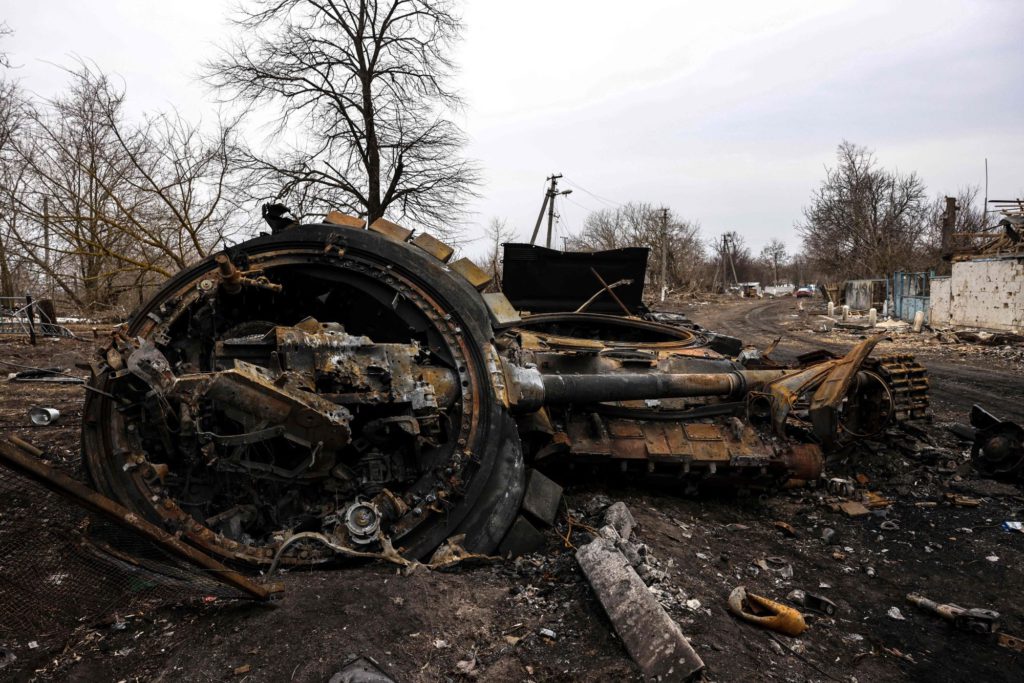
China Censors Shanghai Protest Videos as Lockdown Anger Grows

(Bloomberg) — China is struggling to manage growing public unhappiness over tough Covid Zero measures in Shanghai, one of its wealthiest and most globalized cities, as some residents revolt against lockdown orders which have stretched in some instances to a month.

Tech giant Tencent Holdings Ltd. took down two videos earlier this week of a rare protest at a Shanghai housing compound after they started trending on the company’s WeChat microblogging and video publishing platforms, according to a person familiar with the matter. The videos had been posted by users to their WeChat timelines, the person said. 

In the footage viewed and independently verified by Bloomberg News, dozens of residents behind the gates of the Jiangnan Xinyuan housing estate in Shanghai’s Minhang district chant phrases including “we want to eat,” “we want the right to know,” and “we want freedom.” People there have been confined to their homes since March 2 and residents have undergone more than 10 rounds of mass virus testing, according to official notices from the compound’s WeChat account. 

Here’s How China Can Escape the Covid Zero Lockdown Trap

Tencent told staffers the videos were taken down because they violated China’s laws and policies, said the person, asking not to be identified due to fear of reprisal. A third video of the compound’s residents demonstrating, where the chanting is less clear, and doesn’t include terms like “freedom,” has been allowed to remain online, the person said. 

The ramped-up censorship reflects China’s growing dilemma over its zero-tolerance approach to the virus, which is extracting greater economic and social costs while leaving it isolated in a world that’s chosen to live with Covid. Shanghai’s outbreak has ballooned to more than 32,000 cases in the past month, the biggest spread of infection in China since the original outbreak in Wuhan. 

While officials have shown greater flexibility with the Covid Zero policy in recent months — creating closed loop systems for businesses and factories to keep operating amid lockdowns and in the case of Shanghai, alternating lockdowns between its eastern and western halves — the pushback in China’s financial hub underscores the domestic costs of practicing the policy indefinitely. 

Why China Is Sticking With Its Covid Zero Strategy: QuickTake

A Tencent company representative declined to comment while the Shanghai city government’s news office did not immediately respond to a request for comment. 

Frustration and anger are palpable from posts on major social media platforms about Shanghai’s Covid control policies, with tens of thousands of users complaining about running out of food or criticizing the government for failing to provide timely medical care to those in need. One user posted on Weibo photos of what appeared to be a rally at another housing compound on Wednesday, saying residents were protesting against a lack of food supplies. 

A topic on Weibo about an elderly person who died of asthma after ambulances refused to take him to a hospital in Shanghai attracted more than 55 million views and 23,000 posts on Thursday alone, with posts lamenting the state of medical care more than two years into the pandemic. 

While not city-wide like elsewhere in China, the lockdowns in Shanghai have led to desperation among those with chronic conditions like kidney failure in incidents which evoke the traumatic scenes of early 2020 when the virus first emerged. Before this week’s split lockdown, officials had been sealing individual buildings and housing compounds for compulsory testing, to root out suspected virus cases. 

Desperation Hits Shanghai’s Chronically Ill as Infections Soar

Shanghai, a city that accounts for 3.8% of China’s GDP, is home to many of the country’s elite in industries ranging from financial services to luxury fashion. More foreigners live there than anywhere else in China and the quality of health-care is considered the best nationwide. With no major outbreak in the past two years, residents there are also unaccustomed to China’s strict Covid Zero playbook.  

City officials issued an open letter on Thursday thanking residents for bearing with the measures and vowing to do better to manage emergency care and food supply. 

Food Concerns

Some 71 million people in China are either in lockdown or facing one imminently, according to Bloomberg calculations. Affected households often find themselves with inadequate access to food, as panic buying and a lack of delivery staff contribute to shortages. Lockdowns are likely costing the country at least $46 billion a month, or 3.1% of GDP, in lost economic output, according to an estimate by scholars at the Chinese University of Hong Kong.

WeChat has also deleted an article which highlights the mounting human cost of the Covid Zero policy, written by Li Chengpeng, a well-known critic of government policies, said China Digital Times, an independent media outlet which tracks online censorship in China. Posts that carry the full article were also scrubbed from Weibo, controlled by Sina Corp.

China has a sophisticated censorship system where its propaganda department issues regular guidance on what media organizations and social media platforms need to police. The Great Firewall bars access for citizens to most foreign news sites and platforms like Google and Facebook, unless they use a virtual private network. 

More stories like this are available on bloomberg.com

©2022 Bloomberg L.P.

China Tech Stocks Slide for Second Day Amid U.S. Delisting Risks

(Bloomberg) — Chinese technology stocks slumped for a second day amid continued concern about the risk of local firms getting kicked off American exchanges.

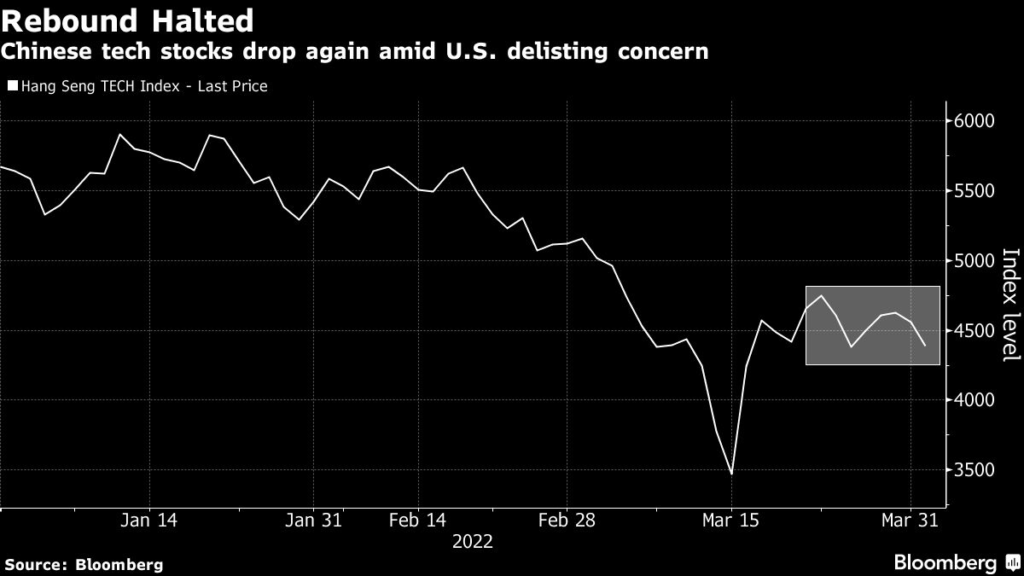
The Hang Seng Tech Index, which tracks some of the biggest Chinese firms in the sector, lost as much as 3.9% in early trading on Friday. It fell 1.4% on Thursday after the U.S. securities regulator played down the prospect of an imminent deal to keep Chinese companies listed there.

Baidu Inc., which was added to the list of firms facing possible delisting, tumbled as much as 8.8% while Bilibili Inc. dropped more than 8%. Both were among the worst performers on the tech gauge. 

“A solution between the U.S. and China regulators may not be as near as previously hoped,” said Marvin Chen, an analyst at Bloomberg Intelligence. “Markets may have gotten ahead of themselves over the past two weeks.”

The two-day selloff in tech names shows that investors remain on edge amid a long-standing dispute over whether American regulators can get full access to U.S.-traded Chinese company audits. In response to comments by the Securities and Exchange Commission chair tamping down speculation that a deal to avoid delistings is near, China said talks with the U.S. accounting watchdog will continue.

Having lost about a third of its value last year amid Beijing’s relentless crackdown on the sector, the Hang Seng Tech Index has plunged another 22% so far in 2022 as investors remained concerned about further regulatory action. Beijing is preparing new regulations on the live-streaming industry including a daily cap on tipping, the Wall Street Journal reported on Wednesday. Later that afternoon, China’s regulators pledged to eradicate crimes including tax evasion on such platforms.

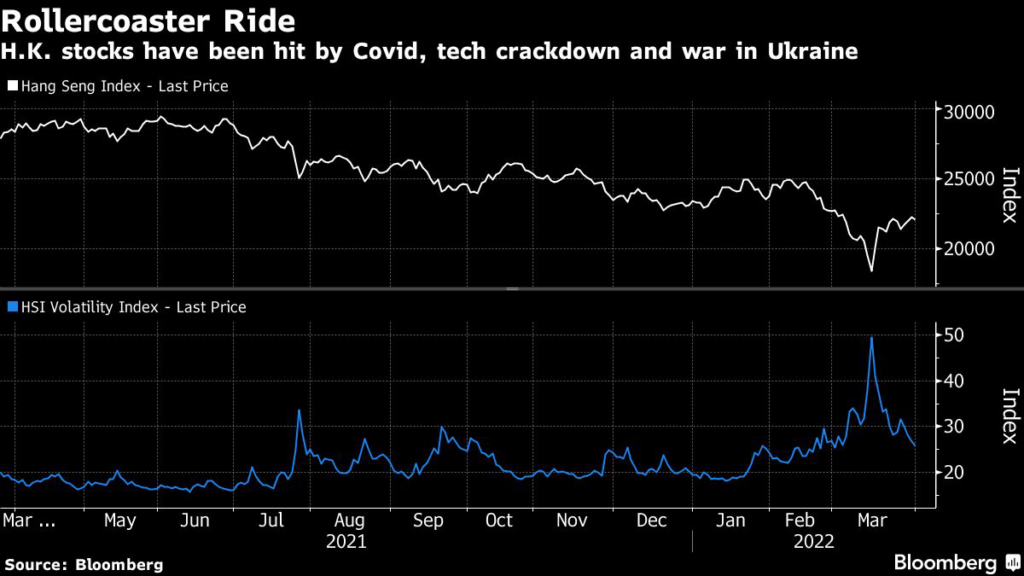
The losses in tech shares continue to weigh on Hong Kong’s broader market, with the Hang Seng Index down 2% on Friday.

“My gut feeling is that there is a strong chance that they (American Depositary Receipts) will get delisted in a few years. I know both the regulators are working but I think there’s a reasonable chance in the future,” said Sean Taylor, Asia-Pacific chief investment officer at DWS, adding that they are still happy to hold ADRs provided there’s another listing elsewhere.

READ: Chinese ADRs Off to Worst Start Since 2008 on Delisting Threat

More stories like this are available on bloomberg.com

©2022 Bloomberg L.P.
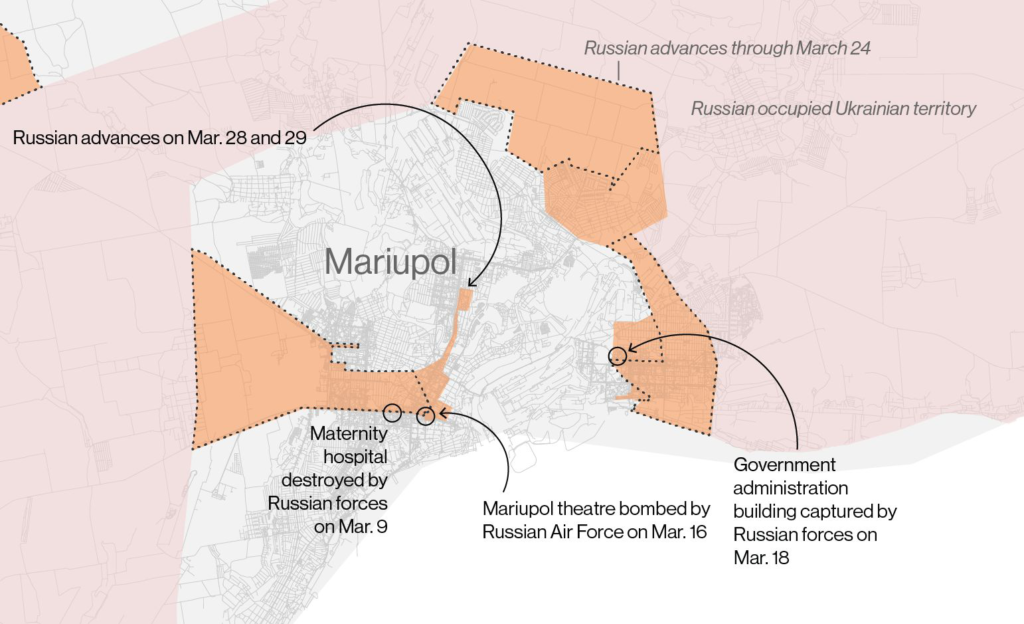
Bitcoin Rally Stumbles After Failing at Technical Hurdle

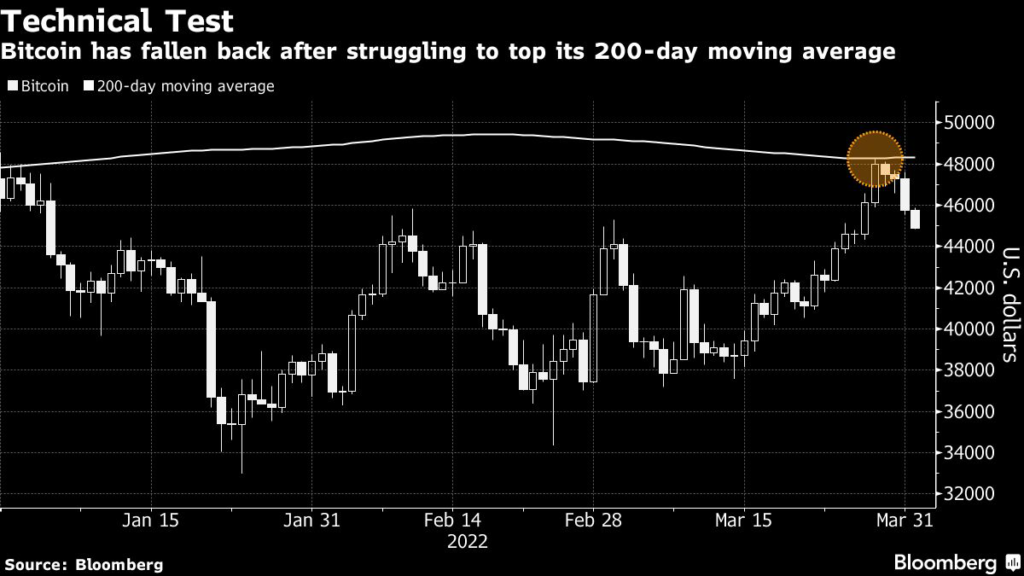
(Bloomberg) — Bitcoin is on the back foot after failing to scale its 200-day moving average. The world’s largest cryptocurrency jabbed at the closely monitored technical level on March 28 but is down about 7% since then and back in the $35,000 to $45,000 range that’s largely held in 2022. The struggle to vault to the moving average may lead to caution about Bitcoin’s immediate outlook.

More stories like this are available on bloomberg.com

©2022 Bloomberg L.P.
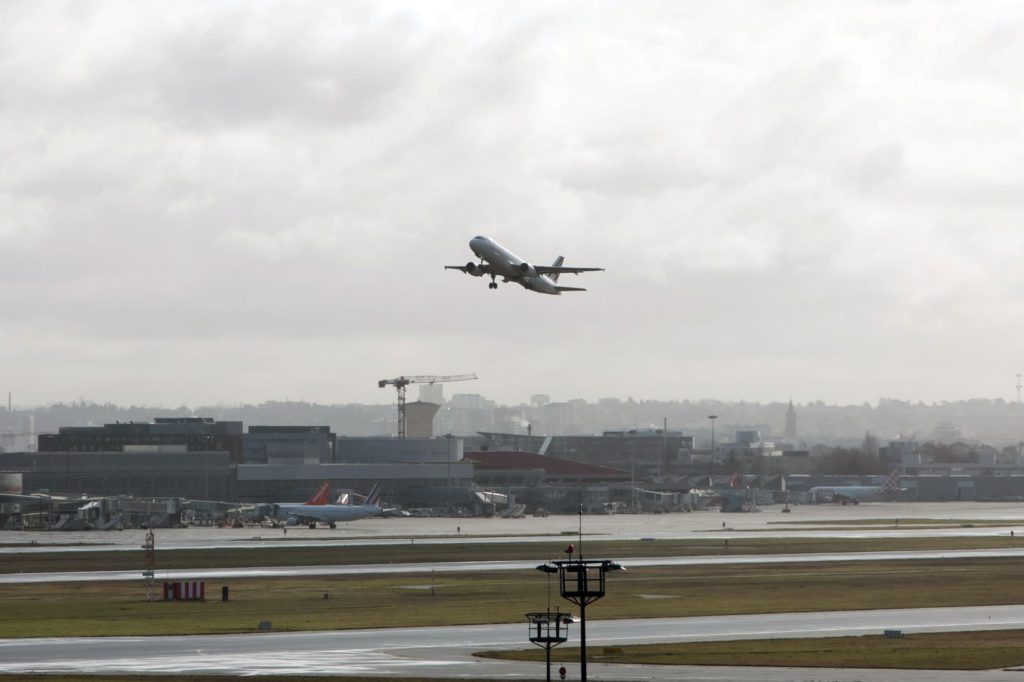
Earnings No-Shows; Slow Debt Restructuring: Evergrande Update

(Bloomberg) — Embattled Chinese developers, including Sunac China Holdings Ltd. and Shimao Group Holdings Ltd., were among stocks that were suspended Friday after missing a deadline to report annual results.

Recent Covid outbreaks coupled with auditor changes are forcing dozens of Hong Kong-listed firms to postpone their annual earnings. The slow and opaque nature of debt restructuring at Chinese property developers is causing frustration and aggravating concern about the country’s corporate governance, according to Loomis, Sayles & Co.

Meanwhile, China’s top 100 developers saw their combined contract sales in March drop 53% according to data released by China Real Estate Information Corp. A gauge of property stocks was little changed. 

Key Developments:

  • China Top 100 Developers See March Sales Down 52.7% Y/y: CRIC
  • China Aoyuan Says Unable to Publish 2021 Annual Results
  • Shimao Won’t Publish 2021 Unaudited Annual Results Due to Covid
  • CIFI Prices HK$1.96b 6.95% Convertible Bonds Due 2025
  • China Junk USD Bonds Add to Gains After Country Garden Results
  • Chinese Builder Result Delays Raise Downgrade Pressure: Fitch
  • China Property SOEs’ Bond Sales Soar as Private Peers Struggle

China Top 100 Developers See March Sales Down 52.7%: CRIC (9:12 a.m. HK)

China’s top 100 developers saw their combined contract sales fall 52.7% on the prior year to 511.5 billion yuan ($80.7 billion) in March, according to data released by China Real Estate Information Corp.

Loomis Voices Frustration Over China Property Debt Restructuring (9:07 a.m. HK)

The slow and opaque nature of debt restructuring at Chinese property developers is causing frustration and aggravating concern about the country’s corporate governance, according to Loomis, Sayles & Co.

“We’re hearing a lot of reasons: it has to do with local authorities, it has to do with Covid, but it’s definitely been a much slower process on any type of restructuring discussions than we would expect,” said Elaine Stokes, a fund manager at the Boston-based firm. “It feels like it’s at a standstill.” 

Stokes’ comments highlight the unease among many international investors caught up in a record wave of bond defaults by Chinese real-estate firms, with billions of dollars at stake and limited power to negotiate. The lack of transparency about the magnitude of financial stress at some of the developers and over the state-guided debt workout process are added uncertainties. 

Stressed China Builders Face $11 Billion of Bond, Trust Payments (9:02 a.m. HK)

Stressed developers face at least $3.1 billion of payments on dollar and onshore public bonds, according to data compiled by Bloomberg, a pullback from the previous month’s level. In addition, the sector has 53.6 billion yuan ($8.45 billion) of trust payments due in April, according to data tracker Use Trust.

China’s property sector faces another robust month of bond and trust obligations, after March saw further signals of investor concern about builders’ repayment capabilities.

Guangzhou R&F, Agile Group Indicate Debt Levels (8:30 a.m. HK)

Guangzhou R&F Properties Co.’s end-2021 net debt-to-equity ratio fell to 123.3% from 130.2% a year earlier, the Chinese developer said in its unaudited annual results statement.

Agile Group’s end-2021 gearing ratio also fell to 50.8% from 61% year earlier.

Shimao Won’t Publish 2021 Unaudited Annual Results Due to Covid (6:30 p.m. HK)

Shimao Group is not in a position to publish its unaudited 2021 annual results on Thursday due to the latest Covid outbreak, which led to the lockdown of its headquarters in Shanghai, it said in a filing to HKEX late Thursday.

Trading in shares will be suspended with effect from 9 a.m. local time on Friday; board meeting will be postponed.

More stories like this are available on bloomberg.com

©2022 Bloomberg L.P.

Close Bitnami banner
Bitnami