Bloomberg

LSE Suspends More Instruments: The London Rush

(Bloomberg) — Here’s the key business news from London-listed companies this morning:

LSE Group Plc: The London Stock Exchange suspended more instruments trading on its exchange as a result of Russia-related sanctions.

  • The company says there has been an “ongoing deterioration” of market conditions since March 2

Hammerson Plc: The U.K. mall operator says there has been “strong footfall recovery in all territories” after coronavirus-related restrictions were relaxed.

CVS Group Plc: The U.K.’s competition authority says it would consider approving CVS’s purchase of Quality Pet Care Ltd, providing the pet company sells The Vet unit.

  • Yesterday, the CMA cleared Cellnex Telecom SA’s 3.7 billion-euro purchase of CK Hutchison Holdings Ltd.’s U.K. mobile masts, on the condition that the company sells up to 1,300 masts

Outside The City 

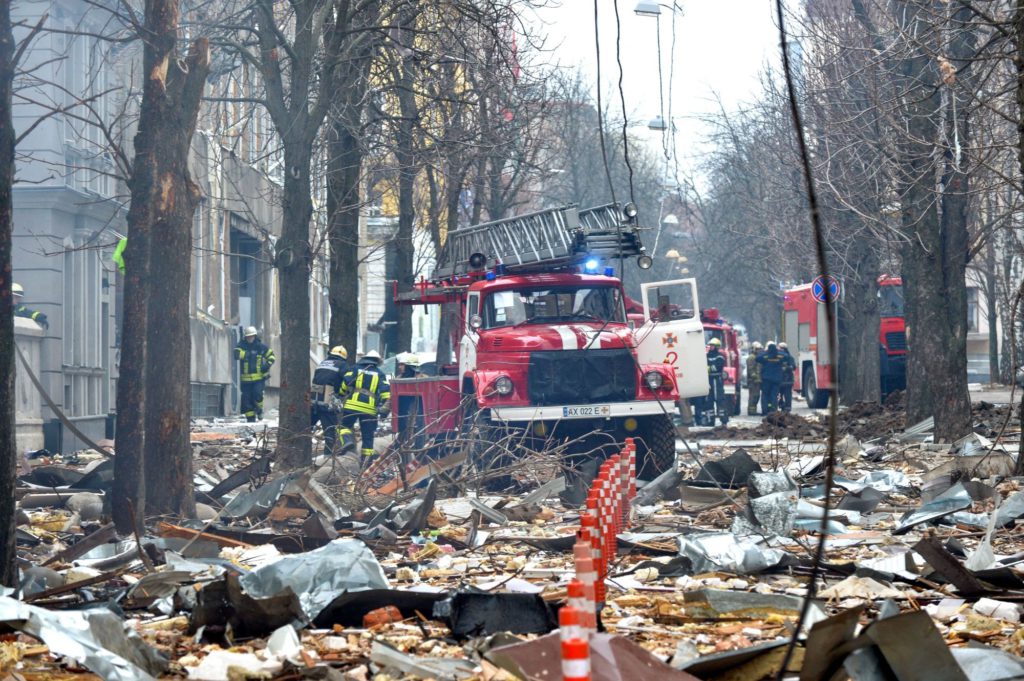
Russian shelling briefly ignited a fire at Europe’s largest nuclear power plant in eastern Ukraine early on Friday, Ukrainian officials said. Emergency services said they extinguished the blaze at a training complex in the plant and there were no injuries. The site is now occupied by Russian forces, Ukraine says. 

In Case You Missed It

London-based broker Sova Capital Limited, which is owned by Russian banker Roman Avdeev, is on the brink on collapse. It’s the latest sign of the turbulence facing companies with ties to Russia.

The U.K could take months to potentially sanction Roman Abramovich and other wealthy Russians because government lawyers still need to build a case against them, Bloomberg reported yesterday, citing a person familiar with the matter.

Looking Ahead

Insurance giant Prudential Plc is set to disclose results next week. Meanwhile, data on industrial and manufacturing production will give an indication on how those sectors are faring in 2022.

(Removes a reference to Playtech Plc’s earnings date in last paragraph.)

More stories like this are available on bloomberg.com

©2022 Bloomberg L.P.

Hong Kong Retail Slows to 6-Month Low as ‘Immense’ Stress Looms

(Bloomberg) — Sign up for the New Economy Daily newsletter, follow us @economics and subscribe to our podcast.

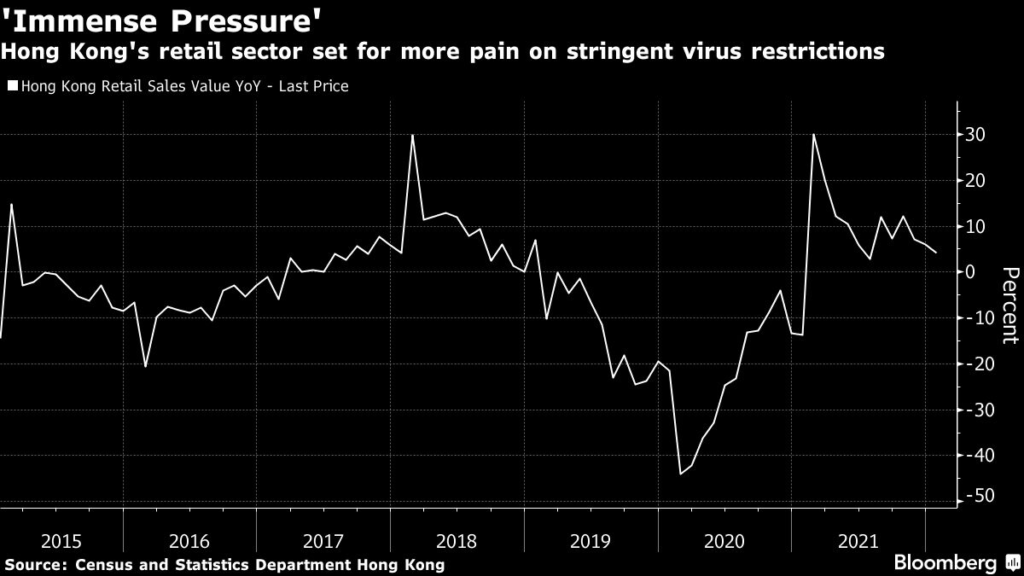
Hong Kong’s retail sales grew at the slowest pace since July, with the government warning of further pressure ahead amid a surge in Covid cases.   

The value of retail sales grew 4.1% in January from a year earlier, compared with the median estimate of 0.4% in a Bloomberg survey of economists. The volume of sales rose 1.7%.

The Lunar New Year — which fell on Feb. 1 this year — typically helps to boost retail spending, the Census and Statistics Department said in a statement. The data covers consumer spending on goods but not on services, such as those on catering and medical care and entertainment, which account for over 50% of overall consumer spending. 

“The figure has yet to fully reflect the impact of the fifth wave of local epidemic and the further tightening of anti-epidemic measures in the more recent period,” a government spokesperson said in the release. “The retail sector will remain under immense pressure in the near term.”

The report is the latest indication of economic pressure facing the Asian financial hub. Data on Thursday showed economic activity contracted in February, plunging to a 22-month low. Economists are already predicting the economy shrank in the first quarter — even before expected disruptions in March from mass virus testing and a possible lockdown.

In a bid to boost retail sales, Financial Secretary Paul Chan pledged in his budget to give residents another HK$10,000 ($1,279) of consumption vouchers this year. Previous handouts last year helped to boost monthly retail sales by double digits.  

The current outbreak has already caused substantial damage to the retail sector. A major drug retailer said this week it will close 53 stores across Hong Kong due to the pandemic situation and an online retailer said it’s struggling to fulfill orders as 20% of its staff are in quarantine. Nightlife mogul Allan Zeman said the government needs to include the business sector in its Covid-decision making process. 

More stories like this are available on bloomberg.com

©2022 Bloomberg L.P.

Activist Cevian Demands Ericsson Overhaul Corporate Governance

(Bloomberg) — Cevian AB, Europe’s largest activist investor, has pressed troubled telecom firm Ericsson AB to adjust the rules on its share classes as part of a plea for major corporate governance reform.

Cevian, which holds about 5% of Ericsson’s Class B shares, asked the firm to change its articles of association to give its Class A shareholders the power to convert their shares into Class B shares, according to a statement. Class A shareholders carry ten times the voting power per share as Class B, according to Ericsson’s 2020 annual report.

The company’s shares have lost about a third of their value in the last month after an investigation detailed the Stockholm-based company’s possible involvement in making payments to terrorist organization ISIS to facilitate sales in Iraq. Then it announced that the U.S. Department of Justice had said it failed to make adequate disclosures about operations in Iraq before entering a deferred prosecution agreement in 2019. 

“Ericsson’s credibility and reputation have suffered enormously due to ongoing governance issues, most recently over the handling of corruption issues in Iraq and its dealings with the U.S. Department of Justice,” Cevian said in its statement. “While we do not question the good intentions of Ericsson’s board and management team to grapple with this, it is clear that significant change is needed.”

Ericsson’s biggest Class A holders are Investor AB, controlled by the Wallenberg family, and Industrivarden AB. Representative for Ericsson and Investor AB declined to comment. A representative for Industrivarden wasn’t immediately available for comment. 

The stock rose 1.7% in Stockholm.

Cevian also said:

  • The company should remove the dual deputy chairmanship structure for A class shareholders which “risks making the Board obedient to the A class shareholders and is a symbol of Ericsson’s historical mismanagement”
  • Ericsson should make all information public about corruption investigations and only withhold that which could pose a risk to the safety of individuals involved.
  • The head of internal audit should report only to the board audit committee, not to management.
  • The board should have an “ongoing mandate to buy back shares” which should demonstrate the board’s confidence in the shares’ value and should always be weighed against any acquisitions.

The demands were reported earlier by the Financial Times.

More stories like this are available on bloomberg.com

©2022 Bloomberg L.P.

Bond Traders Have Already Downgraded Russia to a Nation of Junk

(Bloomberg) — Bond traders are delivering a swift, punishing verdict on the expected hit to Russian corporations from the Ukraine war. In short, it’s turning the country into a nation of junk bonds. 

With Russia increasingly isolated by sanctions and widespread international condemnation, the prices of bonds issued by a broad spectrum of companies have tumbled as investors race to the exits.

The result is a massive disconnect between the market’s pricing and the corporate credit ratings assigned by companies like S&P Global Ratings Inc. and Moody’s Investors Service. More than three-quarters of the bonds issued by still investment-grade, non-financial corporations in Russia are now trading at distressed levels or carry risk in line with junk-rated debt, according to Bloomberg’s market-based default risk model. Among them are energy giant Gazprom PJSC and chemical maker PhosAgro PJSC, both of which still have a high-grade score from at least one rating company.

The scale of the credit risk priced into Russian assets just a week after the invasion shows how badly its corporations are expected to be affected by the sanctions that are severing the country from the global economy and sending its currency tumbling. It also shows how rapidly credit ratings can be rendered outdated by fast-moving events like war that far outstrip the measured pace of traditional financial analysis.

“It is impossible for rating agencies to keep up with markets. War was unexpected. Heavy sanctions too,” said Gilles Pradere, a portfolio manager at RAM Active Investments, which oversees 2.5 billion Swiss francs ($2.7 billion). “You have a huge discount in notional terms as the solvency risk is elevated, even if factually Russia and Russian corporates were, up to now, a solid BBB credit.”

The speed of financial-market movements almost always exceeds that of rating companies, especially in times of fast-moving events like the financial and sovereign debt crises or the onset of the pandemic. But the magnitude of the gulf that has opened between the two in Russia has been particularly stark as investors rapidly reprice the risk associated with its corporations. 

While the Russia government has been downgraded to junk, such moves have so far been rare for corporation-bond issuers, with most non-financial debt still rated as investment grade. Bloomberg’s analysis is based on a sample of almost 140 bonds issued by 25 different Russian companies.

Gazprom, the nation’s largest foreign-currency borrower, still has a high-grade rating at all three major rating companies. But its market-implied rating stands at BB+, one step into junk, according to data compiled by Bloomberg. Bonds maturing next week traded at about 55 cents on Thursday, according to the TRACE reporting service, a level reserved for deeply distressed debt. 

Russian Railways JSC, which has borrowed in dollars and Swiss francs, is rated two steps above junk at BBB. But its implied rating is four levels lower at BB-. Meanwhile, Rosneft Oil Co PJSC, which has borrowed mostly in rubles and is rated BBB-, also has market an implied rating of BB-. 

Fallen Angels

The gaps indicate expectations for a Russian wave of so-called fallen angels, borrowers downgraded from high-grade to junk. Rating companies have already hinted at that, with Moody’s placing ratings of 51 companies on review for downgrade on Wednesday and S&P saying in a report after the invasion that geopolitical risk tilts its baseline “sharply to the downside.”

S&P slashed Russia’s long-term foreign currency debt rating by eight levels on Thursday to CCC-, just three levels above default, from BB+ and said it may cut further.

Representatives at S&P declined to comment. Moody’s and Fitch Ratings didn’t respond to requests for comment.

The tumbling values of Russian corporate bonds has been exacerbated by the uncertainty over whether companies will be able to cover their interest bills and even whether investors will be able to legally receive the payments, given the sanctions piling up as the war takes a growing toll on Ukraine. There’s also been a mass exodus as investors sold whatever they could to cut risks, prompting deep discounts even in bonds that are close to maturity and typically have minimal default risk.

A Russian telecommunications company paid a coupon due Thursday on dollar bonds — the first foreign-currency coupon payment by a company headquartered in Russia since the sanctions, raising hopes that it may set a precedent.

‘Just Sell’: Russia Bondholders Jump Right Before Repayment

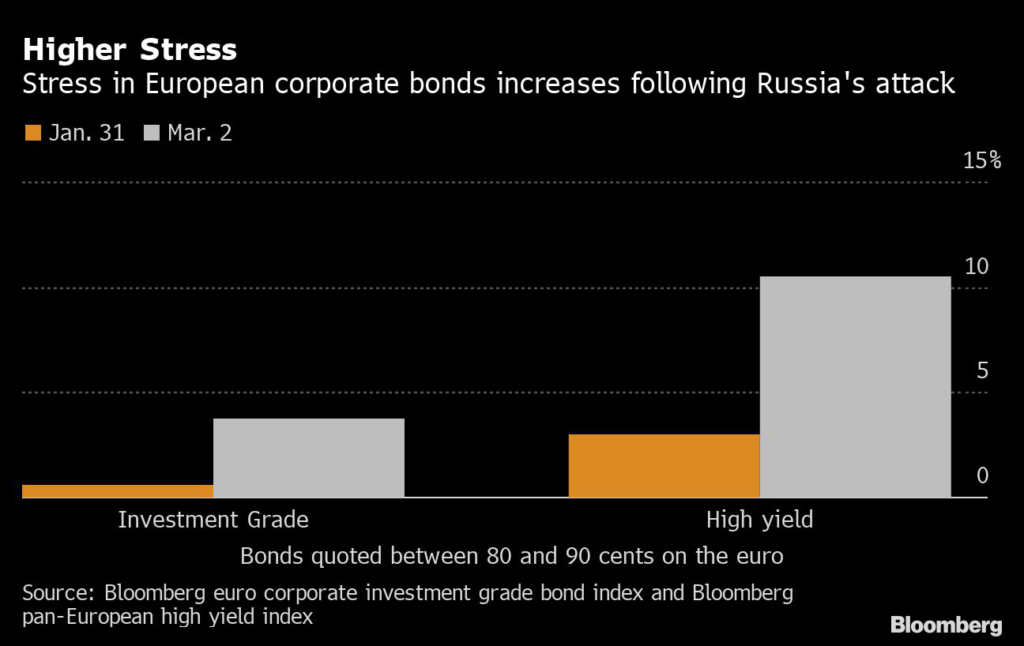
Such dislocations between the market’s view and credit ratings have opened up outside of Russia, too. The percentage of euro-denominated high-grade bonds trading at stressed price levels has jumped from 0.6% at the end of January to 3.7% this week, according to data compiled by Bloomberg. Among those firms are Wintershall Dea GmbH, which makes a large part of its revenue in Russia, and EP Infrastructure AS, which has been flagging its exposure to Russia and Ukraine for years.

To be sure, Russian bonds have lost so much value since the invasion that any downgrades to junk — which usually cause forced selling — may have little additional impact. Moreover, such price drops typically happen ahead of rating cuts, with fund managers offloading their holdings in anticipation. 

Still, the forthcoming rating actions will shed more light on how vulnerable Russian companies’ fundamentals really are, especially if they have to rely on state support as foreign markets are shutting down for them fast.

Moody’s said its sweeping review, which covers companies including Gazprom, Rosneft and Lukoil PJSC, “could or would lead to downgrades of the affected corporates’ ratings, because of their strong interlinkages with the sovereign rating.”

More stories like this are available on bloomberg.com

©2022 Bloomberg L.P.

Online Cockfighting Boom in Philippines Triggers Senate Scrutiny

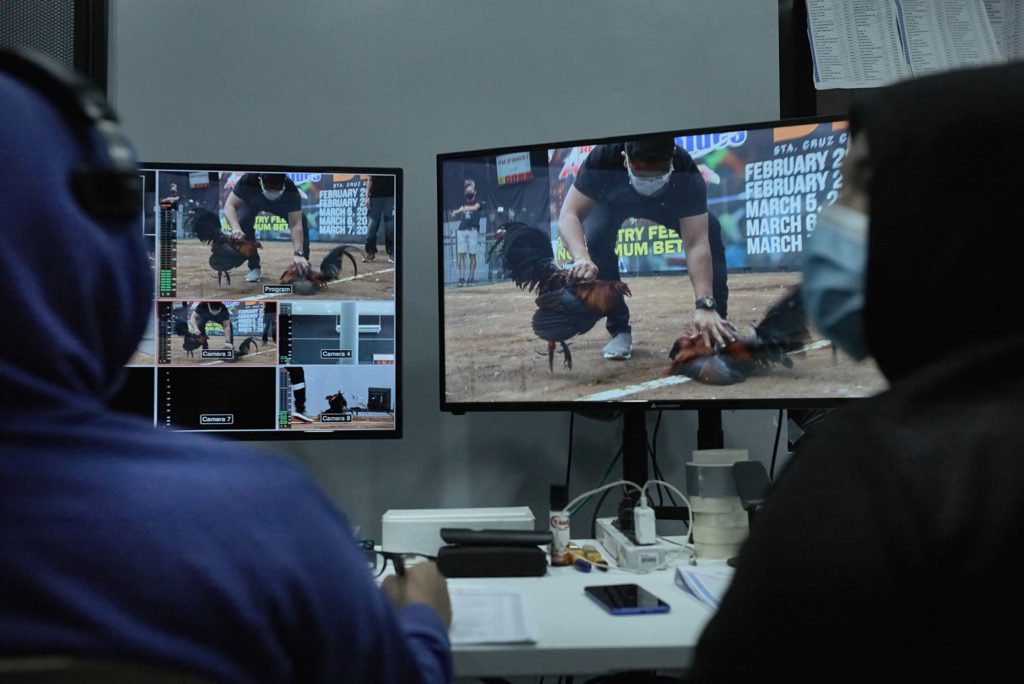
(Bloomberg) — The Philippines’ booming online cockfighting industry that’s getting billions of pesos in monthly bets is facing scrutiny from lawmakers who want to halt betting and impose stricter regulations.  

The Southeast Asian nation’s gaming regulator should heed the Senate’s recommendation to suspend online cockfighting operations while cases of more than 30 missing cockfighters are being resolved, Senator Ronald dela Rosa who heads the public order committee said at an inquiry on Friday. Other lawmakers sought to increase the government’s revenue share and limit the industry’s round-the-clock operations.

Online cockfighting has seen a surge in the Philippines, as bettors get easier access through mobile phones while they’re confined to their homes during the pandemic. 

Lucky 8 Star Quest Inc., one of the companies licensed to operate online cockfighting, gets about 60 billion pesos ($1.16 billion) in bets per month, owner Charlie “Atong” Ang told the Senate. The company collects a 5% fee from bettors which translates to about 3 billion pesos in revenues each month, Ang said. After expenses and commissions paid to its agents, Lucky 8 gets about 800 million pesos to 900 million pesos in earnings, Ang said.

Philippine Amusement and Gaming Corp. stands to lose as much as 640 million pesos in monthly revenue if online cockfighting is halted, chairman Andrea Domingo said at the Senate hearing. “This is not an easy thing to do. It has a very strong effect on revenue generation,” she said of the proposal to suspend the online game.

What the gaming agency collects monthly from online cockfighting operators is a “pittance” compared to their gross income, Senator Franklin Drilon said.

More stories like this are available on bloomberg.com

©2022 Bloomberg L.P.

Ukraine Update: Russian Troops Occupy Nuclear Plant Site

(Bloomberg) — Russian forces have occupied the site of Europe’s largest nuclear power plant, Ukraine said, after an overnight fire that the government in Kyiv accused Vladimir Putin’s military of causing by shelling the area. 

Ukraine’s nuclear regulator said Zaporizhzhia plant personnel were monitoring the state of power units to ensure safety protocols were maintained. The brief fire in a training complex at the plant was out, local emergency services said. 

Russian troops are concentrating on encircling the capital, Kyiv while continuing attempts to advance on the port city of Mariupol in the south, the general staff of the Ukrainian army said in a statement. It added that preparations continued for the landing of Russian assault troops near Odesa.

Both houses of Russia’s parliament will be sitting on Friday, with a specially convened meeting of the Federation Council.

Key Developments

  • Ukrainians Down Tools and Ditch Trucks to Head Home to Fight
  • Putin’s Financial Isolation Is a Cautionary Tale for Xi Jinping
  • Oil Extends Wild Week’s Gain as Ukraine Invasion Rattles Markets
  • U.S. Sanctions Usmanov, Prigozhin, Tokarev, Other Russian Elites
  • Invasion Fallout Frays Supply Chains Anew in Inflation Shock

All times CET:

Czech Republic Allows Volunteers to Fight in Ukraine (8:05 a.m.)

The Czech Republic, where signing up for foreign armies is forbidden by law, will allow its citizens to join Ukrainian forces, Prime Minister Petr Fiala said. 

President Milos Zeman, who until last week was a staunch supporter of Putin, will grant pardons to all Czechs fighting for Ukraine. About 300 people have contacted Zeman’s office with requests so far, the CTK newswire reported.

Fire at Nuclear Plant is Extinguished (5:46 a.m.)

The blaze in a training complex at Zaporizhzhia was contained to an area of about 2,000 square meters (20,000 square feet) and is now out, local emergency services said on Facebook. Three floors of a training complex at the site were involved in the fire. 

The U.S. did not detect any elevated radiation readings near the facility. U.S. President Joe Biden urged Russia to halt fighting near Zaporizhzhia after speaking with Ukrainian President Volodymyr Zelenskiy about the incident. 

“If there is an explosion, it is the end of Europe,” Zelenskiy said in a video message. He’s appealed to Putin to meet, saying it’s the only way to stop the war.

Missile Hit Plant, Energy Minister Says (5:44 a.m.)

A missile hit the nuclear plant’s unit no. 1 and the government was seeking more clarity on any damage, Ukraine Energy Minister Herman Halushchenko said in an interview on Bloomberg TV. He called for outside support to help close air space over the country’s reactors.

NATO has previously made clear it would not set up a no-fly zone over Ukraine as it would bring the alliance’s aircraft into direct confrontation with Russia. 

Markets Adjust After Fall (5:10)

Knee-jerk losses in equity markets moderated as traders assessed the severity of the situation at the facility. S&P 500 Index futures were trading 0.9% lower, after earlier falling 1.7%. Gold pared earlier gains as demand for haven assets eased.

Access Curtailed in Russia of Social Media (5:01 a.m.)

Facebook, Twitter and several media websites appear to be fully or partially inaccessible in Russia on Friday, as authorities cracked down on what they call “disinformation” about the war in Ukraine.

Bloomberg journalists in Moscow weren’t able to access Facebook or Twitter. The Meduza news website, an independent Russian-language outlet based in Riga, Latvia, issued a statement saying it had been blocked in Russia. According to GlobalCheck, a service that studies Internet blocks in Russia and other former Soviet states, the BBC and Deutsche Welle websites are also currently unavailable to IP addresses in Russia.

Stocks Fall Amid Fire at Nuclear Plant (3:35 a.m.)

Stocks and equity futures fell and havens including sovereign bonds rose after a fire broke out at major nuclear power plant in Ukraine.

An initial spasm of worry lopped 3% off European equity futures but the panic eased a little as investors weighed the incident. European contracts pared the drop to about 2%, while those for the U.S. shed less than 1%.

Gains in gold and the dollar moderated, while the euro pared a decline. Oil was near $110 a barrel, trimming a jump of as much as 4.8%.

Biden Briefed on Nuclear Plant Danger (3:27 a.m.)

Biden received an update on the nuclear plant attack from Zelenskiy, the White House said in a readout of their call. Both leaders urged “Russia to cease its military activities in the area and allow firefighters and emergency responders to access the site,” the White House said. 

The Zaporizhzhia power plant in the city of Enerhodar is home to six Soviet-designed 950-megawatt reactors built between 1984 and 1995 with capacity of 5.7 gigawatts, enough to power more than 4 million homes. The site accounts for about 20% of the country’s electricity, according to its website.

Fire Didn’t Affect Essential Equipment, IAEA Says (3:20 a.m.)

Ukrainian Foreign Minister Dmytro Kuleba said a fire had broken out at the Zaporizhzhia plant and called on Russia’s military to immediately halt firing. Ukraine told the IAEA the fire “has not affected ‘essential’ equipment” and plant personnel were taking “mitigatory actions.” 

Plant’s Radiation Levels Unchanged (2:48 a.m.) 

The American Nuclear Society said in statement there were no signs that damage caused from the attack posed an additional threat to the public. “Both Russia and Ukraine should understand the importance of ensuring the safety of nuclear power plants and their staff,” the La Grange Park, Illinois non-profit group said. 

Nuclear Plant Under Attack, Reports Say (1:16 a.m.)

The Zaporizhzhia nuclear power plant has come under attack by Russian forces, the Associated Press cited Ukrainian officials as saying.

“We demand that they stop the heavy weapons fire,” Andriy Tuz, spokesperson for the plant in Enerhodar, said in a video posted on Telegram. “There is a real threat of nuclear danger in the biggest atomic energy station in Europe.” Telephone calls to the power plant didn’t connect, and the plant didn’t immediately respond to an email seeking comment on the situation.

U.S. Set to Give Protected Status to Ukrainians (11 p.m.)

The Department of Homeland Security will soon begin giving Temporary Protected Status to Ukrainians who are in the U.S.

The move by Homeland Security Secretary Alejandro Mayorkas would be effective as of March 1, meaning that Ukrainian nationals would have to had been in the U.S. by then to be eligible. Members of Congress from both parties have pushed the Biden administration to grant the status, which would allow Ukrainians already in the country to remain for now. 

U.S. Immigration and Customs Enforcement has halted deportation flights to Ukraine.

Russian Military Nears Nuclear Power Plant (10:20 p.m.)

The International Atomic Energy Agency confirmed that the Russian military is battling now outside the gates of Europe’s and Ukraine’s biggest nuclear power plant.

In an urgent letter to the IAEA, the Ukraine regulatory authority said Russian infantry were moving directly toward the Zaporizhzhia Nuclear Power Plant and called the situation “critical.” 

The IAEA called for an immediate halt to the use of force at Enerhodar and called on the military forces operating there to refrain from combat near the nuclear power plant. 

Scholz Tells German Ex-Leader to Cut Russian Ties (9:58 p.m.)

German Chancellor Olaf Scholz called on former leader Gerhard Schroeder to give up board seats on Russian energy companies. Schroeder, chairman of state-owned Russian oil giant Rosneft PJSC and of the shareholder committee of Nord Stream AG, has supported a Russia-to-Germany natural-gas pipeline that Scholz halted last month.

Russia’s invasion of Ukraine has prompted Germany to realign its military and economic stance toward Moscow and Putin. Schroeder, who was German chancellor from 1998 to 2005, has kept up friendly ties with Putin after retiring from politics.

Pentagon Sets Up Emergency Channel to Russian Military (9:09 p.m.)

The U.S. military has established an emergency channel with the Russian military for rapid communications, according to a Pentagon statement.

“The United States retains a number of channels to discuss critical security issues with the Russians during a contingency or emergency,” the Pentagon said. 

The Pentagon on March 1 set up what it calls the “deconfliction line” with the Russian Ministry of Defense to prevent the possibility of a misunderstanding that could escalate. The Pentagon said its first offer of such a channel was rejected.

Sanctioned Russians Have No Way Off List (8:57 p.m.)

There is currently nothing Russian oligarchs or officials could do to convince U.S. and European countries to remove them from the sanctions list, two senior officials said Thursday.

Instead, U.S. and EU task forces are hunting down the assets that belong to the tycoons and their families already announced for sanctions. The business leaders and others on the list are a part of the Russian regime and play an important role in the Russian state, a senior EU official said.

Putin’s Spokesman Sanctioned Along With Wealthy Russians (8:04 p.m.)

Dmitry Peskov, Putin’s press secretary, was among those sanctioned by the Biden administration Thursday, as the U.S. and its allies seek to raise pressure on the elites around the Russian president.

The other sanctioned Russians include: Nikolay Tokarev and his wife and daughter; Boris Rotenberg and his wife and sons; Arkady Rotenberg and his sons and daughter; Sergey Chemezov and his wife, son and stepdaughter; Igor Shuvalov and his wife, son, daughter and companies connected to them; Yevgeny Prigozhin and his wife, daughter and son; and Alisher Usmanov, as well as his superyacht and private plane..

Italy’s Generali Winds Down Russian Business (7:54 p.m.)

Italian insurer Assicurazioni Generali SpA is winding down its Europ Assistance operations in Russia, quitting the board of Ingosstrakh Insurance Co. and closing its Moscow representative office.

Generali owns a 38.5% stake in Ingosstrakh, a Russian-based insurer that has billionaire Oleg Deripaska as a shareholder. The insurer provides life and non-life products as well as mortgage loans and savings and retirement plans.

White House Rebuffs Call to Ban Russian Oil (7:36 p.m.)

The White House again rebuffed a call to ban Russian oil from the U.S., this time from House Speaker Nancy Pelosi, one of President Joe Biden’s closest allies.

“We don’t have a strategic interest in reducing the global supply of energy, and that would raise prices at the gas pump for the American people around the world, because it would reduce the supply available,” White House Press Secretary Jen Psaki told reporters at a briefing Thursday. “That is certainly a big factor for the president.”

Russian oil made up only about 3% of all crude imports in the U.S. last year. “Ban it. Ban the oil coming from Russia,” Pelosi told reporters earlier Thursday, making her the highest-ranking Democrat to endorse the move.


Nike Pauses Operations in Russia; Halts Online Sales, Stores (7:32 p.m.)

Nike Inc. will pause operations in Russia, including halting e-commerce sales and temporarily closing company-owned and operated shops in the country. Store employees will continue to receive their paychecks during the closures.

“We are deeply troubled by the devastating crisis in Ukraine and our thoughts are with all those impacted, including our employees, partners and their families in the region,” Nike said in a statement, adding that it will donate $1 million to humanitarian relief efforts.

Russian-Ukrainian Progress Seen on Humanitarian Corridors (7:20 p.m.)

Russian and Ukrainian negotiators agreed to hold a third round of talks after suggesting they made some progress on establishing humanitarian corridors to evacuate civilians.

Russian negotiator Leonid Slutsky said the third round of talks will take place “in the nearest future,” while Mykhailo Podolyak, an adviser to President Zelenskiy’s chief of staff, lamented in a posting on Twitter that “we did not yet get the results that we hoped for.” 

Slutsky said more meetings are necessary – and a deal may be ratified at the highest level. The two teams met at a location in the Bialowieza Forest on the Poland-Belarus border.

U.S. Says Quad Promises Humanitarian Aid (6:54 p.m.)

Biden spoke with the other three leaders of the Quad — Australia, India and Japan — and agreed to set up a new line of communication to deliver humanitarian help to Ukraine, according to a White House statement. 

Garland Vows ‘No Stone Unturned’ on Crimes Against Ukraine (6:50 p.m.)

U.S. Attorney General Merrick Garland said the Justice Department and international allies “will leave no stone unturned in our efforts to investigate, arrest and prosecute those whose criminal acts enable the Russian government to continue its unjust war against Ukraine.”

A veteran prosecutor for the U.S. attorney’s office in Manhattan, Andrew Adams, has been tapped to lead a new task force targeting the assets of wealthy Russians who violate U.S. sanctions, Garland said in a speech before a lawyer’s conference on Thursday.

Putin Says Ukraine Operation ‘Is Going Strictly on Schedule’ (6:30 p.m.)

“All the goals that have been set are being attained,” Putin told top officials in televised comments to a meeting of his Security Council. Reiterating his view that Russians and Ukrainians are “one people,” Putin claimed his forces are fighting “neo-Nazis” and forces from outside Ukraine. 

Ukraine, which has committed its army to the battle, and its allies have charged Russia with targeting cities and civilians.

Zelenskiy said Thursday he feared Putin had broader goals than Ukraine. If “God forbid, Russia takes Ukraine,” then next will be Latvia, Lithuania, Estonia, Moldova, Georgia, and Poland, he told foreign reporters in Kyiv. “And they won’t stop until they reach Berlin,” he said.


More stories like this are available on bloomberg.com

©2022 Bloomberg L.P.

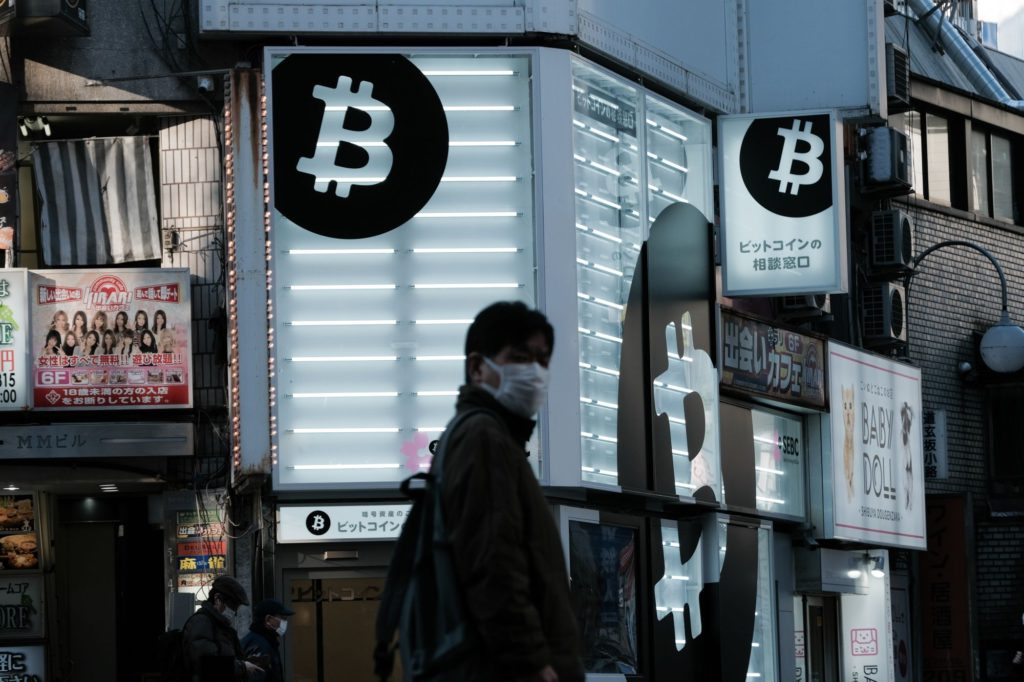
Coinbase CEO Says Ordinary Russians Using Bitcoin as ‘Lifeline’

(Bloomberg) —

Coinbase Global Inc. isn’t banning all Russian users for the moment, though would comply if the U.S. government decides to impose such a restriction, according to Chief Executive Officer Brian Armstrong.

The cryptocurrency exchange will block transactions from IP addresses that might belong to sanctioned individuals or entities, as will any other regulated financial services business, Armstrong said in a Twitter thread. But it won’t pre-emptively ban all Russians from using Coinbase, he said.

“Some ordinary Russians are using crypto as a lifeline now that their currency has collapsed. Many of them likely oppose what their country is doing, and a ban would hurt them, too,” Armstrong said.

The cryptocurrency industry has gotten significant attention amid Russia’s invasion of Ukraine, with some government officials wondering whether Russia or the country’s wealthy might be able to skirt sanctions by using crypto, and Ukraine actively seeking donations via digital assets. Mykhailo Fedorov, Ukraine’s deputy Prime Minister and Minister for Digital Transformation, recently asked the major crypto exchanges to block addresses of Russian users.

Recent blockchain data suggest residents in the sanction-hit nation have been in no hurry to trade crypto on major exchanges. Ruble-denominated crypto activity was just $34.1 million on March 3, according to Chainalysis. That’s down from a recent peak of $70.7 million on Feb 24 — and the $158 million record on May 20, 2021.

Armstrong said he doesn’t see a high risk of Russian oligarchs using crypto to avoid sanctions because the open ledger makes movement of money more traceable than using other assets like cash or gold. 

Armstrong’s remarks dovetail with comments from Changpeng “CZ” Zhao, CEO of Binance Holdings Ltd., who said on Wednesday that it would be “unethical” for his exchange to restrict all Russians.

Read more: U.S. Prods Exchanges to Thwart Crypto Use by Sanctioned Russians

Coinbase would take more steps if needed amid the fast-changing situation, Armstrong said. “If the U.S. government decides to impose a ban, we will of course follow those laws,” he added.

More stories like this are available on bloomberg.com

©2022 Bloomberg L.P.
Invasion Fallout Frays Supply Chains Anew in Inflation Shock

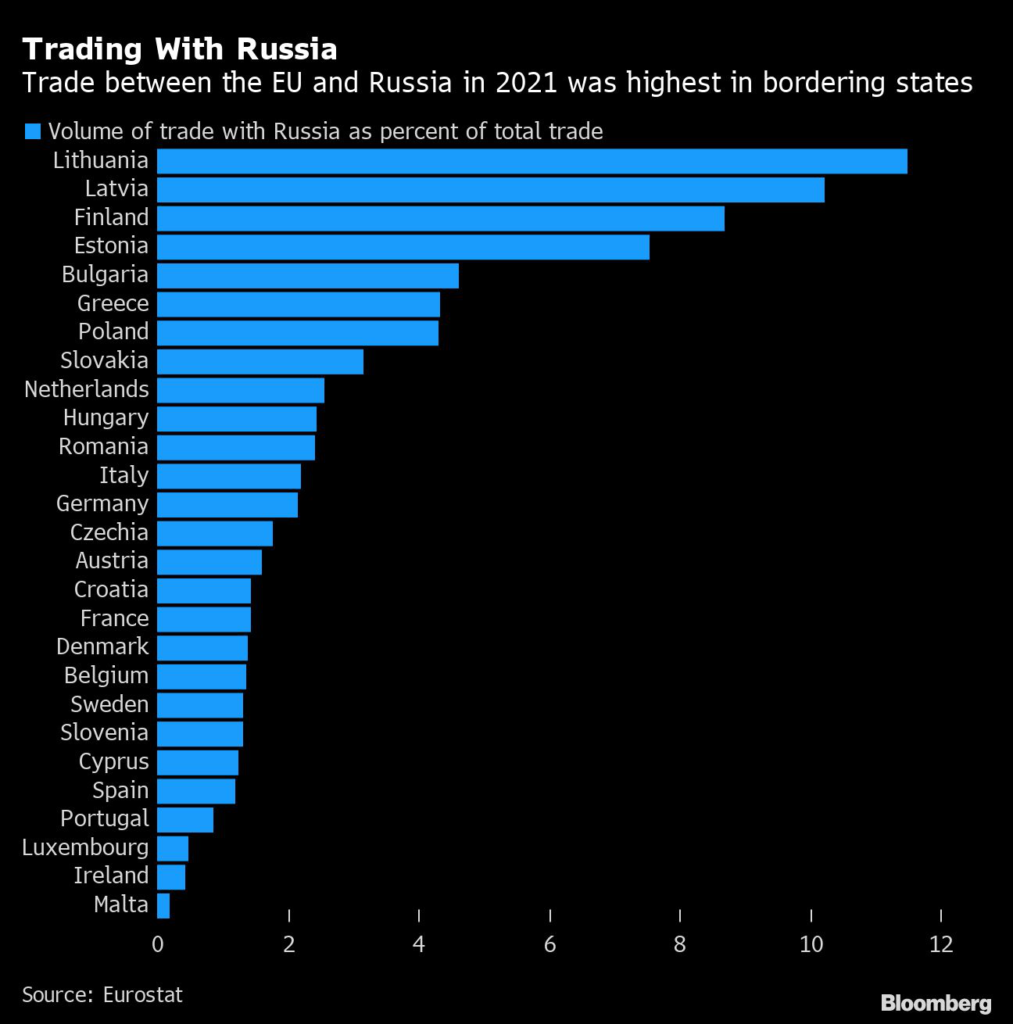
(Bloomberg) — Supply chains that rattled the global economy through the pandemic are unleashing another shock as efforts to choke off trade with Russia strain resources ranging from fertilizer needed for crops and palladium for car-making, to oil that’s used to produce almost everything.

The upshot: a world economy that again faces the prospect of stagflationary forces as inflation quickens and growth fades, compelling central banks to choose which to tackle while fearing the challenge they don’t take on then gets out of hand. 

The choice is even starker now than it was during the early days of the pandemic. Back then, monetary policy makers elected to buoy demand as a recession hit. Now inflation is at multi-decade highs, forcing them to focus on runaway prices, although perhaps alert to the risk they may have to move more slowly than anticipated.  

“Were this 2022 supply shock a first, central banks would be more confident of its transitory inflation impact,” said Alan Ruskin, chief international strategist at Deutsche Bank AG. “But this is an inflation shock compounding pre-existing evidence of sticky inflation, so adding to concerns that policy will have to treat attendant higher prices as more than a temporary phenomena, even if growth slows.”

Already, signs are mounting that supply lines are fraying anew as the sanctions-driven economic blockade increases President Vladimir Putin’s reliance on domestic production and prevents Russian companies from reaching markets and investors abroad.

Almost all of the 10-largest container shipping companies — responsible for moving some 80% of global trade — have stopped accepting bookings for Russian cargo and ports from Europe to the U.S. are turning away the nation’s vessels. Some companies are choosing to self-sanction by refusing to buy Russian commodities, even if it remains legal to do so.

The fallout is extending far beyond Russia and Ukraine, with Copenhagen-based A.P. Moller-Maersk A/S, the world’s No. 2 container carrier, warning customers “this is a global impact, and not only limited to trade with Russia.”

For auto makers, the dependence on Russian supplies is deep. The country is the third-largest supplier of nickel in lithium-ion batteries and provides 40% of the palladium for catalytic converters, with that metal also impacted by widespread flight bans. About 90% of U.S. semiconductor-grade neon supplies comes from Ukraine, according to Fitch.

Toyota, Honda

Japan’s biggest carmakers joined the widening global corporate pullback from Russia, following the likes of Ford Motor Co. Others in closer proximity to the war such as Germany’s BMW AG and Volkswagen AG are warning of production outages. Shares of Renault SA, the European carmaker most exposed to Russia, have tumbled almost 25% since the invasion began.

In the U.S., Boeing Co. is in a bind after the U.S. banned flights by a Russian-operated company it relies upon, meaning it can’t transport some structures from other places to its main wide-body plant in Everett, Washington.

Titanium is the other vital input for the aerospace industry, with firms stockpiling the key material and looking to diversify away from Russia. Engine maker Safran SA gets almost half of its titanium from Russia’s VSMPO-Avisma Corp., while Rolls-Royce Holdings Plc said 20% of its titanium comes from the country.

The isolation of a commodities powerhouse also has prices for fuel and food soaring. Oil, of which Russia produces more than 10% of the world’s output, is now topping $110 a barrel, while European natural gas hit an all-time high this week. Wheat soared past $11 a bushel to the highest level in 14 years.

Even prices for the widely used nitrogen fertilizer urea surged over the past week, drawing howls of protest from farmers as far afield as Iowa and Brazil.

For China, trade with Russia poses new risks, costs and potential obstacles. Railway transport from China through Russia is currently in operation, said Mark Ma, the owner of Seabay International Freight Forwarding Ltd., a company that handles Chinese goods sold on platforms such as Amazon.com Inc.

However, some logistics companies have decided to stop shipping out goods because the journey takes time and any uncertainties linger in the process of transit arrangement, customs clearance, goods safety as well as payment collection.

Ma said his company has seen a reduction of available seaborne shipping capacity, which could increase the demand for land routes.

All told, the mounting supply chain crisis could end up being enough to knock $1 trillion off the value of the world economy and add 3% to global inflation this year, according to the U.K.’s National Institute for Economic Research.

“The conflict in Ukraine imposes further economic stress on a system stretched by Covid,” said Jagjit Chadha, director of NIESR. “Supply chains will be further fractured, and monetary and fiscal policies put under a severe examination.”

What Bloomberg Economics Says…

“Russia’s invasion of Ukraine has upended the European economic outlook. The extreme level of uncertainty calls for caution and we expect that to be reflected in the European Central Bank’s policy meeting on March 10.”

— Jamie Rush (economist)

Of course,  Russia still had the most to lose with its output set to be almost 10% lower annually in the long term than if trade relations hadn’t changed, according to data from the Kiel Institute for the World Economy and the Austrian Institute of Economic Research.

But around the world, economists are also raising their forecasts for inflation and cutting those for growth. JPMorgan Chase & Co. economists now see global growth of 3.1% on a fourth quarter to fourth quarter basis, down 0.8 percentage point since Feb. 18. And they forecast inflation of 4.6% in the final three months of the year, up 0.9 percentage point. 

At issue for central banks are the tradeoffs between raising rates to offset a supply-side inflation jolt they aren’t equipped to fix, just as those pressures weigh on consumers spending and corporate confidence. 

“The key question mark is global monetary policy makers’ response: Will they prioritize economic growth amid elevated uncertainty or opt to tighten monetary policy even faster due to the inflationary shock,” said Tuuli McCully, head of Asia-Pacific economics at Scotiabank.

The betting of most is that they will still focus on restraining inflation before it becomes entrenched in their economies. The Organisation for Economic Cooperation and Development reported on Thursday that inflation averaged 7.2% across its members in January, the most since 1991.

Circa 1970s 

“Policy makers need to adjust policy in the same way as they eventually did following the averse oil supply shocks of the 1970s, which is to lift rates,” said Steve Barrow, head of FX strategy at Standard Bank.

U.S. Federal Reserve Chair Jerome Powell on Wednesday signaled a quarter percentage-point hike in interest rates this month, joining a chorus of central bankers raising rates around the world as they try to cool inflation.

As he was speaking, Bank of Canada Governor Tiff Macklem was already beginning what may turn out to be a series of rate increases. Hungary followed the next day.

Having hiked twice in recent months, Bank of England officials are warning that the fallout from the attack on Ukraine will potentially upend the outlook for the U.K. economy, although they still seem on track to act again this month.

Still, the invasion’s fallout is likely to deepen a policy divergence as some push up borrowing costs and others either slow their tightening, or stay on the sidelines for now.

The war muddies the outlook for the European Central Bank, which had been tip toeing toward constraining monetary policy, but whose economy is more closely-linked to Russia’s than most. Having previously flagged next week’s meeting as a decisive one for the future of policy, officials are now more likely to stay in a holding pattern

In Asia, the Bank of Japan continues to support the economy while the People’s Bank of China is cutting interest rates.

It’s not only the central banks thinking about the economic aftershocks. The war will also force European governments to borrow more to pay for an influx of migrants and strengthen their armies.

Gary Luk, who runs a Hong Kong-based freight forwarding company, said about 20% of his business has been affected by the war because it involves organizing cargo including audio equipment and electronic gadgets to be flown or shipped from China to Eastern Europe.

Plunging currencies mean his clients in Russia and Ukraine face skyrocketing costs to pay for his service in U.S. dollars, so they are delaying payment, Luk said. Overdue payment has amounted to a six-digit figure in dollars, putting increasing pressure on his company’s cash flow, he said.

“Now we don’t dare to accept new orders from the region,” Luk said. ”We’ve already been suffering from rising charges by airlines and shipping companies, and the war now is adding insult to injury.”

(Adds new JPMorgan forecasts in 20th paragraph)

More stories like this are available on bloomberg.com

©2022 Bloomberg L.P.
Japan Looks to Plug Potential Crypto Holes in Russia Sanctions

(Bloomberg) — Japan’s financial regulator and the country’s industry body for cryptocurrencies have begun discussions to assess how to effectively enforce sanctions against Russia, a regulatory official said.

The Financial Services Agency and the Japan Virtual and Crypto Assets Exchange Association are examining ways that could effectively block the transfer of crypto assets involving people and entities on the nation’s sanctions list, said the official, who asked not to be identified. The discussions do not currently involve any proposal to shut off access for all Russian clients, the official said. 

A key concern for Japan’s regulator is how to ensure that digital assets don’t become a convenient loophole to bypass restrictions using traditional finance.

“We are closely watching the situations of settlements such as crypto assets and SPFS in order to secure effectiveness of sanctions against Russia,” Japanese Finance Minister Shunichi Suzuki told parliament on Friday, referring to the Russian financial messaging system.

JVCEA officials were not immediately able to comment. 

Japan, along with the U.S. and other Group of Seven nations, has imposed sanctions targeting Russians, including freezing the assets of Russian President Vladimir Putin and certain other officials following Russia’s invasion of Ukraine.

Read how the largest crypto exchange says blocking Russians is unethical

Track and Trace 

The Nikkei reported Friday that the JVCEA has started considering measures including suspending transactions with Russia. 

Unlike fiat currencies, which need to move through third-party institutions that have the ability to track, freeze or block them, cryptocurrencies can potentially be sent from one person directly to another regardless of any government sanctions or other restrictions. People can use decentralized-finance exchanges, which don’t verify the identity of customers, to conduct transactions even if they are in sanctioned countries.

More stories like this are available on bloomberg.com

©2022 Bloomberg L.P.

Putin’s Financial Isolation by World’s Powerful Is a Cautionary Tale for Xi Jinping

(Bloomberg) — It’s the dominant geopolitical narrative of our era: The global economy is cleaving into two blocks as an ascending China and declining U.S. clash over trade, technology and the pandemic.

After Vladimir Putin’s invasion of Ukraine and the sanctions it provoked from the U.S. and allies, that divide appears sharper than ever ⁠— but the contest also looks more uneven. The economic isolation imposed on Russia has been a stark reminder of the persistence of American power.

China is catching up to the U.S. in terms of gross domestic product, and already eclipsed it in trade and manufacturing. But when it comes to the architecture of money that underpins the world economy, America and its dollar-led system remains the undisputed leader.

“The locus of financial power still remains very firmly in the hands of the West,’’ says Eswar Prasad, a Cornell University economist who’s spent years studying China’s challenge to the greenback.

That’s been apparent as the U.S. and its allies in Europe and Asia coalesced around an ever-tighter series of sanctions after Putin sent his troops into Ukraine. They’ve severed Russia from the world economy so profoundly that the effects may be felt for years.

The ruble collapsed, the central bank lost access to a large chunk of its foreign-currency savings, the government had to impose capital controls, and giant international companies from Apple Inc. to Royal Dutch Shell Plc raced each other out of the country.

For China’s President Xi Jinping, who just weeks ago declared a no-limits friendship with Moscow, the speed with which Russia has been cut off is a cautionary tale – and a reminder of why China’s leaders are so desperate to develop an alternative to U.S. dollar hegemony. It may yet motivate Beijing to speed up that project.

Read more: Bloomberg Economics on Russia Sanctions and China Blowback

In Washington, meanwhile, U.S. leaders have trumpeted the display of U.S. money power.

“When the history of this era is written, Putin’s war on Ukraine will have left Russia weaker and the rest of the world stronger,’’ said President Joe Biden in his State of the Union address this week. In what may have been a barb at China, he noted that “in the battle between democracy and autocracy, democracies are rising to the moment.’’

It’s early for anyone to declare victory. The shockwaves from Russia’s war in Ukraine are only just beginning.Oil prices above $110 a barrel already threaten to push inflation, driven to multi-decade highs in the pandemic, even higher. That spells danger for Biden, whose popularity has already been eroded by soaring gasoline costs, and for leaders in Europe, whose economies still depend on Russian energy.

‘Stopped Clock’

Investors have rushed to price in a more divided global economy. In the U.S., defense stocks have been on a tear after European countries like Germany — long resistant to allocating more cash to their military forces ⁠— suddenly pledged to ramp up spending. And in China, companies linked to the payments system that the country has been seeking to build as an alternative to Western ones, have seen their shares soar.Plenty of economists agree that the polarization is real. Adam Posen, president of the Peterson Institute for International Economics, calls it the “corrosion of globalization.’’ He says it began with President Donald Trump’s trade war with China, and continued through the pandemic as economies turned inward. Now it’s accelerated.“Everybody has been talking for a long while about blocs and the global economy splitting up,’’ says Posen.He was skeptical before. Now, he thinks, “the stopped clock is finally right’’ ⁠— and the eventual result will be a global economy that’s less productive and innovative as it turns combative, with consumers everywhere paying a price.

But in the near term, at least, there are reasons to think China won’t be in a hurry to take Russia’s side in all-out economic confrontation with the U.S. Indeed, Xi is treading a fine line so far.While China has declined to slap financial penalties on Russia and will likely help it weather the sanctions storm by buying oil, gas and wheat, limits to the “no limits’’ friendship already appear to be emerging. Political leaders have talked of the need for a quick cease-fire and some big Chinese banks have restricted access to financing purchases of Russian commodities.

That pattern has been apparent in the past: China may disagree with the political goals of Western sanctions, but it has tended to avoid confronting them head on. Even Chinese state-run banks, for example, have complied with past U.S. curbs on Hong Kong. Carrie Lam, the territory’s Beijing-friendly chief executive, said in 2020 that she was collecting “piles of cash” at home because the U.S. measures barred her from basic banking services.“The Chinese banks are actually quite leery of running afoul of the U.S. Treasury,’’ says David Dollar, a senior fellow at Brookings and former Treasury representative in Beijing. “The big Chinese banks are among the largest in the world, they’re deeply integrated with the global system. So they’re going to be careful.’’

‘Bad News’

The fundamental reason for this caution: Xi presides over an economy that’s much more deeply intertwined with the world than Putin’s ⁠— in fact more so than it has ever been, after largely shrugging off any effects of the Trump trade war.

Chinese exports broke records during the pandemic. An analysis by HSBC economists found that over the past three years ⁠— when talk of decoupling and a brewing economic Cold War was rife — China’s trade grew about five times faster than the global average, while foreign direct investment there increased even as it was falling elsewhere.

Giving up all that to join Russia in an economic fight with the West right now  “would be bad news for China,’’ says Hui Feng, a senior lecturer at Griffith University in Queensland, Australia and co-author of “The Rise of the People’s Bank of China.” “It will be supplied with cheap Russian oil and other energy products. But it will suffer from a structural decoupling in technology and investment.’’

That doesn’t mean China will back away from its long-term goal of challenging U.S. financial supremacy. The past week’s events may speed up that campaign, Federal Reserve Chair Jerome Powell told a Senate committee Thursday.

A degree of financial decoupling has been occurring on some fronts for years. The U.S. has taken a dim view of Chinese acquisitions in key American industries. Under Trump, it cracked down on Chinese firms listing on U.S. markets. Some firms that managed to do so are reconsidering.

Chinese ride-hailing giant Didi Global Inc., which pulled off a $4.4 billion initial public offering in New York last year (against Beijing’s wishes), plans to transfer its stock-market listing to Hong Kong. Insurer FWD Group Holdings Ltd has filed an IPO application in the same city, after U.S.-China tensions squashed plans for an overseas debut.

From Opinion:  Did Xi Jinping Get Played by Putin on Ukraine?

Low Base

Meantime, Beijing is beefing up its economic defenses. Xi has ordered an acceleration of the drive toward self-reliance in key industrial components like semiconductors. For years, Chinese firms have bought up deposits of strategic minerals such as cobalt.

On the financial front, China has set up a digital currency that may soon be ready for cross-border use, and a payment system known as CIPS that offers an alternative to the Swift mechanism that Russia has been partially cut out of.

Those would help Chinese companies and others circumvent the dollar-based system in the event of a sanctions onslaught, which would be likely should Chinese forces attack Taiwan, for instance.

CIPS may get more use soon, as China-Russia transactions increase. But it’s currently a limited vehicle for avoiding sanctions, with just 75 participants — all of them overseas branches of Chinese banks — and no equivalent of Swift’s interbank messaging system, Rhodium Group analysts said in a report Thursday.

The People’s Bank of China has also sought to diversify its foreign-exchange reserves and reduce the weight of U.S. Treasuries, though it remains the world’s second-biggest holder with $1.1 trillion of them.

In all of this, though, the problem for China is that it’s starting from a very low base.

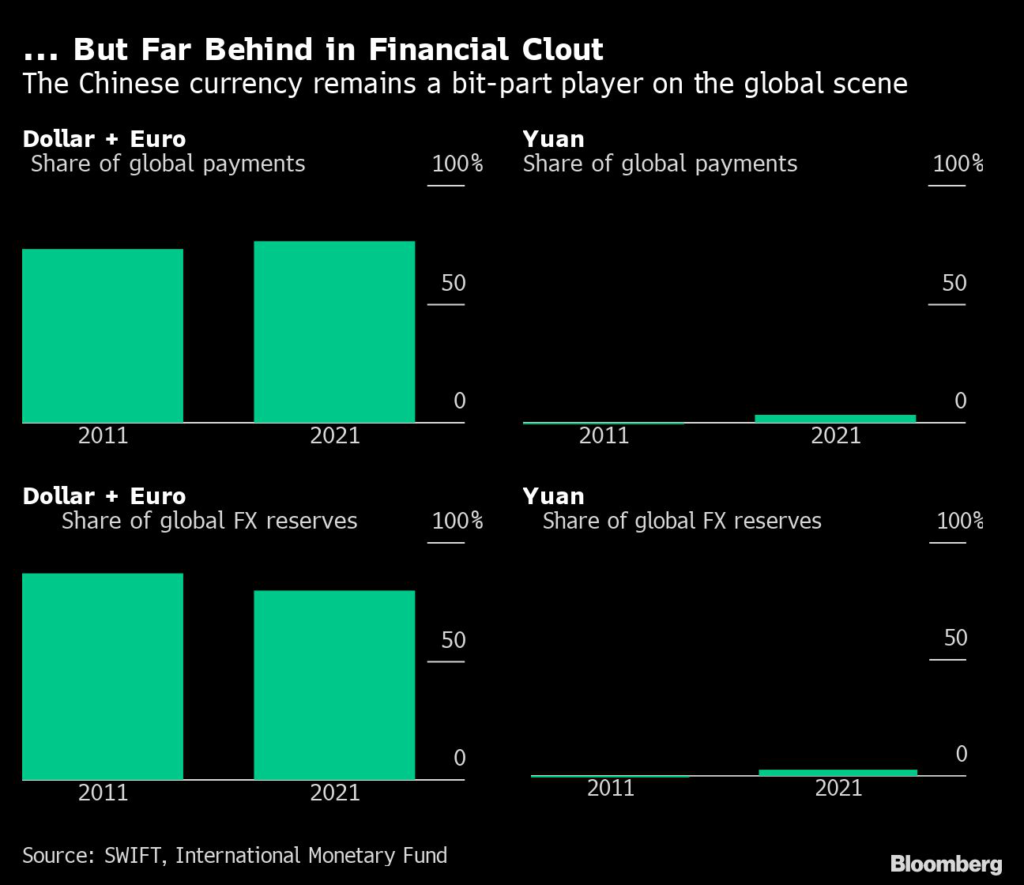
Efforts to build a rival system to the dollar-led one and to encourage broader use of its currency haven’t had much success. The renminbi accounts for just over 3% of global payments via Swift and a mere 2.7% of official foreign-exchange reserves.

Edwin Lai, professor of economics and director of the Center for Economic Development at the Hong Kong University of Science and Technology, says it’s not clear what China can do to speed up the process.

“The international monetary system has a lot of inertia,’’ said Lai, who wrote a book on the yuan titled “One Currency, Two Markets: China’s Attempt to Internationalize the Renminbi.’’

Divided World

Politically, the U.S. and its European allies have mustered plenty of global support for their diplomatic and financial campaign against Russia. In this week’s emergency United Nations debate, 141 voted to condemn Putin’s invasion while 35 countries abstained. Only Belarus, Syria, North Korea and Eritrea voted with Russia, while the rest abstained.

Singapore’s government said it would impose unilateral sanctions against Russia, the first time in decades that the city-state and financial center censured a foreign nation without UN Security Council backing. Traditionally neutral Switzerland has done so as well.

But there are important dissenters. Major emerging-market economies like Mexico and Turkey have declined to sanction Russia. Oil-rich Persian Gulf states like Saudi Arabia are seeking to stay neutral. So is India, the world’s fastest growing major economy, which has long relied on Russia as a weapons supplier.

During Putin’s visit in December, India committed to tripling trade between the two countries, and Russian state oil giant Rosneft signed a major oil supply deal.

That neutral status could bring a payoff for financial centers that manage to stay outside a contest between the West and its main rivals, according to Branko Milanovic, an economics professor at the City University of New York and author of “Capitalism, Alone: The Future of the System that Rules the World.’’

He argues that the conflict in Ukraine, and the Western response, point toward a fragmentation of capital -– a world in which money can’t move as freely as it has over the past half-century or so. Businesses and the super-rich, along with central banks, will be looking for safe places to store assets ⁠— out of reach of governments fighting a financialized war.

Top of Milanovic’s list is a place like Mumbai. “It’s a big financial center. India is a democratic country. India doesn’t have any history of seizing money, nor do they have any incentive to do that. They are not part of the West and, as we see in the Russia crisis, the U.S. cannot dictate India’s policy.’’

Ties that Bind

Another view is that it’s precisely the deep economic ties between the U.S. and China that will prevent a wider financial or even military conflict between them.

That’s the case made by Angela Zhang, a law professor and expert on China’s legal system at the University of Hong Kong. China has been forced to confront the reach of U.S. sanctions before and has figured out ways to withstand their impact, she says, citing the blacklisting of telecommunications equipment makers Huawei and ZTE who fell afoul of Washington’s sanctions against Iran and North Korea.

China has its own economic ties with U.S. allies. It’s central to a major trade deal, the Regional Comprehensive Economic Partnership, which includes Japan, Australia and New Zealand ⁠— but excludes the U.S.

U.S. companies like Apple and Tesla will still want to sell their products in China’s fast-growing consumer markets. Intertwined supply chains ⁠— even after recent snarls and the inflation they fueled ⁠— illustrate U.S. reliance on China. Mutual need means things shouldn’t escalate too far.

“The Sino-U.S. economic interdependence will be the best safeguard for peace,’’ says Zhang.

‘Significant Blunder’

Some in Washington reckon that China made a miscalculation in aligning itself with Russia – and has been shocked by the force of the U.S.-led countermeasures.

“China has clearly made a very significant geopolitical blunder by throwing its lot in with Moscow on the eve of this catastrophic invasion,’’ says Jude Blanchette, a China expert at the Center for Strategic and International Studies in Washington. “Their ham-fisted response over the past week and a half indicate just how lost they are.”

Others see risks in America’s assertion of its money power. While the U.S. and its allies have wielded “the heaviest financial hammer that we can think of,” it hasn’t stopped Russia’s military attack, says Josh Lipsky, director of the Atlantic Council’s GeoEconomics Center.

The risk in the longer term, Lipsky says, is that the war could end with Russia occupying all or part of Ukraine and installing a puppet government. That would raise questions about how effective this week’s display of American financial might really was.

There are historical reasons for the world to fear economic division into rival camps: It’s what happened in the 1930s, presaging World War II. With the fighting in Ukraine becoming fiercer by the day and Russia threatening to mobilize its nuclear arsenal, discussions of future financial arrangements remain overshadowed by events around Kyiv and Ukraine’s other beleaguered cities.

“Everyone is caught in the geopolitical tensions,” says Andrew Sheng, chief adviser to China’s Banking and Insurance Regulatory Commission. “We are all losers from the present trajectory.”

Read this next: The End of the Oligarch Era Nears With Putin’s Miscalculation in Ukraine

More stories like this are available on bloomberg.com

©2022 Bloomberg L.P.
Close Bitnami banner
Bitnami