Bloomberg

Vodafone New Zealand Said to Seek $1 Billion Towers Sale

(Bloomberg) — Vodafone New Zealand Ltd. is seeking prospective buyers for its wireless phone towers that provide coverage to about 98% of the country’s population, according to a pitch sent to potential investors.

The Auckland-based telecommunications business is disposing of about 1,487 mobile cell sites that are expected to generate Ebitda of more than NZ$50 million ($34 million) in the financial year starting April 1, the presentation seen by Bloomberg News showed.

The assets, viewed as New Zealand’s largest tower portfolio, could be valued at as much as NZ$1.5 billion, a person familiar with the matter said separately, asking not to be identified as the process is private. 

A representative for Vodafone New Zealand declined to comment. 

A transaction, if successful, would follow a spate of towers auctions in neighboring Australia last year that capitalized on demand for such holdings. Pension funds and asset managers flush with cash find digital infrastructure appealing because of growth and assured long-term returns they offer.

Australia’s two largest telecommunications providers, Telstra Corp. and the local unit of Singapore Telecommunications Ltd., sold all or part of their phone tower assets last year, garnering $2.1 billion and $1.4 billion, respectively. Last month, Spark New Zealand Ltd. announced plans to separate its cell sites into a new subsidiary and explore the introduction of outside capital. 

Vodafone New Zealand is owned by Wellington-based Infratil Ltd. and Brookfield Asset Management Inc., which purchased the local unit of Vodafone Group Plc in 2019 for NZ$3.4 billion but left the name unchanged. The towers on sale have an average lease term of about 13 years, while 290 more sites will be added by the year ending March 2027, the presentation showed.

Infratil said in November that it was weighing “network capital release options” for the business. Vodafone New Zealand is working with Barrenjoey Capital Partners and UBS Group AG on the process, according to the pitch. The two banks didn’t immediately respond to requests for comment.

(Updates with bankers in last paragraph.)

More stories like this are available on bloomberg.com

©2022 Bloomberg L.P.

Airbnb Suspends Russia, Belarus Operations Amid Ukraine War

(Bloomberg) — Airbnb Inc. is suspending its operations in Russia and Belarus, Chief Executive Officer Brian Chesky said in a tweet Thursday evening. 

The move comes days after Chesky said that “all things are on the table” with regard to responses to Russia’s invasion of Ukraine. The accommodation-sharing company’s first step was to volunteer to house up to 100,000 Ukrainian refugees, and it has reached out to 14 governments for collaboration. Belarus has been an isolated ally of Russia in its military action.

Airbnb’s Chesky Says Russia Penalties Curb Operations in Country

Russia has more than 90,000 active short-term rentals across various platforms, according to data provided by market research firm AirDNA. Minsk, the capital of Belarus, has just over 1,800 active short-term rentals. Chesky had earlier said that sanctions imposed by the U.S. and other countries had made business within Russia difficult.

The United Nations estimates that as many as four million people could eventually leave Ukraine to escape the invasion.

More stories like this are available on bloomberg.com

©2022 Bloomberg L.P.

Ukraine Update: Nuclear Watchdog on Alert After Attack on Plant

(Bloomberg) — The United Nation’s nuclear watchdog put its incident and emergency center in full response mode after Ukrainian officials said Russia’s military shelled Europe’s largest nuclear power plant, raising safety concerns and escalating the stakes of Vladimir Putin’s invasion.

U.S. President Joe Biden urged Russia to halt the assault after speaking with Ukrainian President Volodymyr Zelenskiy about the incident that sparked a blaze at the Zaporizhzhia power plant. Stocks and equity futures fell and havens including sovereign bonds rose. But the panic eased as investors weighed the severity of the incident, while the U.S. Department of Energy said it has seen no elevated radiation readings near the facility. 

“If there is an explosion, it is the end of Europe,” Zelenskiy warned in a video message, adding that he also spoken with U.K. Prime Minister Boris Johnson, German Chancellor Olaf Scholz and other leaders. Zelenskiy has appealed to Putin to meet, saying it’s the only way to stop the war.

Earlier, Putin said the military operation in Ukraine was “going according to plan,” despite sanctions that have walloped his economy. The Russian president remained undeterred, telling France’s Emmanuel Macron on Thursday that he plans to fulfill the goals of his invasion, including removing the government in Kyiv.

Key Developments

  • Europe’s Largest Nuclear Plant Attacked by Russia, Ukraine Says
  • U.S. Sanctions Usmanov, Prigozhin, Tokarev, Other Russian Elites
  • Biden’s Tough Sanctions Create Worry That Putin Lacks an Exit
  • Russian Assault Shows No Letup as Putin’s War Enters Second Week
  • What Russia Invasion, Sanctions Mean for Global Economy
  • Russian Fleet Approach Has Ukraine’s Port City of Odesa Bracing
  • Ukraine Sees $15 Billion in Aid Coming as War Wrecks Economy
  • Russian Banker’s London Broker Faces Collapse on Russia Ties 

All times CET:

IAEA’s Emergency Center in Full Response Mode (4:29 a.m.)

The International Atomic Energy Agency put its Incident and Emergency Centre in a full response mode “due to the serious situation” at the nuclear plant, it said on Twitter.

The UN nuclear watchdog previously said radiation levels at the Zaporizhzhia plant remain unchanged, citing Ukrainian authorities.

Stocks Fall Amid Fire at Nuclear Plant (3:35 a.m.)

Stocks and equity futures fell and havens including sovereign bonds rose after a fire broke out at major nuclear power plant in Ukraine.

An initial spasm of worry lopped 3% off European equity futures but the panic eased a little as investors weighed the incident. European contracts pared the drop to about 2%, while those for the U.S. shed less than 1%.

Gains in gold and the dollar moderated, while the euro pared a decline. Oil was near $110 a barrel, trimming a jump of as much as 4.8%.

Johnson Seeks Security Council Meeting (3:31 a.m.) 

U.K. Prime Minister Boris Johnson spoke to Zelenskiy on the situation at Zaporizhzhia plant, according to a statement from the PM’s office. 

Both leaders agreed that Russia must immediately cease its attack on the power station and allow unfettered access for emergency services, it said. Johnson said he would be seeking an emergency UN Security Council meeting in the coming hours, and that the U.K. would raise this issue immediately with Russia and close partners. 

Biden Briefed on Nuclear Plant Danger (3:27 a.m.)

Biden received an update on the nuclear plant attack from Ukrainian Zelenskiy, the White House said in a readout of their call. Both leaders urged “Russia to cease its military activities in the area and allow firefighters and emergency responders to access the site,” the White House said. 

After the call, Biden was briefed on the situation by Jill Hruby, the undersecretary for nuclear security of the U.S. Department of Energy and administrator of the National Nuclear Security Administration. Biden will continue to receive updates on the incident, the White House added.

The Zaporizhzhia power plant in the Ukrainian city of Enerhodar is home to six Soviet-designed 950-megawatt reactors built between 1984 and 1995 with capacity of 5.7 gigawatts, enough to power more than 4 million homes. The site accounts for about 20% of the country’s electricity, according to its website.

Fire Didn’t Affect Essential Equipment, IAEA Says (3:20 a.m.)

Ukrainian Foreign Minister Dmytro Kuleba said a fire had broken out at the Zaporizhzhia plant and called on Russia’s military to immediately halt firing. Ukraine told the International Atomic Energy Agency the fire “has not affected ‘essential’ equipment” and plant personnel were taking “mitigatory actions.” 

Plant’s Radiation Levels Unchanged (2:48 a.m.) 

The American Nuclear Society said in statement that there were no signs that damage caused from the attack posed an additional threat to the public. “Both Russia and Ukraine should understand the importance of ensuring the safety of nuclear power plants and their staff,” the La Grange Park, Illinois non-profit group said. 

Earlier, IAEA Director General Rafael Grossi spoke with Ukrainian Prime Minister Denys Shmyhal and Ukraine’s nuclear regulator about the “serious situation” at the plant, according to a Twitter post from the agency.

Europe’s Largest Nuclear Power Plant on Fire (1:59 a.m)

Europe’s largest nuclear power plant was on fire after Russian troops began shelling early Friday. 

Ukraine’s Foreign Minister Dmytro Kuleba called on Russia’s military to immediately halt firing on the plant and allow a security zone to be established.

Nuclear Plant Under Attack, Reports Say (1:16 a.m.)

The Zaporizhzhia Nuclear Power Plant has come under attack by Russian forces, according to the Associated Press.   

“We demand that they stop the heavy weapons fire,” Andriy Tuz, spokesperson for the plant in Enerhodar, said in a video posted on Telegram. “There is a real threat of nuclear danger in the biggest atomic energy station in Europe.” Telephone calls to the power plant didn’t connect, and the plant didn’t immediately respond to an email seeking comment on the situation.

Earlier, the International Atomic Energy Agency confirmed that the Russian military is battling now outside the gates of Europe’s and Ukraine’s biggest nuclear power plant.

Industrial Metals Extend Rally, Equities Struggle (11:50 p.m.)

Industrial metals extended a rally fueled by trade turmoil and the increasing economic isolation of Russia, with zinc reaching its highest since 2007 and aluminum surging to a record. Oil fell on signs that high-stakes talks to revive a nuclear deal with Iran might soon conclude — potentially raising supply as traders increasingly shun Russian crude. 

Equities struggled to find direction throughout most of the session, with the S&P 500 finishing lower ahead of a key U.S. jobs report. The dollar advanced.

Russia had its credit score cut for the second time in a week by S&P Global Ratings as sweeping sanctions weaken the nation’s financial strength. The rating company on Thursday lowered Russia’s sovereign rating by eight levels to CCC-, according to a statement, just two steps above a default ranking. This comes mere days after it cut to the junk rating of BB+ late last Friday. The country remains on watch negative, according to S&P, which means it could be lowered further still.

U.S. Set to Give Protected Status to Ukrainians (11 p.m.)

The Department of Homeland Security will soon begin giving Temporary Protected Status to Ukrainians who are in the U.S.

The move by Homeland Security Secretary Alejandro Mayorkas would be effective as of March 1, meaning that Ukrainian nationals would have to had been in the U.S. by then to be eligible. Members of Congress from both parties have pushed the Biden administration to grant the status, which would allow Ukrainians already in the country to remain for now. 

U.S. Immigration and Customs Enforcement has halted deportation flights to Ukraine.

Russian Military Nears Nuclear Power Plant (10:20 p.m.)

The International Atomic Energy Agency confirmed that the Russian military is battling now outside the gates of Europe’s and Ukraine’s biggest nuclear power plant.

In an urgent letter to the IAEA, the Ukraine regulatory authority said Russian infantry were moving directly toward the Zaporizhzhia Nuclear Power Plant and called the situation “critical.” 

The IAEA called for an immediate halt to the use of force at Enerhodar and called on the military forces operating there to refrain from combat near the nuclear power plant. 

Scholz Tells German Ex-Leader to Cut Russian Ties (9:58 p.m.)

German Chancellor Olaf Scholz called on former leader Gerhard Schroeder to give up board seats on Russian energy companies. Schroeder, chairman of state-owned Russian oil giant Rosneft PJSC and of the shareholder committee of Nord Stream AG, has supported a Russia-to-Germany natural-gas pipeline that Scholz halted last month.

“My advice to Gerhard Schroeder is to withdraw from these posts,” Scholz told German broadcaster ZDF.

Russia’s invasion of Ukraine has prompted Germany to realign its military and economic stance toward Moscow and Putin. Schroeder, who was German chancellor from 1998 to 2005, has kept up friendly ties with Putin after retiring from politics.

Pentagon Sets Up Emergency Channel to Russian Military (9:09 p.m.)

The U.S. military has established an emergency channel with the Russian military for rapid communications, according to a Pentagon statement.

“The United States retains a number of channels to discuss critical security issues with the Russians during a contingency or emergency,” the Pentagon said. 

The Pentagon on March 1 set up what it calls the “deconfliction line” with the Russian Ministry of Defense to prevent the possibility of a misunderstanding that could escalate. The Pentagon said its first offer of such a channel was rejected.

Sanctioned Russians Have No Way Off List (8:57 p.m.)

There is currently nothing Russian oligarchs or officials could do to convince U.S. and European countries to remove them from the sanctions list, two senior officials said Thursday.

Instead, U.S. and EU task forces are hunting down the assets that belong to the tycoons and their families already announced for sanctions. The business leaders and others on the list are a part of the Russian regime and play an important role in the Russian state, a senior EU official said.

A senior Biden administration official said every ounce of the U.S. effort right now is devoted to holding the Russians to account. The U.S. government is working with Europe and the U.K. to identify, hunt down and seize assets, the U.S. official said.

Putin’s Spokesman Sanctioned Along With Wealthy Russians (8:04 p.m.)

Dmitry Peskov, Putin’s press secretary, was among those sanctioned by the Biden administration Thursday, as the U.S. and its allies seek to raise pressure on the elites around the Russian president.

The other sanctioned Russians include: Nikolay Tokarev and his wife and daughter; Boris Rotenberg and his wife and sons; Arkady Rotenberg and his sons and daughter; Sergey Chemezov and his wife, son and stepdaughter; Igor Shuvalov and his wife, son, daughter and companies connected to them; Yevgeny Prigozhin and his wife, daughter and son; and Alisher Usmanov, as well as his superyacht and private plane.

“The United States and governments all over the world will work to identify and freeze the assets Russian elites and their family members hold in our respective jurisdictions – their yachts, luxury apartments, money, and other ill-gotten gains,” the White House said in a statement.

Italy’s Generali Winds Down Russian Business (7:54 p.m.)

Italian insurer Assicurazioni Generali SpA is winding down its Europ Assistance operations in Russia, quitting the board of Ingosstrakh Insurance Co. and closing its Moscow representative office.

Generali owns a 38.5% stake in Ingosstrakh, a Russian-based insurer that has billionaire Oleg Deripaska as a shareholder. The insurer provides life and non-life products as well as mortgage loans and savings and retirement plans.

White House Rebuffs Call to Ban Russian Oil (7:36 p.m.)

The White House again rebuffed a call to ban Russian oil from the U.S., this time from House Speaker Nancy Pelosi, one of President Joe Biden’s closest allies.

“We don’t have a strategic interest in reducing the global supply of energy, and that would raise prices at the gas pump for the American people around the world, because it would reduce the supply available,” White House Press Secretary Jen Psaki told reporters at a briefing Thursday. “That is certainly a big factor for the president.”

Russian oil made up only about 3% of all crude imports in the U.S. last year. “Ban it. Ban the oil coming from Russia,” Pelosi told reporters earlier Thursday, making her the highest-ranking Democrat to endorse the move.


Nike Pauses Operations in Russia; Halts Online Sales, Stores (7:32 p.m.)

Nike Inc. will pause operations in Russia, including halting e-commerce sales and temporarily closing company-owned and operated shops in the country. Store employees will continue to receive their paychecks during the closures.

“We are deeply troubled by the devastating crisis in Ukraine and our thoughts are with all those impacted, including our employees, partners and their families in the region,” Nike said in a statement, adding that it will donate $1 million to humanitarian relief efforts.

Russian-Ukrainian Progress Seen on Humanitarian Corridors (7:20 p.m.)

Russian and Ukrainian negotiators agreed to hold a third round of talks after suggesting they made some progress on establishing humanitarian corridors to evacuate civilians.

Russian negotiator Leonid Slutsky said the third round of talks will take place “in the nearest future,” while Mykhailo Podolyak, an adviser to President Zelenskiy’s chief of staff, lamented in a posting on Twitter that “we did not yet get the results that we hoped for.” 

Slutsky said more meetings are necessary – and a deal may be ratified at the highest level. The two teams met at a location in the Bialowieza Forest on the Poland-Belarus border.

U.S. Says Quad Promises Humanitarian Aid (6:54 p.m.)

U.S. President Joe Biden spoke with the other three leaders of the Quad — Australia, India and Japan — and agreed to set up a new line of communication to deliver humanitarian help to Ukraine, according to a White House statement. 

Garland Vows ‘No Stone Unturned’ on Crimes Against Ukraine (6:50 p.m.)

U.S. Attorney General Merrick Garland said the Justice Department and international allies “will leave no stone unturned in our efforts to investigate, arrest and prosecute those whose criminal acts enable the Russian government to continue its unjust war against Ukraine.”

A veteran prosecutor for the U.S. attorney’s office in Manhattan, Andrew Adams, has been tapped to lead a new task force targeting the assets of wealthy Russians who violate U.S. sanctions, Garland said in a speech before a lawyer’s conference on Thursday.

Putin Says Ukraine Operation ‘Is Going Strictly on Schedule’ (6:30 p.m.)

“All the goals that have been set are being attained,” Putin told top officials in televised comments to a meeting of his Security Council. Reiterating his view that Russians and Ukrainians are “one people,” Putin claimed his forces are fighting “neo-Nazis” and forces from outside Ukraine. 

Ukraine, which has committed its army to the battle, and its allies have charged Russia with targeting cities and civilians.

Zelenskiy said Thursday he feared Putin had broader goals than Ukraine. If “God forbid, Russia takes Ukraine,” then next will be Latvia, Lithuania, Estonia, Moldova, Georgia, and Poland, he told foreign reporters in Kyiv. “And they won’t stop until they reach Berlin,” he said.

Oil Company Lukoil Calls for Diplomatic End to ‘Conflict’  (6:15 p.m.)

Lukoil PJSC, Russia’s second-largest oil producer, called for the “fast resolution of the military conflict” in Ukraine by diplomatic means, saying in a statement on its website “we fully support its resolution through negotiations.”

Lukoil’s statement follows an exodus of international companies from Russia, including the departure of energy giants BP and Shell from joint ventures with Russian state-run oil companies.

BOE Won’t Publish Data on Russian Ruble Exchange Rate (6:00 p.m.)

The Bank of England has joined the European Central Bank in stopping publication of data on ruble exchange rates against the dollar and the pound.

EU Seeks to Suspend Russia’s Most-Favored Nation WTO Status (4:31 p.m.)

The EU is seeking to remove Russia’s most-favored nation status at the World Trade Organization, a move that could further hit 95 billion euros ($105 billion) of Moscow’s exports to the bloc with tariffs. The European Commission, the EU’s executive arm, is discussing the possibility with member states, according to commission spokeswoman Miriam Garcia Ferrer.

Ruble Sinks to Another Record Low (3:44 p.m.)

The ruble sank to a record low against the dollar in Moscow trading, dropping for a fourth day after ratings services lowered Russia’s credit score deep into junk territory. Russia’s equity and bond markets are still closed, and currency trading is going ahead in a shortened daily session.

The ruble was down almost 10% at 117.2275 per dollar in Moscow, to reach its longest run of declines since August and the weakest intraday level since at least 2003 in Moscow. In offshore trading the ruble was 2.3% lower at 104.6355.


EU Ministers Dampen Expectations for Economic Aid Package (3:30 p.m.)

There may be little political appetite to fund a new economic aid program for Europe, Finnish Finance Minister Annika Saarikko and Eurogroup President Paschal Donohoe signaled after meeting in Helsinki, even as the European Commission is working on a contingency package to cushion the impact of sanctions and the ongoing war on EU economy. 

“Now is not yet the time to talk about how to mitigate the economic impacts of sanctions on member states, but it’s time to send a message that we are, if needed, ready for even stronger sanctions,” Saarikko told reporters in Helsinki.

Putin Tells Macron Russia Will Fulfill Goals in Ukraine (3:30 p.m.)

Putin told Macron he planned to fulfill his goals on Ukraine, Interfax reported, citing the Kremlin’s press service.

Macron spoke to Putin at the Russian leader’s request, according to an official in Macron’s office. Putin told him that everything was going according to his plan in Ukraine and that things will get worse. Putin also denied Russia had bombed Kyiv or hurt civilians, while Macron condemned his actions, the official said.

More stories like this are available on bloomberg.com

©2022 Bloomberg L.P.

Bitcoin Falls Back Toward $40,000 on Report of Nuclear Plant Hit

(Bloomberg) — Bitcoin fell on Friday as reports of a Russian attack on a nuclear plant in Ukraine drove risk aversion in financial markets.

The largest cryptocurrency dropped as much as 2.4% to $41,093. The second-largest, Ether, fell as much as 4.1% to $2,691. Most other top tokens were also down over the past 24 hours to 10:50 a.m. in Hong Kong, according to pricing from CoinGecko.

Ukraine’s government said Europe’s largest nuclear power facility, the Zaporizhzhia plant in the city of Enerhodar, was on fire after being hit with Russian shells, raising safety concerns and escalating the stakes of Vladimir Putin’s invasion.

“Ongoing geopolitical conflict and macro uncertainty could result in continued volatility,” said Sean Farrell, head of digital-asset strategy at Fundstrat, in a note Thursday. “If we see another significant bout of downward pressure on prices, recent precedent gives us some confidence that there will be buyers that step up” in the $33,000 to $35,000 range, he said, referring to Bitcoin.

Bitcoin and other cryptocurrencies rose earlier in the week on the expectation that they might gain traction during Russia’s invasion of Ukraine. The advance was then stymied by concern about the effect of international sanctions against Russia.

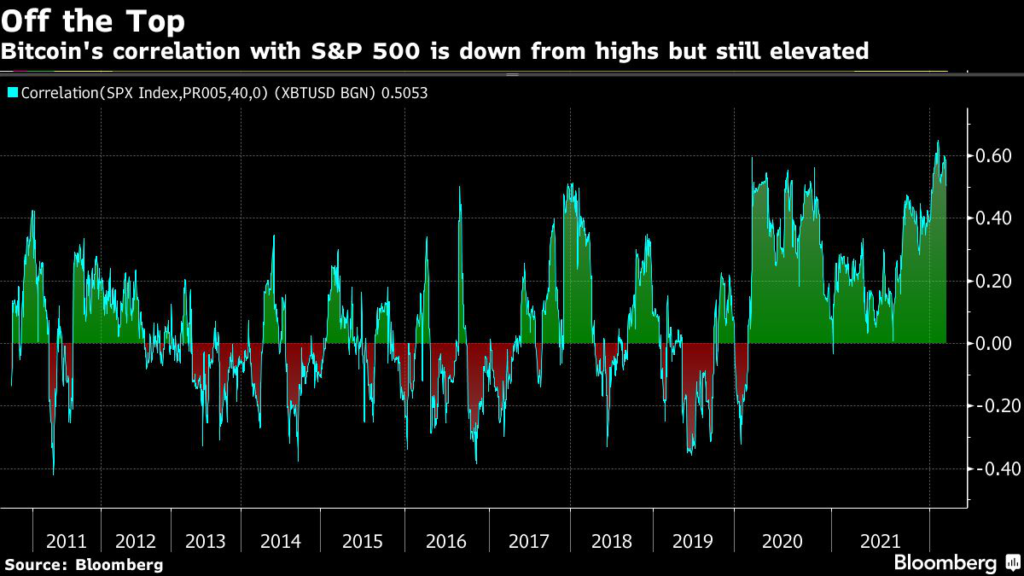
While some tout Bitcoin as a haven investment, it’s traded more in line with risk assets like U.S. stocks in the past couple of years. The correlation between Bitcoin and the S&P 500 is off its highest levels from about a month ago, though is still elevated relative to history.


More stories like this are available on bloomberg.com

©2022 Bloomberg L.P.
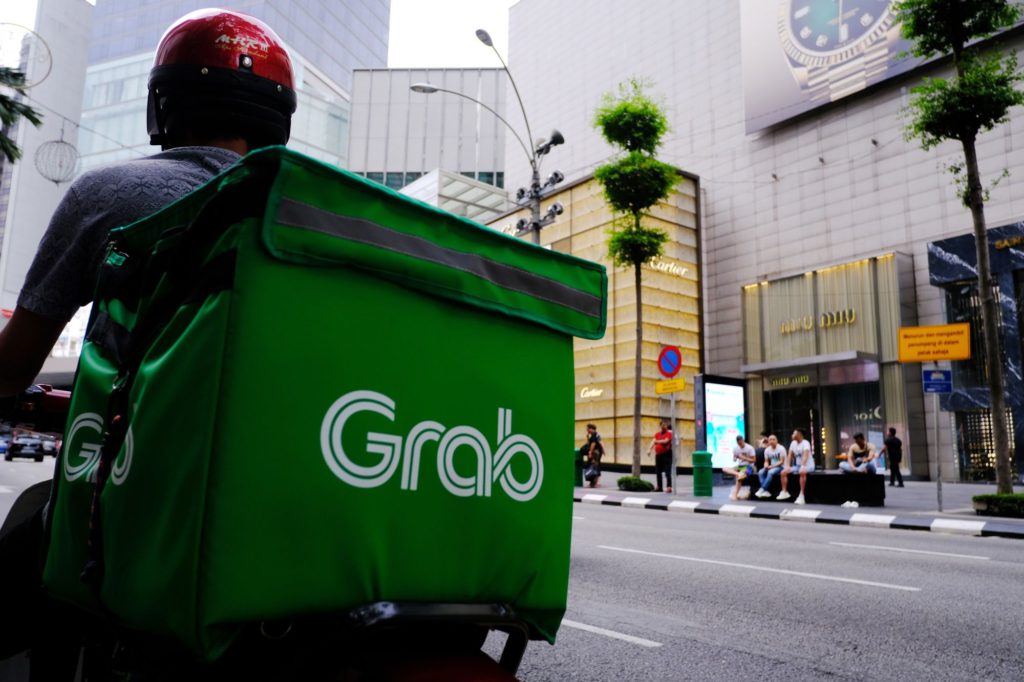
Grab Shares Plunge 37% to Lowest Ever as Losses Mount

(Bloomberg) — Grab Holdings Inc.’s stock plummeted 37% on Thursday after the company reported wider losses in the fourth quarter, pushing to $22 billion the decline in its market value since it went public through a merger with a blank-check firm in December.

Southeast Asia’s ride-hailing and delivery giant has plunged 63% since its debut, placing it among the Nasdaq Composite Index’s worst performers over that stretch. Thursday’s drop marked its biggest selloff ever after the Singapore-based company’s quarterly net loss nearly doubled from last year while revenue shrank 44%. The tumble came as 116 million shares changed hands, more than four-times the average over the past month.

Grab — which counts SoftBank Group Corp. and Uber Technologies Inc. as its two biggest shareholders — has struggled to gain a steady footing since its merger with Brad Gerstner’s Altimeter Growth Corp. late last year. The ride-hailing company has racked up losses since its founding and Thursday’s report showed spending on growth is taking it further from profitability.

Its net loss reached $1.06 billion in the fourth quarter, compared with the consensus estimate of $645 million. Those mounting losses have led investors to flee the stock alongside other companies that have yet to turn a profit. Grab was the worst performer in the De-SPAC Index on Thursday as the basket of former special-purpose acquisition companies dropped 5.4% to a record low.

As the pandemic has weighed on ride-hailing demand, Grab has expanded its food delivery business to drive user growth. The online grocery market in Southeast Asia is expected to almost triple to $11.9 billion in 2025 from $4.1 billion in 2020, according to Euromonitor International.

But while spending by customers on Grab’s platform is increasing, the growth isn’t yet translating to earnings. Revenue booked from delivery last quarter was just $1 million. Grab deducts incentives that it offers to drivers and consumers from sales, and its quarterly revenue number fluctuates wildly depending on how much it spends on such efforts. 

Its total spending on incentives more than doubled to $583.5 million in the fourth quarter. For 2021 as a whole, incentive spending soared to $1.78 billion from $1.24 billion the previous year.

“We did not expect Grab to spend on such huge incentives,” Shifara Samsudeen, an analyst at LightStream Research, said in a research report on Smartkarma. This implies the company is “struggling to grow its business and profitability seems like a tall order from Grab.”

Grab, founded by Anthony Tan and Hooi Ling Tan, has long been viewed as one of the most promising growth companies in Southeast Asia. Its business model is similar to that of Uber, the U.S. ride-hailing and delivery pioneer that sold its Southeast Asia operations to Grab in 2018.

Among Grab’s challenges is intensifying competition, including from Sea Ltd., Southeast Asia’s biggest internet company. More directly, its Indonesian ride-hailing rival, Gojek, merged with e-commerce provider PT Tokopedia to become GoTo. The combined entity is preparing for an initial public offering at home and in the U.S. this year.

(Updates with details on Grab’s spending starting in third paragraph)

More stories like this are available on bloomberg.com

©2022 Bloomberg L.P.

Venezuela’s Maduro Announces 18-Fold Increase to Minimum Wage

(Bloomberg) — President Nicolas Maduro announced a 18-fold increase in Venezuela’s monthly minimum wage to roughly 126 bolivars ($28) by pegging it to the value of half a petro, the government’s cryptocurrency.

“You proposed to set the workers’ basic minimum wage to half a petro, approved!” said Maduro during a televised speech he gave before an assembly of 10,000 government workers. “And that pushes all salary tables upwards.”

The money to finance the increase, the first in almost a year, comes from “months” of saving tax revenue, which Maduro claimed has been rising substantially. He said he’s instructed Vice President Delcy Rodriguez to hold talks with the private sector so that workers see the pay boost this month. The raise also applies to social security pensioners.

After seven years of recession and a long bout of hyperinflation, Venezuela found some economic stability last year following Maduro’s decision to unofficially dollarize the economy, ease restrictions on the private sector, and dramatically cut the fiscal deficit partly by keeping pay for government workers in check. The minimum wage was last increased in April 2021 to the equivalent of roughly $2.

Maduro acknowledged that the private sector already pays much higher salaries, so he’s proposed feasibility discussions to find a “sustainable” way to continue to increase salaries. 

“I think it’s something the government can afford,” said Henkel Garcia, director of local financial firm Econometrica. “But if they go back to financing salaries with money printing, the ghost of hyperinflation is likely to come back.”

More stories like this are available on bloomberg.com

©2022 Bloomberg L.P.

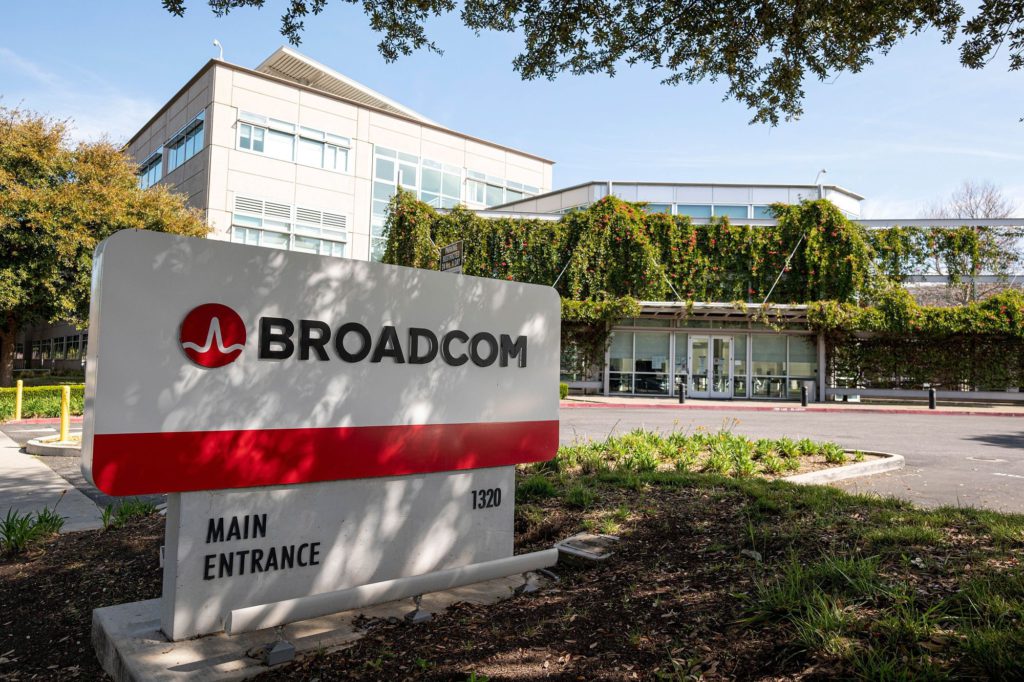
Broadcom Gives Bullish Outlook, Citing Data-Center Demand

(Bloomberg) — Broadcom Inc. Chief Executive Officer Hock Tan gave an upbeat view of the chip industry Thursday, saying demand from corporate customers is “on fire,” though he warned that the gains won’t last forever. 

Data-center owners and telecommunications service providers are investing heavily in new technology, he said after releasing quarterly results. Broadcom said sales will grow faster in the current quarter than analysts have projected, helping send the shares up as much as 4.8% in late trading. 

But unlike some of his peers in the $550 billion chip industry, Tan doesn’t think the current level of growth is sustainable. Demand for Broadcom’s electronic components was up about 20% last year and is on course for a similar increase in 2022, but eventually the industry will decelerate to historical rates of about 5%, he said.

“If anyone tells you otherwise, don’t believe it, because it has never happened,” he said on a conference call. He said those asserting that the semiconductor industry can grow at the current rate for an extended period are “dreaming.” 

Plenty of other executives are willing to believe in that brighter future. CEOs such as Intel Corp.’s Pat Gelsinger have cited predictions that the industry will double over the next decade, fueled by chips spreading into a broader range of products.

Industry sales surged 26% in 2021, fueling a debate as to whether the spike in demand was just a precursor to a downturn. Investors have grown more pessimistic, punishing chip stocks this year. Broadcom has fallen 13% in 2022 through Thursday’s close, in line with the Philadelphia Stock Exchange Semiconductor Index.

Against that backdrop, Broadcom’s forecast was a pleasant surprise for investors. The company said revenue in the fiscal second quarter will be about $7.9 billion, handily beating the average analyst estimate of $7.41 billion.

In the fiscal first quarter, which ended Jan. 30, Broadcom’s profit rose to $8.39 a share, excluding some items. Revenue jumped 16% to $7.71 billion. Analysts had predicted a profit of $8.13 a share on sales of $7.6 billion.

Broadcom’s products are essential parts in a wide range of technology, and its customer list includes many of the world’s largest companies. That makes its projections a bellwether for the chip industry and the broader economy.

Some of the biggest spenders on technology — so-called hyperscalers, such as Alphabet Inc.’s Google — use Broadcom’s networking chips in their data centers. Apple Inc. also relies on Broadcom chips in the iPhone to connect to Wi-Fi networks and peripheral devices.

Chipmakers have benefited from surging demand, but also have had to navigate supply-chain problems and shortages, which have held back production of everything from smartphones to vehicles. Tan has said that the company has as many orders as it can fill for the rest of this year and into part of 2023. 

Tan has been more outspoken and proactive than some peers in addressing shortages. He told customers he needed orders well in advance of normal to guarantee supply. Tan also instituted a noncancellation policy and has deliberately not taken some business when Broadcom deemed that device makers were asking for more than they needed.

He’s cited those policies and a lack of inventory as evidence that the chip industry isn’t about to suffer a supply glut. Tan reiterated his belief that there is no buildup of inventory. The company is shipping chips that immediately go into products that are sold — not stored in warehouses. 

(Updates with comments from CEO in fourth paragraph.)

More stories like this are available on bloomberg.com

©2022 Bloomberg L.P.
Panasonic Plans U.S. Battery Plant to Supply Tesla, NHK Says

(Bloomberg) — Panasonic Corp. plans to build a U.S. factory to supply Tesla Inc. with lithium-ion batteries, Japanese national broadcaster NHK reported, seeking to ramp up production to meet anticipated demand for electric vehicles.

The Japanese electronics conglomerate is looking at sites in Oklahoma and Kansas to build the plant, NHK reported, citing a person it didn’t identify source. Tesla is bringing a new factory online in nearby Texas, where it recently established a new headquarters in Austin. 

Panasonic a longstanding relationship with Tesla, with the two companies jointly operating the massive battery plant known as the Gigafactory outside of Reno, Nevada. The batteries to be built in any new U.S. factory will probably be 4680 cells, a new type that’s bigger with a 46-millimeter diameter and 80-millimeter height. Because of their higher capacity, fewer are needed for EVs, making it possible to build cars more cheaply with a longer range. 

Yayoi Watanabe, a spokeswoman for Osaka-based Panasonic, said that the NHK report wasn’t based on information by the company. 

Read more: Panasonic Bets on Tesla ‘Beer Can’ Battery to Unlock $25,000 EVs

Panasonic is seeking to bolster its ability to produce batteries that enable EVs with a longer driving range and is considering spending “several hundreds of billions of yen” on the factory, according to NHK. 

Earlier this week, Panasonic said it will start mass production of 4680 batteries in the fiscal year ending March 2024, with plans to establish two additional production lines as well as facilities at its Wakayama factory in western Japan.

Tesla Chief Executive Officer Elon Musk has called the batteries a “massive breakthrough” in technology that will make it possible for his company to produce EVs that sell for $25,000. While Tesla plans to make the cells in-house, it has asked Panasonic to begin producing them as well. Panasonic also intends to sell the batteries to automakers other than just Tesla.

The carmaker has an insatiable need for batteries. It has begun making its own battery cells on a pilot line in Fremont, California, while continuing to rely on outside suppliers like Panasonic, China’s Contemporary Amperex Technology Co. and South Korea’s LG Energy Solution Ltd.

There’s been a slew of announcements by major automakers in recent months to ramp up capacity to manufacture batteries for the coming wave of EVs. In December, Toyota Motor Corp. said it will open its first battery factory in the U.S. in North Carolina, investing $1.29 billion with plans to start production in 2025.

(Updates with comment by Panasonic spokeswoman in fourth paragraph.)

More stories like this are available on bloomberg.com

©2022 Bloomberg L.P.
New York Times Tech Workers Vote to Unionize in Landslide

(Bloomberg Law) — Technology workers at the New York Times have voted to unionize, securing a major win for the Communications Workers of America as it seeks to dominate digital workplaces.

The union won 404 of 508 ballots, roughly 80% of those cast, according to a preliminary tally. The group declared victory in an online vote tracker that loosely imitated the Times’ renowned election needle.

The bargaining unit—believed to be the largest union of tech workers in the U.S.—includes about 600 full-time and part-time engineers, analysts, designers, project and product managers who build and maintain the publication’s website and online applications. Management had denied the union’s request for voluntary recognition and unsuccessfully asked the labor board for a much smaller election, saying the workers’ jobs were too disparate to all be included in the same bargaining unit.

The organizing effort at the Times was part of a broader campaign by the communications workers, a larger federation that includes the NewsGuild, to organize digital workplaces. News organizations have been organizing at a rapid clip even as the number of private-sector union workers has dwindled nationally, but until now the effort has mostly been limited to editorial employees.

The Washington-Baltimore NewsGuild, also affiliated with CWA, represents employees at Bloomberg Law.

To contact the reporter on this story: Ian Kullgren in Washington at ikullgren@bloombergindustry.com

To contact the editors responsible for this story: Martha Mueller Neff at mmuellerneff@bloomberglaw.com; Andrew Harris at aharris@bloomberglaw.com

(Updated with vote tally in second paragraph.)

More stories like this are available on bloomberg.com

©2022 Bloomberg L.P.

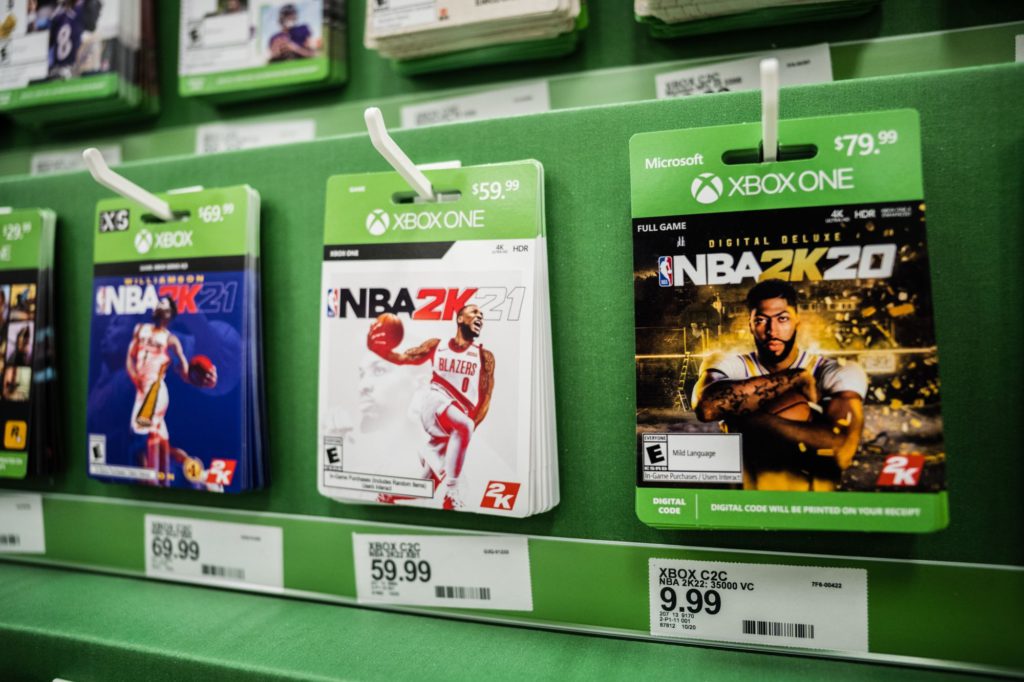
Take-Two Faces Lawsuit Over Controversial ‘Loot Boxes’ in NBA 2K

(Bloomberg) — Take-Two Interactive Software Inc. is facing a class-action lawsuit over the deceptive sale of loot boxes to minors in its popular NBA 2K video game series. 

One of its  recent iterations of the basketball game franchise, NBA 2K21, has sold more than 10 million copies and some 2 million people played the game daily last year, according to the company’s latest annual report. The game costs $59.99 and players can spend additional money on in-game currency they use to upgrade a player’s clothing or receive new players. 

The lawsuit, filed on behalf of a minor and her guardian, contends that these loot boxes “psychologically distance” players from the real-life financial implications of in-game purchases and the transactions are particularly attractive to minors who may not understand the real-world implications of spending virtual currency. What’s more, the transactions are often done with a parent’s credit card and the minors are generally unaware that their purchase is non-refundable, according to the case.

“Defendant’s unfair, deceptive, and unlawful practices, including illegal gambling practices, deceive, mislead, and harm consumers,” the complainants said. A spokesperson for Take-Two declined to comment. An attorney for the plaintiff didn’t immediately respond to a request for comment. 

Loot boxes have been controversial in the gaming industry in recent years, with critics charging that the in-game purchases can amount to gambling and tempt kids into overspending. They’ve also been a huge source of revenue for the companies involved. NBA 2K21 was one of the largest contributors to Take-Two’s digitally-delivered net bookings, which totaled $3.1 billion in fiscal 2021. 

In 2019, a bipartisan group of U.S. senators introduced a bill that would ban loot boxes in games aimed at players under 18. Belgium also has declared them illegal. The video game industry responded to critics by agreeing to make some disclosures about the probability that a buyer would obtain a desired item after purchasing a loot box and to improve labeling. Apple Inc. and Alphabet Inc.’s Google, were also sued over similar claims in 2020. Both suits were dismissed earlier this year. 

The lawsuit was originally filed on Jan. 11 in Winnebago County Circuit Court, before being moved to the Illinois Northern District Court on Feb. 25. The plaintiff is seeking at least $5 million in damages. 

More stories like this are available on bloomberg.com

©2022 Bloomberg L.P.
Close Bitnami banner
Bitnami