Bloomberg

Energy-Rich Russia May Turn to Bitcoin Mining to Dent Sanctions

(Bloomberg) — Rich in energy, but starved of foreign currency, Russia may use Bitcoin mining to dent the impact of ever tougher sanctions as the war in Ukraine drags on, according to one analyst.

“It wouldn’t be a stretch for the Russian government or certain sanctioned entities to look to mining as a way to get access to Bitcoin,” said David Carlisle, director of Policy and Regulatory Affairs at blockchain analytics firm Elliptic. “They could be translated to goods and services or just hard cash.”

Countries such as Iran might have already leveraged mining of crypto currencies, which is highly energy intensive, to convert its sanctioned energy into Bitcoin and hard currency for the government. 

About 4.5% of Bitcoin mining took place in Iran in the last year, potentially generating $1 billion for the government, Carlisle said. At the same time, Russia and Belarus have been two of the most welcoming countries after China issued a blanket ban on crypto mining last May. China was the largest Bitcoin mining hub in the world and some Chinese miners have migrated to central Asia and eastern Europe, including Russia. 

Russia’s President Vladmir Putin has backed crypto mining, despite the Bank of Russia’s proposal to ban mining and trading. Belarus said in January it would continue its liberal crypto rules.  

Carlisle listed crypto mining along with cyber crime and non-compliant entities such as certain crypto exchanges as three potential ways for Russia to evade sanctions. However, given the size of Russia’s economy and its financial market, crypto is unlikely to play a big role in helping Russia to circumvent sanctions.  

More stories like this are available on bloomberg.com

©2022 Bloomberg L.P.

Amazon’s Twitch Suffers Exodus of Executives Amid Strategy Fight

(Bloomberg) — Twitch, the popular site where people go to watch other people play video games, has lost at least six top employees since the beginning of the year, including the chief operating officer, chief content officer and head of creator development. The exodus began last year, when more than 300 employees left, and so far 60-plus people have walked out the door in 2022, according to a Bloomberg analysis.

The departures will probably continue, if not accelerate, according to seven current and former employees, because they say Twitch is losing touch with its north star: a community of about 8.5 million streamers whose gaming exploits attract an average of 140 million people to the platform each month. Long a haven for game streamers to make a living doing what they love, Twitch in recent years has focused on expanding and finding new ways of making money from its streamers, rather than listening to and understanding them, these people say. That strategy, they say, has alienated some hard-core users and the employees who serve them—the very people whose ingenuity and enthusiasm that made Twitch a success.

Marcus “DJ Wheat” Graham, the head of creator development who departed in late January, faults Twitch’s approach to becoming a mainstream service, which he says included hiring outsiders uninterested in the business or culture. “We went down the Silicon Valley route—hiring from Facebook, from Twitter,” he says, adding that many recruits had little understanding of gaming or livestreaming and were “unwilling to learn what this community was, why it was special.” Another former employee says, “The customer was the content creator. If you’re not passionate about the product, you’re not really looking at it from the customer’s lens. And so you don’t have the same level of empathy.”

Twitch remains by far the world’s largest game streaming ecosystem and has little meaningful competition, despite attempts by the likes of Facebook and YouTube to build rival services. It’s not clear if the exodus is hurting Twitch operationally, and some people are leaving because they’re tired of the day-to-day grind. 

Still, the departures of Graham, COO Sara Clemens and chief content officer Michael Aragon have left a potentially damaging gap in Twitch’s leadership, according to former and current employees. Their exits have solidified the reign of Chief Executive Officer Emmett Shear, whose engineering-first focus has led the company to misread what the streaming community wants, these people say. “It’s really hard to help Emmett understand anything qualitative,” one former employee says. “It has to be quantitative.”

Of particular concern, two former employees say, is a failure to heed warnings that efforts to monetize streamers’ work would fall flat. One product invited viewers to buy extra exposure—1,000 recommendations for 99 cents, say—for their favorite streamers. The initiative generated a backlash from creators who felt it would advantage streamers with bigger channels. Another feature, released in late February, offered users who stream at least 40 hours a month financial incentives to run ads on their channels. Employees say they told their bosses that clunking up the experience with these ads would annoy viewers but say their input was ignored. “Twitch’s leadership is uncomfortable with mid-level and lower level employees pushing for change,” says a former employee who requested anonymity for fear of repercussions from their employer. 

In an-emailed statement, a company spokesperson said that streamers’ input guides every aspect of decision-making. “The common thread for all employees is a drive to serve our community—from staff members who started as streamers themselves, to those who integrate themselves into Twitch culture when they start at Twitch,” she said. “Serving a community as dynamic as Twitch’s means there isn’t always one clear solution or answer, and as a result we have always believed in being experimental and innovative—even when that means launching a bold product or experiment that might have short-term risks, but will ultimately help us build the best possible solution.” She also touted efforts to hire people with different backgrounds and skillsets, whose “diversity of thought” help Twitch innovate and improve.

Twitch improved employee retention in 2020 and 2021, and both years saw lower attrition than the company has experienced historically, according to the spokesperson. Twitch hired more than 500 people last year, she said, bringing the global workforce to 1,800. In exit surveys during the last two years, a majority said they would recommend working at Twitch but preferred to move on, the spokesperson said.

CEO Shear declined to comment through a spokesperson. Former COO Clemens, who recently joined Blackstone as an adviser, also declined to comment. As did former chief content officer Aragon, who now runs Lululemon Athletica Inc.’s MIRROR and digital fitness division.

When Shear and his team started Twitch in 2011, they regularly tapped the company’s streaming community for insights. Graham says he and his colleagues joked that Twitch should be paying streamers for their ideas. Twitch launched with three goals, he recalls: “Having the best gaming creators on their platforms, working with them to figure out the best way to monetize and helping them grow and build communities.” Ben Goldhaber, an early Twitch employee who later co-founded esports platform Juked.GG, says Twitch beat out rival livestreaming platforms by prioritizing users. “Twitch’s entire strategy hinged on talking to streamers and learning what they need to succeed,” he says.

The close relationship between the company and streamers is what helped spawn Twitch’s most lasting innovation—the first mainstream creator economy. Twitch made every effort to give streamers what they needed to attract, maintain and monetize their audiences, who paid them a couple of dollars every day, week or month for their content. The business model has since been adopted by everyone from Patreon to TikTok and made Twitch a tempting acquisition target for Amazon.com Inc.

After buying Twitch in 2014 for $970 million, Amazon left the leadership in place and was largely hands-off—apart from a short-lived attempt to make Twitch into more of a marketplace, where users could buy games advertised to them by streamers. Twitch executives managed to kill the idea but understood that to keep Twitch growing, they needed people who were more experienced in building a business. Such recruits were few and far between in the still nascent gaming industry, so the company began turning to more traditional tech companies for talent.

Twitch had previously recruited much of its talent from the livestreaming community. Early hires understood what it took for streamers to make a living without burning out. They also brought with them a free-wheeling ethos that included Friday drinking sessions, playing DoTA 2 and watching esports matches together. After Twitch shut down Friday social drinking, a then employee defecated and spread it on the walls, according to a GamesIndustry.Biz report. As Graham says, the hiring policy “didn’t always work out great, but in a lot of cases, worked out wonderfully.”

Starting around 2017, the company began hiring people from non-gaming companies like Pandora or Amazon, who often didn’t even use the platform. These recruits, in turn, hired former colleagues. Between 2015 and 2018, the workforce expanded from a couple of hundred people to more than 1,000 employees—many of them from outside the gaming and livestreaming industries.

Veteran employees chafed against the notion that newcomers could directly apply marketing or business expertise gleaned at one tech company to Twitch. “I’d stand in meetings and say, ‘I really want you to try to forget everything that you know about, like Twitter,” Graham says. “Twitch is not Twitter, Facebook, or Pandora. Twitch is its own thing and it’s incredibly magical.” Jason Maestas, who worked at Twitch between 2012 and 2019 and ran influencer marketing, says many new recruits “wanted to come into Twitch and quote-unquote make it better, make it a household name. They were part of other industries and wanted to lend their amorphous experience to this gaming cultural mainstay.” Before long, tensions arose between the vets and newbies. “Nobody trusted each other or believed their colleagues were capable,” a former employee says.

In 2018, Twitch let go two dozen people from the teams responsible for interacting with creators. The departures included several top and longtime employees, including Goldhaber and Justin Wong, who as vice president of community and partnerships helped create Twitch’s partner program, which lets streamers sell subscriptions to their channels and earn a percentage of advertising revenue. Two former employees say the people were invited to meetings via calendar invitations while preparing to stream the fourth episode of an original show and then fired.

In 2020, co-founder Kevin Lin retired. In a Medium post, he thanked the Twitch community for “pushing us to do right by you. You keep us honest.” Lin’s departure was widely seen as a turning point. “Kevin was Twitch’s people person,” Graham says. “He was the one we’d turn to when we thought the boat was going off course. Once Kevin left, there were a lot more decisions made with the head rather than with the heart.” 

Meanwhile, the disconnect between Twitch and its creators widened. For years, streamers had requested tags to help sort their content and find audiences. Twitch dragged its feet before releasing them in 2018 alongside an apology: “We were wrong not to have done it sooner,” said Tom Verrilli, Twitch’s former VP of viewer experience and current chief product officer, adding that “we realized we were letting great be the enemy of good, and that if we were going to spend many more months getting this right, that the impact on our creators of waiting is just not justifiable.” Graham says red tape also prevented Twitch from acting quickly last year when Black and marginalized streamers were the victims of hate-raid harassment campaigns. It took two weeks for the company to contact one targeted streamer who goes by RekItRaven. Hashtags, including #TwitchDoBetter, proliferated. 

Brandon Ewing, a former content marketing manager, says shipping new products has become more important than fealty to the Twitch community. “You had people who didn’t really use the platform designing products for users they didn’t care about in order to get promoted,” he says. “The understanding was that, if you were on the product side, you had to ship something to get promoted.”  Brandon cites a 2017 product called Pulse, which he describes as “a Facebook newsfeed you could have under your stream.” He says Twitch employees who used the platform argued it was more work for creators, who already felt overworked. 

Some employees acknowledge that Twitch’s drive to professionalize its operations has had tangible benefits, including making the culture safer and more welcoming for streamers and staff. For example, the company in 2016 introduced AutoMod, a moderation tool that removes hate speech and other forms of harassment, greatly benefiting female and marginalized streamers. Twitch has since invested heavily in its Trust and Safety department, which has in turn improved the livestreaming experience.

The company has also made attempts to create a more equitable workplace, where a casual gaming culture permitted and even condoned racism and sexual misconduct, according to a 2020 GamesIndustry.biz report. Twitch has recruited more women and people of color for senior positions.

But the prevailing view among employees interviewed by Bloomberg is that Twitch is losing key executives just as competition heats up in the gaming industry. Twitch is determined to expand beyond its initial audience without alienating them. But managing that transition is always tricky, and internal critics say Twitch hasn’t come up with a compelling way to pull that off. “There’s a lack of intention,” says a current employee. “There’s a lack of strategy. There’s an overall lack of leadership.”

Twitch might be better off behaving less like a tech company and more like an entertainment platform, says Joost van Dreunen, who lectures on the business of games at the New York University Stern School of Business. But doing so would require executives to see streamers not as users but as talent. “They spend a lot of time building buttons but not a lot of time extending their content catalog,” he says. “Whereas an entertainment company will say, ‘let’s fund musicians for 10 years, let’s get this actress to commit to three movies’ . . . They don’t think of their creators that way at all. They want to pay them, of course, but only if they are constantly producing content.”

(Corrects Michael Aragon’s current job.)

More stories like this are available on bloomberg.com

©2022 Bloomberg L.P.

Apple to Again Drop Mask Mandate for Employees as Cases Decline

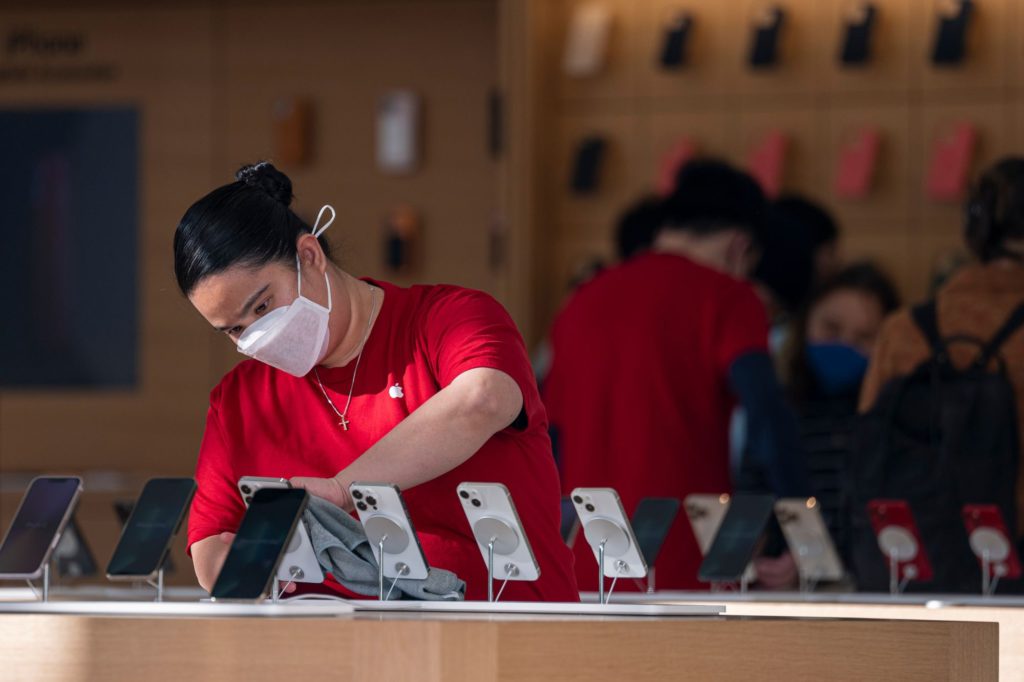
(Bloomberg) — Apple Inc. will begin to drop its mask requirement for both corporate and retail employees in the U.S. as Covid-19 cases decline and local governments loosen restrictions. 

The company told staff that masks for vaccinated corporate employees are now optional at offices in regions where local indoor-mask mandates have been eliminated. It also told retail staff at a small number of locations that masks for employees will become optional on Friday. Over time — as more regions drop their mandates and cases decline — masks will become optional for employees at more locations.

The changes come a week after the company dropped its mask mandate for customers at many locations. It’s still recommending that both employees and shoppers wear masks, however, and is providing them upon request. An Apple spokesman declined to comment on the latest guidelines. 

The company also is reinstating its in-person “Today at Apple” classes at retail stores in the U.S. The iPhone maker said Thursday that the classes will return on March 7 across the country for the first time since the start of the pandemic. Bloomberg News reported on the plan last month. 

This is the second time Apple has dropped its mask mandate for U.S. employees. In June, Apple stopped requiring masks at many stores and offices for employees, only to reinstate the mandate weeks later amid a new wave of Covid-19 cases. 

The change in policy may imply that Apple is again nearing the announcement of a return-to-office deadline for corporate employees. The company last attempted to set a deadline in February, only to scrap the date during the omicron surge. Other companies, including Alphabet Inc.’s Google, have set an April deadline for their staffers. 

More stories like this are available on bloomberg.com

©2022 Bloomberg L.P.

Novogratz Says Too Early to Call Bitcoin an Uncorrelated Asset

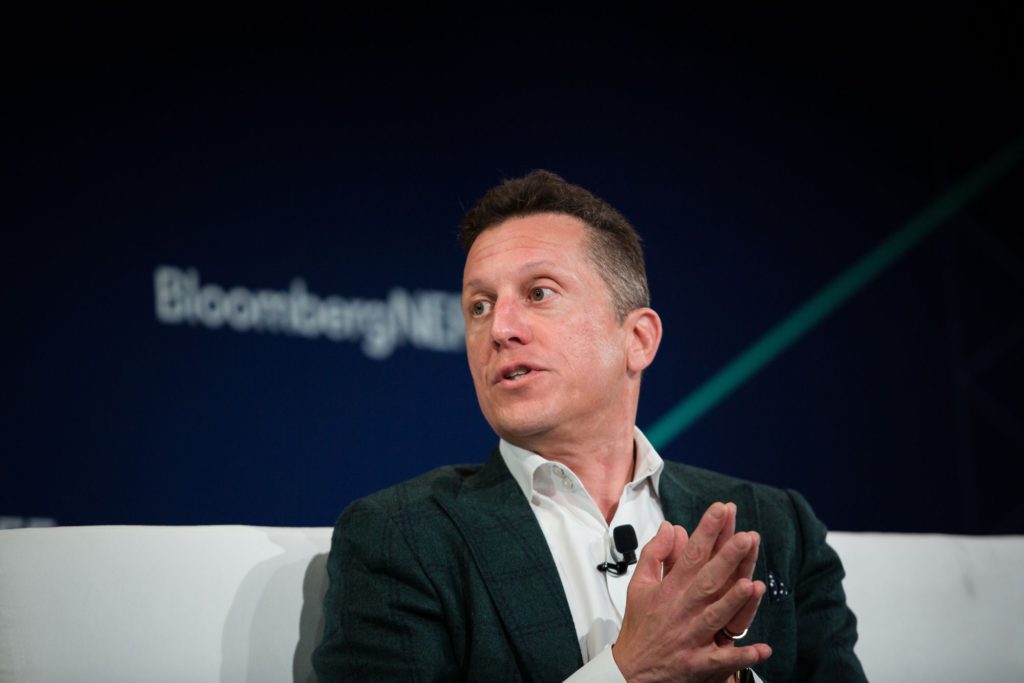
(Bloomberg) — Michael Novogratz, the billionaire cryptocurrency investor who heads Galaxy Digital Holdings Ltd., cautioned against assuming that Bitcoin’s recent outperformance to stocks suggests the digital token is becoming an uncorrelated asset. 

“If in two or three weeks, you see Bitcoin higher than $45,000 with stocks here or lower, then you’ll say something really special is going on,” Michael Novogratz said during KBW’s fintech conference Thursday. “One week is not enough to call a breakdown in correlation.” 

Bitcoin fell Thursday for the first time in four trading sessions as speculation eased that more people would turn to cryptocurrencies to better control their wealth with nations imposing sanctions on Russia because of its attack on Ukraine. Bitcoin fell about 3.8% to $42,400 as of 12:45 p.m. in New York.

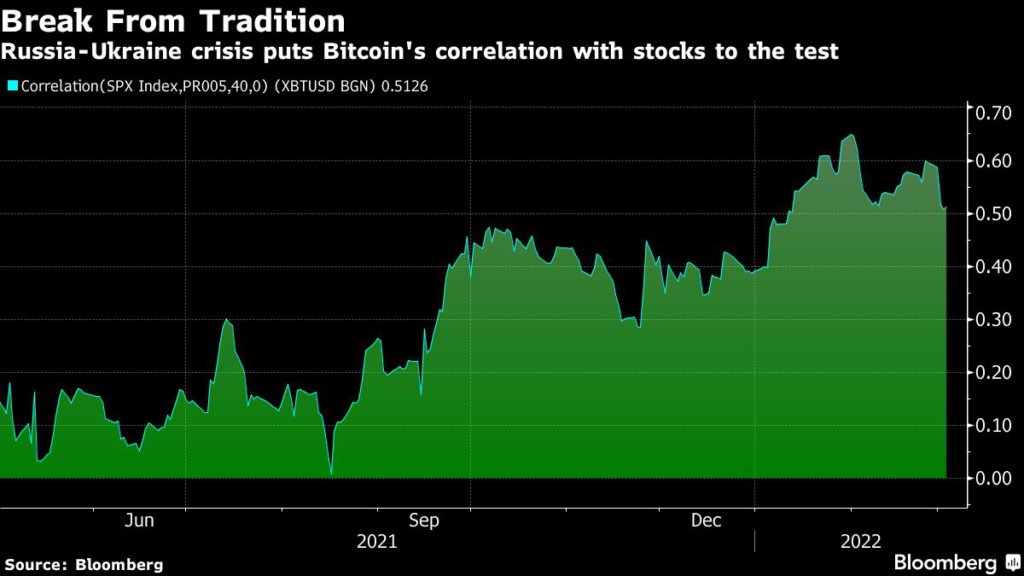
The largest digital asset by market value has demonstrated a close relationship with U.S. stock indices in recent months. A 50-day correlation between the S&P 500 and Bitcoin ticked up slightly on Thursday to 0.51, but is still down from its year-to-date peak of 0.64.

Other crypto advocates have been quick to seize on the narrative that Bitcoin is at a turning point. 

“That correlation has an opportunity to decouple,” says Sven Henrich, founder of markets analysis website NorthmanTrader. He sees Bitcoin continuing to operate as a risk asset in the short-term, but a safe haven in the long haul.

A rise in trading volumes using Russia’s ruble and Ukraine’s hryvnia had suggested to some observers that Russians and Ukrainians could be seeking to move capital as sanctions take an economic toll in the region. It also raised speculation that digital assets could be used to circumvent monetary sanctions.

More stories like this are available on bloomberg.com

©2022 Bloomberg L.P.

Bondholders Say Russia’s Yandex Has Paid Coupon on Dollar Debt

(Bloomberg) — A Russian telecommunications company has paid a coupon due Thursday on dollar bonds, in a relief to investors who fretted over whether Russian companies will continue servicing their foreign-currency bonds.

Search engine Yandex NV, the group’s entity based in The Netherlands, transferred $4.7 million to holders of its $1.25 billion bond due 2025, according to bondholders. It’s the first foreign-currency coupon payment by a company headquartered in Russia since sweeping sanctions and capital controls raised fears among bondholders that corporates won’t be able to service their debts. Yandex’s debt has lost more than half its value in the past week, according to TRACE pricing.

While it’s just one payment, it may set a precedent for Russian corporates that have issued debt in foreign currency, especially given the uncertainty over whether borrowers can meet their debt obligations as they navigate a series of sanctions and capital controls. A spokesperson for the company said on Monday that it has enough liquidity outside of Russia to settle its coupon payments, but declined to comment further when contacted on Thursday. 

“The Yandex payment is crucial – every single coupon paid shows us the willingness of Russian corporates to remain current on their payments” said Jean Dominique Butikofer, head of emerging markets fixed income at Voya Investment Management. “We navigate on a day-by-day basis as sanctions, amendments and implementations change so fast.”

Damien Regnier, a partner at Tyrus Capital Alternatives LLP, received the coupon funds on Thursday, but cautioned against drawing any wider significance from the payment. 

“It is hard to generalise the specific situation of Yandex, an investment grade, cash-rich tech firm listed for years in the U.S.,” he said. “Due to its global footprint and operations across countries, it’s international credibility is even more important.”

More than 90% of the $18 billion corporate Eurobonds due this year were issued by units or SPVs outside of Russia, according to data compiled by Bloomberg. So are three quarters of the issuers that have coupon payments due.

State-controlled energy giant Gazprom PJSC is already in the process of settling a $1.3 billion debt due on March 7, issued by Gaz Capital SA, a SPV incorporated in Luxembourg. State oil producer Rosneft PJSC’s $2 billion bond, issued from an Ireland-based entity, matures on March 6. 

“A lot of these Russian corporates may have U.S. dollars deposited in banks outside Russia and the latest news flow indicates willingness from Russian corporates to serve their debt for now,” said Voya’s Butikofer. 

A $9 Billion Bond Problem Is Coming for Russian Issuers (1)

Cash piles

That most of the issuing bodies are based outside of Russia may ease some of the concern international investors had that a wave of defaults is imminent after Russia’s major banks were cut out of the SWIFT international messaging system. Fitch Ratings estimates that most companies with foreign-currency notes due over the next year can repay with available cash on their balance sheets, according to a report dated Feb. 23 but emailed to Bloomberg on Monday.

That’s because their lesson from sanctions imposed on Russia since 2014 involved building huge cash piles in case they’re locked out of financial markets at short notice, according to Fitch.

That said, if the current restrictions on money transfers drag on, and Russian companies are shut out of the financial system for long, then new issues may emerge. Raising debt in rubles to refinance foreign currency notes is a costly and impractical option, given the depreciation of the currency and the difficulty of finding a clearing house or a bank that can transfer the funds.

But also, as Marc Ostwald, chief economist for ADM ISI said on Wednesday, corporates will do what Russian President Vladimir Putin will tell them to do. And given the pace at which relations between Russia and U.S. and its allies have deteriorated, it’s anyone’s guess what Putin’s next move will be.

“We are in gray territory, surrounded by restrictions of all sorts,” said Cristian Maggio, head of portfolio strategy at TD Securities. “Investors will likely not move a finger until all this is clear to avoid being prosecuted later for violation of international bans and sanctions on Russia.”

(Updates with quote from bondholder in graphs 5 and 6)

More stories like this are available on bloomberg.com

©2022 Bloomberg L.P.

German Authorities Said to Deny Seizing Usmanov Yacht

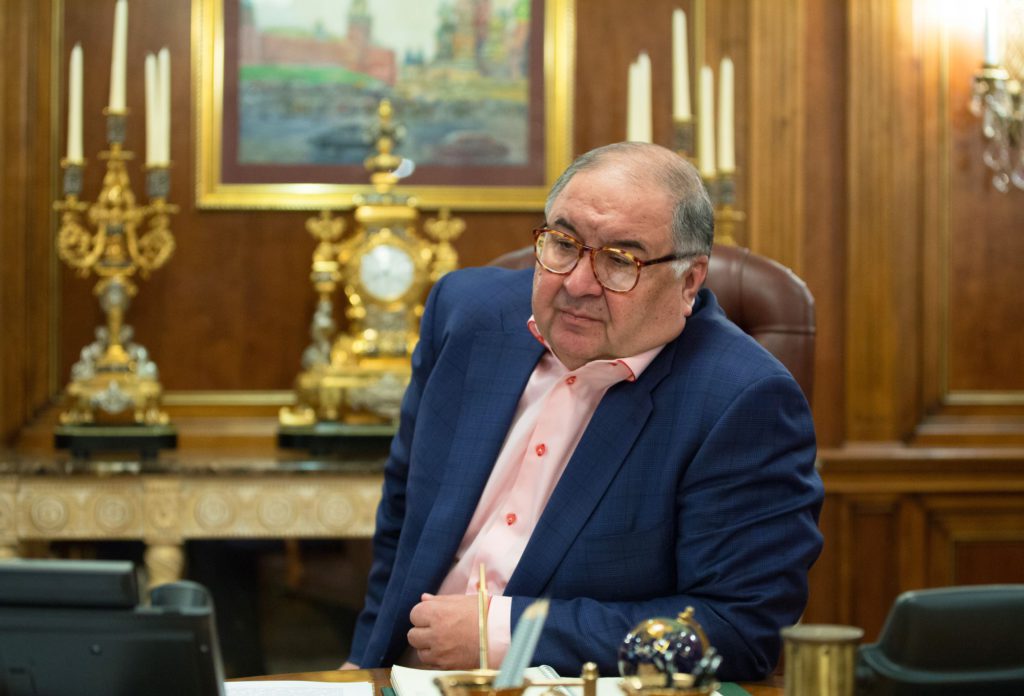
(Bloomberg) — Alisher Usmanov’s superyacht, the world’s largest by volume, is docked in the northern German city of Hamburg but hasn’t been seized by the government after the Russian billionaire was hit with European Union sanctions this week.

The Dilbar, Usmanov’s 512-foot yacht, had been undergoing refitting in the northern German city. Forbes reported Wednesday that the German government had frozen the boat, which is estimated to be worth $594 million by the Bloomberg Billionaires Index.

The Ministry for Economy and Innovation in the German state of Hamburg said the country’s authorities have not seized the Dilbar, Forbes reported Thursday. In a statement, the ministry said Germany’s federal customs agency must issue an export waiver for the boat to depart and that “no yacht leaves port that is not allowed to do so.”

In France, customs officials blocked Rosneft Chief Executive Officer Igor Sechin’s superyacht from an urgent departure from the Mediterranean port of La Ciotat, near Marseille, according to the French Finance Ministry. Sechin was also sanctioned on Monday.

The move underscores the fast-moving nature of the penalties levied by Europe on ultra-rich Russians seen as having close ties to Russian President Vladimir Putin. Under the sanctions, individuals are barred from moving their property. 

The European Union adopted sanctions on six of Russia’s wealthiest individuals on Monday, including Usmanov, who called the decision “unfair” and “defamatory.”

Superyachts and other opulent displays of wealth among Russia’s elite have drawn intense scrutiny since the country’s invasion of Ukraine, even making it into U.S. President Joe Biden’s State of the Union address.

“We are joining with our European allies to find and seize your yachts, your luxury apartments, your private jets,” Biden said during Tuesday’s address.

Five other individuals were named in the latest EU sanctions: Mikhail Fridman, Petr Aven, Alexey Mordashov, Gennady Timchenko and Alexander Ponomarenko. Mordashov owns two superyachts: the Nord, which is in the Seychelles, and Lady M, anchored in Imperia, Italy. 

Some Russian tycoons also still have superyachts docked in Europe. Roman Abramovich’s Solaris is in Barcelona; Iskandar Makhmudov’s Predator is in Genoa, Italy; and Vagit Alekperov’s Galactic Super Nova is in Montenegro, among others, according to data tracked by Bloomberg. 

Usmanov, 68, owns a major stake in USM, a Russian investment group with holdings in Metalloinvest, one of the world’s largest iron ore producers, and telecommunications company MegaFon. He’s the sixth-richest Russian with a fortune of $19.5 billion, according to Bloomberg’s wealth index, though that figure includes the Dilbar. 

Russian President Vladimir Putin has also been sanctioned by U.S., EU and U.K. authorities. He has been linked by news organizations including Business Insider to the superyacht Graceful. 

That boat left Hamburg Feb. 7, about two weeks before Russia invaded Ukraine. It’s now in Kaliningrad, Russia. 

(Corrects after Forbes includes denial from German authorities in third paragraph.)

More stories like this are available on bloomberg.com

©2022 Bloomberg L.P.

ChargePoint’s CEO Says Some Employees Are Trapped in Ukraine

(Bloomberg) — ChargePoint Holdings Inc. has a small number of contract employees trapped in war-struck Ukraine, and the electric-car charging company is searching for ways to help them, Chief Executive Officer Pasquale Romano said.

Fewer than 20 employees, mostly software engineers, aren’t able to flee the country in the wake of the Russian invasion after the Ukrainian government banned men of ages 18 to 60 years old from leaving. Romano said in an interview Thursday that ChargePoint is trying to help relocate any of their family members who are able to leave, as well as make sure the employees have reliable communications in case local phone and computer networks fail during the fighting.

“One person in harm’s way who works for your company is bad enough,” he said. 

Although ChargePoint has been expanding its operations in Europe, it does not have any electric-car charging stations in Ukraine. But many U.S. tech companies have employees or offices in Ukraine, which has a highly educated population and a large pool of talented programmers. 

More stories like this are available on bloomberg.com

©2022 Bloomberg L.P.

Verizon Maps 5G Path and a Return to 4% Revenue Growth in 2024

(Bloomberg) — Verizon Communications Inc. expects revenue growth of about 4% annually in 2024 and beyond, driven by gains from its new 5G mobile phone services.

Service and other revenue is expected to grow about 3% in 2022 and 2023 and 4% in 2024, Matt Ellis, chief financial officer, told investors at a conference Thursday. Analyst had expected gains of about 2% a year through 2024.  

The target highlights near-term challenges Verizon faces as mobile subscriber growth cools off from record 2021 levels. The company and its peers AT&T Inc. and T-Mobile US Inc. are under pressure to show that more than $100 billion spent on 5G technology will start to show a payback soon.

Executives at the conference pointed to growth initiatives, like selling mobile subscribers higher-priced 5G unlimited data plans, offering wireless home broadband and securing partnerships with big tech companies.

On the partnership side, Verizon announced a collaboration with Facebook parent Meta Platforms Inc. The parties will explore “a range of metaverse opportunities from the future of hybrid work/collaboration to metaverse-related consumer experiences,” Verizon said.

Financial terms weren’t revealed.

Verizon rose as much as 1.9% to $55.14 Thursday in New York.

(Updates with Meta partnership in fifth paragraph.)

More stories like this are available on bloomberg.com

©2022 Bloomberg L.P.

Rivian Cancels Price Increases for Pre-Orders After Outcry

(Bloomberg) — Rivian Automotive Inc. rolled back price increases on its debut electric vehicles for existing customers, marking an embarrassing about-face for the EV maker as it ramps up production and seeks to win over more car buyers.

The automaker was hit by customer cancellations this week after it raised the sticker prices of its battery-electric R1T pickup by 17% and its R1S SUV by 20%, citing higher input costs and a shortage of semiconductors. 

Rivian declined to specify how many cancellations it received.

“As we worked to update pricing to reflect these cost increases, we wrongly decided to make these changes apply to all future deliveries, including pre-existing configured preorders,” Chief Executive Officer R.J. Scaringe said in a letter to customers Thursday. “We made a mistake in how we approached our pricing changes, and what is important now is that we fix it.”

Rivian said it would honor the original price for customers who placed preorders prior to March 1, when the increase was announced. Buyers who subsequently canceled will be allowed to reinstate orders at the original price, timing and configuration.

Share Price Drop

Shares of Irvine, California-based Rivian reversed gains after the announcement, paring a drop of as much as 6.6% to trade down 2.6% to $52.13 as of 11:58 a.m. in New York. It was part of a decline in many automaker stocks amid supply chain disruption concerns due to the conflict in Ukraine.

The roll-back on pricing could cost Rivian around $850 million in future revenues, assuming cancellations, RBC Capital Markets analyst Joseph Spak wrote in a note to clients on Thursday.  Spak, who has a neutral rating and $116 price target on the stock, said the higher prices going forward could make it more difficult for the startup to attract new consumers.

“The thesis had been that Rivian could sell whatever it could make, but there may now be some more holes in that,” Spak wrote.

Preorder customers of the debut spec R1T with a quad-motor, all-wheel drive and a large battery pack will pay the original $67,500 cost. With the increases, new customers who didn’t place an order before March 1 will pay around $79,500. The R1S with the same specifications will go back to around $70,000 for early customers and rise to $84,500 for new buyers.

(Updates with analyst comments from seventh paragraph.)

More stories like this are available on bloomberg.com

©2022 Bloomberg L.P.

EU Seeks to End Russia WTO Favored-Nation Status: Ukraine Update

(Bloomberg) — Fresh talks are under way between Russia and Ukraine, even as Moscow attacks key cities across the country. President Vladimir Putin told France’s Emmanuel Macron he plans to fulfill the goals of his invasion, having made clear previously he wanted to remove the government in Kyiv. 

The economic fallout for Russia continues with the central bank temporarily banning the transfer of coupon payments for sovereign debt, raising the risk for investors that the Kremlin could default. Volkswagen and Ikea are the latest companies to suspend business in Russia.  

More than a million refugees are fleeing to neighboring countries, according to the United Nations, adding to the humanitarian crisis that is also occurring inside Ukraine. 

Key Developments

  • Biden’s Tough Sanctions Create Worry That Putin Lacks an Exit
  • Russian Assault Shows No Letup as Putin’s War Enters Second Week
  • What Russia Invasion, Sanctions Mean for Global Economy
  • Russian Fleet Approach Has Ukraine’s Port City of Odesa Bracing
  • Ukraine Sees $15 Billion in Aid Coming as War Wrecks Economy
  • Russian Banker’s London Broker Faces Collapse on Russia Ties 

All times CET:

U.S. Readies New Sanctions on Russian Tycoons (5:22 p.m.)

The sanctions will be in keeping with measures the European Union imposed earlier, said people familiar with the plans, but will be broader, prohibiting travel to the U.S. and targeting their families to prevent them from transferring assets to spouses or children.

EU Seeks to Suspend Russia’s Most-Favored Nation WTO Status (4:31 p.m.)

The European Union is seeking to remove Russia’s most-favored nation status at the World Trade Organization, a move that could further hit 95 billion euros ($105 billion) of Moscow’s exports to the bloc with tariffs.

The European Commission, the EU’s executive arm, is discussing the possibility with member states, according to commission spokeswoman Miriam Garcia Ferrer.

Latvia, Lithuania Have Seen Surge in Cyber Attacks in Last Week (4:20 p.m.) 

Cyber attacks targeting state institutions, critical infrastructure and service providers have picked up since the middle of last week, Baiba Kaskina, director of Latvia’s cyber security unit said in an interview with Latvian TV. Some of the attacks have been successful but without serious consequences, Kaskina said. 

Lithuanian Energy Minister Dainius Kreivys told a press conference that there’s been a “a substantial increase” of cyber attacks on the country’s energy industry. Estonia’s cyber defense unit said state institutions saw an increase in scanning of their internet systems.

Ruble Sinks to Another Record Low (3:44 p.m.)

The ruble sank to a record low against the dollar in Moscow trading, dropping for a fourth day after ratings services lowered Russia’s credit score deep into junk territory. Russia’s equity and bond markets are still closed, and currency trading is going ahead in a shortened daily session.

The ruble was down almost 10% at 117.2275 per dollar in Moscow, to reach its longest run of declines since August and the weakest intraday level since at least 2003 in Moscow. In offshore trading the ruble was 2.3% lower at 104.6355.


EU Ministers Dampen Expectations for Economic Aid Package (3:30 p.m.)

There may be little political appetite to fund a new economic aid program for Europe, Finnish Finance Minister Annika Saarikko and Eurogroup President Paschal Donohoe signaled after meeting in Helsinki, even as the European Commission is working on a contingency package to cushion the impact of sanctions and the ongoing war on EU economy. 

“Now is not yet the time to talk about how to mitigate the economic impacts of sanctions on member states, but it’s time to send a message that we are, if needed, ready for even stronger sanctions,” Saarikko told reporters in Helsinki.

Putin Tells Macron Russia Will Fulfill Goals in Ukraine (3:30 p.m.)

Putin told Macron he planned to fulfill his goals on Ukraine, Interfax reported, citing the Kremlin’s press service.

Macron spoke to Putin at the Russian leader’s request, according to an official in Macron’s office. Putin told him that everything was going according to his plan in Ukraine and that things will get worse. Putin also denied Russia had bombed Kyiv or hurt civilians, while Macron condemned his actions, the official said.

Estonian Vessel Sinks Off Ukrainian Coast (2:40 p.m.)

An Estonian-owned cargo ship, the Helt, sank off the Ukrainian coast near the port city of Odesa, the Foreign Ministry in Tallinn confirmed. It now appears that all six crew members, none of whom were Estonian citizens, were rescued. 

The Helt went off-radar at 12:18 p.m. local time after it was fired upon and was breeched below the water line, according to a Facebook post by the Ukrainian Sea Ports Authority.

U.S. Oil Refiners Would Back Russian Import Ban (3:22 p.m.)

U.S. lawmakers seeking a ban on Russian oil imports have found an unlikely ally in American refiners, who say they support the idea as long as it doesn’t ensnare cargoes now in en route.

The American Fuel and Petrochemical Manufacturers “fully supports the suspension of all future purchases of crude oil and petroleum products from Russia,” the trade group said in a letter to lawmakers. The declaration could buttress congressional efforts to outlaw Russian oil imports, which made up about 3% of the foreign crude brought into the U.S. last year.  

Germany Mulls More Coal Use to End Russian Energy Reliance

Ukraine Plans Another Auction of War Bonds (3:10 p.m.)

Ukraine plans a second auction of war bonds to help fund resistance to Russia’s invasion, according to a person familiar with the matter. The government will use its regular Tuesday auction slot, and the proceeds will go to “priority humanitarian aid needs,” which include clothes and footwear, blankets, and hospital beds, according to a document seen by Bloomberg News. They’ll also fund protective gear such as helmets and bulletproof vests.

Ukraine raised 8.1 billion hryvnia ($277 million) in the first such sale earlier this week. That event drew global attention as people other than professional investors sought to buy the debt to show support for the country. 

Poland Plans to Raise Defense Spending to 3% of GDP (2:26 p.m.)

Poland wants to raise its defense spending to 3% of economic output in 2023 and will start a “very expensive” program to expand and re-arm its military over the next five years, the country’s de facto leader Jaroslaw Kaczynski told parliament in Warsaw. 

The nation’s $600 billion economy is already spending more on defense than the NATO’s target of 2% of GDP. The program will include the creation of a voluntary military force that would increase army personnel to about 300,000, Kaczynski said.

Russia Seeks to Weaken Ukraine Morale: Intelligence Report (2:26 p.m.)

Moscow has drawn up plans for ways to break morale in order to discourage Ukrainian from fighting back as and when cities fall under the Kremlin’s control, a European intelligence official said.

That strategy includes crackdowns on protests, detention of opponents, and potentially carrying out public executions, the official said on the condition of anonymity. So far civilians in Ukraine as well as its military have put up strong resistance, including arming themselves as volunteer forces.

Oil, Gas Prices Swing Wildly; Aluminum, Wheat Soar (2:10 p.m.) 

Oil extended a period of extreme volatility, with international Brent nearing $120 a barrel at one point, while European natural gas retreated after hitting a record high. Aluminum powered through to unprecedented levels and wheat extended its rally to the highest since 2008. 

Russia’s growing isolation is choking a major global source of energy, metals and crops, sparking fears of prolonged shortages and sharper global inflation. While there are no sanctions on energy, traders and shippers are increasingly reluctant to deal with Russian supply or with its companies. 

Sanctioned Billionaire Says ‘Iron Curtain’ Has Fallen (2:05 p.m.) 

An “Iron Curtain” has fallen on Russia and the country faces a severe crisis for at least three years, billionaire Oleg Deripaska said at the Krasnoyarsk Economic Forum on Thursday. 

Deripaska, who’s been sanctioned by the U.S. since 2018, said the first step to getting out of the current crisis is peace. 

Russia’s economic outlook has grown increasingly dire in the last week, as the ruble crashed, inflation and interest rates jumped and foreign companies vowed to stop doing business in the country.

Second Round of Ukrainian-Russian Talks Starting Soon (1:35 p.m.) 

A second round of talks between Russian and Ukrainian negotiators is set to get under way as soon as 3 p.m. CET. Mykhailo Podolyak, an adviser to President Volodymyr Zelenskiy’s chief of staff, was shown in a tweet strapped into a helicopter with a party ally. 

The discussions are planned at a location in the Bialowieza Forest on the Poland-Belarus border. A first round of talks, where the Russians laid out their demands for Ukrainian “neutrality,” bore little fruit.

Biden Asks Congress for $10 Billion in Ukraine Funding (1:20 p.m.) 

The White House asked Congress for about $10 billion in emergency funding for Ukraine, to be used to address the mounting humanitarian crisis as well as assist its defense against Russia. Of that, $4.8 billion would go to the Pentagon and $5 billion to the State Department.

The funds were part of a $32.5 billion funding request; the balance would be for domestic coronavirus efforts. Negotiations continue on how to operate the federal government past March 11, when current funding is set to lapse.

Ukraine Central Bank Delays Decision as Attack Continues (1:02 p.m.)

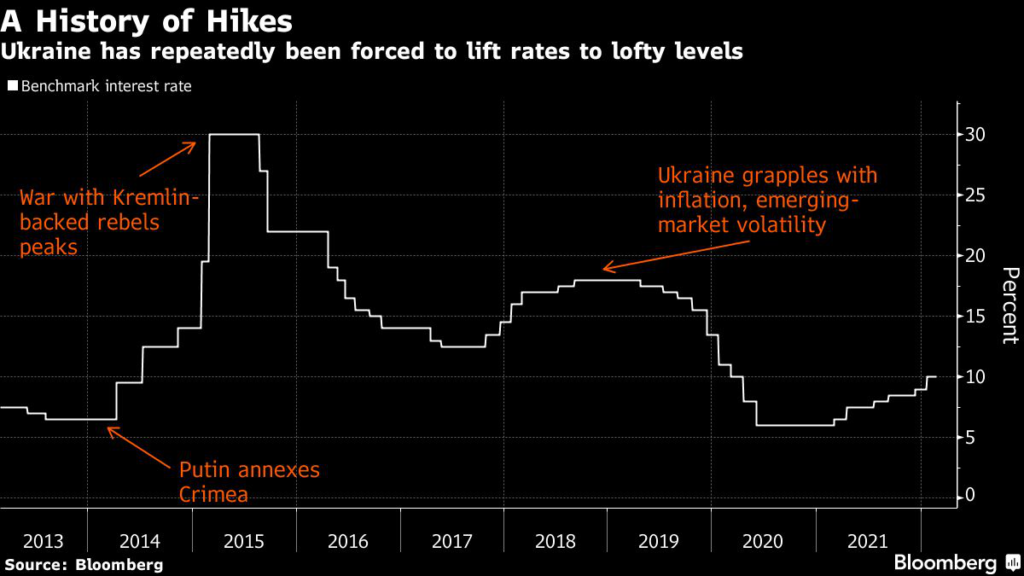
Ukraine’s central bank delayed a scheduled decision on borrowing costs, with the key rate staying at 10% for now.

The National Bank of Ukraine said it remains committed to inflation targeting and it will resume regular monetary policy meetings once the economy normalizes. 

Japan to Freeze Oligarchs’ Assets (12:31 p.m.) 

Prime Minister Fumio Kishida said Japan would freeze the assets of oligarchs in his country as Tokyo stepped up its penalties on Russia. The premier said it was “outrageous” for Vladimir Putin to order Russia’s strategic nuclear forces to be put on higher alert, adding that the use, or even the threat, of using nuclear weapons was unforgivable.  

Finnish President Niinisto to Meet Biden on Friday (12:15 p.m.)

Finnish President Sauli Niinisto will visit President Joe Biden and U.S. lawmakers in Washington on Friday, just as the debate on joining NATO has intensified in the Nordic country after its neighbor Russia invaded Ukraine.

The attack has prompted a historic shift in Finns’ attitudes on joining the North Atlantic Treaty Organization, with a majority now supporting the idea. Niinisto and Biden are scheduled to discuss the invasion and its impact on European security. 

VW Stops Making Cars in Russia (11:47 a.m.)

Volkswagen AG said it would stop producing vehicles in Russia and exporting to that market until further notice because of the invasion of Ukraine.

The German carmaker joins an exodus of companies from Russia, reversing three decades of investment by Western and other foreign businesses there following the collapse of the Soviet Union in 1991. 

Firms ranging from energy giants Exxon Mobil and Shell to fashion retailers Burberry and H&M have announced they are curtailing operations or leaving entirely. Ikea said Thursday it would pause all operations in Russia and Belarus, affecting about 15,000 employees.

French Customs Takes Yacht Owned by Rosneft CEO (11:25 a.m.)

French customs officials have taken control of a giant yacht owned by Rosneft Chief Executive Officer Igor Sechin as part of EU sanctions against Russia, French Finance Minister Bruno Le Maire said. 

The Amore Vero was confiscated overnight in the Mediterranean port of La Ciotat on the French Cote d’Azur as it was preparing an urgent departure, the ministry said.

EU Expects Membership Requests From Moldova, Georgia (11:13 a.m.)

Georgia and Moldova are expected to send membership requests to the EU imminently, according to an EU official.

The EU is already in the process of moving forward on an application from Ukraine, a topic the 27 leaders will discuss next week at an informal summit in Paris, said the official, who asked not to be identified because the talks are private. Moldova may submit the request Thursday, the official said.

EU Figures Float Special Budget Leeway for Defense Spending (11:01 a.m.)

European Commissioner for Economy Paolo Gentiloni and Hungarian Prime Minister Viktor Orban suggested giving special consideration to defense spending under European Union rules that limit public finance deficits.

Gentiloni told the German Handelsblatt newspaper he was “open to thinking about also giving special consideration in the debt rules to investments in Europe’s autonomy. This can also include certain defense expenditures.” He said a specific proposal hadn’t yet been agreed.

Orban said Russia’s war on Ukraine made clear that “much more” needs to be spent on the continent’s militaries and that shouldn’t be included in the current deficit ceiling of 3% of gross domestic product. 

Ukraine Calls for Russia’s Suspension From WTO (10:49 a.m.)

Ukraine urged all members of the World Trade Organization to suspend Russia from participating in the Geneva-based trade body in response to its “unprovoked and unjustified” attack, according to a letter seen by Bloomberg. 

Zelenskiy Addresses Nation (10:15 a.m.)

Overwhelming UN Vote Puts Pressure on China (9:27 a.m.)

The United Nations passed a resolution condemning Russia’s invasion of Ukraine by an overwhelming vote, casting a spotlight on President Xi Jinping’s reluctance to take a stance against Moscow, after China abstained.

EU to Offer Residence, Job Rights to Ukrainians (8:42 a.m.)

Ukrainians fleeing to the European Union will be granted full access to the bloc and receive residence permits as well as access to education and jobs as part of a plan expected to be implemented as soon as Thursday.

European member states will consider activating the so-called temporary protection directive that will allow Ukrainians to stay in the EU beyond 90 days, a move expected to be overwhelmingly adopted, according to a senior official at the European Commission.

Switzerland is also weighing offering temporary residence in the country to Ukrainians.

More Than 1 Million People Have Fled Ukraine: UNHCR (8:36 a.m.)

Russia’s invasion has forced 1,002,860 people to flee Ukraine to neighboring countries, the UN refugee agency said Thursday, in what is poised to become the biggest humanitarian crisis in Europe since World War II.

It said more than half a million people had fled to Poland, while 139,686 had gone to Hungary, 97,827 to Moldova and 72,200 to Slovakia. Romania had taken in 51,261 the UNHCR said, while 47,800 people had departed for Russia.

More stories like this are available on bloomberg.com

©2022 Bloomberg L.P.

Close Bitnami banner
Bitnami