Bloomberg

Honda Joins Ford by Selling Green Bonds in Electric Vehicle Push

(Bloomberg) — Honda Motor Co. is selling bonds meant to benefit the environment for the first time, joining its competitor Ford Motor Co. in tapping the booming world of sustainable finance to fund a transition to electric vehicles.

The Tokyo-based automaker is selling dollar-denominated green bonds in as many as three parts, according to a person with knowledge of the matter. The longest portion of the offering, a 10-year security, may yield between 1.35 percentage points and 1.4 percentage points above Treasuries, said the person, who asked not to be identified as the details are private. It would be the company’s first green bond deal, a company spokeswoman said last week.

Honda intends to allocate an amount equal to the net proceeds from the note issuance to a range of new eligible green projects that includes manufacturing electric cars, solar and wind along with investments in recycling used vehicle parts, according to a bond prospectus. Ford sold $2.5 billion of debut green bonds in November as it transitions to making electric vehicles, the largest ever such offering from a U.S. corporation.

Read more: Ford Breaks Green Bond Record With $2.5 Billion Debut Sale

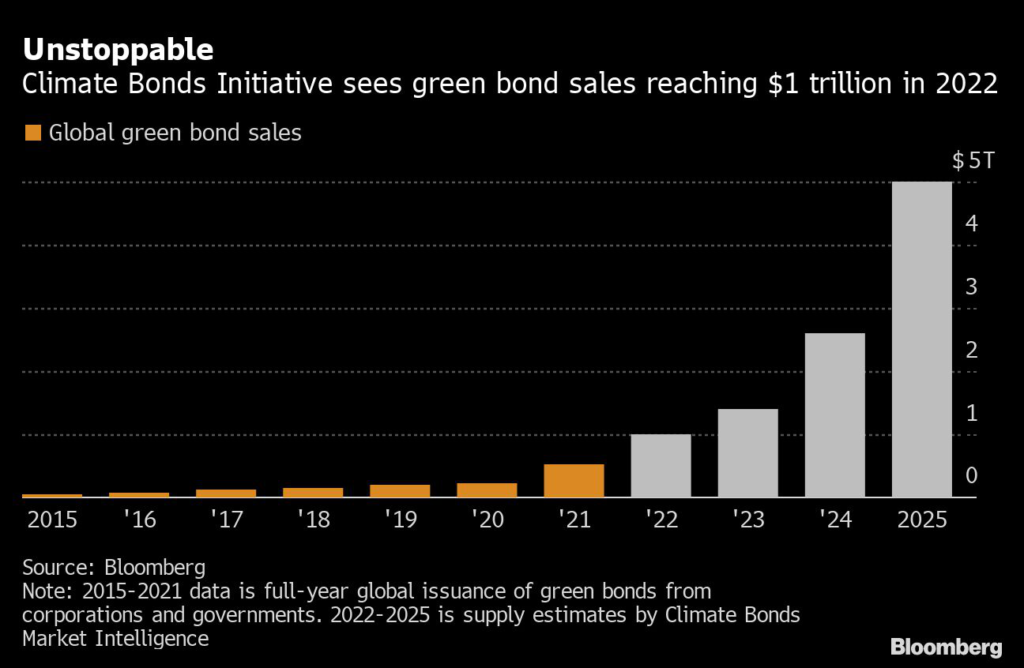
Companies and governments are rushing to the green bond market to finance all kinds of environmentally-friendly initiatives. Global sales of green bonds hit a record $513 billion last year, according to data compiled by Bloomberg. Climate Bonds Initiative estimates annual sales could reach fresh highs of between $900 billion and $1 trillion by the end of this year and as much as $5 trillion by 2025.

Honda, which is halting exports of cars and motorcycles to Russia, was the first of Japan’s automakers to state publicly it will phase out sales of gasoline-powered cars completely. The firm set 2040 as the goal, giving newly minted Chief Executive Officer Toshihiro Mibe a once-in-a-career chance to put his stamp on a firm that can trace its lineage back 84 years.

JPMorgan Chase & Co., Bank of America Corp., Citigroup Inc. and Morgan Stanley are managing the bond sale, the person said.

More stories like this are available on bloomberg.com

©2022 Bloomberg L.P.

Ukraine Cancels Crypto ‘Airdrop’ Rewards for Donations

(Bloomberg) —

Ukraine has scrapped a plan to reward people who donated to its fight against a Russian invasion with newly created crypto assets, following complications with the project.

The official verified Twitter account for Ukraine said on Wednesday it planned to issue a so-called “airdrop”, a common tool for early-stage crypto platforms to attract users by offering free tokens to jump start a project. But a day later, Ukraine’s Vice Prime Minister Mykhailo Federov said in a tweet that the nation had decided to cancel the project. The tweet wasn’t independently verified by Bloomberg News. 

“Every day there are more and more people willing to help Ukraine to fight back the aggression,” Federov said in a tweet from his personal verified Twitter account on Thursday. He added that Ukraine will announce a drop of nonfungible tokens to support the Ukrainian Armed Forces soon, but that it has no plans to issue any fungible tokens such as cryptocurrencies.

The project’s cancellation followed rife speculation that Ukraine had begun its airdrop hours ahead of schedule on Thursday, after a tracker of its Ethereum wallet showed the creation of 7 billion newly-minted tokens and transactions distributing those tokens to individual addresses. Analysts at crypto research platform and news service The Block later suggested the transactions had been spoofed by an outside third party.

Airdrops have been previously utilized by companies and some governments to boost mass adoption beyond the private sector. El Salvador last year rewarded its citizens with $30 in Bitcoin as an incentive for adopting its state-sponsored Chivo wallet. The move was part of the country’s adoption of Bitcoin as legal tender, a process which has been beset by controversy. 

Crypto addresses affiliated with the Ukrainian government and various charitable organizations had received more than $33 million in cryptocurrency donations as of Wednesday, according to data compiled by Bloomberg.   

(Adds additional stories.)

More stories like this are available on bloomberg.com

©2022 Bloomberg L.P.

Poland Has Plans to Increase Defense Spending: Ukraine Update

(Bloomberg) — Ukraine’s central bank delayed a scheduled rate decision until conditions normalize. Volkswagen and Ikea became the latest companies to suspend business in Russia as Kremlin forces pressed ahead with their offensive, firing missiles at Kyiv overnight and stepping up their campaign to take key cities in the coastal south, on the Black Sea. 

With more than a million refugees fleeing to neighboring countries, according to the United Nations, a second round of talks between Russia and Ukraine were due to take place on Thursday. U.S. Secretary of State Antony Blinken will travel over the weekend to NATO member states neighboring Ukraine. 

The economic fallout for Russia continued to grow. Its central bank banned transferring coupon payments for sovereign debt temporarily, raising the risk for investors that the Kremlin could default. Crude oil hovered at multi-year highs.  

Key Developments

  • Biden’s Tough Sanctions Create Worry That Putin Lacks an Exit
  • Russian Assault Shows No Letup as Putin’s War Enters Second Week
  • The Default Question Hangs Over Russia’s Frozen Bond Market
  • Overwhelming UN Vote Makes China’s Ukraine Balancing Act Harder
  • Russian Invasion Pushes Europe Into New Era of Big Spending
  • Russian Fleet Approach Has Ukraine’s Port City of Odesa Bracing

All times CET:

Poland Plans to Raise Defense Spending to 3% of GDP (2:26 p.m.)

Poland wants to raise its defense spending to 3% of economic output in 2023 and will start a “very expensive” program to expand and re-arm its military over the next five years, the country’s de facto leader Jaroslaw Kaczynski told parliament in Warsaw. 

The nation’s $600 billion economy is already spending more on defense than the NATO’s target of 2% of GDP. The program will include the creation of a voluntary military force that would increase army personnel to about 300,000, Kaczynski said.

Russia Seeks to Weaken Ukraine Morale: Intelligence Report (2:26 p.m.)

Moscow has drawn up plans for ways to break morale in order to discourage Ukrainian from fighting back as and when cities fall under the Kremlin’s control, a European intelligence official said.

That strategy includes crackdowns on protests, detention of opponents, and potentially carrying out public executions, the official said on the condition of anonymity. So far civilians in Ukraine as well as its military have put up strong resistance, including arming themselves as volunteer forces.

Oil, Gas Prices Swing Wildly; Aluminum, Wheat Soar (2:10 p.m.) 

Oil extended a period of extreme volatility, with international Brent nearing $120 a barrel at one point, while European natural gas retreated after hitting a record high. Aluminum powered through to unprecedented levels and wheat extended its rally to the highest since 2008. 

Russia’s growing isolation is choking a major global source of energy, metals and crops, sparking fears of prolonged shortages and sharper global inflation. While there are no sanctions on energy, traders and shippers are increasingly reluctant to deal with Russian supply or with its companies. 

Sanctioned Billionaire Says ‘Iron Curtain’ Has Fallen (2:05 p.m.) 

An “Iron Curtain” has fallen on Russia and the country faces a severe crisis for at least three years, billionaire Oleg Deripaska said at the Krasnoyarsk Economic Forum on Thursday. 

Deripaska, who’s been sanctioned by the U.S. since 2018, said the first step to getting out of the current crisis is peace. 

Russia’s economic outlook has grown increasingly dire in the last week, as the ruble crashed, inflation and interest rates jumped and foreign companies vowed to stop doing business in the country.

Second Round of Ukrainian-Russian Talks Starting Soon (1:35 p.m.) 

A second round of talks between Russian and Ukrainian negotiators is set to get under way as soon as 3 p.m. CET. Mykhailo Podolyak, an adviser to President Volodymyr Zelenskiy’s chief of staff, was shown in a tweet strapped into a helicopter with a party ally. 

The discussions are planned at a location in the Bialowieza Forest on the Poland-Belarus border. A first round of talks, where the Russians laid out their demands for Ukrainian “neutrality,” bore little fruit.

Biden Asks Congress for $10 Billion in Ukraine Funding (1:20 p.m.) 

The White House asked Congress for about $10 billion in emergency funding for Ukraine, to be used to address the mounting humanitarian crisis as well as assist its defense against Russia. Of that, $4.8 billion would go to the Pentagon and $5 billion to the State Department.

The funds were part of a $32.5 billion funding request; the balance would be for domestic coronavirus efforts. Negotiations continue on how to operate the federal government past March 11, when current funding is set to lapse.

Ukraine Central Bank Delays Decision as Attack Continues (1:02 p.m.)

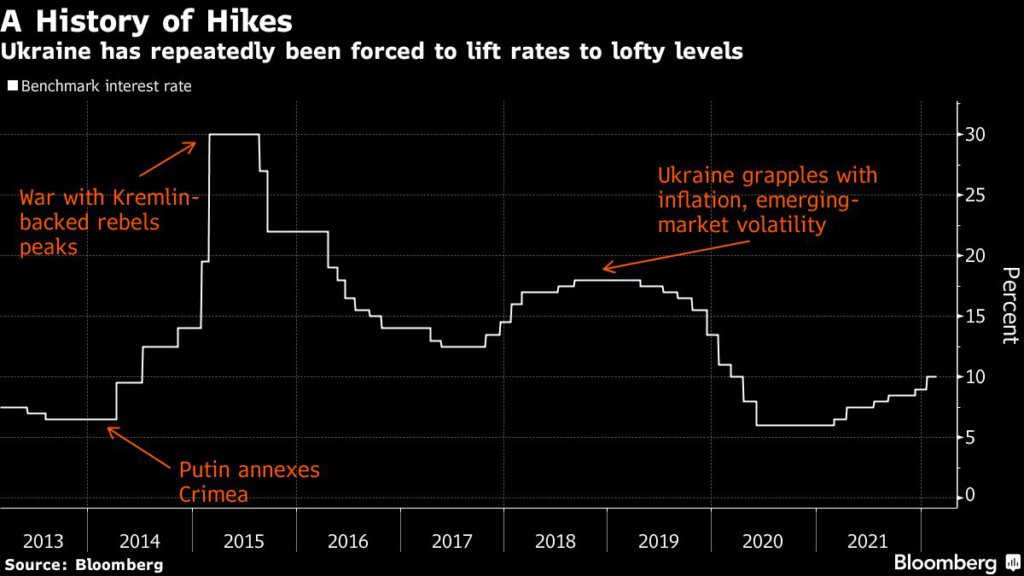
Ukraine’s central bank delayed a scheduled decision on borrowing costs, with the key rate staying at 10% for now.

The National Bank of Ukraine said it remains committed to inflation targeting and it will resume regular monetary policy meetings once the economy normalizes. 

Macron Speaks Again With Putin, Zelenskiy (12:41 p.m.) 

Emmanuel Macron spoke with Vladimir Putin for an hour and a half on Thursday, according to the Elysee palace, which said the French president has also talked with Ukrainian counterpart Volodymyr Zelenskiy. 

In a televised speech Wednesday, Macron said he’ll stay in contact with Putin “for as long as I can and as long as it is needed” to convince him to stop the attacks against Ukraine. 

Japan to Freeze Oligarchs’ Assets (12:31 p.m.) 

Prime Minister Fumio Kishida said Japan would freeze the assets of oligarchs in his country as Tokyo stepped up its penalties on Russia. The premier said it was “outrageous” for Vladimir Putin to order Russia’s strategic nuclear forces to be put on higher alert, adding that the use, or even the threat, of using nuclear weapons was unforgivable.  

Finnish President Niinisto to Meet Biden on Friday (12:15 p.m.)

Finnish President Sauli Niinisto will visit President Joe Biden and U.S. lawmakers in Washington on Friday, just as the debate on joining NATO has intensified in the Nordic country after its neighbor Russia invaded Ukraine.

The attack has prompted a historic shift in Finns’ attitudes on joining the North Atlantic Treaty Organization, with a majority now supporting the idea. Niinisto and Biden are scheduled to discuss the invasion and its impact on European security. 

VW Stops Making Cars in Russia (11:47 a.m.)

Volkswagen AG said it would stop producing vehicles in Russia and exporting to that market until further notice because of the invasion of Ukraine.

The German carmaker joins an exodus of companies from Russia, reversing three decades of investment by Western and other foreign businesses there following the collapse of the Soviet Union in 1991. 

Firms ranging from energy giants Exxon Mobil and Shell to fashion retailers Burberry and H&M have announced they are curtailing operations or leaving entirely. 

Ikea said Thursday it would pause all operations in Russia and Belarus, affecting about 15,000 employees.

French Customs Takes Yacht Owned by Rosneft CEO (11:25 a.m.)

French customs officials have taken control of a giant yacht owned by Rosneft Chief Executive Officer Igor Sechin as part of EU sanctions against Russia, French Finance Minister Bruno Le Maire said. 

The Amore Vero was confiscated overnight in the Mediterranean port of La Ciotat, near Marseille, on the French Cote d’Azur as it was preparing an urgent departure, the ministry said.

EU Expects Membership Requests From Moldova, Georgia (11:13 a.m.)

Georgia and Moldova are expected to send membership requests to the EU imminently, according to an EU official.

The EU is already in the process of moving forward on an application from Ukraine, a topic the 27 leaders will discuss next week at an informal summit in Paris, said the official, who asked not to be identified because the talks are private. Moldova may submit the request Thursday, the official said.

“Ukraine has set a process in motion, and this will be discussed with member states, but right now the focus is on ending the war,” European Commission President Ursula von der Leyen said in Bucharest. 

EU Figures Float Special Budget Leeway for Defense Spending (11:01 a.m.)

European Commissioner for Economy Paolo Gentiloni and Hungarian Prime Minister Viktor Orban suggested giving special consideration to defense spending under European Union rules that limit public finance deficits.

Gentiloni told the German Handelsblatt newspaper he was “open to thinking about also giving special consideration in the debt rules to investments in Europe’s autonomy. This can also include certain defense expenditures.” He said a specific proposal hadn’t yet been agreed.

Orban said Russia’s war on Ukraine made clear that “much more” needs to be spent on the continent’s militaries and that shouldn’t be included in the current deficit ceiling of 3% of gross domestic product. The EU has already agreed to finance the supply of 450 million euros in lethal weapons to Ukraine, as well as 50 million euros of non-lethal aid.

Ukraine Calls for Russia’s Suspension From WTO (10:49 a.m.)

Ukraine urged all members of the World Trade Organization to suspend Russia from participating in the Geneva-based trade body in response to its “unprovoked and unjustified” attack, according to a letter seen by Bloomberg. 

Ukraine has imposed a “complete economic embargo” on Russia and will no longer apply the WTO’s agreements with regard to Russia, it said.

Zelenskiy Addresses Nation (10:15 a.m.)

Paralympic Committee Boots Russia, Belarus (9:42 a.m.)

The International Paralympic Committee won’t let Russia and Belarus participate in the Beijing Paralympics after athletes from other countries threatened a boycott that could have halted the games.

The decision was an embarrassing about-face for the IPC, which had said less than a day earlier that it would allow Russians and Belarusians to compete at events as neutral athletes.


Overwhelming UN Vote Puts Pressure on China (9:27 a.m.)

The United Nations passed a resolution condemning Russia’s invasion of Ukraine by an overwhelming vote, casting a spotlight on President Xi Jinping’s reluctance to take a stance against Moscow, after China abstained.

Russia’s Ekho Moskvy Radio Station to Close (9:01 a.m.)

The board of Ekho Moskvy, Russia’s most prominent liberal radio broadcaster, voted to liquidate the station and its website, Editor-in-Chief Alexei Venediktov said.

Earlier this week, the Russian Prosecutor General’s office ordered the broadcaster off the air in a move criticized by the Committee to Protect Journalists. 

Ekho Moskvy was founded in the waning days of the Soviet Union and managed to retain its editorial independence for over three decades even as the state brought most broadcast media under its control. 

EU to Offer Residence, Job Rights to Ukrainians (8:42 a.m.)

Ukrainians fleeing to the European Union will be granted full access to the bloc and receive residence permits as well as access to education and jobs as part of a plan expected to be implemented as soon as Thursday.

European member states will consider activating the so-called temporary protection directive that will allow Ukrainians to stay in the EU beyond 90 days, a move expected to be overwhelmingly adopted, according to a senior official at the European Commission.

Switzerland is also weighing offering temporary residence in the country to Ukrainians.

More Than 1 Million People Have Fled Ukraine: UNHCR (8:36 a.m.)

Russia’s invasion has forced 1,002,860 people to flee Ukraine to neighboring countries, the UN refugee agency said Thursday, in what is poised to become the biggest humanitarian crisis in Europe since World War II.

It said more than half a million people had fled to Poland, while 139,686 had gone to Hungary, 97,827 to Moldova and 72,200 to Slovakia. Romania had taken in 51,261 the UNHCR said, while 47,800 people had departed for Russia.

Russian-Backed Forces Threaten Strikes on Mariupol (8:03 a.m.)

A spokesman for Russian-backed separatists threatened strikes on Mariupol to demoralize the Ukrainian army and said an evacuation corridor for civilians wasn’t working, in comments broadcast on Rossiya 24. A Pentagon official said earlier that Russian forces appear to be preparing to assault the encircled port city.

Ukraine’s military headquarters said that Russia is sending four amphibious assault ships to land troops near Odesa’s seaport and seize the city.

National police in Kyiv said that there were explosions in the capital overnight, but that they were the result of Ukraine’s anti-missile systems hitting Russian targets.

More stories like this are available on bloomberg.com

©2022 Bloomberg L.P.

Best Buy Sees Short-Term Spending Driving Long-Term Gains

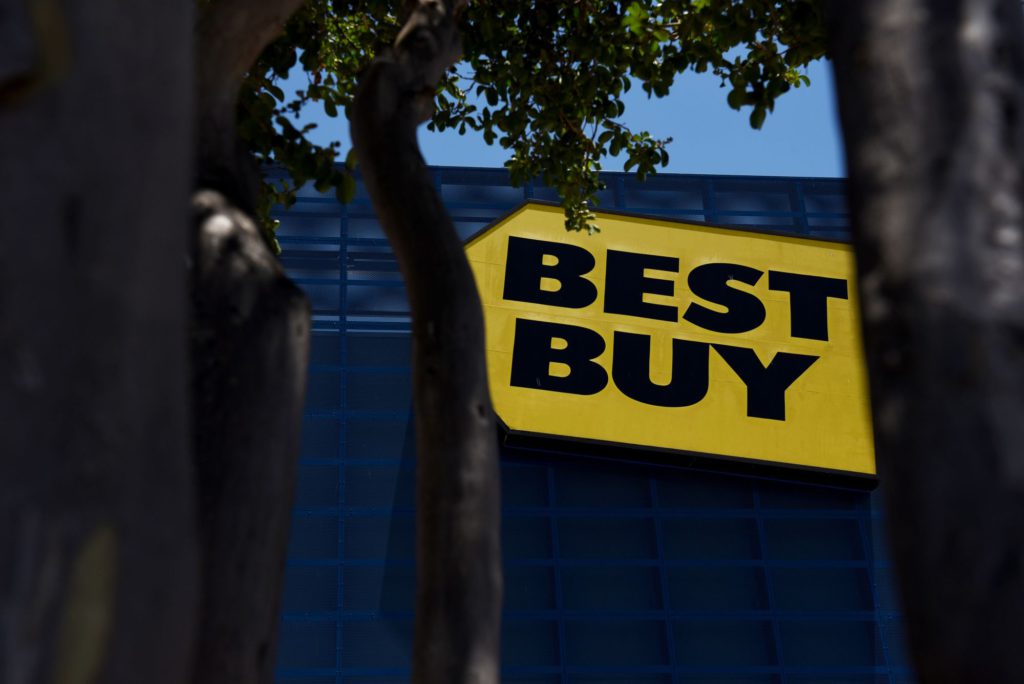
(Bloomberg) — Best Buy Co. predicted a decline in its operating margins amid pressure from rising costs and investments in a new membership program that the electronics retailer expects will drive “meaningful growth” over the long term.

Operating profit excluding some items will amount to only 5.4% of sales in the current fiscal year, down from 6% in the year just ended, the electronics retailer said in a statement Thursday as it reported earnings. The forecast trailed the 5.7% average of analyst estimates compiled by Bloomberg.

The outlook points to a challenging year for Best Buy as it contends with soaring inflation and the end of a demand surge for its gadgets and services that had been sparked by the coronavirus pandemic. By fiscal year 2025, however, the company sees strong revenue growth and operating margin expansion “well beyond” what it reported last year.

“We expect sales growth and earnings to look different” this year, Chief Financial Officer Matt Bilunas said in the statement. He said the two biggest variables in this year’s forecast “are the short-term industry decline as we lap high growth and government stimulus, and the investment in our new membership program.”

The shares rose 7.9% in early New York trading at 8:08 a.m. In the 12 months through Wednesday, Best Buy shares had fallen 1.6% compared with a 7.5% gain in an S&P 500 index of consumer discretionary companies. Best Buy’s previous earnings report, in November 2021, had prompted the biggest rout in the shares since the start of the pandemic.

“We remain hold-rated but the stock seems fairly washed out at current levels, likely reducing incremental downside potential,” Truist Securities analyst Scot Ciccarelli wrote in a note to clients Thursday.

Bilunas, Chief Executive Officer Corie Barry and other company leaders are scheduled to present more detail on the long-term goals in presentations this morning.

Adjusted earnings fell to $2.73 a share in the fourth quarter, Best Buy said. Analysts had been expecting $2.72. Sales slipped 3.4% to $16.4 billion. Analysts had predicted $16.6 billion.

During the current fiscal year, which ends in early 2023, adjusted earnings will be no more than $9.15 a share, the company said. That compared with the $9.36 average of analyst estimates.

Best Buy also unveiled a long-term outlook, predicting an operating margin of 6.3% to 6.8% in fiscal year 2025 and revenue of as much as $56.5 billion. Totaltech, the company’s membership program, will help drive “meaningful growth,” as will Best Buy Health, an initiative to provide technologies to assist in the care of older people, Bilunas said.

(Updates with analyst comment in sixth paragraph.)

More stories like this are available on bloomberg.com

©2022 Bloomberg L.P.
Russia’s ‘Uninvestable’ Stocks Cut by MSCI, FTSE Russell

(Bloomberg) — MSCI Inc. and FTSE Russell are cutting Russian equities from widely-tracked indexes, while the London Stock Exchange suspends dozens of Russian depositary receipts from trading, isolating the stocks from a large segment of the investment-fund industry.

An overwhelming majority of market participants see the Russian market as “uninvestable” and its securities will be removed from emerging markets indexes effective March 9, MSCI said. FTSE Russell will delete Russia constituents listed on the Moscow Exchange at a zero value on March 7. Meanwhile, trading in 28 depositary receipts for Russian companies have been suspended on the LSE, Chief Executive Officer David Schwimmer said in an interview with Bloomberg Television on Thursday.

READ: Russia Exposure Fuels a $100 Billion Exodus From European Stocks

Russia’s links with global markets are getting cut with its foreign reserves frozen after it invaded Ukraine, while Moscow’s capital controls and a ban on foreigners selling securities locally have shut the exit for international investors. The latest blow comes as buyers shun Russian oil exports, while its bonds get cut to junk status and companies including Shell Plc pull out.

“We can’t sell our Russian stocks,” said Russel Chesler, head of investments and capital markets at fund manager VanEck Associates Corp. in Sydney.  “Even last week our brokers wouldn’t sell them when the markets were open, and this will just deteriorate things further for investors.” 

Read: Funds Look to Exit Russia Due to Index Removal But Are Trapped

According to Bloomberg Intelligence analysts, exchange-traded funds with global allocations will be the most affected MSCI’s and FTSE’s decisions. But the impact should be “small,” since Russia makes up less than 5% of the funds’ global basket, said Rebecca Sin and Eric Balchunas.

Norway’s $1.3 trillion sovereign wealth fund, which has seen the value of its holdings in Russia slump about 91% so far this year, is another asset manager grappling with the question of exiting Russian assets. The fund’s loss on its Russian equity stakes could amount to just under $2.8 billion under current estimates, with the stake now considered to be worth about 2.5 billion kroner ($280 million), down from 27 billion kroner at the end of last year. 

Vincent Mortier, chief investment officer for Paris-based Amundi SA, told clients on Thursday that it was becoming difficult to reduce its exposure to Russia at the moment. Schroders Plc Chief Executive Officer Peter Harrison said earlier that it was very hard to think of Russia as anything other than uninvestable. 

GDRs Slump

The London Stock Exchange’s move to suspend Russian depositary receipts is “in connection with events in Ukraine, in light of market conditions, and in order to maintain orderly markets,” LSE said in a statement. It also noted that less than 1% of its total income comes from operations in Russia and Ukraine.

The Dow Jones Russia GDR Index, which tracks companies like Gazprom PJSC and Sberbank of Russia PJSC, has plunged about 96% in the past two weeks.

Bloomberg is also seeking feedback on the investability of Russian index members in global equity gauges by March 3. Bloomberg LP, the parent of Bloomberg News, is the parent company of Bloomberg Index Services Ltd., which administers these indexes.

Meanwhile, Stoxx Ltd. said it will delete Russian companies from its indexes following the sanctions from the European Union, the U.K. and the U.S. More than 60 constituents will be deleted from its index universe at the close on March 18. Also, S&P Dow Jones Indices “is conducting a consultation with market participants on the potential removal of stocks listed and/or domiciled in Russia,” including those that trade on exchanges abroad. 

While Moscow has kept its stock market closed since Monday, foreign-listed shares in Russian companies plunged this week. To support its market, the country announced Tuesday that it will deploy up to $10 billion from its sovereign wealth fund to buy up equities.

“Russian assets have become toxic, for a lack of better expression,” said Marek Drimal, a strategist covering Europe, the Middle East and Africa at Societe Generale SA in London. “Onshore markets are barricaded and basically uninvestable, while offshore markets have been hammered. The speed of events as they are happening is just mind-boggling.”

Read: Russia Cut to Junk by Moody’s, Fitch as Sanctions Mount (1)

Bond Funds

The expulsion of Russian bonds from indexes could be next, with billions of dollars left in limbo less than one week after the invasion. 

FTSE Russell said it’s evaluating the impact of sanctions on the nation’s bonds. JPMorgan Chase & Co. is reviewing the inclusion of some debt from Russia, Belarus and Ukraine in its indexes while Intercontinental Exchange Inc. will remove those issued by sanctioned Russian entities.

“Some funds may end up marking their book value for Russian assets as zero,” said Hiroshi Matsumoto, senior client portfolio manager at Pictet Asset Management (Japan) Ltd. Once investors try to sell Russian bonds they will “probably have close to no value and it’ll probably be the same for stocks.”

Russia has a weighting of 1.85% in the Bloomberg Emerging-Market Local Currency Index, and makes up 2.22% in JPMorgan’s Emerging-Market Bond Index Plus. 

India and China

Russia’s removal from key equity gauges means other emerging markets may benefit from fresh inflows.

India and China could be beneficiaries, according to Vishnu Varathan, head of economics and strategy Mizuho Bank Ltd. in Singapore. Alan Richardson, a portfolio manager at Samsung Asset Management, said capital flows may pivot to Indonesia and Malaysia, which share similarities to Russia in terms of their commodity-based economies.

Russia had a 1.5% weighting in the MSCI Emerging Markets Index, and 1.3% for FTSE Russell’s comparable gauge, according to data compiled by Bloomberg. 

“The removal of Russia from key indexes will be a positive thing for investors given the uncertainty surrounding the economy and potential settlement risks,” said Naoki Fujiwara, chief fund manager at Shinkin Asset Management Co.

(Updates with BI’s comment in fifth paragraph)

More stories like this are available on bloomberg.com

©2022 Bloomberg L.P.
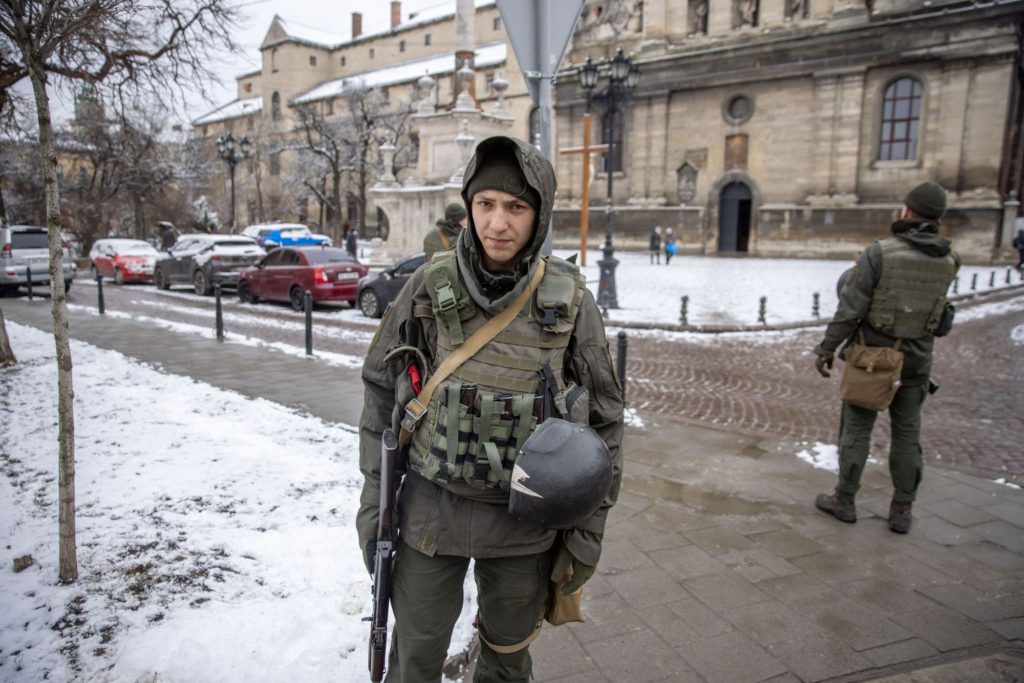
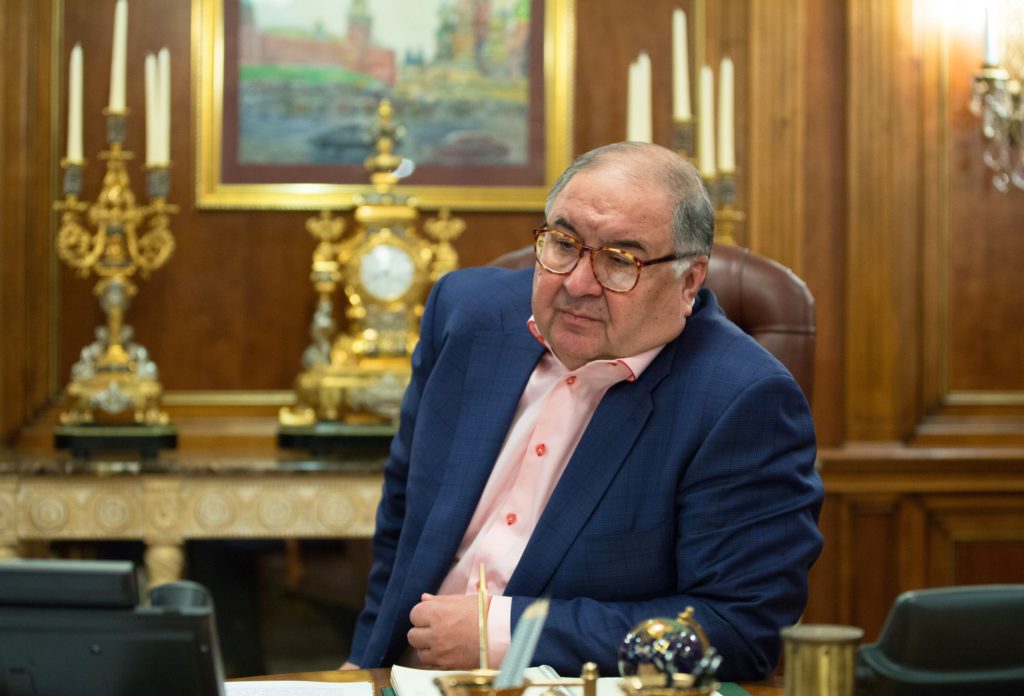
Billionaire Usmanov’s Superyacht Said to Be Seized

(Bloomberg) — Russian billionaire Alisher Usmanov’s superyacht, the world’s largest by volume, was seized by German authorities in Hamburg, according to Forbes.

The German government has frozen the Dilbar, Usmanov’s 512-foot yacht, the publication said, citing three unidentified industry sources. Built in 2016 and named after his mother, the boat is estimated to be worth $594 million, according to the Bloomberg Billionaires Index.

The European Union adopted sanctions on six of Russia’s wealthiest individuals on Monday, including Usmanov, who called the decision “unfair” and “defamatory.” The Dilbar had been undergoing refitting in the northern German city.

Superyachts and other opulent displays of wealth among Russia’s elite have drawn intense scrutiny since the country’s invasion of Ukraine, even making it into U.S. President Joe Biden’s State of the Union address.

Rosneft Chairman and Chief Executive Officer Igor Sechin’s superyacht was impounded by French customs officials on the Cote D’Azur.

“We are joining with our European allies to find and seize your yachts, your luxury apartments, your private jets,” Biden said during Tuesday’s address.

Five other individuals were named in the latest EU sanctions: Mikhail Fridman, Petr Aven, Alexey Mordashov, Gennady Timchenko and Alexander Ponomarenko. Mordashov owns two superyachts: the Nord, which is in the Seychelles, and Lady M, anchored in Imperia, Italy. 

Some Russian tycoons also still have superyachts docked in Europe. Roman Abramovich’s Solaris is in Barcelona; Iskandar Makhmudov’s Predator is in Genoa, Italy; and Vagit Alekperov’s Galactic Super Nova is in Montenegro, among others, according to data tracked by Bloomberg. 

Usmanov, 68, owns a major stake in USM, a Russian investment group with holdings in Metalloinvest, one of the world’s largest iron ore producers, and telecommunications company MegaFon. He’s the sixth-richest Russian with a fortune of $19.5 billion, according to Bloomberg’s wealth index, though that figure includes the Dilbar. 

Russian President Vladimir Putin has also been sanctioned by U.S., EU and U.K. authorities. He has been linked by news organizations including Business Insider to the superyacht Graceful. 

That boat left Hamburg Feb. 7, about two weeks before Russia invaded Ukraine. It’s now in Kaliningrad, Russia. 


(Updates with Sechin yacht in fifth paragraph)

More stories like this are available on bloomberg.com

©2022 Bloomberg L.P.
Sequoia, Qatari Wealth Fund Back Turkish Tech’s Latest Unicorn

(Bloomberg) — Qatar’s sovereign wealth fund led a funding round for Insider PTE, valuing the Turkish artificial intelligence startup at $1.22 billion as global funds channel more cash into Turkey’s up-and-coming technology firms.

Insider Pte Ltd got $121 million in financing from Qatar Investment Authority in the Series D round, as well as from Sequoia Capital Operations LLC, Riverwood Capital LLC, Wamda Capital, Endeavor Catalyst Inc., Esas Holding AS and 212 Capital Partners, according to an emailed statement from the company.

Insider’s valuation, at triple the level two years ago, underlines the growing foreign interest in Turkish startups, mostly in technology. Those companies attracted $1.55 billion last year, a 10-fold increase from a year ago and 50 times higher than 2016. Previous Turkish unicorns, a term that describes startups worth $1 billion or more, were mostly in retail or gaming.

Insider’s platform uses artificial intelligence to predict future consumption behavior. It counts the likes of Toyota Motor Corp. and Vodafone Group Plc among its clients. 

The new funding will be used to expand into the U.S. after recent growth in Asia, Europe and Latin America, according to Hande Cilingir, its chief executive and co-founder.

More stories like this are available on bloomberg.com

©2022 Bloomberg L.P.
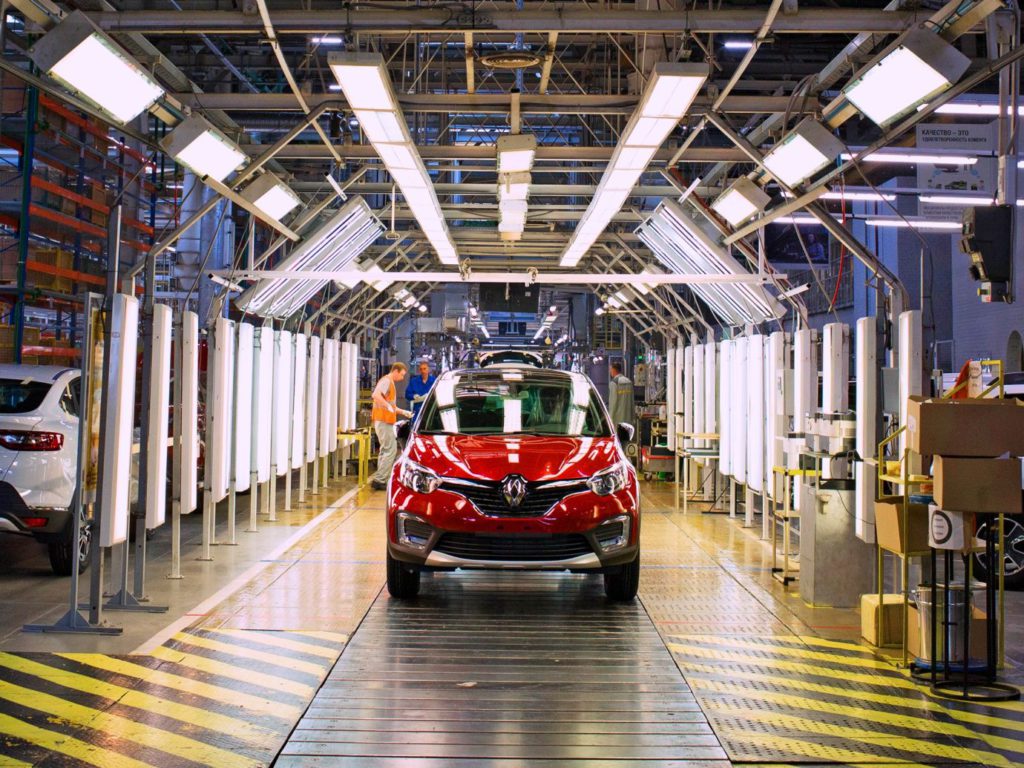
Renault Has No Good Options as Other Automakers Turn on Russia

(Bloomberg) —

Elon Musk told attendees of a Kremlin-sponsored event just nine months ago that Tesla would look into building a factory in Russia. In 2019, President Vladimir Putin took part in opening a Mercedes-Benz factory near Moscow. A year earlier, Renault took majority control of Lada maker Avtovaz after pouring more than $2 billion into the former state-owned company.

Following the invasion of Ukraine, international carmakers are winding down Russian operations in droves, and it’s difficult to imagine they’ll invest again anytime soon.

The toll the war is inflicting, including on civilians, has spurred wide-ranging sanctions, contributed to a record plunge for the ruble and rendered doing business in Russia all but untenable.

Volkswagen announced this morning it will stop production at two factories until further notice. The Mercedes plant Putin frequented also has paused output. Renault, the European auto company most exposed to Russia, has idled one facility due to supply issues while resuming work at one of the world’s largest car-making complexes, run by Avtovaz.

Renault has a lot at stake and no good options. Russia accounted for about €5 billion ($5.5 billion) of its revenue last year, and roughly €315 million of operating profit could be at risk, Bloomberg Intelligence estimates. Renault shares have plummeted since last week, trading at their lowest since November 2020.

Daimler Truck has halted all business activities in Russia and said it will review ties with its local venture partner. Untangling from such ventures at a time when virtually no one wants Russian assets will come at a steep price. BP, for instance, will take a hit of as much as $25 billion dumping its shares in oil giant Rosneft.

The war will have ripple effects elsewhere in Europe, just as carmakers were already struggling to bounce back from the pandemic and a crippling shortage of semiconductors.

Raw materials sourced from Russia include nickel for electric-vehicle batteries and palladium for catalytic converters. Ukraine is a key supplier of neon gas used in chipmaking, as well as cable harnesses. German parts maker Leoni, which has two cable-harness plants in Ukraine employing some 7,000 workers, is trying to mitigate disruptions by adding capacity at other sites. But automakers have hardly any harnesses in stock and can’t easily source them elsewhere, according to the VDA, Germany’s car lobby.

“The secondary impacts from parts production in Ukraine and potential disruptions of the supply chain could shape up to hit production in Europe notably,” Deutsche Bank analysts Hanswolf Hohn and Jenny Voigtlaender said in a note published this morning. “Our channel checks suggest VW might be hit the most by supply chain issues.”

VW — which just had some 4,000 of its cars sink to the bottom of the Atlantic after a burn-out cargo ship went under in rough seas — said Tuesday it will idle some production lines at the world’s largest auto plant in Wolfsburg, Germany, next week before a broader shutdown the following week. Other German sites affected include Emden and Hanover, where VW makes commercial vehicles, as well as factories making Porsches and Audis in Germany and Hungary, respectively. The manufacturer had already warned last week that it would stop making EVs at its German plants in Zwickau and Dresden because of the cable-parts shortage.

Now, to Russia itself. Car sales may initially spike in the country as consumers look to store value in autos as the ruble depreciates and inflation soars, Fitch analysts said this week. They may be on to something — sales of jewelry and watches have risen the last few days as the nation’s wealthy look to preserve the value of their savings.

Still, Fitch is expecting a 10% contraction in auto sales this year, rather than the 2.6% growth it was anticipating prior to the war. There’s risk of a much bigger drop if the conflict is prolonged.

German auto analyst Ferdinand Dudenhoeffer projects a steeper drop of at least 34% under his optimistic scenario, in which China steps in with loans and technology assistance. Sales will be cut by more than half if China stays neutral.

Foreign manufacturers pulling out of the country could set Russia back to USSR standards. Only 5% of new vehicles sold in the country are made using Russian technology, with the remainder representing design and engineering from U.S., European or Asian manufacturers, Dudenhoeffer said in a note this week. 

“No matter how this year shapes up, Russia faces a very slow and long recovery process in the car world,” he said.

(Updates to add coding to Leoni.)

More stories like this are available on bloomberg.com

©2022 Bloomberg L.P.
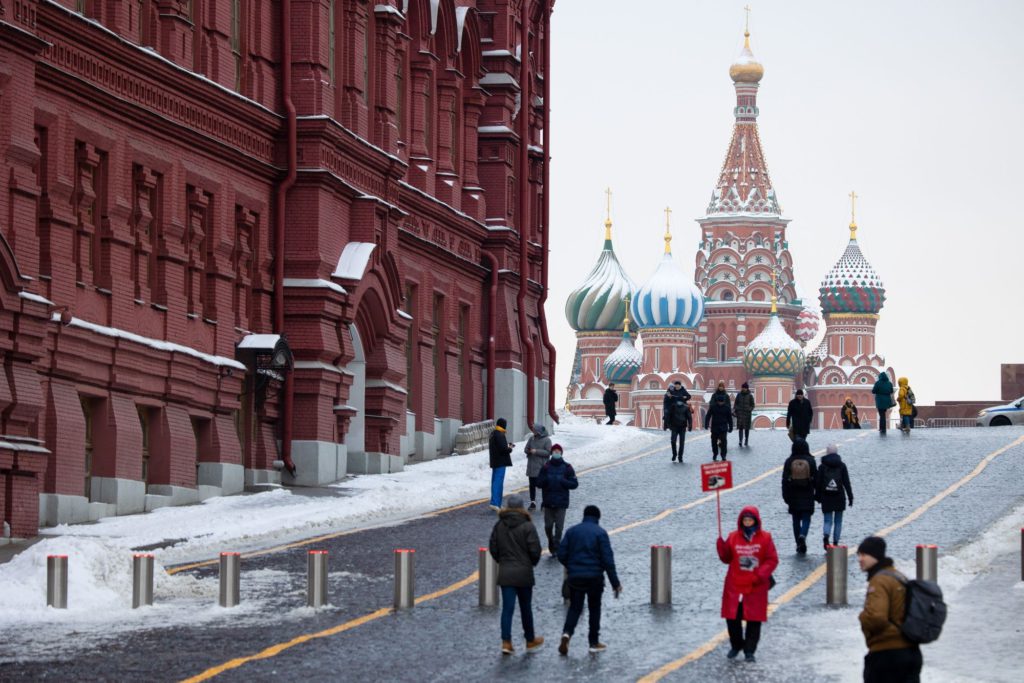
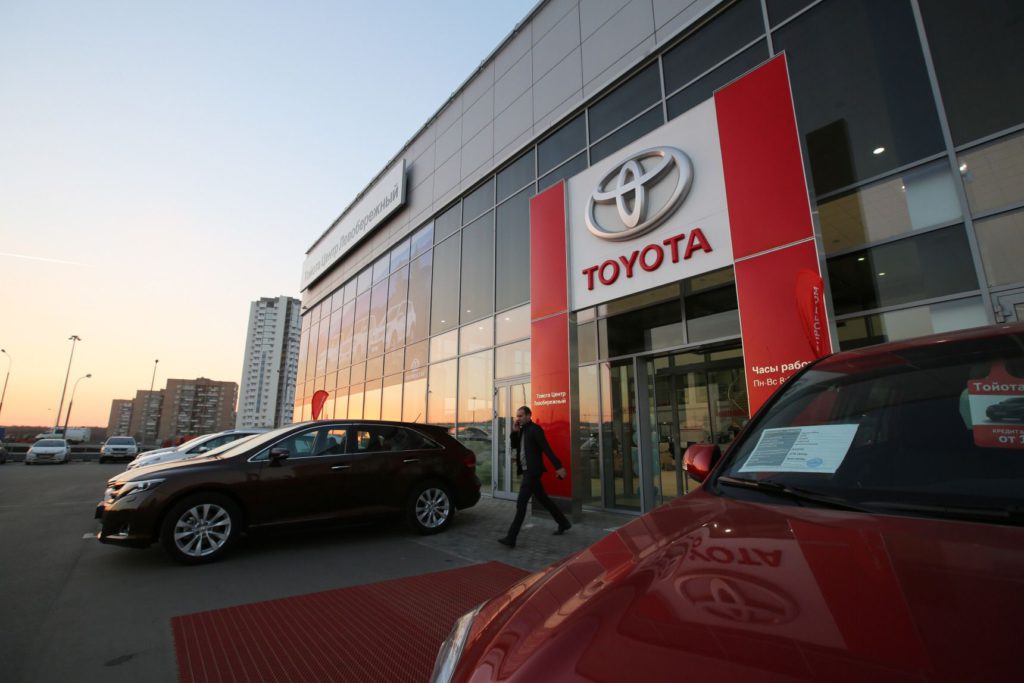
Toyota and Honda Join Growing Corporate Retreat From Russia

(Bloomberg) — Japan’s biggest carmakers joined the widening global corporate pullback from Russia, following the likes of Ford Motor Co. and Exxon Mobil Corp., which have chosen not to do business there after invasion of Ukraine.

Toyota Motor Corp. said it is halting production at its plant in St. Petersburg from Friday, and will halt vehicle shipments to Russia. Nissan Motor Co., Honda Motor Co. and Subaru Corp. will stop exports of cars and motorcycles to the nation, while Mazda Motor Corp. is suspending shipments of parts to a plant in Russia, the Nikkei reported. 

While Japan’s top automakers are citing logistical challenges, their actions add more weight to what is shaping up as an international boycott of the world’s No. 11 economy, though companies in other key sectors, including energy and tech, have largely remained tight-lipped about their stances on future business activity there.

“Toyota is watching the ongoing developments in Ukraine with great concern for the safety of people of Ukraine and hopes for a safe return to peace as soon as possible,” the company said in a statement. “We are also monitoring global developments and will make necessary decisions as required.”

Companies around the world are withdrawing from the Russian market due to concerns over human rights, logistics and the impact of international sanctions. Apple Inc. and Nike Inc. earlier announced plans to halt sales in Russia, and United Airlines Holdings Inc.’s daily flights to India will no longer pass over the country. 

Read more: Foreign Companies From Shell to Daimler Abandon Russia

Japanese Prime Minister Fumio Kishida has embraced sanctions, following the lead of Group of Seven counterparts amid concern that failure to halt the invasion could embolden China to attack neighboring Taiwan, though officials in Taipei downplay that possibility. Japan, which relies heavily on the U.S. for security, also has territorial disputes with China and Russia. 

Kishida’s government is backing the move to ban some Russian banks from the SWIFT money messaging system and freezing the assets of the country’s central bank, as well as those belonging to officials including President Vladimir Putin. 

The rapid response prompted a letter of praise to Kishida from President Joe Biden this week, Ambassador Rahm Emanuel told reporters Wednesday. 

“As the president said in his personal letter to the prime minister, he greatly appreciates Prime Minister Kishida’s bold and decisive action,” Emanuel said. “Because of his actions, it is no longer just a European confrontation but is a global confrontation of democracies against autocracies.”

With fuel prices already hurting businesses and households in Japan, the nation’s firms haven’t immediately followed their Western counterparts in exiting joint oil and gas projects with Russia. 

Kishida told parliament that while the government was prepared to offer advice on the matter, firms involved with the Sakhalin-II oil and gas project in eastern Russia must make their own policy decisions. Gazprom PJSC, a majority state-owned corporation, has a 50% stake in that project.   

Toyota, which makes the RAV4 and Camry models at its Russian factory for the local market, said production and shipment halts will continue until further notice, citing supply-chain disruptions. 

Nissan cited “logistics challenges related to the conflict in Ukraine” for the suspension of exports of finished vehicles to Russia. 

“We expect further challenges to lead to local production stoppages and disruptions,” Azusa Momose, a spokeswoman for Nissan, said in a statement. “Nissan is carefully monitoring the ongoing situation and will take appropriate actions as the situation warrants.”

Subaru, which exported about 5,000 cars to Russia in 2021, is halting exports due to distribution challenges, a spokesman said in a statement.

Honda pointed to challenges around distribution and finances, saying it will resume shipments once the situation returns to normal. Honda doesn’t have a factory in Russia, but it exports about 1,500 SUVs annually to the country from plants in the U.S., according to NHK.

Sony Corp. shut its sales offices in Ukraine and halted sales of electronics, a company spokeswoman said, and it will continue to operate via online channels and a third party in Russia. The company will take appropriate action as the situation develops, she added.

(Updates with Nissan, Subaru in second paragraph.)

More stories like this are available on bloomberg.com

©2022 Bloomberg L.P.
Oil Soars to Highest Since 2008 as Russia Invasion Upends Market

(Bloomberg) — Oil soared to the highest level since 2008 as buyers continued to shun Russian crude following its invasion of Ukraine, while OPEC+ is doing its best to ignore the war started by one of its key members. The invasion has sparked supply concerns across commodity markets from energy to grains, prompting consumers including …

Oil Soars to Highest Since 2008 as Russia Invasion Upends Market Read More »

Close Bitnami banner
Bitnami