
Bloomberg

Russia Hits Cities as Kyiv, Moscow to Hold Talks: Ukraine Update

(Bloomberg) — The EU Council sent a request to the European Commission to consider Ukraine’s membership. Russian forces pressed ahead with their offensive, firing missiles at Kyiv overnight and stepping up their campaign to take cities in the coastal south.

With more than a million refugees fleeing to neighboring countries, according to the United Nations, a second round of talks between Russia and Ukraine were due to take place on Thursday. U.S. Secretary of State Antony Blinken is meanwhile traveling to NATO member states neighboring Ukraine.

Russia continued to suffer economic fallout from its invasion, with its rating slashed to junk on the back of a wave of sanctions by the U.S., the European Union and others. The global economy was further roiled with crude oil extending gains.

Key Developments

  • Biden’s Tough Sanctions Create Worry That Putin Lacks an Exit
  • NATO Faces Reality of Emboldened Russia on Its Doorstep
  • Resignation Sets In as Russians Face Their New Economic Reality
  • Overwhelming UN Vote Makes China’s Ukraine Balancing Act Harder
  • Russian Invasion Pushes Europe Into New Era of Big Spending
  • Russian Fleet Approach Has Ukraine’s Port City of Odesa Bracing

All times CET:

EU Expects Membership Requests From Moldova, Georgia (11:13 a.m.)

Georgia and Moldova are expected to send membership requests to the EU imminently, according to an EU official.

The EU is already in the process of moving forward on an application from Ukraine, a topic the 27 leaders will discuss next week at an informal summit in Paris, said the official, who asked not to be identified because the talks are private. Moldova may submit the request Thursday, the official said.

“Ukraine has set a process in motion, and this will be discussed with member states, but right now the focus is on ending the war,” European Commission President Ursula von der Leyen said in Bucharest. 

EU Figures Float Special Budget Leeway for Defense Spending (11:01 a.m.)

European Commissioner for Economy Paolo Gentiloni and Hungarian Prime Minister Viktor Orban suggested giving special consideration to defense spending under European Union rules that limit public finance deficits.

Gentiloni told the German Handelsblatt newspaper he was “open to thinking about also giving special consideration in the debt rules to investments in Europe’s autonomy. This can also include certain defense expenditures.” He said a specific proposal hadn’t yet been agreed.

Orban said Russia’s war on Ukraine made clear that “much more” needs to be spent on the continent’s militaries and that shouldn’t be included in the current deficit ceiling of 3% of gross domestic product. The EU has already agreed to finance the supply of 450 million euros in lethal weapons to Ukraine, as well as 50 million euros of non-lethal aid.

Ukraine Calls for Russia’s Suspension From WTO (10:49 a.m.)

Ukraine urged all members of the World Trade Organization to suspend Russia from participating in the Geneva-based trade body in response to its “unprovoked and unjustified” attack, according to a letter seen by Bloomberg. 

Ukraine has imposed a “complete economic embargo” on Russia and will no longer apply the WTO’s agreements with regard to Russia, it said.

Zelenskiy Addresses Nation (10:15 a.m.)

Paralympic Committee Boots Russia, Belarus (9:42 a.m.)

The International Paralympic Committee won’t let Russia and Belarus participate in the Beijing Paralympics after athletes from other countries threatened a boycott that could have halted the games.

The decision was an embarrassing about-face for the IPC, which had said less than a day earlier that it would allow Russians and Belarusians to compete at events as neutral athletes.


Gas Prices Surge, Oil Reaches Highest Since 2008 (9:42 a.m.)

European natural gas jumped to a fresh record as the market continues to react to sanctions aimed at Russia. Dutch front-month futures gained as much as 20% to 198 euros a megawatt-hour. The U.K. equivalent gained 17%.

While sanctions aren’t specifically targeting natural resources, traders and shippers are shying away from dealing with Russian suppliers. Oil soared to the highest level since 2008, with WTI rising as much as 5.4% to above $116 a barrel.

Overwhelming UN Vote Puts Pressure on China (9:27 a.m.)

The United Nations passed a resolution condemning Russia’s invasion of Ukraine by an overwhelming vote, casting a spotlight on President Xi Jinping’s reluctance to take a stance against Moscow, after China abstained.

Russia’s Ekho Moskvy Radio Station to Close (9:01 a.m.)

The board of Ekho Moskvy, Russia’s most prominent liberal radio broadcaster, voted to liquidate the station and its website, Editor-in-Chief Alexei Venediktov said.

Earlier this week, the Russian Prosecutor General’s office ordered the broadcaster off the air in a move criticized by the Committee to Protect Journalists. 

Ekho Moskvy was founded in the waning days of the Soviet Union and managed to retain its editorial independence for over three decades even as the state brought most broadcast media under its control. 

Ukraine to Hike Interest Rates in Face of War (8:50 a.m.)

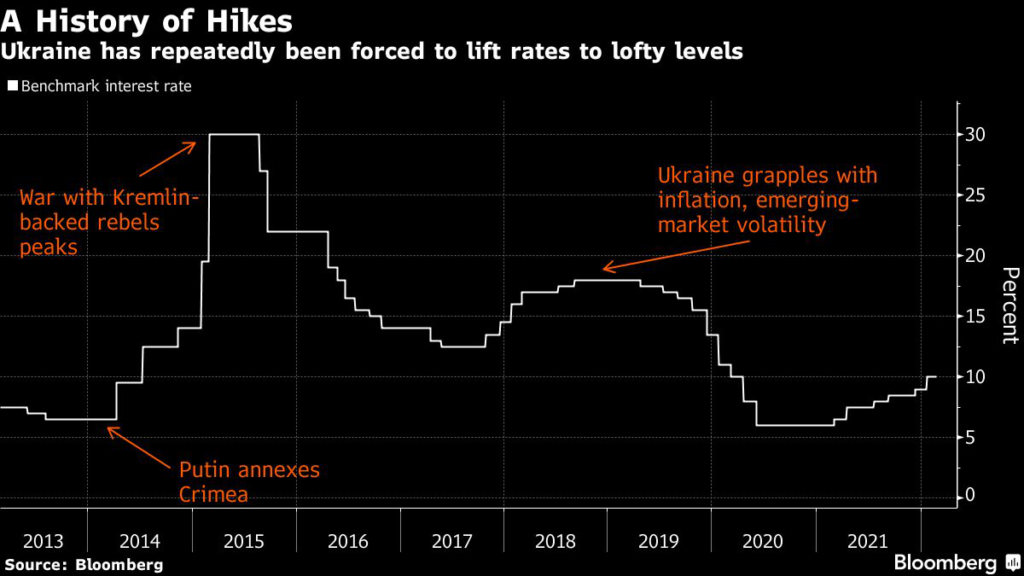
As Russian troops bear down on Kyiv, Ukraine’s central bank is poised hike its key interest rate on Thursday in a bid to stabilize the economy. But the fog of war leaves economists struggling to predict how much it will tighten monetary policy. The base rate is currently 10%.

EU to Offer Residence, Job Rights to Ukrainians (8:42 a.m.)

Ukrainians fleeing to the European Union will be granted full access to the bloc and receive residence permits as well as access to education and jobs as part of a plan expected to be implemented as soon as Thursday.

European member states will consider activating the so-called temporary protection directive that will allow Ukrainians to stay in the EU beyond 90 days, a move expected to be overwhelmingly adopted, according to a senior official at the European Commission.

Switzerland is also weighing offering temporary residence in the country to Ukrainians.

More Than 1 Million People Have Fled Ukraine: UNHCR (8:36 a.m.)

Russia’s invasion has forced 1,002,860 people to flee Ukraine to neighboring countries, the UN refugee agency said Thursday, in what is poised to become the biggest humanitarian crisis in Europe since World War II.

It said more than half a million people had fled to Poland, while 139,686 had gone to Hungary, 97,827 to Moldova and 72,200 to Slovakia. Romania had taken in 51,261 the UNHCR said, while 47,800 people had departed for Russia.

Russian-Backed Forces Threaten Strikes on Mariupol (8:03 a.m.)

A spokesman for Russian-backed separatists threatened strikes on Mariupol to demoralize the Ukrainian army and said an evacuation corridor for civilians wasn’t working, in comments broadcast on Rossiya 24. A Pentagon official said earlier that Russian forces appear to be preparing to assault the encircled port city.

Ukraine’s military headquarters said that Russia is sending four amphibious assault ships to land troops near Odesa’s seaport and seize the city.

National police in Kyiv said that there were explosions in the capital overnight, but that they were the result of Ukraine’s anti-missile systems hitting Russian targets.

More stories like this are available on bloomberg.com

©2022 Bloomberg L.P.
Tesla’s German Plant Is Poised to Get Nod to Start Production

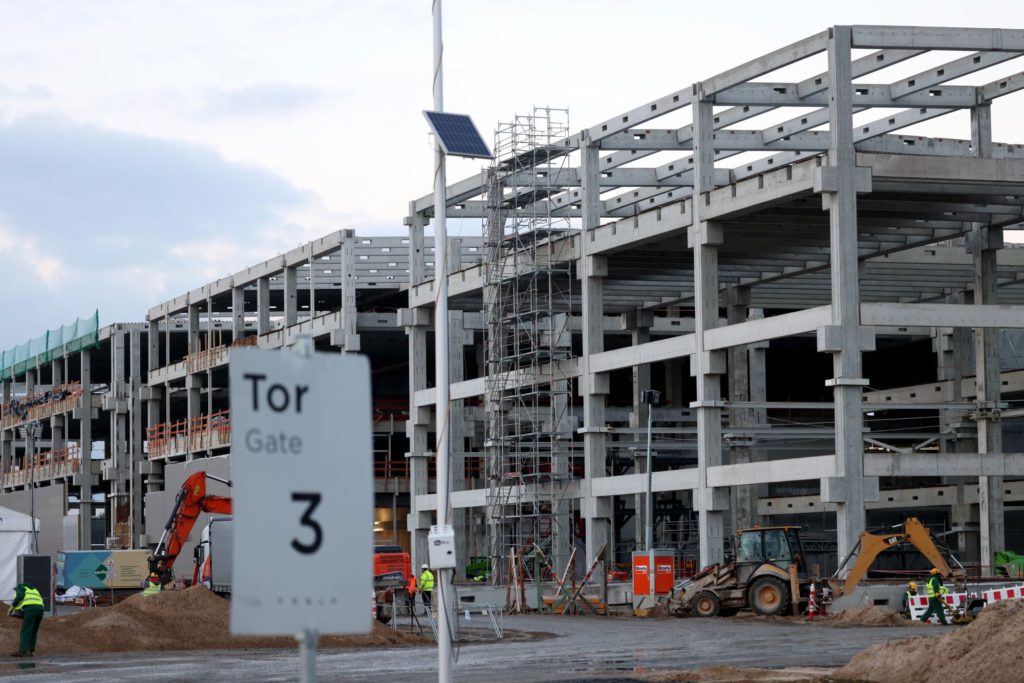
(Bloomberg) — Tesla Inc. is poised to get final approval for its factory near Berlin this week, bolstering the carmaker’s push to expand in Europe’s fast-growing electric-vehicle market.

Brandenburg state authorities said they’ll announce their decision Friday at a news conference in Potsdam, with officials including Premier Dietmar Woidke attending. The plant has gotten the green light and is expected to start ramping up production soon after clearing some final steps, Handelsblatt reported earlier Thursday, without citing the source of its information.

The long-awaited decision would be a boon to Chief Executive Officer Elon Musk, who plans to challenge the likes of Volkswagen AG, BMW AG and Mercedes-Benz AG on their home turf just as they broaden their own EV offerings. The facility in one of the world’s most competitive auto markets is designed to eventually make batteries and as many as 500,000 cars a year.

READ MORE: Tesla Water Usage Musk Snickered at Is No Laughing Matter

Tesla is expanding in Europe as sales of cars with a plug are taking off. The region invested $113 billion in electrified transport last year, an almost 50% jump over 2020, according to BloombergNEF, and its EV market is expected to remain much bigger and more competitive than the U.S. for years to come.

While the plant has been delayed by the pandemic, red tape and environmental opposition, German officials have repeatedly signaled they’re behind the project because it creates thousands of jobs in a region with little heavy industry. Musk has been on a charm offensive to promote the factory. He has tweeted in German, rubbed shoulders with local politicians and threw an Oktoberfest-style county fair at the construction site in October.

The U.S. carmaker still faces hurdles including a legal challenge over water usage that will go to court Friday. Tesla also will need to hire enough workers and deal with Germany’s powerful labor unions.

(Updates with details on decision-making process in second paragraph.)

More stories like this are available on bloomberg.com

©2022 Bloomberg L.P.
World’s Top Battery Maker Urges China to Secure Lithium

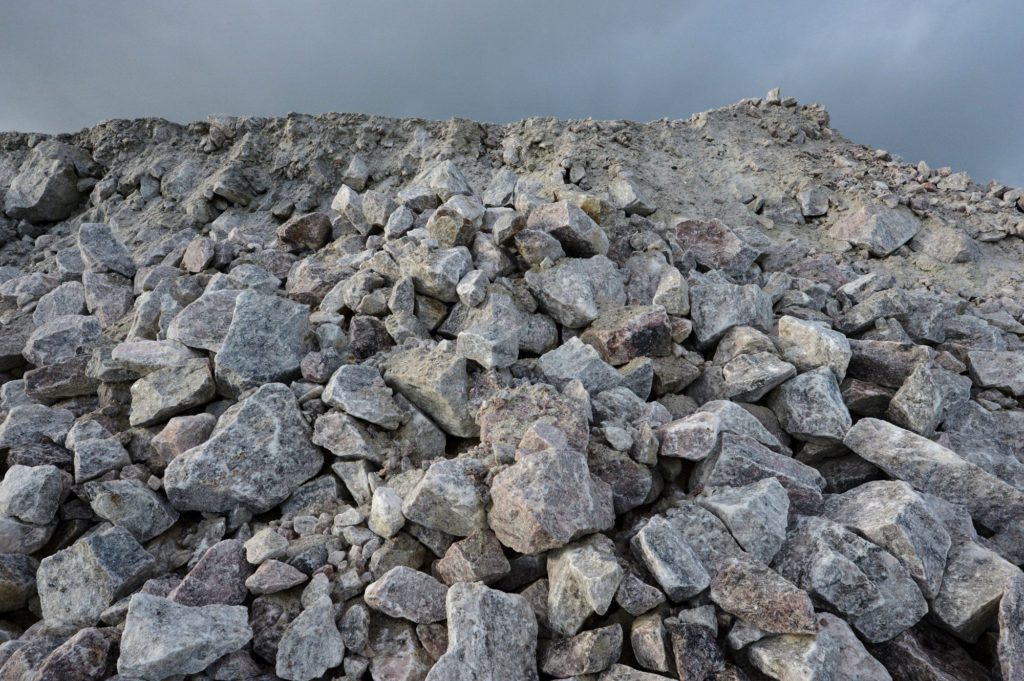
(Bloomberg) — The chairman of the world’s largest electric-car battery maker has urged the Chinese government to strengthen the lithium supply chain, given the risk of shortages of the key ingredient as demand accelerates with rising adoption of electric vehicles. 

Contemporary Amperex Technology Ltd. Chairman Zeng Yuqun submitted four proposals to China’s annual parliamentary session, including speeding up exploration and development of lithium resources, encouraging independent scientific and technological research, and improving the level of resource recycling, according to a company statement. 

Zeng is a representative of the Chinese People’s Political Consultative Conference, an advisory body of party delegates and people from the arts, business and legal worlds.

The price of lithium, a key material in batteries for EVs and consumer electronic devices, has surged this year after quadrupling in 2021. Lithium carbonate in China has set record highs, adding to a gain of more than 400% in 2021.

While it dominates the next-stage processes that refine lithium and other raw materials into chemicals used in EV batteries, China relies heavily on imports from countries including Australia, Chile and Democratic Republic of Congo as it lacks lithium mines. There has been an acceleration of exploration work to uncover more sources of the metal at home. 

To address supply-chain constraints, CATL is seeking to be more active upstream. It was the losing bidder for Canada’s Millennial Lithium Corp., and has signed agreements with several Chinese provincial governments such as Sichuan and Jiangxi to secure lithium supplies. 

To further guarantee the development of batteries and energy storage — two major business segments for CATL — Zeng put forward proposals on pricing strategies for energy storage and lithium-ion battery transportation logistics management.

(Updates with more information on China’s lithium supply in fifth paragraph.)

More stories like this are available on bloomberg.com

©2022 Bloomberg L.P.
Burberry, H&M Scale Back Russia Business After Invasion

(Bloomberg) — Fashion retailers Hennes & Mauritz AB, Burberry Group Plc and Boohoo Group Plc are curtailing operations in Russia after its invasion of Ukraine, with the Swedish clothing chain expressing concern about “tragic developments” there.

H&M is pausing all sales in Russia after shutting stores in Ukraine for safety reasons, it said late Wednesday. Burberry has halted shipments to the country until further notice due to “operational challenges,” according to a spokesman. The U.K. luxury brand has two stores and one concession in Russia, which have remained open for now.

Fashion companies are taking divergent approaches a week after the Russian invasion, with consumer brands like Nike Inc. and H&M swiftly curtailing business while others from Bulgari SpA to Richemont continue to sell their wares.

Read More: Rich Russians Spend Big on Luxury to Stop Savings Melting Away

The online fashion retailer Asos Plc also halted sales to Russia, saying it is “neither practical nor right” to continue doing business there. Asos had already stopped operations in Ukraine after the invasion made it impossible to serve customers there. 

The stock plunged 10% in London trading on Thursday. Others took a tumble as well, with H&M dropping as much as 3%.

Asos rival Boohoo, which sells to Russian shoppers via its website, suspended its operations in the country at the end of last week, according to a company spokesperson. Boohoo doesn’t have any sales channels in Ukraine. Its shares fell as much as 5.7%.

Beyond concerns about the conflict, doing business in Russia has become difficult for foreign companies. Sanctions are mounting, the ruble is plunging and a number of courier services have stopped deliveries to the country. 

The suspension of shipments isn’t expected to have a big financial impact on the retailers. 

Burberry’s exposure to Russia is less than 1% of sales, according to the company’s spokesman. Asos said revenue in Russia and Ukraine accounted for about 4% of sales in the last fiscal year. Boohoo’s Russian operations are a slice of 5% revenue coming from a group of countries that predominantly includes Australia, New Zealand and Canada.

(Updates with Boohoo share drop in sixth paragraph)

More stories like this are available on bloomberg.com

©2022 Bloomberg L.P.

How Long Will the Commodities Boom Last?

(Bloomberg) — Subscribe to Trillions on Apple PodcastsSubscribe to Trillions on Spotify

One of the best-performing categories since the beginning of last year has been commodities. Everything from oil to wheat to palladium to gold is up, due in large part to inflation worries. But how much room is there left to run? And how big a portion should commodities make up of a portfolio?

On this episode of Trillions we discuss these questions and more with Mike McGlone, commodities strategist for Bloomberg Intelligence. McGlone explains why higher prices in general tend to cure higher prices in commodities, the outlook for energy and the increasingly competitive relationship between gold and Bitcoin. 

More stories like this are available on bloomberg.com

©2022 Bloomberg L.P.
Telecom Italia Posts $9.6 Billion Loss on Budget Cleanup

(Bloomberg) — Telecom Italia SpA reported a record 8.6 billion euros ($9.6 billion) loss for the fourth quarter after booking impairment charges in preparation for a spinoff of its landline network. 

The charges included 4.1 billion euros impairment of domestic goodwill and 3.8 billion euros for deferred tax assets. Shares were down as much as 13.7% in Milan trading after initially failing to open.

The company also booked 548 million euros in non-recurring provisions partly linked to a now-renegotiated soccer broadcast deal with DAZN Group Ltd, according to a statement Wednesday. The results compared with a 6 billion-euro profit a year earlier, which also included special items. 

Telecom Italia reported organic fourth-quarter earnings before interest, taxes, depreciation and amortization of 1.38 billion euros, slightly below analysts estimates of 1.43 billion euros. For the same period the phone carrier posted revenue of 3.98 billion euros in line with a 4 billion-euro Bloomberg consensus. The board proposed no distribution of a dividend.

CEO Plan

Telecom Italia’s new Chief Executive Officer Pietro Labriola, a 54-year-old industry veteran, has drawn up a 2022-2024 plan to shake up the company by separating the landline network into a new unit called NetCo focused on wholesale services, with the goal of gaining a solid revenue stream from regulated tariffs. The plan also sees all commercial services spun off into a separate unit called ServCo. 

Labriola is trying to fend off KKR & Co.’s 10.8 billion-euro takeover bid, which remains pending. Bloomberg News reported on Tuesday that Telecom Italia is seeking to get KKR to scrap its bid for the company by involving the U.S. private equity giant in the plan to spin off its landline network. An advisers’ assessment of the KKR bid will be finalized shortly and a board decision will follow.

“Telecom Italia’s weak outlook reduces the odds of KKR improving its takeover offer significantly,” Erhan Gurses, an analyst for Bloomberg Intelligence wrote in a note on Thursday.

Labriola has said he wants to build a single national phone network in Italy and avoid billions of euros in duplicate investments through the merger with smaller, state-backed Open Fiber SpA. State-backed lender Cassa Depositi e Prestiti SpA, which owns about 10% of Telecom Italia, is also Open Fiber’s largest shareholder.  

“Telecom Italia is committed to generate more value than the KKR offer, which also includes some elements of uncertainty” Labriola said, adding that the bid price of about 50 euro cents per share implies an higher estimate of the company’s value. Still KKR is an important partner for Telecom Italia’s fiber unit FiberCop, the CEO said. 

Debt Mountain

Telecom Italia shares have declined 21% since January and the company last year issued three profit warnings under Luigi Gubitosi, who resigned as CEO in November. The carrier is suffering from stiff competition in its domestic market where the 2018 entrance of France’s Iliad SA sparked a price war. 

The company also has a gross debt pile of about 29 billion euros and is planning to sell some assets such as its stake in wireless tower unit Inwit SpA to raise cash. A consortium of institutional investors led by Ardian has submitted a binding offer to purchase the indirect stake Telecom Italia holds in Inwit. 

The sale should be completed by June, Labriola said Thursday in a conference call with reporters, adding that the Ardian-led group offered 10.75 euro per share.

(Updates with shares, CEO comment)

More stories like this are available on bloomberg.com

©2022 Bloomberg L.P.

WeDoctor to Cut Workforce After Delay in Going Public, Sources Say

(Bloomberg) — WeDoctor, one of China’s leading online health-care platforms, is laying off a substantial chunk of its workforce after plans for an initial public offering were disrupted, according to people familiar with the matter.

The Tencent Holdings Ltd.-backed startup has already trimmed back to about 3,000 employees from about 4,000 last year, said the people, asking not to be identified because the details are private. WeDoctor will likely cut more jobs to a total of mid- to low- 2,000s, they said. It will also reduce base salaries and shift compensation for some people to performance-related bonuses, they said.

WeDoctor filed for a IPO in Hong Kong last year, but Beijing’s sweeping crackdown on the country’s private sector has disrupted many such offerings. The overhaul is aimed at repositioning the company as it explores going public via a potential merger with a special purpose acquisition company, instead of a traditional IPO, the people said. Startups face tighter listing rules, particularly if they collect sensitive data like the medical information WeDoctor handles.

In an e-mailed statement, the company said that it is optimizing its business lines and will adjust staff and salaries accordingly. The company is improving its compensation system to provide better incentives for employees.

WeDoctor had raised about $400 million in a pre-IPO round from investors including Sequoia Capital China and Millennium Management LLC at the end of 2020, Bloomberg News has reported, and had begun talking with investment bankers about the planned IPO. The company rehired Jeff Chen as chief strategy officer to look after capital markets and the listing process.

WeDoctor is part of a flock of technology companies aiming to transform China’s health-care system with advanced technology. The medical platform spans insurance policies, medical supplies, online appointment-booking and clinics. The national health-care operator, which covers more than 95% of the population, is working with the firm to provide insurance-covered health care.

More stories like this are available on bloomberg.com

©2022 Bloomberg L.P.
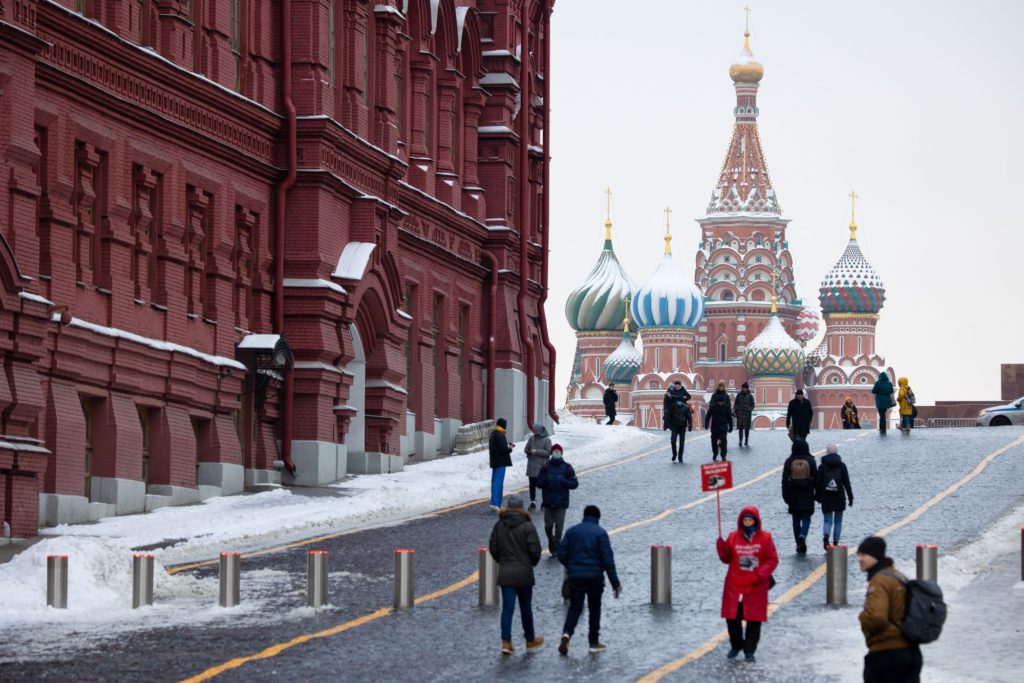
Russia’s ‘Uninvestable’ Stocks Cut by MSCI, FTSE Russell Indexes

(Bloomberg) — MSCI Inc. and FTSE Russell are cutting Russian equities from widely-tracked indexes, isolating the stocks from a large segment of the investment-fund industry.

An overwhelming majority of market participants see the Russian market as “uninvestable” and its securities will be removed from emerging markets indexes effective March 9, MSCI said. FTSE Russell will delete Russia constituents listed on the Moscow Exchange at a zero value on March 7. 

Russia’s links with global markets are getting cut with its foreign reserves frozen after it invaded Ukraine, while Moscow’s capital controls and a ban on foreigners selling securities locally have shut the exit for international investors. The latest blow comes as buyers shun Russian oil exports, while its bonds get cut to junk status and companies including Shell Plc pull out.

“We can’t sell our Russian stocks,” said Russel Chesler, head of investments and capital markets at fund manager VanEck Associates Corp. in Sydney.  “Even last week our brokers wouldn’t sell them when the markets were open, and this will just deteriorate things further for investors.” 

Read: Funds Look to Exit Russia Due to Index Removal But Are Trapped

Bloomberg is also seeking feedback on the investability of Russian index members in global equity gauges by March 3. Bloomberg LP, the parent of Bloomberg News, is the parent company of Bloomberg Index Services Ltd., which administers these indexes.

Meanwhile, Stoxx Ltd. said it will delete Russian companies from its indexes following the sanctions from the European Union, the U.K. and the U.S. More than 60 constituents will be deleted from its index universe at the close on March 18.

While Moscow has kept its stock market closed since Monday, foreign-listed shares in Russian companies plunged this week. To support its market, the country announced Tuesday that it will deploy up to $10 billion from its sovereign wealth fund to buy up equities.

“Russian assets have become toxic, for a lack of better expression,” said Marek Drimal, a strategist covering Europe, the Middle East and Africa at Societe Generale SA in London. “Onshore markets are barricaded and basically uninvestable, while offshore markets have been hammered. The speed of events as they are happening is just mind-boggling.”

Read: Russia Cut to Junk by Moody’s, Fitch as Sanctions Mount (1)

The expulsion of Russian bonds from indexes could be next, with billions of dollars left in limbo less than one week after the invasion. 

FTSE Russell said it’s evaluating the impact of sanctions on the nation’s bonds. JPMorgan Chase & Co. is reviewing the inclusion of some debt from Russia, Belarus and Ukraine in its indexes while Intercontinental Exchange Inc. will remove those issued by sanctioned Russian entities.

“Some funds may end up marking their book value for Russian assets as zero,” said Hiroshi Matsumoto, senior client portfolio manager at Pictet Asset Management (Japan) Ltd. Once investors try to sell Russian bonds they will “probably have close to no value and it’ll probably be the same for stocks.”

Russia has a weighting of 1.85% in the Bloomberg Emerging-Market Local Currency Index, and makes up 2.22% in JPMorgan’s Emerging-Market Bond Index Plus. 

India and China

Russia’s removal from key equity gauges means other emerging markets may benefit from fresh inflows.

India and China could be beneficiaries, according to Vishnu Varathan, head of economics and strategy Mizuho Bank Ltd. in Singapore. Alan Richardson, a portfolio manager at Samsung Asset Management, said capital flows may pivot to Indonesia and Malaysia, which share similarities to Russia in terms of their commodity-based economies.

Russia had a 1.5% weighting in the MSCI Emerging Markets Index, and 1.3% for FTSE Russell’s comparable gauge, according to data compiled by Bloomberg. 

“The removal of Russia from key indexes will be a positive thing for investors given the uncertainty surrounding the economy and potential settlement risks,” said Naoki Fujiwara, chief fund manager at Shinkin Asset Management Co.

(Adds Stoxx statement in sixth paragraph.)

More stories like this are available on bloomberg.com

©2022 Bloomberg L.P.
China’s Energy Sector Methane Emissions Dwarf U.S. and Russia

(Bloomberg) — China’s coal operations spewed so much methane last year that it had the same global warming impact as all the carbon dioxide emissions from international shipping. The nation’s energy sector, the world’s largest coal producer, accounted for roughly a fifth of total global methane emissions from oil, gas, coal and biomass. It generated over 50% more than the next largest emitters: Russia and the U.S. The estimates, which are the latest from the International Energy Agency’s Methane Tracker, show the enormity of China’s task in mitigating its methane pollution. “China has encouraged miners to utilize more methane produced during the mining process but there remain major obstacles,” said Nannan Kou, an analyst with BloombergNEF in Beijing. “Capturing the gas requires a lot of capital investment and most mines aren’t near major gas transmission pipelines.” Different entities are often responsible for extracting coal and any methane produced, making efforts to curb emissions more complicated, he added. 

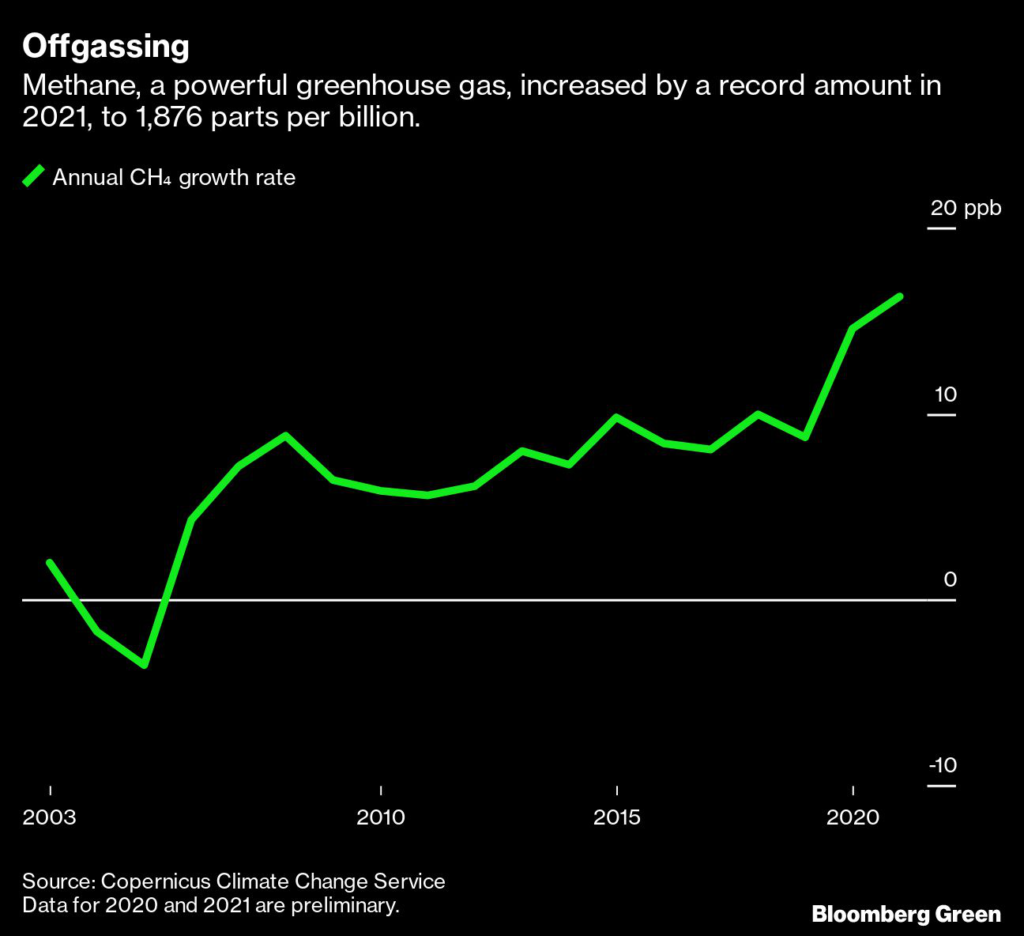
China’s National Energy Administration and its Ministry of Ecology and Environment didn’t answer questions sent by fax seeking comment.  The report, released last week, also highlighted the gap between methane releases detected by satellite and emissions reported by nations to the United Nations Framework Convention on Climate Change.Many countries compile that data by essentially adding up numbers on an excel sheet. A nation might look at its energy system and, for example, count the total number of compressor stations, then multiply that by generic methane release rates for the amount of fuel processed through them. But that approach can fail to reflect the scale of methane emissions observed by satellite and aerial surveys.“In many cases countries don’t base their inventories on measured data,” said Christophe McGlade, head of the energy supply unit at the International Energy Agency. “As more and more measurement campaigns are being carried out we are seeing that there is this growing discrepancy.’’The IEA said global methane emissions from the energy sector exceeded the sum of nationally reported inventories by about 70%. Atmospheric methane increased by a record amount last year, to 1,876 parts per billion, according to the European Union’s Copernicus Climate Change Service, helping push global temperatures in 2021 to the fifth-highest ever recorded.

Satellite observations of giant methane leaks are starting to push authorities to update emissions reporting requirements to include more accurate measuring technologies, according to McGlade. One of the major insights from satellite data is that super-emission events can make a big difference to total national inventories.Although these events can be infrequent and sometimes only last a few hours, oil and gas ultra-emitters account for as much as 12% of global methane emissions from the sector, according to a study published in Science last month. The French and American scientists who authored the study used satellite observations to identify more than 1,800 major releases of the gas, some of which spread for hundreds of kilometers. Another factor that has driven the widening divide between satellite-detected and reported emissions is that inventories submitted by many countries, including major fossil fuel producers like Iraq and Nigeria, haven’t been updated in years. The UNFCCC didn’t respond to an emailed request for comment.Global energy producers spewed 135 million metric tons of methane last year, a 5% increase from 2020, according to the IEA’s annual assessment, which included country-level estimates for emissions from coal for the first time. That was higher than the global increase in carbon dioxide emissions, which rose 4.3% in 2021. 

Much existing research has focused on cutting methane emissions from oil and gas because it’s viewed as the easiest and cheapest solution. Methane from coal has escaped some of that same scrutiny because production of the fossil fuel needs to be drastically reduced to meet climate goals anyway.

But taking into account methane from coal paints a dramatically different picture of global emissions. It caused China to become the No. 1 emitter in the IEA’s latest update, from sixth place in its 2021 report, when emissions were estimated from oil and gas and didn’t include the dirtiest fossil fuel.

China has declined to join an international effort to curb methane led by the U.S. and EU, but has said it’s working on a plan to contain emissions. The country’s coal sector offers Beijing the biggest opportunity to cut its methane emissions, according to an analysis from the United Nations.

Methane can also escape into the atmosphere from landfills and agricultural activities. But those kinds of emissions are more difficult to control; we have the tools we need right now to stem releases from the energy sector. Almost all methane emissions from oil and gas can be avoided at no net cost because the extra gas can be captured and sold, according to the IEA, and there are “significant opportunities” to cut coal methane.

“Such a strong alignment of cost, reputational and environmental considerations should push the oil and gas sector to lead the way with methane emissions reductions,” the IEA said. The agency said oil and gas operators should stop setting targets to cut emissions only as a proportion of production, and instead “adopt a zero-tolerance approach.”

More stories like this are available on bloomberg.com

©2022 Bloomberg L.P.
‘Catastrophic Scenario’ Makes Bitcoin the King of Tokens

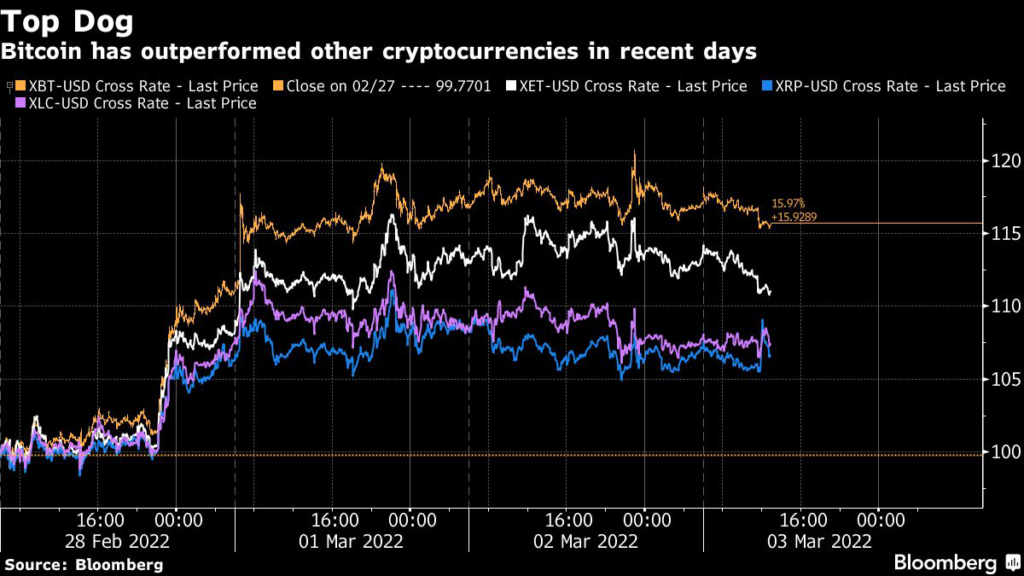
(Bloomberg) — Bitcoin, the oldest and largest cryptocurrency, has asserted itself over rival coins as Russia’s invasion of Ukraine sent convulsions through asset markets. Since crypto tokens started rallying on Monday, Bitcoin’s 16% advance over the past four days beat smaller coins like Ether, XRP and Litecoin by a wide margin. “Bitcoin enjoys a special status in the current juncture as it represents the only cryptocurrency that is perceived as a substitute to gold and thus as a hedge to a catastrophic scenario,” said JPMorgan Chase & Co. strategists led by Nikolaos Panigirtzoglou.

More stories like this are available on bloomberg.com

©2022 Bloomberg L.P.

Close Bitnami banner
Bitnami
