Bloomberg

Reliance to Invest $221 Million to Make Electronics With Sanmina

(Bloomberg) — Reliance Industries Ltd., India’s largest company by market value, plans to invest as much as 16.7 billion rupees ($221 million) in the local unit of California-based Sanmina Corp. to set up a joint venture, expanding billionaire Mukesh Ambani-led group’s footprint in electronics manufacturing.

Reliance Strategic Business Ventures Ltd., a wholly owned unit of Reliance Industries, will hold 50.1% in the joint venture while Sanmina SCI India Pvt. will own the remainder, according to an exchange filing Thursday. The transaction is expected to close by September, the filing said. The manufacturing will initially take place at Sanmina’s 100-acre campus in the southern Indian city of Chennai. 

The deal bolsters the consumer retail and technology flanks for the conglomerate as Ambani, Asia’s richest person, seeks to diversify his empire away from fossil fuel-based businesses and toward digital and green energy initiatives. It also aligns with Indian government’s push for boosting indigenous manufacturing through “Make in India” and other initiatives. 

“For both growth and security, it is essential for India to be more self-reliant in electronics manufacturing in telecom, IT, data centers, cloud, 5G, new energy and other industries as we chart our path in the new digital economy,” Akash Ambani, director at Reliance Jio Infocomm Ltd., said in the filing. 

The partnership was aimed at “meeting both Indian and global demand,” Ambani’s elder son said.

The joint venture will focus on high technology infrastructure hardware across industries including communications networking, health-care systems, clean technology, defense and aerospace.

More stories like this are available on bloomberg.com

©2022 Bloomberg L.P.

Banks Race to Pinpoint Sanction Risks After Russia Clampdown

(Bloomberg) — At a fintech company in London last week, algorithms fielded thousands of queries per second from banks and businesses trying to get Russian clients off their books.

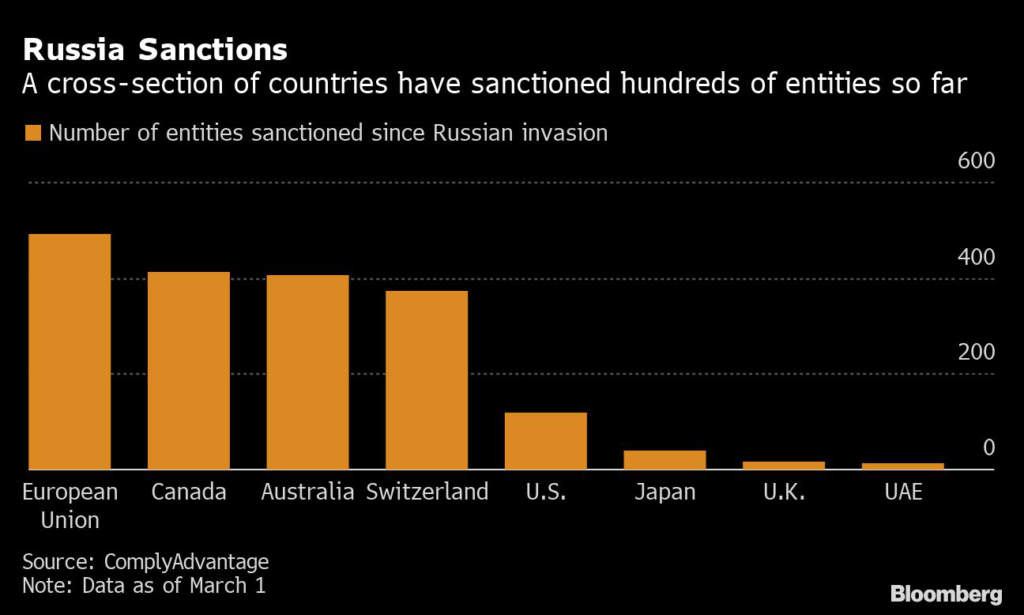
ComplyAdvantage’s computers and human staff scoured 25,000 information sources, aiming to alert clients within 15 minutes of a new target appearing on the various government sanction lists drawn up since Vladimir Putin’s invasion of Ukraine. Algorithms searched for the names of Russian lawmakers, originally written in Cyrillic, and now in languages including Korean, Chinese and Japanese. 

“It’s all hands on deck,” said Charles Delingpole, founder and chief executive officer of ComplyAdvantage, whose clients include trading platform eToro and Banco Santander SA. The business has had huge amounts of data requests in recent days and traffic to its website soared 30-fold.

Multiple rounds of sanctions targeting Russia rank as among the most complex ever enforced and have thrust a cottage industry of experts into the spotlight. Armies of lawyers, compliance specialists and fintechs are being deployed to help banks avoid the billion-dollar scandals that previous sanctions have wrought.

“It’s been like the Super Bowl of sanctions,” said Joel Lange, head of business management at Dow Jones Risk & Compliance, which handles many banks. 

It is a race against time to track down the funds, as the targets of sanctions usually try to move their money swiftly, according to Delingpole. “There are huge challenges and new fronts for attack. Have the oligarchs just moved their assets to Bitcoin?” 

Banks also use companies like LexisNexis and Refinitiv World-Check to carry out similar work. Bloomberg LP, the parent company of Bloomberg News, competes with Dow Jones, LexisNexis and Refinitiv to provide financial news, data and information. 

Lenders have also lent heavily on their own compliance teams and external lawyers, stretching the capacity of the U.K.’s pool of sanctions experts. 

Their task is particularly challenging due to the speed of the Russia prohibitions and because the emerging rules are not fully aligned across jurisdictions, according to experts. Matthew Townsend, sanctions partner at law firm Allen & Overy, said there aren’t enough specialized lawyers to deal with the challenge. “We’re seeing an unprecedented demand for sanctions-related services, there is a big capacity squeeze,” he said. 

Tehran Lesson

The stakes are high, as banks have learned the hard way from falling foul of government sanctions against Iran and other countries in the past. 

BNP Paribas SA agreed to pay almost $9 billion in 2014 after admitting to processing banned transactions involving Sudan, Iran and Cuba. UniCredit SpA agreed in 2019 to to pay $1.3 billion to settle U.S. charges for violating sanctions against Iran that had been hanging over the company since 2011. The same year Standard Chartered Plc agreed to pay more than $1 billion to resolve an investigation into its Iran business.

Banking executives believe mistakes are likely as the industry rushes to impose the still-growing measures against Russia, potentially triggering fines later. Arguments that the problems could not be avoided will not be accepted, as lawmakers and the public have seen banks’ multi-billion pound profits and large bonuses being paid to staff, according to a senior industry figure.  

The direction is to err on the side of caution by extensive dropping of clients, said Michelle Linderman, a partner at Crowell & Moring LLP: “People are talking about totally de-risking. Russia could become like Iran was a few years ago, where it’s almost completely isolated from the western world’s financial institutions.”

European and U.S. banks’ ties to Moscow are limited due to caution in recent years about the political environment, but there are still many individuals, their relatives and multiple businesses which need to be sifted through. Citigroup became one of the first banks to disclose its level of connections, saying in a regulatory filing on Monday that it has $9.8 billion exposure to Russia, including through consumer and institutional banking services in the country.

Deliberately Unclear

The challenge is compounded by the overlapping of sanctions regimes. The past few days have seen more than 1,000 pages of sanctions legislation from the European Union, U.K., U.S., Canada and others, according to Crowell & Moring’s Linderman. “With Russian companies often the structure is opaque,” she said. “Where oligarchs have been added there is a heck of a lot of work, people are literally firefighting.”

Added to the problem is what lawyers call “strategic ambiguity” about the kind of trade that’s prohibited. Guidance from government agencies is often deliberately vague, said Anna Bradshaw, a partner at law firm Peters & Peters. “The reason is the more uncertain you are the more likely you are to be risk averse,” she said. “It’s almost like chess — you have to think several steps ahead at all times.”

It’s all creating work for the sanctions industry. ComplyAdvantage is looking to recruit dozens more staff to help clients ensure they do not break the rules. Dealing with sanctioned entities “is the kiss of death”, said Delingpole.

More stories like this are available on bloomberg.com

©2022 Bloomberg L.P.

Biggest African Wireless Carrier MTN Soars as Oil Boosts Outlook

(Bloomberg) — Africa’s largest wireless carrier, MTN Group Ltd., is reaching market values last seen almost seven years ago and it’s partly down to the rally in oil prices.

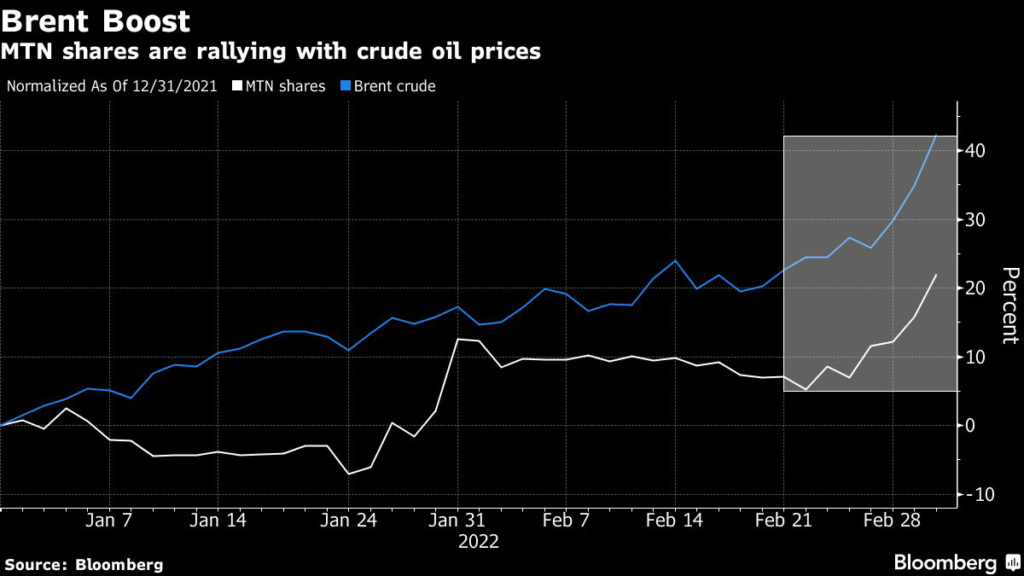
MTN shares climbed 5.3% in Johannesburg on Wednesday to their highest since August 2015. Oil rose above $110 a barrel as Russia’s invasion of Ukraine deepened concerns about a global shortfall. The soaring price of crude is a windfall for the economy of Nigeria, Africa’s largest producer and the mobile-phone company’s biggest market.

The stock has risen for four days in its longest winning streak since November last year, also supported by recent positive earnings updates from MTN’s locally listed units in Ghana and Nigeria.

MTN “has been putting out a good set of results across different markets over the past few weeks,” said Greg Davies, a money manager at Cratos Capital in Johannesburg. “The share is getting a further push from uncertainties caused by the current Russian-Ukraine war, and what that means for oil supplies.” 

Oil prices at the highest since 2013 could improve the prospects of success in talks to ease sanctions on Iran, holder of the world’s No. 2 natural gas and No. 4 crude reserves, Davies also said. MTN has struggled to repatriate funds from the major market due to the restrictions related to the country’s nuclear power development.

The MTN management team has executed well on strategy in key countries, said Peter Takaendesa, head of equities at Mergence Investment Managers in Cape Town. “We expect MTN to resume paying dividends as gearing keeps reducing and their rest of Africa operations contribute more cash to the group as repatriation is looking better for now.”

MTN investors also stand to benefit from the company’s de-risking program, which has seen it exit Syria and Yemen, and progress on the sale of some assets, said John Davies, a senior analyst at Bloomberg Intelligence. “This progress may deliver a dividend above the median consensus of 3.50 rand a share when it reports next week.”

More stories like this are available on bloomberg.com

©2022 Bloomberg L.P.
Singapore to Build Cyber Military Force as Ukraine War Rages On

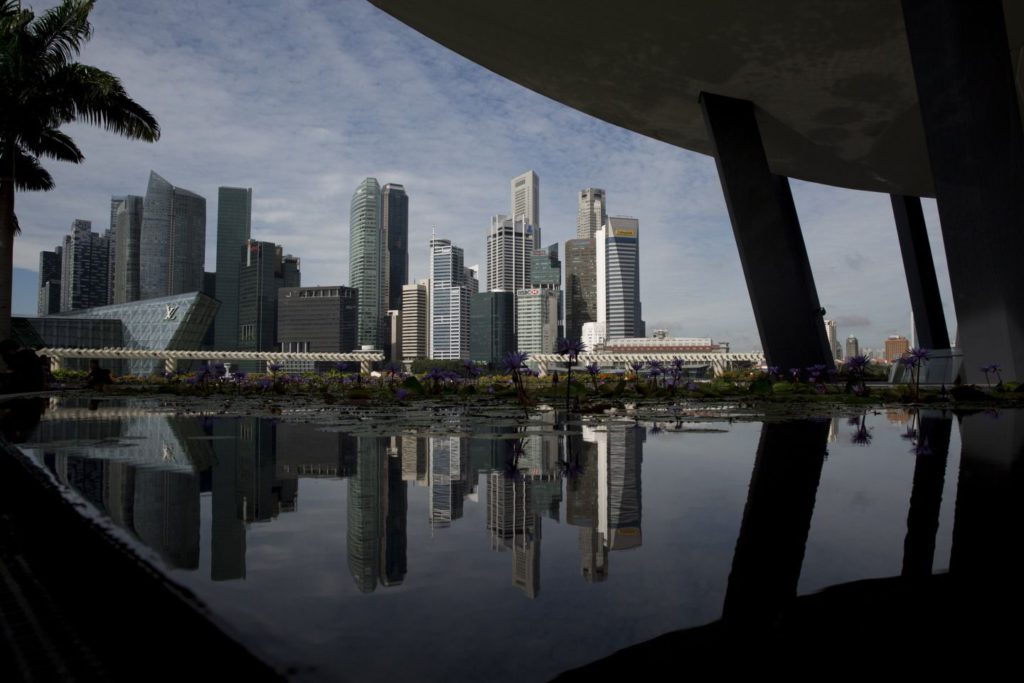
(Bloomberg) — Singapore will set up a new wing of its armed forces dedicated to digital security with a minister saying the Russia-Ukraine war, which has included cyberattacks, shows the need to build the country’s own defenses against external threats. 

Addressing parliament on Wednesday, Defense Minister Ng Eng Hen said the Singapore Armed Forces would establish a so-called “fourth service,” meant to integrate and expand the city-state’s capabilities in the digital domain.

“As good and as ambitious as the next generation SAF is, there are some gaps and capabilities, which recent events and developments warned us against,” he said. “And I’m talking primarily about threats in the digital domain.”

The new military cyber service will be set up by the last quarter of the year and should help Singapore “deal effectively with digital threats from external aggressors that we expect will grow in numbers, sophistication and organization,” Ng said. This may require, “a few brigades, perhaps even a division size force.”

The move comes as hackers with a wide range of allegiances have taken up digital arms in the wake of the Russian invasion of Ukraine. The unfolding events in Ukraine have resonated with Singapore, which has said in the past that it is vulnerable to cyberattacks, fake news and hostile information campaigns because it is a small but open financial hub. 

Last year, the government passed a controversial foreign interference bill aimed at preventing foreign entities or individuals from influencing politics in the country. It also gives the authority to order social media platforms like Facebook and internet service providers to disclose information behind harmful content suspected of being carried out by foreign actors. 

Singapore has been subject to cyberattacks. In 2018, the government said Prime Minister Lee Hsien Loong’s personal particulars were targeted in a “major” cyberattack on the database of the country’s biggest public healthcare group.

The Straits Times newspaper cited Defense Minister Ng as saying that while intelligence sources haven’t identified orchestrated attempts to subvert Singapore using a combination of physical and virtual attacks just like in Ukraine, it doesn’t mean that the threat will never come. “I think we best prepare now with a longer runway,” he said. 

More stories like this are available on bloomberg.com

©2022 Bloomberg L.P.
Geely-Backed Ecarx Weighs SPAC Merger at $4 Billion Value

(Bloomberg) — Chinese billionaire Li Shufu is on a fundraising blitz as he pursues ambitious goals for his global automotive empire.

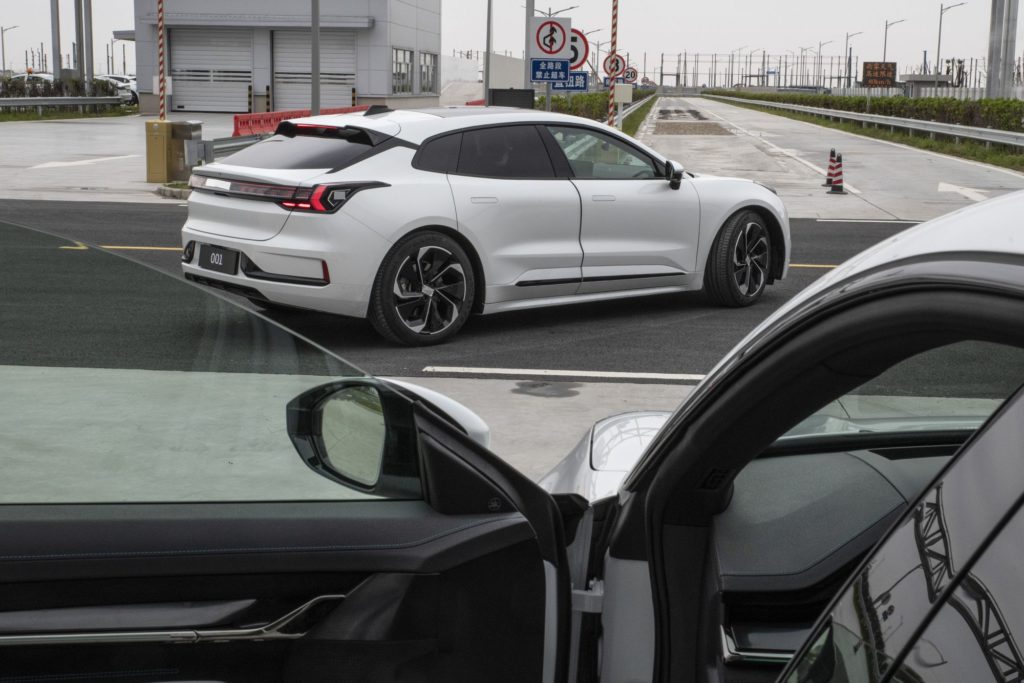
Smart car technology company Ecarx Co., whose backers include Li and his Zhejiang Geely Holding Group Co., is considering seeking a U.S. listing via a merger with a blank-check company, according to people with knowledge of the matter. A deal could value the business at about $4 billion, the people said, asking not to be identified as the information is private. 

Separately, Geely is talking to advisers about a potential funding round for its commercial vehicles unit that could value it at as much as $4 billion, people familiar with the matter said. The round could raise a few hundred million dollars, one of the people said. 

Li is seeking to raise billions of dollars through share sales at home and abroad, as technologies such as electric vehicles and autonomous driving reach critical mass and spur enormous shifts in the automobile universe. 

Tapping Investors

Even though Geely retreated from pursuing a listing on Shanghai’s Nasdaq-style Star Board last year, companies in Li’s orbit have been busy tapping investors.

Polestar, the EV maker founded by Volvo Car AB and its owner Geely, plans to go public in a $20 billion merger with a U.S. SPAC this year. Volvo Car itself raised $2.3 billion in a Stockholm initial public offering in October. 

Group Lotus Plc, the British sports-car maker majority owned by Geely, is weighing a listing in the U.K., U.S. or China for the unit developing electric cars for the Lotus brand.

Geely is considering an IPO in three to five years for its commercial vehicle unit making semi-trailers, trucks and buses. In November, Geely Commercial Vehicle Group unveiled its new energy semi truck, the Homtruck, whose design includes space to create a driving and a living area. It includes a bathroom with a shower and toilet, single bed, refrigerator, tea maker, kitchen, and even a small washing machine. Deliveries are planned for 2024.

Choosing an IPO venue has become increasingly fraught in the past year. The route to gather funds via U.S. equity markets has been largely closed to Chinese firms since July, after a probe of ride-hailing giant Didi Global Inc. led to a crackdown by Chinese authorities on overseas listings. A monthslong freeze on Chinese companies seeking to go public in the U.S. appeared to thaw in February when a small medical device maker made its Nasdaq debut.

Read More: A Slew of Small Chinese Firms Line Up for U.S. IPOs

Founded in 2016 by Li and associates, Ecarx is an automotive-intelligence technology firm whose products include an autonomous driving system and vehicle central computing systems, according to its website. Geely Automobile Holdings Ltd. invested $50 million in the firm to take a 1.5% stake in September, according to a Hong Kong stock exchange filing.

Discussions around Ecarx and Geely’s plans are preliminary and details such as valuation could still change, the people said. Ecarx didn’t immediately respond to requests for comment, while a representative for Geely declined to comment.

(Updates with additional context throughout.)

More stories like this are available on bloomberg.com

©2022 Bloomberg L.P.
Peloton Ex-CEO Sells $50 Million of Stock to Firm Linked to Michael Dell

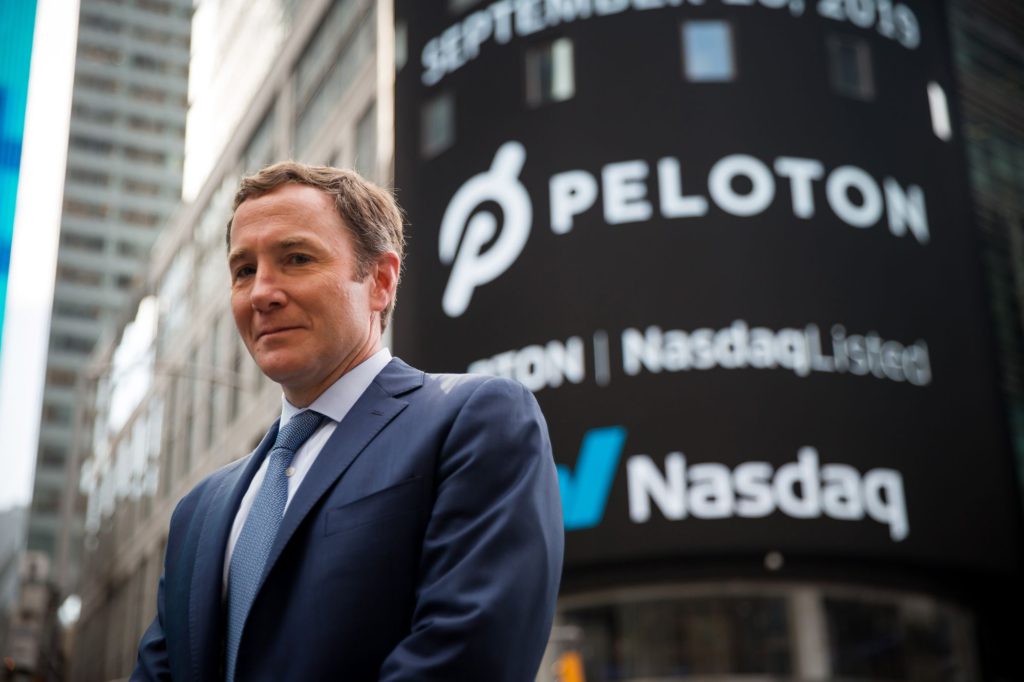
(Bloomberg) — Peloton Interactive Inc. co-founder John Foley, who stepped down from the chief executive officer role last month, sold about $50 million in stock to MSD Partners, a firm that manages money for billionaire Michael Dell.

The sale involved 1.92 million shares, according to a regulatory filing Wednesday. MSD Partners is run by Goldman Sachs Group Inc. veteran Gregg Lemkau and oversees assets of more than $20 billion, including for Dell and outside investors.

“This decision to exercise some stock options and sell those underlying shares in a private sale to MSD Partners was John’s decision, based on his own financial planning,” Peloton said in a statement. Foley remains an employee and executive chairman of Peloton despite handing over the CEO role to former Spotify Technology SA and Netflix Inc. executive Barry McCarthy. 

Lemkau said in a statement that Peloton “is an exceptional brand and MSD Partners is pleased to have this opportunity to back Barry McCarthy and the Peloton team as they position the business for long-term growth.”

Prior to McCarthy’s appointment as CEO, there was speculation that Peloton was looking to sell itself and that deep-pocketed companies such as Nike Inc. and Amazon.com Inc. were considering making bids. But the new leader has stressed that he’s focused on turning around the business.

MSD Partners is buying Peloton shares after they lost three-quarters of their value over the past year. Now at about $26, Peloton peaked at around $170 per share last January at the height of the Covid-19 pandemic.

The company’s exercise bikes were a hot commodity when consumers were hunkering down at home and avoiding in-person gyms. But in 2021, as vaccines emerged more broadly and lockdowns eased, sales of Peloton’s hardware and services slowed. 

The company also struggled to match supply with demand — both during boom times and the subsequent slowdown — shaking investors’ confidence. After the share price crumbled, Foley resigned as CEO in February and the company brought on McCarthy. Longtime executive William Lynch stepped down as president and many other top managers departed the company. Peloton also announced plans to lay off 20% of its staff.

As part of the overhaul, Peloton reevaluated its operating strategy and nixed plans for an in-house manufacturing facility in Ohio, which would have created many new jobs in the region.

A recall of the company’s treadmills also hurt the brand. Last year, a baby died in an accident with the company’s highest-end product, a treadmill that costs almost $5,000. The company initially rejected criticism of its product’s design before later recalling it. It remains off the market.

Peloton’s image suffered onscreen as well. In a scene in the new “Sex and the City” series, a central character died from a heart attack after riding a Peloton bike. A character in the show “Billions” also suffered a heart attack after using one of the company’s bikes, though he survived.

Since taking the helm, McCarthy has pledged to fix the company with a sharper focus on subscriptions and new pricing strategies. He’s also said Peloton is revamping its supply chain approach and will look to avoid a repeat of the company’s operational struggles. 

Still, Peloton needs new hardware products to remain competitive. It plans to launch the new Guide strength-training device in April following a brief delay. It’s also working on a rowing machine and a secondary strength training device.

(Updates with share decline and other background starting in sixth paragraph.)

More stories like this are available on bloomberg.com

©2022 Bloomberg L.P.
Coupang Losses Widen on Soaring Costs to Fend Off Rivals

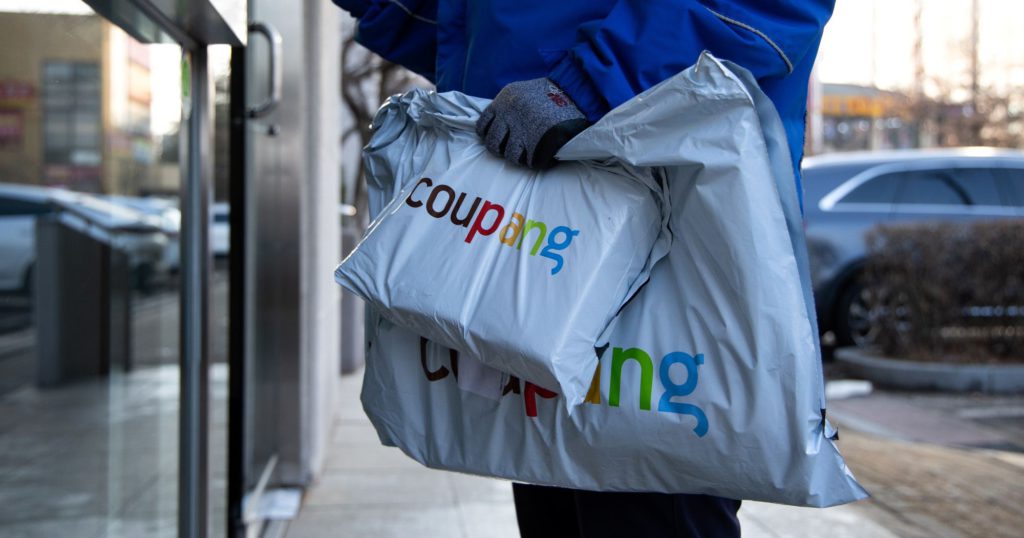
(Bloomberg) — Coupang Inc., South Korea’s leading e-commerce company, reported a wider loss in the fourth quarter as the company continued to aggressively spend on infrastructure and services in the face of intensifying competition. 

Operating losses increased to $396.6 million for the quarter ended in Dec. 31, compared with $130.9 million a year earlier, according to a statement. Sales rose 34% to $5.1 billion, while the number of active clients increased 21%. The net loss was $405 million in the period. The U.S.-traded shares rose about 0.6% in extended trading. 

During the pandemic, Coupang’s growth accelerated as people spent more time at home, ordering more products and food through the company’s rapid-delivery network. In order to support that growth and to compete against local e-commerce rivals, the Seoul-based company spent more than one trillion won last year on distribution centers, according to Coupang. 

In addition to capacity expansion, the company said costs rose in the fourth quarter to add labor and Covid-related cleaning and social distancing measures. Infections in South Korea soared to new highs in the period.

“We’ve seen improvements and we don’t think at this moment this is a structural or permanent constraint,” Chief Executive Officer Bom Kim said during a conference call after the earnings were released.

Coupang, backed by Japan’s SoftBank Group Corp., pulled off a blockbuster initial public offering in New York a year ago, with shares soaring more than 40% in a matter of days. But its stock has plummeted since then as investors grew concerned about its ability to improve profitability in the near term. 

“We expect to grow significantly faster than the e-commerce segment as we have in the last several years,” said Kim. “The overall market opportunity appears to only be getting bigger.”

As part of its effort to boost earnings, Coupang increased the monthly cost of its Wow subscription for new members to 4,990 won ($4.15). Although the hike only applies to customers who join from this year, analysts expect it will eventually also be levied on current members. 

The company said on Thursday that it had about 9 million paid Wow members at the end of last year. If Coupang expands the membership fee hike to about 5 million members, it may contribute around 125 billion won to sales and profits, Park Sang-joon, analyst at Kiwoon Securities said in a note on Dec. 30, when Coupang announced the membership price increase. Still, it may not be sufficient to lead to a profit turnaround, he added.

(Updates shares, comments from CEO)

More stories like this are available on bloomberg.com

©2022 Bloomberg L.P.
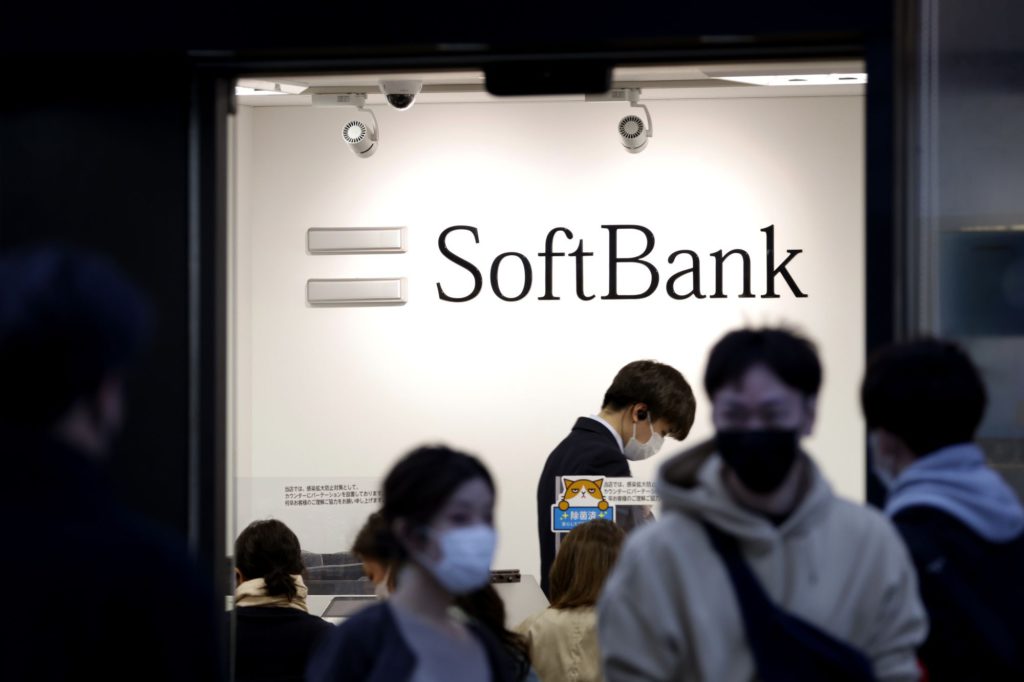
SoftBank Corp. Raises $870 Million Using Z Holdings Shares

(Bloomberg) — SoftBank Corp. has borrowed about 100 billion yen ($870 million) using Z Holdings Corp.’s shares in its first such asset-backed financing to raise funds for business purposes. 

SoftBank is using about 361,440,000 shares, or 4.8%, of Z Holdings that it indirectly owns through A Holdings Corp. for stock lending, according to company spokesperson Makiko Ariyama. The telecommunications giant received cash by lending out the Z Holdings shares, she said. She declined to comment on who SoftBank lent the shares to. 

A Holdings, which is jointly owned by SoftBank and South Korea’s Naver Corp., held about 59% of Z Holdings, according to latest data compiled by Bloomberg. Z Holdings owns internet portal operator Yahoo Japan Corp. and mobile chat app Line Corp.  

The stock lending is a part of SoftBank Corp.’s attempt at diversifying its finances. Its parent, SoftBank Group Corp., has been active in tapping complex financing tools to raise funds to expand its investment portfolio of technology startups. 

More stories like this are available on bloomberg.com

©2022 Bloomberg L.P.
Snowflake Plunges After Revenue-Growth Outlook Disappoints

(Bloomberg) — Snowflake Inc., a software company that helps businesses organize data in the cloud, plunged almost 25% in extended trading after projecting that annual product sales growth would slow from its previous triple-digit-percentage pace.

Executives said improvements to the company’s data storage and analysis products will let customers get the same results by spending less, which will hurt revenue in the short term, but attract more clients in the future. 

“The full-year impact of that next year is quite significant,” Chief Executive Officer Frank Slootman said on a conference call after the results were released. But “when customers see their performance per credit get cheaper, they realize they can do other things cheaper in Snowflake and they move more data into us to run more queries.”

Product sales will increase as much as 67% to $1.9 billion in the current year, the company said Wednesday in a statement. While in line with estimates, the forecast represents a significant decline in Snowflake’s revenue growth, which has more than doubled year-over-year in each of the past six quarters.

Snowflake earns revenue when customers store data and run queries on its platform, which is different from other software vendors that charge a monthly subscription cost. As a result of that consumption model, some early users are often surprised to get much bigger bills from Snowflake than they anticipated. Recognizing that, Snowflake has worked to improve the efficiency of its platform to help reduce costs for customers.

Those product enhancements are expected to result in a $97 million revenue hit in the year ahead, executives said on the call.

The outlook suggests Snowflake may also be getting hurt by the rising competition in the data storage and analytics sector. Product revenue makes up almost 95% of the company’s total sales.

The forecast “could be due to saturation of new customer additions at large companies,” said Mandeep Singh, an analyst at Bloomberg Intelligence. Snowflake is likely to move toward finding ways to sell to midsized companies, he added.

Snowflake gained prominence by taking the on-premises data warehouse and moving it to the cloud. However, its initial public offering, which was the largest in the U.S. in 2020, and subsequent success have led to a rush of investment in the sector, including into startups such as Databricks Inc. and Starburst Data Inc. that are trying to eliminate the need for Snowflake’s core offering.

But Snowflake is also adding features, like improved analytic capabilities to review corporate data to help predict future behavior, which is ramping up competition in a sector long-dominated by legacy vendors like Oracle Corp.  

Notably, Snowflake continues to drive additional spending from existing users. Its net revenue retention rate was 178% in the quarter, significantly above the industry average. That figure, however, is expected to drop in the coming quarters, partially a result of the product enhancements.

Fiscal fourth-quarter revenue doubled to $383.8 million. Analysts, on average, estimated $372 million. The company’s net loss narrowed to $132.1 million, or 43 cents a share, from a loss of $198.9 million, or 70 cents, in the period a year earlier.

Snowflake also agreed to acquire Streamlit, a company that helps developers build and share data applications, in a stock-and-cash deal for $800 million, executives said on the call. 

Executives said Streamlit could help in Snowflake’s push to add features to its platform to attract more data scientists, like supporting Python, a popular programming language.

The focus is on “driving workloads from the developer to Snowflake,” Slootman said.

Snowflake’s stock fell to a low of $184.02 in extended trading. The shares closed at $264.69 in New York and have declined 34% from a November high.

(Updates with comments from executives throughout.)

More stories like this are available on bloomberg.com

©2022 Bloomberg L.P.
Billionaire Usmanov’s Superyacht Said to Be Seized in Germany

(Bloomberg) — Russian billionaire Alisher Usmanov’s superyacht, the world’s largest by volume, was seized by German authorities in Hamburg, according to Forbes.

The German government has frozen the Dilbar, Usmanov’s 512-foot yacht, the publication said, citing three unidentified industry sources. Built in 2016 and named after his mother, the boat is estimated to be worth $594 million, according to the Bloomberg Billionaires Index.

The European Union adopted sanctions on six of Russia’s wealthiest individuals on Monday, including Usmanov, who called the decision “unfair” and “defamatory.” The Dilbar had been undergoing refitting in the northern German city.

Superyachts and other opulent displays of wealth among Russia’s elite have drawn intense scrutiny since the country’s invasion of Ukraine, even making it into U.S. President Joe Biden’s State of the Union address.

“We are joining with our European allies to find and seize your yachts, your luxury apartments, your private jets,” Biden said during Tuesday’s address.

Five other individuals were named in the latest EU sanctions: Mikhail Fridman, Petr Aven, Alexey Mordashov, Gennady Timchenko and Alexander Ponomarenko. Mordashov owns two superyachts: the Nord, which is in the Seychelles, and Lady M, anchored in Imperia, Italy. 

Some Russian tycoons also still have superyachts docked in Europe. Roman Abramovich’s Solaris is in Barcelona; Iskandar Makhmudov’s Predator is in Genoa, Italy; and Vagit Alekperov’s Galactic Super Nova is in Montenegro, among others, according to data tracked by Bloomberg.

Usmanov, 68, owns a major stake in USM, a Russian investment group with holdings in Metalloinvest, one of the world’s largest iron ore producers, and telecommunications company MegaFon. He’s the sixth-richest Russian with a fortune of $19.5 billion, according to Bloomberg’s wealth index, though that figure includes the Dilbar. 

Russian President Vladimir Putin has also been sanctioned by U.S., EU and U.K. authorities. He has been linked by news organizations including Business Insider to the superyacht Graceful. 

That boat left Hamburg Feb. 7, about two weeks before Russia invaded Ukraine. It’s now in Kaliningrad, Russia. 

More stories like this are available on bloomberg.com

©2022 Bloomberg L.P.
Close Bitnami banner
Bitnami