Bloomberg

Ukraine Expands Crypto Donation Program Exceeding $30 Million

(Bloomberg) — Ukraine is expanding the list of cryptocurrencies it will be accepting for donation amid an outpouring of support and looming humanitarian crisis after an invasion by Russian forces. 

About $31.7 million through 26,000 crypto donations has been collected by Ukraine and non-governmental organizations supporting its military so far, according to blockchain-analytics firm Elliptic. 

The country will now also accept Polkadot’s DOT, the 11th-biggest cryptocurrency by market value, in addition to Bitcoin, Ether and Tether, according to a statement on a government Twitter account Tuesday. More tokens will be also accepted soon, the post said.

Since Ukraine posted wallets soliciting money a couple days ago, it’s received about $8.2 million in a Bitcoin wallet and $7.1 million in an Ether wallet — almost all of which has subsequently been transferred out — according to data from Blockchain.com. 

Read more: Crypto Billionaire, Pussy Riot Join Effort to Send Ukraine Money

Ukraine has tweeted about a possible crypto airdrop — or promotional event that typically involves giving away free coins — saying “an airdrop has not been confirmed yet.” It wasn’t immediately clear what sort of airdrop the account was referring to, nor any details about what or who it might involve.

A decentralized relief effort called Aid for Ukraine put together by the country’s Ministry of Digital Transformation, crypto exchange FTX and Ukrainian crypto staking platform Everstake will also accept donations via Solana’s SOL token, according to a tweet from Mykhailo Fedorov, who leads the ministry.

Bitcoin is up 4.7% to $43,600 on Tuesday amid speculation cryptocurrencies will gain favor in the wake of sanctions against Russia. Ether gained 3.8%, DOT rose 5.8% and SOL added 1.4% over the past 24 hours as of 1:25 p.m. in New York, according to pricing from CoinGecko.

(Updates donations and adds Aid for Ukraine detail)

More stories like this are available on bloomberg.com

©2022 Bloomberg L.P.

Apple to Increase Covid Testing for Vaccinated Retail Employees

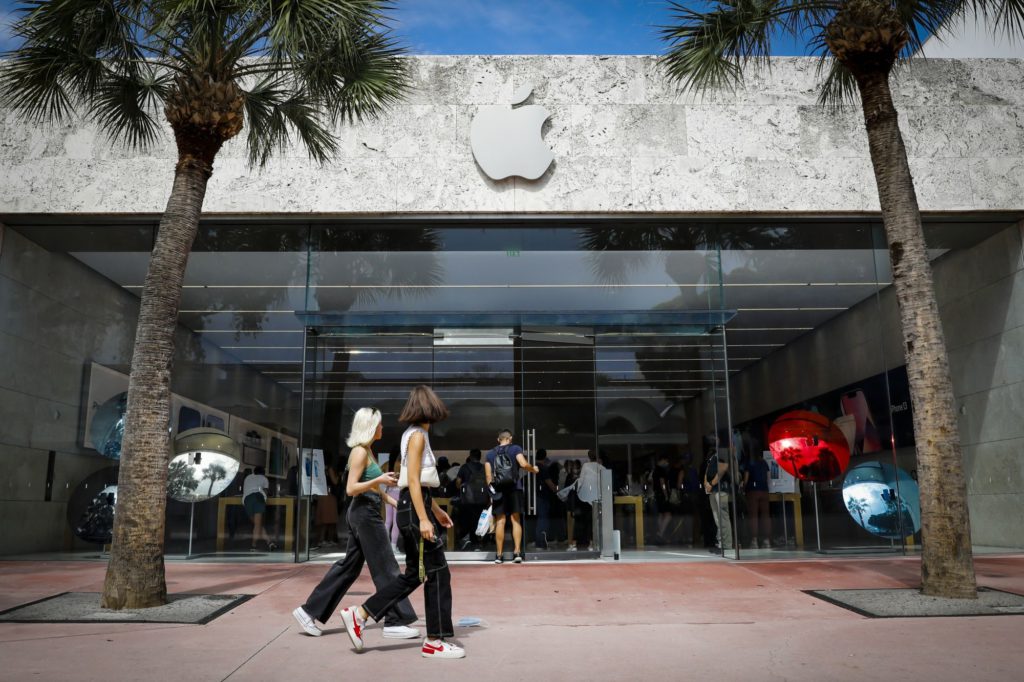
(Bloomberg) — Apple Inc. plans to begin testing vaccinated retail staff twice a week for Covid-19, a step toward dropping its mask requirement for employees.

The company announced the plan in a memo to U.S. retail staff Tuesday, changing a policy that had required vaccinated workers to test once a week. Unvaccinated staff had already been required to test twice weekly. At the same time, the company is now allowing employees to verify their results independently rather than providing proof. 

“Based on what we’ve learned from our testing pilot, everyone will now be required to self-test twice per week, regardless of vaccination status,” the company said in the memo. “In addition, if you were submitting your test results for verification, you’re no longer required to do so.”

Apple also said in the memo that it is reconsidering the mask requirement for employees and that an update will be shared soon. “At this point, team members should continue to wear a face mask in store,” according to the memo. The company is “currently reviewing our face mask guidance for team members.”

Apple, based in Cupertino, California, told employees that while it may need to adjust the protocols again in the future, the company is “hopeful that case numbers remain low and these protocols will be in effect for the foreseeable future.”

Apple has been gradually loosening its Covid-19 rules. The company recently dropped its mask mandate for customers in most stores across the country — in line with changing rules on indoor mask wearing from local governments and the U.S. Centers for Disease Control and Prevention. It’s also preparing to bring back in-store Today at Apple classes. 

Though cases are falling, the company has yet to announce a new return-to-office deadline for corporate employees. Apple had previously planned to require staff to work from the office at least three days per week by Feb. 1, but that plan was delayed after the omicron variant caused a spike in cases.

More stories like this are available on bloomberg.com

©2022 Bloomberg L.P.

DirecTV Is Pulling Russia’s RT Channel From Satellite TV Lineup

(Bloomberg) — DirecTV, one of the largest U.S. pay-TV providers, is pulling the Russian-government-controlled RT network from its service, citing that country’s invasion of Ukraine.

An agreement between DirecTV and RT was set to expire in the second half of 2022, but the invasion pushed the company to act sooner to end the arrangement, a spokesman said Tuesday.

“In line with our previous agreement with RT America, we are accelerating this year’s contract expiration timeline and will no longer offer their programming effective immediately,” a DirecTV spokesman said in a statement.

DirecTV is a joint venture between AT&T Inc. and the private equity giant TPG.

RT has been losing reach on TV for a few years now. Comcast Corp. and Charter Communications Inc. both dropped RT a few years ago. RT also disappeared in the Washington D.C. area in 2018 after a public broadcast station that carried its programming went off the air.

In January, DirecTV dropped conservative channel One America News Network after public criticism for spreading misinformation 

More stories like this are available on bloomberg.com

©2022 Bloomberg L.P.

U.K. to End Vaccine Mandate for Health Workers: Virus Update

(Bloomberg) — Hong Kong’s Covid-19 fatality rate is now the highest in the developed world amid a wave of deaths among its under-vaccinated elderly population, ramping up pressure on officials to get the outbreak under control. 

U.K. Health Secretary Sajid Javid said he’ll remove the mandate for those working in health and social care to be vaccinated against Covid-19 starting March 15.

Vaccines protected children and adolescents from severe disease even after the immune-evasive omicron variant emerged, according to findings from U.S. government reports.

Key Developments:

  • Virus Tracker: Cases exceed 437 million; deaths top 5.9 million
  • Vaccine Tracker: More than 10.8 billion doses administered
  • Coronavirus Daily: Are you ready for normal life?
  • Hong Kong’s isolation plan crumbles as infections soar
  • Hong Kong deaths among worst on at-risk elderly

Vaccines Kept Protecting Kids After Omicron (1 p.m. NY)

Covid-19 vaccines protected children and adolescents from severe disease even after the immune-evasive omicron variant emerged, according to findings from U.S. government reports.

After omicron became dominant in the U.S. late last year, protection against infection and urgent care visits declined for 5- to 17-year-olds who’d received primary inoculations, according to U.S. Centers for Disease Control and Prevention data released Tuesday. However, vaccinated children and teens were still less likely to get infected than their unvaccinated peers, the agency said in its Morbidity and Mortality Weekly Report.

U.K. Revokes Mandatory Vaccines Rules (12:15 p.m. NY)

U.K. Health Secretary Sajid Javid said he’ll remove the requirement that those working in health and social care be vaccinated against Covid-19 starting March 15.

The announcement on Tuesday follows a public consultation on revoking the rules, which had threatened to force thousands of unvaccinated health-care workers out of their jobs.

Australia PM Morrison Has Covid (10:25 a.m. NY)

Australian Prime Minister Scott Morrison has tested positive for Covid-19, he said on social media. “I am experiencing flu-like symptoms and will be recovering over the next week,” Morrison said. He is isolating at home in Sydney.

Lobbying for Shorter Quarantine (5:35 p.m. HK)

Hong Kong’s banking regulator told finance executives in recent weeks that it’s lobbying the government to shorten the strict hotel quarantine placed on incoming travelers as it seeks to prop up confidence in the city’s status as a financial hub. 

Hong Kong Monetary Authority told a group of banks that it will start engaging with the government to reduce the hotel quarantine to 7 days from 14 days, followed by another week of isolation from home, said people familiar with the talks, asking not to be identified because the meetings were private.

Hong Kong’s Record Death Rate (4:46 p.m. HK)

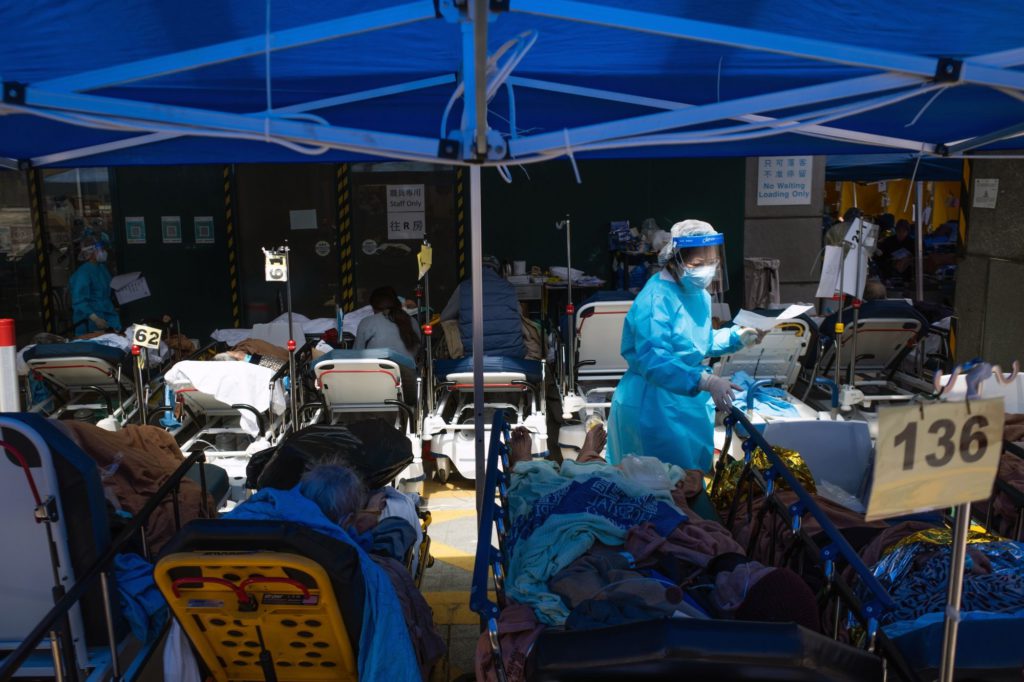
Hong Kong’s Covid-19 fatality rate is now the highest in the developed world. The financial hub averaged eight deaths per 1 million people in the 10 days through Monday, the most among advanced economies, according to Bloomberg calculations based on Johns Hopkins University data. 

Hong Kong reported a record of 117 new deaths Tuesday. Most of the fatalities during the current wave have been elderly people, and 91% of those who died weren’t double vaccinated, according to government data released Sunday. 

Singapore Cases at Highest in a Week (10:30 a.m. NY)

Singapore’s new local Covid cases increased to the highest level in a week, according to the Ministry of Health’s data. The number of new local infections, including those detected through rapid testings, rose to 23,891 as of noon time on Tuesday, from 13,450 on Monday.  

Tuesdays tend to be Singapore’s biggest caseload each week, owing in part to weekend catch-ups and people testing at the start of the week. The past two weeks have seen cases drop before a Tuesday spike, delaying a potential reopening.

The city-state plans to substantially ease restrictions once the current wave peaks.

Japan Opens to Newcomers (2:23 p.m. HK)

Japan ended a ban on new entry by foreigners and eased quarantine rules as of Tuesday.

New foreign entrants except for tourists will be admitted, with a cap of 5,000 arrivals a day, from 3,500. Japan also scrapped the quarantine period for those who have had a booster shot and have entered from countries unlisted by the government, and lowered it to three days for those who came from places on the list.

U.S. Warns on Travel to Vietnam (1:39 p.m. HK)

The U.S. State Department raised its travel advisory for Vietnam to the highest level in response to recent surges in Covid-19 infections. Vietnam is ranked as level 4, which means Americans should avoid all travel there, according to a statement. Vietnam on Monday reported 94,385 new cases.

China Health Expert Sees Opening Up (11:38 a.m. HK)

One of China’s top health experts raised the possibility that China could follow western nations and attempt to live with Covid-19, a rarely voiced view in the country as it persists with its Covid-Zero strategy.

“At an appropriate timing in the near future, China will surely present its version of the roadmap for co-existing with the virus,” Zeng Guang, former chief epidemiologist of Chinese Center for Disease Control and Prevention, said on his social media account. 

Virus Fears Wane, NYT Says (10:29 a.m. HK)

Americans are less worried about catching and spreading Covid-19 compared with six months ago, according to a new poll by The Associated Press-NORC Center for Public Affairs Research, the New York Times reported.

Support is also decreasing for mask mandates, which are easing across much of the U.S., the poll found, according to the NYT.

Hong Kong Weighs Public Transport Halt (10:04 a.m. HK)

Hong Kong is weighing whether to halt public transport during a lockdown or allow residents who test negative with rapid screening kits to leave their homes, the South China Morning Post reported, citing unidentified people.

The government is considering a number of options about the lockdown, including whether it should be citywide or done on a rolling basis, according to the report.

Thailand Cuts Second Visitor Test (9:06 a.m. HK)

Vaccinated foreign visitors to Thailand will no longer be required to take a second RT-PCR test after arrival from Tuesday as the nation woos tourists. The insurance requirement for Thai visas has also been lowered to $20,000 from $50,000.

From Tuesday, authorities will start distributing free rapid antigen test kits through 2,000 centers nationwide amid a health ministry warning that daily cases could spike to 100,000 by mid-April. New infections fell to 20,420 on Tuesday.

Malaysia to Exempt Some Travelers From Test (8:29 a.m. HK)

Malaysia will relax coronavirus testing requirements for some travelers starting Thursday, Health Minister Khairy Jamaluddin said in a statement.

The exemption applies to those arriving in Malaysia via the vaccinated travel lane with Singapore, the Langkawi travel bubble, and short-term business travel via one-stop centers, he said.

More stories like this are available on bloomberg.com

©2022 Bloomberg L.P.

Stellantis to Name New Tech Partner in Coming Months, CTO Says

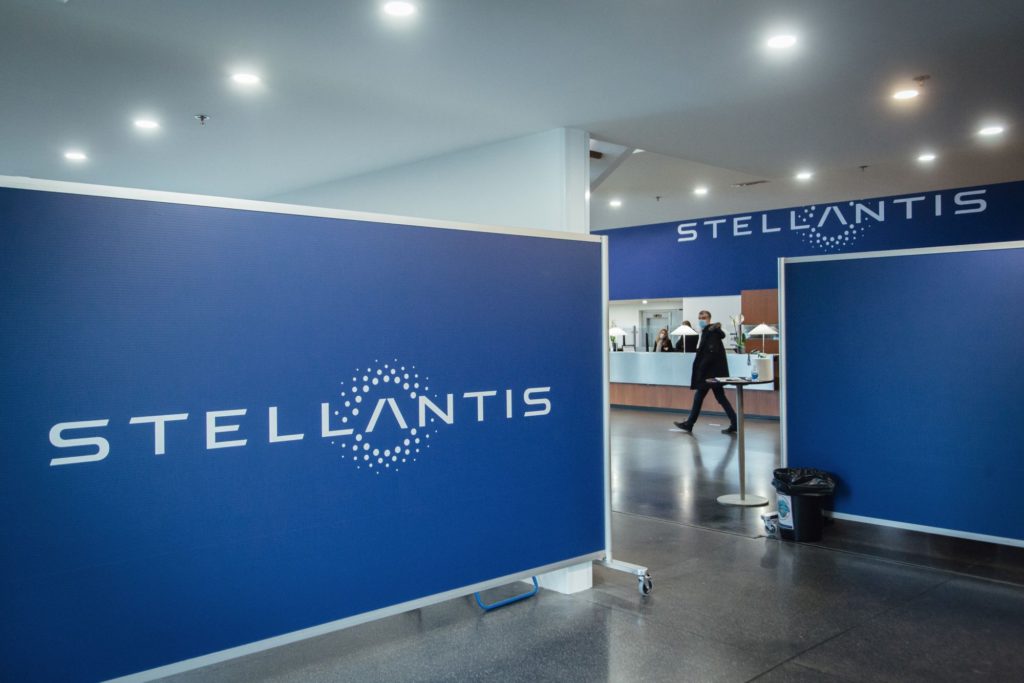
(Bloomberg) — Stellantis NV will announce another “big name” tech partner in the coming months, Chief Technology Officer Ned Curic told Bloomberg on the sidelines of its strategy presentation Tuesday.

The automaker formed last year from the merger of Fiat Chrysler Automobiles NV and PSA Group already has inked deals with some high-profile firms, including Foxconn Technology Group, Alphabet Inc.’s Waymo unit and Amazon.com Inc. The partnerships are part of an effort to generate about 20 billion euros in extra revenue from software-driven features in its vehicles by the end of the decade.

Foxconn’s performance has been “fantastic,” Curic said during the company’s presentation in Amsterdam. But the carmaker isn’t done bringing on tech partners.

Read more: Stellantis targets double-digit margins in costly EV shift

“Stay tuned to some additional announcements in the future, in the areas where we need additional help on the electronics side,” he said.

More stories like this are available on bloomberg.com

©2022 Bloomberg L.P.
Renault Shares Crushed by Concerns About Carmaker’s Russia Exposure

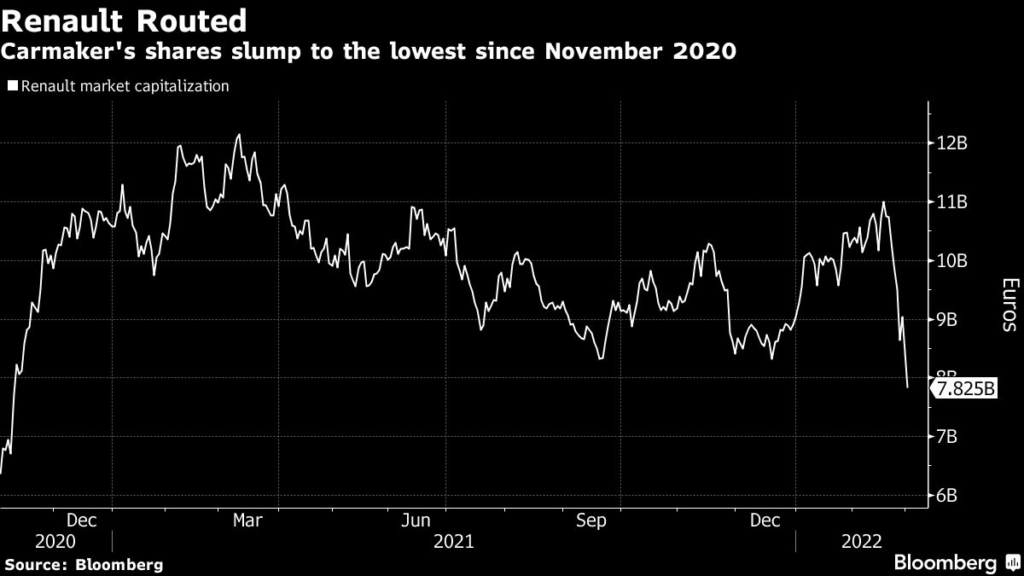
(Bloomberg) — Shares of Renault SA, the European carmaker most exposed to Russia, tumbled to their lowest close since November 2020 as countries around the world escalate measures to penalize President Vladimir Putin for invading Ukraine.

The manufacturer’s shares fell 11% in Paris trading Tuesday, dropping its market valuation to less than 7.5 billion euros for the first time in almost 16 months. The stock has plummeted 37% since Feb. 16.

Russia is Renault’s second-biggest market, with the automaker generating about 5 billion euros annually, roughly 12% of its automotive revenue, according to Bloomberg Intelligence. BMW AG, Mercedes-Benz Group AG and Volkswagen AG only have about 2% of their sales at risk, BI analyst Michael Dean said in a note last week.

The U.S., U.K., European Union and Asian nations have ramped up sanctions against Russia, contributing to a record plunge for the ruble. VW’s Russia unit has temporarily suspended deliveries of vehicles to dealers until further notice, while Daimler Truck Holding AG halted operations and may review ties with local joint venture partner Kamaz PJSC.

Renault’s Avtovaz venture restarted assembly lines Tuesday at its plant in Togliatti following a brief shutdown due to a shortage of semiconductors, according to a spokesman. The French company’s own plant in Moscow remains idle until March 5 due to supply issues. 

A Renault spokesman declined to comment on how sanctions will affect operations.

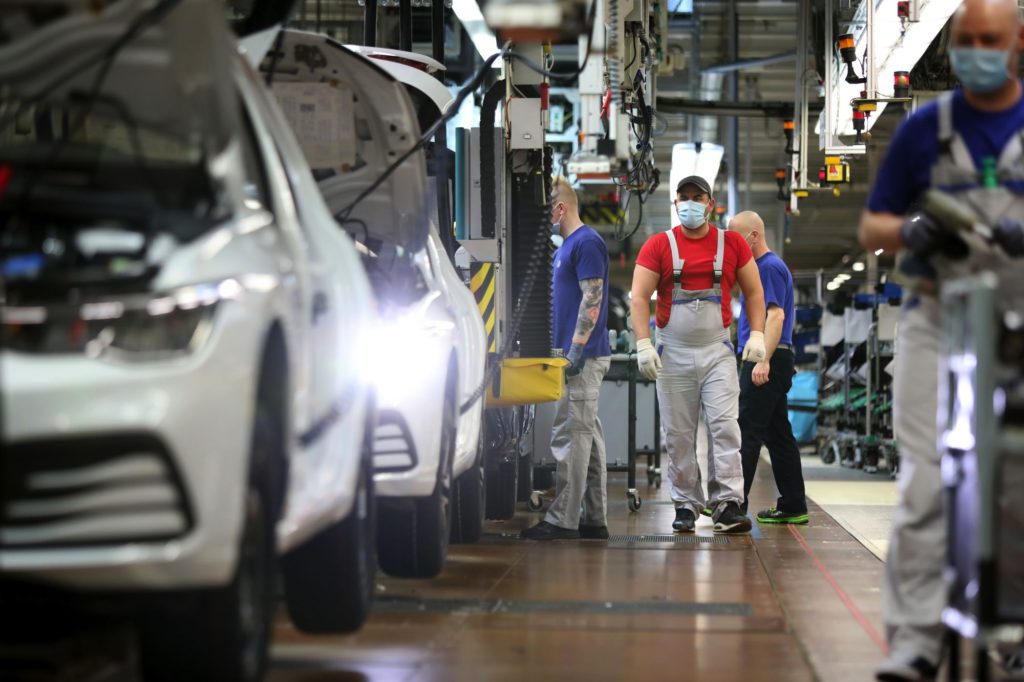
Russia’s war in Ukraine also is leading to ripple effects elsewhere in Europe. VW will idle some production lines in Wolfsburg — the world’s largest car plant — next week before a broader shutdown the following week. BMW also expects imminent manufacturing halts and is finalizing plans for various locations, a spokesperson said.

(Updates with closing share price in the second paragraph.)

More stories like this are available on bloomberg.com

©2022 Bloomberg L.P.
VW, BMW to Idle Plants on Parts Shortages From Ukraine

(Bloomberg) — BMW AG joined Volkswagen AG in warning of production outages because Russia’s war in Ukraine is disrupting car-parts supplies from the country.

VW will idle some production lines in Wolfsburg, Germany — the world’s largest car plant — next week before a broader shutdown the following week, the company said Tuesday. BMW said in a separate statement it expects temporary shutdowns because of parts shortages, and announced it’ll suspend vehicle exports as well as local assembly in Russia because of the invasion.

Russia’s invasion is sparking repercussions for manufacturers already facing significant parts bottlenecks and fallout from the coronavirus pandemic. Even before these latest supply-chain setbacks, automakers had been forced to curb production over the past year because of a chronic shortage of computer chips.

German cable maker Leoni AG, with two plants in Ukraine employing some 7,000 workers, said it’s intensifying efforts to help offset the disruption in Ukraine by adding capacity at other sites, while prioritizing the safety of its employees. 

“Logistics in and out of Ukraine are a particular challenge, especially because of the partly chaotic situation at the border points with the EU,” a Leoni spokesman said in a statement.

German automotive companies and suppliers maintain some 49 production sites in Russia and Ukraine, according to the German car lobby group VDA.

Other sites to be affected include Emden and Hanover, where VW makes commercial vehicles, as well as component factories. There may be further cuts to production, the company said. BMW didn’t specify which plants would be hit by outages.

VW said last week it would halt production in Zwickau and Dresden at plants that make electric cars because of shortages of parts including cable sets. On Tuesday, VW’s Russia unit said it had suspended deliveries of vehicles to dealers until further notice as sanctions imposed on the nation take effect.

General Motors Co., Harley-Davidson Inc. and Jaguar Land Rover were also among manufacturers halting shipments to Russia in recent days. 

Last year, BMW sold around 49,000 vehicles in Russia, about 2% of global car sales. About 12,000 vehicles came from an assembly plant in the Russian exclave of Kaliningrad that BMW has operated with local partner Avtotor for more than 20 years.

(Updates with statement from cable maker Leoni in fourth paragraph)

More stories like this are available on bloomberg.com

©2022 Bloomberg L.P.

US and other major economies will deploy emergency oil stocks to ease soaring prices

(Bloomberg) — The U.S. and other major economies have agreed on a coordinated release of oil stockpiles after Russia’s invasion of Ukraine pushed crude above $100 a barrel, according to people familiar with the matter.  The International Energy Agency, which represents key industrialized consumers, has agreed to deploy 60 million barrels from stockpiles around the …

US and other major economies will deploy emergency oil stocks to ease soaring prices Read More »

Andreessen-Backed Upstart Aims to Build Pan-African Digital Bank

(Bloomberg) — San Francisco-based Branch International plans to become a pan-African digital bank as it sees a growth opportunity in online financial services on the continent.

The company, with operations in India, Kenya, Nigeria, and Ghana, will build its new business by acquiring microfinance lenders, founder and Chief Executive Officer Matt Flannery said in an interview. New deals, including potentially in Tanzania, will cement Branch’s position as the first fintech to buy banks in Sub-Sahara Africa, he said.

“The establishment of a true pan-African digital bank is long overdue,” Flannery said in the Kenyan capital, Nairobi. “There’s a real need for a sort of borderless bank” that’s able to take deposits and offer small loans, he said.

Africa is a fertile ground for the new model, given that most people on the continent use mobile-phone digital wallets more often than mainstream bank accounts for financial transactions, according to Flannery.

Backed by investors including Andreessen Horowitz, CreditEase Fintech Investment Fund and the International Finance Corporation, Branch has disbursed more than $600 million in loans to over 4 million people since 2015. Rather than relying on credit reference bureaus, the fintech uses machine learning to determine borrowers’ credit-worthiness, he said. 

“We’ve been offering a range of financial products under different licenses throughout sub-Saharan Africa,” Flannery said. “We’ll continue to expand that approach over the next years, in particular in places like Tanzania, Uganda, Nigeria and Ghana.” 

More stories like this are available on bloomberg.com

©2022 Bloomberg L.P.
Meta Cracks Down on Russia-Backed Media on Facebook, Instagram

(Bloomberg) — Facebook parent company Meta Platforms Inc. is cracking down further on the spread of posts and links from Russian-backed state media organizations following the Russian military’s invasion of Ukraine. 

Meta will start to label posts that include links to Russian-backed state media that appear on Facebook and Instagram in the coming days, said Nick Clegg, the company’s president of global affairs. These links will be attached to posts worldwide.

It’s the latest effort by Meta to cut down on the distribution of Russian propaganda on its services. The company previously blocked advertising for Russia-backed media and has been demoting content from those organizations in users’ feeds. This week, it also restricted access to Russian media such as RT and Sputnik in the European Union.

The Russian government has responded by limiting Facebook access inside the country, which Clegg described as a “throttling” that varies in severity and duration.

Twitter Inc. also said this week that it would label links from government-backed Russian outlets. The company said it would begin applying a similar policy to state-supported media from other countries “in the coming weeks.”

More stories like this are available on bloomberg.com

©2022 Bloomberg L.P.
Close Bitnami banner
Bitnami