Bloomberg

Capricorn, BHP Back Startup Promising Cleaner Lithium Mining

(Bloomberg) — Capricorn Investment Group and BHP Group’s venture capital unit are backing a startup that says its processes make for cleaner and more efficient mining in lithium, the metal used in electric-vehicle batteries.

Summit Nanotech Corp. said in a statement that it closed on a $14 million investment round co-led by Capricorn’s Technology Impact Fund and Temasek’s Xora Innovation, along with BHP Ventures. Funds will be used to help commercialize Summit’s technology.

Summit is tapping into an accelerating race among mining heavyweights and automakers to control more supplies of raw materials that are key to transitioning to low-carbon energy sources. Investors are pressing miners to ensure that battery metals including lithium, nickel and cobalt are produced ethically and in an environmentally friendly way amid a global push to reduce pollution in worldwide economies. 

The Calgary-based startup also plans to raise at least $100 million in series B funding by the end of this year or early next year and has already engaged in talks with three automakers, according to Founder and Chief Executive Officer Amanda Hall.


More stories like this are available on bloomberg.com

©2022 Bloomberg L.P.

A $9 Billion Bond Problem Is Coming for Russian Debtors

(Bloomberg) — Russian borrowers will need to figure out how they’re going to pay about $9 billion over the next three months.

That’s the approximate amount of cash that Russia’s companies and government are due to pay holders of foreign-currency bonds before the end of May, according to data compiled by Bloomberg. That task has been complicated by the swath of international sanctions that have been imposed on Russia following its invasion of Ukraine, as well as President Vladimir Putin’s response: capital controls, albeit ones that are set to exclude the need to service existing debt.

“Accessing dollar liquidity could be difficult,” said Timothy Ash, senior emerging-market sovereign strategist at BlueBay Asset Management in London. “Technically it might be difficult to pay” due to platforms that typically facilitate transactions closing access to Russia, he said. 

Among the first out of the blocks will be Internet company Yandex NV and Russian Railways, which both have coupon payments due in coming days, the data show. Energy giants Rosneft Oil Co. and Gazprom are meanwhile scheduled to pay off maturing bonds with values of $2 billion and $1.3 billion respectively in the next week or so. Netherlands-based Veon Holdings — — a telecommunications company that gets much of its revenue from Russia and Ukraine — is also due to repay a bond, with a maturity on March 1.

There is so far no indication from borrowers that they won’t pay their obligations, but the current landscape has dragged down bond prices, put a premium on access to U.S. dollars and made it harder for Russian companies to interact with international financial markets.

The next payments due from the Russian government are set to take place on March 16, with around $117 million of interest due, based on Bloomberg calculations. Its next maturing bond, a $2 billion security, should be repaid on April 4.

Overall, investors hold about $250 billion of bonds issued by Russian companies. While about half of the notes are denominated in the ruble, there are also $92 billion of U.S. currency bonds and 14.1 billion euros ($15.8 billion) of such debt securities outstanding, according to data compiled by Bloomberg.

Default Odds

All in, Russian corporate and government borrowers in international bond markets are on the hook for around $2 billion in coupon payments and $7 billion in principal in the next three months, according to Bloomberg-compiled bond data on non-ruble bonds where Russia is noted as the country of risk. And over the next six months, the government alone is scheduled to pay out around $1 billion in coupons and $2 billion in principal, based on the data.

Among the potential hurdles they face are the decision by the U.S. and its allies to cut off some Russian banks from the SWIFT messaging system that facilitates international transfers, and a ban on trading in newly-issued debt from the Russian sovereign. Moves by Putin to ban certain foreign-exchange transactions and payments to non-residents could also throw a wrench into the payments system, although the Bank of Russia has clarified that some of its measures only apply to new debt.

EXPLAINER: How Sanctions Create a Risky Tangle for Russian Bonds: QuickTake

Russian assets have been hammered over recent days following the invasion and the amping up of sanctions, and investor concerns about the prospects for non-payment of various debts have been growing. The turmoil has hampered accurate pricing of many securities, with wide gaps between the prices investors are prepared to buy or sell at, making it difficult to judge whether market participants’ chief concern is illiquidity or solvency. 

The cost of protecting Russian sovereign-debt skyrocketed, with the probability of non-payment implied by credit-default swaps climbing to more than one-in-two. Credit rating firms have, meanwhile, slashed their assessments of the country, which last went into default back in 1998.

Here’s a selection of what issuers are scheduled to pay in the coming months:

Upcoming Maturities


Upcoming Corporate Coupon Payments

Upcoming Sovereign Coupon Payments

(Updates throughout.)

More stories like this are available on bloomberg.com

©2022 Bloomberg L.P.

Elon Musk’s Tunneling Company Hits Roadblock on Texas Plans

(Bloomberg) — Elon Musk’s Boring Co. has hit a snag in an attempt to construct an 80,000-square-foot manufacturing facility just east of Austin, Texas.

Bastrop County commissioners on Monday tabled the company’s application for a conditional use permit for the project, meaning that the massive facility is on hold for now, even as other Boring work progresses nearby. The company already has a development permit to conduct tunneling research on the site, and recently applied to add a warehouse and manufacturing with parking for 200 vehicles. Boring has also applied with the county for a water hookup and waste water system, according to a representative for the county.

Boring has increasingly focused its efforts on Texas, after meeting resistance from local officials in Southern California and other densely populated areas. But the delayed approval in Bastrop County indicates that the company will need to work to assuage local concern even in Texas. 

Boring already has some people living on-site in Texas, according to one of the nearby homeowners who attended the meeting. But having people reside on the site before obtaining sewage permit approval may be a violation of the permitting process, County Judge Paul Pape, who was presiding over the meeting Monday, said during the proceedings.  

Texas law typically requires a state-level review by the Texas Commission on Environmental Quality for sewage facilities. A TCEQ spokeswoman said a review of its registry database returned no records for either Boring or for Gapped Bass LLC, the entity that purchased the property on its behalf.

No Boring representatives spoke at the meeting, and the company did not immediately respond to request for comment. 

Boring purchased the land in May 2021 and is building test tunnels to hone its techniques. The site already features a large tent, several small residences and a sports court.

People who live in the area are still trying to learn more about what, exactly, Boring has planned for the land it owns in Bastrop County. “We’re trying to protect what is here,” neighboring resident Maura Ambrose said during the meeting, “the rich soil, the pastoral views.”

Boring officials have met with officials in Austin and expressed interest in connecting Tesla Inc.’s new Gigafactory there to other sites in the area, such as the airport, city development officials said last year. 

Musk has said that cities can use Boring’s tunnels as an alternative to public transportation and as a way to alleviate traffic. So far the still-small company has a few tunnels operating in Las Vegas, connecting the different ends of the Las Vegas convention center and a hotel. Plans are underway to extend those to a network that would run under the Las Vegas Strip and possibly to the airport.

More stories like this are available on bloomberg.com

©2022 Bloomberg L.P.
Sea Pledges E-Commerce Growth While Gaming Arm Faces Decline

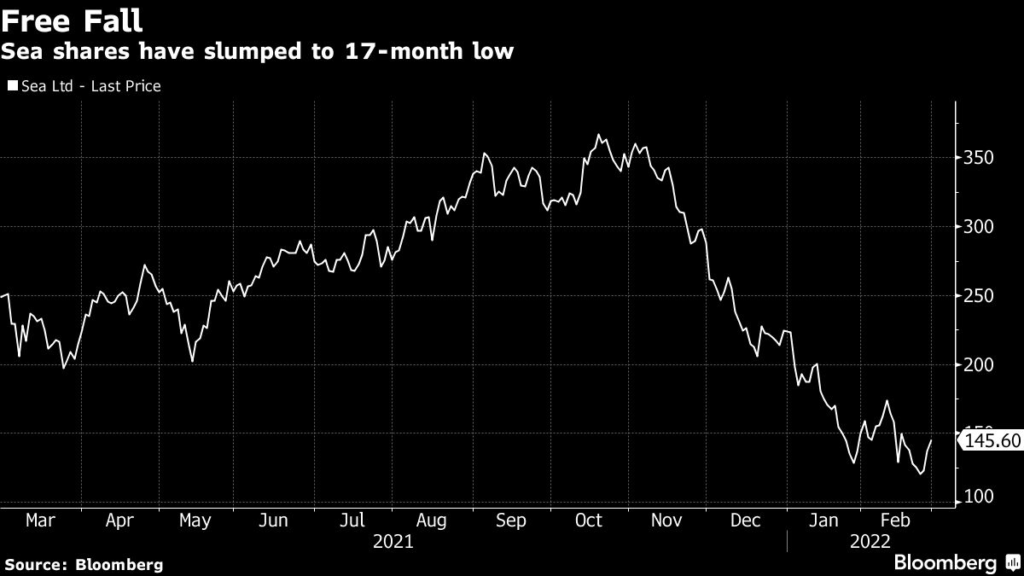
(Bloomberg) — Sea Ltd. said it expects e-commerce revenue growth to continue unabated as it expands in Latin America, trying to reassure investors after losing half its market value in a matter of months.

The Singapore-based company expects e-commerce sales, its main source of revenue, to rise to $8.9 billion to $9.1 billion in 2022 from $5.1 billion in 2021, according to its statement on Tuesday. Bookings at Sea’s other major business, the gaming division which is facing headwinds in India, are set to decline for the first time ever.

Total revenue in the fourth quarter more than doubled to $3.2 billion. Net loss widened to $617.6 million from $523.6 million as Sea spent more to gain market share in new geographies.

Key Insights

  • Sea is trying to cement its early success in Brazil, where it launched its online shopping business in 2019. Still, the company is facing intense competition from Latin American e-commerce giant MercadoLibre Inc. Meanwhile, the online-shopping arm is pulling out of France, retreating from a major market just months after launching its maiden foray into Europe. The unit, Shopee, will focus on Southeast Asia, Taiwan and Brazil, Sea said.
  • Business at Shopee surged during the pandemic, with 2021 sales more than doubling as shoppers moved online. Sea went public in 2017 and quickly became the most valuable company in Southeast Asia. It briefly surrendered that position last week amid a broader tech selloff and concerns about India’s abrupt ban on its most popular mobile gaming title, Free Fire.
  • Gross merchandise value, the sum of transactions across its e-commerce platforms, rose 77% to $62.5 billion last year.

Get More 

  • Sea forecast $2.9 billion to $3.1 billion in bookings at its digital gaming arm, saying online activity will moderate as economies reopen after the pandemic. That compares with last year’s bookings of $4.6 billion.
  • “We have taken into consideration” the market opening and “unexpected government actions” in India, Yanjun Wang, Sea’s group chief corporate officer, said on a conference call. “That means we are giving back some of the gains we made partially during Covid and with additional discounts to reflect the situation in India, which is highly uncertain. At this point, given the uncertainty we are facing, it’s probably more art than science for us.”
  • For the first time, Sea gave a revenue forecast for financial-services arm SeaMoney, projecting $1.1 billion to $1.3 billion for this year.
  • Fourth-quarter revenue from Shopee, Sea’s e-commerce unit, rose 89% to $1.6 billion.
  • Revenue from Garena, Sea’s digital entertainment unit, doubled to $1.4 billion.
  • Total payment volume for Sea’s mobile wallet rose 70% to $5 billion.
  • Sales and marketing expenses climbed 83% to $1.2 billion.

Market Reaction 

  • Shares of Sea declined 8% in New York trading before markets opened. They’ve lost 60% since an October peak.

(Updates with comment from executive in fifth bullet point)

More stories like this are available on bloomberg.com

©2022 Bloomberg L.P.
Telecom Italia Pushes KKR to Drop Bid, Join Spinoff Plan

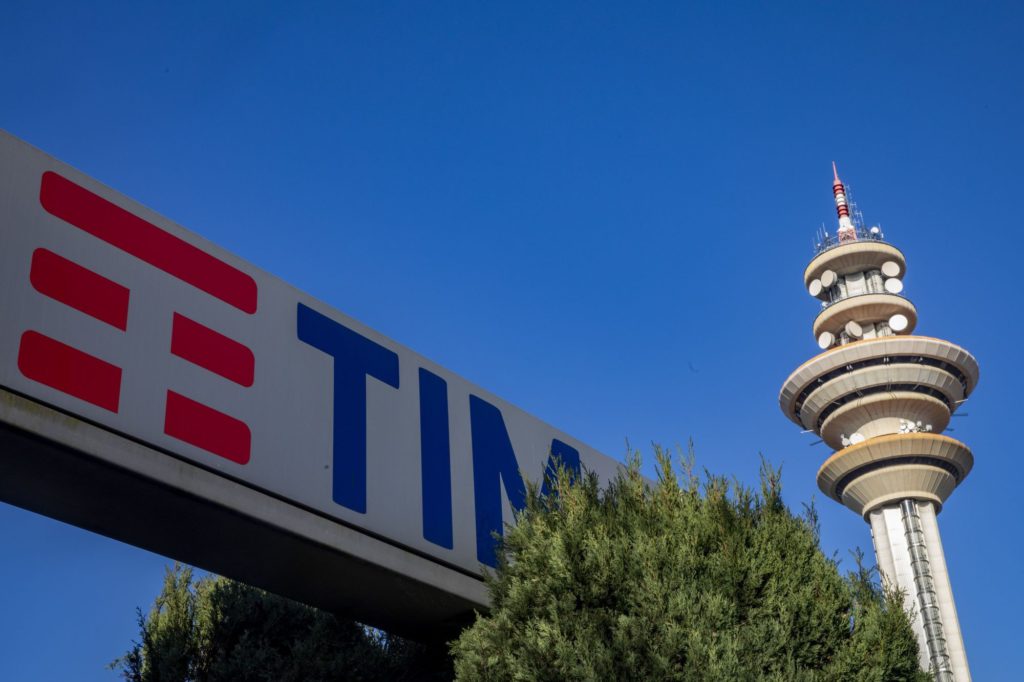
(Bloomberg) — Telecom Italia SpA is seeking to get KKR & Co. to scrap a 10.8 billion-euro ($12.1 billion) takeover bid for the company by involving the U.S. private equity giant in an in-house plan to spin off its landline network, people familiar with the matter said.

The phone carrier, which has internally valued the bid as too low and lacking enough value-creation, instead wants to involve KKR in a plan to spin the landline network off into a new unit called NetCo, said the people, asking not to be named since the discussions aren’t public. 

The counter-proposal would still allow KKR to strengthen its grip over Telecom Italia’s landline network once it’s separated, the people said. No final decision has been taken on the plan, which remains preliminary, they said. KKR already owns 37.5% of the Telecom Italia secondary grid running from street cabinets to premises. 

The project spearheaded by new Chief Executive Officer Pietro Labriola would align Telecom Italia with a government goal of building a single national fiber network while avoiding duplicate investments. The spun-off grid would be merged with that of state-backed rival Open Fiber SpA — in which Macquarie Group Ltd. owns a minority stake — through a process that could take several months and would need approval from European regulators, the people said.

Telecom Italia shares were suspended after falling 7.1% in Milan on Tuesday, giving the company a market value of 7.5 billion euros. The stock is down more than 19% so far this year. 

An external spokeswoman for Telecom Italia said the board has not yet deliberated on KKR’s expression of interest, adding that reports suggesting otherwise are speculative.

Spokespeople for Cassa Depositi and KKR declined to comment.

Single-Network MOU

Labriola is also seeking a new memorandum of understanding as soon as this week with Italy’s state lender Cassa Depositi e Prestiti SpA on a merger with Open Fiber, the people said. Cassa Depositi, which owns about 10% of Telecom Italia, is also Open Fiber’s largest shareholder.

As a prelude to a possible bigger deal, Telecom Italia is also set to unveil a range of new network-sharing agreements in rural areas, as well as commercial partnerships with Open Fiber, the people said.

Labriola, a 54-year-old veteran telecommunications executive, wants to transfer a significant portion of Telecom Italia’s 30 billion euros in debt to the new entity as part of the spinoff, possibly along with thousands of workers, people familiar with the matter told Bloomberg earlier this year. 

The plan would see all of the company’s commercial services spun off into a separate unit called ServiceCo. Unions have vocally opposed the CEO’s spinoff project.

Labriola envisages his new business plan as a workable alternative to KKR’s preliminary bid, which top shareholders Vivendi SE and Cassa Depositi have both criticized as being too low, people familiar with the matter said earlier this year.

The phone carrier is also expected to book some asset impairments and non-recurring provisions that could be worth hundreds of millions of euros. These are also linked to a soccer broadcast deal with DAZN Group Ltd, people familiar with the matter said. Those plans could be announced as soon as this week when Telecom Italia reports full-year earnings on March 2, the people said. 


(Updates with shares in fifth paragraph.)

More stories like this are available on bloomberg.com

©2022 Bloomberg L.P.

Stellantis Targets Double-Digit Margins Through 2030 in EV Shift

(Bloomberg) — Stellantis NV set a goal to maintain double-digit returns through the end of the decade as the automaker speeds up the electrification of its sprawling model lineup across brands like Jeep, Ram and Fiat. 

At the same time, net revenues are set to double to 300 billion euros ($334 billion), Stellantis said Tuesday. The carmaker last week reported an adjusted operating income margin for 2021 that soared to 11.8% after getting past supply snarls and labor shortages with production of more profitable vehicles. 

The plan comes a little over a year after the mega-merger between Fiat Chrysler and PSA Group to form a manufacturer with 14 brands with a goal to add scale in the EV and autonomous driving shift. Since then, Stellantis has faced head on unprecedented shortages of semiconductors and remaining challenges from the pandemic.

Stellantis Chief Executive Officer Carlos Tavares has mapped out a push to plow 30 billion euros into electric cars and software, including a 7-billion-euro venture to make batteries with Mercedes Benz AG and TotalEnergies SE in France. With the EV plan well underway, Tavares is honing in on addressing Stellantis’s weak performance in China.

After early successes to deliver on a pledge for synergies of 5 billion euros as part of the merger, Tavares said the manufacturer will achieve its goal in 2024, more than one year ahead of schedule. 


More stories like this are available on bloomberg.com

©2022 Bloomberg L.P.
Lucid Sinks After Cutting Production Goal on Commodity Woes

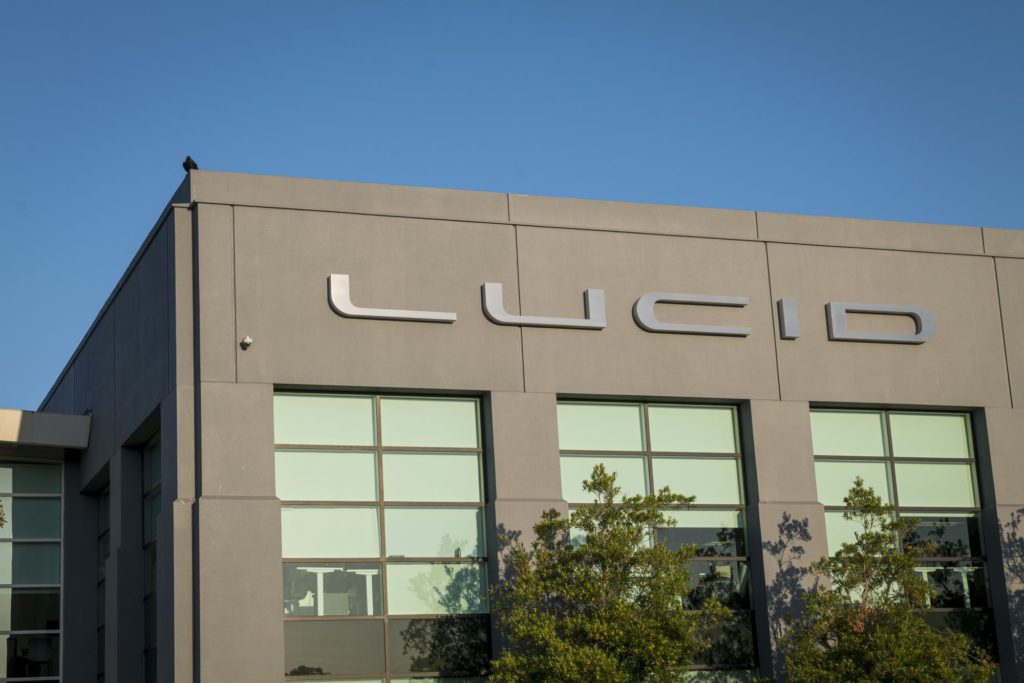
(Bloomberg) — Lucid Group Inc. slumped after lowering its production target for this year to between 12,000 and 14,000 cars, down from a previous goal of 20,000, citing “extraordinary” challenges with logistics and its supply chain.

The maker of luxury electric vehicles also came up short on its goal for deliveries last year. Lucid delivered 125 of its Air sedans in the final quarter after planning to ship more than 500, it said in an earnings statement after the close of trading Monday. Lucid also delayed the launch of its second vehicle, the Gravity SUV, from 2023 to the first half of 2024.

“The delay will allow competitor offerings more time in the market in advance of Lucid,” Ali Faghri, an analyst at Guggenheim Securities, said in a note Tuesday. The postponement “could make taking incremental market share in a more competitive market challenging.” The firm noted “overwhelmingly positive” reviews on Lucid vehicles so far.

Lucid tumbled 13% to $25.35 before the start of regular trading Tuesday in New York. The stock had dropped 24% this year through Monday.

The company has produced more than 400 Air sedans and has delivered more than 300 to customers. It reported more than 25,000 reservations for the vehicle and booked $26.4 million in fourth-quarter revenue. 

Lucid is struggling more to secure supplies of parts such as window glass and interior carpeting than of computer chips, shortages of which have tripped up other automakers, Chief Executive Officer Peter Rawlinson said on a conference call. The carmaker is navigating the procurement issues by offering to help key suppliers with logistical problems, switching contracts to new suppliers and bringing some processes in-house. 

What Bloomberg Intelligence Says

“Heavy capital spending approaching $2 billion in 2022, combined with slashed production targets due to supply-chain constraints, may chew up more than half of Lucid’s $6.2 billion of cash this year, a bump in the road for its long-term aspirations. A capital raise is possible this year.”

— Joel Levington, BI credit analyst

Rawlinson said in the statement that he expects the supply-chain issues to ease in the second half of this year and expressed confidence that Lucid is poised to capitalize on demand for its vehicles.

A 2.85 million-square-foot expansion of its Casa Grande, Arizona, vehicle assembly facility is “on track,” according to the statement. Lucid also said it recently leased land in Saudi Arabia where it plans to build its second factory. Saudi Arabia’s sovereign wealth fund owns more than 60% of Lucid.

Lucid said Monday that it expects to start construction on the Saudi Arabian factory this year. Chairman Andrew Liveris previously told Bloomberg TV that he expects the second plant to open by 2026.

Lucid became one of two electric-vehicle producers to make their first deliveries late last year, along with Amazon.com Inc.-backed Rivian Automotive Inc. Newark, California-based Lucid is targeting a much higher-end buyer than Rivian; the initial version of Lucid’s Air sedan costs $169,000.

The Air’s launch has had problems. Lucid last week issued a recall over a potential safety defect. The company also shipped some of the first sedans without a promised driver-assistance feature, which the company promised to add after delivery through an over-the-air software update.

(Updates with analyst’s comment in third paragraph)

More stories like this are available on bloomberg.com

©2022 Bloomberg L.P.
Russian Cyber War Poses Threat to Insurers as Well as Ukraine

(Bloomberg) — Russian digital warfare against Ukraine and potentially other nations as part of its invasion is prodding cyber insurers to beef up language protecting them against losses, and has left policyholders uncertain about the extent of their coverage.

Insurers, still dealing with the fallout from an infamous hack in 2017, have ramped up efforts to refine policies and spell out exactly what does and doesn’t get covered in the event of a retaliatory attack by Russia for sanctions and other actions imposed by the U.S. and its allies. Cyber coverage is a relatively young industry, and lacks defined standards of accountability.  

The issue of coverage “is one that’s going to be answered on a case-by-case basis, based on the facts of any cyber incident and the specifics of an insurance policy,” said Darin McMullen, cyber product leader with insurance broker Aon Plc. 

Ukrainian officials have alleged that Russian operatives launched hacks against government and corporate systems ahead of the invasion. The prospect of wider-ranging intrusions leaves insurers and policyholders uncertain about whether they will bear the costs if systems are breached.

Among the biggest providers of cyber coverage are Chubb Ltd., Axa SA and American International Group Inc., according to a 2021 report by the National Association of Insurance Commissioners.

At issue is the so-called war exclusion, a longstanding policy provision written by insurers. It states that losses inflicted by armed combat typically aren’t covered. While cyber warfare isn’t armed combat, the coordination of hacking and military action presumably could trigger the clause — and force insurers to alter policy language.

“Carriers are just going to be making more updates to their policies and further outlining very specific things that will or will not be covered because I think they’ve been bleeding cash for the last couple of years,” said Mark Lance, senior director of cyber defense at GuidePoint Security.

Uncertainty for the industry and its customers also followed the 2017 NotPetya hack, an event U.S. officials tied to Russia, and which crippled companies including pharmaceutical giant Merck & Co. The question of whether Merck’s $1.4 billion in losses were covered by its property and casualty policy ended up in court. 

In January, a New Jersey judge ruled that the insurers were unjustified in blocking Merck’s claims and overreached in invoking a war exclusion. Defendants in the case included Munich Re, Lloyd’s of London, Allianz SE and Zurich Insurance Group AG.

‘Learning Experience’

“It was a learning experience for the industry and now the insurers are much more aware of having to amend that definition of war, which has traditionally excluded or not addressed cyber attacks,” said Jennifer Rothstein, who heads cyber insurance and legal business development for computer security firm BlueVoyant.

She said that carriers have recently been working with brokers to clarify coverage and refine the questions asked as part of the underwriting process. In the meantime, premiums are going up, and the criteria insurers use to determine whether to take on risks are becoming stricter. That means getting covered is harder.

A December report from brokerage Marsh McLennan said that U.S. cyber-insurance pricing increased an average of 96% in the third quarter of 2021. The broker pinned the increase on factors including worsening losses brought on by an increase in the frequency and severity of ransomware claims, as well as the potential for a single attack to hit multiple policy holders at once.

There’s no guarantee that Russia will use its cyber capabilities to punish countries that have imposed sanctions since the invasion. Still, the Russian government has been linked to high-profile hacks before, including a 2020 intrusion that breached U.S. government systems. Russia has threatened “consequences” for nations that interfere with its war. It has repeatedly denied engaging in malicious cyberattacks.

More stories like this are available on bloomberg.com

©2022 Bloomberg L.P.

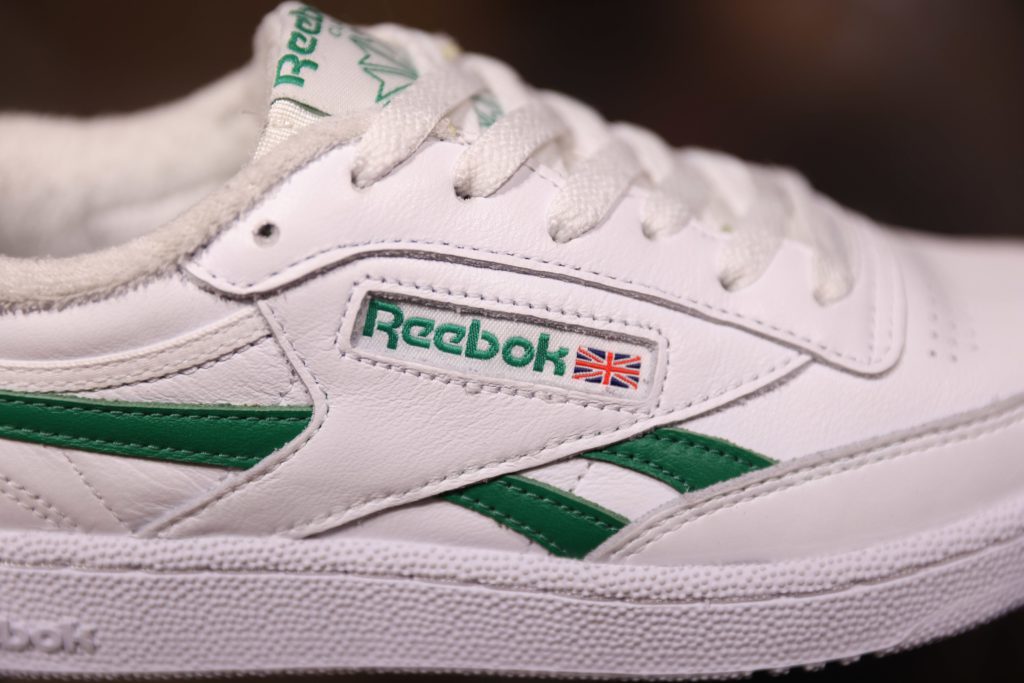
Authentic Brands Eyes Push Into Clothing, NFTs to Boost Reebok

(Bloomberg) — Authentic Brands Group Inc., the owner of licensing and marketing rights to names like David Beckham and Juicy Couture, plans to expand clothing offerings and add NFTs and crypto payments to kickstart Reebok following its purchase of the brand.  

With the acquisition of the athleticwear brand complete, Authentic on Tuesday said it signed about a dozen distribution partners operating in more than 80 countries, including Foot Locker Inc., Farfetch Ltd.’s New Guards Group and luxury goods maker Falic Group. 

The $2.5 billion purchase of Reebok is Authentic’s largest yet, and Chief Executive Officer Jamie Salter has comparably big plans. He expects Reebok to exceed $5 billion in global retail sales next year, up from $3.7 billion to $4 billion currently.

“You’ve got to pay attention to the brand and we’re going to pay attention to the brand,” Salter said in an interview Monday. 

Reebok plans to get there through inking new partnerships, adding more clothing, and growing in markets like China, South Korea and Latin America, executives said in interviews Monday.

Salter sees an equal split between Reebok’s performance-oriented lines like Nano and fashion and retro offerings including Club C. Authentic will also use its sourcing and distribution prowess to expand in clothing.

“You’re going to see some real growth on the apparel side,” Salter said. 

Growing Stable

Reebok joins more than 30 properties owned by Authentic, including Sports Illustrated, Brooks Brothers and Eddie Bauer. That means opportunities for collaborations with other brands, executives said. 

“Will you see Reebok Club Cs, which go great with an athletic tuxedo, in a Brooks Brothers store? Yes, you will,” Authentic President Nick Woodhouse said. 

As for those Reebok NFTs and acceptance of crypto payments, expect them this year, Woodhouse and Salter said. 

Salter founded Authentic in 2010, buying small brands and celebrity names like Marilyn Monroe. Since then, it’s been a key player in the shakeup of the retail industry after teaming up with mall landlords to purchase bankrupt merchants including Forever 21 and Brooks Brothers as private equity’s appetite for retailers dimmed. 

Authentic agreed to buy Reebok last August from Adidas AG. The New York-based brand manager filed to go public last year, then pulled the planned offering after announcing the Reebok deal and selling about a quarter of the company to CVC Capital Partners and HPS Investment Partners.

More stories like this are available on bloomberg.com

©2022 Bloomberg L.P.
Crypto is ‘Double-Edged Sword’ Amid War, Circle’s Allaire Says

(Bloomberg) — Circle Internet Financial’s Jeremy Allaire said Russia’s attack on Ukraine highlights the paradox of cryptocurrencies for both participants and regulators.      

Allaire, co-founder of the payments and financial infrastructure company behind the USDC stablecoin, said the situation is similar to the early days of the internet. While disinformation campaigns during conflicts can be conducted online, the internet is also being used now for actions such as crowd funding for Ukraine. 

“People are celebrating that,” Allaire said during an interview with Bloomberg News in New York. “But it also allows people to evade things. The open internet is a double-edged sword, and that’s the case with crypto.”      

The digital asset industry is being asked to help ensure that Russian individuals and organizations aren’t using virtual currencies to avoid sanctions leveled on them by Washington, according to people with direct knowledge of the matter.

When asked whether Circle can track if Russian oligarchs are using USDC to evade sanctions, Allaire explained that while they can monitor for “high-risk” activities flagged on exchanges and flag suspicious activity to regulators as they are legally required, they don’t have complete information.

“We don’t necessarily know — just like the U.S. doesn’t know — if piles of cash are being used by Russian oligarchs. So you don’t know,” Allaire said. 

Allaire co-founded Circle in 2013 and recently reworked a deal with blank-check company Concord Acquisition that raised its valuation to $9 billion, roughly double when the terms were first struck in 2021. Circle’s USDC stablecoin recently surpassed $50 billion in circulation, according to a recent attestation report. It is the second biggest behind Tether.

The SPAC transaction, which was originally supposed to close no later than April, now potentially extends into 2023. Allaire cited regulatory scrutiny for the longer forecast. 

While Circle prepares to go public, the notion of stablecoins is still being reviewed by regulators and Congress. U.S. Treasury Undersecretary for Domestic Finance Nellie Liang told lawmakers last month that firms issuing the tokens to let people pay for goods and services should face the heightened scrutiny that lenders receive under U.S. rules. Stablecoins are a form of digital currency typically pegged to the U.S. dollar or other fiat currency. 

“This isn’t just about USDC,” Allaire said. “There’s just a question of what is the role of digital assets that exist on the public internet, what are going to be the identity, record keeping and the other requirements that go alongside that.”    

More stories like this are available on bloomberg.com

©2022 Bloomberg L.P.
Close Bitnami banner
Bitnami