Bloomberg

Zalando Forecasts Online Fashion Sales Growth to Decelerate

(Bloomberg) —

Zalando SE, Europe’s biggest online fashion retailer, forecast sales growth to decelerate this year as the boom in e-commerce slows down.

The Berlin-based company signaled revenue may miss analysts’ estimates for 2022, predicting sales of 11.6 billion euros to 12.3 billion euros ($13.8 billion). Analysts had been expecting 12.2 billion euros. The stock fell as much as 4% Tuesday morning.

Zalando and rivals have benefited from a rise in demand during the pandemic as consumers confined to their homes shopped online. Revenue last year jumped 30% to 10.4 billion euros. The company’s main markets are Germany, Austria and Switzerland, and it also entered six countries across eastern Europe last year including Croatia and Lithuania. 

The forecast excludes any potential negative impact from the war in Ukraine. Zalando doesn’t operate in Russia nor Ukraine.

The company has been persuading more brick-and-mortar stores to use its site to sell apparel, bolstering its push to become a platform for all things fashion. The company said last year it’s hoping to serve more than 10% of Europe’s fashion market estimated to be worth 450 billion euros in the long term. 

Zalando forecast 2022 adjusted operating profit of 430 million euros to 510 million euros.


(Updates with shares in second paragraph)

More stories like this are available on bloomberg.com

©2022 Bloomberg L.P.

China Should Build Homegrown Payment System Faster, Citic Says

(Bloomberg) — China needs to speed up development of its homegrown cross-border payment system and the digital yuan, after Western nations used the SWIFT system as a tool to sanction Russia, according to Citic Securities Co.

Promoting the Cross-Border Interbank Payment System, or CIPS, could “push forward the internationalization of the yuan and reduce China’s reliance on the SWIFT system to an extent,” Ming Ming, head of fixed income research at Citic, said in a report Tuesday.

Countries including the U.S. decided to cut some Russian banks off from the SWIFT messaging system over the weekend. The system run by the Society for Worldwide Interbank Financial Telecommunication is essential to global cross-border transactions worth trillions of dollars. 

Read more: Why SWIFT Ban Is Such a Potent Sanction on Russia: QuickTake

China can encourage overseas banks to join the fledgling CIPS system, which clears and settles international claims in yuan, by leveraging the Belt and Road Initiative, the Regional Comprehensive Economic Partnership trade deal and other international cooperative agreements, according to Ming. The digital yuan, currently under trial and primarily aimed for domestic retail use, could potentially be used for trade settlement and this would be independent of the SWIFT system, he said. 

However, Chinese financial institutions will be cautious about providing financial services for Russian companies and individuals via the CIPS, as that could subject themselves and the system to U.S. sanctions, Bruce Pang, head of macro and strategy research at China Renaissance Securities Hong Kong Ltd., said in a report Tuesday. 

More stories like this are available on bloomberg.com

©2022 Bloomberg L.P.

Russia Steps Up Aerial Campaign Against Cities: Ukraine Update

(Bloomberg) — Russia escalated shelling overnight of key cities in Ukraine as its troops on the ground move slowly in a large convoy toward the capital, Kyiv. The mayor of Kharkiv, Ukraine’s second-largest city, said residential areas were being bombed and “this is a war to destroy the Ukrainian people.”

The drumbeat of penalties against Moscow for its invasion of Ukraine is growing louder, but not seemingly impacting events on the ground in the conflict. 

Russia banned residents from transferring hard currency abroad, as President Vladimir Putin sought countermeasures against fresh sanctions walloping the economy. The European Union approved sanctions on some of Russia’s wealthiest tycoons, and Britain told ports not to service Russian-flagged vessels. S&P Global Ratings lowered its long- and short-term issuer credit ratings on four Russian banks and Asia’s second-biggest shipper halted cargo to Russian and Ukrainian ports.

Key Stories

  • Russian Markets Start to Look Uninvestable as Sanctions Bite
  • Foreign Companies From Shell to Daimler Are Abandoning Russia 
  • Dimon Says SWIFT Sanctions May Bring ‘Unintended Consequences’
  • Oil Keeps Rising Even as U.S. Mulls Strategic Reserves Release
  • London’s Real Estate Supremacy at Risk from Oligarch Crackdown
  • EU Braces for Possible Russian Retaliation on Gas Deliveries

All times CET:

China Spy Think Tank Predicts Russia Sanctions Will Backfire (8:15 a.m.)

A Chinese research organization that advises President Xi Jinping says Russia can weather sanctions. Russia has largely adapted to dealing with punitive measures since 2014 when it annexed Crimea, Ma Xue, an associate researcher at the China Institutes of Contemporary International Relations, wrote in an article published on social media. 

Cutting Russian banks off SWIFT will hurt Europe roughly as much, according to Ma, whose research body is linked to the Ministry of State Security, China’s civilian intelligence agency. Ma added the U.S. could incur major costs from its economic and humanitarian aid for allies.

Ukraine Says Heavy Shelling By Russia Continues (7:25 a.m.)

Ukraine’s Defense Ministry said its forces shot down five Russian Su-30 or Su-35 fighter jets attacking Brovary and Vasylkiv in the region around the capital on Monday. its army chief said that since the invasion, Russia has fired 113 tactical missiles on towns and villages.

Ukraine continues to control Mariupol in the south, although the city is almost without electricity due to damage from air raids, according to mayor Vadym Boychenko.

Russian troops continue to shell military and civilian facilities and deploy surveillance airplanes via Belarus, the Ukrainian General Staff HQ said, adding the most-trained Belarus units are also massed along the border. Moscow says it is only seeking military targets.

Further Talks in Europe on Invasion Response (7:21 a.m.)

German, French and Polish foreign ministers are due to meet in the Polish city of Lodz Tuesday, another sign that Europe is coming together after Putin’s invasion of Ukraine.

The so-called Weimar Triangle was in danger of becoming redundant, but was reinvigorated by Russia’s aggression toward Ukraine, with the German, French and Polish leaders meeting in Berlin last month for the first time in several years.

“With his military attack, Putin is showing that he no longer respects any rules,” German Foreign Minister Annalena Baerbock said in a statement before leaving for Poland. “That makes our unity a question of survival for Europe.”

Russia Offers Programmers Deferred Draft (7:35 a.m.)

Russia’s Digital Ministry has prepared emergency measures to support the IT sector that includes tax breaks and a promise to not draft programmers into the army, Kommersant reported, citing a copy of the proposals submitted to Prime Minister Mikhail Mishustin.

IT workers are in demand globally and may seek to leave Russia as economic sanctions crush the ruble.

Major Shipper in Asia Halts Cargo (5:42 a.m.)

One Network Express suspended bookings of cargo to and from ports in Russia and Ukraine until further notice, joining a growing list of global companies halting operations due to the conflict in Ukraine.

Asia’s second-biggest container shipping line, also known as ONE, halted bookings to and from Ukraine’s Odesa and Russia’s Novorossiysk, according to a statement on its website. St. Petersburg bookings will also be suspended while the company evaluates the feasibility of operations.

China Aims to Keep Trade Normal, Minister Says (5:28 a.m.)

China hopes to keep normal trade with both Russia and Ukraine, Chinese Commerce Minister Wang Wentao says in response to questions from reporters in Beijing on how the conflict would impact Chinese trade with Russia.

Four Russian Banks Downgraded, S&P Says (5:10 a.m.)

S&P Global Ratings said it has lowered its long- and short-term issuer credit ratings on Raiffeisenbank AO, UniCredit Bank AO, and Gazprombank JSC, as well as Alfa-Bank JSC and its holding company ABH Financial Ltd. 

Stocks, Crude Oil Advance (4:55 a.m.)

Stocks and oil made steady gains amid a lull in the volatility sparked by the war in Ukraine and the sanctions placed on Russia.

Shares advanced in Japan and China, where data signaled an improvement in manufacturing activity. The nation also set a weaker-than-expected yuan reference rate, leaning against the currency’s rally. Hong Kong equities lagged amid reports the city is planning a lockdown for Covid-19 testing.

Manchin Urges Biden to Bolster Domestic Energy (2:30 a.m.) 

On the eve of President Joe Biden’s State of the Union address, Senator Joe Manchin, a West Virginia Democrat, said he wanted the administration to encourage more domestic energy production and that he was planning weeks of hearings on energy independence, both for the U.S. and to support NATO allies.  

“We produce energy cleaner than anybody in the world,” Manchin said at the Capitol on Monday evening. “We’re buying 650,000 barrels a day from Russia. It’s ridiculous. Totally ridiculous.” 

Senator Lindsey Graham, a South Carolina Republican, said that Ukraine’s ambassador to the U.S., Oksana Markarova, had asked that Russian oil and gas be sanctioned. “We’re not using the energy sector as a weapon,” Graham said. “We’re not hitting Putin where it hurts most.”

Harley-Davidson, GM Halt Shipments to Russia (1:40 a.m.)

Harley-Davidson, Inc. and General Motors Co. say they’ll halt shipments to Russia, a sign economic sanctions against the country are having an impact.

Harley suspended its business in Russia, according to a statement from the Milwaukee, Wisconsin-based motorcycle manufacturer. Harley relied on Europe and the Middle East for 31% of sales last year. It doesn’t break out sales to Russia.

GM cited “a number of external factors, including supply chain issues and other matters beyond the company’s control.”

Earlier Monday, Boeing Co. closed its office in Kyiv, and “paused” operations at its Moscow training campus, a spokeswoman for the Chicago-based plane maker said in an email.

Netflix, Disney Feel Side Effects of Russia Conflict (10:34 p.m.)

Netflix Inc. said it won’t be adding Russian channels to its service under regulations that were to take effect March 1.

“Given the current situation, we have no plans to add these channels,” a spokesperson for the streaming giant said in an emailed statement.

The Moscow Times reported last year that Netflix has more than 100,000 local subscribers and thus is supposed to air some 20 local channels including state-run Channel One, entertainment-focused NTV and the Russian Orthodox Church’s in-house channel.

Separately, a Walt Disney Co. music executive said banking sanctions against Russia will cut into revenue from its popular “Encanto” soundtrack. 

Musk Satellite Dishes Arrives in Ukraine, Drawing Thanks (10:30 p.m.)

Elon Musk fulfilled a promise to get additional SpaceX satellite dishes into Ukraine, drawing thanks from the deputy prime minister who had pleaded for the tools to keep internet communications working amid Russia’s invasion.

Mykhailo Fedorov, who is also Ukraine’s minister of digital transformation, tweeted a photograph of the additional Starlink dishes and said they had arrived. “You are most welcome,” Musk, who is chief executive officer of SpaceX as well as Tesla Inc., tweeted in response.

U.S. Orders 12 Russian Diplomats at UN to Leave (9:28 p.m.)

The U.S. has ordered 12 Russian diplomats to the United Nations to leave, UN envoy Vassily Nebenzia said during a UN Security Council meeting, calling it a “gross violation by the host country.”

Richard Mills, deputy head of the U.S. mission to the UN, confirmed the expulsion of the diplomats, adding it was a step taken “in full accordance with” U.S. obligations as the host country to the UN. The U.S. mission said in a statement that “this action has been in development for several months.”

White House Press Secretary Jen Psaki added that the expelled Russians “had abused their privileges of residency in the United States by engaging in espionage activities that are adverse to our national security.”

Pentagon Seeks ‘Deconfliction Mechanism’ With Russia (9:25 p.m.)

The Pentagon is exploring options for a “deconfliction mechanism” with Russia, spokesman John Kirby said. Kirby indicated there isn’t such a plan in place as Russian forces invading Ukraine focus on encircling major cities.

A plan to avoid unintended conflicts will be important as Ukraine’s air space is contested, Kirby said, because “some of that air space butts right up against NATO territory.” 

“We don’t have any indications right now from the Russians that they would also be interested in exploring those options,” Kirby told reporters at the Pentagon. “It’s got to be a two-way street.”

Prosecutor Says He’ll Probe Possible War Crimes in Ukraine (9:18 p.m.)

Karim AA Kham QC, the prosecutor for the International Criminal Court, said he’ll open an investigation into “the situation in Ukraine.”

“There is a reasonable basis to believe that both alleged war crimes and crimes against humanity have been committed in Ukraine,” he said in a statement. He said he is asking his team to explore how to preserve evidence and would seek authorization “from the Pre-Trial Chamber of the Court to open an investigation.”

White House Press Secretary Jen Psaki told reporters Monday that some of Russia’s alleged actions in Ukraine, if true, “would potentially be a war crime.”

JPMorgan’s Dimon Cites ‘Workarounds’ to SWIFT Sanctions (9:01 p.m.)

Jamie Dimon, chief executive officer of JPMorgan Chase & Co., said there are ways around sanctions against Russia involving the SWIFT bank messaging system.

“There are a lot of workarounds for SWIFT, so there are different tools we use for different reasons,” Dimon said Monday in an interview on Bloomberg Television. “The banks are talking with the government so everyone understands the issues, not because they’re for or against any particular thing.”

Turkey to Restrict Transit of Russian Warships Through Straits (8:31 p.m.)

Turkey has decided to restrict Russian warships from using waterways it controls to transit into the Black Sea due to Putin’s invasion of Ukraine, according to two Turkish officials familiar with the matter.

The officials, who asked not to be named due to the sensitivity of the matter, fleshed out President Recep Tayyip Erdogan’s pledge earlier on Monday to “exercise” the authority over the straits granted to Turkey by the 1936 Montreux Convention to prevent an escalation of fighting.

The Turkish straits give Russia’s Black Sea fleet entry to the Mediterranean. The Montreux agreement allows Ankara to regulate maritime traffic through the waterways during peace and wartime alike. So far, there had been no transit requests from the government in Moscow since the measures came into force, the officials said.

EU Adopts Sanctions on Some of Russia’s Wealthiest Tycoons (8:26 p.m.)

The European Union adopted sanctions on some of Russia’s wealthiest tycoons as the bloc ratchets up penalties on Moscow for its invasion of Ukraine. 

The list includes a handful of billionaires who haven’t yet been hit by sanctions in the U.S.: metals tycoon Alisher Usmanov, Alfa Group owners Mikhail Fridman and Petr Aven, plus Alexei Mordashov, who controls a major steel company. Bloomberg first reported the names on Sunday.  

The EU is already working on further measures to penalize more oligarchs, according to two people familiar with the plans, who asked not to be identified because the work is private.

U.S. Prods Crypto Exchanges to Thwart Sanctions Dodgers (7:46 p.m.)

The Biden administration is asking crypto exchanges to help ensure that Russian individuals and organizations aren’t using virtual currencies to avoid sanctions leveled on them by Washington, according to people with direct knowledge of the matter.

Putin Retaliates by Banning Foreign Debt Service (6:40 p.m.)

President Vladimir Putin banned all Russian residents from transferring hard currency abroad, including for servicing foreign loan contracts. It wasn’t clear whether the new rules applied to Russia’s sovereign debt and if they constituted default. The central bank put Russia’s total external debt at $478 billion.

The steps, which take effect Tuesday, are part of a package of retaliatory measures for U.S. and European sanctions over his invasion of Ukraine. They also include restrictions on companies buying back their own stock, according to the text of the decree. 

More stories like this are available on bloomberg.com

©2022 Bloomberg L.P.

$18 Billion Electronics Giant Faces Turbulence as Toshiba CEO Resigns

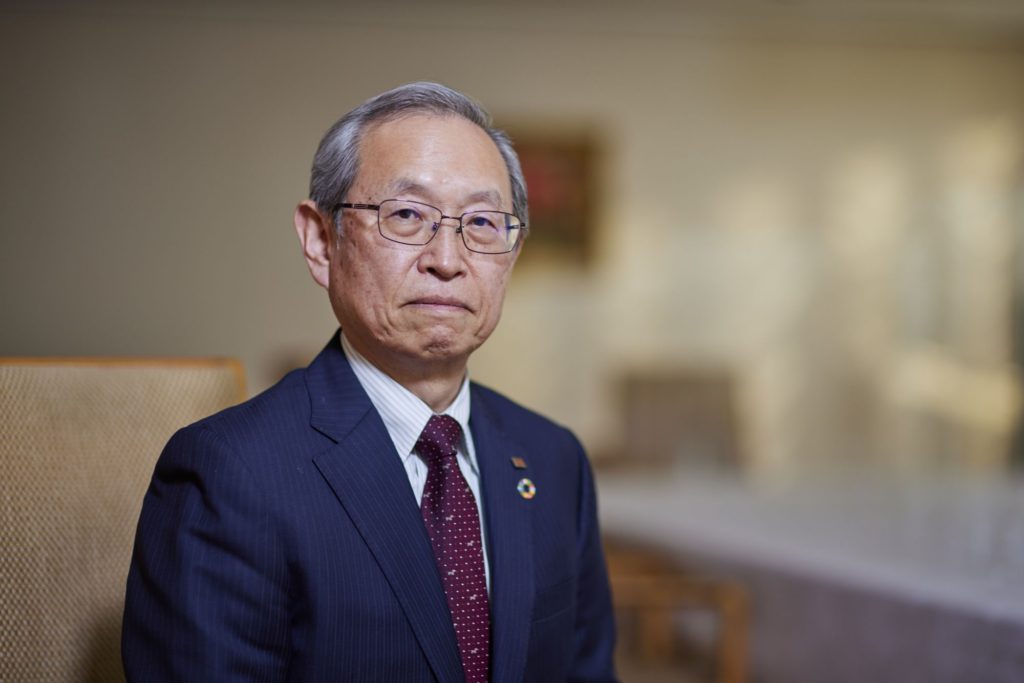
(Bloomberg) — Toshiba Corp.’s Chief Executive Officer Satoshi Tsunakawa resigned Tuesday in the latest turbulent move at the Japanese firm, with his replacement pledging to move forward with a plan to split the company in two despite opposition from some investors. 

Tsunakawa will be replaced on an interim basis by senior executive Taro Shimada. The former CEO will remain as chairman of the board of the directors.

Speaking in Tokyo, Shimada pledged to strengthen ties with shareholders, workers and other stakeholders. 

But he put his support behind the plan to divide into two companies, despite earlier reports that the new management could review the controversial proposal. 

Activist investors have called for the company to review other options, including a potential sale to private equity. Management has been reluctant to pursue that path, with Tsunakawa saying in an interview that going private was full of risks that would be “impossible” to ignore. 

Shimada said the company isn’t considering canceling the plan to split or going private.

Last month, Toshiba scrapped its proposal to divide into three listed companies and switched to a plan to split into two instead. 

The company will hold a shareholder meeting on March 24 to gauge investor support for its revised plan. 

“Some shareholders voiced concerns that it’s difficult to vote on the two-way split plan without knowing who will be the leader taking the initiative,” Tsunakawa said at the briefing. “Today’s announcement is a result of the appointment committee moving swiftly to address that point.”

Toshiba shares closed 2.4% higher in Tokyo, having pared earlier gains.

Toshiba CEO Says Going Private Too Risky as Activists Seek Sale

Investors have been cool on both proposals to split, with shares still trading below the level before the first split proposal was unveiled last year. 3D Investment Partners Pte, the Japanese company’s second-largest shareholder, has called on the company to reopen negotiations with private equity firms. 

Nikkei BP reported last week that Toshiba received an early takeover offer from Blackstone Inc., which was strenuously denied by both sides. 

In the interview with Bloomberg Television, Tsunakawa voiced opposition to going private, saying that Toshiba would lose orders from utilities and local governments and would be forced to sell sensitive technology in areas such as nuclear, defense and cybersecurity. 

Shimada, 55, was hired from Siemens AG to lead Toshiba’s digital strategy in 2018. He was personally approached to join the company by Tsunakawa’s predecessor, Nobuaki Kurumatani, who had formerly worked at private equity firm CVC Capital Partners. 

(Updates with comments from Shimada from third paragraph)

More stories like this are available on bloomberg.com

©2022 Bloomberg L.P.
Hong Kong’s Reported Lockdown; Testing Rules Ease: Virus Update

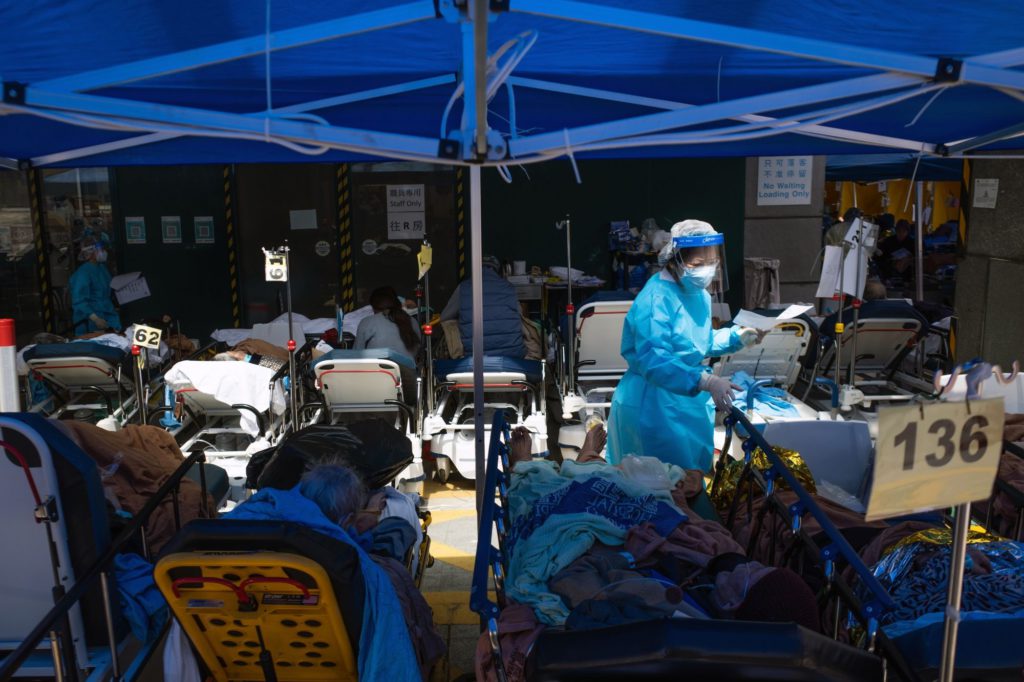
(Bloomberg) — Hong Kong plans a lockdown to underpin a mandatory Covid-19 testing drive this month, according to local media. The U.S. raised its travel alert for the financial hub two levels, citing the risk of infection, as soaring deaths among the elderly pushed the fatality rate to the highest in the developed world. 

New cases in Singapore declined as the city-state’s transmission rate continued to fall. Thailand and Malaysia are easing testing requirements for foreign arrivals in a bid to kick-start tourism. Japan lifted a border ban on new foreign entrants and eased quarantine rules.

The vaccine made by Pfizer Inc. and BioNTech SE is much less effective in preventing infection in children aged 5 to 11 years than in older adolescents or adults, according to a large new set of data collected by health officials in New York state, the New York times reported.

Key Developments:

  • Virus Tracker: Cases exceed 436 million; deaths top 5.9 million
  • Vaccine Tracker: More than 10.7 billion doses administered
  • Coronavirus Daily: Are you ready for normal life?
  • Hong Kong’s isolation plan crumbles as infections soar
  • Hong Kong deaths among worst on at-risk elderly
  • Where are we in hunting for the coronavirus’s origin?: QuickTake

Japan Opens to Newcomers (2:23 p.m. HK)

Japan ended a ban on new entry by foreigners and eased quarantine rules as of Tuesday. New foreign entrants except for tourists will be admitted, with a cap of 5,000 arrivals a day, from 3,500. Japan also scrapped the quarantine period for those who have had a booster shot and have entered from countries unlisted by the government and lowered it to three days for those who came from places on the list.

U.S. Warns on Travel to Vietnam (1:39 p.m. HK)

The U.S. State Department raised its travel advisory for Vietnam to the highest level in response to recent surges in Covid-19 infections in the country.

Vietnam is ranked as level 4, or “very high” number of COVID-19 cases, which means Americans should avoid all travel there, according to a statement. Vietnam on Monday reported 94,385 new cases.

Singapore Eyes Key Case Report (11:44 a.m. HK)

Singapore’s case count has fallen for six straight days, increasing the focus on a report Tuesday that could signal whether omicron infections in the city-state have peaked.

Tuesdays tend to be Singapore’s biggest caseload each week, owing in part to weekend catch-ups and people testing at the start of the week. The past two weeks have seen cases drop before a Tuesday spike, delaying a potential reopening.

Singapore plans to substantially ease restrictions once the current wave of infections peaks.

China Health Expert Sees Opening Up (11:38 a.m. HK)

One of China’s top health experts raised the possibility that China could follow western nations and attempt to live with Covid-19, a rarely voiced view in the country as it persists with its Covid-Zero strategy.

“Western countries have taken the lead in practicing the coexistence with the virus, which is very risky and courageous. We shall observe and learn from the experience and lessons of western countries with a calm and humble attitude for our own use.” Zeng Guang, former chief epidemiologist of Chinese Center for Disease Control and Prevention, said on his social media account.

“At an appropriate timing in the near future, China will surely present its version of the roadmap for co-existing with the virus,” Zeng said.

Virus Fears Wane, NYT Says (10:29 a.m. HK)

Americans are less worried about catching and spreading Covid-19 compared with six months ago, according to a new poll by The Associated Press-NORC Center for Public Affairs Research, the New York Times reported.

Support is also decreasing for mask mandates, which are easing across much of the U.S., the poll found, according to the NYT.

Hong Kong Weighs Public Transport Halt (10:04 a.m. HK)

Hong Kong is weighing whether to halt public transport during a lockdown or allow residents who test negative with rapid screening kits to leave their homes, the South China Morning Post reported, citing unidentified people.

The government is considering a number of options about the lockdown, including whether it should be citywide or done on a rolling basis, according to the report.

Thailand Cuts Second Visitor Test (9:06 a.m. HK)

Vaccinated foreign visitors to Thailand will no longer be required to take a second RT-PCR test after arrival from Tuesday as the nation woos tourists. The insurance requirement for Thai visas has also been lowered to $20,000 from $50,000.

From Tuesday, authorities will start distributing free rapid antigen test kits through 2,000 centers nationwide amid a health ministry warning that daily cases could spike to 100,000 by mid-April. New infections fell to 20,420 on Tuesday.

Malaysia to Exempt Some Travelers From Test (8:29 a.m. HK)

Malaysia will relax coronavirus testing requirements for some travelers starting Thursday, Health Minister Khairy Jamaluddin said in a statement.

The exemption applies to those arriving in Malaysia via the vaccinated travel lane with Singapore, the Langkawi travel bubble, and short-term business travel via one-stop centers, he said.

Mannings Shuts Hong Kong Stores (7:43 a.m. HK)

Hong Kong’s health and beauty products chain Mannings said it will temporarily close 53 stores across the city from Tuesday until further notice, citing the pandemic.

Some 38 shops will temporarily suspend pick-up service for online purchases. The retailer, controlled by Jardine Matheson, still has more than 250 shops operating in Hong Kong.

Hong Kong Plans Lockdown: Media (7:13 a.m. HK)

Hong Kong is planning to enforce a lockdown of the city to ensure a mandatory Covid-19 testing drive planned for this month is effective, Sing Tao Daily reported.

Testing of the financial hub’s 7.4 million people will start after March 17, the newspaper reported, citing people it didn’t identify. Officials are aiming to test the whole city three times over nine days, with a stay-at-home order in place to maximize the impact, the report said. 

Three West Coast States End Mask Mandates (2 p.m. NY)

California, Oregon and Washington will no longer require masks in classrooms after the end of next week, as plunging Covid case rates across the West Coast accelerate efforts to return to something like normal life.

The three states will shift to recommending masks in schools and child-care facilities, rather than mandating them, after March 11, according to a statement Monday. Oregon and Washington will lift mask rules for most other indoor settings at that time as well. California had let its mask requirement for indoor public spaces expire earlier this month.  

Pfizer Shot Seen Less Effective in Young Kids (1:45 p.m. NY)

The vaccine made by Pfizer Inc. and partner BioNTech SE is much less effective in preventing infection in children ages 5 to 11 years than in older adolescents or adults, according to a large new set of data collected by health officials in New York state, the New York times reported.

The Pfizer vaccine still prevents severe illness in the children but offers virtually no protection against infection, even within a month after full immunization, the data, which were collected during the omicron surge, suggest, according to the newspaper.

The sharp drop in the vaccine’s performance in young children may stem from the fact that they receive one-third the dose given to older children and adults, researchers and federal officials who have reviewed the data said, according to the Times.

Amazon Makes Masks Optional for All (12:25 p.m. NY)

Amazon.com Inc. said face coverings will be optional at its U.S. operations, regardless of vaccination status, starting on Tuesday. The Seattle-based e-commerce giant in a memo to employees recommended that unvaccinated workers wear masks and noted that federal, state and local laws may still require face coverings in some cases. The Information earlier reported the policy change. Amazon rescinded its masking guidance for vaccinated employees earlier this month and required employees to be fully vaccinated in order to receive paid time off if they became sick with Covid-19.

Work From Home is Here to Stay (9:40 a.m. NY)

About 75% of the increase in telework over the course of the Covid-19 crisis will likely stick, according to researchers at Arizona State University, Virginia Commonwealth University and the Dallas Federal Reserve. 

Twice as many workers will be 100% remote as before the pandemic, and one in every five workdays will be from home, the economists predict. And while work-from-home rose for every major demographic group and industry, it did so especially among highly educated workers, the data found.

Roche Cautions Pandemic Not Over (6:04 a.m. NY)

Roche Holding AG’s diagnostics chief said it’s too early to call an end to the pandemic even as omicron’s spread ebbs, because a seasonal resurgence is possible later this year.

“It’s important that we get prepared as we go into the next winter period and don’t get surprised,” said Thomas Schinecker, who heads the Covid test maker’s diagnostics unit

In an interview, the Roche executive called on governments, the largest purchasers of rapid antigen tests, to be more proactive as they plan for bulk purchases ahead of a likely next wave of infections.

Hong Kong Numbers Rise (4:08 a.m. NY)

Hong Kong reported 34,466 confirmed Covid-19 cases Monday, health official Albert Au said at a briefing. Covid deaths among people aged 51 to 100 years old stood at 87, according to the Hospital Authority, while 49 patients are in critical condition. 

More stories like this are available on bloomberg.com

©2022 Bloomberg L.P.

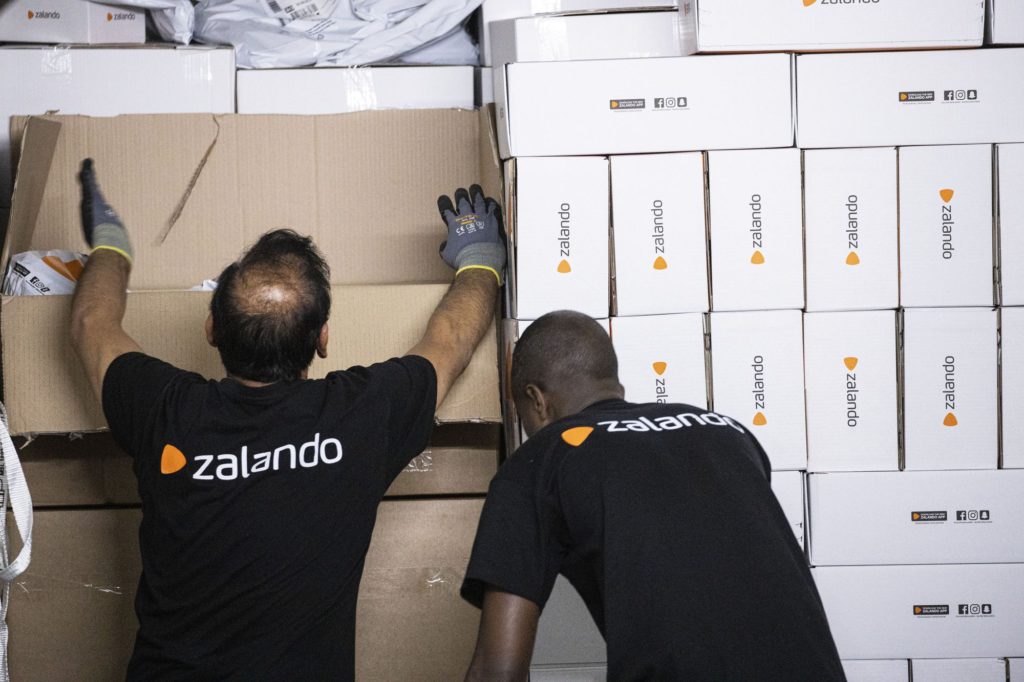
Online Fashion Site Zalando Forecasts Sales Growth to Decelerate

(Bloomberg) —

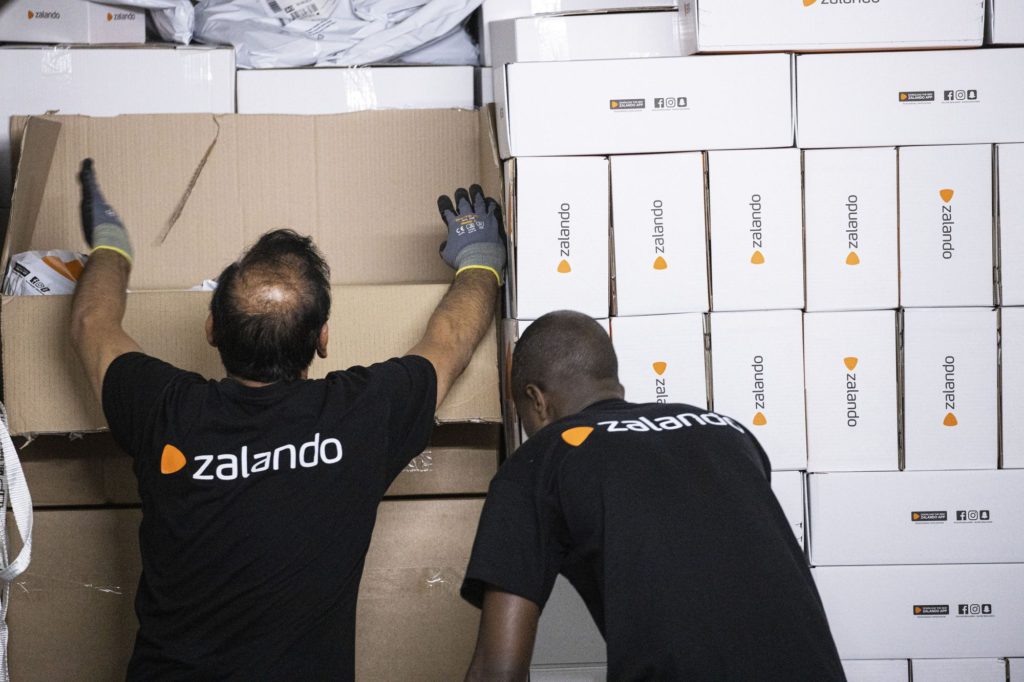
Zalando SE, Europe’s biggest online fashion retailer, forecast sales growth to decelerate this year as the boom in e-commerce recedes.

Revenue should increase as much as 19% to 12.3 billion euros ($13.8 billion) in 2022, the Berlin-based company said Tuesday, saying that it expects to outperform the market. Analysts had been expecting 12.2 billion euros. The forecast excludes any potential negative impact from the war in Ukraine, and the low end of the range is 11.6 billion euros.

Zalando and rivals have benefited from a rise in demand during the pandemic as consumers confined to their homes shopped online. Revenue last year jumped 30% to 10.4 billion euros. The company’s main markets are Germany, Austria and Switzerland, and it also entered six countries across eastern Europe last year including Croatia and Lithuania. Zalando doesn’t operate in Ukraine.

The company has been persuading more brick-and-mortar stores to use its site to sell apparel, bolstering its push to become a platform for all things fashion. The company said last year it’s hoping to serve more than 10% of Europe’s fashion market estimated to be worth 450 billion euros in the long term. 

The shares have lost a third of their value in the past year. 

Zalando forecast 2022 adjusted operating profit of 430 million euros to 510 million euros.


More stories like this are available on bloomberg.com

©2022 Bloomberg L.P.
Microsoft Says Son of CEO Satya Nadella Has Died at 26

(Bloomberg) — Microsoft Corp. said Zain Nadella, son of Chief Executive Officer Satya, died Monday morning. He was 26 years old and had been born with cerebral palsy. 

The software maker told its executive staff in an email that Zain had passed away. The message asked executives to hold the family in their thoughts and prayers while giving them space to grieve privately. 

Since taking on the CEO’s role in 2014, Nadella has focused the company on designing products to better serve users with disabilities and cited lessons he learned raising and supporting Zain. Last year, the Children’s Hospital, where Zain received much of his treatment, joined with Nadella and his wife Anu to establish the  Zain Nadella Endowed Chair in Pediatric Neurosciences, as part of Seattle Children’s Center for Integrative Brain Research. 

“Zain will be remembered for his eclectic taste in music, his bright sunny smile and the immense joy he brought to his family and all those who loved him,” Jeff Sperring, CEO of Children’s Hospital, wrote in a message to his Board, which was shared with Microsoft executives.

More stories like this are available on bloomberg.com

©2022 Bloomberg L.P.
Toyota to Resume Japan Production After Supplier Cyberattack

(Bloomberg) — Toyota Motor Corp. will resume work at all its Japanese factories Wednesday after a one-day shutdown, limiting the fallout from a cyberattack on one if its key suppliers. 

The world’s top auto producer will resume operations at all 14 plants in its home country on Wednesday, Toyota said in a statement Tuesday. It had halted production at the plants due to impacts from a cyberattack against parts supplier Kojima Press Industry Co.

Kojima Press confirmed Tuesday its server was subject to a cyberattack over the weekend. It subsequently shut down the server and is aiming to restore its system from March 2, a spokesperson for the company said late Monday. A spokeswoman for Toyota said Tuesday it will take a week or two for the company to sort out the Kojima Press hack. In the meantime, Toyota is using a workaround to get operations back up and running, she said.

Toyota’s Japan production stoppage — though short in length — is a setback in the automaker’s efforts to recover production lost in recent months to chip shortages and Covid-related disruptions. The supply snags prompted Toyota last month to cut its output goal for the fiscal year through March to 8.5 million vehicles, from a previous target of 9 million.

The one-day domestic production stoppage likely impacted around 13,000-vehicles worth of production, representing about 5% of output for the month of February. 

Toyota had planned to produce 950,000 vehicles in March, up from the 843,393 it produced a year earlier. In that sense, it will be very difficult for Toyota to increase production further to make up for units lost due to supplier network disruptions, said Bloomberg Intelligence analyst Tatsuo Yoshida.

Still, the number of units lost to the recent network disturbances remains “very small” relative to Toyota’s total annual output and the amount it lost last year when the spread of Covid-19 in Southeast Asia caused it to slash production, Yoshida said. Toyota should be able to recover recent losses in April or May, he added.

Kojima Press derives most of its sales from the Toyota Group, so there’s also likely to be little impact from the cyberattack on other Japanese automakers including Honda Motor Co. and Nissan Motor Co., according to a report from Mitsubishi UFJ Morgan Stanley Securities Co. That said, the events illustrate that “strengthening cybersecurity measures for the entirety of supply chains will be an urgent task for the entire auto industry,” according to the report.

(Updates with analyst comment, context throughout.)

More stories like this are available on bloomberg.com

©2022 Bloomberg L.P.
Verizon Lands BlackRock as Its First U.S. Private 5G Client

(Bloomberg) — Verizon Communications Inc. will build a private 5G network for BlackRock Inc. at its new Hudson Yards headquarters, the beginning of what the telecom giant expects to be a big new business opportunity.

New York-based Verizon said new 5G wireless technology can replace Wi-Fi and give BlackRock the ability to use applications like virtual reality and edge computing that require nearly instantaneous network response time. 

The agreement marks the first U.S. commercial 5G office contract for the carrier, which has been in a race with AT&T Inc. and T-Mobile US Inc. to get business customers to adopt the new technology. AT&T, for example, is working on a 5G testbed surrounding Amazon.com Inc.’s planned Crystal City campus in Virginia, outside Washington, D.C.

BlackRock, the world’s largest asset manager, plans to occupy 15 floors of the new 50 Hudson Yards tower on Manhattan’s West Side later this year or early next year. The firm secured $25 million in tax credits from the state for keeping and creating jobs in New York.

More stories like this are available on bloomberg.com

©2022 Bloomberg L.P.
Warburg Pincus Co-Leads Latest Funding Round in Israel’s MDClone

(Bloomberg) — MDClone, a synthetic medical data startup, raised $63 million from investors led by Warburg Pincus and Viola Growth to fund global expansion.

The Israeli company, which sells artificial databases that closely mirror real world data sets, has started exploring markets in Europe, Asia and the Persian Gulf, Chief Executive Officer Ziv Ofek said in an interview.

Founded in 2016, MDClone has partnerships with the U.S. Department of Veterans Affairs, National Institutes of Health and Israel’s biggest hospitals and health-care providers. The company has now raised $104 million from investors including aMoon, LightSpeed Venture Partners and OrbiMed.

Usage of synthetic medical data has increased in the past few years as health records have become more digitized in tandem with concern for patient privacy. Safeguarding medical records could allow hospitals around the world to more rapidly share insights about diseases and potentially cut down the time needed to develop new drugs, said Josh Rubel, MDClone’s chief commercial officer. 

More stories like this are available on bloomberg.com

©2022 Bloomberg L.P.

Close Bitnami banner
Bitnami