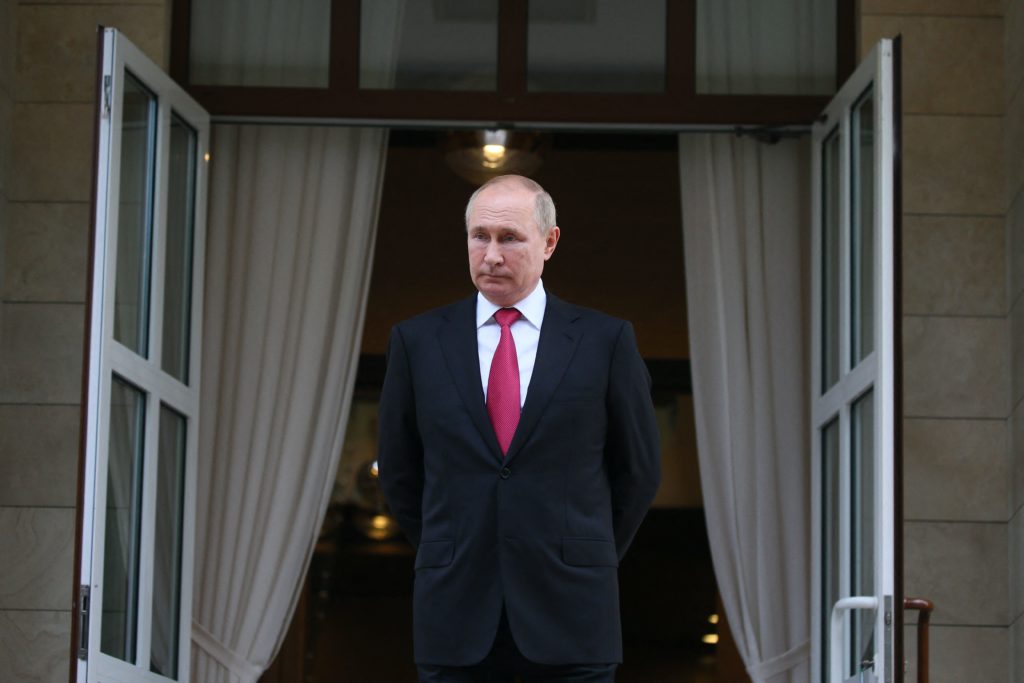
Bloomberg

Bitcoin Tests the Year’s Lows as Ukraine Crisis Rocks Markets

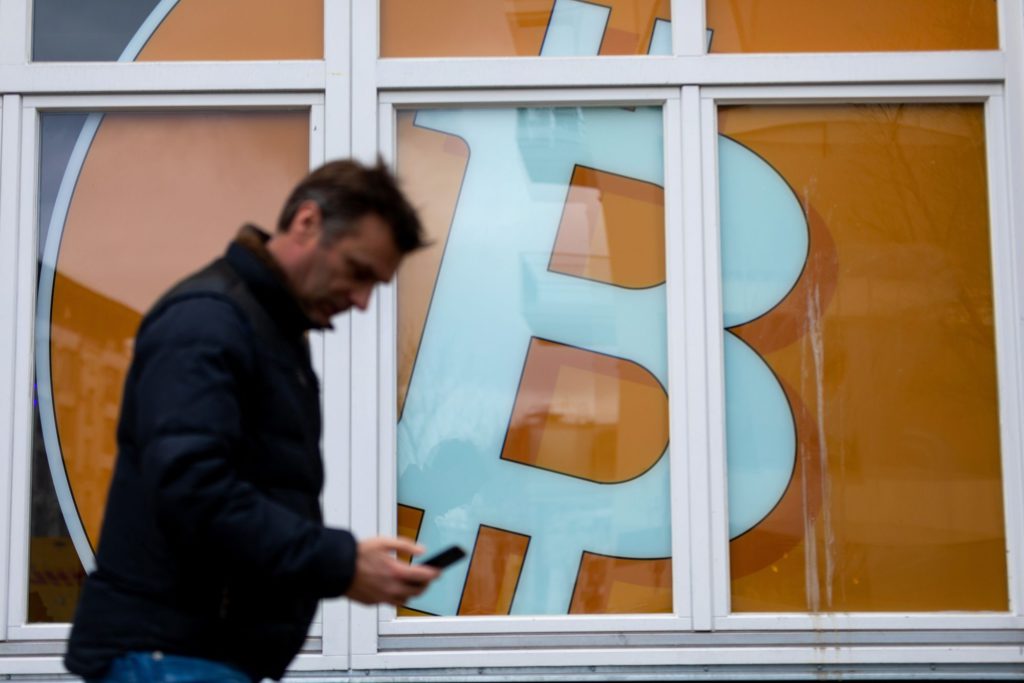
(Bloomberg) — Cryptocurrencies extended declines as Russia’s attacks on targets across Ukraine sent risk assets reeling, with Bitcoin slumping to a one-month low.

The largest token fell as much as 8.5% to $34,337 after Vladimir Putin’s push to demilitarize Ukraine started with a barrage of missile attacks on Thursday. While Bitcoin pared its loss, it’s still down almost 50% from its all-time high set in November. Second-ranked Ether declined as much as 12% to $2,301.84. Other coins like XRP, Cardano and Solana were down as well.     

Bitcoin’s swings during the past weeks of escalating geopolitical tensions have undermined the argument that cryptocurrencies offer a hedge in times of trouble. That’s in large part a result of its deepening integration into global financial markets, which causes it to move more like other risk assets, according to Ben Caselin, head of research and strategy at crypto exchange AAX.

The traditional safe haven gold, meanwhile, surged to the highest level in nearly two years on Thursday.

“This is a different level of anxiety,” said Kenny Polcari, managing partner at Kace Capital Advisors. “When push comes to shove, and people think about safety and where to put their money, I think gold trumps Bitcoin.” 

The Russia-Ukraine crisis “could drive prices significantly lower in the short-term,” said Jonathan Tse, head of trading at crypto platform Copper.co. “However, it could be what’s needed to find a bottom sooner, rather than an ongoing crypto winter for prices slowly grinding lower.”

The next key level to watch for Bitcoin in the event of further declines will be $28,000 to $29,000, said Vijay Ayyar, vice president of corporate development at Luno, a crypto platform. If that threshold gets breached, “we could be looking at much lower levels in the low $20,000s and below.”

More stories like this are available on bloomberg.com

©2022 Bloomberg L.P.

From Pipes to Ports, These Are Ukraine’s Key Commodity Sites

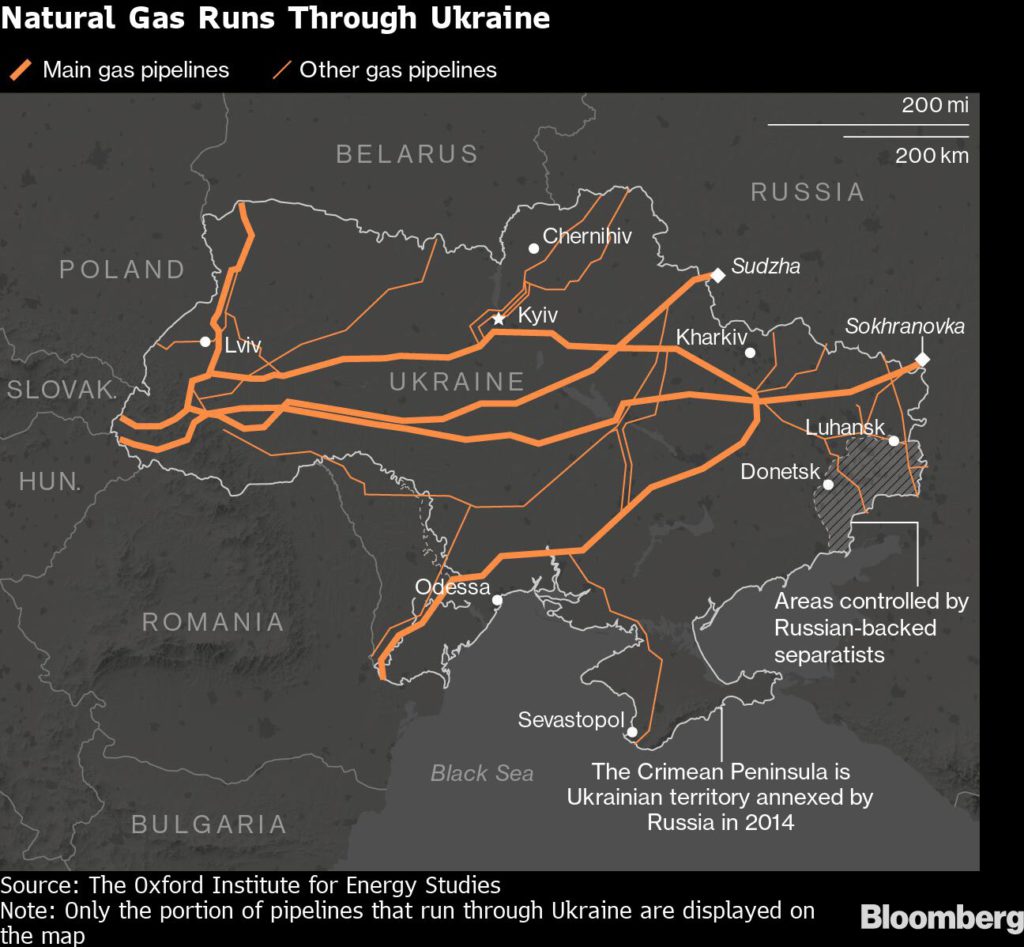
(Bloomberg) — As Russian forces attack targets across Ukraine, commodity traders are watching the country’s vast network of infrastructure that’s key to supplying gas, crops and steel to Europe and beyond. Moscow has confirmed it is targeting military facilities across the country and Ukraine’s border guard said it was being shelled from five regions, including …

From Pipes to Ports, These Are Ukraine’s Key Commodity Sites Read More »

South Africa Targets Cable Thieves Holding Economy to Ransom

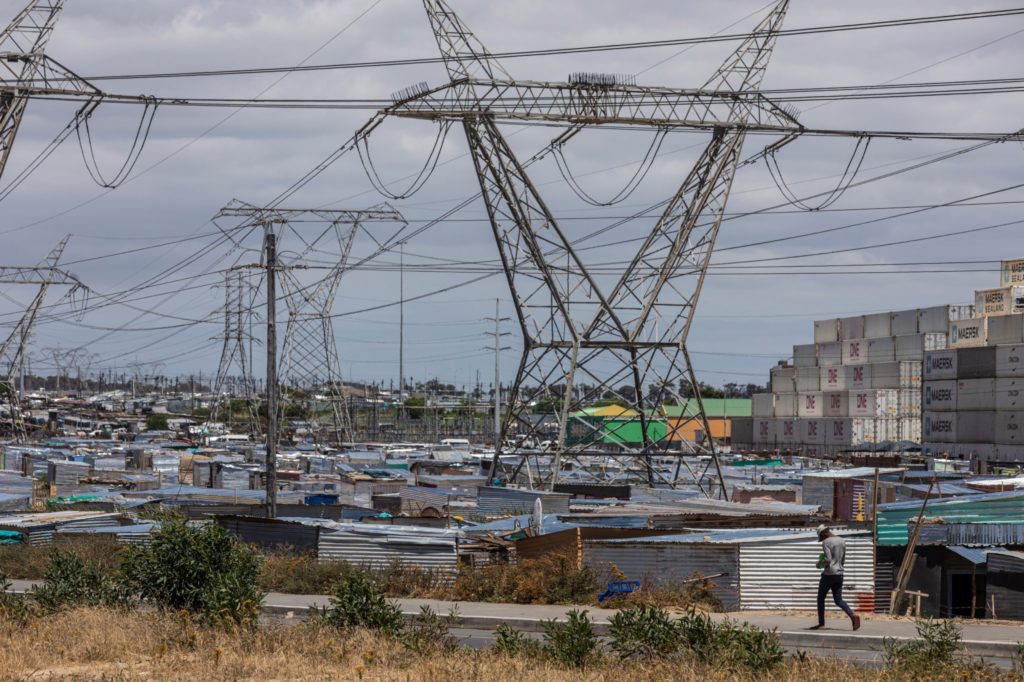
(Bloomberg) — South Africa’s government intends making it mandatory for all metal traders to get licenses and prevent them from dealing in cash, a measure aimed at combating a massive illegal trade in cables and wiring stripped from rail, power and telecommunication lines.  Traders will also be required to conduct due diligence on their customers …

South Africa Targets Cable Thieves Holding Economy to Ransom Read More »

Heavy Fighting Reported at Airport Near Kyiv: Ukraine Update

(Bloomberg) — Russian military vehicles breached the Kyiv region from Belarus to the north, Ukrainian officials said, after tanks reportedly rolled earlier into Ukraine from Crimea. A senior Russian lawmaker said Russia aims to ensure a pro-Moscow government in Kyiv, pushing out U.S. influence. President Vladimir Putin has summoned tycoons to the Kremlin.

The government in Kyiv called Russia’s actions a “full-scale invasion” as it declared martial law and called for international support including harsher sanctions. Moscow said it had taken out military facilities, including airbases, Interfax reported.

Putin’s military moves upended markets, with the ruble and Russian stocks sinking while oil and gold soared. European gas prices surged as the attacks put fuel supplies in Europe — already in the midst of an energy crunch — at further risk.

Russia was condemned by Western leaders including U.S. President Joe Biden, who said more sanctions would follow. The European Union will hold an emergency summit in Brussels on Thursday and the U.K. said it intended further economic penalties on Moscow. China called for restraint but didn’t rebuke Moscow. 

Key Developments

  • Russia Invades Ukraine in Worst European Crisis of Postwar Era
  • Biden’s Inner Circle Feared Sanctions Wouldn’t Stop Putin 
  • Russian Stock Market Rout Wipes Out $250 Billion in Value
  • Biden Vows ‘Severe Sanctions’ on Russia as Putin Launches Attack
  • European Energy Prices Soar After Russia Attacks Ukraine Targets
  • Ukraine Bonds Plummet After Russian Invasion
  • Oil Soars to $105 as Russia Attacks Targets Across Ukraine
  • European Stocks Set for Correction on Russia’s Ukraine Attack

All times CET:

Russia Aims for ‘Blitz Krieg’ Destruction of Ukraine Forces (2:02 p.m.)

Russia’s invasion of Ukraine is following an early progression many military analysts had predicted, with an intense barrage of missile attacks launched from afar to destroy Ukraine’s airfields, air defenses and control systems.

It appears that Putin has opted for a large campaign aimed at achieving regime change, rather than a more limited take over of the separatist Donbas territories he has recognized as independent.

Yet taking — rather than merely threatening — Kyiv, a city of 2.8 million, would risk months of urban warfare and require all the manpower Russia has available.

Scenes From Ukraine as Russia Launches Attacks: Photos  

Top Officials to Brief U.S. Lawmakers (1:58 p.m) 

Secretary of State Antony Blinken, Treasury Secretary Janet Yellen, Pentagon chief Lloyd Austin, and Joint Chiefs of Staff Chairman General Mark Milley are expected to brief all House members via call at 6:30pm in Washington, according to a person familiar with a plan. 

Macron Says Sanctions Will Match Russia’s Actions (1:45 p.m.)

French President Emmanuel Macron said that sanctions against Russia “will match the aggression of which it is guilty.”

Those penalties will be military and economic, and will touch on energy, Macron said in a televised speech, adding that decisions will be taken after talks with allies at the upcoming Group of Seven, European Union and NATO summits.

“We will respond without weakness, with cool heads and determination and unity,” he said. Macron said the nation would hear from him again in the coming hours, and that he’d deliver a message to the French parliament on Friday.

Ukraine Reports Heavy Fighting at Airport Near Kyiv (1:32 p.m.)

There’s heavy fighting at Hostomel airport, about 35 km (21 miles) northwest of the capital, Kyiv, Ukrainian presidential adviser Mykhaylo Podolyak said.  

Russia’s attack on the airport may be aimed at bringing in airborne troops and an assault on the government administration, he added. 

One of Russia’s goals “is to remove top authorities,” Podolyak said, advising journalists to leave the presidential office in downtown Kyiv. 

U.S. Suspends Diplomatic Presence in Ukraine (1:13 p.m.)

The U.S. has removed all State Department personnel from Ukraine and suspended its diplomatic presence and consular operations in the country, a U.S. official said. Several other countries, including Croatia, said they plan to keep some embassy staff in Kyiv.

U.K. Aims to “Hobble Russian Economy,” Johnson Says (1:06 p.m.) 

Prime Minister Boris Johnson said the U.K. will set out “a massive package of economic sanctions designed to hobble the Russian economy” as he condemned Moscow’s full-scale invasion of Ukraine. 

Speaking in a televised address, Johnson said “I don’t believe that the Russian dictator will ever subdue the national feeling of the Ukrainians and their passionate belief that their country should be free.”

Tanker Owners Avoid Russian Crude (12:55 p.m.) 

Oil tanker owners immediately became reluctant to ship Russian crude while they wait to see what sanctions the West might impose. 

Russia relies on tankers to handle about two thirds of its crude exports, meaning that any prolonged disruption to shipping would be more serious.

Ukraine Grain and Metal Exports in Chaos as Rail and Ports Close

Russian Military Advances Into Kyiv Region, Ukraine Says (12:30 p.m.) 

Russian military vehicles breached Ukraine’s Kyiv region, the Ukrainian border guard service said. The Russians crossed into the region via the border with Belarus, about 100 miles (160 km) from the Ukrainian capital, Kyiv.

“Border guards and soldiers are fighting,” according to the Ukrainian statement. The service said its units were also being shelled by multiple rocket launcher systems in the Zhytomyr region west of Kyiv. 

Kremlin Won’t Comment on Timing, Goals (12:05 p.m. CET)

Kremlin spokesman Dmitry Peskov declined to comment on key questions about the Russia’s operation in Ukraine. He refused to elaborate on how long it will last, whether Russian troops will move into the entire country, and whether Moscow aims to install a new government.

On his daily news call, Peskov said only that Russia’s aims are to “liberate Ukraine and neutralize its military potential.”

Asked about potential international isolation resulting from the move, Peskov said it was “impossible to close off a country like Russia with an Iron Curtain.” The current “emotional” reaction on financial markets will stabilize soon, he said. 

Oil Jumps Above $105 Over Fears of Disruption (11:55 a.m.) 

Oil in London surged above $105 a barrel for the first time since 2014 while contracts in New York topped $100 on mounting fears of disruption to Russian exports at a time of already tight supplies. Russia is a key producer of both crude and refined products, with Europe relying on the nation for about a quarter of its oil.  

OPEC and its allies have a regular meeting scheduled on March 2 to decide on output levels for April. As of Wednesday, delegates from some of the biggest members were saying that triple-digit oil wouldn’t cause them to pump faster. But the group will be under pressure to ensure that prices don’t rise to levels that will start destroying demand.

Wave of Iranian Oil May Flood Asia If Nuclear Deal Reached 

NATO to Discuss Reaction at Friday Summit (11:46 a.m.) 

NATO leaders will hold a virtual summit on Friday to discuss the alliance’s reaction to the invasion, an official said.

The alliance said it continues to deploy additional land and air forces to member countries near Ukraine, along with more naval assets, to bolster defense and deterrence. 

“We have increased the readiness of our forces to respond to all contingencies,” the alliance said in a statement. The Baltic nations and Poland had asked NATO for additional support in the wake of Russia’s invasion of Ukraine. 

Putin Summons Russian Tycoons to Kremlin (11:13 a.m.) 

With asset prices swooning, President Vladimir Putin has called major shareholders and the leaders of Russia’s biggest companies to the Kremlin to discuss the situation in Ukraine, people familiar with the situation said, asking not to be identified because the information isn’t public.

The meeting may happen around 4 p.m. in Moscow, they said. Kremlin spokesman Dmitry Peskov didn’t immediately respond to a request for comment.

Russian opposition and Western politicians have urged extending sanctions to more of Russia’s richest people, many of whom are seen as facilitating Putin’s regime. 

Ukraine Breaks Ties With Russia as Casualties Mount (11:12 a.m.)

Ukraine has cut diplomatic ties with Russia and will not give up its independence, President Volodymyr Zelenskiy said in a televised briefing from Kyiv. 

Zelenskiy said Ukrainian forces were defending themselves, and Russia was unable to break through the line of contact in Ukraine’s east. 

Battles are taking place inside Ukraine, including near the second-largest city, Kharkiv, and near Kherson in the south, according to the president’s spokesman, Oleksiy Arestovych, who added that several dozen Ukrainian soldiers had been killed, and the government will arm anyone prepared to defend the country.  

EU Envoys Agree to Finalize New Russia Sanctions (11:07 a.m.)

EU ambassadors unanimously backed a broad Russia sanctions package that had been drafted in the event of a Ukraine invasion, a senior diplomat told Bloomberg News. European leaders will discuss ways to toughen the package when they meet Thursday evening. 

The measures include sanctions targeting Russia’s economy and financial sector, restrictions on exports of tech goods and a curb issuing Russian diplomatic visas, the diplomat said.

U.S., EU Vow Swift Riposte, China Restrained on Russia: Reaction

Russian Assets Nosedive (11:02 a.m.) 

European stocks tumbled, with a benchmark index set to enter a technical correction. The Stoxx Europe 600 was down more than 2%, bringing the decline from a record high in January to 10%. In the U.S., futures tracking the Nasdaq 100 Index signaled the equity gauge is poised to fall into a bear market on Thursday for the first time since the depths of the pandemic selloff.  

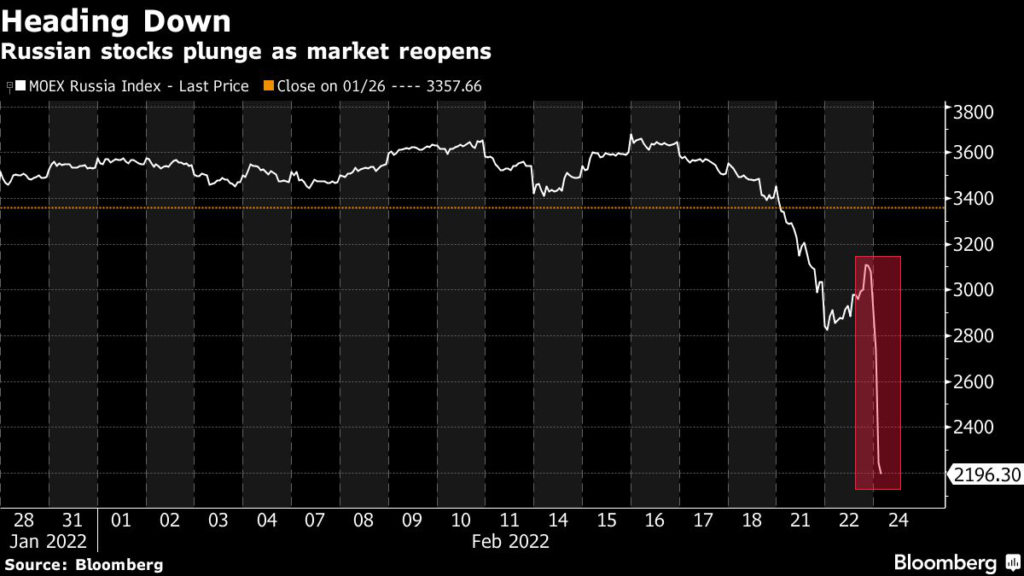
Russian assets nosedived as military attacks across Ukraine prompted emergency central bank action and investors braced for the toughest round of Western sanctions yet, wiping out more than $250 billion in stock market value. The ruble sank to a record low and stocks collapsed 45% — their biggest-ever retreat. Russian Eurobonds plummeted, pushing some into distressed territory. 

Ukraine’s 2033 dollar debt dived, lifting the yield to 88%, while the local currency market was suspended and limits were imposed on daily cash withdrawals.

Russian Forces Cross Into Ukraine From Crimea (10:18 a.m.)

Security camera footage shows a line of Russian military vehicles crossing into Ukraine from Russian-annexed Crimea, AP reported.

The movement came as Russian media reported Sergei Aksenov, the head of Crimea, ordered his government to prepare to reopen the Northern Crimean Canal. Ukraine cut the waterway off after Russia annexed Crimea in 2014, causing severe water shortages for the territory’s agriculture.

Ukraine’s border service also said attackers are trying to seize Ukraine’s Zmiinyi island on the Black Sea, roughly 100 km (60 miles) from Odessa, and are calling on Ukrainian trooops to surrender.


EU May Consider Sanctioning Putin Personally (10:00 a.m.)

The EU may discuss measures to sanction Vladimir Putin individually as a way to toughen the measures being considered, said diplomats who declined to be named on confidential preparations. 

Such a move would be mostly symbolic, since Putin’s wealth is something of a mystery. Officially, he owns hardly any assets. His annual income is about 10 million rubles ($116,400) and he owns three cars and an apartment, according to his latest financial disclosure. 

The option of targeting Putin individually isn’t in the package already prepared by the EU, but could materialize if there’s enough political agreement, one of the diplomats said.  

Russia Seeks Pro-Moscow Govt in Ukraine: Legislator (9:45 am CET)

Russia aims to ensure that a new government in Ukraine is friendly to Moscow and free of U.S. influence, according to a senior legislator from the ruling party.

“We will insist that the government that comes to power will be one that stands for constructive relations with our country,” Vyacheslav Nikonov, first deputy chairman of the International Affairs Committee in the State Duma, told state television. “Everything necessary for that will be done.”

U.S. influence in Kyiv, under which he said the country had become “anti-Russia,” will be removed, Nikonov said. 

Nord Stream 2 Opening ‘Unlikely in Medium Term’ (8:25 a.m.)

German Economy Minister Robert Habeck said he can’t see the Nord Stream 2 gas pipeline going into operation “in the medium term.”

Germany this week suspended the certification process for the link, which was built to transport Russian gas to Germany’s north coast alongside an existing pipeline. The U.S. — which has warned Europe about being too dependent on Russia for energy supplies — also imposed sanctions on Nord Stream 2 and its executives.

‘Massive’ EU Sanctions Proposal to Cut Off Russian Banks (9:06 a.m)

EU leaders will discuss “a package of massive, targeted sanctions” that will target Russian banks, among other steps, Ursula von der Leyen, head of the European Commission, told reporters.

“We will target strategic sectors of the Russian economy by blocking their access to technologies and markets that are key for Russia,” Von der Leyen said. “We will weaken Russia’s economic base and its capacity to modernize. In addition we will freeze Russian assets in the European Union and stop the access of Russian banks to European financial markets.”

European Gas Jumps 41% After Attack (9:01 a.m.)

European energy prices soared with benchmark Dutch futures gaining as much as 41% in their fourth-straight daily advance. German power for March soared as much as 31%. Brent crude oil surged above $100 a barrel. Russia is a key exporter of commodities, with Europe relying on the nation for about a quarter of its oil and a third of its gas.

Aluminum rallied to a record in London as the deepening crisis added to supply risks in a market already seeing critical shortages of the most widely-used base metal. Gold advanced on haven demand along with other metals including platinum.

Wheat prices soared to the highest since 2012, further fueling inflation concerns stoked by price increases for other grains and edible oils. Ukraine and Russia account for about a quarter of the global trade in wheat, a fifth of corn sales, and 80% of worldwide sunflower oil exports.

China Doesn’t Condemn Attack, Calls for Restraint (8:58 a.m.)

Beijing urged restraint by “all parties” and repeated criticism that the U.S. was to blame for “hyping” the prospect of war in Eastern Europe.

China didn’t wish to see what happened and urged all parties to give peace a chance, Foreign Ministry spokesperson Hua Chunying said at a regular briefing. Still, she noted that Russia’s Defense Ministry said it will not attack any cities while adding that Russia is independent and can set strategy based on its own interests.

Hua also reiterated that China and Russia were strategic partners, and trade would continue as normal.

Russia’s MOEX Stock Index Falls Most on Record (8:45 a.m.)

Russia’s MOEX stock index slumped as much as 28%, the most on record, as local markets reopened for trading Thursday. The ruble tumbled as much as 10% to a record low before paring the decline. The Moscow Exchange had earlier suspended trading as the currency plunged.

Elsewhere, equity futures and global stocks sank, while bonds and oil soared. S&P 500 and Nasdaq 100 contracts slid about 2.5% and 3% respectively, signaling the latter, tech-heavy gauge may end up in a bear market. Brent crude scaled $100 a barrel and European natural gas prices surged as much as 41%.

The flight to safety saw the U.S. 10-year Treasury yield fall below 1.90%. Gold hit the highest since early 2021.


Russia Claims It Knocked Out Airbases (8:10 a.m.)

Russia subdued Ukrainian air defenses and knocked out the country’s military airbases, Interfax reported, citing the Defense Ministry.

Ukraine Says Gas Flowing Normally Despite Crisis (7:55 a.m) 

Ukrainian state company Naftogaz says all the facilities of its gas transportation system are operating as usual so far and that natural gas is being supplied in the required amounts. Oil transportation pipelines are also operating as normal.


Ukraine Imposes Martial Law as Russia Attacks: President (6:15 a.m.)

“Russia has attacked our military infrastructure and our border guards,” Zelenskiy said in a video posted on his telegram channel. “In many cities explosions were heard. We are imposing martial law across the entire territory of our state.”

The Ukrainian leader urged people to stay calm and remain at home if possible, saying “we are working, the army is working.”

Russia Says Targets Ukraine Military Infrastructure: Tass (5:59 a.m.)

Russia’s Defense Ministry said it’s using “high-precision” weapons to target Ukrainian military infrastructure, Tass reported.

Russian forces are using aircraft, artillery and missiles to destroy Ukraine’s air force, military airfields and anti-aircraft systems, the ministry said, in the first official Russian confirmation that its operations extend beyond Donbas.

The Defense Ministry said it’s not targeting cities and civilians in Ukraine have “nothing to fear,” Tass reported, even as explosions were reported across the country.

Ukraine says Says Russia Launched ‘Full-Scale Invasion’ (5:07 a.m.)

Foreign Minister Dmytro Kuleba said in a tweet that Putin has “launched a full-scale invasion of Ukraine” and cities are under airstrikes.

“This is a war of aggression. Ukraine will defend itself and will win,” he said. Kuleba said the world can and must stop Putin, adding “the time to act is now.”  

Read more: Vladimir Putin’s Televised Address on Ukraine

More stories like this are available on bloomberg.com

©2022 Bloomberg L.P.

Tesla Workers’ German Union Push Is Being Cheered on by Labor Leaders

(Bloomberg) — Elon Musk is no friend of unions. Labor officials at his rivals are cheering on workers at Tesla Inc.’s German factory to organize anyway.

Unionists from Volkswagen AG, Mercedes-Benz AG and BMW AG are backing efforts to set up a works council at the plant near Berlin in a vote scheduled for Monday, according to a video from the country’s powerful IG Metall union.

“We are a premium manufacturer, you are a premium manufacturer,” said Daniela Zimmer, a labor representative at a Porsche plant in Leipzig. “So let’s work together to ensure that your working conditions also are premium.”

Tesla’s German factory is designed to eventually churn out as many as half a million cars annually and employ thousands of people in a region with little heavy industry. Yet Tesla has so far refused to sign the kind of wage agreements that are standard in Europe’s biggest economy, putting the carmaker on a collision course with 2.3 million-member IG Metall.

READ MORE: Elon Musk Takes Tesla’s Endless War on Labor Unions to Germany

Labor officials from a Robert Bosch GmbH plant in Dresden and a nearby ArcelorMittal SA facility also joined the statement, saying they’ll supply the Tesla plant with semiconductors and steel, respectively.

The vast majority of Germany’s large industrial companies have some form of worker representation. Labor representatives usually account for half of the supervisory board seats at the top companies, and can influence strategic decisions.

More stories like this are available on bloomberg.com

©2022 Bloomberg L.P.
Buffett’s Dealmaking Slump Forces a New Reality on Berkshire

(Bloomberg) — Warren Buffett’s textile business-turned-conglomerate spent last year quietly inching into the future. 

Berkshire Hathaway Inc. dug deeper into technology stocks in 2021 with a bet on Activision Blizzard Inc., bulked up on buybacks and announced that Greg Abel was the top pick to succeed Buffett whenever the 91-year-old steps down as chief executive officer. Now, Buffett has a chance in his annual letter on Saturday to explain how these incremental moves will keep the conglomerate pushing forward.

“Looking at valuations, it’s perfectly in sync with the long-term strategy of not overpaying for stuff,” said Meyer Shields, an analyst at Keefe Bruyette & Woods. The Activision move by one of Buffett’s deputies shows “that they do have liberty to invest in the sea of equities that they understand and it doesn’t all have to necessarily get filtered through Warren Buffett, in which case I think it is predictive of, at least conceptually, the sort of thing we should expect going forward.”

Investors look to Buffett’s letter each year to learn about his strategy for steering the more-than $690 billion conglomerate, and to revel in the billionaire’s folksy wisdom on life and investing. Buffett’s task has been complicated in recent years as high valuations stymie one of his favorite capital-deployment options — dealmaking — and as Berkshire throws off more cash than he can quickly deploy.

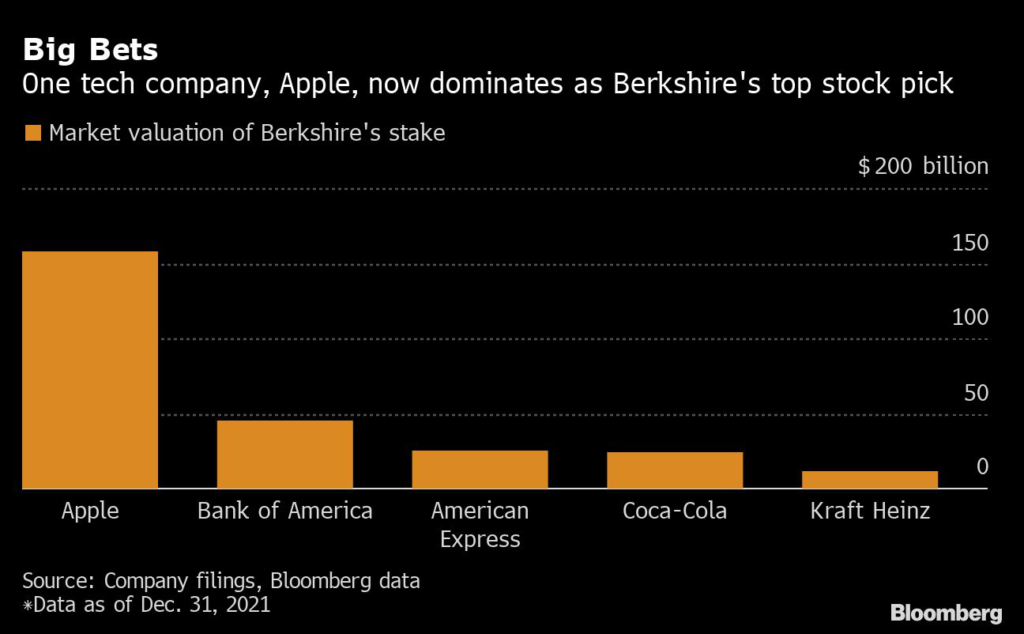
That’s led Berkshire to make some changes. Buffett and his longtime business partner, Vice Chairman Charlie Munger, came to technology stocks “like some newborn infant that’s dragged there,” Munger recently told Yahoo Finance. But now, Apple Inc. ranks as Berkshire’s biggest equities bet, with a stake worth $157.5 billion at the end of 2021, roughly 3.5 times the size of its second-biggest investment in Bank of America Corp.

Buffett’s investing deputies, Todd Combs and Ted Weschler, have also expanded Berkshire’s horizons. The Activision Blizzard investment was made just a few months before Microsoft Corp. agreed to buy the game maker. 

There’s been a “tremendous shift that has occurred toward technology and communication-services stocks,” Jim Shanahan, an analyst at Edward Jones, said in a phone interview. “That never would have happened without those two lieutenants.”

Buffett loosened Berkshire’s buyback policy to help him deploy the firm’s cash pile of nearly $150 billion. The Omaha, Nebraska-based firm repurchased $20.2 billion of stock during the first nine months of 2021. The pace may have flagged in the fourth quarter when the Class A shares climbed nearly 10%. Along with the letter, Berkshire plans to announce earnings on Saturday morning, which should include details on buybacks. 

The letter also holds the potential to offer insight into Berkshire strategies after the eventual departures of Buffett and Munger, who is 98. Buffett divulged one big detail last year when he confirmed that Abel, a key deputy who oversees all non-insurance businesses, would be the top candidate to someday replace him.

Any handover is most likely to occur when Buffett or Munger are no longer able to run the business, Shields said. Berkshire plans to hold its annual meeting in person this year for the first time since the pandemic began, offering investors a glimpse at how the pair is doing.

“I haven’t seen anything to suggest that their capabilities have deteriorated over the last 12 months and, barring some sort of news that they haven’t disclosed, I wouldn’t expect that to change,” Shields said. “I think we’ll see the sort of steady expansion of Greg’s responsibilities.”

What Bloomberg Intelligence Says

“Berkshire Hathaway’s strong consumer and earnings diversity may offset supply-chain issues, with our scenario analysis suggesting total operating company earnings of $5.5 billion. Share buybacks may match the 1Q-3Q pace of $6-$7 billion.”

–Matthew Palazola, senior industry analyst, and Kylie Towbin, associate analyst

Click here to read the research

Here are other topics that could be covered in the annual letter:

Inflation Pressures

The U.S. is confronting some of the highest inflation in decades, which is sure to affect Berkshire’s broad mix of businesses. Buffett raised the issue at least year’s annual meeting, when he cited a “buying frenzy” by consumers.

“The one potential soapbox issue that he could talk about is the nature of inflation and how much of it is justified and how much of it is price-gouging,” Cathy Seifert, an analyst at CFRA Research, said in a phone interview. “That is a position that I think people would also like to hear him talk about.”

Inflation and supply-chain pressures were already starting to show up in Berkshire’s businesses through the end of the third quarter. Its building-products makers, which include Shaw flooring and Benjamin Moore paints, reported that supply-chain disruptions contributed to “significant cost increases” for important materials, leading to higher prices.

Berkshire Energy 

The conglomerate has a strong foothold in the energy sector, through its utility businesses in states such as Utah, Nevada and Iowa, natural-gas pipelines, and even operations in the U.K. Climate-change concerns have prompted a push toward renewable sources of energy. 

Buffett touched on the topic in last year’s letter, saying that Berkshire Hathaway Energy has committed to reworking and expanding part of the grid out West as a “societal necessity.” 

Berkshire has proposed a wind and solar project that could be among the renewable industry’s biggest if approved. The $3.9 billion effort would bring 2,042 megawatts of wind generation and 50 megawatts of solar power to Iowa. 

Management Moves

Buffett’s company has been moving managers around. Earlier this month, it named energy executive Alicia Knapp to Kraft Heinz Co.’s board alongside Abel. Kraft Heinz has historically been a big deal for Berkshire, which helped create the packaged-food giant and continues to hold an investment in the firm. So any details about Knapp and her role at Berkshire could prove interesting.

Last year, Berkshire elected two new board members, Buffett’s daughter Susan Buffett and fund manager Christopher Davis. Then this month, Tom Murphy, a director for nearly two decades and a longtime friend of Buffett, said he would resign after battling Covid-19. It’s unclear whether Berkshire plans to fill his board seat. 

Berkshire also has one particularly interesting longer-term management mystery. Berkshire elevated Combs, a top investing deputy who manages billions of dollars, to CEO of auto insurer Geico at the start of 2020. Months later, Buffett said he hoped that Combs wasn’t going to be there very long, but Geico still hasn’t named a new CEO. Changes at Geico have been announced in Buffett’s letter before, including the news that longtime CEO Tony Nicely had quietly stepped down in 2018.

Leadership at Geico is “critical” because of the intensity of the auto-insurance industry, according to KBW’s Shields. State Farm Mutual Automobile Insurance Co. ranked as the biggest seller of U.S. personal auto policies in 2020, with Geico right behind and Progressive Corp. at No. 3, according to data from the National Association of Insurance Commissioners.

“The competition is so fierce,” Shields said. “It’s such a high-profile role.” 

More stories like this are available on bloomberg.com

©2022 Bloomberg L.P.
Russian Stock Market Rout Wipes Out $250 Billion in Value

(Bloomberg) — Russian assets nosedived as military attacks across Ukraine prompted emergency central bank action and investors braced for the toughest round of Western sanctions yet, wiping out as much as $259 billion in stock-market value.

The cost of insuring Russian debt against default soared to the highest since 2009 and stocks collapsed as much as 45% — their biggest-ever retreat. The ruble sank to a record low, before paring losses. The Bank of Russia said it will intervene in the foreign exchange market for the first time in years and take measures to tame volatility.

Putin Orders Russian Attacks Across Ukraine in ‘Dark Day’

The military attack cast a shadow over global markets with Ukrainian and Russian assets taking the main blow. President Vladimir Putin’s operation to “demilitarize” Russia’s neighbor prompted international condemnation and a U.S. threat of further “severe sanctions” on Moscow.

“The ball is now on the West’s side, we have to see how far sanctions go — whether Russia will be kept in the global financial system” said Viktor Szabo, an investor at Aberdeen Asset Management Plc. in London

The Russian central bank made no mention of raising interest rates, but said it will provide additional liquidity to banks by offering 1 trillion rubles ($11.8 billion) in an overnight repo auction. Policy makers have increased the benchmark rate by 525 basis points in the past 12 months to tame inflation. 

Heavy Fighting Reported at Airport Near Kyiv: Ukraine Update

The MOEX stock index traded down 35% as of 3:34 p.m. in Moscow. Shares of Sberbank PJSC, Russia’s biggest lender, were down 49%, while natural-gas giant Gazprom PJSC traded 40% weaker. 

Russia’s sovereign bonds plummeted, taking some to distressed levels, and the nation’s credit-default swap premium soared above 750. Ukraine’s 2033 dollar debt dived, lifting the yield to 88%, while the local currency market was suspended and limits were imposed on daily cash withdrawals. Stocks in Warsaw tumbled the most in almost two years.

After slumping as much as 9.4% against the dollar, Russia’s ruble traded 2.6% weaker at 83.2525 per dollar. 

“If the central bank is in the market then it’s doing so carefully — but the effect has been achieved,” said Georgy Vashchenko, head of trading operations at the Freedom Finance brokerage. “The ruble will most likely remain under pressure in the near future, but the Bank of Russia is ready to smooth out any emergencies.” 


So far, the response by the central bank is more measured than eight years ago when the conflict in Ukraine first flared.

Policy makers raised rates on the first working day after Russia’s parliament approved the use of its military in Ukraine in 2014. With oil prices falling later in the same year, the Bank of Russia ended up lifting its key rate to as high as 17% to defuse a currency crisis.

Oil Soars Past $100 as Russia Attacks Targets Across Ukraine

An increase in borrowing costs may be off the table for now, though a decision to hike rates in the future hinges on how the ruble fares, according to Piotr Matys, a senior currency strategist at InTouch Capital Markets Ltd. in London.

Should the ruble “relatively quickly reach and exceed” 100 against the dollar, the possibility of a rate hike may come into play, he said. Currency options see a more than 50% probability of the ruble touching 100 per dollar in the second quarter, data compiled by Bloomberg show. 

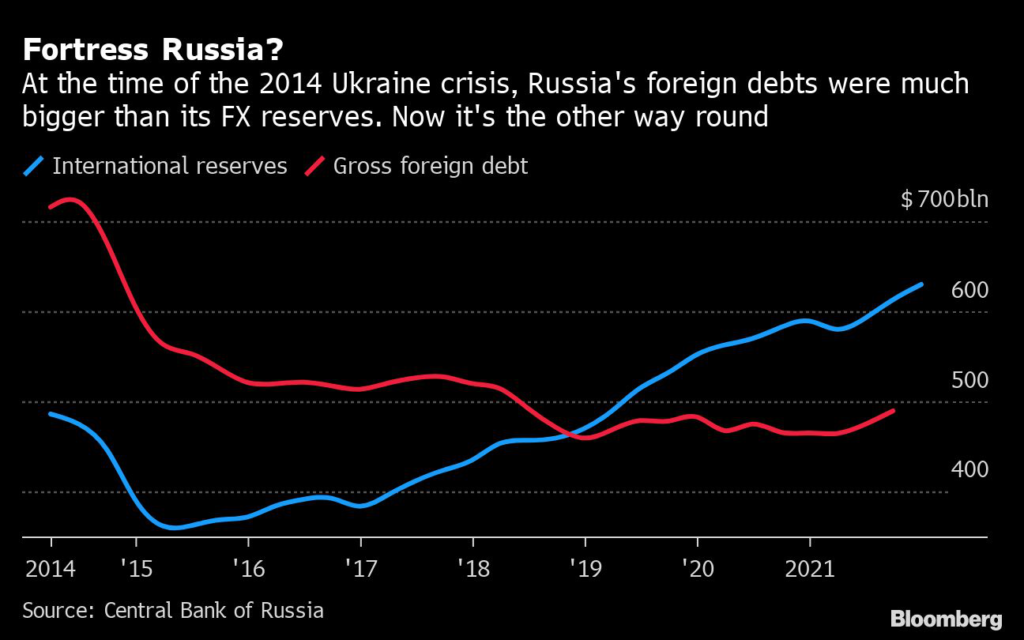
“The pace and the scale of ruble depreciation will be crucial,” he said. “Currency intervention is the first line of defense and the central bank amassed significant FX reserves to allow it to step in to slow down the pace of ruble depreciation. The second line of defense would be an emergency rate hike as witnessed at the height of the previous ruble crisis in 2014.”

Putin’s Financial Fortress Blunts Impact of Threatened Sanctions

The central bank may be asked for more support if major Russian companies and banks are targeted by the West. In a late-night statement, U.S. President Joe Biden said that he would announce “further consequences” for Russia later Thursday, in addition to sanctions unveiled earlier in the week.

Biden on Tuesday had set out a partial “first tranche” of sanctions — a modest package that underwhelmed political observers and financial markets — then followed up with additional measures the following day, including sanctions against Nord Stream 2 AG, the company that built the $11 billion natural gas pipeline connecting Russia and Germany.

Russia’s central bank, which last conducted direct currency interventions in 2014, can resort to other measures to calm the market. Sofya Donets, economist at Renaissance Capital in Moscow, said its options include the possibility of imposing restrictions on cross-border capital flow and assets purchases, focusing especially on domestic ruble debt.

“It’s possible to assume, under the current scenario, that sanctions will be maximally tough,” bringing the central bank’s “political motivations” to the forefront, she said. “That makes them less predictable.”

More stories like this are available on bloomberg.com

©2022 Bloomberg L.P.
Tesla’s Many Dockets of Litigation Keep Lawyers and Judges Busy

(Bloomberg) —

Elon Musk generates a near-constant barrage of news headlines because of his tweets. It’s a lot to keep up with.

Last week, he posted a Hitler meme, only to delete it hours later. On Wednesday, Musk claimed he’s been “building a case” against the U.S. Securities and Exchange Commission, which he accused of starting a fight with him that he will finish. The SEC likely would beg to differ with this retelling and point to Musk’s August 2018 tweets about taking Tesla private, which the agency alleged amounted to securities fraud.

But ignore the tweets. Look instead at the litigation Tesla is facing. Writing about tweets is easy compared to following all the filings in countless dockets in numerous courtrooms. Here’s a quick sample of legal matters, by topic:

Autopilot

Tesla’s driver-assistance system is part of several cases involving fatal crashes.

Litigation is ongoing in the case of Walter Huang, the Apple employee who died after his Model X crashed on Highway 101 in Silicon Valley in 2018. The family of Jeremy Banner, whose car crashed into a tractor trailer in Florida in 2019, also is suing; the case is slated to go to trial in the fall.

Dennis and Jenna Monet were driving across the country in a Model 3 in 2019 when they hit a parked fire truck on an Indiana highway. Jenna Monet died, while Dennis survived and is suing Tesla in federal court in San Francisco. The crash is one of 12 that led to the defect investigation the National Highway Traffic Safety Administration started  in August.

Racial discrimination

Last fall, a federal jury in San Francisco awarded Owen Diaz, a former contract worker at Tesla’s Fremont plant, $137 million in a racial discrimination case. Tesla has appealed the decision, and the presiding judge, William Orrick, has signaled he’ll shrink the award.

A California agency sued Tesla in Alameda County Superior Court this month, alleging “rampant racism” against Black workers at the Fremont plant and other facilities throughout the state.

Several other lawsuits alleging discrimination have been filed: Kaylen Barker, a former contract worker at Tesla’s factory in Lathrop, alleges a white coworker struck her with a hot grinding tool while calling her the n-word. Another case was filed on Feb. 18 by Marc Cage. He alleges that “virtually every restroom in Tesla’s Fremont facility contained writings or carvings of racist symbols or slurs, including swastikas and prominent displays of the n-word.”

Shareholder suits

The trial in the shareholder lawsuit over Tesla’s 2016 acquisition of SolarCity wrapped up in January; at closing arguments, Judge Joseph Slights of Delaware Chancery Court said he would rule in about three months, before he retires.

A shareholder suit over those going-private tweets Musk sent in 2018 is scheduled for trial in federal court in San Francisco in May. And another shareholder lawsuit about Musk’s unprecedented compensation plan will be going to trial in Delaware in the fall.

The SEC

The agency reached settlements with Musk and Tesla in September 2018. Earlier this month, Tesla disclosed in a regulatory filing that on Nov. 16, the SEC sent a subpoena seeking information about the company’s governance processes and compliance with the settlements.

Alex Spiro, Musk’s outside counsel, wrote in a letter last week to the judge overseeing the case that the SEC was targeting Musk with “unrelenting investigation” because of Musk’s outspoken criticism of the government. The SEC responded with a denial. Early this week, Spiro, a partner at the law firm Quinn Emanuel, filed a new letter, ratcheting up the rhetoric and accusing the SEC of leaking details about its probe.

Read more: Musk Keeps Poking the Bear Who Wanted to Ban Him From Tesla

While all this is a lot to keep track of, investors are paying attention. 

New York’s state retirement fund has filed a shareholder resolution calling on Tesla to disclose “the total number and aggregate dollar amount of disputes settled by the company related to abuse, harassment or discrimination.” This and any other pressure from investors related to legal disputes bears watching.

More stories like this are available on bloomberg.com

©2022 Bloomberg L.P.
Stablecoins Soar in Value as Everything Else in Crypto Shrinks

(Bloomberg) — The hottest spot in crypto right now is coins with prices that don’t move.

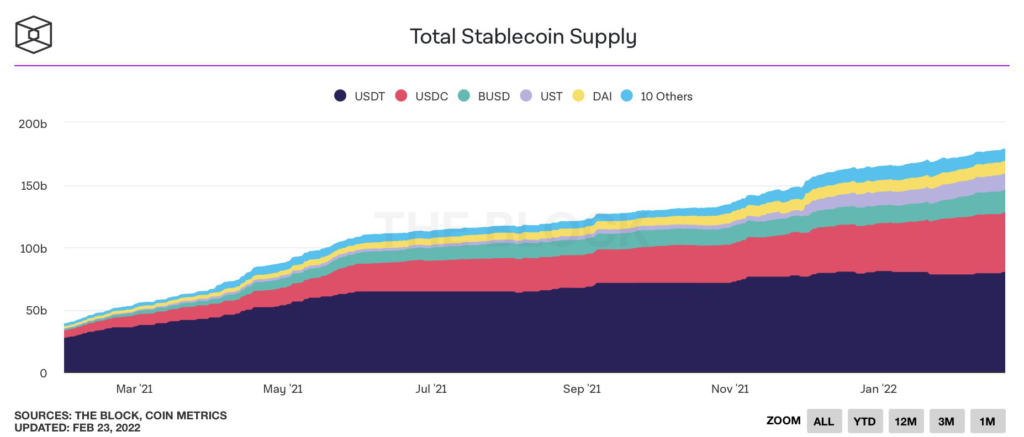
Stablecoins, cryptocurrencies which peg their value to assets such as the U.S. dollar, have ballooned in size over the past few months as Bitcoin and other coins whipsaw. The total market capitalization of stablecoins currently stands around $180 billion, up from roughly $38 billion a year ago, Coin Metrics data compiled by The Block show. By comparison, the total crypto universe is largely stagnant over the past year. 

The surge in market value shows that crypto traders are effectively moving their holdings to cash, according to James Malcolm of UBS. Bitcoin prices have collapsed by about 50% since mid-November, with many smaller coins posting even bigger declines. Rather than moving money off crypto-trading exchanges by converting back into fiat currencies — a cumbersome and potentially costly process — it’s easier for investors to simply wait out the volatility in stablecoins, Malcolm said. 

“There’s risk aversion, which creates flight to relative safety,” said Malcolm, head of foreign exchange and crypto research at UBS. “You park your money temporarily without taking it out of the ecosystem, and all the cost and hassle that involves.”

That’s especially evident Thursday amid the turmoil in Ukraine, with investors avoiding riskier and less liquid assets such as Bitcoin and turning to tradition refuges like gold. 

Anxiety over how aggressively the Federal Reserve will tighten monetary policy has rattled risk assets, sending Bitcoin briefly below $33,000 last month. The coin has largely traded sideways since, with trading volume on exchanges shriveling.

That’s been a boon for stablecoins. While Tether is the largest at $80 billion, USD Coin is quickly gaining share — total market value stands at $47 billion, compared to under $6 billion one year ago.

“If USDC and USDT continue growing at similar rates as so far in 2022, USDC will become the largest stablecoin by market cap at the end of June,” Arcane Research wrote in a report.

Stablecoins maintain their fixed exchange-rate by holdings reserves, such as commercial paper or Treasuries. For that reason, the rapid growth of stablecoins has attracted scrutiny from U.S. regulators and the Treasury Department for potential financial stability risks.

However, the usefulness of stablecoins in transferring and storing funds with the crypto ecosystem has fueled nearly unabated growth. 

“To me, what is happening is that the crypto ecosystem is growing into a kind of shadow banking system with its own leverage, its own fractional reserve kind of setup,” said Brent Donnelly, president of Spectra Markets. “Over time, the crypto ecosystem just becomes a separate parallel system and as air comes out of crypto prices, the sellers leave their cash in stablecoins as there’s no real point moving it back and forth to and from fiat.”

More stories like this are available on bloomberg.com

©2022 Bloomberg L.P.
Putin Orders Russian Attacks on Ukraine in ‘Dark Day’ for Europe

(Bloomberg) — Russian forces attacked targets across Ukraine after President Vladimir Putin vowed to “demilitarize” the country and replace its leaders, triggering the worst security crisis in Europe since World War II and prompting the West to threaten further punishing sanctions in response. Russia launched a barrage of missile, artillery and air attacks early on …

Putin Orders Russian Attacks on Ukraine in ‘Dark Day’ for Europe Read More »

Close Bitnami banner
Bitnami