Bloomberg

USPS Seals Gasoline-Trucks Deal, Shunning Biden EV Plea

(Bloomberg) — The U.S. Postal Service has finalized a contract to replace its mail-truck fleet with almost all gasoline-powered models, drawing an angry response from Biden administration officials who unsuccessfully pushed the agency to buy electric vehicles instead.

The record of decision signed Wednesday represents the culmination of a failed lobbying effort by the Environmental Protection Agency and top Biden administration officials to persuade the Postal Service to shift course. The independent agency can now move forward with its $6 billion plan to begin purchasing as many as 165,000 mail trucks over the next 10 years from Wisconsin military truck maker Oshkosh Corp. As many as 90% of those will run on gasoline instead of more climate-friendly batteries, according to the plan.

EPA Associate Administrator Vicki Arroyo decried the move as a “crucial lost opportunity to be a leader in reducing the carbon footprint of one of the largest government fleets in the world.”

“Purchasing tens of thousands of gasoline-fueled delivery trucks locks USPS into further oil dependence, air pollution and climate impacts for decades to come,” Arroyo said in an emailed statement. 

The Postal Service previously rejected a bid from fledgling electric-vehicle specialist Workhorse Group Inc. 

Oshkosh fell as much as 1.8% and was down 1.5% to $106.76 at 2:22 p.m. Workhorse, which had dropped as much as 5%, was down 4.3% to $2.90. Workhorse has lost a third of its value since the beginning of the year.

Postmaster General Louis DeJoy defended the decision, stressing that the fleet replacement is urgent while reiterating the Postal Service will buy additional battery-electric vehicles as more funding becomes available.

“Our commitment to an electric fleet remains ambitious given the pressing vehicle and safety needs of our aging fleet as well as our fragile financial condition,” DeJoy said in a news release. “The process needs to keep moving forward. The men and women of the U.S. Postal Service have waited long enough for safer, cleaner vehicles.”

The authorization is unlikely to be the last word on the matter. 

Environmental groups are preparing to swiftly challenge the move in federal court, arguing the Postal Service is illegally justifying its decision with a fundamentally flawed analysis of the purchase plan that underestimates greenhouse gas emissions, relies on faulty economic assumptions and fails to consider alternatives. 

“The United States Postal Service’s ill-informed and costly decision will lock Americans into an overwhelmingly gas-powered mail delivery system for generations to come,” the Zero Emission Transportation Association, which represents electric vehicle makers such as Rivian Automotive Inc. and electric utilities such as NRG Energy Inc., said in a statement. “This decision directly subverts federal regulations and our international commitments — and President Biden’s executive order to electrify the federal fleet.”

The Postal Service’s decision is a blow to President Joe Biden’s bid to shift the U.S. government away from gasoline-powered models toward plug-in hybrids and battery electric vehicles that now make up less than 1% of the federal fleet. The Postal Service’s contract means up to 23% of the federal government’s fleet is beyond his reach, BloombergNEF said Wednesday.

Although the Biden administration has limited authority over the Postal Service because it is an independent agency, federal courts have found the USPS is still bound by the National Environmental Policy Act that requires analysis of major policy decisions. And federal courts have previously invalidated government leases sold to private companies after finding that analysis lacking.

The USPS “is playing a very high-stakes game” by “going against what the law requires,” Adrian Martinez, an attorney with the environmental group Earthjustice, said prior to the announcement.

The Postal Service said its approach was best because it will ensure the agency has a “purpose-built right-hand drive vehicle capable of meeting performance, safety, and ergonomic requirements for efficient carrier deliveries to businesses and curb-line residential mailboxes over the entire nationwide system.”

More stories like this are available on bloomberg.com

©2022 Bloomberg L.P.

EU Sanctions Russians Linked to Putin But Not Many Billionaires

(Bloomberg) — The European Union is sanctioning 23 high-ranking individuals including banking executives, military chiefs, media figures and a top Kremlin official in retaliation for Russian President Vladimir Putin’s recognition of separatist territories in Ukraine.

The list of sanctions, which Bloomberg has seen, was adopted by EU member states on Wednesday. The measures are expected to be published and come into force shortly, according to officials familiar with the process.

The bloc included state television presenter Vladimir Soloviev, Foreign Ministry spokeswoman Maria Zakharova and the head of Kremlin-backed media outlet RT, Margarita Simonyan, on its list, according to the officials. The EU also sanctioned Denis Bortnikov, deputy president of state-owned VTB Bank PJSC, a day after the U.S. penalized him. 

His father is Federal Security Service Director Alexander Bortnikov, a key figure in Putin’s inner circle, who was first sanctioned by the U.S. in March last year and redesignated by the Treasury on Tuesday.

VTB’s Chief Executive Officer Andrey Kostin and Igor Shuvalov, who heads state-run development bank VEB.RF, were sanctioned by Brussels as well, along with Yevgeny Prigozhin, a tycoon known as “Putin’s chef” for his Kremlin catering contracts who is under U.S. sanctions for alleged meddling in the 2016 presidential elections. Members of Prigozhin’s family were also sanctioned, the officials said.

The West had warned Putin of swift and severe economic measures if he invaded Ukraine, but the limited actions taken so far by the EU, the U.S. and the U.K. have fallen well short of that benchmark. Markets have largely shrugged off what the U.S. and its allies called a “first tranche” of penalties even as governments have indicated that they’re ready to impose tougher measures if Putin escalates the crisis further.

While the EU targeted some people with asset freezes and travel bans who haven’t previously been hit, it refrained from penalizing prominent Russian billionaires though the bloc’s foreign policy chief Josep Borrell said Tuesday he’d be willing to target “oligarchs” in future proposals for sanctions. The measures likely have only symbolic weight for Russian security officials, who are banned by law from holding foreign assets and usually only travel abroad on state business using diplomatic passports. 

The EU sanctioned Kremlin Chief of Staff Anton Vaino, Defense Minister Sergei Shoigu and military chiefs, the officials said. It also imposed restrictions on 351 lawmakers in Russia’s State Duma who voted Feb. 15 to ask Putin to recognize the self-declared Donetsk and Luhansk Peoples’ Republics set up by Kremlin-backed separatists in eastern Ukraine in 2014. Four Russian institutions were added to the sanctions list as well. The overall package includes some trade and financial restrictions. 

The sanctions against prominent Russian media figures come after the EU accused Moscow-linked outlets of spreading disinformation about Ukraine. 

Prigozhin’s Wagner Group was hit with EU sanctions in December for abuses including “torture and extrajudicial, summary or arbitrary executions.” He denies he controls the private paramilitary group but the U.S. and EU reject that. The bloc has also sanctioned the Internet Research Agency that it claims is funded by Prigozhin and conducts disinformation campaigns targeting Ukraine.

The West continues to grapple with the best way to retaliate against Russia for actions that fall short of a military incursion into Ukraine, even as concerns persist over the risks of a broader conflict. 

The EU has acknowledged the limited scope of its initial sanctions package. The bloc decided not to wield its entire “arsenal” of potential sanctions immediately, Borrell told reporters on Tuesday, because it expects more steps by Putin. 

The Russian leader said Tuesday he doesn’t currently plan to send troops — he has called them “peacekeepers” — into the breakaway areas of eastern Ukraine, although treaties he signed with the separatist leaders allow him to do so and to build bases. He demanded that Ukraine accept Russian sovereignty over Crimea, which Putin annexed in 2014, and renounce its ambition of joining the North Atlantic Treaty Organization. 

Ukraine on Wednesday moved toward declaring a nationwide state of emergency as the U.S. and the U.K. continue to warn that Russia may be preparing a full-scale invasion after a military buildup of as many as 190,000 personnel near the Ukrainian border. The Kremlin has repeatedly dismissed these allegations as “hysteria” and denied it has any plans to invade.

(Updates with detail in second paragraph)

More stories like this are available on bloomberg.com

©2022 Bloomberg L.P.

U.S. Unveils Sanctions on Nord Stream 2 Pipeline: Ukraine Update

(Bloomberg) — Russia faces further sanctions following its recognition of two breakaway regions in eastern Ukraine. President Vladimir Putin says he remains open to “diplomatic solutions” but insists Russia’s interests and security must be guaranteed.

The European Union applied sanctions to 23 high-ranking Russians while U.S. President Joe Biden is targeting the builder of the Nord Stream 2 gas pipeline that runs from Russia to Germany. 

Ukraine said banks and ministry websites suffered another cyberattack on Wednesday. Kyiv is seeking to declare a nationwide state of emergency which could see officials impose restrictions on movement for at least 30 days. 

Key Developments

  • Biden’s First Round of Russian Sanctions Fail to Shock 
  • A Visual Guide to the Tensions Around Russia and Ukraine 
  • Germany Says It Can Do Without Russian Gas. That’s a Tall Order
  • What’s at Stake for Global Economy as Russia Standoff Escalates
  • Russian Markets Reeling, With Ruble Record Low in Sights

All times CET:

U.S. Sanctions Russia-to-Germany Pipeline (7:59 p.m.)

Biden announced that the U.S. is sanctioning Nord Stream 2 AG, the company behind a key gas pipeline from Russia to Germany, as well as the company’s leadership. The decision came after Germany announced it would halt certification of the pipeline. 

“Through his actions, President Putin has provided the world with an overwhelming incentive to move away from Russian gas and to other forms of energy,” Biden said in a statement. 

While the U.S. has long opposed the Nord Stream 2 pipeline, sanctions targeting the project only appeared late in the Trump administration, after the conduit was largely complete. The U.S. for years argued that completion would make Europe more dependent on Russia energy, undermining the continent’s security objectives. 

EU Sanctions Target Media, Banking, Government Figures (7:35 pm)

The EU sanctions made final Wednesday target 23 people including banking executives, military chiefs, media figures and a top Kremlin official over Russia’s actions in Ukraine.

The bloc included on its list state television presenter Vladimir Soloviev, Foreign Ministry spokeswoman Maria Zakharova and the head of Kremlin-backed media outlet RT, Margarita Simonyan, according to officials familiar with the names. The sanctions against prominent Russian media figures come after the EU accused Moscow-linked outlets of spreading disinformation about Ukraine.

Kremlin Chief of Staff Anton Vaino and Defense Minister Sergei Shoigu were also penalized, the officials said, but those steps are more symbolic since they usually travel abroad only on state business using diplomatic passports.

Russia Standoff Poses New Challenge for Global Economy (7 p.m.)

The tensions with Russia pose new risks for the global economy as it recovers from Covid-19.

Limited sanctions unveiled by the U.S. and Europe so far are unlikely to derail the recovery but soaring energy prices are adding to inflationary pressures already worrying central banks. Tighter sanctions or other supply disruptions could wreak havoc with global supply chains.

Europe stands to be hardest hit. Russia is a commodities powerhouse and the main supplier of energy to Europe, and the crisis over Ukraine is already prompting economists to revise down their growth projections for this year.

U.S Plans More Russia Sanctions as Soon as Wednesday (6:11 p.m.)

The U.S. sanctions are expected to hit Nord Stream 2 AG, the company that built the $11 billion natural gas pipeline connecting Russia and Germany, according to people familiar with the matter. That would follow Berlin’s move Tuesday to halt certification of the project and complicate any future effort to bring the pipeline online. 

The new U.S. penalties on additional members of Russia’s elite would expand the list of those within Putin’s inner circle facing restrictions on where they can do business and travel.

U.S. Says Latest Ukraine DDOS Attack Consistent With Russia (6 p.m.)

The attack was similar in nature to a distributed denial-of-service outage at Ukrainian banks last week that the U.S. attributed to Russia, the White House said in a statement. It said it had been in touch with Kyiv to offer assistance, including to determine who was responsible.

European Stocks Close Lower (5:36 p.m.) 

European stocks ended the day lower as U.S. equities continued to extend losses amid rising tensions with Russia over the Ukraine standoff. The Stoxx Europe 600 fell 0.3% while the S&P 500 declined 0.7%, erasing earlier gains on positive sentiment that Western sanctions on Russia were initially limited.

“There was some optimism among investors we spoke to as the White House’s Russia sanctions were not as sweeping as originally expected, but our sense is that this saga is far from over and most of our contacts expect both additional sanctions in the days ahead as well as a targeted legislative package,” wrote BTIG’s Isaac Boltansky.

Fears the Ukraine tension could snarl commodity supplies bolstered everything from energy to wheat and nickel. Oil resumed a rally with Brent crude reaching $98 a barrel. Gold climbed. Meanwhile, the CBOE Volatility index, or so-called fear gauge, climbed to the highest since late January.

EU to Hold Emergency Summit on Ukraine (4:25 p.m.)

Leaders will hold an emergency summit in Brussels Thursday to discuss the situation in Ukraine. European Council President Charles Michel, who chairs the meetings, said they’ll discuss latest developments and how to hold Russia accountable for its actions.

The EU’s leaders will discuss trigger points for potential future sanctions against Russia, according to two officials familiar with the plans who asked not to be identified because the preparations are private. 

The EU has a broader package of sanctions prepared in the event Moscow escalates further.

Link to EU announcement on sanctions 

Stock Erase Gains on Cyberattack (4:20 p.m.)

U.S. and European equities erased gains after Ukraine said several government and bank websites had been subject to a cyberattack.

The S&P 500 and Stoxx Europe 600 were little changed after each had gained more than 0.9% earlier in the session. The yield on the benchmark 10-year Treasury note rose to nearly 2%. Meanwhile, oil extended gains with Brent crude reaching almost $99 a barrel.

Banks, Government Sites Hit by DDOS Attack (4:07 p.m.)

The government confirmed an Interfax report that its websites came under attack.

Several government websites as well as some banks faced a DDOS attack around 4 p.m. local time, the Minister of Digital Transformation Mykhailo Fedorov said on social network Telegram.

Ukraine has faced two waves of cyberattacks since late January. The most recent, last week, hit the country’s largest banks, which restored operations in full within a few hours. The Feb. 15 DDOS-attack was the largest in Ukraine’s history and the U.S and the U.K said Russia was behind it. 

Cyberattack on Ukraine Government Sites Reported (3:50 p.m.)

Several Ukrainian government websites including those of the Cabinet of Ministers and the parliament suffered cyberattacks Wednesday, according to news agency Interfax. It didn’t say anything about the source. 

The web pages of ministries including the Foreign Ministry and the Defense Ministry are either temporarily out of order or are not operating smoothly. The respective press offices acknowledged problems with the sites, but didn’t elaborate on the reason.

Russia’s Dollar Bonds Can’t Escape Blow of EU, U.S. Sanctions

EU Bans Trade, Investments in Breakaway Regions (3:20 p.m.)

The European Union will ban the import of goods coming from the Donetsk and Luhansk regions. Member states will also prohibit investments in entities and the acquisition of real estate in the breakaway territories in eastern Ukraine, according to the draft text of the EU sanction package adopted on Wednesday and seen by Bloomberg.

In addition, the bloc will ban exports to these regions in sectors from transport and telecommunications to energy. Tourists won’t be able to travel there from member states or by using EU planes or vessels.

Zelenskiy Calls for Stronger Sanctions on Russia (3:10 p.m.)

Ukrainian President Volodymyr Zelenskiy said he expects international sanctions on Russia to be strengthened and praised Germany’s decision to halt the Nord Stream 2 gas pipeline from Russia. “It must become irreversible,” Zelenskiy told a press conference in Kyiv alongside his Polish and Lithuanian counterparts. “We expect further steps to increase sanctions pressure.”

Zelenskiy said he cannot predict what next steps Russia and Russia-backed separatists will take, but added that he relies on the Ukrainian army. “We are ready for everything,” he said.

ECB Stress Tests Banks’ Exposure to Russia (2:45 p.m.)

The European Central Bank is telling lenders active in Russia to report on the risks they face from a range of diplomatic and military scenarios related to Moscow’s tensions with the West over Ukraine, according to people familiar with the matter.

The Frankfurt-based ECB is working with banks to assess risks to their liquidity, loan books, trading and currency positions as well as their ability to keep operations running, said the people, who asked to remain anonymous as the discussions are private.

The regulator, in touch on a daily basis in some cases, wants lenders to assess scenarios including severe economic sanctions as well as the real-world consequences of an invasion, they said.

ECB Stress-Tests Banks’ Russia Exposure as Putin Pushes Ukraine

Western Banks That Stayed in Russia Face a Test (2:15 p.m.)

Lenders who maintained operations in Russia after the 2014 annexation of Crimea – enticed by the profit even as many peers fled the scene – now face a test after Putin’s moves this week ratcheted up tension and drew fresh punitive measures.

Italian and Austrian lenders have actually increased business in Russia since 2015, according to data from the Bank for International Settlements compiled by Bloomberg Intelligence. France’s Societe Generale SA, Italy’s UniCredit SpA and Austria’s Raiffeisen Bank International AG are the European banks with the biggest Russian operations.

EU to Ban Russian Bonds in Sanctions Package (12:20 p.m.)

The EU is set to ban the purchase of Russian government bonds as part of proposed sanctions on Moscow. The measures will prohibit the purchase or sale of “transferable securities and money-market instruments issued” by Russia, its government, the Russian central bank or entities acting on the latter’s behalf, according to draft documents seen by Bloomberg.

The move is in line with measures unveiled earlier by the U.S., and it’s not clear how big of an impact it will have on Russia, which is benefiting from high energy prices and a high volume of foreign currency reserves.

More stories like this are available on bloomberg.com

©2022 Bloomberg L.P.

Markets Speculative Edge Feeling More Pain in Manic Times

(Bloomberg) — In a stock market hit from every direction, from the Russia-Ukraine conflict to surging oil and its impact on Federal Reserve policy, it’s been all but impossible to get a grip on minute-to-minute market swings. 

One consistent trend, however, is tech speculators getting burned.

The ARK Innovation exchange-traded fund, known by its ticker ARKK, fell for the fifth straight day. Shares of Tesla Inc. retreated for the fourth consecutive session, having shed a quarter in value since 2022 started. Meanwhile, a Goldman Sachs basket of non-profitable tech companies, which is trading near its lowest levels since July 2020, lost as much as 3.3% Wednesday, and fund tracking newly public firms lost 2.5% at one point. 

The ARKK fund, the epitome of risk taking, has lost more than 30% since the start of the year, with short interest as a percentage of shares outstanding sitting near records at 11%, according to data from IHS Markit Ltd. And while Bitcoin hung tough during the session, the Bloomberg Galaxy DeFi Index lost roughly 12% at one point in Wednesday trading. 

“This market is made up of whipsaw moves — ‘buying the dip’ has not worked for the past two months,” said Michael O’Rourke, chief market strategist at JonesTrading. “Thus, investors are stepping back from the more speculative areas of the market because they are not being rewarded for the higher risk that accompanies such volatile names.”

Erratic swings have been prevalent all year as investors struggle to price in a host of factors, including red-hot inflation readings and a Fed that’s on the verge of raising interest rates. On top of that, investors are also weighing escalating geopolitical tensions in Europe. The White House expanded sanctions against Russia Wednesday, with new U.S. penalties hitting Nord Stream 2 AG and its corporate officers. 

A day after closing in correction territory — a 10% drop from recent highs — the S&P 500 reversed Wednesday morning gains to fall as much as 1.1% by the afternoon in New York trading hours. The small-cap Russell 2000 index at one point dropped 0.8%, while the Nasdaq 100 was down 0.8% as of 1:03 p.m.

“We’re going to see a lot of volatility in the weeks ahead because clearly the situation is by no means clear,” said Aoifinn Devitt, chief investment officer at Moneta, referring to the geopolitical tensions. 

Wednesday’s action is consistent with a pattern that’s been seen for weeks — morning rallies give way to afternoon selloffs one day, only to exhibit the reverse again the next. 

“Equities saw some relief premarket but were quickly sold on the open as investor debate whether 10% is enough or whether we need a final flush to really reset,” wrote Chris Murphy, co-head of derivatives strategy at Susquehanna. 

Still, Murphy says that should 2018-esque moves repeat — when stocks also declined on Fed developments — the market could be due for a short-term rally.

“However, after a bounce, the 2018 analogy has a lot more downside,” he added. 

Some of the wildest moves Wednesday were in the energy space, which is sensitive to any escalation in the conflict between Russia and Ukraine. The price of oil resumed its upward stretch — with Brent crude reaching $97 a barrel — after JPMorgan Chase & Co. said prices are likely to average $110 in the second quarter.

Risk sentiment is now taking a beating given the uncertainty over how inflation-fueling commodity prices will change the monetary-tightening game, said Anastasia Amoroso, chief investment strategist at iCapital. 

“All of that is now kind of a confluence of really negative factors that’s weighing on the markets here,” she said on Bloomberg TV. 

Meanwhile, strategists at Morgan Stanley led by Michael Wilson say that though investors have been focused on Russia-Ukraine tensions over the past few weeks, signs of slowing economic growth are no-less ominous. The bank’s earnings model projects “a meaningful deceleration in EPS growth in the coming months,” they wrote in a note, adding that earnings revisions breath trends have also been slowing. 

All the same, still-contained credit spreads are giving bulls comfort. For that reason, Erin Browne, portfolio manager at Pacific Investment Management Co., is staying broadly optimistic. 

“I think over a medium-term perspective you’d do well buying here, but the next couple of weeks are going to continue to be choppy and certainly we could see downside risk from here,” she said on Bloomberg TV.

More stories like this are available on bloomberg.com

©2022 Bloomberg L.P.

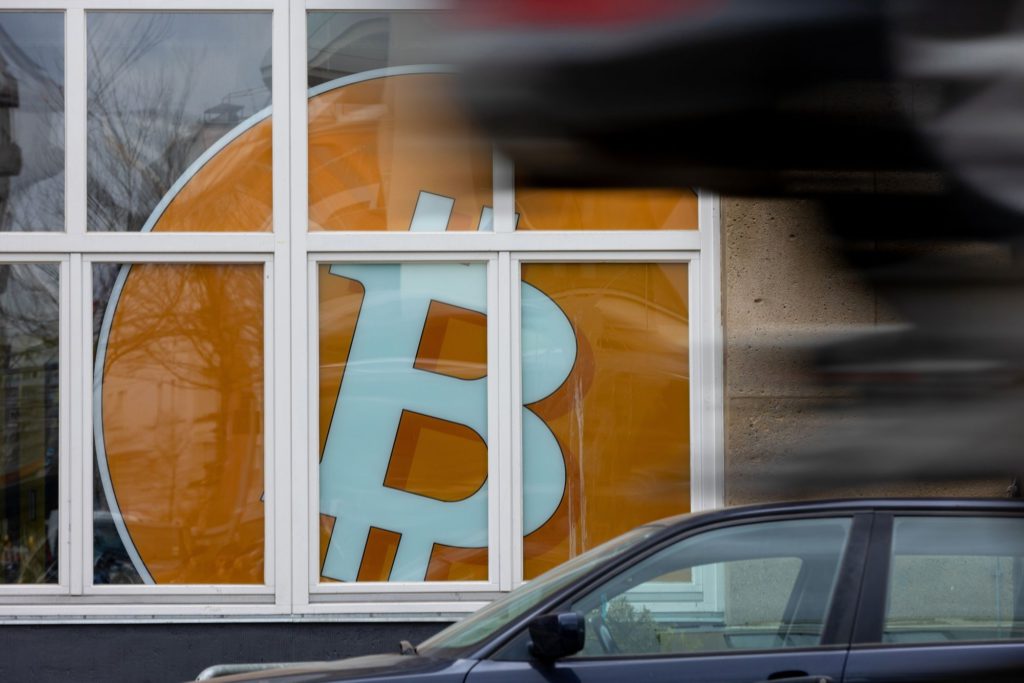
Wall Street Engineers Embark on Expanding a Bitcoin Derivative

(Bloomberg) — A group of engineers and traders at crypto prime brokerage SFOX are working on a way to expand access to Bitcoin for banks and big investors through a bespoke derivative. 

SFOX’s co-founder, George Melika, said his firm is in talks with large banks and market makers including Jane Street to open a market that facilitates the trading of Bitcoin derivatives. The idea is to use NDFs — non-deliverable forward contracts that are typically used for currency markets — to give banks the wherewithal to expose clients to Bitcoin at a greater scale through a contract, at an agreed upon price, that settles in cash.

“It’s a product they’re familiar with, it’s regulated, and they can trust they can get exposure to it without holding the underlying,” Melika said by phone, explaining that banks don’t actually have to purchase Bitcoin for clients to be able to trade assets related to the token’s moves. 

Banks have long been wary of buying or trading Bitcoin because of concerns about compliance, “know your customer” rules and market liquidity. Since banks already trade NDFs for other assets, Melika said it may help compliance departments get more comfortable with this newer product. SFOX is also among only a handful of firms dealing in digital assets that have joined the International Swaps and Derivatives Association. 

The conversation around expanding NDFs has existed for years. Goldman Sachs Group Inc. last year opened up trading in NDFs, which pay out in cash. The bank used Bitcoin futures to hedge its exposure. However, a number of hedge funds bypassed the bank and bought crypto directly as they became comfortable with the asset class, according to a person familiar with the matter, who asked not to be identified discussing private information. A decision by the Chicago Mercantile Exchange to increase position limits for Bitcoin futures also reduced the demand for NDFs, the person said.

Yet with SFOX creating a new product, more rivals may start trading it — and some may use the spot market for hedging. SFOX believes its new product will help lower margin requirements for clients, while Jane Street also expects that it will satisfy the demands of institutional investors. 

NDFs are products “that many institutions are very comfortable with,” Eric Knight, a crypto trader at Jane Street, said by phone. “A lot of institutions are asking how to get exposure to Bitcoin, whether it’s through ETFs or futures. But there’s no spot ETF at the moment either.”

Expanding Liquidity

SFOX has more than 120 institutional clients, allowing it to expand liquidity to a market for NDFs. The firm is only the latest player in a boom in derivative crypto products, a market that’s been surging amid demand for futures and exchange-traded funds. 

Unlike an ETF, where a buyer typically has to put up 100% of the capital to purchase the security, the NDFs can be bought on margin that’s negotiated among counterparties. For futures, the exchange sets the margin requirements. This allows clients to also have leveraged exposure to the NDFs. Based on current trading volumes for the top banks, SFOX estimates that the cryptocurrency derivative can garner more than $100 million in volumes daily. 

More stories like this are available on bloomberg.com

©2022 Bloomberg L.P.
Broadcasters Say They Must Air Gazprom Ads Amid Ukraine Tension

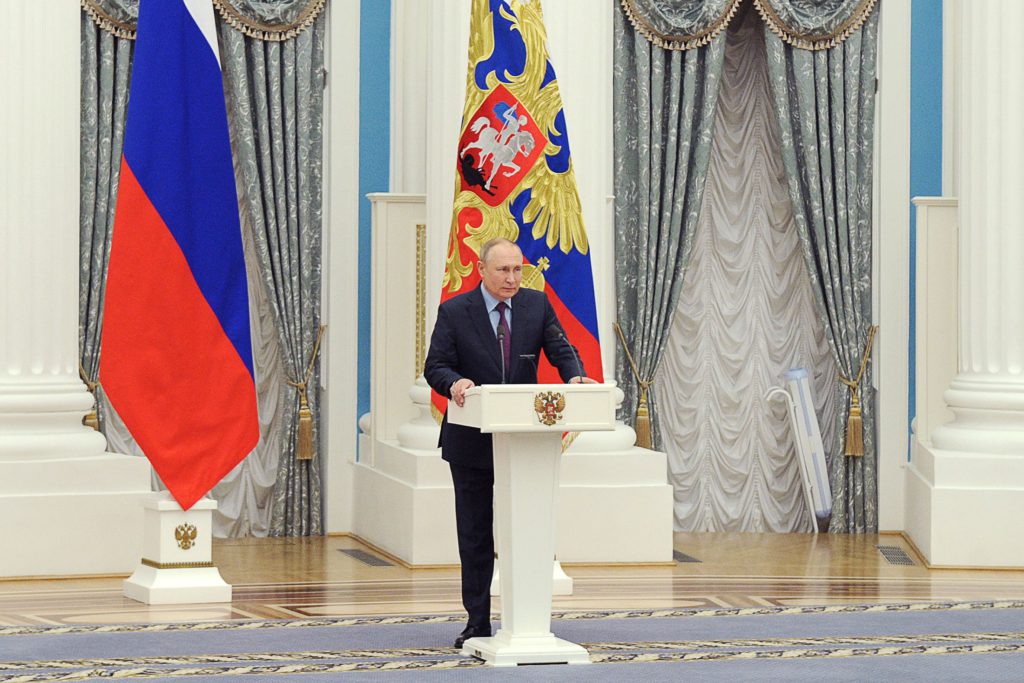
(Bloomberg) — Sports broadcasters are continuing to show advertisements from Russian energy producer Gazprom PJSC throughout Wednesday’s coverage of European Champions League football matches, despite concerns from some on social media that the spots are inappropriate given the tense situation in the Ukraine.

BT Sport and DAZN said Wednesday afternoon that they have no choice but to allow the promotions, which include short announcements called bumpers.

“As part of our UEFA contract we are obliged to show the UEFA Champions League bumpers, which are provided to us by UEFA to include in our broadcast,” BT Sport said in a statement. 

Earlier in the day BT Sport had said it was “concerned” by customer reactions after Tuesday evening’s coverage.

“Commercials from various UEFA sponsors are shown as part of our UEFA Champions League broadcasts,” a spokeswoman for the sports streaming service DAZN said. “DAZN has no control over these.”

A spokesperson for Gazprom declined to comment.

The energy giant is a major UEFA sponsor with a contract worth a reported 40 million euros ($45.4 million) per season. Following Moscow’s recognition of two breakaway regions within Ukraine, some broadcasters sought guidance on whether to show Gazprom advertising in the face of growing customer concerns, according to people familiar with the situation. 

“Regarding Gazprom, UEFA will continue to closely monitor the situation,” a UEFA spokesperson said. “We have no further comments to make on the topic at this stage.” 

Wednesday’s matches include Atletico Madrid versus Manchester United.

BT Sport shows the Champions League competition exclusively in the U.K. DAZN broadcasts in Germany and Canada, while various other broadcasters, including CBS in America, show the prestigious competition across the world. 

Two games shown Tuesday in the U.K. were accompanied by prominent ads on BT Sport for Gazprom, while inside Chelsea F.C.’s Stamford Bridge, which is owned by the Russian billionaire Roman Abramovich, there were prominent LED displays managed by UEFA advertising Gazprom. 

Abramovich may be at risk for U.K. sanctions if tensions with Moscow over Ukraine continue to escalate, with the British foreign secretary refusing to rule out such a move.

A spokesperson for Chelsea F.C. declined to comment.

(Updated with BT Sport, DAZN comments in third paragraph.)

More stories like this are available on bloomberg.com

©2022 Bloomberg L.P.
Crypto Winter Seen Weighing On Coinbase Quarterly Results Again

(Bloomberg) — Coinbase Global Inc. shareholders are bracing again for quarterly results that may show the lull in cryptocurrency markets continues to dampen the enthusiasm of individual investors.  

The largest U.S. crypto exchange is set to report fourth-quarter results on Thursday. In recent months, it had scored an impressive Super Bowl ad, drummed up interest in its upcoming NFT marketplace, and avoided a potential hack of its new trading function. Yet its shares are trading at about 40% below November’s record high, and even below the first-day opening price when it went public last April. 

“The number one concern is still on the Bitcoin price,” said Owen Lau, an analyst at Oppenheimer & Co Inc. Crypto trading makes up the majority of the company’s revenue, and investors will watch for the percentage of non-trading revenue as a sign for diversification. “Fundamentally speaking, I don’t think they should be trading hand-in-hand, but in reality they are.”

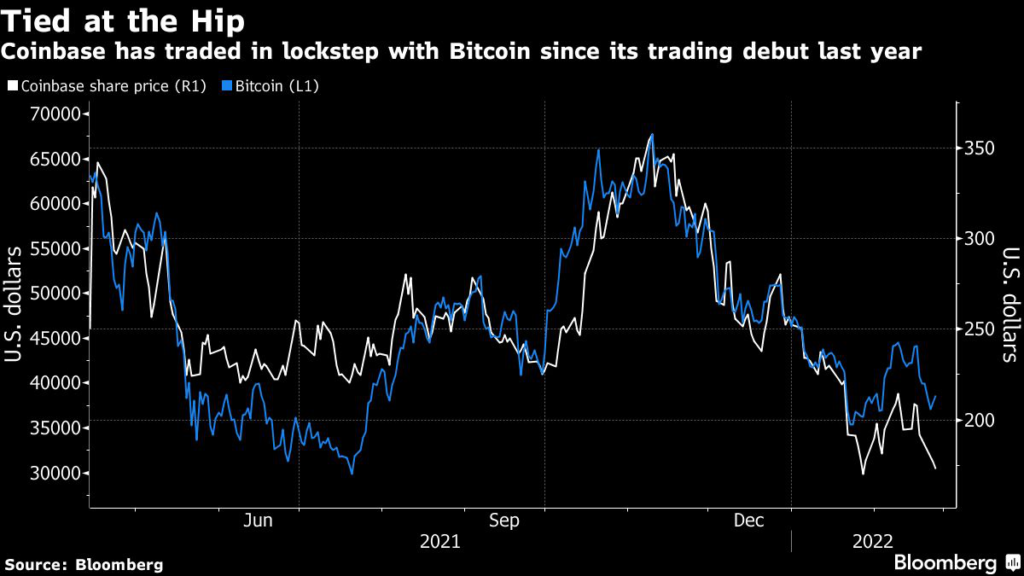
Coinbase shares have been closely tracking with the price of Bitcoin, which has plummeted to below $40,000 from a peak of nearly $69,000 in early November, dragged by the anticipated U.S. interest rate increases and tensions between Russia and Ukraine. With Coinbase, “people also priced in the concerns of a crypto winter — we may see a bear market for crypto for a while,” Lau said. 

Ahead of the earnings result, D.A. Davidson analyst Chris Brendler cut his price target for Coinbase to $275 from $400, citing “more cautious market conditions” in the next two years. While raising fourth-quarter estimates, first-quarter activity has slowed dramatically, as indicated by publicly available exchange data, Brendler wrote in a note. 

Coinbase is expected to report $2 billion revenue in the fourth quarter, $1.73 billion of which will be from transactions, according to the average estimate of analysts surveyed by Bloomberg. Monthly transacting users is estimated to be 9.8 million, up from 7.4 million in the third quarter. But that number is expected to fall to 8.6 million in the first quarter, the survey shows. 

Investors will also focus on Coinbase’s retail trading fee rate, which continues to be under significant pressure, said Dan Dolev, senior fintech analyst at Mizuho. Robinhood Markets Inc, which offers zero-commission fees on crypto trading, “shows you the future, which is a world where crypto trading is free of charge,” he said. 

Julie Chariell, Bloomberg Intelligence’s senior analyst of fintech & payments:

Coinbase revenue may have recovered in 4Q with crypto market trading volume up 24% QoQ, vs. down 21% in 3Q. According to data from Sensor Tower, monthly active users grew 11% sequentially, slower than all of Coinbase’s smaller competitors, but strong in the absolute number of net adds, second only to Binance. Given crypto price softness year to date, company guidance for 1Q will be important. So far, trading volumes have fallen off by 20% in January, and may likely slide further based on trends in February volumes.  

Another crucial area to watch will be Coinbase’s ability to competes with international exchanges. The company’s decision to list Shiba Inu — a Dogecoin inspired meme token — in September likely helped push trading volume to a record high in the fourth quarter, according to Needham & Co Inc. analyst John Todaro. New offering including its yet to be released NFT marketplace are “critical to compete with international exchanges which have ramped up U.S. efforts in recent months,” he added.

More stories like this are available on bloomberg.com

©2022 Bloomberg L.P.
Apollo Will Take Auto-Parts Supplier Tenneco Private

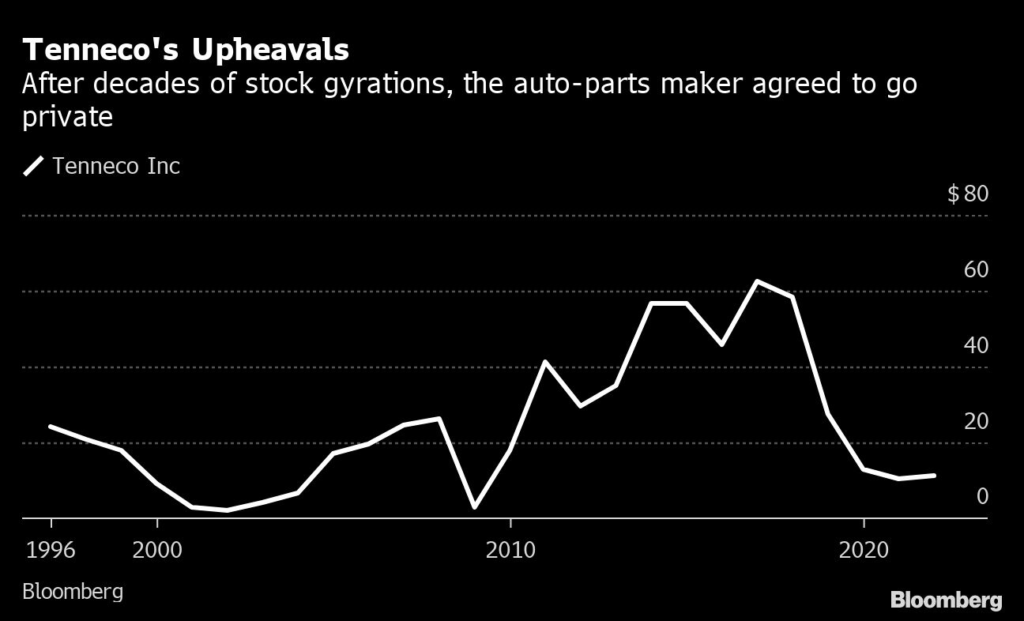
(Bloomberg) — Tenneco Inc.’s agreement to go private through a plan led by Apollo Global Management Inc. gives the maker of mufflers and aftermarket auto parts a chance to move past years of upheaval with the help of new investors.

Apollo and its private equity affiliates will pay $20 a share, almost twice Tenneco’s Feb. 22 closing price, the companies said in a statement Wednesday. Based on the number of shares outstanding, the cash transaction has an equity value of about $1.6 billion. The companies valued the deal at $7.1 billion including debt.

Tenneco is “a company that we’ve followed and admired for a long time — a global player” in original-equipment and aftermarket auto parts, Michael Reiss, partner at Apollo Global, said in a telephone interview. “It’s a large platform that we think we can invest behind, use our capital and knowledge around the automotive sector to help execute on its global strategy, and increase its flexibility to better position all of the various business units.”

The sale wraps a tumultuous stretch for Lake Forest, Illinois-based Tenneco, which has endured activist investor pressure, board shakeups and an 85% drop in the stock price over the past five years. For Apollo, the newly acquired business fits into a portfolio that includes Canadian automotive molder ABC Technologies Holdings Inc., which it took majority control of less than a year ago.

Tenneco will continue to operate under that brand name following the deal, according to the companies. The deal, which has been unanimously approved by Tenneco’s board, is expected to close in the second half of the year. Lazard served as financial adviser to Tenneco, while Rothschild & Co. acted as lead financial adviser to Apollo Funds alongside BofA Securities and Citi.

Separately, Tenneco on Wednesday reported an adjusted loss of 11 cents a share in the fourth quarter, well short of Wall Street’s expectations. Sales of $4.39 billion exceeded the average of analysts’ estimates compiled by Bloomberg.

Tenneco shares soared 93%, the largest intraday climb in almost 13 years, as of 12:25 p.m. in New York. Apollo shares were little changed after earlier rising as much as 1.7%.

After years of dilution, Icahn Enterprises LP remains a top holder in Tenneco with a nearly 5% stake, according to the latest filings tracked by Bloomberg.

Dramatic Saga

The Apollo deal marks the latest twist in Tenneco’s saga. The company agreed in 2018 to acquire Federal-Mogul, a rival parts manufacturer backed by activist Carl Icahn, for $5.4 billion with the intention of subsequently breaking the company apart. That plan was upended by deep strains in Tenneco’s business, leading to the resignation of co-CEO Roger Wood in early 2020.

Around the same time, Dan Ninivaggi, a former Icahn Automotive Group executive, called for sweeping board changes, cash-raising steps and a possible sale of the company. In a January 2020 letter to the board, he said Tenneco “has never created a penny of shareholder value.” The stock has been on a steady slide from the mid-$60s in 2017 and early 2018.

More recently, semiconductor shortages caused by the pandemic have wreaked havoc on the automotive industry. But Reiss, who also serves on the board of ABC Technologies, sees significant upside after the impact of Covid-19 and chip delays declines.

“From a macro perspective, we will benefit from the auto demand recovery from trough levels,” Reiss said. “We have flexibility. There are organic growth opportunities where we can better help accelerate new products, new customers and then M&A both small and large.”

More stories like this are available on bloomberg.com

©2022 Bloomberg L.P.
Meta Is Building a Digital Voice Assistant for Metaverse Push

(Bloomberg) — Facebook parent company Meta Platforms Inc. is building a digital voice assistant to help people interact hands-free with physical devices, such as the company’s Portal video-calling device and, eventually, augmented-reality glasses.

Chief Executive Officer Mark Zuckerberg said the company is building the assistant in preparation for the so-called metaverse, a more immersive version of the internet that will let people interact online through virtual and AR glasses. Digital assistants will need to “learn the way humans do” to help users navigate this new online world, Zuckerberg said during a presentation on Wednesday.

“When we have glasses on our faces, that will be the first time an AI system will be able to really see the world from our perspective — see what we see, hear what we hear and more,” Zuckerberg added, saying he hopes to eventually build AI assistants that can “move between virtual and physical worlds.” The AI assistant doesn’t have a name, but Meta is calling the effort “Project CAIRaoke.”

AI technology that can learn and anticipate human behavior will be at the center of Zuckerberg’s proposed metaverse — in part because people will eventually access it hands-free by wearing a pair of smart glasses. While the metaverse concept is still undefined, Meta video demos show people moving around digital spaces and interacting with others as avatars. In a new video on Wednesday, Zuckerberg showed off a new technology called “Builder Bot,” which will let people create a virtual world by simply describing things they want it to include.

In most cases, these technologies are years away from being publicly available. Meta is testing its AI voice assistant on Portal devices, but only for simple uses, like setting reminders. The company previously launched an “open-source chatbot” called BlenderBot, and a few years ago pushed heavily into messaging bots. You can already use a Meta-created voice assistant for some basic commands on Portal, like making a call or asking about the weather. But most voice interactions on Portal are done through Amazon.com Inc.’s Alexa.

AI voice assistants are not unique to Meta. Apple Inc.’s voice assistant, Siri, comes loaded onto its iPhone and iPad devices. Amazon Inc.’s Alexa has also become a household staple for many people. 

More stories like this are available on bloomberg.com

©2022 Bloomberg L.P.

Cyberattack Hits Anew; EU Calls Emergency Summit: Ukraine Update

(Bloomberg) — The European Union called an emergency in-person summit of the bloc’s leaders for Thursday, as Russia faced the threat of further sanctions from western nations following its recognition of two breakaway regions in eastern Ukraine.

Ukraine’s government said that banks and ministry websites suffered another cyberattack on Wednesday. Kyiv earlier moved toward declaring a nationwide state of emergency which would allow Ukrainian officials to impose restrictions on movement and media for an initial 30 days. 

President Vladimir Putin said that he remains open to “diplomatic solutions” so long as Russia’s interests and security are guaranteed.

Key Developments

  • Biden’s First Round of Russian Sanctions Fail to Shock 
  • Villeroy Emphasizes ECB Flexibility as Ukraine Crisis Deepens
  • Germany Says It Can Do Without Russian Gas. That’s a Tall Order
  • European Energy Prices Extend Rally as Russia Sanctions Pile Up
  • Russian Markets Reeling, With Ruble Record Low in Sights

All times CET:

European Stocks Close Lower (5:36 p.m.) 

European stocks ended the day lower as U.S. equities continued to extend losses amid rising tensions with Russia over the Ukraine standoff. The Stoxx Europe 600 fell 0.3% while the S&P 500 declined 0.7%, erasing earlier gains on positive sentiment that Western sanctions on Russia were initially limited.

“There was some optimism among investors we spoke to as the White House’s Russia sanctions were not as sweeping as originally expected, but our sense is that this saga is far from over and most of our contacts expect both additional sanctions in the days ahead as well as a targeted legislative package,” wrote BTIG’s Isaac Boltansky.

Fears the Ukraine tension could snarl commodity supplies bolstered everything from energy to wheat and nickel. Oil resumed a rally with Brent crude reaching $98 a barrel. Gold climbed. Meanwhile, the CBOE Volatility index, or so-called fear gauge, climbed to the highest since late January.

EU Leaders Set to Discuss Future Sanctions (5:25 p.m.)

The EU’s leaders will discuss trigger points for potential future sanctions against Russia, according to two officials familiar with the plans who asked not to be identified because the preparations are private. 

The EU has a broader package of sanctions prepared in the event Moscow escalates further.

Link to EU announcement on sanctions 

EU to Hold Emergency Summit on Ukraine (4:25 p.m.)

European Union leaders will hold an emergency summit in Brussels Thursday to discuss the situation in Ukraine. European Council President Charles Michel, who chairs the meetings, said they’ll discuss latest developments and how to hold Russia accountable for its actions.

“The aggressive actions by the Russian Federation violate international law and the territorial integrity and sovereignty of Ukraine,” Michel said in the invitation letter to the 27 leaders. “It is important that we continue to be united and determined and jointly define our collective approach and actions.”

Stock Erase Gains on Cyberattack (4:20 p.m.)

U.S. and European equities erased gains after Ukraine said several government and bank websites had been subject to a cyberattack.

The S&P 500 and Stox Europe 600 were little changed after each had gained more than 0.9% earlier in the session. The yield on the benchmark 10-year Treasury note rose to nearly 2%. Meanwhile, oil extended gains with Brent crude reaching almost $99 a barrel.

Banks, Government Sites Hit by DDOS Attack (4:07 p.m.)

The government confirmed an Interfax report that its websites came under attack.

Several government websites as well as some banks faced a DDOS attack around 4 p.m. local time, the Minister of Digital Transformation Mykhailo Fedorov said on social network Telegram.

Ukraine has faced two waves of cyberattacks since late January. The most recent, last week, hit the country’s largest banks, which restored operations in full within a few hours. The Feb. 15 DDOS-attack was the largest in Ukraine’s history and the U.S and the U.K said Russia was behind it. 

Cyberattack on Ukraine Government Sites Reported (3:50 p.m.)

Several Ukrainian government websites including those of the Cabinet of Ministers and the parliament suffered cyberattacks Wednesday, according to news agency Interfax. It didn’t say anything about the source. 

The web pages of ministries including the Foreign Ministry and the Defence Ministry are either temporarily out of order or are not operating smoothly. The respective press offices acknowledged problems with the sites, but didn’t elaborate on the reason.

U.S. Stocks Rise on Limited Sanctions Fallout (3:37 p.m.)

U.S. equities rose with European stocks as investors assessed limited initial Western sanctions against Russia amid the Ukraine standoff.

The S&P 500 gained 0.8%, after falling into a technical correction Tuesday, while the tech-heavy Nasdaq 100 added 1%. Meanwhile the Stoxx Europe 600 rose 0.8% while the MOEX Russia index added 1.6%.

“Markets are trading with a positive tone overnight as they seem to be taking comfort with the relative pace of what is happening in Russia/Ukraine,” wrote Brad Bechtel, global head of FX at Jefferies LLC. Crude oil fluctuated. The dollar slipped while the ruble rebounded from steep losses. Gold was little changed.

U.S. Signals Sanctions to Ratchet up (3:25 p.m.)

Daleep Singh, the U.S. deputy national security adviser for international economics, told CNN that more sanctions on Russia will come. 

Asked if no further measures would be taken if Russia doesn’t cross the contact line, Singh said: “No, costs continue to ratchet higher. The violation of Ukraine’s territorial integrity and its sovereignty are unacceptable.”

The initial U.S. sanctions announced yesterday were criticized as too limited in scope.

Russia’s Dollar Bonds Can’t Escape Blow of EU, U.S. Sanctions

EU Bans Trade, Investments in Breakaway Regions (3:20 p.m.)

The European Union will ban the import of goods coming from the Donetsk and Luhansk regions. Member states will also prohibit investments in entities and the acquisition of real estate in the breakaway territories in eastern Ukraine, according to the draft text of the EU sanction package adopted on Wednesday and seen by Bloomberg.

In addition, the bloc will ban exports to these regions in sectors from transport and telecommunications to energy. Tourists won’t be able to travel there from member states or by using EU planes or vessels.

Zelenskiy Calls for Stronger Sanctions on Russia (3:10 p.m.)

Ukrainian President Volodymyr Zelenskiy said he expects international sanctions on Russia to be strengthened and praised Germany’s decision to halt the Nord Stream 2 gas pipeline from Russia. “It must become irreversible,” Zelenskiy told a press conference in Kyiv alongside his Polish and Lithuanian counterparts. “We expect further steps to increase sanctions pressure.”

The three presidents signed a joint declaration that “Ukraine deserves EU candidate status” and that Lithuania and Poland will support it in achieving that goal.

Zelenskiy said he cannot predict what next steps Russia and Russia-backed separatists will take, but added that he relies on the Ukrainian army. “We are ready for everything,” he said.

ECB Stress Tests Banks’ Exposure to Russia (2:45 p.m.)

The European Central Bank is telling lenders active in Russia to report on the risks they face from a range of diplomatic and military scenarios related to Moscow’s tensions with the West over Ukraine, according to people familiar with the matter.

The Frankfurt-based ECB is working with banks to assess risks to their liquidity, loan books, trading and currency positions as well as their ability to keep operations running, said the people, who asked to remain anonymous as the discussions are private.

The regulator, in touch on a daily basis in some cases, wants lenders to assess scenarios including severe economic sanctions as well as the real-world consequences of an invasion, they said.

ECB Stress-Tests Banks’ Russia Exposure as Putin Pushes Ukraine

Western Banks That Stayed in Russia Face a Test (2:15 p.m.)

Lenders who maintained operations in Russia after the 2014 annexation of Crimea – enticed by the profit even as many peers fled the scene – now face a test after Putin’s moves this week ratcheted up tension and drew fresh punitive measures.

Italian and Austrian lenders have actually increased business in Russia since 2015, according to data from the Bank for International Settlements compiled by Bloomberg Intelligence. France’s Societe Generale SA, Italy’s UniCredit SpA and Austria’s Raiffeisen Bank International AG are the European banks with the biggest Russian operations.

EU to Ban Russian Bonds in Sanctions Package (12:20 p.m.)

The EU is set to ban the purchase of Russian government bonds as part of proposed sanctions on Moscow. The measures will prohibit the purchase or sale of “transferable securities and money-market instruments issued” by Russia, its government, the Russian central bank or entities acting on the latter’s behalf, according to draft documents seen by Bloomberg.

The move is in line with measures unveiled earlier by the U.S., and it’s not clear how big of an impact it will have on Russia, which is benefiting from high energy prices and a high volume of foreign currency reserves.

EU ministers are meeting to approve the legal documents outlining the package of sanctions the bloc announced Tuesday. Member nations will then need to sign off and adopt the measures, but that’s mostly a formality.

More stories like this are available on bloomberg.com

©2022 Bloomberg L.P.
Close Bitnami banner
Bitnami