Bloomberg

The Top New York Museum Shows to See This Winter

(Bloomberg) — Just in time for plummeting temperatures to send us all indoors, a raft of superb exhibitions to see this winter has debuted in New York. Whatever your preferences, you’ll find plenty to do and see.

If You’re a History Buff

Death in the Making: Reexamining the Iconic Spanish Civil War Photobook at the International Center of Photography

In the late 1930s, Robert Capa embedded with Republican soldiers in the Spanish Civil War, taking photographs that would come to define 20th century photojournalism. He subsequently turned his and other photojournalists’ images into a book, Death in the Making. This exhibition includes about 75 photographs from the original publication, along with ephemera including magazines and letters. Through Jan. 9, 2023

If You’re a Clotheshorse

Kimono Style: The John C. Weber Collection at the Met Fifth Avenue

Comprising more than 60 outrageously delicate kimonos, along with dozens of other pieces of Japanese and Western fashion from the late Edo period (1615–1868) to today, this exquisite dive into the historical, cultural and technical aspects of kimonos will be a hit with everyone, whether they care about clothing or just like beautiful objects. Through Feb. 20, 2023

If You Need a Pick-Me-Up

Alex Katz: Gathering at the Guggenheim

Alex Katz has been making large-scale, colorful paintings for nearly 80 years. In this colossal survey, the Guggenheim’s rotunda is devoted to Katz’s progress as an artist from his time as a student in the 1940s to the present. Containing more than 150 artworks, the show is an ebullient introduction to one of America’s most prolific artists. Through Feb. 20, 2023

If You Prefer a Fresh Perspective

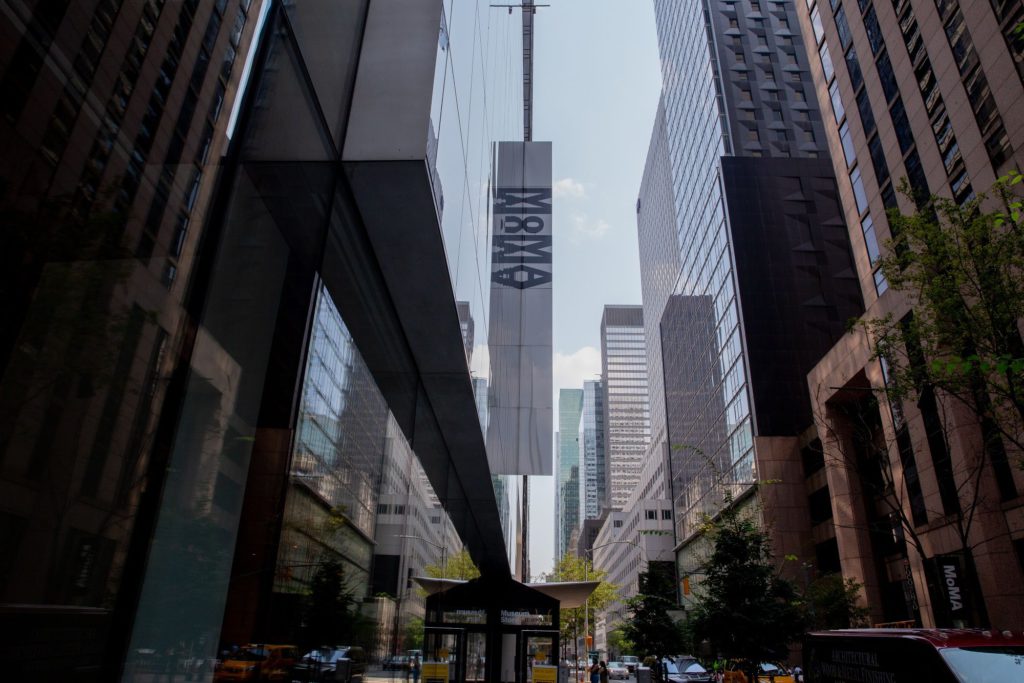
Meret Oppenheim: My Exhibition at the MoMA

You probably know Meret Oppenheim for her fur-lined teacup and spoon. What you are not familiar with is her vast body of collage, paintings and sculpture. Oppenheim, this 200 object-exhibition demonstrates, wasn’t just a revolutionary surrealist; she was a groundbreaking, genre-defying artist who pushed artistic mediums to their breaking point in new and surprising ways. Through March 4, 2023

If You’re Feeling Nostalgic

Edward Hopper’s New York at the Whitney Museum of American Art

Has anyone captured the hustle, bustle, beauty and alienation of New York better than Edward Hopper? Installed in the Whitney’s fifth floor, the exhibition is as much a survey of Hopper’s work as a documentation of the city and its many changes. Drawn primarily from the museum’s extensive holdings, the paintings range from the familiar to the largely unseen. Through March 5, 2023

If You’re Hungry

“I’ll Have What She’s Having”: The Jewish Deli at the New York Historical Society

The only thing more quintessentially New York than the Empire State Building is a bagel with cream cheese and lox. In this excellent survey of the origins, architecture, and, yes, cuisine of the deli, the exhibition traces the past, present and possible future of a culinary tradition that, for many, is just as American as apple pie. Through April 2, 2023

If You’re a Conservationist

Sharks at the American Museum of Natural History

As this profound and hopefully game-changing exhibition demonstrates, sharks are, as the text goes, more threatened than threatening. Tracing sharks’ evolution over the past 450 million years, visitors are led to understand the marvel of the animals’ existence, along with the very real, very immediate threat of their extinction—a threat exacerbated by the misperception that sharks pose serious danger to humans. Through Sept. 4, 2023

More stories like this are available on bloomberg.com

©2022 Bloomberg L.P.

SoftBank-Backed Oyo Posts Narrower Loss After Curbing Expenses

(Bloomberg) — Oyo Hotels, the once high-flying Indian startup, reported a narrower quarterly loss after curbing spending to cope with a slow recovery in travel following the pandemic.

The loss shrank to 3.33 billion rupees ($40.8 million) in the three months through September from 4.14 billion rupees in the preceding quarter, the company said in a statement. Revenue was little changed at about 14.5 billion rupees.

The provider of hotel and lodging bookings, formally known as Oravel Stays Ltd., had been targeting an initial public offering in early 2023. It filed preliminary IPO documents in 2021, only to shelve the listing plan earlier this year after the prolonged pandemic hurt its growth and forced the company to cut thousands of jobs.

In the latest quarter, the startup reduced marketing costs as well as employee and administrative expenses. It now focuses on India, Malaysia, Indonesia and Europe after cutting down operations in markets it previously considered crucial, such as the US and China.

Oyo, valued at $9 billion according to researcher CB Insights, may have trouble attaining that level in its potential IPO given eroded investor sentiment in technology businesses worldwide. SoftBank Group Corp., the largest shareholder in the hotel-booking firm, cut its estimated value for Oyo to $2.7 billion from $3.4 billion, people familiar with the matter said in September.

More stories like this are available on bloomberg.com

©2022 Bloomberg L.P.

India Banking Regulator Asks Paytm Unit to Reapply for License

(Bloomberg) — India’s banking regulator asked a unit of Paytm to resubmit its application for approval required to provide payment aggregator services, a potentially lucrative business the company is trying to expand into.

The Reserve Bank of India asked Paytm Payments Service Ltd. to resubmit its application after seeking necessary approvals from its parent to comply with foreign direct investment guidelines, the fintech company said in a disclosure to stock exchanges on Saturday.

Paytm, backed by SoftBank Group Corp. and Ant Group Co., is expanding its product offering in a bid to convince investors of its earnings potential even as losses mount. Its stock has lost three-quarters of its value since Paytm’s initial public offering a year ago — the worst first-year decline among large IPOs globally over the past decade.

Payment aggregators are platforms providing diverse payments options to customers such as merchants. They need a license from the Reserve Bank of India to operate.

PPSL, a 100% subsidiary of Paytm parent One97 Communication Ltd., was also asked by RBI to not onboard new online merchants as customers. Paytm can still keep adding offline merchants as users.

“This has no material impact on our business and revenues, since the communication from RBI is applicable only to onboarding of new online merchants,” Paytm said. “We are hopeful of receiving the necessary approvals in a timely manner and resubmitting the application.”

PPSL has to resubmit the application in 120 days.

More stories like this are available on bloomberg.com

©2022 Bloomberg L.P.

China’s ‘IPhone City’ Sends 870 Workers Away Without Notice

(Bloomberg) — China’s Zhengzhou — the capital of Henan province known as “iPhone City” — relocated 870 workers to a hub about 230 miles away in a neighboring province, without giving them any advance notice about the measure to curb Covid transmission.

The workers were transported to Xuzhou in Jiangsu province early Friday “without prior communications,” the city’s authorities said in a statement Saturday on its official WeChat account. It didn’t say whether any of the people tested positive.

Zhengzhou, home to Apple Inc.’s largest iPhone manufacturing site, shot to global prominence after videos emerged on social media showing hundreds of workers in violent clashes prompted by anger over unpaid wages and concern over virus infections. Apple’s main global production partner, Foxconn Technology Group, later began offering 10,000 yuan ($1,395) to any worker who chose to leave.

Most of the people have since been transferred to other locations via a so-called closed-loop arrangement, the statement from Xuzhou city said. The rest were placed in another pandemic bubble system that limits contact with the outside world. The people were all former employees of a “key enterprise” in Zhengzhou’s airport economic zone, it added, without saying which enterprise. A Foxconn representative didn’t reply to queries out of business hours Saturday.

Zhengzhou announced earlier this week a lockdown of its main urban areas for five days as local officials sought to quell a swelling outbreak. While the areas under so-called “mobility controls” didn’t include the district where Foxconn is located, the iPhone plant is in an area already classified as high risk, which means lockdown-like movement restrictions remain in place.

China Locks Down City With World’s Largest IPhone Factory

Xuzhou said local Covid risks are controllable, and now require citizens to present a negative test result within 48 hours to enter public venues, shortened from a previous 72 hours. 

–With assistance from Gao Yuan.

More stories like this are available on bloomberg.com

©2022 Bloomberg L.P.

Wemade to Take Legal Action Against Delisting of Its Token

(Bloomberg) — South Korean online games company Wemade Co. said it will take legal action against an association of local crypto exchanges that plan to delist the company’s native token Wemix.

“The Wemix team neither acknowledge, nor agree with this decision, especially since the company has not been given an explanation about this resolution,” Wemade said in a statement Friday.

The statement came in response to a decision by the Digital Asset Exchange Alliance, which comprises the South Korean exchanges Upbit, Bithumb, Coinone, Korbit and Gopax, to halt trading of the token on Dec. 8. The association said Wemix coins circulated in the market “gravely breached” the planned number and “erroneous information” was given to investors, according to the statement on member Upbit’s website.

The decision led to a drop in value of the Wemix coin, along with declines in the share prices of Wemade and its affiliate Wemade Max. Wemade said in Friday’s statement that the decision will have a limited impact on its plans for next year.

More stories like this are available on bloomberg.com

©2022 Bloomberg L.P.

Crypto’s Brutal Slump Has Finally Caught Up With Bitcoin ATMs

(Bloomberg) — Sign up for our new Crypto newsletter and follow @crypto Twitter for the latest news.

Amherst County, Virginia, doesn’t have a hospital. It does have a Bitcoin ATM. 

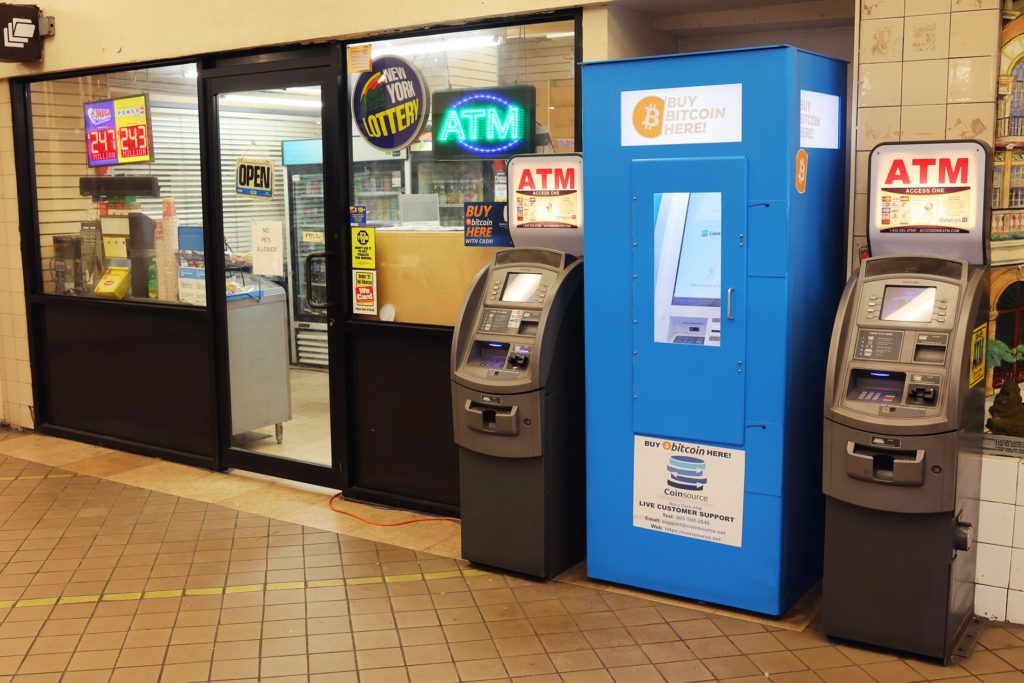
It’s inside the Dogwood Express Market, a convenience store just down the road from the local used-car dealership. The machine lets people buy, receive and send Bitcoin, the largest cryptocurrency. 

Whether they choose to do so, however, is another matter. “I’ve never seen anybody even use it,” Chrissy Scruggs, a 27-year-old employee at the Dogwood Express, said in October. 

Since the first Bitcoin ATM was installed almost a decade ago, the number of machines proliferated, impervious to cryptocurrencies’ boom-and-bust cycles. From the bustling streets of New York City to rural communities like Amherst County, they popped up everywhere, physical symbols of crypto’s growing mainstream appeal. 

Then came 2022, and a “crypto winter” that sent Bitcoin plunging 64% and swept away companies from Celsius Network to Sam Bankman-Fried’s FTX. The number of crypto ATMs in the US peaked at just over 34,000 in August and has since dipped slightly, according to Coin ATM Radar, which tracks the machines. September marked the first month in the industry’s history that more ATMs were retired than installed, Coin ATM data show (October saw a small rebound). 

Even worse, the amount of money the average machine handles has fallen sharply, calculations by Bloomberg News based on available industry data show. 

The total amount of money funneled through crypto ATMs globally, expressed in dollars, fell to $230 million in October from $349 million in January 2021, according to data from researcher Chainalysis. The drop came even as the number of machines installed worldwide almost tripled in the period. That implies a roughly 75% decrease in the value the average unit generates. 

Many ATMs now get little, if any, use. At the Smoke Shop convenience store in midtown Manhattan, there’s one tucked away between shelves of soda and snacks. Syed Alam, who works at the store, said he doesn’t pay much attention to the machine. At noontime on a recent Friday, he reckoned at least one person had used it that day. Every two weeks or so, someone comes to collect cash from the unit. 

What’s clear, though, is that usage has dropped off in the past year. “Now, it’s slow,” said Alam, 49. 

With demand waning, executives who had been used to plugging in units as fast as they could negotiate new leases are facing tougher choices. 

Coin Cloud, which runs about 5,000 ATMs across the US and Brazil, has tapped advisers to help it rework about $125 million of debt accumulated to fund an aggressive expansion, Bloomberg News reported in November. The company has been seeking additional funding from troubled crypto brokerage Genesis, people familiar with the matter said. 

Read more: Crypto ATM Operator Coin Cloud Discussed Equity From Genesis

Some of Coin Cloud’s kiosks are in rural areas with weak foot traffic, according to people with knowledge of its business. Coin Cloud declined to comment on its efforts to secure funding. Chief Executive officer Chris McAlary said in October that the firm hasn’t had to reduce its number of machines. 

“You have to be more selective about the location than two years ago,” said Ben Weiss, CEO of rival CoinFlip. “You want locations that have long hours and high foot traffic.” CoinFlip hasn’t had to pull any machines this year and its revenue is rising, Weiss said in October, without giving details.

Negotiating Rents

Running lots of underutilized machines can be costly. Operators negotiate rent individually with outlets, although some pay store owners a percentage of the revenue a unit generates, according to Eric Grill, CEO of crypto ATM manufacturer ChainBytes. 

Grill also owns four crypto ATM companies that between them operate “a couple hundred” machines globally. He said his businesses typically pay stores around $300 a month to host a machine, but depending on how much money a unit brings in, the fee can reach as high as $1,000. 

Crypto ATMs in the US generate anywhere between $1,000 and $10,000 in revenue per month, Grill said in early November. He estimated that 3% to 6% of that goes to operating costs such as rent, marketing and paying compliance officers and the people who collect money from the machines.

Executives interviewed for this story expressed confidence in their businesses even if the sentiment around digital assets has soured. Transaction volumes aren’t as vulnerable to market swings as at crypto exchanges, for example, they said.   

The machines also offer a fast and convenient — and often anonymous — way into the world of digital assets. Grill’s companies require neither phone number nor identification for transactions of less than $500.

In part because of those attributes, crypto ATMs generate juicy fees, ranging from 11% to 25% according to operator Coinsource. 

“A lot of people are just trying to be conservative,” said Brandon Mintz, founder and CEO of Bitcoin Depot, which Coin ATM Radar ranks as the largest crypto ATM operator in the US. Bitcoin Depot has slowed the pace of installing new units and is focusing on moving underused machines to better-performing locations. 

Mintz plans to take Bitcoin Depot public by merging it with a special purpose acquisition company, or SPAC. In an August press release announcing the deal, Bitcoin Depot said it runs over 7,000 “kiosk locations” throughout the US and Canada. The company generated $6 million in net income on sales of $623 million in the 12 months through June, according to the statement, which didn’t give year-earlier comparisons for the unaudited figures. 

Bitcoin Depot owed $42.4 million under a term loan bearing a 15% interest rate as of June 30, according to a proxy statement. That compares with a 10% yield on a US leveraged loan index.

The proposed deal, scheduled to close in the first quarter, values Bitcoin Depot at $885 million. Mintz said in a Nov. 22 email that the deal is still on track and that “the company has remained unaffected by the fluctuations in the industry.” He also said Bitcoin Depot is “comfortable” with its financial position and ability to repay debt. 

Singapore ATM Ban

One potential threat comes from regulators. Singapore in January banned crypto ATMs and ordered them shut down. In March, UK authorities said they hadn’t approved any machines and warned operators to remove any units still in use.

In the US, regulators have so far taken a hands-off approach. But in a report originally issued in September 2021, the Government Accountability Office said crypto ATMs can be used to facilitate drug trafficking. It has recommended that the Treasury Department’s Financial Crimes Enforcement Network and the Internal Revenue Service should review registration requirements for the machines. Both agencies agreed. 

Whatever the outcome of that process is, a more immediate challenge for ATM operators may be to convince landlords that hosting a machine is still worth the trouble, even as usage cools. 

Louis Pena, manager of the Orion Electronic store in the Bronx, guesses his machine gets something like one visitor a day. He’ll take it — it’s a potential customer, after all — and he has no plans to get rid of the ATM. But his patience isn’t infinite. 

“When they start not giving me customers, it doesn’t make sense to have it,” he said.


–With assistance from Justina Lee.

More stories like this are available on bloomberg.com

©2022 Bloomberg L.P.

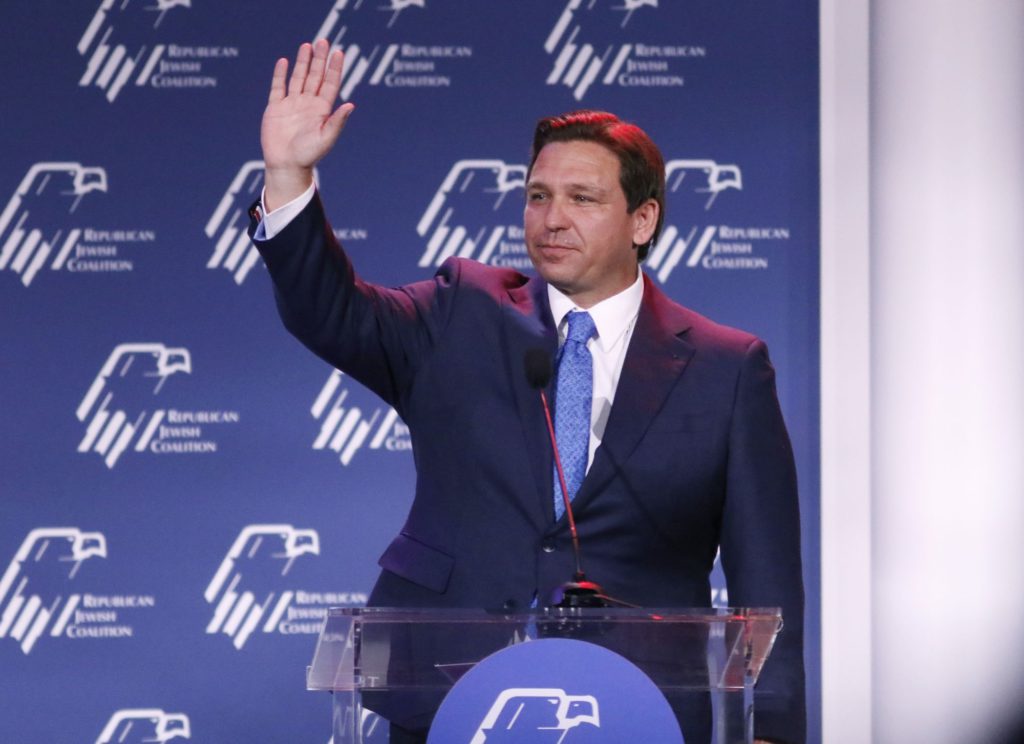
Musk Says He’d Back DeSantis for President If He Makes 2024 Run

(Bloomberg) — Elon Musk said Friday night that he would support Ron DeSantis, the Republican governor of Florida, if he ran for president in 2024.

Musk, in a series of Twitter exchanges, elaborated somewhat on his political views, saying, “My preference for the 2024 presidency is someone sensible and centrist. I had hoped that would the case for the Biden administration, but have been disappointed so far.”

He called himself a “significant supporter of the Obama-Biden presidency and (reluctantly) voted for Biden over Trump.”

When one of the people he was tweeting with asked if he’d back DeSantis in the next presidential election, Musk responded: “Yes.”

Musk bought Twitter Inc. nearly a month ago and last weekend reinstated the Twitter account of former President Donald Trump, who has announced another run for the White House. Trump, whose account was suspended shortly after the assault on the US Capitol by a mob of his supporters on Jan. 6, 2021, has yet to post any new tweets.

“I’m fine with Trump not tweeting,” Musk said on Twitter Friday night. “The important thing is that Twitter correct a grave mistake in banning his account, despite no violation of the law or terms of service. Deplatforming a sitting President undermined public trust in Twitter for half of America.”

Musk said in June that he was leaning toward a DeSantis endorsement, and the two men have exchanged acclaim for one another. 

Musk’s expression of support comes as many party leaders, including onetime Trump allies, have been talking up DeSantis as a more desirable standard bearer than the former president in the next election. The Florida governor won a resounding re-election victory in the Nov. 8 election, even as many of the Republican candidates championed by Trump went down to defeat. 

Musk, who’s also the chief executive officer of Tesla Inc. and SpaceX, hasn’t made a federal political donation since 2020. He also has not contributed to DeSantis’s campaigns for governor. 

After Musk restored Trump’s Twitter account, civil rights leaders urged major advertisers to stay away from the social media platform. The activists said Musk broke promises he made to them in a closed-door meeting about hate speech and misinformation. 

Trump is obligated to make most social media posts on Truth Social, the platform he launched after his Twitter ban, first, according to a filing, although there’s an exception for political messages. 

–With assistance from Bill Allison.

More stories like this are available on bloomberg.com

©2022 Bloomberg L.P.

Hangzhou Vows Video-Game Funding as China Crackdown Eases: SCMP

(Bloomberg) — Hangzhou, a China hubs for tech startups, pledged 100 million yuan ($14 million) in annual funding for video gaming and esports amid indications that a government crackdown on those industries has eased, the South China Morning Post reported, citing a municipal government announcement.

The funding program is part of preparations for the country’s hosting of the Asian Games, according to the report. The Hangzhou government said it plans to call on various government bodies in the city to help create a “positive atmosphere of public opinion” during the vent, the English-language newspaper said. 

The country’s semi-official gaming industry association declared the video-game addiction problem among minors was “basically solved”, the English newspaper said. A number of academic institutions in Hangzhou, including Zhejiang University and the China Academy of Art and Zhejiang Media Institute, will establish degrees in video-game animation and esports, according to the report. 

More stories like this are available on bloomberg.com

©2022 Bloomberg L.P.

Adobe Sees Up to $9.2 Billion in E-Commerce: Black Friday Update

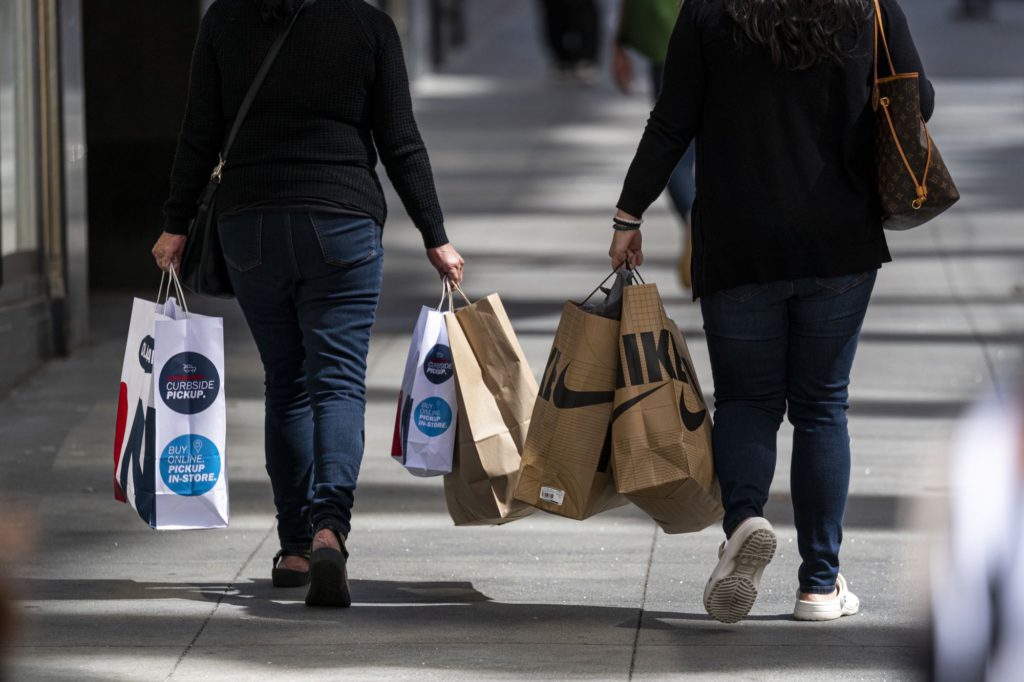
(Bloomberg) — US retailers experienced what appears to be a muted Black Friday as high inflation and sagging consumer sentiment erode Americans’ demand for material goods. 

Bloomberg News will be following the latest developments as information becomes available throughout the day. All time stamps reflect the US East Coast. 

Adobe Analytics Boosts End-of-Day Sales Estimate (7 p.m.)

Online sales will rise to between $9 billion and $9.2 billion on Black Friday, Adobe Analytics said in an email. That’s slightly ahead of the company’s earlier projection of $9 billion, which would represent a modest 1% increase from last year. With inflation running at almost 8%, that still means many retailers are losing ground in real terms.

Spending by 6 p.m. Eastern time had totaled $7.28 billion, Adobe said. Hot sellers on Black Friday included Apple Watches and AirPods, smart speakers and televisions, gaming consoles and espresso machines. In toys, Adobe called out Hatchimals, Funko Pop! and Squishmallows as popular items.

For the weekend, Adobe predicts online holiday spending of $4.52 billion on Saturday and $4.99 billion on Sunday. Shoppers can expect discounts of as much as 17% on apparel, 19% on sporting goods and 34% on toys. But would-be computer buyers are better off waiting for Monday, when discounts are expected to peak at 27% from the current level of 17%.

Activity Light at One San Francisco Mall (4:40 p.m.) 

At the Stonestown mall in San Francisco, shoppers were few and far between. The Target and Zara stores were mostly empty, and there was no line for the mall’s Santa Claus. Uniqlo and Apple were the busiest locations, but they still weren’t crowded. 

Black Friday Waits Exacerbated by Labor Shortage (4:17 p.m.)

Longer wait times at some US stores on Black Friday are probably due to the ongoing shortage of retail workers — one slice of the larger labor-supply issues that have been hitting the country since the pandemic, said Shannon Warner of consulting firm Kearney.

There are many more open positions in retail this holiday season than in past years, she said. As a result, some retailers have opened their stores for fewer hours each day through the year. While some retailers have extended their store hours for Black Friday, they will likely return to those shortened hours.

Retailers just “don’t have enough people to staff the full hours that they have historically had,” Warner said. She said she is encouraging retail clients to consider automation and other efficiency moves, rather than waiting for the possibility of a solution to the retail labor shortage.

Expert Sees Retail Sales Matching Last Year (4:21 p.m.) 

Black Friday is kicking off a holiday shopping season that’s likely to see modest to break-even growth in annual sales, says Melissa Minkow, director of retail strategy at digital consultancy CI&T.

“That’s still a win,” she said. In the UK, for instance, high inflation has caused consumers to pull back noticeably on spending. “Americans haven’t behaved that way,” Minkow said. “We’ve still been spending.”

The steep Black Friday discounts, though, are likely to ding companies’ margins. “Profits will not be where retailers want them to be,” Minkow said. That’s in part because they “couldn’t pass all of the inflationary costs off to consumers.”

Thanksgiving Through New Year’s Is Big for Restaurant Gift Cards (3:20 p.m.)

Thanksgiving Day is slow for restaurants, but the holiday marks the start of the period in which the industry sells the majority of its gift cards for the year, according to Credit Suisse. The period lasts through New Year’s.

For the average casual restaurant, the coming weeks can account for more than half of annual gift card sales. Between 35% and 40% of redemptions happen in the first quarter. Many restaurants are pushing for gift card sales by offering customers bonus cards with low value to make the purchase more appealing, for instance an extra $5 gift card with the purchase of one valued at $25, analysts led by Credit Suisse analyst Lauren Silberman said.

See also: Starbucks gift cards eyed in complaint to SEC

Black Friday Deals Seen as Only Slightly Bigger Than October Discounts (3:20 p.m.)

Consumers are finding deeper Black Friday discounts this year versus 2021, but many of this week’s promotions have actually been in place since around October, says Jessica Ramirez, an analyst at Jane Hali & Associates.

In early October, the several dozen retail companies that Ramirez covers launched discounts to clear excess merchandise — and the companies have largely kept them in place through Black Friday. “I would have expected maybe another 10% added as a deal for today,” Ramirez said. But “it’s pretty much the same.” 

The retailers “are being fairly strategic,” she said. They want to sell as much inventory as they can while still protecting profit margins, she added, with companies such as Ulta, Macy’s, Coach and Ralph Lauren offering about the same level of promotions from a year earlier. American Eagle Outfitters, the Gap and Lululemon are among those giving a higher level of promotions, she said. Walmart and Target are also offering more discounts. 

Ramirez does, however, expect steeper discounts on Cyber Monday.

At the same time, high-end brands in particular have been able to raise prices recently — sometimes faster than the pace of inflation — because of high demand. Investors and analysts want those companies to hold on to those gains, rather than squander them during a promotional holiday season. 

“I hope that a lot of brands learned their lesson,” Ramirez said.

High-end handbags had an average discount rate of 30% on Thanksgiving, for example, according to data from Salesforce.

Black Friday-Sized Deals Will Become Scarce (1:41 p.m.)

The days leading up to and including Cyber Monday might be the peak for holiday shopping this year.

“The price-sensitive customer wants to maximize value, they’ve had little power in doing that when it comes to gas prices, food prices or travel,” said Vivek Pandya, lead analyst at Adobe Digital Insights. “Many consumers believed they’d get the best discounts during Cyber Week, and now were seeing them take advantage of that.”

Retailers know that consumers are financially constrained. Black Friday and Cyber Monday allow companies to beat the competition on price. “That is the strategy that can help them win in this environment,” Pandya said. Still, discounts as deep as the ones being advertised on Black Friday will become rare into December, which will make shopping “less appealing for certain consumers,” he said.

Brands at Both Ends of the Price Spectrum Draw Shoppers in Albany (1:28 p.m.)

Around 10:30am at Crossgates Mall in Albany, New York, the ultra low-cost brands and the higher-end buzzy retailers had the most foot traffic, while the middle-market stores were desolate.

Gap Inc.-owned Old Navy, which was offering 60% off most items, had a line so long that some shoppers turned around as soon as they entered the store. Athleisure favorite Lululemon Inc., which had only a few racks of discounted merchandise, and American Eagle Outfitters Inc.-owned Aerie, a popular intimates brand among Gen Z shoppers, also drew big crowds.

Meanwhile, stores like Banana Republic, Macy’s and Urban Outfitters had no lines at all, and only a handful of shoppers.

Apparel is the number one shopping category this holiday season, in part because inflation-constrained shoppers can get clothing items as gifts at relatively low prices, according to Rod Sides, vice chairman of Deloitte. Discounts as steep as 70% off fashion and accessories are the result of retailers’ efforts to both clear excess inventory and capture demand when it’s at its peak.

“Certainly there’s a desire to win the weekend, not only to liquidate excess inventory but also to step in when the customer is willing to spend,” Sides said.

Stamford Shoppers Head to Victoria’s Secret (1:20 p.m.)

Crowds were thin in the late morning at the Stamford Town Center mall. Kay Jeweler, empty. Safavieh, empty. Only a couple of people waited at the checkout line at Forever 21 and just a few were in line for a purchase at Barnes & Noble. At Victoria’s Secret, though, there were more than a dozen people in the queue.

For Gabriel Senatore, a São Paulo native who moved to the US four years ago, shopping on Black Friday is an annual ritual. At the mall with his five-month old and his shopping partner, Angie Simionatto, he told Bloomberg he was on the lookout for shoes and baby gear.  

Simionatto noted the mall was less busy than she expected. “Very empty,” she said. Their expedition had just started and they had already made a purchase at Vans, but if they can’t find everything they’re looking for, they have a backup plan: “Amazon. Cyber Monday,” Senatore said.

By 12:30 p.m., at least, the crowds at the mall had begun to pick up a bit.

In Westchester, ‘Not That Different Than Usual’ (12:55 p.m.)

The Target store in Mount Vernon, New York, had discounts on items such as hair accessories, off 30%, and winter boots for women, off 40%. There were markdowns on electronics, too: A 55-inch Samsung TV was discounted to $350 from $630. But the store was only about twice as busy as usual, and most shoppers were only walking out with a modest amount of purchases.

“The sales are OK. It’s not that different than usual,” said Cynthia Carroll, 58, who was with a relative who had bought a gift for her: a Cuisinart AirFryer toaster that was discounted to $159 from $229.

A Bed Bath & Beyond store in the same complex advertised discounts of 40% to 75%, but the occasion was a going-out-of-business sale, not Black Friday. Most of the store’s shelves were already barren, and no holiday music accompanied the deliberations on discounted sheet sets and picture frames.

Salesforce’s Garf: Inflation Boosting Sales Total (12:55 p.m.)

The 9% boost in online sales in the US on Thanksgiving Day, reported by Salesforce, is largely fueled by the highest inflation in decades, said Rob Garf, vice president of retail at the company.

“People are just plainly buying less products because their dollar isn’t going as far as it used to,” Garf said.

As the rising cost of fuel and groceries makes many consumers more cautious to significantly boost spending, they’re seeking — and finding — major discounts. On Thanksgiving Day, the deepest price cuts were on home appliances and apparel, according to Salesforce. 

Also making an appearance at the top of the list were high-end handbags, which Salesforce said were seeing an average discount rate of 30%. That’s notable because high-end brands have largely refrained from major markdowns in the past two years given robust demand. 

‘Feels Like a Normal Day’ in Chicago (12:14 p.m.)

At a Target store on Chicago’s North Side, the parking lot was barely half full at about 9 a.m. local time. Shoppers were greeted with $3 ornaments and discounted Christmas trees when entering, and the store seemed calm and relatively quiet.

“It feels like a normal day,” said Miguel Martinez, 35, who said he woke up early and decided to come check out the Black Friday deals with his 12-year-old daughter, Jaylen. He described the discounts as “pretty good,” and pointed to a couple of Amazon Echo Dot smart speakers that he picked up for $13 from the electronics department.

In his cart, Martinez also had toys for friends and family, including Nerf guns and a Disney Encanto doll. Martinez, a warehouse supervisor, said inflation has made him cut back on certain things for himself like cable TV and Netflix in recent months to afford presents for his four children. “I really do it for the kids,” he said.

In Target’s toy department, Therese Pociask, 60, was shopping for her own small home day-care center, and also for gifts for her nieces and nephews. In her cart were an Epsom-salt gift pack, Fujifilm Instax camera film, three stuffed dinosaurs and a puzzle.

“I’m looking for sales and deals,” she said. “This one is pretty good,” she said pointing to a buy-one-get-one-50%-off toy discount.

“I’m trying not to cut back,” Pociask said of the holidays this year. She’s planning to spend about $2,000 — about the same as last year — in total for all her family and the day-care, but says inflation is making it tough to get all her shopping done without overspending.

“I’m trying to stay within my budget, but I’m finding I have to spend more for it to look the same,” she said.

Deals Sweeter This Year Than Last, Salesforce Says (12:14 p.m.) 

Consumers are finding better deals this shopping season than last year, according to data from Salesforce Inc.

The average consumer discount rate for Thanksgiving Day shoppers online in the US was 31%, Salesforce says. That’s 7% higher than 2021, when retailers didn’t have to put as many items on sale because demand was strong and a lot of merchandise was held up at snarled ports.

But this year’s Thanksgiving Day discounts — which set the stage for better promotions on Black Friday and over the weekend — are still slightly lower than 2019 levels, when the average rate was 33%, according to Salesforce.

After a couple of abnormal years, the start to this holiday season shows that trends are normalizing in terms of discount levels and timing. 

Last year, US consumers shopped relatively earlier on concerns that supply-chain problems would lead to a lack of merchandise. “We questioned whether the consumer would be reconditioned to buy early and what the data show us so far is that consumers have snapped back,” said Rob Garf, vice president of retail at Salesforce. “Life somewhat feels normal again and shopping also feels somewhat normal again.”

Thinner Black Friday Crowds Seen Going Forward (12:14 p.m.)

While the pandemic impact may be waning, there still seems to be a notable lack of crowds at many stores.  

While traffic levels seem higher than a year earlier, “we think the historic raucous atmosphere of Black Friday may be in the past,” writes Piper Sandler analyst Edward Yruma in a research note, who says this is his team’s 18th year of “multistate” Black Friday store visits.

The relative calm may be attributed to promotions that “definitely shifted” to earlier in the year on the heels of Amazon’s October Prime Early Access Sale. Additionally, both Walmart and Target have run “aggressive promotions” throughout November and other apparel retailers began promotions earlier in the week, he said.

While in-store traffic has improved from the pandemic-related slowdowns in 2020 and 2021, it hasn’t returned to previous levels. 

One Mom Seeks Shoes and Cologne at a Quiet Macy’s in Connecticut (11:55 a.m.)

The Macy’s in Stamford, Connecticut, was neat and orderly — maybe a little too neat and orderly on a day associated with shopping chaos. The furniture section was nearly deserted, though there were more shoppers looking at shoes.

Kris Adler, a mother of two teenage sons in her mid-fifties, said she was looking for “festive shoes” for herself, and eyed a black, high-top sparkly sneaker. Her sons had already provided her with a list of mostly sporting equipment and cologne, she said. “The young men are big on cologne,” she told Bloomberg. She came shopping thanks to the 13-year-old who knew the schedules and wanted something to do, she said. “Some algorithm on whatever platform he’s using — somebody got him,” she said.

Discounts throughout the store varied, with racks of kids clothing marked down 60%, though the Adidas track suits had only 25% off.

At the checkout line in the toys section, where there was no wait, the teller said the store had prepared for more shoppers, and thanked this reporter for coming.

Beware Retail Industry Stocks, Analyst Says (11:05 a.m.)

One purchase investors should think twice about during the holidays is retail stocks, says Michael Baker, an analyst at D.A. Davidson.

Don’t get him wrong, he’s bullish on the sector for 2023. But “retail almost always underperforms from the day after Thanksgiving through year end,” he said in a note to clients. “From a tactical perspective, we advise shorter-term caution on the group.”

Going back to 2010, retailer shares on average have been little changed during the holiday season, while the S&P 500 has climbed 1.8%, Baker said. And retail industry shares have lagged nine of the last 12 years. The worst performers tend to have the highest holiday exposure such as Best Buy Co. and Dick’s Sporting Goods Inc. By contrast, Lowe’s Cos. and Home Depot Inc. have been safer bets during this time of the year, he said.

In a separate report, Cowen & Co. analyst Oliver Chen named Macy’s Inc., Walmart Inc. and Ulta Beauty Inc. as his “top Black Friday holiday stocks.” Each will benefit from product diversification and value positioning, he said.

Consumers Likely to Shop Later, Cowen Says (11:01 a.m.)

US shoppers will probably return to one of their pre-pandemic habits this year: procrastination. That’s according to Oliver Chen, a retail analyst at Cowen & Co., and there’s good reason for it given the industry backdrop.

Amid last year’s supply-chain snarls, the fear of finding empty shelves prompted many consumers to stock up on holiday merchandise early in the season. Now, many retailers are struggling to pare bloated inventories, and that’s pushing them to return to pre-pandemic discounting levels. Shoppers, meanwhile, are struggling to keep up with inflation.

As a result, more US consumers will take a wait-and-see approach this year in hopes that retail prices will get even lower as Christmas gets closer, Chen said. There’s also a calendar effect, with an extra Saturday between Thanksgiving and Christmas. He predicts a holiday sales increase of 5% to 7%, down from last year’s gain of almost 14%. The five-year average is 6.7%, Chen said, citing National Retail Federation data.

Shopify Sees Bigger Thanksgiving Gain Than Adobe (9:40 a.m.) 

Data from software provider Shopify Inc., which powers e-commerce platforms for small businesses, show that the average spend per cart on Thanksgiving Day was 3.8% higher than last year. That might not point to higher sales volumes, but instead increases in prices due to higher inflation. 

The Shopify data also showed an increase in the number of sales made on cell phones rather than on desktops, suggesting that more consumers were looking for deals while away from their desks. The apparel and accessories category was the top seller in the US yesterday, followed by health and beauty, Shopify found.

Thanksgiving Sales Rise 2.9%, Adobe Says (9:40 a.m.)

Online sales climbed 2.9% to $5.29 billion on Thanksgiving Day, Adobe Analytics said Friday. That’s slightly ahead of Adobe’s estimate for the overall holiday season, which the company sees expanding 2.5% from last year. On Black Friday itself, Adobe predicts only a 1% increase in online sales, to $9 billion.

Taking a step back, these numbers — which aren’t adjusted for inflation — show the challenge facing retailers. The US consumer price index climbed 7.7% during the 12 months ending in October. So with e-commerce rising in the low single digits, unit sales are probably down.

Salesforce, using a different methodology, reported a more robust 9% gain in online sales to $7.5 billion. Activity jumped between 6 p.m. and 10 p.m. Eastern time and 78% of traffic came through mobile phones, suggesting that people did a lot of shopping from the couch after their Thanksgiving meals.

UK Deliveries Crunched by Postal Strike (9:40 a.m.) 

One of the challenges for UK retailers this Black Friday will be how to deliver gifts bought online. UK postal workers at Royal Mail are striking over pay and conditions on Nov. 24 and 25 with further walkouts planned in the leadup to Christmas, the busiest time of year.

Amazon.com Inc., a big discounter for Black Friday, is making deliveries using e-bikes in key British cities to reduce its emissions. The online behemoth has opened e-bike delivery hubs in Manchester and London in time for the discount event. Amazon is investing £300 million ($362 million) over five years to reduce its transport emissions in the UK.

Retailers are seeking to ease the load on warehouse staff at the busiest time of year. UK electronics retailer Currys Plc has spent more than £250,000 on “robotic exoskeleton suits” to help warehouse workers spread the weight of lifting heavy loads and prevent injuries. Currys says its distribution site in Newark, England, will deliver 8.7 million units of stock this Black Friday period, with the retailer offering as much as £500 off televisions.

Pitney Bowes Says Gen Z More Likely to Buy Online (8:26 a.m.) 

Half of Gen Z consumers who participated in a Pitney Bowes survey say they’ll be shopping online more this season during Black Friday and Cyber Monday than they did last year. Across age groups, one in four consumers plan to shop online more this year.

Younger consumers are more comfortable with online shopping, Pitney Bowes said in a separate report. And Gen Z is more likely to purchase from digital brands that don’t have physical stores and advertise on Instagram and TikTok.

With inflation putting the squeeze on holiday budgets, many consumers are looking online for deals. As retailers try to offload a glut of inventory, promotions won’t be hard to find.

Hot Wheels, Paw Patrol Are Top Sellers (8:26 a.m.) 

In addition to tracking online sales totals, Adobe Analytics has been keeping an eye on hot sellers during the first three weeks of November. The list includes some perennial favorites such as air fryers, smart speakers and Apple iPads. The Nintendo Switch is the top-selling gaming console, while brisk-selling toys include Hot Wheels and Paw Patrol. Among categories, kitchenware sales are up 155% from October, which is a relief for retailers since home goods have been slumping this year. Also rising: buy-now-pay-later options, as shoppers’ savings accounts dwindle and inflation takes a toll.

Inditex Workers Start the Holiday Season With a Strike (8:11 a.m.)

Inditex, the owner of the Zara fashion chain, is facing two days of strikes in its home market as the holiday shopping season begins. As many as 13 shops closed on Thursday in the Spanish province of A Coruña, in Galicia, as workers walked off their jobs to demand a €440 ($458) monthly pay increase for staff earning €1,058. Unions are expected to shut most of the 44 Inditex-owned shops in the province, including a five-floor flagship Zara store in the center of A Coruña city.

The protest highlights growing demands from workers for wage increases in the face of soaring prices. In spite of the cost-of-living crisis, Inditex has been able to pass on costs to shoppers and posted its biggest profit margins in seven years in September.

Fewer Gifts Expected Amid High Inflation (7:34 a.m.)

Inflation, not the Grinch, is stealing Christmas this year. More than half (51%) of the 1,000-plus respondents to a RetailMeNot holiday trends survey say they’re coping with sky-high inflation this year by purchasing fewer gifts.

Polled shoppers plan to spend $725 for the holidays — 8% less than last year. More than a third (36%) say they’re going to use more coupons to manage higher prices. And 22% say they’re going to purchase more used items.

RetailMeNot’s data also show that 53% of respondents plan to shop on Black Friday and 55% will shop Cyber Monday. Many consumers have already started, with 52% taking advantage of pre-Black Friday deals.

E-Commerce Growth Seen Slowing (7:34 a.m.)

Retailers’ digital sales remain higher than in 2019, but growth has decelerated from the past two years, said David Bassuk, global co-head of the retail practice at consulting firm AlixPartners. Consumers are still using online channels to get a sense for what deals are available, but that won’t be the only option this year.

“The stores are back,” Bassuk said. “The importance of the sales associate in the store is increasing once again.”

Black Friday Minus Thanksgiving: UK Stays Active (7:02 a.m.)

With inflation running at the highest in more than four decades in the UK, shoppers are actively looking for bargains this Black Friday. Almost 70% of British shoppers plan to participate in the discount event imported from the US, up from 57% last year, according to McKinsey & Co. Online searches for Black Friday sales have risen by a quarter since last year.

With most people in the UK not celebrating Thanksgiving, Black Friday has morphed into a weeklong and in some cases a monthlong event. It started even earlier than normal this year as retailers try to encourage shoppers to spend. British department store John Lewis Partnership Plc and drugstore chain Boots both offered deals from the start of the month. 

Adobe Sees 2.5% Growth — Without Inflation (12:01 a.m.)

A key question this Black Friday will be how much higher prices are contributing to better sales numbers.

Overall spending this holiday season is seen growing 2.5% from a year ago, compared with 8.6% last year and a whopping 32% in 2020, according to data from Adobe Inc. Those figures aren’t adjusted for inflation, meaning that sales could be down by volume given that consumer prices are up 7.7% from a year ago.

Telsey Sees Profits Amid Discounts as Key (12:01 a.m.) 

Success for retailers this holiday season will be determined by which companies can maintain their discounts and still come out profitable, said Dana Telsey, chief executive officer of Telsey Advisory Group, in a Nov. 23 interview on Bloomberg Television. There’s still more inventory “to get through as we enter the holiday season, which is going to lead to good deals and good values for the consumer,” she said.

Telsey also said that brick-and-mortar sales are likely to get a big boost this year because “we have not had this type of in-person shopping for two years during the holiday season” due to Covid-19.

–With assistance from Daniela Sirtori-Cortina, Clara Hernanz Lizarraga, Katie Linsell, Brendan Case, Tiffany Kary, Jeannette Neumann, Janet Freund, Leslie Patton and Tonya Garcia.

(An earlier version corrected a month in the introduction.)

More stories like this are available on bloomberg.com

©2022 Bloomberg L.P.

Microsoft’s Activision Deal Hangs on Long-Shot FTC Accord Team Biden Hates

(Bloomberg) — Microsoft Corp.’s best chance to win approval for its $69 billion Activision Blizzard Inc. deal from US regulators is to persuade the Biden administration to accept a settlement in which the Xbox maker pledges it won’t withhold its popular titles from rivals. 

That’s a very long shot given Biden’s antitrust enforcers aren’t fond of such agreements — especially after this month’s Ticketmaster blowup put the spotlight back on a failed 2010 Justice Department settlement with Live Nation Entertainment Inc. 

Antitrust officials in the UK and Australia have raised concerns the takeover would give Microsoft an overwhelming advantage in cloud gaming, a nascent industry. That’s an area of particular sensitivity for Federal Trade Commission Chair Lina Khan, who earlier this year sued to block Meta Platforms Inc. from acquiring a popular fitness app to gain an edge in the fledgling virtual reality market.

Although Khan hasn’t commented specifically on the Activision deal, she said at an October conference that the FTC is focusing on ways digital platforms use mergers to maintain their dominance during periods of technical transitions.

“Right now we are seeing that period of technological transition — be it in the context of the cloud or voice assistants or virtual reality,” Khan said. “We have to be especially vigilant across the board, but particularly in the merger context.”

Microsoft announced in January it planned to buy game publisher Activision Blizzard, which has developed popular franchises like Call of Duty and World of Warcraft. The acquisition would be the company’s largest ever and one of the 30 biggest deals of all time. Although Brazilian antitrust officials cleared it, other competition regulators, including the UK and the European Union, have raised concerns that Microsoft could withhold popular titles from rivals, particularly from Sony Group Corp.’s Playstation. 

Microsoft said it has offered a proposal that would keep Call of Duty on the Playstation for the next 10 years. But that kind of a settlement might not placate regulators, said Bloomberg Intelligence analyst Jennifer Rie.    

“This is a deal that needs behavioral concessions and the FTC is not accepting behavioral concessions,” Rie said. “They don’t have any other choice but to sue.”

The FTC declined to comment. 

Microsoft said in a statement it’s “prepared to address the concerns of regulators, including the FTC, and Sony to ensure the deal closes with confidence.” Microsoft pointed out that it would still trail Sony and market leader Tencent Holdings Ltd. in the gaming market after the takeover has been completed.

The Biden administration’s antitrust officials have taken an aggressive tack with companies seeking to merge, often rejecting proposed settlements in favor of lawsuits. The Justice Department has filed a record 10 merger challenges since June 2021. The FTC also has blocked two major deals that sought regulatory approval based on pledges the merged company would play nice with its rivals –- Nvidia Corp.’s purchase of Arm Ltd. from SoftBank Group Corp. and Lockheed Martin Corp.’s bid to buy Aerojet Rocketdyne Holdings Inc.

Then there’s the furor over Live Nation’s Ticketmaster unit after its botched launch of Taylor Swift concert ticket sales last week. The ticketing giant merged with Live Nation in 2010 after the Justice Department blessed its offer to license Ticketmaster’s software to other companies and pledge not to retaliate against venues that chose alternate ticketing vendors. Some lawmakers and advocates are now calling to unwind that merger, saying regulators should never have approved it in the first place.

Microsoft’s Activision Blizzard deal also features another aspect that has piqued the interest of regulators –- major technology platforms using acquisitions to dominate emerging industries, in this case cloud gaming. Several tech companies launched forays into subscription gaming services using cloud technology including Microsoft, Sony, Alphabet Inc.’s Google and Amazon.com Inc. –although few have broken into the mainstream and, in September Google announced it would shut down its Stadia service.

Microsoft’s Xbox Game Pass, which includes cloud gaming in its Ultimate package, leads the market with more than 25 million subscribers. In part, that’s because Microsoft’s dozens of game studios provide a direct channel of content. Activision Blizzard is expected to add enormously to the subscription service’s value proposition.

UK regulators, who must also approve the acquisition, have highlighted concerns about cloud gaming as one of the main reasons they extended their review through March 2023. The deal could “tip or significantly increase concentration” of cloud gaming in Microsoft’s favor before rivals have a chance to develop, the UK’s Competition and Markets Authority said.    

More stories like this are available on bloomberg.com

©2022 Bloomberg L.P.
Close Bitnami banner
Bitnami