Bloomberg

Climate Change Is Seen as Most Worrying Threat to World Security

(Bloomberg) — Climate change is seen as a bigger threat than war by a majority of people living in some of the world’s top economies, according to new data being presented to diplomats and military officials who convene Friday for a key security meeting in Germany.   The poll commissioned by the Munich Security Conference listed concern over …

Climate Change Is Seen as Most Worrying Threat to World Security Read More »

South Africa Seeks Partner to Help Create State-Owned Gas Trader

(Bloomberg) — South Africa is seeking a partner to help it start trading gas this year as the country develops supply chains and generating capacity for the fossil fuel. Africa’s most industrialized nation plans to add at least 2,100 megawatts of gas-fired capacity at the Port of Ngqura, along with the construction of the Coega …

South Africa Seeks Partner to Help Create State-Owned Gas Trader Read More »

China Developer Zhenro Says Funds Insufficient to Pay March Debt

(Bloomberg) — Zhenro Properties Group Ltd., a Chinese developer, said its existing internal resources may be insufficient to meet debt payment obligations next month, according to a filing to the Hong Kong stock exchange.

The Shanghai-based developer is soliciting the consent of creditors “to certain proposed waiver and amendments” to help improve its overall finances and give it stability, it said in the filing late Friday. Zhenro is China’s 30th largest builder by contracted sales in 2021, according to China Real Estate Information Corp.

The company said internal funds available for debt services “became increasingly limited” and said they may be inadequate to “address its upcoming debt maturities in March 2022, including the redemption of the securities in full” on March 5. It had pledged to redeem them earlier.

Chinese developers have faced months of worries about their debt-repayment abilities, as new-home sales plunge and many builders are unable to refinance borrowings. The sector saw a record number of defaults last year following a regulatory crackdown on excessive borrowing in the industry. China Evergrande Group, the world’s most indebted developer, is facing a lengthly restructuring after being labeled a defaulter in December. 

Zhenro said it expects market conditions in the real estate sector to remain under pressure in 2022, and in the absence of a sharp recovery, it said it remains “cautious about its liquidity in the near term.” It is working to generate cash flow to meet its financial commitments, it added.

Just days ago, Zhenro said in separate exchange filings that articles about its controlling shareholder Ou Zongrong and offshore debt securities are “untrue and fictitious,” and that it reserves the right to pursue legal actions against parties responsible for inaccurate information. It said operations remained normal. 

More stories like this are available on bloomberg.com

©2022 Bloomberg L.P.

Bitcoin Tests the $40,000 Level as U.S. Plans Talks with Russia

(Bloomberg) —

Bitcoin is testing $40,000, a key psychological level, as the U.S. plan talks with Russia about military intelligence that suggests an imminent Ukraine invasion, which it denies.

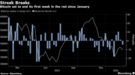
The world’s largest cryptocurrency is on track to notch its first week of losses since January, putting a halt on the token’s recovery from its dramatic year-end slide. The coin is down 5% over the past seven days after Friday’s drop of as much as 1.4%. Ethereum was little changed on Friday while other popular tokens including Solana and Cardano were in the red, according to CoinGecko.

“Traders are taking some risk off the table as the Ukraine situation is still not resolved and are now moving into safe-haven asset classes such as gold and silver,” said Nathan Batchelor, lead Bitcoin analyst for SIMETRI Research. “However, the decline in Bitcoin has not been as dramatic as you may expect, and I am impressed that Bitcoin still commands a value of $40,000 with all the geopolitical uncertainty.”

Tensions in Europe has prompted a rotation into so-called risk-off assets like gold, which has gained over the past three weeks. Although referred to as “digital gold,” Bitcoin’s sensitivity to broader market sentiment has weighed on its hedge appeal often touted by advocates. Instead it has largely followed movements in major stock indexes lately, exhibiting strong correlations with the S&P 500 and Nasdaq 100. 

“We’re all trying to figure out what crypto’s identity is right now,” said Callie Cox, U.S. investment analyst at eToro. “Is it a store of value? Is it an inflation hedge? Is it this highly correlated asset to stocks? Right now, crypto is really falling into that stocks bucket.”

More stories like this are available on bloomberg.com

©2022 Bloomberg L.P.

Renault Lifts Profit Goal on Optimism Chip Supplies Will Improve

(Bloomberg) — Renault SA lifted its financial outlook for 2022 as the struggling French carmaker’s turnaround efforts take hold and the supply of semiconductors needed to make cars looks set to improve.

Renault forecast Friday an easing of the chip supply constraints that have been a major roadblock in keeping assembly lines moving. The company is expecting shortfalls to shave production by 300,000 vehicles this year compared with around 500,000 in 2021. 

“Right now it’s still a pretty complicated situation, but we’re all betting on the fact that in the second half the situation will get back to normal,” Chief Executive Officer Luca de Meo said in an interview on Bloomberg TV. “It’s better than last year, but still not ideal.”

The lingering snarls, along with soaring costs of raw materials muted the company’s financial ambitions. 

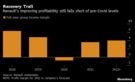
The automaker predicted an operating margin of at least 4% this year, according to an earnings statement. While the goal was an improvement from one set in 2021, it remains relatively cautious after the same measure came in at 3.6% last year.

Renault is seeking to turn around a business that has been lagging rivals Volkswagen AG and Stellantis NV due to a reliance on the European market and on Japanese partner Nissan Motor Co., which is also emerging from a difficult period. The manufacturer is counting on a series of new models including EVs such as the Megane E-Tech crossover.

“Electrification is an opportunity to strengthen the partnership with our Japanese colleagues,” de Meo said in the interview. Renault and Nissan have announced a plan to deepen their operational ties. 

While Renault has set ambitious targets to raise EV sales and production in Europe in the coming years and wants to get back into China, the CEO said it doesn’t have the resources or products to export to the U.S.

“It’s not part of our plan,” he said.

As part of the shift to electric cars, the carmaker is weighing the possibility of bundling its combustion-engine technology, hybrid engines and transmissions based outside of France into a single entity. 

Renault shares were trading about 2.3% higher at 2:02 p.m. in Paris. 

Renault swung to net income of 888 million euros ($1 billion) last year from a record 8 billion-euro loss in 2020, according to the statement. That compares with an average analyst estimate of 110 million euros compiled by Bloomberg. 

Nissan contributed 380 million euros to Renault’s bottom line after being responsible for much of the French carmaker’s record loss in 2020.

“We are achieving one of fastest turnarounds in the history of automotive industry,” de Meo told analysts during a presentation. “Renault is back. We are determined not to go back to the past.” 

He pledged to drive cost reductions beyond the 2 billion euros already achieved and to push further into the popular SUV segment. The carmaker’s plan to improve margins and cut costs unveiled at the start of last year underwhelmed investors. The carmaker had targeted an operating margin of at least 5% by mid-decade compared with a 4.8% return in 2019. 

New CFO

Separately, the company announced Friday that Chief Financial Officer Clotilde Delbos will step aside to helm Mobilize, Renault’s mobility, energy and data unit. Delbos, who took over as interim CEO during the fallout from the shock departure of long-time leader Carlos Ghosn, will be replaced by Thierry Pieton. Delbos will remain deputy CEO.

Renault sold 2.7 million vehicles worldwide last year, 4.5% less than in 2020. The company took a 4 billion-euro French state-backed loan to survive the worst of the pandemic and later sold its stake in Daimler for 1.14 billion euros to safeguard its credit ratings.

It plans to repay 2 billion euros this year, according to the statement, and reimburse the loan in full by the end of 2023 at the latest.

Automotive operational free cash flow was 1.3 billion euros, better than the negative 70 million euros in the first half. Renault is forecasting at least 1 billion euros this year. 

More stories like this are available on bloomberg.com

©2022 Bloomberg L.P.

Investors Stuck in Biggest Bitcoin Fund Flood SEC With Letters

(Bloomberg) — U.S. Securities and Exchange Commission officials have nearly 200 new pen-pals.

More than 170 letters have been submitted to the agency in February following a tweet from Grayscale Investments LLC encouraging people to share their thoughts on the firm’s application to convert the $26 billion Grayscale Bitcoin Trust (ticker GBTC) into an exchange-traded fund. That compares to just 14 from when a filing was made in October for the change, through the end of January.

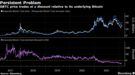
The common denominator across the 200 letters is the SEC’s reluctance to approve an ETF that physically holds Bitcoin. U.S. regulators allowed the first crypto derivatives-based products to begin trading this past October, but have repeatedly denied applications for a spot Bitcoin ETF. That’s exacerbated a persistent issue for GBTC — because it’s a trust, not an ETF, shares can’t be redeemed to align with shifting demand. GBTC has traded at a discount to the value of its underlying Bitcoin for months. 

However, Grayscale Chief Executive Officer Michael Sonnenshein — and a large share of the individuals submitting comments to the SEC — believe that ETF conversion would quickly repair the discount. 

“We have certainly encouraged investors to submit comment letters for the GBTC conversion to an ETF and we are really encouraged to see the outpouring of support for the conversion itself,” Sonnenshein said in a phone interview. “For us, a lot of of the letters have been echoing what we at Grayscale have been articulating for quite some time and continue to do so today — that investors have been patient and deserve a spot Bitcoin ETF.”

GBTC has plunged more than 17% so far in 2022, outpacing Bitcoin’s 13% decline. The trust’s price closed 25% below the value of the Bitcoin it holds on Thursday, after hitting a record-low discount of nearly 30% last month, according to Bloomberg data. The trust had been a favorite because it was one of the earliest ways to invest in Bitcoin indirectly and had allowed participants to exploit an arbitrage opportunity when the price was soaring.

The SEC solicits comments from interested members of the public on proposed rule change. In GBTC’s instance, the New York Stock Exchange filed with the U.S. regulator in October to amend its rules to allow shares to be listed and traded on the exchange — effectively converting the trust into an ETF. 

The letters submitted so far run the gamut from completely anonymous submissions to self-described individual investors and financial advisors. 

“As an investor, I don’t feel I’m being protected by the SEC,” wrote Clay Craven on Feb. 14. “It’s past time for the SEC to approve the GBTC ETF conversion and stop harming investors and the country by outsourcing capital to foreign countries where spot BTC ETFs are already trading and approved by regulators.”

Fellow letter author Nicole Jackson made a similar point on Monday. 

“The BTC Spot ETF needs to be approved ASAP,” Jackson wrote. “It’s an absolute embarrassment that countries around us have a spot approved and we don’t.”

Accounting for delays, the SEC’s deadline to make a decision is in early July. In the eyes of The ETF Store’s Nate Geraci, the SEC’s comment period is little more than a “charade” and it’s extremely unlikely that the submitted letters will spur a change. 

“It simply affords the SEC the opportunity to publicly present that they’re engaged and considering counterarguments to their repeated — and many would say unjustified — denial of a spot Bitcoin ETF,” said Geraci, president of investment-advisory firm. “SEC Chair Gensler has been crystal clear they won’t approve a spot Bitcoin ETF until there’s a robust regulatory framework in place around crypto exchanges.”

More stories like this are available on bloomberg.com

©2022 Bloomberg L.P.

Stocks Rise on Mortgage Reports; Yango Miss: Evergrande Update

(Bloomberg) — Chinese property stocks gained after reports that banks in several Chinese cities have cut mortgage down payments for some homebuyers, a move that may boost flagging residential demand.

A Bloomberg Intelligence index of developer stocks rose 2.6%, paring the week’s drop to about 3.5%. Chinese authorities have been racing to arrest a worsening slowdown in the property sector that is hurting growth in the world’s second-largest economy. Almost exactly a year after China’s property-market debt squeeze sparked the first in a wave of defaults by developers, the industry is fighting for survival. 

Developers have shown further signs of stress this week, as Yango Group Co., one of the 20 largest builders of last year, failed to make two dollar-bond interest payments. 

Key Developments:

  • China City Takes Leading Step to Boost Home Demand: Reports
  • China Builders Miss More Deadlines as Yango Fails to Pay Coupons
  • Orient Asset Mgmt to Sell 10b Yuan of Bonds to Aid Developers
  • Exchange Offers to Keep Pressure on China Builders’ Bonds: GS
  • Country Garden Real Estate Applies for 5b Yuan of Bond Issuance

Evergrande Property Services To Be Removed from Hang Seng China Enterprises Index (7:39 p.m. HK)

Evergrande Property Services Ltd will be removed from the Hang Seng China Enterprises Index on March 7, according to a statement.

Zhongliang Holdings Downgraded by Moody’s (6:14 p.m. HK)

Moody’s Investors Service downgraded Zhongliang Holdings Group Co.’s long-term corporate family rating to B2 from B1, with a negative outlook, citing “heightened refinancing risks because of its weakened funding access and sizable debt maturities over the next 12 months.”

Crisis in China’s Property Industry Deepens With No End in Sight (4:45 p.m. HK)

Home sales continue to plunge and elevated borrowing costs mean offshore refinancing is off the table for many developers. Global agencies are pulling their ratings on property bonds, while a string of auditor resignations is adding to doubts over financial transparency only weeks before earnings season. A sudden 81% plunge in the Hong Kong-listed shares of one real-estate firm is raising concern over the risk of margin calls. 

As the cash crunch for developers worsens, so does the housing slowdown that’s become one of the biggest drags on China’s economy.

China Junk Dollar Bonds Extend Friday Rebound (3:42 p.m. HK)

Chinese high-yield dollar bonds gained at least 2 cents on the dollar Friday afternoon, according to credit traders, as the market seeks its first advance of the week. 

A Bloomberg index of the sector had fallen four straight days, the longest stretch in a month.

China Cities Cut Mortgage Down Payments, Media Say (3:28 p.m. HK)

In Heze, a city of 8.8 million in Shandong province which was first reported to make the change, four big lenders lowered the down payment ratio for first-time homebuyers to 20% from 30%, separate media outlets said. 

Some banks in the southwestern metropolis of Chongqing and the southeastern city of Ganzhou also lowered the ratio by the same amount, Shanghai Securities News reported Friday, citing property agents. Chinese authorities have been racing to arrest a worsening slowdown in the property sector that is hurting growth in the world’s second-economy.

Ronshine Onshore, Dollar Bonds Bounce From Recent Record Lows (3:18 p.m. HK)

Ronshine China Holdings Ltd. bonds rallied, with some onshore notes posting record gains, after debt-repayment concerns had send some of the Chinese developer’s debt to all-time lows this week. 

The firm’s 10.5% dollar note due March 1, which plunged a week ago, climbed a further 10.7 cents on the dollar to 89.8 cents as of 3:10pm in Hong Kong, according to Bloomberg-compiled data.

Exchange Offers to Keep Pressure on China Builders’ Bonds: GS (10:02 a.m. HK)

Conditions for China’s high-yield dollar bond market will remain difficult through April if the increased pace of maturities the next two months corresponds with more firms proposing bond exchanges, says Goldman Sachs.

China Builders Miss More Deadlines as Yango Fails to Pay Coupons (9:22 a.m. HK)

The Shanghai-based developer that operates in more than 100 Chinese cities hasn’t made a combined $27.3 million of interest payments initially due Jan. 15 by a 30-day grace period, according to a Shenzhen stock exchange filing.

Yango said it is facing a temporary cash flow issue and plans to hold a bondholder meeting. Its parent failed to make a dollar-bond interest payment by the end of a grace period in December.

Sino Land’s Valuation ‘Depressed’ on Bearish H.K. Outlook, Citi Says (8:48 a.m. HK)

Sino Land Co.’s valuation remains “depressed” on weak home prices and a bearish outlook for Hong Kong’s residential segment, Citigroup Inc. analysts said.

The developer faces a dilemma over its HK$39 billion ($5 billion) net cash between falling returns from deposits and higher risk investment, analysts including Ken Yeung wrote in a report.

Greentown China Sells Additional $150 million 4.7% Notes Due 2025 (6:30 a.m. HK)

Additional notes yield 5.9% and will be consolidated and form a single series with the $300 million 4.7% bond due 2025 issued in October 2020.

Proceeds will be used to refinance existing debt. The deal comes after Greentown China Holdings Ltd. sold a $400 million 3-year green bond in January.

More stories like this are available on bloomberg.com

©2022 Bloomberg L.P.

Pakistan’s Biggest Bank HBL Adopts New Platform After Outages

(Bloomberg) — Pakistan’s largest lender, Habib Bank Ltd., will adopt a new platform after months of customer complaints about frequent outages.

The Karachi-based lender will onboard its more than 25 million clients onto the Temenos core banking platform, HBL said in a statement Friday, citing increased reliability and security as benefits. HBL had announced a new Chief Technology Officer Michael Maier in January. 

Local media has reported technical glitches since last year that impacted the bank’s website and mobile app, making it impossible to complete transactions including withdrawals and transfers. The decision also follows an increasing focus on online services; the nation’s banking regulator is looking to increase competition by giving licenses for digital banks, governor Reza Baqir said last year. 

More stories like this are available on bloomberg.com

©2022 Bloomberg L.P.

Here are the Winning and Losing Shares From Singapore’s Budget

(Bloomberg) — Tax changes in Singapore’s budget are positive for certain retail stocks and firms that are reducing their carbon emissions, but some multinational companies, property developers and luxury vehicle stocks emerge as losers. 

Finance Minister Lawrence Wong unveiled a budget on Friday that seeks to rebuild Singapore’s finances and chart a post-pandemic future by raising taxes on the wealthy and on consumption. The benchmark Straits Times Index closed 0.4% lower, though in the long term analysts said the budget should offer some support.

“Singapore’s fiscally smart moves would help boost its status as a country offering stocks that give high income and dividend yields,” said Nirgunan Tiruchelvam, head of consumer sector equity research at Tellimer. 

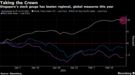
The benchmark index has risen about 10% this year, with the rotation toward value stocks helping it vie with Saudi Arabia’s Tadawul All Share Index for the top spot among major global gauges.

Here are details of what analysts see as the main winners and losers from the budget:

WINNERS

Consumer Stocks

Singapore’s move to space out the much anticipated increase in goods and services tax over two years — increasing it to 8% in 2023 and to 9% in 2024 — may be positive for consumption-linked companies. Many analysts had expected the government to raise GST, currently 7%, directly to 9%.

Potential beneficiaries are food and beverage maker Fraser and Neave Ltd., grocer Sheng Siong Group Ltd., and restaurants and food caterers such as Jumbo Group and Kimly Ltd. Casino operator Genting Singapore Ltd. and consumption-focused real estate investment trusts such as Keppel REIT may also get a lift.

Carbon Neutral Plays 

Singapore plans to dramatically increase the tax it levies on greenhouse gas pollution from its biggest emitters from 2024.

The move “signals the government’s seriousness to meet its climate goals,” said Terence Chua, an analyst at Phillip Securities Research Pte. “Companies such as Sembcorp Industries and Keppel Corp. will benefit from their early push to reduce carbon emissions.” Conversely, emissions-heavy companies such as Singapore Airlines Ltd. will be affected negatively, Chua added.

LOSERS

Multinational Companies

Singapore’s plan to explore a top up tax for multinational enterprises may weigh on some units of Jardine Matheson Holdings group as they get a majority of their revenue from Greater China. Others that may suffer include City Developments Ltd. — which makes about 8% of its revenue from the Americas and about 10% from Europe, the Middle East and Africa — and ComfortDelGro Corp. gets about 23% from EMEA, according to data compiled by Bloomberg.

“The move may impact some companies even as it is preliminary,” said Justin Tang, head of Asian research at United First Partners. “The government clearly has a plan, but it’s best for investors to take a wait-and-see approach as more details will trickle out over the coming days.” 

Property Developers

Real estate stocks took a hit from Singapore’s move to increase the minimum monthly salary for foreign workers as well as tightened rules for the number of foreign work permit holders. 

Shares of City Developments, one of Singapore’s biggest developers, pared gains of as much as 1% to end the day up 0.4%. UOL Group Ltd. wiped out an advance of as much as 0.7%.

More negatives for developers were the increases in personal income tax rates on the wealthy, and higher levies on residential properties from 2023. That will likely weigh further on City Developments, which counts The Residences at W Singapore Sentosa Cove among its properties, and on other developers.

Wealth Plays

Higher taxation rates of 220% on cars, which apply for the portion of open-market value in excess of S$80,000 ($59,000), will affect names such as Jardine Cycle & Carriage Ltd., which owns showrooms.

And the increase in income tax rates for top earners will affect some clients of the wealth management units of DBS Group Holdings Ltd., Oversea-Chinese Banking Corp. and United Overseas Bank Ltd. 

More stories like this are available on bloomberg.com

©2022 Bloomberg L.P.

Spotify’s Ek Builds ‘Insane’ $1 Billion Bet on Early Tech

(Bloomberg) — Daniel Ek is looking beyond Spotify Technology SA.

His investment firm, Prima Materia, has bet on a green-steel startup as well as on funds focused on artificial intelligence, life sciences and climate. Ek’s company, which started operating in February 2021, also allocated 100 million euros ($113.5 million) to German security firm Helsing in November — all part of Ek’s plan to put about $1 billion of his wealth in European startups.

Spotify’s 38-year-old co-founder and chief executive officer, who has recently been caught in a public relations maelstrom involving podcast host Joe Rogan, wants to be at the forefront of the region’s early-stage tech scene and is hunting for ways to make an impact on the broader sphere of innovation. He has a net worth of about $2.6 billion, according to the Bloomberg Billionaires Index.

“The ambition is truly insane,” Ek told “The Twenty Minute VC” podcast last year. 

A representative for Prima Materia declined to comment.

Ek created Prima Materia — a term from alchemy and philosophy meaning “first matter” — with early Spotify investor Shakil Khan. He announced his intention to put about a third of his current net worth in European startups in September 2020, when he invested in battery maker Northvolt AB.

Read more: Spotify CEO Ek to Invest $1.2 Billion in European ‘Moonshots’

Prima Materia hired Pia Michel from BlueYard Capital last year to head science translation and Brett Bivens for research. The firm was registered in Ek’s native Sweden in late 2020 and now has six other local entities for its investments, according to filings.

Other tech founders from Europe are bolstering their early-stage investments in the sector. UiPath Inc.’s Daniel Dines bought stakes in Serbian cybersecurity firm Trickest and German digital-health company Avi Medical Inc. last year, while Checkout.com’s Guillaume Pousaz recently boosted his bet on Irish e-commerce business Wayflyer.

They have net worths of $4.1 billion and $19.4 billion, respectively, according to the Bloomberg Billionaires Index.

“They’re more willing to invest in their own networks,” Chris Ivey, head of European private client practice at Cambridge Associates, said on the early-stage investments among Europe’s tech billionaires.

Outside of Prima Materia, Ek owns real estate and holds a stake in Swedish machine-learning startup HJN Sverige. He also made an attempt last year to buy London’s Arsenal Football Club.

Ek’s Spotify holding still makes up the bulk of his fortune. The company’s shares hit a peak in early 2021, soon after Rogan’s podcast became exclusively available on the platform. They’ve slumped 56% since then amid a slowdown in growth and a rout in tech stocks.

(Updates to add context from eighth paragraph.)

More stories like this are available on bloomberg.com

©2022 Bloomberg L.P.

Close Bitnami banner
Bitnami