Bloomberg

Spotify’s Daniel Ek Builds ‘Insane’ $1 Billion Bet on Early Tech

(Bloomberg) — Daniel Ek is looking beyond Spotify Technology SA.

His venture capital firm, Prima Materia, has invested in a green-steel startup as well as in funds focused on artificial intelligence, life sciences and climate. Ek’s company, which started operating in February 2021, also allocated 100 million euros ($113.5 million) to German security firm Helsing in November — all part of Ek’s plan to put about $1 billion of his wealth in European startups.

Spotify’s 38-year-old co-founder and chief executive officer, who has recently been caught in a public relations maelstrom involving podcast host Joe Rogan, wants to be at the forefront of the region’s early-stage tech scene and is hunting for ways to make an impact on the broader sphere of innovation. He has a net worth of about $2.6 billion, according to the Bloomberg Billionaires Index.

“The ambition is truly insane,” Ek told “The Twenty Minute VC” podcast last year. 

A representative for Prima Materia declined to comment.

Ek created Prima Materia — a term from alchemy and philosophy meaning “first matter” — with Spotify investor Shakil Khan. He announced his intention to put about a third of his current net worth in European startups in September 2020, when he invested in battery maker Northvolt AB.

Read more: Spotify CEO Ek to Invest $1.2 Billion in European ‘Moonshots’

Prima Materia hired Pia Michel from BlueYard Capital last year to head science translation and Brett Bivens for research. The firm was registered in Ek’s native Sweden in late 2020 and now has six other local entities for its investments, according to filings.

Outside of Prima Materia, Ek owns real estate and holds a stake in Swedish machine-learning startup HJN Sverige. He also made an attempt last year to buy London’s Arsenal Football Club.

Ek’s Spotify holding still makes up the bulk of his fortune. The company’s shares hit a peak in early 2021, soon after Rogan’s podcast became exclusively available on the platform. They’ve slumped 56% since then amid a slowdown in growth and a rout in tech stocks.

More stories like this are available on bloomberg.com

©2022 Bloomberg L.P.

China Port Delays Slow Shipments From Iron Ore to Electronics

(Bloomberg) — Supply Lines is a daily newsletter that tracks Covid-19’s impact on trade. Sign up here.

Port congestion in China is slowing the delivery of everything from iron ore to electronics, forcing companies to rely more on stockpiled inventories of goods. 

It’s taking a week to 10 days longer to deliver iron ore supplies into China compared with before the pandemic, according to charterers and shipowners. That’s because of tightened Covid-19 quarantine requirements for vessels and reduced manpower at ports, they said.

Adding to the problem is the situation in Hong Kong, as it battles one of its most challenging Covid-19 outbreaks. The city’s harsh measures to control the spread of the omicron variant is delaying shipments of electronics and petrochemicals through its port. 

An average of 23 container ships per day waited to berth at Hong Kong in January, up from 18 vessels in December, according to data from logistics intelligence firm project44. That’s one of the biggest jumps in congestion at Asian ports, which could worsen as Hong Kong attempts to test the entire city. 

The shipping delays come at a sensitive time for iron ore, as China steps up a sweeping plan to cool rising prices. Top commodities trading firms have been asked to draw down inventories and co-operate with a probe into hoarding.  

The campaign has caused prices for the steel-making raw material to plummet 15% this week. 

With port stockpiles at the highest since 2018, the impact of shipping delays on prices could be muted. Still, it could add some volatility to iron ore amid an uncertain outlook for demand and calls by authorities for some traders to release “excessively high stockpiles.”

Today’s Events 

(All times Beijing unless noted)

  • China weekly iron ore port stockpiles
  • Shanghai exchange weekly commodities inventory, ~15:30

Today’s Chart

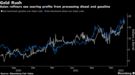
Oil soaring to near $100 a barrel is doing little to slow down demand from the biggest buyers as refineries in Asia look to boost processing rates to cash in on a boom in fuel-making profits. A significantly reduced stream of Chinese fuel exports in recent months has left Asia shorter on supply and more sensitive to disruptions as consumption recovers with countries easing virus restrictions.

On The Wire

  • China Finds a New Way to Dominate the U.S. In South America
  • China’s Covid-Zero Policy Gives a Polish to Gold: David Fickling
  • Cnooc’s $13 Billion Oil, Gas Deals Show China’s Supply Fears 
  • Bayer Sees Opportunity in China GMO Seed Market, Executive Says

The Week Ahead

Monday, Feb. 21

  • China sets monthly loan prime rates, 09:15
  • China new home prices for January, 09:30

Tuesday, Feb. 22

  • Nothing major scheduled

Wednesday, Feb. 23

  • China Photovoltaic Industry Association holds online 2021 review and 2022 outlook briefing, 09:00-17:00

Thursday, Feb. 24

  • Bloomberg’s China economic survey for February, 10:00
  • EARNINGS: HKEX
  • USDA weekly crop export sales, 08:30 EST

Friday, Feb. 25

  • China weekly iron ore port stockpiles
  • Shanghai exchange weekly commodities inventory, ~15:30

More stories like this are available on bloomberg.com

©2022 Bloomberg L.P.

Apple Update Lets You Unlock iPhone With Face ID While Wearing a Mask

(Bloomberg) — Apple Inc.’s next iPhone software update will finally address a grumble that’s been bugging users since the Covid pandemic started: You’ll finally be able to unlock your phone without first taking off your mask.

The updated Face ID feature is expected to work on iPhones and iPads and is likely to be included in iOS 15.4, expected to be released sometime in the first half of March.

The new software is also expected to debut Universal Control, which lets customers use a single keyboard and trackpad across multiple iPads and Macs. 

Apple’s 3-D facial recognition system was launched back in 2017, as a feature of the new iPhone X. But it became a headache as Covid swept around the world in 2020, as mask wearers were forced to remove their coverings to unlock their iPhones. A temporary solution for some came last year, when a software update allowed Apple Watch users to access their phones even when wearing a mask or sunglasses.

Also on the cards for early March is the unveiling of a new low-cost iPhone and an updated iPad, according to people with knowledge of the matter.

That’s likely to be followed up later in the year by a raft of releases including new iMac and Mac Pro desktops, a redesigned MacBook Air, an updated low-end MacBook Pro, three Apple Watches, the iPhone 14 and new AirPods.

More stories like this are available on bloomberg.com

©2022 Bloomberg L.P.

Meta, Google Face EU Data Blackout as Ruling on Contracts Looms

(Bloomberg) — Meta Platforms Inc.’s stark warning of a retreat from Europe may just be the start, as one of the region’s top privacy watchdogs prepares a decision that could paralyze transatlantic data flows and risk billions in revenue for tech giants.

The Irish data protection authority, which polices the Silicon Valley tech giants that have flocked to the nation, is soon to weigh in on the legality of so-called standard contractual clauses used by Meta, Alphabet Inc.’s Google and others to legally transfer swathes of user data to the U.S. for processing.

Privacy experts say the imminent decision could eliminate one of the only remaining options for Meta and potentially thousands of other companies that rely on shipping vast amounts of commercial data across the Atlantic.

The Irish authority already cast doubt on the legality of the SCCs in an interim opinion, saying they failed a key test of protecting European citizens from the prying eyes of U.S. agencies. 

Such is the tension around the ruling, that Meta warned in its latest annual report that it will “likely be unable” to offer services including Facebook and Instagram in the EU if it’s unable to use SCCs.

Facebook produced $8.2 billion in revenue in Europe over the last quarter of 2021, about a quarter of global revenue. While the U.K. will count for a significant portion of that and will not be impacted by the ruling on SCCs, the region is a serious money maker for Meta, beaten only by its home market of the U.S. and Canada.

There is no easy work-around. Storing data in Europe may not be feasible for any service based on customer interactions across the world, from gaming to video streaming, because European data rules follow a person’s information, no matter where it is. 

Meta’s business model, like that of Alphabet’s Google, relies on collecting enough data to discern what users might be interested in or want to purchase, and to serve them relevant ads. The company is already hampered by Europe’s privacy rules and a ban on SCCs would likely make its business model more expensive and less effective to run.

“What’s at stake here are the entire data transfers to the U.S. and the services that depend on them,” said Johannes Caspar, an academic who recently stepped down as one of Germany’s top data protection regulators. 

Despite its latest comments in its annual report that it would “likely be unable” to offer Facebook and Instagram in Europe if regulators ruled that SCCs were unfeasible, Meta has also stated — most recently in a blog post that it’s “absolutely not threatening to leave Europe,” a plea that Nick Clegg, now Meta’s leading policy executive, originally made in Sept. 2020.

Meta declined to comment. Google pointed to a January blog post by Kent Walker, its head of global affairs which called for a rapid end to the impasse over a replacement to a EU-U.S. privacy pact that was struck down by the EU’s top court in 2020 over longstanding fears that citizens’ data wasn’t safe from American surveillance.

“The stakes are too high — and international trade between Europe and the U.S. too important to the livelihoods of millions of people — to fail at finding a prompt solution to this imminent problem,” he said.

Should the Irish authority double down on its interim opinion over the contractual clauses, the doomsday scenario for Meta and its rivals of a tech blackout has started to emerge.

The Irish authority’s decision “could now be a precedent which will cause the whole situation to slide,” said Caspar. “It’s up to politicians in the U.S. to avoid plunging their tech industry into chaos.”

More stories like this are available on bloomberg.com

©2022 Bloomberg L.P.

Property Stocks Gain; Yango Misses Deadline: Evergrande Update

(Bloomberg) — Chinese property stocks gained after a report that state-run banks in a city in Shandong province have cut the minimum down payment ratio for first-time home buyers, in the first such move in the country to boost housing demand.

Goldman Sachs Group Inc. analysts said China’s high-yield dollar bond market will remain difficult through April if the increased pace of maturities over the next two months corresponds with more firms proposing bond exchanges.

China’s troubled developers have shown more signs of strains this week, as Yango Group Co., one of the 20 largest builders, failed to make two dollar-bond interest payments. 

Key Developments:

  • China City Takes Leading Step to Boost Home Demand: Reports
  • China Builders Miss More Deadlines as Yango Fails to Pay Coupons
  • Exchange Offers to Keep Pressure on China Builders’ Bonds: GS
  • Greentown China Sells Additional $150m 4.7% Notes Due 2025

China Junk Dollar Bonds Erase Early Drop (10:58 a.m. HK)

Chinese high-yield dollar bonds gained at least 1 cent on the dollar following initial weakness Friday, according to credit traders, as the market seeks its first gain of the week.

Ronshine China Holdings Ltd.’s bonds continued to rebound after recent declines, with its 10.5% note due March 1 rising 9.9 cents to 88.9 cents, according to Bloomberg-compiled data as of 10:45 a.m. in Hong Kong.

China Builders Miss More Deadlines as Yango Fails to Pay Coupons (9:22 a.m. HK)

Yango Group Co., a Shanghai-based developer that operates in more than 100 Chinese cities, hasn’t made a combined $27.3 million of interest payments initially due Jan. 15 by a 30-day grace period, according to a Shenzhen stock exchange filing.

The company, whose 2021 contracted sales were the 19th-highest according to China Real Estate Information Corp., said it is facing a temporary cash flow issue and plans to hold a bondholder meeting.

China City Takes Leading Step to Boost Home Demand, Reports Say (8:58 a.m. HK)

Major Chinese banks in the eastern city of Heze have cut mortgage down payments for some home buyers, the first such move in the country to boost flagging housing demand, local media reported.

The Big Four state-run lenders — Bank of China Ltd., Agricultural Bank of China Ltd., Industrial & Commercial Bank of China Ltd. and China Construction Bank Corp. — lowered the down-payment ratio for first-time home buyers in the city of 8.8 million in Shandong province to 20% from 30%, according to the reports.

Sino Land’s Valuation ‘Depressed’ on Bearish H.K. Outlook, Citi Says (8:48 a.m. HK)

Sino Land Co.’s valuation remains “depressed” on weak home prices and a bearish outlook for Hong Kong’s residential segment, Citigroup Inc. analysts said.

The developer faces a dilemma over its HK$39 billion ($5 billion) net cash between falling returns from deposits and higher risk investment, analysts including Ken Yeung wrote in a report.

Greentown China Sells Additional $150 million 4.7% Notes Due 2025 (6:30 a.m. HK)

Additional notes yield 5.9% and will be consolidated and form a single series with the $300 million 4.7% bond due 2025 issued in October 2020.

Proceeds will be used to refinance existing debt. The deal comes after Greentown China sold a $400 million 3-year green bond in January.

More stories like this are available on bloomberg.com

©2022 Bloomberg L.P.

Buffett Says Berkshire Had No Advance Word of Activision Deal

(Bloomberg) — Berkshire Hathaway Inc. “had no prior knowledge” of Microsoft Corp.’s plans to acquire Activision Blizzard Inc. before the conglomerate took a stake in the gaming giant last year, billionaire Warren Buffett said.

The stock purchases were made by one of Berkshire’s two investment managers, Ted Weschler and Todd Combs, Buffett said in a statement. The investment was made “independently of me,” he wrote. The New York Post reported his comments earlier. 

Buffett, Berkshire’s chief executive officer, is longtime friends with Bill Gates, Microsoft’s co-founder and former CEO, and a onetime Berkshire board member. Berkshire held nearly 14.7 million shares in the video-game company as of Dec. 31, according to a regulatory filing this week. The stock was purchased ahead of Activision’s $69 billion deal with Microsoft, which was announced in mid-January.

Buffett said Berkshire acquired its Activision stake at an average price of $77 a share. Activision stock jumped nearly 26% on the day of the deal’s announcement, and has climbed about 22% since the end of 2021. The shares fell less than 1% to $80.97 in New York on Thursday.

More stories like this are available on bloomberg.com

©2022 Bloomberg L.P.

Twitter CEO’s Paternity Leave Sparks Question of How Much Is Enough

(Bloomberg) — When Twitter Inc. head Parag Agrawal said this week that he’ll take “a few weeks” off following the birth of his second child, he was praised for breaking a taboo surrounding top executives and paternity leave. Others said his plans don’t go far enough.In a sign of how quickly norms are evolving at U.S. companies, the big question sparked by Agrawal’s announcement was why he wasn’t using more of the 20 weeks that Twitter offers. Reddit Inc. co-founder Alexis Ohanian urged Agrawal to “take the time you need.” Others noted that by taking more leave, Agrawal could reinforce to employees that it is safe for them to do the same.

“You can split parental leave up, like take a few weeks to make sure everything at home is A-OK, then take every Friday off to use the rest of the leave,” Ohanian, who has been a vocal advocate for parental leave, suggested on Twitter. His venture capital firm, Initialized, currently offers four months of parental leave to employees. In October 2021, co-founder Garry Tan said he took advantage of the full four months when it was available to him “to make sure everyone at Initialized felt like they could do it.”

Agrawal, Twitter’s former technology chief, was named to the chief executive officer role in November, taking over for co-founder Jack Dorsey. During his leave, Agrawal “plans on being connected with the executive team throughout, which is what works best for him, his wife and the company,” said Laura Yagerman, a spokeswoman for the San Francisco-based company.

“At Twitter, we encourage and fully support employees taking parental leave in whatever way works best for each person,” she said in a statement.

California law mandates that employers offer qualifying workers up to 12 weeks unpaid parental leave; other state provisions ensure up to six weeks paid leave for some employees who are new parents.

There is no federal minimum for paid parental leave, though the Biden administration included 12 weeks of paid leave in an early draft of its Build Back Better plan. That number was later adjusted to four weeks. Only 23% of workers in the U.S. have access to paid parental leave, whether through employers or government programs.

Nine in 10 men take some form of parental leave following the birth or adoption of a child, though most take fewer than 10 days. They are also 50% less likely than women to take the full amount of time afforded to them.

In a report last year, the U.S. Census Bureau found that 33% of men took paid parental leave in the first 12 weeks following a child’s birth, compared with almost 45% of women. Men were even less likely than women to take unpaid parental leave, but more likely to use paid vacation time as a form of parental leave.  

There is still lingering stigma surrounding paid leave for fathers, as evidenced by the response to Transportation Secretary Pete Buttigieg saying he would take parental leave to bond with his twins. Meta Platforms Inc. CEO Mark Zuckerberg, meanwhile, took two months of paid leave following the births of his daughters in 2015 and 2017; the company offers four months.If men are frowned on for actually using their paternity leave, “that carries with it this assumption that the woman’s going to do all the work,” Buttigieg said in October.“We’re almost the only country left in the world that doesn’t have some kind of policy,” he said. “When parents take that parental leave, they need to be supported.”

More stories like this are available on bloomberg.com

©2022 Bloomberg L.P.

U.S. Adds WeChat, AliExpress to Notorious Piracy Market List

(Bloomberg) — The U.S. added Chinese messaging platform WeChat and online marketplace AliExpress to its list of notorious markets for counterfeiting and piracy, an annual compilation of the worst intellectual-property abusers and counterfeiters.

Alibaba Group Holding Ltd.-owned AliExpress and Tencent Holdings Ltd.’s WeChat are “two significant China-based online markets that reportedly facilitate substantial trademark counterfeiting,” the Office of the U.S. Trade Representative said in a statement accompanying the release of the 2021 review Thursday.

The USTR first started publishing the annual standalone list in 2011 to increase public awareness and help market operators and governments prioritize intellectual-property enforcement efforts. The 2021 review identifies 42 online and 35 physical markets that are reported to engage in or facilitate substantial trademark counterfeiting or copyright piracy. 

Useful Tool

The list has proven a useful for getting companies, particularly larger ones, to do more to fight piracy and counterfeiting, said Robert Holleyman, who helped oversee the list as deputy U.S. trade representative under President Barack Obama.

“It leads to sharing of best practices around how companies can deal with what’s going to be an ever-increasing challenge, which is the counterfeiters, the bad actors who are using these platforms,” Holleyman, a partner at law firm Crowell & Moring LLP, said in an interview. For counterfeiters, “the tools to evade monitoring and scrutiny continue to grow every year.”

Pinduoduo Inc., one of the largest online retailers in China, continues to be listed after first being included in 2019. Alibaba’s Taobao, together with Baidu Inc. cloud-storage service Baidu Wangpan and e-commerce service provider DHgate.com Inc. are also still on the list. Nine physical markets located within China that are known for the manufacture, distribution, and sale of counterfeit goods are included.

The world’s two largest economies share the biggest bilateral trade relationship, but it has been fractious since 2018, with the Trump administration imposing tariffs on more than $300 billion in imports from China, ranging from footwear and clothing to electronics and bicycles and even pet food under section 301 of the Trade Act of 1974.

Overall, Alibaba is known for having some of the best anti-counterfeiting processes and systems in the e-commerce industry, USTR said.

But rights holders have noted a significant increase in counterfeit goods being offered for sale on AliExpress, a business-to-consumer e-commerce platform that connects China-based sellers with buyers around the world, the agency said. Those include goods that are blatantly advertised as counterfeit and goods that are falsely advertised as genuine.

Alibaba said in a statement that it knows the challenges of intellectual-property protection and remains “fully committed to advancing our leadership in the area.” Tencent said it strongly disagreed with the decision, stressing in its statement that it’s invested significant resources to fight counterfeiting and IP infringement and will work with the USTR to resolve the matter.

“We look forward to continuing the work with governments to understand and address all concerns in IP protection across our platforms,” Alibaba said.

The report listed China as the top country of origin for counterfeit goods seized by U.S. Customs and Border Protection as well as the country with the greatest number of products made with forced labor, including state-sponsored forced labor.

The Biden administration has contemplated a fresh section 301 investigation to counter China’s industrial subsidies. Congress has also considered establishing a review process to limit outbound investment, and the Commerce Department is weighing potential curbs to apps such as TikTok and WeChat that U.S. officials say pose a risk to Americans’ data security. 

Commerce also has added more Chinese companies to its so-called Entity List, which prohibits American firms from doing business with them without first obtaining a U.S. government license.

WeChat, Weixin

WeChat and Weixin, its China-facing version, are viewed to be among the largest platforms for counterfeit goods in China, with more than 1.2 billion active users around the world in 2021, USTR said. The e-commerce system that works within WeChat is of particular concern, with rights holders identifying weakness in WeChat’s seller vetting as a significant problem, the agency said.

The USTR’s notorious markets list is a spinoff from its so-called Special 301 report, an annual review of the global state of intellectual property-rights protection and enforcement.

USTR highlights the markets because they exemplify global counterfeiting and piracy concerns and because the scale of the violations in those markets can cause significant harm to U.S. intellectual property owners, workers, consumers and the economy.

The American Apparel & Footwear Association said that the notorious markets list is a “a critical and effective tool” for addressing the sale of counterfeits.

“Unsafe counterfeits lurk everywhere we turn, including a number of trusted, and emerging, e-commerce platforms,” Steve Lamar, the group’s president and chief executive officer, said in a statement.

The association is urging Congress to approve bills requiring e-commerce platforms to vet sellers and provide seller information to protect consumers from counterfeit products or be held liable if counterfeit products sold on their platforms harm the health and safety of consumers.

(Updates with Tencent’s comment in 11th paragraph. An earlier version corrected the title of a former official in the fifth paragraph.)

More stories like this are available on bloomberg.com

©2022 Bloomberg L.P.

Myanmar Junta Plans Digital Lottery to Shore Up State Revenue

(Bloomberg) — Myanmar’s military regime plans to start an online lottery in the next two months as it hunts for new revenue streams to offset a slump in tax collections from an economy battered by the pandemic and the exit of foreign companies following the coup.   

The digital raffle will be started in partnership with private companies, and the authorities are in talks with several local and foreign firms, according to Zaw Min Tun, the lead spokesman for the State Administration Council. The initiative will supplement the government’s existing physical lottery business, and participants can use bank accounts and other authorized payment channels, he added.  

“We aim to launch it either in March or April but if things go as planned, we’re in a favorable position to launch it earlier,” Zaw Min Tun said in an interview. “It’ll depend on how far our discussions with these companies go.”

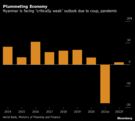
The plans for digital raffle follows a slump in tax collected from its traditional lottery business and the reported success of a similar offering by the parallel National Unity Government floated by the supporters of Myanmar’s ousted leader Aung San Suu Kyi. The nation’s economy contracted an estimated 18% last year, according to the World Bank, which sees a “critically weak” outlook for growth this year as well. 

Zaw Min Tun said Myanmar’s economic decline began under the civilian government after it failed to support local businesses and instead relied on external loans and international financial support. The country’s finances were further squeezed after the U.S. froze part of its foreign reserves and multilateral agencies suspended aid, sending the kyat down 34% last year.

The State Administration Council headed by Min Aung Hlaing will continue to take steps to shore up the economy and overcome the “politically motivated” sanctions and western countries’ efforts to block the junta’s access to finance, Zaw Min Tun said. 

More stories like this are available on bloomberg.com

©2022 Bloomberg L.P.

Intel Sees Sales Picking Up in Coming Years as It Makes Comeback

(Bloomberg) — Intel Corp. expects revenue to rise by just under 2% this year, with growth picking up in later years as Chief Executive Officer Pat Gelsinger pursues a turnaround of the once-dominant chipmaker.

Sales will amount to $76 billion in 2022, before climbing by a mid- to high-single-digit percentage by 2023 and 2024, the company said at an investor event in San Francisco. Analysts have predicted growth of 1% this year, with sales ticking up 3% in 2023 and 8% in 2024.

Intel called for earnings of $3.50 a share in 2022, excluding some items. That too was slightly higher than the estimate of analysts, who have predicted $3.44. Wall Street’s sales projection was $75.1 billion.

“I feel confident in our plan to accelerate and deliver,” Gelsinger said at the event.

So far, Intel has struggled to capitalize on booming demand for chips — a surge fueled by the work-from-home trend and the spread of semiconductors into a wider range of devices. While the chip industry’s sales gained 26% last year to a record total of $556 billion, Intel posted a 4% decline.

The company’s rivals, meanwhile, have been flourishing. Advanced Micro Devices Inc.’s sales grew 68% last year, and Nvidia Corp. posted a 61% gain. Those companies are on course to expand sales more than 25% again in 2022, according to analysts’ projections. 

The biggest chunk of Intel’s sales still comes from the personal-computer market, where its processors remain the most important component of the majority of laptops and desktops. Last year, PC shipments climbed back to levels not seen for a decade, helped by the shift to remote work. But analysts have expressed concern over whether that will continue. And Intel is facing fiercer competition from AMD, and some customers — like Apple Inc. — are switching to their own chips.

Gelsinger took over the top spot at Intel a year ago, rejoining the chipmaker after about a decade’s absence. The company’s leading executives took to the stage Thursday to explain how they’ll restore Intel’s dominance in the semiconductor business.

Gelsinger, 60, outlined a plan to spend tens of billions on new factories that will put him in direct competition with outsourced manufacturing providers such as Taiwan Semiconductor Manufacturing Co. and Samsung Electronics Co. At the same time, he’s shaking up Intel’s internal production technology operations and is targeting a return to leadership by 2025. The company is also entering new markets such as graphics chips where it will go head to head with AMD and Nvidia.

Chief Financial Officer Dave Zinsner promised increased financial discipline as Intel tries to win back market share and enter new industries. After its spending on new plants peaks over the next two years, he expects gross margin — the percentage of sales remaining after deducting the cost of production — to be in the 54% to 58% range. That’s still below Intel’s historical highs of more than 60%, but the company’s push into outsourced chip production will weigh on margins, he said.

The company expects revenue growth to hit 10% to 12% by 2025 and 2026, when its “investment phase” is over.

Intel said that its graphics chip business could approach $10 billion by 2025. Its outsourced chip business, meanwhile, is still in the early stages — “just beginning,” Gelsinger said. Intel announced the $5.4 billion acquisition of Tower Semiconductor Ltd. this week to help shore up those operations. 

Investors have been skeptical. The company’s shares fell 23% in the past year, trailing most of their peers in the Philadelphia Stock Exchange Semiconductor Index. And the stock has declined sharply each time Intel has reported earnings — a sign investors aren’t happy with the progress they’re seeing.

Against that backdrop, Gelsinger assured shareholders that his comeback is taking hold. 

“The Intel turnaround train is leaving the station and I hope you all get on board,” he said.

(Updates with details of forecast starting in first paragraph.)

More stories like this are available on bloomberg.com

©2022 Bloomberg L.P.
Close Bitnami banner
Bitnami