Bloomberg

Biggest Air-Conditioner Maker Readies Billions to Expand in Warmer World

(Bloomberg) — Daikin Industries Ltd., the world’s largest manufacturer of air conditioners, is ready to tap into its cash pool of 756 billion yen ($6.6 billion) to acquire companies to prepare for a jump in demand as global temperatures rise, while seeking to minimize its carbon impact.

“We need to find ways to invest for the changing environment, finding business opportunities and addressing sustainability concerns, as well as investing in research, people and acquisitions,” Chief Executive Officer Masanori Togawa said in an interview, adding that he prefers targets in new markets to bolster sales and service networks. He also doesn’t favor buybacks. “You can spend money to buy back shares, but that shouldn’t be the goal.”

Daikin has already set aside a mergers and acquisitions war chest of 600 billion yen, but is willing to increase that if necessary, Togawa said. Daikin’s operations are on track to benefit from the twin tailwinds of global warming and growing affluence in emerging economies. The International Energy Agency predicts that energy demand for air conditioning will triple by 2050. 

The Osaka-based firm is the fifth-best performer in the Nikkei 225 over the past decade with a nine-fold jump in its stock. Daikin’s market value of 6.4 trillion yen exceeds that of Hitachi Ltd. or Panasonic Corp. 

Daikin has made three billion-dollar acquisitions in the past: Malaysia’s OYL Industries in 2006, U.S.’s Goodman Global Group in 2012 and Austrian AHT Cooling Systems in 2019. Togawa said he’d be willing to do so again, adding that he’s now looking at commercial cold supply chains, chilled showcase makers and the shift in Europe away from burning fuels and toward heat pumps. 

“Strategically, if a business looks like it will help us grow and develop, of course, we would consider another company worth more than 100 billion yen,” he said.

What Boomberg Intelligence says:

“A global focus on air quality could boost Daikin’s air-conditioner business.”

— BI Industry Analyst Takeshi Kitaura. Clich here to read the research.

Asked whether he was interested in buying local rivals such as Fujitsu General Ltd. or Toshiba Carrier Corp., Togawa said he saw few benefits because of the lack of cost-saving synergies. One of those is already spoken for: Toshiba Corp. is planning to sell a 55% stake in its air-conditioning unit to its U.S. partner Carrier Global Corp. for about 100 billion yen as part of a broad overhaul. 

“We have no intention of buying Toshiba or Fujitsu General’s air-conditioning businesses,” Togawa said, adding that he wasn’t approached. “We wouldn’t buy them just to add scale. Sure, it would boost our sales but I don’t see much synergy.”

While Daikin’s profit and sales slipped slightly for the fiscal year ended March 2021, analysts project that the manufacturer will post record profit and sales for the current period ending next month.

Daikin is also among those facing challenges due to the shortage of semiconductors, driven by booming global demand for smartphones, computers and gadgets. Togawa said that while chip supplies will probably remain tight until later this year, Daikin has already secured enough semiconductors for the coming fiscal year through March 2023. 

Despite its growth prospects, Daikin will need to make its products far more efficient in order to meet its goals of cutting its carbon footprint by 30% in 2025, halving it by 2030 and reaching net zero greenhouse gas emissions by 2050. That means Daikin will have to make its air conditioners far more efficient and use refrigerants that don’t contribute as much to greenhouse gases, while keeping them affordable.

Giving Companies Right Credit for Carbon Offsets: Green Insight

“It will be impossible to reach these goals without reaching a higher level of innovation,” Togawa said, adding that Daikin is seeking to lower the cost of inverters, which regulates the speed of compressor motors in order to make air conditioners more efficient. The company also wants to gain market share in home heating, particularly in colder climates.

The coronavirus pandemic is pushing Daikin and the air-conditioning industry to think more holistically beyond just air-controlled environments as more people stayed, studied and worked from home for longer periods than ever before.

“What’s important for us next is not just how we can heat, cool, humidify or dehumidify environments, but also thinking about the quality of conditions such as ventilating, cleaning and disinfecting air,” Togawa said.

More stories like this are available on bloomberg.com

©2022 Bloomberg L.P.

Elon Musk Deletes Tweet that Compare Canada’s Trudeau to Hitler

(Bloomberg) — Elon Musk deleted a controversial tweet that made a satirical comparison between Canadian Prime Minister Justin Trudeau and Adolf Hitler.

Musk, the chief executive officer of Tesla Inc. and the world’s richest person, did not respond to a request for comment. A spokesperson for Twitter said the social-media company “did not take enforcement action” on the tweet. 

Musk, 50, was replying to a post by cryptocurrency trade publication CoinDesk about Trudeau’s emergency orders aimed at cutting off funds to protesters who have blocked border crossings and camped out in Canada’s capital. Musk tweeted a photo of Hitler with the text “Stop comparing me to Justin Trudeau” at the top, and “I had a budget” at the bottom.

The tweet generated backlash from groups such as the American Jewish Committee, an advocacy organization, which called on Musk to apologize for making reference to the dictator who oversaw the genocide of millions.

“Once again, Elon Musk has exercised extremely poor judgment by invoking Hitler to make a point on social media,” the group said in a statement earlier Thursday. “He must stop this unacceptable behavior.”

The controversy comes as Tesla faces complaints over racial discrimination and harassment. California’s Department of Fair Employment and Housing sued Tesla last week for racial discrimination and harassment after finding a widespread pattern of mistreatment of Black workers at the electric car-maker’s factory near San Francisco. 

Musk rarely deletes tweets, but it’s not unprecedented for him. He deleted a tweet almost a year ago that indicated he believed Tesla might be on track to become the biggest company in the U.S.

(Upates with comment from Twitter in second paragraph.)

More stories like this are available on bloomberg.com

©2022 Bloomberg L.P.

White House Warns on Covid Funding; NYC Anime Show: Virus Update

(Bloomberg) — The White House is warning lawmakers that the U.S. doesn’t have enough money on hand to respond to future variants, stockpile vaccines or develop new technologies.

California will rely on wastewater testing and the ability to quickly ramp up vaccinations to deal with future waves of the coronavirus, under a plan officials unveiled Thursday. A New York City anime convention likely wasn’t an omicron superspreader event, as many had feared.

Police in Canada’s capital city have begun blocking off the downtown core with barriers and fences, in a move against protesters who have occupied the streets for almost three weeks. 

Hong Kong has plans to mass-test the whole city with Beijing’s help. 

Key Developments:

  • Virus Tracker: Cases pass 419.2 million; deaths top 5.8 million
  • Vaccine Tracker: More than 10.5 billion doses administered
  • Hospitals under siege show Hong Kong squandered its Covid edge
  • Americans who have made it through omicron are eager to travel
  • Oil’s spectacular Covid crash set the world up for $100 crude
  • What Africa is doing to tackle its coronavirus vaccination gap

White House Warns on Covid Funding (5:36 p.m. NY)

The White House is warning lawmakers that the U.S. doesn’t have enough money on hand to respond to future Covid-19 variants, stockpile vaccines or develop new technologies.

Biden administration funds for pandemic response — including testing, vaccine distribution and other medical supplies — have been either spent or set aside already for purchases, according to a document obtained by Bloomberg News. All funds provided so far have been spent or earmarked for use.

California Shifts to New Phase Against Virus (5:28 p.m. NY)

California will rely on wastewater testing and the ability to quickly ramp up vaccinations to deal with future waves of the coronavirus, under a plan officials unveiled Thursday.

With the omicron variant rapidly fading in the state, Governor Gavin Newsom is trying to lay the groundwork for a return to something like normal life after two years of lockdowns and mask mandates. 

The plan — given the acronym SMARTER — says the state will negotiate with manufacturers to maintain a supply of tests that can be quickly deployed in case wastewater scans detect new outbreaks. California, which lost more than 82,500 people to the virus, will also maintain a stockpile of 75 million high-quality masks for rapid distribution and wants to maintain the ability to administer 200,000 vaccine doses per day.

Masks Not Optional at State of the Union (4:03 p.m. NY)

All members of Congress will be allowed to attend President Joe Biden’s first State of the Union address, but they must follow Covid-19 health guidelines, including masking, or risk being tossed from the event and fined. 

A memo Thursday by House Sergeant at Arms William Walker lays out the rules for the March 1 address to a joint session of Congress, including limiting lawmakers to one non-transferable ticket and requiring they attest to negative Covid-19 results. 

Walker’s memo states that attendees must adhere to social distancing guidelines and lawmakers — who cannot bring guests — will be spread out through the chamber, including the viewing balcony typically reserved for journalists and guests.

N. Carolina Governor Urges End to Mask Mandates (3:53 p.m. NY)

North Carolina Governor Roy Cooper urged local governments and school districts to drop mask mandates. 

“It’s time to focus on getting our children a good education and improving our schools, no matter how you feel about masks,” the Democratic governor tweeted. 

North Carolina has not had a statewide mask mandate since mid-2021, though local governments and schools are permitted to impose their own rules. Cooper called lifting masking rules “a positive step” toward “a more normal day-to-day life.

Police Begin Fencing Off Downtown Ottawa (2:13 p.m. NY)

Police in Canada’s capital city have begun blocking off the downtown core with barriers and fences, in a move against protesters who have occupied the streets for nearly three weeks.

“Only those with lawful reason to enter the core, such as residents, businesses and others with lawful reasons, will be allowed in the area,” Ottawa Police Chief Steve Bell said on Twitter. “The unlawful protesters must leave the area and will not be provided access.” 

For a second consecutive day, Ottawa police handed out flyers warning of criminal charges and vehicle seizures for anyone who doesn’t leave the protest zone. The area has been declared a prohibited public assembly under emergency legislation invoked by Prime Minister Justin Trudeau on Monday. 

Meantime, Canada’s national police service is sending to banks the names of people involved in protests that have paralyzed the nation’s capital, a first concrete step in the financial crackdown on demonstrators. 

NYC Anime Show Not Omicron Superspreader (1:04 p.m. NY)

A New York City anime convention held late last year likely wasn’t an omicron superspreader event, as many had feared, new reports show.

One of the first confirmed U.S. cases of the omicron variant was found in early December in a Minnesota man who attended the convention, raising concerns about a mass outbreak at the gathering of some 53,000 fans of the film and TV animation style. Studies released Thursday by the U.S. Centers for Disease Control and Prevention found no evidence of widespread transmission at the convention beyond a cluster of of the Minnesota participant’s close contacts.

Among results obtained for 4,560 attendees, 2.6% tested positive, according to the CDC. Of 20 specimens analyzed genetically, 15 cases were linked to delta, the dominant variant preceding omicron.

Colorado Ends Crisis Declaration (11:26 a.m. NY)

Colorado health officials Thursday ended a Covid-19 crisis declaration aimed at plugging hospital staffing shortages and allowing ambulance providers to impose stricter screening of 911 calls for assistance.

The “crisis standards of care” provided guidelines for allocating resources and “the decision to deactivate these standards is based on recent modeling and steadily declining cases and hospitalizations,” Eric France, the state’s chief medical officer, said in a printed statement.

Portugal to End Work-From-Home Guidance (9:13 a.m. NY)

Portugal plans to lift several restrictions in the coming days as the number of daily Covid-19 infections drops.

The government will no longer recommend that people work from home and the need to show a negative Covid-19 test to access sports venues, bars and nightclubs will be dropped, Presidency Minister Mariana Vieira da Silva said after a cabinet meeting on Thursday. The government plans to lift more restrictions as the number of deaths from Covid-19 declines, she said.

EU Regulator to Consider Merck Pill (8:22 a.m. NY)

European Union drug regulators said they will discuss Merck & Co.’s antiviral pill next week amid a report that the drug faces potential rejection.

A panel of the European Medicines Agency will consider the drug’s effectiveness at the meeting, Marco Cavaleri, the regulator’s head of biological health threats and vaccines strategy, said at a briefing on Thursday. He declined to comment on the robustness of the evidence to back the pill. 

The U.S. drugmaker has been developing molnupiravir with partner Ridgeback Biotherapeutics LP. The pill is only about 30% effective at preventing Covid deaths and hospitalizations among high-risk patients, compared with about 90% efficacy for Pfizer Inc.’s Paxlovid, studies have shown. 

Dominican Republic Drops Restrictions (6:30 p.m. HK)

The Dominican Republic will drop all domestic restrictions imposed during the coronavirus pandemic after a successful vaccination campaign helped contain infection and death rates on the Caribbean island.

President Luis Abinader said that the required use of a face mask, social distancing measures and Covid passports to enter public places will all be dropped immediately.

Japan Eases Virus Entry Ban (6:29 p.m. HK)

Japanese Prime Minister Fumio Kishida rolled back some of the developed world’s most stringent virus border measures as he seeks to tread a narrow path on pandemic policy that brought down his two predecessors.

Japan will end a ban on new entry by foreigners and ease quarantine rules, Kishida said at a news conference Thursday. From March 1, new foreign entrants except for tourists will be admitted, he said.

The move illustrates the premier’s attempts to balance the views of a public that wants to maintain strict Covid border controls and business groups that have lobbied for a relaxation of curbs to let in workers needed for their operations.

Yellen Calls for New Pandemic Fund (5:15 p.m. HK)

U.S. Treasury Secretary Janet Yellen urged her counterparts from leading industrialized countries to support the establishment of a new World Bank fund intended to prevent and prepare for future global health crises. 

A new “financial intermediary fund” under the auspices of the World Bank would help address gaps in preparedness, particularly among low-income countries, Yellen said, according to prepared remarks she’s scheduled to deliver virtually on Thursday to a meeting of finance ministers and central bank governors from Group of 20 countries.

Hong Kong Plans to Mass-Test (11:30 a.m. HK)

Hong Kong is planning a testing blitz of the entire city, deploying a tactic used to root out Covid-19 cases on the mainland as the financial hub struggles to get control over its most challenging outbreak of the pandemic. 

Chinese medical experts will likely be brought in to assist in the effort, according to people familiar with the administration’s thinking, and government vans currently used for vaccinations will be converted to mete out tests, one of the people said. 

Officials are still deciding whether to make the mass testing compulsory, the people said, with Sing Tao Daily reporting those who refuse may be subject to a HK$10,000 ($1,280) fine. The push will begin in early March and be conducted over weeks, other local media said. 

Hong Kong reported 6,116 confirmed Covid-19 cases on Thursday as the city’s worst outbreak of the pandemic continues to spread. Public hospitals are in “major crisis,” Hospital Authority Chief Manager Sara Ho said.

More stories like this are available on bloomberg.com

©2022 Bloomberg L.P.

Baidu, Other Chinese Tech Names May Join Hang Seng in Reshuffle

(Bloomberg) — Chinese internet giant Baidu Inc. is among stocks that analysts say could be added to the Hang Seng Index in the ongoing reshaping of Hong Kong’s benchmark gauge.

Most of the candidates are expected to be so-called “new economy” plays as index compiler Hang Seng Indexes Co. looks to expand the number of components while reducing the proportion of financial and property shares.

Baidu, Nongfu Spring Co. and Genscript Biotech Corp. are potential additions in the latest review, according to Bloomberg Intelligence analyst Marvin Chen. The results are set to be announced Friday evening local time.

“The tech, health-care and consumer sectors may remain the focus of Hang Seng Index inclusions going forward, with all three industries expected to net-add four to six names,” Chen wrote in a note Wednesday. 

Other possible new inclusions in the benchmark are JD Health International Inc., Smoore International Holdings Ltd., Semiconductor Manufacturing International Corp. and China Gas Holdings Ltd., according to China International Capital Corp. Analysts at the firm including Wang Hanfeng expect as many as eight stocks could be added during this review.

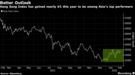
The Hang Seng Index, which currently comprises 64 stocks, has gained nearly 6% this year and is among Asia’s top performing benchmarks. Investors in Hong Kong have snapped up local shares recently due to attractive valuations and a perceived easing of China’s regulatory crackdowns.

Hang Seng Indexes Co. in March 2021 announced the biggest-ever overhaul of its benchmark gauge, looking to boost the number of members to 80 by mid-2022. Other recent reviews saw the inclusion of new economy names including BYD Co., JD.com Inc. and NetEase Inc.

More stories like this are available on bloomberg.com

©2022 Bloomberg L.P.
Burning Cargo Ship Drifts in Atlantic With Porsches, Audis Aboard

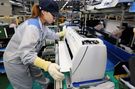
(Bloomberg) — The Felicity Ace, a massive Panama-flagged cargo ship carrying thousands of Volkswagen Group vehicles, caught fire near the Azores islands in the Atlantic Ocean Wednesday afternoon.

The ship’s 22 crewmembers were successfully evacuated and taken to a local hotel by the Portuguese Navy and Air Force, who were deployed to help with the rescue effort, according to a statement from the Navy. The ship itself was left unmanned and adrift.

An internal email from Volkswagen’s U.S. operations revealed there were 3,965 Volkswagen AG vehicles aboard the ship. Headquartered in Wolfsburg, Germany, the group manufactures its Volkswagen brand, as well as Porsche, Audi, and Lamborghini— all of which were in tow when the vessel set ablaze, the email said.Over 100 of those cars were headed for Port of Houston in Texas, with GTI, Golf R, and ID.4 models deemed to be at risk, according to the email. This latest hit comes as the automobile industry is already ensnared in ongoing supply chain issues, including pandemic labor woes and semiconductor chip shortages.Luke Vandezande, a spokesperson for Porsche, said the company estimates around 1,100 of its vehicles were among those on board Felicity Ace at the time of the fire. He said customers affected by the incident are being contacted by their automobile dealers. “Our immediate thoughts are of relief that the 22 crew of the merchant ship Felicity Ace are safe and well,” Vandezande said.It’s not the first time the manufacturer has lost merchandise at sea. When the Grande America caught fire and sank in 2019, over 2,000 luxury cars, including Audi and Porsche, sank with it.

Some customers expressed their disappointment on social media. One Twitter user reported his custom spec’d Porsche Boxter Spyder was among the departed cargo. Standard models of the vehicle start around $99,650.

A spokesperson for Lamborghini’s U.S. branch declined to comment on the number of cars the company had on board or which models were affected, but said that they are in contact with the shipping company to get more information about the incident.Felicity Ace is roughly the size of three football fields and was en route to a port in Davisville, R.I., when a distress signal was issued due to fire on one of its cargo decks.As of Wednesday night, the ship’s owner was arranging for the vessel to be towed, the Navy said. They plan to remain on site to monitor the situation, reporting no detectable traces of pollution so far. 

More stories like this are available on bloomberg.com

©2022 Bloomberg L.P.

IRS Adds New ‘Surge Team’ as Lawmakers Fume Over Tardy Refunds

(Bloomberg) — The Internal Revenue Service is expanding its capacity to process tax returns following criticisms from members of Congress about taxpayers waiting months to get their refunds.

The agency is adding a second so-called surge team to process a backlog of unprocessed tax forms filed in the past two years and is outsourcing some basic functions to help the agency finalize refunds more quickly, the National Taxpayer Advocate Erin Collins told a Senate committee Thursday. 

The new surge team is in addition to the 1,200 employees that the agency is temporarily re-assigning to tackle the backlog.

“These additional steps should reduce phone calls and eliminate the need for additional correspondence and more importantly reduce some of the taxpayer’s frustration,” Collins said.

The IRS also said on Thursday it is scrapping plans to close a processing center in Austin, Texas, which had been scheduled to be shut down in 2024. The announcement came after a watchdog report warned that the agency might need to maintain the processing capacity at that site.

The plans respond to a barrage of criticisms from both Republicans and Democrats that the IRS isn’t doing enough to process returns for taxpayers, some of whom who are still waiting on refunds from years past. The agency has millions of unprocessed tax forms, a delay it attributes to closures of facilities during the coronavirus pandemic, budget cuts and outdated computer systems. 

Senator Bob Menendez, a New Jersey Democrat, said during the Finance Committee hearing that his office hears regularly from people who have faced lengthy waits in getting their returns processed and correspondence addressed.

“My office has continued to receive calls about these issues each and every day. We’ve had thousands of calls since the pandemic began,” Menendez said. “The IRS touches more Americans than any other entity, public or private. We have to have an IRS that works.”

Senator Mike Crapo of Idaho, the top Republican on the committee, said that the IRS must do more to help taxpayers accurately pay their taxes.

“Many Americans have received incorrect or outdated information from the IRS, or have been subject to improper collections or other adverse actions simply because the IRS does not know they have filed a return or responded to a notice,” he said. “Many Americans cannot receive accurate answers to basic questions, like how long it will take to receive their tax refund or an answer to their correspondence.”

The IRS said this month it would suspend some automatic notices and collections letters until the staff can get through the backlog, a move that should ease some confusion for taxpayers.


More stories like this are available on bloomberg.com

©2022 Bloomberg L.P.

Crypto Platform Bakkt Dives as Forecast Dims Post-SPAC Optimism

(Bloomberg) — Bakkt Holdings Inc. shares slid 19%, the biggest drop since mid-December, after quarterly results left investors questioning how long the digital-asset marketplace will take to realize its much ballyhooed potential.  

The slide comes even after the Alpharetta, Georgia-based company reported revenue of $39.4 million, an almost 40% jump from the year-earlier period. Investors on a conference call keyed on the firm’s 2022 outlook, asking whether Bakkt could meet months-old projections made in the midst of its merger with a blank-check company.    

Bakkt, majority owned by New York Stock Exchange parent Intercontinental Exchange Inc., said it expects to double revenue at the high end of its guided range of $60 million to $80 million. The company is also earmarking $150 million to $170 million of cash to invest in its growth. 

“We’re just getting started,” Bakkt Chief Gavin Michael said in an interview with Bloomberg, adding that the company was aggressively investing to grow into the crypto platform they “believe” they can be. 

The stock had became a market darling after the SPAC deal. In a mid-May presentation, it projected 9 million active users by the end of its first year as a public company and total revenue of $889 million. 

Bakkt’s share slide was the biggest since Dec. 16, when it fell 34% after the Securities and Exchange Commission declared a registration effective related to the potential resale of previously issued stocks and warrants. 

Michael said the company had assumed an earlier closing date for the SPAC transaction when those projections were made, and that it would be using “transacting accounts” metric instead of the “active users” metric shown in the presentation. Because Bakkt services institutions and retail clients, “transacting accounts” would more broadly capture activity on their platform, Michael said, rather than “active users” which measures activity on their app. 


(Updates prices and chart.)

More stories like this are available on bloomberg.com

©2022 Bloomberg L.P.
Walmart Rises Most Since 2020 on Upbeat Outlook, Earnings Beat

(Bloomberg) — Walmart Inc. surpassed Wall Street’s quarterly profit expectations and unveiled an upbeat outlook, signaling confidence in its ability to handle rising inflation and flagging consumer sentiment.

Comparable sales at U.S. Walmart stores will increase  “slightly above 3%” excluding fuel during the current fiscal year, which ends in early 2023, the retailer said in a statement Thursday as it reported earnings. That tops the 2.7% average gain expected by analysts.

The shares rose 4% to $138.88 at the close in New York amid a broader U.S. stock slump. It was the biggest daily gain since Sept. 1, 2020. Walmart has dramatically underperformed retail stock indexes and rivals such as Target Corp. and Costco Wholesale Corp. over the past year.

The financial results underscore Walmart’s progress in navigating scarce transportation capacity, higher wages and rising fuel costs, which are combining with robust demand to spur the fastest growth in U.S. consumer prices in four decades. The company’s gross margin, a broad measure of profitability, also surpassed analyst estimates in the fourth quarter by climbing slightly to 23.8% with a boost from the sprawling U.S. business. 

“This is the best result in three quarters,” Michael Baker, an analyst D.A. Davidson, said in regard to the U.S. operation’s gross margin improvement. 

Click here for Bloomberg’s TOPLive blog on Walmart earnings

The share gain illustrates how investors are rewarding companies that can manage through rising inflation and supply-chain pressures. The results are also likely to be seen as a bellwether as other large U.S. retailers prepare to release earnings. Home Depot Inc., Macy’s Inc. and Lowe’s Cos. report next week, followed the week after by Target Corp., Costco Wholesale Corp. and Best Buy Co. 

On a conference call to discuss Walmart’s earnings, Wall Street analysts pressed for details on the company’s thinking about the pressures on lower-income shoppers, who make up a key part of the retailer’s clientele. Chief Financial Officer Brett Biggs said comparable-sales growth at Walmart’s U.S. stores will slow to 1% to 2% in the current quarter, but the company expects U.S. consumers to remain in a “generally favorable economic position throughout the year.”

Inflation Benefit?

Rising inflation could actually be a positive for Walmart by luring more customers from all income levels to seek out the company’s everyday low prices. The retailer is also “finding a few places where we can roll back prices” as a further enticement, Chief Executive Officer Doug McMillon told analysts.

Sales this year will climb about 4% excluding divestitures, the Bentonville, Arkansas-based retailer said. In other words, the company is standing by the long-term growth framework it laid out last year. Walmart said operating income would grow faster than revenue.

Adjusted earnings climbed to $1.53 a share in the fiscal fourth quarter, which ended in late January. That topped the $1.51 average of analyst estimates compiled by Bloomberg. Revenue rose 0.5% to $152.9 billion, while Wall Street had expected $151.7 billion.

The results and outlook are “proof points that we can keep our price gaps in the range where we want to grow market share, and deliver against our top- and bottom-line growth algorithm,” McMillon said on the call.

Walmart expects gross margin to increase this year due to pricing, expectations for greater sales of more-profitable products and new business initiatives, although the company cautioned there will be variability from quarter to quarter. Biggs said he expected “some abatement of costs over the year.”

Supply Chain

Last year, Walmart outperformed its initial forecast for such key metrics as comparable sales and adjusted per-share earnings. But higher costs for merchandise, transportation and labor pose a growing threat.

In the fourth quarter, supply-chain costs for the U.S. business were $400 million more than expected, Walmart said. That was partially offset by “price management and mix” of merchandise, which included gains its digital advertising venture. That business, Walmart Connect, more than doubled active advertisers.

Walmart is also trying to develop businesses in financial services and health care, and it’s investing heavily in e-commerce. The company is planning capital expenditures in the current fiscal year to be at the “upper end” of 2.5% to 3% of net sales with a focus on supply chain, automation, customer-facing initiatives and technology. That would imply investment well above last year’s $13 billion. 

U.S. e-commerce sales, a closely watched metric, rose 1% in the fourth quarter while analysts were looking for a 2.2% gain. Online sales got a substantial boost during pandemic lockdowns, but demand has been slowing as shoppers venture back into stores. 

That prompted analysts on the conference call to press for details on Walmart+, an online subscription offering that is widely seen as a bid to compete with Amazon.com Inc.’s Prime program. McMillon declined to reveal how many customers have signed up — at least for now. 

“It help us grow our e-commerce business, it helps us deepen the relationship with customers and have more data,” McMillon said. “At some point, we’ll probably talk about that number.”

(Updates share trading.)

More stories like this are available on bloomberg.com

©2022 Bloomberg L.P.

Shopify Stock-Price Target Gutted by Analysts on Slower Growth

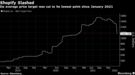
(Bloomberg) — Canadian e-commerce company Shopify Inc. had the average price target on its shares slashed to the lowest level since January 2021 after it signaled slower sales growth.

More than 20 analysts cut their targets after the stock plunged 17% in Toronto on Wednesday, its biggest drop ever, following a company statement that full-year revenue growth will be lower than the 57% increase in 2021. Shares extended losses Thursday, tumbling 11% to the lowest since April 2020.

Shopify’s business surged during the pandemic, with sales jumping 86% in 2020 as shoppers moved online. It became Canada’s most valuable company by market capitalization, overtaking Royal Bank of Canada. It surrendered that position in December amid a broader tech selloff, and as shoppers returned to brick-and-mortar stores.

Last month, Shopify said it had canceled warehouse and fulfillment-center contracts, pushing shares to a 16-month low. The company has tumbled almost 50% this year, losing about C$100 billion ($79 billion) in market value. 

“The reality is that the above ‘in-line’ results combined with no firm outlook guidance was not enough,” National Bank analyst Richard Tse said in a note to clients. “If the above wasn’t enough to cause pause, a further notable fly in the ointment was a shift in the company’s SFN (fulfillment) strategy to own or run more of the major fulfillment hubs.”

Even as targets were gutted, analysts are largely positive on the stock: Shopify has only one sell rating, with 27 buys and 19 holds.

(Updates shares.)

More stories like this are available on bloomberg.com

©2022 Bloomberg L.P.
Meta Loses Top-10 Ranking by Market Value Amid Worst Month Ever

(Bloomberg) — Meta Platforms Inc. has tumbled out of the world’s 10 largest companies by market value, hammered by its worst monthly stock decline ever.

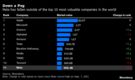
Once the world’s sixth largest company with a valuation in excess of $1 trillion, the Facebook parent closed on Thursday with a value of $565 billion, placing it in 11th place behind Tencent Holdings Ltd., according to data compiled by Bloomberg.

Meta Platforms, which changed its name from Facebook last year as part of Chief Executive Officer Mark Zuckerberg’s attempt to shift the company’s focus to immersive digital experiences, has seen more than $500 billion in market value destroyed from a September peak. The stock extended losses on Thursday in the wake of a dismal earnings report two weeks ago that revealed stagnating user growth. It has now fallen 46% from last year’s record.

Tesla Inc., with a market value of $906 billion, has taken Meta’s place as the sixth-biggest company behind e-commerce giant Amazon.com Inc. Warren Buffett’s Berkshire Hathaway Inc. trails the electric vehicle maker at $700 billion, followed by chipmaker Nvidia Corp. at $613 billion. 

The value wiped out by the selloff in Meta’s shares exceeds the market caps of all but eight companies in the S&P 500 Index. 

More stories like this are available on bloomberg.com

©2022 Bloomberg L.P.
Close Bitnami banner
Bitnami