
Bloomberg

Walmart’s Outlook Signals Optimism on Shoppers, Cost Control

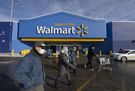
(Bloomberg) — Walmart Inc. surpassed Wall Street’s quarterly profit expectations and unveiled an upbeat outlook, signaling confidence in its ability to handle rising inflation and flagging consumer sentiment.

Comparable sales at U.S. Walmart stores will increase  “slightly above 3%” excluding fuel during the current fiscal year, which ends in early 2023, the retailer said in a statement Thursday as it reported earnings. That tops the 2.7% average gain expected by analysts.

The results underscore Walmart’s progress in navigating scarce transportation capacity, higher wages and rising fuel costs, which are combining with robust demand to spur the fastest growth in U.S. consumer prices in four decades. The company’s gross margin, a broad measure of profitability, also surpassed analyst estimates in the fourth quarter by climbing slightly to 23.8% with a boost from the sprawling U.S. business. 

“This is the best result in three quarters,” Michael Baker, an analyst D.A. Davidson, said in regard to the U.S. operation’s gross margin improvement. 

The shares rose 3.1% to $137.70 at 1:08 p.m. in New York even as the broader market slumped. Walmart has dramatically underperformed retail stock indexes and rivals such as Target Corp. and Costco Wholesale Corp. over the past year.

Click here for Bloomberg’s TOPLive blog on Walmart earnings

Walmart’s share gain shows how investors are rewarding companies that can manage through rising inflation and supply-chain pressures. The results are also likely to be seen as a bellwether as other large U.S. retailers prepare to release earnings. Home Depot Inc., Macy’s Inc. and Lowe’s Cos. report next week, followed the week after by Target, Costco and Best Buy Co. 

On a conference call to discuss Walmart’s earnings, Wall Street analysts pressed for details on the company’s thinking about the pressures on lower-income shoppers, who make up a key part of the retailer’s clientele. While executives offered little detail, Chief Financial Officer Brett Biggs said Walmart expects U.S. consumers to remain in a “generally favorable economic position throughout the year.”

Inflation Benefit?

Rising inflation could actually be a positive for Walmart by luring more customers from all income levels to seek out the company’s everyday low prices. The retailer is also “finding a few places where we can roll back prices” as a further enticement, Chief Executive Officer Doug McMillon told analysts.

Sales this year will climb about 4% excluding divestitures, the Bentonville, Arkansas-based retailer said. In other words, the company is standing by the long-term growth framework it laid out last year. Walmart said operating income would grow faster than revenue.

Adjusted earnings climbed to $1.53 a share in the fiscal fourth quarter, which ended in late January. That topped the $1.51 average of analyst estimates compiled by Bloomberg. Revenue rose 0.5% to $152.9 billion, while Wall Street had expected $151.7 billion.

The results and outlook are “proof points that we can keep our price gaps in the range where we want to grow market share, and deliver against our top- and bottom-line growth algorithm,” McMillon said on the call.

Walmart expects gross margin to increase this year due to pricing, expectations for greater sales of more-profitable products and new business initiatives, although the company cautioned there will be variability from quarter to quarter. Biggs said he expected “some abatement of costs over the year.”

Supply Chain

Last year, Walmart outperformed its initial forecast for such key metrics as comparable sales and adjusted per-share earnings. But higher costs for merchandise, transportation and labor pose a growing threat.

In the fourth quarter, supply-chain costs for the U.S. business were $400 million more than expected, Walmart said. That was partially offset by “price management and mix” of merchandise, which included gains its digital advertising venture. That business, Walmart Connect, more than doubled active advertisers.

Walmart is also trying to develop businesses in financial services and health care, and it’s investing heavily in e-commerce. The company is planning capital expenditures in the current fiscal year to be at the “upper end” of 2.5% to 3% of net sales with a focus on supply chain, automation, customer-facing initiatives and technology. That would imply investment well above last year’s $13 billion. 

U.S. e-commerce sales, a closely watched metric, rose 1% in the fourth quarter while analysts were looking for a 2.2% gain. Online sales got a substantial boost during pandemic lockdowns, but demand has been slowing as shoppers venture back into stores. 

That prompted analysts on the conference call to press for details on Walmart+, an online subscription offering that is widely seen as a bid to compete with Amazon.com Inc.’s Prime program. McMillon declined to reveal how many customers have signed up — at least for now. 

“It help us grow our e-commerce business, it helps us deepen the relationship with customers and have more data,” McMillon said. “At some point, we’ll probably talk about that number.”

(Updates with gross margin in third paragraph, analyst comment in fourth.)

More stories like this are available on bloomberg.com

©2022 Bloomberg L.P.

Tesla Braking Issue Spurs Second U.S. Probe Related to Autopilot

(Bloomberg) — The U.S. National Highway Traffic Safety Administration opened its second defect investigation related to Tesla Inc.’s Autopilot, subjecting more scrutiny to the carmaker’s driver-assistance technology.

The agency said Thursday it’s launching a preliminary evaluation of unexpected braking by Tesla Model 3 sedans and Model Y sport utility vehicles. NHTSA estimates that the investigation covers about 416,000 cars and said it has received 354 complaints related to the issue in the past nine months.

The Autopilot probes could pose risk to Tesla’s commercialization of automated-vehicle technology. In the weeks leading up to the company becoming the first carmaker with a $1 trillion market valuation, Chief Executive Officer Elon Musk tweeted that investors were giving Tesla “significant credit for achieving self-driving.”

Tesla shares fell 3.9% to $887.58 as of 12:55 p.m. New York time. The stock extended its decline after the carmaker sank toward the bottom of Consumer Reports’ latest annual auto brand rankings.

Tesla has marketed features using the names Autopilot and Full Self-Driving that still require drivers to keep their hands on the wheel. The company has drawn criticism from the likes of the National Transportation Safety Board, former NHTSA leaders and members of Congress over issues including how it’s branded the systems and whether it does enough to safeguard against inattentiveness and misuse.

“While it’s encouraging to see NHTSA’s recent enforcement actions after years of turning the other way, Tesla continues to release software onto U.S. roads that is not tested and validated to assure safe performance,” said Michael Brooks, acting executive director and chief counsel of the Center for Auto Safety. “A piecemeal investigative approach to each problem that raises its head does not address the larger issue in Tesla’s safety culture — the company’s continued willingness to beta test its technology on the American public while misrepresenting the capabilities of its vehicles.”

NHTSA opened its earlier probe into a possible Autopilot defect in August, when it began investigating how the system handles crash scenes following a dozen collisions with first responders and other vehicles. In December, NHTSA launched an evaluation of Tesla allowing car occupants to play video games on front-center touch screens. The carmaker told the agency it would work on a software update to lock the feature when vehicles are in motion.

The probe of unexpected braking comes two weeks after NHTSA announced it was reviewing complaints about Tesla’s forward-collision avoidance system.

“The reports have often been characterized as ‘phantom braking’ by consumers,” the agency said in a filing posted to its website Thursday. “Complainants report that the rapid deceleration can occur without warning, at random, and often repeatedly in a single drive cycle.”

NHTSA said it will “determine the scope and severity of the potential problem” and “fully assess the potential safety-related issues.”

Spurt of Recalls

After NHTSA opened the probe into how Teslas on Autopilot handles crash scenes, the company beamed an over-the-air update to its vehicles that sought to improve how the system detects police cars and fire trucks. NHTSA asked the carmaker in October to justify its decision to make the software change without filing a recall.

Since then, Tesla has announced 11 recalls in the U.S.

Musk took issue earlier this month with media coverage of one of the safety campaigns, arguing the term recall is “anachronistic” when Tesla makes fixes with over-the-air updates. On Feb. 13, he referred to NHTSA as “the fun police” after the agency pressured the company to restrict a feature called Boombox, which enabled people to play sounds through an external car speaker.

Tesla, which has disbanded its media relations department, did not respond to a request for comment on NHTSA’s investigation.

(Updates with safety advocate’s comment in the sixth paragraph.)

More stories like this are available on bloomberg.com

©2022 Bloomberg L.P.

Car Discounts Aren’t Coming Back After Pandemic, AutoNation Says

(Bloomberg) — The largest car dealership chain in the U.S. said discounts on new cars may be a thing of the past as the auto industry seeks to lock in higher prices resulting from pandemic-induced production cuts.

Tighter inventories have allowed automakers and dealers to book fat profits by selling more cars at or above their sticker prices, and the absence of discounts will persist even as vehicle production ramps up in the second half of 2022, the chief executive officer of AutoNation told investors in an earnings call Thursday.

“We will not return to excessively high inventory levels that depress new-vehicle margins,” AutoNation CEO Mike Manley said. “Significant discounting and high incentives can also damage a brand, which is another reason for our industry to balance appropriately supply and demand.”

Soaring vehicle prices and increased sales of used cars helped AutoNation post record profits in its latest quarterly earnings, which were announced earlier Thursday. The rising prices of new and used vehicles are contributing to the highest annual inflation in four decades.

Read more: AutoNation profit at record as used-car sales eclipse new

Executives at General Motors Co. and Ford Motor Co. have signaled they will throttle production even as computer chip shortages that have forced them to cut output start to ease. The two companies, which have long coped with large inventories on dealer lots that prompted discounting, are eager to preserve their higher profit margins. 

At the same time, they’ve called out car dealers charging above the suggested retail price. Ford CEO Jim Farley told investors earlier this month that about 10% of its dealers were charging above retail price, and that the company would withhold cars from them to root out the behavior.

Car shoppers paid above the manufacturer’s sticker price in more than 80% of new car purchases last month, according to researcher Edmunds. Manley said just 2% of new vehicles AutoNation sold in 2021 were above the sticker price.

More stories like this are available on bloomberg.com

©2022 Bloomberg L.P.
Amazon Strikes Agreement With Visa on Payment Fees

(Bloomberg) — Amazon.com Inc. has agreed to accept Visa Inc.’s cards across its global network, settling a feud that threatened to damage the financial giant’s business and disrupt e-commerce payments.

The agreement, announced by both companies, resolves a dispute that at one point spurred Amazon to consider a ban on U.K.-issued Visa credit cards. The retailer said it will no longer charge customers who use Visa cards on its site in Singapore and Australia an extra fee, and won’t turn off Visa credit cards from amazon.co.uk.

“We’ve recently reached a global agreement with Visa that allows all customers to continue using their Visa credit cards in our stores,” a company spokesman said via email. “Amazon remains committed to offering customers a payment experience that is convenient and offers choice.”

Amazon had considered shifting its popular co-brand credit card to Mastercard Inc., Bloomberg News has reported. The Amazon card is one of the industry’s largest co-branded portfolios, and the company used talks to renew the agreement as a way to secure better terms from Visa, according to people familiar with the matter.

Retailers have long balked at the fees they pay each time a consumer swipes a card at checkout. While it can amount to just pennies per purchase, that adds up: Merchants spent a whopping $110 billion in card-processing fees in 2020 alone.

“The big picture significance of this dispute is that it has drawn attention to these high fees,” the Merchants Payments Coalition, an industry group, said in a statement. “It has shown that even the largest retailers are frustrated, and the situation is even worse for small retailers who don’t have the size and resources of Amazon that are required to stand up to an entity as powerful as Visa.” 

Read more: Visa Believes It Will Resolve All Issues With Amazon, CFO Says

For the biggest banks and merchants, Visa often reaches special pricing agreements to persuade them to send more volume over its network. The company set aside $8.4 billion in fiscal 2021 for such incentives, 26% more than a year earlier.

But Visa has been known to go even further, including in 2015 when the company won the Costco Wholesale Corp. co-brand credit card by giving the retailer a break on the fees it pays to accept all Visa cards, not just its co-brand card. In talks to renew the longstanding co-brand card agreement between Amazon and Visa, the e-commerce firm was hoping to secure a similar deal.

Another sticking point had been Visa’s policy of categorizing all e-commerce payments as “card not present,” which typically translates into higher rates.

“Visa is pleased to have reached a broad, global agreement with Amazon,” a Visa spokesman said in an emailed statement. “This agreement includes the acceptance of Visa at all Amazon stores and sites today, as well as a joint commitment to collaboration on new product and technology initiatives to ensure innovative payment experiences for our customers in the future.”

While Amazon has been surcharging customers who use Visa cards on its site in Singapore and Australia for months, it sought to up the ante late last year with a threat to stop accepting the firm’s credit cards by U.K. customers entirely. Last month, the two companies said they were working on an agreement, narrowly avoiding an outright ban on U.K. cards. 


(Updates with statement from industry group in sixth paragraph.)

More stories like this are available on bloomberg.com

©2022 Bloomberg L.P.

Ubisoft Misses Sales Estimates on Thin Video-Game Pipeline

(Bloomberg) — Ubisoft Entertainment SA reported revenue that missed analysts’ estimates as the company struggled to keep up a pipeline of new games during the pandemic. 

The French gaming studio, which publishes popular titles including Assassin’s Creed, posted third-quarter revenue of 665.9 million euros ($757 million), down 31%. That was below the average analyst estimate of 825.3 million euros, according to data compiled by Bloomberg.

Microsoft Corp.’s planned $69 billion acquisition of Activision Blizzard Inc. last month sparked speculation that Ubisoft could be a potential acquisition target, amid rising interest in gaming and the metaverse from tech giants.

Key Insights

  • Net bookings were 746.1 million euros, down 25% from a year earlier and missing analysts’ estimates for 788.4 million.
  • The company reiterated full-year bookings target of unchanged to “slightly down” and non-IFRS operating income target of 420 million euros to 500 million euros.
  • Ubisoft has turned an Assassin’s Creed expansion into a stand-alone game to help fill out its thin release schedule, Bloomberg reported this month.
  • Ubisoft expects 2023 to be a comeback year, with highly anticipated projects related to Avatar and Star Wars.
  • Ubisoft started to experiment with nonfungible tokens in December, allowing players to buy and sell accessories like helmets or rifles as NFTs on a dedicated platform called Quartz. The move was criticized by fans and employees.
  • The company is set to continue to launch big-budget blockbusters like titles in the Assassin’s Creed series, but said last year that it wants to prioritize free-to-play versions of its successful video game franchises like Tom Clancy’s The Division.
  • Tom Clancy’s Rainbow Six Siege reached 80 million unique active players, adding 10 million players over the past twelve months.

Market Context

  • Ubisoft shares are down 40% in the past 12 months.

Get more

  • Get the numbers here.

More stories like this are available on bloomberg.com

©2022 Bloomberg L.P.
Stablecoin Issuer’s SPAC Deal Value Doubles to $9 Billion

(Bloomberg) —

Circle Internet Financial, the issuer of the cryptocurrency USDC stablecoin, said the terms of its planned merger with special purpose acquisition company Concord Acquisition Corp. have changed and the value of the transaction has doubled to $9 billion. 

The increase comes after “material improvements in Circle’s financial outlook and competitive position” including the growth and market share of the USDC stablecoin, Boston-based Circle said in a statement Thursday. USD Coin, which is currently the fifth-biggest cryptocurrency, has a market value of more than $52 billion, according to CoinGecko, compared with about $25 billion when the agreement was first announced in July. Stablecoins are cryptocurrencies that aim to peg their value to something, usually the U.S. dollar, and are often used by online exchanges to facilitate transactions. 

The revised agreement has been approved by the boards of both Concord and Circle. Bob Diamond, the former head of Barclays Plc, is the chairman of Concord.

“Circle is one of the most interesting, innovative and exciting companies in the evolution of global finance and will have an historic impact on the global economic system,” Diamond said in the statement issued by Circle.  

The new deal replaces the prior business combination agreement and moves the initial outside date to Dec. 8, 2022, according to a Securities and Exchange Commission filing Thursday. Upon closing of the transaction, current shareholders of Concord will exchange their shares of Concord common stock for equity of the company.  

The modified deal comes at a time when signs of trouble are popping up among SPAC mergers. Many are falling apart entirely. At the same time, blank-check companies with tens of billions of dollars set aside for takeovers are still seeking targets, potentially creating a situation where attractive targets might have their choice of partners. 

Crypto firms present something of a wild card for any potential partner, especially on the regulatory front. The U.S. government has expressed concern about many aspects of digital assets, with stablecoins and their potential systemic risks among the biggest. The crypto industry is gearing up for policy battles in Washington, as numerous officials express reservations about everything from volatility to effects of the pegs for stablecoins.

Still, according to Circle, things are headed in a positive direction for crypto and the company.

“This is being acknowledged by the White House as a critical area that’s going to play a major role in the growth of the dollar and the dollar on the internet,” said Jeremy Allaire, CEO of Circle, in a video interview on Thursday. “We’ve gotten clarity that the federal government wants to ensure that well-run clearly defined rules around large-scale dollar stablecoin issuers like Circle is actually a critically important thing.”  

More stories like this are available on bloomberg.com

©2022 Bloomberg L.P.
Bitcoin Tests $42,000 Level as Russia-Ukraine Tensions Weigh

(Bloomberg) — Bitcoin briefly fell below $42,000, testing its 50-day moving average, as renewed fears of a possible Ukraine invasion by Russia weighed on global markets including risk assets.

The biggest cryptocurrency on the market dipped as much as 5.4%, while Ether, the second largest token, fell 5.7% and Polkadat led a downturn in smaller-cap tokens, also known as altcoins.

“The geopolitical situation in Europe and Ukraine is having material impact,” Barbara Matthews, founder and chief executive officer of BCMStrategy Inc., said. “But, I think it’s underappreciated how much monetary policy continues to generate uncertainty and volatility in the markets.”

On Wednesday, the Federal Reserve released minutes from the committee’s January meeting, which reinforced its intention to act swiftly to quell rising inflation with tightening monetary policy. Markets appeared to expect the stance, having a relatively mixed or muted response. Bitcoin, which exhibits a strong correlation to movements in the U.S. stock indexes lately, even gained with the S&P 500 in the minutes following the memo’s release.

Matthew Sigel, head of digital assets research at VanEck Associates, said large moves down in stocks, or “disorderly spikes” in crude and bond yields, could lead to exaggerated declines for cryptocurrencies. However, he noted Bitcoin’s volatility appears to demonstrate a long-term downtrend, with the Nasdaq 100 exhibiting more standard deviation moves than it’s five-year average compared with the coin. 

“Bitcoin network participants have enjoyed consistent outperformance versus equities with volatility that — while high — is showing a declining relative trend,” Sigel said.

Read more: Tech Stock Turmoil Outstrips Bitcoin Volatility in Rare Reversal

More stories like this are available on bloomberg.com

©2022 Bloomberg L.P.

U.S. Adds WeChat, AliExpress to List of Notorious Piracy Markets

(Bloomberg) — The U.S. added Chinese messaging platform WeChat and online marketplace AliExpress to its list of notorious markets for counterfeiting and piracy, an annual compilation of the worst intellectual-property abusers and counterfeiters.

Alibaba Group Holding Ltd.-owned AliExpress and Tencent Holdings Ltd.’s WeChat are “two significant China-based online markets that reportedly facilitate substantial trademark counterfeiting,” the Office of the U.S. Trade Representative said in a statement accompanying the release of the 2021 review Thursday.   

The USTR first started publishing the annual standalone list in 2011 to increase public awareness and help market operators and governments prioritize intellectual-property enforcement efforts. The 2021 review identifies 42 online and 35 physical markets that are reported to engage in or facilitate substantial trademark counterfeiting or copyright piracy. 

Pinduoduo Inc., one of the largest online retailers in China, continues to be listed after first being included in 2019. Alibaba’s Taobao, together with Baidu Inc. cloud-storage service Baidu Wangpan and e-commerce service provider DHgate.com Inc. are also still on the list. Nine physical markets located within China that are known for the manufacture, distribution, and sale of counterfeit goods are included.

The world’s two largest economies share the biggest bilateral trade relationship, but it has been fractious since 2018, with the Trump administration imposing tariffs on more than $300 billion in imports from China, ranging from footwear and clothing to electronics and bicycles and even pet food under section 301 of the Trade Act. 

The report listed China as the top country of origin for counterfeit goods seized by U.S. Customs and Border protection as well as the country with the greatest number of products made with forced labor, including state-sponsored forced labor.  

The Biden administration has contemplated a fresh section 301 investigation to counter China’s industrial subsidies. Congress has also considered establishing a review process to limit outbound investment, and the Commerce Department is weighing potential curbs to apps such as TikTok and WeChat that U.S. officials say pose a risk to Americans’ data security. 

Commerce also has added more Chinese companies to its so-called Entity List, which prohibits American firms from doing business with them without first obtaining a U.S. government license.

WeChat, Weixin

WeChat and Weixin, its China-facing version, are viewed to be among the largest platforms for counterfeit goods in China, with more than 1.2 billion active users around the world in 2021, USTR said. The e-commerce system that works within WeChat is of particular concern, with rights holders identifying weakness in WeChat’s seller vetting as a significant problem, the agency said.

The USTR’s notorious markets list is a spinoff from its so-called Special 301 report, an annual review of the global state of intellectual property-rights protection and enforcement.

USTR highlights the markets because they exemplify global counterfeiting and piracy concerns and because the scale of the violations in those markets can cause significant harm to U.S. intellectual property owners, workers, consumers and the economy.


More stories like this are available on bloomberg.com

©2022 Bloomberg L.P.

Electric-Car Battery Recycling Kicks Off in California

(Bloomberg) — Redwood Materials Inc., the startup founded by former Tesla Inc. Chief Technical Officer J.B. Straubel, is launching its battery-recycling efforts in California. Ford Motor Co. and Volvo Group are the first automakers to join the program.

California has led the transition to electric vehicles in the U.S. with plans to end the sales of new cars and trucks powered by gasoline or diesel by 2035. Last year, battery-electric and plug-in hybrids accounted for more than 12% of all light-duty vehicles sold in the state. As those cars age and are retired, Redwood will extract key metals such as lithium, cobalt, nickel and copper so they can be used in new battery packs and drive down the costs for the industry.

Redwood said its goal is to create a “sustainable closed-loop system” that will allow end-of-life battery packs to return to the U.S. supply chain. The company is working with state agencies, including the California Environmental Protection Agency, to look at how efforts can be further streamlined.

“We’re jumping in with California and launching this recycling program,” Straubel said at a press conference on Thursday. “California is the oldest EV market, and batteries are already coming back.”

Redwood formed a partnership with Ford in September, and Ford invested $50 million in the company, which is based in Carson City, Nevada.

“This new program with Redwood Materials will help Ford lead America’s transition to sustainable and carbon-neutral EV manufacturing and ultimately help make electric vehicles more sustainable and affordable for our customers,” Ford Chief Executive Officer Jim Farley said in a statement.

More stories like this are available on bloomberg.com

©2022 Bloomberg L.P.
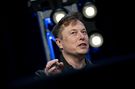
Musk Says SEC Is Out to ‘Muzzle and Harass’ Him and Tesla

(Bloomberg) — Elon Musk and Tesla Inc. told a judge that the U.S. Securities and Exchange Commission is targeting them with “unrelenting investigation” for criticizing the government, while failing to pay Tesla shareholders $40 million the agency collected in 2018 settlements over Musk’s tweets.

The SEC “seems to be targeting Mr. Musk and Tesla” with “endless probes” because he remains “an outspoken critic of the government,” Alex Spiro, one of their lawyers, said in a letter filed with the federal court in Manhattan on Thursday, the latest shot in a battle between Musk and the SEC over his Twitter posts about the electric carmaker.

The agency is using the settlements to “muzzle and harass” Tesla’s chief executive officer, Spiro said.

The federal judge Spiro wrote to has herself raised questions about the status of a $40 million fund established from fines paid for Musk’s controversial tweets, seeking accounting statements in a December order. 

Shares of Tesla were down 2.8% to $897.65 in New York at 10:39 a.m., amid a broader market decline that saw the Nasdaq stock market down 1.6%.

Read More: Tesla Subpoenaed by SEC About Complying With Musk Settlement

Press officials at the SEC didn’t immediately respond to a request for comment on the letter.

Rust Consulting Inc., the firm appointed in May to administer distributions from the fund, hasn’t filed required accounting statements, U.S. District Judge Alison Nathan said in the December order. The SEC reached settlements with Musk and Tesla in September 2018 after suing the billionaire over his tweeted claims weeks earlier that he had the funding and investor support to buy out stockholders at $420 a share. 

Rust told Nathan last month that it had received a draft distribution plan from the SEC and that it’s awaiting approval of the plan by Nathan and transfer of the funds into an escrow account.

The SEC alleged the tweets were false, and while Musk and Tesla didn’t admit wrongdoing in the accord, the agency set up a “fair fund,” with $20 million each from Musk and Tesla, to repay investors Musk’s statements hurt.

In the letter, Spiro asked Nathan for a hearing “to address why the SEC has failed to distribute these funds to shareholders but has chosen to spend its energy and resources investigating Mr. Musk’s and Tesla’s compliance with the consent decree by issuing subpoenas unilaterally, without court approval.”

Read the letter here

“Despite the SEC’s inattention and dereliction when it comes to paying Tesla’s shareholders, it has been more than energetic in going after Mr. Musk and Tesla, largely to police Mr. Musk’s public pronouncements via Twitter,” he said.

The settlements haven’t resolved conflict between the SEC and Musk over his company-related tweets. In 2019 the agency asked Nathan to find that the billionaire violated them by tweeting about the company’s outlook for producing cars. Both sides agreed in April of that year to add provisions limiting the topics Musk can post about without first running them by a company lawyer. 

Then, in November, the SEC subpoenaed Tesla for information about its governance processes and compliance with the 2018 settlements after Musk took a Twitter poll asking whether he should sell 10% of his Tesla stake. The carmaker’s shares plunged 16% in the following two trading days.

The cases are U.S. Securities and Exchange Commission v. Musk, 18-cv-08865; U.S. Securities and Exchange Commission v. Tesla, 18-cv-08947, U.S. District Court, Southern District of New York (Manhattan).

More stories like this are available on bloomberg.com

©2022 Bloomberg L.P.

Close Bitnami banner
Bitnami
