Bloomberg

Intel Said to Be Near $5 Billion Deal to Buy Tower Semiconductor

(Bloomberg) — Intel Corp. is close to a deal to acquire Tower Semiconductor Ltd. for about $5 billion as part of its push into the outsourced chip-manufacturing business, according to a person familiar with negotiations. 

The U.S. chipmaker plans to announce the purchase of the Israeli company as early as Tuesday morning, according to the person, who asked not to be identified because the matter is private. The Wall Street Journal previously reported on the deal. 

Intel declined to comment on the transaction, while Tower didn’t immediately respond to requests for comment.

The move furthers Chief Executive Officer Pat Gelsinger’s goal of getting into the chip-foundry business — contract manufacturing of semiconductors for other companies. Tower competes in a market dominated by Taiwan Semiconductor Manufacturing Co., but is much smaller. Its sales are about $1.3 billion annually.

Tower’s shares jumped as much as 58% to $52.20 in late trading on the news Monday. Intel fell less than 1%.  

The business of providing manufacturing for other companies requires experience in handling different types of chips and designs. Intel has previously had little success in that area because of a lack of commitment to it, Gelsinger has said. Tower makes power management chips, image sensors and a variety of other semiconductors. Its customers include Analog Devices Inc. and Broadcom Inc., according to data compiled by Bloomberg. 


More stories like this are available on bloomberg.com

©2022 Bloomberg L.P.

Big Bitcoin Miners Aren’t Immune to the Need for Cash

(Bloomberg) — A pair of big Bitcoin miners are poised to sell their stock in the face of a drop in token prices that has led other miners to trade in some their Bitcoin holdings.

Marathon Digital Holdings Inc. and Hut 8 Mining Corp. have both filed with the Securities and Exchange Commission for the option to sell company stock for cash. The two are likely in bid to stay flexible in the wake of Bitcoin’s dramatic fall that could force a shakeout of miners with less efficient operations.

While Bitcoin is down about 38% from an all-time high in November, shares of both Marathon and Hut 8 remain more than 55% below their respective peaks. Hut 8 Mining’s shelf registration filed Friday was for as much as $65 million common shares. Meanwhile Marathon filed to offer up to $750 million of shares, preferred stock, warrants and units on Monday. 

“We don’t control the price of Bitcoin, but we can control how prepared we are to capitalize on market opportunities when they present themselves, which Marathon has a long track record of doing successfully,” Charlie Schumacher, a spokesperson for Marathon Digital, said in an emailed statement. 

The filings come as cash concerns have weighed on the industry, with some miners choosing to sell their Bitcoin holdings in order to invest in more powerful equipment or even stay afloat.

“A lot of companies with big growth plans, holding onto all their Bitcoin and growing into their facilities, are going to need money,” Christopher Brendler, an analyst at D.A. Davidson, said. “Big miners would rather sell equity, because their shareholders want them to hold their Bitcoin and not even think about selling it.” 

Marathon and Hut 8 aren’t required to immediately sell those registered shares, giving the companies some time to see where the price of their stocks may be headed next. Marathon also completed a $650 million convertible bond sale in late November. Hut 8 did not immediately respond to queries. 

More stories like this are available on bloomberg.com

©2022 Bloomberg L.P.

Buffett’s Berkshire Takes Activision Blizzard Stake, Exits Teva

(Bloomberg) — Warren Buffett’s Berkshire Hathaway Inc. took a stake in Activision Blizzard Inc., the game giant that has agreed to be acquired by Microsoft Corp., in an investment that would have been valued at $975 million at the end of the year. 

Berkshire held nearly 14.7 million shares in the video-game company as of Dec. 31, according to a regulatory filing released Monday. The conglomerate snapped up the stock ahead of Activision’s $69 billion deal with Microsoft, which was announced mid-January.

It’s unclear whether Buffett or one of his two investment managers, Todd Combs and Ted Weschler, made the investment. Buffett, Berkshire’s chief executive officer, has long had ties to Microsoft through his friendship with the tech firm’s co-founder and former CEO, Bill Gates. Activision stock jumped nearly 26% on the day of the deal’s announcement, and has climbed about 23% since the end of 2021.

A Berkshire representative didn’t immediately respond to a message about the Activision stake. 

Buffett’s company reshuffled some other stock bets during the last three months of the year. The firm is no longer reporting a stake in Teva Pharmaceutical Industries Ltd. and Sirius XM Holdings Inc. after holding shares in those companies as of Sept. 30.

Berkshire ramped up its bet on stocks including Chevron Corp., Floor & Decor Holdings Inc. and RH. The Chevron stake was boosted by about 33%, for a year-end value of $4.49 billion. 

Buffett’s company pulled back back on some pharmaceutical stocks, a trend that continued from the third quarter. The AbbVie Inc. holding was down 79% while the Bristol-Myers Squibb Co. stake fell 76%. 

More stories like this are available on bloomberg.com

©2022 Bloomberg L.P.

Crypto Millions on Super Bowl Ads Didn’t Drive App Downloads

(Bloomberg) — Cryptocurrency-trading platforms drew national attention with star-studded Super Bowl ads, a first-time appearance for many in the industry. However, it didn’t yet translate to a flood of new users on their apps.

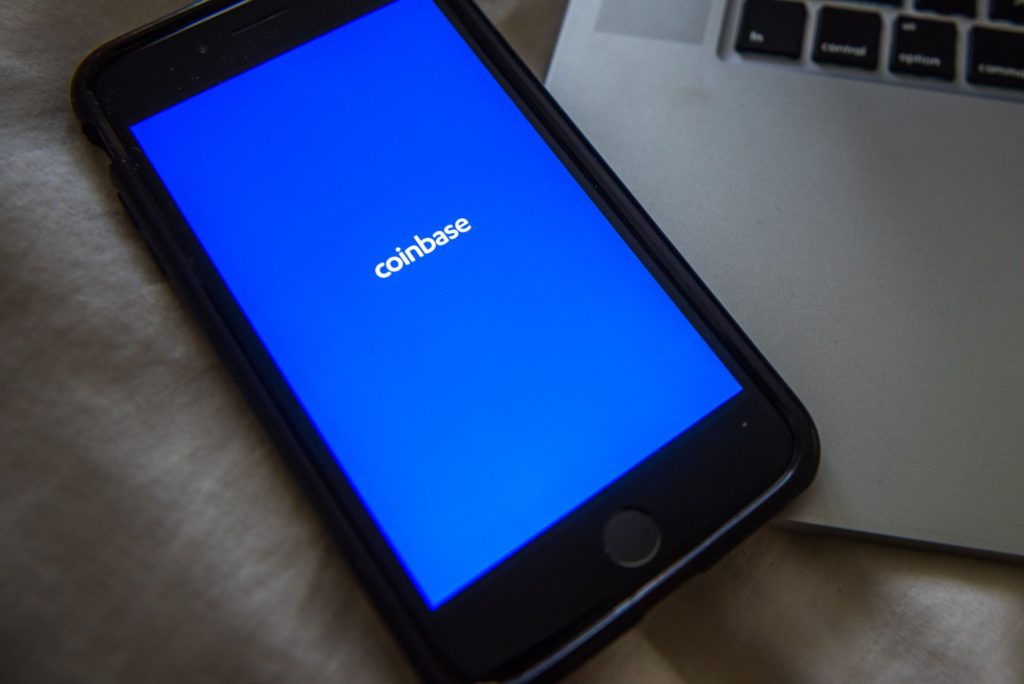
Coinbase Global Inc., FTX Trading Ltd. and Crypto.com all released advertisements during the National Football League’s championship game between the Los Angeles Rams and Cincinnati Bengals on Sunday. Yet the exchanges and investing platform eToro all saw a decline in U.S. app store downloads over the week prior to Sunday, according to research firm Apptopia. 

Coinbase, the largest U.S. crypto exchange, emerged on Monday in the second highest slot on Apple Inc.’s app store rankings of top free apps. However, the meaning of the rank — driven by an unknown algorithm — is little understood, with some analysts under the belief it’s based on usage and velocity of downloads.

Coinbase was the clear winner of the group, and likely came in with the most brand recognition, said Adam Blacker, vice president of insights at Apptopia.

The trading platform released a minute-long ad of a blank screen and a moving QR code, prompting viewers to scan the mobile barcode to learn more.

The code offered a giveaway of $15 worth of Bitcoin for new users within 48 hours of the ad airing. It drove 20 million hits to the company’s landing page, temporarily crashing the site, and while a jolt of new users was not immediately recorded, according to Apptopia, it could still see a boost from Apple’s app store ranking.

“Once you hit the top of the app store it creates this self-fulfilling prophecy,” Blacker said. “More people today and tomorrow are going to look at the top of app store and they’re going to see Coinbase is up there, and they’re going to download it because it’s just in their face.”

“While Coinbase is one of the largest crypto exchanges in the world, outside of the crypto world, many people still haven’t heard of it,” Owen Lau, an analyst at Oppenheimer & Co Inc., said in a note. “Immediately after the release of this ad, there was lots of discussion about this commercial on social media. Some people liked it, and some people hated it. But, we believe Coinbase achieved its mission: getting massive attention.”

More stories like this are available on bloomberg.com

©2022 Bloomberg L.P.

Joby Teams Up With Airline ANA to Bring Flying Taxis to Japan

(Bloomberg) — Flying from Japan’s Osaka station to Kansai International Airport could take just 15 minutes based on plans laid out by flying-taxi startup Joby Aviation Inc. and the country’s biggest airline. 

Joby and ANA Holdings Inc. will work together to bring aerial ridesharing to Japan for the first time, according to a statement on Monday. Toyota Motor Corp. will join the partnership and focus on ground-based transport. 

The move reflects Joby’s strategy to team up with local companies to launch its service in markets outside the U.S., the company said. The startup and the airline will work together on infrastructure development, pilot training, flight operations and air-traffic management. 

Electric-air taxis are coming closer to reality as the first wave of designs reach maturity and developers turn to the market for funding. A wave of deals with airlines and lessors in the sector over the past year means competition is heating up to ink agreements. 

With Japan due to host the 2025 World Expo in Osaka, the concept has been gathering momentum in the country. Similar deals have occurred in other nations, with Brazil’s Gol Linhas Aéreas Inteligentes airline ordering flying taxis from British company Vertical Aerospace Group.

California-based Joby is developing a five-seater aircraft with a maximum range of 150 miles (241 km) and a top speed of 200 mph. The startup targets producing its first aircraft this year, with entry into service slated for 2024. 

Joby shares have fallen by a third this year, valuing the company at just under $3 billion, amid an investor shift away from startups that aren’t generating profit. The firm went public through a SPAC transaction last year.

Joby first partnered with Toyota in 2019, and the carmaker led a Series C funding round. Toyota engineers have also worked on projects with the company, according to a Joby blog. 

More stories like this are available on bloomberg.com

©2022 Bloomberg L.P.

Travel Stocks Shake Off Ukraine and Covid Concerns

(Bloomberg) — Casino operator Las Vegas Sands Corp. and online travel booking platform Expedia Group Inc. posted the biggest S&P 500 gains on Monday as concerns over an imminent invasion of the Ukraine eased and Covid-19 continued its retreat. Airlines, however, were not able to hold onto early gains, weighed down by rising oil.

Most theme park and casino stocks held onto Monday’s gain even as the S&P 500 Index slipped 0.4%, failing to hold onto brief advances. Many travel stocks are looking to shake off a two-year slide as the March anniversary of the U.S. lockdown approaches.

The stocks began climbing after Russia’s foreign minister told President Vladimir Putin Russia should continue talks with the U.S. and its allies before. The promise of Covid-19 antiviral pills and the improving outlook for survival may also be putting potential travelers at ease. 

Airlines and cruise ship operators fared less well, ending Monday lower after crude oil hit $95 a barrel. Still, younger adults are most interested in travel right now with Latin American residents the most keen to take to the skies, a survey from Citigroup Inc. showed. For airlines, “rebounding demand could help carriers offset costs, such as oil price pressure,” wrote Stephen Trent, an analyst with the bank.

United Airlines Holdings Inc., JetBlue Airways Corp. and Delta Air Lines Inc. and American Airlines Group Inc. all slumped, though only American lost more than 1%. 


Airlines, travel and leisure stocks have had a good 2022 so far in 2022. But investors should not assume things will be calm from here. Expedia rose 2.6% on Monday paring back from a 5.8% jump.

“Covid is not gone — and it is not entirely clear if elements of the market might panic about the next Greek letter-named variant several months from now,” Trent cautioned. 

(Updates with closing prices, crude oil developments.)

More stories like this are available on bloomberg.com

©2022 Bloomberg L.P.

Intuit Cuts Sales Forecast on ‘Slower Forming’ Tax Season

(Bloomberg) — Intuit Inc., the maker of Turbo Tax software, reduced its fiscal second-quarter revenue forecast on a “slower forming tax season.”

Sales will be as much as $2.67 billion in the period ended Jan. 31, from a previous forecast of as much as $2.75 billion, the Mountain View, California-based company said Monday in a statement. 

Intuit affirmed its previous full-year revenue forecast of as much as $12.3 billion, or growth of as much as 28%, including sales as of Nov. 1 from its acquisition of Mailchimp. The company said it will “refresh” its annual forecast and report full quarterly results on Feb. 24.

“We continue to see strong momentum across the company with Small Business and Credit Karma expected to deliver record high revenues for the quarter with tax on track to deliver full-year fiscal 2022 revenue guidance,” Chief Executive Officer Sasan Goodarzi said in the statement. 

The shares declined about 2.5% in extended trading after closing at $529.05 in New York. The stock has dropped 18% this year.


More stories like this are available on bloomberg.com

©2022 Bloomberg L.P.

Bank of Korea Successor Speculation Grows Along With Inflation Risk

(Bloomberg) — Bank of Korea officials past and present, presidential advisers and global representatives are among potential successors to central bank Governor Lee Ju-yeol, whose impending departure is fueling speculation over a replacement at a time of elevated inflation.

Lee’s successor will inherit rapidly normalizing monetary policy after two years of extraordinary stimulus to prop up a pandemic-hit economy. Having been cut as low as 0.5%, the policy rate has now returned to its pre-pandemic level of 1.25%. It could move even higher in response to consumer-price growth, although surging virus cases and global uncertainties cloud the outlook.

The appointment will come at a politically sensitive moment, with South Koreans heading to the polls on March 9 to elect a new leader. The president-elect will likely want a say in who helms the central bank. Current President Moon Jae-in hasn’t commented on the issue yet. Lee’s term ends on March 31.

Following are six candidates frequently mentioned in the local media as possible successors to Governor Lee.

Yoon Myun-shik

Yoon served as the BOK’s senior deputy governor from 2017-2020 and now teaches economics at the University of Suwon. The 62-year-old, with a master’s degree in business administration from the University of Colorado, spent the bulk of his three-decade career in the BOK’s policy division. 

He has represented the central bank at the Organisation for Economic Co-operation and Development, and a past BOK statement described him as an official “seeking new changes while respecting existing practices.”

When the BOK announced it would supply unlimited liquidity to markets for three months at the onset of the pandemic in 2020, Yoon told reporters that it wouldn’t be “too wrong” to characterize the move as a form of quantitative easing. Yoon didn’t respond to a phone call to his office seeking comment.

Lee Seung-heon

Lee replaced Yoon in August 2020 as senior deputy governor and currently serves as one of seven BOK board members. The 57-year-old has managed a wide range of areas at the central bank from currency to policy and capital flows. He has also represented the BOK in dealings with counterparts like the Federal Reserve and institutions such as the International Monetary Fund.

A BOK statement upon Lee’s promotion highlighted his contributions to the central bank’s smooth running since the pandemic and described him as “abundantly experienced” in monetary policy and global financial markets. His term on the board ends in August 2023.

Both Yoon and Lee have consistently voted in line with the BOK’s board.

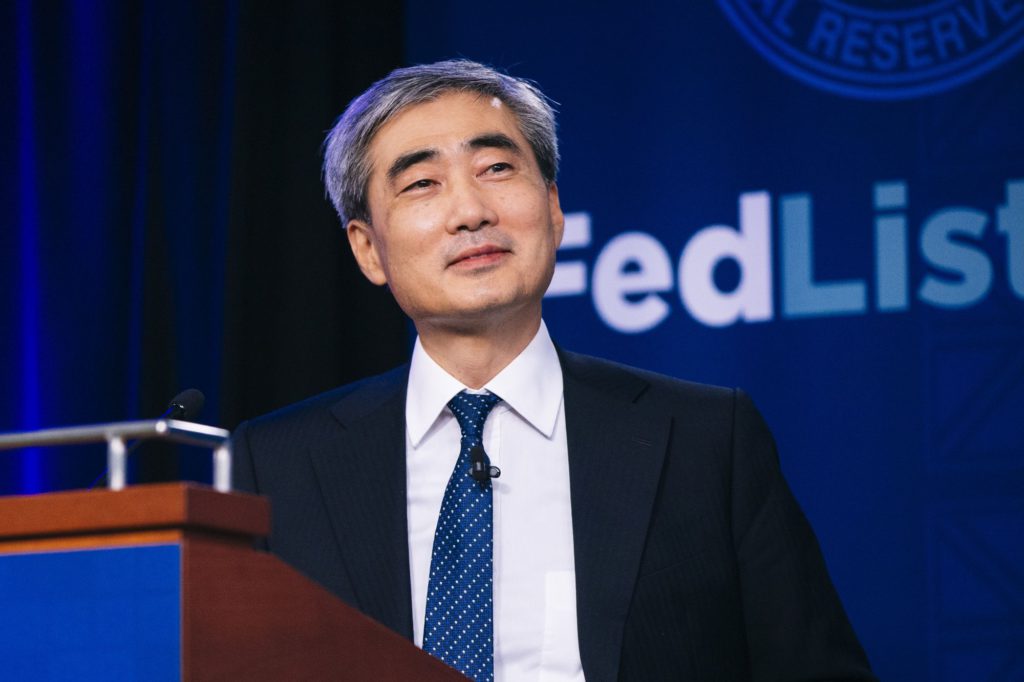
Hyun Song Shin

The economic adviser and head of research at the Bank for International Settlements — known as the central bankers’ bank  — has long been considered as a potential candidate to head the BOK. 

The 62-year-old received his doctoral degree in economics from Oxford University and taught at Princeton University. In 2010, he served as an adviser to then-President Lee Myung-bak, helping shape the agenda for the Group of 20 meeting in South Korea.

The BIS says on its website that his recent focus has been research on central bank digital currencies and their implications. Shin declined to comment on speculation surrounding his potential nomination.

Changyong Rhee

The IMF, where Rhee is director of the Asia and Pacific Department, describes him as a frequent policy adviser to South Korea’s presidential office, finance ministry and central bank. Lee, 61, holds a doctoral degree in economics from Harvard University and served as chief economist at the Asian Development Bank before joining the IMF in 2014. 

He hasn’t replied to an email seeking comment.

Ha Joon-kyung

Ha currently advises ruling party presidential candidate Lee Jae-myung. He started his career at the BOK in 1993 and received a doctoral degree in economics at Brown University in 2003. Ha has taught at Hanyang University since 2008 and written and commented on inequality, aging and innovation. 

Among his most recent publications are theses on middle-income traps in Asia and the goals of central banks. He has been a proponent of raising property taxes to distribute wealth. Ha hasn’t responded to an email seeking comment.

Kim So-young

The Seoul National University economics professor currently advises leading opposition presidential candidate Yoon Suk-yeol and has been a critic of Moon’s policy of boosting wages to stimulate the economy. Educated at Yale University, the 54-year-old has forged links with the BOK during his career, offering advice, research and lectures at the central bank.

While declining to comment on the speculation, Kim pointed out in a phone call that monetary policy may have been too expansionary, causing a surge in liquidity, and said the next governor will have to remain flexible and discreet as economic uncertainties remain significant.

More stories like this are available on bloomberg.com

©2022 Bloomberg L.P.

Texas Sues Meta Over Facebook’s Dropped Facial-Recognition Tech

(Bloomberg) — Facebook claims it no longer collects and profits off users’ faces through controversial facial-recognition technology. Texas isn’t buying it.

The state sued Meta Platforms Inc. over claims its Facebook and Instagram platforms are still monetizing people’s faces without their consent, as well as holding onto a facial-geometry database compiled over a decade. Wielding multiple laws that allow for penalties of $25,000 per violation, the state is seeking billions of dollars in its complaint filed Monday.

“These claims are without merit and we will defend ourselves vigorously,” Meta said in a statement.

Facebook announced last year it would stop using facial-recognition technology and delete its database of users’ facial profiles after privacy advocates mounted a push-back campaign. That came after the company agreed to pay $650 million in 2020 in the largest-ever U.S. consumer privacy settlement, resolving a class-action suit by disgruntled Facebook users in Illinois who didn’t give permission for the company’s data-tagging tool to harvest biometric identifiers from their photos and videos.

Read More: Millions of Facebook Users Pass on $650 Million Privacy Jackpot

Shortly after the settlement, Texas Attorney General Ken Paxton kicked off his own investigation into the company’s facial-recognition technology, in what critics called a naked play at shaking Facebook down again. Little was heard from Texas’s investigation in the intervening year and a half, until Monday.

Paxton staged a press conference to announce the suit against Meta on the first day of early voting in the Texas primaries. Paxton is hip deep in a fierce re-election battle against well-financed Republican primary rivals, while simultaneously fending off a federal corruption probe into improper use of his office. The Meta complaint was filed in state court in Marshall, the home district of one of his toughest political opponents.

The embattled attorney general is also awaiting a civil trial on long-stalled allegations he violated state securities laws. Paxton, who has been endorsed by former President Donald Trump, has carved out a niche attacking Big Tech giants like Google, Twitter and Facebook as well as the Biden administration’s immigration and vaccination policies.

Read More: Top Cop in Texas Demands Big Tech Explain Shunning of Parler

In the new lawsuit, Texas claims Facebook hasn’t said it deleted biometric identifiers collected from photos and videos uploaded by family and friends of non-Facebook users, or whether facial-recognition technology is still being used at Meta’s Instagram, WhatsApp, Facebook Reality Labs “or its upcoming virtual-reality universe,” according to the complaint.

Meta said on its blog in November that it was deleting face print records for more than 1 billion people. The company said one third of its users had given their consent to use the technology.

“We need to weigh the positive use cases for facial recognition against growing societal concerns, especially as regulators have yet to provide clear rules,” the post said. 

The company also said that it wasn’t giving up on the technology.

“Looking ahead, we still see facial recognition technology as a powerful tool, for example, for people needing to verify their identity, or to prevent fraud and impersonation,” according to the post.

At Paxton’s press conference and in the lawsuit, he said he’s not letting Meta off the hook.

Facebook has created the largest facial dataset in the world with its DeepFace algorithm, a deep learning facial-recognition system that “approaches human-level accuracy in identifying faces,” the state attorney general said in the complaint. “And it exists only because — for over a decade — Facebook illegally and surreptitiously captured the biometric identifiers of tens of millions of Facebook and Instagram users and non-users.”

If Texas’s claims hold up, Meta could be looking at stiff fines.

Paxton claims Meta’s gathering and commercialization of biometric identifiers without consent violates the Texas Capture or Use of Biometric Identifier Act, or CUBI, as well as three other state privacy statutes concerning the use of biometric identifiers. Three of the laws carry penalties up to $25,000 per violation, while the fourth penalizes violators at up to $10,000 per occurrence, which Texas claims happened “billions of times.”

It’s not clear that CUBI, which was enacted in 2009 and can only be enforced by the Texas attorney general’s office, has ever been used against a company.

“There can be no free pass for Facebook unlawfully invading the privacy rights of tens of millions of Texas residents by misappropriating their data and putting one of their most personal and valuable possessions — records of their facial geometry — at risk from hackers and bad actors, all to build an AI-powered virtual-reality empire,” Paxton said in the complaint.

The case is State of Texas v Meta Platforms Inc. f/k/a/ Facebook Inc., 71st Judicial District Court in Harrison County, Texas (Marshall).


More stories like this are available on bloomberg.com

©2022 Bloomberg L.P.

SEC Warns Investors About Risks From High-Yield Crypto Accounts

(Bloomberg) — The U.S. Securities and Exchange Commission is warning investors about risks associated with accounts that pay clients high interest rates for depositing crypto assets.  

Companies offering interest-bearing accounts for digital assets don’t provide the same protections as banks and credit unions, and the deposits aren’t insured, the regulator’s Office of Investor Education and Advocacy said in an investor bulletin Monday. Earlier in the day, the SEC announced that BlockFi Inc. had agreed to pay $100 million to federal and state securities regulators to settle allegations that it illegally offered a product that pays customers high rates to lend out their digital tokens.

The SEC’s investor advocacy office urged investors to carefully read through any disclosures related to interest-bearing accounts and said the products raised several issues, including:

  • Assets held in those accounts can be used by companies for a variety of investment activities, including as loans to institutional investors
  • Risks that retail investors face generally with crypto assets, including price volatility and possible fraud

More stories like this are available on bloomberg.com

©2022 Bloomberg L.P.

Close Bitnami banner
Bitnami