Bloomberg

Boats, Cars, Computers Lead Mexico’s Export Boom to US Market

(Bloomberg) — Shipments of boats, vehicles and computer parts are leading Mexico’s export boom, showing growing US demand for industrial products from its southern neighbor.

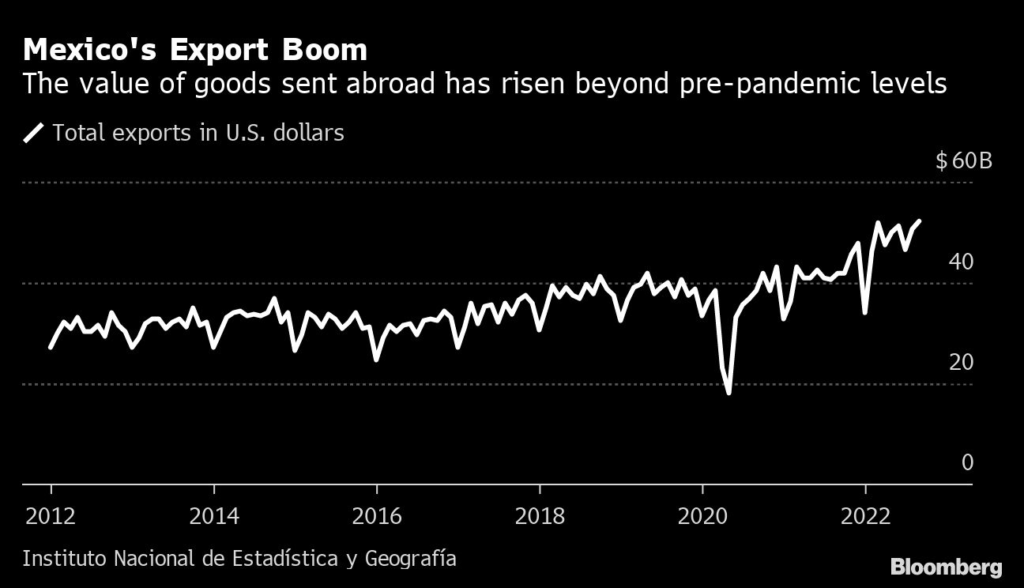
The export of boats produced in Mexico increased 266% in September compared to a year ago, the fastest growing item among Mexican exports worth above $100 million, according to central bank data released last week. Computer parts and passenger cars topped the list of most valuable export items in the month, with about $4.7 billion each, according to the data.

Shipments from Latin America’s second-biggest economy rose to a record $52.3 billion in September, up 25% from the year before, according to the national statistics institute. More than 80% of those go to the US, by far Mexico’s main trading partner. 

The export boom is “explained partly by an unsatisfied demand in the United States,” said Rodolfo Navarrete, director of analysis at Vector Casa de Bolsa SA in Mexico City. 

Among main categories, the exports of train wagons jumped 174% in annual terms while medicines for retail sales grew 60%, the central bank data shows. Vehicles and car parts grew 44% and malt beer 27%, the same increase as crude oil.

Mexico’s growing exports come at a time the government is considering ways to attract investments to supply the US market from company that otherwise would settle in Asian markets, a trend known as nearshoring. Mexican Economy Minister Raquel Buenrostro earlier this month said over 400 companies were looking to move operations from Asia to the Latin American nation. 

If Mexico fully capitalizes on the trend, its exports to the US could surge by around 38% in the coming years, according to a Barclays Plc report published Wednesday.

Read More: Mexico Nearshoring ‘Already Happening,’ Barclays Report Finds

More stories like this are available on bloomberg.com

©2022 Bloomberg L.P.

Goldman Sachs to Boost Germany Presence With Munich Office

(Bloomberg) — Goldman Sachs Group Inc. plans to set up shop in Munich to strengthen its coverage of Germany’s biggest, and newest, companies.

The US investment bank is close to signing a lease for an office on upmarket Maximilianstrasse from the end of 2023, people familiar with the matter said, asking not to be identified discussing confidential information.

It will house as many as 50 employees, including bankers to cover the technology, media and telecommunication sector, buyout firms, startups and family-owned businesses, according to the people. Staff from its private banking and asset management teams will also be based there, they said.

A spokesman for Goldman Sachs confirmed the bank plans to open an office in Munich, which he described as “an important economic center in Germany and a vibrant, multicultural and growing European hub in areas such as the technology sector and private equity industry.” 

Munich has proved itself a popular alternative to Germany’s main financial hub in Frankfurt, where Goldman Sachs already has offices, with banks able to lure talent to the Bavarian capital because of its surrounding lakes and proximity to the Alps. 

The city is establishing itself as a breeding ground for technology companies. The Technical University of Munich produces the second-highest number of startup founders in Germany, according to a recent report co-authored by PwC. That gives banks based there the chance to identify and work with the potential next big unicorn.

Advisory firm Lazard Ltd. opened a Munich office in October and plans to add around 15 bankers in the city, in part to cover startups, a spokesperson for the advisory firm said. Peer Perella Weinberg Partners did so in 2020.

Having a presence in Munich also puts banks closer to German blue-chip clients like Allianz SE, BMW and Siemens AG, as well as an number of big private equity firms that have offices in the city, including EQT AB, Bain Capital and Partners Group Holding AG.

Goldman Sachs and German bank Berenberg recently hosted their 11th German Corporate Conference in Munich, ahead of the annual Oktoberfest festivities.

Goldman Sachs has been greatly expanding its presence in continental Europe in the years since Brexit. Staff numbers at Goldman Sachs Bank Europe SE, headquartered in Frankfurt, rose from 556 at the end of 2020 to 908 at the end of last year, according to annual reports.

“Frankfurt will remain our headquarters in Germany and continues to grow as we build out the franchise of Goldman Sachs Bank Europe SE locally,” the spokesman said. 

Read more: Perella Weinberg Banker Sees Big Tech Investors Stepping Back

More stories like this are available on bloomberg.com

©2022 Bloomberg L.P.

Stocks Mixed as Traders Weigh Rates Outlook, Covid: Markets Wrap

(Bloomberg) — European stocks slipped while US equity futures edged higher as investors assessed prospects for less-aggressive central bank tightening and China’s worsening Covid-19 infections.

Most sectors in the Stoxx Europe 600 Index were lower, although the regional benchmark remains on course for a sixth week of gains, the longest winning streak in a year. Contracts for the S&P 500 and Nasdaq 100 posted modest gains following recent commentary from Federal Reserve officials that supported the case for a slower pace of interest-rate increases. 

Hong Kong-listed technology stocks led declines among Chinese shares as investors weighed recent gains against an upswing in Covid-19 infections. Mainland benchmarks managed to eke out small gains in the face of lockdown-like restrictions affecting parts of Beijing. 

The dollar fluctuated after three straight days of losses. Treasuries steadied after rising in Asian trade. US markets will have a shortened session on Friday after being closed for a full day on Thursday. 

The outlook for Chinese markets is improving, despite the current flareup in virus cases, according to Jun Bei Liu, a portfolio manager at Tribeca Investment Partners.

“In the next 12 months things will get better. We have seen this playbook before across other economies,” she said on Bloomberg Television. “We’ll begin to see outperformance very soon in the next few quarters.” 

Meanwhile, JPMorgan Chase & Co. quantitative strategist Khuram Chaudhry said the rebound in European equities driven by expectations of peaking inflation and bond yields as well as a weaker dollar is nothing but a bear market rally and that investors are “jumping the gun.” He forecasts euro-area equities will eventually recover “later in 2023.”

Oil pared a third weekly loss as the European Union weighs a higher-than-expected price cap on flows of Russian crude and slowdown concerns threaten the outlook for energy demand. Gold was poised for a modest weekly gain.

Some of the main moves in markets:

Stocks

  • The Stoxx Europe 600 fell 0.1% as of 9:44 a.m. London time
  • Futures on the Nasdaq 100 were little changed
  • Futures on the Dow Jones Industrial Average were little changed
  • The MSCI Asia Pacific Index fell 0.5%
  • The MSCI Emerging Markets Index fell 0.3%

Currencies

  • The Bloomberg Dollar Spot Index rose 0.2%
  • The euro was little changed at $1.0404
  • The Japanese yen fell 0.6% to 139.37 per dollar
  • The offshore yuan was little changed at 7.1750 per dollar
  • The British pound fell 0.2% to $1.2093

Cryptocurrencies

  • Bitcoin fell 0.6% to $16,452.26
  • Ether fell 1.3% to $1,179.8

Bonds

  • The yield on 10-year Treasuries advanced one basis point to 3.71%
  • Germany’s 10-year yield advanced eight basis points to 1.93%
  • Britain’s 10-year yield advanced five basis points to 3.09%

Commodities

  • Brent crude rose 1.3% to $86.41 a barrel
  • Spot gold fell 0.3% to $1,750.58 an ounce

This story was produced with the assistance of Bloomberg Automation.

More stories like this are available on bloomberg.com

©2022 Bloomberg L.P.

South Africa’s Transnet Lifts Force Majeure on Coal Export Line

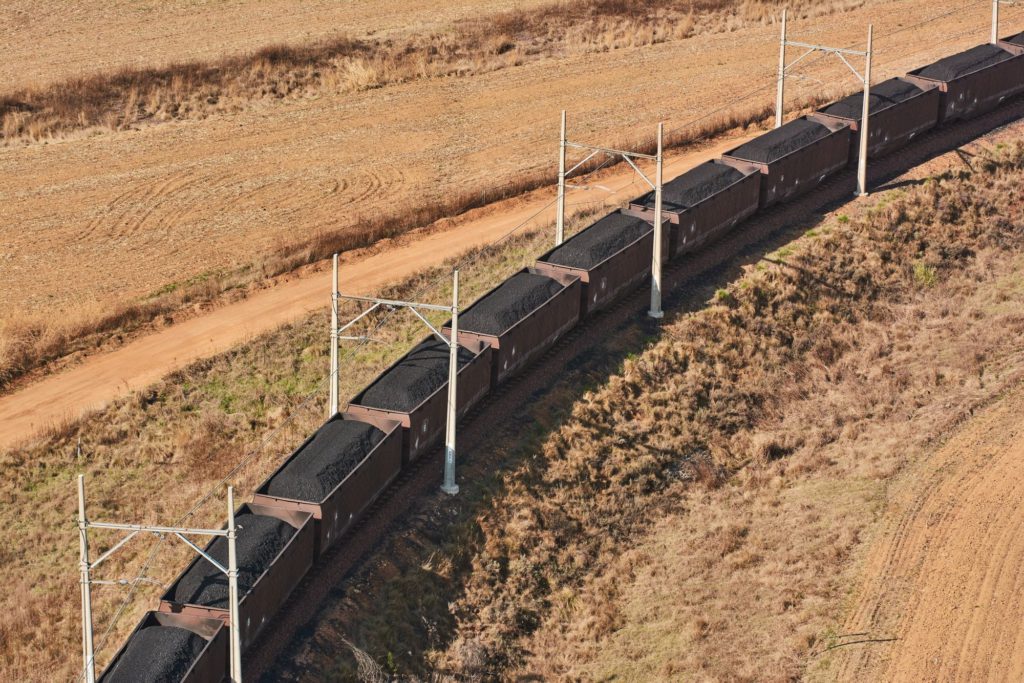
(Bloomberg) — South Africa’s state port and rail company, Transnet SOC Ltd., lifted a force majeure on its main coal export line more than two weeks after a train derailed on the route and violence delayed clean-up efforts.

The incident on Nov. 8 “caused massive damage to infrastructure and rolling stock, necessitating closure of both lines,” Transnet said in a statement. It imposed a clause that allows companies to avoid liability when they’re unable to honor contracts because of events beyond their control on Nov. 10, which remained in place until Friday.

Efforts to clear the tracks were interrupted by extortion and violent acts by a community group that demanded contracts. That added to a plethora of issues plaguing Transnet — it’s invoked a force majeure six times in less than two years. Other disruptions included riots in the eastern KwaZulu-Natal province in July last year, a cyberattack that incapacitated its container terminal, pay strikes and a fire that hampered bulk shipments.

The recent assessment of the site indicates the resumption of normal services on the coal line known as the North Corridor that runs from mines to the Richards Bay Coal Terminal, Transnet said.     

Transport constraints before the latest force majeure were estimated to be costing the mining industry 100 billion rand ($5.6 billion) in revenue, an amount that would have produced an extra 27 billion rand in taxes, Busi Mavuso, the chief executive officer of lobby group Business Leadership South Africa, said in a note last month.

More stories like this are available on bloomberg.com

©2022 Bloomberg L.P.

China Investors Look for Turning Point After $370 Billion Rally

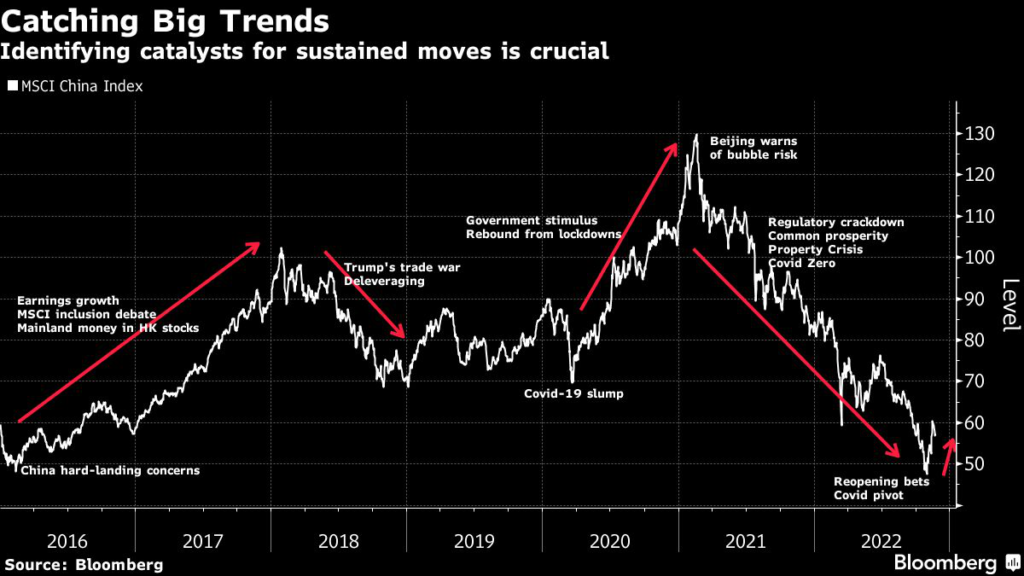
(Bloomberg) — With Chinese markets prone to sharp turning points followed by long and powerful trends, timing when to buy is almost as important as choosing what to purchase. 

Investors who jumped into Chinese stocks on Nov. 11 when Beijing cut Covid-19 quarantine periods and dialed back testing have shared in a rally that’s added almost $370 billion to the value of equities in the MSCI China Index.

Others are still waiting for clearer signals after Wall Street got it so wrong this time last year. Goldman Sachs Group Inc., JPMorgan Chase & Co. and BlackRock Inc. were among those who recommended piling into the market then, only to see more than $4 trillion in value destroyed over the 10 months through October.

“Chinese policies are like a giant freight train coming down the track,” said John Lin, a fund manager for China equities at AllianceBernstein in Singapore. “What you do first is get out of the way. Don’t stay on the track! Then the instant that you can, jump onto the train.”

China’s benchmark CSI 300 Index has risen about 8% from this year’s low set in late October even as Covid cases have been rising. Daily infections climbed above 30,000 for the first time Thursday as officials struggle to contain outbreaks that have triggered new restrictions in some of the largest cities. 

Ahead of Curve

Abrdn Plc is among those who already see opportunities in the nation’s corporate bonds after the Covid policy changes and a sweeping package of measures to aid the property sector.

Investors can also position right away to take advantage of a likely steepening in China’s government bond yield curve as the economy reopens from Covid, according to Ray Sharma-Ong, a fund manager for multi-asset and investment solutions at abrdn. 

“Go along on the front-end of the curve while going short on the back-end,” Sharma-Ong said. A better outlook for growth will push up back-end rates, while China’s supportive monetary policy will contain front-end rates, he said.

Dollar-denominated Chinese corporate bonds already offer opportunities with yields around 8%, he said. Investing in local currency corporate debt comes with a bonus of 2% positive carry after investors hedge back the yuan to the dollar, according to Sharma-Ong, who expects the yuan to keep strengthening.

Enticing Equities

M&G Investments (Singapore) Pte and Eastspring Investments Singapore Ltd. are in the market buying Chinese stocks. Eastspring says they can’t get much cheaper, while M&G favors domestic-facing consumer brand names, original equipment manufacturers for electric and traditional vehicles, and factory automation. 

“We are very close to trough valuations and very, very close to trough assumptions on earnings as well,” said Bill Maldonado, chief investment officer at Eastspring, which oversees $222 billion. “You’d be buying now and expecting things to kind of rebound on a three-to-six-month basis.”

Catherine Yeung, investment director at Fidelity International, said so much negative newsflow has already been factored into the price of Chinese stocks that the worst is likely over for investors.

December Insights

For those still on the sidelines, a Politburo meeting in early December, followed by the annual Central Economic Work Conference, may offer useful signals.

Jason Liu at Deutsche Bank AG’s international private bank plans to keep an eye on state media around this time. News from the closed-door work conference, which will bring policymakers together to review the economy this year and set goals and tasks for 2023, may be a catalyst for further re-opening trades. 

“We may see some signals from the top leadership,” said Liu, who expects near-term volatility in Chinese assets and a “very gradual” shift away from Covid Zero over the next few quarters.

Liu recommends looking past the likely choppiness and taking a broad position in Chinese equities, including the technology sector, to benefit from a gradual shift in sentiment.

He also sees the yuan as attractive given likely appreciation through the first half of next year. Liu doesn’t recommend credit at the moment, saying it may take longer for the property market to improve.

Spring Pivot

Morgan Stanley is among those with high hopes for an acceleration of China’s economic opening in spring, when the weather turns more friendly, vaccinations may increase and the National People’s Congress in March looms as a key event for market-moving developments.  

Investors who have been underweight in Chinese assets may shift to neutral around this time, according to Andrew Sheets, chief cross-asset strategist at Morgan Stanley. 

China’s domestically-focused consumer companies stand to benefit, according to the investment bank.

“If investors are presented with a pausing Fed and China reopening, and growth being stronger in the second half of 2023, I think they’ll view that as a positive backdrop for a lot of different emerging-market assets,” Sheets said. 

The Future

Reopening of the economy from Covid may drive a positive swing of inflows into China’s equities in 2023 equivalent to 1% of gross domestic product, according to Bloomberg macro strategist Simon Flint. This in turn will buoy the yuan, he said.

James Leung, head of multi-asset for Asia Pacific at Barings, recommends aligning China stock portfolios with the government’s policy priorities by investing in the electric vehicle sector, renewable energy and the hardware technology supply-chain.

AllianceBernstein sees stocks in energy and technology security as low-hanging fruit for investors, so long as the companies are aligned with the government’s goals.

The market has changed from the era before the pandemic and the regulatory crackdown, when investors would hunt for the latest tech and biotech darlings “and then watch the money grow 10 times, 100 times,” AllianceBernstein’s Lin said. “Now you can still find growth, but it has to be policy-sensitive kind of search.”

–With assistance from Ruth Carson, Sofia Horta e Costa, Ishika Mookerjee and Abhishek Vishnoi.

More stories like this are available on bloomberg.com

©2022 Bloomberg L.P.

Meituan’s Revenue Climbs 28% After Covid Drives Meal Delivery

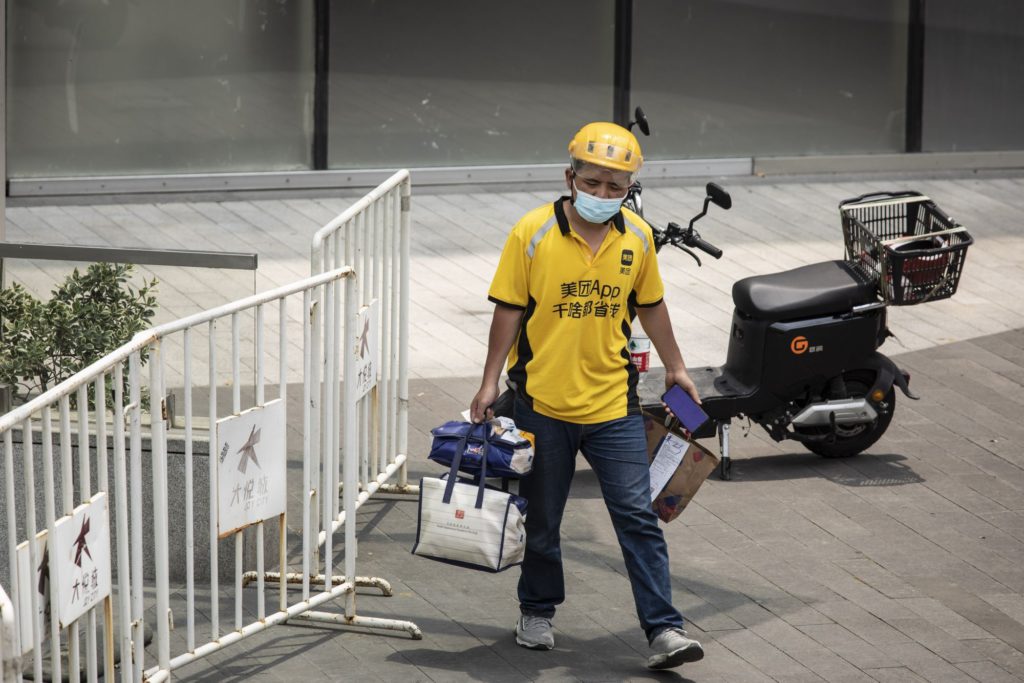
(Bloomberg) — Meituan posted a 28% surge in revenue, affirming resilient demand in China for takeaway from people confined to home during the pandemic.

Sales rose to 62.6 billion yuan ($8.7 billion) during the three months ended September, versus an average projection for 62.4 billion yuan. It swung to a profit for the period of 1.2 billion yuan, helped by big foreign exchange gains and tax benefits, after almost two years in the red.

Despite persistent losses, Meituan is one of the few Chinese internet giants that’s managed to sustain robust growth through an economic slowdown, punishing Covid restrictions and a regulatory crackdown that’s wiped out expansion at most of its peers from Tencent Holdings Ltd. to Alibaba Group Holding Ltd. Its core business of delivering meals has remained resilient even as its travel arm withered, while discipline on spending and subsidies has helped keep losses in check.

Its longer-term prospects may hinge on the pace of China’s reopening and progress in new arenas and overseas, as longstanding backer Tencent begins to unwind its shareholding.

Meituan’s stock has come under pressure after Tencent declared it would distribute some $20 billion of its holding over time to its own shareholders. Prosus NV, which owns a big chunk of Tencent, has already said it plans to sell off the Meituan shares it gets to shore up its balance sheet.

The meal delivery giant is also exploring a major expansion abroad as its home market decelerates, including in Hong Kong. 

What Bloomberg Intelligence Says

Meituan’s 3Q core local commerce operating margin probably exceeded the prior year’s as its on-demand Instashopping business unit, which was reclassified with food delivery and travel-related services to form the core local commerce unit in 2Q, turned profitable this year. Similar to Alibaba’s delivery unit Ele.me, the rise in Meituan’s order value vs. 12 months earlier would have persisted in 3Q as Covid-19 flare-ups and related mobility curbs in mainland China raised residents’ reliance on such services for their necessities.

Increased demand in China probably boosted both order volumes and value to lower delivery cost per unit. Such gains, which narrowed Ele.me losses during July-September vs. a year earlier, would have offset falls in travel-related profit to lift Meituan’s core local commerce margin in 3Q. 

– Catherine Lim and Tiffany Tam, analysts

Click here for the research.


More stories like this are available on bloomberg.com

©2022 Bloomberg L.P.

ICBC Leads China Banks to Offer $179 Billion to Builders

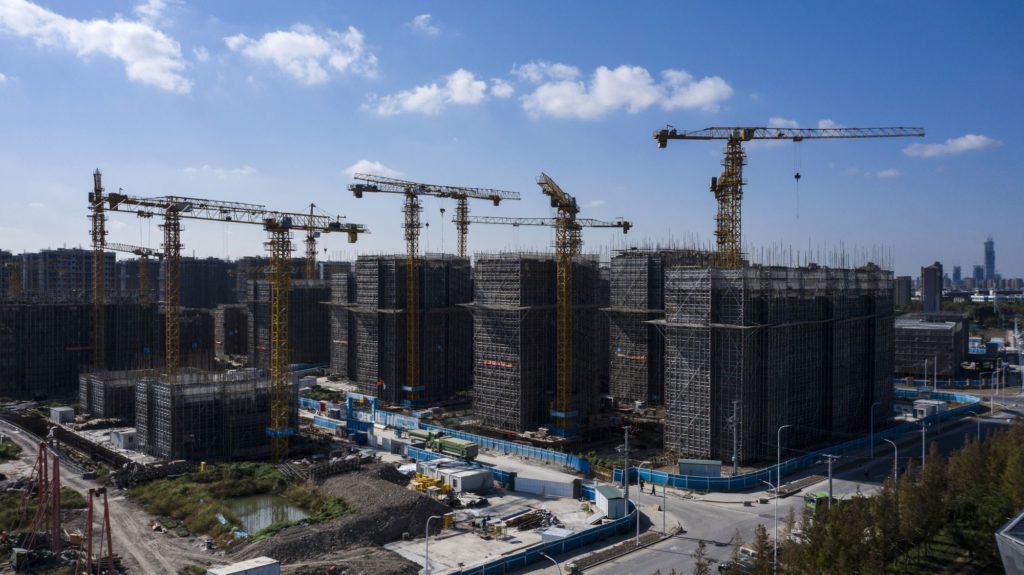
(Bloomberg) — China’s mega banks, led by Industrial & Commercial Bank of China Ltd., pledged financing support of at least 1.28 trillion yuan ($179 billion) to property developers as part of a push to ease turmoil in the nation’s real estate market. 

ICBC, the world’s largest bank by assets, on Thursday said it would provide 655 billion yuan in credit lines to 12 developers, including Country Garden Holdings Co. Bank of China Ltd., Bank of Communications Co., Postal Savings Bank of China Ltd. and Agricultural Bank of China Ltd. and China Construction Bank Corp. also disclosed they would extend financing. 

Property stocks and bonds rallied on the additional funding, as China seeks to contain the fallout from a crackdown that has already sparked dozens of defaults and sent property sales and prices tumbling. China’s priority has been to ensure that unfinished homes get completed, while supporting the stronger firms that have so far survived the crisis. 

“The core of the policy is to build a firewall between developers that have already defaulted and those that haven’t,” said Li Kai, founder of Beijing Shengao Fund Management Co.

The barrage of bank financing wasn’t extended to China Evergrande Group, the country’s most-indebted developer that in large part kicked off the current turmoil, as well as Sunac China Holdings Ltd.   

Chinese property firms rallied more than 7% on Thursday and rose 4% on Friday, according to a Bloomberg Intelligence stock index of developers. 

The moves came after regulators issued a 16-point plan earlier this month to financial firms for boosting the real estate market, with measures that range from addressing developers’ liquidity crisis to loosening down-payment requirements for homebuyers. 

The big state-owned banks have since set up special mechanisms to ensure quick implementation of the measures, and created whitelists for qualified regional developers to extend maturities of their existing development loans, according to a representative of the China Banking and Insurance Regulatory Commission, who declined to be identified because they aren’t authorized to speak publicly.

The big banks will also expand financing services to support acquisitions of high-risk projects by “key” developers, the representative said without naming any companies. Some joint-stock banks have allowed mortgage borrowers to delay repayments without reclassifying their loans, the person added.

CCB Plan

China Construction Bank has also set up a 30 billion yuan fund to buy properties from developers. The lender has made progress on more than 20 projects, with their combined assets exceeding 10 billion yuan, the CBIRC representative said. 

China’s banks have been told to provide at least 1 trillion yuan in funding in the final months of 2022 to the battered property sector to avoid a broader fallout on the economy that is also weighed down by Covid lockdowns, Bloomberg reported earlier.

The industry has issued 2.64 trillion yuan worth of loans to developers and 4.84 trillion yuan of mortgages in the first 10 months this year, the CBIRC representative said. 

At a meeting with banks on Monday, the People’s Bank of China said it planned to provide 200 billion yuan in interest-free re-lending loans to commercial banks through the end of March to provide matching funds for stalled property projects. 

–With assistance from Wei Zhou and Jackie Cai.

(Updates move in index. Earlier version corrected to add billion in table.)

More stories like this are available on bloomberg.com

©2022 Bloomberg L.P.

China Plans to Build Nuclear-Powered Moon Base Within Six Years

(Bloomberg) — China plans to build its first base on the moon by 2028, ahead of landing astronauts there in subsequent years as the country steps up its challenge to NASA’s dominance in space exploration. 

The lunar base will likely be powered by nuclear energy, Caixin reported. Its basic configuration will consist of a lander, hopper, orbiter and rover, all of which would be constructed by the Chang’e 6, 7 and 8 missions. 

“Our astronauts will likely be able to go to the moon within 10 years,” Wu Weiran, chief designer of China’s lunar exploration program, said in an interview with state broadcaster CCTV earlier this week. Nuclear energy can address the lunar station’s long-term, high-power energy needs, he said.

China has ramped up its ambitions in space in recent years, sending probes to the moon, building its own space station and setting its sights on Mars. The plans have put it in direct competition with the US. NASA has a rover on the Red Planet and is seeking to return astronauts to the moon this decade for the first time since the Apollo program ended in the 1970s. 

Both China and the US are spending billions of dollars to not just put humans on the moon, but also to access resources that could foster life on the lunar surface or send spacecraft to Mars.

In 2019, China became the first country to land a rover on the far side of the moon, and later brought back its first lunar samples. The base is intended to be the first outpost on the moon’s South Pole, an area scientists think is the best place to find water. NASA is also targeting that part of the moon. China aims to eventually expand the base into an international research station.

More stories like this are available on bloomberg.com

©2022 Bloomberg L.P.

Just ‘17 People and a Dog’ Stand Between Ukraine’s Neighbor and Energy Meltdown

(Bloomberg) — The group at Moldova’s electricity utility tasked with keeping the country’s lights on were out of breath, literally running between meetings.

Backed by a staff of just 17, acting Energocom general director Victor Binzari and his two sidekicks have been scrambling to find new sources of power since mid-October, when Russian missile strikes in Ukraine took out the substations providing almost a third of Moldova’s electricity imports.

The remaining two thirds disappeared earlier this month, after Moscow reduced natural gas supplies to this diminutive ex-Soviet Republic, sandwiched between Ukraine, NATO member Romania and Russia’s great power ambitions.

Almost overnight, Moldova had to start buying about 80% of its power and half its natural gas from Europe —  the most abrupt transition from Russian to Western energy supplies experienced by any former Soviet-bloc country since the empire began its collapse in 1989.

Russia Knocks Out the Power Keeping Millions of Ukrainians Warm

On Tuesday, Russia’s energy giant Gazprom PJSC threatened to cut gas supplies further as of Nov. 28. On Wednesday, Moldova was without power for two hours after Russian missile strikes on Ukraine interrupted emergency flows from Europe.

Energy costs have tripled or more, blowing an estimated 8% of GDP hole in one of Europe’s poorest economies and creating a ready target for Moldova’s pro-Russia opposition parties to attack the government.

Russian Energy Cuts to Cost Tiny Moldova Over $1 Billion

“You understand that most people don’t have the possibility to pay, it is a huge difference,” Binzari said at his office in central Chisinau, squeezed between a relentless round of meetings and calls that has left him and his advisers with little sleep.

The European Union says it will help with funding, but money isn’t the only issue.

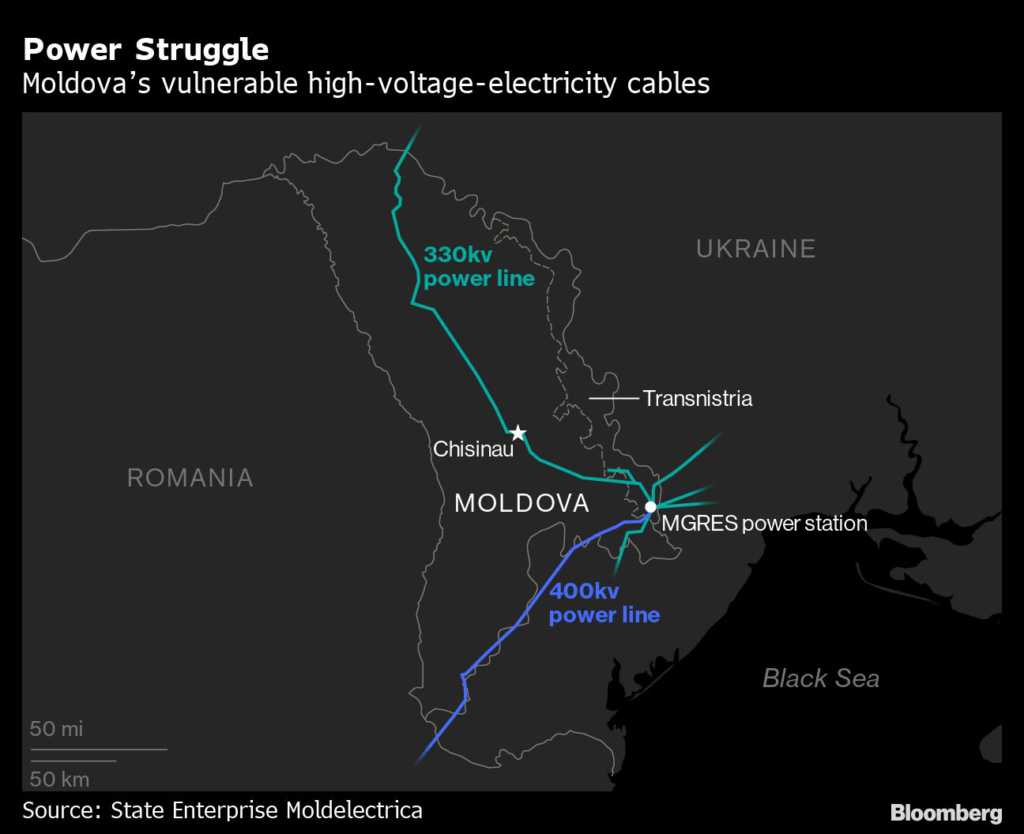
The 400 kilovolt cable from Romania through which the country now gets most of its power threads either side of the border with Ukraine before landing at a power station in Transnistria, a separatist territory that broke away from Moldova with the help of Russian troops in 1992.

Until Nov. 1, the mainly gas fired power station — run by the Russian-owned Moldavskaya GRES — provided the rest of the country with over half its electricity. Now it’s a de facto distribution hub for power on its way from Romania to Chisinau. A well-aimed Russian missile, or just the flip of a switch in Transnistria, could cut Moldova’s new European lifeline.

Wednesday’s nationwide blackout offered a foretaste. The cable from Romania likely failed in a domino effect as missile strikes disrupted the grid in Ukraine’s Odesa region, according to Maciej Wozniak, a Polish adviser sent to help Energocom.

Nations across Europe are struggling with rising energy prices, but none has seen prices rise as fast, from as low a base, or to be paid for by as poor a population. It took Poland seven years to make the transition to market prices, Wozniak said.

EU Proposes Brake on Gas Prices as Russia Squeezes AgainMoldova has not yet suffered sweeping blackouts of the kind seen in Ukraine. But President Maia Sandu said in early November that the price of gas to consumers had risen six-fold in a year, and families were now spending up to 70-75% of their incomes on utilities. Pro-Russia parties have organized protests to channel popular anger. 

Russia dismisses accusations it uses energy as a weapon. Gazprom gave justifications for cuts to Moldova’s contracted supply in October and November that were commercial and technical, respectively. Flows are down 49% from the amount due this month, according to Moldova. Explaining its latest threat of further cuts, Gazprom said Ukraine was holding onto transit gas intended for Moldova.

On Wednesday, Moldovagaz Chief Executive Officer Vadim Ceban said in a Telegram post that Ukraine did hold Moldovan gas on a balancing account, but by agreement; Moldova lacked capacity to store gas that had no buyers in October’s unusually warm weather, but would take its gas as temperatures fall.

As occurred in 2006, Gazprom’s disputes with Ukraine (and now Moldova) could end up cutting onward gas supplies to Europe. 

“It isn’t just a war being waged by generals in Ukraine, this is also economic and informational warfare,” said Tatiana Savva, deputy director of Moldova’s Public Property Fund, who also heads Energocom’s supervisory board and has pitched in to help Binzari.

Still, there are reasons Moldova’s worst fears may not materialize. If Transnistria cut the cable from Romania, for example, it could soon find the steel and other exports on which it depends for revenue blocked from reaching their EU markets. 

The minor miracle is that Moldova’s lights have stayed on at all. Still wholly dependent on Soviet legacy energy networks until this year despite warnings, the country is suddenly having to buy electricity contracts on European exchanges. That required opening foreign subsidiaries, offices and bank accounts, as well as registering for a Romanian trading license in the space of days.

“Last year we made 10 trading contracts. In the last two weeks we signed 30,” said Savva. “Where we would like to end up is with a diversified energy supply and a fully staffed company, and I’m not talking about 17 people and a dog.” 

Energocom needed so few personnel (in January there were 12, soon there will be 20) because until this year, little had changed since the USSR’s 1991 dissolution in the way Moldova got its power and gas. Electricity came from the same power plant, over the same cables, as in Soviet times.

Moldova saw the Russian energy cuts coming, said State Secretary for Energy Constantin Borosan. His ministry bought and stored as much gas as it could. It converted heating plants from gas to heavy oil, among dozens of other measures. With an assist from warm weather, he says, natural gas consumption fell almost 50% in October, year-on-year, and electricity consumption by 14.4% 

But power is hard to store and failures can be destructive. Take Chisinau’s glass factory, on the outskirts of the capital, which makes bottles for wines and spirits across Europe. Just five minutes without power would force the factory’s furnace to shut down, according to Chief Executive Officer Ion Covrig.

“It would take us 15 months and many millions of dollars to rebuild the furnace so it could restart,” Covrig said. Already he’s having to adjust to energy costs that are higher than for some competitors in Europe. He had a scare during Wednesday’s blackout, when power dropped for a few seconds before backups kicked in.

According to Victor Parlicov, previously head of Moldova’s energy regulator, Soviet energy infrastructure was built to help keep the union together, which is why the high voltage cable to Romania needlessly criss-crosses the border with Ukraine.

It’s also why the Soviet leadership attached Transnistria — a slice of mainly Russian-speaking territory on the east bank of the Dniester River — to Moldova when forming the then-republic, and why the main power plant and industries were put there, Parlicov said.

He also sees significance in the date of President Vladimir Putin’s invasion of Ukraine, because Feb. 24 was when a network test was scheduled to separate Ukraine and Moldova from the Russia-Belarus power grid for the first time, so they could trade electricity between themselves and the EU.

“Moldova was always seen by the Soviets as disloyal, and it was,” Parlicov said, because the mainly Romanian speaking region — now independent and bidding for EU membership — had revolted at every opportunity since being absorbed by the Russian empire in 1812. The web of Soviet power and pipelines supplying cheap Russian energy were designed to discourage any repeat.


(Updates to remove garble at beginning of story.)

More stories like this are available on bloomberg.com

©2022 Bloomberg L.P.

Funds May Put $25 Billion a Year in India Infrastructure, According to Ambit Capital 

(Bloomberg) — Global pension and sovereign wealth funds could invest around $25 billion a year in Indian infrastructure, according to investment bank Ambit Capital.

Funds appreciate the better regulatory framework, growth in India and commitment to the climate change requirement for the net-zero carbon policy, Rahul Mody, managing director and co-head of investment banking at Ambit, said in a Bloomberg Television interview on Friday.

“Domestic investors, institutional investors and high net worth individuals and family offices will continue to invest, but I would say a majority of these investments will come from global funds,” he added.

Mody cited investment infrastructure trusts, known as InvITs, as a type of vehicle that has attracted global funds. Initiated by the government several years ago, InVITs offer tax incentives and concessions as well as a governance and capital structure that is robust, and restricts leverage, he said.

In terms of subsectors, roads and renewable energy have attracted the most capital, Mody said. Investors have also shown interest in telecommunication towers, digital infrastructure, data centers, fiber and power transmission, he said. Hydrogen, energy storage and railways could see significant investment, Mody added.  

–With assistance from Haslinda Amin, Rishaad Salamat and Anand Menon.

More stories like this are available on bloomberg.com

©2022 Bloomberg L.P.
Close Bitnami banner
Bitnami