

Bloomberg

This Nation Was Ready For Covid. Now It’s Eyeing the Next Threat

(Bloomberg) — Two weeks before China disclosed it was investigating a cluster of  mysterious pneumonia cases in Wuhan in late 2019 — what the world now knows as Covid-19 — South Korea’s top health officials gathered for a quarterly table-top exercise to plan their response to a theoretical health threat.

The hazard? A never-before-seen pathogen emerging in China that was causing a spike in pneumonia cases.

The timing was a fluke. But the war-gaming, and choice of subject, wasn’t. Korea had learned painful lessons from an outbreak just four years earlier of Middle East Respiratory Syndrome, or MERS. The country overhauled the way it responds to diseases, giving it a global edge when Covid hit.

In a world that’s trying to move on from the virus, even as it still kills thousands of people a day, Korean officials are once again reviewing their approach, seeking insights for the next pandemic — which they say could hit within a decade.

The foundations for Korea’s Covid strategy, viewed as a global success for avoiding lockdowns and widespread deaths, lay in an excoriating 466-page audit report on the response by the Korea Disease Control and Prevention Agency and other health authorities to the MERS crisis. In its raft of criticisms, the document noted inadequate testing and isolation of MERS patients had fueled the spread, as had deficiencies in information-sharing within the health-care system.

“We learned the importance of quickly finding patients and segregating those exposed to a virus before they show symptoms,” said Kyong Ran Peck, commissioner at the KDCA, which oversees public health including infectious diseases and vaccines. 

Because of MERS, when Covid appeared, Korea had already built a vast test-and-trace system that enabled officials to zero in on and contain outbreaks before they spread more widely.

Next Threat

Still, the KDCA’s review of its Covid response has unearthed shortfalls that will inform officials’ approach to the next health threat, which they say is likely to be a respiratory virus.

“We are evolving our policies based on the past data to target high-risk groups of people and high-risk facilities,” Peck, 60, said in her first interview with international media since taking the helm of the agency in May. Previously director of the Korea Society of Infectious Diseases, Peck was a professor of infectious diseases for more than two decades.

Measures like curfews, deployed in many parts of the world in the early days of the pandemic, weren’t effective at containing what was a much more contagious virus than MERS.

The onset of even more transmissible Covid variants meant limits on gatherings and social-distancing measures also became less potent, Peck said from the agency’s leafy 98-acre headquarters in Osong, about 45 minutes by bullet train from Seoul. It’s also home to the National Institute of Health and Ministry of Food and Drug Safety, Korea’s FDA, as well as other research institutes, making coordination during the Covid response easier.

Ventilation systems across Korea, particularly in high-risk places like nursing homes, need to be improved. Ways of better supporting health-care workers also need to be addressed, Peck said, given the burnout they experienced during Covid.

As part of the review, the agency is also evaluating other hot-button topics: including whether schools needed to close, the efficacy of travel curbs and gathering restrictions in halting a new threat — and masks. Their findings are set to be released in a white paper on Korea’s Covid response, according to Peck, who didn’t give details on timing.

It’s worth listening to what these experts say. South Korea had one of the world’s lowest Covid fatality rates, with the third-fewest deaths per 100,000 people out of the 38 members of the Organisation for Economic Co-operation and Development. It ranked only behind Japan and New Zealand, according to the World Health Organization. Still, Korea detected a total 26 million infections, the fourth-highest in the OECD, due to its enormous testing program.

Importantly, the country never had a large-scale lockdown. Its vaccination rate was the highest in the world this summer, before widespread monitoring abated, with 2.4 shots on average for every person, according to the WHO.

Read more: The Virus Hunter Showing the World How to Fight an Epidemic

That success is due in large part to that preparation done back in December, 2019.

“At the time, we thought the next virus would be influenza or coronavirus,” said Cheon-Kwon Yoo, director of the Bureau of Infectious Disease Diagnosis Control, an agency within the KDCA. “We had been preparing for the next pandemic, but we didn’t know it would come so soon.” 

Crucially, experts devised a lab test that ruled out coronavirus strains responsible for the common cold, plus the SARS and MERS viruses. Approved within weeks, it meant Korea could diagnose Covid even before its genetic composition was known, putting the country well ahead of other nations that struggled to get testing off the ground.

An elite epidemiology investigation group followed up on those diagnoses, tracing every exposure and ultimately slowing the spread of infections, said Ki-suck Jung, a lung specialist at Hallym University and a member of Korea’s Covid-19 task force. 

Initially that involved a phone call to every Covid-positive person to discuss their movements, followed by calls to venues for confirmation. But the workload became untenable as cases grew, so authorities switched to a QR-code check-in system, and looked at credit card spending and mobile phone location data — another strategy locked in due to the MERS outbreak — plus CCTV footage to track people.

Read more: These Elite Contact Tracers Show the World How to Beat Covid-19

A bevy of specialized hospital beds that isolate patients and control air flow were put into medical facilities across the country following MERS, helping Korea avoid the waves of Covid deaths seen in other parts of the world.

With the world seeking to put Covid in the past, the KDCA is determined to learn from the worst global health crisis in a generation. While the threat was worldwide, the responses to Covid were remarkably disparate. International communication and co-operation on tackling pandemics is key, said Peck. “We also learned we can’t do this alone.”

Read more: Climate Change Is Single Biggest Health Threat, WHO Says

The next challenge may come sooner than we think.

While pandemics previously came in 20-to-30 year increments, said Peck, it was only a decade between the emergence of swine flu in 2009 and Covid-19.

The rise in global travel and climate change are making the pandemic cycles shorter than ever, and it’s imperative the world collaborates to prepare.

“No one knows exactly what the next pandemic will look like, but it’s proper to prepare for a worst case scenario,” Peck said.

“It could be another SARS-CoV-2,” she said, referring to the virus’s scientific name. “It could be worse.”

–With assistance from Sangmi Cha.

More stories like this are available on bloomberg.com

©2022 Bloomberg L.P.
Twitter to Restore Suspended Accounts From Next Week, Musk Says

(Bloomberg) — Elon Musk said Twitter Inc. will vastly expand the reinstatement of banned users from next week in a major reversal of the site’s content-moderation policies.       

In response to a poll conducted by Musk, about 72% of participants voted in favor of a “general amnesty” for suspended accounts on Twitter “provided that they have not broken the law or engaged in egregious spam.” Musk on Thursday said the amnesty will begin next week.  

Since buying Twitter, the billionaire chief executive has reinstated a number of accounts including former President Donald Trump, Christian news satire site Babylon Bee and Canadian self-help author Jordan Peterson. 

While Musk had previously said no reinstatements would be made before the formation of a content moderation council, he’s accused activists groups of breaking a deal made over the council.  

EXPLAINER: How EU Could Frustrate Musk’s Plans for Twitter

More stories like this are available on bloomberg.com

©2022 Bloomberg L.P.
Stocks Boosted by Rate-Hike Outlook; Dollar Slips: Markets Wrap

(Bloomberg) — European stocks gained and the dollar fell after Federal Reserve meeting minutes showed support for more moderate interest-rate increases.

The Stoxx Europe 600 Index extended its recent rally as the real estate sector outperformed, boosted by the prospects of slower rate hikes and analyst upgrades. Dr. Martens Plc shares plunged the most on record after the bootmaker’s sales and earnings missed expectations. An index of global stocks advanced for a third day.

Trading volumes are lower due to the Thanksgiving holiday, with no cash US equity market trading. Wall Street futures rose after the S&P 500 closed at a two-month high Wednesday. Asia’s equities benchmark climbed.

Minutes from the Fed gathering earlier this month indicated several officials backed the need to moderate the pace of rate hikes, even as some underscored the case for a higher terminal rate. This adds weight to expectations the central bank will raise rates by 50 basis points next month, ending a run of jumbo 75 basis point increases. 

“It was the start of a more different and dovish narrative from the Fed,” said Sunaina Sinha Haldea, global head of private capital advisory at Raymond James. “Is it a pivot? No, but are we seeing a slowdown in rate hikes and that path downwards towards rate cuts coming through? Yes. I think we will look back and say this was the peak of it.”

Data Wednesday also showed US business activity contracted and unemployment applications rose as the economy cools.

A gauge of dollar strength fell further Thursday, taking declines into a third day. European bonds rallied as traders trimmed wagers on rate increases by the European Central Bank, with risk-sensitive Italian debt leading the gains. There is no trading in Treasuries due to the US holiday. 

“A few” ECB officials favored a smaller increase in interest rates in October to tackle record inflation, an account of their last meeting showed. Those who preferred a less aggressive step cited the fact that the hike was accompanied by other monetary-tightening measures, according to the account, published Thursday.

Oil edged lower as the European Union considered a higher-than-expected price cap on Russian crude and signs of a global slowdown increased. 

Meanwhile, Bank of America Corp. said its private clients are flocking to bonds and out of stocks amid fears of a looming recession. Bond funds attracted inflows for a 39th straight week, strategists led by Michael Hartnett wrote in a note. The strategists favor holding bonds in the first half of 2023, with stocks becoming more attractive in the last six months of next year. 

“We stay bearish risk assets in the first half, set to turn bullish in the second half as narrative shifts from inflation and rate ‘shocks’ of 2022 to recession and credit ‘shocks’ in the first half 2023,” the strategists wrote. 

Gold rose for a third day on the Fed minutes. The precious metal has been hurt by the US central bank’s aggressive monetary-tightening policy to curb inflation, which has pushed up bond yields and the dollar and in turn sent bullion tumbling about 16% from its March peak. 

In Asian trading, mainland Chinese stocks underperformed as investors weighed the impact of record Covid-19 cases against signs of loosening monetary conditions. Official comments broadcast Wednesday indicated the People’s Bank of China would allow banks to reduce capital reserves to stimulate growth.

Key events this week:

  • ECB publishes account of its October policy meeting, Thursday
  • US stock and bond markets are closed for the Thanksgiving holiday, Thursday
  • US stock and bond markets close early, Friday

Some of the main moves in markets:

Stocks

  • Futures on the S&P 500 rose 0.3%, climbing for the third straight day, the longest winning streak since Nov. 8 as of 2:33 p.m. New York time
  • Futures on the Dow Jones Industrial Average rose 0.2%, climbing for the third straight day, the longest winning streak since Nov. 8
  • The MSCI World index rose 0.4%, climbing for the third straight day, the longest winning streak since Nov. 8

Currencies

  • The Bloomberg Dollar Spot Index fell 0.2%, falling for the third straight day, the longest losing streak since Nov. 8
  • The euro was little changed at $1.0405
  • The British pound rose 0.5% to the highest since Aug. 12
  • The Japanese yen rose 0.8% to the highest since Aug. 26

Cryptocurrencies

  • Bitcoin rose 0.6% to $16,566.67
  • Ether rose 2.9% to $1,203.05

Bonds

  • Germany’s 10-year yield declined eight basis points to 1.85%
  • Britain’s 10-year yield advanced three basis points to 3.04%

Commodities

  • West Texas Intermediate crude was little changed
  • Gold futures rose 0.5%, more than any closing gain since Nov. 11

This story was produced with the assistance of Bloomberg Automation.

–With assistance from Allegra Catelli.

More stories like this are available on bloomberg.com

©2022 Bloomberg L.P.
Veon to Sell Russian Unit to Managers in $2.1 Billion Deal

(Bloomberg) — Veon Ltd. decided to sell its Russian unit to some senior members of its management team in the country as the mobile operator attempts to limit the fallout from the war in Ukraine on its business.  

Veon will receive 130 billion rubles ($2.1 billion) from PJSC VimpelCom’s managers, the company said in a filing on Thursday. The total sum will be paid primarily by taking on Veon’s debt, although no specific amount was disclosed. The deal is expected to be completed by June 2023.

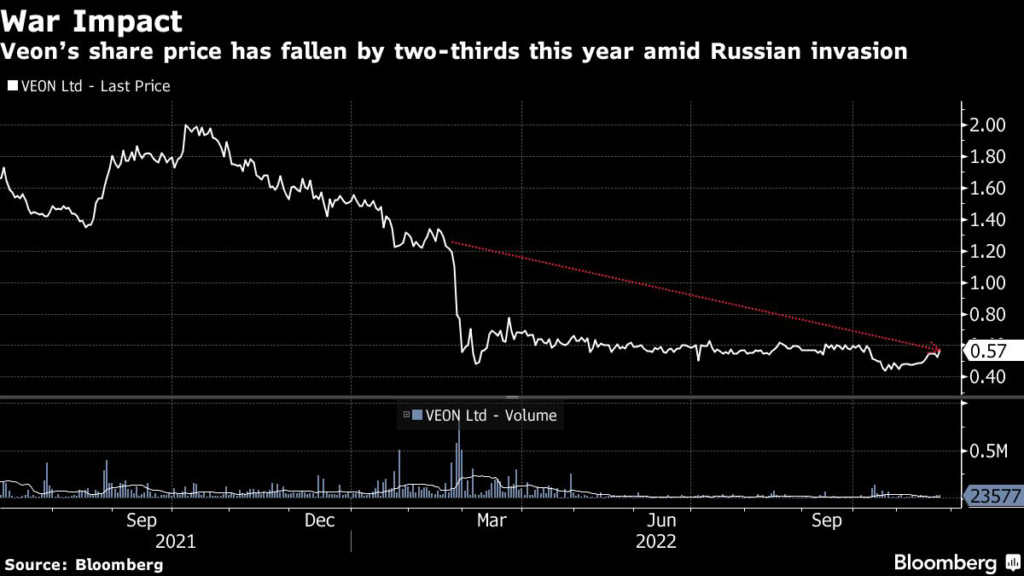
Veon’s shares rose 8.6% in Amsterdam after the announcement, after having fallen by two-thirds this year as the invasion and subsequent sanctions on Russia imposed by the US, EU and UK undermined the company. Its Russian unit accounts for about half of the mobile operator’s revenue.

“Following the conclusion of this transaction, Veon will have greater visibility for regaining access to international debt capital markets,” Chief Executive Officer Kaan Terzioglu told Bloomberg by phone after the announcement.

“It is important to look at this deal in the context of other significant transactions,” he said, pointing to a sale of Russian tower assets for over 70 billion rubles in December 2021 and the transfer of 90 billion rubles of Veon debt to VimpelCom in April. “Combined, these three deals reduce our debt outside of Russia by around $4.8 billion.”

Veon has to pay over $1.2 billion in bonds that mature in February and April. Total cash and cash equivalents were $3.3 billion in the third quarter, with $2.6 billion held at headquarter level. 

To allow time for the deal to go through before the debt becomes due, the company has launched a scheme of arrangement in England to extend the maturities of the bonds by eight months from their respective deadlines, according to a separate statement by the company on Thursday. 

What Bloomberg Intelligence Says

Veon’s stated agreement to sell its Russian unit (50% of sales) to local management for 130 billion rubles ($2.1 billion) — paid largely by the latter taking on holding-level debt — may not appear financially attractive, but looks like the only way to revive sentiment. The move could also shine a light on the brighter prospects and implicit valuation of Veon’s non-Russian business. The deal puts the latter at 4.5x trailing Ebitda vs. 4-8x for most emerging-markets peers.

– Tom Ward, telecom & media analyst

Veon was founded in Moscow in 1992 as VimpelCom, one of the nation’s first cellular-phone providers. It has grown into a Dutch-domiciled telecommunications giant with more than 217 million customers in nine countries and is the largest mobile operator in Ukraine.

LetterOne Investment Holdings, founded by Russian billionaire Mikhail Fridman, owns 48% of Veon according to data compiled by Bloomberg. Fridman was sanctioned by both the EU and the UK earlier this year, and stepped down from the boards of Veon and LetterOne.

–With assistance from Irene García Pérez and Giulia Morpurgo.

(Updates with shares, quotes and details.)

More stories like this are available on bloomberg.com

©2022 Bloomberg L.P.
French Watchdog Sued in Top Court Over Russian TV Decision

(Bloomberg) — French rights group Reporters Without Borders has filed a lawsuit in France to try to prevent satellite operator Eutelsat from continuing to broadcast three Russian channels.

The press-freedom group filed a claim with France’s top administrative court asking it to reverse a decision by media regulator Arcom that lets Eutelsat continue broadcasting Rossiya 1, Perviy Kanal and NTV.

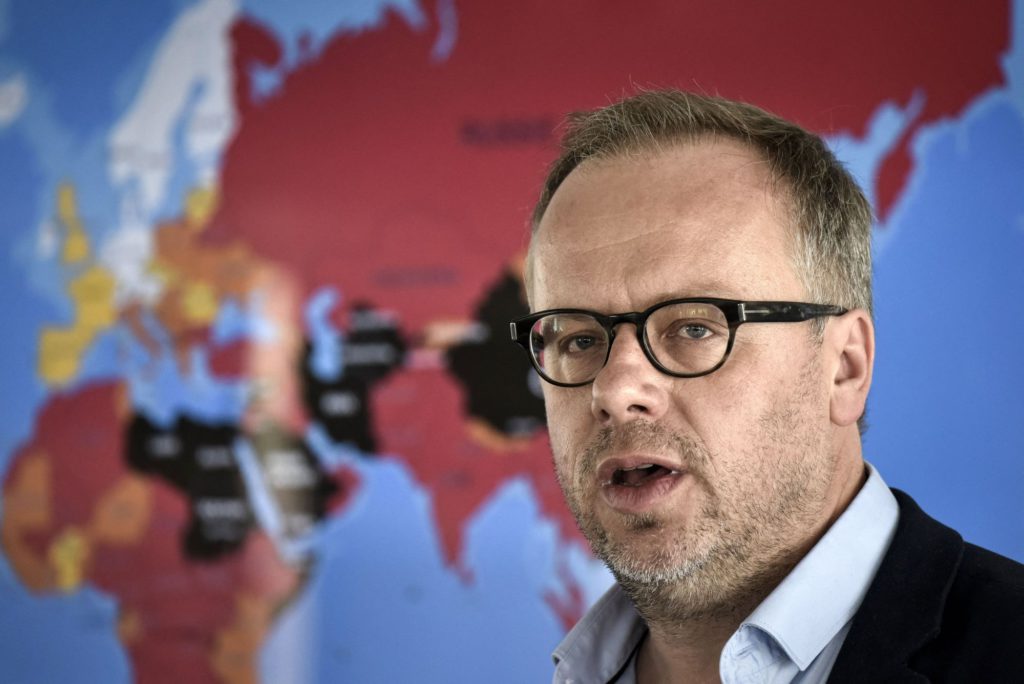
“Arcom’s refusal to take up a major issue to fight propaganda and support journalism is very regrettable,” Christophe Deloire, the head of Reporters Without Borders, said in a statement shared with Bloomberg. “RSF is asking the Conseil d’Etat to declare it illegal.”

In September, the French media regulator said it would review a request by Reporters Without Borders to ask Eutelsat to stop broadcasting three Russian TV channels. In a response to RSF on September 28, Arcom said there wasn’t a legal basis for blocking the channels since they are broadcast by several satellites and France couldn’t be identified as the unique source. It also said the channels were mainly broadcast in Russian territory, with a “very limited number” of EU citizen accessing it. 

RSF replied in its statement today that Eutelsat is a French company and that the channels are available in the EU, namely in Baltic countries, and in Ukraine. 

Eutelsat is committed to “neutrality” as an infrastructure operator, Chief Executive Office Eva Berneke, told Bloomberg on Nov. 22. “Anytime Arcom says this channel is a no-go we’ll take it down, which is what we’ve done with around 10 channels that were distributed.”

“We confirm that a claim has been filed,” a spokeswoman for Arcom said. “It will be up to the Conseil d’Etat to decide.”

–With assistance from Gaspard Sebag.

(Adds comment from Arcom spokeswoman in seventh paragraph.)

More stories like this are available on bloomberg.com

©2022 Bloomberg L.P.

Kenyan Lender NCBA Plans African Expansion With Digital Banking

(Bloomberg) — NCBA Group Plc plans to expand into eight African markets using mobile and digital banking, a model that’s disrupting traditional financial systems.

The Kenyan lender, which introduced a mobile-phone based savings and credit product dubbed Mshwari a decade ago, has joined up with a financial institution in Ghana where it’s awaiting a license to begin lending, Chief Executive Officer John Gachora said in an interview without giving further details.

“We’re developing the technology that should be ready fairly soon, and the idea is to roll-out mid next year with our partners in Ghana,” Gachora said. 

Kenyan Bank in Talks With Ghana Lender to Expand in West Africa

Ethiopia is also among the markets it wants to enter, as Africa’s second most populous nation opens up its financial industry to foreign investors. The Democratic Republic of Congo is on NCBA’s list too, with assessments showing the mineral-rich nation is “ripe for digital solutions,” according to Gachora.

Funding the expansion won’t be as costly as starting a traditional bank, according to Gachora. “It’s going to be licensing costs because it’s digital, it’s a fintech and the licenses are fairly cheap.”

NCBA’s nine-month profit climbed to 12.8 billion shillings ($105 million), buoyed by a 162.9% jump in foreign-exchange income, according to Nairobi-based Standard Investment Bank. 

More stories like this are available on bloomberg.com

©2022 Bloomberg L.P.
Twitter Loses Entire Brussels Office With Regulators Looming

(Bloomberg) — Twitter Inc. has lost its last remaining employees in the regulatory hub of Brussels, at a time when it faces increasing scrutiny from lawmakers. 

The small office of six employees was cut to two in recent weeks following Elon Musk’s dramatic culling of staff, according to people with knowledge of the exits. The remaining two members left over the past week, after Musk called for staff to commit to a “hardcore working culture.” 

The Brussels office was a key hub for Twitter to engage with a deluge of European regulation, much of which has only recently come into force. The social media platform has long battled a perception it has failed to manage hate-speech and disinformation. 

Julia Mozer and Dario La Nasa, senior public policy managers and the last staff remaining in the Brussels office, left over the last week, the people said, who declined to comment on the record about staff departures. 

Mozer and La Nasa could not be reached for comment. A spokesperson for Twitter did not respond to a request for comment. The Brussels departures were first reported by the Financial Times. 

EXPLAINER: How EU Could Frustrate Musk’s Plans for Twitter

European regulators and officials have been quick to demand Twitter keeps up with its regulatory demands. Hours after billionaire Musk closed his $44 billion deal for the company, European Commissioner Thierry Breton sent a warning to the new owner, calling on the company to “fly by our rules.”

Musk has tried to reassure European regulators that he will follow their laws. The Tesla CEO called Breton the day after taking over Twitter to say the platform would comply with the DSA, according to a person familiar with the matter. 

Since then, Musk’s strategy has been to slash Twitter’s workforce in half in sweeping job cuts that included much of the company’s management. Managers in the UK and Ireland have also left, while Twitter head of France announced his departure in a tweet on Sunday.

Dublin Meeting

Speaking after sitting down with Twitter staff in Dublin, the EU’s justice commissioner Didier Reynders said Thursday that the firm must comply with the bloc’s strict data rules. He said they had made solid commitments to keep users’ data safe and stressed that the team in Dublin would be in charge.

“What we have seen in the last few weeks is very concerning,” Reynders said during a press conference. “We have received from shareholders of Twitter and the team in Dublin a clear commitment,” to work on it “but we now need to see concrete measures to be in full compliance.”

Last Friday, French media regulator Arcom sent a letter to Twitter’s European headquarters in Ireland, asking if the social network still had the means to keep ensuring content moderation as per French and EU laws, following job cuts.

The head of Arcom, Roch-Olivier Maistre, expressed his deep concern over Twitter’s ability to maintain a safe environment for its users following the staff cuts. Like other platforms, Twitter is required to fight against misinformation and hate speech under French laws.

Ireland’s data watchdog also held a meeting with representatives from Twitter last week after the company’s data protection officer left the company. Twitter has an acting officer and told the data protection watchdog it would comply with the EU’s data rules. Ireland’s Data Protection Commission said it would “closely” monitor the situation.

The EU’s Digital Services Act gives governments more power to enforce rules governing how tech companies moderate content and to decide when they must take down illegal content. If Musk doesn’t comply, Twitter will face fines of as much as 6% of annual sales and could even be banned. 

Compliance will be complex and costly. Next summer, Twitter and all large online platforms will have to add ways for users to flag illegal content and have enough staff to moderate content across the EU. The company will also have to submit a risk assessment showing how they are decreasing legal but harmful content including misinformation and harassment. The commission could force the company to change its algorithm or even raid Twitter’s offices to ensure they are following the new rules.

Twitter also has to make sure it abides by regulation in the works, such as the EU’s AI Act. The current proposal bans the use of algorithms shown to discriminate against people, which could impact Twitter’s face-cropping tools that have been shown to favor thin, young women. The EU’s Child Sexual Abuse Materials proposal could force Twitter to screen private messages for child sexual abuse imagery, or grooming. These are still being debated in the EU.

–With assistance from Benoit Berthelot, Stephanie Bodoni and Morwenna Coniam.

(Updates with Reynders comments in the)

More stories like this are available on bloomberg.com

©2022 Bloomberg L.P.
Manulife Eliminates 50 Jobs as It Outsources Property Management

(Bloomberg) — Manulife Financial Corp. is eliminating about 50 jobs in the US and Canada as part of a plan to outsource some real estate operations and focus more on investing.

Most of the workers will retain similar positions with Jones Lang LaSalle Inc., which is taking over the property operations, a spokesperson for Toronto-based Manulife said in an emailed statement. 

Manulife, which owns about 63 million square feet of real estate in 29 cities around the world through its asset-management arm, is shifting some property operations to Jones Lang LaSalle while it focuses on the investment side of the business. Manulife said it still plans to increase its overall headcount.

Read More: Manulife CEO Says Labor Still Tight as Firm Seeks Tech Workers

Teams working in Canada property operations will move to Jones Lang LaSalle in March, Manulife said. The firm has a short-term contract with Jones Lang LaSalle for leasing services, and a range of brokerage firms will provide the service after that, it said.

More stories like this are available on bloomberg.com

©2022 Bloomberg L.P.

Mercedes Unveils $1,200 Annual Subscription to Make Its Cars Go Faster

(Bloomberg) — Janis Joplin famously appealed to a higher being to buy her a Mercedes-Benz. If she were alive today, she’d also need to pay up on an annual subscription for extra speed. 

Mercedes-Benz AG is trying to sell buyers of its EQ electric sedans a $1,200 annual add-on that unlocks a feature the luxury vehicles are already capable of. The package will shave off just under one second on getting from zero to 60 miles per hour. It’ll deactivate if the customer doesn’t pay the fee again in another 12 months.

“Fine tuning of the electric motors increases the maximum motor output of your Mercedes-EQ by 20 to 24%,” said the landing page for the so-called Acceleration Increase subscription on the company’s online store. “The torque is also increased, enabling your vehicle to accelerate noticeably faster and more powerfully.”

Charging customers for a feature the car is already capable of is a bold move for the premium automaker. A similar move at German rival BMW AG earlier this year backfired after seeking to sell owners $18 per month subscriptions to heat their seats.

Carmakers are betting on so-called function on demand services to broaden and grow revenues, including future offerings like automated driving services as vehicles’ software capabilities improve. 

Mercedes is offering the function on some of its flagship EQS sedan and EQS SUV models as well as some of its EQE sedan and EQE SUV models.

More stories like this are available on bloomberg.com

©2022 Bloomberg L.P.
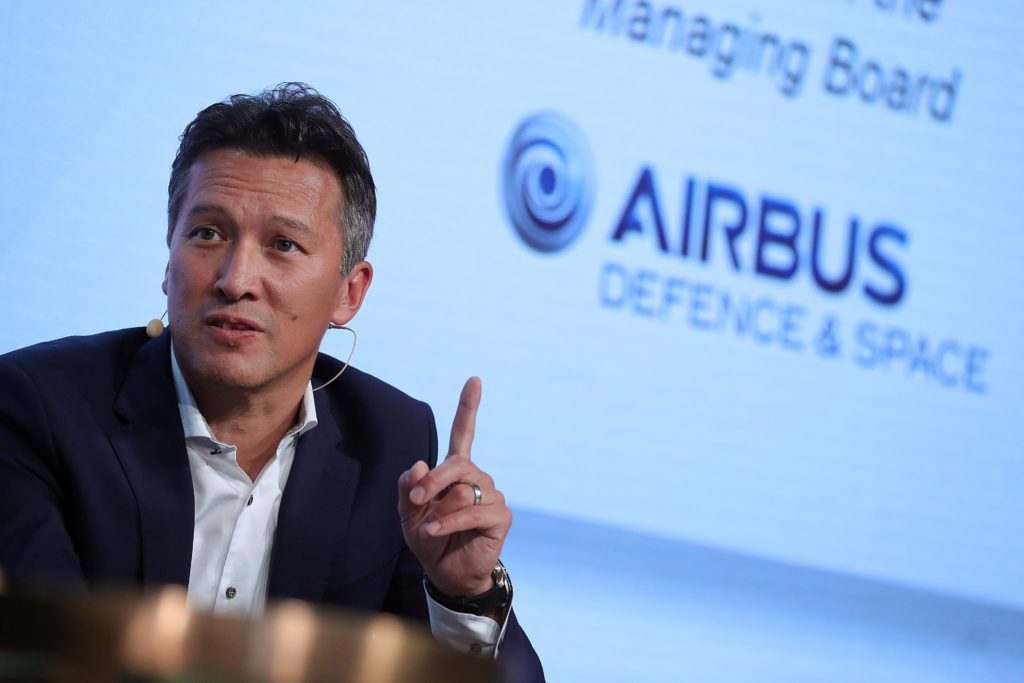
Flying Taxi Firms Face Reckoning With Airbus Veterans in Charge

(Bloomberg) — Two German aerospace startups leading a global dash into electric-powered flying taxis face a reality check after hiring former Airbus SE executives to lead their competing bids to bring the craft to market.

Lilium NV Chief Executive Officer Klaus Roewe, who joined last month and once led the Airbus narrow-body jet program, has ordered a rethink of the company’s PR strategy as its stock plummets, he told Bloomberg Wednesday.

Dirk Hoke, CEO at Volocopter GmbH since April and the former head of Airbus’s defense arm, has reined in the firm’s global ambitions to set a less demanding target for its first commercial flights, he said in an interview on Nov. 18.

“We need to show that we’re a very serious company and we need to communicate better on what we’re doing,” said Roewe, who worked at Airbus for 29 years. “We need to show facts and figures and data and show that this aircraft is really unique and has a lot of advantages.”

The two firms are among a clutch of companies leading the drive to develop electric vertical take-off and landing craft, as flying taxis are properly known. They turned to the industry veterans after programs once regarded by some in the aviation industry as akin to science fiction come under pressure to deliver following billions of dollars in investment.

Volocopter, founded in 2011, is aiming to bring the very first eVTOL to market in time for the 2024 Olympic Games in Paris, while Lilium, established four years later, has scheduled service entry for 2025. Both are working toward securing vital certification from the European Union Aviation Safety Agency.

Falling Stocks

Even as flying-taxi startups rack up orders — UK-based Vertical Aerospace Ltd. has outline deals for 1,400 craft — or agree Uber-style operating deals with city authorities around the world, those that are publicly traded have seen their share prices tumble since a series of listings via special purpose acquisition companies.

Having listed via a SPAC in September last year, shares of Lilium, which is based near Munich, have fallen 86% amid concerns over whether flying-taxi companies can source sufficient numbers of power-dense batteries and clear safety and regulatory hurdles.

Lilium this week concluded a $119 million capital increase from its existing shareholders as well as new investors. Companies including US conglomerate Honeywell International Inc. and Aciturri Aeronáutica SL took part in the increase, Lilium said.

The company, whose SPAC saw investment from Baillie Gifford, BlackRock Inc., Tencent Holdings Ltd. and Ferrovial SA, also faces a tighter financing environment for so-called moonshot technologies amid an economic slump.

Vertical Aerospace and US competitors Joby Aviation Inc. and Archer Aviation Inc. has suffered similar share-price declines.

Fewer Projects

Volocopter, which has almost 700 staff, has eschewed a stock market listing but could see fundraising prove tougher in future as central banks raise interest rates to choke off inflation.

The company, based in Bruchsal, near Stuttgart, has so far raised more than €500 million in launch financing, including $182 million from Saudi Arabia’s Neom, which is building a futuristic city on the Red Sea, and a fund backed by Chinese carmaker Zhejiang Geely Holding Group Co.

Other backers include logistics firm DB Schenker and the venture capital arm of chipmaker Intel Corp.

Following Hoke’s arrival, Volocopter has cut back on an array of municipal projects under consideration to focus efforts on the Saudi and Paris launches, together another in Rome and a fourth providing tourist flights around Singapore.

“I think it’s much more rational now,” he said. “You have to be realistic, starting operations in 2024 you can’t break even in 2025. I’m confident we’ll be there by the end of the decade.”

(Updates with Lilium’s fund-raising in ninth paragraph)

More stories like this are available on bloomberg.com

©2022 Bloomberg L.P.

Close Bitnami banner
Bitnami
