Bloomberg

VinFast Ships First EVs to California Amid US IPO Plan

(Bloomberg) — VinFast, an electric carmaker backed by Vietnam’s richest man, is shipping its first SUVs to the US, a milestone for parent Vingroup JSC that set out five years ago to bring high-end manufacturing to the Southeast Asian country.

Vehicles were loaded onto a red and white cargo ship emblazoned with VinFast in the northern port city of Haiphong. Nine hundred and ninety-nine EVs will be transported to California and then delivered to customers in late December, according to a VinFast statement. 

Ahead of the ship’s departure, Prime Minister Pham Minh Chinh and other dignitaries attended a ceremony filled with patriotic music, performances by famous singers and speeches. The event underscored the importance of Vingroup’s effort to create a global brand for high-end products to the government. “These cars will bring Vietnam’s aspirations and pride to the world,” Chinh said. 

The company, which faces intense competition from the world’s top auto brands, said in September it will ship about 5,000 vehicles to customers in the US, Canada and Europe this month.

The company is weighing a US initial public offering as early as January, Bloomberg reported earlier. VinFast said in July that it had signed agreements with banks to raise at least $4 billion to help its US expansion, including a factory in North Carolina.

VinFast said it has received 65,000 global orders for its VF 8 and VF 9 models, according to the statement. 

(Updates the story with prime minister in the third paragraph.)

More stories like this are available on bloomberg.com

©2022 Bloomberg L.P.

VinFast Ships First EVs to California Amid US IPO Plan

(Bloomberg) — VinFast, an electric carmaker backed by Vietnam’s richest man, is shipping its first SUVs to the US, a milestone for parent Vingroup JSC that set out five years ago to bring high-end manufacturing to the Southeast Asian country.

Vehicles were loaded onto a red and white cargo ship emblazoned with VinFast in the northern port city of Haiphong. Nine hundred and ninety-nine EVs will be transported to California and then delivered to customers in late December, according to a VinFast statement. 

Ahead of the ship’s departure, Prime Minister Pham Minh Chinh and other dignitaries attended a ceremony filled with patriotic music, performances by famous singers and speeches. The event underscored the importance of Vingroup’s effort to create a global brand for high-end products to the government. “These cars will bring Vietnam’s aspirations and pride to the world,” Chinh said. 

The company, which faces intense competition from the world’s top auto brands, said in September it will ship about 5,000 vehicles to customers in the US, Canada and Europe this month.

The company is weighing a US initial public offering as early as January, Bloomberg reported earlier. VinFast said in July that it had signed agreements with banks to raise at least $4 billion to help its US expansion, including a factory in North Carolina.

VinFast said it has received 65,000 global orders for its VF 8 and VF 9 models, according to the statement. 

(Updates the story with prime minister in the third paragraph.)

More stories like this are available on bloomberg.com

©2022 Bloomberg L.P.

Ringgit Rises to Three-Month High as Anwar Takes Malaysia’s Helm

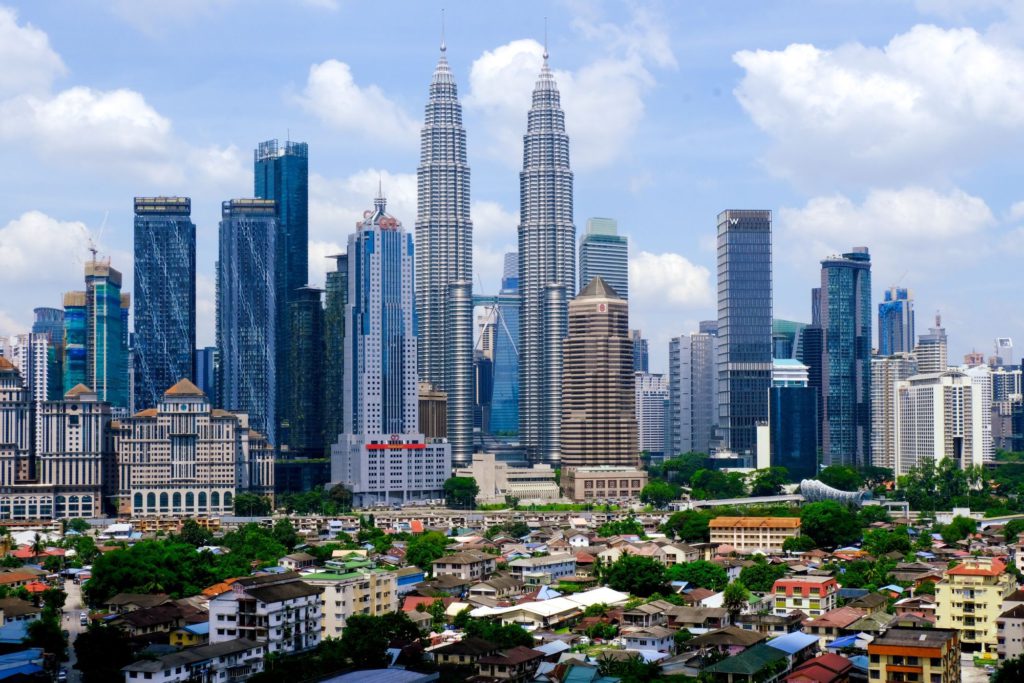
(Bloomberg) — The ringgit jumped, making the currency the best performer in Asia for a second day, following the appointment of Anwar Ibrahim as Malaysia’s new prime minister.

The ringgit rose by as much as 0.9% against the dollar to 4.4542, its strongest level since mid-August. The currency had surged by 1.8% after Anwar’s appointment on Thursday, the largest single-day gain since March 2016.

Meanwhile, the stock benchmark index declined as much as 1.3% on profit-taking after the market added close to $19 billion in value — the largest in a single day since March 2020 — on Thursday.

Anwar’s appointment removes a key uncertainty in the market and snuffed out concerns of potentially strong influence by the conservative Parti Islam Se-Malaysia, known as PAS, the biggest party in rival Perikatan Nasional bloc.

Still, analysts said the political risk premium on Malaysian equities remained given that the “unity government” model is unchartered territory and Anwar still has to test lawmakers’ support for his leadership with a confidence vote on Dec. 19.

“Until the country attains reasonable political stability, the KLCI index would likely be commanding ‘sub-optimal’ valuation,” Vincent Khoo, head of research at UOB Kay Hian, wrote in a note.

Investors will also continue to watch the announcement of the cabinet line-up and the tabling of a revised Budget.

Local markets are closed on Monday for a holiday. 

Here is what analysts are saying:

Belinda Boa, chief investment officer of emerging markets equities at BlackRock Inc. 

Malaysia’s economy is doing well, in our view — balancing political challenges with integration opportunities into tech related supply chains. Malaysia is coming up as a scalable alternative to China and, in some cases, Taiwan. Additionally, higher oil and commodity prices continue to have a positive impact. Inflation may be understated, liquidity remains a hurdle, but the market looks relatively attractive at the margin.

Vincent Khoo, head of research at UOB Kay Hian

As the emergence of a unity government has snuffed out fears of sin sectors being affected by adverse regulation, investors will refocus on the promising growth outlook and depressed valuations of the gaming and brewery stocks. We are again overweight on the gaming and brewery stocks.

Tentatively trimming end-2022 FBMKLCI target to 1,550 from 1,585 (to be finalised post 3Q22 results season). We continue to expect the FBMKLCI to trend up towards year-end, in rejoining the global equity uptrend as US core inflation eases. Our tentative end-2023 target is 1,640

Joshua Ng, analyst at Kenanga Research at 

After the initial euphoria, we believe the market will assess the effectiveness of the ‘unity’ government, which is unprecedented in Malaysia. 

We expect the continuation of prevailing policy inclinations including pro-business, protectionism for local industries, business-as-usual for government-linked companies, strong fiscal support to the economy with cash handouts, fuel and food subsidies, and pump-priming.

We raise our end-2022 FBM KLCI target back to 1,500 points from 1,450 points to reflect the resolution of the political deadlock. We continue to advocate investors to seek refuge in domestically-driven sectors including banks, telcos, auto makers/distributors, mid-market retailers and construction, amidst rising external headwinds. 

Alexander Chia, analyst at RHB

We expect the relief rally to be extended as equities play catch up to build on the recent tentative shift in investor sentiment on the back of rising hopes that the pace of monetary tightening will begin to ease and as the market looks ahead to a more pragmatic approach by China’s government to contain Covid-19. 

In the short-term, however, we caution investors not to get too carried away, especially after the initial euphoria. The new unity government needs to prove its ability to work together as a team, something unimaginable just a week ago. 

Another spike in markets should invite some short-term profit taking but further out, investors ought to re-focus on fundamentals with a preference for large-cap value stocks.

Ivy Ng, head of equity research at CGS-CIMB Securities 

We raise our end-2022F KLCI target to 1,602 points from 1,484 points, based on 13.8x forward P/E. If the political instability concerns ease over time, there is potential for KLCI to re-rate to its pre-GE14 valuations of 16.5x, which is close to its 3-year average mean P/E of 16x and values it at 1,855 points. 

Our picks following the appointment of the new PM are consumers, banks, gaming and brewers. Construction, telco, utilities and property sectors could also do well in a more stable political environment.

The market will be closely watching the announcement of the cabinet lineup, which we estimate could take 7-10 days, first sitting in Parliament on Dec. 19, tabling of provisional and full Budget 2023, among other things.

Sailesh K Jha, group chief economist and head of market research at RHB

In foreign exchange, the move down in USD/MYR below 4.50 yesterday was massive and we would be cautious in believing that these prints below 4.50 are sustainable. We believe that USD/MYR could trade back up to around 4.60 by year-end. Our 1H23 USD/MYR forecast of 4.70-4.80 remains unchanged for the time being. 


–With assistance from Marcus Wong and Ishika Mookerjee.

(Adds market moves and comments from BlackRock Inc.)

More stories like this are available on bloomberg.com

©2022 Bloomberg L.P.

Bank of Korea Needs Strong Signs Inflation Curbed Before Pivot

(Bloomberg) — The Bank of Korea needs to see strong signs that inflation is under control before plotting any pivot away from policy tightening, Governor Rhee Chang-yong said Friday, dismissing as premature speculation about a return to easing next year.

The central bank came closer to the end of its tightening cycle when it raised the key interest rate by 25 basis points to 3.25% on Thursday. The BOK’s board holds a range of views on the terminal rate: three favor 3.5%, one thinks enough has been done, while two want the door kept open to going above 3.5%.

“At least in the first half of next year, we will think about when to pause and then how we’re going to handle this inflation,” Rhee said in an interview with Bloomberg TV’s Kathleen Hays. “Once we have seen strong signs that inflation is under control, then we have to think about the next trade-off.”

Citigroup Inc. and Nomura Holdings Inc. are forecasting the BOK will begin cutting rates as early as mid-2023, predicting Korea’s economy will need the policy support.

Rhee said a variety of factors will help determine the course of policy, including the Federal Reserve’s decision in December, global oil prices, Covid policies in China and credit-market conditions in Korea.

“Considering all these factors, we decided to maintain our flexibility and think about our next move probably in January,” Rhee said. “It’ll be very hard to judge where we’re going to stop or when, but our board members believe probably we can go to about 3.5%.”

The governor added that he wouldn’t be surprised if some board members changed their mind over the terminal rate. He declined to provide his own forecast, adding that he would reveal it if the board was evenly split.

It’s “premature” to discuss any rate cuts and the BOK will need strong evidence of inflation slowing to its mid-term target of a 2% range before the board can discuss the potential for easing policy, he said. The BOK’s latest forecasts released Thursday show inflation holding above 2% through 2024.

The bank has delivered a total of 2.75 percentage points of rate hikes since August 2021, including two half-point moves. The tightening helped Korea position itself earlier than most nations in the fight against asset bubbles and inflationary pressures.

However, its faster-than-usual tightening in recent months has fueled credit risks triggered by the default of a local government-backed developer.

“I think there’s excessive sensitivity,” the governor said of the credit risks. Coupled with the UK’s now-retracted stimulus, the Korean case offers a lesson for the world that “one small mistake can jeopardize the whole economy.”

Overall, Korea’s financial markets remain in good shape despite the credit rout associated with the real estate market, which stemmed from a mistake by a local province, he said. Rhee downplayed the prospect of needing to provide the kind of liquidity support seen at the start of the pandemic.

“You cannot give this heavy medicine before you try other measures,” he said.

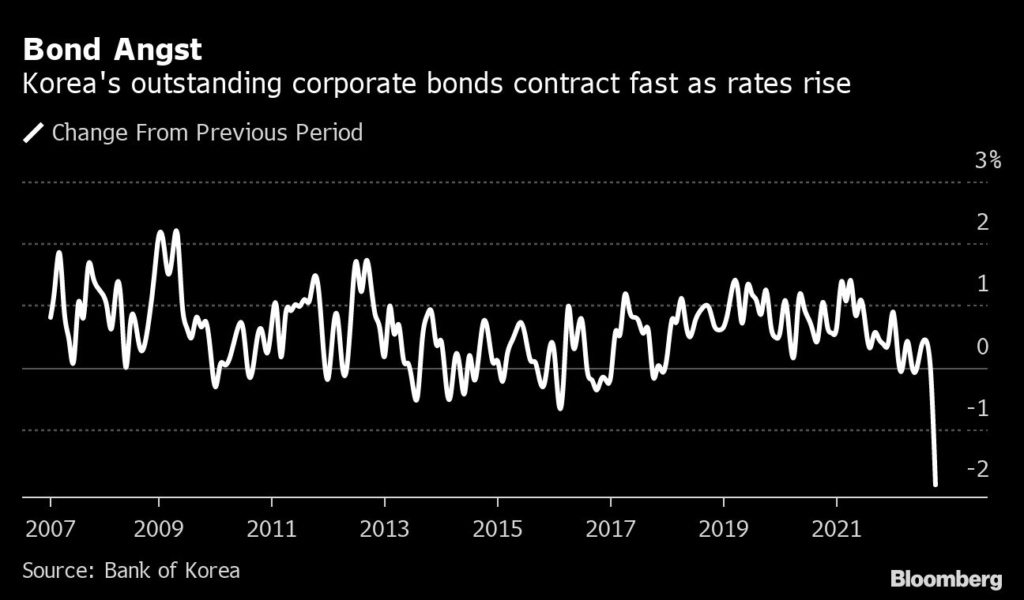
In a sign of credit strains, Korea’s corporate bond market shrank the most on record last month. Meanwhile, credit yields have kept climbing.

“I wouldn’t be surprised they are not coming down given that we are still increasing interest rates,” Rhee said. 

Among other concerns weighing on Rhee’s mind are sputtering exports. Korea posted the first fall in overseas shipments in two years in October, with chip sales falling by the most since late 2019.

The BOK on Thursday projected the economy will grow 1.7% next year, sharply slower than previously forecast, while inflation is seen at 3.6%.

Inflation will stay elevated early next year, prompting the bank to “focus more on how to stabilize it,” as growth slows due to a “more severe slowdown” in Europe and the US, Rhee said. He also highlighted Korea’s heavy reliance on chip prices.

Rhee took office in April after helming the Asia-Pacific department of the International Monetary Fund, an institution that bailed out Korea during the Asian financial crisis a quarter-century ago.

While today’s Korea barely resembles the economy then, the credit rout highlighted its vulnerabilities as a nation closely intertwined with the global economy and Fed policy.

Rhee said earlier this year that the BOK may have won independence from the Korean government but not from the Fed. Recent outsized hikes reflected the urgency of keeping pace with the Fed in order to minimize the risk of capital outflows that could pummel the won.

“What I meant is that as a small open economy, the foreign exchange sector is one of the important factors in deciding monetary policy,” he said. “We are not mechanically following the US interest rate, but we are very mindful of its impact on our exchange rate.”

The Fed hikes have been harsh on the won, the worst performing currency after the yen in Asia this year. It’s made Korea’s imports more expensive and added to financial burdens for the nation’s debt-laden households.

“Korea’s leverage ratio, especially household debt, is in a relatively high range,” he said, calling it a a medium-term challenge. “You cannot deleverage in a very short period of time. That will cause many negative side effects.”

–With assistance from Jaehyun Eom and Kyungji Cho.

(Updates with rate-cut speculation, charts, further comments.)

More stories like this are available on bloomberg.com

©2022 Bloomberg L.P.

ICBC Leads Big Banks to Offer $179 Billion to China Builders

(Bloomberg) — China’s mega banks, led by Industrial & Commercial Bank of China Ltd., pledged financing support of at least 1.28 trillion yuan ($179 billion) to property developers as part of a push to ease turmoil in the nation’s real estate market. 

ICBC, the world’s largest bank by assets, on Thursday said it would provide 655 billion yuan in credit lines to 12 developers, including Country Garden Holdings Co. Bank of China Ltd., Bank of Communications Co., Postal Savings Bank of China Ltd. and Agricultural Bank of China Ltd. and China Construction Bank Corp. also disclosed they would extend financing. 

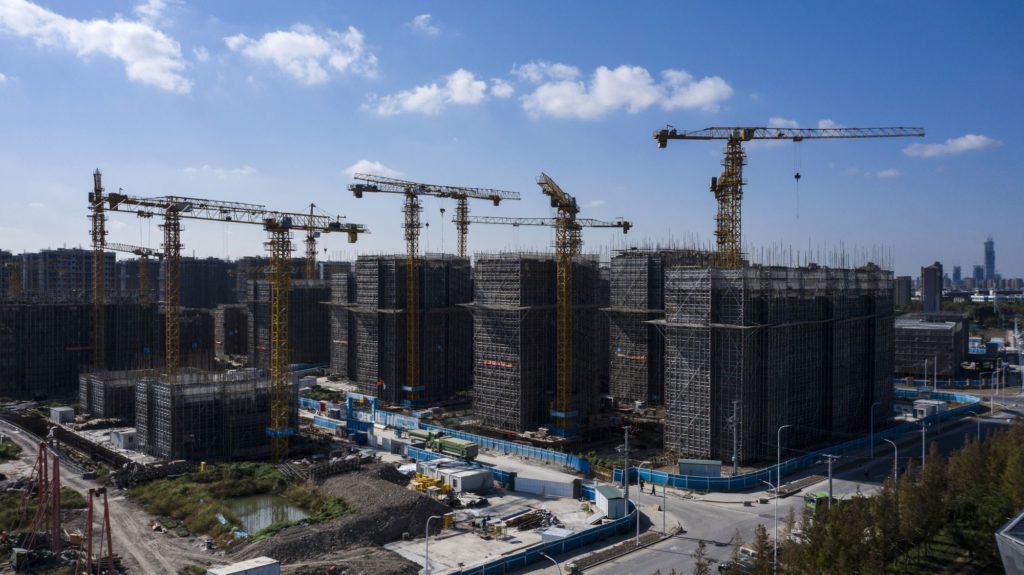
Property stocks and bonds rallied on the additional funding, as China seeks to contain the fallout from a crackdown that has already sparked dozens of defaults and sent property sales and prices tumbling. China’s priority has been to ensure that unfinished homes get completed, while supporting the stronger firms that have so far survived the crisis. 

“The core of the policy is to build a firewall between developers that have already defaulted and those that haven’t,” said Li Kai, founder of Beijing Shengao Fund Management Co.

The barrage of bank financing wasn’t extended to China Evergrande Group, the country’s most-indebted developer that in large part kicked off the current turmoil, as well as Sunac China Holdings Ltd.   

Chinese property firms rallied more than 7% on Thursday and extended gains on Friday, according to a Bloomberg Intelligence stock index of developers. 

The moves came after regulators issued a 16-point plan earlier this month to financial firms for boosting the real estate market, with measures that range from addressing developers’ liquidity crisis to loosening down-payment requirements for homebuyers. 

The big state-owned banks have since set up special mechanisms to ensure quick implementation of the measures, and created whitelists for qualified regional developers to extend maturities of their existing development loans, according to a representative of the China Banking and Insurance Regulatory Commission, who declined to be identified because they aren’t authorized to speak publicly.

The big banks will also expand financing services to support acquisitions of high-risk projects by “key” developers, the representative said without naming any companies. Some joint-stock banks have allowed mortgage borrowers to delay repayments without reclassifying their loans, the person added.

CCB Plan

China Construction Bank has also set up a 30 billion yuan fund to buy properties from developers. The lender has made progress on more than 20 projects, with their combined assets exceeding 10 billion yuan, the CBIRC representative said. 

China’s banks have been told to provide at least 1 trillion yuan in funding in the final months of 2022 to the battered property sector to avoid a broader fallout on the economy that is also weighed down by Covid lockdowns, Bloomberg reported earlier.

The industry has issued 2.64 trillion yuan worth of loans to developers and 4.84 trillion yuan of mortgages in the first 10 months this year, the CBIRC representative said. 

At a meeting with banks on Monday, the People’s Bank of China said it planned to provide 200 billion yuan in interest-free re-lending loans to commercial banks through the end of March to provide matching funds for stalled property projects. 

–With assistance from Wei Zhou and Jackie Cai.

(Updates figures in headline, first paragraph and table.)

More stories like this are available on bloomberg.com

©2022 Bloomberg L.P.

Binance’s Crypto Rescue Plan Fails to Quell All the Fears of Post-FTX Contagion

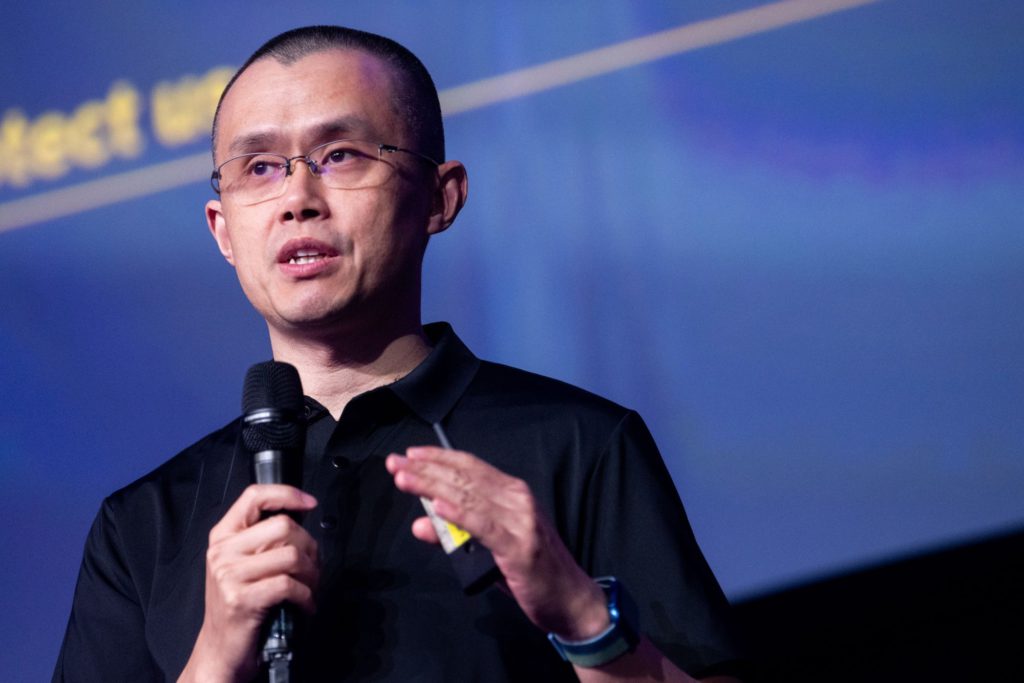
(Bloomberg) — Crypto mogul Changpeng “CZ” Zhao’s vow to set up a recovery fund of up to $2 billion to help cash-strapped startups failed to dispel all the sector’s contagion fears following the collapse of the FTX exchange.

In an interview Thursday with Bloomberg Television’s Haslinda Amin, Zhao gave more details on the deals his Binance Holdings Ltd. is examining in the wake of rival FTX’s bankruptcy. Key to Zhao’s plan is a fund with co-investors aimed at backing promising crypto projects facing a liquidity squeeze.

“We’re going with a loose approach where different industry players will contribute as they wish,” he said, flagging a possible $1 billion for the fund. A later blog post explained the commitment could rise to $2 billion if needed. 

Jump Crypto, Polygon Ventures, Aptos Labs, Animoca Brands, GSR, Kronos and Brooker Group are making an initial combined pledge of $50 million. 

Zhao said he’s seeking to limit damage to the crypto sector from FTX’s implosion — an event the Binance chief himself helped accelerate with a Nov. 6 tweet about plans to sell a $530 million holding of FTX’s native digital token. Before his empire fell, FTX founder Sam Bankman-Fried had agreed to several now stranded deals, such as the purchase of bankrupt lender Voyager Digital.

The industry remains anxious about the fallout from FTX’s wipeout. 

“There’s too much uncertainty in the market for the recovery fund itself to be the catalyst that turns everything around,” said Hayden Hughes, chief executive of social-trading platform Alpha Impact. “We still don’t know the extent of the contagion. But I think we are at or close to the bottom and I don’t expect markets to go down much from here.”

Contributions

Binance’s prospective contribution to what it’s calling the Industry Recovery Initiative also far outweighs the commitments from other firms, at least so far.

“The market will be watching the fund’s public wallet address closely to see whether it attracts a material amount of non-Binance capital, as this will indicate how broad-based the industry support is for stabilization,” said David Adams, portfolio manager of the King River Digital Assets Fund.

Zhao’s credibility as industry savior is a topic of controversy because of his role in FTX’s undoing, as well as investigations into the company from Singapore to the US. Members of UK Parliament have asked Binance to explain the circumstances surrounding Zhao’s Nov. 6 tweet, and whether the company understood the potential impact it might have.

Another source of tension is that while Binance has licenses in many different jurisdictions, it isn’t formally based anywhere. When asked about the matter in the Bloomberg interview, Zhao demurred, saying only that Dubai and Paris are now its “global hubs.” The crypto billionaire moved to Dubai last year.

Voyager Assets

Zhao said Binance US is planning to revive its bid for the assets of Voyager, a deal which came back into focus after FTX filed itself for bankruptcy. Binance will be competing with crypto exchange CrossTower Inc. and other companies for Voyager. 

Binance is also in talks with Genesis Global, the US-based cryptocurrency broker which is seeking emergency funding to stay afloat, Zhao said. The troubled brokerage has $2.8 billion in outstanding loans on its balance sheet, with about 30% of its lending made to related parties including its parent company, Barry Silbert’s Digital Currency Group. 

Zhao said a Genesis collapse might only impact some large institutional players and sought to downplay the potential damage to the industry as a whole.

“There will be pain whenever one player goes down,” he said. 

FTX

With FTX now in bankruptcy, Zhao’s interactions with his former competitor is coming full circle. Binance initially agreed to buy FTX as it started crumbling, then pulled out after Zhao realized what a precarious state Bankman-Fried’s exchange was in.  

Binance did not have access to all of FTX’s books or trading history and could not trust the information it provided, Zhao said in the interview. The exchange is now planning to look at FTX’s assets as they come through bankruptcy proceedings, he said.

“They invested in a number of different projects, some of them are OK, some of them are bad but I think there are certain assets that are salvageable,” Zhao said.

For crypto market prices: CRYP; for top crypto news: TOP CRYPTO.

–With assistance from Philip Lagerkranser.

More stories like this are available on bloomberg.com

©2022 Bloomberg L.P.
Vietnam’s VinFast Ships First EVs to California Amid US IPO Plan

(Bloomberg) — VinFast, an electric carmaker backed by Vietnam’s richest man, is shipping its first SUVs to the US, a milestone for parent Vingroup JSC that set out five years ago to bring high-end manufacturing to the Southeast Asian country.

Nine hundred and ninety-nine vehicles are being loaded onto a red and white cargo ship emblazoned with VinFast in the northern port city of Haiphong. The EVs will be delivered to a California port and delivered to customers in late December, according to a VinFast statement. 

The company, which faces intense competition from the world’s top auto brands, said in September it will ship about 5,000 vehicles to customers in the US, Canada and Europe this month.

The company is weighing a US initial public offering as early as January, Bloomberg reported earlier. VinFast said in July that it had signed agreements with banks to raise at least $4 billion to help its US expansion, including a factory in North Carolina.

VinFast said it has received 65,000 global orders for its VF 8 and VF 9 models, according to the statement. 

More stories like this are available on bloomberg.com

©2022 Bloomberg L.P.
Vietnam’s VinFast Ships First EVs to California Amid US IPO Plan

(Bloomberg) — VinFast, an electric carmaker backed by Vietnam’s richest man, is shipping its first SUVs to the US, a milestone for parent Vingroup JSC that set out five years ago to bring high-end manufacturing to the Southeast Asian country.

Nine hundred and ninety-nine vehicles are being loaded onto a red and white cargo ship emblazoned with VinFast in the northern port city of Haiphong. The EVs will be delivered to a California port and delivered to customers in late December, according to a VinFast statement. 

The company, which faces intense competition from the world’s top auto brands, said in September it will ship about 5,000 vehicles to customers in the US, Canada and Europe this month.

The company is weighing a US initial public offering as early as January, Bloomberg reported earlier. VinFast said in July that it had signed agreements with banks to raise at least $4 billion to help its US expansion, including a factory in North Carolina.

VinFast said it has received 65,000 global orders for its VF 8 and VF 9 models, according to the statement. 

More stories like this are available on bloomberg.com

©2022 Bloomberg L.P.
Asia Stocks Fall, Led by China; Treasuries Rally: Markets Wrap

(Bloomberg) — A gauge of Asian equities fell amid a subdued tone in markets on Friday after Thanksgiving in the US. Treasuries rose as trading resumed after the holiday. 

Hong Kong-listed technology stocks led declines in Chinese shares as investors weighed recent gains against an upswing in Covid-19 infections and lockdown-like restrictions affecting swathes of Beijing. 

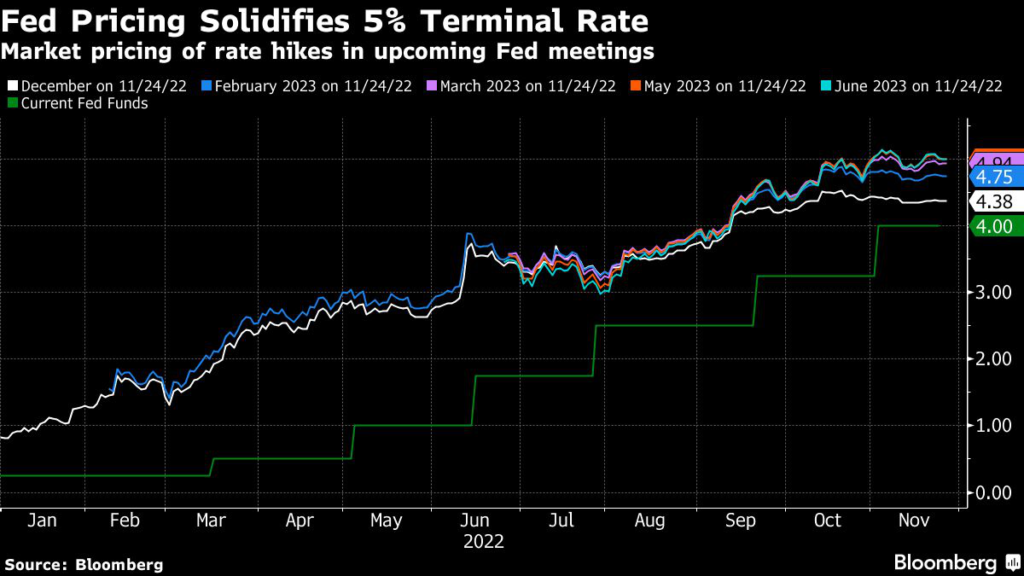
US stock futures advanced following commentary from Federal Reserve officials that supports the case a slower pace of interest-rate increases. The dollar fluctuated after a three-day losing streak. 

Malaysia’s ringgit extended gains as the appointment of a new prime minister cleared the political gridlock that has gripped the nation since recent elections.

The won steadied within sight of this month’s high after the central bank governor said he needs to see strong signs that inflation is under control before discussing any prospect of a pivot away from policy tightening.

Yields on Japan’s benchmark 10-year bond rose to 0.245%, near the top of the central bank’s target band, after Tokyo’s inflation picked up more speed to hit its fastest pace in 40 years. The yen fell slightly.

US markets were closed Thursday and will have a shortened session on Friday. 

Oil headed for a third weekly loss as the European Union weighs a higher-than-expected price cap on flows of Russian crude and slowdown concerns threaten the outlook for energy demand.

Gold was little changed but poised for a modest weekly gain.

The outlook for Chinese markets is improving, despite the current flareup in virus cases, according to Jun Bei Liu, a portfolio manager at Tribeca Investment Partners.

“In the next 12 months things will get better. We have seen this playbook before across other economies,” she said on Bloomberg Television. “We’ll begin to see outperformance very soon in the next few quarters.” 

Some of the main moves in markets:

Stocks

  • S&P 500 futures rose 0.2% as of 11:34 a.m. in Tokyo.
  • Nasdaq 100 futures rose 0.4%.
  • The Topix Index fell 0.1%
  • The S&P ASX Index rose 0.3%
  • The Hang Seng Index fell 1%
  • The Shanghai Composite Index rose 0.5%
  • Euro Stoxx 50 futures were little changed

Currencies

  • The Bloomberg Dollar Spot Index was little changed
  • The euro was little changed at $1.0411
  • The Japanese yen was little changed at 138.63 per dollar
  • The offshore yuan was little changed at 7.1648 per dollar

Cryptocurrencies

  • Bitcoin fell 0.3% to $16,493.98
  • Ether fell 0.9% to $1,185.33

Bonds

  • The yield on 10-year Treasuries declined three basis points to 3.66%
  • Japan’s 10-year yield was at 0.245%
  • Australia’s 10-year yield advanced four basis points to 3.58%

Commodities

  • West Texas Intermediate crude rose 0.5% to $78.31 a barrel
  • Spot gold rose 0.2% to $1,758.35 an ounce

This story was produced with the assistance of Bloomberg Automation.

More stories like this are available on bloomberg.com

©2022 Bloomberg L.P.
Crypto Lender Seeks $1.5 Billion Funding Value Despite FTX Chaos

(Bloomberg) — Matrixport Technologies Pte, one of Asia’s biggest crypto lenders, is targeting $100 million in funding at a higher valuation, even as the fall of FTX reverberates across the digital asset market.

The Singapore outfit has commitments from lead investors for $50 million at a valuation of $1.5 billion in the round, up from $1 billion a year earlier, according to people familiar with the matter. The deal has yet to be finalized and the company is still seeking investors for the other half of the round, said the people, asking not to be identified discussing private information. It’s not immediately clear who the round’s lead investors are.

“Matrixport routinely engages with key stakeholders as part of its normal course of business, including investors keen to participate and enable our vision as a digital assets financial services provider,” the company’s public relations head Ross Gan said, confirming the fundraising plan.

Matrixport, founded by crypto billionaire Wu Jihan, belongs to a class of firms trying to bring a familiar Wall Street formula to the virtual-asset landscape. It offers crypto financial services from custody to trading and structured products — to both institutional and retail customers. In Asia, it competes with firms like Babel Finance, which is restructuring after taking hits from this year’s crypto meltdown, and Temasek Holdings Pte.-backed Amber Group.

Investors have been burned by a series of high-profile crypto failures in recent months, sparking fresh concern over loose regulation of the industry and a lack of guardrails to protect client assets. In the aftermath of FTX’s collapse, Matrixport said this month it has no risk of insolvency with respect to Sam Bankman-Fried’s empire, but dozens of its customers incurred losses via exposure to FTX-linked products on its platform.

Matrixport says it handles $5 billion of trades each month and has tens of billions of dollars of assets under management and custody, according to an investor deck viewed by Bloomberg News. The firm employs close to 300 people, it says.

Wu, the co-founder of crypto-mining behemoth Bitmain Technologies Ltd., turned his second venture into a unicorn last summer, when Matrixport raised more than $100 million from backers including DST Global and Tiger Global. Matrixport also counted IDG Capital and Dragonfly Capital as investors.

Wu spun Matrixport off from Bitmain in 2019, after the world’s largest maker of Bitcoin mining rigs ran into a cash crunch. The Chinese crypto mogul now serves as chairman of Matrixport and his mining firm Bitdeer Technologies Holding Co.

Read More: Crypto Firm Amber Seeks $100 Million Funds at ‘Flat’ Valuation

More stories like this are available on bloomberg.com

©2022 Bloomberg L.P.
Close Bitnami banner
Bitnami