Bloomberg

Amazon Poised to Benefit This Season as Inflation Fears Ease

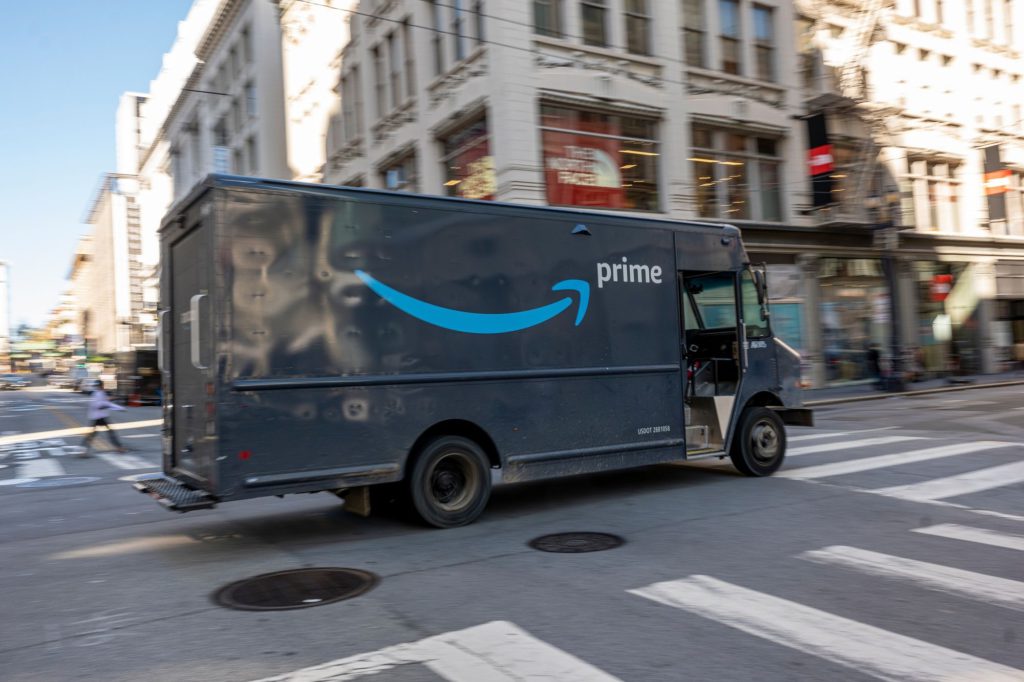
(Bloomberg) — Amazon.com Inc. spooked investors last month when it predicted the slowest holiday season growth in its history. Now there are signs—albeit tentative—that the world’s largest e-commerce company could have a somewhat merrier Christmas than anticipated.

Inflation has eased in recent weeks and, according to survey results released Sunday by Jefferies Financial Group, US consumers see prices moderating in all categories except rent and groceries. Americans continue to spend despite rising interest rates, with October retail sales increasing the most in eight months. Analysts, meanwhile, expect Amazon to hit the higher end of its fourth-quarter forecast, with revenue growing 6.7% to $146.6 billion, according to data compiled by Bloomberg. That’s still a slowdown from last year’s 9.4% growth but hardly a disaster. 

Asked about Amazon’s holiday prospects during an earnings call in October, Chief Financial Officer Brian Olsavsky expressed measured optimism but acknowledged that various headwinds—inflation, rising interest rates, the war in Ukraine—made prognostication  unusually difficult this year. Indeed, two data tracking firms have decidedly different forecasts. Last week, Insider Intelligence said it expected online sales in November and December to rise 12% from a year earlier and faster than last year’s growth of 10.4%. Yet in October, Adobe Inc. predicted an increase of just 2.5%, a marked slowdown from its 8.6% growth tally in 2021.

The picture will become somewhat clearer following the so-called Cyber Five period that kicks off on Thanksgiving and runs through Black Friday and Cyber Monday. Though Americans have been spreading their holiday shopping over a longer period in recent years, those five days are expected to account for about a sixth of the season’s buying.

“We’ll know after Cyber Monday if shoppers are really cutting back or if they’re just waiting for big discounts,” said Dan Brownsher, chief executive officer of Channel Key, an e-commerce consulting firm with 70 clients that generate more than $100 million in combined annual revenue. “Cyber Five is the prime time, when all the deals are running and all the traffic is happening. We just don’t know yet.”Despite the layoffs in technology, finance and real estate, most people are working and hungry for bargains, said Andrew Lipsman, an Insider Intelligence analyst. Retailers got away with meager discounts of 10% to 20% last year because consumers were warned about supply-chain issues and eager to buy whatever they could find. This year they’ll see discounts in the range of 30% to 40% since retailers are competing with one another to clear out inventory, he said.

“We have entered a heavier discounting environment, and consumers are deal-seeking,” Lipsman said. “Consumers are rankled by inflation, but they still have disposable income.”

For Amazon merchants, who account for more than half of the company’s online sales, much depends on what they sell. Some categories aren’t expected to do especially well this holiday season. Adobe, for one, predicts that online apparel sales will suffer because customers are returning to the stores, where they can see garments and try them on. 

Electronics could be another casualty, in part because many Americans loaded up on televisions, computers and accessories during the pandemic and aren’t ready to upgrade.  

Bernie Thompson, chief technology officer at Plugable in Redmond, Washington, said searches for laptop docking stations and other products were down about 20% so far in November compared with the previous month. This could be the first time his Amazon sales decline since he began selling on the platform in 2009, he said. Thompson is cutting prices and increasing his advertising budget to try to juice sales.

“We expected to have a whip effect in consumer electronics from scarcity to glut, but it happened a lot faster than anyone thought,” he said. “None of this is disastrous. So far it’s just difficult.”

Jason Boyce, whose Avenue7Media helps about 100 businesses sell online, said most of his clients carry premium products and haven’t experienced a drop in demand. One of the bestselling products is a mattress topper, sales of which continue to grow despite competing products on Amazon that are priced much lower.

“Our motto is price high and justify,” he said. “I’m just not seeing the signs of the pending downturn like we do in the news now.”

More stories like this are available on bloomberg.com

©2022 Bloomberg L.P.

FTX Flipped One Trading Firm’s Risk Obsession. Disaster Followed

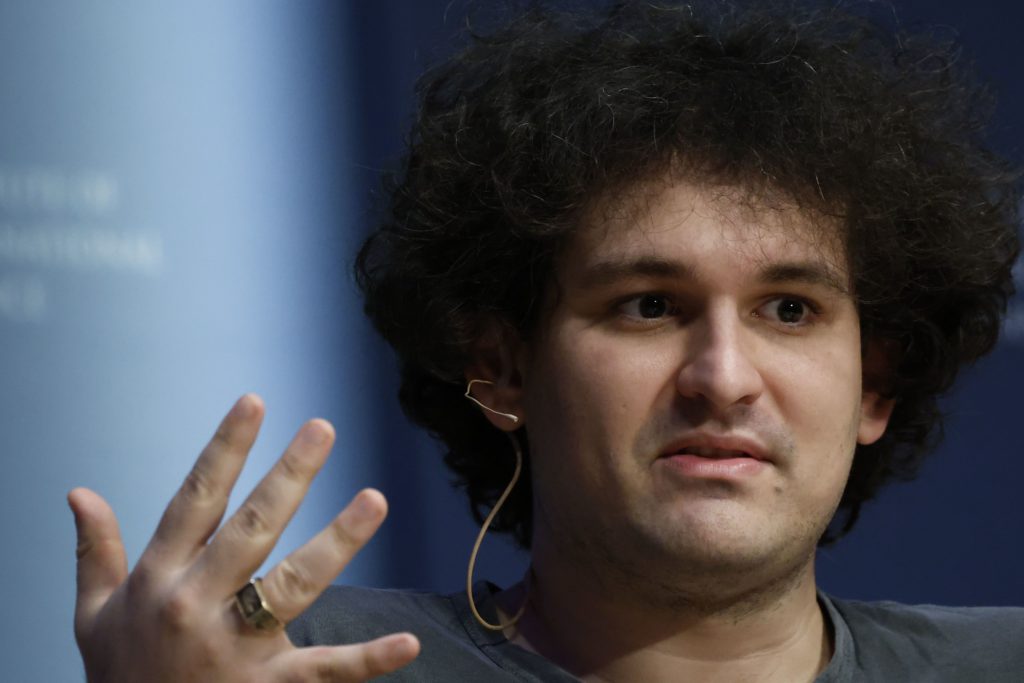
(Bloomberg) — Before a cadre of Jane Street Group alumni spectacularly scorched the cryptocurrency landscape from their perch at FTX this month, the Wall Street firm was enjoying its status as the behemoth almost nobody knew about.

The more-than 2,000 employee powerhouse based in lower Manhattan is known among peers for its obsession with risk and preference for stealth. It digs into the health of trading partners, models potential catastrophes, autopsies losses and restricts staff from commenting publicly, because even that poses a danger.

The easiest way to describe the culture that Sam Bankman-Fried created at FTX: The opposite.

As the story unspools of the epic collapse of FTX, the $32 billion crypto exchange now in bankruptcy, one of the biggest revelations is that founder and former leader Bankman-Fried recruited an inner circle from some of the most serious employers around Wall Street and Silicon Valley and built such a haphazard operation. 

Fellow Jane Street defectors included his one-time romantic partner Caroline Ellison, who ran the Alameda Research investment arm, and Brett Harrison, who oversaw FTX US. Sam Trabucco, who co-led Alameda for a time with Ellison before announcing his departure in August, was a trader at Susquehanna International Group. Technology head Gary Wang and engineering chief Nishad Singh hailed from Google and Facebook, respectively. FTX’s chief operating officer, Constance Wang, previously worked at Credit Suisse Group AG. 

Jane Street should have been an ideal training ground. On Wall Street, the proprietary trading shop is considered a premier employer of quants and techies, priding itself on catching big, complex risks that the rest of the market misses. It’s been trading crypto for half a decade.

Despite such pedigrees, a growing pile of evidence — now laid out in bankruptcy court — shows key parts of FTX lacked adequate risk controls and bookkeeping. Secret financial ties and privileges for Alameda alarmed investors and employees alike. FTX is now the subject of a criminal probe. And a tally of its assets shows a “substantial amount” is either missing or stolen, a lawyer for firm told the bankruptcy court Tuesday. That case involves more than a million creditors.

“When billions of dollars are changing hands, this isn’t a child’s game of Monopoly,” said Ty Gellasch, CEO of the Healthy Markets Association, an advocacy group. “You have to have record keeping that looks better than a high school kid’s lemonade stand.”

An FTX representative didn’t respond to a message seeking comment, and a spokesman for Jane Street declined to comment.

When Vox messaged Bankman-Fried last week to ask where the trouble began, he blamed “messy accounting” and said he “didn’t realize the full size of it until a few weeks ago.”

“I didn’t mean for any of this to happen,” he wrote in a letter to employees Tuesday. “And I would give anything to be able to go back and do things over again.”

Doomsday Trade

Bankman-Fried spent three years at Jane Street, and there’s no black mark — or what’s known in the industry as a “disclosure event” — in his sparse employment records with brokerage regulators.

The firm starts indoctrinating new traders into its mania with risk the moment they arrive, according to people with knowledge of its practices. Its leaders allocate an unusually thick slice of capital to hedging and even maintain a doomsday trade in case the US stock market craters.

Traders at Jane Street are known to stay late, socialize over chess and go on outings to escape rooms. But above all, its leaders expect they will maintain a level of loyalty that was more common in Wall Street’s era of partnerships, when a firm’s interests always came first and discretion was paramount, according to people close to the company. Managers wouldn’t be comfortable with employees who form a clique or champion a competing calling. 

At FTX, Bankman-Fried embraced a different approach, preaching effective altruism, a dedication to earning as much money as possible and then giving it all away. Eventually, he shacked up in a Bahamas penthouse with fellow employees, who in a number of cases dated coworkers.

While Jane Street shows off a code-breaking enigma machine, FTX had video games during work hours. Bankman-Fried himself was known to play League of Legends in key meetings.

And then there was his embrace of the spotlight.

Bankman-Fried’s Alameda made waves in 2019 after listing itself on the BitMex exchange’s leader board. It was a conspicuous move even by crypto’s norms, with traders generally preferring nom-de-plumes in rankings to avoid attracting hackers or home-invasion robberies.

Contacted by a Bloomberg reporter at the time, Bankman-Fried said casting off anonymity was strategic — a way of broadcasting his team’s clout in the market as it prepared to launch FTX. Two Alameda accounts were among the board’s top 10 most successful by lifetime profits.

Indeed, FTX’s ascent was rapid. 

Read more: Billion-dollar-a-day crypto trader finds accolades top anonymity

Late that year, venture capitalist Edith Yeung stopped by the Peninsula luxury hotel in Hong Kong to introduce a government official to Bankman-Fried, the then-27-year-old running her latest investment. He and his colleagues, awaiting another funding round, were renting a penthouse suite with a prime view of the city.

It was the middle of a party when Yeung arrived, she recalled in an interview with Bloomberg prior to the collapse of FTX. “I remember having this guy who’s suit-and-tie and when we walked in, they were playing beer pong,” said Yeung, a general partner at Race Capital. The official turned to her and asked, ‘“You invested in these kids?”’

As FTX’s market share soared, so too did Bankman-Fried’s public persona. Soon he was everywhere, directly addressing regulators and lawmakers, while FTX bought ads and the naming rights to a stadium.

In Bankman-Fried, authorities saw someone who could help bridge crypto and Wall Street. He launched into his congressional testimony at a hearing last December by mentioning his stint as a quantitative trader. Soon he boasted that his firm offered robust around-the-clock oversight of risk, which he said anyone could check by monitoring its data.

“Unlike the traditional financial ecosystem where risk builds up overnight, where there needs to be separate risk models for weekends and overnight activity and holidays, where hours can go by with no ability to mitigate risk to the system, we have a transparent system,” he said.

Feeling Ghosted

The reality was that FTX ignored some of Wall Street’s routine conventions. Messages and documents shared in FTX Slack channels automatically deleted in regular intervals, according to people familiar with the matter. Outsiders sometimes roamed the workplace. People at firms that FTX struck deals with, and developers building on the Solana blockchain projects it supported, could come work and hang out in its offices.

FTX’s organization chart sometimes obscured the special status of Bankman-Fried’s inner circle, current and former employees said. They were the ones with access to vital information, while other top-tier executives grumbled about being left in the dark — including about Alameda’s relationship to FTX. 

Ellison, who knew Bankman-Fried from their time at Jane Street, was promoted to co-CEO of Alameda in 2021 when he stepped back from daily management of that business to focus on FTX. For a time, they were romantically involved as they led their respective businesses, according to the people familiar with the situation, asking not to be named discussing private information.

Considering her lack of leadership experience, her appointment was surprising, one of the people said. Compared with him, she sent fewer tweets and rarely spoke to the press.

Meanwhile, people working in some of FTX’s many side ventures struggled to reach Bankman-Fried for key decisions, according to another former executive. Over the past few months, he was especially uncommunicative. Top lieutenants felt ghosted and privately fretted about finances. In one case, part of the firm nearly missed payroll. In another, bonuses were delayed.

Diverging Fates

Crypto traders could have used a doomsday trade heading into this year’s rout. At FTX, a $60 billion mountain of collateral dwindled to $9 billion, Bankman-Fried wrote in his letter Tuesday. He pointed to a combination of a credit squeeze, a selloff in virtual coins and a “run on the bank.”

As part of the bankruptcy, the firm is being led by John J. Ray III, who oversaw the liquidation of Enron Corp. In a filing last week, he decried FTX’s corporate controls and its “complete absence of trustworthy financial information.”

FTX lacked a system for forecasting how much cash it would have available as revenue came in and bills got paid, Ray wrote. Not all of its main business silos were audited, and one that was performed was conducted by “a firm with which I am not familiar,” he said, noting that it recently announced a metaverse headquarters in Decentraland.

Ultimately, outcomes at Jane Street and FTX diverged: When the Covid-19 pandemic erupted in the US in early 2020, Jane Street’s revenue soared 54% to $10.6 billion in the 12 months that followed. When crypto prices slumped this year, and the depth of its entanglements with Alameda surfaced, FTX collapsed. 

But Bankman-Fried’s unraveling still had an unwelcome impact on Jane Street, elevating its profile. Google Trends, a tool for tracking the public’s interest, shows searches for its name started climbing early this month. 

–With assistance from Olga Kharif and Yueqi Yang.

More stories like this are available on bloomberg.com

©2022 Bloomberg L.P.

Senate Democrats Scrutinize Rental-Pricing Software From Thoma Bravo Unit

(Bloomberg) — Senators Elizabeth Warren and Bernie Sanders are demanding information from a software company owned by private equity firm Thoma Bravo LLC over concerns its algorithm is driving up rents across the country. 

The senators are scrutinizing pricing software sold by RealPage Inc. that’s used by the largest property management companies to set prices on more than 20 million rental units in the US.

In a letter to RealPage’s chief executive officer, Dana Jones, dated Tuesday, the senators sought details on the company’s practices, citing concerns its Yieldstar software fosters collusion between property owners and leads to rent increases. 

“As housing becomes increasingly concentrated within the hands of a few, we are concerned that your software is facilitating a never-ending race to setting the highest possible rents,” wrote Warren, a Massachusetts Democrat, and Sanders, an independent from Vermont. 

The senators pointed out that RealPage has created a forum — RealPage User Group — which encourages landlords to work together, creating a virtual “cartel” among property owners. YieldStar clients include GreyStar Real Estate Partners LLC, the largest US property manager, as well as Camden Property Trust and Mid-America Apartments LP, among others. 

RealPage acquired its largest competitor, Lease Rent Options or LRO, in 2017. Following the transaction, its YieldStar software became the dominant model used by corporate landlords in many cities, a ProPublica investigation found last month. The Justice Department’s antitrust division had reviewed the deal, but ultimately let it move forward. 

Thoma Bravo acquired RealPage last year.

The letter, which was also signed by Senators Ed Markey of Massachusetts and Tina Smith of Minnesota, both Democrats, asks that RealPage provide information on the metropolitan areas where it has the highest market share and the average rent increases imposed by its clients for the past five years. 

“While the underlying cause of the housing crisis is a supply shortage of nearly seven million affordable homes, private equity firms and other institutional investors have taken advantage of these conditions and fueled the fire under American renters,” the senators wrote.

Other senators also have asked the Justice Department to look into RealPage’s YieldStar algorithm.

Inflation rose 7.7% in October from a year earlier with rent — which comprises about one third of the Consumer Price Index — as a partial driver. The median asking rent in the United States has increased 28% since the first quarter of 2020, according to US Census Bureau data compiled by Bloomberg.

More stories like this are available on bloomberg.com

©2022 Bloomberg L.P.
Tesla Investors Plead With Musk for a Buyback to Perk Up Stock

(Bloomberg) —

Two years ago this month, Tesla fans learned the electric-car maker’s shares were joining the S&P 500 Index, and Elon Musk was turning retail investors into Teslanaires.

Lately, some of the same supporters are griping and engaging in gallows humor about the U-turn the stock has done since then. It more than tripled within a year, only to then relinquish virtually all those gains, with significant damage being done by what looks thus far to be an ill-fated acquisition by Musk of Twitter.

On Monday, after Tesla slumped to a two-year low, more than 8,600 users of the platform that’s been preoccupying Musk for weeks tuned into a Twitter Spaces conversation that the host titled “$TSLA Bagholder Therapy.” Many have complained about the CEO dumping his stock and are asking for a share buyback.

“This is up to the Tesla board,” Musk responded to one such request last week. He said during an earnings call last month that the board generally thought a buyback made sense and that something on the order of $5 billion to $10 billion was possible.

Authorizing a buyback would be a show of confidence on the part of Tesla’s board that the stock is undervalued. Musk, who’s not been shy in the past about talking down the share price, was wildly bullish about its potential during the latest earnings call, saying he saw potential for Tesla to be worth more than Apple and Saudi Aramco combined. He undercut those comments three weeks later by selling another $3.95 billion batch of his stock, bringing the total he’d disposed of in the past year to about $36 billion.

Musk’s incessant tweeting about the social media company he now owns, rather than the carmaker he’s been paid handsomely to run, is showing no signs of letting up. That’s not helping a stock that already was under pressure after Tesla warned last month that it probably will come up just short of its goal to expand vehicle deliveries by 50% this year.

After Musk acknowledged demand was “a little harder” to come by because of economic downturns in China and Europe and the Federal Reserve’s interest rate increases, Tesla reduced prices in China, and one analyst has said he won’t be surprised if the company makes further cuts in the coming weeks.

For all these reasons for concern, Tesla still has a lot going for it. It remains far and away the dominant electric vehicle brand in the US and is well positioned to benefit from the tax credits that the Inflation Reduction Act makes available both to consumers and battery manufacturers. Incumbent carmakers including Volkswagen and Mercedes-Benz keep stumbling in their attempts to catch the EV leader.

If Tesla does end up doing its first-ever share buyback, it will run counter to what the company tells investors wondering whether it’ll ever return some cash to shareholders: that it intends to retain all future earnings to finance further growth. Coming up with coherent messaging about a change of heart in this regard could be tricky.

More stories like this are available on bloomberg.com

©2022 Bloomberg L.P.
Xiaomi’s Revenue Dives 10% After Smartphone Demand Tanks

(Bloomberg) — Xiaomi Corp.’s quarterly revenue fell almost 10% as it battled a slumping global smartphone market and weak consumer demand at home.

Sales of mobile devices fell 11%, leading declines across business divisions encompassing smart electronics and internet services. The Beijing-based company logged sales of 70.5 billion yuan ($9.9 billion), slightly above estimates. But it posted a surprise net loss of 1.5 billion yuan for the quarter through September, reflecting a writedown of almost 3 billion yuan on items such as investment losses. Adjusted net income, which strips out exceptionals, exceeded analysts’ estimates.

China’s Covid Zero policy has sown chaos across the country’s tech industry and supply chains, depressing economic activity. At the same time, electronics demand is cooling as shoppers react to elevated inflation and slowing economic growth. Global smartphone shipments are at their lowest in years thanks to depressed demand, but Xiaomi managed to gain market share in Europe, executives told reporters on a conference call.

“The challenge in China is Covid, the pandemic situation is still volatile,” President Wang Xiang said. “There’s still room for growth in overseas markets,” he added.

Read more: Violent Protests Erupt at Apple’s Main IPhone Plant in China

Global smartphone sales are set to decline 2.9% next year following a 12.2% slump in 2022, Jefferies predicted this month. Xiaomi’s unit sales will decrease this year and next before recovering slightly in 2024, Jefferies forecast. 

That’s partly because phones sold in recent years have been well-built, leaving consumers with little need to purchase new ones, Jefferies analysts including Edison Lee and Nick Cheng said in the Nov. 9 note. And new models are adding few innovations, they said.

“Structural weakness is worse than expected,” the analysts wrote. The challenges are “compounded by a weak economy.”

What Bloomberg Intelligence Says

China’s smartphone sales downturn could extend to 2023, even though the shipment decrease narrowed in September. A boost from the iPhone 14 launch could be one-time and Android weakness looks to be overwhelming in the following months. Persistent drops in corporate PC shipments indicate business outlook is still cautious post-lockdown.

— Steven Tseng and Sean Chen, BI analysts

Click here for the full research

Xiaomi reported its first sales drop in the first quarter, followed by a 20% decline in sales for the June quarter. 

Even the global leaders haven’t been spared. Samsung Electronics Co., the world’s biggest maker of phones, displays and memory, called out falling handset sales in China as a drag on its components business. Apple Inc. expects to produce at least 3 million fewer iPhone 14 handsets than originally anticipated this year, people familiar with its plans have said, primarily due to softer demand for the less expensive versions of the model.

Shares of Xiaomi have lost half their value in the past year, leaving the electronics giant with a market capitalization of about $31 billion. Still, it’s fared better than some of its domestic phone-making rivals, such as Oppo and Vivo, thanks to its wider international footprint and distribution.

Co-founder and Chief Executive Officer Lei Jun has made electric vehicles Xiaomi’s lodestar for future growth, pledging $10 billion in investment and spinning off a separate company for the venture. Xiaomi made progress in the field, Wang said without elaborating.

That project will take years to come to fruition, however, leaving the company reliant on a recovery in consumer spending on electronics to revive its flagging fortunes. Sales of Android handsets, where Xiaomi does battle with Samsung in international markets, are not expected to recover soon, especially not at home in China.

(Updates with executives’ comments from the third paragraph)

More stories like this are available on bloomberg.com

©2022 Bloomberg L.P.

Inside the Business of Black Friday Deals Websites

(Bloomberg) — If you Google something about Black Friday, you’re likely to land on a website owned by Ziff Davis Inc.

The publicly held digital media company operates three sites with Black Friday in the domain name. That includes BlackFriday.com, which earlier this week was the top organic search result on Google for “Black Friday deals.”

Black Friday arrives this week in the US as the traditional kickoff to Christmas shopping. This year is a departure from 2021 when consumers splurged after pulling back during the pandemic. Excess inventory and more frugal shoppers have raised expectations for more discounting this year.

Bloomberg recently spoke with Frank Minervini, vice president and head of marketing for the group that runs Ziff Media’s shopping-themed websites, about the evolution of Black Friday deals websites that began with publishing digital scans of the mailers stuffed into local newspapers.

The content on these sites revolves around telling readers about deals and discounts. How does the company collect all this information?

We’ve got active Slack channels of deal hunters — people who are curating product deals all day, every day. They’re up at all hours. We have them across the globe.

With so much competition to be listed high in search results from other deals sites and retailers, how important is getting scoops?

Getting the leak or the first available copy, for sure, drives up engagement. Same from Google’s perspective — if we’re the first ones to news, we’re gonna get authority. We’re gonna get ranking out of that. That obviously drives eyeballs.

Why have three websites dedicated to Black Friday (Blackfriday.com, Bestblackfriday.com and Theblackfriday.com)?

We thought there were probably a couple different offerings. One could be an evergreen asset. One could be predominantly an ad scan asset and then one would be kind of the premier. [Editor’s note: ad scans initially were copies digital of printed Black Friday deals published in mailers and newspapers].

We were looking at it as some diversification.

Ziff Davis, which generates about $1.4 billion in annual sales, uses acquisitions as a core part of its growth strategy. (It has also added sites such as Mashable and RetailMeNot to its portfolio.) What was the thinking behind buying Blackfriday.com in 2017?

The original owners’ intent was how do you capitalize on getting ad scans live, get your programmatic display revenue and not really worry about the experience or trying to create a direct relationship with the customer.

We didn’t really want that transient audience. We want that year-round evergreen audience. We want them to sign up for our email newsletter. We want them to engage with our other products. If you look way back, there wasn’t a lot of content. It was just the ad scan. We really try to keep up the best of the pricing, the predictions and the comparisons. The kind of knowledge that helps users and makes them want to come back to us.

One improvement you’ve made to the so-called ad scan has been inserting links back to the retailers, and getting a cut of the sale when a shopper makes a purchase. What has that done for your affiliate marketing business?

It’s now the bulk of the revenue.

Retailers have been shifting their marketing to digital, which means the ad flyers that older generations grew up with aren’t being produced as often. But your Black Friday sites recreate digital versions. Why?

They’re moving away from physical copies and turning to digital, and it’s not the same look. It’s not the same feel. We curate and create one, so the people who are used to browsing an ad scan have that same experience [as a printed flyer.]Editor’s note: This interview has been edited and condensed.


More stories like this are available on bloomberg.com

©2022 Bloomberg L.P.

Revisiting the “Magic Money Box” After the FTX Collapse

(Bloomberg) — Listen to Bloomberg Crypto on the iHeartRadio App, Apple Podcasts or  Spotify.Have you heard the one about “the box”? In April 2022, long before Sam-Bankman Fried was tweeting rambling threads about the collapse of his FTX empire, he joined the Bloomberg Odd Lots podcast and talked about “the box.” It was his metaphor for describing the crypto practice of “yield farming”, and his description at the time raised many eyebrows because it seemed, well, too good to be true.Joining this episode is Joe Weisenthal, co-host of the Odd Lots podcast, who at the time ended that episode with the deeply relatable comment, “we all feel weird.”

Subscribe to the Bloomberg Crypto Newsletter at https://bloom.bg/cryptonewsletter 

This podcast is produced by the Bloomberg Crypto Podcast team: Supervising producer: Vicki Vergolina, Senior Producer: Janet Babin, Producers: Sharon Beriro and Muhammad Farouk, Associate Producers: Mo Andam and Ty Butler. Sound Design/Engineer:  Desta Wondirad

More stories like this are available on bloomberg.com

©2022 Bloomberg L.P.

Violent Protests Erupt at Apple’s Main iPhone Plant in China

(Bloomberg) — Hundreds of workers at Apple Inc.’s main iPhone-making plant in China clashed with security personnel, as tensions boiled over after almost a month under tough restrictions intended to quash a Covid outbreak.

Workers at the Foxconn Technology Group plant streamed out of dormitories in the early hours of Wednesday, jostling and pushing past the white-clad guards they vastly outnumbered, according to videos sent by a witness to portions of the protest. Several white-suited people pummeled a person lying on the ground with sticks in another clip. Onlookers yelled “fight, fight!” as throngs of people forced their way past barricades. At one point, several surrounded an occupied police car and began rocking the vehicle while screaming incoherently.

The protest started overnight over unpaid wages and fears of spreading infection, according to the witness, asking to remain anonymous for fear of repercussions. Several workers were injured and anti-riot police arrived on the scene Wednesday to restore order, the person added.

In one video, irate workers surrounded a silent, downcast manager in a conference room to voice grievances and question their Covid test results. It wasn’t clear when the meeting took place.

“I’m really scared about this place, we all could be Covid positive now,” a male worker said. “You are sending us to death,” another person said.

The Zhengzhou campus was operating normally as of Wednesday evening, a Foxconn spokesperson said. The violence had erupted after a portion of recently arrived employees raised complaints about “work subsidies” — bonuses or payments on top of usual wages, Foxconn said in a statement. But the company stressed that it handles all such compensation in strict accordance with its contractual obligations. 

“With regards to the violence, we are continuing to communicate with workers and the government, to avoid a recurrence,” the company said without elaborating.

The rare instances of violence at the plant in the central city of Zhengzhou reflects a build-up of tensions since the lockdown began in October. Many among the vast workforce of more than 200,000 at “iPhone City” have been plunged into isolation, forced to subsist on spartan meals and scrounge for medication. 

Many eventually fled the plant on foot last month. Foxconn and the local government appeared to have gotten the situation under control in recent weeks, promising unusually high wages to attract new staff and promising better working conditions.

Wednesday morning’s protests suggest that is no longer the case. It underscores how Xi Jinping’s Covid Zero policy, which relies on swift lockdowns to stamp out the disease wherever it pops up, is increasingly weighing on the economy and throwing swathes of the global supply chain into disarray. Beijing recently issued new directives ordering officials to minimize disruption and use more targeted Covid controls, but surging outbreaks in major cities have forced local authorities to reach for strict curbs again.

“It’s really a mess,” said Barry Naughton, a professor at the University of California San Diego who specializes in Chinese economics. “They’ve created a situation where the local decision makers are under intolerable pressure.”

The offshore yuan fell after Bloomberg’s report, extending losses and making it the worst performer in Asia on Wednesday.

The Chinese currency “is underperforming its other Asian FX peers on reports of protests at Foxconn’s plant in Zhengzhou that supplies Apple products,” Stephen Innes, managing partner at SPI Asset Management wrote in a note. “However, a broader, more optimistic interpretation is that China is hitting the limits of ‘Covid zero’ and the authorities’ efforts to loosen restrictions will continue.”

Violence has erupted sporadically across China over Covid restrictions. In May, hundreds of workers clashed with security personnel at Quanta Computer Inc.’s factory in Shanghai after they were barred for months from contact with the outside world, while protests have emerged in locked-down areas of Guangdong, the southern manufacturing hub.

Read more: IPhone Pro Output Estimates Cut by Morgan Stanley After Lockdown

The Foxconn situation serves up another reminder of the dangers for Apple of relying on a vast production machine centered on China at a time of unpredictable policy and uncertain trade relations.

Zhengzhou is the site of Apple’s most critical production, churning out an estimated four in five of its latest-generation handsets and the vast majority of the highest-end iPhone 14 Pro units. Apple warned this month that shipments of its newest premium iPhones will be lower than previously expected — just ahead of the peak holiday season shopping.

The sprawling compound has operated for weeks within a “closed loop,” or a self-contained bubble that limits contact with the outside world. That is keeping some production going. Apple and Foxconn have said they’re working to replace staff who’ve left and resume full production as soon as possible.

The protests took place just hours after Henan party chief Lou Yangsheng visited the area where Foxconn plants were located and held a video chat with select employees. He asked managers to aid staff and ensure a “warm, relaxed and stable” living and working environment, according to the official Henan Daily. Lou’s visit underscored the unusual amount of effort that provincial officials had devoted in recent weeks toward the nation’s biggest private-sector employer, from reportedly helping in recruitment to exhorting retirees to work at Foxconn.

Naughton, the professor, said Beijing is putting intense pressure on local officials to realize contradictory goals.

“The tension is that Beijing wants both Covid Zero and full economic growth,” he said. “It’s kind of impossible.”

–With assistance from Rachel Chang, Wenjin Lv and Jing Li.

(Updates with Foxconn’s comments and official media from the sixth paragraph)

More stories like this are available on bloomberg.com

©2022 Bloomberg L.P.

Tesla’s Musk Sees South Korea as a Top Investment Candidate

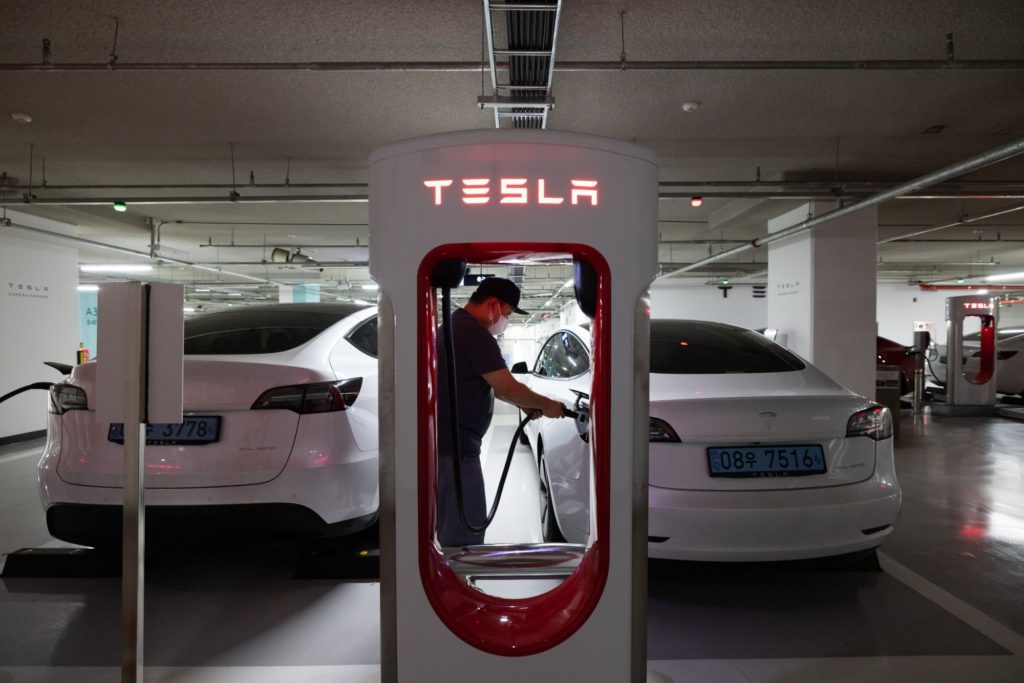
(Bloomberg) — Tesla Inc. Chief Executive Officer Elon Musk said he considers South Korea as a top candidate for investment, according to the office of President Yoon Suk Yeol.

The billionaire’s remarks came out of a virtual meeting Musk had with Yoon, according to Yoon’s office. Musk said he would make any investment decision after a comprehensive review of investment conditions, including around manpower and technology.

Yoon also listened to Musk’s plan to construct another gigafactory in Asia to make electric cars. Tesla’s main factory in Asia is in Shanghai in China — a facility that recently doubled production capacity to about 1 million vehicles a year.

Musk also expressed willingness to actively invest in EV charging infrastructure in South Korea, according to Yoon’s office, and significantly expand supply chain cooperation with Korean companies. Yoon’s office said Musk expects parts purchases from Korean firms to grow to at least $10 billion by 2023.

Tesla representatives didn’t immediately respond to an email seeking comment.

Tesla already buys many South Korean-made automotive parts, including from LG Energy Solution Ltd., a long-time battery supplier. Indeed Jeon Hyeyoung, an analyst at Daol Investment & Securities Co. in Seoul, said last month that LG Energy’s outlook is positive in part because of increased production at Tesla’s Shanghai plant.

LG Energy said in June that it would spend $452 million building a new line for 4680 batteries, the next-generation cells touted by Tesla as key to unlocking cheaper, and thereby more widespread, electric vehicles.

Korea is also home to two of the world’s biggest automakers, Hyundai Motor Co. and Kia Corp., as well as other battery makers such as SK On Co. and Samsung SDI Co. The Asian nation sees electric vehicles, rechargeable batteries and semiconductors as key growth drivers of its economy and considers its high-tech supply networks with the US essential.

Ties between Korea and the US came under strain in August when the Biden administration signed its Inflation Reduction Act, which rules out tax breaks for electric vehicles assembled abroad.

Outside of China, where Tesla has a large presence, South Korea isn’t the first country in the region to woo Musk.

Indonesia President Joko Widodo in August said he wants Tesla to make electric cars in the nation, and not just batteries, and is willing to take the time needed to convince Musk to see the country as more than just a rich repository of resources.

According to Choi Sang-mok, South Korea’s senior presidential secretary for economic affairs, the meeting on Wednesday happened at 10am local time after Yoon and Musk were scheduled to meet in person at the B20 Summit in Bali, Indonesia, but that tie-up got canceled.

Yoon explained Korea’s world-class automotive industry ecosystem and investment conditions, and asked for a positive review of Korea as a candidate for another gigafactory, Choi told reporters in Seoul.

Yoon also told Musk that South Korea’s government would actively improve regulations that may cause difficulties for foreign investors doing business in Korea, according to Choi.

–With assistance from Heejin Kim, Sohee Kim, Chunying Zhang and Shinhye Kang.

(Updates with further detail on meeting in final paragraphs.)

More stories like this are available on bloomberg.com

©2022 Bloomberg L.P.
Korea Media Stocks Surge as China Resumes Online Streaming

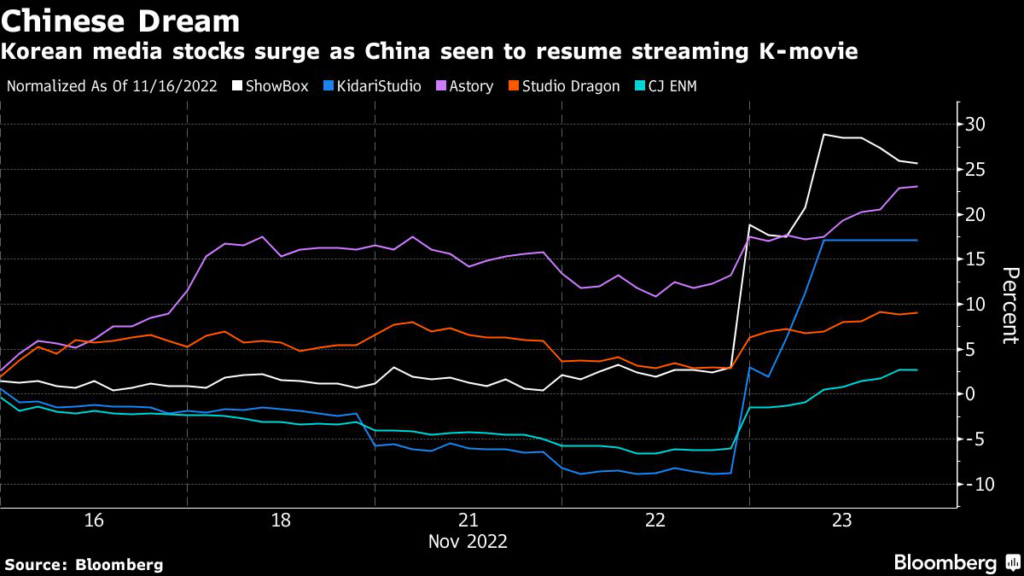
(Bloomberg) — Shares of South Korean movie producers and distributors rallied as China resumed the streaming of a Korean movie following a six-year hiatus, spurring hopes of more cultural exports.

Film distributor and producer Showbox Corp. jumped 15% on Wednesday, while KidariStudio Inc., a producer of online comics and other content, surged by the 30% daily limit. Other media stocks including Studio Dragon Corp. and CJ ENM Co. also rallied.

The market reaction underscores expectations that after years of a tacit ban on Korean entertainment, Beijing may finally be opening its doors to movies, which were among the last segments to still face restrictions. The two countries’ ties have gradually improved since a 2016-2017 tension over Korea’s deployment of a US-led missile defense system, which had caused a halt in Chinese group tourists for some period.

“This is another ‘green shoot’ that will raise hopes Beijing intends a foreign policy reset in Xi’s third term,” said Andrew Gilholm, director of analysis for China and North Asia at Control Risks. “But nothing very substantive has really happened yet. This is a very low-cost, low-impact kind of gesture.”

The resumption may help Korean cultural content producers return to the largest consumer market in the region, lifting earnings and boosting the appeal of the nation’s entertainment stocks.  

President Yoon Suk Yeol’s office confirmed Tuesday that China has allowed the online streaming service. It added that President Xi Jinping acknowledged that such a halt in exchanges isn’t beneficial, the South Korean presidential office cited the Chinese leader as saying when the two met during the G-20 in Indonesia.

Chinese Foreign Ministry spokesman Zhao Lijian, however, denied at a regular press briefing in Beijing that an entertainment ban was ever in place, saying a number of Korean movies and TV series were introduced in his country last year. 

The movie getting the spotlight is “Hotel By the River”. Tencent’s online streaming platform began distributing the film this month, local media outlets including Korea Economic Daily reported earlier. 

For now, Chinese regulators will still need to review all films before distribution, which may take time, said Kim Hoi Jae, an analyst at Daishin Securities Co. Firms that have older dramas and movie titles, including Studio Dragon and ContentreeJoonAng Corp., may be have an advantage. 

Yonhap News reported that few Korean movies have been available on screen or on online streaming services in China since the missile row.  

–With assistance from Colum Murphy, Shinhye Kang and Dan Murtaugh.

(Updates throughout)

More stories like this are available on bloomberg.com

©2022 Bloomberg L.P.

Close Bitnami banner
Bitnami