Bloomberg

TSMC Founder Says U.S. Welcomes Chipmaker’s Arizona Plant Plan

(Bloomberg) — US Vice President Kamala Harris welcomed Taiwan Semiconductor Manufacturing Co.’s decision to open a second plant in Arizona and reiterated her government’s determination to help Taiwan, the company’s founder Morris Chang said.

Chang, who was speaking Saturday as Taiwan’s special envoy at the Asia-Pacific Economic Cooperation summit in Bangkok, said he had told Harris the US Secretary of Commerce had been invited to attend a ceremony for the $12 billion plant next month.

The cost of making chips in Arizona may be at least 50% higher than in Taiwan, but that didn’t prevent the company from moving more of its production to the U.S., Chang said, adding “this is very important for the U.S. and very much needed.”

Read More: TSMC Prepares for Another US Plant as China Tensions Simmer

TSMC, which retains most of its production in Taiwan, has started to diversify over the past year or so to help meet demand in countries seeking to bolster semiconductor production. The company is building a $7 billion plant in Japan, and is also in talks with Germany about potentially establishing a facility in the European country, Bloomberg has reported.

Chang said he briefly talked with China’s President Xi Jinping on Friday, and congratulated him on the success of the recently completed 20th Party Congress, However, he said they did not discuss any topics related to tensions over the Taiwan Strait.

–With assistance from Cindy Wang.

More stories like this are available on bloomberg.com

©2022 Bloomberg L.P.

Tiger Global-Backed Ruangguru Fires Hundreds of Employees

(Bloomberg) — Online learning platform PT Ruang Raya Indonesia said it fired hundreds of employees as a deterioration in the global economy and investment climate hurt technology companies including start-ups like it. 

Ruangguru, as the firm is known, will offer severance pay and other compensation according to the law, according to a statement from its founders on its website Saturday. It did not give an exact number of people who will lose their jobs. 

“We apologize for our failure to predict and anticipate the rapidly developing economic situation,” they said. “At the beginning of the pandemic, Ruangguru’s services experienced a large increase in demand which resulted in too many and too fast recruitment in the last two years.”

Jakarta-based Ruangguru has more than 22 million users in Indonesia, Singapore, Vietnam and Thailand, according to its website. The company, which had more than 4,000 employees, provides services including subscription-based video and live teaching.

It raised $55 million in 2021 in a funding round led by Tiger Global Management. In July, it was reported to be considering raising $100 million to $150 million in a funding round, according to people with knowledge of the matter.

–With assistance from Olivia Poh.

More stories like this are available on bloomberg.com

©2022 Bloomberg L.P.

Humbled Central Bankers Scale Back Their Ambitions

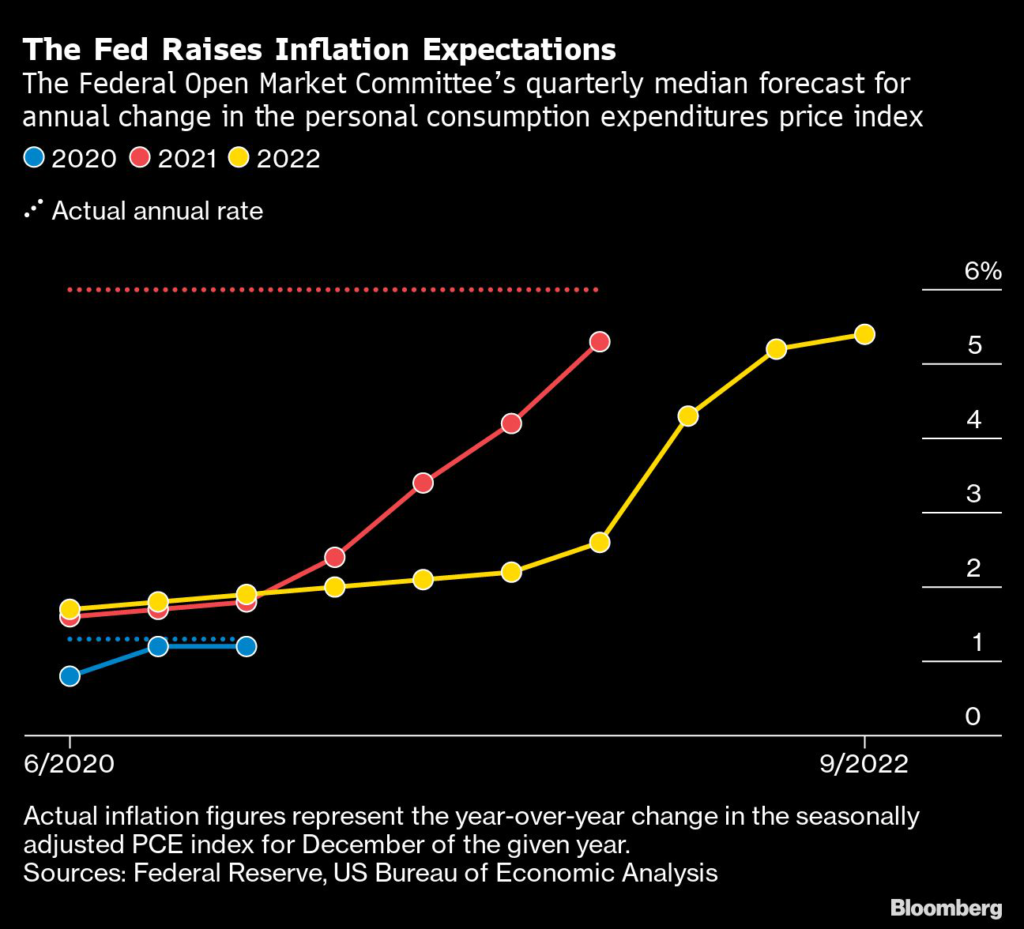
(Bloomberg Markets) — Once seen as the world’s go-to ­economic crisis fighters, central bankers are now desperately trying to contain a problem they allowed to happen: inflation. That’s eroded their credibility in the eyes of investors and society at large.

Officials have offered mea culpas. US Federal Reserve Chair Jerome Powell acknowledged in June that “with the benefit of hindsight, clearly we did” underestimate inflation. Christine Lagarde, his counterpart at the European Central Bank, has made similar concessions, and Reserve Bank of Australia Governor Philip Lowe said in May that his team’s forecasts had been “embarrassing.” In October, South African Reserve Bank Governor Lesetja Kganyago warned at a monetary policy forum that it takes a long time for central bankers to build ­credibility—but that it can be lost abruptly.

Central banks’ independence is harder to justify after such a failure of “analysis, forecasts, action and communication,” Allianz SE’s chief economic adviser, Mohamed El-Erian, tweeted in October. The tragic result, he says, is “the most front-loaded interest­-rate cycle that we have seen in a very long time, and it didn’t need to be.”

The first step for the newly humbled monetary policymakers is getting prices back under control without creating economic havoc. Next they must transform the way central banks operate. For some experts, that means three things: paring down their mission, simplifying their messaging and preserving flexibility.

“Do more by trying to do less” is how former Reserve Bank of India Governor Raghuram Rajan describes his advice to central bankers.

Back to Basics

The Fed’s big miss on inflation has led Powell to start invoking the lessons of Paul Volcker, who famously tamed it in the 1980s.

Since Volcker stepped down in 1987, the Fed’s remit has expanded. Alan Greenspan, chair until 2006, rode a boom in productivity to even lower inflation, but also stepped in to support markets whenever there were threats to the economy. When reckless lending eventually blew up the housing and credit markets in 2008, then-chair Ben Bernanke deployed the Fed’s balance sheet in ways that hadn’t been seen since the Great Depression.

Coming out of the Covid-induced recession, it looked as if central bankers had pulled it off again, led by Powell. Their coordinated response in March 2020 put a floor under asset prices and kept bond yields low, helping governments fund the massive spending needed to support millions of ­unemployed people. With inflation still tame, central bankers assumed responsibility for tackling problems such as climate change and inequality—including setting a new goal of “ broad-based and inclusive” employment. Meanwhile, stocks, bonds and cryptocurrencies were racing higher. Then consumer prices did, too, and central bankers didn’t see it coming.

The Fed’s new policy framework prevented a more aggressive approach to inflation, says Carl Walsh, a University of California at Santa Cruz economist who previously worked at the Federal Reserve Bank of San Francisco. He quotes the Federal Open Market Committee’s own words, which admitted that goals such as inclusive employment can shift over time and be tough to quantify.

“Making policy decisions ‘informed’ by employment shortfalls from a goal ‘that is not directly measurable’ has the potential to impart an asymmetric, inflationary bias in policy,” Walsh says.

Rajan says central bankers simply lost sight of their primary role, which is maintaining price stability. “If you told them, ‘That is your job, focus on that and leave all this other stuff aside,’ they would do a better job,” he says.

Keep It Simple

It follows that the simpler the mission is, the simpler the ­messaging should be.

Monetary policy works through central bankers’ manipulation of points along the yield curve—essentially the price of money over different periods of time. Central bankers provide signals about whether to expect interest rates to rise, fall or trend sideways, and traders in the financial markets buy and sell vast quantities of bonds accordingly. Those moves percolate through the broader society, influencing pension account balances, business and consumer confidence and views on future price movements. That’s what determines whether the central bank policies work or not.

“Monetary policy is 90% communication and 10% action,” says Bank of Thailand Governor Sethaput ­Suthiwartnarueput.

In early 2022, as the Fed, ECB and the Bank of England changed their outlooks for the economy and inflation, there was a “pretty massive failure” to communicate how policy would address those changes, says Athanasios Orphanides, who served on the ECB’s governing council from 2008 to mid-2012. “Tightening of monetary policy is not difficult. This is a no-brainer in central banking.”

The crossed wires could be seen in wild swings in global bond and currency markets throughout the year. In August the MOVE index of implied bond volatility—known as the US Treasuries fear gauge—jumped to a level exceeded only three times since 1988. Investors began demanding a premium to hold Australia’s AAA-rated bonds after the central bank reversed its pledge to keep interest rates on hold until 2024 and instead began its fastest tightening cycle in a generation.

Some central banks flashed early warning signs. In October 2021 the Reserve Bank of New Zealand started raising interest rates and the Bank of Canada adopted a more hawkish stance toward inflation, halting its bond-purchase program. More recently, the Bank of Canada announced it would start publishing a ­minutes-like summary of deliberations by officials after each policy decision to enhance transparency.

By contrast, the Bank of England, already taking flak for letting inflation get out of control, has also been criticized for how it handled a run on Britain’s currency and government bonds after Prime Minister Liz Truss’s government proposed a deficit-busting tax overhaul. First the central bank was accused of dragging its feet before helping to manage the fallout when the pound dropped to an all-time low against the dollar, and then investors were shocked when the BOE pledged an abrupt end to emergency gilt purchases. In the end, it was Truss who took the blame, resigning after just 44 days.

Stephen Miller, a former head of fixed income at ­BlackRock Inc. in Australia who’s now at GSFM Pty, says he’s been poring over spreadsheets of economic indicators such as the Federal Reserve Bank of Cleveland’s consumer price index measures in a way he hasn’t done for more than three decades. The reason: He doesn’t trust the forecasts and guidance coming from central banks.

“For me, the alarm bells started ringing on inflation long before central bank language changed,” Miller says. “One of the advantages of being 61 is that your formative years were a period where inflation was the norm, oil shocks were the norm. For the last year, I felt like I was harking back to that period.”

Miller’s report card is harsh: “The Bank of Canada, the Fed and the RBNZ I’d be giving a C+, the RBA a C- and the rest, including the BOE, an F.”

For Jérôme Haegeli, the “less is more” mantra should extend to so-called Fedspeak. The former Swiss National Bank economist says too many officials making public statements causes confusion. He recommends that the Fed take a lesson from the “very lean” Swiss communications.

After the annual summer gathering of central bankers in the mountain retreat of Jackson Hole, Wyoming, Fed officials fanned out onto the public circuit. In one 24-hour period, three top Fed officials spoke about the economic outlook at three different events and with three different tones. Esther George emphasized steadiness over speed, Christopher Waller signaled support for a 75-basis-point hike at the next meeting, and Charles Evans said he was open to 50 or 75. It’s a similar story at the ECB, where at least 19 of its primary officials were out giving speeches in the last week of September alone.

While central banks in most modern economies enjoy day-to-day independence, their mandates are set by democratically elected governments. In Australia and New Zealand, for instance, authorities are reviewing the parameters of their directives to monetary policymakers.

To get their message across to the public, the ECB has introduced cartoons and animated videos, some of which accompany rate decisions and strategy review documents. And Bank Indonesia, which already has massive followings on Facebook and Instagram, now also has its own TikTok account.

Trying to communicate to both audiences—the markets and the general public—can sometimes lead to confusion.

Maintain Flexibility

A third common prescription for central banks: Ditch forward guidance. That practice, first adopted in the early 2000s, aims to tell the public the likely direction of monetary policy. The problem: It’s too hard to predict the future. And it can lock policymakers into a particular mindset.

In an Oct. 12 speech, Fed Governor Michelle Bowman blamed the FOMC’s forward guidance for its failure to tackle inflation sooner: “The committee’s explicit forward guidance for both the federal funds rate and asset purchases contributed to a situation where the stance of monetary policy remained too accommodative for too long—even as inflation was rising and showing signs of becoming more broad-based,” she said.

And broken promises can do real harm to investors’ confidence. GSFM’s Miller cites RBA Governor Lowe’s failed guidance as an example.

“Phil Lowe saying no rate increases to 2024? Those kinds of messages are dead,” says Miller. “Markets can no longer take central bankers at their word,” given that they’ve pretended to be “all-seeing.”

James Athey, investment director of rate management at Edinburgh-based Abrdn Plc, warns that forward guidance won’t end until central bankers stop speaking so often. “The sheer number of speeches by central bank policy­makers in a given week, and the seeming desire of these speakers to expound on their own subjective expectations for the economy and monetary policy, means that even when the official communication is shying away from specific guidance, there is still plenty for markets to latch on to,” Athey says.

Communicating policy objectives gets more difficult as inflation climbs, Reserve Bank of India Governor Shaktikanta Das said in a speech in Mumbai in September. “It can be quite difficult to provide coherent and consistent guidance in a tightening cycle,” he said. “Central bank communication in the current context has thus become even more challenging than the actual policy actions.”

Of course, central banks will continue to play a crucial role in their economies, even if they dial back the rhetoric and scrap more difficult-to-measure goals such as the promotion of inclusive growth. They’ll continue to serve as guardians of financial stability, providing cash when markets seize. And they’ll find ways to stimulate economic growth when it’s needed again.

But if they heed the lessons of 2022, markets and the public can expect rarer, clearer and less ambitious policy communication—a new era of central bank humility stemming from their failure to prevent the inflation shock.

Jamrisko and Carson are senior reporters in Singapore covering economics and FX/rates, respectively.

–With assistance from Theophilos Argitis, Enda Curran, Kathleen Hays, Prinesha Naidoo, Garfield Reynolds, Jana Randow, Anup Roy, Craig Torres and Suttinee Yuvejwattana.

More stories like this are available on bloomberg.com

©2022 Bloomberg L.P.

Ethereum Co-Founder Warns Against Singapore’s Crypto Regulations

(Bloomberg) — Singapore’s ambition to become a hub for digital assets might not work out because of its skeptical approach toward cryptocurrencies, Vitalik Buterin, co-founder of the Ethereum blockchain platform, said. 

The city-state’s “willingness to make a distinction between blockchain usage and cryptocurrency is like one of those weird things,” he said in a video interview with The Straits Times, published on Sunday. “The reality is if you don’t have cryptocurrency, blockchains that you’re going to have are just fake and nobody’s going to care about them.”

Singapore is seeking to clamp down on retail-investor access to crypto trading to reduce risks to consumers from the market’s volatility. Last month, it unveiled proposals to restrict consumers’ participation in digital assets, including banning small investors from borrowing to fund coin purchases. 

Its moves have provoked concerns from others including Coinbase Global Inc.’s Chief Executive Officer Brian Armstrong, who earlier this month said Singapore’s proposed curbs on retail crypto trading was “incompatible” with its desire to become a hub for the so-called web3 industry. 

–With assistance from Suvashree Ghosh.

More stories like this are available on bloomberg.com

©2022 Bloomberg L.P.

Musk Says Trump Will Be Reinstated on Twitter After Poll Win

(Bloomberg) — Elon Musk said he will allow Donald Trump’s Twitter account to be restored after users on the social media website voted 52% to 48% to allow the former president’s return. 

The 24-hour poll garnered more than 15 million votes. Musk earlier reinstated accounts tied to conservative media personality Jordan Peterson and satirical website Babylon Bee. 

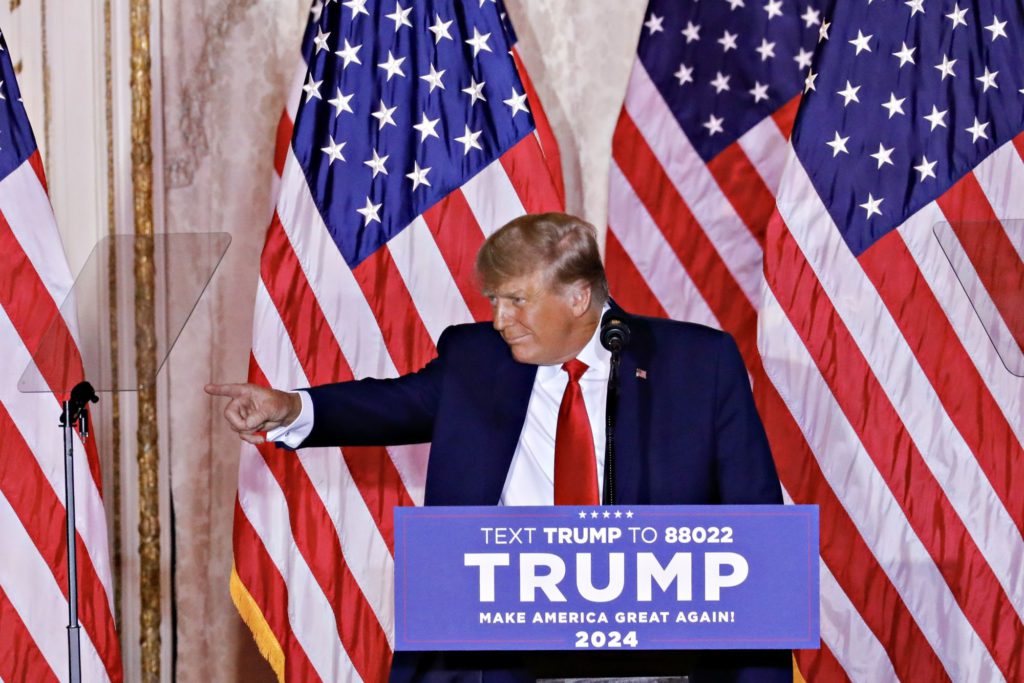
Trump’s reinstatement on Twitter is opportune for him politically. The former president officially announced he would run for the White House again in 2024, and Musk has given him a tool to turbocharge his message. 

Related story: Trump Makes His 2024 Run Official, Defies Calls to Move On (3)

Musk’s decision also comes at a time of turmoil inside Twitter following massive layoffs and an exodus of top compliance executives that have contributed to a chaotic atmosphere. The developments have sparked rising concern internally about the platform’s vulnerability to security threats and the potential for violations of a consent order with the US Federal Trade Commission, which could lead to fines amounting to billions of dollars.

Trump was permanently banned from Twitter in 2021 “due to the risk of further incitement of violence” following the insurrection at the US Capitol. Earlier this week, he formally entered the 2024 US presidential race, making official what he had been teasing for months.

Still, it’s not a done deal that the former president will return to Twitter. Trump said earlier Saturday that he sees “a lot of problems at Twitter” and will stick to his own social-media platform, Truth Social. 

“I hear we’re getting a big vote to also go back on Twitter. I don’t see it because I don’t see any reason for it,” Trump told the Republican Jewish Coalition meeting in Las Vegas via video link. “It may make it, it may not make it.”

Musk has a history of polling his followers on everything from an edit button for Twitter, to selling shares in Tesla Inc. and even whether politicians or billionaires are more trustworthy.

Companies that advertise on social media might be leery of damage to their brands if Trump attracts attention with more outrageous tweets. On Oct. 27, Musk posted a note to advertisers seeking to reassure them he doesn’t want Twitter to become a “free-for-all hellscape.”

“Any advertiser still funding Twitter should immediately pause all advertising,” Derrick Johnson, President of National Association for the Advancement of Colored People, said in a statement following Musk’s announcement on reinstating Trump’s account. 

–With assistance from Dominic Lau and Shoko Oda.

(Updates story throughout with details, including statement from the NAACP President)

More stories like this are available on bloomberg.com

©2022 Bloomberg L.P.

Musk Considers Further Twitter Layoffs in Sales on Monday

(Bloomberg) — Elon Musk is considering firing more Twitter Inc. employees as soon as Monday, this time targeting the sales and partnership side of the business after mass resignations among engineers on Thursday, according to people familiar with the matter. 

Musk had offered Twitter employees an ultimatum: either stay on and work long hours in a more “hardcore” version of Twitter, or leave with severance pay. More employees in technical roles opted to leave than expected, compared to those in sales, partnerships and similar roles, said the people, who declined to be named discussing internal matters.

On Friday, Musk asked leaders in those organizations to agree to fire more employees. Robin Wheeler, who ran marketing and sales, refused to do so, the people said. So did Maggie Suniewick, who ran partnerships. Both lost their jobs as a result, the people added. 

Wheeler and Suniewick didn’t respond to requests for comment. Twitter, which no longer has a communications department, did not respond to a message sent to its press line. 

Wheeler earlier this month had decided to resign from Twitter, but was convinced to stay, people familiar with the matter said. She has helped Musk communicate with advertisers who are wary of Twitter’s changing policies and vision. Several major brands have said they are pausing spending on Twitter.

More stories like this are available on bloomberg.com

©2022 Bloomberg L.P.
Trump Cites Twitter ‘Problems,’ Says He’ll Stick to Own Platform

(Bloomberg) — Donald Trump said he sees “a lot of problems at Twitter” and will stick to his own social-media platform, offering an initial response to Elon Musk’s poll on whether to reinstate the former president’s account.

“I hear we’re getting a big vote to also go back on Twitter. I don’t see it because I don’t see any reason for it,” Trump told the Republican Jewish Coalition meeting in Las Vegas via video link. “It may make it, it may not make it.”

Truth Social, the platform launched by Trump after Twitter Inc.’s previous leadership banned him for the Jan. 6, 2021 breaching of the US Capitol by his supporters, “has taken the place for a lot of people, and I don’t see them going back onto Twitter,” Trump said.

With two hours left, the poll started by Musk has prompted almost 14 million votes with about 52% of respondents voting in favor of Trump’s return. Musk said Friday there’s no decision on Trump’s account. He has reinstated accounts tied to conservative media personality Jordan Peterson and satirical website Babylon Bee.

Trump was permanently banned from Twitter in 2021 “due to the risk of further incitement of violence.” He formally entered the 2024 US presidential race on Tuesday. 

On Saturday, Trump said he liked Musk’s $44 billion purchase of Twitter and likes him because “I tend to like characters.” But he claimed Twitter’s problems are “terrible,” including negative engagement and fake accounts.

“Truth Social has been very, very powerful, very, very strong, and I’ll be staying there,” Trump told the audience.  

More stories like this are available on bloomberg.com

©2022 Bloomberg L.P.

Why One Asset Manager Avoided FTX Before the Storm: Bitwise Q&A

(Bloomberg) — The cryptocurrency industry has been rocked by the implosion of the once-popular FTX exchange, whose downfall has brought down a number of firms and maimed or destroyed many others. Investors and those even tangentially related to what’s happened in recent days are still sifting through the rubble and awaiting the next dominoes to fall. 

Matt Hougan, CIO at Bitwise, a crypto-focused asset manager who has witnessed other crypto winters, joins this week’s “What Goes Up” podcast to offer his observations and thoughts on how long the recovery process might take. 

Here are some highlights of the conversation, which have been condensed and lightly edited for clarity. Click below to listen to the full podcast, or subscribe on Apple Podcasts or wherever you listen.

Life in Crypto After FTX (Podcast)

Q: Tell us about Bitwise and how you’ve been affected by all the events.

A: Bitwise is a specialist crypto-asset manager. Crypto is all that we do. We serve primarily professional investors — financial advisors, family offices and institutions. We’ve been in the market since 2017, so this is not our first bear market in crypto. And we are best known for creating the world’s first crypto index fund, the Bitwise 10 (BITW), which holds the 10 largest crypto assets weighted by market cap. On the scale of crypto asset managers, we’re on the very conservative side — long-term investors in diversified index funds.

The last couple weeks have been exhausting. As an asset manager, we did not trade on FTX. We actually almost never trade on exchanges. We did not custody assets with FTX, so we have no losses associated with that. But of course, we’re part of this broader crypto industry and it’s had huge effects on that market. 

Q: Custody has been in the news. From my understanding, you guys custody with Coinbase, right?

A: We custody different funds with different custodians. So our flagship fund is custodied with Coinbase Institutional. Our Bitcoin fund is custodied with Fidelity. We have another fund that’s custodied with Anchorage, which is a federally chartered digital bank. The thing that connects all three of them, and the way I think about this custody landscape, is that they’re all US-domiciled, regulated institutions with insurance in place on their custody. If you think about the various ways that crypto investors can custody assets, it’s kind of like a barbell — at one end of the barbell is where you hold your crypto keys directly, individually in a safety deposit box on a ledger or whatever. On the other end of the spectrum is what Bitwise does, working with some of the largest institutions in the crypto space, firms like Fidelity, firms like Coinbase that have been in the market for 10 years, a publicly traded entity.

And then there’s this fuzzy middle. And the fuzzy middle is where all the bad things happen. What the fuzzy middle looks like is centralized institutions that are not regulated and often offshore. And that is not a place you should custody crypto assets. Either go toward regulated US-domiciled established institutions, or yes, if you have great security hygiene, do it yourself. I would argue that the regulated side of the spectrum is safer for the vast majority of investors. But you can be on either end of the barbell, you just can’t be in this fuzzy middle. It’s where good crypto ideas go to die.

Q: When it comes to equity index funds, a lot of times the way they keep costs down and bring in a little extra revenue is to allow the securities they hold to be loaned out to short sellers basically through various brokerages. Is that at play at all with the custody of your crypto? Is anyone lending it out?

A: We never lend out our crypto assets that are under custody for investors. We’re one of the most conservative crypto-asset managers in the world, which is frustrating during bull markets, but feels pretty good right now. There are other asset managers that engage in what you describe what amounts to securities lending — lending out customer assets. But we consider that too risky and also not what investors want. If you think about what investors who are allocating to crypto want, they’re betting that Bitcoin is worth half a million or a million dollars. They’re looking for asymmetric upside. We don’t understand why someone would try to earn an extra 1% or 2% or 3% yield by lending out their Bitcoin in route to that, given the risks that are associated with it. So we don’t trade on exchanges, we don’t lend out our assets. We buy assets and put them in custody immediately and let them sit there.

Q: You look at the Bitwise Crypto 10 Index Fund, the net-asset value (NAV) is around $15 per share, share price is around $7. So we’re talking about a 55% discount to the actual assets that you’re holding in that fund. Why is that, do you think? 

A: We have three different ways that investors could gain access to the Bitwise 10. One way is through a private placement for accredited investors that’s available with access on a weekly basis at NAV — so no premium and discount. Another way is a separately managed account that a financial advisor can set up that holds the assets directly held at NAV. And the third way is the one that you mentioned, which is BITW, which is a publicly traded, over-the-counter OTCQX-traded security. Those securities operate, given the regulatory limitations in the crypto space, like closed-end funds, which means they can trade at premiums and discounts. And given the volatility of the crypto market, not surprisingly, they trade at larger premiums and discounts than you would, say, see in a muni-bond closed-end ETF.

So what that discount reflects is more sellers than buyers over a period of time. What we’ve stated publicly to investors and what I hope the long-term outcome is, is once we’re allowed to, we will convert this fund to an ETF, which is likely to largely, if not entirely, eliminate that discount. The SEC has not allowed there to be a crypto ETF. I think that’s another good example of regulators not helping investors by pushing forward regulatory clarity. Investors want to gain access to Bitcoin, they want to gain access to other crypto assets. If they could do it in an ETF, there wouldn’t be this question of premiums and discounts. Asset managers like Bitwise are trying to help investors gain exposure to the space within the regulatory limitations we face. And so we have these OTCQX-traded securities that can trade at premiums and discounts. 

Q: On BITW — it holds the largest 10 digital assets, but it’s screened out FTT even when that token, which is the FTX utility, token when it would have classified for inclusion. So can you tell us about that process?

A: I do think in a frontier market like crypto, you can’t have a simple index fund. You need to have lots of rules that screen out assets. If you went to CoinMarketCap.com and looked at their list of crypto assets by market cap, you’d have to get to asset about 21 or 22 before you found the 10th asset in our funds. So we’re screening out a large number of assets. We screened out FTT, we screened out Luna, we’ve never held Dogecoin, we don’t hold Tron. There are a variety of screens that protect us from those examples. We look at the fundamental tokenomics of an asset. That’s what protected us from Luna. We saw the potential for the death spiral that claimed that ‘stablecoin.’ We look at assets that are at undue risk of being found in violation of federal securities laws. FTT fell into that framework because we thought it was likely or possible to be deemed a security by regulators. It was largely internally controlled. In our view, it could potentially meet the Howey test and so we won’t hold it in our fund. There are other screens as well that are really important — screens around liquidity.

That’s just a snippet of the conversation. Click here to listen to the rest. 

–With assistance from Stacey Wong.

More stories like this are available on bloomberg.com

©2022 Bloomberg L.P.
FTX Mayhem Fails to Scare Futures Exchanges Away From Crypto

(Bloomberg) — Even as some of Wall Street’s old guard has an “I-told-you-so” moment after the collapse of Sam Bankman-Fried’s FTX, futures exchanges aren’t giving up on crypto.

CME Group Inc. Chief Executive Officer Terry Duffy, who has been one of Bankman-Fried’s fiercest critics, said he won’t stop crypto-futures trading just because of “one bad actor.” Cboe Global Markets, another Chicago exchange, and software provider Trading Technologies also recommitted to digital assets in the wake of the FTX meltdown.

“I’m not prepared to say I’d delist it,” Duffy, 64, said in an interview this week, in which he recalled his spat with Bankman-Fried at an industry event in March. “We’ve been at the cutting edge of innovative products, but what we don’t do is do it in a reckless manner.”

Executives at futures exchanges had expressed concerns about FTX’s business model before the collapse. The bankruptcy of FTX potentially caused billions of dollars in losses for millions of account holders and sparked investigations into allegations of wrongdoing. It has also ensnared one of the biggest lenders in the crypto industry, Genesis, as well as Gemini, which halted redemptions, and BlockFi — a lender previously bailed out by FTX. 

“These events reinforce our strategy,” Chris Isaacson, chief operating officer and chair of Cboe’s digital board, said in an interview on Friday. “If there is ever a time where trust in markets need to be built and reinforced in digital assets, it’s now. That’s what we’re committed to doing.”

2008 Parallels

Isaacson said Cboe will continue with crypto-futures trading. Jason Shaffer, executive vice president of product management at Trading Technologies, said his firm will stay the course as well, and that customers want to engage in crypto in the same way they trade other currencies. 

At a Futures Industry Association event this week, conference goers compared FTX’s collapsed to energy trader Enron Corp., which went under in 2001 and became a symbol of corporate fraud. And Christy Goldsmith Romero of the Commodity Futures Trading Commission went as far as to draw parallels to the worldwide financial crisis.

“Opaque, complex, leveraged, unregulated products, highly interconnected market, concerns about the quality of underlying assets, high potential for contagion risk,” she said. “These are the types of things that existed in 2008 that I see parallels with now.”

Bankman-Fried was a driving force behind a failed campaign to penetrate traditional finance. He proposed handling every step in a crypto derivative transaction: clearing trades and eliminating the middlemen that in many cases help spread the risk. If approved by the CFTC, the plan could have increased risks for the traditional industry and disrupted business models like CME’s that have been around since the late 1800s.

Fierce Critics

The plan drew attacks from Wall Street firms and heightened calls for more oversight of Bankman-Fried’s firm and its rivals. The idea was “rubbish from Day 1,” Duffy said. “I’m surprised so many people were enamored by his nonsense.”

Another critic of the plan was ICE’s founder and CEO Jeff Sprecher. At the FIA event in Chicago on Tuesday, he said, “Generally speaking, you can’t have an exchange, a market maker and a clearing settlement organization under one roof.”

Read More: FTX’s Crypto Kids Came Dangerously Close to Upending Futures

Bankman-Fried, 30, has been a key donor to the Democratic party. He gave nearly $40 million to candidates in the past two years, nearly all to Democrats, and has visited lawmakers in an effort to affect developing crypto regulations.

Duffy said he hoped politicians who received the donations from Bankman-Fried would return them, adding “I never bought into the whole thing.” Politicians who accepted his money will be quick to show “they are not influenced by that,” Sprecher said.

Regulators are probing whether Bankman-Fried and his associates misused customer funds, and his company’s collapse is adding urgency to a Washington push to transform the CFTC into a top crypto watchdog, the agency’s Chairman Rostin Behnam said in an interview at the FIA event. 

Crypto Comeback

While the industry may take a breather for now, it will come back when confidence is restored, said Ram Vittal, North America CEO at Marex Group, a futures and options broker that has a partnership with Coinbase. 

“What is the ingredient that will be the spark?” Vittal asked. “The proper regulatory framework that allows everybody a lot more conviction so that some of these FTX-like things don’t happen.”

Rob Creamer, CEO of Chicago-based proprietary trader Geneva Trading and chairman of FIA’s Principal Traders Group, said there may also be opportunities ahead.

“It’s dangerous to say there’s no value in crypto or the underlying technology because Sam did X, Y or Z,” he said. “Seeing what happened post-Enron, there may be a lot of opportunity for a reputable company with strong governance to pick up the pieces of FTX.”

–With assistance from Yueqi Yang.

(Updates with CFTC quote in eighth paragraph. A previous version of this story corrected Jason Shaffer’s title in sixth paragraph.)

More stories like this are available on bloomberg.com

©2022 Bloomberg L.P.
Investor Studied Crypto for Years, Then Missed FTX’s Red Flags

(Bloomberg) — When Sam Bankman-Fried was all of 25 years old, he pitched his nascent crypto investment business to Silicon Valley investors — only for them to laugh at him and his acolytes over their lack of experience and knowledge of crypto.

“None of us has run a company before and we’d like $100 million by next Tuesday,” Bankman-Fried told David Rubenstein in August about the request. “It was not a very compelling pitch for investors.”

Fast forward five years and Bankman-Fried had become, in his own words, one of the “world’s greatest fundraisers.”

Bankman-Fried ultimately roped in some of the best-known firms in Silicon Valley to raise billions for his FTX. After its rapid collapse over the past week and a half, that feat now looks like one of the greatest failures of investment due diligence ever.

FTX’s roster of blue-chip backers included funds such as Ontario Teachers’ Pension Plan, a C$242.5 billion ($181 billion) fund that has poured money into private companies for decades and is known for taking an active interest in the corporate governance of companies it invests in.

Ontario Teachers put $75 million into two FTX entities in October 2021 as part of a $420 million fundraising round, alongside other major investors like Tiger Global Management and Singapore’s state-owned Temasek Holdings. Three months later, the Canadian fund made a follow-on investment of $20 million in FTX.US.

Some $300 million of that October financing went to Bankman-Fried, who sold some of his personal stake in the company, The Wall Street Journal reported, citing FTX financial records and people familiar with the transaction.

The FTX equity purchase went through a tougher-than-usual gauntlet for an investment of that size at Teachers, with multiple investment committees reviewing it, according to a person familiar with the matter. The investment was championed by Olivia Steedman, the well-regarded head of its venture capital arm, who has been at the fund for two decades.  

“Prior to making an investment, our investment teams spent years tracking the digital asset space,” Dan Madge, a spokesperson for Teachers, told Bloomberg in a statement. “TVG’s thesis was that exchanges, such as FTX, could help refine our perspectives around digital assets without exposing the plan to significant, single cryptocurrency risks. TVG spent many months on diligence of FTX, in partnership with experienced external advisors, to allow us to assess the risks associated with the investment.”

Teachers is now writing off its entire $95 million investment in FTX. 

Red Flags

The pension fund had earlier defended its process as “robust” in a statement on Thursday, adding that “no due diligence process can uncover all risks especially in the context of an emerging technology business.” 

Still, Ontario’s process seemed to have missed red flags — including FTX’s conflicts of interest with Alameda Research and its lack of a proper board of directors. 

The latter is a particularly strange miss for Teachers, an early adopter of the view that pension funds should pay close attention to the boards and governance of their investments and disclose their voting on public companies. The fund and its first CEO, Claude Lamoureux, were central to the founding of the Canadian Coalition for Good Governance, an alliance of institutional investors, two decades ago. 

Ontario Teachers said the FTX position accounted for less than 0.05% of the fund’s assets, “small-scale exposure to an emerging area in the financial technology sector.”  

Some experts defend the approach. “We need to realize that the growth of cryptocurrencies over the past five, six, seven years has been tremendous,” Sebastien Betermier, an associate professor of finance at McGill University, said in a phone interview. “From the perspective of a long-term investor like a pension fund, it raises the question, should we invest a piece of our wealth in crypto?” 

It’s the second time in three months that a major Canadian pension manager has been forced to completely write off a crypto investment it had only recently made. In August, Caisse de Depot et Placement du Quebec marked its $150 million stake in Celsius Network LLC to zero after the cryptocurrency lender failed. 

Ontario Teachers launched its venture division in 2019 under the direction of Steedman, who previously had worked in its infrastructure and natural resources unit. Last year, the venture group, which comprises about 25 investment professionals in Toronto, London, Hong Kong and San Francisco, reported a 39% return on its portfolio. Its investments include some larger companies, such as Elon Musk’s Space Exploration Technologies Corp., better known as SpaceX. 

“As a global, technology-driven innovator in the financial sector, FTX fits well with our mandate,” Steedman said in a press release announcing the October 2021 fundraise, which included Sequoia Capital, Lightspeed Venture Partners and Tiger Global Management. Sequoia wrote down its $214 million investment in FTX last week. 

More stories like this are available on bloomberg.com

©2022 Bloomberg L.P.

Close Bitnami banner
Bitnami