Bloomberg

Musk’s Twitter Deal Still in Focus for Data-Security Review

(Bloomberg) — Elon Musk’s $44 billion takeover of Twitter Inc. is still facing US government scrutiny over national-security concerns that his foreign partners may be able to access user data, people familiar with the matter said. 

The US government continues to seek information on confidential agreements that Musk made with foreign investors who hold stakes in Twitter after he bought it, and whether those deals allow them to access users’ personal data, said one of the people, who asked not to be identified discussing sensitive deliberations. 

Musk’s successful takeover and de-listing of Twitter has been in the spotlight as criticism mounts from US lawmakers over the participation of investors from Saudi Arabia and Qatar. 

The Twitter deal appeared in the clear earlier this week when Treasury Secretary Janet Yellen said she saw no need for an investigation. Yellen’s Treasury Department leads the Committee on Foreign Investment in the US, or Cfius, which looks into such deals for potential national-security risks. 

Her comments came only days after President Joe Biden had said Musk’s business interests and links to foreign governments warranted review. 

Musk and Twitter didn’t immediately respond to requests for comment. Treasury Department spokesman Michael Gwin said Cfius doesn’t comment on transactions it may or may not be reviewing, adding that the panel is committed to safeguarding national security.

White House National Security Council spokesman John Kirby on Friday referred questions about a potential review to Cfius.

“I won’t speak to that. Whether or not there will be any kind of review, that’s up to Cfius, and so I would refer you to them. That’s not something that we would weigh in on,” Kirby told reporters. 

This week, Musk presented Twitter employees with an ultimatum: Either commit to the company’s new “hardcore” work environment or leave. Many more workers declined to sign on than he expected, potentially putting Twitter’s operations at risk, according to people familiar with the matter. 

So many employees decided to take severance that it created a cloud of confusion over which people should still have access to company property. Twitter closed its offices until Monday, according to a memo viewed by Bloomberg.

Musk tried, in the final hours before his deadline, to convince people to stay. 

Security Concerns

The potential for action by Cfius emerged amid rising concerns over how Musk’s various business interests overlap with top US national security priorities. Musk’s Starlink satellite internet network, for instance, has been used in Ukraine to maintain communications during its fight to repel Russia’s invasion, a service he briefly threatened to cut off in October. 

Two Democratic senators, Mark Warner of Virginia, who leads the Senate Intelligence Committee, and Chris Murphy of Connecticut have called for greater scrutiny of the Twitter deal given the ownership stakes held by some foreigners, including Saudi Arabian billionaire Prince Alwaleed Bin Talal, who rolled over his existing stake in Twitter into Musk’s deal, and Qatar’s sovereign wealth fund. Tesla Inc.’s manufacturing site near Shanghai has also been raised as a potential leverage point by Beijing. 

“I don’t understand this decision,” Murphy tweeted Tuesday after Yellen’s comments, which were reported by CBS News. “Cfius is designed to review transactions like this.”

–With assistance from Sarah Frier, Ed Ludlow, Jef Feeley, Kurt Wagner, Davey Alba, Jordan Fabian and Akayla Gardner.

(Updates with Kirby comment starting in paragraph 7)

More stories like this are available on bloomberg.com

©2022 Bloomberg L.P.

Upbeat Apparel Earnings May Be Masking a Slowdown

(Bloomberg) — US apparel companies produced third-quarter results that were far better than expected as efforts to clear excess inventory with deep discounts paid off. But the coming holiday season may not be quite as cheerful: Retailers said sales activity has slowed in recent weeks.

On earnings calls this week, Kohl’s Corp, Macy’s Inc., Gap Inc. and TJX Cos. noted weaker performance in late October and early November. Some blamed unseasonably warm weather that led to slower foot traffic in stores, while others said consumers might be starting their holiday shopping trips later this year as they await Black Friday deals.

“It seems that the consumer is starting holiday spending later, although it remains to be seen how much the consumer will spend,” Cowen analyst Oliver Chen said in a note following the Macy’s earnings report.

As a result of the softness, retailers approached fourth-quarter guidance with caution. 

“We are evaluating the sustainability of recent trends and the drivers that we believe will impact holiday consumption,” Macy’s Chief Executive Officer Jeff Gennette said on a conference call. “The low end of our outlook assumes late October and early November sales trends continue, pressure on the consumer persists and the promotional competitive landscape intensifies throughout the holiday and into January.”

Like Macy’s, Gap said it remains “prudent on the outlook for fourth-quarter revenue,” and expects net sales to be down in the mid-single digits. Kohl’s, meanwhile, pulled its guidance all together, citing a difficult macroeconomic environment and the unexpected departure of Chief Executive Officer Michelle Gass. 

Apparel retailers across the board have been offering deep discounts in recent months as they work to offload excess inventory that piled up earlier this year resulting from weaker consumer demand and poor forecasting. 

In the third quarter, those promotions seemed to pay off as companies, including Gap, which reported merchandise growth of 12% compared with an expected 25% increase, slowed their inventory build up significantly and reported better-than-forecast sales. 

While it’s possible that the recent softness is temporary and retailers will experience renewed momentum around Black Friday and into December, headwinds including stubbornly high inflation, rising borrowing costs and growing concerns about a US recession may lead shoppers to spend less this year. 

“Consumers are feeling pinched, and our survey points to lower spending even in higher income brackets,” Citigroup Inc. analysts led by Paul Lejuez said in a note. “As to whether consumers are shopping later than last year — as some retailers have theorized to explain the October and November slowdown — our survey revealed no meaningful change in when consumers expect to shop.”

More stories like this are available on bloomberg.com

©2022 Bloomberg L.P.

Swifties Start Wave of Ticketmaster Monopoly Scrutiny

(Bloomberg Law) — Swifties, as Taylor Swift fans are known, received a crash course in anti-monopoly advocacy this week when the Ticketmaster portal for the singer’s concert tickets crashed and caused hours-long delays.

After waiting for hours only to fail to get tickets in a Nov. 15 online portal for select fans, some of them took to social media to vent en masse about the Beverly Hills-based company’s oft-criticized market power and chokehold in live entertainment ticketing. Waves of their frustration intermixed with armchair antitrust analysis. Censure and ridicule of the company grew louder when Ticketmaster decided to cancel public ticket sales planned for Friday.

The issue is morphing into a matter beyond social media chatter. Prominent federal lawmakers, including Senate antitrust subcommitee chair Amy Klobuchar (D-Minn.) and Rep. Alexandria Ocasio-Cortez (D-N.Y.) are joining in. State attorneys general are vowing to investigate. Klobuchar said Friday her committee will hold a hearing on Ticketmaster by the end of the year.

Ticketmaster, which consumer advocates estimate controls 70% of primary ticketing sales, is no stranger to criticism. But the latest firestorm resurfaces at a time of heightened antitrust focus among policymakers and the Biden administration’s whole-of-government approach to cracking down on anticompetitive practices.

Few expect Ticketmaster, a subsidiary of Live Nation Entertainment, to be imminently broken up. But Congressional scrutiny, reinvigorated public campaigns and celebrities’ public outcry could sustain the break-up-Ticketmaster drumbeat that would likely not go unnoticed by the Justice Department’s antitrust regulators.

“These efforts are really giving a direct line to the DOJ on how these harms are affecting people—not just customers, but artists, the competing ticket services, venues, and workers,” said Krista Brown, a senior policy analyst at the anti-monopoly nonprofit American Economic Liberties Project.

Ticketmaster has disputed claims about its monopoly power. It controls only about 30% of the market for concert ticket sales, according to comments made by Live Nation Entertainment CFO Joe Berchtold on NPR.

“The staggering number of bot attacks as well as fans who didn’t have invite codes drove unprecedented traffic on our site, resulting in 3.5 billion total system requests – 4x our previous peak,” Ticketmaster said in a statement Thursday. It estimated 15% of purchase attempts experienced issues.

‘Look What You Made Me Do’

Klobuchar’s letter to Live Nation lobs a series of questions, conveying concerns about the lack of competition in the ticketing industry. In 2019, she asked the Justice Department to investigate the company.

“Ticketmaster’s power in the primary ticket market insulates it from the competitive pressures that typically push companies to innovate and improve their services,” Klobuchar wrote. “That can result in the types of dramatic service failures we saw this week, where consumers are the ones that pay the price.”

Other House lawmakers joining Ocasio-Cortez in haranguing the company were Bill Pascrell (D-N.J.), Ilhan Omar (D-Minn.), and David Cicilline (D-R.I.).

“Daily reminder that Ticketmaster is a monopoly, its merger with LiveNation should never have been approved, and they need to be reigned in,” Ocasio-Cortez tweeted Tuesday. “Break them up.”

The Justice Department’s antitrust division approved the 2010 Live Nation-Ticketmaster merger despite concerns the deal would drive independent concert halls out of business and increase prices.

Attorneys general from Tennessee and North Carolina separately said earlier this week they will look into potential competition and consumer protection issues after receiving complaints.

Pennsylvania’s attorney general also invited consumers to submit complaints to his office.

The chances of DOJ enforcement under the existing consent order from the 2010 Live Nation-Ticketmaster merger are “high,” said Eleanor Tyler, a Bloomberg Law legal analyst.

Justice doesn’t have to conduct the heavy lifting of bringing a new case, and can instead build on the existing decree, she said. That option would be a faster and less work-intensive approach, Tyler said.

“I think that the administration that’s looking to unwind the Insta and WhatsApp deals could conceivably try to unwind it,” Tyler said, referring to an ongoing Federal Trade Commission lawsuit that seeks to undo Meta’s acquisition of the two social media platforms.

Breakups are a rare and significant government undertaking. But Live Nation appears to have kept Ticketmaster’s operations mostly separate, with differing focuses on ticketing and venue management, Tyler said.

They weren’t direct competitors when DOJ approved the merger, and they’re less closely tied to each other now than if they’d merged supply chains and workforces, she said.

A division spokesperson declined to comment.

‘Blank Space’

Public campaigns against Ticketmaster have stood out for their populist appeal.

A break-up-Ticketmaster letter-writing campaign launched last month by advocacy groups, including the American Economic Liberties Project, has garnered over 38,000 letters. More than two-thirds were sent in the days following the sales debacle earlier this week.

“I continue to be amazed by the revolution in the way the public perceives antitrust,” said Gwendolyn Cooley, Wisconsin’s assistant attorney general for antitrust. “Antitrust used to be obscure, only something very erudite people talked about. Now we have popular interest in this area of law.”

Zoey Jordan Salsbury, a student at Seattle University School of Law, joined the letter campaign after running into repeated delays on Nov. 15 in her attempt to buy a ticket in the presale queue.

“I was trying to buy tickets, but then I got very angry about antitrust law, so now I’m trying to get Swifties angry about Ticketmaster and write to the DOJ,” Jordan Salsbury said.

‘I Knew You Were Trouble’

The Justice Department approved the 2010 merger conditioned on certain behavioral remedies. Ticketmaster vowed not to discriminate against venues when they chose not to use the company’s ticketing platform. The combined company also agreed to divest a subsidiary and license Ticketmaster software to a competitor.

In 2020, the DOJ won a ruling to strengthen some consent decree terms, after arguing Ticketmaster had repeatedly violated them.

“There’s a bigger problem in antitrust with behavioral remedies generally,” said Kevin Erickson, director of the Future of Music Coalition, an advocacy group participating in the letter campaign. “They force competitors, artists, and venues who don’t have a lot of resources or a sophisticated understanding of what is and isn’t legal to perform this unpaid labor of being the cops and monitoring for violations.”

Ticketmaster also tussled in private litigation over its market powers, but recent lawsuits have largely been unsuccessful. Most ended up in arbitration, although at least two are still pending at federal courts.

Ticketmaster’s dominance in the primary ticket-selling market drives competitors to look for gains in the secondary, reselling market, Erickson said. But Ticketmaster has a presence there, too, and at times has released tickets directly into the secondary market. That can drive up prices even more, critics say.

“If you’re a ticketing company trying to spend limited development budget to build innovative technology, you’re mostly shut out of primary sale marketplaces, so you’re focused on getting really good at facilitating resale,” Erickson said. “That reinforces the dysfunction in a way, because it becomes an arms race between resellers and technologies meant to keep stuff off the secondary market.”

To contact the reporter on this story: Dan Papscun in Washington at dpapscun@bloombergindustry.com

To contact the editor responsible for this story: Roger Yu at ryu@bloomberglaw.com; Maria Chutchian at mchutchian@bloombergindustry.com

More stories like this are available on bloomberg.com

©2022 Bloomberg L.P.

Why a Crypto Fund Rejected the Token That Helped Blow Up FTX

(Bloomberg) —

The collapse of Sam Bankman-Fried’s FTX cryptocurrency empire was accelerated when the head of a rival exchange announced he was planning to dump holdings of something called FTT—a token created by FTX that afforded some perks to investors who owned it. At one point, the token was one of the 10 biggest coins in the market, which would have made it eligible for the Bitwise 10 Crypto Index Fund.However, Bitwise never added FTT to the fund. Matt Hougan, chief investment officer of Bitwise Asset Management, joined the What Goes Up podcast to discuss the damage caused by the implosion of FTX and explained why the fund snubbed its coin. “We look at assets that are at undue risk of being found in violation of federal securities laws,” he said. “FTT fell into that framework because we thought it was likely, or possible, to be deemed a security by regulators. And it was largely internally controlled, in our view.”


More stories like this are available on bloomberg.com

©2022 Bloomberg L.P.
Musk Celebrates New Twitter Usage High as Engineers Flee

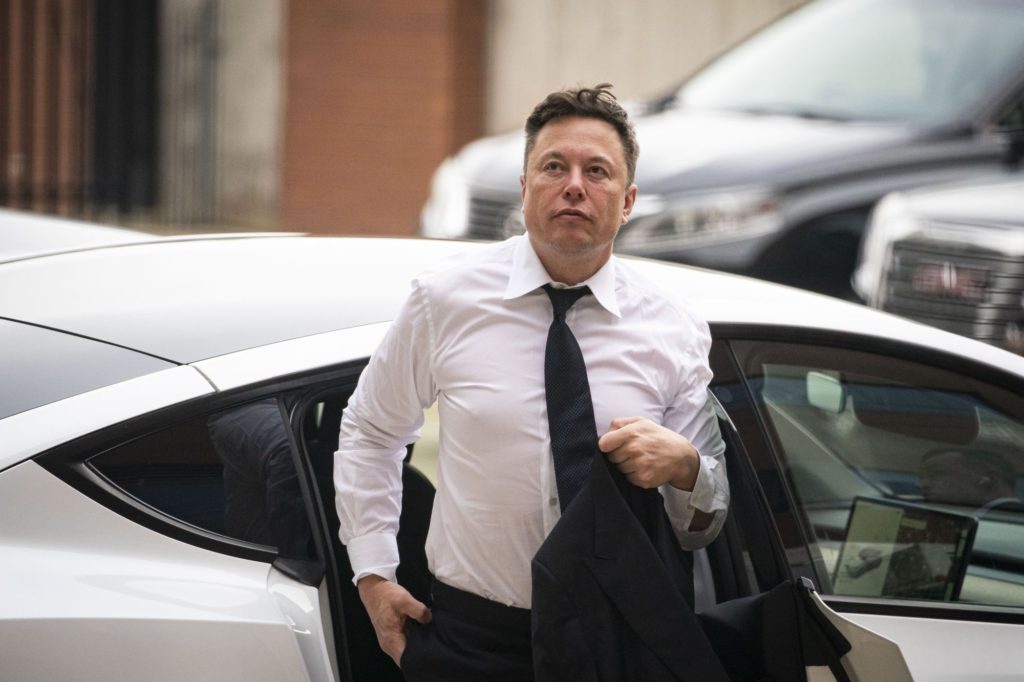
(Bloomberg) — Twitter Inc. owner Elon Musk tweeted out an upbeat message saying the company beat its all-time high in usage late Thursday, on a day when many employees decided to leave the company.

It was the second time in a week that the social network set a record, according to Musk, who said it hit its highest-ever number of daily active users on Nov. 11. In another message posted this week, the billionaire — who hasn’t given himself a specific job title at Twitter after adopting “chief Twit” and “complaint hotline operator” briefly — posted a chart showing user numbers rising since his acquisition. Musk has long disputed the accuracy of Twitter’s internal metrics, saying they are unreliable due to an overabundance of fake or bot accounts.

More people have likely been on Twitter in the last few weeks, but it’s not necessarily a sign of any sustainable growth, said Matt Navarra, a social media consultant and analyst. “The analogy people use is ‘rubbernecking,’ like with a car accident or a train wreck and we’ve seen similar activity on platforms like Twitter when crises occurred,” he said. The question is, “’what’s the quality and what’s the sustainability for any type of growth he’s trying to evidence there?’”

Earlier on Thursday, Twitter decided to abruptly shut its offices after many employees reacted negatively to Musk’s ultimatum of either staying for a new “hardcore” work environment or leaving with three months’ severance. So many employees decided to take severance that it created a cloud of confusion over which people should still have access to company property, Bloomberg News reported.

Musk ‘Hardcore’ Ultimatum Spurs Exodus, With Twitter at Risk

Uncertainty hangs over Twitter’s ability to continue normal operations after the company dismissed its executive team and laid off half the workforce in Musk’s first few days in charge. The new leader has since reversed several decisions he’s made, including recalling some fired staff who were working on features he wanted to add. 

Navarra said he doesn’t anticipate a full-scale collapse of the website in the coming weeks. What’s happening now is a shift from Twitter 1.0 to the rebirth of Twitter under Musk, he said. Small bugs could be likely, he said, and there could also be issues with rolling out the Twitter Blue feature and verification.

“I think there’s a chance we’ll see flickers of the lights at Twitter,” Navarra said. “Whether it will be a full scale knock-down, I’m hoping it won’t lead to that.”

–With assistance from Michael Tobin.

(Updates with comment from analyst from third paragraph.)

More stories like this are available on bloomberg.com

©2022 Bloomberg L.P.
Klarna Says Investor Mood Is Holding Back Expansion Plans

(Bloomberg) — Klarna Bank AB’s chief executive officer said he’s been frustrated by investors who are less willing to fund expansion at the Swedish buy-now-pay-later platform, which saw its valuation slashed by 85% this year. 

“The consequence of the new environment is that investors price companies differently,” CEO Sebastian Siemiatkowski said in an interview at the Slush conference in Helsinki this week. “It means that money isn’t as cheap as it was a year ago. It doesn’t allow you to invest as much into the future as you’d like to.”

“We have to live with the reality that investors expect us to show a little bit more results here-and-now, rather than talking about the future,” he said.

Siemiatkowski said Klarna must focus on engaging its existing users rather than acquiring new ones in the US, currently its biggest revenue driver.

The company entered the US in 2019 and Siemiatkowski has said in the past that expansion there hurt profitability. Still, the market, which has 30 million users, remains a “top priority,” he said. 

Read More: Klarna CEO Worries FTX Failure Will Lead to Regulatory Overreach

Klarna saw its valuation slashed to $6.7 billion from $45.6 billion in a fundraising round announced in July. The company is vulnerable to the tech rout that’s left investors sitting on significant losses and demanding that unprofitable investments reign in spending. The company’s model also makes it vulnerable to rising costs that might force customers to cut spending or affect their ability to repay their loans.  

Siemiatkowski said last month that the company’s “painful” restructuring, where it said it would cut about 10% of its staff, was largely complete. 

The company is looking for new sources of revenue, such as the product comparison tool it’s rolled out in the US, UK and the Nordics. The new service, which follows the company’s $1 billion deal for PriceRunner, will give retailers an alternative to Amazon.com Inc.’s services, he said. 

Klarna aims to address reasons customers might hesitate to make a purchase, such as wondering if they can get a better deal somewhere else or if alternative products are available, Siemiatkowski said. 

“We are trying to support consumers in thinking about it as a digital shopping assistant,” he said. “If you want to accelerate commerce, you want to help consumers answer these questions, so they feel comfortable in their purchase decisions.”

(Updates with additional details on product-comparison tool from eighth paragraph)

More stories like this are available on bloomberg.com

©2022 Bloomberg L.P.

FTX Latest: Lawmakers Press Bankman-Fried, New CEO for Documents

(Bloomberg) — The chair of a House panel is asking FTX to turn over documents and information by Dec. 1 as part of its investigation into the collapse of the once-prominent crypto platform. Details have been requested on the circumstances surrounding the crypto firm’s spiral into bankruptcy last week, including an explanation of the company’s liquidity issues, how those issues of the Bahamas-based parent company affected its US arm, and details of how customer funds were being used. 

Federal Reserve Bank of Minneapolis President Neel Kashkari said Friday that the whole idea of cryptocurrency is “nonsense” after the implosion of FTX Group revealed the industry’s shortcomings.

A CFTC commissioner has urged crypto industry whistleblowers to come forward in the aftermath of FTX Group’s implosion, saying tipsters have previously received millions of dollars for their help.

Trading volumes on decentralized exchanges are up almost 11% this month to $62 billion, CryptoCompare data sourced from DefiLlama shows. Digital-asset investors are flocking to crypto’s decentralized heartland after witnessing the collapse of Sam Bankman-Fried’s FTX exchange. 

Key stories and developments:

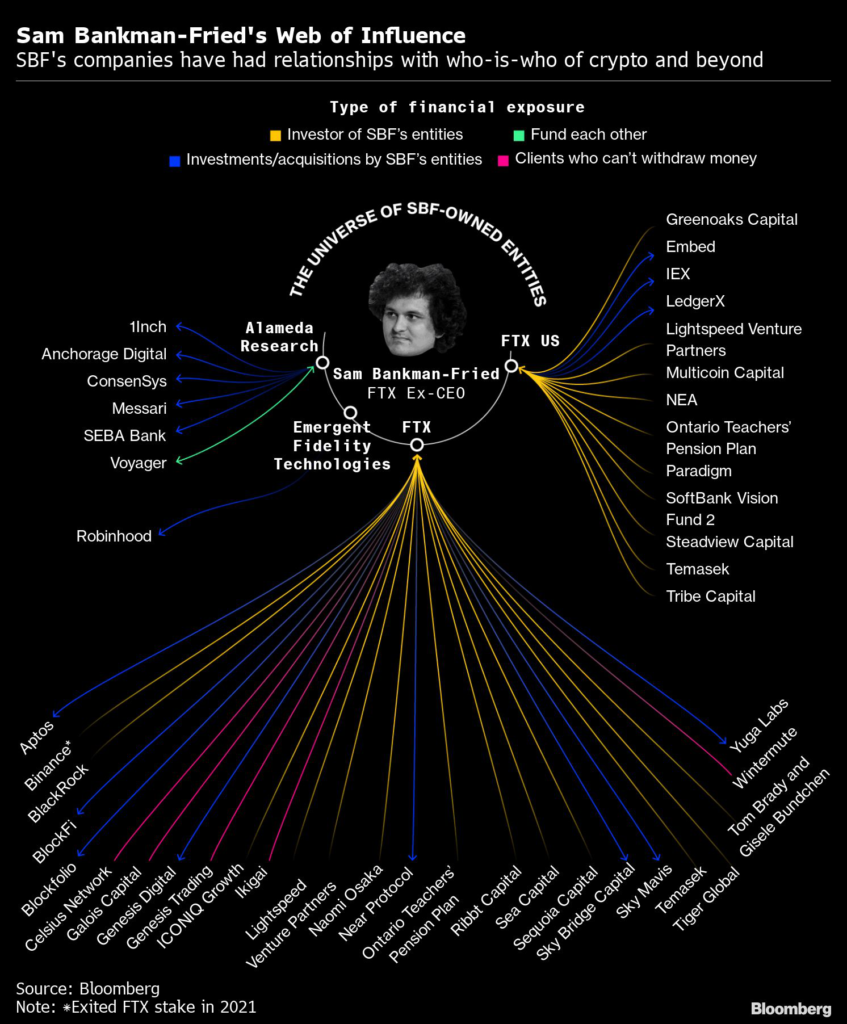
  • Bankman-Fried’s Island Haven Draws Scrutiny After FTX Demise
  • FTX Hammers More Nails Into Crypto’s Coffin: Lionel Laurent
  • Crypto Informants Can Reap Millions From CFTC After FTX Blowup
  • Ontario Teachers Writes Off FTX Stake, Citing Potential Fraud
  • Billions of Dollars Flee FTX Woe to Crypto’s Decentralized Roots

(Time references are New York unless otherwise stated.)

House Panel Seeks Documents in Investigation on FTX Blowup (11:13 a.m.)

The chair of a House panel is asking FTX to turn over documents and information by Dec. 1 as part of its investigation into the collapse of the once-prominent crypto platform. 

“FTX’s customers, former employees, and the public deserve answers,” said Representative Raja Krishnamoorthi, chairman of the House Oversight Subcommittee on Economic and Consumer Policy, in a Friday letter to former FTX CEO Sam Bankman-Fried and John J. Ray III, the new CEO and chief restructuring officer who oversaw the liquidation of Enron Corp.

He requested details on the circumstances surrounding the crypto firm’s spiral into bankruptcy last week, including an explanation of the company’s liquidity issues, how those issues of the Bahamas-based parent company affected its US arm, and details of how customer funds were being used. The subcommittee is also seeking internal documents and communications. 

Fed’s Kashkari Says the ‘Entire Notion of Crypto Is Nonsense’ (9:55 a.m.)

Federal Reserve Bank of Minneapolis President Neel Kashkari said Friday that the whole idea of cryptocurrency is “nonsense” after the implosion of FTX Group revealed the industry’s shortcomings.

“This isn’t case of 1 fraudulent company in a serious industry,” Kashkari said on Twitter, commenting on an article about how investors fell for FTX. “Entire notion of crypto is nonsense. Not useful 4 payments. No inflation hedge. No scarcity. No taxing authority. Just a tool of speculation & greater fools.”

Man Group Readies Crypto Hedge Fund Despite FTX Chaos (9:13 a.m.)

Man Group Plc is close to starting a dedicated cryptocurrency hedge fund, delving deeper into a market that’s reeling from the collapse of exchange operator FTX. 

The world’s largest publicly-traded hedge fund firm has been developing the strategy led by money manager Andre Rzym for months, according to people with knowledge of the matter. The firm’s computer-led trading unit AHL is planning to start the fund as soon as the end of the year, said the people, asking not to be identified because the plan is private.

Crypto Informants Can Reap Millions From CFTC After FTX Blowup (7:46 a.m.)

A CFTC commissioner has urged crypto industry whistleblowers to come forward in the aftermath of FTX Group’s implosion, saying tipsters have previously received millions of dollars for their help. 

Commodity Futures Trading Commission’s Kristin Johnson said on Thursday that informants would get anonymity, adding that such tips play a crucial role in enforcement given the opaqueness of some of the crypto world. 

Billions of Dollars Flee FTX Woe to Crypto’s Decentralized Roots (6:30 a.m.)

Digital-asset investors are flocking to crypto’s decentralized heartland after witnessing the collapse of Sam Bankman-Fried’s FTX exchange.

Trading volumes on decentralized exchanges are up almost 11% this month to $62 billion, CryptoCompare data sourced from DefiLlama shows. Lending protocols such as Aave and Compound are also among those seeing strong user and transaction growth, analytics firm Nansen said. In contrast, depositors spooked by FTX have yanked cash from centralized exchanges.

Coinbase Cut to Neutral at BofA in Wake of FTX Collapse (6:30 a.m.)

Cryptocurrency exchange Coinbase was downgraded to neutral from buy at Bank of America due to uncertainty surrounding its outlook amid market turbulence.

“Coinbase likely faces a number of new headwinds” over the near to medium-term due to the collapse of FTX,” wrote analyst Jason Kupferberg, saying the company was not “immune from the broader fallout within the crypto ecosystem.”

Small-Cap Tech Decouples From Bitcoin Gyrations (5:07 a.m.) 

Small-cap tech stocks have started to part ways with Bitcoin as both the crypto’s stock and related industry influence wane. Following the March 2020 low, rolling annual changes in Bitcoin’s US dollar cross rate and the Russell 2000 tech sector have been 0.95 correlated. And since Bitcoin’s peak, small-cap tech is down 38.5% versus a 75.4% drop in the crypto token.

It could be that Bitcoin represents overall risk tolerance in markets, spelling a rally for higher-growth small caps when rising. Or there could be a fundamental linkage: the sector weight of semiconductors — an integral part of Bitcoin mining — has dropped to 19.6% from 22.2%, since Bitcoin’s peak.

Fintechs Still Pushing Crypto, Distance Themselves From FTX (1:00 p.m. HK)

FTX’s bankruptcy filing last week is the latest headwind for fintech companies that have grown rapidly in tandem with the surge in digital asset trading. 

Revolut, a finance app based in London, told users this week it did not have “material exposures” to FTX but was monitoring the situation. “This is a good reminder that crypto is very volatile: the value does go down, as well as up,” it said in an email. Crypto has already shrunk from about 35% of Revolut’s revenue last year to less than 5% this year.

Block Inc.’s Cash App, which allows consumers to transfer money or buy stocks and cryptocurrencies, said in a statement it was “Bitcoin-first” and committed to a “truly” decentralized payments system “not controlled by any person, bank, country, or corporation.” 

Bitcoin Heads for a Weekly Gain (11:50 a.m. HK)

Bitcoin is up some 3% this week, topping global stocks, while a gauge of the leading 100 virtual coins has added about 0.5%. That compares with Bitcoin’s 23% slide last week as FTX collapsed.

Crypto historians might argue the counterintuitive Bitcoin performance will continue. Since a low in 2018, Bitcoin has posted a weekly loss of at least 20% six times apart from the recent slide. The token jumped almost 9% on average over the subsequent month, according to data compiled by Bloomberg.

Bahamas Regulator Takes Control of FTX Assets (8:00 a.m. HK)

The Bahamas Securities Commission said in a statement it directed the transfer of all digital assets of FTX Digital Markets, or FDM, to a wallet that the commission controls for safekeeping.

“Urgent interim regulatory action was necessary to protect the interests of clients and creditors of FDM,” it said, adding that its understanding is that FDM is not a party to US Chapter 11 bankruptcy proceedings. It said it would engage with regulators and authorities in multiple jurisdictions.

–With assistance from Amanda Fung, Dara Doyle and Taryana Odayar.

More stories like this are available on bloomberg.com

©2022 Bloomberg L.P.

Offshore US Oil, Gas Facilities at ‘Significant’ Risk of Cyberattack, Watchdog Warns

(Bloomberg) — Offshore US oil and natural gas installations are “at significant risk” of cyber attack, according to a federal watchdog that warned of a potential disaster on par with the 2010 Deepwater Horizon blowout. 

The Government Accountability Office found that offshore exploration equipment, including those critical to safety, are increasingly reliant on remote technology that’s vulnerable to cyber attack. Efforts by the Interior Department arm charged with overseeing drilling safety have not “resulted in substantial action,” the GAO said in its report.

“This creates significant liability, given that a successful cyber attack on such infrastructure could have potentially catastrophic effects,” according to the GAO. “The federal government has identified the oil and gas sector as a target of malicious state actors.”


More stories like this are available on bloomberg.com

©2022 Bloomberg L.P.
House Panel Seeks Documents in Probe of FTX’s Blowup

(Bloomberg) — The chair of a House panel is asking FTX to turn over documents and information as part of its investigation into the collapse of the once-prominent crypto platform. 

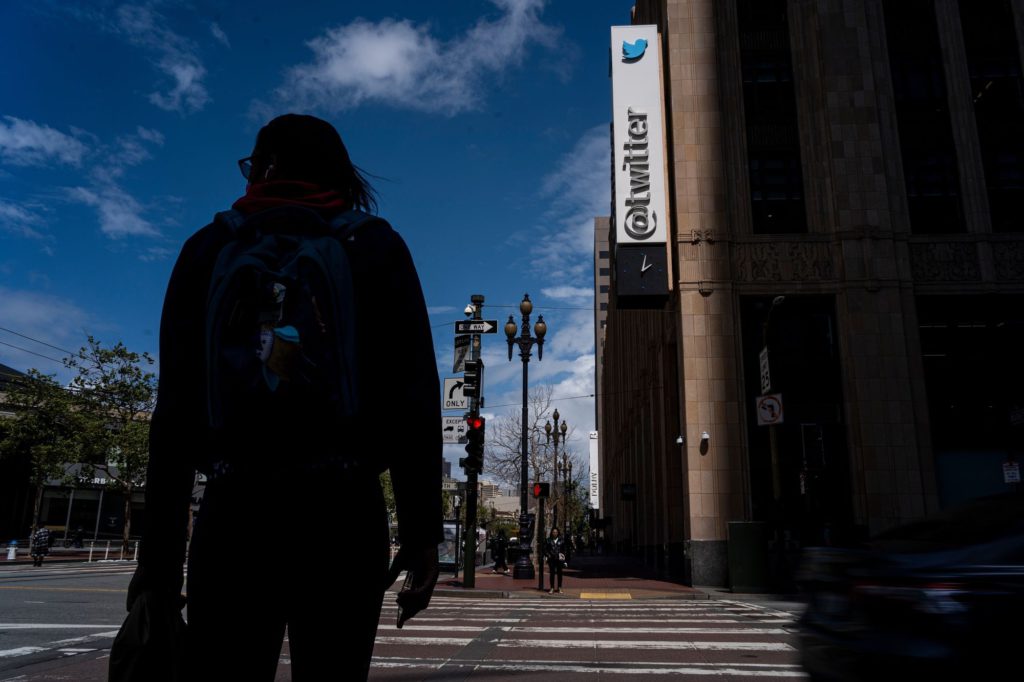
“I am extremely troubled by recent news surrounding the collapse of FTX Trading Ltd. (FTX), including its affiliated entity FTX US, and the potentially significant harm that FTX’s bankruptcy will cause to American consumers and investors,” Representative Raja Krishnamoorthi, who leads the House Oversight Subcommittee on Economic and Consumer Policy, wrote Friday.

“FTX’s customers, former employees, and the public deserve answers,” Krishnamoorthi said in a letter to former FTX CEO Sam Bankman-Fried and John J. Ray III, the new CEO and chief restructuring officer who oversaw the liquidation of Enron Corp.

Krishnamoorthi, an Illinois Democrat, requested details on the circumstances surrounding the crypto firm’s spiral into bankruptcy last week, including an explanation of FTX’s liquidity issues, how those issues of the Bahamas-based parent affected its US arm, and details of how customer funds were being used. The subcommittee is also seeking internal documents and communications. 

The flow of money between the many different businesses connected to FTX’s empire and whether customer funds were misappropriated are at the heart of potential issues facing the collapsed business. US prosecutors and regulators in both the Bahamas and the US are investigating the events leading up to FTX’s failure. 

The subcommittee asked that the requested information and documents be turned over by Dec. 1. 

More stories like this are available on bloomberg.com

©2022 Bloomberg L.P.

Volkswagen Joins Mastodon as Concerns Over Twitter Mount

(Bloomberg) — Volkswagen AG has set up accounts on fast-growing Twitter Inc. alternative Mastodon amid questions over the future of the social network under Elon Musk.

Europe’s biggest carmaker on Friday confirmed it created the handles @VWGroup and @Cariad_Tech on Mastodon for communications related to its group and software unit, respectively.

“Mastodon is an attractive platform that we would like to try out,” the company said in a statement.

Volkswagen is among a number of major car brands that have paused advertising on Twitter following Musk’s buyout of the platform. While the German manufacturer maintains several Twitter accounts, it has been distributing less content in recent days, and its premium brand Audi has halted posting altogether.

Read More: Musk Encourages Rival Automakers to Keep Advertising on Twitter

Mastodon, an open-source micro-blogging platform run by a German non-profit, has seen a surge in sign-ups since Musk took over Twitter. Uncertainty hangs over Twitter’s ability to continue normal operations after the company dismissed its executive team and roughly half the workforce in Musk’s first few days in charge.

More stories like this are available on bloomberg.com

©2022 Bloomberg L.P.
Close Bitnami banner
Bitnami