Bloomberg

Billions of Dollars Flee to Crypto’s Decentralized Roots After FTX Collapse

(Bloomberg) — Digital-asset investors are flocking to crypto’s decentralized heartland after witnessing the collapse of Sam Bankman-Fried’s FTX exchange.

Decentralized finance, or DeFi, relies on smart contracts — software that runs automatically — on blockchains open to public scrutiny and leaves users rather than firms with custody of tokens. That ethos from crypto’s roots is in vogue again after the bankruptcy of SBF’s centralized exchange FTX.

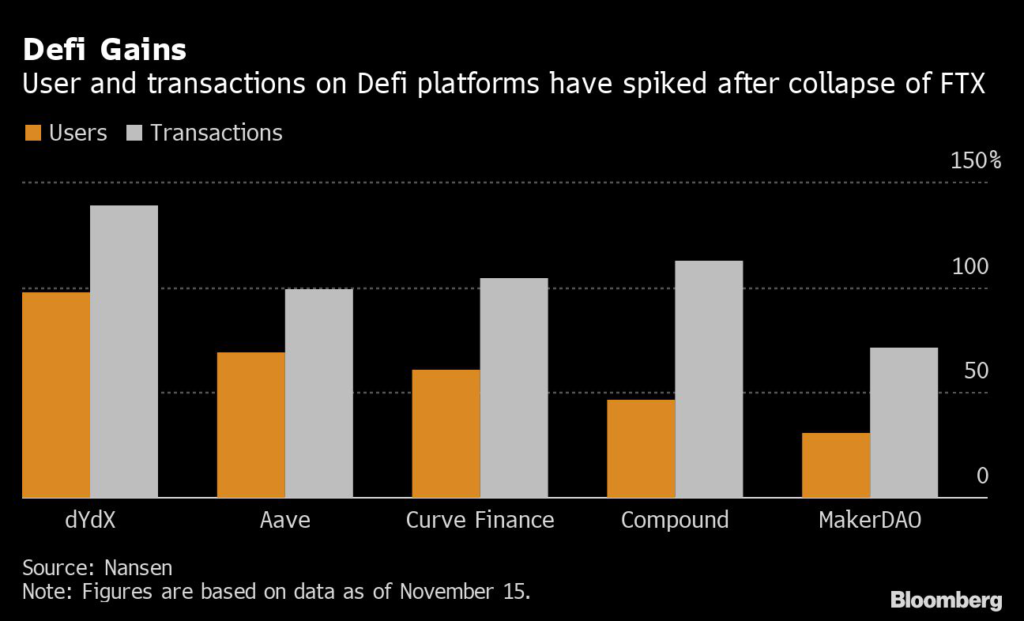
Trading volumes on decentralized exchanges are up almost 11% this month to $62 billion, CryptoCompare data sourced from DefiLlama shows. Lending protocols such as Aave and Compound are also among those seeing strong user and transaction growth, analytics firm Nansen said. In contrast, depositors spooked by FTX have yanked cash from centralized exchanges.

DeFi apps tend to use the blockchain networks like Ethereum, whose co-founder Vitalik Buterin said in an interview that “many in the Ethereum community also see the situation as a validation of things they believed in all along: centralized anything is by default suspect.”

In the week through Tuesday — a period capturing FTX’s fall  — Nansen data shows user growth at decentralized exchanges dYdX and Curve Finance hit 97% and 61% respectively, while transactions more than doubled. Users on lending protocols like Aave and Compund up 68% and 46% and transactions also doubled. 

Buterin isn’t along in seeing a tailwind for DeFi: Franklin Templeton’s Chief Executive Officer Jenny Johnson said earlier this week that FTX’s downfall will likely push investors toward decentralized exchanges.

Just how long the shift toward decentralized protocols will last remains an open questions. Buterin said DeFi is far from being user-friendly, scalable or accessible. Centralized exchange operators like Coinbase Global Inc. are also competing hard for flows.

In 2022 alone, hackers have been able to steal crypto assets worth $3 billion from various defi protocols, data from Chainalysis till October shows.


For now, though, the providers of DeFi solutions are emboldened.

People are “screaming on Twitter that DeFi is the answer,” said Antonio Juliano, founder of dYdX. Mary-Catherine Lader, chief operating officer, Uniswap Labs said FTX’s wipeout makes it “very concrete and painfully clear why people need to have more control over their money.”

Pascal Gauthier, chief executive of hardware wallet firm Ledger, said that “the message is clear: people are realizing that we must return to decentralization and to self-custody.”

“Last week saw Ledger’s highest sales week in history. Sunday was our single highest day of sales ever… until Monday, when we beat our all time high again,” Gauthier said.

Read more: FTX Fiasco Sparks Billions of Dollars of Outflows From Exchanges

The Nov. 11 collapse of Bankman-Fried’s FTX and sister trading house Alameda Research continues to reverberate through the industry. It follows earlier high-profile implosions of crypto outfits and comes amid a painful bear market in digital tokens — dramatic shift that are set to have far-reaching consequences for the industry.

More stories like this are available on bloomberg.com

©2022 Bloomberg L.P.

Jaguar Land Rover to Recruit Fired Twitter and Facebook Workers

(Bloomberg) — Jaguar Land Rover said it was looking to recruit workers who’ve been fired by technology companies such as Meta Platforms Inc. and Twitter Inc. to fill digital and engineering vacancies.

The luxury carmaker wants to hire about 800 workers across the UK, US, Ireland, India, China and Hungary, JLR said in a statement Friday. The jobs are in areas including autonomous driving, artificial intelligence, electrification, cloud software, data science and machine learning, it added.

Tech companies are trimming staff and slowing hiring as they face higher interest rates and sluggish consumer spending, as well as a strong dollar. Facebook parent Meta is cutting about 11,000 jobs, the first major round of layoffs in the social-media company’s history, while Twitter under new owner Elon Musk has imposed deep cuts and seen many of its workers quit.

JLR, owned by India’s Tata Motors Ltd., said the tech workers it is looking to recruit have skills that are essential to develop and build the carmaker’s next-generation of electric cars.

More stories like this are available on bloomberg.com

©2022 Bloomberg L.P.

FTX Latest: Bitcoin Weathers Gloom; Bankman-Fried Faces Grilling

(Bloomberg) — Bitcoin is up about 3% this week, topping global stocks and bucking the chaos sparked by FTX’s chaotic bankruptcy.  

Democratic lawmakers who received millions of dollars in campaign donations from Sam Bankman-Fried say they will be ready to grill the former FTX CEO about the exchange’s collapse. 

Liquidators appointed by a Bahamian court to take over FTX Digital Markets Ltd.’s affairs said there’s “significant” concern that FTX management lacked authority to put the crypto businesses into bankruptcy in the US.

The embattled cryptocurrency mogul and two other top FTX executives received massive loans from affiliated trading arm, Alameda Research. Advisers overseeing the bankruptcy of FTX Group are struggling to locate the company’s cash and crypto, citing poor internal controls and record keeping. 

Key stories and developments:

  • FTX Hammers More Nails Into Crypto’s Coffin: Lionel Laurent
  • Eight Days Into FTX’s Bankruptcy Blow Up (Podcast)
  • Flash Boys Exchange IEX Wants New Crypto Path After FTX Blowup
  • Ontario Teachers Writes Off FTX Stake, Citing Potential Fraud
  • Here Are the Wildest Parts of the New FTX Bankruptcy Filing

(Time references are New York unless otherwise stated.)

Small-Cap Tech Decouples From Bitcoin Gyrations (5:07 a.m.) 

Small-cap tech stocks have started to part ways with Bitcoin as both the crypto’s stock and related industry influence wane. Following the March 2020 low, rolling annual changes in Bitcoin’s US dollar cross rate and the Russell 2000 tech sector have been 0.95 correlated. And since Bitcoin’s peak, small-cap tech is down 38.5% versus a 75.4% drop in the crypto token.

It could be that Bitcoin represents overall risk tolerance in markets, spelling a rally for higher-growth small caps when rising. Or there could be a fundamental linkage: the sector weight of semiconductors — an integral part of Bitcoin mining — has dropped to 19.6% from 22.2%, since Bitcoin’s peak.

Fintechs Still Pushing Crypto, Distance Themselves From FTX (1:00 p.m. HK)

FTX’s bankruptcy filing last week is the latest headwind for fintech companies that have grown rapidly in tandem with the surge in digital asset trading. 

Revolut, a finance app based in London, told users this week it did not have “material exposures” to FTX but was monitoring the situation. “This is a good reminder that crypto is very volatile: the value does go down, as well as up,” it said in an email. Crypto has already shrunk from about 35% of Revolut’s revenue last year to less than 5% this year.

Block Inc.’s Cash App, which allows consumers to transfer money or buy stocks and cryptocurrencies, said in a statement it was “Bitcoin-first” and committed to a “truly” decentralized payments system “not controlled by any person, bank, country, or corporation.” 

Bitcoin Heads for a Weekly Gain (11:50 a.m. HK)

Bitcoin is up some 3% this week, topping global stocks, while a gauge of the leading 100 virtual coins has added about 0.5%. That compares with Bitcoin’s 23% slide last week as FTX collapsed.

Crypto historians might argue the counterintuitive Bitcoin performance will continue. Since a low in 2018, Bitcoin has posted a weekly loss of at least 20% six times apart from the recent slide. The token jumped almost 9% on average over the subsequent month, according to data compiled by Bloomberg.

Bahamas Regulator Takes Control of FTX Assets (8:00 a.m. HK)

The Bahamas Securities Commission said in a statement it directed the transfer of all digital assets of FTX Digital Markets to a wallet that the commission controls for safekeeping.

“Urgent interim regulatory action was necessary to protect the interests of clients and creditors of FDM,” it said, adding that its understanding is that FDM is not a party to US Chapter 11 bankruptcy proceedings. It said it would engage with regulators and authorities in multiple jurisdictions.

Ontario Teachers Writes Off FTX Stake (7:10 a.m. HK)

The pension plan said it will write down its stake in FTX to zero, taking a $95 million loss barely a year after making its first investment.

Teachers said the writedown will have only a “limited impact” because it’s less than 0.05% of the pension fund. “However, we are disappointed with the outcome of this investment, take all losses seriously and will use this experience to further strengthen our approach,” the fund said in a statement Thursday. 

Bankman-Fried-Backed Lawmakers Ready To Grill Former CEO (5:01)

Lawmakers who received millions of dollars of campaign donations from Sam Bankman-Fried could soon get something else from the former FTX chief executive officer: testimony under oath. 

Recipients of those political contributions say they’re prepared to grill Bankman-Fried about why his crypto exchange suddenly crashed, potentially causing billions of dollars in losses for millions of FTX account holders. Before the collapse, he donated tens of millions of dollars from his crypto-empire fortune to benefit Democrats, making him the second-largest donor to the party this election.

FTX’s ‘Zombie’ Token Still Has Value (3:34 p.m.)

A cryptocurrency whose sponsor went belly up, with no obvious use and a sordid role in a complicated deception? And still there’s about $500 million of the tokens sloshing around on digital trading platforms.

That’s the FTT token from the now-bankrupt exchange FTX, whose demise has cast a pall on the crypto space that industry participant say could take years to be lifted. The token reached a high of nearly $85 in September of last year, and though it’s seen its price drop roughly 98% since then, it still sports an eye-popping hypothetical market value on different exchanges and platforms. 

Liquidators Concerned That FTX Had No Authority to File Bankruptcy (1:07 p.m.)

Liquidators, appointed by a Bahamian court to take over FTX Digital Markets Ltd.’s affairs said they have “significant” concern that FTX management, led by Sam Bankman-Fried, lacked authority to put the crypto businesses into bankruptcy in the US.

More than 100 FTX-related entities filed for Chapter 11 in the US Bankruptcy Court for the District of Delaware after insolvency proceedings for Bahamas-based FTX Digital began on the island on Nov. 10.

Bankman-Fried Received $1 Billion Loan (11:39 a.m.)

FTX co-founder Samuel Bankman-Fried, one of his related companies, and two other top executives at the collapsed cryptocurrency exchange received massive loans from affiliated trading arm, Alameda Research, according to a bankruptcy court filing Thursday.

Alameda’s receivables included $4.1 billion in combined loans to “related parties,” according to a footnote in a document filed by John J. Ray III, who was appointed to oversee FTX as its chief executive officer during the proceedings. That includes $1 billion to Bankman-Fried, $2.3 billion to Paper Bird Inc., an entity majority owned by Bankman-Fried, $543 million to Nishad Singh, head of engineering at FTX, and $55 million to Ryan Salame, head of FTX Digital Markets. 

Democratic Senators Want Answers (11:14 a.m.)

Democratic Senators Elizabeth Warren and Dick Durbin seek information from FTX founder Sam Bankman-Fried on FTX’s collapse, in a letter to Bankman-Fried and the crypto exchange’s newly appointed CEO John Jay Ray III.

–With assistance from Amanda Fung and Dara Doyle.

More stories like this are available on bloomberg.com

©2022 Bloomberg L.P.

Senators Ask FTC to Probe Musk’s ‘Alarming Steps’ at Twitter

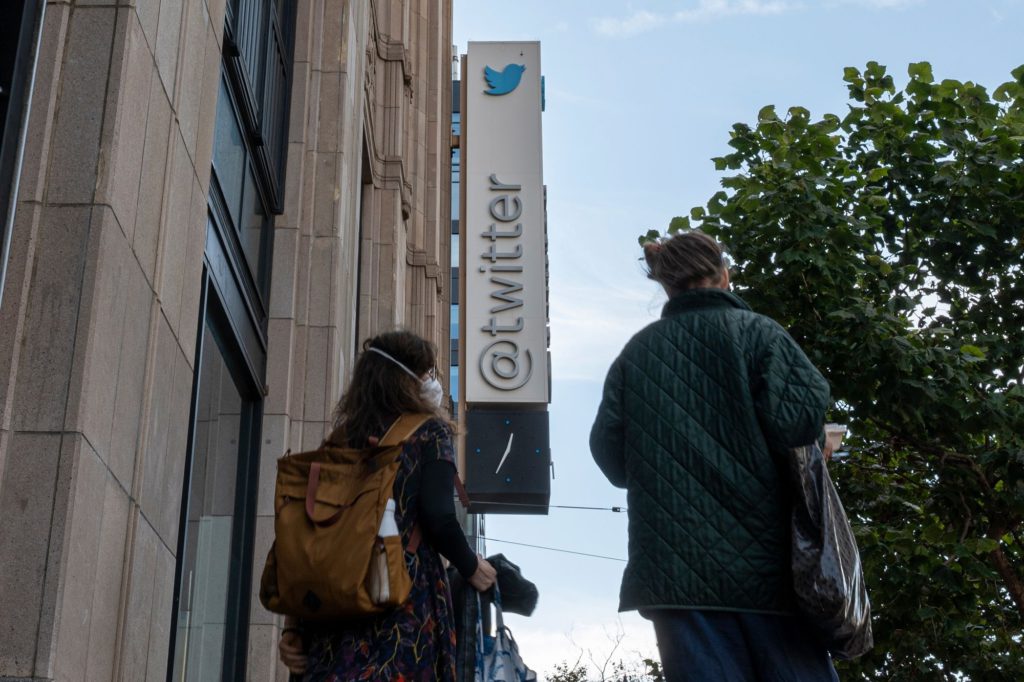
(Bloomberg) — A group of Democratic senators asked the US Federal Trade Commission to look into whether Twitter Inc. breached consumer protection laws or its consent decree under Elon Musk’s ownership. 

Musk “has taken alarming steps that have undermined the integrity and safety of the platform, and announced new features despite clear warnings those changes would be abused for fraud, scams, and dangerous impersonation,” according to a letter to the FTC on Thursday signed by seven senators, including Cory Booker, Elizabeth Warren and Dianne Feinstein. 

The senators wrote that the loss of key executives who oversaw privacy, cybersecurity and integrity at Twitter calls into question “whether personal data is adequately protected from misuse or breach while the company explores new products and monetization strategies.” 

Read More: Musk’s Twitter Deal Remains in Focus for US Data-Security Review

Changes to the verification feature, for example, led to fake accounts impersonating President Joe Biden, senators and other prominent figures, they said. Twitter didn’t respond to a request for comment. 

At risk is the company’s 2011 consent decree with the FTC, which requires Twitter to meet standards for protecting personal data. The settlement followed a breach that allowed hackers to send phony messages from accounts. If Twitter fails to uphold the agreement, it faces fines of as much as $16,000 per violation. 

An anti-monopoly group, the Open Markets Institute, also sent a letter to FTC Chair Lina Khan urging the regulator to investigate the deal. That organization, which once employed Khan, questioned whether Musk is managing his other business ventures independently from Twitter. 

Read More: FTC Chief’s Former Boss Urges Review of Musk’s Twitter Deal 

The FTC previously said it was “tracking recent developments at Twitter with deep concern.”


Biden said last week that Musk’s relationships with other countries is “worthy of being looked at.” Senator Chris Murphy, a Connecticut Democrat and member of the Foreign Relations Committee, questioned the participation of investors from Saudi Arabia and Qatar in financing Musk’s purchase of Twitter. 

Virginia Democrat Mark Warner, chair of the Senate Intelligence Committee, raised concerns about Musk’s comments regarding Taiwan and what he considers his reliance on China. 

More stories like this are available on bloomberg.com

©2022 Bloomberg L.P.
JD Reports Higher Quarterly Sales, Defying China Downturn Fears

(Bloomberg) — JD.com Inc. reported higher sales last quarter after shoppers kept spending at China’s second-largest online retailer despite an economic downturn. 

Sales rose 11% from a year earlier to 243.5 billion yuan ($34.2 billion) in the quarter ending in September, the company said in a statement on Friday. That compared to the average forecast of 243.1 billion yuan from analysts surveyed by Bloomberg. The Beijing-based company logged net income of 6 billion yuan, improving on a 2.8 billion yuan loss the previous year with cost-cutting efforts. 

JD and larger rival Alibaba Group Holding Ltd. have been grappling with a drop in spending due to China’s adherence to a Covid-Zero policy that’s stifled economic activity. Alibaba reported a surprise quarterly loss, as stalled revenue growth fell short of covering for writedowns on tech investments.

Founded by billionaire Richard Liu, JD has largely avoided a direct hit from Beijing’s crackdown on the country’s biggest internet companies. It’s seen as a beneficiary of regulators’ condemnation of rivals’ free-wheeling growth-at-all-costs spending.

“While macro headwinds remain, we believe JD is well positioned to capture re-accelerated growth when the economy rebounds,” Citigroup analysts led by Alicia Yap said in a note to investors ahead of the earnings announcement.

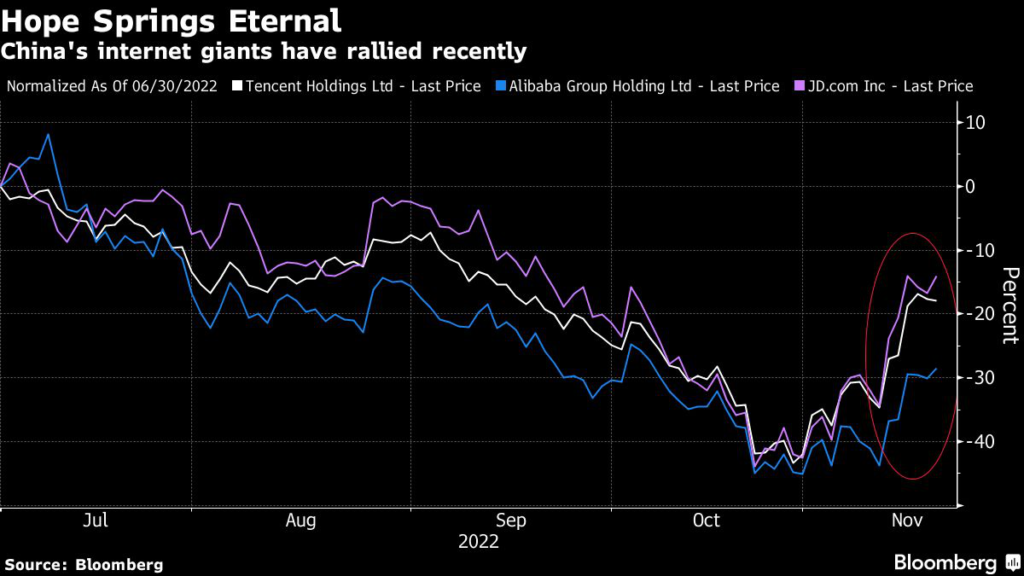
Chinese tech shares have rallied recently, as the Communist Party relaxed some Covid restrictions and Chinese President Xi Jinping and US President Joe Biden had their first sit-down meeting at the Group of 20 summit in Bali this week. JD shares listed in Hong Kong soared about 50% this month. They remain down about 20% this year.

–With assistance from Charlotte Yang.

More stories like this are available on bloomberg.com

©2022 Bloomberg L.P.

Masayoshi Son Now Owes SoftBank $4.7 Billion on Side Deals

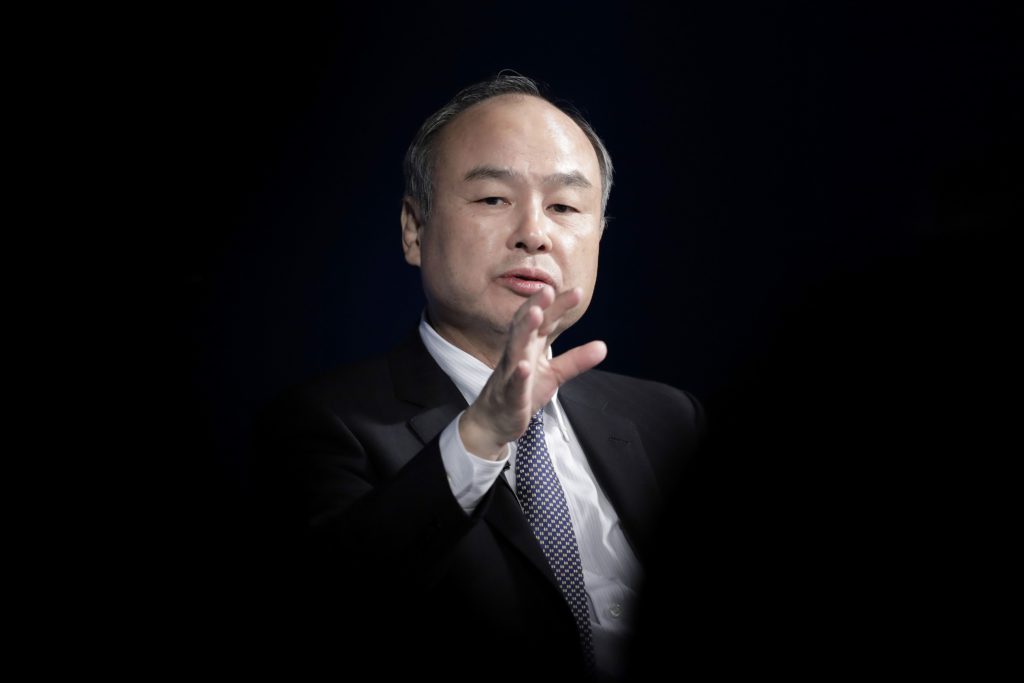
(Bloomberg) — Masayoshi Son is now personally on the hook for about $4.7 billion on side deals he set up at SoftBank Group Corp. to boost his compensation, after mounting losses in the company’s tech portfolio wiped out the value of his interest in the second Vision Fund.

Over the years, the Japanese billionaire’s controversial personal stakes in SoftBank’s investments drew fire from investors, who pointed to the mix of personal and company interests as a corporate governance concern. Son — who holds a more than 30% stake in SoftBank — has denied there was a conflict of interest and said it was remuneration for his investment expertise, in lieu of investment fees.

The move has backfired, enveloping Son’s personal finances in the downside of the world’s biggest tech investor’s bets. Son was down more than $4 billion on his side deals through the June quarter, Bloomberg News reported earlier. 

Son last week said he was stepping away leading earnings calls, to focus on preparing chip designer Arm Ltd. for a public listing — an event that would give SoftBank fuel to again pursue new investments. SoftBank will bide its time in a tech winter and pay down its debt, he and his lieutenants said.

SoftBank’s Vision Fund arm posted a $7.2 billion quarterly loss last week, driven by the declining value of portfolio companies such as SenseTime Group Inc., DoorDash Inc. and GoTo Group. The company has been selling off assets to raise cash and shore up its balance sheet, posting gains from selling a chunk of its stake in Alibaba Group Holding Ltd.

“We need to go full-on defense,” SoftBank Chief Financial Officer Yoshimitsu Goto said. “SoftBank is pessimistic on the outlook. We do not yet see the light.”

The 65-year-old Son holds 17.25% of a vehicle set up under SoftBank’s Vision Fund 2 for its unlisted holdings, as well as 17.25% of a unit within its Latin America fund, which also invests in startups. He has a 33% stake in SB Northstar, a vehicle set up at the company to trade stocks and derivatives.

Portfolio losses ratcheted up Son’s deficit to about $2.8 billion from his Vision Fund 2 interest, and $252 million at the Latam fund, according to disclosures for the September quarter. His remaining deficit at SB Northstar was 233.6 billion yen ($1.6 billion). The amount Son owes SoftBank from his interests in Vision Fund 2 and the Latam fund rose about $750 million in the last quarter, according to Bloomberg calculations, confirmed by SoftBank.

Son’s interests in Vision Fund 2 and the Latam fund were structured so the billionaire didn’t pay cash up front for his 17.25% stakes. Son is obligated to pay 3% on the “unpaid equity acquisition amount” until repayment, interest that has been wrapped into his liabilities. 

There is no deadline for repayment and the value of Son’s positions could improve in the future, and for SB Northstar, Son has already deposited some cash and other assets. The founder would pay his share of any “unfunded repayment obligations” at the end of the fund’s life, which runs 12 years with a two-year extension.

Son has deposited 8.9 million of his own shares as collateral for Vision Fund 2, and another 2.2 million shares as collateral for the Latam fund, the company said in its disclosures. The stock will only be released once the receivables are settled.

Son’s net worth stood at $12.7 billion after Thursday’s close, after adjusting for his deficit from his interests in Vision Fund 2 and Latam fund, according to calculations by Bloomberg Billionaires Index.

Shares in SoftBank closed down 3.9%, paring losses that had rocketed the stock to a one-year high last week. Its shares are up 12% from the start of the year.

–With assistance from Vlad Savov.

(Updates with closing share price and chart)

More stories like this are available on bloomberg.com

©2022 Bloomberg L.P.
India to Ease Data Storage Rules in Relief for Google, Meta

(Bloomberg) — India plans to allow transfer and storing personal data in some countries overseas, in a reprieve for global companies including Alphabet Inc.’s Google, Amazon.com Inc. and Meta Platforms Inc.’s Facebook.

The government will “notify such countries or territories outside India to which a data fiduciary may transfer personal data,” according to the draft Digital Personal Data Protection Bill unveiled on Friday for public feedback. The long-delayed bill needs the approval of parliament before becoming law. An earlier version of the bill had sought to severely restrict transfer, processing and storage of data overseas.

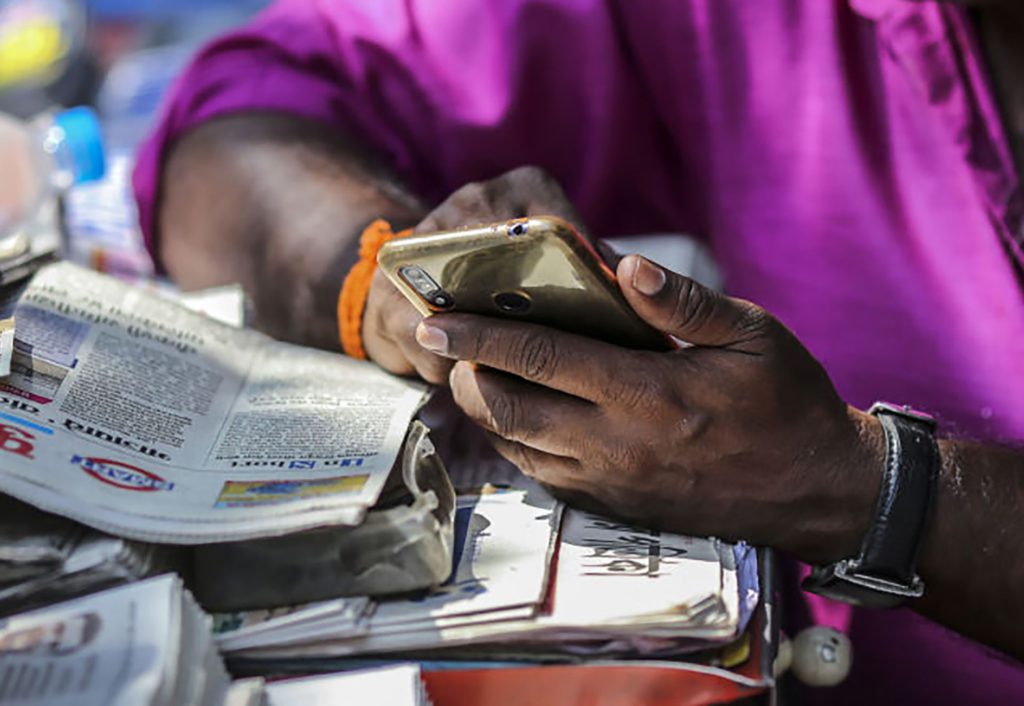
The key piece of proposed legislation comes as digitization thrives in the country of 1.4 billion where usage of smartphones and apps is skyrocketing. Nations around the world are bringing in laws to allow users to control what personal data to share with whom, for what and how long.

The data protection bill has been long in the making after global companies such as Meta and Alphabet as well as local startups said complying with data localization norms specified in an earlier version of the draft would be onerous.

“Companies like Amazon and Facebook can breathe easy now,” said Rahul Matthan, a partner at law firm Trilegal, adding that the latest draft was “nice and simple.”

“It’s data protection on training wheels and India can bring in the changes bit by bit.”

The Digital Personal Data Protection Bill of 2022 requires consent before collecting personal data, and proposes stiff penalties of as much as 5 billion rupees ($61.2 million) on persons and companies that fail to prevent data breaches including accidentally disclosing, sharing, altering or destroying personal data. Companies are allowed to store the collected data for only specified periods.

In August, the government withdrew an earlier version of the bill from parliament saying it will present a new legislation and include changes suggested by the panel of lawmakers that scrutinized it. The parliamentary panel previously recommended changes including treating social media platforms such as Meta as publishers and setting up a watchdog to oversee them.

Privacy is a thorny issue in the world’s biggest democracy, which has seen explosive digital growth with 760 million active Internet users. It took two years for Prime Minister Narendra Modi’s government to come up with data protection legislation after the Supreme Court ruled that privacy is a fundamental individual right. The parliamentary panel missed many deadlines to complete its report as lawmakers were divided on some of the bill’s provisions.

The new draft bill proposes setting up of Data Protection Board of India that will monitor and determine non-compliance and impose penalty. Companies like Amazon and Meta will also be required to appoint data protection officers who will represent them and who will be required to be based in India.

The draft bill also requires companies such as the parent entities of Google and Facebook to be accountable to a “consent manager” to provide an “accessible, transparent and inter operable platform” to give, manage, review and withdraw consent. Personal data of children cannot be obtained or processed without parental consent.

–With assistance from Saritha Rai.

(Updates with lawyer’s comment in fifth paragraph)

More stories like this are available on bloomberg.com

©2022 Bloomberg L.P.
This Week in Crypto: All FTX, All the Time (Podcast)

  • Listen to Bloomberg Crypto on the iHeartRadio App
  • Listen to Bloomberg Crypto on Apple Podcasts
  • Listen to Bloomberg Crypto on Spotify  

(Bloomberg) — It’s been another unprecedented week in the crypto ecosystem. Fast moving information and news about digital assets has kept on coming as the crypto ecosystem struggles with the repercussions of FTX declaring bankruptcy and the resignation of former CEO Sam Bankman-Fried. Events continue to unfold at light speed with great consequences for so many investors.Bloomberg crypto senior editor Philip Lagerkranser and Bloomberg senior crypto editor for Asia, Sunil Jagitiani join to discuss.

Subscribe to the Bloomberg Crypto Newsletter at https://bloom.bg/cryptonewsletter 

This podcast is produced by the Bloomberg Crypto Podcast team: Supervising producer: Vicki Vergolina, Senior Producer: Janet Babin, Producers: Sharon Beriro and Muhammad Farouk, Associate Producers: Mo Andam and Ty Butler. Sound Design/Engineer:  Desta Wondirad.

More stories like this are available on bloomberg.com

©2022 Bloomberg L.P.
Turkey Tested New Censorship Powers After Istanbul Blast

(Bloomberg) — In the aftermath of a deadly bombing in central Istanbul, the Turkish government demonstrated its newly enhanced power to cut off flows of information and to assert state control over the public debate. 

Social media services including Twitter, Instagram and YouTube were quickly made inaccessible after the blast on Sunday, and blocked until the following morning. Broadcasters reporting on the incident abruptly shifted to other topics as RTUK, the media watchdog, rapidly imposed a broadcast ban.

The restrictions highlight the expansive new powers that Turkish authorities granted themselves over dissemination of information, thanks to a so-called “disinformation bill” passed last month. Tabled by President Recep Tayyip Erdogan’s ruling AK Party and its nationalist ally MHP ahead of elections next year, the bill made a swathe of changes to press and internet laws and criminalized the spread of “false information” online. 

The measures enable the government “to further censor and silence critical voices ahead of Turkey’s upcoming elections and beyond,” Amnesty International said in a press release last month, calling their passage “a dark day for freedom of expression online.” Reporters Without Borders, a press freedom advocate, said Erdogan’s office has stepped up attacks on journalists “in a bid to deflect attention from the country’s economic and democratic decline and to shore up its political base” as the 2023 election nears. RSF was among a delegation of international press groups that jointly condemned the passage of the law after visiting Turkey in October.

Information Flow

Two officials told Bloomberg on Sunday that the bans following the explosion, which killed six people and injured more than 80, were introduced for “security reasons.” Turkey blamed the attack on a Kurdish militant group, and within hours, police arrested a Syrian woman accused of planting the parcel bomb on Istiklal Caddesi, one of Istanbul’s busiest streets.

The disinformation law gives the telecommunications regulator, known as BTK, power to slash internet bandwidth. The BTK conveys the ruling to service providers, which have to implement the decision within four hours. If they fail to do so, they face as much as six months of commercial bans, bandwidth slowdowns by as much as 90%, and fines. 

Separately, users convicted of spreading disinformation face a jail sentence of up to three years if found guilty. Broadcasters that fail to comply with bans can be fined as much as 3% of their ad revenues from the previous month.

New Turkey Law Mandates Jail Time for Spreading ‘Disinformation’

Turkcell Iletisim Hizmetleri AS, Turkey’s biggest telecom operator by sales, and Turk Telekomunikasyon AS, both controlled by Turkey’s sovereign wealth fund, declined to comment on the restrictions. Vodafone Group Plc’s Turkey unit said it abides by laws in all countries where it operates. Meta Platforms Inc., owner of Facebook, Instagram and WhatsApp, declined to comment, while Twitter Inc. didn’t immediately respond.

Popular Workarounds

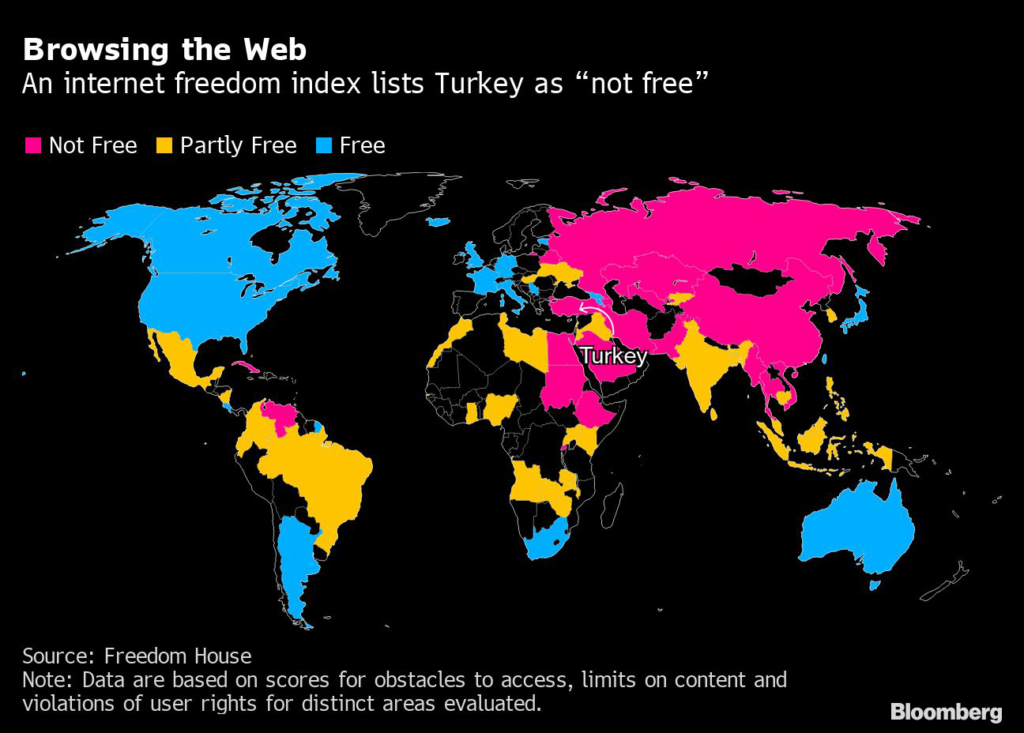
Despite the ban, some Turkish authorities, including Istanbul Governor Ali Yerlikaya, used Twitter to broadcast to the public throughout Sunday evening. The restrictions can be circumvented with virtual private networks, or VPNs, which have become popular among tech-savvy Turks seeking censorship workarounds. 

According to a study by the We Are Social agency, Turkey ranked sixth in the world by VPN usage rate last year, at 31%. Google Trends showed Turkish web searches for “VPN” surged after the attack. 

A separate law passed two years ago required social media companies to appoint Turkey representatives, store data locally and abide by legal requests to remove content from their platforms, facing fines if they fail to do so. 

(Updates with Meta declining to comment. Previous version of the story corrected spelling of company name in eighth paragraph.)

More stories like this are available on bloomberg.com

©2022 Bloomberg L.P.
China Says UK Abused State Power to Overturn Chip Factory Deal

(Bloomberg) — China said the UK overstepped its authority and violated Nexperia Holding BV’s rights when the government decided to reverse the company’s takeover of a Welsh semiconductor factory. 

“The UK has overstretched the concept of national security and abused state power to directly interfere in a Chinese company’s normal investment cooperation in Britain,” Chinese Foreign Ministry spokeswoman Mao Ning told reporters at a regular press briefing on Friday. “This violates the lawful rights and interests of the company concerned and the market economy principles and international trade rules which has long claimed itself to be a champion of.”

British Business Secretary Grant Shapps on Wednesday ordered Nexperia’s owner, Shanghai-listed Wingtech Technology Co., to sell Newport Wafer Fab. Nexperia bought the UK’s largest microchip factory last year. The Chinese-owned company has said it will appeal the decision.

Read More: UK Blocks Chinese-Led Buyout of Biggest Microchip Factory

Wingtech’s Dutch subsidiary will be forced to sell the 86% of Newport Wafer Fab it bought in July 2021, in a deal which was worth about £63 million ($75 million), a person familiar with the matter said at the time. It held a small stake before that date, prior to the scope of new UK takeover rules. The facility makes “wafers” of silicon which are then turned into semiconductors in applications like cars.

Following a protracted review, British officials concluded there was a risk to national security from the site’s potential to produce compound semiconductors, which could be useful for electric vehicles, 5G and facial recognition, “and the potential for those activities to undermine UK capabilities,” according to the government order.

More stories like this are available on bloomberg.com

©2022 Bloomberg L.P.
Close Bitnami banner
Bitnami