Bloomberg

Biden’s Top Aides Plan Exit as Economy Takes Center Stage in 2024 Election

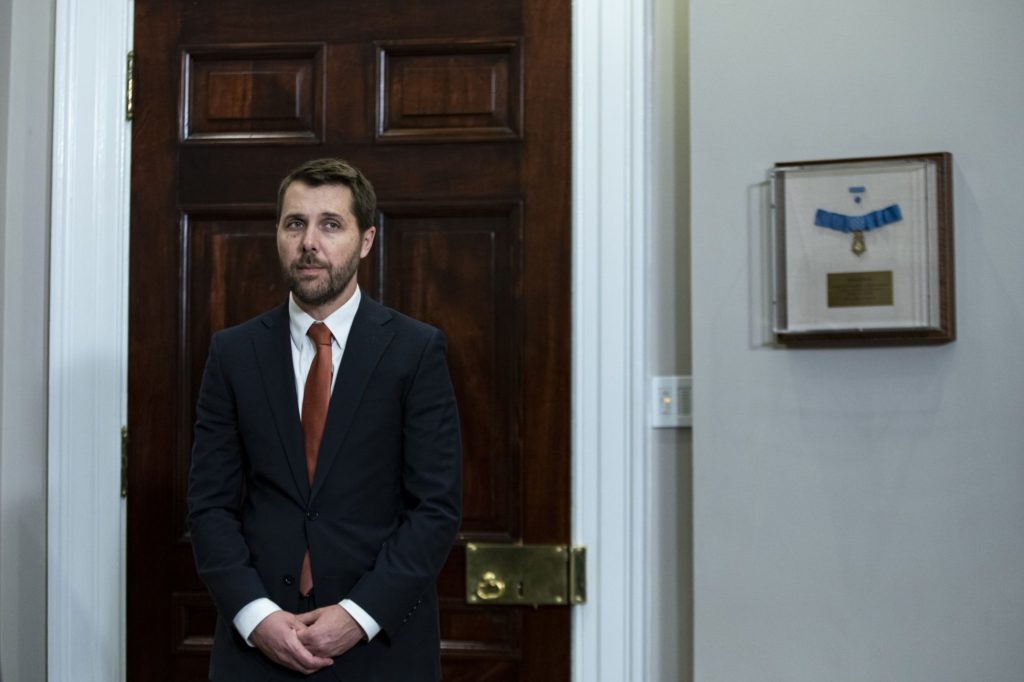
(Bloomberg) — President Joe Biden’s top economic adviser, Brian Deese, is expected to leave the White House next year, part of a broader reshuffle that will offer Biden a chance to make over his coterie of aides on an issue central to an expected reelection bid.

Deese is expected to depart as director of the National Economic Council sometime next year, most likely in the spring or summer, according to people familiar with his plans. Another high-profile adviser, Cecilia Rouse, the first African-American to chair the Council of Economic Advisers, is also expected to leave early in 2023 to return to Princeton University.

A senior White House official said there is no timeline for Deese’s departure, and the president and his colleagues would like him to stay. Another White House official said Rouse will return to Princeton at the end of her two-year public service leave, likely in the spring. 

Administration aides are discussing Deputy Treasury Secretary Wally Adeyemo moving to the West Wing to lead the NEC, said the people, who spoke on condition of anonymity to describe internal deliberations. Adeyemo was previously a deputy director of the NEC under Obama, where he coordinated policy on trade, investment, energy, international finance and environmental issues. 

Gene Sperling, the White House coordinator for Biden’s pandemic relief measure and a senior adviser to the president, is also expected to raise his hand for Deese’s job, according to people familiar with the matter. Sperling previously led the NEC under Presidents Barack Obama and Bill Clinton.

The prospective Deese-Rouse departures will come at a critical time for the White House, as the president and his team continue to try to curb inflation and stave off a recession many economists view as a near-certainty. Biden will also have to contend with congressional Republicans, who will control the House and have threatened fights over the US debt ceiling and entitlement spending.

Read more: GOP in Charge: What’s Next for Wall Street, the Fed and McCarthy

Deese and Sperling, through a White House spokesperson, declined to comment. Adeyemo, through a Treasury Department spokesperson, also declined to comment. 

One White House official dismissed talk about personnel changes as rumors, noting there is no timeline for Deese’s departure.

Biden’s most prominent economic adviser, Treasury Secretary Janet Yellen, is expected to stay in her current role longer than Deese and Rouse, according to a person familiar with the matter, who predicted she would not depart until the reelection campaign intensifies.

Biden was buoyed by the stronger-than-expected Democratic showing in the midterms despite voter anxiety about inflation and the economy. But attention is already shifting to 2024, with former President Donald Trump jumping in the race on Tuesday, and Republicans targeting Biden’s stewardship of the economy.

Team Shake-Up

Biden tapped Deese from BlackRock Inc., where he oversaw the financial giant’s sustainable investment strategies. Before that Deese was a senior adviser to Obama on climate and energy issues and also a deputy director of the NEC.

Rouse, who was confirmed by the Senate on March 2, 2021, is returning to Princeton, where she has been a professor of economics and public affairs and a former dean of the Princeton School of Public and International Affairs. 

The other two members of the Council of Economic Advisers are Jared Bernstein and Heather Boushey, both of whom advised Biden on his 2020 presidential campaign. 

The White House is looking at economists from academic institutions as well as internal candidates like Bernstein to replace Rouse, according to people briefed on the search.

Bernstein declined to comment on Rouse’s departure or on whether he wanted the top job during an event hosted by Axios on Wednesday.

2024 in View

It’s not unusual for senior White House staff to consider leaving their positions after elections, worn out by grueling schedules, travel or the resetting of the policy agenda. And Biden has suffered far less turnover among his top aides than his predecessor, Donald Trump. But White House officials are bracing for departures now that the midterms are over.

Biden’s economic team will face a new political reality in 2023. 

With Democrats controlling both chambers, Biden in his first two years in office was able to pass sweeping economic measures such as the Inflation Reduction Act — Democrats’ climate, tax and health package — as well as infrastructure spending and the Chips and Science Act to boost domestic semiconductor manufacturing. 

But with a divided Congress, the administration is expected to focus more on implementing those laws while advancing additional policies through executive actions or regulations. There is little expectation that Republicans in the House will work with Biden on any significant new legislation, and the two sides are likely to have trouble agreeing even to basic government spending bills.

The White House must also contend with the prospect of a showdown over raising the debt ceiling, which Republicans have warned they aim to use as leverage to force spending cuts on entitlement programs. Biden has said he “will not yield” to GOP demands on the debt limit, which could force the nation’s first-ever default — an event many economists believe would have severe consequences.

–With assistance from Jennifer Jacobs.

More stories like this are available on bloomberg.com

©2022 Bloomberg L.P.

IBM Sees Tech Spending Growth Unless a ‘Catastrophic Recession’ Hits

(Bloomberg) — International Business Machines Corp. Chief Executive Officer Arvind Krishna said he sees technology spending continuing to grow despite fears over rising interest rates, inflation and labor constraints.

Unless there’s a “catastrophic recession,” corporate spending on technology should continue to increase, Krishna said Thursday during an event hosted by the Economic Club of New York. “As I talk to CEOs and CIOs across the globe, almost none of them are talking about cutting down technology spending,” Krishna said, adding that one point of caution is whether western Europe goes through a “major energy crisis.”

Under Krishna, IBM has bet on cloud computing and artificial intelligence for growth and made 25 acquisitions since April 2020. Its stock has been a relative safe haven in the tech market meltdown, rallying 8.1% this year through Wednesday’s close compared with a 28% dip in the Nasdaq 100 index. In the most recent earnings report, IBM beat sales estimates and affirmed its cash flow forecast. 

Meanwhile, tech giants like Amazon.com Inc. and Meta Platforms Inc. began cutting thousands of jobs this month. Krishna said IBM hasn’t frozen hiring, though is adding workers at a more moderate pace than last year, focused on which regions are growing. The Armonk, New York-based company had more than 280,000 workers globally as of the end of 2021. 

The company likely won’t institute a return-to-office mandate as long as attendance keeps growing, Krishna said. US workers are coming into the office nearly 50% of the time, though Krishna said he’d like to see it hit 60%. Office attendance is slightly higher in Europe, and almost completely back in Japan and China, the CEO said.

While productivity isn’t hurt by remote work, it’s more difficult to maintain the organization’s culture, Krishna said.

Krishna added that IBM hasn’t been affected by the downturn in cryptocurrency values and the implosion of companies like FTX. “We, as IBM, are not going to go into blockchain for crypto,” adding that it’s investing in blockchain’s other uses such as tracking products.

More stories like this are available on bloomberg.com

©2022 Bloomberg L.P.

Wells Fargo Hires Credit Suisse Specialty Finance Banker

(Bloomberg) — Wells Fargo & Co. has hired Credit Suisse Group AG’s most senior specialty-finance investment banker Andy Rosenburgh.

New York-based Rosenburgh is joining Wells as co-head of its financial institutions group alongside Tom Curran, and will report to Scott Warrender, the bank’s head of coverage. He spent 28 years at Credit Suisse, according to Finra records. He has been a vice chairman in the firm’s financial institutions group since 2014, and most recently held the post of global head of specialty finance. 

A spokesperson for Wells Fargo confirmed the hire and declined to comment further. A Credit Suisse spokeswoman declined to comment.

The move comes after Credit Suisse — reeling from scandals and losses — announced a major restructuring that involves the rebirth of the First Boston brand.

Read more: CS First Boston Leader Says Traders Make It More Than a Boutique

Earlier this month, San Francisco-based Wells Fargo hired Credit Suisse veteran Brian Gudofsky to run technology, media and telecommunications investment banking. The firm has been seeking to build a bigger presence on Wall Street under Chief Executive Officer Charlie Scharf. In April, Wells hired Tim O’Hara, who previously worked at both BlackRock Inc. and Credit Suisse, as head of banking.

(Updates with new role in second paragraph.)

More stories like this are available on bloomberg.com

©2022 Bloomberg L.P.

Robinhood Seeks to Reassure Customers on Crypto Practices

(Bloomberg) — Robinhood Markets Inc. reiterated its crypto safety practices in a Twitter thread, saying customer assets are “completely segregated from any firm activity.”

The financial services platform offered the reassurance amid heightened concerns over contagion spreading across the crypto industry following FTX’s bankruptcy. 

Crypto Contagion Is Entangling Even More Retail Customer Cash


More stories like this are available on bloomberg.com

©2022 Bloomberg L.P.

Treasuries Slump as Fedspeak Dims Pivot Hopes: Markets Wrap

(Bloomberg) — US Treasuries slumped and stocks pared declines as traders recalibrate their expectations in response to the Federal Reserve indicating that it will continue to raise interest rates to tamp down on inflation.

The S&P 500 and the tech-heavy Nasdaq 100 trimmed earlier declines of more than 1%. US 10-year Treasury yields rose after St. Louis Fed President James Bullard said policymakers should increase interest rates to at least 5% to 5.25% to curb inflation. He also warned of further financial stress ahead. 

Bullard’s comments came a day after San Francisco Fed President Mary Daly said a pause in rate hikes was “off the table.” With inflation only starting to ease after hitting decades-high levels, and a gauge of US retail sales increasing at the fastest pace in eight months, Fed speakers have reiterated that they need to go further to extinguish prices pressures. Fresh data showing weekly jobless claims came in below the forecast in a Bloomberg survey further underscored the strength of the labor market. 

On Thursday afternoon, data showing mortgage rates in the US posting their biggest weekly decline since 1981 somewhat improved sentiment, even though Freddie Mac’s chief economist said there’s a long road ahead of the housing market.

“The key elements driving pretty much everything these days is around Fed policy. That’s very much been at the heart of what’s been driving markets this year,” said Steve Foresti, chief investment officer of asset allocation and research at Wilshire. “And looking at market moves from that context, I think, is incredibly helpful in understanding some of the reactions that we see.”

Prices for growth-sensitive oil and copper extended losses on signs of a dimming demand outlook. European Central Bank policy makers too are said to be mulling a smaller 50 basis-point rate hike next month, signaling their concern for the economy and pushing the euro lower. 

The pound dropped as Chancellor Jeremy Hunt outlined a £55 billion ($65 billion) package of tax rises and spending cuts even as the economy slid into recession. Gilt yields rose.


Key events this week:

  • Fed’s Neel Kashkari, Loretta Mester speak, Thursday
  • US Conference Board leading index, existing home sales, Friday

Some of the main moves in markets:

Stocks

  • The S&P 500 fell 0.2% as of 1:01 p.m. New York time
  • The Nasdaq 100 rose 0.2%
  • The Dow Jones Industrial Average rose 0.1%
  • The MSCI World index fell 0.8%

Currencies

  • The Bloomberg Dollar Spot Index rose 0.6%
  • The euro fell 0.4% to $1.0350
  • The British pound fell 0.6% to $1.1838
  • The Japanese yen fell 0.6% to 140.27 per dollar

Cryptocurrencies

  • Bitcoin rose 0.9% to $16,688
  • Ether rose 0.4% to $1,210.1

Bonds

  • The yield on 10-year Treasuries advanced eight basis points to 3.77%
  • Germany’s 10-year yield advanced two basis points to 2.02%
  • Britain’s 10-year yield advanced five basis points to 3.20%

Commodities

  • West Texas Intermediate crude fell 4.4% to $81.79 a barrel
  • Gold futures fell 0.7% to $1,762.90 an ounce

This story was produced with the assistance of Bloomberg Automation.

–With assistance from Sujata Rao.

More stories like this are available on bloomberg.com

©2022 Bloomberg L.P.

Twitter Sued by Fired Contractor for Failing to Give Notice

(Bloomberg) — Twitter Inc., which fired thousands of employees since being bought by Elon Musk, was sued by a former contractor for failing to give proper notice, final pay and to reimburse his expenses.

Francisco Rodriguez was employed by Twitter through PRO Unlimited Inc, known as Magnit, and fired on Nov. 12, along with potentially 4,400 to 5,500 others, according to a complaint filed in San Francisco federal court Wednesday. Rodriguez is seeking to represent all those workers in a class-action lawsuit.

Rodriguez “like potentially thousands of other Twitter employees who were paid through Magnit, received an email on November 12, 2022, stating that he was being laid off, effective November 14, 2022,” his lawyer wrote in the complaint. “Neither Twitter nor Magnit provided full final pay, benefits, and expense reimbursement to these employees on their last day of employment, as required by the California Labor Code. To date, these employees have still not received these full payments.”

The cuts, which included most of Twitter’s senior management, have upset many of the remaining employees. Musk’s changes have also led to a lack of communication internally and concerns about product breakdowns and technical outages, according to current and former staffers.

The failure to give proper notice violates federal and California Worker Adjustment and Retraining Notification Act, known as WARN, according to the complaint. The act generally requires at least 60 days of advance notice for mass layoffs at large companies.

Magnit said it couldn’t comment on current litigation.

Rodriguez’s lawyer, Shannon Liss-Riordan had filed a pre-emptive lawsuit Nov. 4, on the eve of the mass layoffs, accusing Twitter of violating the WARN Act. She had filed a similar lawsuit over June layoffs at Musk’s automaker Tesla Inc.

Liss-Riordan said on Wednesday that Twitter agreed to temporarily hold off on distributing severance agreements until the court has heard an emergency motion for a protective order stopping the company from asking the fired workers to sign releases.

“While this is one positive move, make no mistake, Musk continues to put Twitter employees through hell,” Liss-Riordan said in a statement.

The case is Rodriguez v. Twitter Inc. 3:22-cv-7222, US District Court, Northern District of California (San Francisco).

(Adds Magnit’s response in sixth paragraph.)

More stories like this are available on bloomberg.com

©2022 Bloomberg L.P.

FTX Latest: Bankman-Fried Got $1 Billion Loan From Affiliate

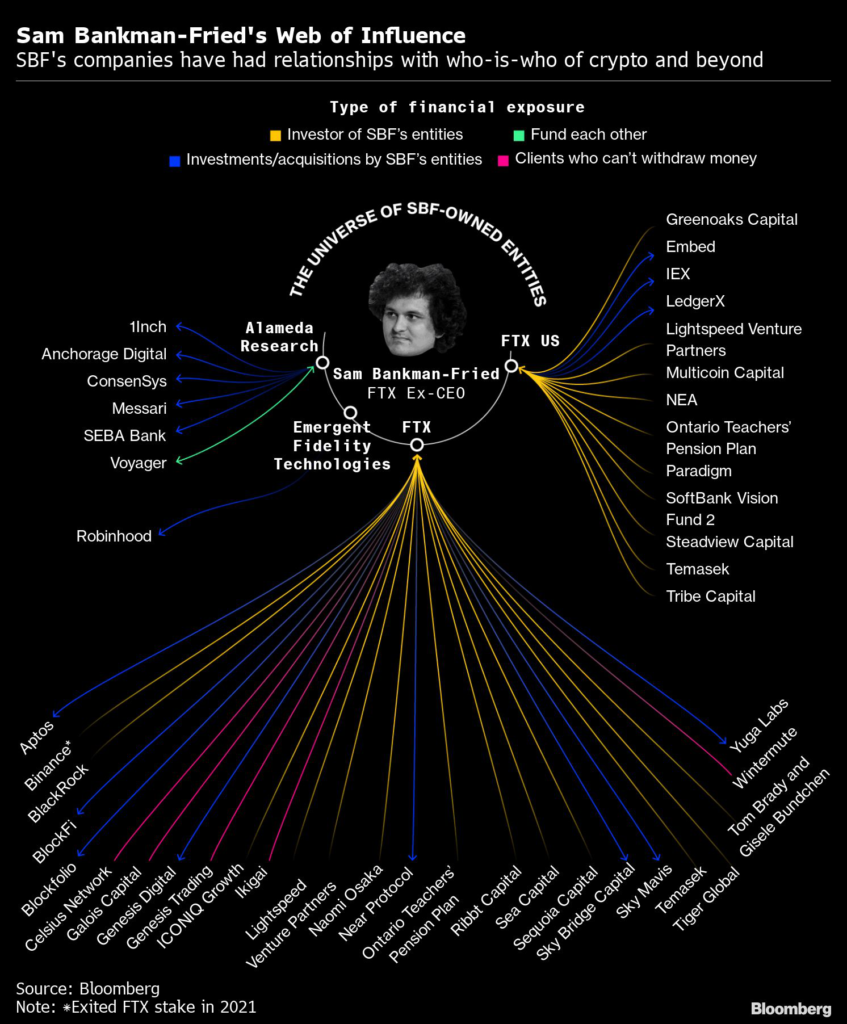
(Bloomberg) — Embattled cryptocurrency mogul Sam Bankman-Fried and two other top FTX executives, received massive loans from affiliated trading arm, Alameda Research, according to a bankruptcy court filing Thursday. Advisers overseeing the bankruptcy of FTX Group are struggling to locate the company’s cash and crypto, citing poor internal controls and record keeping. The complete failure of corporate controls at the company is “unprecedented,” according to new Chief Executive Officer John J. Ray III, who had a more than 40-year career in restructurings, including overseeing the liquidation of Enron.

US lawyers for the bankrupt crypto platform said in a court filing that Bankman-Fried is undermining efforts to reorganize his crumbling empire with “incessant and disruptive tweeting.” 

More retail money is getting trapped as crypto companies falter. Crypto lender BlockFi, which has suspended customer withdrawals, is reportedly preparing to file for bankruptcy. Gemini Trust Co., the crypto platform run by the Winklevoss brothers, paused withdrawals on its lending program. And Binance CEO Changpeng Zhao told CNBC his company “would be interested in looking at the assets, buying assets, especially some of the better ones” that may be sold in the form of bankruptcy.

Key stories and developments:

  • Here Are the Wildest Parts of the New FTX Bankruptcy Filing
  • FTX Offers a Master Class in Crypto Market’s Flaws: Editorial
  • Odd Lots: Understanding the Collapse of Sam Bankman-Fried’s Crypto Empire
  • Winklevoss Faithful Have a $700 Million Problem in Genesis Halt
  • Silbert’s Once-$10 Billion Crypto Empire Is Showing Cracks 

(Time references are New York unless otherwise stated.)

Bankman-Fried Received $1 Billion Loan (11:39 a.m.)

FTX co-founder Samuel Bankman-Fried, one of his related companies, and two other top executives at the collapsed cryptocurrency exchange received massive loans from affiliated trading arm, Alameda Research, according to a bankruptcy court filing Thursday.

Alameda’s receivables included $4.1 billion in combined loans to “related parties,” according to a footnote in a document filed by John J. Ray III, who was appointed to oversee FTX as its chief executive officer during the proceedings. That includes $1 billion to Bankman-Fried, $2.3 billion to Paper Bird Inc., an entity majority owned by Bankman-Fried, $543 million to Nishad Singh, head of engineering at FTX, and $55 million to Ryan Salame, head of FTX Digital Markets. 

Franklin CEO: Decentralized Exchanges Will Get More Attention   (11:24 a.m.)

Franklin Templeton’s Jenny Johnson sees the downfall of FTX likely pushing investors toward decentralized exchanges and seeking professional guidance on crypto assets.

The failure of the centralized exchange would drive crypto investors toward versions like Uniswap or SushiSwap, which are built on public chains, Franklin’s president and chief executive officer told Bloomberg News on Wednesday.

Democratic Senators Want Answers (11:14 a.m.)

Democratic Senators Elizabeth Warren and Dick Durbin seek information from FTX founder Sam Bankman-Fried on FTX’s collapse, in a letter to Bankman-Fried and the crypto exchange’s newly appointed CEO John Jay Ray III.

New FTX CEO Can’t Locate Company’s Cash, Crypto (9:29 a.m.)

Advisers now overseeing the carcass of Sam Bankman-Fried’s FTX Group are struggling to locate the company’s cash and crypto, citing poor internal controls and record keeping. 

“Never in my career have I seen such a complete failure of corporate controls and such a complete absence of trustworthy financial information,” John J. Ray III, the group’s new chief executive officer who formerly oversaw the liquidation of Enron Corp., said in a sworn declaration submitted in bankruptcy court. 

FTX Lawyers Accuse Bankman-Fried of Undermining Bankruptcy (8:39 a.m.)

Embattled cryptocurrency mogul Sam Bankman-Fried is undermining efforts to reorganize his crumbling empire with “incessant and disruptive tweeting” that appears aimed at moving assets away from the control of a US court in favor of one in the Bahamas, US lawyers for the bankrupt crypto platform FTX said in a court filing.

FTX, which is now under the control of John J. Ray III — a restructuring lawyer who oversaw the liquidation of Enron — asked a federal judge in Wilmington, Delaware, to transfer a competing bankruptcy case filed in New York by Bahamian liquidators to Delaware.

Binance Suspends Deposits of USDC (SOL), USDT (SOL) Token (7:57 a.m. New York)

Binance has temporarily suspended deposits of USDC (SOL) and USDT (SOL) “until further notice,” the company announced on its blog.

Binance Evidence on FTX Collapse Unacceptable, UK Lawmakers Say (6:27 a.m. New York)

Binance sent news articles — rather than internal records — to a UK Parliamentary committee probing the collapse of FTX.com and its planned sale of FTT token, a move that some UK lawmakers called disappointing and unacceptable.

Alison Thewliss, a member of the UK’s Treasury Committee, said in an interview on Bloomberg Radio that Binance sent news articles to the committee, while it had expected to receive internal records about the potential market consequences of Binance’s announced divestment of FTT. Thewliss said that Binance’s lack of transparency would influence the committee’s recommendations to government on regulating the crypto industry.


Gopax Says Some Payments Being Delayed Due to Genesis Global (5:35 p.m. HK)

South Korean crypto exchange Gopax notified its users that payments in one of its depository products linked to Genesis Global Capital are being delayed, according to a statement on its website posted late Wednesday. The product named ‘GOFi’ is provided by Genesis, Gopax’s second largest shareholder and a key business partner

Binance Is Preparing to Bid for Voyager Digital, CoinDesk Says (4:10 p.m HK)

Binance.US is preparing to bid for bankrupt crypto lender Voyager Digital, CoinDesk reported, citing a person familiar with the matter. 

Voyager has been trying to sign a deal to sell itself to one of the bidders that lost out in an auction won by FTX. The sale to FTX valued at about $1.4 billion collapsed after the former’s own bankruptcy. 

Voyager filed for bankruptcy protection in July after a failed attempt by FTX-affiliated Alameda Research to bail it out with a revolving line of credit.

FTX Wipeout Is Fresh Test of Nerves for Asia Regulators (4:00 p.m. HK)

Crypto’s latest existential crisis flared amid far-reaching planned changes in the digital-asset rulebooks of Asian centers including Hong Kong and Singapore. Officials in both jurisdictions and further afield face calls to ensure greater transparency, especially on customer assets.

Hong Kong two weeks ago pivoted to a more welcoming stance, detailing plans to become a crypto hub with legalized retail trading and dedicated exchange-traded funds. Singapore, in contrast, is clamping down on retail crypto trading, focusing instead on productive applications of blockchain technology.

Both appear to be sticking with their diverging regulatory paths.

El Salvador’s Bukele Vows to Buy Bitcoin Everyday (1:30 p.m. HK)

President Nayib Bukele tweeted, “We are buying one #Bitcoin every day starting tomorrow,” without elaborating. 

The country’s 2,381 Bitcoins have suffered a huge drop in value amid the recent selloff of the cryptocurrency. However, the nation’s finance minister said in an interview last week that the government has not sold any of its Bitcoin and has therefore not realized any loss. Tron founder Justin Sun said he’d join Bukele in buying one Bitcoin per day.

Bankman-Fried Tells His Side of FTX-Collapse Story in Tweets (1:10 p.m. HK)

On Wednesday, Bankman-Fried added a further 18 tweets to a meandering thread he started at the beginning of the week. 

The posts, published at sporadic intervals, have combined apologies for his failings with his perspective on what went wrong at the companies he founded and ran. They add to a previous series of cryptic posts. “We got overconfident and careless,” he said. 

Temasek Writes Down $275 Million FTX Investment (8:50 a.m. HK)

Singapore’s state-owned investor said in a statement that its belief in Sam Bankman-Fried was likely “misplaced” after it invested $210 million in FTX International and $65 million in FTX US across two funding rounds. It added that it has no direct exposure to cryptocurrencies remaining. 

Temasek said it had conducted an “extensive due diligence process” on FTX and that its audited financial statement showed the company to be profitable. It added that while the writedown has no significant impact on its overall performance, “we treat any investment losses seriously and there will be learnings for us from this.”

Winklevoss Faithful Have a $700 Million Problem in Gemini (8:00 a.m. HK) 

Customers of crypto exchange Gemini, founded by brothers Cameron and Tyler Winklevoss, are caught in the fallout from FTX due to a high-yield product called Gemini Earn — which has just Genesis Global listed as a single accredited borrower that passed its vetting process. Gemini halted redemptions from the product on Wednesday after Genesis suspended withdrawals. 

That left in limbo a program that, according to a person familiar with the matter, has $700 million of customer money tied up in it. Whether Gemini Earn customers ever get their money back remains to be seen. And much depends on Genesis itself, which has hired advisers to explore all possible options, including raising new funding.

Silbert’s Crypto Empire Is Showing Cracks (7:05 a.m. HK)

Suspended withdrawals at cryptocurrency brokerage Genesis have cast an unwanted spotlight on Barry Silbert, the man at the helm of the Digital Currency Group empire.

Last year, DCG’s valuation reached $10 billion, after it sold $700 million of stock in a private sale led by SoftBank. In addition to Genesis, it has more than 200 companies in its portfolio including Grayscale Investments, which offers the world’s largest crypto fund. DCG is also the parent of crypto-mining service provider Foundry Digital, Coindesk and exchange Luno. 

BlockFi Said to Plan Bankruptcy (3:34 p.m.)

Cryptocurrency lender BlockFi Inc. is preparing to file for bankruptcy within days, according to people with knowledge of the matter who asked not to be named because discussions are private. 

The crypto lender paused client withdrawals, citing bankruptcy uncertainties with FTX, while saying it had adequate liquidity and was exploring options with outside advisers. 

Congress to Probe FTX Collapse (3:18 p.m.)

FTX and its former chief executive officer, Democratic mega-donor Bankman-Fried, will be in congressional cross hairs next month as House and Senate panels probe the company’s collapse.

The House Financial Services and Senate Banking committees plan December hearings that will look at FTX’s sudden demise and its ripple affects in the broader digital asset industry. Democrats and Republicans alike have expressed anger about the current state of the crypto marketplace.

SBF Mistaken About FTX’s Leverage Levels (2:25 p.m.)

Bankman-Fried says he was mistaken about the cryptocurrency exchange’s leverage levels, thinking it was about $5 billion when it was $13 billion. 

In his latest series of tweets explaining how FTX imploded, Bankman-Fried says the company got “overconfident and careless.”

–With assistance from Sunil Jagtiani and Dara Doyle.

More stories like this are available on bloomberg.com

©2022 Bloomberg L.P.

FTC Chief’s Former Boss Wants Her to Investigate Musk’s $44 Billion Twitter Deal

(Bloomberg) — An anti-monopoly group that once employed US Federal Trade Commission Chair Lina Khan is joining the chorus of advocates and lawmakers urging the federal government to investigate Elon Musk’s purchase of Twitter Inc.  

In a letter to Khan and the heads of the Justice Department’s antitrust division and the Federal Communications Commission, the Open Markets Institute argues that Twitter ought to be considered a public utility, given the platform’s role in civic discourse and disaster response around the world. 

The organization also questioned whether Musk is managing his other business ventures independently from Twitter, especially the satellite enterprise Starlink, operated by SpaceX, which has been an important strategic communications tool for US allies. 

Musk’s $44 billion purchase of Twitter last month “does not fit easily” into corporate cases that the US agencies are accustomed to investigating, according to the letter, which was sent Wednesday. Still, the organization makes a case that there is historical precedent for taking steps to protect such an important platform, such as the government’s regulation of AT&T throughout the 20th century. 

“The public has a right to know that our government is investigating every potentially troublesome aspect of this deal, and using every existing authority to ensure that the managers of Twitter and Starlink neither misuse nor destroy either platform,” according to the letter. 

Read More: Twitter Tumbles as US Weighs Security Reviews for Musk Deals 

Barry Lynn, head of Open Markets and Khan’s former boss, said his concerns aren’t about Musk personally, but rather about concentrated power in the hands of one person. He compared the regulation of Twitter to the early days of the telegraph, electricity and telephone services once those technologies became crucial for modern communication. 

“My personal biggest concern is that platforms that are essential to democratic debate are being taken over by a single private individual who has manifested an intention to use this platform to serve his own private political and economic interests,” said Lynn in an interview. “That’s unacceptable in a democracy.”

Bloomberg has reported that administration officials have discussed studying Musk’s web of sensitive business interests, as he leads Tesla Inc., SpaceX, Twitter and other enterprises. 

President Joe Biden last week said Musk’s “cooperation and or technical relationships with other countries is worthy of being looked at.” Others, including Senator Chris Murphy, a Connecticut Democrat and member of the Foreign Relations Committee, have questioned the participation of investors from Saudi Arabia and Qatar in financing Musk’s purchase of Twitter. Virginia Democrat Mark Warner, chair of the Senate Intelligence Committee, raised concerns about Musk’s comments regarding Taiwan and what he considers his reliance on China. 

Read More: Democrat Murphy Urges Security Review of Saudi Twitter Backing

This is the challenge for regulators confronting the increasing influence of the world’s richest man, who has used his first few weeks leading Twitter to “radically alter this essential communications platform to favor his own personal interests and political views,” the letter says. 

The letter argues that the FTC, Justice Department and the FCC are uniquely positioned to lead a review of the Twitter deal, but that other government entities like the Committee on Foreign Investment in the US, the Securities and Exchange Commission, the Consumer Financial Protection Bureau, the Federal Reserve and the departments of Defense and Treasury also have a role to play. 

The FTC has been scrutinizing Twitter’s privacy and data-security compliance since a 2011 consent order resolved allegations that the company had failed to adequately protect user data. Twitter in May paid a $150 million penalty for violating the order by misusing email addresses provided for security purposes.

In the wake of Musk’s acquisition and the departure of senior Twitter executives, FTC spokesman Douglas Farrar said the agency is focused on privacy issues addressed by the consent decree and is “tracking recent developments at Twitter with deep concern.” He said the revised order gives the agency “new tools to ensure compliance.”

Farrar on Thursday confirmed that the FTC received the letter, and he declined to comment on its content. The FCC and Justice Department didn’t respond to requests for comment about the Open Markets Institute letter. 

(Updates with FTC comment beginning in the penultimate paragraph)

More stories like this are available on bloomberg.com

©2022 Bloomberg L.P.
FTX’s Bankman-Fried Received $1 Billion Loan From Alameda

(Bloomberg) — FTX co-founder Samuel Bankman-Fried, one of his related companies, and two other top executives at the collapsed cryptocurrency exchange received massive loans from affiliated trading arm, Alameda Research, according to a bankruptcy court filing Thursday.

Alameda’s receivables included $4.1 billion in combined loans to “related parties,” according to a footnote in a document filed by John J. Ray III, who was appointed to oversee FTX as its chief executive officer during the proceedings. That includes $1 billion to Bankman-Fried, $2.3 billion to Paper Bird Inc., an entity majority owned by Bankman-Fried, $543 million to Nishad Singh, head of engineering at FTX, and $55 million to Ryan Salame, head of FTX Digital Markets. 

Read the full declaration filed in FTX’s bankruptcy case

The flow of money between the tangled web of FTX-related entities is at the heart of the issue of whether the exchange misappropriated customer funds. The filing paints a broad picture of a company with unusually lax documentation and financial controls, with payment requests approved by emojis in chatrooms and FTX funds used to buy homes and other personal items for employees and advisers. 

In the sworn declaration, Ray, who has worked on major bankruptcy cases, including Enron’s, said: “Never in my career have I seen such a complete failure of corporate controls and such a complete absence of trustworthy financial information as occurred here. From compromised systems integrity and faulty regulatory oversight abroad, to the concentration of control in the hands of a very small group of inexperienced, unsophisticated and potentially compromised individuals, this situation is unprecedented.”

The financial reports detailing the transactions were produced while Bankman-Fried controlled the business, said Ray, who emphasized that he does not have confidence in their accuracy.

–With assistance from Jeremy Hill.

More stories like this are available on bloomberg.com

©2022 Bloomberg L.P.
Volkswagen Delays Key EV Project as Tesla Challenge Stumbles

(Bloomberg) — Volkswagen AG’s ambitious push to supplant Tesla Inc. as the global electric-vehicle leader is running into trouble.

Chief Executive Officer Oliver Blume plans to push back the key Trinity battery car project from 2026 toward the end of the decade because new software won’t be ready in time, according to a person familiar with the matter. The company may also scrap plans for a €2 billion ($2.1 billion) EV factory in Germany, the person said, asking not to be named because the discussions are private.

The delays complicate Volkswagen’s bid to catch up with Tesla and lay bare the challenges of overhauling Europe’s biggest automaker, from retooling factories to fixing buggy software that has frustrated drivers of its electric cars.

Volkswagen “currently is taking the opportunity to look at all projects and investments and check them for viability,” the company said in an internal message to employees seen by Bloomberg. A spokesperson declined to comment further.

Construction for the new plant near VW’s sprawling Wolfsburg facility was due to start next year, with first Trinity models rolling off the production line from 2026. The decision to add a brand-new site was part of former CEO Herbert Diess’s bid to become more efficient and produce EVs faster. 

Blume’s overhaul “could improve free cash flow at Volkswagen, but potentially delay electrification and crucial product launches,” Bernstein analysts led by Daniel Roeska said in a note, adding that the carmaker should brief investors “sooner rather than later” on any strategy changes.

Diess, whom Blume replaced in September, last year unveiled aggressive strategies for EVs, software and new-mobility offerings. Blume has to walk back some of those targets because they’re unrealistic, the person said, adding that the details of the changes are still being worked out.

Tesla sold more than twice as many fully electric cars than Volkswagen in 2021, and its CEO Elon Musk has christened new factories this year in Austin, Texas, and near Berlin. Still, VW has been working hard to catch up. The manufacturer raised a tidy sum in September with the €9.4 billion Porsche initial public offering, and has earmarked some €52 billion through 2026 for projects including setting up six battery factories across Europe.

Software Struggle

Volkswagen’s struggling Cariad software unit will be central to any changes. The business will focus on developing a new software architecture for premium models from Porsche and Audi, and push back a cross-brand platform that was meant to bolster the Trinity project and deliver self-driving capabilities, according to unit CEO Dirk Hilgenberg.

While the premium software will get “top priority,” Cariad “will gain some time” to work on the cross-brand platform, dubbed SSP, Hilgenberg said in an internal letter to employees seen by Bloomberg.

The comments suggest Volkswagen is taking a cautionary path in developing SSP, which is supposed to enable Level 4 autonomous driving. Building the technology has proven more challenging than expected, with automakers shifting their focus to less complex driver-assistance features instead. Last month, Argo AI, the autonomous vehicle startup Volkswagen and Ford Motor Co. backed with multibillion-dollar seed investments, said it’s shutting down.

Volkswagen’s namesake brand isn’t changing its ambition for overall EV output and still plans to introduce ten new battery models by 2026, nine of which run on software used by the current ID fleet of EVs, another person said. The carmaker would invest more in improving that software if the cross-brand platform is delayed, the person said.

Manager Magazin reported on the delays earlier Thursday.

(Updates with details on self-driving software in 11th paragraph)

More stories like this are available on bloomberg.com

©2022 Bloomberg L.P.

Close Bitnami banner
Bitnami