Bloomberg

Evercore Hires TMT Specialist Hoyle From Rival Lazard

(Bloomberg) — Evercore Inc. has hired rival Lazard Ltd.’s head of technology, media and telecom investment banking in the UK.

London-based Richard Hoyle has joined Evercore as a senior managing director in its information and media team, according to a statement on Thursday. A representative for Lazard declined to comment.

Hoyle joined Lazard in 2014 after spending almost 15 years with independent advisory firm Greenhill & Co., according to his LinkedIn profile. Earlier in his career, he had a short stint at Credit Suisse Group AG.

This year, Hoyle has worked on buyout firm Hg’s roughly £1 billion ($1.2 billion) acquisition of software company Ideagen and BAE Systems Plc’s sale of fraud prevention arm NetReveal. His clients include advertising agency WPP Plc, financial services company Visa Inc. and private equity firms Carlyle Group Inc. and Warburg Pincus LLC.

Specialist advisers like Evercore and Lazard compete with Wall Street’s biggest banks for roles on high-profile mergers and acquisitions. Evercore ranks 16th as an adviser on TMT transactions in Europe this year, according to data compiled by Bloomberg, having worked on deals including the recent $1.8 billion sale of Lumen Technologies Inc.’s EMEA business to Colt Technology Services. Lazard ranks third, the data show.

At Evercore, Hoyle will work alongside senior bankers Jason Sobol, Nathan Graf and Jonathan Knee, according to the statement.

(Adds detail on Hoyle’s role in final paragraph. An earlier version of this story corrected the year that Hoyle joined Lazard and a misspelling of Lumen’s company name.)

More stories like this are available on bloomberg.com

©2022 Bloomberg L.P.

Alibaba Posts Surprise Loss as China Covid Curbs Take a Toll

(Bloomberg) — Alibaba Group Holding Ltd. reported a surprise loss after quarterly revenue barely grew, as China’s rigid Covid controls continue to depress consumer sentiment.

China’s e-commerce leader reported a net loss of 20.6 billion yuan ($2.9 billion) versus projections for a profit of almost the same amount, after it marked down the value of investments across a portfolio that spans Didi Global Inc. to Indonesia’s GoTo. Its shares fell 3% in early trading in New York.

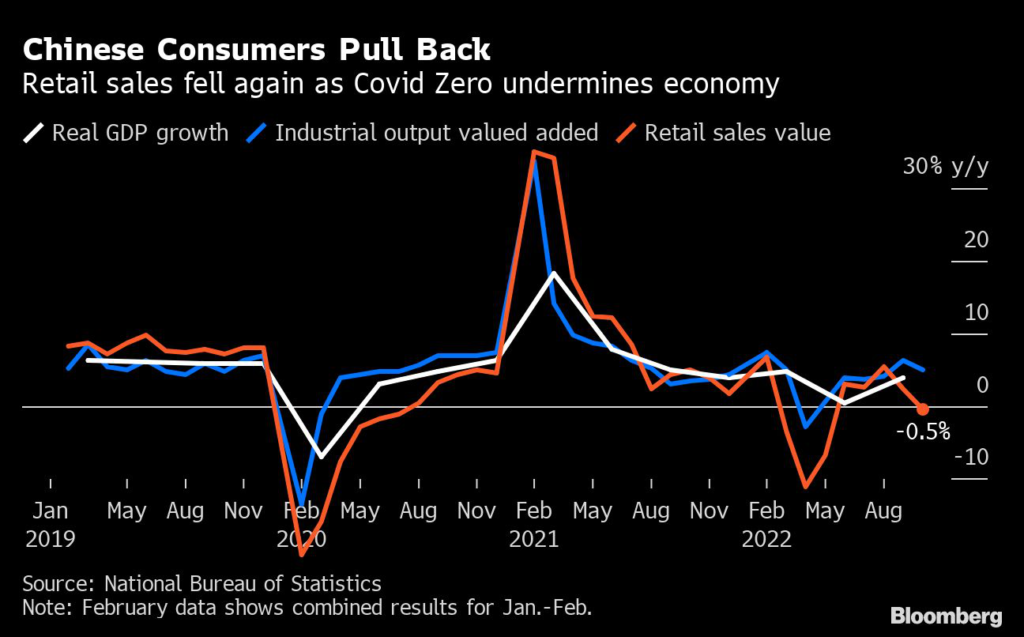
Alibaba is focusing on shoring up its bottom line as Covid policies and antitrust measures imposed during last year’s tech sector crackdown sap growth. This month, the company failed to disclose full sales results for its signature Singles’ Day shopping festival for the first time in 14 years, suggesting a disappointing turnout for its most important annual event. And Chinese retail sales contracted 0.5% in October — the first decline since May and worse than expectations for slight growth.

On Thursday, executives sounded an optimistic note on an easing of — or even an eventual end to — the pandemic restrictions that have snarled logistics, dampened retail activity and otherwise wrought havoc across the world’s No. 2 economy.

“With the introduction of the 20-point pandemic measures from the state authorities, that can be expected to have a positive impact. We certainly do note still some disruption to logistics in certain regions of the country,” Chief Executive Officer Daniel Zhang told analysts on a post-earnings conference call. “But overall we do expect things to continue to improve in a positive direction.”

What Bloomberg Intelligence Says

Alibaba’s stronger-than-expected fiscal 2Q China commerce and cloud profitability raises the likelihood that the company can exceed consensus for 29% growth in adjusted Ebita this fiscal year, we believe, even if revenue increases fall short at both businesses. The company’s international commerce unit might turn profitable in fiscal 2024 if gains persist in Lazada’s monetization rate, which helped shrink losses by two- thirds vs. a year earlier.

-Catherine Lim and Trini Tan, analysts

Click here for the research.

Click here for a live blog of the earnings.

Read more: Jack Ma’s Ant Incurs 63% Profit Fall Amid Regulatory Overhaul

Revenue rose a slightly less-than-expected 3% to 207.2 billion yuan ($29 billion) in the September quarter, after cloud sales — once the company’s biggest driver — notched its slowest-ever pace of growth.

Still, investors point to signs Xi Jinping’s administration is retreating from its Covid Zero framework — easing the logistics tangles that have weighed on Alibaba’s business — and growing supportive of tech firms. The company also green-lit a significant $15 billion expansion to an existing $25 billion buyback program and extended it to 2025.

Chinese tech shares recovered some of their losses this month, after the Communist Party began pulling back from its pandemic playbook and offered more incentives to President Joe Biden’s administration to work together. Xi’s shift on those fronts, coupled with perceptions of a renewed focus on reviving the world’s No. 2 economy, is spurring speculation that Beijing will begin to unshackle the private sector.

“We believe that Covid will ultimately pass, that our society, our economy, and our lives will eventually return to normal, and that the massive potential of China as the world’s second-largest economy will be further unleashed,” Zhang said.

Once the most valuable company in China, Alibaba has lost about $600 billion of market value since Beijing launched its sweeping crackdown on the private sector nearly two years ago. The government forced its finance affiliate, Ant Group Co., to call off what would have been the world’s largest initial public offering in 2020, then launched reforms that undercut Alibaba’s business model. The fintech giant’s profit plunged 63% in the June quarter.

Cost optimization — particularly at the relatively younger grocery and overseas businesses — is likely boosting Alibaba’s margins for the time being. Stripping out the writedowns, Alibaba posted adjusted earnings, which excludes one-time items, ahead of analysts’ projections. 

But longer term, it still has to come up with an answer to increasingly effective competition.

While Alibaba said its Singles’ Day sales were in line with last year’s performance, JD.com Inc. is overtaking its larger rival in sales growth and notched another record during the “11.11” shopping festival. JD largely escaped the worst of the 2021 sector crackdown.

Up-and-coming rivals including short video platforms are drawing users away. The number of merchants that participated in Singles’ Day events between Oct. 31 and Nov. 11 on Douyin, the Chinese version of TikTok, increased about 86% from the previous year. The number of buyers on Kuaishou increased by about 40% year on year during the same event, Jefferies estimates. 

Facing stagnation at home, Alibaba has revived an outward expansion that slowed in recent years in the face of competition from Amazon.com Inc. and Tencent Holdings Ltd.-backed Sea Ltd. 

Subsidiary Lazada Group is preparing to make its maiden foray into Europe, building on its success in Southeast Asia. But the US market remains relatively less hospitable.

Washington added Alibaba to a growing roster of companies facing removal from US stock exchanges due to a longstanding audit dispute between the two countries. Though US audit officials completed their first on-site inspection round of Chinese companies including Alibaba this month, it’s still unclear whether Chinese firms will pass muster.

The company is seeking a primary listing in Hong Kong that would enable it to tap more mainland investors, while also maintaining its listing status on the New York Stock Exchange. On Thursday, Alibaba said that planned conversion of its listing in Hong Kong won’t be completed by the end of 2022 as planned, because of the need to comply with new local regulatory amendments.

–With assistance from Zheping Huang, Sarah Zheng, Lisa Du and Jennifer Ryan.

(Updates with executive’s comments from the fourth paragraph)

More stories like this are available on bloomberg.com

©2022 Bloomberg L.P.

Henrik Fisker’s Improbable Electric SUV Starts Rolling Off the Assembly Line

(Bloomberg) — Henrik Fisker rose around 5 a.m. Thursday to squeeze in a quick workout before making his way to a factory spanning the equivalent of more than 150 football fields. Hours later, camera crews captured an unlikely milestone made possible by the blank-check boom: The first Ocean, Fisker Inc.’s debut electric vehicle, rolled off the assembly line.

The SUV zips from zero to 60 miles per hour in as little as 3.6 seconds and is expected to offer up to 350 miles (563 kilometers) of range, a smidge more than Tesla Inc.’s Model Y. The hero feature inside: a 17.1-inch center touchscreen that rotates at the press of a button for more enjoyable binging of YouTube videos and streaming services.

It will be hard for the shows and movies that air on the Ocean’s high-resolution screen to match the amount of drama that’s played out over Henrik Fisker’s 33-year career. There have been exhilarating highs — making a name for himself designing slick BMW and Aston Martin sports cars — and crushing lows, none more disappointing than when his first plug-in vehicle venture, Fisker Automotive, filed for bankruptcy nine years ago this month.

That blemish on his résumé made funding a follow-on car business difficult, at least for a few years. He and his wife and co-founder, Geeta Gupta-Fisker, were forced to stop collecting cash compensation from Fisker and furlough employees right before the outbreak of Covid-19 was declared a pandemic in March 2020.

Then, something funny happened: Ventures with little or no revenue began generating enormous buzz by merging with special purpose acquisition companies and going public.

A month after electric-truck startup Nikola Corp. made its stock market debut and briefly exceeded Ford Motor Co.’s valuation, Fisker agreed to combine with a SPAC sponsored by private equity giant Apollo Global Management Inc. in a deal that left the carmaker flush with roughly $1 billion in cash. The Fiskers parlayed that sum and big-name backing into pacts with the auto industry’s most reputable contract manufacturer, Magna Steyr, and the world’s largest battery company, Contemporary Amperex Technology Co. Limited.

Partnering with Magna Steyr — which will make Oceans alongside BMW Z4 and Toyota Supra roadsters in Graz, Austria — greased the skids for setting up a supply chain from scratch in the midst of unprecedented disruptions. Its parent, Magna International Inc., makes components ranging from stamped-metal structures to advanced driver-assistance systems. Fisker also paid upfront for a dedicated battery cell line at CATL to lock in supply.

“We’ve been able to avoid mistakes that are only unavoidable if you know them, and I knew them,” Fisker said in an interview. “The experience that I had by having done this once before is invaluable.”

Even after having racked up more than 63,000 reservations for the Ocean, investors are still treating Fisker the company as a wait-and-see stock, having been burned by Nikola, whose founder was convicted of fraud last month, and other post-SPAC auto startups like Lucid Group Inc. EV maker Rivian Automotive Inc., which staged an initial public offering a year ago, also has been plagued by shortages that keep forcing its factory to stop and go for days at time.

Fisker is going to start slow, delivering just 15 vehicles before year-end to Magna’s commercial fleet. It has forecast more than 300 Oceans will be produced in the first quarter, followed by over 8,000 in the second quarter of next year, leaving around 80% of total annual output slated for the second half. If all goes to plan, 42,400 vehicles will be built.

Gupta-Fisker, the company’s chief operating officer and chief financial officer, told reporters last week that Magna positions Fisker for a smoother ramp up in production than what other EV startups have managed.

“Suppliers want to go to safe havens. They want to go to manufacturers that are not canceling — they are consistent,” she said. “We don’t need to learn manufacturing. We don’t need to teach 1,000 people how to assemble a car. That risk is taken care of.”

Another factor working in the company’s favor: Gupta-Fisker said its production costs for the first vehicle is the same as No. 40,000, so Fisker won’t bear the expense of an underutilized factory for the first few quarters that Ocean is in production. Those costs have dragged on Lucid and Rivian’s earnings results, with both registering steep quarterly losses.

As for the product, early impressions of the Ocean are mostly promising, albeit guarded (Motor Trend punctuated the headline of its first-drive story with a question: “Finally a Success for Henrik?”) The chief executive officer takes this sort of pondering in stride.

“I’m not here to prove something to people that don’t believe in me,” Fisker said. “I’m here to deliver what I think hopefully will be a product that people really will love.”

(Added reservation count in the ninth paragraph.)

More stories like this are available on bloomberg.com

©2022 Bloomberg L.P.

Crypto’s Future Is In the Regulated Banking System

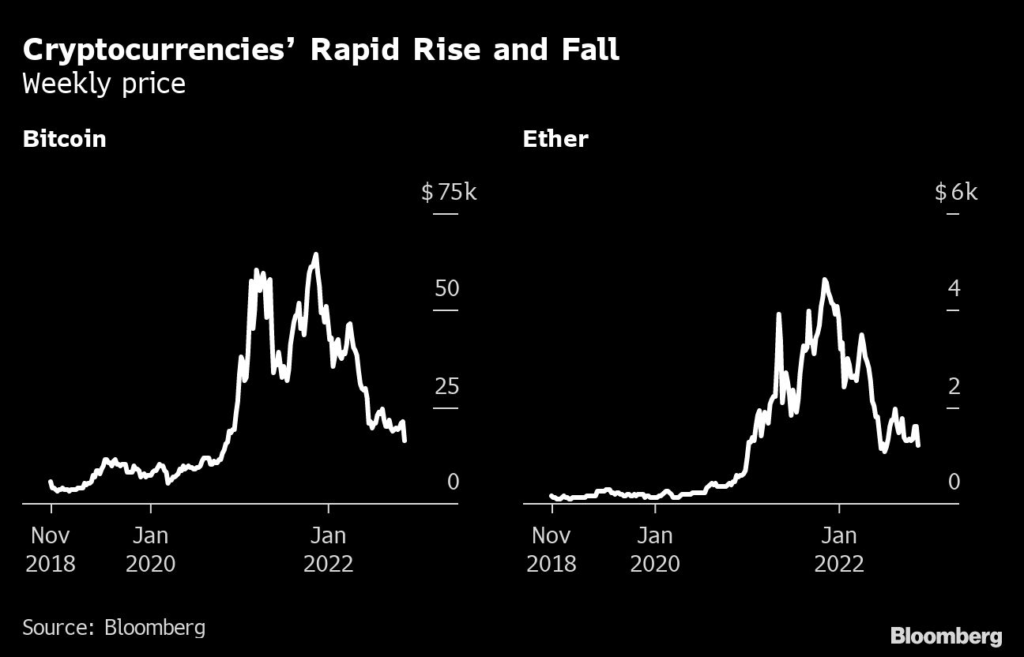
(Bloomberg Markets) — After hitting all-time highs in 2021, cryptocurrency prices haven’t found a definitive floor. And the appeal of crypto’s promise to reinvent money has also reached its limit in a very niche audience. To attract a bigger, more mainstream user base, the new technology’s advocates will have to completely overhaul how they promote it.

Imagine your cousin, your dentist or someone else you know who is the least likely to experiment with money or technology. I think about my mother. She’s never going to use a Bitcoin wallet at Coinbase or open a savings account in USDC, a digital stablecoin pegged to the dollar. She’ll never want a nonfungible token for a digital collectible on Tom Brady’s Autograph network. But she might be willing to verify her identity at her mortgage lender’s website if it allowed her to speed up the process for buying a house. And if that digital identification process was powered by the blockchain technology that underlies crypto, she wouldn’t even have to know.

Most people are like her: They have no interest in any new technology unless it can help them do things more quickly, more cheaply and more safely. That’s why iTunes was a winner. That’s why Amazon.com is a juggernaut. That’s why Netflix gained so many adherents. And that’s why payment apps such as Zelle and Venmo have mass appeal.

The trouble with crypto so far—in addition to its volatility, the scams and the failures of untested intermediaries—is that a lot of the problems it claims to solve have already been solved. We can already send digital payments or set up online savings accounts. And we can do it with the same currency we use to pay our taxes and make cash transactions. So why do we really need cryptocurrency?

Creating Trust

Let’s go back to where it all started: our need to trust money. It’s why the financial industry is rife with such terms as trust, security, custodian, guaranty. Nonetheless, every so often there’s a calamitous break of trust in which bankruptcies proliferate, investors are wiped out and millions lose their jobs and homes.

One example was the Great Depression, when people discovered the banks to which they’d entrusted their money weren’t as secure as they’d hoped. In the aftermath, the power of the government and a new regulatory structure were placed behind the banks to help restore trust. In the US that meant the creation of the Federal Deposit Insurance Corp., the Securities and Exchange Commission and a new housing authority to help support an increase in home loans.

Then the 2008 financial crisis showed how inadequate those safeguards were. Big financial institutions and their regulators seemed unprepared for the collapse of home prices and the effect that had on financial markets and the broader economy. Suddenly people didn’t trust banks or the government.

Enter crypto. Bitcoin was born in a white paper published on Oct. 31, 2008, just weeks after Lehman Brothers went bankrupt and the government and Federal Reserve started rescuing banks. The paper declared that digital commerce was overly dependent on trust in financial institutions. The idea was to create “an electronic payment system based on cryptographic proof instead of trust.” Effectively, trustlessness. Instead of relying on the bankers who repossessed your home while paying themselves massive bonuses, people could opt into a secure, decentralized network called the blockchain. Crypto, the enthusiasts said, would rival the existing centralized financial system in due course.

Almost 15 years later, this new money has lost much of its utopian appeal. It turns out that, for most people, this new financial system does require placing your trust in an ­institution—maybe a wallet provider or a token exchange or a decentralized finance (DeFi) lender. And too many of them have turned out to be frauds or vulnerable to hacks. Today even some of the most passionate crypto advocates are saying the market needs government regulation to regain trust and bring in the established financial institutions that were once the enemies of crypto.

If crypto doesn’t provide a more trustworthy alternative to traditional finance, then what’s it for? So far, its primary users seem to be people fearful of using their own government’s currency because of political or economic risk or because they want to evade law enforcement. Otherwise, its main use has been speculation—gambling on the value of the currencies themselves or digital assets, such as NFTs, purchased with the currencies.

How to Rebuild Crypto

I have an idea, though. When we talk about financial transactions, we’re really talking about two different things.

There’s money, a medium of exchange that allows us to buy or sell goods and services more efficiently than bartering. But to make such a medium trustworthy, it needs to be a reliable store of value over time. Otherwise you risk exchanging your valuable good or service for a token that quickly sinks in purchasing power. Indeed, it’s the inter-temporal nature of some transactions that requires the most trust.

So when we talk about money, the second thing we’re also talking about is debt—that is, transactions that are inter-temporal from the start. At the end of the first quarter of 2022, total credit to the private nonfinancial sector was more than $37 trillion in the US.

And few types of debt are more mainstream than mortgages. Back in 1920s America, buying a house might require paying half the value up front and borrowing the other half for five years. Before the US government stepped in, lenders didn’t trust buyers enough to make a 30-year loan with only 10% or 20% upfront, as is common today. Now there are more than $10 trillion worth of residential mortgages in the US.

But real estate transactions and mortgage lending are notorious for the amount and complexity of the paperwork required. Keeping track of the necessary information and processing it efficiently can be challenging. Facilitating those types of transactions—by putting essential information about properties, owners and loans on an immutable digital ledger—could make crypto indispensable.

For the loan originators, after an upfront investment in the technology, a digital record could lead to considerable savings in time and labor. Some of those savings could be passed on to the borrowers. For the mortgage applicant, automated verification of identity, income, bank account statements and the like would speed up a stressful but unavoidable process.

If established and regulated financial-services companies moved their home lending documentation on to such an ecosystem, eventually they might move myriad other services, too.

We’ve already seen some well-known companies investing in blockchain technology. Hedera Hashgraph has buy-in from some of the biggest names in technology and banking, including Boeing, Deutsche Telekom, Google, LG and Nomura. And even though JPMorgan Chief Executive Officer Jamie Dimon has called cryptocurrencies “decentralized Ponzi schemes,” he’s investing the bank’s money in a digital ledger called Onyx coin systems, which JPMorgan’s website describes as seeking “to help address the complex challenges of cross border payments, simplify clients’ liquidity funding needs and offer next generation corporate treasury services.” Could this augur a new future for crypto’s underlying technology? A highly regulated system made up of established companies transacting through a more secure digital database?

Not only do these initiatives lack the Wild West appeal of crypto’s early years, but they’re also the opposite of the totally anonymous and decentralized networks that crypto enthusiasts hoped to create. Ethereum’s website describes DeFi as “an alternative to a system that’s opaque, tightly controlled and held together by decades-old infrastructure and processes.” But Ethereum’s examples for DeFi’s current use cases—helping people take out loans without using any personal identification and enabling crypto-savvy Argentines to escape inflation—seem unlikely to scale up to the mainstream.

When I started thinking about crypto and trust, I was optimistic about the chances for a reboot of the crypto space. But as I thought more about how existing crypto platforms are organized, it seemed almost impossible to transform the culture of DeFi and NFTs into something that can truly replace existing banks and money. But the idea of moving some of our financial system to a distributed ledger might still work.

We could end up with a hybrid of three different systems of trust: trust in established brands and institutions, trust in regulatory protections and the trust created by a supposedly immutable and unhackable digital ledger. All of these have been shown to be imperfect by the Great Depression, the 2008 great financial crisis and the crypto meltdown. Maybe the combination will be less imperfect. There’s some value in that. But it’s not the future of money.

Harrison, who writes about bonds and currencies for Bloomberg’s Markets Live blog, is based in Washington. This column doesn’t necessarily reflect the opinions of Bloomberg LP and its owners.

More stories like this are available on bloomberg.com

©2022 Bloomberg L.P.

Jack Ma’s Ant Incurs a 63% Profit Plunge Amid Overhaul

(Bloomberg) — Ant Group Co. incurred a steeper profit decline in the three months ended in June, as the fintech giant molds itself to appease Chinese regulators.

The Hangzhou-based company contributed 2.4 billion yuan ($335 million) to Alibaba Group Holding Ltd.’s earnings, a filing showed Thursday. Based on Alibaba’s one-third stake in Ant, that translates to an estimated 7.3 billion yuan of profit for Ant’s June quarter, down 63% from a year earlier. Ant’s earnings, which lag a quarter behind Alibaba’s, were partly hurt by a drop in the value of its investments.

Representatives with Ant declined to comment.

The fintech business controlled by billionaire Jack Ma has been expanding in Southeast Asia while seeking to become a financial holding company at home. Ant has been restructuring its operations, including beefing up capital, curbing consumer lending and shuffling management.

Its consumer finance unit is raising 10.5 billion yuan in a scaled-down capital boost from investors after China Cinda Asset Management Co. unexpectedly backed out of its investment plan this year.  

A subsidiary of Sunny Optical Technology Group Co. will take 1.1 billion yuan of Chongqing Ant Consumer Finance Co.’s capital, for a 6% stake. Jiangsu Yuyue Medical Equipment & Supply Co. plans to add 524 million yuan, taking a 4.99% stake. Ant Group will contribute 5.25 billion yuan to retain its 50% holding, while a group of other backers are also investing. The investment proposal is still pending regulatory approval. 

In a filing in July, Alibaba reiterated that Ma “intends to reduce and thereafter limit his direct and indirect economic interest in Ant Group over time” to a percentage that doesn’t exceed 8.8%.

Southeast Asia

To look for growth, Ant is leveraging the payments network it built for Alipay to service the different local wallets in Asia for cross-border payments. 

Initially catering to Chinese tourists traveling outside the country, the company has expanded the service into a backbone for cross-border payments known as Alipay+ that can be used by different wallets. For example, when customers of GCash from the Philippines travel to Korea, they can pay with GCash when they see the Alipay+ logo displayed at merchants.

Another budding source of revenue comes from Alipay+ D-store, which allows businesses to build digital stores across platforms including Chope, AlipayHK and Touch ‘n Go. The company plans to generate income from servicing brands like Burger King that want an online presence in various apps. 

Ant’s Singapore digital wholesale bank also started offering loans to small and medium-sized businesses this month. 

–With assistance from Zheping Huang.

(Updates with Ant’s statement from the second paragraph)

More stories like this are available on bloomberg.com

©2022 Bloomberg L.P.

APEC Latest: Xi Continues Efforts to Mend Ties With US Allies

(Bloomberg) — Chinese President Xi Jinping pressed ahead with efforts to repair ties with key US allies at the Asia-Pacific Economic Cooperation summit, even as he pitched competing security and development models for the region. 

Xi warned against making the Asia-Pacific an “arena for big power contest” as APEC meetings got underway Thursday in Thailand. The Chinese leader was among several world leaders to descend on Bangkok, for the last of the three major summits that have seen discussions range from climate change to the war in Ukraine and food inflation. 

Thai Prime Minister Prayuth Chan-Ocha opened the APEC meetings with a speech Thursday morning, kicking off three days of talks focused on boosting economic prosperity and environmental sustainability.  

There will be at least one notable absence from the Bangkok meetings. US President Joe Biden is heading back to the White House for his granddaughter’s wedding Saturday and will be represented by Vice President Kamala Harris at APEC. Harris was expected to arrive late Thursday. 

Key Developments

  • Asia-Pacific Shouldn’t Be Arena for ‘Big Power Contest,’ Xi Says
  • China, Japan Leaders Open Door to Mending Ties in First Meeting
  • Businesses Urge APEC Summit to Tackle Inflation, Energy Crisis
  • China’s Xi Confronts Trudeau at G-20 Over Meeting Leak
  • Xi Looks Away From Putin Toward West in Return to World Stage
  • G-20 Latest: Most Leaders Decry War in Ukraine in Blow to Putin

(All times local)

‘Good Start’ to Repairing China-Japan Ties (7:57 p.m.) 

Chinese President Xi Jinping and Japanese Prime Minister Fumio Kishida reaffirmed their desire to improve relations, in the first meeting of the leaders of Asia’s two largest economies in three years. Xi expressed a willingness to work with Japan to maintain a stable relationship.

“Today’s meeting was a good start to a dialogue toward a constructive and stable Japan-China relationship” Kishida said, after talks that lasted about 45 minutes.  

Asia-Pacific No One’s Backyard: Xi (4:12 p.m.)

Asia-Pacific region, especially its small and medium-sized economies have been able to embark on a fast track toward modernization and create a miracle after being freed from the shadow of the cold war, Xi said in his written speech.

“The Asia-Pacific is no one’s backyard and should not become an arena for big power contest,” Xi said. “No attempt to wage a new cold war will ever be allowed by the people or by our times.”

Any attempt to disrupt or even dismantle the industrial and supply chains formed in the Asia-Pacific over the years will only lead APEC to a dead end, Xi said.

Chile’s Boric Warns on Populism (2:40 p.m.)

Chilean President Gabriel Boric said the key to boosting stability globally was “protecting and improving democracy” and the right to vote “cannot be taken for granted nowadays.”

It is important for democracies to not “lose our way into populism,” Boric told the APEC CEO Summit, adding that democracy wasn’t just a system of government but a method of sharing the benefits of economic development equally among the population. In the post-Covid world, Boric said politicians in democracies were struggling to take “long-term solutions” in a “short-term” election cycle. 

Xi Arrives in Bangkok (2:34 p.m.) 

Xi Jinping’s Air China Ltd. plane arrived in Bangkok, where he was expected to resume a flurry of diplomatic meetings that have seen the Chinese president move to bolster ties with the US and some of its key allies. 

Thai PM Seeks EU FTA Revival (1:40 p.m.)

Thai Prime Minister Prayuth Chan-Ocha urged French President Emmanuel Macron to support the revival of the kingdom’s free-trade talks with the European Union, government spokesman Anucha Burapachaisri said in a statement after the two leaders met.

The EU froze talks with Thailand for the free trade deal in 2014 after Prayuth, who was army chief at the time, seized power from a civilian government. Prayuth will also look to set up a “dialogue mechanism” with France to discuss security challenges and tighten military ties, Anucha said. 

Japan Blasts Russia’s ‘False Narrative’ (1:22 p.m.)

Japanese Foreign Minister Yoshimasa Hayashi used comments at an APEC ministerial session Thursday to condemn Russia’s invasion of Ukraine. The war has undermined stable supplies of of food and energy and severely affected the development of the Asian region, Hayashi said. He expressed his opposition to what he said was a false Russian narrative that the current weakening of the global economy was due to sanctions being imposed on Russia.

Police Outnumber Protesters (12:30 p.m.)

A small crowd of protesters gathered in the Asok area, near the convention center where the APEC Leaders’ Meeting is scheduled to take place. Some dressed up in dinosaur costumes, in a symbolic dig at what they view as Thailand’s outdated and calcified government. 


One protester told the gathering that they will march to the convention center, intending to show world leaders how the Thai government has failed to address long-standing economic and social problems. The demonstrations are taking place under a large police presence, with the Bangkok Post reporting that more than 35,000 security personnel had been deployed for the summit. 

Vietnam Pushes Green Technology (11:30 a.m.)

The world is changing in a “complex and unpredictable way” and technologies that target net-zero emissions will be the “strongest driver of FDI in the future,” Vietnamese President Nguyen Xuan Phuc said at the APEC CE Summit at a session trade and investment. 

Many Vietnamese factories have reduced production or even shut down as a result of supply chain problems from the pandemic and Ukraine war, Phuc said. The Covid-19 pandemic showed the “importance and indispensability of digital-based business and production,” he said.

Macron Still Open to Australia Sub Cooperation (11:10 a.m.)

French President Emmanuel Macron said his government was still open to revisiting a submarine deal with Australia. The option for Australia to build together or purchase French-made submarines remained “on the table,” although there had been no indication yet from Canberra that it was looking to revisit the deal, he told a press conference in Bangkok.

Macron met with Australian Prime Minister Anthony Albanese on the sidelines of the Group of 20 summit in Bali on Wednesday evening. While the French president acknowledged they had discussed the subject, the Australians “haven’t decided to change strategy on that subject” yet.

Philippines President Urges Greater Climate Action (10:20 a.m.)

Philippine President Ferdinand Marcos Jr. called for stronger action on climate change, which he described as the “most pressing existential” issue of all time. He told the APEC CEO Summit meeting that “not enough” progress has actually been made to lower emissions.

Marcos also urged nations to prioritize food security and to invest in pandemic preparedness. He also said “”the geopolitical currents that we must live with are something that we still need to be concerned about.”

Kasikornbank Sees Tourism as Engine of Thai Growth (10:12 a.m.)

Tourism will be the “engine to drive” Thailand’s economy in 2023 and beyond, Kobkarn Wattanavrangkul, chairperson of Kasikornbank Pcl, the nation’s second-biggest bank by assets, said in a Bloomberg TV interview on the sidelines of the APEC CEO Summit. 

The bank expects hotel operators and other tourism related business customers to recover strongly as Thailand’s travel industry rebounds from the Covid-19 pandemic. Thailand, where tourism accounts for 12% of gross domestic product and a fifth of jobs, needs to diversify its foreign tourist market beyond China to maintain the industry’s long-term growth, Kobkarn said.

Thailand Says Environmental Sustainability a Key APEC Agenda (9:43 a.m.)

Thai Prime Minister Prayuth Chan-Ocha said the world was facing unprecedented environmental challenges and sustainability would be the single most important agenda for the APEC leaders summit this week.

He also called upon the public and private sectors to cooperate on supporting sustainability initiatives, adding “we must ensure that we leave no one behind on the path of development and growth.”

Prayuth urged APEC leaders to sign a so-called Bangkok Goals declaration on the “bio-circular-green” economic model at the end of the summit. “No country can achieve its objectives alone,” Prayuth said. “We inhabit the same earth.”

NZ PM to Meet with China’s Xi Jinping at APEC (2:54 a.m.)

New Zealand Prime Minister Jacinda Ardern will meet Chinese President Xi Jinping​ on the sidelines of the APEC Leaders’ Summit in Thailand, Stuff reports without citing a source for the information.

Arden had earlier said that if a meeting were to take place it would cover issues including trade, climate change and areas of differences, the media outlet reported. 

–With assistance from Samy Adghirni, Pathom Sangwongwanich, John Boudreau, Anuchit Nguyen and Jing Li.

More stories like this are available on bloomberg.com

©2022 Bloomberg L.P.

China, Japan Leaders Open Door to Mending Ties in First Meeting

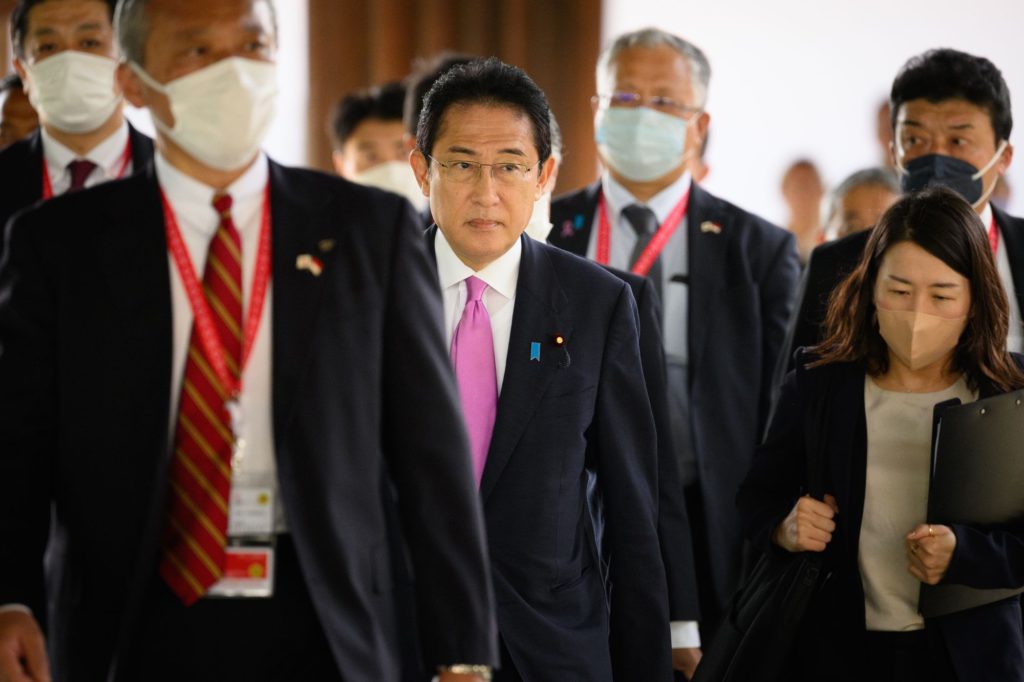
(Bloomberg) — Chinese President Xi Jinping and Japanese Prime Minister Fumio Kishida reaffirmed their desire to improve relations in the first meeting of the leaders of Asia’s two largest economies in three years.

Xi expressed a willingness to work with Japan to maintain a stable relationship, as the pair began their summit Thursday on the sidelines of the Asia Pacific Economic Cooperation Forum in Bangkok. Kishida, for his part, said both sides had a responsibility to uphold peace and security in the world. 

“Today’s meeting was a good start to a dialogue toward a constructive and stable Japan-China relationship,” Kishida told reporters after talks he said lasted about 45 minutes. 

The meeting was among steps to thaw the diplomatic chill between China and US allies during summits in Asia this week. Ties between Beijing and Tokyo have frayed in recent years as Japan joined US-led efforts to counter China’s regional influence through institutions such as the Quad group including Australia and India. 

The warmer tone echoed Xi’s meeting Monday with US President Joe Biden, in which both leaders agreed to restart talks stalled in the wake of US House Speaker Nancy Pelosi’s visit to Taiwan. In remarks to the APEC CEO Summit on Thursday, Xi said the “Asia-Pacific is no one’s backyard and should not become an arena for big power contest.” 

“The significance of China-Japan relations hasn’t changed, and will not change,” Xi told Kishida. “I’m willing to work with you and take responsibility as politicians to build China-Japan relations that meet the requirements of the new era.” 

A calmer atmosphere may help Kishida re-establish the “constructive and stable relations” he has said he wants with his country’s biggest trading partner. Japan, which tries to strike a balance between China and its sole security ally, the US, has also found itself in a difficult position over Biden administration efforts to counter China’s rise. 

While Beijing tacked closer to Russia, taking part in joint military exercises near Japan, Kishida has sought stronger ties with NATO, becoming the first Japanese premier to attend the group’s summit in June. At the same time, the massive flow of Chinese tourists to Japan that helped revamp Japan’s image in China in previous years remains at a halt due to Xi’s Covid Zero policy. 

Chinese Foreign Minister Wang Yi canceled an August meeting with his Japanese counterpart over a Group of Seven statement criticizing military exercises near Taiwan. Ships from Japan and China continue to chase one another around disputed islands in the East China Sea and Kishida accused China of infringing on his country’s sovereignty at an Association of Southeast Asian Nations meeting in Phnom Penh on Sunday.

The Japanese premier told reporters after meeting Xi that he raised concerns about China’s military moves during the talks. But he described the talks as making progress toward better ties, with the two agreeing to revive communication at all levels

“Japan and China both have great responsibility for the peace and prosperity of the region and the world,” he told Xi at the start of their meeting. 

–With assistance from Takashi Hirokawa, Colum Murphy and Ocean Hou.

More stories like this are available on bloomberg.com

©2022 Bloomberg L.P.

US Jobless Claims Retreat Slightly, Hovering Near Historic Lows

(Bloomberg) — Applications for US unemployment insurance unexpectedly fell slightly last week and remained near historic lows, showcasing the strength of the labor market as other parts of the economy cool.

Initial unemployment claims dropped by 4,000 to 222,000 in the week ended Nov. 12, Labor Department data showed Thursday. The median estimate in a Bloomberg survey of economists called for 228,000 new applications.

Continuing claims rose by 13,000 to 1.51 million in the week ended Nov. 5, the fifth straight increase. If the upward trend is sustained, that could be a sign that an increasing number of Americans are out of work for longer.

Despite the Federal Reserve’s aggressive efforts to slow down the economy to tame decades-high inflation, employers are still hiring at a solid pace. The US added more jobs than forecast last month, and there are still almost two open positions for every American seeking work.

Cracks have begun to emerge in white-collar industries, although economists say the recent wave of layoffs at high-profile companies such as Amazon.com Inc. and Meta Inc. aren’t indicative of the health of the overall labor market. While the technology sector went on a hiring spree during the pandemic, industries including manufacturing and leisure and hospitality are still struggling to fill open positions.

The four-week moving average, which smooths out volatility from week to week, increased to 221,000.

On an unadjusted basis, initial claims dropped by about 6,100 to 199,600 last week. Applications for unemployment fell in Kentucky, Georgia and Florida, while Minnesota and North Carolina posted the biggest increases.

The week included Veterans Day, and the figures tend to be more volatile around holidays.

(Adds chart.)

More stories like this are available on bloomberg.com

©2022 Bloomberg L.P.
Tencent Wins First Major Game Approval as China Crackdown Eases

(Bloomberg) — Tencent Holdings Ltd. won approval for its first new major game title since Chinese regulators resumed licensing this year, in a sign that Beijing’s crackdown on the mobile entertainment industry is easing.

Its game “Metal Slug: Awakening” was among 70 domestic titles approved for November by the National Press and Publication Administration, the latest batch of licenses granted since regulators resumed the approval in April. In an analyst call earlier this week, a Tencent executive expressed confidence in winning approval to release its major games soon.

Tencent did win approval in September for a minor health-education title under the name of an operator Nanjing Wangdian Technology. In a notable step forward this month, the tech giant has a major game listed under its name.  

Beijing’s tech crackdown, which ensnared sectors from e-commerce to fintech and even education over a tumultuous year, spread to online gaming in August 2021. Regulators introduced stringent measures on the sector, such as capping play time for minors to a mere three hours a week and imposed other requirements aimed at curbing addiction. 

China’s media watchdog halted licensing and has since been more carefully reviewing new titles to determine whether they meet stricter criteria on content and child protection, slowing rollouts, Bloomberg News has reported.

NetEase Inc. also won approval for its title “Journey to the West” for November. Shares of the Hangzhou-based firm plummeted in Hong Kong Thursday as Blizzard Entertainment Inc. announced that both parties would end their 14-year partnership after January, depriving the Chinese firm of a slice of revenue and suspending service for some of the country’s most popular games.  

–With assistance from Zheping Huang.

More stories like this are available on bloomberg.com

©2022 Bloomberg L.P.

Alibaba Says Conversion to Primary Listing in Hong Kong Delayed

(Bloomberg) — Alibaba Group Holding Ltd. said a planned conversion of its listing in Hong Kong to primary status won’t be completed by the end of 2022 as earlier planned, according to filing with the Hong Kong Stock Exchange.

The company said it has been preparing for the primary listing in Hong Kong, while closely monitoring market conditions and other factors. It needs to formulate and submit a new employee stock ownership program to shareholders for approval in order to comply with the newly amended rules in Hong Kong before the conversion.

China’s leading e-commerce company said in July that it would seek to elevate its share status in Hong Kong, a shift after it pulled off the largest initial public offering to date in the US in 2014. The move came amid rising political tensions between Beijing and Washington, with hundreds of Chinese companies listed in the US facing the prospect of getting kicked off American exchanges. 

A primary listing in Hong Kong would also allow investors in China to buy shares of the country’s internet giant directly for the first time. It will be able to seek inclusion in the Stock Connect link with the Shanghai and Shenzhen exchanges. 

The filing of the Hong Kong delay came as Alibaba released earnings for the September quarter, reporting a surprise loss because of the tumbling value of its portfolio investments. 

Its net loss totaled 20.6 billion yuan ($2.9 billion) versus estimates for a profit of 18.8 billion yuan, after adjusting for market investments. The company did unveil a $15 billion expansion to its buyback program.

More stories like this are available on bloomberg.com

©2022 Bloomberg L.P.
Close Bitnami banner
Bitnami