Bloomberg

Tencent’s $20 Billion Meituan Stake Cut Ignites Internet Selloff

(Bloomberg) — Tencent Holdings Ltd.’s plan to dole out $20 billion of stock in meal delivery giant Meituan triggered a broad selloff of Chinese internet stocks on Thursday as investors fear more divestments by the online gaming company are in the offing.

The benchmark Hang Seng Tech Index slid more than 5% in hectic morning trade. Meituan dived as much as 6.7%, while other Tencent investees including Kuaishou Technology and Bilibili Inc. plunged more than 7%.

Tencent pledged Wednesday to distribute the majority of its Meituan shares to investors, ramping up plans to reduce its extensive holdings across the world’s largest internet industry. The decision marks a milestone in Tencent’s evolution from a sprawling internet empire with investments across much of China’s tech sphere to a more focused gaming and social media operator. 

“Tencent’s distribution of Meituan shares could be dragging sentiment as market worries about further divestments from its significant holdings of Chinese tech shares,” said Vey-Sern Ling, managing director at Union Bancaire Privee.

Read more: Tencent to Distribute $20 Billion Meituan Stake as Dividend

Tencent, which had announced plans to pare its stake in online retailer JD.com Inc., will dole out more than 958 million Class B stock in Meituan as a special dividend. The stock to be paid out, valued at about HK$155 billion ($19.8 billion) at Wednesday’s close, marks about 91% of Tencent’s Class B stake.

The move emerged as Tencent reported revenue shrank for the second straight quarter, underscoring the extent to which China’s worsening economy is hurting its mammoth private sector. The company’s exit from JD and now much of Meituan comes after Xi Jinping imposed a series of withering curbs on the industry in 2021, including restrictions on play time and content.

The move marks another retreat for Tencent, which along with Alibaba Group Holding Ltd. held sway over much of China’s tech sector for more than a decade. Apart from JD and Meituan, Tencent also owns part of Didi Global Inc. And this year it sold about $3 billion worth of shares in Southeast Asia’s biggest internet company, Sea Ltd.

Beijing has punished the country’s tech giants for anti-competitive behavior, including maintaining closed ecosystems that favor certain companies at the expense of others. The JD and Meituan dividends may buy goodwill with the government, which has pushed for the dismantling of such barriers and for tech firms to share the wealth. 

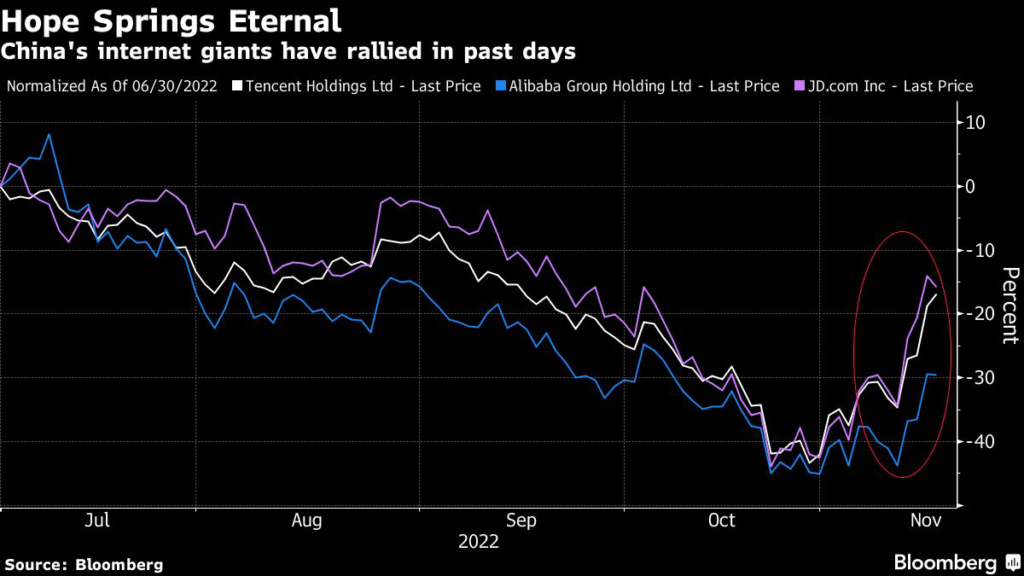
Chinese tech shares recovered some of their losses this month, after the Communist Party began pulling back from its Covid-Zero playbook and offered more incentives to the Biden administration to work together. Xi’s shift on those fronts, coupled with perceptions of a renewed focus on reviving the world’s No. 2 economy, is spurring speculation that Beijing will begin to unshackle the private sector.

On Wednesday, executives reassured investors that Tencent will soon resume winning crucial licenses to release new major titles, reviving growth in domestic gaming. “The overall regulatory environment is trending towards a more supportive environment,” President Martin Lau told analysts on a conference call.

China’s internet industry has made peace with a new era of sedate growth, shifting focus to enhancing profitability from chasing market share after Beijing’s crackdown wiped more than $1 trillion off their combined market value in 2021. While regulators have eased up on their campaign against tech, the once-freewheeling sector remains saddled by weak consumer spending and strict Covid restrictions.

–With assistance from Lianting Tu.

More stories like this are available on bloomberg.com

©2022 Bloomberg L.P.

Silbert’s Once-$10 Billion Crypto Empire Is Showing Cracks

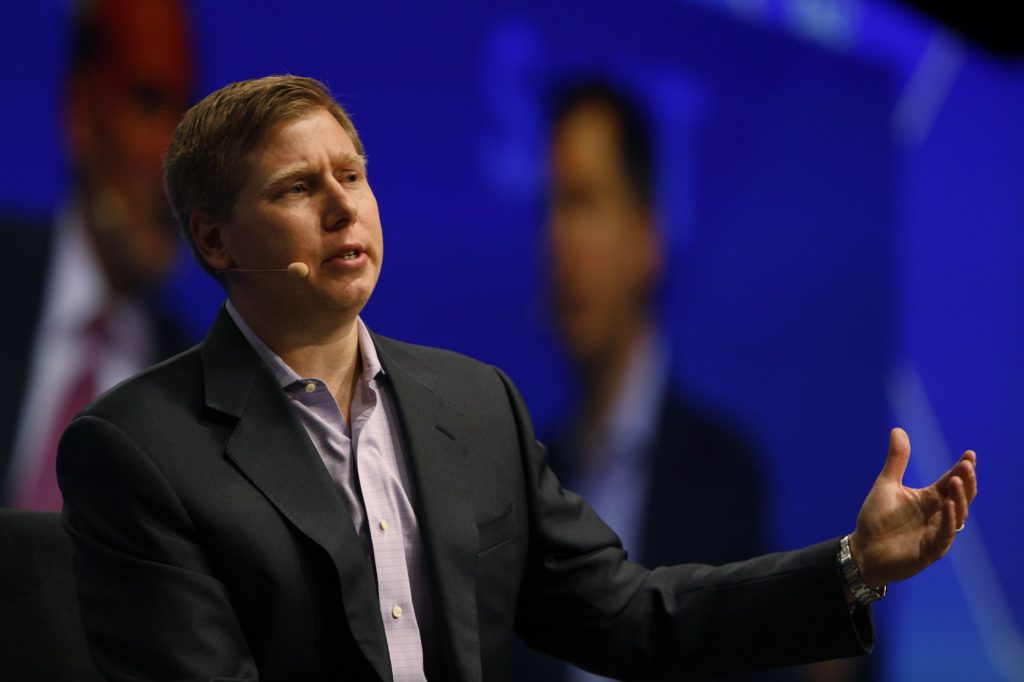
(Bloomberg) — Suspended withdrawals at cryptocurrency brokerage Genesis amid the widening crypto-market meltdown have cast an unwanted spotlight on Barry Silbert, the man at the helm of the Digital Currency Group empire.

Silbert, who rarely does press interviews or speaks at the multitude of industry conferences, founded the Stamford, Connecticut-based crypto conglomerate DCG in 2015, according to the 46-year-old’s LinkedIn profile. Last year, DCG’s valuation reached $10 billion, after it sold $700 million of stock in a private sale led by SoftBank Group Corp. DCG had 66 employees at the start of November and holds more than 200 companies in its portfolio. 

DCG’s reach is vast: in addition to embattled lender Genesis, it also controls digital-asset manager Grayscale Investments, which offers the world’s largest crypto fund. DCG is also the parent of crypto-mining service provider Foundry Digital, news publication Coindesk and exchange Luno, among others. DCG declined a request for an interview with Silbert. 

Within the crypto space, DCG’s might is well-known. The private firm’s portfolio has over the years included everything from exchanges like Coinbase to hardware-maker Ledger to crypto-focused bank Silvergate. 

“They’re a pretty big deal in crypto,” said Wilfred Daye, chief executive officer of Securitize Capital, a digital-asset management firm. “Their footprints are everywhere.” 

With Genesis’s halted redemptions, the health of DCG is called into question, a spiral that follows the shocking blowup of the Bahamas-based crypto exchange FTX and its former chief executive, Sam Bankman-Fried. Genesis was the crown jewel of Silbert’s kingdom, having established itself as one of the largest and most well-known brokers, allowing funds and market-makers to borrow dollars or digital currencies to amplify their trades.

“There are many lessons to be learned here,” said Campbell Harvey, a finance professor at Duke University. “In the future, the level of due diligence will likely increase. It is no longer acceptable to have substantial exposure to opaque offshore entities — no matter how popular their founders are.”

Silbert first bought Bitcoin in 2012, when the industry was in its early aughts. Among the firm’s earliest employees were Michael Moro, who departed the CEO role at Genesis in August, as well as Ryan Selkis, co-founder of researcher Messari, and Meltem Demirors, the chief strategy officer of rival digital-asset investment firm CoinShares.

Grayscale has been relatively unscathed by the latest upheaval — the firm was quick to say on Wednesday that its products are functioning as normal. Even still, the asset manager is dealing with its own set of issues. The $10.7 billion Grayscale Bitcoin Trust (ticker GBTC) is trading at a record discount to the Bitcoin it holds, given that the trust’s structure doesn’t allow it to redeem shares. Grayscale sued the US Securities and Exchange Commission in June after the regulator denied the firm’s application to convert GBTC into an exchange-traded fund. 

But even with the record discount, GBTC is seen as a cash cow for Grayscale — and by extension, for DCG. The trust charges shareholders a 2% annual fee. That means that even though GBTC has shed billions of dollars in value since total assets peaked at more than $40 billion last November, Grayscale would still collect more than $200 million in fees from the trust per year at current asset levels, according to calculations by Bloomberg.

Genesis’s move Wednesday only affects its lending business, according to interim Chief Executive Derar Islim, who said the company’s spot and derivatives trading and custody businesses “remain fully operational.” However, the decision to halt withdrawals comes after a painful stretch for the brokerage.

Cracks started to surface after Genesis got caught up in the bankruptcy of hedge fund Three Arrows Capital. Genesis was the biggest creditor ensnared in that collapse after the fund failed to meet margin calls. DCG assumed some liabilities and filed a $1.2 billion claim against Three Arrows, which is under liquidation. Genesis said in October — before the FTX blowup — that lending plunged 80% in the third quarter. 

“Genesis Global Capital, Genesis’s lending business, made the difficult decision to temporarily suspend redemptions and new loan originations. This decision was made in response to the extreme market dislocation and loss of industry confidence caused by the FTX implosion,” said company spokesperson Amanda Cowie. “This impacts the lending business at Genesis and does not affect Genesis’s trading or custody businesses. Importantly, it has no impact on the business operations of DCG and our other wholly owned subsidiaries.”

Amid the recent brewing turmoil, DCG has reshuffled its C-suite. Mark Murphy was promoted to president from chief operating officer as part of a restructuring that saw about 10 employees exit the company. Meanwhile, a handful of Genesis’s trading-desk personnel have also departed, as have its head of market insights and its chief risk officer. 

Silbert founded DCG after he sold SecondMarket, a private-asset marketplace that was acquired by Nasdaq in 2015. Last year he told the Wall Street Journal that he sees Standard Oil as an inspiration for his digital-asset firm. Prior to SecondMarket, Silbert also worked at Houlihan Lokey, after he graduated from Emory University, his LinkedIn profile shows.   

–With assistance from Muyao Shen, Olga Kharif and Anna Irrera.

(Updates with context on early employees and personnel shuffles in 8th and 14th paragraphs.)

More stories like this are available on bloomberg.com

©2022 Bloomberg L.P.

Empty Palm Island Plots Reveal Risks of Dubai’s Property Boom

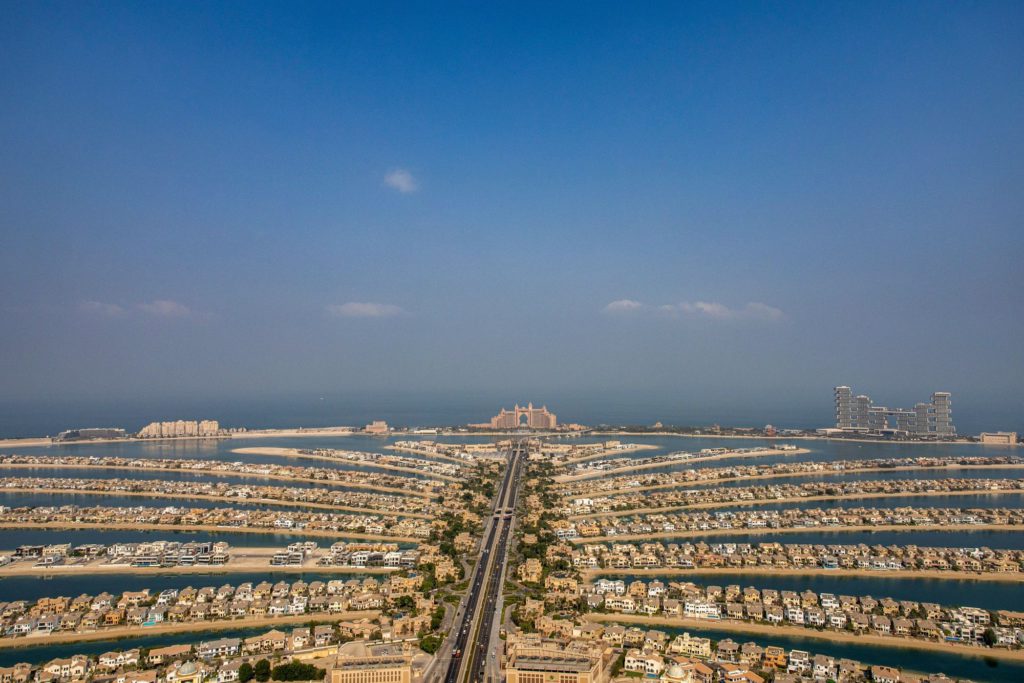
(Bloomberg) — For 14 years, Muhammad Azam has been waiting for construction to start on a five-bedroom luxury villa he bought on the largest — but least developed — of Dubai’s famous palm-shaped artificial islands that jut out into the Persian Gulf.

An unexpected email from Nakheel PJSC in September confirmed it never would. Dubai’s real estate regulator apparently had decided months earlier to cancel the project on Palm Jebel Ali, and the government-backed developer told him they would refund less than a quarter of what Azam had paid for the villa in the secondary market shortly before construction had got off the ground. 

Cypriot businessman Azam, 44, wasn’t alone. He’s among hundreds of investors who bought homes on Palm Jebel Ali that have never been built. While many owners swapped their purchase for an alternative Nakheel property years ago, hundreds are now being offered a refund for the amount the developer collected from primary investors until it stopped working on the project in 2009, according to interviews with seven investors and documents seen by Bloomberg.

Investors told Bloomberg they’re among just over 400 who own more than 700 properties in The Palm Jebel Ali Fronds and The Palm Jebel Ali Water Homes developments who are being offered about 850 million dirhams ($231.4 million) in total from Nakheel. 

Owners say they should be compensated for the delay of over a decade and the jump in home prices since then. Canceled real estate projects often have messy fallout, but this case of buyer beware is playing out in the midst of one of the world’s biggest housing booms. It also raises questions over the legal framework surrounding real estate in the city, even though foreigners have been allowed to buy homes in the emirate since 2002.

Nakheel — chaired by Mohammed Ibrahim Al Shaibani, the managing director of the emirate’s sovereign wealth fund, the Investment Corporation of Dubai — says it’s giving back what it received from the development’s original investors and can’t help if people bought at higher prices in resale deals over the past two decades. The developer also says it has offered voluntary refunds for years and is also offering owners a bonus credit note toward a new Nakheel home. It’s also telling some owners that it will restart a revamped version of the project early next year.

“It’s so unfair,” said father-of-two Azam who owns a property management company. “I would have accepted the cancellation if Nakheel went bankrupt in 2009 and the project was canceled back then. But to do it now when the market has recovered and waterfront villas are selling at a high premium is just absurd.”

Eighth Wonder

At roughly the size of London’s Heathrow airport, the development — about 50 kilometers from downtown Dubai — has 17 palm leaves. In a sales brochure, the developer called the project the eighth wonder of the world. It was meant to host marinas, a theme park, beachside villas and a thousand homes on stilts that spelled out a poem by Dubai ruler Sheikh Mohammed bin Rashid Al Maktoum, according to reports at the time.

Nakheel originally sold the off-plan villas on Palm Jebel Ali for about 1.8 million dirhams to 5.6 million dirhams. They were then resold many times in the boom years that followed without a single brick being laid. Prices had more than doubled by the time some of the current owners — including Azam — invested five years later.

Dubai-born Azam says he took out a 10-million-dirham mortgage to pay for the 14.8 million dirham, 13,000 square-foot so-called Signature Villa. He fully repaid the mortgage to Noor Bank in 2016, according to a copy of a bank letter. He was told that Dubai’s Real Estate Regulatory Agency had canceled the two projects because of Nakheel’s inability to complete them and that a judicial committee in May had ordered the developer to distribute a refund to owners. 

Now, he says Nakheel is offering to pay him 2.8 million dirhams or a credit note for 4.2 million to repurchase a home once the project restarts. The value of the credit note represents 50% more than the amount Nakheel collected from buyers but the developer has only made the offer verbally and not in writing, according to Azam. 

“Nakheel is being ordered to repay the amounts it collected nearly 20 years ago, but as they restart the project they will earn a lot more,” Azam said. “We’re only entitled to the amount Nakheel initially collected from original buyers and not secondary buyers. No interest, no loss of opportunity, no loss of rental income.”

On top of regular payment installments from owners, Nakheel collected money each time the villa (or plot of sand) changed hands in the secondary market. Azam says when he bought his villa he was charged 119,590 dirhams as a transfer fee by Nakheel, which isn’t being refunded. 

A comparable villa to the one Azam purchased is now selling for at least 30 million dirhams on Palm Jumeirah — the first and smallest of three palm-shaped islands Nakheel is developing in Dubai, according to Property Finder. Palm Jebel Ali is almost twice the size of the completed Palm Jumeirah where demand and the price of waterfront homes, in particular, have soared.

Dubai’s property market is benefitting from an influx of newcomers including bankers fleeing strict Covid restrictions in Asia, crypto investors and wealthy Russians escaping their sanctions-hit country after its invasion of Ukraine. Prime real-estate prices surged 89% over the past 12 months through October, making it the biggest gainer on Knight Frank’s global index, which focuses on a city’s most desirable and expensive homes. 

To tap the high demand for beachfront real estate, Nakheel is now planning to build 1,700 villas and 6,000 apartments on Palm Jebel Ali, the Financial Times reported in September.

The developer “is probably calculating they can wipe the slate clean and start over with new investors, but this shows that the old system is still very much there despite all the effort to present a fairer one to protect investors’ rights,” said Ryan Bohl, an analyst at risk intelligence consultancy Rane Network. “If you put money into the Emirates or any Gulf country, except Kuwait, you have to be prepared to take a loss because investors’ rights are always going to be at the pleasure of the ruler.” 

A representative for RERA referred requests for comment to Dubai’s Media office. A representative for Dubai’s Media Office said: “Judicial independence is guaranteed under the constitution and laws of Dubai and the UAE.”

$10 Billion Lifeline

Construction on Palm Jebel Ali halted when the global financial crisis hit Dubai. Nakheel, along with Emaar Properties PJSC, had led a building boom before that, until it almost defaulted on repaying about $4 billion in bond payments. Nakheel, along with then-parent Dubai World, was given a $10 billion lifeline by Abu Dhabi.

At the time, the developer offered homeowners on Palm Jebel Ali two options: swap their investment for completed properties in other Nakheel developments or wait for their original purchase to be ready. Several investors said that the company repeatedly reassured them that Palm Jebel Ali wouldn’t be canceled.

Despite a market rebound between 2011 and 2014, the project stood untouched. In a 2015 interview with Gulf Business, former Nakheel Chairman Ali Lootah said: “It is very costly, with regards to infrastructure and everything. But we have a commitment to it, and will not cancel the project.”

The Palm Jebel Ali project “was based on a masterplan developed over 15 years ago. It required extensive planning and redesign to meet the current standards for master planning of modern waterfront living,” Nakheel said in a statement. “Accordingly, after extensive consultation, the project was officially cancelled earlier this year.”

Not far from Palm Jumeirah, apartment owners have been petitioning local authorities to recoup money tied to a stalled 20-year-old project called the Dubai Pearl. They say they should be entitled to more than their original investment now the land is worth more than it was in 2002. The government has said it is holding talks with master developer, state-owned Dubai Holding, to relaunch the project but hasn’t disclosed further details.

Homeowners in Dubai aren’t the only real estate investors facing risks that can extend to delayed developments and multi-million dollar losses. In China, a mortgage boycott is ongoing among angry buyers waiting for stalled apartment buildings to be completed and some creditors are taking developers to court seeking wind-up petitions.

‘Safe With Us’

Like Azam, Palestinian investor Ahmad Mahmoud Mahmoud, 55, only found out that his dream retirement home wouldn’t be built when he received an email from Nakheel that read: “The Palm Jebel Ali project is officially cancelled; however we would like to reassure you that your investment in Nakheel is protected and safe with us.”

Saudi resident Mahmoud, who works in the oil and gas industry, says he also bought a Signature Villa for 6.7 million dirhams in 2005. He says he paid 2.7 million dirhams worth of installments to Nakheel and 1 million dirhams directly to the seller. Nakheel, he says, is now offering him a 2.7 million refund or a 4 million dirham credit note.

“Contracts in Dubai aren’t worth the ink they’re written with,” he said. “What’s the value of a contract if it can be cancelled without even informing us?”

Mahmoud and British national Aarti Chana — who sold her house in London to buy a garden home on Palm Jebel Ali in 2005 — are now among a group of 30 investors who have lodged an appeal with the Dubai Ruler’s Court, Sheikh Mohammed’s office where Nakheel Chairman Al Shaibani is director general.

“The ruler is our last hope,” said Chana, who’s lived in the UAE for about 30 years. A representative for Al Shaibani declined to comment.

Since 2011, Nakheel has “proactively contacted owners of units in Palm Jebel Ali and ran highly visible public communications offering to repay the full investment paid to the company by the original investors,” the developer said. “Following this initiative, the investments made by many of the owners of Palm Jebel Ali units have been repaid in full by Nakheel.”

The developer has also “offered a multiple of up to 1.5 times the initial investment paid to Nakheel, to be used as credit towards an investment in upcoming projects at the new Palm Jebel Ali,” it said. The company is “working with the remaining investors to complete the financial formalities, with funds set aside for such repayments.”

The claims made by a group of individuals “are for premiums they paid for units on Palm Jebel Ali to original investors and not to Nakheel,” the developer said. The company “continues to be committed to working with this group; but all settlements will be based on the full amount received by Nakheel, and not based on secondary market transactions which did not involve the company.”

Since the 2009 crisis, Nakheel has largely recovered. Last week it said it raised a $4.6 billion loan from local lenders to refinance debt and to develop another set of man-made islands called Dubai Islands and other large waterfront projects.

But while demand for property in Dubai is now strong and the city’s current resurgence dates back more than a year, previous boom times that fueled a wave of ambitious construction projects have often been followed by sudden downturns.

“The bigger question is with interest rates rising and the strengthening of the dollar, are macro-economic conditions as good as Nakheel hopes?” said Bohl. “This could be a double miscalculation. One, the market may not be as strong as they think it is and two, by burning investors now, prospective investors may decide the returns aren’t high enough if it all goes belly up again.”

More stories like this are available on bloomberg.com

©2022 Bloomberg L.P.

India-Based Twitter Accounts Fanned UK Unrest, Researchers Say

(Bloomberg) — A network of fake accounts originating outside of the UK stoked violence between Muslims and Hindus in a British city earlier this year, according to research first provided to Bloomberg News.

An estimated 500 inauthentic accounts that called for violence and promoted memes as well as incendiary videos were created on Twitter Inc. during riots in Leicester between late August and early September this year, according to the Network Contagion Research Institute at Rutgers University. 

Hundreds took to the streets in the days following a cricket match between long-held rivals India and Pakistan on Aug. 27, with some rioters carrying sticks and batons and throwing glass bottles as police were deployed to calm the masses. Homes, cars and religious artifacts were vandalized during the clashes, which went on for weeks and resulted in 47 arrests, according to Leicestershire police. 

Social media was rife with videos claiming to show mosques being set alight and claims of kidnapping, forcing police to issue warnings that people should not believe misinformation online. Many of the Twitter accounts that amplified the unrest originated in India, researchers said. 

Anti-Muslim sentiment has been rising in majority-Hindu India under Prime Minister Narendra Modi, leading  to a narrative that Hindus outside the country, some of whom who are not Indian, subscribe to Hindutva, a kind of Hindu nationalism. An initial video purporting to show Hindutva Hindus attacking Muslim men sparked uncorroborated claims that local, politically motivated activists amplified, researchers said. The video sparked the interest of a foreign influence network, the involvement of which contributed to real-world violence, according to the findings.

US technology companies played a key role in fanning the confrontations, according to Leicester Mayor Peter Soulsby, numerous media reports and participants including Adam Yusuf, a 21-year-old who told a judge that he brought a knife to a demonstrations and was “influenced by social media.”

“Our research finds that both domestic networks of assailants and foreign actors now compete to use social media as a weapon in the midst of heightened ethnic tensions,” said Joel Finkelstein, founder of NCRI. “Our methods highlight a process and technology that democracies need to learn to take preventative measures and protect themselves and their communities.”

Using data collected from Google’s YouTube, Meta Platforms Inc.’s Instagram, Twitter and ByteDance Ltd.’s TikTok the NCRI report published Wednesday provides one of the most detailed views of how foreign influencers spread disinformation at a local level, transpiring into clashes in one of the most diverse cities in the UK. 

Mentions of “Hindu” exceeded mentions of “Muslim” by nearly 40%, and Hindus were largely depicted as aggressors and conspirators in a global project for international dominance, NCRI’s linguistic analysis found. They found that 70% of violent tweets, using sentiment analysis from Google’s Jigsaw service, were made against Hindus during the Leicester riot timeframe.

One particularly effective meme, eventually banned by Twitter, circulated under the hashtag #HindusUnderAttackInUK, researchers said. The cartoon depicted the Muslim community as insects, alleging that different aspects of Islam were “combining together to destroy India.”

Researchers also found evidence of bot-like accounts which disseminated both anti-Hindu and anti-Muslim messaging, each blaming the other for the violence. The bots were identified based on the time of account creation and the number of repeated tweets, with some tweeting 500 times per minute, according to the findings. 

“It’s not Hindus versus Muslims it’s Leicester versus extremist Hindus who came here through fake Portuguese passports, they started coming here 5 years ago, before the Hindus and Muslims lived peacefully,” wrote one account flagged by NCRI. Another, which has been banned, said that Hindus were trying to “mobilize a global genocide.” 

Largely, the researchers found that UK-based assailants used social media platforms as a weapon to organize attacks and amplify conspiracies against British Hindus, which in turn caused a “tit-for-tat relationship between these two forces,” said Finkelstein. 

After the first instances of fake videos spread on Twitter, a “highly orchestrated echo chamber,” from India kicked into amplify tweets “solely blaming Muslims for the events in Leicester,” the report claimed, which in turned spurred even more violence against Hindus in Leicester. 

This suggested that local community tensions were ripe for exploitation on Twitter by external nationalist groups, the researchers warned. The BBC and disinformation research company Logically also found evidence that a lot of the social media posts during the unrest hailed from India, some 5,000 miles away.

Fiyaz Mughal, an author of the report and the founder of Tell MAMA, a service that allows people in the UK to report anti-Muslim abuse and monitors Islamophobic incidents, said he was shocked at how quickly social networks “could jump on these issues.” Mughal said the events in Leicester proved the “risk to the national security of any country today.”

Twitter didn’t respond to a request for comment. 

Claudia Webbe, the MP for Leicester East, told Bloomberg News the riots were undoubtedly sparked by social media. Although hundreds of police were deployed to areas around the West Midlands to monitor the demonstrations, she said she believed most of her constituents within the Hindu and Muslim community had largely been affected “through their phones.” 

“Even the people who didn’t take to the streets were in fear because of what they were receiving through WhatsApp and Twitter — they were afraid to go outside for weeks,” she said.

“You’ve got these overseas influences who are trying to drive political hate and the desire to sow division,” she said. 

(Updates with an additional quote from Joel Finkelstein in seventh paragraph and further context throughout.)

More stories like this are available on bloomberg.com

©2022 Bloomberg L.P.
Grab’s Cost Cuts Help Ride-Hailing Company Weather Tough Times

(Bloomberg) — Grab Holdings Ltd. reported a narrower third-quarter loss than analysts had estimated, helped by cost cuts by the Southeast Asian ride-hailing and delivery giant.

The net loss for the quarter through September narrowed to $327 million from $970 million a year earlier, the Singapore-based company said Wednesday. Analysts estimated a $360 million loss on average. Revenue more than doubled to $382 million, dispelling some fears that rising inflation and a gloomy economic outlook would damp customer spending. Grab also slightly raised its revenue forecast for the year.

Like technology companies worldwide, Grab is contending with the effects of a deteriorating economic climate and a heightened investor focus on profitability. The company, which had been one of Southeast Asia’s hottest startups, has struggled since it went public via a merger with a US blank-check company last year. Its shares, which have fallen about 70% since, rose 0.6% in New York trading.

The company is trying to balance spending on growth with its effort to reach profitability as concerns about a recession trigger layoffs, closures of business units and other measures to rein in expenses across the tech industry. Regional rivals GoTo Group and Sea Ltd. — both also loss-making — are implementing job cuts and said they would reduce expenses to stem costs.

Grab said it slowed hiring, streamlined functions and reduced incentive spending and corporate costs as a percentage of the value of the goods and services it provides. The company plans to bring down its “regional headcount,” Chief Financial Officer Peter Oey said on a conference call, without providing numbers.

Its deliveries business unit reached breakeven on the basis of adjusted earnings before interest, taxes, depreciation and amortization, three quarters ahead of the target. Revenue and adjusted Ebitda at the ride-hailing unit doubled.

Grab’s continued recovery in the mobility segment and steady margins are “encouraging,” Citigroup analyst Alicia Yap said in a note.

The company has sharpened its focus on its core services, distancing itself from the long-held strategy to become the region’s “superapp.” The superapp vision was aggressive, but led to extensive losses. Grab lost $3.4 billion in 2021 and had piled up almost $1 billion of losses in the first two quarters of this year.

Grab Sees Slower Growth While It Pursues 2024 Profitability

Grab also expressed confidence on customer demand even as the tech industry faces economic challenges. It said it expects annual revenue of $1.32 billion to $1.35 billion, compared with its previous guidance of $1.25 billion to $1.3 billion.

Grab’s cash and cash equivalents fell to $2.4 billion at the end of September from about $2.8 billion at the end of June.

(Updates with comment from analyst in seventh paragraph)

More stories like this are available on bloomberg.com

©2022 Bloomberg L.P.
Japan’s Trade Deficit Driven Wider by Weak Yen as Imports Surge

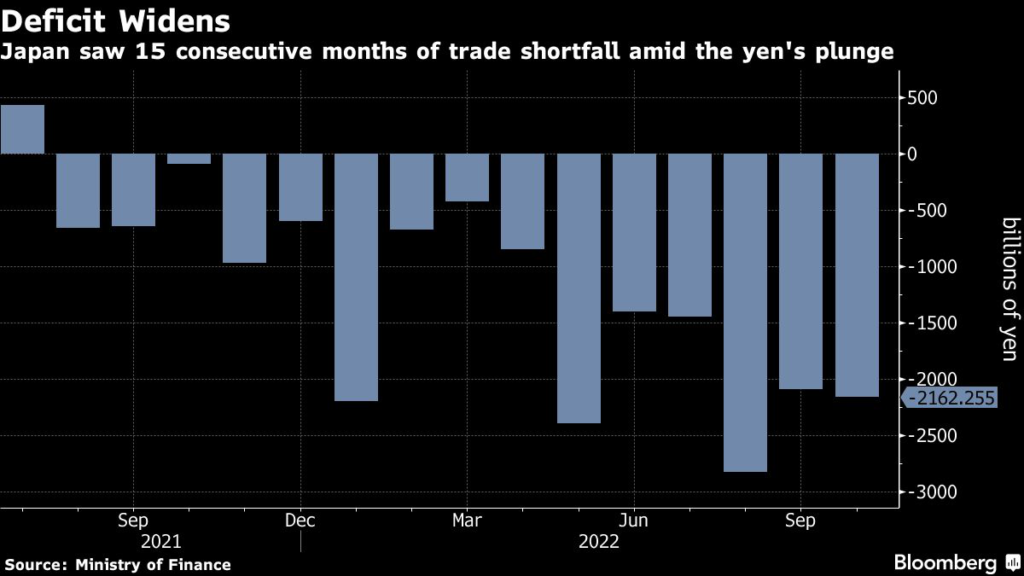
(Bloomberg) — Japan’s trade deficit widened in October, as the country’s import bill continued to rocket upward, fueled by a historic slide in the yen that has already helped push the economy back into reverse.

The trade gap grew to 2.16 trillion yen ($15.5 billion) from 2.09 trillion yen, the finance ministry reported Thursday. The balance has now been negative for 15 straight months, the longest streak since 2015. Economists had expected a 1.62 trillion yen deficit. 

Imports grew at the fastest pace since 1980 as the yen inflated already elevated commodity prices. The 53.5% gain was led by buying of crude oil, liquid natural gas, and coal. Analysts had expected a 50% rise in inbound shipments. Exports gained 25.3% driven by cars and semiconductor parts, for a slightly weaker increase than forecast by economists.

The prolonged trade deficit reflects Japan’s still fragile recovery from the pandemic, and came after the nation’s economy unexpectedly shrank in the third quarter, weighed down in part by the impact of the tumbling currency. The streak of red trade ink is likely to keep feeding back into yen weakness, though the currency has made some gains this month.

The trade data showed that the average exchange rate was 145.09 yen to the dollar, 30% weaker than a year earlier. The yen neared 152 per dollar at one point in October, hitting a fresh 32-year low. Following its first intervention to support the yen since 1998 in September, the Japanese government has continued to step into markets again last month.

“The expansion of the trade gap was inevitable, given the combination of two factors, the weak yen and rising price of commodities,” said economist Takeshi Minami at Norinchukin Research Institute. “There’s still a possibility of another round of yen depreciation that’ll increase Japan’s deficit.”

What Bloomberg Economics Says…

“Looking ahead, we expect the trade deficit to expand again in November as weaker global demand limits export growth.”

— The Asia economist team

For the full report, click here

The trade outlook is further clouded by the prospect of a global slowdown as the impact of higher interest rates overseas weighs on demand. For now exports are continuing to rack up solid gains with shipments to the US rising 36.5% from a year ago to outstrip the total to mainland China. Exports to China grew 7.7% for the smallest increase since June. Outbound shipments to Europe gained 28.1%.

Domestically, the weak yen has driven up energy costs and inflation rates, impacting both Japanese households and companies. The nationwide core-consumer price index hit 3% in September for the first time in over three decades excluding the impact of tax hikes. The November figure, which will be announced on Friday, is projected to be even higher at 3.5%.

To ease the hit of higher prices on consumption, Prime Minister Fumio Kishida last month ordered an economic stimulus package that includes aid to reduce energy costs and cash handouts for childcare. His cabinet has approved an extra budget of 29.1 trillion yen to partly fund these measures.

The plunge in the currency has primarily been caused by policy differences, with the Bank of Japan remaining a lone holdout for rock-bottom interest rates as other central banks led by the US Federal Reserve continue to raise borrowing costs.

The yen has regained some ground after slower-than-expected US inflation figures came out earlier this month, cooling worries that the Federal Reserve may have to intensify its already aggressive rate-hike pace. Still, senior Japanese officials have kept up warnings they would take additional decisive measures if necessary.

(Updates with more details, economist comments)

More stories like this are available on bloomberg.com

©2022 Bloomberg L.P.
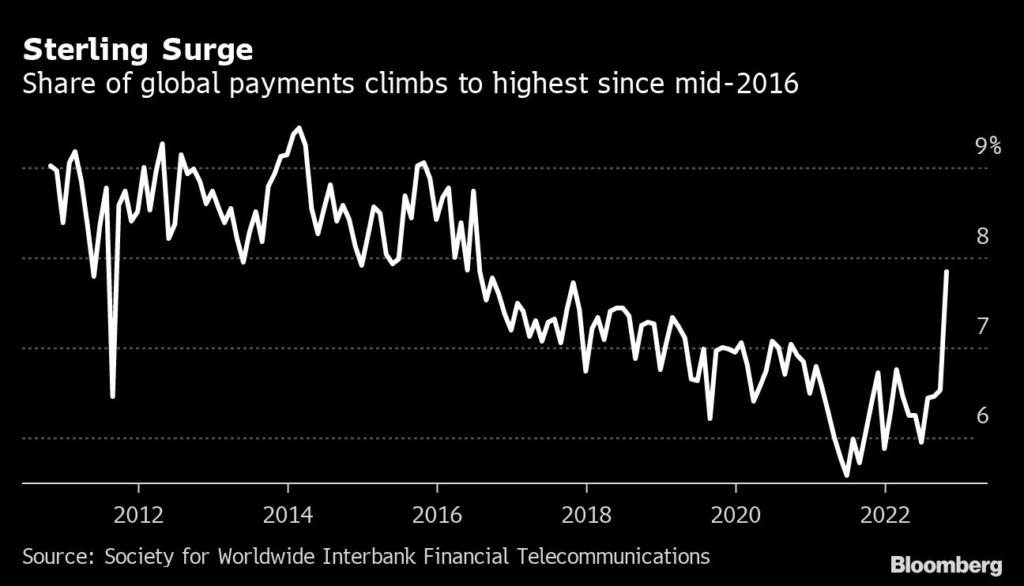
Paying With British Pounds Hasn’t Been This Popular Since 2016

(Bloomberg) — Bank customers are the most enthusiastic about using the British pound for global payments since mid-2016, around the same time the UK voted to quit the European Union.

The proportion of global payments made using sterling has surged to 7.845% of the total in October, up almost 2 percentage points since June, according to data from the Society for Worldwide Interbank Financial Telecommunications, known as SWIFT.

That’s nearly on par with the mark seen in July 2016, a month after the so-called Brexit vote took place. It’s a notable gain from this June, when use slid below 6%.

The pound is the third most popular payments currency, behind the US dollar and the euro. The amount of transactions involving dollars slipped slightly to 42.1%, while euro usage dropped to 34.4% of the whole. The Japanese yen ranked fourth, making up 2.95% of transactions, followed by the Chinese yuan, the Canadian dollar and the Australian dollar. 

The jump in pound usage comes even as the currency’s value came under pressure this year. It remains one of 2022’s worst-performing major developed currencies in terms of value, even after rebounding from the multi-decade lows it reached in late September when then-Prime Minister Liz Truss’s fiscal plans sent investors fleeing. 

Despite the bounce, the pound has weakened almost 12% against the dollar this year. The yen, though, has done even worse, with its value down more than 17% against the greenback in 2022.

The economic outlook for Britain remains in flux, with the government due to unveil its latest budgetary plans Thursday and the years-long fallout from Brexit still unfolding. At the same time, the continent as a whole is reeling from challenges caused by Russia’s invasion of Ukraine and its impact on European energy supplies. 

Meanwhile, SWIFT data showed the Chinese yuan’s share of transactions fell to 2.13% in October, the lowest in a year, as the country’s economy remains under pressure from its Covid Zero policy and concerns about the property sector.

SWIFT is a cooperative organization that provides secure financial messaging services to aid the execution of financial transactions and payments between banks worldwide.

More stories like this are available on bloomberg.com

©2022 Bloomberg L.P.

Singapore’s Temasek Writes Down $275 Million FTX Investment

(Bloomberg) — Singapore’s state-owned investor, Temasek Holdings Pte, has decided to write down its entire $275 million investment in FTX, saying its belief in Sam Bankman-Fried was likely “misplaced.”

Temasek invested $210 million in FTX International and $65 million in FTX US across two funding rounds from October 2021 to January this year, the company said in a statement. That made up a tiny fraction of its net portfolio value of S$403 billion ($294 billion) as of March. The company currently has no direct exposure in cryptocurrencies, it said. 

The meltdown of FTX and the evaporation of capital from its institutional backers is shaking confidence throughout the crypto world. The firm had been considered by some investors as one of the safer bets in the sector thanks to its size and role as an exchange, rather than being just an active manager of digital currency.

“It is apparent from this investment that perhaps our belief in the actions, judgment and leadership of Sam Bankman-Fried, formed from our interactions with him and views expressed in our discussions with others, would appear to have been misplaced,” Temasek said. 

Temasek’s statement on the writedown confirms an earlier Bloomberg report. Another FTX backer, Sequoia Capital, wrote down the full value of its $214 million bet on the exchange, while a person with knowledge of the situation said SoftBank Group Corp. is expecting a loss of around $100 million on its investment. 

Temasek said it backed FTX to invest in a leading digital asset exchange, giving it “market neutral exposure to crypto markets with a fee income model and no trading or balance sheet risk.”

Temasek said it conducted an “extensive due diligence process” on FTX from February to October 2021. It reviewed FTX’s audited financial statement, which showed it to be profitable. Due diligence efforts also focused on regulatory risk, particularly licensing and compliance. It sought advice from external legal and cybersecurity specialists in key jurisdictions. 

“While this write down of our investment in FTX will not have significant impact on our overall performance, we treat any investment losses seriously and there will be learnings for us from this,” Temasek said. 

Temasek invests in early-stage companies and accepts the binary risks associated with such investments, it said. The firm’s early-stage investments make up about 6% of its portfolio and have generated good returns, with internal rates of return in the mid-teens, it added. 

More stories like this are available on bloomberg.com

©2022 Bloomberg L.P.
Nvidia Sales Beat Estimates as Data-Center Business Fuels Growth

(Bloomberg) — Nvidia Corp. assured investors Wednesday that demand remains strong for its artificial-intelligence and data-center chips, even as the company continues to struggle with a slowdown in the personal-computer market. 

While revenue declined 17% to $5.93 billion in the fiscal third quarter, that handily beat the $5.79 billion average estimate. Nvidia’s data-center unit posted a 31% sales increase, also beating projections. That helped make up for a 51% drop at the company’s gaming business — a market tied to PC sales.

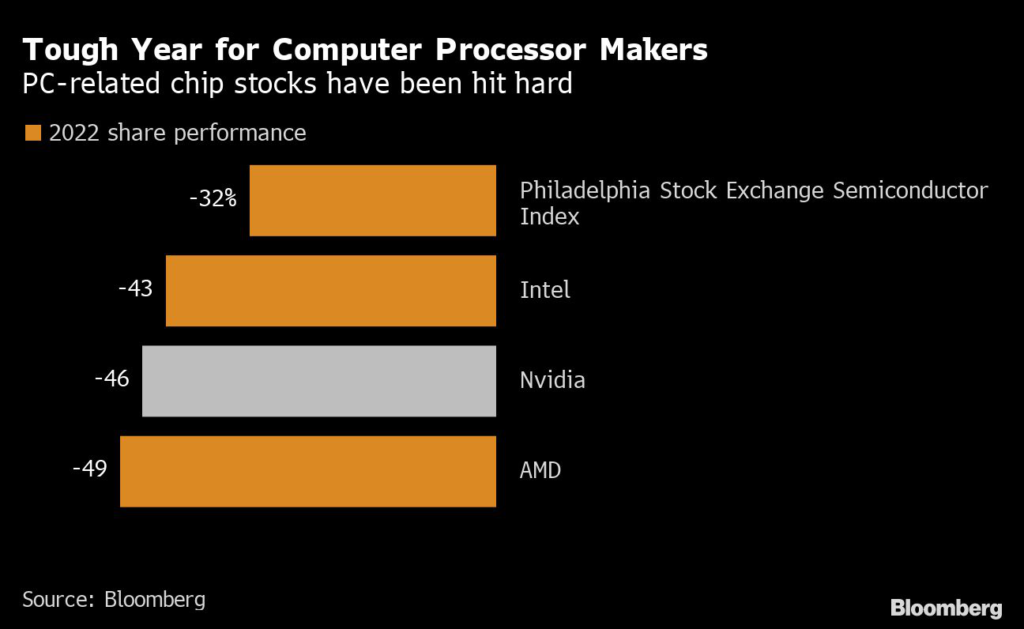
Though Nvidia’s outlook for the current quarter missed some estimates, the forecast was solid enough to satisfy analysts — or at least remove concerns that its business is rapidly deteriorating. Nvidia shares gained more than 2% in late trading Wednesday. They had closed at $159.10 earlier, down 46% for the year.

Fundamentally strong demand for machines that run AI software will help the company weather a difficult economic environment, particularly in China, Chief Executive Officer Jensen Huang said. After excessive inventory is cleared, the current quarter will show sequential growth — helped by the debut of new products. 

The outlook was more upbeat than that of Micron Technology Inc. earlier Wednesday. That company warned that it was cutting production because 2023 will be worse than previously feared. Chip shares had fallen sharply in regular trading ahead of Nvidia’s report.

But even while adding a dose of optimism, Huang said the economy and Covid restrictions in China will continue to take a toll. “The macro environment is still difficult,” he said in an interview. “Inflation is real. Covid lockdowns in China still exist.”

Data-center sales were helped last quarter by orders from US cloud service providers, with demand weakening in China, Nvidia said. The division generated $3.83 billion in total, compared with a $3.79 billion estimate.

Nvidia announced further inroads into the data-center market earlier Wednesday, when it said that Microsoft Corp. will use its graphics chips, networking products and software for a new AI offering. Nvidia’s leadership has argued that its broad range of technology for such systems gives it an advantage over competitors with partial solutions.

Data centers are a bright spot in a computing industry still mired in a slump. Makers of chips for laptops and desktops suffered a steep decline in orders this year as recession-wary customers put off big-ticket electronics purchases. That led to a buildup in inventory that the industry still needs to work through.

Huang said Wednesday that the company’s current inventory is comprised of new products that should be in high demand. The company expects fourth-quarter revenue to be about $6 billion, plus or minus 2%. That compares with an estimate of $6.09 billion. Third-quarter profit came in at 58 cents a share, excluding some items, short of the 70-cent projection.

Cisco Systems Inc. also helped allay investors’ fears Wednesday. The network-equipment giant gave an upbeat revenue forecast, even while warning that it would have to cut jobs and reduce office space.

CEO Chuck Robbins told analysts on a call that “demand didn’t fall off a cliff, by any stretch.”

After a massive spike in sales of home-office computers and other technology during the pandemic, spending has slowed. Some chip-company executives have argued that supply-chain disruptions over the last three years have caused distortions in the market, accentuating the industry’s boom times, and now, its bust. The hope is that companies and consumers will eventually return to a level of spending that’s higher than before the pandemic.

Nvidia built its reputation making electronics for gaming PCs, and that business has gotten hammered along with the broader PC market. Still, the division’s 51% decline last quarter wasn’t as bad as some analysts feared. Nvidia’s GeForce graphics chips are a must-have for high-end PC owners looking for the most realistic gaming experience. The chips also became popular with digital currency miners, though the crypto rout and changes to the way the asset is mined have undercut that market.

Nvidia also is caught up in the worsening standoff between China and the US. Washington is increasingly trying to cut off the Asian country from advanced chip technology, threatening Nvidia’s access to that market.

Nvidia’s best AI offerings are now subject to licensing requirements for export to China, a hurdle that the company said may cost it hundred of millions of dollars in lost revenue. Nvidia recently debuted a new offering for that market that it says is compliant with the restrictions.

The Santa Clara, California-based company said Wednesday that sales of other chips helped offset the slowdown in China.

–With assistance from Debby Wu.

(Updates with CEO interview starting in fourth paragraph.)

More stories like this are available on bloomberg.com

©2022 Bloomberg L.P.
Wall Street Push Against New Rules Gets Boost From GOP House Win

(Bloomberg) — Republican control of the US House of Representatives will help advance financial-services firms’ priorities, with a wish list that includes curbing ambitious proposals by a top markets regulator and diminishing the clout of a popular US consumer watchdog.

Next year, the GOP will lead the powerful Financial Services Committee, which can demand information from the heads of agencies such as the Securities and Exchange Commission and the Consumer Financial Protection Bureau and seek to dial up oversight of the regulators. At minimum, the House’s shift from Democratic leadership could force agency staff to spend hundreds of hours responding to lawmakers’ requests, lobbyists and others said. 

With Democrats retaining their grip on the Senate and President Joe Biden holding the “veto pen,” Republicans will try to stall or curtail key administration goals. They include SEC proposals that would force hedge funds and private equity firms reveal more about their fees, and would require companies to make detailed environmental, social and governance disclosures. 

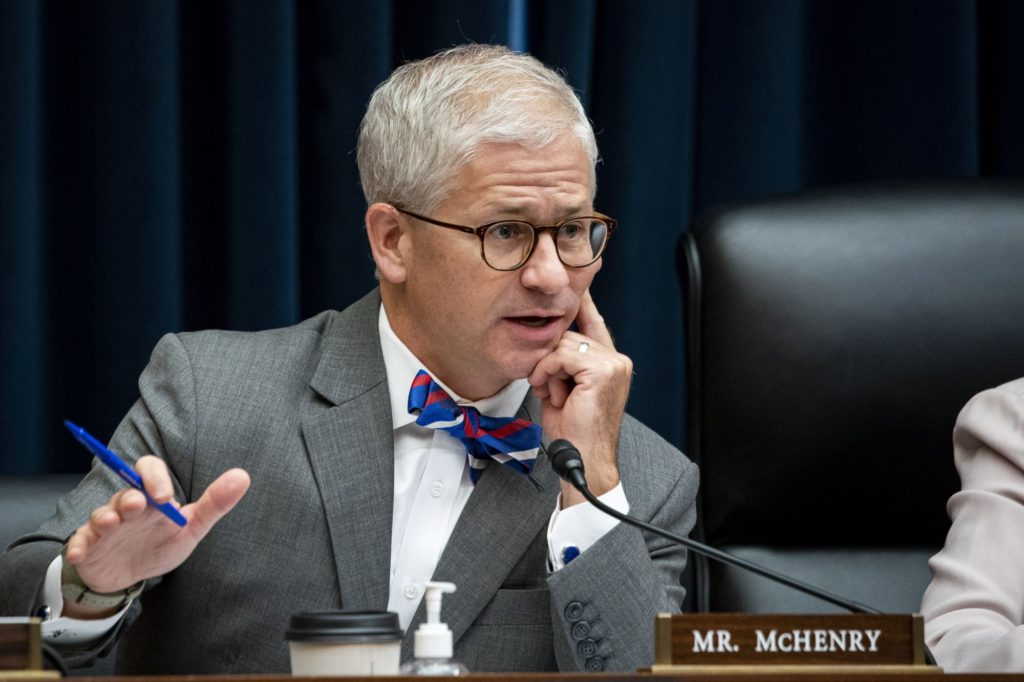
“The Biden administration has been pushing its agenda through financial regulators because they don’t have the votes to pass it in Congress,” said Republican Representative Patrick McHenry of North Carolina, who’s poised to lead the Financial Services panel. “Committee Republicans will work together to conduct appropriate oversight of activist regulators and market participants who have an outsized impact.”

ESG in Hot Seat

House Republicans will push hard against SEC proposals requiring greenhouse-gas emissions disclosures for publicly traded companies as well as environmental, social and governance (ESG) disclosures by investment companies.

They might target private-sector initiatives like the Nasdaq’s rule requiring diversity on the boards of companies that trade on the stock exchange. Large banks and brokerages could be brought in to testify about whether their focus on ESG initiatives has hurt investors.

Companies will also be asked if their regulators are pressuring them to do certain things, or are using regulation as cover to cut ties with disfavored industries, such as firearms or energy producers, said Brian Knight, senior research fellow at the libertarian-leaning Mercatus Center at George Mason University. “There’s not going to be a lot of benefit of the doubt for anything that smacks of ESG.”

Still, any moves by lawmakers to cut SEC funding tied to ESG-related rules during the appropriations process would run into the veto threat.

Bank Mergers

Republicans will use their clout in the House to publicly scrutinize regulators over plans to increase scrutiny of bank mergers. Yet on this issue and several others, the industry shouldn’t set high expectations.

“While exertion of more oversight authority could slightly change the focus of the various financial regulators, I don’t know that a Republican majority in just one chamber would result in significant public policy changes for the financial firms themselves,’ said Daniel Meade, a Washington-based partner at the law firm Cadwalader, Wickhersham & Taft. 

“The federal financial regulatory agencies are all generally independent agencies, and so a change in just one chamber probably would not result in a directional change at any of the agencies.” 

Democrats have pushed banking regulators to revisit the approvals process under the Bank Merger Act to increase competition in the industry. 

In September, Michael Barr, the Federal Reserve’s vice chair for supervision, vowed to take a tough approach to evaluating acquisitions. The FDIC proposed measures in March, shortly after the Republican chair departed after a public spat with Democrats on the commission. 

Lightning Rod

The CFPB, a political lightning rod since its creation following the 2008 financial crisis, will come under further attack by Republicans and business groups after the agency bolstered its enforcement program and changed some exam criteria under Director Rohit Chopra.

The Chamber of Commerce, American Bankers Association and the Consumer Bankers Association sued the agency in September for giving inspectors more leeway to classify a lending decision as discriminatory. 

One measure that could be tied up is the CFPB’s open banking proposal process that’s expected to get underway early next year. 

Hedge Funds

SEC Chair Gary Gensler’s proposals would force hedge funds and private equity firms to make fees more transparent, and he took a step toward requiring them to more quickly report major losses and redemptions.

The industry is concerned that Gensler’s plan will undermine the economics of their business models, make it more difficult to mount activist campaigns against corporate boards, and greatly increase regulatory costs.

But the industry may have to be realistic about its chances of completely stopping Gensler’s proposals. Instead, firms could ask House Republicans to help to try to slow the agency’s pace. One option could be to try to use the process for funding the SEC to narrowly target some of the agency’s rules, though such a move would be difficult. 

Crypto Guardrails

A potential outlier to the Republican theme is legislation attempting to develop a regulatory framework for crypto, a heavy spender on the midterm elections. 

The sudden implosion of megadonor Sam Bankman-Fried’s FTX crypto empire puts key legislation at risk amid stepped-up criticism that the measures provide weak investor protections.

One of the bills would give more regulatory authority over Bitcoin and Ether to the Commodity Futures Trading Commission, and let crypto platforms register as digital commodity exchanges with the agency. 

This measure and other key pieces of legislation had been relatively bipartisan, fanning hopes that Congress would quickly wrap up a plan for regulating the asset class, including settling jurisdictional issues and creating guardrails for stablecoins.

But the post-election outcome for crypto legislation now seems as unpredictable as the industry itself.

–With assistance from Allyson Versprille.

More stories like this are available on bloomberg.com

©2022 Bloomberg L.P.
Close Bitnami banner
Bitnami