
Bloomberg

Winklevoss Faithful Have a $700 Million Problem in Genesis Halt

(Bloomberg) — The billionaire Winklevoss twins, owners of the Gemini crypto exchange, have always portrayed themselves as the grownups in the room. The ones who ordinary investors could trust.

None of that is sparing a chunk of Gemini’s customers from the fallout triggered by FTX’s collapse, which risks taking down a big swath of the industry.

The trouble stems from a product called Gemini Earn — which lets investors accrue as much as 8% in interest by lending out their crypto, including Bitcoin, Ether or stablecoins pegged to the dollar. It’s a kind of product, widely used throughout crypto, that looks and feels very much like high-yield savings accounts, but with far fewer safeguards if things go wrong.

And in the case of Earn, Gemini’s website listed just a single accredited borrower that passed its vetting process: Genesis Global.

On Wednesday, in response to Genesis suspending withdrawals amid FTX’s spreading contagion, Gemini also halted redemptions from its Earn product. That left in limbo a program that, according to a person familiar with the matter, has $700 million of customer money tied up in it. The person asked not to be named because the information isn’t public.

“People are holding their breath at the moment, waiting or seeing if there’s going to be another shoe to drop and what those shoes will be,” Gregory d’Incelli, co-founder of Scenius Capital Management, said in an interview. “People are still in shock. A lot of people are very wounded right now.”

Gemini, which was founded by brothers Cameron and Tyler in 2014, said on its website that it is “working with the Genesis team to help customers redeem their funds from the Earn program as quickly as possible.”

The firm added that “all customer funds held on the Gemini exchange are held 1:1 and available for withdrawal at any time.” Gemini declined to comment beyond Wednesday’s press release.

Whether Gemini Earn customers, who collectively are significant lenders to Genesis, ever get their money back remains to be seen. And much depends on Genesis itself, which has hired advisers to explore all possible options, including raising new funding. Genesis, one of oldest and most well-known crypto brokers, has itself been a big player in crypto lending. The firm had $2.8 billion in total active loans in the third quarter, according to its earnings report.

Whatever the case, the situation underscores a crisis of confidence — undercut by a collapse in asset prices, FTX’s implosion and now Genesis’s troubles — that may herald a larger reckoning across the industry. It’s a blow to the ambitions of regulation-friendly firms like Gemini, whose fortunes are in large part tied to crypto’s mainstream adoption, and shows that few players are firewalled from the risks inherent in a world where rampant speculation with few guardrails remains the norm.

It also throws into stark relief the role of yield products, which have often been marketed and popularized as less risky bank-like alternatives, as a source of much of the speculative froth that exists in crypto.

“It’s going to affect the credibility for the whole space,” said Max Gokhman, chief investment officer at asset manager AlphaTrAI. “Because at the end of the day, especially for retail investors or crypto-native folks who don’t understand that if I trade something with a counterparty that’s not regulated in the US, I can’t go to the SEC, the CFTC or anyone else and say, ‘Hey I was robbed.’”

To be sure, Gemini’s claims of being insulated from the immediate fallout of sagas like Genesis’s have a firmer basis than other industry players saddled with leverage. While the company marketed the Earn program on its website along with yield calculators and assurances about vetting, the firm itself was just a conduit for loans made by its customers to outside borrowers. The company’s other operations, including spot exchange are functioning as normal.

When all was well, Genesis generated profits in part by lending out assets that it borrowed from those like Gemini Earn customers, often at sky-high rates. Earn customers took a cut in interest, Gemini got a slice as the middleman and Genesis kept the rest.

On its website, Gemini says its borrowers are “vetted through our risk management framework which reviews our partners’ collateralization management process.” Gemini reviews partners’ cash flow, balance sheet and financial statements “on a periodic basis.”

Yet signs of trouble started to emerge at Genesis earlier this year. Genesis’s lending business already faced trouble when crypto hedge fund Three Arrows collapsed. It had made a $2.4 billion loan to the now-bankrupt fund, run by Su Zhu and Kyle Davies.

Last month, Genesis reported that lending plunged 80% in the third quarter from the prior three-month period and that most of the rest of its businesses also experienced substantial declines. Then, Genesis said last week it would get a $140 million equity infusion from its parent company, Barry Silbert’s Digital Currency Group, after disclosing that its derivatives business had $175 million locked in an FTX trading account.

On Wednesday, Genesis suspended redemptions and new loan originations after facing withdrawal requests that exceeded current liquidity. In other words, people wanted their money back from Genesis and Genesis couldn’t meet those demands.

For Gemini’s Earn customers, they’re largely on their own. Despite reassurances that Gemini was “working with the Genesis team to help customers redeem their funds from the Earn program as quickly as possible,” the terms of the agreement make plain who bears all the risk.

“Your available digital assets will leave our custody, and you accept the risk of loss associated with loan transactions, up to, and including, total loss.”

More stories like this are available on bloomberg.com

©2022 Bloomberg L.P.
Petrus Calls on TeamViewer to End ManU, F1 Sponsorships Early

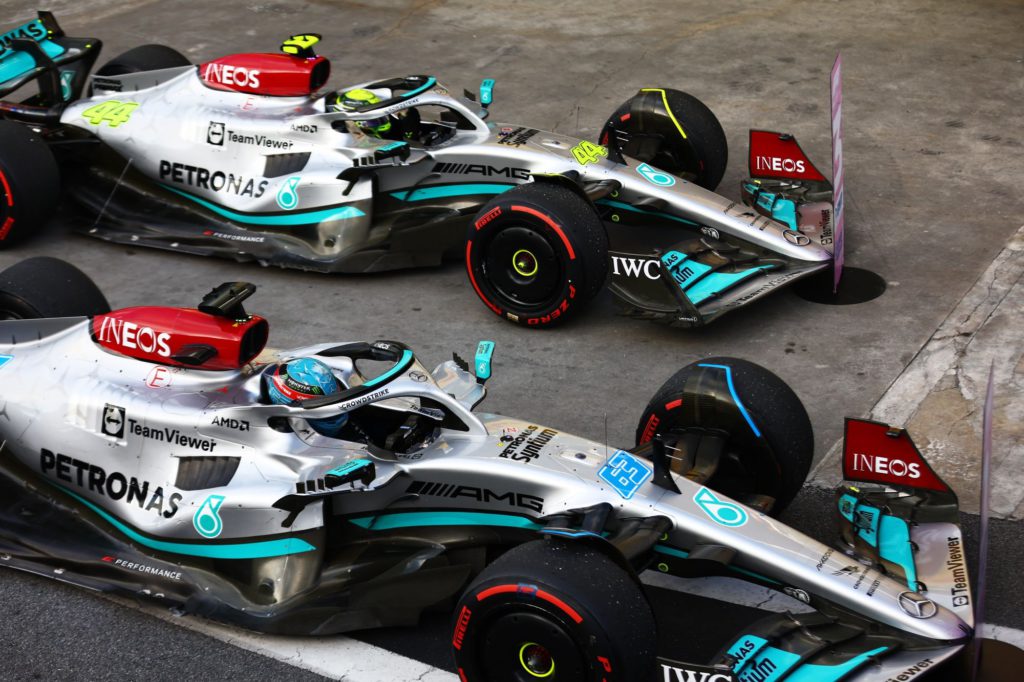
(Bloomberg) — Activist fund Petrus Advisers is pressuring TeamViewer AG executives to end its frequently criticized sponsorship deals with football club Manchester United and the Mercedes Formula 1 racing team.

Petrus, disclosing a stake of just below 3% in the German IT services company, called the sponsorships a sign of hubris and “appalling judgment” in a letter to Chief Executive Officer Oliver Steil and finance chief Michael Wilkins. Saying it had been advocating for months in private, Petrus warned it wouldn’t tolerate the company spending more than €70 million ($73 million) — about 1.4 times its net profit — on the sponsorships.

“You are not SAP, Oracle or Mercedes,” Petrus Managing Partner Klaus Umek and partner Till Hufnagel said in the letter dated Wednesday. “Yet, you do not seem to get it.”

TeamViewer, a remote working software business whose valuation soared during the coronavirus pandemic, is reportedly paying Manchester United £47.5 million ($57 million) annually until 2026 as a shirt sponsor. That makes it one of the costliest sponsorship deals for a European football club, which has drawn frequent criticism by analysts. TeamViewer is also expected to shell out millions of euros for a five-year contract with Mercedes Formula 1 racing team.

A spokesperson for TeamViewer said the company continuously assesses its need to invest in its brand and the visibility of its products against the company’s strategy as well as the macro-economic outlook. TeamViewer already had announced it wouldn’t prolong its Manchester United partnership beyond the initial term, and also has communicated its desire to look at amending its existing contract, according to the spokesperson.

Bleeding Millions

In August, Steil said he wouldn’t renew the Manchester United contract, a step Petrus thinks isn’t enough to fix the firm’s cost base.

“We demand that you stop bleeding millions and rapidly disengage from this mess,” Petrus said in the letter, which was reviewed by Bloomberg News. “We therefore demand that you enter professional exit discussions with a clear goal of a quick solution and that you do it immediately.”

Founded in 2005, TeamViewer offers remote computer access tools to customers in about 180 countries. The company plans to further expand in Europe, Asia and the US, including adding to its offerings to help large corporate customers connect mobile phones and tablets to machine sensors, smart farming equipment and wind turbines.

The deals with Manchester United and the F1 team were supposed to help build a global brand, but TeamViewer has struggled with large rivals entering the market and the work-from-home boom waning.

Once a rising star among German tech companies, with a market value topping €10 billion at its mid-2020 peak, TeamViewer’s appeal has faded over the past year and a half. Its shares have fallen 9.5% this year, giving it a market value of less than €2 billion.

TeamViewer’s March 2021 Manchester United deal triggered a profit warning shortly thereafter, with the firm citing a “significant increase in marketing expenditure.”

‘Even Ronaldo’

Analysts have frequently criticized the sponsorships as too costly for TeamViewer.

“TeamViewer (and the market) is still searching for a new base after drastically scaling back its mid-term ambitions a year ago,” analysts from Kepler Cheuvreux said in a recent note titled ‘When even Ronaldo cannot save you,” alluding to Manchester United’s striker.

In recent campaigns, Petrus has successfully pushed for higher takeover bids, most recently for an improved offer from Advent International and Centerbridge Partners for German real estate lender Aareal Bank AG. At Switzerland’s banking software firm Temenos AG. the fund is calling for a leadership change and strategic review including a potential sale

More stories like this are available on bloomberg.com

©2022 Bloomberg L.P.
Cisco’s Revenue Forecast Points to Steady Technology Spending

(Bloomberg) — Cisco Systems Inc., the biggest maker of machines that run computer networks and the internet, gave an upbeat quarterly revenue forecast, while also unveiling a plan to cut jobs and reduce office space to align with changing business conditions.

Sales in the quarter ending in January will jump 4.5% to 6.5%, Cisco said Wednesday in a statement. Analysts had predicted that revenue would expand about 4% from a year ago, when the company generated $12.7 billion in sales. For fiscal 2023, revenue will grow as much as 6.5%, an increase from the company’s previous outlook of as much as 6%.

Cisco said a restructuring plan beginning in the current quarter would involve job cuts to “rebalance the organization” and office closings to align better with employees working in a hybrid system from home and company locations. San Jose, California-based Cisco will incur pretax charges of about $600 million for severance, termination and other costs, about half of which will be recognized in the current quarter, according to a regulatory filing.

The restructuring plan will affect about 5% of the company’s employees, who will be given the opportunity to move to other positions at Cisco, Chief Financial Officer Scott Herren said in an interview.

“This is not about reducing our workforce — in fact we’ll have roughly the same number of employees at the end of this fiscal year as we had when we started,” Herren said. Cisco had more than 83,000 employees as of July 30.

Cisco joins technology companies including Meta Platform Inc., Amazon.com Inc. and Salesforce Inc. that have announced job cuts and hiring freezes in recent weeks amid an uncertain economic climate.

Cisco’s management has argued that upgrading networks to keep up with the pace of data generation is so important that corporations and government agencies were continuing to spend regardless of external circumstances. That optimism in the face of the broader economic downturn is being supporting by continuing strong orders and Cisco’s ability to meet customer demand via greater availability of components.

The shares rose about 4% in extended trading following the announcement. The stock had earlier closed at $44.39 in New York and has dropped 30% this year. 

Under Chief Executive Officer Chuck Robbins, Cisco has been trying to fire up growth with hardware and software, as well as new products provided over the internet. Robbins is aiming to make the company a provider of services paid for on a recurring basis and less reliant on one-time sales of expensive machines.

Revenue in the three months that ended Oct. 29 gained 6% to $13.6 billion. Excluding some items, per-share profit was 86 cents. Analysts had projected sales of $13.3 billion and profit of 84 cents.

Highlighting the demand for Cisco’s gear, its hardware division — the largest contributor to total revenue –posted a sales increase of 12% in the fiscal first quarter from a year earlier. The security unit gained 9% while collaboration, Cisco’s conferencing-related division, declined 2%.

Recurring revenue from its new product offerings increased to more than $23 billion on a annualized basis, and greater availability of chips helped the company fill more orders, Herren said in the statement. That performance, along with the easing supply situation, “provides us with great visibility and predictability, and supports our increased full year guidance,” Herren added.

Profit, excluding some items, will be 84 cents to 86 cents a share in the current quarter. For the fiscal year, Cisco projected that measure at $3.51 to $3.58 a share. Both predictions are in line with estimates.

(Updates with restructuring costs in the third paragraph.)

More stories like this are available on bloomberg.com

©2022 Bloomberg L.P.

Australian Bourse Pauses Delayed Blockchain Project After Review

(Bloomberg) — Australia’s main exchange is reassessing plans to replace its settlement and clearing platform with a blockchain-based system after reviews, suspending work on the years-long project that’s been plagued by delays.

ASX Ltd. will revisit all aspects of its work to swap its Clearing House Electronic Subregister System, known as CHESS, for newer technology following an independent review by Accenture Plc and its own internal assessment, the Sydney-based firm said in a statement Thursday.

“While ASX is keen to embrace technology that benefits the market, it’s clear we need to revisit the solution design as well as validate and test the feedback from the independent review to assess changes required to bring the project to market safely, efficiently and for the long-term,” said Helen Lofthouse, ASX’s chief executive officer.

The high-profile plans had been seen as a major coup for the blockchain industry, but came under scrutiny following a string of delays, several millions of dollars of investments and leadership reshuffles at the exchange. Accenture’s report identified a slew of problems with the project, including unclear timelines, design complexity and communication snags.

Read: Blockchain Scores Major Win as Aussie Exchange Plans Shift

ASX will write off A$245 million ($165 million) to A$255 million in pre-tax costs related to the project in the first half of the year, the company said. Its shares have dropped 23% in 2022, underperforming the benchmark S&P/ASX 200 Index’s 4.3% decline.

Regulators are closely monitoring ASX’s ongoing management of clearing and settlement under its licenses, the Australian Securities and Investments Commission and the Reserve Bank of Australia said in a joint letter to the exchange.

More stories like this are available on bloomberg.com

©2022 Bloomberg L.P.
Apple Store Staff Petition to Unionize a Third Store, This Time in St. Louis

(Bloomberg) — Apple Inc. retail employees have petitioned to unionize a St. Louis store, extending a wave of labor organizing at the world’s most valuable company.

The International Association of Machinists filed a petition Wednesday with the US National Labor Relations Board, seeking to represent around 80 employees at the Missouri site. If the agency holds an election and the union prevails, the company would be legally obligated to negotiate over working conditions at the store. 

The St. Louis workers are seeking to make their store the third among Apple’s roughly 272 US locations to organize, following victories by the Machinists in Maryland in June and by another union, the Communications Workers of America, last month in Oklahoma. Employees have said that workers at dozens of stores are discussing similar moves.

“As an employee of Apple for over five years, I have unfortunately had to watch as the culture of this company has shifted from truly embodying a people-first mentality,” St. Louis employee Daniel Bertilson said in an emailed statement. “I look forward to voting yes on my ballot and allowing our team members to partner with Apple to achieve the common goal of serving our customers with warmth and kindness.”

In an emailed statement, Apple said that it’s “made many significant enhancements to our industry-leading benefits” and hiked pay in recent years.

“We believe the open, direct and collaborative relationship we have with our valued team members is the best way to provide an excellent experience for our customers, and for our teams,” the company said. “We’re proud to provide our team members with strong compensation and exceptional benefits.”

The Machinists also filed a separate claim against Apple Wednesday with the NLRB, accusing the company of violating federal law by holding mandatory anti-union meetings, threatening retaliation and telling staff that organizing would be futile.

Unions have brought separate allegations to the agency about Apple’s conduct in Oklahoma, Maryland and Atlanta, which the agency has been investigating. In September, the NLRB general counsel issued a complaint accusing Apple of interrogating employees at a World Trade Center store about their workplace activism and discriminating against union supporters in enforcing a no-soliciting policy.

Apple, based in Cupertino, California, has said that it disagrees with the allegations.

(Updates with Apple comment in fifth paragraph.)

More stories like this are available on bloomberg.com

©2022 Bloomberg L.P.

Crypto Firms Should Do More to Police Their Industry, DOJ Official Says

(Bloomberg) — The crypto industry should do more to police itself and report bad actors to authorities, according to a US Justice Department official who focuses on digital assets. 

“You are the first line of defense,” Sanjeev Bhasker, who works on crypto in the department’s Money Laundering and Asset Recovery Section, said at an industry event in Washington on Wednesday. Bhasker didn’t mention any firm by name.

US scrutiny of the sector is increasing as aftershocks from crypto platform FTX’s sudden failure ripple through the industry. The firm’s collapse has placed strain on several companies, including brokerage Genesis and Gemini Trust Co., which is run by Tyler and Cameron Winklevoss. 

Authorities in the US and the Bahamas are investigating the FTX turmoil, including a probe by the US Attorney’s Office for the Southern District of New York.

Bhasker didn’t mention any investigations in his comments. He urged digital-asset companies to monitor the marketplace and report any fraud or suspicious activity. “It falls upon you to represent crypto as a whole,” he said. 

More stories like this are available on bloomberg.com

©2022 Bloomberg L.P.
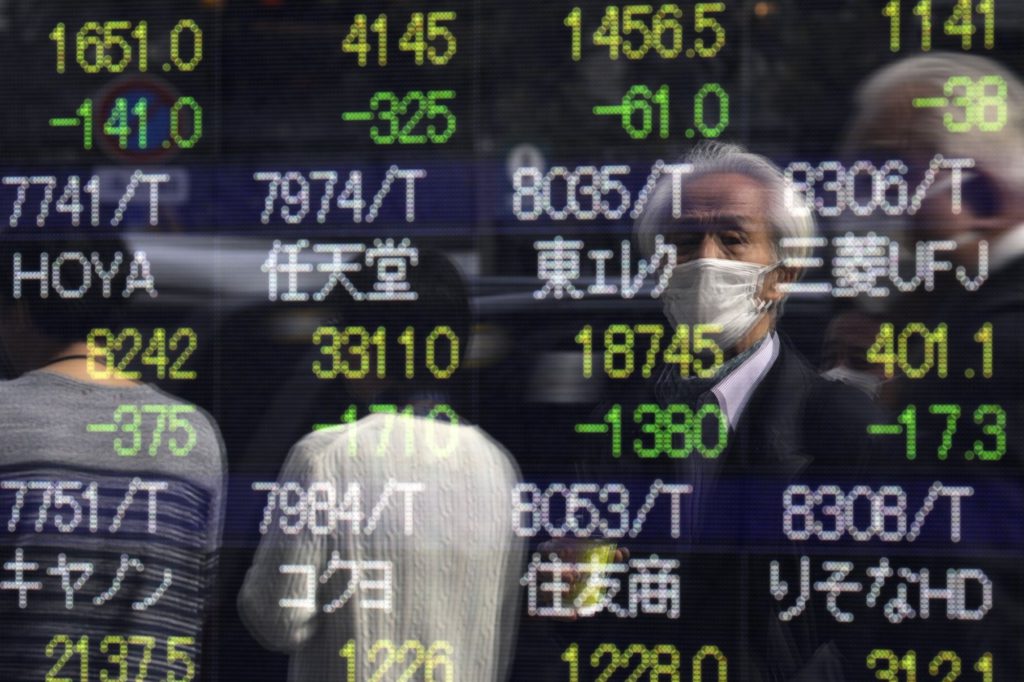
US Stocks Decline as Hopes of a Fed Pause Diminish: Markets Wrap

(Bloomberg) — US stocks dropped after strong retail sales data and comments from at least two Federal Reserve speakers recast bets that the central bank’s policy tightening regime is nearing an end. 

The S&P 500 and the Nasdaq 100 fell after a report showed retail sales posted the biggest increase in eight months in October, outpacing estimates and indicating the economy can withstand additional Fed hikes. Target Corp.’s disappointing earnings also weighed on sentiment. 

The indexes trimmed their losses after 4 p.m. in New York, when a fresh batch of earnings trickled in. Nvidia Corp. posted quarterly sales that topped analysts’ estimates while Cisco Systems Inc. gave a bullish revenue forecast.

A closely watched part of the US yield curve reached new extremes of inversion, signaling concerns that restrictive Fed policy will sap the economy. 

Wednesday’s market pullback came after a hefty rally stoked by softer-than-expected US inflation data that fanned hopes the Fed may be able to slow its tempo of interest-rate hikes. While a slew of Fed officials in recent days have backed these expectations, they have also emphasized the need to keep hiking into next year. 

On Wednesday, New York Fed President John Williams bruised sentiment after he said the central bank should avoid incorporating financial stability risks into its considerations. San Francisco Fed President Mary Daly, meanwhile, stressed that a pause is “off the table.” 

Goldman Sachs Group Inc. now expects the Fed to boost its key rate to a range of 5% to 5.25%, up from the previous call of 4.75% to 5%. 

Read More: Bernstein Quant Says Active Funds Have Bigger Enemy Than the S&P

“The market is just trying to grasp for news and it’s prone to overcompensate for the news, whether it’s good news or bad news,” Sandi Bragar, chief client officer at Aspiriant, said by phone. “We’re just at that point in the cycle where we think there’s still the high likelihood for potential downward trajectory of stocks as we head into 2023.”

The stronger retail numbers give the Fed more room to be aggressive, as officials have consistently communicated, Oksana Aronov, alternative fixed income head of markets strategy at JPMorgan Asset Management, said on Bloomberg TV. The disparate economic data that has hit the markets in recent weeks complicates the central bank’s mandate, she said.


Earlier in the day, comments from US President Joe Biden that Ukrainian air defenses, rather than by Russia, had likely caused Tuesday’s explosion in Poland soothed fears of an escalation in military conflict. While the White House backed Poland’s call on the matter, it emphasized that Russia was ultimately to blame.

Elsewhere, European Central Bank policy makers may slow down their tempo of rate hikes, with only a 50 basis-point increase next month, according to people with knowledge of the matter.

Key events this week:

  • Eurozone CPI, Thursday
  • US housing starts, initial jobless claims, Thursday
  • Fed’s Neel Kashkari, Loretta Mester speak, Thursday
  • US Conference Board leading index, existing home sales, Friday

Some of the main moves in markets:

Stocks

  • The S&P 500 fell 0.8% as of 4 p.m. New York time
  • The Nasdaq 100 fell 1.4%
  • The Dow Jones Industrial Average fell 0.1%
  • The MSCI World index rose 1.1%

Currencies

  • The Bloomberg Dollar Spot Index was little changed
  • The euro rose 0.5% to $1.0396
  • The British pound rose 0.4% to $1.1916
  • The Japanese yen fell 0.1% to 139.44 per dollar

Cryptocurrencies

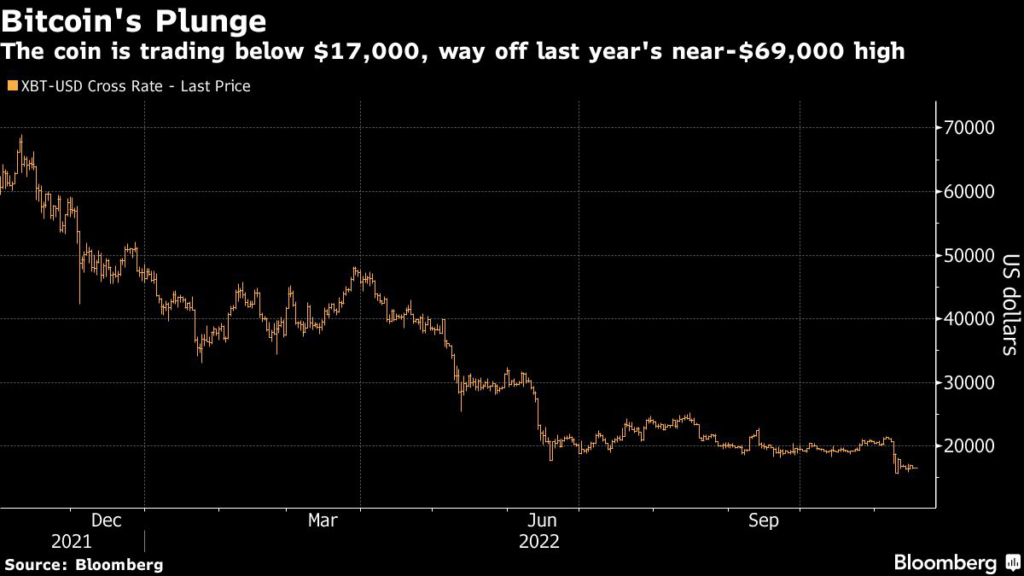
  • Bitcoin fell 1.9% to $16,561.13
  • Ether fell 2.8% to $1,211.08

Bonds

  • The yield on 10-year Treasuries declined nine basis points to 3.68%
  • Germany’s 10-year yield declined 11 basis points to 2.00%
  • Britain’s 10-year yield declined 15 basis points to 3.15%

Commodities

  • West Texas Intermediate crude fell 1.7% to $85.48 a barrel
  • Gold futures were little changed

This story was produced with the assistance of Bloomberg Automation.

–With assistance from Vildana Hajric, Emily Graffeo and Peyton Forte.

More stories like this are available on bloomberg.com

©2022 Bloomberg L.P.
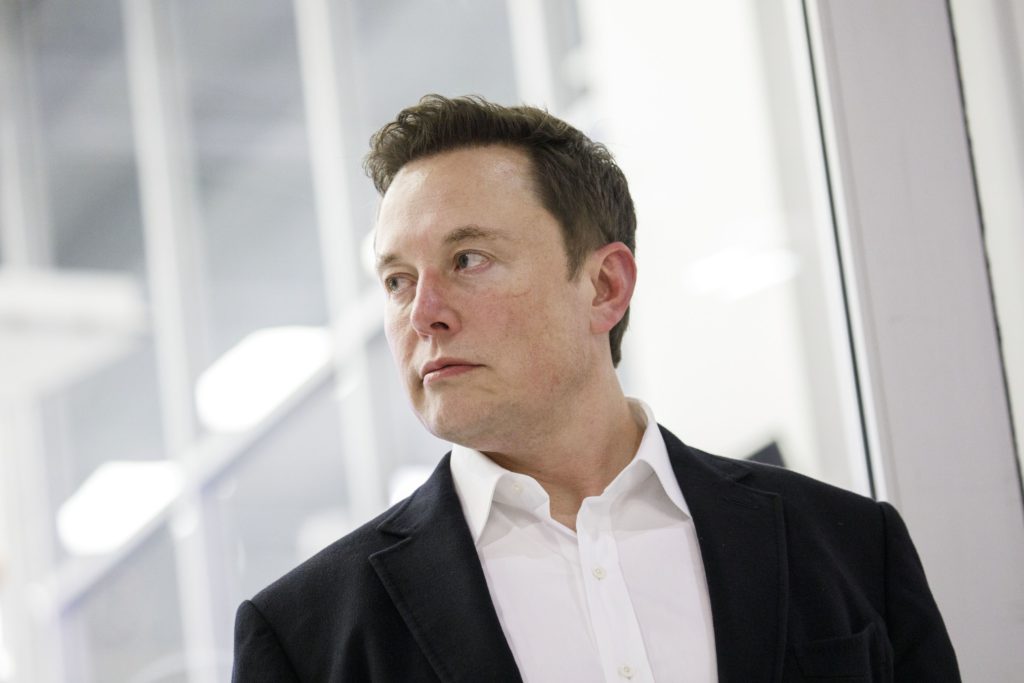
Musk Tells Twitter Staff in Email to Accept ‘Hardcore’ Culture or Leave

(Bloomberg) — Elon Musk sent an email to Twitter Inc. employees requiring them to pledge to stay with the company, working long hours at “high intensity” during its transformation, or to accept a buyout. 

Staff will have to complete the online form by 5 p.m. New York time on Thursday or accept three months severance. For Twitter to succeed, “we will need to be extremely hardcore,” Musk said in the email, which was seen by Bloomberg. 

“Only exceptional performance will constitute a passing grade,” the email said.

A representative for Twitter didn’t immediately respond to a request for comment. The Washington Post reported the memo earlier. 

The form Musk wanted employees to complete contained a single question: “Would you like to stay at Twitter?” 

“Yes” was the only option to click, before “Submit.” That left workers with a lot of questions about the nature of the agreement. Many of them reached out to lawyers for advice on how to respond, according to people familiar with the matter.

“It’s certainly wrong that he’s requiring them to sign this document because it might give them the appearance that this commitment could waive or override other rights that they might have,” said Peter Romer-Friedman, who heads the civil rights and class actions practice at the law firm Gupta Wessler PLLC. If an employee needed accommodation for a disability or needed go on medical leave, “you can’t fire them for that. And to me, it seems like that’s what he is promising to do, or at least threatening to do, without addressing those specific situations.”

Read More: Musk Steps Up Purge of Twitter Engineers Who Criticize Him

Musk said in the note that Twitter will be more dominated by engineers going forward, making up the majority of remaining employees and having the greatest influence at the company, which he called a “software and servers company” at its heart. Design and product management functions will “still be very important and report to me,” he said. 

The billionaire announced plans to fire about 3,700 people in his first week in control of the company. The cuts, which included most of Twitter’s senior management, have upset many of the remaining employees. Musk’s changes have also led to a lack of communication internally and concerns about product breakdowns and technical outages, according to current and former staffers. 

Since then, Musk has continued to purge employees who have criticized him, sometimes via Twitter. Musk testified Wednesday in Delaware that the lion’s share of his time “for the past few weeks” has been at the social-media platform, though he said the “fundamental organizational restructuring” will be completed by the end of next week.

Read More: Musk Warns Twitter Bankruptcy Possible If Cash Burn Lingers

Musk has warned since his $44 billion acquisition last month that Twitter could face bankruptcy if it doesn’t start generating more cash. He has told employees they can expect to work 80-hour weeks and fewer office perks like free food, and ended the company’s work-from-home policy with a few exceptions. 

The reference to long hours could potentially run afoul of labor laws, said Lisa Bloom, owner of the Bloom Firm in Calabasas, California, who is representing a group of Twitter employees laid off since Musk took over.

“I have already heard from a female manager at Twitter who said, ‘I’ve been at the company for many years. I love my job. I also love my two children. I shouldn’t have to chose between my job and seeing my children at night and on weekends,’” Bloom said. “These are peoples’ lives, and livelihoods and families who are affected by this.”

–With assistance from Ed Ludlow, Jeff Green and Josh Eidelson.

(Updates with labor lawyers throughout)

More stories like this are available on bloomberg.com

©2022 Bloomberg L.P.
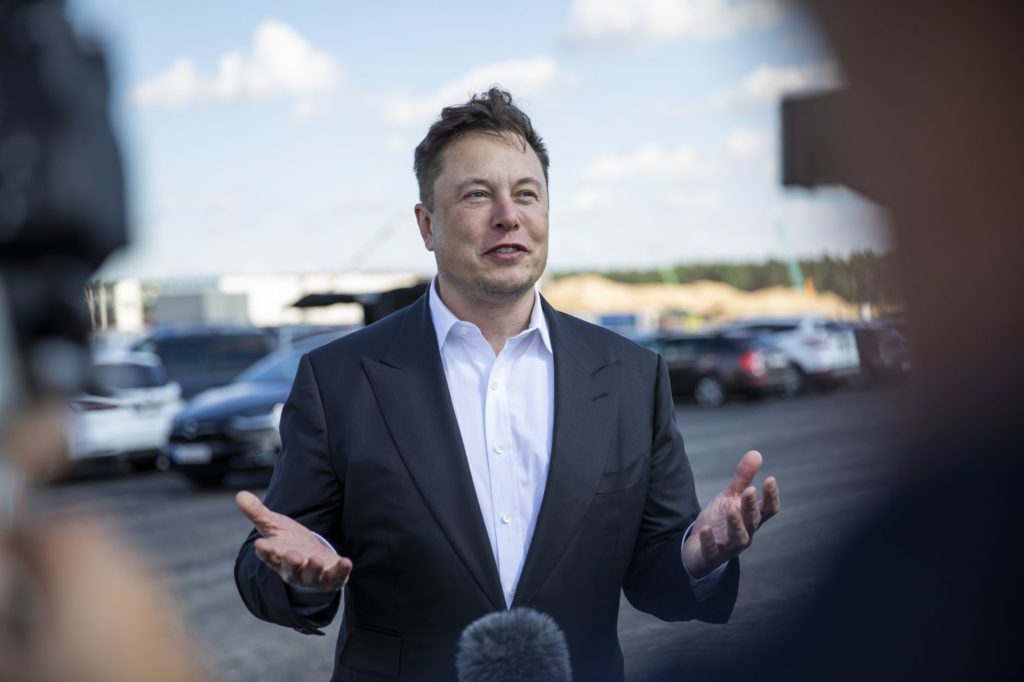
Musk Says Twitter Reorganization Is Taking Up Almost All His Time

(Bloomberg) — Elon Musk, whose $55 billion Tesla Inc. pay deal is being challenged in court as too excessive for a part-time chief executive officer, told a judge he is spending almost all his time now reorganizing Twitter Inc. rather than on the other companies he oversees.

Since acquiring Twitter for $44 billion in October, Musk testified Wednesday in Delaware that the lion’s share of his time “for the past few weeks” has been at the social-media platform, though he said the “fundamental organizational restructuring” will be completed by the end of next week.

Delaware Chancery Judge Kathaleen St. J. McCormick is hearing evidence in a trial to determine whether Musk, the world’s richest person, should be forced to return stock-options awarded under the pay package to Tesla, the electric-car maker.

Richard Tornetta — who owns nine shares of Tesla — claims in his lawsuit that the board failed to exercise independence from Musk as it drew up a new pay package for the chief executive officer in 2018. Tornetta said the board lavished the world’s largest compensation plan on a part-time leader. 

In addition to Tesla and Twitter, Musk also runs Space Exploration Technologies Corp., an aeronautical start-up; and The Boring Co., a tunneling business; and is involved in OpenAI and Neuralink. Musk agreed with Tornetta’s lawyer that at the time of his pay deal, he was spending about 54% of his time at Tesla, 36% at SpaceX, 10% on Open AI, Boring and Neuralink.

However, Musk said questions about the split between the companies were “silly” because he is focused on taking “a set of actions that are good for” humanity, whether that’s making electric vehicles, using technology to help people with paralysis, or setting up a colony on Mars.

1 Million Tons

The billionaire has said it would take 1 million tons of cargo to build a self-sustaining city on the planet at a cost of as much as $10 trillion. Evidence in the Tesla compensation case shows Musk vowed to use money generated by the 2018 pay plan to fund his dream of a Martian colony.

Tesla directors have defended the pay agreement as not being marred by conflicts. They claim they weren’t influenced by their ties to Musk and said the payout motivated the mercurial billionaire to bring his A-game to spur Tesla’s spectacular growth. The company’s market valuation has jumped from $50 billion to more than $560 billion over the last four years.

Antonio Gracias, a former Tesla director and long-time friend of Musk, testified Wednesday he acted independently in reviewing the 2018 pay plan even though he’d vacationed with the entrepreneur over the years. Gracias said he had a solid relationship with Musk that allowed him to openly share his thoughts on business issues.

“I can say whatever I want” to Musk, Gracias told McCormick after the CEO had finished testifying. “I don’t pull punches with him.” Other evidence presented in the case showed Musk also vacationed with Tesla director James Murdoch, the son of media baron Rupert Murdoch.

According to Gracias, Musk was never required by his compensation plan to spend a certain amount of time at Tesla. “He’s not billing by the hour,” Gracias said. “ That’s not how this works.”

James Murdoch, in testimony Wednesday, joined other board members in praising Musk’s pay package as appropriate because it only kicked in if Tesla hit targets for market value and production that were designed to be difficult to achieve.

Across corporate American, “you see a lot of payment for failure” in executive compensation, Murdoch said. Musk benefitted only after Tesla investors “got much, much more” from the surge in Tesla shares, he said.

No Role

During his three hours on the witness stand, Musk claimed he had no role in approving the pay deal, and at the time was focused instead on solving the complex problem of creating a sustainable electric-vehicle company.

“I do not have any understanding of the internal processes by which this compensation structure was obtained,” Musk said, adding that he never discussed his compensation with board members or dictate the terms of the deal. 

However, court filings in the case show the entrepreneur was asked in a text by his friend Ira Ehrenpreis, a Tesla board member, on April 8, 2017, about how to structure his future compensation. Musk replied that he should end up “owning 10 percent of the company” in a performance plan built around a progression of targets that would each grant him 1% of Tesla’s outstanding shares, filings show. 

As Musk later mused to one of his co-founders in an email, he was “planning on something really crazy, but also high risk.” 

The case is Tornetta v. Musk, 2018-0408, Delaware Chancery Court (Wilmington).

–With assistance from Amanda Albright.

(Updates with Tesla director’s comments in 12th paragraph)

More stories like this are available on bloomberg.com

©2022 Bloomberg L.P.
UK Blocks Chinese-Led Buyout of Biggest Microchip Factory Over National Security

(Bloomberg) — The UK ordered China’s Wingtech Technology Co. to undo its acquisition of Britain’s biggest microchip factory more than a year after the deal closed, citing national security concerns.

Wingtech’s Dutch subsidiary Nexperia Holding NV will be forced to sell the 86% of Newport Wafer Fab in Wales it bought in July 2021 in a deal worth about £63 million ($75 million), a person familiar with the matter said at the time. It held a small stake before that date, prior to the new UK takeover rules. 

Business Secretary Grant Shapps saw a risk to national security from “a potential reintroduction of compound semiconductor activities” at the site, referring to advanced chips used in applications such as electric vehicles, “and the potential for those activities to undermine UK capabilities,” according to the order published late Wednesday. 

The site’s importance to the so-called cluster of related business and research in south Wales was also a factor, the statement said. 

It’s the second Chinese takeover blocked by the UK’s new National Security and Investment Act, which came into force in January, and it’s the first retrospective rejection of a deal. The decision shows increasing hostility to Chinese investment in the country after then-Business Secretary Kwasi Kwarteng vetoed a Hong Kong-based firm’s acquisition of an electronic design company in August. 

Possible buyers for Newport Wafer Fab may be waiting in the wings, including a consortium led by Ron Black, the former chief executive officer of British chip design firm Imagination Technologies Group Ltd.

In an emailed statement, Nexperia said it was “shocked” by the decision, didn’t accept the national security concerns raised and would appeal to overturn the order. The company added the government hadn’t engaged with it or its proposed remedies, such as offering UK officials direct control and participation.

“This decision sends a clear signal that the UK is closed for business,” said the company’s UK manager, Toni Versluijs.

Bloomberg reported the UK was leaning towards restrictions in September.

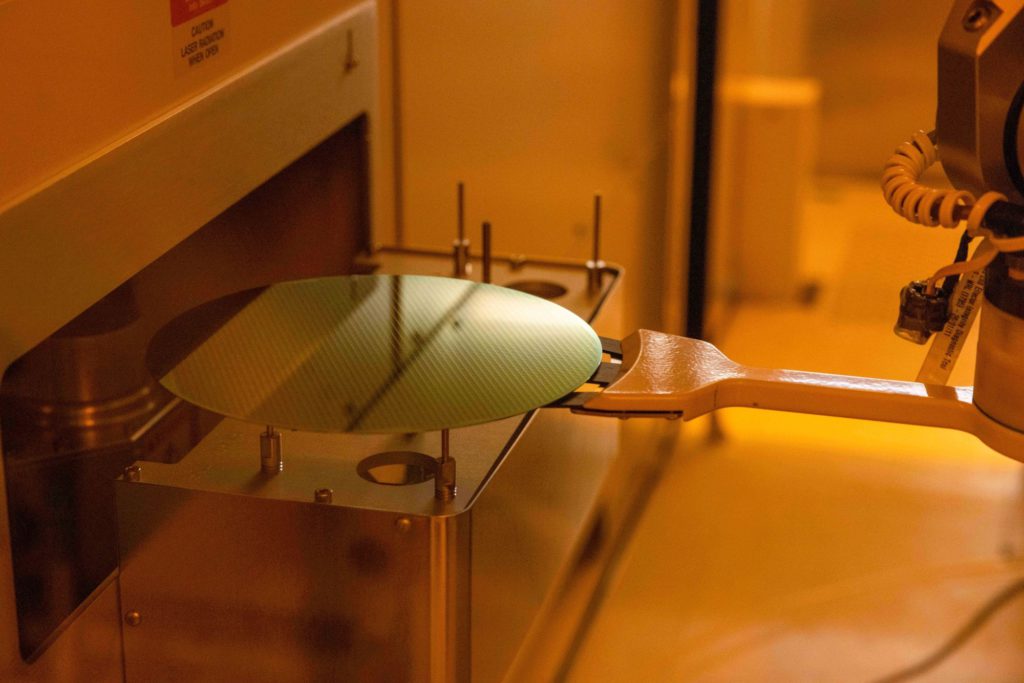
Newport Wafer Fab makes silicon wafers on which microchips are etched. These chips are assembled in Asia and are largely used in simple applications like power switches, many of which go into cars. The facility has passed through a series of international owners since it was founded in 1982 and was bought by Nexperia in 2021 from former manager Drew Nelson.

Part of the controversy concerned the company’s largely unused facility at the site, which was at one point set to become the nucleus for more sophisticated “compound” chips used in technology such as facial recognition, 5G and electric vehicles. Since the deal, Newport only makes chips for its Chinese owner’s needs and has said it would need a viable business plan to prepare the facility to make the compound semiconductors.

–With assistance from Ellen Milligan.

More stories like this are available on bloomberg.com

©2022 Bloomberg L.P.

Close Bitnami banner
Bitnami
