Bloomberg

First Solar Picks Alabama for $1.1 Billion Panel Factory

(Bloomberg) — First Solar Inc., the biggest US panel manufacturer, plans to build a $1.1 billion factory in Alabama, a major domestic investment that follows passage of a landmark climate law.

The plant in Lawrence County is expected to be operational by 2025 and have an annual capacity equivalent to 3.5 gigawatts, according to a statement Wednesday. 

The Alabama factory continues a trend of states in the US South and Midwest winning new solar, battery and electric-vehicle investments, signaling a shift in the politics of clean energy. While no Republicans in Congress supported President Joe Biden’s recently signed climate bill, GOP-led Alabama, Tennessee and Ohio have been among states pursuing clean-tech factories.

Read: Every politician wants green jobs in this bitter US battleground

In August, First Solar said it expected to invest about $1.2 billion to expand US manufacturing. The company last month said it would open a $270 million research and development center in Ohio.

More stories like this are available on bloomberg.com

©2022 Bloomberg L.P.

China’s Covid-Zero Lockdown in Xinjiang Has Just Hit 100 Days

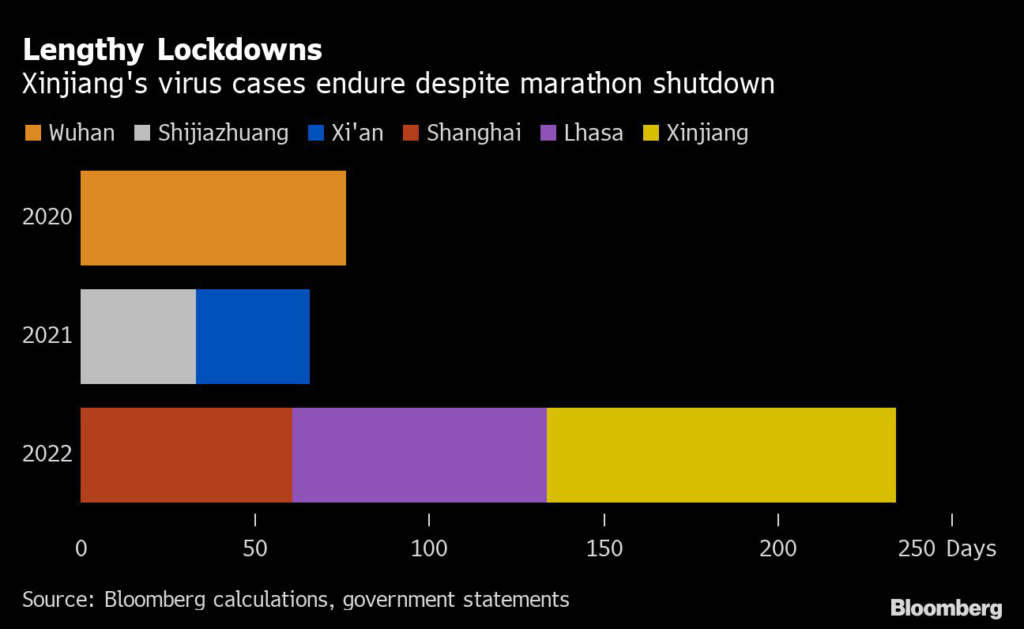
(Bloomberg) — It’s China’s longest pandemic lockdown, and probably its least well-known. But residents in the country’s dry and mountainous far west have just marked 100 days of living under some of the toughest, and most strictly enforced, Covid Zero measures in the world.

Urumqi, the capital of the sprawling Xinjiang region, imposed its first major lockdown measures on Aug. 10. Despite initial success in bringing a flareup back to single digits, an uptick in cases at the end of September prompted the entire region — roughly the same size as Alaska — to halt travel services early last month, essentially sealing itself off from the rest of China to contain virus spread.

“Most people wouldn’t have imagined the lockdown could continue for this long,” said a 21-year-old university student who spent months sealed in his home in the city of Yining, near the border with Kazakhstan, and has now spent nine days in a quarantine center before being allowed to leave the city. He asked not to be identified because discussions about Xinjiang and his ethnic group are sensitive.

Read more: China’s Most Locked-Down City Shows Perils of Endless Covid Zero

The aggressive moves haven’t quelled rising daily case numbers, which hit more than 800 this week. But the marathon lockdown now clashes with an overhaul of China’s pandemic response to balance stamping out the virus with minimizing hardships on residents. Major cities are using more targeted measures even with thousands of new infections each day, avoiding city-wide lockdowns and reining in mass testing.

In Xinjiang, there aren’t yet similar shifts. Its size, remoteness and lack of economic and political sway mean officials are leaning on the harshest of policies to prevent their health-care system from being overwhelmed. With optimism building that President Xi Jinping is softening China’s pandemic response, the region’s continued outlier status underscores the challenging and uneven path the world’s second-biggest economy faces as it contemplates a Covid Zero exit.

Even within Xinjiang, easing prospects vary from place to place. Urumqi remains under lockdown, along with most of the rest of the region, while Yining just lifted its months-long shutdown on Wednesday morning.

“They can only take such simplified and brutal measures,” said Huang Yanzhong, a senior fellow for global health at the New York-based Council on Foreign Relations. “The lack of financial and bureaucratic capacity at municipal levels also means there aren’t enough supporting measures when implementing the lockdowns. The discrepancy between policy objectives and actual capability is huge. Covid Zero is much less effective in undeveloped places, and could bring larger humanitarian loss.”

Crackdown

Many cities in China have dealt with harsh lockdowns during the pandemic. Shanghai residents struggled to get food and medicine, Tibet’s capital of Lhasa reported a series of suicides, and people in Xi’an reported miscarriages and deaths after hospitals denied care. 

But Xinjiang’s experience stands out for authorities’ exceptionally tight control over its 26 million residents, more than half of whom are from ethnic minorities, chiefly Uyghurs who have been at the center of a long-running crackdown that the United Nations has said may amount to crimes against humanity. Officials have utilized the web of surveillance, arbitrary detention and repressive policies put in place by Beijing before the pandemic — for what the government says is a fight against terrorism and religious extremism — to apply Covid Zero measures. 

The Xinjiang government didn’t immediately respond to a fax seeking comment on the region’s Covid measures. At a briefing earlier this week, local officials said multiple areas face heightened risk of a virus resurgence, and authorities have vowed to implement the optimized virus policies issued by the central government.

“The political imperative for Covid Zero measures is enhanced in Xinjiang by the extreme securitization of the region,” said Michael Clarke, a senior fellow at the Australian Defence College’s Centre for Defence Research, who researches Xinjiang. A major theme of Xi’s leadership has been to emphasize that the region is part of China, and there’ll be no ‘coddling’ in the name of ensuring ethnic minorities stay quiescent, he said.

That’s made publicizing Xinjiang’s lockdown difficulties a risky endeavor. Awareness across the rest of China that the region has been under such a long lockdown is low, while police have clamped down on attempts to bring attention to the crisis. Authorities are investigating three people for disrupting public order after they posted comments during official livestreams, including one person who typed “Urumqi” during a State Council broadcast.

“Any issue related to Xinjiang is categorized as ‘sensitive’ in China, which has led to the strict censorship on everything people post or media coverage,” said the university student from Yining, who was in Shanghai for the financial hub’s lockdown in April and May. “Most people have forgotten about Xinjiang already.”

What manages to trickle through China’s censors shows dire conditions and fueled rare solidarity between Uyghurs and ethnic Han who make up more than 90% of the country’s total 1.4 billion population.

A recent video circulating online, which couldn’t be verified by Bloomberg News, allegedly shows people trying to leave Xinjiang by walking through the desert. Authorities in Xinjiang have previously said they’d take action to facilitate people wanting to leave, while also helping migrant workers stranded by the lockdown. Another video, which also couldn’t be verified, showed PPE-clad authorities strictly enforcing travel curbs.

Conditions inside quarantine centers are grim. The student, who is staying in a facility before he returns to Shanghai for his studies, estimates his location can house 3,000 people and is in the “wilderness of Xinjiang.” The beds are stiff and mice constantly visit through a crack in the corner, he said.

A Uyghur woman living in the US, who asked not to be identified to protect the privacy of her family in Urumqi, has been checking in on her parents from afar. When she told her father that she was sorry about what he’d had to endure, he told her things were nonetheless “way better” than 2017 — the time he was taken to a detention camp. A 2019 UN assessment said an estimated 1 million people have been detained.

No Visitors

There’s at least one sign that travel difficulties may improve as China removes a prohibition on cross-provincial tours from high-risk areas. 

But it’s not certain how, or when, officials on the ground will implement directives from the government and, for now, visiting Xinjiang is difficult. Among the country’s 27 biggest airports, Urumqi had the second-fewest completed flights on Nov. 16, at just 4.42%, according to data provider Variflight.

It’s also unclear what measures authorities could roll out to handle an inevitable surge in infections should they lift all lockdowns given the region, like many other remote parts of the country, remains under-resourced.

“I’m suffering from fear and under grave pressure,” said the university student. “I can’t sleep or eat well, or concentrate on anything for a long period of time.” 

–With assistance from Jinshan Hong and Linda Lew.

More stories like this are available on bloomberg.com

©2022 Bloomberg L.P.

Amazon Employees Fear ‘No One Is Safe’ as Layoffs Roil the Ranks

(Bloomberg) — “No one is safe.” 

So wrote an Amazon.com Inc. employee on an internal chat room as the company began the largest round of layoffs in its history. The mood, especially in the hard-hit devices team, reflected the shock and dismay of people more accustomed to growing budgets and moonshots than talk of recession and austerity. 

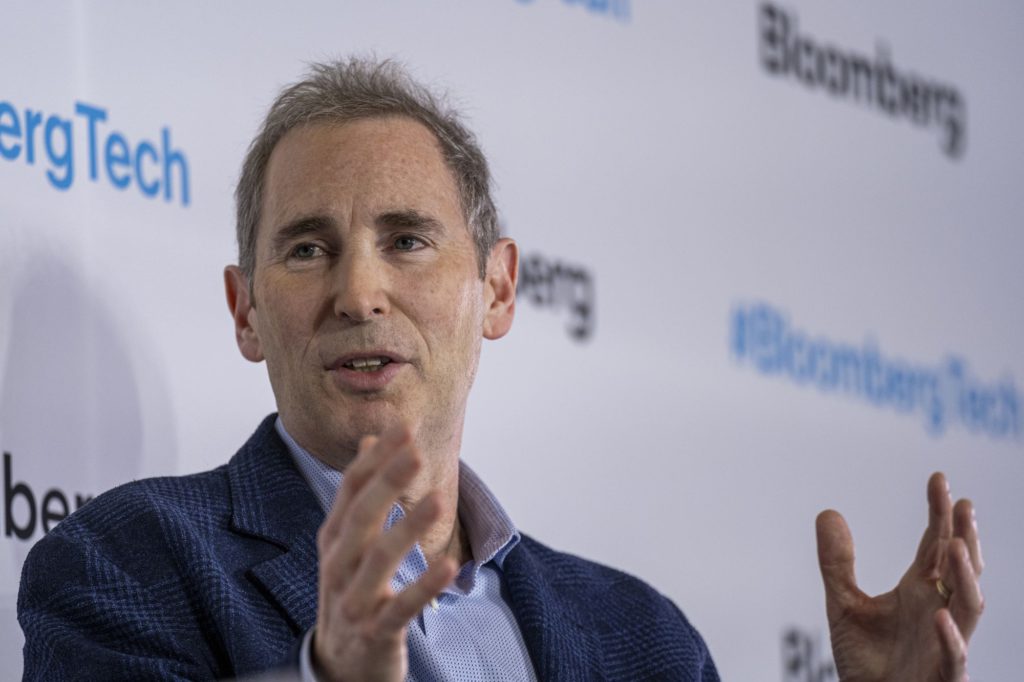
Devices chief Dave Limp, in a note to his team on Wednesday, said the firings pained him. He pledged severance payments for people who can’t find other jobs inside the company. But for many recipients his note was little consolation, and some wondered why Chief Executive Officer Andy Jassy, considered by some a gentler touch than predecessor Jeff Bezos, hadn’t addressed the troops the way Mark Zuckerberg did when announcing job cuts at Meta Platforms Inc. 

Lacking clarity from managers, employees are seeking clues from one another about which team or worker could be the next one cut. Those fearing the ax are asking those who have been fired to describe subject lines in emails from human resources or other warning signs. Some workers complained that they couldn’t concentrate fearing they might be let go at any minute.

“The lack of transparency from leadership is frankly disgusting,” one employee wrote in an internal chat, reviewed by Bloomberg. “How can we expect to be Earth’s Greatest Employer if literally everyone in the company is trying to figure out if they will be keeping their jobs.” Amazon, through a spokeswoman, declined to address employee concerns about Jassy not addressing staff.

Amazon spent much of the last two decades in growth mode, spending billions on new warehouses, cloud-computing data centers and hiring to back a range of bets. Investors trusted that Bezos, who had preached building long-term value since the company’s initial public offering, would make that pay off in the long run.

Jassy doesn’t have that luxury, contending with a stock market that has soured on the tech titans. It’s a double whammy for Amazon, which had long relied on its soaring stock price to help compensate employees who might command higher salaries at better-paying rivals. The shares, down 42% so far in 2022, are lagging behind the S&P 500 for a second consecutive year, something that hasn’t happened since the dotcom bust.

With growth now slowing, the Seattle-based company plans to cut about 10,000 jobs, Bloomberg reported earlier this week, the deepest such retrenchment since the dot-com bust more than 20 years ago. 

Limp’s team handles devices such as the Echo smart speaker and the Alexa voice-activated platform. He said the team would remain a key area of investment for the company. Bloomberg also reported that in addition to Limp’s team, layoffs were likely within the retail division and human resources.

Some longtime Amazon employees, speaking on condition of anonymity to discuss an internal matter, said the cost-cutting in the last few months has been the most severe they’ve ever experienced.

Young staffers experiencing their first layoff got boosts from more seasoned colleagues, who told them they would find opportunities elsewhere. And people offered their condolences in the form of weeping emojis to a pregnant worker who said she had been laid off.

Some resorted to humor, writing of being “promoted to customer.” Some joked about being escorted out of the building after an Amazon human resources person had “shoved a banana in my mouth.” It was a reference to the free fruit Amazon gives out in front of its headquarters — a rare perk for a company that has long shunned the free lunches and massages common in Silicon Valley.

Amazon spokeswoman Kelly Nantel said the company is making cuts owing to the “current macro-economic environment as well as several years of rapid hiring.”

“We don’t take these decisions lightly, and we are working to support any employees who may be affected,” she said.

But the prevailing sense inside Amazon was that executives could have handled the layoffs more humanely.

“It’s all gone down very secretly,” said one employee who lost their job. “On Tuesday, some of us got meeting requests from human resources and a manager, and that was a dead give-away.” This person said the meeting lasted about 10 minutes. 

–With assistance from Matt Day.

(Updated with context and share performance starting in sixth paragraph.)

More stories like this are available on bloomberg.com

©2022 Bloomberg L.P.

Crypto Lender BlockFi Plans Bankruptcy Filing Within Days in FTX Fallout

(Bloomberg) — Cryptocurrency lender BlockFi Inc. is preparing to file for bankruptcy within days, according to people with knowledge of the matter who asked not to be named because discussions are private. 

The crypto lender paused client withdrawals, citing uncertainties with FTX, while saying it had adequate liquidity and was exploring options with outside advisers. 

A representative for BlockFi declined to comment. The Wall Street Journal earlier reported that the company was weighing a bankruptcy filing. 

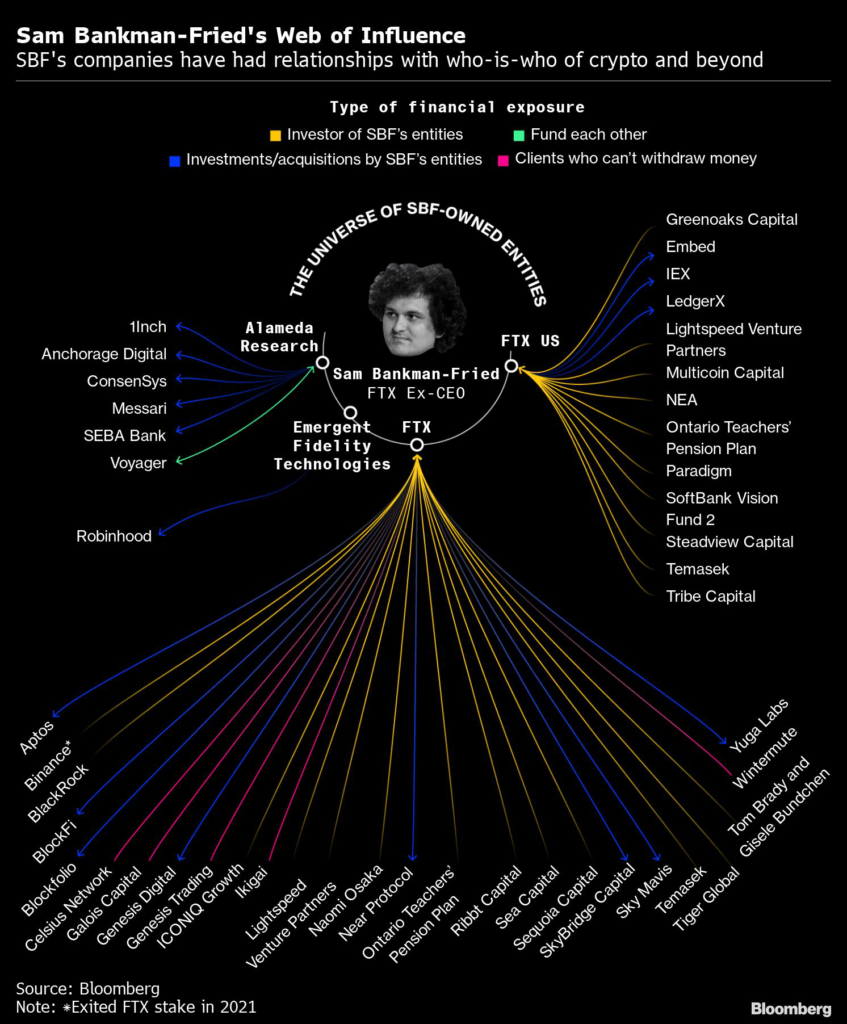
FTX US and BlockFi are closely tied. In July, FTX US provided the lender with a $400 million revolving credit line, which came with an option to purchase the company. And BlockFi has given loans to now-bankrupt Alameda Research, Bloomberg reported. 

The sudden unraveling and subsequent bankruptcy of FTX — once seen as a savior to struggling crypto firms — is reverberating across the digital asset landscape. Bankrupt Voyager Digital Ltd., which Sam Bankman-Fried was going to rescue in a $1.4 billion deal, is now scrambling to find a replacement buyer for its assets. And Genesis is exploring options after suspending redemptions and new loan originations amid a liquidity shortfall.  

–With assistance from Yueqi Yang and Hannah Miller.

More stories like this are available on bloomberg.com

©2022 Bloomberg L.P.

FTX, Bankman-Fried to Face Congressional Scrutiny Over Collapse

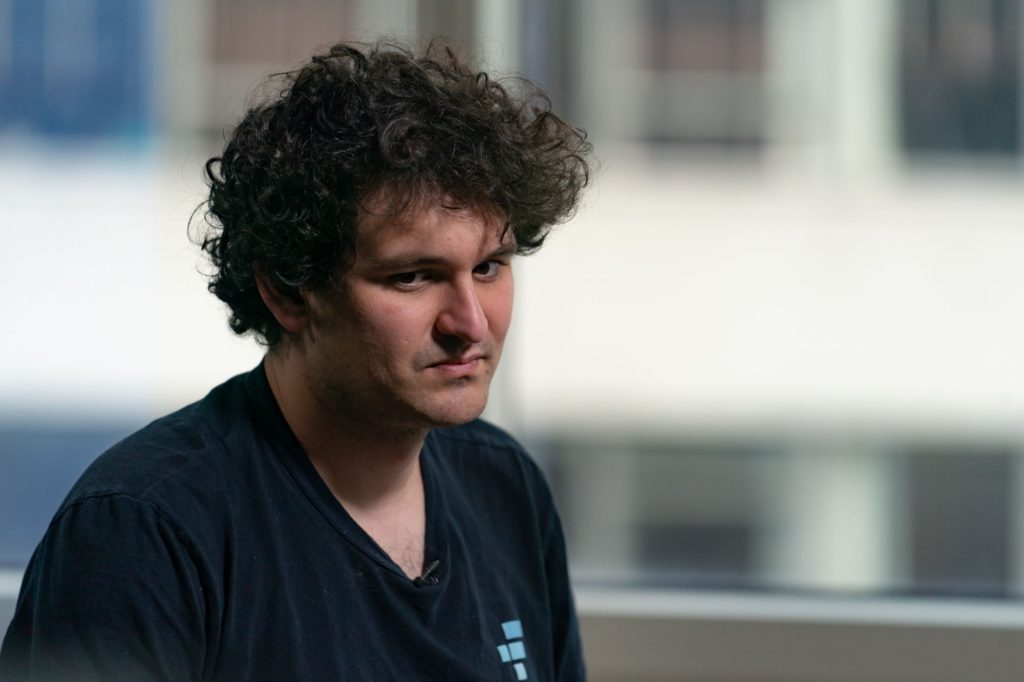
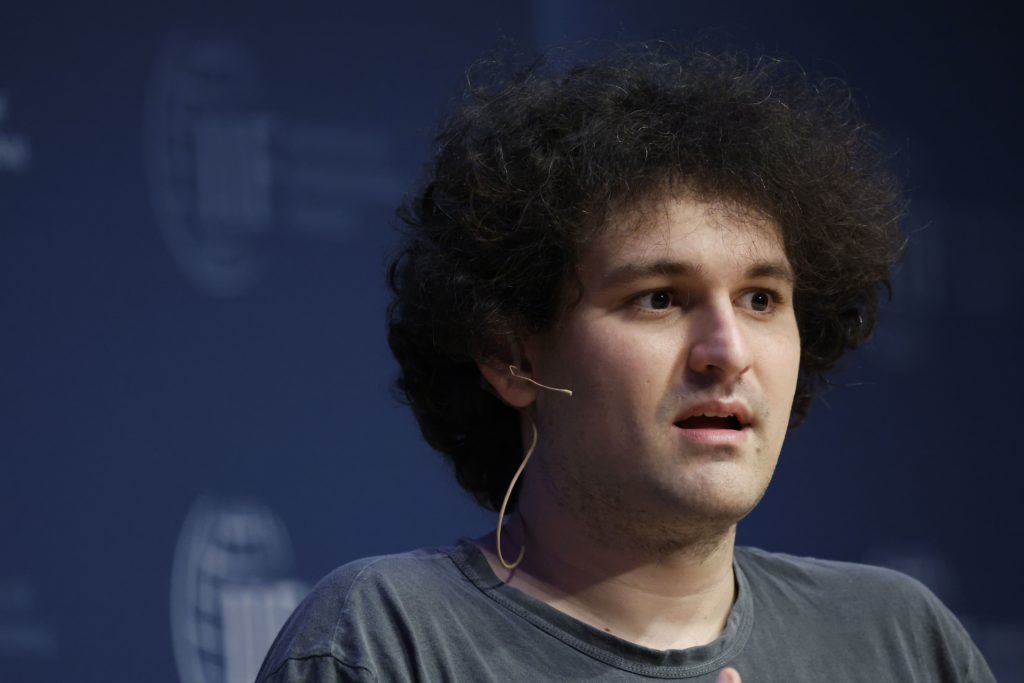
(Bloomberg) — Bankrupt crypto exchange FTX and its former chief executive officer, Democratic mega-donor Sam Bankman-Fried, will be in congressional cross hairs next month as House and Senate panels probe the company’s collapse.

The House Financial Services and Senate Banking committees plan December hearings that will look at FTX’s sudden demise and its ripple affects in the broader digital asset industry. Democrats and Republicans alike have expressed anger about the current state of the crypto marketplace.

“They really haven’t justified why they exist,” Banking Chair Sherrod Brown said Wednesday about the crypto industry. “It’s sort of a scam in too many cases.”

Brown said he particularly wants to hear from the US Securities and Exchange Commission and other industry regulators in his panel’s hearing. Both Republicans and Democrats say the FTX collapse points to mismanagement and a lack of oversight of the crypto industry. 

Financial Services Chair Maxine Waters said she would seek testimony from Bankman-Fried, his trading house Alameda Research, rival exchange Binance, as well as other FTX employees. In a rare show of bipartisanship, Waters announced the hearing alongside her GOP counterpart, Patrick McHenry, blasting FTX for posing “tremendous harm.” They pledged to hold “bad actors” accountable.

Despite the cross-party fervor for oversight, GOP members have been quick to note Bankman-Fried’s nearly $40 million in contributions in the midterms, making him Democrats’ second-largest donor.

“The ‘effective altruism’ that Democrat megadonor Sam Bankman-Fried peddled is perfectly in line with the radical left’s efforts to redefine a corporate purpose,” Representative Andy Barr, a Kentucky Republican, said. “The House Financial Services Committee will work to expose any impropriety that led to this historic collapse.”

The hearings are the latest in a series of bad news for Bankman-Fried, an American who lives in the Bahamas. American and Bahamian authorities have been discussing the possibility of bringing him to the US for questioning.

Representative Tom Emmer, who will be a member of House Republican leadership in the next Congress, said he’s not jumping to conclusions about Bankman-Fried. 

“I want to wait and see what the facts are,” he told reporters after speaking at a Blockchain Association event in Washington. “It doesn’t look good, but I’m not going to pass judgment until we see what the details are.” 

Since FTX filed for bankruptcy earlier this month, other companies with exposure to the exchange have announced financial strain, including BlockFi Inc. and Voyager Digital Ltd. 

This round of hearings is not likely to be the last on the topic. Francesco Castella, senior policy advisor to Financial Services  member Ted Budd, said at the Blockchain Association event that he expects there will be additional hearings on the FTX fallout next year.

More stories like this are available on bloomberg.com

©2022 Bloomberg L.P.

Wall Street’s Silencing of Sexual Harassment Curbed by US ‘Speak Out Act’

(Bloomberg) — A major hurdle for employees who want to speak out about workplace sexual harassment is poised to be removed — with significant ramifications across Wall Street, which has lagged behind the rest of corporate America in scaling back nondisclosure agreements.

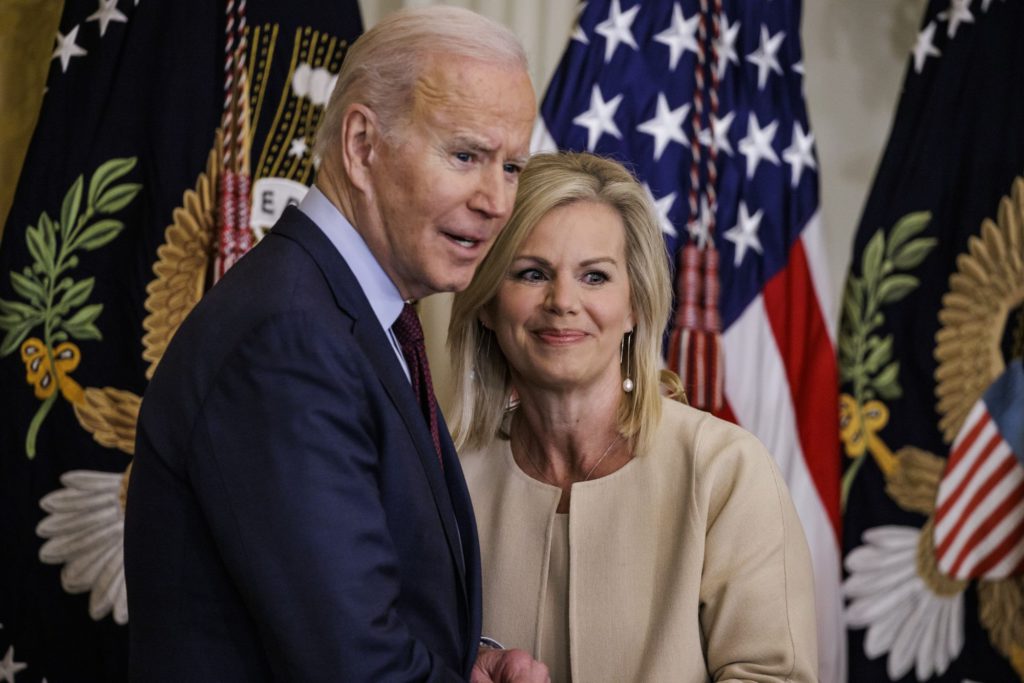
President Joe Biden is expected to sign the so-called Speak Out Act after the bill was passed by the House on a 315-109 vote Wednesday and approved by the Senate in September. The new law will prohibit employers from enforcing nondisclosure agreements and non-disparagement clauses — often signed on the first day of employment, and sometimes unknowingly — that stop workers from discussing any incidents of sexual harassment or assault occurring months or years later.

The new law could have a broad impact on Wall Street, where all but one of the six biggest US banks are run by men, and issues of gender discrimination and inequality have proliferated for decades.

Confidentiality agreements can still be found in employment contracts at boutique hedge funds, private equity firms, and other smaller finance firms, according to Wigdor LLP partner David Gottlieb, who has represented workers at major banks. Companies such as Salesforce Inc. and Microsoft Corp., meanwhile, have limited their employee agreements to make misconduct easier to report and more transparent.

“It is so inane that NDAs can be this vast,” former Fox News anchor Gretchen Carlson, an early figure in the #MeToo movement, said in an interview. Her policy group, Lift Our Voices, backed the bill. “It’s even hard to describe — you can’t believe that all of these people are silenced on the first day.”

Long History

The history of sexual harassment on Wall Street is a long one and spans the industry. Goldman Sachs Group Inc. paid more than $12 million to keep quiet allegations that top executives made vulgar and dismissive comments about women, Bloomberg News reported this week. Employees of firms including Cantor Fitzgerald and Morgan Stanley have complained over the years of being sexually harassed at work.

A state law in New York limits confidentiality linked to settlement agreements, allowing for it only if the employee bringing the complaint wants it and calling for a 21-day waiting period to consider the option. The new federal law fills in gaps left by the state legislation, nullifying agreements signed before any harassment arises, and applies to more workers by reaching across the nation.

“It was a hole that was there before, and it should be closed up,” said Samuel Estreicher, a professor at New York University School of Law. “I don’t think there’s any good reason to have that stuff in there anyway.”

The change in legislation also will let employees speak out if they see mistreatment of colleagues, said Julie Roginsky, a Lift Our Voices co-founder and former Fox News contributor.

Witnessing Harassment

“If somebody is sexually harassed in front of others, this law would allow the witnesses to the sexual harassment to also disclose,” she said. “It affects the workplace culture, and this is how you affect the paradigm in the American workplace.”

The new legislation doesn’t apply to all forms of discrimination. A worker covered by an NDA who alleges she was paid less than her male colleagues because of her gender, for example, won’t have any additional freedom to speak out. Other forms of harassment — based on an employee’s race or religion, for instance — also aren’t covered by the new law.

Earlier this year, Biden signed a bill banning mandatory arbitration for workplace sexual harassment and assault claims, allowing them to be heard in court rather than the more-secretive system. That law, much like the legislation passed by the House Wednesday, narrowly pertains to sexual harassment and assault allegations.

With the new law in place, Wall Street firms “are going to have to be more concerned” about sexual harassment, and “upper-level management will have to spend more time to put the message out that we cannot have this happen,” said Merrick Rossein, a professor at the City University of New York School of Law.

“This, in a way, may empower women to have a little more power in the settlement discussions,” he said. “Women can say, for example, ‘I have the ability to disclose this — this is going to cost you more money.’”

More stories like this are available on bloomberg.com

©2022 Bloomberg L.P.

From Genesis to Gemini, How FTX’s Collapse Signals No One Is Safe

(Bloomberg) — The fallout from FTX’s collapse shows few signs of easing as the crypto industry reckons with direct exposures, plunging token prices, and newfound skepticism of even long-established participants.

Less than a week after Sam Bankman-Fried’s empire filed for Chapter 11 bankruptcy, digital-asset brokerage Genesis said it will halt lending redemptions after revealing last week that its derivatives business had $175 million locked in an FTX trading account. Crypto exchange Gemini announced customer withdrawals are being delayed from its yield-generating product, given Genesis’s role as a key partner in the program. And that’s only one slice of the tangle of interconnections in an industry where FTX was a ubiquitous presence.

Hacks, scandals and scams have long shrouded the crypto world. But the fall of one of the most well-known firms in  the industry sends a clear signal: No one is safe. 

Here’s a roundup of the status of the biggest participants in crypto — from the miners to the exchanges, the banks to the token issuers.

Binance

Aside from FTX, no name has been more top-of-mind this week than Binance Holdings Ltd. On Nov. 6, the exchange’s leader, Changpeng “CZ” Zhao, tweeted that he planned to sell a roughly $530 million of FTT, the native token of FTX. Since Bankman-Fried’s undoing, CZ has positioned himself as the industry’s new savior. Binance revealed more than $74 billion worth of assets on its exchange, through data compiled by blockchain data firm Nansen.

Gemini

Gemini Trust Co., the crypto platform run by Tyler and Cameron Winklevoss, said redemption by customers of its program used to earn yields is delayed amid a liquidity crunch at the main borrower of the product, Genesis Global. Other sides of Gemini’s business remain unaffected.

BlockFi Inc.

Troubled crypto lender BlockFi said Monday that it had “significant exposure” to FTX and its related entities. The company halted customer withdrawals last week, citing uncertainty around the status of FTX, FTX US and Alameda Research. BlockFi had been in the process of moving over its assets to FTX for custody, but had not yet shifted over the majority of its holdings. The company had also given loans to Alameda that were over-collateralized with liquid assets, including Robinhood Markets Inc. stock. FTX US offered BlockFi a major lifeline earlier this year by providing a $400 million revolving credit facility in an agreement that included the option to purchase the company.

Tether

Tether, the issuer behind crypto’s largest stablecoin USDT, said in a blog post it had no exposure to Genesis or Gemini’s Earn service. Earlier this month as FTX careened toward filing for bankruptcy, the issuer said it had not extended any credit toward the exchange or Alameda Research. The platform has, however, experienced an increase in users redeeming their USDT tokens and slight instability in its peg to the dollar, with more than $3 billion wiped off its circulation since Nov. 6.

Circle

Circle, the US payments group which issues and operates the USDC stablecoin, has been relatively isolated from contagion surrounding FTX’s collapse despite the fact that FTX was an investor in its business. Its CEO Jeremy Allaire said earlier this month that it holds no material exposure to FTX or Alameda. 

Nexo

Crypto lender Nexo Inc. said in a tweet that it holds zero exposure to Genesis, Gemini or BlockFi, in addition to earlier statements that it holds no exposure to FTX or Alameda. Last month, Nexo executives fended off suggestions that it was headed for insolvency, following the announcement of several cease-and-desist orders against the business in eight US states. Nexo co-funder Antoni Trenchev said in a text message on Wednesday that the contagion from FTX’s collapse “might get worse before it gets better.”

MicroStrategy

MicroStrategy Inc., the world’s largest publicly traded corporate owner of Bitcoin, has been hard hit by plunging digital asset prices, despite co-founder Michael Saylor’s buy-and-hold blueprint. The company’s Bitcoin holdings have sunk by more than $1.8 billion, or about half the aggregate average purchase price. The company’s shares have also tumbled by about 70% this year.   

Hut 8

Hut 8, a major public crypto-mining company, entered into a master lending agreement providing Genesis with a 1,000 Bitcoin unsecured loan. But it recalled the investment from Genesis in May, the company said. Hut 8 has tumbled nearly 83% along with Bitcoin’s sharp decline this year. However, it has been one of the better-performing mining stocks and one of the few miners that do not have to sell any Bitcoin on its balance sheet to stay afloat.

Core Scientific

Core Scientific, the largest Bitcoin miner by computing power, entered into a credit facility with Genesis in July 2020, which provided capacity of up to $13 million to finance the miner’s acquisition of equipment. The loans under the credit facility are secured by the blockchain computing equipment with terms of 20 months. Core Scientific did not immediately respond to a request for comment regarding any potential exposure to Genesis. 

Kucoin

Crypto exchange Kucoin, with roots in China, said it will publish its proof of total assets it holds on the exchange for customers by early December through a third-party auditor. The Seychelles-based platform is one of the top five exchanges by trading volume. 

OKX

Crypto exchange OKX, through Nansen, disclosed its reserve of more than $5 billion. The former China-based exchange is also in the top five worldwide in terms of trading volume.

Huobi

Huobi, also started in China, disclosed its balance on Nov. 12, which is estimated at a value of $3.8 billion.  

–With assistance from Emily Nicolle, Muyao Shen, Olga Kharif, David Pan and Kyle Kim.

More stories like this are available on bloomberg.com

©2022 Bloomberg L.P.

FTX and Star Backers Including Brady, Curry Sued by Investor

(Bloomberg) — FTX and former chief executive officer Sam Bankman-Fried were sued by an investor over claims that the cryptocurrency exchange now in crisis targeted “unsophisticated investors” using celebrity endorsers including Tom Brady and Stephen Curry, who are also named as defendants.

In a complaint filed Tuesday in federal court in Miami, Oklahoma resident Edwin Garrison is asking to represent a class of “thousands, if not millions, of consumers nationwide.” That includes all investors in the US who were enrolled in yield-bearing FTX crypto accounts, which he alleges constitute unregistered securities in violation of US and Florida laws.

Garrison claims FTX used celebrities, who along with Brady and Curry also included Gisele Bundchen and Shaquille O’Neal, to promote the exchange’s unregistered securities and funnel investors into a Ponzi scheme. Football star Brady and his then-wife Bundchen filmed a commercial called “FTX. You In?” that showed them encouraging acquaintances to join the platform, according to the complaint.

Lawyers for FTX didn’t immediately respond to emails seeking comment on the suit. Representatives of Brady and Bundchen didn’t immediately respond to emails.

Read More: Sam Bankman-Fried Facing Possible Trip to US for Questioning 

“FTX’s fraudulent scheme was designed to take advantage of unsophisticated investors from across the country, who utilize mobile apps to make their investments,” Garrison said in the suit. “As a result, American consumers collectively sustained over $11 billion” in damages. 

Garrison’s legal team said in the lawsuit that it had found “many incriminating FTX emails and texts” but didn’t say what was in them or what made them incriminating. 

The suit, which seeks unspecified damages, is the first to be filed against Bankman-Fried and his companies since FTX’s bankruptcy court filing, as investors start jockeying to recover whatever losses they can. The bankruptcy filing for protection from creditors may limit Garrison and others in efforts to get their money back. FTX and its related companies may have more than a million creditors, according to court filings. 

Celebrities have been sued in other cases claiming crypto losses. Kim Kardashian and Floyd Mayweather Jr. were named as defendants in a suit accusing them of scamming investors in a cryptocurrency called EthereumMax. The two celebrities won a tentative ruling last week to dismiss the suit.

Garrison is represented by the Boies Schiller Flexner law firm and by Adam Moskowitz, a Florida lawyer who last December filed a suit against crypto broker Voyager Digital Ltd., alleging it misled customers by charging hidden fees on transactions. Voyager opposed the claims. That case has been delayed by Voyager’s own bankruptcy court filing. 

Meanwhile, the collapse of FTX has thrown a wrench into Voyager’s plan to sell its assets to the company for $1.4 billion.

The case is Garrison v. Bankman-Fried, 22-cv-23753, US District Court, Southern District of Florida (Miami).

(Updates with background on other crypto lawsuits.)

More stories like this are available on bloomberg.com

©2022 Bloomberg L.P.

FTX Latest: Bankman-Fried Was Wrong About Exchange’s Leverage

(Bloomberg) — Former FTX CEO Sam Bankman-Fried said in a tweet that he made a mistake on the cryptocurrency exchange’s leverage levels. It was $13 billion, not about $5 billion. 

Separately, Gemini Trust Co., the cryptocurrency platform run by the Winklevoss brothers. said in a tweet that its exchange is fully back online hours after the company said it paused withdrawals on its lending program. Gemini is a lender to crypto brokerage Genesis, which suspended redemptions at its lending business after facing what it described as “abnormal withdrawal requests” in the aftermath of the collapse of FTX. 

Meanwhile, Singapore’s state-owned investor, Temasek International, invested $200 million to $300 million in cryptocurrency giant FTX before its implosion and is preparing to write down the entire bet, people familiar with the matter said.

The fallout from the crisis is threatening the future of crypto lenders like BlockFi Inc. and Voyager Digital Ltd. Digital-asset markets extended losses Wednesday morning, with Bitcoin down 2% at 1:34 p.m. New York time.


Key stories and developments:

  • Singapore’s Temasek to Write Down Over $200 Million in FTX
  • FTX Leaves an Empty Black Box Where Due Diligence Used to Be
  • FTX Hacker Emerges With a $288 Million Stash of the Token Ether
  • Matter Labs Raised $200 Million Just Before Crypto Market Chaos
  • FTX’s Crypto Kids Came Dangerously Close to Upending Futures

(Time references are New York unless otherwise stated.)

SBF Mistaken About FTX’s Leverage Levels (2:25 p.m.)

Bankman-Fried says he was mistaken about the cryptocurrency exchange’s leverage levels, thinking it was about $5 billion when it was $13 billion. 

In his latest series of tweets explaining how FTX imploded, Bankman-Fried says the company got “overconfident and careless.”

Gemini Exchange Back Online (1:31 p.m.)

Gemini says its exchange is fully back online and that all customer funds held on it are “available for withdrawal at any time,” it said in a tweet.

Senate Banking Committee Hearing (1:18 p.m.)

Senate Banking Committee Chairman Sherrod Brown said he plans a hearing on the FTX exchange collapse before the end of the year.

Genesis Hires Alvarez, Cleary Gottlieb (10:29 a.m.)

Crypto brokerage Genesis is working with financial and legal advisers to explore options as it halts redemptions and originations at its lending business amid a liquidity crunch. 

The company hired Alvarez & Marsal and law firm Cleary Gottlieb Steen & Hamilton for advice, according to a spokesperson for Digital Currency Group, the parent of Genesis.

Jay Sidhu’s Bank Says It Dodged the Crash (10:02 a.m.)

No US regional bank stock climbed higher during last year’s crypto mania than Customers Bancorp Inc. Now, the bank built by finance veteran Jay Sidhu and other firms riding the digital wave are trying to distance themselves from the crisis created by the unraveling of FTX’s empire.

“We have no exposure associated with FTX,” Sam Sidhu, Customers Bancorp’s chief executive officer and Jay Sidhu’s son, said in an interview, emphasizing his bank’s exposure was limited because it’s a “new entrant” in the market. “We’re still building our business and taking market share, and people are migrating over to us.”

Hearing Set for December (10:01 a.m.)

The House Financial Services Committee will hold a hearing in December on the collapse of cryptocurrency platform FTX, according to committee statement. 

FTX and Celebrity Backers Sued (9:15 a.m.)

FTX and former chief executive officer Sam Bankman-Fried were sued by an investor over claims that the cryptocurrency exchange now in crisis targeted “unsophisticated investors” using celebrity endorsers including Tom Brady and Stephen Curry, who are also named as defendants.

In a complaint filed Tuesday in federal court in Miami, Oklahoma resident Edwin Garrison is asking to represent a class of “thousands, if not millions, of consumers nationwide.” That includes all investors in the US who were enrolled in yield-bearing FTX crypto accounts, which he alleges constitute unregistered securities in violation of US and Florida laws.

Winklevoss’ Gemini Pauses Withdrawals (8:35 a.m.)

Gemini Trust Co., the cryptocurrency platform run by the Winklevoss brothers, has halted withdrawals from its Earn program after partner Genesis Global did the same. 

This does not impact any other Gemini products and services, the company said in a statement.

Genesis Suspends Withdrawals (8:00 a.m.)

Crypto brokerage Genesis is suspending redemptions and new loan originations at its lending business after facing what it described as “abnormal withdrawal requests” in the aftermath of the collapse of FTX. 

The withdrawal requests exceeded current liquidity at Genesis Global Capital, the lending arm, according to interim Chief Executive Officer Derar Islim. Genesis has hired advisers to explore all possible options, including raising new funding, and will deliver a plan for its lending business next week, Islim said.

Temasek Takes a Hit (6:45 a.m.)

Temasek invested between $200 million and $300 million in FTX before its implosion, according to people familiar with the matter.

Temasek is now preparing to write off the entire amount, one of the people said, asking not to be identified as the matter is private. Another backer, Sequoia Capital, wrote down the full value of its $214 million bet on the exchange, while a person with knowledge of the situation said SoftBank Group Corp. is expecting a loss of around $100 million on its investment. 

FTX Hacker’s Haul (6:05 p.m. HK)

The hacker who raided Sam Bankman-Fried’s collapsed crypto exchange FTX is now one of the world’s biggest holders of the token Ether.

A wallet linked with the exploit swapped about $49 million of stablecoins — mainly Dai — for Ether on Tuesday, security specialists PeckShield said. 

Wallets on FTX were drained of over $663 million in tokens, with $477 million of that suspected to have been stolen and the remainder moved into secure storage by FTX, according to blockchain specialist Elliptic.

Novogratz Warns Worst May Lie Ahead  (6 p.m. HK)

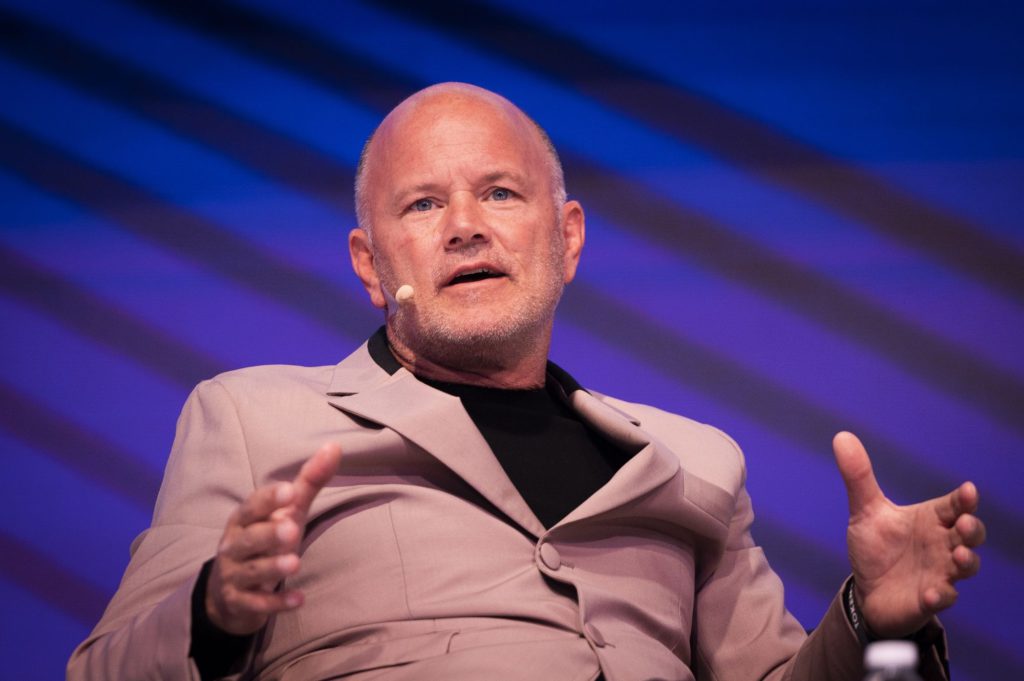
Mike Novogratz said the worst of the crypto crisis in the wake of the FTX exchange’s collapse may yet unfold. Galaxy, the crypto financial services firm founded by Novogratz, last week disclosed $76.8 million in exposure to FTX.com

Novogratz was speaking at a conference on Wednesday alongside Binance Holdings Ltd.’s Chief Executive Officer Changpeng ‘CZ’ Zhao. The Binance CEO said he saw a lot of investor interest in a crypto industry recovery fund he plans to set up to assist otherwise strong projects that are facing a liquidity squeeze. 

Crypto Exchange AAX Needs Capital (5:55 p.m. HK) 

Resuming operations on the cryptocurrency exchange AAX depends on whether it can raise funds, the company said. Hong Kong-based AAX suspended withdrawals on Monday citing a glitch in a system upgrade.

“If AAX is unable to secure funding to enable us to restart operations, AAX is committed to initiating legal procedures to secure and ensure the distribution of asset,” the company said. 

Most Bitcoin Retail Buyers Lost (2:20 p.m. HK)

A study of how retail investors use cryptocurrency exchange apps suggests about three-quarters have lost money on Bitcoin, according to the Bank for International Settlements.

Data spanning 95 countries from 2015 to 2022 indicates the vast majority of app downloads occurred when Bitcoin’s price was above $20,000, the working paper from the Basel, Switzerland-based BIS says.

The world’s largest token has plunged over 70% from a record hit about a year ago, pressured by rapidly tightening monetary policy and a series of huge blowups at crypto outfits, most recently FTX.

FTX Digital Markets Files for Chapter 15 (noon HK)

Bahamas-based FTX Digital Markets Ltd. has submitted a Chapter 15 petition for recognition of a foreign proceeding in the Southern District of New York, according to a filing on the court’s website.

It’s a subsidiary of FTX Trading Ltd., which filed for Chapter 11 bankruptcy on Nov. 11.

–With assistance from Amanda Fung, Sidhartha Shukla and Suvashree Ghosh.

More stories like this are available on bloomberg.com

©2022 Bloomberg L.P.

Novogratz’s Galaxy Has No Exposure to Genesis Lending, Gemini’s Earn Program

(Bloomberg) — Galaxy Digital Holdings Ltd., the crypto financial services firm founded by billionaire Michael Novogratz, has no exposure to Genesis’s lending business and Gemini Trust Co.’s Earn program, it said in a statement. 

“Galaxy continues to manage risk prudently and remains well-positioned to help clients navigate the current market environment,” a spokesman for the firm said. 

The fallout from the rapid collapse of Sam Bankman-Fried’s FTX is spreading across the crypto world. Genesis is suspending redemptions and new loan originations at its lending business after the unit faced withdrawal requests that exceeded current liquidity. Gemini Trust, founded by Cameron and Tyler Winklevoss, subsequently announced its yield product for retail investors will also halt redemptions as Genesis was a key partner in the program. 

Galaxy earlier disclosed $76.8 million of exposure to FTX.com.

More stories like this are available on bloomberg.com

©2022 Bloomberg L.P.

Close Bitnami banner
Bitnami