Bloomberg

Bahamas Crypto Advocates Undeterred Despite FTX’s Downfall

(Bloomberg) — Bahamas Prime Minister Philip Davis isn’t backing away from his country’s bid to be a hotbed for digital-asset companies, even as the collapse of FTX rattles crypto investors worldwide.

In an address to parliament on Wednesday, Davis said that his government hasn’t found issues with its regulatory framework that could have helped avoid the turmoil. Rather, Davis said, the rules that the Bahamas has in place let regulators take “immediate steps in order to protect the interests of clients, creditors, and other stakeholders globally.” 

Last week’s collapse of FTX has rocked crypto markets around the world and prompted investigations by Bahamian and American authorities. In addition to probing the firm, officials have been looking into whether former Chief Executive Officer Sam Bankman-Fried broke rules.

“I have given directions that these proceedings and investigations are to be of the highest order and given precedence, given the amounts involved and because committed and rigorous oversight is of national importance,” Davis said in remarks for parliament on Wednesday. “I have every confidence that The Bahamas will emerge from the proceedings involving FTX – proceedings taking place here as well as in other jurisdictions — with an enhanced reputation as a solid digital assets jurisdiction,” he added in his prepared remarks. 

The outlook for the burgeoning crypto industry in the Bahamas has been thrust to the forefront by FTX, which had set up a headquarters for its now crumbled global network of businesses in the island nation. Bankman-Fried also moved there and was interviewed by local police on Saturday.

The Bahamas securities regulator announced Nov. 10 that it had frozen FTX assets and that an attorney had been appointed as a provisional liquidator. More than 130 entities tied to FTX.com, FTX US and trading firm Alameda Research Ltd. were included in a bankruptcy filing in the US the following day. 

Davis said on Wednesday that the Bahamas was already planning to update its regulatory framework by the end of the year “to address lessons learned as a result of this year’s crypto winter.” Regarding FTX, he said the government would be coordinating with authorities from other countries and a key priority was “to minimize losses and to mitigate the overall impact caused by any misconduct.”


(Updates with additional comments from Prime Minister Davis in final paragraph.)

More stories like this are available on bloomberg.com

©2022 Bloomberg L.P.

A Flood Cycle Creates Some of the First Permanent Climate Refugees

(Bloomberg) — Physical frailty was the least of it. Yes, the mother was an invalid, out of sight atop the makeshift raft, but the children were bright-eyed and strong. The little ones were up to their necks in the floodwaters, the older girls up to their chest and hauling the raft, on which was stacked all they had left in the world: a couple of chickens, some plastic chairs, buckets, a knife, some rags and clothes. They were exhausted and afraid of the vipers that slipped around them in the water, but they kept moving forward. Their father waded ahead, with their infant brother.

“We are tired of water,” Nyalol Wang called out. She was 28 years old, the oldest sister. She did not know where they were going, they just wanted to find dry land.

That was not easy.

The country, for hundreds of kilometers in every direction, was underwater.

We were traveling in an amphibious vehicle of the United Nations World Food Programme (WFP) when we met the family. The vehicle had large tires and was capable of delivering a ton of food supplies in marshes and swamps. The waterway we plowed down narrowed to the horizon. In normal times it was a dirt road, cut straight through the bush from the town of Bentiu in the Upper Nile State of South Sudan to the River Lol, a distance of some 50 kilometers.

These have not been normal times. South Sudan experienced once-in-a-century rains in 2019, and then again in 2020. In August 2021, with the land saturated even after average rainfall, the White Nile flooded. The Lol was stopped by the weight of the waters. It began to flow backwards and burst its banks — the worst flooding in 60 years. There are some one million people here among the world’s permanently displaced by climate change, alternately at risk from floods and droughts.

The Nile has two main tributaries. The shorter and more voluminous Blue Nile tumbles down from the Ethiopian Highlands, and the longer and more sinuous White Nile flows from Lake Victoria and — crucially — splitting into innumerable channels in the flatlands of the Sudd before flowing north to join the Blue Nile at Khartoum. Last year’s floods overran all the spates and runnels running into the Sudd, a wetland at the center of South Sudan that spans some 57,000 square kilometers, or twice the size of Belgium.

As world leaders and diplomats prepared to meet in Egypt for this month’s COP27 climate talks, the rains returned. Dykes built to protect the camps for displaced flood victims breached and flooded again, according to the United Nations Mission in South Sudan. For the first time the UN agenda includes “ loss and damage,” an approach by which the developing nations most vulnerable to climate extremes might seek compensation from wealthy emitters. If such payments for climate losses ever existed, they might very well go here — that is, if the government and aid agencies are capable of spending the money.

The Sudd is vast and stagnant, impenetrable and dangerous. There are few buildings, not even brick structures from the British colonial period. District commissioners meet communities under a tree. “We have failed the people there,” says Mayiik Deng, the South Sudanese foreign minister.

Every map of the Sudd is out of date: the White Nile breaks apart into hundreds of channels that are choked with papyrus and change with every season. Assumptions about water flow and transpiration are based on modeling from before South Sudan’s independence in 2011. There are few functioning hydrology stations and almost no field-based research science.

Yet the Sudd is one of the richest living systems on the planet and home to Africa’s second-largest animal migration, after the Serengeti. A survey by conservationists estimated 8,000 elephants, 1.1 million white-eared kob antelope, and abundant birdlife. Underlying it is a tropical peatland equivalent to 3 gigatons of carbon.

“It is critical that we better understand and protect the Sudd, for people and for nature,” says Daniel Akech, a South Sudanese mathematician who leads a regional conservation initiative.

Aid workers from the WFP hammered on towards the Lol in search of isolated communities in need of emergency assistance. On every slight rise of dry land they found adults and children camped out. These were thin, precarious places, a meter high and a few meters wide, blackened from charcoal burning, and stinking of fish netted in the waters and gutted and hung up to dry without being salted.

The waters were oil-black and still. The termite mounds were drowned many meters down. Huts, pits, waste, and the bare trodden paths through the bush were effaced from the world. The luminous greenery, the pelicans, cranes, fish eagles, bees, snakes, fist-sized snails, all of that verdancy and life, summoned up the opposite of the popularly imagined wasteland. But the people had nothing and nowhere to go.

Survival happens without shelter, sufficient food, and requires depletion of the surroundings because affordable energy to boil water means harvesting biofuels such as dung, grass, wood, and charcoal. Just as damaging is the loss of cattle. It will take families six or seven years to replace cows perished in the floods. Even then, many families will not be able to settle the 20 or so cows necessary to secure a marriage contract for even one of their children. Experts worry that transhumance — the seasonal movement of South Sudan’s 40 million cattle over ever larger distances — will spread more disease among the weak surviving livestock.

Insecurity is potentially an even bigger worry. As the cycle of extreme flooding and extreme drought tightens around the Sudd, simply holding on to livestock is likely to become increasingly difficult. Flooding means no crops, no animals, no shelter, and dependency on food aid.

UN officials overseeing the emergency relief say many communities in the Sudd are unreachable and the situation remains tense: barges carrying food to some starving areas have been turned back by gunmen. As the waters recede there has been a resumption in lethal cattle raiding, with Dinka, Nuer, and Murle tribesmen armed with machine guns killing their enemies and sometimes stealing children away along with the cows.

Nilotic peoples, as the inhabitants of this region are known, have always adapted to the rains and dry spells which see the Sudd expand out and contract back. But something now is broken.

Flows into the White Nile have increased alongside the rising surface temperature of the Indian Ocean, leading to more rain into the Lake Victoria Basin. At least 800,000 people have been displaced by flooding in and around the Sudd, according to the UN. The camps in Bentiu alone are home to some 200,000 people.

Heat, malaria, intestinal parasites, and sleeping sickness from Tsetse flies help explain the lethargy in the Hai Salam camp in Bentiu. But mostly it is hunger. Everyone is famished. Across South Sudan, 1.3 million infants suffer from malnutrition and face long-term damage to their physical and mental development.Children get a cup of porridge in the morning and another in the evening. Adults eat less. People in Hai Salam were reluctant to cook the fish caught in the floodwaters because of a rumor of contamination from nearby Chinese-owned oil fields. More likely, sickness had spread from the human and animal excrement stamped into the dust and carried on the air and from the dead cows which rot outside the tents where they fall.

James Manyarop, 51, showed one of his cows curled up in a pool of its own waste and breathing its last. “I had 200 cows. Fifty are dead and many more are dying.”

He said the cows all go the same way: the liver fails from drinking floodwater and the bowels gush until the animal collapses.

There was not a blade of grass to be seen in the camp. This, too, is a feature of climate change displacement: humans crowded into places where their culture and economy cannot follow.

The UN aid group crossed the Lol, which was wide and edging backwards, and found a few huts on the high ground of the river bank. They were traditional grass huts of the Nuer, conical and beautiful. The largest of them was a byre. In happier times, it would have been filled with cows, each tied to a wooden post. But there were no cows left alive there, and the byre was eerily empty.

The original occupants of the huts had fled. Several women and 30 children had been left behind. They were hardly surviving. One child had gangrene from a snakebite, another a skull fracture, others suffered from epilepsy and asthma. The children had never been to school. They survived on fish, the seed of water lilies, and wild pepper. The greatest fear of the women was that the children would starve, but the journey through the flood to the town of Bentiu — the only effective sanctuary in the region — to register for food rations was too far for them.

It is not clear what will happen in the years ahead to people like those living around the Sudd. The immediate prospects look disastrous.

Even an average rainfall means much of the land around the Sudd remains flooded and people will not be able to return to their villages or to plant crops for the next season. In Jonglei State, on the east bank of the Nile, the medical charity Médecins Sans Frontières says starvation is close, with parents feeding their children with leaves from the trees, with no access to shelter or clean water. The effect is of a slow, churning vortex, in which the people around the Sudd are left to face both climate change and of a government which lacks the money and capacity to serve its people.

Over 90% of South Sudan’s revenue is dependent on oil revenues. Critics say most of the money is spent on debt payments and for services to government affiliated companies. The International Crisis Group estimates that South Sudan earns income only on 45,000 barrels of the 140,000 or so barrels it pumps every day. Paltry government salaries are often years in arrears and are settled on forward payments based on the sale of oil many years into the future. Fighting over oil revenues was part of the reason for the 2013 civil war that cost 400,000 lives.

The failure to move on from the war is one reason why donors led by the United States are tired of subsidizing South Sudan. Everyone worries about insecurity. Western governments advise against all travel to South Sudan. The few foreigners who make it are stymied by permits, extortion, and kidnapping threats.

There is fighting in every part of the country, including the breadbasket in the south. Most of the killing is over water and grazing rights, or outright banditry which prevents people moving around at night. Some 100,000 soldiers are sitting in camps without food, medicine, or pay.

There is every reason to think that the World Food Programme, the workhorse of UN humanitarian relief, is the best and perhaps only conduit for a more futuristic approach to climate adaptation. The WFP feeds 7.7 million South Sudanese – 63% of the population, and closer to 100% in flooded areas. In the absence of the government, it has to build roads and bridges and clear and dredge rivers to get the food where it is needed.

The WFP has large-scale digital tools, including the biometrics on 4 million recipients of food aid. But it does not have nearly enough money to do its job. It would like to give South Sudanese adults 2,100 calories a day in sorghum, maize, iodised salt, lentils, split peas, and vegetable oil, but it can only afford to distribute 1,000 calories a day.

This means for half of every month flood victims must eat whatever they can scavenge, or else starve. And, with donor resources strained by the Russian invasion of Ukraine, these half-rations are likely to be further cut: the WFP has requested $1.15 billion from donors for its work in South Sudan for 2022, but has only been offered about half of that. The United States added extra funding in July, effectively keeping the relief program alive even while it “lamented” the ineffectiveness of the South Sudanese government. But climate change is likely to increase the costs year on year. The rising costs of fuel and wheat mean WFP will cut off 1.7 million recipients and end feeding efforts for children previously considered life-saving.

“We have failed the people there”

This kind of humanitarian triage will lead to a significant increase in food insecurity with pockets of catastrophic hunger, according to the WFP. The state of crisis leaves no resources for building the resilience of communities to climate change, including through improvements in farming, drainage, clean drinking water, improved meteorological and farming data, and development of communal assets such as wells and granaries.

The lack of money and interest make it even harder to deliver on the large infrastructure projects which could control the White Nile and protect the Sudd within the next decade. Most South Sudanese officials would like to see a dam built at the Fula rapids close to the border with Uganda. Norwegian consultants estimated construction costs of $1.4 billion, with production of 890 megawatts, more than doubling the electricity produced by the whole of South Sudan. It’s also less than 1% of California’s electricity production.But a further deterioration in security and a predicted increase in temperature by 0.4 degrees Celsius before 2030 could make the project hard to finance and build. Instead, a system of well designed dykes, properly managed with satellite data and planted with trees, could help. So might dredging, straightening the river, and siphoning off water into channels and reservoirs.

The ongoing COP27 meeting Sharm-El-Sheikh, which is expected to close on Nov. 18, should be an opportunity to address the climate change crisis in places like South Sudan. First-ever formal negotiations on loss and damage underway at the summit take their urgency from the Egyptian hosts and the largest negotiating bloc, known as the G-77+China. In the first week at least three wealthy participants, Denmark, Germany and Austria, had contributed millions of dollars in funding. But even those nations behind the push don’t expect payments to happen before 2024 — and even that is far from assured.

There are likely to be competing priorities, even among supporters of loss damage. Egypt has also signaled a priority to secure a larger water flow from the White Nile, including through the completion of the Jonglei Canal project meant to divert water around the Sudd. The machine digging the canal was destroyed in the civil war in 1983. Egypt believes the project can boost its water supply by 7%.

This may threaten the existence of the Sudd, which the UN Environmental Programme estimates can provide $1 billion in services to the South Sudan economy every year mainly in protecting diversity, regulating water, and better managing rising temperatures.

Population growth also turns the vortex. When British engineers first began work controlling the Nile waters in Egypt in the 1880s to improve irrigation and flood control, Egypt’s population was 7 million. It is now 105 million and expected to reach 160m by 2050. South Sudan’s population is growing even faster, from 4 million in 1980 to 11.4 million today. The UN says that it is the combination of population growth with poor governance and insecurity that is putting the people at risk.

The world is not totally indifferent. In 2023, religious leaders including Pope Francis and the Archbishop of Canterbury Justin Welby will visit South Sudan on a peace mission. They are expected to emphasize climate justice and how, despite being a minor emitter of greenhouse gasses, South Sudan’s farming, forestry, and transport have all been hit by climate change.

But help oriented around the climate crisis hasn’t been forthcoming. The promises of $100 billion a year to emerging economies made by developed economies at the 2009 COP in Copenhagen have not been met. That’s a fraction of the sums needed to transition economies towards carbon zero and keep the world within a 2º Celsius increase above pre-industrial levels, as set out in the Paris Agreement.

Africa will have 2.2 billion people by 2050 — a quarter of the world’s population and nearer half of all children. Yet sub-Saharan Africa has contributed only 0.55% of historical carbon emissions. This discrepancy is even larger for South Sudan. The country has historically emitted 35 megatons of carbon against 509 gigatons for the US since 1850.

South Sudan has potential, with 80% of the country consisting of arable land that’s suitable for cash crops. But most investments in agriculture have failed since independence, and there’s little indication that either donors or the government are ready to think coherently and urgently about new solutions in the next decade of rising temperatures.

The World Bank says 86 million Africans may be made homeless by climate change in the next decades. The displaced people around the Sudd are the first wave. The way they are being treated threatens to become a standard response for victims of global warming everywhere: enough resources to stay alive, but no lasting solutions.

J.M. Ledgard is a novelist and a technologist focused on scalable AI and robotic solutions for emerging economies. Previously, he was a longtime Africa correspondent for The Economist.

This story was supported by the Pulitzer Center


More stories like this are available on bloomberg.com

©2022 Bloomberg L.P.

Jaguar Land Rover CEO Bollore Resigns After Losses, Supply Woes

(Bloomberg) — Jaguar Land Rover Chief Executive Officer Thierry Bollore plans to leave the luxury carmaker just two years after he took on the role.

Bollore, who formerly led Renault SA and was appointed to the top job at Jaguar Land Rover in September 2020, cited personal reasons for his departure, parent Tata Motors Ltd. said Wednesday in a filing. 

Adrian Mardell, a 32-year JLR veteran, will take over as interim CEO, Tata Motors said. Bollore’s exit comes as JLR struggles to ramp up production amid industrywide supply-chain issues. The carmaker has also been unable to make significant headway on electrification.  

Semiconductor shortages have left customers for $100,000 Range Rovers waiting more than a year for their vehicles, with sales suspended for some variants. In the quarter ended September, the carmaker reported deliveries to dealerships that trailed guidance by 17%.

JLR has reported losses for seven consecutive quarters, according to Bloomberg data, most recently reporting a loss before tax of £173 million ($206 million) in the three months ended September. The company said Nov. 9 that it forecasts an improvement in production and sales volumes in the six months to March 2023, and said free cash flow may approach break-even for the full financial year.

In February 2021, Bollore announced plans for Jaguar to ditch combustion engines completely by 2025, and for Land Rover to introduce electrified variants beginning a year before that. The carmaker hasn’t given much further detail on its plans, such as where it’ll build electric models or where it’ll source batteries from. 

In May, Bloomberg News reported that JLR was in talks with Northvolt AB and SVolt Energy Technology Co. about supplying batteries for a range of EVs it may assemble in Slovakia. 


(Updates with JLR financial performance in fifth, sixth paragraphs.)

More stories like this are available on bloomberg.com

©2022 Bloomberg L.P.
Amazon Devices Chief Says Layoffs Have Begun: ‘It Pains Me’

(Bloomberg) — Amazon.com Inc. employees who learned Tuesday that they were being fired from the devices team will receive severance packages if they can’t find other roles inside the company.

It was the e-commerce giant’s first acknowledgment of a headcount cull that’s expected to be the deepest in the company’s history. Bloomberg reported earlier that some 10,000 Amazon corporate and technology employees could face termination. 

“After a deep set of reviews, we recently decided to consolidate some teams and programs,” Dave Limp, Amazon’s senior vice president of devices and services, said in a note to staff. “It pains me to have to deliver this news as we know we will lose talented Amazonians from the Devices & Services org as a result.”

Limp’s team handles devices such as the Echo smart speaker and the Alexa voice-activated platform. Devices and services remain a key area of investment for the company, Limp said. Bloomberg reported earlier this week that in addition to Limp’s team, layoffs were likely within the retail division and human resources.

The Seattle-based company is grappling with slowing sales as consumers revert to their pre-pandemic shopping habits and curb their spending amid the loftiest inflation in four decades. 

More stories like this are available on bloomberg.com

©2022 Bloomberg L.P.
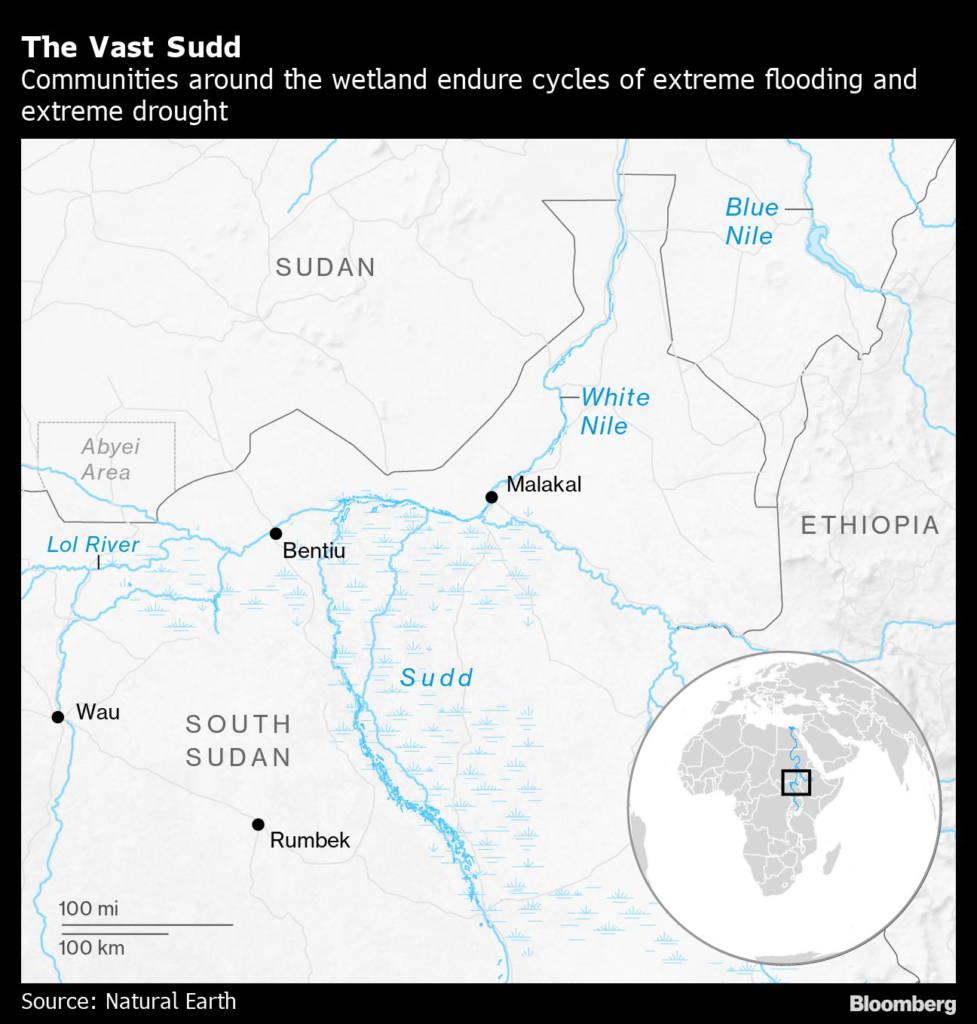
BOE Latest: Bailey FTX Bankruptcy Isn’t Yet a ‘Systemic’ Risk

(Bloomberg) — Bank of England policy makers led by Governor Andrew Bailey set out their outlook for the UK economy as inflation soared to its highest level in 41 years.

Bailey along with Deputy Governor Ben Broadbent and policy makers Catherine Mann and Swati Dhingra are testifying to the Treasury Committee in Parliament.

They spoke after inflation jumped 11.1% after soaring energy and food prices delivered the tightest squeeze on living standards in memory and started to push the UK into recession.

Key Developments:

  • Brexit is adding to headwinds for the UK economy
  • Britain’s reputation with investors hit by Truss budget program
  • Broadbent says recession may be shorter than BOE expects
  • Dhingra sees risk that rate rises will worsen recession
  • UK housing market may be weakening, Bailey says

(All times UK)

Bailey Says No Systemic Threat From FTX Bankruptcy (4:30 p.m.)

Bailey said the bankruptcy of Sam Bankman-Fried’s FTX crypto currency exchange isn’t a risk to the finanical system at the moment, but regulators are examining the issue carefully.

“We are doing a lot of work on it,” Bailey said. “Our view generally is that it’s not large enough to be systemic, but it has the potential to be so. There is ownership of crypto in this country. It’s not something we can be relaxed about it, and we’re not relaxed about it. I don’t think there’s a systemic fallout from FTX.”

Forex Intervention Isn’t on BOE Agenda, Bailey Says (4:08 p.m.)

Bailey said intervening in foreign exchange markets to prop up the value of the pound probably wouldn’t work.

“I would not intervene in exchange market,” he said.  “It’s not a not got a happy record in that sense.”

Food Inflation More Due to War Than Pound, Broadbent Says (4:04 p.m.)

Broadbent said that food prices are rocketing mainly because of the war in Ukraine and not so much because of the decline in the value of the pound.

The UK currency has fallen 12% against the dollar so far this year but 5.5% on a trade-weighted basis. 

“The currency is not the big story here,” Broadbent said.

Bailey said core goods price inflation is starting to ease.

“Far more of the shocks we’re dealing with are global” than UK-specific things like Brexit and the value of the pound, Bailey said.

Bailey Says Truss Budget Damaged UK Reputation (3:56 p.m.)

Bailey said the UK’s reputation as a stable economy has “taken a knock” as a result of the budget program Liz Truss introduced during her short term a prime minister.

“People said to me they didn’t expect this to happen in the UK,” he said in response to a question. “We have to rebuild our reputation.”

“We have damaged our reputation internationally because of what happened. And it will take longer to rebuild that reputation that it will be to correct the guilt curve.”

Bailey and Broadbent said the market impact of the ill-fated budget measures has mostly dissipated since most of the measures have been reversed.

Companies Should Wait Before Locking in Energy Price, Mann Says (3:40 p.m.)

When asked about firms facing pressure to sign into pricey new energy contracts, Mann said she’d advise them not to sign into any new energy contracts today in anticipation of prices coming down.

“The futures price is quite downward sloping,” Mann said. “If you could wait and not sign a contract today — that’s a strategic decision and for an individual firm to make. But small firms can sometimes band together and work with that contract through that channel.”

Bailey Says BOE Hasn’t Seen Fiscal Plan (3:37 p.m.)

Bailey said the BOE hasn’t yet seen details of what’s coming in Chancellor of the Exchequer Jeremy Hunt’s fiscal statement on Thursday. He said whatever the Treasury is planning isn’t embedded in the BOE’s forecasts that were published earlier this month in the Monetary Policy Report.

“Everything coming tomorrow is not in our MPR,” he said.

Housing Market is Weakening With Higher Rates (3:10 p.m.)

Bailey said the UK housing market is showing signs of weakening, noting a report from the Office for National Statistics on Wednesday showed no growth.

Bailey said housing market indicators “are all showing a weakening, both in activity and price numbers.” The latest figures are “the weakest in a year or more.”

He added that, “interestingly, we’ve seen rather more of a shinkage in the buy-to-let market in the past year than expected.”

Rate Rises Won’t Hit UK Homeowners Immediately (3:08 p.m.)

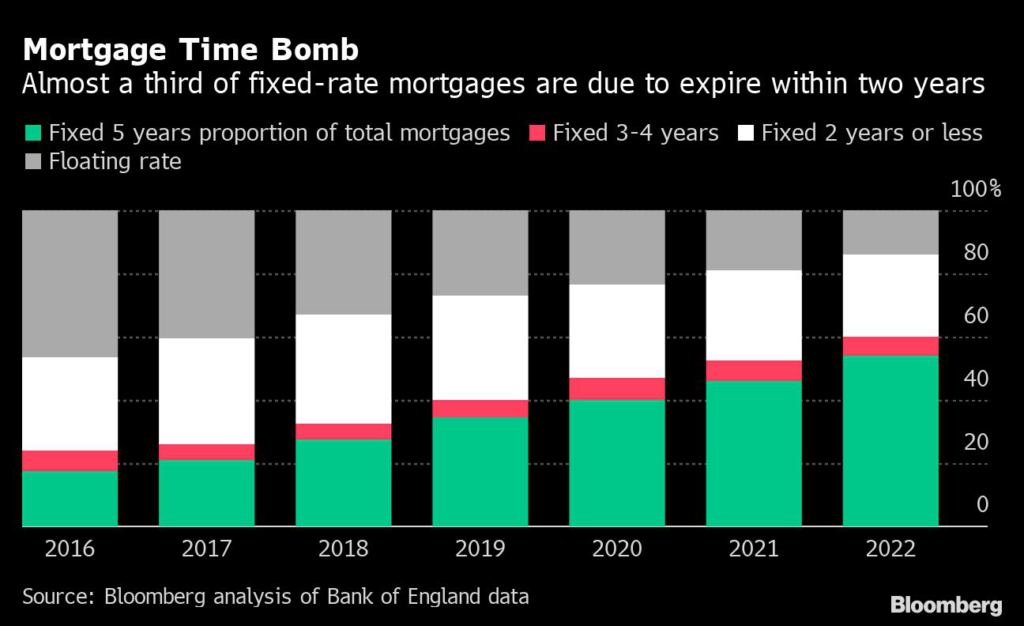
Bailey said that the mortgage market is experiencing a lag in effects of rate movements, given around 80% of UK mortgages are now on fixed rates.

“One of the consequences of the shift to fixed rate mortgages is that they are priced off the current market curve,” Bailey said. “They’re not priced directly off our our official rate.”

Though further removed from the BOE’s direct influence, Bailey said that fixed rates are now coming back down.

“Lenders were quick to increase mortgage rates following the mini-budget on the 23rd of September, but have been slower to reduce them in lines with falls. But new fixed mortgage rates are beginning to come down which is what I would have expected to happen.”


Brexit Is Adding to Headwinds and Inflation for UK (3:05 p.m.)

Britain’s decision to exit the European Union is adding to headwinds facing the UK economy. Bailey stood by the BOE’s view that Brexit has permanently reduced trade, saying there’s been nothing lately to change that view. 

Dhingra, a trade economist, said “it’s undeniable” that “we’re seeing a much, much bigger slowdown in trade in the UK compared to the rest of the world” and “we’re definitely performing below trend in terms of the exports numbers in terms of the inputs, even probably a bit bigger than that.”

Mann said Brexit is increasing inflation. That’s because “the small firms are the ones that are most damaged, because the cost of the paperwork and so forth, is a barrier. It’s not just small firms in the UK who want to export, but it is also small firms in Europe who were suppliers and provided competition in the UK.”

Mann Says Drop in Value of the Pound is Fanning Inflation (3:02 p.m.)

Mann said the drop in the value of the pound over the past year has pushed up the cost of imports and consumer prices.

She noted the currency is “20% down from the beginning of the year” and that “does translate into an inflationary effect.”

Labor Market is Biggest Question and Concern for UK (2:59 p.m.)

Bailey and his colleagues described the labor market as one of the biggest concerns for UK businesses and the economy.

Mann called the number of people dropping out of the workforce “a puzzle” for policy makers. “It does come back to the labor force participation. in the UK is a dramatic outlier, compared to all of the other advanced economies.”

Bailey said the lack of available workers is the biggest thing companies want to talk to him about.

“Firms are still talking in terms of it is so difficult to hire labor now that we’re not going to get rid of them lightly,” Bailey said. “There’ll be a tendency to want to retain labor.”

Dhingra Sees Risk of ‘Overtightening’ Rates (2:52 p.m.)

Dhingra said there’s a risk of raising interest rates more quickly and higher than the economy can withstand, deepening the recession. 

“You could get into a much deeper recession if rates continue to rise,” Dhingra said. “There is a risk of overtightening. There’s already about a fairly sizable chunk of the previous rate rises that have got to take effect in terms of what they do to GDP.”

She said she saw no reason to take forceful action on interest rates and that higher inflation itself is damaging the economy. 

“What we buy from abroad costs a lot more, and that makes us poorer. monetary policy cannot offset that. The people at the top end of the distribution are not spending thier full salary.”

Younger people who enter the labor market in a recession often “end up with perpetually lower wages.”

Broadbent Says Recession May Be Shorter Than Forecast (2:46 p.m.)

Broadbent said there’s a chance that the recession now unfolding in the UK may be shorter than the BOE forecasts.

“I think it could quite easily turn out to be a little bit shorter or a little bit longer,” he said. “There’s a lot of uncertainty, including about the length. We could well be in another quarter of contraction right now.”

Bailey Says Labor Market Tight But Competition for Staff Easing (2:39 p.m.)

Bailey said the UK labor market remains “tight” but that worker shortages are easing, suggesting less inflationary pressure on wages than a few months ago.

“Employers have now begun to say that they are seeing some reduction and competition for hiring,” Bailey said. “As yesterday’s labor market statistics demonstrated, it’s still a very tight labor market.”

Bailey Says He Won’t Take a Pay Rise (2:33 p.m.)

Bailey said BOE staff will get pay raises less than 6% this year and that he won’t take a wage rise even if one is offered to him by the central bank’s court of directors.

“It’s not for me to decide, but I’m not going to if I were offered one, I will not accept it, and I will politely decline as I have before,” Bailey said.

Mann Focused on ‘Front Loading’ Rate Rises (2:30 p.m.)

Mann, explaining her decision to vote for sharply higher rates, said she’s focused on inflation expectations. She reiterated her desire to see sharper rate rises earlier in the cycle.

“Taking more forceful action earlier on, as I say the research identifies a front loaded policy strategy as potentially having superior outcome with regard to inflation.”

Bailey Says Question for BOE’s Judgments About Labor Market (2:23 p.m.)

Bailey says questions about the BOE’s handling of the economy should focus on its judgments about the labor market, which he described as one of the “shocks” buffeting the economy.

“There were things that would have been different, like the one I asked myself, and I’ve said this in speeches, the question is about is the labor force because I don’t think we could foresee that Russia was going to invade Ukraine.”

Bailey Says UK Economy Facing Supply Shocks (2:20 p.m.)

Bailey said inflation has jumped past target because of “sequence of supply shocks.

“The economy was hit by a huge shock in terms of the pandemic. What we’ve had since then is a series of supply shocks, which have reduced the supply capacity of the economy relative to demand. There was a supply chain shock in the recovery from Covid. We see some evidence of that shock coming off.”

More stories like this are available on bloomberg.com

©2022 Bloomberg L.P.

Amazon Pledges to Stop Summary Suspensions of Online Sellers

(Bloomberg) — Amazon.com Inc. says it will stop summarily suspending online sellers, a peace offering to small- and medium-size businesses that have long complained of being booted off the site arbitrarily.  

Under a new initiative, called “Account Health Assurance,” Amazon staff will work with merchants one-on-one to resolve any issues without resorting to suspensions, the company said. The program went live in the US and Canada on Wednesday and will later expand to other countries.

Some 2 million merchants are responsible for more than half of the goods Amazon sells. But for years, these sellers have lived with the fear that they could be abruptly suspended, sometimes after being falsely accused by a shopper or competitor of selling counterfeit products. Many appealed their suspensions but found themselves passed from one Amazon team to another with no resolution. Meanwhile, their web stores were shuttered, with merchandise piling up unsold.

In 2020, Bloomberg chronicled the experience of a Los Angeles clothing retailer who was kicked off the site for allegedly selling fakes, which he denied. Amazon declined his appeal and destroyed what he said was $1.5 million of inventory. Such stories were at the heart of a House Judiciary Committee report concluding that big technology companies were abusing their power over smaller partners.

Amazon merchants have limited recourse because they waive their right to a day in court by agreeing to resolve disputes via binding arbitration, a pricey and time-consuming process. So an entire cottage industry has sprung up to help sellers get reinstated. There was even an effort to sell insurance to replace lost income after a suspension. But some merchants simply give up and abandon their Amazon accounts.

Dharmesh Mehta, Amazon’s vice president of selling partner services, said seller suspensions are rare but that the fear of them can weigh on merchants who should otherwise be focused on shoppers, especially during the busy holiday season.

“That can create a level of anxiety or fears,” he said. “So this is really about how do we create greater peace of mind.”

Amazon remains the dominant online marketplace in the US but is contending with stepped-up competition from established retailers such as Walmart Inc. and newer companies like Shopify Inc. The Seattle-based company is also grappling with slowing sales as consumers revert to their pre-pandemic shopping habits and curb their spending amid the loftiest inflation in four decades. Seeking to cut costs, the company has plans to ax about 10,000 corporate jobs, according to people familiar with the situation, and has slowed the opening of warehouses. 

More stories like this are available on bloomberg.com

©2022 Bloomberg L.P.
FTX Contagion Hits Winklevoss Twins as Crypto Lenders Come Under Fire

(Bloomberg) — The fallout from the rapid collapse of Sam Bankman-Fried’s FTX is spreading across the crypto world, ensnaring the billionaire Winklevoss twins through a liquidity squeeze at their lending partner, Genesis.

Genesis is suspending redemptions and new loan originations at its lending business after the unit faced withdrawal requests that exceeded current liquidity. Gemini Trust Co., founded by Cameron and Tyler Winklevoss, subsequently announced its yield product for retail investors will also halt redemptions as Genesis was a key partner in the program. 

The crypto world, initially built on the tenet of decentralization but which ballooned into a full-fledged financial ecosystem complete with digital-asset lending, is facing a reckoning in the wake of FTX’s bankruptcy. Regulators are probing whether Bankman-Fried and his associates misused customer funds.

At stake is whether a crisis of confidence topples the lucrative business of borrowing, lending and leveraging crypto and causes an industry-wide retrenchment.

Genesis, a counterparty to many in the sector, has been closely watched as a gauge of the industry’s strength — or for signs of contagion. Gemini, whose Earn program offers customers the opportunity to put their “crypto to work” in return for yields exceeding 8%, is one of Genesis’s biggest lenders. It had originated $4 billion in crypto loans as of a year ago.

“We are working with the Genesis team to help customers redeem their funds from the Earn program as quickly as possible,” Gemini said on its website. “We will provide more information in the coming days.”

“This does not impact any other Gemini products and services,” the firm added. “All customer funds held on the Gemini exchange are held 1:1 and available for withdrawal at any time.”

BlockFi, Voyager

Crypto lenders BlockFi Inc. and Voyager Digital Ltd. are also under pressure. 

BlockFi, which on Monday said it had “significant exposure” to FTX and its related entities, is preparing a potential bankruptcy filing, the Wall Street Journal reported. Voyager, which Bankman-Fried was going to rescue in a $1.4 billion deal, is now twisting in the wind, trying to find a replacement buyer for its assets.

Investors such as crypto hedge fund Galois Capital, which reported “significant” funds stuck on FTX’s platform, are also feeling the impact. Even miners are getting hit as the decline in crypto prices sparked by the collapse of FTX has also put further pressure on profits.

But it’s crypto lenders that are feeling the most acute strain after a year of persistent downward pressure on digital-asset prices and multiple high-profile blowups, including the algorithmic stablecoin TerraUSD and hedge fund Three Arrows Capital. 

Celsius Network Ltd., itself a crypto lender, was among the major causality of those collapses earlier this year. It sought bankruptcy protection.

Equity Infusion

Genesis said last week it would get a $140 million equity infusion from its parent company, Barry Silbert’s Digital Currency Group, after disclosing that its derivatives business had $175 million locked in an FTX trading account. 

While Genesis is one of oldest and most well-known crypto brokers, over the past few years it built one of the largest digital-asset lenders as well, allowing funds or other market makers to borrow dollars or virtual currencies to leverage their trades.

The lending business already faced trouble when Three Arrows collapsed. It had made a $2.4 billion loan to the now-bankrupt hedge fund, which was run by Su Zhu and Kyle Davies.

The requests to withdraw funds exceeded available liquidity at Genesis Global Capital, its lending arm, according to interim Chief Executive Officer Derar Islim. The New York-based company has hired advisers to explore all possible options, including raising new funding, and will deliver a plan for its lending business next week, Islim said. Alvarez & Marsal and the law firm Cleary Gottlieb are advising Genesis.

The move will affect only the lending business, according to Islim, who said Genesis’s spot and derivatives trading and custody businesses “remain fully operational.”

The lending business has shrunk dramatically, with loan originations falling to $8.4 billion in the third quarter from $44.3 billion in the first three months of the year. 

Genesis had been downsizing ahead of its latest squeeze. The company eliminated 20% of its then 260-person workforce in August and appointed Islim as interim CEO, replacing Michael Moro. 

Announced departures include Noelle Acheson, who left her post as head of market insights; Matthew Ballensweig, who stepped down as co-head of sales and trading and said he would move into an advisory position; and Michael Patchen, who left after three months as chief risk officer. 

Digital Currency Group also controls Grayscale Investments, which offers the Grayscale Bitcoin Trust, or GBTC, the largest investment vehicle in the crypto market. The trust is trading at about a 40% discount to the market price of Bitcoin.  

Crypto prices, which have taken a leg lower since FTX’s troubles started earlier this month, extended losses Wednesday, with Bitcoin fallng as much as 2.9%. The world’s largest cryptocurrency has tumbled around 75% from a record high of almost $69,000 reached about a year ago.

–With assistance from Muyao Shen.

(Updates with details of Gemini’s Earn program starting in fifth paragraph.)

More stories like this are available on bloomberg.com

©2022 Bloomberg L.P.
Starbucks’ $181 Million in Unused Gift Cards Spurs Labor Group Complaint

(Bloomberg) — A group of unions filed a complaint against Starbucks Corp. with the US Securities and Exchange Commission, asking the agency to investigate how the coffee chain accounts for unused money left on customers’ stored-value cards and accounts.

Starbucks claimed $181 million in revenue from money that wasn’t spent on gift cards and loyalty accounts in fiscal 2021, an uptick from about $145 million the previous year. While that’s just a small percentage of profit and revenue, the proportion of income coming from unused company credit has grown in recent years, according to the complaint that was filed Wednesday by the Strategic Organizing Center. 

The group, known as the SOC, is made up of unions including the parent of Workers United, which is driving a unionization campaign at Starbucks’s US locations. Hundreds of stores have voted in favor of forming unions, although the pace of unionization petitions has slowed in recent months. 

The SOC argues that Starbucks’s disclosures around unredeemed credit, known in the industry as breakage, are inadequate for investors. It adds that the Seattle-based company hasn’t explained how Covid-19 and store closures may have affected its calculations, given diners’ ability to spend gift credits was likely impaired by pandemic-related store closures. 

Starbucks got about 43% of its revenue in fiscal 2021 from stored-value programs, which range from gift cards to credits in the company’s loyalty app. A small part of that is unredeemed rewards. The $181 million represented less than 1% of sales in 2021 and 4.3% of net income before factoring in taxes.

“Starbucks discloses so little about breakage that this significant, and likely material, aspect of Starbucks’ financial health is a virtual black box for investors,” said Michael Zucker, the SOC’s executive director. He argued the use of unredeemed credit “could be masking a failure to meet earnings expectations, or even allowing the company to double-count revenue.”

A spokesman for Starbucks declined to comment on breakage beyond the company’s annual report.

Michael Halen, a Bloomberg Intelligence restaurant analyst, said Starbucks gives less disclosure than some peers on how it calculates and processes unspent credit, “which is kind of surprising.” The credit represents “a very large percent of their transactions and total US sales,” he added. 

In the US and many other markets, the stored-value cards don’t expire. Starbucks says that based on historical redemption rates, a portion of the funds aren’t expected to be redeemed and “will be recognized as breakage over time in proportion to stored-value card redemptions.” In its most recent annual filing, Starbucks says that those redemption patterns vary by market.

Starbucks credit is issued via gift cards, which are sold at retailers and at its own cafes. It’s also available on rewards accounts, which can be replenished by purchases online or on the mobile app. The credits can be used at all company-operated locations and most licensed stores across North America, China, Japan and many other international markets, according to company filings. 

Other restaurants also recognize unspent gift-card money, or breakage, as revenue over time and offer some details as to how they calculate that. Texas Roadhouse Inc., for example, says that based on historical data, about 4.5% of its gift cards sold won’t be spent. 

So far, about 250 Starbucks locations have voted to unionize, a small portion of its 9,000 company-run US stores. The dispute with activists has become increasingly bitter, and regional National Labor Relations Board officials have issued dozens of complaints against the company. 

Starbucks has repeatedly said it follows US labor rules. The chain has sought to blunt the union drive in part by raising wages, adding new equipment and offering training that aims to make workers’ jobs easier. 

–With assistance from Josh Eidelson.

More stories like this are available on bloomberg.com

©2022 Bloomberg L.P.
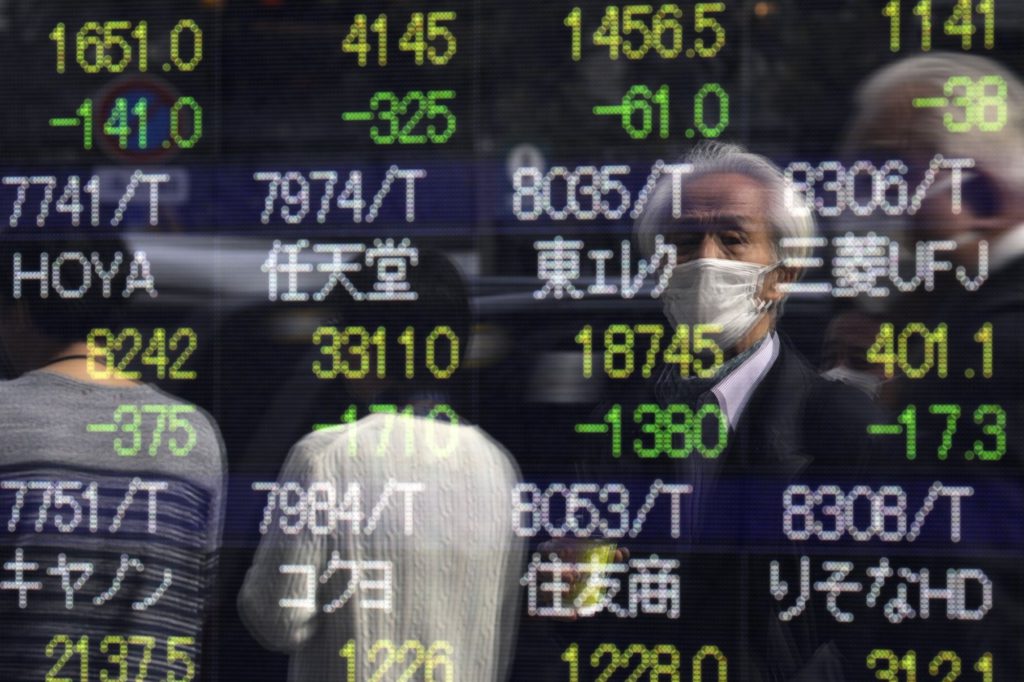
Stocks Decline as Retail Data to Keep Fed on Path: Markets Wrap

(Bloomberg) — US stocks declined after strong retail sales and at least two Federal Reserve speakers recast bets that the central bank’s policy tightening regime is nearing an end. 

The S&P 500 and the Nasdaq 100 fell after a report showed retail sales posted the biggest increase in eight months in October, outpacing estimates and indicating the economy can withstand additional Fed rate hikes. 

A closely watched part of the US yield curve is now the most inverted it has been since 1982, signaling concerns that restrictive policy will sap the economy.  

The market pullback comes after a hefty rally fueled by softer-than-expected US inflation data that fanned expectations the Fed may be able to slow its tempo of interest-rate hikes. That alongside news of China’s post-Covid reopening had pushed the dollar and Treasury yields lower in recent days.  

But on Wednesday, New York Fed President John Williams bruised sentiment after he said the central bank should avoid incorporating financial stability risks into its considerations as it raises interest rates. San Francisco Fed President Mary Daly, meanwhile, emphasized that a pause is “off the table.” JPMorgan Chase & Co. economists are projecting the US will enter a “mild” recession next year thanks to the Fed’s hikes. 

“The Fed’s job is not being made any easier by all of this different data,” Oksana Aronov, alternative fixed income head of markets strategy at JPMorgan Asset Management, said on Bloomberg TV. “The stronger retail numbers today give them more cover to be aggressive, which is what they have consistently telegraphed.”

In corporate news, Target Corp.’s shares plunged after it warned that US shoppers are pulling back. Micron Technology Inc. shares also tumbled after it said the market outlook for 2023 has weakened. 

Earlier, comments from US President Joe Biden that Ukrainian air defenses, rather than by Russia, had likely caused Tuesday’s explosion in Poland soothed fears of an escalation in military conflict.

Key events this week:

  • Fed’s John Williams, Lael Brainard and SEC Chair Gary Gensler speak, Wednesday
  • ECB President Christine Lagarde speaks, Wednesday
  • Eurozone CPI, Thursday
  • US housing starts, initial jobless claims, Thursday
  • Fed’s Neel Kashkari, Loretta Mester speak, Thursday
  • US Conference Board leading index, existing home sales, Friday

Some of the main moves in markets:

Stocks

  • The S&P 500 fell 0.6% as of 10:51 a.m. New York time
  • The Nasdaq 100 fell 1.4%
  • The Dow Jones Industrial Average was little changed
  • The Stoxx Europe 600 fell 0.9%
  • The MSCI World index rose 1.1%

Currencies

  • The Bloomberg Dollar Spot Index was little changed
  • The euro rose 0.4% to $1.0394
  • The British pound rose 0.1% to $1.1878
  • The Japanese yen was little changed at 139.34 per dollar

Cryptocurrencies

  • Bitcoin fell 2.7% to $16,434.17
  • Ether fell 4.2% to $1,192.91

Bonds

  • The yield on 10-year Treasuries declined three basis points to 3.74%
  • Germany’s 10-year yield declined 10 basis points to 2.01%
  • Britain’s 10-year yield declined 14 basis points to 3.15%

Commodities

  • West Texas Intermediate crude fell 1.9% to $85.23 a barrel
  • Gold futures rose 0.3% to $1,781.80 an ounce

This story was produced with the assistance of Bloomberg Automation.

–With assistance from Sujata Rao, Augusta Saraiva, Isabelle Lee, Vildana Hajric, Emily Graffeo and Peyton Forte.

More stories like this are available on bloomberg.com

©2022 Bloomberg L.P.
Russian Oligarchs Are Running Out of Safe Places to Hide Their Yachts and Jets

(Bloomberg) — The man spearheading the US hunt for the yachts, private jets and cash stashes of sanctioned Russians warned they may struggle to hide their riches in even the most far-flung parts of the globe.

The Justice Department’s “KleptoCapture” taskforce has been at the forefront of holding sanctioned Russians to account since the President Vladimir Putin’s invasion of Ukraine. 

The team, which has so far seized “multiple hundreds of millions of dollars” worth of assets, will continue to make “arrests around the world, in pockets of the world where people might otherwise think that they are safe from arrest,” Andrew Adams, the prosecutor leading the initiative, said in an interview with Bloomberg.

In the weeks after the February invasion of Ukraine, western governments moved quickly to clamp down on the movement of Russian assets, often cloaked by complicated ownership structures. 

The US set up the inter-agency taskforce in March to pursue assets of Russians subject to sanctions and issued a flurry of warrants to seize superyachts in Spain and Fiji and ground private jets in Dubai. Other wealthy Russians sought to evade penalties by sailing yachts to jurisdictions that are not enforcing western sanctions.

“These things are movable,” Adams said in Paris. “We wanted to take quick action early on in the task force to lock down the assets where we had the facts and the law would allow for us to take a warrant to a judge and get a seizure,” Adams said. 

The group has overseen high-profile indictments of Russians, including metals billionaire Oleg Deripaska — accused by the US in September of violating sanctions in a bid to ensure two of his children gained US citizenship. 

Last month, it charged five Russian nationals in an alleged sanctions evasion and money laundering scheme that involved shipping “sensitive military technologies” from the US to Russia. Similar components were found in seized Russian weapons platforms in Ukraine. 

In a separate case also announced last month, three people were arrested in Latvia and one in Estonia on charges of violating US export laws by sending a grinding machine to Russia that could have been used in nuclear proliferation and defense programs.

All of the actions the unit has taken — including seizures and arrests in the US — have involved at least some direct assistance from foreign counterparts, Adams said. “We simply cannot do this work without building international cases against the targets that we’re going after.”

He’s in Paris and Brussels this week to meet with the French Justice Ministry and the European Commission while other members of his team travel to Monaco and London, all in the pursuit of blocking additional Russian assets.

Read More: EU Studies Use of Russian Central Bank Assets to Rebuild Ukraine

Adams was previously co-chief of the money laundering and transnational criminal enterprises unit at the Southern District of New York. He said one of the taskforce’s “top priorities” was looking at whether cryptocurrencies were being used to fund Russian paramilitary groups. He’s working with members of the US Congress on legislation that would allow funds obtained from forfeiture proceedings against Russian assets to be used to help Ukraine.

“That’s a critical piece that we’re working with people on the Hill to craft,” he said. “Beyond that we have tools available to take significant action.”

(Updates with EU studying use of Russian central bank assets before second-last paragraph)

More stories like this are available on bloomberg.com

©2022 Bloomberg L.P.

Close Bitnami banner
Bitnami