Bloomberg

Panasonic CTO Says Second Battery Plant Would Probably Be in US

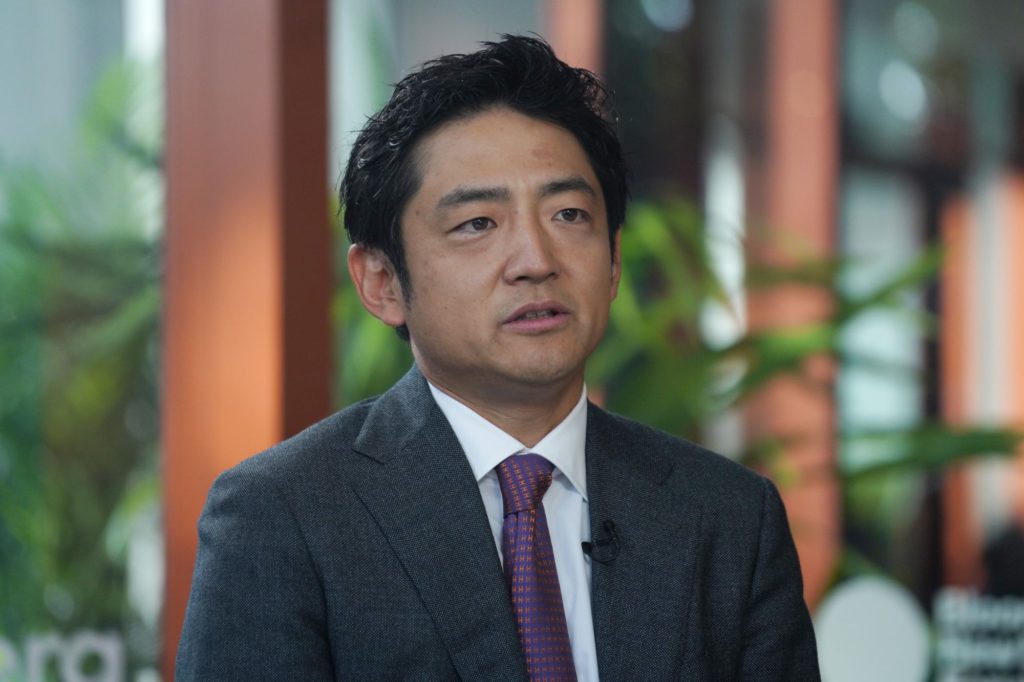
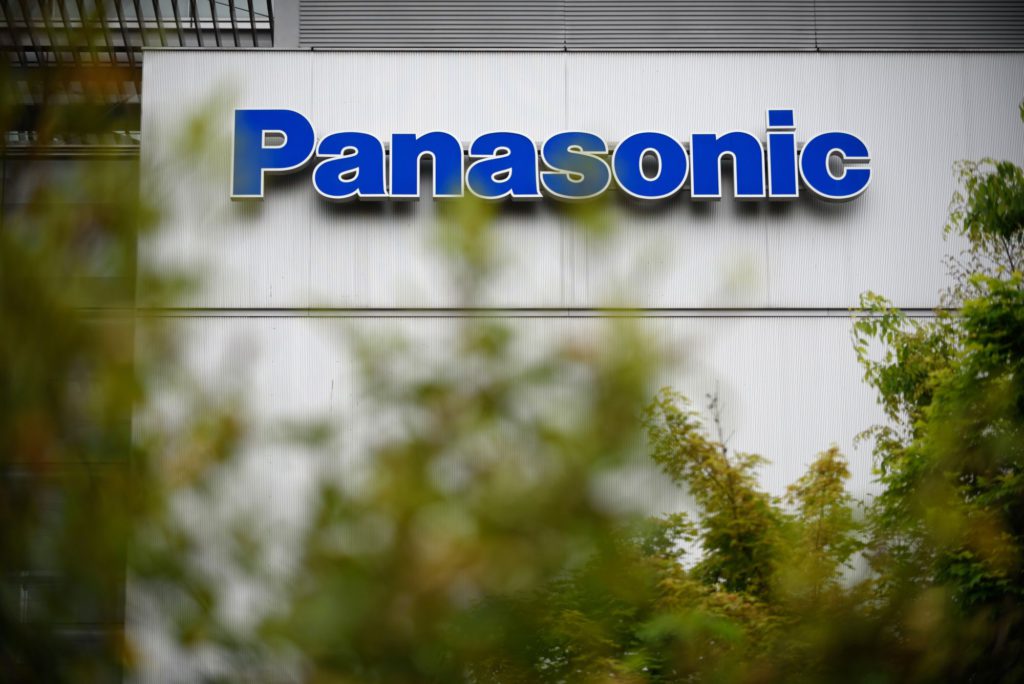
(Bloomberg) — Panasonic Holdings Corp. would “almost certainly” choose another US location if it decides to go forward with plans to build another battery production site, said Shoichiro Watanabe, chief technology officer of Panasonic Energy.

The Japanese electronics maker, which is seeking to boost its electric-vehicle battery manufacturing capacity by three to four times by the end of the fiscal year through 2029, broke new ground on a new $4 billion factory in De Soto, Kansas, earlier this month.

Panasonic is ramping up production capacity to meet growing demand from Tesla Inc. and other electric-vehicle makers. Battery plants are a critical part of the company’s push to increase investment in EV cell production — a segment the 104-year-old Japanese electronics giant sees as critical for future growth. 

“There’s plenty of demand in North America,” Watanabe said in an interview Wednesday. 

Read more: Panasonic Chooses Kansas for $4 Billion Battery Production Site

The $437 billion Inflation Reduction Act signed into law by US President Joe Biden includes changes to tax credits and incentives for bringing more of the EV supply chain to the US. More than $13 billion of investment in battery raw material production and battery and EV manufacturing has been announced since then.

Although Panasonic has supplied Tesla from its early days, the Japanese manufacturer has been slower to build scale compared with rivals LG Energy Solution Ltd. of South Korea and China’s Contemporary Amperex Technology Co. Instead, Panasonic has stressed that it is prioritizing profit and dedication to safety over market share.

Even as the Kansas facility comes online, it will only increase Panasonic’s battery output by about 60% to 80 gigawatt hours, according to the company. 

The Japanese government is also seeking to boost the domestic battery industry, with the goal of reaching 150 gigawatt hours of production capacity by 2030.

“Batteries are becoming a key device for national energy security,” Watanabe said, adding that it will be important to adopt more sources of renewable energy in the future. 

Read more: Panasonic Sets Date for Mass Production of New Tesla Battery

Asked about Panasonic’s plans to manufacture higher capacity 4680 batteries at its Wakayama plant, in western Japan, Watanabe said that he expects capital investment to pick up next year, and confirmed that mass production will begin by the end of the fiscal year through March 2024.

More stories like this are available on bloomberg.com

©2022 Bloomberg L.P.

US Futures Rise as Ukraine Escalation Fears Recede: Markets Wrap

(Bloomberg) — US futures rose as panic subsided that a rocket which struck inside the Polish border came from Russia and marked an escalation in the Ukrainian war.

Contracts on the S&P 500 erased declines to trade 0.2% higher, and those on the Nasdaq 100 gained by a similar magnitude. The Stoxx Europe 600 Index slipped 0.4% after rising for four straight sessions. 

The euro gained, reversing earlier losses, after US President Joe Biden said the missile was unlikely to have been fired by Russia. The yen weakened as haven demand waned. 

Read more: Panic Eases Over Poland Strike as Allies Query Rocket’s Origin

The Associated Press cited unnamed US officials as saying initial findings pointed to the projectile being fired by Ukrainian forces at an incoming Russian one.

“It soon became apparent that this was highly unlikely to be a direct attack, and the overnight comments suggest a rapid deescalation,” according to Deutsche Bank AG strategists including Jim Reid in a morning note. “As such markets can go back to focusing on the positives, which was given further momentum by some decent corporate news.”

The Polish zloty trimmed its losses against the dollar while a gauge of the greenback traded within a broad range through the day, underscoring investor uncertainty. 

Key events this week:

  • US business inventories, cross-border investment, retail sales, industrial production, Wednesday
  • Fed’s John Williams, Lael Brainard and SEC Chair Gary Gensler speak, Wednesday
  • ECB President Christine Lagarde speaks, Wednesday
  • Eurozone CPI, Thursday
  • US housing starts, initial jobless claims, Thursday
  • Fed’s Neel Kashkari, Loretta Mester speak, Thursday
  • US Conference Board leading index, existing home sales, Friday

Some of the main moves in markets:

Stocks

  • The Stoxx Europe 600 fell 0.4% as of 8:35 a.m. London time
  • Futures on the S&P 500 rose 0.2%
  • Futures on the Nasdaq 100 rose 0.2%
  • Futures on the Dow Jones Industrial Average rose 0.2%
  • The MSCI Asia Pacific Index fell 0.4%
  • The MSCI Emerging Markets Index fell 0.4%

Currencies

  • The Bloomberg Dollar Spot Index was little changed
  • The euro rose 0.4% to $1.0393
  • The Japanese yen fell 0.2% to 139.62 per dollar
  • The offshore yuan fell 0.6% to 7.0874 per dollar
  • The British pound was little changed at $1.1861

Cryptocurrencies

  • Bitcoin fell 0.9% to $16,736.6
  • Ether fell 0.6% to $1,237.94

Bonds

  • The yield on 10-year Treasuries advanced four basis points to 3.81%
  • Germany’s 10-year yield advanced one basis point to 2.12%
  • Britain’s 10-year yield advanced two basis points to 3.31%

Commodities

  • Brent crude was little changed
  • Spot gold fell 0.1% to $1,776.38 an ounce

This story was produced with the assistance of Bloomberg Automation.

More stories like this are available on bloomberg.com

©2022 Bloomberg L.P.

Binance Chief Zhao Says Much Interest in Crypto Recovery Fund

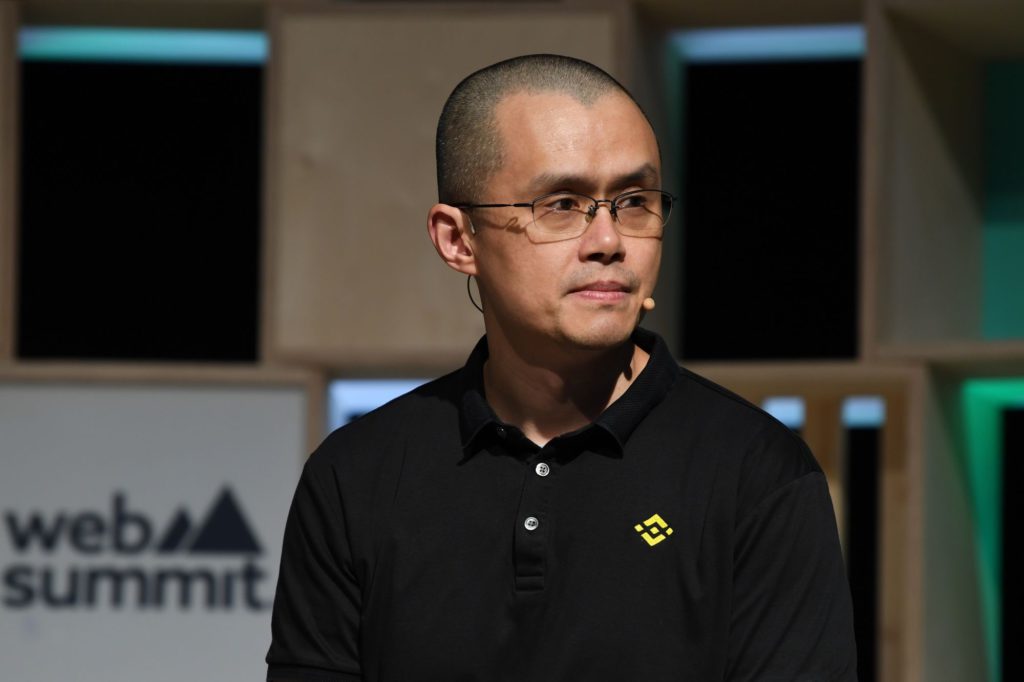
(Bloomberg) — Binance Holdings Ltd.’s Chief Executive Officer Changpeng ‘CZ’ Zhao claimed there was a lot of investor interest in a crypto industry recovery fund he plans to set up.

He also said his digital-asset exchange had this week secured another license in Abu Dhabi. Zhao was speaking there at a conference on Wednesday alongside Mike Novogratz, the founder of Galaxy Digital Holdings Ltd.

Novogratz said the worst of the crypto crisis in the wake of the collapse of the FTX exchange may lie ahead.

Zhao said Monday that Binance — the world’s largest digital-asset exchange — is seeking to set up the recovery fund to assist otherwise strong projects that are facing a liquidity squeeze. 

The goal is to “reduce further cascading negative effects” of the FTX bankruptcy, he said at the time. Binance will refrain from further sales of FTX’s native FTT token due to potential investigations, Zhao said in Abu Dhabi.

For crypto market prices: CRYP; for top crypto news: TOP CRYPTO.

More stories like this are available on bloomberg.com

©2022 Bloomberg L.P.

Investors Warn of More Pain Ahead as Valuations Slide: NEF Wrap

(Bloomberg) — Investors speaking at the Bloomberg New Economy Forum are bracing for more pain as inflation and higher interest rates stunt global growth, even as China’s steps to ease its punishing Covid-19 curbs have rekindled some optimism about the world’s second-largest economy.

Sovereign wealth funds in Abu Dhabi and Singapore warned that markets have further to drop while venture capital investors betting on startups said the industry is in for a “reset” after valuations disconnected from fundamentals.

“I still think there is more pain generally speaking, but we will have more opportunities than less opportunities in the time ahead of us,” Khaldoon Khalifa Al Mubarak, the group chief executive officer of Mubadala Investment Co., one of Abu Dhabi’s wealth funds, said on a panel at the conference in Singapore.   


Lim Chow Kiat, the CEO of Singpore’s GIC Pte, highlighted issues such as inflation pressures and the potential for further declines, but said that there “have been some good structural developments,” citing the US as an interesting market.

“Valuation may not be quite there yet but if you look at some of the longer term trends, for example the government incentives to really reindustrialize the economy, that’s a big positive,” Lim said. “We are pretty confident that down the road we should be able to find good investment opportunities out of that.”

The co-founder of bitFlyer Inc., a Japanese cryptocurrency exchange, cautioned that the meltdown of Sam Bankman-Fried’s digital assets empire FTX is a “Lehman shock” that could potentially cause more crypto firms to fail.  

China Sentiment

China’s road ahead will be key to investors globally. Signs are emerging that Beijing is starting to ease some of the most stringent Covid policies, and authorities just rolled out the most comprehensive package yet to backstop its struggling property market. Prospects for a thaw in US-China relations after a face-to-face meeting Monday between presidents Joe Biden and Xi Jinping have added to optimism.

The head of fund giant Fidelity International, Anne Richards, said she’s “more positive” about Asia from a markets and flows perspective for 2023. There are positive signs in China’s real estate market and optimism about China’s own interest rate cycle, factors that could set up Asia and China for a “more positive and earlier rebound” than the rest of the world, she said. 

But China’s investment landscape has also radically changed as Xi has cracked down on the nation’s technology giants and other private-sector companies over the past few years. Neil Shen, founder and managing partner of Sequoia Capital China, said there are seismic changes going on in the venture capital market. He pointed out that the industry had a run of easy years in which startup valuations would rise every six to nine months. 

“The market has changed completely,” said Shen, whose firm is considered one of the elite players in the Chinese market. “Now you have to roll up your sleeves.”

Others at the conference said the technology sector was set for a fundamental overhaul amid geopolitical tensions and dwindling investor appetite for money-losing startups.

Jenny Lee, a managing partner at GGV Capital, said that a “reset has arrived” while Bill Ford, chairman and chief executive officer of General Atlantic, said that “valuation became disconnected from fundamentals.”

China has been particularly hard hit. The value of venture capital deals in the country fell 44% to $62.1 billion through October, compared with the same period in 2021, according to research firm Preqin.

“What that’s meant for all of us is that the level of risk is higher,” Ford said, adding that investors still have to be in China. “It’s too big to ignore.”  

Food

Access to food may be the biggest risk facing the global community. Food security is about tens of thousands of products, with different rules that govern how they grow, and climate change is constantly disrupting those flows, said Sara Menker, the CEO of Gro Intelligence, a firm that uses data and artificial intelligence to make predictions about climate change and food security.  

David MacLennan, chief executive officer of Cargill Inc., said that while global crop stockpiles remain tight, food prices will probably decline next year.

“All it takes is one really bad crop, let’s say in North America or South America, to really send prices higher,” he said.

World food costs jumped to a record in March after Russia’s invasion of Ukraine choked off supplies from one of the world’s top exporters. Prices have since declined after a UN-brokered deal to allow ships with Ukrainian grain to pass safely through the Black Sea. Talks are currently taking place to renew that agreement, which expires on Nov. 19.

Climate 

The global climate emergency continued to be a key focus. Australian billionaire Andrew Forrest challenged corporations to quit fossil fuels, saying they need to stop leaning on trendy terms like “sustainability” and “ESG.”

“Chief executives and chairmen now no longer have an excuse not to step beyond fossil fuel,” Forrest said in a Bloomberg Television interview on the sidelines of the forum. “Let’s hold chairmen to account, let’s hold chairmen of remuneration committees to account.”

Forrest, founder and chairman of iron ore producer Fortescue Metals Group Ltd., said technology already exists to decarbonize most sectors, arguing that the current energy crisis was a result of a lack of investments in energy more broadly rather than, as some claim, an underinvestment in fossil fuels.

Data Protection 

Given the growing role of data in business, public and daily life, there was substantial discussion on how to combat a rising distrust of data.

Singapore’s communications minister, Josephine Teo, said thoughtful regulation and more private sector engagement are needed, arguing there is widespread recognition there’s a problem and a need to help people rebuild their confidence in data.

Teo said if governments don’t know what they’re regulating, it will “end up doing more harm than good,” warning that piecemeal rules would never work.

On the same panel, Mastercard CEO Michael Miebach said there’s no reason for the private sector not to step up in combating this problem. The question of “who’s going to attack us?” is one that keeps him up at night, he said.

Sarah Hanson-Young, a senator for South Australia, said that regulatory systems are years behind and big tech companies have taken advantage of this for far too long, with the government “playing massive catch-up.”

The New Economy Forum is being organized by Bloomberg Media Group, a division of Bloomberg LP, parent company of Bloomberg News. 

–With assistance from Joyce Koh, Bill Faries, Clarissa Batino, Vlad Savov, Jeff Sutherland, James Fernyhough, Juliette Saly, Michelle Jamrisko, Peter Elstrom, Shery Ahn, Takashi Nakamichi, Jane Zhang, Alfred Cang and Abhishek Vishnoi.

More stories like this are available on bloomberg.com

©2022 Bloomberg L.P.

Japan’s Wave of Tourists Sends Hotels, Taxis Hunting for Staff

(Bloomberg) — Japan’s transport and hospitality industries are struggling to find enough staff to keep up with a rebound in demand, with the number of visitors more than doubling after borders reopened a month ago.

The number of people working at hotels and inns is 30% below pre-pandemic levels, according to the Japan Accommodation and Lodging Foundation, while airlines and tour bus operators report full bookings. 

Japan’s struggles mirror what the US and Europe saw over the summer, when a rebound in travelers overwhelmed airports and travel businesses that had cut back on staffing. Although Japan didn’t go into full lockdown, the job market was already tight and people found other readily available work. Now, with the borders fully open to vaccinated travelers since Oct. 11, the island nation is poised for a tourism boom, thanks to strong demand and a weaker yen that’s making the country more affordable.

“It’s going to be difficult to catch taxis if overseas visitors return to pre-coronavirus levels,” said Kazuki Otsuka, chief executive officer of Daiwa Motor Transportation Co., one of the country’s largest taxi and limousine operators.

Roughly 498,600 overseas travelers visited Japan in October, according to preliminary figures released by the Japan National Tourism Organization on Wednesday. That’s more than double from the prior month and 24 times last year’s monthly average. 

The reported figure still pales in comparison to the record 32 million inbound visitors Japan saw during the peak of a tourism boom in 2019. With the nation’s economy unexpectedly shrinking last quarter, the prospect of renewed inbound spending by foreign tourists offers one bright spot.

There were already signs of an uptick, even before the October reopening. Foreign travel spending, defined as spending on goods and services by non-residents during visits, rose 51% in September to 63.9 billion yen ($455 million) from a year earlier, according to balance of payments data from the Ministry of Finance.

ANA Holdings Inc., which seconded staff to other industries as the carrier cut back on flights, is now recalling them as it adds back routes. Flights to Narita from Hong Kong have been almost fully booked since Oct. 11, according to a spokesperson for the airline.

“Tour agencies are flooding us with reservations and our schedule is filling up this year and the next two years,” said Shinji Ohgami, an executive officer at Ryobi Holdings Co., which operates 700 buses nationwide and has 8,500 employees. The industry is seeing only 3 drivers for every 20 buses, according to Ohgami.

Tabist, a hotel-management company backed by SoftBank Group Corp. and India’s OYO Hotels, sees inbound demand for its properties jumping to 1.5 million tourists from hundreds of thousands currently, even without visitors from China, where travel in and out of the country remains restricted. “Our industry reduced all management resources, including people, goods and money, for the past two and a half years,” said Tabist President Ryota Tanozaki.

Daiwa Motor is looking to add more drivers, including college graduates and mid-career hires, according to Otsuka. In order to attract staff, the taxi company is redesigning its uniforms and promoting a program that lets employees to earn MBAs at the company’s expense. 

“We have no choice but to work hard and persevere,” Otsuka said.

(Updates with latest tourism figures in fifth paragraph.)

More stories like this are available on bloomberg.com

©2022 Bloomberg L.P.
NASA Launches Massive Artemis I Rocket in First Step Toward Return to Moon

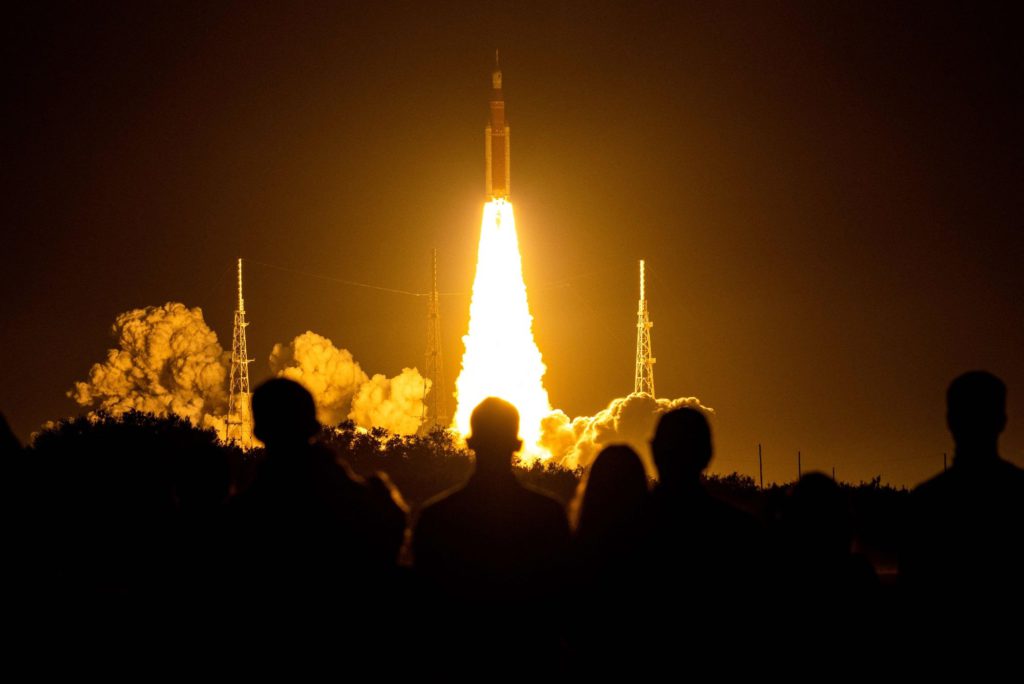
(Bloomberg) — NASA launched its most powerful rocket in 50 years early Wednesday, sending an uncrewed capsule skyward on a 25-day mission to orbit the moon and return safely to Earth.

The agency’s Space Launch System rocket, with an Orion capsule perched atop it, cleared its Kennedy Space Center launchpad on the Florida coast just after takeoff at 1:48 a.m. local time, its four main engines and twin solid boosters lighting up the night sky. 

The mission, called Artemis I, marks the inaugural flight of both the SLS rocket and the Orion crew capsule. And it kicks off NASA’s multi-mission Artemis program, which is focused on sending astronauts, including the first woman and the first person of color, back to the moon’s surface by as early as 2025.

The SLS, built by Boeing Co., is meant to be the primary vehicle that will be used to transport humans to the vicinity of the moon; the Orion crew capsule is built by Lockheed Martin Corp. With Wednesday’s launch, NASA intends to show that the combined SLS and Orion vehicles can safely do their jobs before astronauts ever climb aboard.

About eight minutes after liftoff, the SLS entered Earth orbit and the main core of the rocket separated from the upper portion of the vehicle carrying Orion. Roughly an hour-and-a-half after launch, the upper stage’s engine will ignite for 18 minutes to send Orion on course to the moon.

In six days, Orion will come within 60 miles (97 kilometers) of the lunar surface, using the moon’s gravity to enter an elongated orbit. Orion needs to demonstrate that it can get in and out of lunar orbit before returning home, surviving reentry in Earth’s atmosphere and splashing down in the Pacific Ocean on Dec. 11.

Wednesday’s launch was the third time in the last two months that NASA attempted to get this mission off the ground. The first try at the end of August was scrubbed after the start of the launch window following a night of weather delays, hydrogen leaks, and a bad reading from a temperature sensor on one of the main engines.

A second launch attempt in early September was also postponed after a hydrogen leak emerged during propellant loading. NASA replaced damaged hardware on the rocket before trying again. NASA had then hoped to try for a third attempt in late September, but opted to roll the spacecraft back to its main hangar to shelter it from approaching Hurricane Ian.

NASA rolled the rocket back out to its launchpad less than two weeks ago, just in time for another storm, Hurricane Nicole, to hit Florida. This time, NASA opted to leave the SLS rocket on its launchpad to weather the storm. The vehicle suffered little damage and NASA engineers deemed it ready to fly.

Still, NASA officials are quick to point out that Artemis I is first and foremost a practice run and much could still go awry. 

“Please understand, it’s a test flight,” Bill Nelson, NASA’s administrator, said in an interview before the first launch attempt. “They stress it and test it in a way that you’d never do with humans on board. That’s the point of a test flight.”

Program Delays

Wednesday’s launch was more than a decade in the making. First conceived in 2010, the SLS was originally projected to launch as early as 2017. But with its development hitting snags and its budget ballooning, the rocket stayed on the ground. Development costs have soared from an original $7 billion to about $23 billion, according to an estimate by the Planetary Society. 

Concurrently, the Orion crew-capsule’s development suffered its own delays and cost overruns. Audits have highlighted flaws in Boeing and Lockheed Martin’s management of their respective projects, as well as testing and construction mishaps.

NASA has downplayed those earlier struggles. “We are developing new systems and new technologies,” Nelson said during a press conference ahead of the first launch attempt. “And it takes money and it takes time.”

Mission Elements

The plan is for Orion to stay in lunar orbit for a little less than a week. It’s carrying several payloads, including mannequins that will help test what it might be like for future riders traveling to deep space. It also holds a package called Callisto, which includes an Amazon Alexa and a touchscreen sporting Cisco’s Webex, to test out communication tools astronauts could use in deep space one day. 

The craft will also deploy several small satellites that will travel into deep space, testing technologies needed for navigation or studying the moon and its radiation environment. One of the small satellites is set to land on the moon.

If all goes according to plan, on Dec. 11 Orion will put its new heat shield to the test, enduring reentry temperatures of up to 5,000 degrees Fahrenheit before the capsule splashes down off the coast of San Diego. The shield will have to perform flawlessly before Orion gets the green-light to carry astronauts.

“The main objective is to test the heat shield and you can’t test that in a lab,” Nelson said in an interview. “You have to test this new heat shield and it’s coming in hot and fast.”

(Updates fifth paragraph to show rocket entered Earth orbit.)

More stories like this are available on bloomberg.com

©2022 Bloomberg L.P.
FTX Is ‘Lehman Shock,’ bitFlyer’s Co-Founder Kano Says

(Bloomberg) — The meltdown of Sam Bankman-Fried’s digital assets empire FTX is a “Lehman Shock” to the industry, potentially causing more crypto firms to fail, said the co-founder of major Japanese crypto exchange bitFlyer Inc.

“It’s a huge impact,” Yuzo Kano said in an interview with Shery Ahn and Haidi Stroud-Watts on Bloomberg Television at the New Economy Forum, adding that the turmoil may push other firms into bankruptcy. “It may actually continue a little bit.”

The fall of Bahamas-based FTX, once perceived as among the most dependable names in the sector, has sparked fresh concerns over the loosely regulated nature of crypto companies and what guardrails are in place to safely oversee clients’ assets. The exchange’s implosion has drawn comparisons with the fall of investment bank Lehman Brothers Holdings Inc. in 2008 or that of energy trader Enron Corp. in 2001. 

Read More: FTX’s Crypto Contagion Infects Firms From BlockFi to Voyager

“I think regulation is very important,” Kano said, highlighting how Japan protects consumers through a “double-layer” of oversight by the Financial Services Agency, the market regulator, and an industry group made of crypto exchanges. 

“The rest of the world may follow” Japan to strengthen rules over digital currencies, such as requiring exchanges to manage clients’ assets separately from their own, he said. 

Kano said bitFlyer has had no dealings with FTX so there is “no impact at all” on the Japanese firm.

–With assistance from Shery Ahn and Haidi Lun.

(Corrects Kano’s title in headline and first paragraph.)

More stories like this are available on bloomberg.com

©2022 Bloomberg L.P.
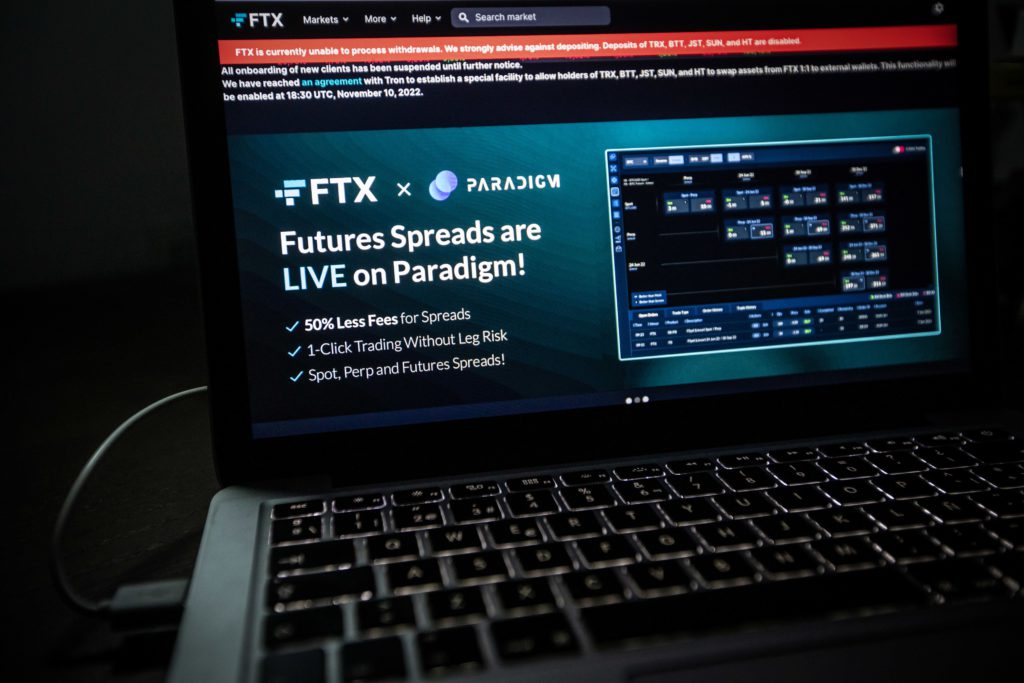
FTX Bahamas Unit Files for Chapter 15 Bankruptcy in New York

(Bloomberg) — FTX Digital Markets Ltd., the Bahamas-based entity associated with Sam Bankman-Fried’s global digital asset empire, has filed for Chapter 15 bankruptcy protection. Chapter 15 filings are designed to facilitate corporate insolvencies that involve assets and entities that span more than one country. 

The filing by the Ryan Salame-helmed unit comes under the “foreign proceeding” law where the “assets and affairs of the debtor are subject to control or supervision by a foreign court, for the purpose of reorganization or liquidation,” the company said in documents filed in the Southern District of New York court. “That will allow provisional liquidators who can act as foreign representatives a “broad discovery concerning the property and affairs of a debtor,” it said in the filing.

Read more: FTX.com Assets Frozen by Bahamas as Crisis Engulfs Empire (2)

The filing follows an abrupt petition by some 130 different Bankman-Fried and FTX-associated entities, including FTX Trading Ltd, for Chapter 11 bankruptcy protection earlier this month. 

FTX has over a million creditors and its restructuring team is engaged with “dozens” of regulatory authorities globally to secure customer accounts, court filings state. FTX Digital, a subsidiary of FTX Trading, allowed users to convert their fiat money into tokens and vice versa. 

The filing urged the New York bankruptcy court to approve the petition “recognizing the Bahamian Liquidation will assist the orderly administration of FTX Digital’s liquidation, consistent with the public policy of the United States that the Bankruptcy Code embodies.”

Read more: FTX’s Freefall Into Bankruptcy Shows Why Case File Is Empty

More stories like this are available on bloomberg.com

©2022 Bloomberg L.P.

Equities, Currencies on Edge After Blast in Poland: Markets Wrap

(Bloomberg) — Stocks and currencies seesawed on Wednesday after a rocket that struck inside the Polish border fueled fears of an escalation of the war in Ukraine.

European equity futures fell, as did shares in Japan, Hong Kong and Australia, amid significant volatility in intraday prices. US futures pared early declines to trade slightly higher.

The euro gained, reversing earlier losses, after US President Joe Biden said the missile was unlikely to have been fired by Russia. The yen weakened as haven demand waned. 

The Associated Press cited unnamed US officials as saying initial findings pointed to the projectile being fired by Ukrainian forces at an incoming Russian one.

The Polish zloty trimmed its losses against the dollar while a gauge of the greenback traded within a broad range through the day, underscoring investor uncertainty. 

Treasury yields saw gains after recent declines that were made in line with pricing for a slower pace of interest hikes from the Federal Reserve. Oil and gold both slipped. 

The cautious trading Wednesday contrasted with more upbeat sentiment on Tuesday when US shares rallied after producer price index data fell short of forecasts, easing inflation concerns.

“After a strong rebound in US equities and in the Chinese equity markets, I think it makes sense to have some consolidation,” Grace Tam, chief investment adviser for Hong Kong at BNP Paribas Wealth Management, said on Bloomberg Television. “With what happened in terms of the missile, it could be the trigger of the consolidation. Sentiment has gone from risk-on to a little bit risk-off.”

Key events this week:

  • US business inventories, cross-border investment, retail sales, industrial production, Wednesday
  • Fed’s John Williams, Lael Brainard and SEC Chair Gary Gensler speak, Wednesday
  • ECB President Christine Lagarde speaks, Wednesday
  • Eurozone CPI, Thursday
  • US housing starts, initial jobless claims, Thursday
  • Fed’s Neel Kashkari, Loretta Mester speak, Thursday
  • US Conference Board leading index, existing home sales, Friday

Some of the main moves in markets:

Stocks

  • Futures on the S&P 500 rose 0.1% as of 6:46 a.m. London time. The S&P 500 gained 0.9%
  • Nasdaq 100 futures rose 0.1%. The Nasdaq 100 rose 1.5%
  • The Topix Index was little changed
  • The Hang Seng Index fell 1.1%
  • Australia’s S&P/ASX 200 fell 0.3%
  • The Shanghai Composite Index fell 0.5%
  • Euro Stoxx 50 futures fell 0.1%

Currencies

  • The Bloomberg Dollar Spot Index rose less than 0.1%
  • The euro rose 0.3% to $1.0379
  • The Japanese yen fell 0.4% to 139.80 per dollar
  • The offshore yuan fell 0.5% to 7.0818 per dollar

Cryptocurrencies

  • Bitcoin fell 0.3% to $16,845.68
  • Ether was little changed at $1,245.33

Bonds

  • The yield on 10-year Treasuries advanced five basis points to 3.82%
  • Australia’s 10-year yield declined three basis points to 3.73%

Commodities

  • West Texas Intermediate crude fell 0.8% to $86.21 a barrel
  • Spot gold fell 0.4% to $1,772.49 an ounce

This story was produced with the assistance of Bloomberg Automation.

More stories like this are available on bloomberg.com

©2022 Bloomberg L.P.

FTX Latest: Fears of Contagion Darken the Crypto Sector Outlook

(Bloomberg) — The crypto industry braced for more contagion from the fall of Sam Bankman-Fried’s FTX empire. The US and The Bahamas are talking about bringing him to America for questioning, people familiar with the matter said. 

Bankman-Fried took to Twitter on Wednesday, telling his followers that “there was too much leverage — more than I realized” in his business. That came a few hours after he posted that FTX US had enough money to repay customers. 

The fallout from the crisis is threatening the future of crypto lenders like BlockFi Inc. and Voyager Digital Ltd. Digital-asset markets were steady in a break from recent turmoil, with Bitcoin hovering around $17,000.

Key stories and developments:

  • FTX Wrangles More Than a Million Creditors Amid Chaotic Collapse
  • FTX Once Had Wall Street Heavyweights Sold on Derivatives Plan
  • FTX’s Crypto Contagion Infects Firms From BlockFi to Voyager

(Time references are New York unless otherwise stated.)

About 75% of Retail Buyers of Bitcoin Lost Money, BIS Study Says (2:20 p.m. HK)

A study of how retail investors use cryptocurrency exchange apps suggests about three-quarters have lost money on Bitcoin, according to the Bank for International Settlements.

Data spanning 95 countries from 2015 to 2022 indicates the vast majority of app downloads occurred when Bitcoin’s price was above $20,000, the working paper from the Basel, Switzerland-based BIS says.

The world’s largest token has plunged over 70% from a record hit about a year ago, pressured by rapidly tightening monetary policy and a series of huge blowups at crypto outfits, most recently FTX.

FTX Digital Markets Files for Chapter 15 in New York (noon HK)

Bahamas-based FTX Digital Markets Ltd. has submitted a Chapter 15 petition for recognition of a foreign proceeding in the Southern District of New York, according to a filing on the court’s website.

It’s a subsidiary of FTX Trading Ltd., which filed for Chapter 11 bankruptcy on Nov. 11.

Singapore Says It Remains Focused on Productive Blockchain Uses (9:30 a.m. HK)

Asked at a conference about whether the FTX imbroglio changes the Monetary Authority of Singapore’s approach to crypto, its chief fintech officer Sopnendu Mohanty said “we stay on the course, we stay on the business-case driven approach to the space.”

The central bank is “willing to innovate” provided risks are under control, he added. Singapore, which is clamping down on retail-investor speculation in crypto, has previously said it is seeking to become a hub for productive uses of blockchain technology.

FTX Australia’s License Is Suspended (4:05 p.m.)

Australian Securities and Investments Commission has suspended the Australian financial services license of FTX Australia until May 15, 2023 after it was placed into voluntary administration on Nov. 11, the regulator says in a statement.

Regulators Discuss Bringing SBF to US (3:19 p.m.)

US and Bahamian authorities have been discussing the possibility of bringing Bankman-Fried to America for questioning, according to three people familiar with the matter.

The conversations between law-enforcement officials in the two countries have intensified in recent days as they probe his role in the implosion of cryptocurrency firm FTX. Bankman-Fried has been cooperating with Bahamian authorities, said one of the people, who like the others asked not to be identified due to the sensitivity of the matter. 

SBF Meeting With Regulators (2:58 p.m.)

Bankman Fried said he is meeting “in-person with regulators” to “do right by customers,” according to a tweet.

Tweet Says FTX Had Enough to Repay Customers (12:17 p.m.)

FTX US had enough to repay all if its customers “as of post-11/7,” Bankman-Fried said in a tweet. But he acknowledged that “not everyone necessarily agrees with this.”

Crypto Lender Voyager Deal Void (11:48 a.m.)

Bankrupt crypto lender Voyager Digital Ltd. doesn’t plan to sell itself to FTX after the crypto exchange itself was forced into insolvency proceedings, according to a lawyer for Voyager.   

FTX violated its contract to buy Voyager out of bankruptcy, according to Voyager’s main bankruptcy attorney Joshua Sussberg. FTX has agreed that Voyager can pursue other bids, but has not yet confirmed that the company is pulling out of the contract to buy the smaller crypto company, Sussberg said in court Tuesday.

PwC Named Liquidators (9:35 a.m.)

The Supreme Court of the Bahamas approved partners from PricewaterhouseCoopers, also known as PwC, as provisional liquidators to oversee the assets of crypto exchange FTX.

The Bahamas Securities Commission wrote in a statement that it “moved swiftly to use its regulatory powers” to further protect clients. 

–With assistance from Amanda Fung, Sidhartha Shukla and Suvashree Ghosh.

More stories like this are available on bloomberg.com

©2022 Bloomberg L.P.
Close Bitnami banner
Bitnami