
Bloomberg

‘The Reset Has Arrived’ for the Technology Industry, VCs Warn

(Bloomberg) — The technology industry is facing a fundamental overhaul with rising geopolitical tensions and dwindling investor appetite for money-losing startups, according to a panel of leading venture capital partners. 

“The reset has arrived,” said Jenny Lee, a managing partner at GGV Capital.

The venture capitalist warned that money is harder to come by for startups and valuations have dropped 30% to 50% in some cases. She said the “wake-up” has already hit many smaller startups, though larger private companies may be able to wait out the painful market turn.

The sentiment was echoed by other investors on the panel at the Bloomberg New Economy Forum. In recent years, startup valuations surged to record highs, but many companies have struggled to maintain those levels.

“Valuation became disconnected from fundamentals,” said Bill Ford, chairman and chief executive officer of General Atlantic. “Capital felt free.”

Ford said that the mentality for founders used to be: “Use as much capital as you need to to drive top line growth.” But now “there’s a new world.”

China has been particularly hard hit, especially as Xi Jinping’s administration cracked down on the private sector. The value of venture capital deals in the country tumbled 44% to $62.1 billion through October, compared with the same period in 2021, according to research firm Preqin.

General Atlantic, for example, invested in ByteDance Ltd., the parent company of video sensation TikTok. Ford pointed out that the company now needs to deal with political scrutiny both from the Chinese government and from the US authorities.

“I think what that’s meant for all of us is that the level of risk is higher,” he said, adding that investors still had to be in the China market. “It’s too big to ignore.”

Ford said that Southeast Asia and India are now at the top of General Atlantic’s list of target markets.

GGV’s Lee said the firm now looks at venture deals — globally, not just in China — through the lens of “policy-sensitive” deals and “policy-non-sensitive” deals. Deep tech sectors like semiconductors are very sensitive to political factors in governments around the world, so they require a different investment approach, she said. 

Anna Fang, founding partner of ZhenFund, argued that deal activity is still strong in China, although the pace of investments has slowed. She said her firm sees valuation boosts are harder to come by.

“In terms of write-ups every every week, which I think kind of is a signal to activity level in the VC world. We have a large portfolio, so we probably got 10 write-ups [in valuation] per week. Now we have about three,” she said. 

Beijing has to be sensitive to the private sector and foster a vibrant ecosystem of startups, she said.

“The government is really interested in supporting innovation entrepreneurship,” said Fang.

It’s also important for venture firms and their limited partners to have patience during difficult times. The industry is full of people who sold out too quickly from Facebook and Google.

“Obviously we don’t want to sell ByteDance right?” she said.

More stories like this are available on bloomberg.com

©2022 Bloomberg L.P.

Rakuten Seeks $500 Million in Rare Japanese Junk Bond Deal

(Bloomberg) — Rakuten Group Inc. is marketing a $500 million dollar bond to bolster the Japanese internet firm’s struggling mobile unit, in a test of demand for a rare junk debt offering from the country and a borrower under financial strains.    

Amazon.com Inc.’s competitor in Japan is expected to price the two-year senior unsecured notes early next week, according to people with knowledge of the matter. 

The bond offering is gaining attention given Japan’s small, fledgling junk debt market, where weaker companies aren’t compelled to sell speculative-grade notes due to easy access to bank loans. The debt sale also comes after Rakuten reported widening losses for the third quarter and as it faces the risk of a credit rating downgrade. 

“Rakuten’s plan to issue bonds could signal a delay in raising funds through the listing of its banking and securities units,” Bloomberg Intelligence analysts Sharon Chen and Hui Yen Tay wrote in a note. “This also increases rating risk.” 

Rakuten’s senior unsecured note due 2024 fell 0.4 cent on the dollar Wednesday to a record low of 90 cents. Its 5.125% perpetual bond also dropped 0.4 cent on the dollar to 73.81 cents.  

Rakuten declined to comment on the deal when contacted by Bloomberg News. 

Read More: Rakuten Is Said Cutting Mobile Unit Headcount to Woo Investors

S&P Global Ratings had previously placed Rakuten on review for a downgrade, citing the mobile business’ operating performance, as it expects the firm to have trouble winning more users with ultra-cheap mobile contract offerings.

“We may lower our ratings on Rakuten, including the proposed U.S. dollar bonds, by one notch if we come to believe the company cannot execute a considerable amount of nondebt financing within 2022,” S&P analyst Makiko Yoshimura wrote in a report Wednesday. “Even if it does so, we may consider a downgrade if we think the nonfinancial unit’s EBITDA and FOCF will deteriorate more than we currently assume, or pressure on liquidity increases.”

Read more: Rakuten’s Bonds Tumble on Concerns Over Earnings in Japan

Rakuten posted a wider-than-expected operating loss of 90 billion yen ($644 million) during the quarter ended September as its mobile unit continued to struggle. 

The company has found it hard to compete against bigger rivals NTT Docomo Inc., KDDI Corp. and SoftBank Corp. since launching a full-fledged commercial mobile service in 2020 targeting the low end of the market. It’s also said to be in the process of reducing headcount at the unit to help improve finances, clean up its balance sheet and attract third-party investors.

Rakuten’s proposed bond sale would mark the latest addition to Japan’s tiny junk debt market. The outstanding amount of dollar bonds sold by Japan’s speculative-grade issuers is $13.5 billion, compared with about $2 trillion globally, according to Bloomberg-compiled data. Rakuten and SoftBank Group Corp. are among the few Japanese junk issuers in the overseas market.

It also arrives at a time when Asian junk dollar bond issuance has tumbled 77% to $17 billion so far this year, driven by a spike in yields that soared to a record of about 22% earlier this month, Bloomberg-compiled data show. 

Morgan Stanley is the offering’s lead bookrunner, with Goldman Sachs Group Inc., Daiwa Securities Inc., Mizuho Financial Group Inc., Bank of America Corp. and Citigroup Inc. also joining the deal, said the people who requested anonymity discussing private matters.  

–With assistance from Finbarr Flynn and Min Jeong Lee.

(Updates with details of issuance and yields of Asian high-yield dollar bonds)

More stories like this are available on bloomberg.com

©2022 Bloomberg L.P.

NEF Latest: Distrust of Data; Crypto’s ‘Lehman Shock’ Moment

(Bloomberg) — The rapid downfall of crypto exchange FTX, distrust of big data and changes in China’s venture capital market were all key issues on the second day of the Bloomberg New Economy Forum in Singapore. 

Geopolitics also featured in the day’s discussions, with speakers weighing in on China’s policies following Xi Jinping’s consolidation of power, how to invest sustainably in Asia and the threat of hacking of businesses and governments. 


Cargill CEO Sees Lower Food Prices Coming (11:15 a.m. SGT)

Food prices will likely be lower next year, but global crop stockpiles, especially oilseeds, are very tight, Cargill CEO David MacLennan said. All it takes is one bad crop to press prices higher again, he added, saying food companies are doing all they can.

“We’ve done our job, and we’ve gotten food from where it’s produced to where it’s needed,” he said. “We’ve managed the volatility, we managed through supply chain disruptions.”

Climate change, geopolitics and supply chain disruptions are profound — they’re hard to predict and difficult to control, he said. 

Singapore’s Teo, Mastercard Talk Data Protection (10:55 a.m. SGT)

Thoughtful regulation and more private sector engagement are among the moves needed to combat a rising distrust of data, Singapore’s communications minister Josephine Teo said. She said there is widespread recognition there’s a problem and there’s a need to help people rebuild their confidence in data.

Teo said if governments don’t know what they’re regulating, it will “end up doing more harm than good,” and piecemeal rules would never work.

On the same panel, Mastercard Inc.’s Chief Executive Officer Michael Miebach also said there’s no reason for the private sector not to step up in combating this problem. The question of “who’s going to attack us?” is one that keeps him up at night, he said. 

Sarah Hanson-Young, a senator for South Australia, said that regulatory systems are years behind and big tech companies have taken advantage of this for far too long, with the government “playing massive catch-up.”

FTX is Crypto’s Lehman: bitFlyer Chief (10:28 a.m. SGT)

The meltdown of Sam Bankman-Fried’s digital-assets empire FTX is a “Lehman shock” to the industry, potentially causing more crypto firms to fail, said the chief executive officer and co-founder of major Japanese crypto exchange bitFlyer Inc.

“It’s a huge impact,” Yuzo Kano said in an interview with Bloomberg Television at the New Economy Forum, adding that the turmoil may push other firms into bankruptcy. “It may actually continue a little bit.”

Sequoia China Chief on Venture Capital (9:50 a.m. SGT)

Neil Shen, founder and managing partner of Sequoia Capital China, said there are seismic changes going on in the venture capital market. He pointed out that the industry had a run of easy years in which startup valuations would rise every six to nine months.

“The market has changed completely,” said Shen, whose firm is considered one of the elite players in the Chinese market. “Now you have to roll up your sleeves.”

He made the case that consultants and bankers have been active in the venture business in recent years, but a core skill is operational experience. If you’ve started a company, then you can make substantial contributions and help entrepreneurs get their businesses off the ground. That kind of hard work is essential in the current market.

“That’s the only way venture capital can create value and create returns,” Shen said at NEF.

Geopolitics in Focus (9:05 a.m. SGT)

Great-power politics dominated the first session on day two, with panelists including James Crabtree of the International Institute for Strategic Studies saying it has been a “bad week” for Putin, and that US-China tensions over Taiwan aren’t going away.

Despite a positive meeting between Presidents Xi Jinping and Joe Biden this week in Bali, Crabtree said “I don’t think we’ll have to wait very long before we have the next crisis over Taiwan.” The tensions that followed House Speaker Nancy Pelosi’s visit to Taipei in August “will become more common.”

Nisid Hajari, a Tokyo-based foreign affairs specialist on Bloomberg’s editorial board, said a NATO-style military bloc probably isn’t needed to deter China, and would struggle for support regardless. 

Tradeshift Warns on Supply Lines (8:15 a.m. SGT)

Christian Lanng, the chief executive officer of supply chain specialist Tradeshift, said it would take decades for the west to recreate China manufacturing, if there was even any appetite for doing so. Pivoting supply chains takes five to 10 years and cannot be hurried.  

Elevated interest rates are imposing an invisible financial strain on supply systems, which are generally quite fragile and weren’t prepared for global shocks like we’ve seen over the past year, he said on the sidelines of the NEF. Any new trade sanctions on Russia are unlikely to have a material effect, Lanng said during an interview broadcast on Bloomberg Radio.

The New Economy Forum is being organized by Bloomberg Media Group, a division of Bloomberg LP, parent company of Bloomberg News. 

–With assistance from Jane Zhang, Peter Elstrom, Takashi Nakamichi, Joyce Koh, Adrian Kennedy, Bill Faries, Tom Redmond, Vlad Savov, Juliette Saly and Michelle Jamrisko.

More stories like this are available on bloomberg.com

©2022 Bloomberg L.P.

Mercedes Slashes China EV Prices By Up to $33,000 as Sales Lag

(Bloomberg) — Mercedes-Benz Group AG cut prices on two electric car models in China by as much as $33,000, as heated competition in the world’s biggest EV market impacts sales. 

The luxury automaker said in a statement on its website late Tuesday that it was reducing prices on certain models from its EQ range, effective Wednesday, and that it would provide subsidies to customers who recently bought the cars. 

The cuts seemed to be immediate, with the EQE priced at 478,000 yuan ($67,675) on Mercedes’ Chinese website Wednesday morning, compared to 528,000 yuan as recently as Tuesday. The EQS luxury edition model was listed at 956,000 yuan on Wednesday, down from 1.19 million yuan on Tuesday, equivalent to a reduction of around $33,000. 

Click here to read this story in German

Mercedes is making the cuts because sales have been disappointing in China, according to people familiar with the company’s plans, who asked not to be identified because the information is private. 

Some dealers have already been carrying out promotions to try and boost sales, with EQS deliveries at times dropping to as low as 100 a month, the people said.

The EQS is the all-electric version of Mercedes’ flagship S-Class model, a vehicle that’s meant to showcase the automaker’s most advanced technologies. While the EQS’s low-slung roof makes it very aerodynamic — increasing its range on a single charge — the design means there’s less headroom in the rear seating compartment, a drawback in the Chinese market where wealthy customers may prefer to sit in the back rather than drive the car themselves.

Evolving Market

In a statement to Bloomberg News, Mercedes said the top-end EV segment in China is still evolving, especially for cars priced above 1 million yuan. 

“Mercedes-Benz continually observes and analyzes dynamic market developments, including the current positioning of other manufacturers in the luxury segment. Based on that, Mercedes-Benz is repositioning certain EQ models in China,” it said. 

Foreign and legacy car brands are falling behind rising local names in China, with domestic carmakers accounting for almost 80% of EV sales in the first seven months of 2022, according to the China Passenger Car Association. 

Mercedes sold about 8,800 EVs in the country from January to July, data from the China Automotive Technology and Research Center show, including less expensive EQA, EQB and EQC models. Chinese EV giant BYD Co., which targets more of the middle market, sold nearly 220,000 EVs in October alone. 

Read more: China’s BYD Aims to Rule EV World by Being Anything But Tesla

Mercedes isn’t the only foreign carmaker responding to Chinese market pressures. Elon Musk’s Tesla Inc. lowered prices across its lineup in China in October. 

“Local automakers have already strengthened their muscles,” PCA Secretary General Cui Dongshu said at a briefing earlier this month. “After making up the technological gap in car manufacturing in the new energy vehicle sector, Chinese automakers have an apparent advantage in both supply chains and end sales.” 

–With assistance from Selina Xu.

More stories like this are available on bloomberg.com

©2022 Bloomberg L.P.
Vast Majority of Retail Investors in Bitcoin Lost Money, BIS Says

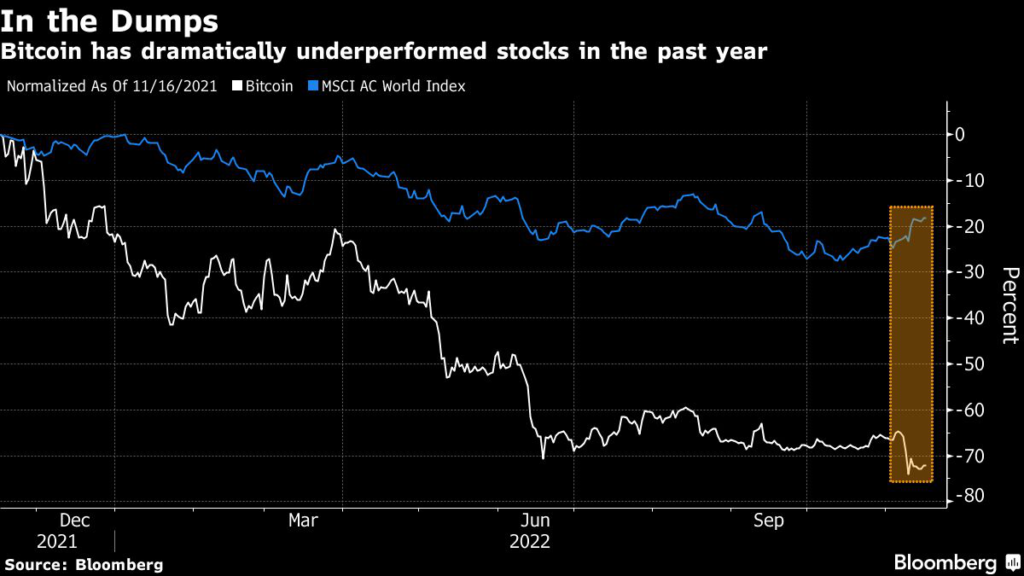
(Bloomberg) — A study of how retail investors use cryptocurrency exchange apps suggests about three-quarters have lost money on Bitcoin, according to the Bank for International Settlements.

Data spanning 95 countries from 2015 to 2022 indicates the vast majority of app downloads occurred when Bitcoin’s price was above $20,000, the working paper from the Basel, Switzerland-based BIS says.

The analysis says if we assume each new user bought $100 of Bitcoin in the month they installed the app and each month thereafter, 81% would have lost money. 

The study raises “questions about the implications of greater crypto adoption for the economy and consumer welfare,” the paper’s authors wrote.

Other findings from the BIS — often referred to as the central bankers’ central bank — included that some 40% of app users were men under 35 and that less than 35% of all users globally were female.

Bitcoin reached a high of almost $69,000 in November last year at the height of the pandemic-era speculative frenzy for digital coins stoked by ultra-low interest rates and stimulus cheques.

The world’s largest token has since plunged 75%, pressured by rapidly tightening monetary policy and a series of huge blowups at crypto outfits, most recently Sam Bankman-Fried’s FTX exchange.

For crypto market prices: CRYP; for top crypto news: TOP CRYPTO.

More stories like this are available on bloomberg.com

©2022 Bloomberg L.P.
Stocks, Dollar Seesaw Amid Biden Missile Comments: Markets Wrap

(Bloomberg) — Shares in Asia unwound much of their earlier fall after US President Joe Biden said a missile that struck Poland was unlikely to have been fired from Russia.

The dollar was little changed after previous gains. The greenback had climbed while equities fell as markets in Asia opened after reports that explosion that killed two people was caused by a Russian-made rocket. 

Poland’s zloty trimmed its decline but was still among the poorer performers against the dollar. 

Biden convened a meeting of leaders at the Group of 20 summit to discuss the missile incident which damped earlier positive sentiment from signs that the Federal Reserve may slow interest-rate hikes. 

US stocks had rallied on Tuesday after producer price index data undershot estimates, easing inflation concerns and supporting the case for a slowdown in rate hikes. A slew of Fed speakers in recent days have indicated the central bank could slow the tempo of rate rises while cautioning more work is needed to tame inflation. 

“I don’t think we’re at the trough,” said Ann Berry, founder and managing partner of Threadneedle Ventures in New York, speaking on Bloomberg TV about the S&P 500. “I would not be surprised if we hit the 3,600 level again if we see the confidence that has come into the market deflate,” she said, implying a 10% decline from Tuesday’s closing price.

Read More: The Great Inflation Trade Falters, Whiplashing Momentum Players

Key events this week:

  • US business inventories, cross-border investment, retail sales, industrial production, Wednesday
  • Fed’s John Williams, Lael Brainard and SEC Chair Gary Gensler speak, Wednesday
  • ECB President Christine Lagarde speaks, Wednesday
  • Eurozone CPI, Thursday
  • US housing starts, initial jobless claims, Thursday
  • Fed’s Neel Kashkari, Loretta Mester speak, Thursday
  • US Conference Board leading index, existing home sales, Friday

Some of the main moves in markets:

Stocks

  • Futures on the S&P 500 fell 0.1% as of 11:39 a.m. Tokyo time. The S&P 500 rose 0.9%
  • Nasdaq 100 futures fell 0.1%. The Nasdaq 100 rose 1.5%
  • The Topix Index was little changed
  • The S&P ASX Index fell 0.3%
  • The Hang Seng Index fell 0.1%
  • The Shanghai Composite Index was little changed
  • Euro Stoxx 50 futures fell 0.7%

Currencies

  • The Bloomberg Dollar Spot Index was little changed
  • The euro rose 0.3% to $1.0382
  • The Japanese yen fell 0.4% to 139.89 per dollar
  • The offshore yuan fell 0.3% to 7.0667 per dollar

Cryptocurrencies

  • Bitcoin rose 0.4% to $16,949.95
  • Ether rose 1.3% to $1,262.12

Bonds

  • The yield on 10-year Treasuries advanced three basis points to 3.80%
  • Australia’s 10-year yield declined five basis points to 3.71%

Commodities

  • West Texas Intermediate crude fell 0.3% to $86.65 a barrel
  • Spot gold fell 0.2% to $1,775.84 an ounce

This story was produced with the assistance of Bloomberg Automation.

More stories like this are available on bloomberg.com

©2022 Bloomberg L.P.
FTX is ‘Lehman Shock,’ More Failures May Come: bitFlyer CEO

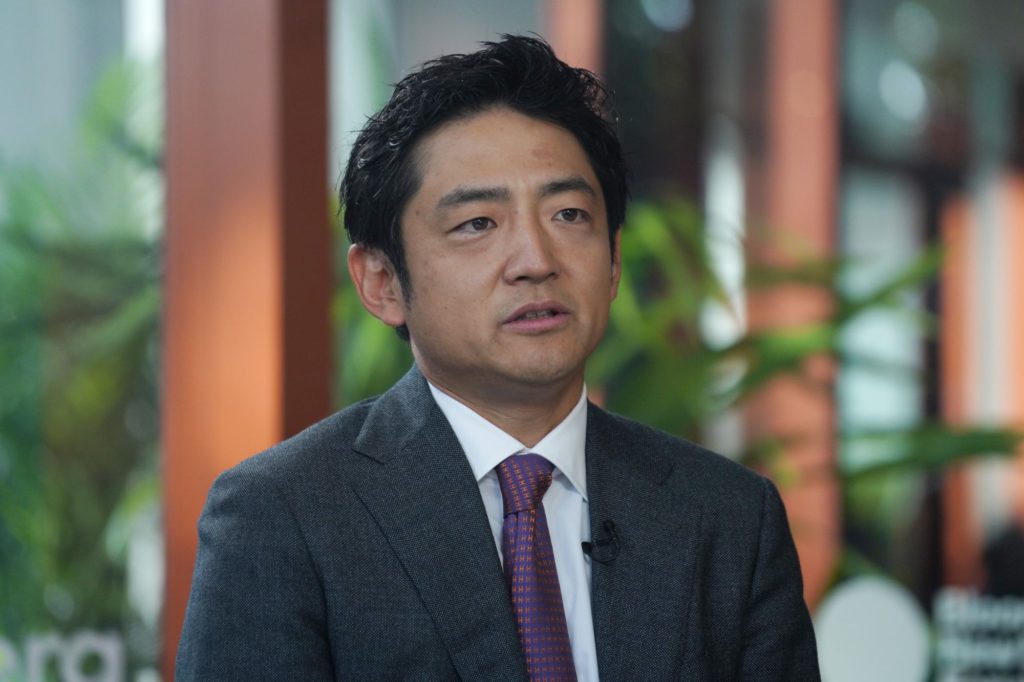
(Bloomberg) — The meltdown of Sam Bankman-Fried’s digital assets empire FTX is a “Lehman Shock” to the industry, potentially causing more crypto firms to fail, said the chief executive officer and co-founder of major Japanese crypto exchange bitFlyer Inc.

“It’s a huge impact,” Yuzo Kano said in an interview with Shery Ahn and Haidi Stroud-Watts on Bloomberg Television at the New Economy Forum, adding that the turmoil may push other firms into bankruptcy. “It may actually continue a little bit.”

The fall of Bahamas-based FTX, once perceived as among the most dependable names in the sector, has sparked fresh concerns over the loosely regulated nature of crypto companies and what guardrails are in place to safely oversee clients’ assets. The exchange’s implosion has drawn comparisons with the fall of investment bank Lehman Brothers Holdings Inc. in 2008 or that of energy trader Enron Corp. in 2001. 

Read More: FTX’s Crypto Contagion Infects Firms From BlockFi to Voyager

“I think regulation is very important,” Kano said, highlighting how Japan protects consumers through a “double-layer” of oversight by the Financial Services Agency, the market regulator, and an industry group made of crypto exchanges. 

“The rest of the world may follow” Japan to strengthen rules over digital currencies, such as requiring exchanges to manage clients’ assets separately from their own, he said. 

Kano said bitFlyer has had no dealings with FTX so there is “no impact at all” on the Japanese firm.

–With assistance from Shery Ahn and Haidi Lun.

More stories like this are available on bloomberg.com

©2022 Bloomberg L.P.

Meta’s Ex-India Policy Chief Joins Samsung as Tech Policy Shifts

(Bloomberg) — Meta Platform Inc.’s former policy head for India is set to take a similar role at Samsung Electronics Co.’s local unit, people with knowledge of the matter said. 

Rajiv Aggarwal will take up the position, which entails liaising with and lobbying government officials on domestic policy matters, from December, one of the people said, asking not to be identified because the appointment hasn’t been made public.

Aggarwal is joining one of the most successful foreign multinationals in India, a top seller of smartphones as well as other electronics. The executive was among several key executives to depart Meta’s local operations this year, as US internet giants including Alphabet Inc.’s Google grapple with increasingly stringent oversight of content.

Aggarwal didn’t respond to messages and a call seeking comment. Samsung representatives didn’t respond to an email seeking comment.

Read more: Meta Loses More Key Executives in India Amid Regulatory Hurdles

Meta on Tuesday said Aggarwal and Abhijit Bose, the head of WhatsApp in India, had resigned. The announcement came just a fortnight after Meta’s India head Ajit Mohan resigned from the tech giant to join rival Snap Inc. in a key position.

Announcing Aggarwal and Bose’s exits, Meta said it remained “deeply committed to India as its priority” and that their resignations were “completely unrelated to the recent news cycles”, alluding to the US tech giant’s move to cut 11,000 jobs or 13% of its workforce globally.

Aggarwal takes up the public policy role at Samsung at a time Indian Prime Minister Narendra Modi has stepped up efforts to make the South Asian nation a force in electronics manufacturing like neighboring China.

Samsung has been a key beneficiary of financial incentives that have helped India become the world’s second-biggest maker of mobiles. Rival Apple Inc. has also expanded production in India, crossing $1 billion in iPhone exports this year.

Aggarwal’s move also coincides with India trying to achieve chip sovereignty by making semiconductors locally, and New Delhi pushing back against Chinese smartphone makers.

An engineer by training, Aggarwal was previously head of South Asia policy with Uber Technologies Inc.

More stories like this are available on bloomberg.com

©2022 Bloomberg L.P.
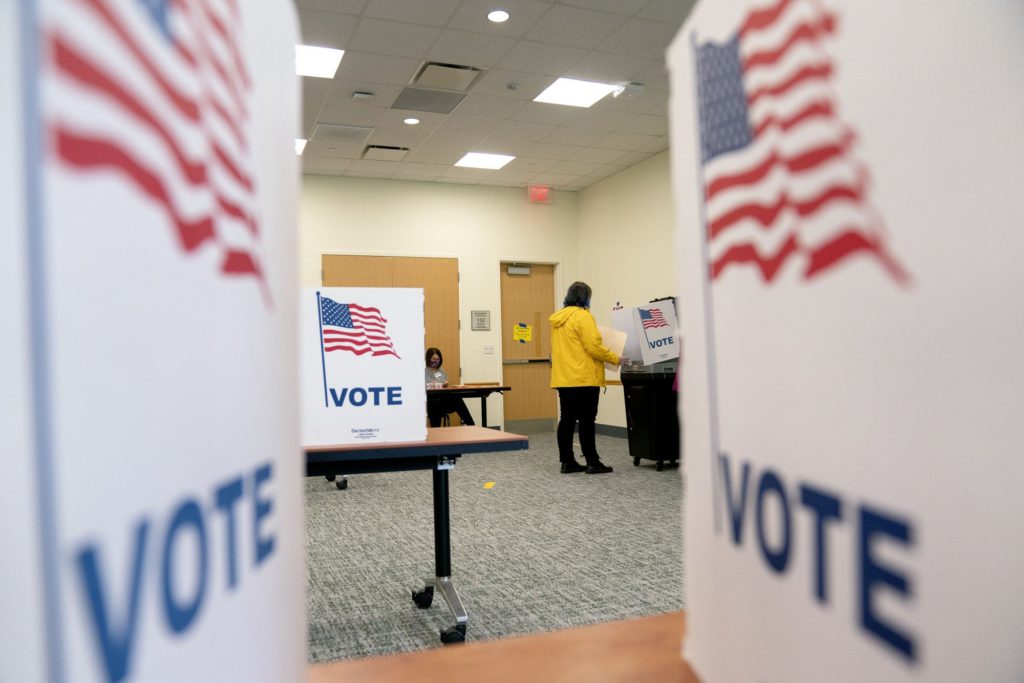
US Avoided Attacks on Election Infrastructure, White House Says

(Bloomberg) — The US did not experience attacks on election infrastructure that significantly affected the midterm elections, President Joe Biden’s top homeland security aide said Tuesday.

The lack of disruptions — combined with the defeats of election deniers who falsely claimed the 2020 contest was illegitimate — should bolster Americans’ confidence in the nation’s voting system, according to White House Homeland Security Advisor Elizabeth Sherwood-Randall.

Federal election-security efforts have been “thus far, from the evidence that we are seeing in this election cycle, successful but we must remain ever vigilant,” Sherwood-Randall said during a program hosted at Bloomberg as part of the fifth annual 9/11 Memorial & Museum Summit on Security, presented by Fiserv.

Read More: Tracking the 2020 Election Deniers and How They Fared on Tuesday

“Seeing those who were the election deniers have largely not succeeded in securing elected positions, it affirms that Americans recognize that this is who we are. That we are a country that expresses our political views at the ballot box, not with bullets,” Sherwood-Randall added. 

Security experts expressed concern ahead of the Nov. 8 midterms that election deniers would exploit any mishaps to amplify claims of widespread voter fraud. That occurred in Arizona, where a technical glitch affected dozens of voting machines in the state’s most populous county. 

A senior Cybersecurity and Infrastructure Security Agency official said at the time that security personnel detected no sign of malfeasance in Arizona, and that, ahead of the elections, there were no credible threats to the nation’s voting system.

Arizona Republican gubernatorial candidate Kari Lake, an election denier who seized on the voting-machine issue, lost her race, as did dozens of other candidates across the country for Congress, governor and secretary of state who said the 2020 election was stolen.

Read more: Election Deniers Fall Short in Efforts to Oversee Key 2024 Races

CISA has worked with state and local governments for years to harden election infrastructure against physical and cyber threats, and those efforts helped ward off disruptions, Sherwood-Randall said. 

The homeland security aide said the government should have a role in combating disinformation in media outlets and on social media channels. 

“This is a role for journalists, importantly, to play in calling out what is true and what is untrue,” Sherwood-Randall said. “In government, we have the same obligation to identify where there is significant misinformation being promulgated, and to address it.”

More stories like this are available on bloomberg.com

©2022 Bloomberg L.P.

IPhone Pro Output Estimates Cut by Morgan Stanley After Lockdown

(Bloomberg) — Apple Inc.’s most in-demand iPhones this year, the premium Pro models, will fall short of earlier shipment estimates by 6 million units, due to the disruption at their main assembly hub in China, Morgan Stanley said in a note.

Assemblers of the iPhone are now expected to ship 79 million units in the current quarter, analysts led by Sharon Shih wrote this week. The shortfall from the previous 85 million handsets estimate is entirely down to the iPhone 14 Pro and 14 Pro Max, assembled at the Zhengzhou facility in central China, hit by a surprise weeklong lockdown after a Covid outbreak. Apple acknowledged delays in deliveries and a likely lower shipment of devices due to the disruption.

Premium smartphones have been the one arena of the mobile market that’s shown resilience to the global economic downturn and maintained sales momentum. Entry-level and midrange devices from the likes of Xiaomi Corp., Oppo and Vivo have all faced double-digit drops in demand this year, and even Apple’s non-Pro iPhones have suffered declining sales. That makes the top-tier iPhone devices even more critical to the Cupertino, California-based company’s sales this year, and the interruption at Zhengzhou more harmful.

“The wait time for 14 Pro/Pro Max has extended to four to five weeks as of late versus two to four weeks a month ago, implying demand stays healthy, even with supply gap,” Shih and her colleagues wrote.

The Morgan Stanley analysts consider the impact on assembly to be manageable and now forecast higher-than-usual output in the first few months of 2023 to make up for unfilled demand. Now that Zhengzhou operations have resumed, sustained production there without further disruption is key for Apple and supply partner Hon Hai Precision Industry Co. to make up lost ground, they said.

Local governments near Zhengzhou have arranged buses to ferry workers to Hon Hai’s plant over the weekend to help the Taiwanese company return to full capacity.

China Covid News: Zhengzhou’s Lockdowns Eased, But Foxconn Stays High Risk

–With assistance from Gao Yuan.

More stories like this are available on bloomberg.com

©2022 Bloomberg L.P.

Close Bitnami banner
Bitnami
