

Bloomberg

Rimac Has Broken the Electric Car Speed Barrier

(Bloomberg) — It’s official: The $2.1 million Rimac Nevera is the fastest electric car in the world. With a few disclaimers.

The two-seat hypercar reached a top speed of 412 kilometers (256 miles) per hour Oct. 23 on the ATP Automotive Testing track in Papenburg, Germany—that’s 2 mph slower than what Rimac had long claimed as the Nevera’s top speed. Additionally on the Nov. 15 press release announcing the news, Rimac said it hit 258mph, which would actually be 415kph. 

When asked about the conversion discrepancy, and if they would issue a correction, a Rimac spokesperson said the company had not attempted to hit the high-speed mark until recently and that “Google had previously converted [412kph] to 258mph.” 

In fact, the claimed top-speed run requires an additional parenthetical: A representative from Guinness World Records was not on-site to certify the record, the spokesperson said, “because it takes an extremely long time to get Guinness certified.” Instead, Rimac used Racelogic V-Box, a high-precision device that measures speed via GPS, to document the run.

Still, assuming this is just a clerical error, it’s an exciting turn in the world of electric cars that consumers can actually buy. The effort beat stated top speeds from other electric vehicles like the Pininfarina Battista (217mph) and Aspark Owl (249mph); a modified Tesla Model S Plaid reached 216mph this past summer. 

However, the Nevera’s white-knuckle electric accomplishment doesn’t beat the top speed record for internal combustion engine cars, which is currently held by the Bugatti Chiron Super Sport 300+ that hit 304mph in 2019. Koenigsegg and SSC Tuatara also make production cars with higher top speeds than the Nevera. By comparison, the typical Formula One race car hits top speeds of roughly 220mph.

Miro Zrnčević, Rimac’s chief test and development driver, piloted the 1,914-horsepower hypercar to its limit. 

“I’ve driven Nevera since it first turned a wheel and to see the perfectly honed car that is today is a really emotional moment,” he said in a press statement, noting that 258mph is one-third of the speed of sound. “The most important thing I have learned during the top-speed attempt is how composed and stable the car was.”

The Nevera runs on a four-motor, all-electric powertrain with 1,725 pound-feet of torque, able to be adjusted individually for each wheel. Six drive modes further optimize throttle response and suspension stiffness; drift mode and launch control are included. The company says the car will get 300 miles per charge, but of course that distance diminishes considerably as you approach top speed.

Customer cars come with a top speed limited to 219mph, but those can be tuned to hit 258mph with the support from the Rimac team and under controlled conditions with proper tires and precautions, the spokesperson said. 

Rimac belongs to Rimac Group, an umbrella company that owns 55% of Bugatti Rimac and 100% of Rimac Technology, a supplier of high-performance battery systems that employs 1,000 people on the outskirts of Zagreb, Croatia, where Neveras are manufactured. Earlier this year, Formula One driver Nico Rosberg received the first one delivered. 

More stories like this are available on bloomberg.com

©2022 Bloomberg L.P.
New York Governor Hochul Urged to Sign Two-Year Crypto Mining Ban

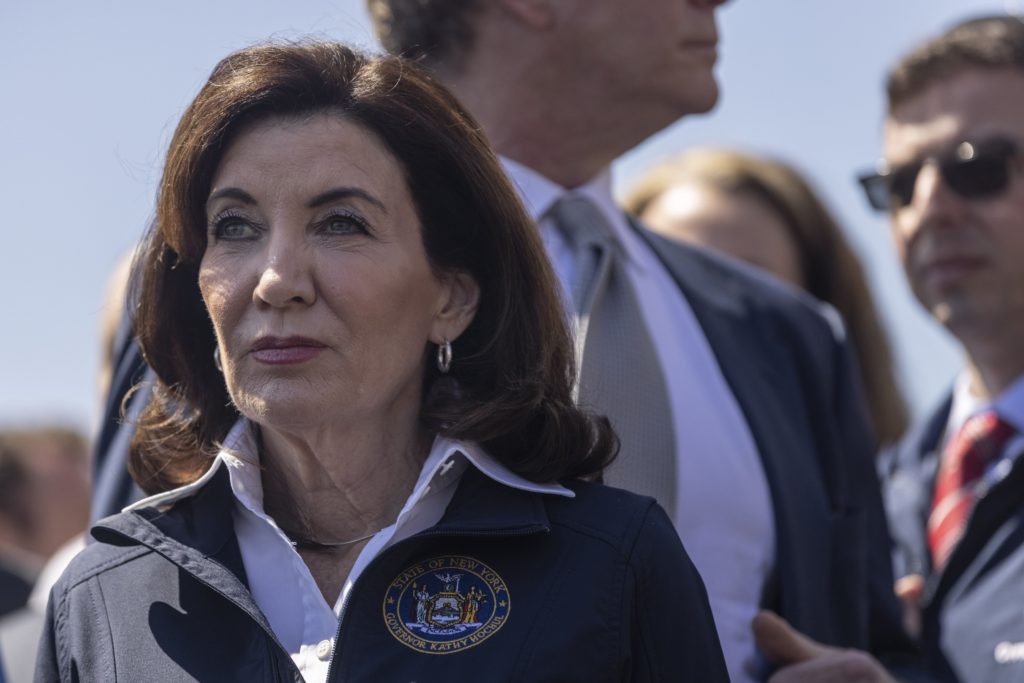
(Bloomberg) — Environmental activists and public officials rallied in front of New York Governor Kathy Hochul’s Manhattan office Tuesday, calling for her to sign a bill that would institute a two-year state ban on some cryptocurrency mining facilities. 

The bill, approved by the state Senate in June, would trigger a two-year moratorium on new permits for crypto plants that are powered by planet-warming fossil fuels and use so-called proof-of-work authentication methods. If Hochul signs the measure, it would become one of the most restrictive laws in the US regulating the practice.

About 30 protesters attended the event, including representatives from environmental justice groups such as Sunrise Movement and Food and Water Watch, and New York City Public Advocate Jumaane Williams.

“I’m not against this technology,” Williams said. “What I am against is using this technology and harming the planet. Proof-of-work harms the planet.”

Proof-of-work mining is considered less power-efficient than the alternative, proof-of-stake mining. Bitcoin, the most popular cryptocurrency, uses proof-of-work mining. Rival Ethereum switched to proof-of-stake mining in 2022, citing a 99.5% reduction in energy consumption.

The protest comes amid a week of bad news for the crypto industry, which was sent reeling after the bankruptcy announcement of crypto exchange FTX on Friday. The sudden downfall of the crypto giant and its founder, Sam Bankman-Fried, sent shockwaves through the industry that are still reverberating.

Read more: FTX Latest: PwC named as liquidator; Munger sees ‘delusion’

Mining Hub

The New York bill is one of several on Hochul’s desk awaiting her signature. Asked about the crypto moratorium at a gubernatorial debate in late October, Hochul said she’s “looking at that bill closely,” but didn’t outright say she would sign it. 

New York state has become a global cryptocurrency mining hub after the Chinese government banned the practice last year. Industrial-scale miners such as Greenidge Generation Holdings have repurposed coal and natural gas-powered facilities to energize electricity-guzzling computers that validate transaction records in the Bitcoin blockchain and earn the token in return.

That strikes a stark contrast with crypto-friendly states such as Texas and Wyoming, where the miners enjoy more liberal mining regulations. 

The rise in popularity of cryptocurrencies over the past decade has made the process costlier and more energy reliant, leading to the introduction of large-scale mining operations, such as Greenidge Generation, which use thousands of computers in its mining operations.

The bill wouldn’t ban small-scale mining operations, such as people attempting to mine coins on their own computers. 

A September report from the White House noted the total global electricity usage for crypto assets was greater than the entire electricity usage of entire countries, including Argentina and Australia.

The price of Bitcoin has fallen over 60% year to date.

More stories like this are available on bloomberg.com

©2022 Bloomberg L.P.
Big Tech’s Layoff Wave Is an Outlier in Still-Robust Job Market

(Bloomberg) — The layoffs and hiring freezes mounting at US technology companies are unlikely to be a harbinger of trouble in the broader US labor market, economists say.

While tech firms that went on a hiring spree during the pandemic-fueled e-commerce boom are now cutting back, many other industries are still struggling with labor shortages, said Jennifer Lee, senior economist at BMO Capital Markets.

“It’s not a bellwether of the entire labor market,” Lee said of the tech industry. “At the end of the day, we have to remember that the US job market remains extremely tight.”

The past weeks have seen an acceleration in job cuts at high-profile companies including Amazon.com Inc., which is planning to lay off 10,000 workers as soon as this week in its largest-ever headcount reduction. Meanwhile, Lyft Inc. and Meta Inc. are cutting over 10% of their workforces. Tech giants and startups alike have announced significant austerity measures.

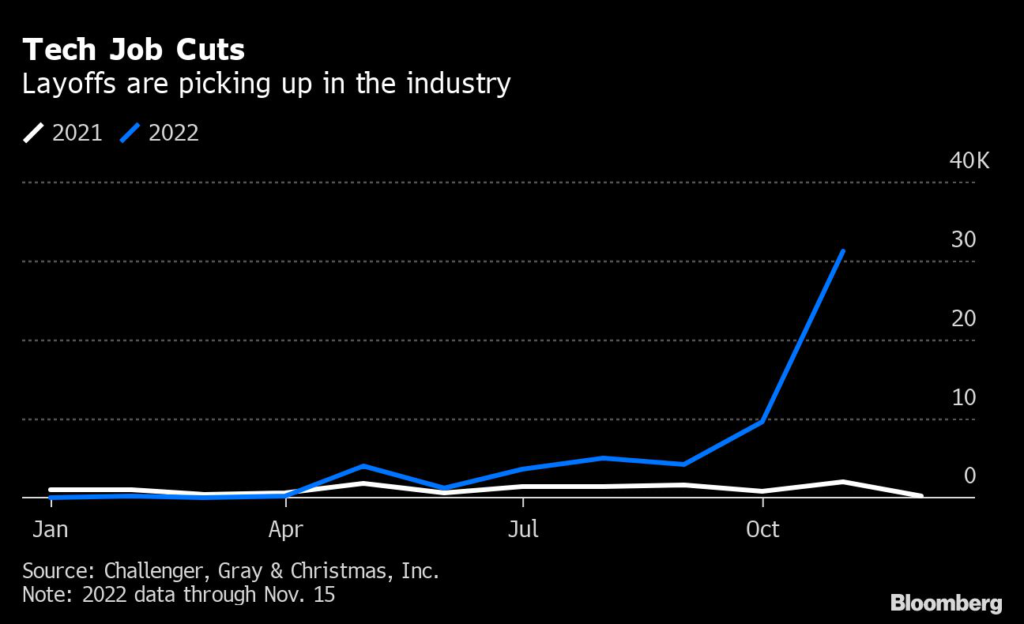
So far this month, technology companies have outlined plans to eliminate 31,200 jobs, according to consulting firm Challenger, Gray & Christmas Inc. That’s already the highest monthly total for the industry since September 2015. 

While painful for workers, the cuts belie a labor market that remains healthy in the US, Nela Richardson, chief economist at the ADP Research Institute, said in a blog post Monday titled “Don’t read too much into tech sector layoffs.”

Tech companies represent about 2% of all employment in the country, said Richardson. That compares with 11% for the leisure and hospitality industry, which is still struggling to hire workers, she added.

“Hiring in other, larger service sectors, though slower, remains robust,” Richardson wrote in the note. 

Read More: Amazon, Meta Cut Thousands of Jobs as They Cope With Slowdown

There’s a third reason why the recent wave of tech job cuts aren’t a sign of an impending recession, according to Goldman Sachs Group Inc. economists: history. Layoffs in the sector have frequently spiked in the past and haven’t been a leading indicator of broader labor-market deterioration, they wrote in a note Tuesday.

“We continue to expect that many laid-off workers will be able to find new jobs relatively quickly, and that the required reduction in aggregate labor demand will come primarily from fewer job openings rather than higher unemployment,” the economists said.

The US labor market has stayed remarkably resilient so far in the face of the highest inflation in decades and growing economic uncertainty. There are signs that it’s cooling, and with the Federal Reserve on an aggressive interest-rate hiking path to curb demand, joblessness is expected to increase in the coming year. 

How fast and by how much is a question economists are debating. After spending months trying to recruit employees, many companies may decide to hold on to their workers even as demand slows — a practice dubbed labor hoarding. 

The types of jobs that are being eliminated today may offer a glimpse into the future for workers.

Many of the tech layoffs are in human resources and recruiting positions, which suggests companies may be skeptical about future hiring, said Nick Bunker, head of economic research for North America at Indeed Hiring Lab.

“If you’re letting go of recruiters, you’re probably not planning on adding many more new people to your staff anytime soon,” Bunker said. “The story to me is that firms are pulling back from a period where they hired a lot.”

–With assistance from Alex Tanzi.

More stories like this are available on bloomberg.com

©2022 Bloomberg L.P.
Stocks Swing, Bonds Rally on Geopolitical Angst: Markets Wrap

(Bloomberg) — Stocks swung between gains and losses, and Treasuries rose as geopolitical worries from Europe fueled a move away from risk assets.

The S&P 500 oscillated after wiping out a gain of more than 1% as a spokesman for Poland’s government said the nation’s national security had convened a meeting. The spokesman did not give a reason for the meeting. A report from the Associated Press said Russia missiles fired at Ukraine landed in Poland, citing a US intelligence official. Treasury yields slipped.

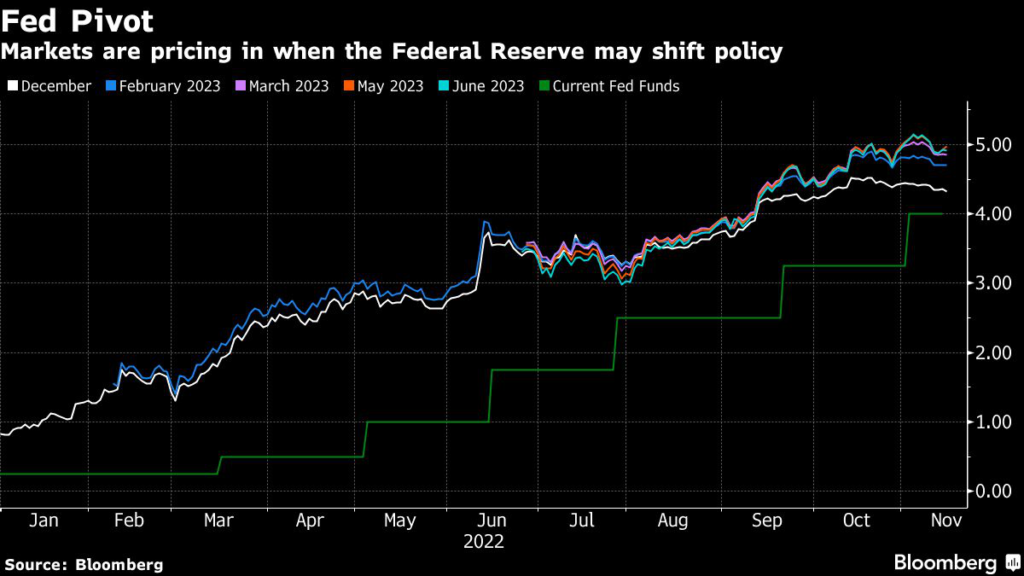
Markets have turned risk-on in recent days, trading off a softer-than-expected US consumer price index reading that many reckon will allow the Fed to raise rates in half-point increments. That view was encouraged by Philadelphia Fed President Patrick Harker on Tuesday, who said he expects officials to slow their tempo. 

Vice Chair Lael Brainard made similar remarks at a Bloomberg event on Monday, even though she emphasized the central bank has “additional work” to do to tame inflation. While Atlanta Fed President Raphael Bostic also reiterated the central bank’s resolve to be persistent, Vice Chair for Supervision Michael Barr cautioned the economy could see “significant softening” because of the Fed’s actions. 

On Tuesday, the producer price index for October came in at 8% year-on-year, undershooting the 8.3% estimate and easing inflation concerns. 

“Taken alone, the data today supports the Goldilocks scenario, where growth is holding up very well — per the solid Empire Manufacturing report — but inflation pressures are rapidly easing — per the PPI print,” said Dan Suzuki, deputy chief investment officer at Richard Bernstein Advisors LLC. “I think that supports the ongoing rally that you’ve seen over the past month, but I question where this narrative will hold up in the coming months.”

Some investors are not convinced the recent data will do much to move the Fed.

“The markets are looking for good news — investors seems like they want to find reasons to take more risk,” said Brian Nick, chief investment strategist at Nuveen. “But I wouldn’t be jumping on this equity rally at the moment.”

Meanwhile, Monday’s meeting between China’s Xi Jinping and President Joe Biden generated hopes of warmer ties between the two superpowers. It came after Beijing had announced measures to support China’s beleaguered property sector, and to relax Covid curbs. Chinese stocks listed in the US rallied for a fourth day. 

Read: Everything Is Suddenly Falling In Place for Chinese Stocks

Data showing Japan’s economy unexpectedly shrank in the third quarter, as well as softer-than-expected Chinese retail sales figures, highlighted risks for global growth. 


Key events this week:

  • Former US President Donald Trump plans to make an announcement, Tuesday
  • US business inventories, cross-border investment, retail sales, industrial production, Wednesday
  • Fed’s John Williams, Lael Brainard and SEC Chair Gary Gensler speak, Wednesday
  • ECB President Christine Lagarde speaks, Wednesday
  • Eurozone CPI, Thursday
  • US housing starts, initial jobless claims, Thursday
  • Fed’s Neel Kashkari, Loretta Mester speak, Thursday
  • US Conference Board leading index, existing home sales, Friday

Some of the main moves in markets:

Stocks

  • The S&P 500 rose 0.3% as of 1:51 p.m. New York time
  • The Nasdaq 100 rose 0.9%
  • The Dow Jones Industrial Average fell 0.3%
  • The MSCI World index fell 0.6%

Currencies

  • The Bloomberg Dollar Spot Index was little changed
  • The euro fell 0.1% to $1.0315
  • The British pound rose 0.6% to $1.1826
  • The Japanese yen rose 0.5% to 139.25 per dollar

Cryptocurrencies

  • Bitcoin rose 2.1% to $16,725.91
  • Ether rose 1.3% to $1,242.03

Bonds

  • The yield on 10-year Treasuries declined seven basis points to 3.78%
  • Germany’s 10-year yield declined four basis points to 2.11%
  • Britain’s 10-year yield declined seven basis points to 3.29%

Commodities

  • West Texas Intermediate crude rose 2.8% to $88.31 a barrel
  • Gold futures rose 0.5% to $1,785.90 an ounce

This story was produced with the assistance of Bloomberg Automation.

–With assistance from Sujata Rao and Natalia Kniazhevich.

More stories like this are available on bloomberg.com

©2022 Bloomberg L.P.
The Global Pillars of Prosperity are Getting Increasingly Shaky

(Bloomberg) — Subscribe to Stephanomics on Apple PodcastsSubscribe to Stephanomics on Spotify

Over the past few decades, the world’s economic and political leaders were spoiled by relatively low inflation and minimal borrowing costs, a supercharged economy in China driving demand and generally modest geopolitical tension. But as we know, all of that’s changed. With inflation soaring, Chinese growth slowing and Russia waging war on Ukraine, Bloomberg Chief Economist Tom Orlik contends the pillars that long underpinned rising prosperity have shifted.

This week, the Stephanomics podcast is coming to you daily from the Bloomberg New Economy Forum in Singapore, where corporate and political leaders are discussing vexing issues like sustainability and the fragile supply chain. In today’s episode, Orlik shares with host Stephanie Flanders why the current challenges will play out over years, instead of months. First, even if inflation in the US ticks down to 4% by mid-2023, that will still be “way outside the Federal Reserve’s comfort zone,” Orlik says. Fed Chairman Jerome Powell has said he’ll raise interest rates until inflation subsides, but Orlik warns the risk is he’ll ease up if unemployment gets uncomfortably high—since any improvements in inflation could reverse.

The second pillar, China’s previous annual growth rate of almost 10%, may settle in closer to 4%, and even that could be too optimistic, says Orlik. Finally, while Chinese leader Xi Jinping and US President Joe Biden lowered the temperature between the two nations on the sidelines of the G20 summit in Bali, left unresolved was the US effort to restrict the sale semiconductors to Chinese customers. 

On that note, during one of the forum’s sessions Tuesday, Senior Minister of Singapore Tharman Shanmugaratnam urged restraint on the part of both the US and China. Tariffs do no one any good, he said, while nations should protect their own national security without trying to limit other nations’ economic growth. “You can’t prevent China from emerging as a major player in the global economy and in the global technology space,” Shanmugaratnam told Flanders.

More stories like this are available on bloomberg.com

©2022 Bloomberg L.P.
Musk Steps Up Purge of Twitter Engineers Who Criticize Him

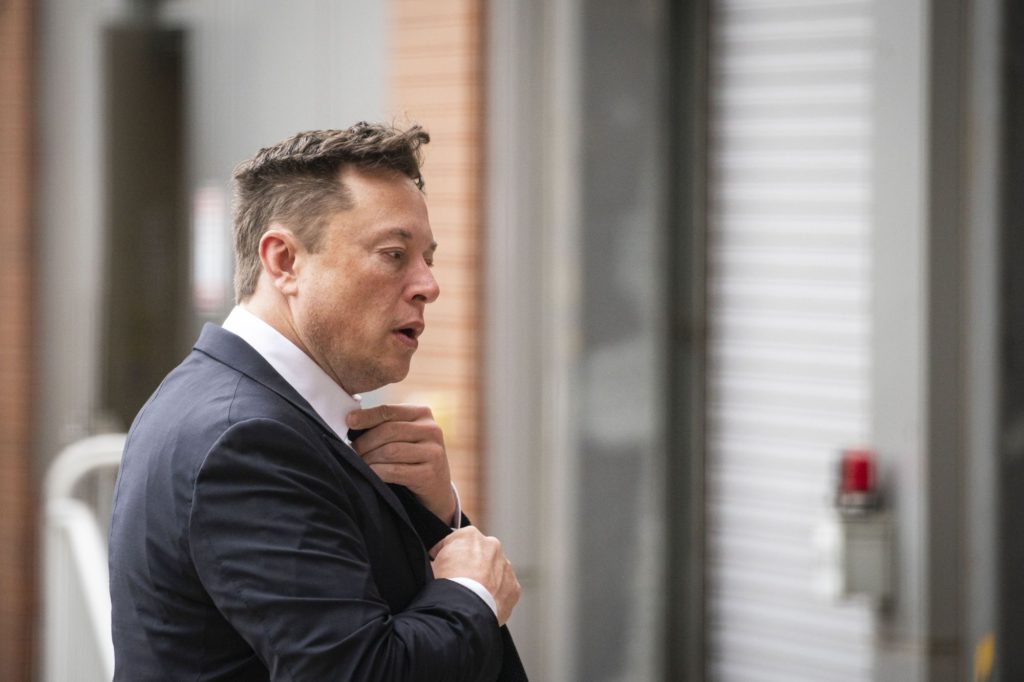
(Bloomberg) — What began as the firing of two longtime Twitter Inc. engineers after they criticized their new boss has turned into a purge, as Elon Musk clamps down on internal and external dissent.

In the past 24 hours, an estimated dozen or so employees have been let go after openly rebuking Musk, who has called himself a “free speech absolutist,” according to two people familiar with the matter. Musk and Twitter haven’t confirmed the firings, but employees have been monitoring the situation through public tweets and private messages.

In one case, Musk announced a firing in a tweet. Engineer Eric Frohnhoefer, who worked on Twitter’s app for the Android mobile operating system, on Sunday reposted one of Musk’s tweets with a comment, saying that Musk’s understanding of a technical part of Twitter’s app was “wrong.” Musk replied and asked Frohnhoefer to elaborate, before writing, “Twitter is super slow on Android. What have you done to fix that?”

After attempting to explain his thinking in a number of tweets, Frohnhoefer was asked by another user why he hadn’t shared his feedback with his new boss privately. The engineer, who has worked at Twitter for more than eight years, replied, “maybe he should ask questions privately. Maybe use Slack or email.”

On Monday morning, Musk wrote that Frohnhoefer had been fired. Frohnhoefer retweeted that post, and included a saluting emoji that many employees used when they were laid off earlier this month. Twitter and Frohnhoefer didn’t immediately respond to requests for comment on his status.

Another engineer, Ben Leib, also lost his job following a public posting critical of Musk. He commented on the same post about load times from Musk, writing, “As the former tech lead for timelines infrastructure at Twitter, I can confidently say that this man has no idea wtf he’s talking about.” Leib, who worked at Twitter for a decade, confirmed to Bloomberg that he was fired on Sunday.

Sasha Solomon, a software engineer, posted Monday night that she was fired for a critical post. “I said it before and I’ll say it again,” she tweeted. “Kiss my a– elon.” Another engineer, Nick Morgan, tweeted a screenshot of the email sent from Twitter HR that said he was fired after his “recent behavior violated company policy.” 

“My Twitter account was protected at the time, so I can only assume this was for not showing 100% loyalty in Slack,’ he tweeted, referring to Twitter’s internal company communications. Morgan and Solomon could not be reached for comment. 

Twitter has been thrown into chaos since Musk took over late last month. Many workers remain upset that Musk fired half of the company’s 7,000-plus employees, including most of the senior managers, within about a week of his $44 billion buyout.

The billionaire also rapidly changed the corporate culture. While it wasn’t previously routine for employees to challenge leadership publicly at Twitter, workers often spoke out on internal Slack channels and by email before Musk showed up, sometimes posting criticism or concerns to the entire company.

Musk’s changes have led to a lack of communication internally in terms of who is in charge and what the company’s priorities are, current and former staffers say.

The moves have also led to concerns that San Francisco-based Twitter is vulnerable to product breakdowns or technical outages. On Monday, Twitter implemented another coding freeze, halting product updates to the app, and employees say they weren’t given a clear reason why.

Read more: Twitter Pauses Subscriptions After Fake Accounts Proliferate

Part of Musk’s motivation for purchasing Twitter was to loosen content restrictions, and make it a destination for “free speech” where people can say “outrageous” things. So far, employees say, that sentiment doesn’t extend to his corporate policies.

–With assistance from Ed Ludlow.

More stories like this are available on bloomberg.com

©2022 Bloomberg L.P.
Google Owner Alphabet Has Too Many Employees, Investor TCI Says

(Bloomberg) — Google parent Alphabet Inc. needs to take “aggressive action” to reduce expenses and scale back an overgrown headcount, investor TCI Fund Management Ltd. said in a letter to the internet-search giant, urging the company to make hard choices as job cuts roil the tech industry.

Management should publicly set a target for profit margins, increase share buybacks and reduce losses in its portfolio of Other Bets — the company’s long-shot projects — TCI Managing Director Chris Hohn wrote Tuesday in an open letter to Alphabet Chief Executive Officer Sundar Pichai.

“We are writing to express our view that the cost base of Alphabet is too high and that management needs to take aggressive action,” Hohn said. “The company has too many employees and the cost per employee is too high.”

A spokesperson for Alphabet didn’t immediately respond to a request for comment. The shares jumped as much as 4.6% to $100.14 after TCI posted the letter. Alphabet stock had fallen 34% this year through Monday’s close.

Google’s advertising juggernaut has begun to show the strain of a slowdown in digital advertising, and its parent company, Alphabet, in October reported third-quarter earnings and revenue that missed projections. As a result of a shaky global economy, job cuts in the technology industry are accelerating, with Meta Platforms Inc. and Twitter shedding thousands of employees in recent weeks and Amazon.com Inc. poised to follow suit.

Noting that Alphabet’s headcount has swelled 20% per year since 2017, TCI wrote, “This growth is excessive, both in relation to historic headcount growth and what the business requires.” 

Alphabet has pledged to slow hiring, and Chief Financial Officer Ruth Porat told investors last month that the number of new jobs would fall by more than half in the fourth quarter from the previous period. Yet TCI suggested more aggressive action was needed.

TCI has spurred changes at other companies, including Canadian National Railway Co., which named a new CEO this year after a fight with the firm. TCI said Tuesday that it’s been a shareholder of Alphabet since 2017 and currently owns a stake worth more than $6 billion.

Still, activist investors have limited ability to force changes at Alphabet, which has a dual-class stock that company founders Sergey Brin and Larry Page control through super-voting shares. Meta and Snap Inc. also have special share structures that give founders extra voting power.

TCI also called on Alphabet to curb losses in its Other Bets portfolio, in particular at self-driving car unit Waymo.

“Waymo has not justified its excessive investment and its losses should be reduced dramatically,” TCI wrote.

–With assistance from Scott Deveau.

(Updates to add background starting in fourth paragraph.)

More stories like this are available on bloomberg.com

©2022 Bloomberg L.P.
Google Owner Alphabet Has Too Many Employees, TCI Says

(Bloomberg) — Google parent Alphabet Inc. needs to take “aggressive action” to reduce expenses and scale back an overgrown headcount, investor TCI Fund Management Ltd. said in a letter to the internet-search giant, urging the company to make hard choices as job cuts roil the tech industry.

Management should publicly set a target for profit margins, increase share buybacks and reduce losses in its portfolio of Other Bets — the company’s long-shot projects — TCI Managing Director Chris Hohn wrote Tuesday in an open letter to Alphabet Chief Executive Officer Sundar Pichai.

“We are writing to express our view that the cost base of Alphabet is too high and that management needs to take aggressive action,” Hohn said. “The company has too many employees and the cost per employee is too high.”

A spokesperson for Alphabet didn’t immediately respond to a request for comment. The shares jumped as much as 4.6% to $100.14 after TCI posted the letter. Alphabet stock had fallen 34% this year through Monday’s close.

Google’s advertising juggernaut has begun to show the strain of a slowdown in digital advertising, and its parent company, Alphabet, in October reported third-quarter earnings and revenue that missed projections. As a result of a shaky global economy, job cuts in the technology industry are accelerating, with Meta Platforms Inc. and Twitter shedding thousands of employees in recent weeks and Amazon.com Inc. poised to follow suit. Google hasn’t implemented any major layoffs, though the company has said it was hitting the brakes on additions.

Noting that Alphabet’s headcount has swelled 20% per year since 2017, TCI wrote, “This growth is excessive, both in relation to historic headcount growth and what the business requires.” 

Alphabet has pledged to slow hiring, and Chief Financial Officer Ruth Porat told investors last month that the number of new jobs would fall by more than half in the fourth quarter from the previous period. Yet TCI suggested more aggressive action was needed.

TCI has spurred changes at other companies, including Canadian National Railway Co., which named a new CEO this year after a fight with the firm. TCI said Tuesday that it’s been a shareholder of Alphabet since 2017 and currently owns a stake worth more than $6 billion.

Still, activist investors have limited ability to force changes at Alphabet, which has a dual-class stock that company founders Sergey Brin and Larry Page control through super-voting shares. Meta and Snap Inc. also have special share structures that give founders extra voting power.

TCI also called on Alphabet to curb losses in its Other Bets portfolio, in particular at self-driving car unit Waymo.

“Waymo has not justified its excessive investment and its losses should be reduced dramatically,” TCI wrote.

–With assistance from Scott Deveau.

(Updates to add background starting in fourth paragraph.)

More stories like this are available on bloomberg.com

©2022 Bloomberg L.P.
Broadcom Seeks EU Approval for $61 Billion VMware Takeover

(Bloomberg) — Broadcom Inc.’s proposed $61 billion takeover of cloud-computing company VMware Inc. was notified to the European Union for antitrust approval, in a step necessary to seal one of the largest technology deals in history.

After months of preliminary discussions with the EU’s merger watchdog, Broadcom formally sought approval for the purchase on Tuesday. Regulators set a Dec. 20 deadline to clear it or open an in-depth review that could drag out the process by about 90 more working days. 

“We are confident that this deal does not present any competition issues and look forward to working with the European Commission throughout this process,” Broadcom said, adding that it expects the tie-up to be completed in its fiscal year 2023.

The transaction marks the biggest-ever takeover for a semiconductor maker and extends an acquisition spree for Broadcom Chief Executive Officer Hock Tan, who has built one of the largest and most diversified companies in the industry. VMware bolsters Broadcom’s software offerings — a key part of Tan’s strategy in recent years. He acquired corporate-software maker CA Technologies in 2018 and Symantec Corp.’s enterprise security business in 2019.

Broadcom Pined for VMware From Afar Before Making Its Move 

“They are more likely than not to get an in-depth review by the European Commission, though I think the deal will likely be able to get done,” Bloomberg Intelligence analyst Jennifer Rie said ahead of the notification. 

She said there may be concerns that the deal gives Broadcom greater power to leverage its portfolio of products and demand desirable terms or exclusivity with customers and disadvantage rivals by bundling products or services.

Such concerns could trigger an extended EU review and may call for behavioral remedies from the companies. 

The commission “still seems willing to accept this kind of concessions these days, though the US is less amenable to settlements that include only behavioral, rather than structural conditions,” said Rie.

(Updates with EU deadline in 2nd paragraph.)

More stories like this are available on bloomberg.com

©2022 Bloomberg L.P.
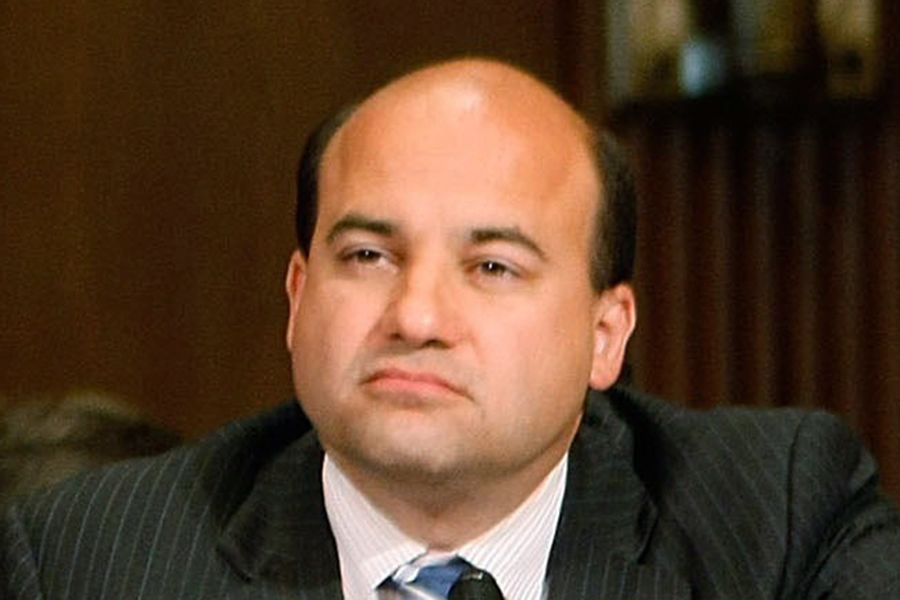
Ex-Calpers, Alaska Permanent CIO Russell Read Joins 10X Capital

(Bloomberg) — Russell Read, the former chief investment officer of California Public Employees’ Retirement System, the Alaska Permanent Fund and Gulf Investment Corp., has joined 10X Capital as CIO.

Read, who’s joining the firm’s executive committee, will oversee 10X’s global investment strategy and report to founder and Chief Executive Officer Hans Thomas. 

“Russell’s exceptional track record and skill set will help the 10X Capital team continue to deliver on our mission of democratizing access to elite, institutional-quality investment strategies,” Thomas said in a statement.

The New York-based firm has ambitions to expand from its current focus on venture capital, crossover credit and private credit into global equity, private equity, fixed income, real assets, infrastructure, health care and commodities investments, Thomas said. 

Read, most recently managing partner at C Change Group, currently serves as an investment committee member for a fund managed by the state of Wyoming, it website shows. 

At 10X, Read will focus on “guiding the firm through the evolution of their venture capital franchise, the establishment of income trusts and their expansion into other major asset classes and strategies” he said in the statement. He’ll work out of New York and Abu Dhabi.

The firm has invested in companies including DraftKings Inc., Robinhood Markets Inc. and REE Automotive Ltd., its website shows. 

More stories like this are available on bloomberg.com

©2022 Bloomberg L.P.

Close Bitnami banner
Bitnami
