

Bloomberg

Xi Seeks High-Tech Cooperation in Summit With South Korea’s Yoon

(Bloomberg) — Chinese President Xi Jinping called for accelerating negotiations on a trade deal and boosting cooperation in high-tech manufacturing in a meeting with South Korean President Yoon Suk Yeol, the first summit between leaders of the two countries in about three years.

Xi told Yoon that China and South Korea should work together to maintain the global free-trade system and ensure the security of global supply chains, according to state broadcaster CCTV. The meeting took place Tuesday on the sidelines of the Group of 20 summit in Bali, Indonesia.

The remarks by the Chinese leader come as the US pressures security partners including South Korea, the Netherlands, Taiwan and Japan to comply with sweeping curbs on the sale of advanced chips. Xi, who met US President Joe Biden on Monday night, made a similar appeal during a meeting earlier in the day with Dutch Prime Minister Mark Rutte. 

Yoon, a conservative who took office in May, asked Xi to play a role in stemming Kim Jong Un’s missile and nuclear programs. North Korea, which shares borders with both countries, has ratcheted up tensions to levels not seen in years by firing off in recent weeks one of its biggest barrages of missiles under Kim in defiance of United Nations resolutions. South Korea has warned the nation could soon conduct its first nuclear test since 2017.

The South Korean president asked Xi Jinping for a more “active and constructive role” amid the growing provocations from North Korea and to hold regular, high-level talks, Yoon’s office said.

Yoon has raised China’s ire by floating plans to expand a US-made missile shield known as Thaad — Terminal High Altitude Area Defense. The South Korean leader has pledged to make the current Thaad system fully operational and floated installing another unit in the Seoul area. 

China objects to the shield over concerns its powerful radar would allow spying on its own missile systems. Yoon has said he doesn’t want the missile interceptor system to become “an obstacle to relations” after Beijing has slammed its use.

China is pushing to reaffirm former South Korean President Moon Jae-in administration’s policy of not allowing additional Thaad deployments. The Moon administration, which comes from the progressive camp, made the announcement in 2017 as it aimed to resolve Chinese trade curbs imposed after the first missile-defense system was delivered as part of US-led efforts to counter North Korea’s nuclear expansion. 

North Korea’s recent escalation of tension is underscoring the cost of Washington’s tensions with Beijing, since China has shown little appetite for additional sanctions over the country’s nuclear program. Biden similarly urged Xi to take action to rein in North Korea during their meeting on Monday night, which overall helped stabilize relations between the world’s biggest economies.

The last summit between South Korea and China came in December 2019, when Moon met Xi in Beijing. The two leaders urged a resumption of talks with North Korea on curbing its atomic ambitions.

Yoon needs to walk a tight line when it comes to balancing relations with China, his country’s biggest trading partner, and the US, its long-standing security ally. Making matters even more difficult are moves by Biden to tighten controls on exports of some chips and chipmaking equipment to China, where major South Korean semiconductor makers have facilities.

South Korea’s SK Hynix Inc., one of the world’s biggest memory chip makers, has warned that the Biden administration’s escalating restrictions could force the closure or sale of a major plant in China, an “extreme situation” it hopes to avert.

Yoon sent ripples through relations with Washington when he decided against having a face-to-face meeting with US House Speaker Nancy Pelosi during a trip to Seoul in August. The visit to Taipei angered Beijing, which sees the island as part of its territory. The snub of the first sitting House speaker to visit South Korea in about 20 years drew criticism from members of South Korea’s opposition and Yoon’s own conservative party. 

–With assistance from Yanping Li.

More stories like this are available on bloomberg.com

©2022 Bloomberg L.P.
ECB Launches New Twitter Feed to Promote Its Research

(Bloomberg) — The European Central Bank launched a Twitter Inc. handle to promote research by its economists and other staff.

The Frankfurt-based institution will be tweeting via @ECB_Research, it said Tuesday.

The step brings the ECB in line with other central banks that have separate Twitter channels dedicated to highlighting analysis. 

The ECB’s decision to add an account on Twitter contrasts with some corporate entities dialing down their their presence on the platform after billionaire Elon Musk acquired the company last month and upended content rules.

More stories like this are available on bloomberg.com

©2022 Bloomberg L.P.
Bankman-Fried Courted Legislators and Regulators. Now, They’re Shunning Him

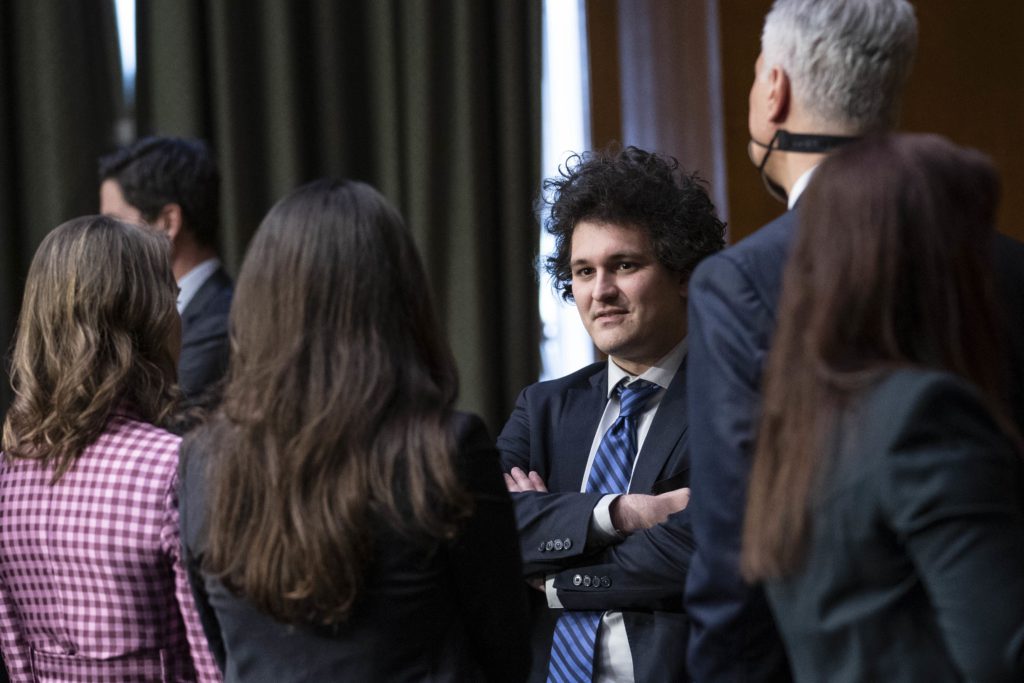
(Bloomberg) — Before last week, FTX cofounder and political megadonor Sam Bankman-Fried had some lawmakers and regulators convinced that he was one of the few adults in the room in the wild crypto industry. Now, they can’t run fast enough away from him. 

His fall from grace, with his digital-asset empire filing for bankruptcy and under investigation by US regulators, is calling into question the future of legislation he championed as a way to bring more regulatory clarity to the crypto world. It leaves a power vacuum for the industry as officials consider new laws and rules, including several that Bankman-Fried was helping to shape.

The 30-year-old entrepreneur presented himself as one of the good guys in crypto. The fact that there were so many problems with his company has raised concerns among policy makers about the legitimacy of the entire industry, according to three people familiar with internal discussions who did not want to be identified. 

FTX’s disintegration is “devastating” for the rest of the crypto industry, said Matthew Homer, a venture capitalist and former head of the New York Department of Financial Services’ innovation division. “If we thought we were in a crypto winter, it now looks like we’re in a nuclear winter,” he said.

Spending Machine

The blowup has led to finger-pointing and tough questions about why Washington hadn’t put in place rules to prevent exactly the type of situation unfolding at FTX. President Joe Biden signed an executive order earlier this year demanding that agencies focus on the issue in a more coordinated way, but their efforts have produced few tangible results so far.

Bankman-Fried amassed tremendous political clout in a short period of time, becoming a regular presence at congressional hearings, holding frequent meetings with regulators and pouring tens of millions of dollars into political campaigns.

He emerged as the sixth-largest player in US political spending in the two years leading up to the Nov. 8 midterm elections, donating a total of $39.4 million , almost all of it to Democrats, Federal Election Commission records show. One of his top lieutenants, Ryan Salame, gave $23.6 million — mostly to Republicans. 

Together, they represented about three-quarters of the $84.1 million in crypto campaign spending during the election cycle through the third quarter.

A representative for FTX didn’t immediately respond to a request for comment. 

The executives’ influence has all but evaporated following FTX’s collapse, which left the company facing billions of dollars in losses and caused ripple effects across the crypto ecosystem. The extent to which those losses will harm investors is still largely unknown. 

“It is really concerning to see that retail investors are really getting hurt by these losses, and it is also the case that despite a lot of hype — you heard a lot about how decentralized these markets are and how innovative and different — it turns out they’re highly concentrated, highly interconnected, and you’re just seeing a domino effect,” Federal Reserve Vice Chair Lael Brainard said at an event Monday at Bloomberg’s Washington office.

Lawmakers like Senators Debbie Stabenow and John Boozman — the top Democrat and Republican on the Senate Agriculture Committee — said the recent events underscore the urgent need for new laws to regulate the crypto industry. In statements last week, they both reinforced their commitments to advancing a bill they have cosponsored to give the Commodity Futures Trading Commission more power to oversee the asset class.

‘Driving Force’

Achieving that goal won’t be easy. The bill was already facing opposition from the decentralized finance, or DeFi, community — a corner of the crypto market that allows participants to cut the middleman out of financial transactions. DeFi supporters had said the bill was skewed toward centralized exchanges like FTX. 

The fact that Bankman-Fried, known as SBF, was so closely associated with the effort is unlikely to help the legislation advance.

“SBF was the driving force behind this bill, and I don’t think policy makers are going to want to move forward with what was his brainchild when he turned out to be the instigator of the current crisis that we have,” said Kristin Smith, executive director of the Blockchain Association, a crypto trade group.

The committee still hoped to vote on the bill sometime before year-end, said a crypto lobbyist who was skeptical of that happening. But lawmakers from both chambers are trying to understand the full details of the FTX meltdown and how to prevent a similar event, according to the lobbyist, who wasn’t authorized to discuss the matter and asked not to be identified. Forcing committee members to vote on what’s now a controversial bill puts them in a tough position, the person added. 

Rushing to pass legislation also “risks laying a poor foundation for future oversight,” said Mark Hays, a senior policy analyst for Americans for Financial Reform and Demand Progress. 

A spokesman for Boozman pointed to the senator’s statement on the FTX situation. Stabenow’s office didn’t immediately respond to a request for comment.

Turf Battle

The FTX fallout is giving ammunition to Securities and Exchange Commission Chair Gary Gensler and his allies in Washington to make the case that his agency should be the top watchdog of the crypto market, even as critics question whether regulators could have taken action before the FTX blowup. 

“I call on Congress not to pass legislation that weakens the oversight of the securities markets and not to do something in the guise or being pro-crypto or pro-innovation that undermines investor protections,” Gensler said last week at a Healthy Markets Association event just blocks away from the Senate.

Legislation being considered by Congress doesn’t meet the test, he said.

Though the CFTC has long been seen as the preferred regulator by the crypto industry, FTX had also tried to make inroads with the SEC. The firm was exploring ways to engage with the SEC and gain a first-mover advantage in the industry by potentially registering its platform with the agency, a person familiar with the matter said in September. The SEC declined to comment. 

The CFTC, however, has been perceived as the less-rigorous route when compared with the SEC’s strenuous disclosure regime. CFTC Chairman Rostin Behnam has disputed that characterization, often noting that the agency was an early mover in cracking down on crypto fraud. 

Behnam said Monday at a conference in Chicago that the agency doesn’t have surveillance or market-monitoring tools when it comes to crypto, which is why the Stabenow-Boozman bill is needed.

“We have to rely on either implosions or people coming to us and saying they are seeing fraud or manipulation in the marketplace,” Behnam said. “We’re going to continue to monitor the entities we can, and other than that, I will continue to advocate for new authority.”

–With assistance from Isis Almeida, Katherine Doherty, Margaret Collins and Bill Allison.

More stories like this are available on bloomberg.com

©2022 Bloomberg L.P.
Big Tech Stokes Nasdaq as Yields Dip on Fed Hopes: Markets Wrap

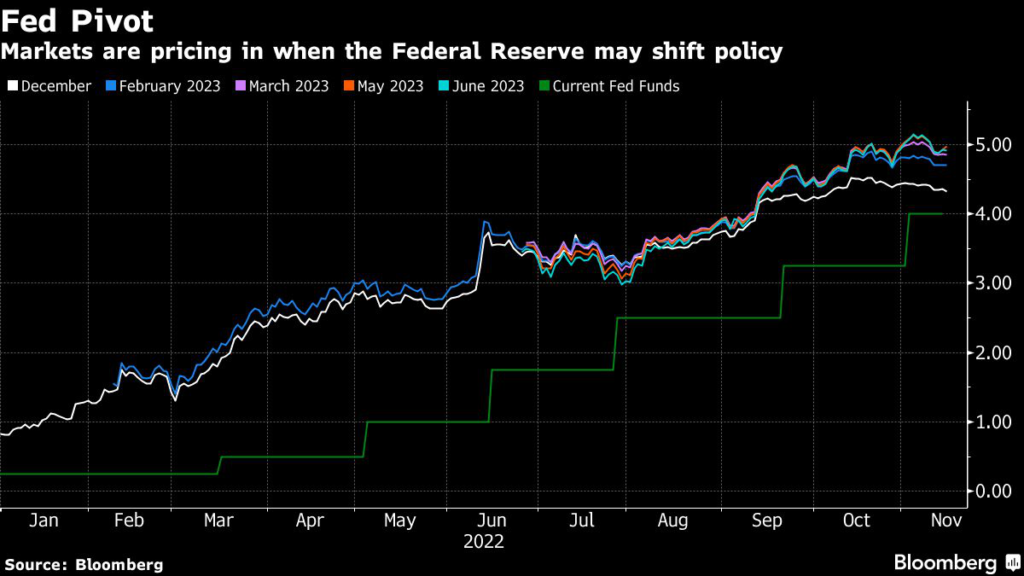
(Bloomberg) — Bulls piled back into global stock markets, encouraged by an easing in Sino-US tensions and growing confidence that the Federal Reserve will be able to slow its rate hiking pace.

As Treasury yields and the dollar slipped, index futures on the Nasdaq 100 jumped more than 1%, boosted also by hefty gains earlier across Asian technology companies. Chipmakers Advanced Micro Devices Inc., Nvidia Corp. and Intel Corp. rose between 1.3%-2% in US premarket trading, while Tesla Inc., Amazon.com Inc., Apple Inc., and Alphabet Inc. all added about 1% each.

Markets have turned risk-on in recent days, trading off a softer-than-expected US data print that many reckon will allow the Fed to raise rates in 50 basis-point increment, after consecutive 75 basis-point hikes. That view was encouraged by Vice Chair Lael Brainard who said on Monday it would probably be “appropriate soon to move to a slower pace of increases.”

“The issue the market has to wrestle with is how long is the Fed going to keep rates at that level and I think there is some positive sentiment out there that the Fed is going to pivot sometime in 2023,” Peter Kraus, Chairman and CEO at Aperture Investors, told Bloomberg Television.

Europe’s Stoxx 600 index swung between losses and gains, though the market is close to a three-month high and Germany’s Dax index is on the cusp of a technical bull-market, having narrowly missed that milestone on Monday. In Asia, Hong Kong’s Hang Seng benchmark rose above that threshold, gaining as much as 4.2%.  

Chinese technology stocks were among the top contributors to gains in the MSCI Asia Pacific Index. Taiwan Semiconductor Manufacturing Co. surged as much as 9.4% after Warren Buffett took a stake of about $5 billion in the chipmaker.

Monday’s meeting between President Xi Jinping and Joe Biden generated hopes of warmer ties between the two superpowers. It came after Beijing had announced measures to support China’s beleaguered property sector, and to relax Covid curbs. 

Read: Everything Is Suddenly Falling In Place for Chinese Stocks

On currency markets, the dollar fell against a basket of currencies, touching its lowest since August 18, while 10-year Treasury yields also slipped. Data showing Japan’s economy unexpectedly shrank in the third quarter, as well as softer- than-expected Chinese retail sales figures, highlighted risks for global growth. 

Bank of America’s global fund manager survey for November showed sentiment remains “uber-bearish,” with investors still crowded into the dollar and cash, while tech stocks remain unpopular. 

“My biggest concern is the market gets ahead of itself and we get into a situation where the Fed feels it needs to rein in, and tighten more than it otherwise would have, as markets became too frothy,” Kristina Hooper, chief global strategist at Invesco said on Bloomberg Radio. 


Key events this week:

  • Former US President Donald Trump plans to make an announcement, Tuesday
  • US empire manufacturing, PPI, Tuesday
  • US business inventories, cross-border investment, retail sales, industrial production, Wednesday
  • Fed’s John Williams, Lael Brainard and SEC Chair Gary Gensler speak, Wednesday
  • ECB President Christine Lagarde speaks, Wednesday
  • Eurozone CPI, Thursday
  • US housing starts, initial jobless claims, Thursday
  • Fed’s Neel Kashkari, Loretta Mester speak, Thursday
  • US Conference Board leading index, existing home sales, Friday

Some of the main moves in markets:

Stocks

  • Futures on the S&P 500 rose 0.8% as of 6:59 a.m. New York time
  • Futures on the Nasdaq 100 rose 1.2%
  • Futures on the Dow Jones Industrial Average rose 0.3%
  • The Stoxx Europe 600 was little changed
  • The MSCI World index rose 0.5%

Currencies

  • The Bloomberg Dollar Spot Index fell 0.5%
  • The euro rose 0.8% to $1.0412
  • The British pound rose 1% to $1.1873
  • The Japanese yen rose 0.5% to 139.17 per dollar

Cryptocurrencies

  • Bitcoin rose 2.3% to $16,757.77
  • Ether rose 2.7% to $1,258.65

Bonds

  • The yield on 10-year Treasuries declined six basis points to 3.79%
  • Germany’s 10-year yield declined eight basis points to 2.07%
  • Britain’s 10-year yield declined four basis points to 3.33%

Commodities

  • West Texas Intermediate crude fell 0.6% to $85.32 a barrel
  • Gold futures rose 0.1% to $1,779.30 an ounce

This story was produced with the assistance of Bloomberg Automation.

–With assistance from Allegra Catelli and Tassia Sipahutar.

More stories like this are available on bloomberg.com

©2022 Bloomberg L.P.
Salesforce Backs Startup That Helps Prep Power Grid for More EVs

(Bloomberg) — A California startup that is helping utilities prepare their grids for a surge of electric vehicles raised $35 million in a funding round led by Salesforce Inc.’s venture arm.

WeaveGrid said other new investors joined existing backers, including Bill Gates-led Breakthrough Energy Ventures, in the latest financing. The firm, which developed software to help utilities better integrate EVs into their grids by coordinating charging times, will use the additional funds to hire more staff and target more customers, Chief Executive Officer Apoorv Bhargava said in an interview.

EV sales are expected to soar, driven by government mandates and financial incentives, which could end up taxing power grids. Charging a single electric car at home requires an electrical supply that today would normally power multiple households, which means utilities need to prepare to provide far more energy as EVs gain popularity.

“How we handle tens of millions of new EVs coming onto the power grid is amongst the most important technological challenges in the clean energy transition,” said Bhargava, who’s also WeaveGrid’s co-founder.

Large utilities including PG&E Corp., Exelon Corp. and Xcel Energy Inc. are using WeaveGrid’s software, the CEO said.

More stories like this are available on bloomberg.com

©2022 Bloomberg L.P.

Singapore’s Sea Posts Wider Adjusted Loss After Game Sales Drop

(Bloomberg) — Sea Ltd.’s adjusted losses swelled in the third quarter as revenue growth at its e-commerce arm was offset by the biggest-ever sales drop at digital entertainment platform Garena.

The adjusted loss before interest, taxes, depreciation and amortization widened to $357.7 million from $165.5 million a year ago, the Singapore-based company said in a statement on Tuesday. That compares with the $457.4 million average of analysts’ estimates. Net loss amounted to about $565 million.

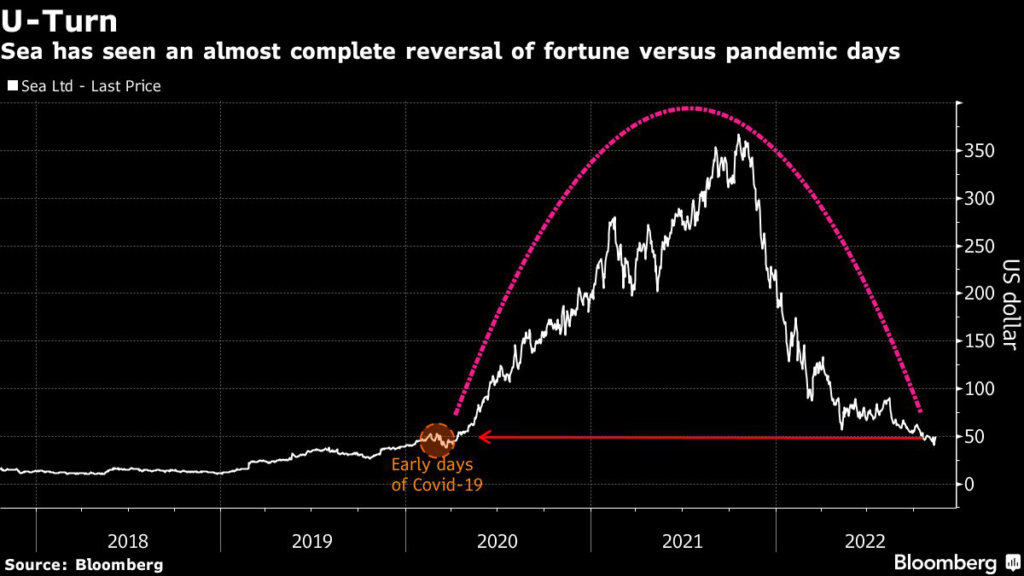
The gaming and e-commerce company and regional tech peers Grab Holdings Ltd. and GoTo Group — all of which are loss-making — have seen their stock prices plummet this year as they navigate an economic slowdown, rising interest rates and accelerating inflation. The slowing growth in Southeast Asia’s internet economy shows that even emerging digital markets aren’t immune to economic headwinds.

Fall of the World’s Hottest Stock Cost Sea Founders $32 Billion

Sea, Southeast Asia’s largest tech company, cut its full-year forecast for Garena’s bookings to between $2.6 billion and $2.8 billion from its previous guidance of $2.9 billion to $3.1 billion, set to be its first annual decline ever.

Total revenue rose 17% to $3.2 billion in the September quarter. Revenue from Garena tumbled 19% to $893 million, the biggest year-on-year drop ever, reflecting waning popularity of hit mobile game Free Fire. Sales at the online shopping arm Shopee climbed 32% to $1.9 billion.

Shares of the company have plunged 80% this year and declined 7.3% to $45.80 in New York on Monday.

To navigate a more challenging market, Sea has cut about 7,000 jobs, or roughly 10% of its workforce, in the past six months, according to a person familiar with the matter. It has also shuttered operations in India and some European and Latin American markets in a bid to trim costs and reach positive cash flows.

–With assistance from Abhishek Vishnoi.

More stories like this are available on bloomberg.com

©2022 Bloomberg L.P.

Uranium Mining in Egypt is Expanding Despite Water Contamination, Satellite Images Show

(Bloomberg) — Egypt’s Allouga uranium mine has been expanding despite evidence that its radioactive runoff is contaminating scarce water resources, according to satellite images captured last month for Bloomberg  by Planet Labs PBC.

The uranium mine, located less than 150 kilometers (93 miles) from the ongoing United Nations COP27 climate talks in Sharm el-Sheikh, underscores the difficult tradeoffs involved in producing minerals used in zero-emission energy sources such as nuclear power plants.

A peer reviewed study published by Environmental Health Sciences earlier this year sampled uranium levels near Allouga as much as six times the concentration normally found in nature. Egypt’s Nuclear Materials Authority, which owns and operates the site, acknowledged as far back as 2018 that drinking water wells in the area contained “greater concentrations of uranium than acceptable limits.”“People who are exposed to that level of radiation for a lifetime would have an elevated cancer risk,” wrote the Cairo-based scientists from Ain Shams University who carried out the research, which was published in April. “Available water resources in the study area are considered unsafe for human consumption and irrigation.”

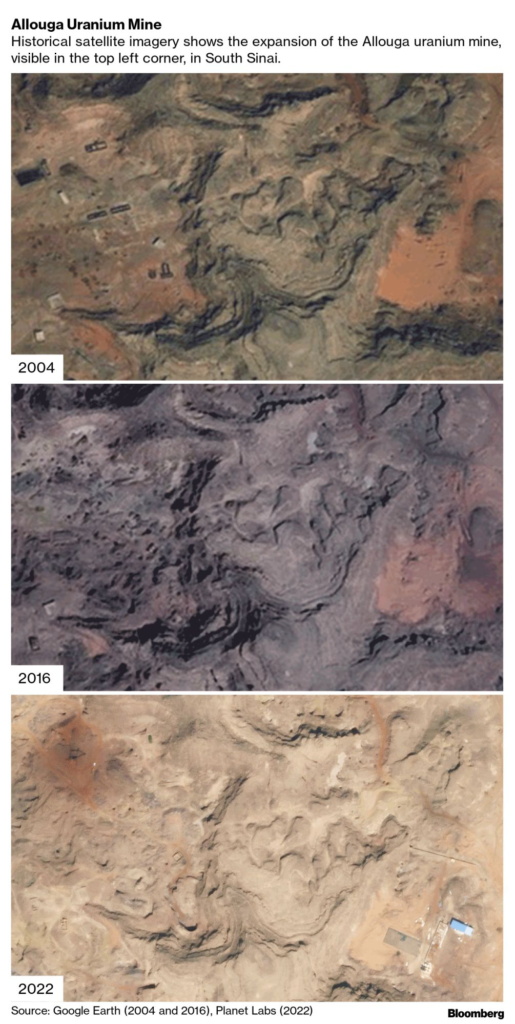
Satellite imagery of Allouga shows how successive waves of excavation and rubble have changed the landscape of the red, craggy hill tops that surround the site over nearly two decades. Ore crushers, processing plants, sulphuric acid tanks and waste repositories appear operational, according to Robert Kelley, a former safeguards director at the International Atomic Energy Agency, who reviewed the photographs. Allison Puccioni, a nuclear non-proliferation imagery analyst at Stanford University, also confirmed activity at the site.

Egypt is estimated by the Paris-based Nuclear Energy Agency to have less than 0.01% of the Earth’s identifiable uranium reserves —  not enough to produce commercial quantities it can profitably export. Egypt also doesn’t currently possess the infrastructure to process the ore into fuel for its own future power reactor, which is under construction and will be supplied by Russia.  

The small quantities excavated from Allouga could technically be tapped to eventually supply a military program, according to Kelley, a former nuclear-weapons engineer in the US Department of Energy.  Egypt is a signatory to the Nuclear Non-Proliferation Treaty and its IAEA envoy, Mohammed ElMolla, dismissed any suggestion it might seek nuclear arms. He said nuclear energy and uranium mining were part of efforts to diversify the country’s energy mix and bolster its economy. 

Whatever its purpose, the excavation continues and waste has been dumped on the hillsides. “A large quantity of mine tailings in the form of slurry waste are placed in small piles adjacent to the mine without engineered barriers,” the researchers wrote. “During the processing, no safety measures were taken to assure the isolation of the tailings from the environment. The major threat of these tailings is the leaching of contaminants (e.g. radionuclides and heavy metals) into groundwater which is considered the main source of drinking water in the area.”

While it warns that the activity needs to bear in mind the impact on local water resources, the study does not present any evidence or make any suggestion that people have been made ill.The Allouga mine is located in a remote and arid area with no major population centers, mitigating its human impact. The satellite images nevertheless show some small communities, as well as irrigated fields, nearby. 

Those most likely to be affected from radioactive effluent leaching into groundwater are local Bedouins, who count among the most vulnerable of the 100,000 people living in the South Sinai Governate, Egypt’s least-populated administrative region. It is the “indigenous community who are principally affected by the mining operation,”  according to the Environmental Health Science research.For the latest study, the authors collected 47 water and soil samples from four wadis — dry valleys that turn into streams after rain — surrounding the Allouga mine and covering an area of some 250 square km. Egypt’s Central Laboratory for Environmental Quality Monitoring, which analyzed the samples, found most contained uranium concentrations higher than the average two parts per million found in nature.  Nineteen of 30 stream sediment samples registered higher-than-normal uranium traces while “all samples’’ of groundwater did, according to the report. 

–With assistance from Patricia Suzara.

More stories like this are available on bloomberg.com

©2022 Bloomberg L.P.

FTX Latest: Bankruptcy May Involve More Than a Million Creditors

(Bloomberg) — FTX Group named a slate of new independent directors to oversee the collapsed crypto empire and said its bankruptcy may involve more than a million creditors.

Digital-asset exchange Binance said it will submit evidence to UK lawmakers regarding discussions held about FTX.com when the two were in deal talks, as well as on its decision-making around the sale of FTX.com’s native token FTT.

Bitcoin rose Tuesday toward $17,000, providing some respite from a damaging selloff triggered by the FTX crisis. Investors are awaiting details about a crypto recovery fund promised by Binance’s Chief Executive Officer Changpeng ‘CZ’ Zhao.

Key stories and developments:

  • FTX Talking With ‘Dozens’ of Regulatory Agencies, Taps Directors
  • Binance’s Billionaire CEO Casts Himself as Crypto’s New Savior
  • Sam Bankman-Fried’s Magic Money Box Enriched Vast Crypto Network
  • Scaramucci Says His Due Diligence on Bankman-Fried ‘Not Enough’

(Time references are Hong Kong unless otherwise stated.)

Scaramucci Says His Due Diligence on Bankman-Fried ‘Not Enough’ (Tuesday, 5:05 p.m. Hong Kong)

Anthony Scaramucci, whose SkyBridge Capital was caught up in the implosion of FTX.com, said he did a thorough background check on its founder Sam Bankman-Fried, but it wasn’t enough to protect himself from “misrepresentations.”

“I was doing a lot of due diligence on him, but clearly not enough,” Scaramucci said at the Bloomberg New Economy Forum on Tuesday. He added that FTX’s stake in SkyBridge can’t be transferred to anybody “without my permission.”

Binance to Submit Evidence on FTX Deal (Tuesday, 4:20 p.m. Hong Kong)

Binance said it will submit evidence to UK lawmakers regarding discussions held about FTX.com when the two were in deal talks, as well as on its decision-making around the sale of FTX.com’s native token FTT.

Daniel Trinder, Binance’s vice president of government affairs in Europe, said the company would provide the information to members of the UK Parliament’s Treasury Committee as part of the crypto exchange’s appearance as a witness in a cryptoasset inquiry. 

Trinder was grilled by lawmakers on Monday over the firm’s decision to announce a planned sale of more than $500 million in FTT on Nov. 6 — a move that caused trading volumes for the token to spike to their highest in more than a year. It was also part of the chain of events that led to FTX eventually filing for bankruptcy.

Sam Bankman-Fried Posts Cryptic Tweets (Tuesday, 2:05 p.m. Hong Kong)

Former FTX chief Sam Bankman-Fried in a series of cryptic tweets over the last 24 hours spelled out the words “What HAPPENED.” He finished with the message: “NOT LEGAL ADVICE. NOT FINANCIAL ADVICE. THIS IS ALL AS I REMEMBER IT, BUT MY MEMORY MIGHT BE FAULTY IN PARTS.”

The bizarre sequence sparked hot debate — and not a little anger — on Twitter as users tried to second guess what would come next.

FTX Talking With ‘Dozens’ of Regulatory Agencies (Tuesday, 1:10 p.m. Hong Kong)

FTX Group named a slate of new independent directors to oversee the collapsed crypto empire and is speaking with the US Attorney’s Office and “dozens” of US and international regulatory agencies, according to new bankruptcy court papers. 

“Questions arose about Mr. Bankman-Fried’s leadership and the handling of FTX’s complex array of assets and businesses under his direction,” lawyers for the crypto company wrote. FTX plunged into bankruptcy court after facing “a severe liquidity crisis that necessitated the filing of these cases on an emergency basis.”

Binance CEO: ‘No One Can Protect a Bad Player’ (Monday, 6:06 p.m. Hong Kong) 

Speaking at the B20 Summit in Indonesia, Binance Holdings Ltd Chief Executive Officer Changpeng “CZ” Zhao pledged to launch a fund to help crypto markets recover from FTX’s collapse. He singled out people he described as bad actors in the crypto space who “try to cut corners to grow quickly,” and called on industry leaders to “set strong standards” in volatile digital markets. 

Zhao, who briefly entertained plans to buy the struggling exchange before backing out a day later, exhorted his crypto counterparts to behave better. “No one can protect a bad player,” he said.    

FTX’s Japan Branch Assesses Client Damage (Monday, 5:33 p.m. Hong Kong) 

FTX Japan K.K., the Japanese subsidiary of Sam Bankman-Fried’s failed digital asset exchange, is investigating whether its parent company’s bankruptcy will affect its ability to return crypto holdings to regional clients. Last week, the unit was ordered to suspend some of its operations as regulators assessed the wreckage of the FTX collapse. 

A company spokesman said that FTX Japan will make a statement once the situation is clearer. As of Nov. 10, FTX Japan held about 19.6 billion yen ($140 million) in cash and deposits. 

Singapore Central Bank Says FTX Wasn’t Licensed in the City-State (Monday, 2:40 p.m. Hong Kong)

Singapore’s central bank said that while bankrupt crypto exchange FTX doesn’t have a license to operate in the city-state, it’s not possible to prevent local users from “directly accessing” overseas service providers. 

As a result, FTX was “able to onboard Singapore users,” a spokesperson at the Monetary Authority of Singapore said in an emailed statement to Bloomberg News on Monday. “MAS has consistently reminded the public of the risks of dealing with unlicensed entities,” the spokesperson said in the statement. 

More stories like this are available on bloomberg.com

©2022 Bloomberg L.P.

FTX Latest: Bankruptcy May Involve More Than a Million Creditors

(Bloomberg) — FTX Group named a slate of new independent directors to oversee the collapsed crypto empire and said its bankruptcy may involve more than a million creditors.

Digital-asset exchange Binance said it will submit evidence to UK lawmakers regarding discussions held about FTX.com when the two were in deal talks, as well as on its decision-making around the sale of FTX.com’s native token FTT.

Bitcoin rose Tuesday toward $17,000, providing some respite from a damaging selloff triggered by the FTX crisis. Investors are awaiting details about a crypto recovery fund promised by Binance’s Chief Executive Officer Changpeng ‘CZ’ Zhao.

Key stories and developments:

  • FTX Talking With ‘Dozens’ of Regulatory Agencies, Taps Directors
  • Binance’s Billionaire CEO Casts Himself as Crypto’s New Savior
  • Sam Bankman-Fried’s Magic Money Box Enriched Vast Crypto Network
  • Scaramucci Says His Due Diligence on Bankman-Fried ‘Not Enough’

(Time references are Hong Kong unless otherwise stated.)

Scaramucci Says His Due Diligence on Bankman-Fried ‘Not Enough’ (Tuesday, 5:05 p.m. Hong Kong)

Anthony Scaramucci, whose SkyBridge Capital was caught up in the implosion of FTX.com, said he did a thorough background check on its founder Sam Bankman-Fried, but it wasn’t enough to protect himself from “misrepresentations.”

“I was doing a lot of due diligence on him, but clearly not enough,” Scaramucci said at the Bloomberg New Economy Forum on Tuesday. He added that FTX’s stake in SkyBridge can’t be transferred to anybody “without my permission.”

Binance to Submit Evidence on FTX Deal (Tuesday, 4:20 p.m. Hong Kong)

Binance said it will submit evidence to UK lawmakers regarding discussions held about FTX.com when the two were in deal talks, as well as on its decision-making around the sale of FTX.com’s native token FTT.

Daniel Trinder, Binance’s vice president of government affairs in Europe, said the company would provide the information to members of the UK Parliament’s Treasury Committee as part of the crypto exchange’s appearance as a witness in a cryptoasset inquiry. 

Trinder was grilled by lawmakers on Monday over the firm’s decision to announce a planned sale of more than $500 million in FTT on Nov. 6 — a move that caused trading volumes for the token to spike to their highest in more than a year. It was also part of the chain of events that led to FTX eventually filing for bankruptcy.

Sam Bankman-Fried Posts Cryptic Tweets (Tuesday, 2:05 p.m. Hong Kong)

Former FTX chief Sam Bankman-Fried in a series of cryptic tweets over the last 24 hours spelled out the words “What HAPPENED.” He finished with the message: “NOT LEGAL ADVICE. NOT FINANCIAL ADVICE. THIS IS ALL AS I REMEMBER IT, BUT MY MEMORY MIGHT BE FAULTY IN PARTS.”

The bizarre sequence sparked hot debate — and not a little anger — on Twitter as users tried to second guess what would come next.

FTX Talking With ‘Dozens’ of Regulatory Agencies (Tuesday, 1:10 p.m. Hong Kong)

FTX Group named a slate of new independent directors to oversee the collapsed crypto empire and is speaking with the US Attorney’s Office and “dozens” of US and international regulatory agencies, according to new bankruptcy court papers. 

“Questions arose about Mr. Bankman-Fried’s leadership and the handling of FTX’s complex array of assets and businesses under his direction,” lawyers for the crypto company wrote. FTX plunged into bankruptcy court after facing “a severe liquidity crisis that necessitated the filing of these cases on an emergency basis.”

Binance CEO: ‘No One Can Protect a Bad Player’ (Monday, 6:06 p.m. Hong Kong) 

Speaking at the B20 Summit in Indonesia, Binance Holdings Ltd Chief Executive Officer Changpeng “CZ” Zhao pledged to launch a fund to help crypto markets recover from FTX’s collapse. He singled out people he described as bad actors in the crypto space who “try to cut corners to grow quickly,” and called on industry leaders to “set strong standards” in volatile digital markets. 

Zhao, who briefly entertained plans to buy the struggling exchange before backing out a day later, exhorted his crypto counterparts to behave better. “No one can protect a bad player,” he said.    

FTX’s Japan Branch Assesses Client Damage (Monday, 5:33 p.m. Hong Kong) 

FTX Japan K.K., the Japanese subsidiary of Sam Bankman-Fried’s failed digital asset exchange, is investigating whether its parent company’s bankruptcy will affect its ability to return crypto holdings to regional clients. Last week, the unit was ordered to suspend some of its operations as regulators assessed the wreckage of the FTX collapse. 

A company spokesman said that FTX Japan will make a statement once the situation is clearer. As of Nov. 10, FTX Japan held about 19.6 billion yen ($140 million) in cash and deposits. 

Singapore Central Bank Says FTX Wasn’t Licensed in the City-State (Monday, 2:40 p.m. Hong Kong)

Singapore’s central bank said that while bankrupt crypto exchange FTX doesn’t have a license to operate in the city-state, it’s not possible to prevent local users from “directly accessing” overseas service providers. 

As a result, FTX was “able to onboard Singapore users,” a spokesperson at the Monetary Authority of Singapore said in an emailed statement to Bloomberg News on Monday. “MAS has consistently reminded the public of the risks of dealing with unlicensed entities,” the spokesperson said in the statement. 

More stories like this are available on bloomberg.com

©2022 Bloomberg L.P.

FTX Bankruptcy Fallout Continues to Cause Crypto Chaos

  • Listen to Bloomberg Crypto on the iHeartRadio App

  • Listen to Bloomberg Crypto on Apple Podcasts

  • Listen to Bloomberg Crypto on Spotify  

(Bloomberg) — The crypto industry descended into chaos last week after a series of fast moving events. The trouble purportedly started after Binance CEO Changpeng Zhao tweeted that the crypto exchange would sell off some of rival exchange FTX’s native token, FTT, due to ‘risk management’ issues. That drove the price of FTT down and fueled a selloff. Soon after, FTX was forced to halt withdrawals from the exchange. CEO Sam Bankman-Fried — or SBF as he’s known — started shopping around for a bailout. Then Bankman-Fried tweeted that the company had found a savior in its former rival, Binance.

But within a day the deal was off. Binance backed out citing due diligence concerns and FTX’s questionable handling of its customers’ funds. Documents were leaked showing FTX was dealing with significant financial difficulties and appeared close to collapse, which apparently it was: FTX soon filed for bankruptcy and Bankman-Fried resigned as his $16 billion dollar fortune evaporated. A spectacular outflow of money from crypto exchanges ensued and Bloomberg reported that federal probes of FTX and SBF were underway. 

How did it all go so wrong for FTX and what does this mean for the future of digital-assets? We have the latest updates with Bloomberg reporters Katie Greifeld and Vildana Hajric.

Subscribe to the Bloomberg Crypto Newsletter at https://bloom.bg/cryptonewsletter 

This podcast is produced by the Bloomberg Crypto podcast team: Supervising producer: Vicki Vergolina, Senior Producer: Janet Babin, Producers: Sharon Beriro and Muhammad Farouk, Associate Producers: Mo Andam and Ty Butler. Sound Design/Engineer: Desta Wondirad.


More stories like this are available on bloomberg.com

©2022 Bloomberg L.P.

Close Bitnami banner
Bitnami