Bloomberg

Billionaire French Shipping Tycoon Expands Hunt for Media Assets

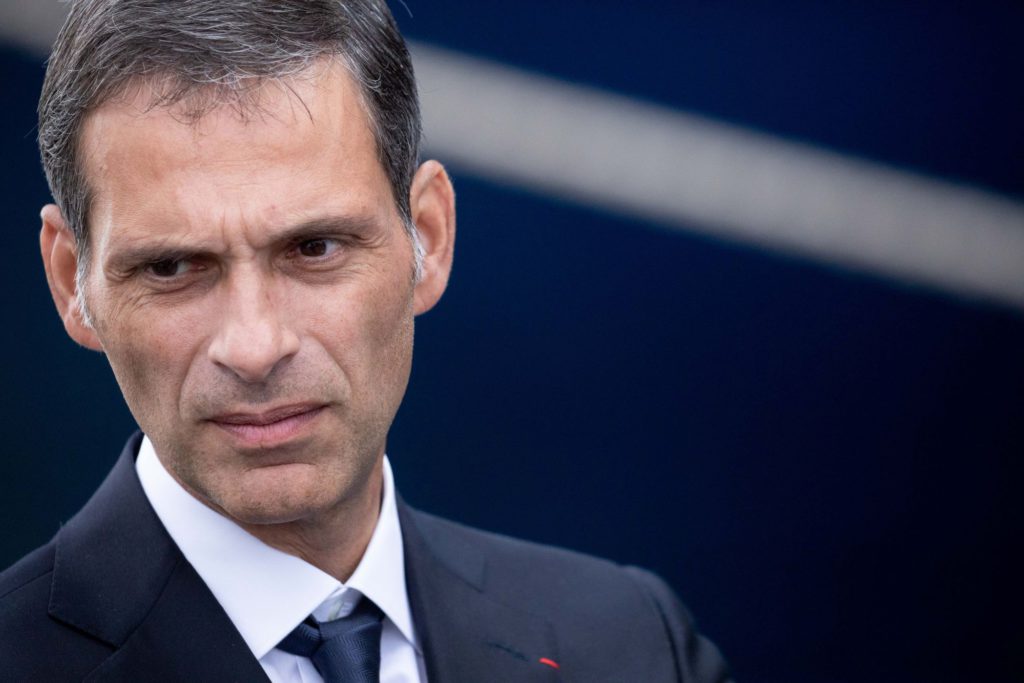
(Bloomberg) — French shipping billionaire Rodolphe Saade is seeking more media acquisitions after snapping up a regional newspaper and failing to get his hands on a broadcaster.

“I am interested in media,” he said in an interview Tuesday on France Inter radio. “I am looking at everything, the subject interests me.”

Saade, whose family-owned container line CMA CGM SA has its headquarters in the southern port of Marseille, joined the ranks of French billionaires who dominate the country’s media scene after buying the city’s regional daily La Provence a few months ago. The Saade family has a net worth of $16.3 billion, according to the Bloomberg Billionaires Index. 

A significant chunk of French media is held by billionaires. Newspaper of record Le Monde is owned by a group of investors including telecoms tycoon Xavier Niel and Czech billionaire Daniel Kretinsky. Luxury group LVMH, founded by billionaire Bernard Arnault, controls Les Echos-Le Parisien, while Le Figaro is owned by Group Industriel Marcel Dassault SA, the holding company of the Rafale aircraft-making Dassault family. Through Vivendi, billionaire Vincent Bollore holds Pay TV groupe Canal+, radio Europe1, and magazine Paris Match among other media assets.

Saade’s foray into media comes amid an acquisitions spree through the family’s closely held CMA CGM, the world’s third-largest container line. In addition reaching a deal to buy Niel’s stake in La Provence newspaper, he was also part of a bidding consortium for French television company Groupe M6 before German media giant Bertelsmann SE & Co. decided not to proceed with the sale.

Skyrocketing freight rates during the pandemic gave CMA CGM a cash pile to bankroll acquisitions, including of logistics companies, a stake in Air France-KLM, new vessels and a holding in a satellite operator.

In Tuesday’s interview, Saade quashed talk of a purchase of the football club Olympique de Marseille. Speculation about a possible acquisition had grown after he reached an agreement this month for CMA CGM to become the club’s major sponsor in the 2023-2024 season. 

Moves into football club ownership and even politics would have been in keeping with other wealthy business owners.

“For the moment, I’m not doing politics, and for OM we’re putting in place this strategic partnership and I think that’s enough,” Saade said.

–With assistance from Phil Serafino and Benoit Berthelot.

More stories like this are available on bloomberg.com

©2022 Bloomberg L.P.

Vodafone Falls After Energy Inflation Downgrades Outlook

(Bloomberg) — Vodafone Group Plc fell as much as 6% in London, on track for a 25-year low, after it adjusted its outlook to the low end of a previous range and launched a more-than €1 billion ($1 billion) cost savings plan to confront high energy prices and inflation.

  • Vodafone expects €500 million more in energy costs in 2024, it said in slides accompanying the results. That’s on top of a €300 million rise in 2023.
  • Vodafone sees adjusted earnings before interest, taxes, depreciation, amortization after leases staying flat or a slight decline, expecting €15 billion to €15.2 billion for the fiscal year ending in March, the company said in a statement on Tuesday. That compares to previous guidance of €15 billion to €15.5 billion for the year. Adjusted free cash flow will be about €200 million lower than previous guidance.
  • Vodafone posted second-quarter organic service revenue growth of 2.5%, versus an average estimate of 2.3% from analysts in a Bloomberg survey.

Key Insights

  • The UK-based telecommunications company said it plans to find the savings by 2026 “through streamlining and simplifying our group-wide structure and further accelerating the digitalization of our operations,” it said in the statement.
  • Growth in the UK and other markets continued to offset falling sales in Germany, Italy and Spain, it said.
  • Chief Executive Officer Nick Read has pledged to reshape the Newbury, England-based wireless and cable group and pay down debt through big deals. Last week he agreed to sell a large stake in mobile-mast business Vantage Towers AG, and he’s in talks to merge Vodafone’s UK arm with CK Hutchison Holdings Ltd.’s Three UK.
  • Read’s also had to field high-profile investors, who’ve urged him to move fast. Although activist Cevian Capital sold down most of its stake earlier in the year, as rising interest rates undermined its investment thesis, in September, French billionaire Xavier Niel bought 2.5% of the company.
  • Bloomberg Intelligence Analyst Erham Gurses said Vodafone was showing “limited ability to mitigate inflationary cost pressures amid a challenging performance in Germany, Italy and Spain, with each country registering worse-than-expected fiscal 2Q sales.”

Market Context

  • Vodafone shares had fallen 7.2% in the year to Tuesday. That compares to a 12% drop in the Stoxx 600 Europe Telecommunications Index.
  • The stock was down 5.8% to 98.11 pence a share at 9:20 a.m. in London on Tuesday.
  • Of 25 analysts surveyed by Bloomberg, 13 rate the stock Buy, 9 Hold and 3 Sell.
  • Vodafone Drops on ‘Mixed’ 2Q, Ebitda Guidance Cut: Street Wrap

Get More

  • Statement
  • Vodafone May See Sluggish 2Q Service-Revenue Growth: Preview
  • Vodacom’s Egypt Deal Has Received Key Approvals, CEO Says
  • Vodafone Plans €7 Billion German Fiber Venture With Altice

(Updates with shares, detail on energy costs.)

More stories like this are available on bloomberg.com

©2022 Bloomberg L.P.

Lastminute.com Faces Investor Pressure After CEO Detention

(Bloomberg) — Lastminute.com NV, one of Europe’s biggest online travel-booking platforms, is facing calls from investors to pursue a sale after some top executives were detained as part of a Swiss investigation.  

In recent weeks, Dark Horse Capital Management, Raper Capital and Sage Wealth Management have called on Lastminute to hire advisers for a strategic review. While their stakes are small, several other minority shareholders are supporting them behind the scenes and Swiss proxy advisory firm Ethos said it expects a “complete reshuffle” of the board. 

The focus is on Chief Executive Officer Fabio Cannavale, an Italian serial entrepreneur and former McKinsey & Co. consultant who built up the group through a series of acquisitions. Cannavale and his chief operating officer were detained in July by Swiss authorities in a probe into alleged fraud and unlawful Covid benefit claims. The company appointed an interim CEO, who’s since come under investigation herself. 

“This is a situation where you have a great horse, but no jockey,” said C.J. Martin, managing partner at Dark Horse Capital, which owns about a 1% stake. “The lack of corporate governance has turned a bad situation into a potentially catastrophic situation. However, the asset is incredibly valuable in the hands of the right owner.” 

Travel Recovery

The recent investigation has overshadowed the company’s underlying business performance as the travel industry recovers from the Covid pandemic. Lastminute said in August it returned to a net profit in the first half of the year as its revenue more than tripled. 

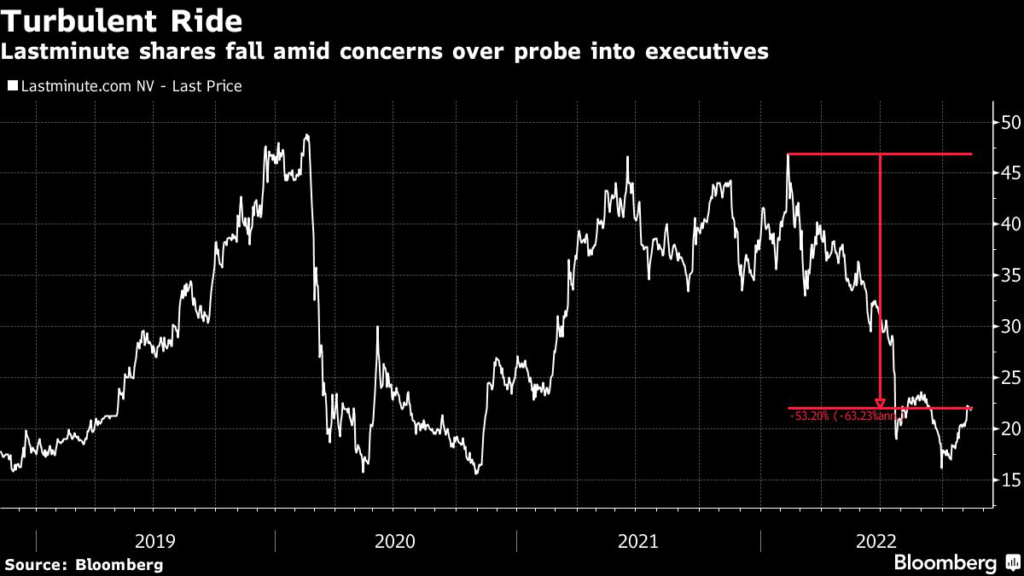
Shares of Lastminute were up 2.8% at 10:25 a.m. Tuesday in Zurich, giving the company a market value of 257 million francs ($273 million). They’re down 45% this year, while the Swiss benchmark index has declined 14%. 

Lastminute would be an attractive candidate for an all-stock merger with larger Spanish rival eDreams Odigeo SA, Raper Capital founder Jeremy Raper wrote in a letter to the company’s board last month. The company could also draw interest from Expedia Group Inc., Booking Holdings Inc. or China’s Trip.com Group Ltd., Raper wrote. He controls a 0.5% stake, according to the letter. 

After this year’s declines, Lastminute now trades at one of the lowest earnings multiples among its peers globally. It’s valued at about 8 times estimated profit for the 2024 financial year, compared with a median 23 times for online travel companies tracked by Bloomberg with a market value of at least $100 million. 

A spokesperson for Lastminute confirmed the group has received letters “from several investors which raised a number of issues and made a series of proposals.”

“The company has initiated internal investigations across a range of issues, including those highlighted by investors, and expects to update the market and investors on Nov. 17, as far as will be legally possible within the framework of the current investigations,” Lastminute said in the statement.

eDreams CEO Dana Dunne said in a phone interview Tuesday that he wasn’t focusing on acquisitions at this time and doesn’t see Lastminute as offering something “very distinctive” to his company. A spokesperson for Booking declined to comment, while representatives for Expedia and Trip.com didn’t immediately respond to queries. 

Package Holidays

The company’s minority shareholders include Sterling, the fund manager started by Swiss tycoon Tito Tettamanti, and French buyout firm Ardian SAS. Lastminute has attracted interest before, holding talks on potential transactions in 2020 with private equity firms including Triton.

Lastminute owns sites popular in the main European markets — including Bravofly, Hotelscan, Jetcost and Rumbo — and is a major online seller of dynamic package holidays. It’s hired a headhunter to find a permanent CEO and said last month it plans to convene a shareholder meeting before year-end to consider appointing new board members. 

Sage Wealth Management Managing Director Steve Glossop said in an interview it will be tough to change investors’ views of the company and the board should consider strategic options. 

Investor Distrust

“Once distrust is in, it’s there to stay,” said Glossop, whose firm and clients control about 1% of Lastminute. “The way they’ve handled this is disappointing, the lack of communication on the allegations.”

Cannavale and Andrea Bertoli, the company’s COO, can be detained until Nov. 29. Lastminute has said the investigation is targeting individuals, not the company, and that it’s fully cooperating. 

A representative for the Ticino public prosecutor’s office, which is overseeing the Swiss probe, said he can’t comment about ongoing proceedings. Lastminute declared in July it’s confident of no wrongdoing and has more recently expressed “full confidence” in the interim CEO. 

Vincent Kaufmann, CEO of Ethos, said his group has been calling for more independent directors at Lastminute to ensure proper oversight over management. 

“The lack of checks and balances has always been an area of concern,” Kaufmann said. “This case demonstrates the importance to maintain a good independence level on the board.”

–With assistance from Zheping Huang, Clara Hernanz Lizarraga, Michael Tobin and Hugo Miller.

(Updates with eDreams CEO comments in 11th paragraph)

More stories like this are available on bloomberg.com

©2022 Bloomberg L.P.

India’s Paytm Faces Another Reckoning After $10 Billion Selloff

(Bloomberg) — Paytm, India’s leading digital payments brand, faces another reckoning, a year after it recorded the grisliest initial public offering in India’s history.

This week, the lock-up period for the company’s stock will expire, freeing investors to sell shares that haven’t yet been allowed onto the market. The biggest shareholders in One97 Communications Ltd., Paytm’s parent company, are Alibaba Group Holding Ltd. and its fintech affiliate Ant Group Co., as well as Japan’s SoftBank Group Corp.

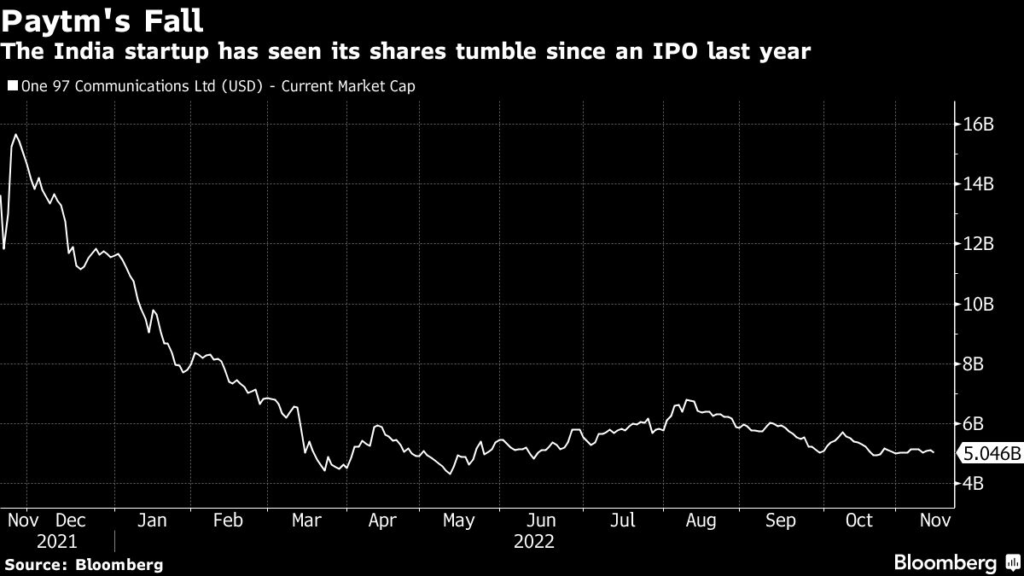
Paytm and founder Vijay Shekhar Sharma pulled off India’s largest-ever IPO last November only to see its shares plummet in one of the worst debuts ever. The company has had to spend heavily to boost revenues since then, piling up losses just as investors have grown increasingly skittish about money-losing startups.

“The free money days for cash-burning companies are well and truly gone,” said Deven Choksey, managing director of wealth manager KRChoksey Holdings. “Even with Paytm’s lock-in expiry, new investors will only come in after seeing free cash flow in the near horizon. Until then, the stock is going to remain volatile.”

The company’s shares fell just over 1% to 630.8 rupees on Tuesday, far below its IPO price of 2,150 rupees a share. Its market value is about $5 billion, more than $10 billion less than its peak.

Alibaba didn’t immediately respond to requests for comment and a spokesman for SoftBank declined to comment. A representative for Paytm confirmed the expiration day Nov. 15.

Stocks often fall after lock-ups expire, as investor selling puts downward pressure on shares. It’s not immediately clear what the sale strategy of large Paytm shareholders will be. Ant and Alibaba own over 30% of shares between them, SoftBank owns nearly 17.5%, while Berkshire Hathaway Inc.’s holding is about 2.5%.

“We recognize that lock-in expiry (86% of Paytm’s outstanding shares) in Nov ‘22 may represent an overhang on the stock,” analysts Manish Adukia, Rahul Jain and Harshita Wadher of Goldman Sachs Group Inc. wrote in a research note in September.

Nevertheless, the analyst recommended buying Paytm shares given the company’s progress in boosting revenue and moving toward profitability. “We expect Paytm to deliver c.50% revenue growth for the next few quarters and continue its transition from an erstwhile payments-only business to one with a strong financial services portfolio,” they wrote.

In a letter earlier this week to shareholders, Sharma, 44, sought to quell market anxiety over the shares’ continued capriciousness.  

“One year ago, we made our way to the public markets. We are aware of the expectations that Paytm carries, and I assure you that we are on the right path to profitability and free cash flows,” Sharma said. “Our journey to build a scalable and profitable financial services business has just started.”

Paytm has plenty of company in dealing with market turbulence. Food-delivery company Zomato Ltd. and Nykaa, formally called FSN E-Commerce Ventures, both went public last year and have seen their shares trounced when freed up for market. Nykaa shares dropped as much as 9.4% on Tuesday.

More stories like this are available on bloomberg.com

©2022 Bloomberg L.P.

After $10 Billion Selloff, India’s Paytm Faces Another Reckoning

(Bloomberg) — Paytm, India’s leading digital payments brand, faces another reckoning, a year after it recorded the grisliest initial public offering in India’s history.

This week, the lock-up period for the company’s stock will expire, freeing investors to sell shares that haven’t yet been allowed onto the market. The biggest shareholders in One97 Communications Ltd., Paytm’s parent company, are Alibaba Group Holding Ltd. and its fintech affiliate Ant Group Co., as well as Japan’s SoftBank Group Corp.

Paytm and founder Vijay Shekhar Sharma pulled off India’s largest-ever IPO last November only to see its shares plummet in one of the worst debuts ever. The company has had to spend heavily to boost revenues since then, piling up losses just as investors have grown increasingly skittish about money-losing startups.

“The free money days for cash-burning companies are well and truly gone,” said Deven Choksey, managing director of wealth manager KRChoksey Holdings. “Even with Paytm’s lock-in expiry, new investors will only come in after seeing free cash flow in the near horizon. Until then, the stock is going to remain volatile.”

The company’s shares fell just over 1% to 630.8 rupees on Tuesday, far below its IPO price of 2,150 rupees a share. Its market value is about $5 billion, more than $10 billion less than its peak.

Alibaba didn’t immediately respond to requests for comment and a spokesman for SoftBank declined to comment. A representative for Paytm confirmed the expiration day Nov. 15.

Stocks often fall after lock-ups expire, as investor selling puts downward pressure on shares. It’s not immediately clear what the sale strategy of large Paytm shareholders will be. Ant and Alibaba own over 30% of shares between them, SoftBank owns nearly 17.5%, while Berkshire Hathaway Inc.’s holding is about 2.5%.

“We recognize that lock-in expiry (86% of Paytm’s outstanding shares) in Nov ‘22 may represent an overhang on the stock,” analysts Manish Adukia, Rahul Jain and Harshita Wadher of Goldman Sachs Group Inc. wrote in a research note in September.

Nevertheless, the analyst recommended buying Paytm shares given the company’s progress in boosting revenue and moving toward profitability. “We expect Paytm to deliver c.50% revenue growth for the next few quarters and continue its transition from an erstwhile payments-only business to one with a strong financial services portfolio,” they wrote.

In a letter earlier this week to shareholders, Sharma, 44, sought to quell market anxiety over the shares’ continued capriciousness.  

“One year ago, we made our way to the public markets. We are aware of the expectations that Paytm carries, and I assure you that we are on the right path to profitability and free cash flows,” Sharma said. “Our journey to build a scalable and profitable financial services business has just started.”

Paytm has plenty of company in dealing with market turbulence. Food-delivery company Zomato Ltd. and Nykaa, formally called FSN E-Commerce Ventures, both went public last year and have seen their shares trounced when freed up for market. Nykaa shares dropped as much as 9.4% on Tuesday.

More stories like this are available on bloomberg.com

©2022 Bloomberg L.P.

Scaramucci Says His Due Diligence on Bankman-Fried ‘Not Enough’

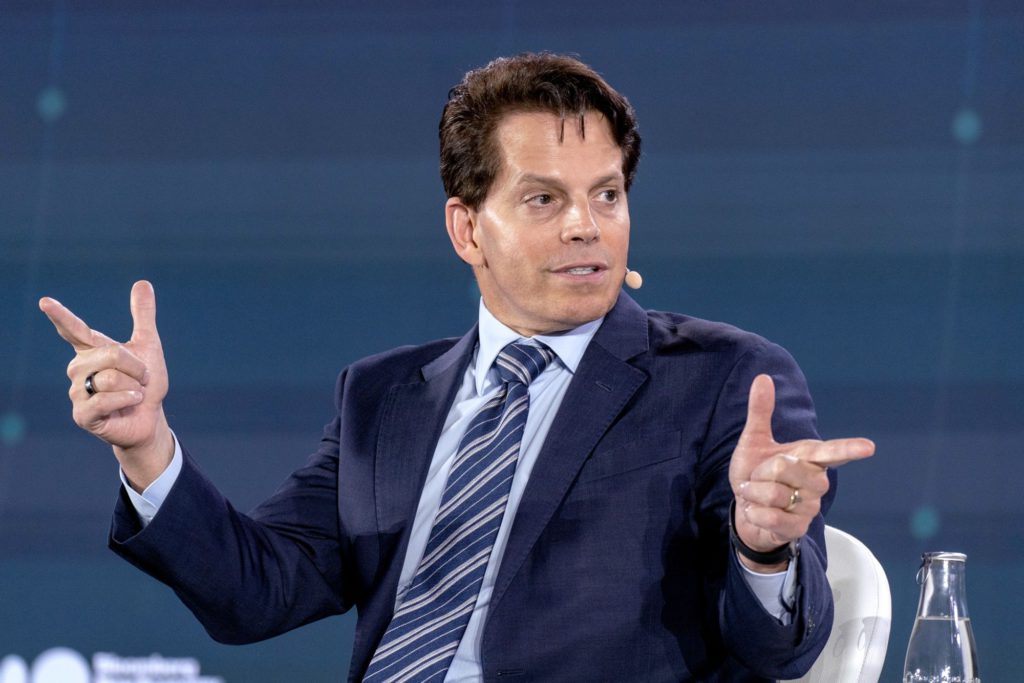
(Bloomberg) — Anthony Scaramucci, whose SkyBridge Capital has gotten caught up in the implosion of FTX.com, said he did a thorough background check on its founder Sam Bankman-Fried, but it wasn’t enough to protect himself from “misrepresentations.”

“I was doing a lot of due diligence on him, but clearly not enough,” Scaramucci said at the Bloomberg New Economy Forum on Tuesday about the fallout from his firm’s partnership with Bankman-Fried’s crypto exchange, including negotiations to buy back FTX’s 30% stake in SkyBridge. “It’s very hard to protect yourself against that sort of misrepresentation.” 

FTX’s stake in SkyBridge can’t be transferred to anybody “without my permission” even in liquidation, Scaramucci said.

Read: Scaramucci’s SkyBridge Wants to Repurchase Stake From FTX 

–With assistance from Michelle Jamrisko.

More stories like this are available on bloomberg.com

©2022 Bloomberg L.P.

Griffin to ‘Three-Time Loser’ Trump: Step Aside for DeSantis

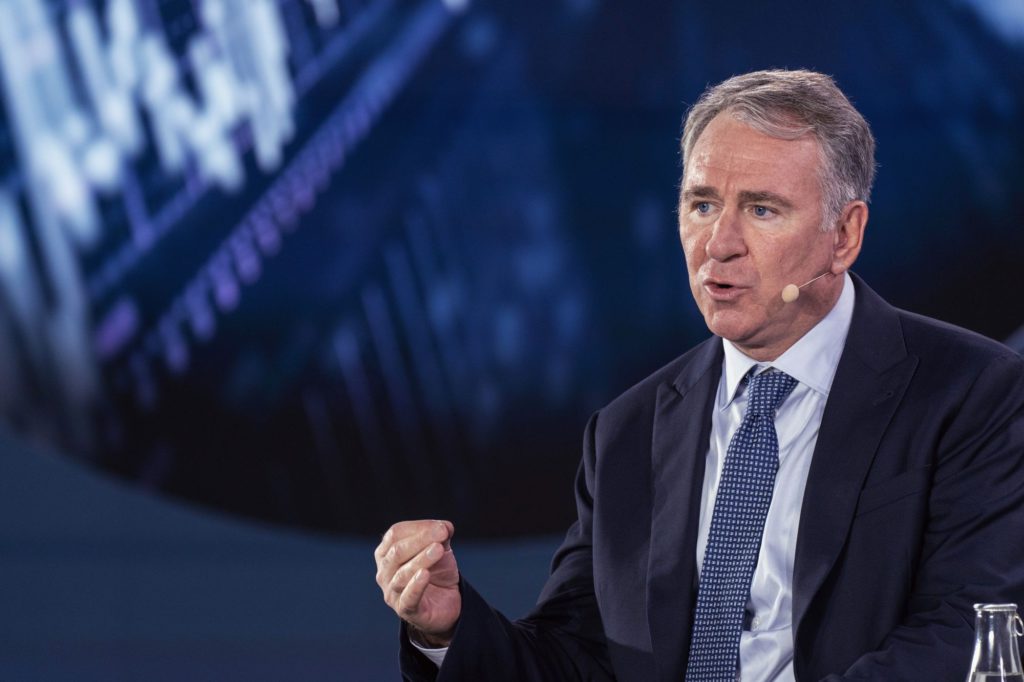
(Bloomberg) — Citadel’s billionaire founder, Ken Griffin, called Donald Trump a “three-time loser” and said he hoped the former president would “see the writing on the wall” and not run for the White House again, making way for Florida Governor Ron DeSantis.

“I’d like to think that the Republican party is ready to move on from somebody who has been for this party a three-time loser,” Griffin said, citing Trump’s 2020 defeat, the loss of Georgia Senate seats in 2021 and this year’s midterms. DeSantis, who Griffin has financially backed, is “going to run on a record of just unbelievable accomplishment.”

Griffin’s comments Tuesday at the Bloomberg New Economy Forum in Singapore came ahead of Trump’s expected launch of his third presidential bid in Florida later in the day. The GOP supporter praised the results of last week’s midterm elections, even though a predicted Republican “red wave” turned out to be “red ripple,” with Democrats outperforming expectations.

“It was a great moment — American voters came out in droves,” he said. “This was a triumph of democracy,” he added, citing voters’ decision to split their ballots between members of both parties and the failure of many fringe candidates in both parties. “I’m quite happy about the midterms.” 

Griffin Brings Billions to Miami With Political Wind at His Back

With an estimated fortune of more than $29 billion, according to the Bloomberg Billionaires Index, Griffin is Florida’s richest person and one of the GOP’s biggest benefactors. He gave DeSantis $5 million for his re-election race, one that the 44-year-old governor won by a landslide.

‘Playing With Fire’

Griffin also weighed in on US-China relations and the economy, saying a trade war with China would have a big opportunity cost for humanity. Recent US legislation aimed at bolstering US chip-making is “really important,” but he added that American restrictions on Beijing’s access to high technology and semiconductors could result in a conflict over Taiwan. 

Losing access to chips made in Taiwan would result in an “immediate depression,” with US gross domestic product taking a 5%-10% hit, he said. 

“It’s not necessarily clear that we get the outcome we want by depriving the Chinese of this technology,” Griffin said. “We’re playing with fire here.” 

Griffin said he thinks the US has already seen “peak inflation” and that price rises will slow dramatically by the end of 2023, but he added that the Federal Reserve needs to “finish the job.”

Federal Reserve Vice Chair Lael Brainard this week said the Fed should probably ‘soon’ slow the pace of rate hikes. 

Touching on the scandal and downfall of Sam Bankman-Fried’s FTX, Griffin said he wasn’t interested in replacing the crypto exchange’s name on the Miami Heat basketball team’s arena, where it was only recently added.

“It turns out that it appears that having your name on a stadium is really bad karma,” Griffin said, saying he’d rather focus on building his new corporate headquarters in the city. “We’re so proud to be a part of that community and call Miami home.” 

(Adds Brainard comment in tenth paragraph. The story was earlier corrected to remove an erroneous sentence and fix the date of the midterm elections.)

More stories like this are available on bloomberg.com

©2022 Bloomberg L.P.

Xi Tells Dutch PM to Avoid Decoupling Amid US Pressure on Chips

(Bloomberg) — President Xi Jinping urged Dutch leader Mark Rutte to avoid “decoupling” as the US pressures the Netherlands to avoid selling high-end chips to China. 

In a meeting on Tuesday in Bali, Indonesia, where they are both attending the Group of 20 summit, Xi stressed the need for cooperation and said China would work with the Netherlands to “maintain and practice genuine multilateralism,” state broadcaster CCTV reported.

“We must oppose the politicization of economic and trade issues and maintain the stability of the global industrial chain and supply chain,” Xi told Rutte. 

The Netherlands is home to ASML Holding NV, which has a virtual monopoly on a type of machine needed to make the most advanced chips. The US is pressuring the Netherlands and other security partners to comply with its sweeping curbs on the sale of semiconductors and chipmaking equipment to China.

Biden’s Chip Curbs Beat Trump in Forcing World to Align on China

Rutte is due to visit semiconductor giant South Korea later this week, with the US export controls high on the agenda. Since early October, American officials have repeatedly said that if allies do not align with Washington on the latest rules, they could ban sales of foreign chip equipment that contains even the smallest amount of US technology.

In a meeting on Monday night, Xi and US President Joe Biden agreed to resume cooperation across a broad range of areas — one of the biggest steps in recent years to improve ties between the world’s biggest economies.

More stories like this are available on bloomberg.com

©2022 Bloomberg L.P.

Stocks Lifted by Fed Pivot Hopes, China Detente: Markets Wrap

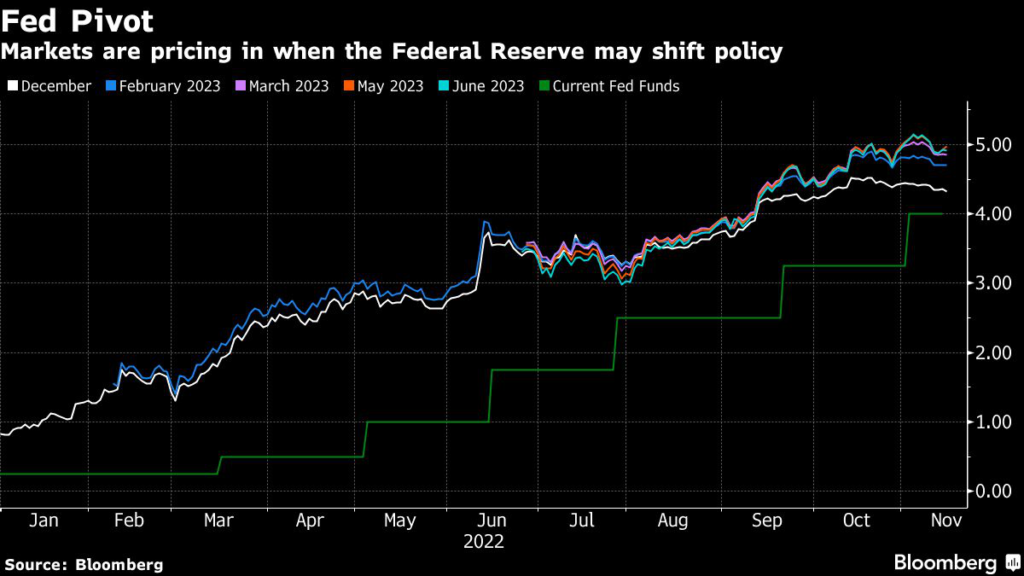
(Bloomberg) — Bulls piled back into global stock markets, encouraged by an easing in Sino-US tensions and growing confidence that the Federal Reserve will be able to slow its rate hiking pace.

Europe’s Stoxx 600 benchmark fluctuated, while US equity futures pointed to a recovery, with index futures on the S&P 500 and the Nasdaq 100 up around 0.5% and 0.8% respectively. In Asia, Hong Kong’s Hang Seng benchmark rose as much as 3.6%. Treasury yields and the dollar slipped, while the yen briefly dropped following an unexpected contraction in Japan’s economy. 

Markets have turned risk-on in recent days, trading off a softer-than-expected US data print that many reckon will allow the Fed to raise rates in 50 basis-point increment, after three 75 basis-point hikes. That view was encouraged by Vice Chair Lael Brainard who said on Monday it would probably be “appropriate soon to move to a slower pace of increases.”

“The issue the market has to wrestle with is how long is the Fed going to keep rates at that level and I think there is some positive sentiment out there that the Fed is going to pivot sometime in 2023,” Peter Kraus, Chairman and CEO at Aperture Investors, told Bloomberg Television.

Meanwhile, Monday’s meeting between President Xi Jinping and Joe Biden that generated hopes of warmer ties between the two superpowers. It came after Beijing had announced measures to support China’s beleaguered property sector, and to relax Covid curbs. 

Chinese technology stocks were among the top contributors to gains in the MSCI Asia Pacific Index. Taiwan Semiconductor Manufacturing Co. surged as much as 9.4% after Warren Buffett took a stake of about $5 billion in the chipmaker.

Read: Everything Is Suddenly Falling In Place for Chinese Stocks

On currency markets, the dollar fell against a basket of currencies, having pared most of its Monday gains following Brainard’s comments, while 10-year Treasury yields also slipped. Data showing Japan’s economy unexpectedly shrank in the third quarter, as well as softer than expected Chinese retail sales figures, highlighted risks for global growth. 

Bank of America’s Global Fund Manager survey for November showed sentiment remains “uber-bearish,” with investors still crowded into the dollar and cash, while tech stocks remain unpopular. 

“My biggest concern is the market gets ahead of itself and we get into a situation where the Fed feels it needs to rein in, and tighten more than it otherwise would have, as markets became too frothy,” Kristina Hooper, chief global strategist at Invesco said on Bloomberg Radio. 


Elsewhere, oil extended losses as concerns over the near-term demand outlook overshadowed signs of tightening supply heading into winter. Gold was steady.

Key events this week:

  • Former US President Donald Trump plans to make an announcement, Tuesday
  • US empire manufacturing, PPI, Tuesday
  • US business inventories, cross-border investment, retail sales, industrial production, Wednesday
  • Fed’s John Williams, Lael Brainard and SEC Chair Gary Gensler speak, Wednesday
  • ECB President Christine Lagarde speaks, Wednesday
  • Eurozone CPI, Thursday
  • US housing starts, initial jobless claims, Thursday
  • Fed’s Neel Kashkari, Loretta Mester speak, Thursday
  • US Conference Board leading index, existing home sales, Friday

Some of the main moves in markets:

Stocks

  • The Stoxx Europe 600 was little changed as of 8:39 a.m. London time
  • Futures on the S&P 500 rose 0.5%
  • Futures on the Nasdaq 100 rose 0.8%
  • Futures on the Dow Jones Industrial Average rose 0.4%
  • The MSCI Asia Pacific Index rose 1.9%
  • The MSCI Emerging Markets Index rose 2.1%

Currencies

  • The Bloomberg Dollar Spot Index fell 0.4%
  • The euro rose 0.8% to $1.0405
  • The Japanese yen rose 0.2% to 139.66 per dollar
  • The offshore yuan rose 0.2% to 7.0296 per dollar
  • The British pound rose 0.6% to $1.1826

Cryptocurrencies

  • Bitcoin rose 3.2% to $16,913.73
  • Ether rose 3.9% to $1,273.92

Bonds

  • The yield on 10-year Treasuries was little changed at 3.86%
  • Germany’s 10-year yield advanced one basis point to 2.16%
  • Britain’s 10-year yield advanced two basis points to 3.38%

Commodities

  • Brent crude fell 0.4% to $92.77 a barrel
  • Spot gold rose 0.2% to $1,775.61 an ounce

This story was produced with the assistance of Bloomberg Automation.

–With assistance from Allegra Catelli.

More stories like this are available on bloomberg.com

©2022 Bloomberg L.P.

FTX Latest: Binance CEO Zhao Plans Recovery Fund

(Bloomberg) — Cryptocurrency prices rallied Monday after Binance Holdings Ltd.’s Chief Executive Officer Changpeng Zhao announced plans to launch a crypto recovery fund to help industry players facing a liquidity crunch. Bitcoin edged towards $17,000 following Zhao’s announcement. 

Zhao said the fund is intended to prop up investor confidence following the dramatic collapse of Sam Bankman-Fried’s FTX crypto exchange, which wiped out about $200 billion in crypto market value. Zhao has not announced any details.

Meanwhile, there were growing signs that customers of the bankrupt digital-asset exchange have little chance of recovering much of their deposits. FTX Trading International held just $900 million in liquid assets on Thursday — the day before it filed for Chapter 11 bankruptcy — against $9 billion of liabilities, according to sources familiar with the matter. 

Bankman-Fried was questioned by Bahamian police and regulators Saturday. Local authorities in the Bahamas are investigating whether there was any criminal misconduct in FTX’s collapse. 

Key stories and developments:

  • FTX’s Balance Sheet, Hack Paint Dim Picture for User Recovery
  • Bankman-Fried: From Crypto King to King of Tech Bubble’s Losers
  • Big Investors Are Giving Up on Crypto Markets Going Mainstream
  • Summers Says FTX Meltdown Has ‘Whiffs’ of Enron-Like Scandal (1)
  • ‘It’s All Gone’: FTX Bankruptcy Is Worst Fear for Retail Traders

(All time references are New York unless otherwise stated.)

Binance CEO: ‘No One Can Protect a Bad Player’ (6:06 p.m. Hong Kong) 

Speaking at the B20 Summit in Indonesia, Binance Holdings Ltd Chief Executive Officer Changpeng “CZ” Zhao pledged to launch a fund to help crypto markets recover from FTX’s collapse. He singled out people he described as bad actors in the crypto space who “try to cut corners to grow quickly,” and called on industry leaders to “set strong standards” in volatile digital markets. 

Zhao, who briefly entertained plans to buy the struggling exchange before backing out a day later, exhorted his crypto counterparts to behave better. “No one can protect a bad player,” he said.    

FTX’s Japan Branch Assesses Client Damage (5:33 p.m. Hong Kong) 

FTX Japan K.K., the Japanese subsidiary of Sam Bankman-Fried’s failed digital asset exchange, is investigating whether its parent company’s bankruptcy will affect its ability to return crypto holdings to regional clients. Last week, the unit was ordered to suspend some of its operations as regulators assessed the wreckage of the FTX collapse. 

A company spokesman said that FTX Japan will make a statement once the situation is clearer. As of Nov. 10, FTX Japan held about 19.6 billion yen ($140 million) in cash and deposits. 

Singapore Central Bank Says FTX Wasn’t Licensed in the City-State (2:40 p.m. Hong Kong)

Singapore’s central bank said that while bankrupt crypto exchange FTX doesn’t have a license to operate in the city-state, it’s not possible to prevent local users from “directly accessing” overseas service providers. 

As a result, FTX was “able to onboard Singapore users,” a spokesperson at the Monetary Authority of Singapore said in an emailed statement to Bloomberg News on Monday. “MAS has consistently reminded the public of the risks of dealing with unlicensed entities,” the spokesperson said in the statement. 

Bank of Japan Chief Calls for Stepped Up Crypto Regulation Push (1 p.m. Hong Kong)

Bank of Japan Governor Haruhiko Kuroda called for an accelerated effort, in line with G-7 recommendations, to regulate the crypto market in a question-and-answer session after a speech on the wider macroeconomic outlook. Japan has been planning to further loosen crypto rules by making it easier to list virtual coins, but that was before the FTX collapse. The crisis has raised fresh questions about how regulators should approach the volatile sector.

Crypto Markets Retreat in Wake of Ongoing FTX Fallout (10:30 a.m. Hong Kong)

Cryptocurrency markets began the week in Asia on the back foot. Bitcoin retreated almost 3% at one point to drop below $16,000. Ether also suffered losses. Solana, one of the tokens associated with Bankman-Fried’s failed digital-asset empire, was down about 10% and has plunged over 60% this month.

Crypto Asset Manager Huobi Tech Has $18.1 Million on FTX’s Platform (10:20 a.m. in Hong Kong)

Crypto asset manager Huobi Tech’s wholly owned subsidiary Hbit Ltd. has $18.1 million in tokens deposited on FTX, according to a filing. Some $13.2 million comprises client assets about $4.9 million are Hbit assets. 

Controlling shareholder Li Lin will provide an unsecured facility up to $14 million to the group “for the purpose of covering client asset liability” if needed, according to the statement. The group’s financial performance might be “materially and adversely affected” in the event the funds are stuck at FTX, it said, adding that other assets and liabilities of the group are not affected.

Huobi Technology Holdings’s shares slid 14.1% in Hong Kong. The company in the filing also said it’s now called New Huo Technology Holdings.

Crypto Exchange AAX Suspends Withdrawals (10 a.m. Hong Kong)

Crypto exchange AAX has suspended withdrawals, citing complications with a system upgrade and blaming failures at a third-party partner.

“To prevent further risks, the technical team has had to manually proofread and restore the system to ensure maximum accuracy of all users’ holdings,” the exchange said in a notice posted online. “AAX will continue our best efforts to resume regular operations for all users within 7-10 days to ensure the utmost accuracy. In this light, withdrawals have been suspended to avoid fraud and exploitation.”

FTX’s Serum Project Is in Distress (1:05 p.m.)

Tokens issued by Serum, a liquidity infrastructure hub built by FTX and used by market makers and lending protocols on Solana, tumbled more than 23% on Sunday alone, pricing data from CoinGecko showed. FTX owned more than $2.2 billion worth of the token as of Thursday, the Financial Times reported, citing investor materials.

Developers attached to Serum split off the project’s code in a so-called fork amid concern that an upgrade key controlling the program could be compromised, a Solana spokesperson said. 

Galois Confirms $40 Million Exposure (12:26 p.m.)

Crypto hedge fund Galois Capital is the latest company to confirm its exposure to the collapsed FTX cryptocurrency exchange. In a direct message to Bloomberg News, Galois said its exposure was between $40 million to $45 million. On Friday, Galois said on Twitter that it had “significant” funds in FTX. Galois was an early critic of the now failed Terra blockchain and its TerraUSD algorithmic stablecoin.

Bahamian Police Look Into Criminal Probe (11:53 a.m.)

A team from the Financial Crimes Investigation Branch is working with the Bahamas Securities Commission to investigate if any criminal misconduct occurred in the collapse of FTX.

Binance Stops Deposits of FTX’s Token FTT (3:30 a.m. Sunday)

Binance halted deposits of FTT, FTX’s token, “to prevent potential of questionable additional supplies affecting the market,” Binance CEO Changpeng “CZ” Zhao said on Twitter. Zhao said that he would encourage other exchanges to do the same thing. Justin Sun said Huobi Global would echo Zhao’s advice.

Zhao added that FTT contract deployers moved all remaining FTT supplies worth $400 million, “which should be unlocked in batches.” Binance followed up to say it had noticed a “suspicious movement” of a large amount of FTT by the token’s contract deployers.

Matrixport Says 79 Clients Affected by FTX, ‘No Risk of Insolvency’ (11:38 p.m. Saturday)

Crypto financial-services platform Matrixport “continues to operate normally and the company has no risk of insolvency with respect to the developments at FTX and Alameda,” according to Ross Gan, head of public relations.

Matrixport had 79 clients that incurred losses via exposure to three products on its platform that were linked to FTX, Gan said.

Kraken Freezes Accounts Possibly Related to FTX (11:33 p.m.)

Crypto exchange Kraken said it has frozen Kraken account access to certain funds it suspects to be associated with “fraud, negligence or misconduct” related to FTX. Kraken said in a tweet it’s in contact with law enforcement and plans to resolve each account on a case-by-case basis.

Bankman-Fried Interviewed by Police in Bahamas (9:42 p.m.) 

Former crypto mogul Sam Bankman-Fried was interviewed by Bahamian police and regulators on Saturday, according to a person familiar with the matter. Bankman-Fried didn’t immediately respond to a request for comment.

The inquiries from Bahamian authorities add to the mounting legal pressure that Bankman-Fried is facing since his FTX empire crumbled over the past week. In the US, he is facing scrutiny from the Securities and Exchange Commission over whether he broke securities rules.

Bahamas Says it Didn’t Authorize Local Withdrawals by FTX Exchange (9 p.m.)

Bankrupt crypto exchange FTX’s move to allow withdrawals in the Bahamas was questioned by the nation’s securities regulator.

The Securities Commission of the Bahamas in a statement Saturday said that it hadn’t “directed, authorized or suggested” the prioritization of local withdrawals to FTX Digital Markets Ltd.

It added that such withdrawals could be clawed back.

Jump Crypto Says It Remains Well Capitalized After FTX Exposure (5:59 p.m.)

Jump Crypto, a cryptocurrency trading firm, told customers on Saturday it remains “well capitalized” after exposure to FTX. In a series of tweets, Jump said its exposure was “managed in accordance with our risk framework.” The company did not specify the exact nature of its exposure.

Liabilities Dwarfed Liquid Assets: FT (1:13 p.m.)

FTX Trading held $900 million in liquid assets against $9 billion of liabilities the day before the bankruptcy filing, the Financial Times reported, citing investment materials and a spreadsheet the newspaper had seen. Most of the recorded assets are either illiquid venture capital investments or crypto tokens that are not widely traded. The biggest asset as of Thursday was listed as $2.2 billion worth of a cryptocurrency called Serum.


(Corrects story that moved on Nov. 14 to clarify that a unit of crypto asset manager Huobi Tech, not the digital-asset exchange Huobi, has $18.1 million on FTX’s platform.)

More stories like this are available on bloomberg.com

©2022 Bloomberg L.P.

Close Bitnami banner
Bitnami