
Bloomberg

NEF Latest: Citadel’s Griffin on FTX, Trump; Rudd Talks Biden-Xi

(Bloomberg) — US-China talks and the global outlook dominated discussions at the Bloomberg New Economy Forum in Singapore on Tuesday, where Chinese Vice President Wang Qishan said his country will keep opening up and working for peace.

Citadel founder Ken Griffin also weighed in on the importance of US-China relations, along with US politics and the collapse of Sam Bankman-Fried’s crypto exchange FTX. 

Ken Griffin Talks Trump, China (12:45 p.m. SGT)

Citadel’s Griffin, a vocal supporter and financial backer of Ron DeSantis, said the Florida governor will run for president on the back of a strong record, likely facing “three-time loser” Donald Trump. 

Griffin said this month’s midterm elections — which saw DeSantis elected by a landslide while Democrats outperformed expectations nationally — were a “great result” given overall turnout and voters splitting their ballots between the parties.

The billionaire also slammed Bankman-Fried’s FTX, saying it represented a travesty which undermines trust in financial markets. He said the US should avoid a recession this year, but may not be able to do so 2023. Even as he sees the inflationary path as having peaked, Griffin said the Fed should “get the job done now” in fixing inflation or risk losing credibility.

In a morning that was dominated by discussion of US-China relations, Griffin said the US remains dependent on Taiwan for semiconductors. 

Nardini Says China Leading Race Into Space (12:30 p.m. SGT)

There will likely be eight space stations in orbit in 10 years time, said Helene Huby, co-founder and chief executive officer of The Exploration Co., which is developing modular, reusable craft to carry cargo, and eventually people, into space. Two of those stations will be in orbit around the moon, and there will be at least three privately-owned US stations, she said.

In a panel discussing the commercialization of space, Flavia Tata Nardini, co-founder and chief executive officer of Australia’s Fleet Space Technologies, which uses low-earth orbit satellites to search for minerals on earth, said China is currently leading the space race, with the most satellite companies and workable rockets. 

Ex-Australian PM on Biden-Xi (11:17 a.m. SGT)

Former Australian Prime Minister Kevin Rudd said the meeting between Biden and Xi Monday yielded “reasonable progress” and showed two competing nations seeking to ease tensions.

“Things were beginning to spiral out of control and to be frank the US-China relationship has been in freefall for quite some time,” he told Bloomberg Television’s Haslinda Amin in an interview Tuesday. “So, if before it was eight out of 10 in terms of the heat factor, we may have brought it down to seven.”

Qiming on China Startup Funding (11:10 a.m. SGT)

Qiming Venture Partners Founding Managing Partner Gary Rieschel said China’s early-stage startups have seen no decline in funding even as geopolitical headwinds affect venture capital investments more broadly.

“There’s still a vast amount of money for early-stage venture capital,” Rieschel told Bloomberg Television at NEF. “The funds that have had a hard time raising money now are the later-stage crossover funds.”

US Trade Rep on Xi-Biden, IPEF (10:55 a.m. SGT) 

The face-to-face meeting between Biden and Xi was a powerful signal to the rest of the world that both leaders can manage ties, according to US Trade Representative Katherine Tai.

On the Indo-Pacific Economic Framework, an economic accord the US is negotiating with 13 other countries, Tai said an agreement is possible and could happen within the next two years. She said Biden has directed her to design a “worker-centered” trade policy, though IPEF is deliberately not a trade deal. 

“This is a global economy that’s going through a lot of changes” so by design IPEF allows countries to “evolve” engagement, she said. Tai declined to weigh in on whether China should have been admitted to the World Trade Organization a generation ago, saying there was no going back on that decision. 

Singapore, Japan Discuss Outlook (10:00 a.m. SGT)

The current spell of weakness in the global economy is the result of central banks the world over misreading inflation a year ago, Singapore’s Senior Minister Tharman Shanmugaratnam said. Recession is the “price we pay” for misreading inflationary pressures, said Tharman, who is also chairman of Singapore’s central bank.

Speaking on the same panel, Japan’s Minister of Economy, Trade and Industry Yasutoshi Nishimura said cooperation, not decoupling, is important at a time of crises, disruptions and conflicts in supply chains, noting he was committed to carrying forward former Prime Minister Shinzo Abe’s vision of a free economic order.

Tharman also noted that reduced US-China tensions won’t assure the world of peace, and there will continue to be constant friction between the world’s two biggest economies.  “But it’s much safer than a world that is decoupled.”

Kissinger on Xi-Biden, Russia (9:40 a.m. SGT)

The former secretary of state praised Monday’s meeting between Biden and Xi as part of the needed “bridge building” between the world’s two biggest economies. Pressed on whether “extremists” in each country were dominating the political debate, Kissinger said that underscored why the meeting in Bali was so important. 

“The two leaders that met briefly will know the consequences of economic disaster and military impact on each other,” Kissinger said. “All we can say today is that a method for discussion has been agreed on and general statements have been made that are compatible with a cooperative world, but a long road still has to be undertaken.”

Biden, Xi Take Biggest Step in Years to Avoid US-China Clash

Turning to the war in Europe, Kissinger said countries need to focus on what their longer-term objectives are with Ukraine and Russia, and not be distracted by short-term pressures. But he demurred on what Russian President Vladimir Putin would agree to, saying “there’s no question that for some people, Vladimir Putin is an obstacle to this vision.”

BPEA CEO Says China ‘Investable’ (9:30 a.m. SGT)

China’s path is showing more clarity for investors, according to the head of private equity firm BPEA EQT, who underscored how the market is still investable even with a global slowdown of private-equity money deployed in the country.

“I am pretty confident the directions become more clear as things progress,” Jean Eric Salata, who is also EQT AB’s Asia chairperson, said in an interview with Bloomberg Television on the sidelines of the NEF.

Wang Says China Wants Peace (9:25 a.m. SGT)

Leaders of the world’s No. 2 economy will stick to a path of peaceful development, Chinese Vice President Wang Qishan pledged, a day after the Biden-Xi meeting in Bali. 

“Upholding world peace and stability is in the fundamental interest of the Chinese nation,” Wang said in a recorded speech. “China safeguards and promotes world peace through its own development.”

Wang also sought to reassure his audience that the ruling Communist Party would continue opening China, and “maintain strong policy continuity to provide greater certainties and stability for the world.”

Bloomberg Warns on Climate (9:10 a.m. SGT)

“Unless bolder, more urgent global action is taken,” those challenges will only get worse, Bloomberg said, adding that the leaders gathered at the annual forum should focus on “practical, concrete ways to tackle issues that governments alone cannot or will not solve.”

The forum begins a day after Presidents Joe Biden and Xi Jinping met in Bali, Indonesia, on the sidelines of the Group of 20 summit. After years of souring relations, the leaders managed to agree on how to get talks between the world’s two biggest economies back on track.

PwC’s Moritz Talks China (8:20 a.m. SGT)

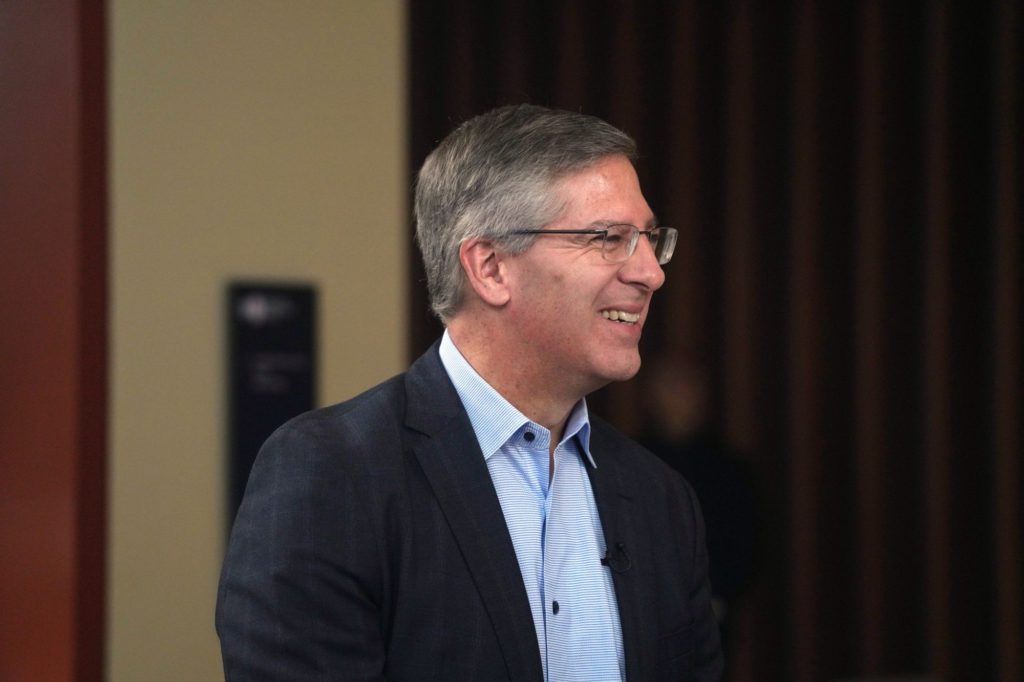
On the sidelines of the NEF, PricewaterhouseCoopers LLP Chairman Bob Moritz said companies are thinking of how to structure their operations in China and around the region because of US-China tensions.

“You see a number of companies thinking through: do I need to restructure my operations in terms of what I have in China, outside of China or around the region?” Moritz said in a Bloomberg Television interview. “But it’s with flexibility to say I’m not sure it’s going to get worse or better so I want multiple options and flexibility to be agile to react to that market opportunity, depending on what comes up.”

The New Economy Forum is being organized by Bloomberg Media Group, a division of Bloomberg LP, the parent company of Bloomberg News.

See more Bloomberg New Economy stories here, where you can sign up for our newsletter.

–With assistance from Tom Redmond, Bill Faries, Adrian Kennedy, Jing Li, Jill Disis, Sarah Zheng, Michelle Jamrisko, Rebecca Choong Wilkins and Karthikeyan Sundaram.

More stories like this are available on bloomberg.com

©2022 Bloomberg L.P.
Japan, US Collaborating on Next-Generation Chips, Nishimura Says

(Bloomberg) — Japan’s trade minister Yasutoshi Nishimura said Japan and the US are working together to make the next generation of semiconductors, while also collaborating with a broad range of Asian nations to strengthen chip supply chains.

“This is something we’re pursuing within the Indo-Pacific Economic Framework for Prosperity, which includes 14 countries from India to Fiji,” Nishimura said in a panel discussion at the Bloomberg New Economy Forum in Singapore on Tuesday. “We’re hoping the US and Japan can be at the center of building up supply chains for key materials.”

Nishimura’s comments come as Japan is increasingly caught between the US and China in the world of chip production. The minister largely dodged a question over whether Japan is also going to follow US-led export restrictions that would hinder China’s technological ambitions.

Read More: Biden’s Chip Curbs Beat Trump in Forcing World to Align on China

“We understand what the US is trying to do, and are in communication,” Nishimura said in a conversation with Stephanie Flanders, head of economics and government at Bloomberg News, during an NEF panel discussion on challenges confronting the world. “Japan will decide what to do within the existing international framework.” 

Nishimura also said Japan will support US firms’ investment into the country, particularly when it comes to frontier technology. He hoped for the same kind of help from the US when Japanese firms in turn put money into America.

Read More: Micron to Get $320 Million From Japan to Make Advanced Chips 

The minister also mentioned during the panel session that Japan will try to use the yen’s current weakness to promote exports. 

“We want smaller firms that haven’t tried this before to make exporting efforts,” he said at the event organized by Bloomberg Media Group, a division of Bloomberg LP, the parent company of Bloomberg News. “The weaker yen also means that it’s much easier to invest in Japan, so we’re trying to push for more investments.” 

–With assistance from Erica Yokoyama and Michelle Jamrisko.

More stories like this are available on bloomberg.com

©2022 Bloomberg L.P.
ASML Considers M&A to Meet Strong Demand for Advanced Chipmaking

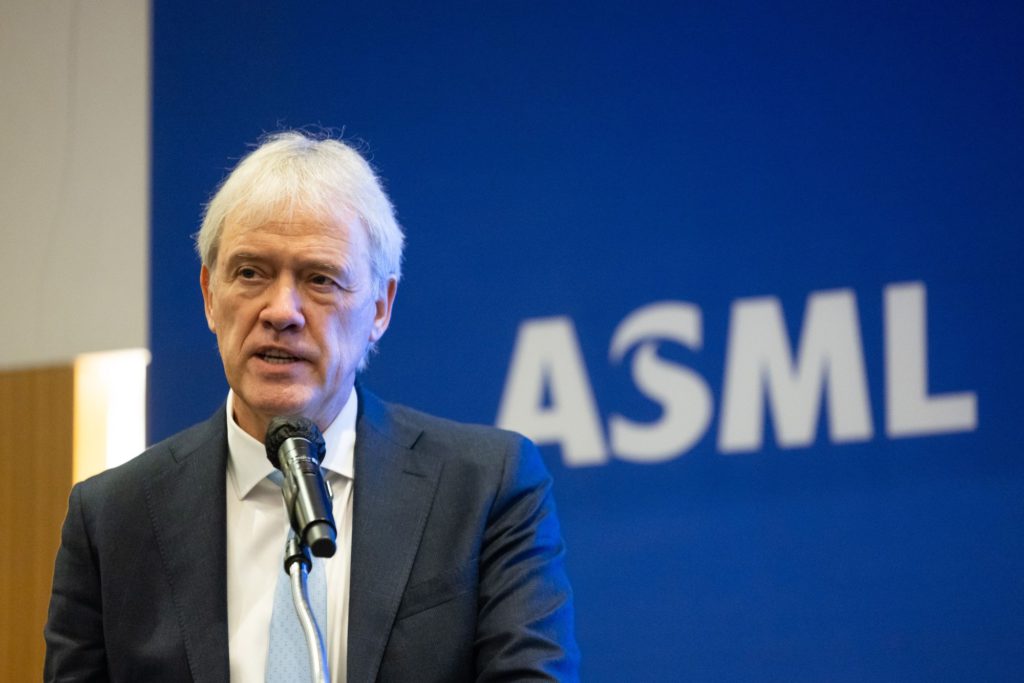
(Bloomberg) — ASML Holding NV may conduct acquisitions to meet soaring demand for advanced chips worldwide, its chief executive officer said, defying the broader sector downturn.

The Dutch chip production gear maker continues to see strong demand for the foreseeable future, as countries race to build domestic chip plants. ASML last week said it sees sales of more than doubling to as much as €40 billion ($41 billion) by 2025 and more than tripling to as much as €60 billion by 2030.

That scale of growth necessitates a bigger supplier base, CEO Peter Wennink said Tuesday.

“We will acquire what we think is needed to support the road map,” he said, speaking at a news conference in Seoul a day ahead of a groundbreaking ceremony of ASML’s new facilities in South Korea. 

ASML is investing 240 billion won ($181 million) to build maintenance and training centers in South Korea by 2024, according to a statement. ASML’s investments in South Korea are “just beginning,” Wennink said. Some of its biggest customers — South Korea’s Samsung Electronics Co. and SK Hynix Inc., as well as Taiwan Semiconductor Manufacturing Co. — are in East Asia, which is also home to fellow lithography machine makers Nikon Corp. and Canon Inc. 

ASML long played a low-profile role supplying equipment for making semiconductors, but its strategic importance has surged as the US and China clash over technology leadership. The Dutch company holds a monopoly on the type of machine commonly used to make the most powerful chips.

ASML has been selling slightly less advanced chipmaking machines to Chinese customers. While the Biden administration’s most recent chip curbs do not directly affect the Dutch maker, they could mean an indirect hit to sales of as much as 5%, Wennink said. 

“Despite the fact that we are looking at a recessionary environment in 2023, the demand for our products is still higher than what we can make,” he said. There has been no reduction to the backlog in its shipments to the end of next year, he said.

The company is raising output to 90 of its extreme ultraviolet lithography machines and 600 deep-ultraviolet machines by 2025 to 2026. Such machines burn patterns into materials deposited on wafers of silicon that make up the circuits that give chips their function.

Five companies dominate the global market for the equipment needed to produce semiconductors. The others, supplying other parts and machinery for the task, are Japan’s Tokyo Electron Ltd., and three American companies, Applied Materials Inc., Lam Research Corp. and KLA Corp.

–With assistance from Debby Wu and Vlad Savov.

More stories like this are available on bloomberg.com

©2022 Bloomberg L.P.
Xi’s Crackdowns Drive Chinese Billionaires to Booming Singapore

(Bloomberg) — One of the hottest wine bars for Chinese billionaires isn’t atop a Shanghai office tower or within a Beijing courtyard house. It’s in a modest black-and-white bungalow next to a six-lane thruway in the heart of Singapore.

After stepping past the reception desk with its wall of wine bottles, visitors enter a two-story den of rattan-backed chairs and tables where bankers and crypto-entrepreneurs gather. The truly connected are escorted down a garden path, past recreations of Terracotta Warriors to a pavilion with statues of cranes standing on turtles, symbols of longevity in Chinese culture.

For the newly arrived rich, the private lounge within a lounge at Circle 33 on Scotts Road has become a rite of passage, where members from China, Singapore and Malaysia discuss deals worth hundreds of millions of dollars well past 2 a.m. over bottles of Bordeaux, Cuban cigars and poker, according to people familiar with the club.

The popularity of Circle 33, grown with the help of Dianping.com co-founder Zhang Tao, is the latest sign that China’s super rich are decamping to other countries and bringing their money with them. For some, it’s a temporary move to avoid Covid restrictions and potentially higher taxes. For others, it’s permanent.

The exodus of wealth is poised to accelerate after last month’s Party Congress in which President Xi Jinping further tightened his grip on the economy. Xi’s drive for “common prosperity” means entrepreneurs  — who once embraced Deng Xiaoping’s maxim that to get rich is glorious — are flocking to more welcoming places like Singapore.

“It’s really a downward slope for the private sector in China and it’s just a question of how steep,” said Drew Thompson, a visiting senior research fellow at National University of Singapore’s Lee Kuan Yew School of Public Policy. “That will accelerate efforts to migrate and shelter wealth abroad.”

The shift by some of Asia’s wealthiest families to Singapore is hardly new. The city-state’s reputation as a low-tax bastion of safety and stability has long made it a regional hub for the rich, from Thailand to Indonesia. Its attraction for wealthy Chinese has ramped up since the 2019 protests in Hong Kong made that city less appealing, and gathered steam following this year’s Covid lockdowns.

“Significant money is flowing into Singapore” from Greater China, said Cheah Cheng Hye, co-founder of Value Partners Group, a Hong Kong money manager that’s adding staff in the city-state. “Family offices are expanding and people see Singapore as a safe haven for their money.”

Family Offices

Singapore doesn’t provide detailed statistics about where its wealthy immigrants come from. But the explosive rise in family offices are symptomatic of the attraction for Chinese tycoons. The number of these offices almost doubled to about 700 at the end of 2021 from the previous year. While China’s wealthy aren’t the only drivers of the growth, some service providers say they are by far the largest market.

Michael Marquardt, whose firm IQ-EQ Asia helps set up family offices, said the number of inquiries from Chinese clients jumped about 25% to 50% just before and after the Party Congress. Vikna Rajah, head of tax and trust at law firm Rajah and Tann Singapore LLP, said in June that more than 30% of the clients he’s helped apply for family office tax exemptions are from Greater China, including Hong Kong.

“There’s definitely been an increase in interest,” Marquardt said. “Entrepreneurs who have done well and taken their companies public are interested in parking their international wealth in a place like Singapore.”

Xi’s push to consolidate his leadership by promoting allies who’ve taken a tough stance against the private sector — along with the prospect of new inheritance taxes — have pushed some people to completely sever ties with their country.

Chen, a financial services provider who only wanted his last name used, has lost all hope of liberal reforms in China. He recently cancelled his Beijing “Hukou” — a coveted household registration that ensures crucial services from schooling to health care — after getting a Hong Kong passport. Two other professionals with Hong Kong permanent residencies told Bloomberg they’d done the same within weeks.

The influx is showing up in the financial data. According to figures released last month by the Monetary Authority of Singapore, the value of assets across the money management industry rose by 16% in 2021 to S$5.4 trillion ($3.9 trillion). The single-largest portion came from Asia-Pacific sources, excluding Singapore.

When asked by Bloomberg Television if he expects accelerated capital outflows following the recent Party Congress, MAS Managing Director Ravi Menon said that while there has been money flowing from China in recent years, it’s too early to tell if more will come.

While the super-rich have often used Singapore as a base for business, many Chinese families are now opting to live there. That shift has shown up in a myriad ways, from rising luxury car sales to sky-rocketing prices for mansions and golf memberships.

Home prices soared about 8% in the first nine months of the year, even as property markets from Sydney to Toronto tumbled. Rents are also jumping, as more potential buyers are priced out of the market and housing supplies tighten.

Sales of luxury cars coveted by wealthy Chinese are humming. Some 87 Bentleys and 78 Rolls Royces were registered this year in Singapore, up 26% and 90% respectively compared with all of 2019. These cars frequently cost well over $1 million.

Golf fees are soaring as new arrivals look to polish their swings while making a solid investment. The cost for an expat membership at the private Sentosa Club overlooking the Singapore Strait has more than doubled to S$880,000 since the end of 2019, according to figures from Singolf Services Pte, a brokerage. That easily tops an investment in Chinese stocks, which have dropped about 2% over that time. 

“We see a huge demand that we didn’t see before the pandemic” Madeline Choo, manager of Active Golf Services Pte. “They need to buy a membership because they intend to stay in Singapore for very long.”


The list of entrepreneurs establishing themselves in Singapore reads like a Who’s Who of Chinese startups circa 2018. Zhang Yiming, founder of TikTok’s ByteDance Ltd., frequently travels there, according to several people who have met with him. Crypto mogul Jihan Wu bought a storage vault dubbed Asia’s Fort Knox near the Changi Airport in September. And VIPKid founder Cindy Mi, whose company was a venture capital darling until Beijing cracked down on online education, is also a regular visitor, according to two people familiar. 

The recent arrivals add to the list of established Chinese executives who already call Singapore home. Sean Shi, co-founder of hotpot maker Haidilao International Holding Ltd., paid S$50 million for a so-called good class bungalow in September, according to local media. Fosun International Ltd. co-founder Liang Xinjun has set up a family office.

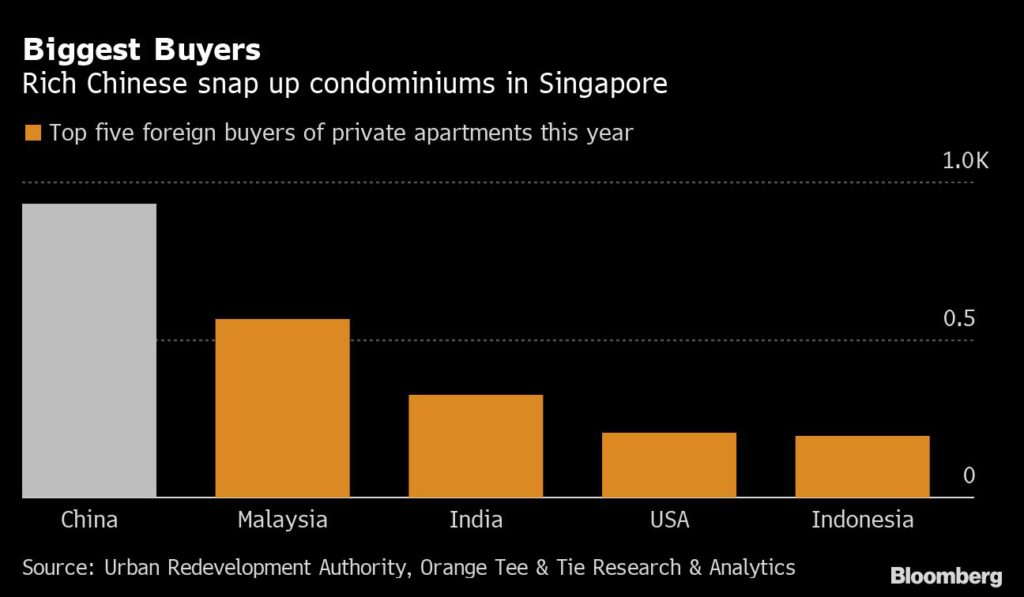
Chinese are now the country’s biggest foreign buyers of condos, scooping up 932 units in the first eight months of 2022 – more than twice the amount bought by Malaysians, according to industry watcher OrangeTee & Tie Pte.

The influx has certainly enlivened Alice Hung’s social life. The philanthropist and family office owner decided to move to Singapore from Hong Kong in 2019 after making much of her money in China from medical devices and property. Over the past year, the number of friends and peers following her from Greater China has surged.

“I probably have 20 billionaire friends based in Singapore now,” she said, adding that most of them are recent arrivals. “My God, for the last 10 months I’ve been asked to go out every single night – I’m very selective because I’m exhausted.”

While some Chinese find Singapore a little more staid than Hong Kong, they will continue to flock to the city-state, according to NGC Ventures Founding Partner Tony Gu, who most recently moved to Singapore in 2018. Gu’s acquaintances from Greater China now living in Singapore has risen to several hundred from about 20 four years ago.

“More will be coming to Singapore, 100%,” he said of Chinese entrepreneurs, over a 21-year-old whiskey at 35a Scotts – a club inside a black-and-white bungalow near Circle 33. “The theme of our era is Chinese entrepreneurs going overseas” and Singapore offers the best foothold.

Gu said the moves don’t necessarily represent a lasting repudiation of China or Hong Kong, nor a commentary on its politics. The latter remains a valuable business hub and Gu plans to visit his hometown and do business in China when pandemic restrictions are eased. Chinese markets have soared in recent days after the government announced plans to relax some Covid rules and issued sweeping directives to shore up the property sector. 

Long-Term

It’s not clear whether Xi will seek to halt the outflow of people and capital. Investment migration consultancy Henley & Partners estimates a cohort of 10,000 high-net-worth residents are seeking to pull $48 billion from China this year — the second-largest wealth and people outflow for a country after Russia.

Rich Chinese Worth $48 Billion Are Struggling to Flee Covid Zero

Thompson said that Beijing has historically been indifferent to those who move abroad — as long as they fly under the radar and avoid criticizing the Communist Party. What’s more, Singapore is less likely to harbor vocal dissidents than its Western peers, he said.

All that suggests the flow of Chinese money into Singapore is unlikely to stop, said Gary Rieschel, founding managing partner of Qiming Venture Partners, a China-focused venture capital firm that’s raised $9.4 billion.

“Hong Kong was and Singapore now is the regional tax haven of choice,” he said. “This is Exodus on steroids with Xi as the unintended Moses.”

–With assistance from Low De Wei, Suvashree Ghosh, Jane Zhang, Faris Mokhtar and Zheping Huang.

More stories like this are available on bloomberg.com

©2022 Bloomberg L.P.

Disney to Air Episodes of Its Star Wars TV Series on ABC, Hulu

(Bloomberg) — Walt Disney Co. will air the first two episodes of its Star Wars TV series Andor on several of its broadcast and cable TV outlets over the Thanksgiving weekend, as a way of promoting its Disney+ streaming service.

Beginning Nov. 23, non-Disney+ subscribers will be able to watch the two episodes on ABC, the FX and Freeform cable channels, and the company’s Hulu streaming service.

The entire 12-episode series will be available on Disney+, including the season finale. Andor is a new series set five years before the events in the film Rogue One: A Star Wars Story.

Disney has been putting more programs from its traditional broadcast and cable channels on its streaming platforms. It’s rare for shows to go the other way, however. The company reported disappointing sales and earnings in its fourth fiscal quarter, in part due to losses from its streaming businesses. Chief Executive Officer Bob Chapek has stood by projections that Disney+ would be profitable by 2024.

More stories like this are available on bloomberg.com

©2022 Bloomberg L.P.

Disney to Air Episodes of Star Wars Series Andor on ABC, Hulu

(Bloomberg) — Walt Disney Co. will air the first two episodes of its Star Wars TV series Andor on several of its broadcast and cable TV outlets over the Thanksgiving weekend, as a way of promoting its Disney+ streaming service.

Beginning Nov. 23, non-Disney+ subscribers will be able to watch the two episodes on ABC, the FX and Freeform cable channels, and the company’s Hulu streaming service.

The entire 12-episode series will be available on Disney+, including the season finale. Andor is a new series set five years before the events in the film Rogue One: A Star Wars Story.

Disney has been putting more programs from its traditional broadcast and cable channels on its streaming platforms. It’s rare for shows to go the other way, however. The company reported disappointing sales and earnings in its fourth fiscal quarter, in part due to losses from its streaming businesses. Chief Executive Officer Bob Chapek has stood by projections that Disney+ would be profitable by 2024.

More stories like this are available on bloomberg.com

©2022 Bloomberg L.P.
Exclusive Satellite Images Show Methane Cloud Near Jordan Waste Site

(Bloomberg) — Scientists say reducing emissions of methane, which has 84 times the warming power of carbon dioxide during its first two decades in the atmosphere, is one of the fastest and cheapest ways to cool the planet. For the first nine days of COP27, Bloomberg Green published new satellite images of methane releases around the world, provided by emissions monitoring firm GHGSat Inc. The Montreal-based firm excluded data under contract to its customers — companies, governments and institutions looking to monitor emissions — from examples provided to Bloomberg.

Near Amman, Jordan, Nov. 10, 1:58 pm local time

A methane plume was spotted near Jordan’s capital of Amman. GHGSat attributed the plume to the waste sector and estimated its emissions rate at 4,876 kilograms an hour. 

Garbage and landfills can generate the potent greenhouse gas when organic material such as food scraps break down in the absence of oxygen. Landfills and wastewater are responsible for about 20% of the methane emissions generated from human activity, and failing to curb releases from the sector could derail global climate goals.

Jordan’s Ministry of Environment didn’t immediately respond to an email seeking comment. 

Near Lahore, Pakistan, Nov. 10, 1:35 pm local time

The growth of South Asian megacities has spawned regional methane hotspots linked to landfills. GHGSat attributed the latest observation, outside of Lahore, to the waste sector and estimated the plume’s emissions rate at 1,403 kilograms per hour. 

The source of emissions in South Asia observed by satellite are different from major emitters such as the US or Russia, where the lion’s share of releases are linked to oil, gas and coal operations. Last year, more than half of all methane emissions measured globally from landfills by GHGSat were in Asia. 

Read more: The Trash Mountains of South Asia That Threaten the Climate

The Pakistan Environmental Protection Agency didn’t immediately respond to an email sent outside normal business hours over the weekend. A spokesperson for the Ministry of Climate Change acknowledged a WhatsApp message seeking comment but did not immediately provide one. Diverting food scraps and other organics before they enter a landfill is crucial to limiting future emissions. The impact of legacy dumps can be mitigated through aerating piles of trash and gas capture systems.

Eastern Turkmenistan, Nov. 10, 2:21 pm local time

A large methane cloud has been observed in the Central Asian country of Turkmenistan, a global hotspot for the potent greenhouse gas. GHGSat attributed the plume to the nation’s oil and gas sector and estimated the emissions rate at about 8,501 kilograms per hour. 

Turkmenistan has the world’s fourth largest natural gas reserves and offers one of the biggest global opportunities to cut back on leaks of methane. Earlier this year, researchers identified 29 pieces of oil and gas infrastructure spewing enough methane each year to rival the annual emissions from all the cars in the US state of Alabama. The report found that the releases were mostly the result of poorly maintained or leaky equipment — and largely avoidable.

Read more: Asia’s Secretive Gas Dictatorship Hides a Climate Catastrophe

The country’s fossil fuel production is dominated by two state-owned companies, Turkmennebit and Turkmengaz. Neither company, nor its Ministry of Foreign Affairs, immediately responded to emails requesting comment outside of normal business hours over the weekend. 

Methane emissions are routinely observed in Turkmenistan’s western Caspian basin leaking from old Soviet infrastructure, and in the nation’s east, which is home to the large Galkynysh gas field, and where China National Petroleum Corp. has built new infrastructure to ship the fossil gas to the world’s most populous country.

Methane is the primary component of natural gas and responsible for about 30% of the Earth’s warming. Turkmenistan has so far declined to join the Global Methane Pledgee, a group of more than 120 countries that are aiming to cut releases of the gas 30% by the end of this decade from 2020 levels.

Quebec, Canada, Nov. 9, 1:36 pm local time

A cloud of methane was observed near a suburb of Montreal that GHGSat attributed to the waste sector. The satellite company estimated an emissions rate for the plume of 1,185 kilograms per hour. 

Environment and Climate Change Canada spokesperson Cecelia Parsons said in an emailed statement that as part of the country’s 2030 emissions reduction goals Canada is developing new regulations to increase the number of landfills that collect and treat their methane. A spokesperson for Quebec’s ministry of environment also acknowledged a request for comment.

The release offers yet another disconnect between Canada’s climate ambitions and its emissions. Prime Minister Justin Trudeau has pitched the country as a global environmental leader but the nation’s methane and carbon dioxide releases have climbed more than any other G-7 country, relative to a 1990 baseline, according to European Commission data through early 2021.

Last month Bloomberg News reported on a methane plume near oil and gas production and pipelines that Canadian regulators said they were unaware of.

Canada was an inaugural member of the Global Methane Pledge that launched in 2021 and now includes more than 120 nations that are aiming to slash global emissions of the gas from all sectors at least 30% from 2020 levels by the end of the decade. This fall, Canada announced it is aiming to reduce methane emissions more than 35% from 2020 levels by 2030. Environment minister Steven Guilbeault has said the country is on track to cut methane emissions more than 40% by 2025, relative to a 2012 baseline. 

Read more: A Methane Cloud Highlights Cracks in Canada’s Climate Ambitions

Diverting food scraps and other organics before they enter a landfill is crucial to limiting future emissions. The impact of legacy dumps can be mitigated through aerating piles of trash and gas capture systems.

Pszczyna County, Poland, Nov. 8, 1:25 pm local time

Two distinct methane plumes were observed in southern Poland near the border with the Czech Republic by a GHGSat satellite on Nov. 8. The emissions monitoring firm attributed the concentrations of methane to the coal sector and estimated the combined rate for the two plumes at 3,410 kilograms per hour. 

Poland’s Ministry of Climate and Environment didn’t immediately respond to an emailed request for comment sent outside normal business hours. 

Methane can leak from coal mines when sedimentary rocks are crushed or coal seams are exposed. Miners often attempt to drain methane from coal seams before mining the fossil fuel to reduce the risk of explosions and fires. The sector is responsible for about 30% of the total emissions of the potent greenhouse gas coming from the energy sector. Halting intentional venting of methane and accidental leaks from coal mines and oil and gas infrastructure is viewed by scientists as some of the lowest hanging fruit in the fight against climate change.

Both plumes were near Poland’s KWK Pniówek coal mine, according to Global Energy Monitor, a San Francisco-based non-profit that catalogs global fossil fuel infrastructure. Vents for large underground mines can be several kilometers from where coal is coming is coming out of the ground. 

The KWK Pniówek mine was highlighted in a 2015 report from the U.S. Environmental Protection Agency as part of its Coalbed Methane Outreach Program that works with mines in the U.S. and internationally to encourage the economic use of coal mine methane that is otherwise vented to the atmosphere. 

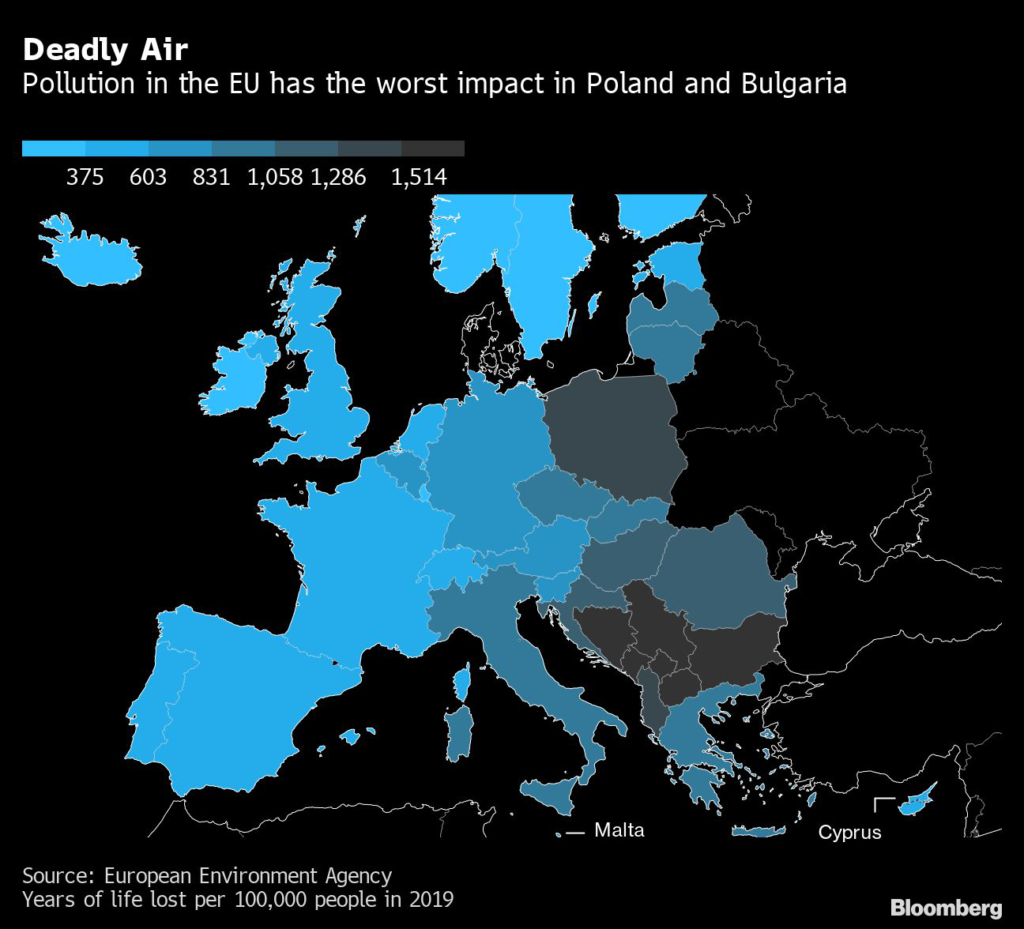
Poland remains heavily reliant on coal for home heating and the country is home to 40 of the 100 cities with the worst air quality in the European Union. The nation has one of the continent’s highest prevalence of premature deaths linked to contaminated air. 

Fars Province, Iran, Nov. 6, 9:25 am local time

A GHGSat satellite observed methane emissions near fossil fuel facilities Nov. 6 in a remote corner of Fars Province, in southern Iran. The emissions monitoring company attributed the plume to the oil and gas sector and estimated methane was spewing at a rate of 795 kilograms an hour at the time of the observation. 

Officials with the National Iranian Oil Co., the country’s government-owned oil and natural gas producer, didn’t immediately respond to an email sent outside normal business hours. 

The emissions occurred near the Arsanjan-Kheirgoo Gas Compressor Station. The site’s three compressors help ship as much as 110 million cubic meters of gas a day from the South Pars field 1,050 kilometers (650 miles) north to Tehran and were designed to increase transmission capacity during the winter heating season, according to a promotional video from the site’s operating subsidiary Sekafco.

National Iranian Oil spews more methane than any other global energy producer, according to a report by Global Energy Monitor. The non-profit group found that that just 30 fossil fuel companies account for nearly half of the sector’s emissions of the potent greenhouse gas.

Methane is the primary component of natural gas and responsible for about 30% of the Earth’s warming. Leaks can occur during extraction and transport of the fossil fuel.

The potent greenhouse gas, which has 84 times the warming power of carbon dioxide during its first two decades in the atmosphere, is also routinely generated as a byproduct of oil or coal production and if operators don’t have infrastructure to get the gas to market they may release it into the atmosphere. The International Energy Agency has called for oil and gas operators to halt all non-emergency methane venting. 

Near Kirtland, New Mexico, USA, Nov. 6, 1:48 pm local time

A GHGSat satellite observed methane emissions near a coal mine Nov. 6 in New Mexico that the emissions monitoring firm said was coming from a mine vent. The company estimated the release was spewing at a rate of 440.4 kilograms per hour. 

Operational coal mines often vent methane to reduce the risk of explosion. Closed or abandoned coal mines can leak methane for years if they aren’t properly sealed. 

GHGSat said they first detected emissions from the site through a demonstrator satellite in 2016. An official with the New Mexico Environment Department said Westmoreland Mining LLC is the operator of the facility near the plume. An official at Westmoreland didn’t immediately respond to a request for comment after normal business hours.Matthew Maez, a spokesperson for the New Mexico Environment Department said that fugitive emissions from coal mines are not subject to the department’s air quality rules.

Near Lucknow, India, Nov. 5, 1:28 pm local time

The satellite image was taken on Nov. 5 and shows a plume of methane that GHGSat attributed to a landfill in India. The estimated emissions rate was 1,328 kilograms per hour of methane. Landfills tend to be persistent emitters, according to the Montreal-based company. 

The detection highlights how waste is triggering some of the world’s strongest and most persistent methane emissions.

In India, more than 60% of waste is composed of organics that often originate from markets where vegetables, meat and poultry and other food are sold, according to the non-profit group Global Alliance for Incinerator Alternatives, known as GAIA. Prime Minister Narendra Modi’s Clean India campaign aims to spend 41.52 billion rupees ($519 million) to clean up legacy waste at landfills in more than 600 cities by 2026.

Near Daqing, China, Nov. 4 at 1:15pm local time

On Nov. 4 a satellite identified six methane releases in northeast China near the Daqing oilfield, according to GHGSat. Estimated emissions rates ranged between 446 and 884 kilograms per hour and the cumulative rate was 4,477 kilograms an hour. If the releases lasted for an hour at that rate they would have the same short-term climate impact as the annual emissions from about 81 US cars.

• Read more:  Countries Set to Bolster Global Methane Pledge at Climate Summit

The detections highlight the rapidly expanding ability of satellites to identify and track methane almost anywhere in the world that is driving a new era of climate transparency in which greenhouse gases will be quantified and attributed in near real-time to individual assets and companies.  

More companies and institutions are launching multi-spectral satellites that can detect methane’s unique signature. GHGSat has six satellites in orbit now dedicated to monitoring industrial methane and aims to launch another five by the end of next year. US non-profit Environmental Defense Fund plans to launch its MethaneSAT in 2023 and a consortium including Carbon Mapper, the state of California, NASA’s Jet Propulsion Laboratory and Planet Labs expects to launch two satellites next year. 

In 2021, concentrations of methane in the atmosphere had the biggest year-on-year jump since measurements began four  decades ago, according to the World Meteorological Organization. 


(Clarifies data provided to Bloomberg and adds Canada regulator comment.)

More stories like this are available on bloomberg.com

©2022 Bloomberg L.P.
‘Leave It to Market:’ RBA Backflips on Guidance After Criticism

(Bloomberg) — Australia’s central bank said money markets are a better guide to the trajectory of interest rates after an assessment of pandemic-era forward guidance found its use presented “substantial” communication challenges.

“Forward guidance can be used to help inform the public and markets, but it is best to avoid being too prescriptive,” the Reserve Bank said in its review of the communications tool released Tuesday. 

“Most of the time, the better approach is to leave it to the market to work out expected timing by combining forecasts of the economy with the board’s decision-making framework.” 

Underscoring the new-found flexibility, in minutes of November’s policy meeting released concurrently with the review, the RBA said rates were expected to rise further, adding that it didn’t rule out resuming 50 basis-point moves or indeed pausing.

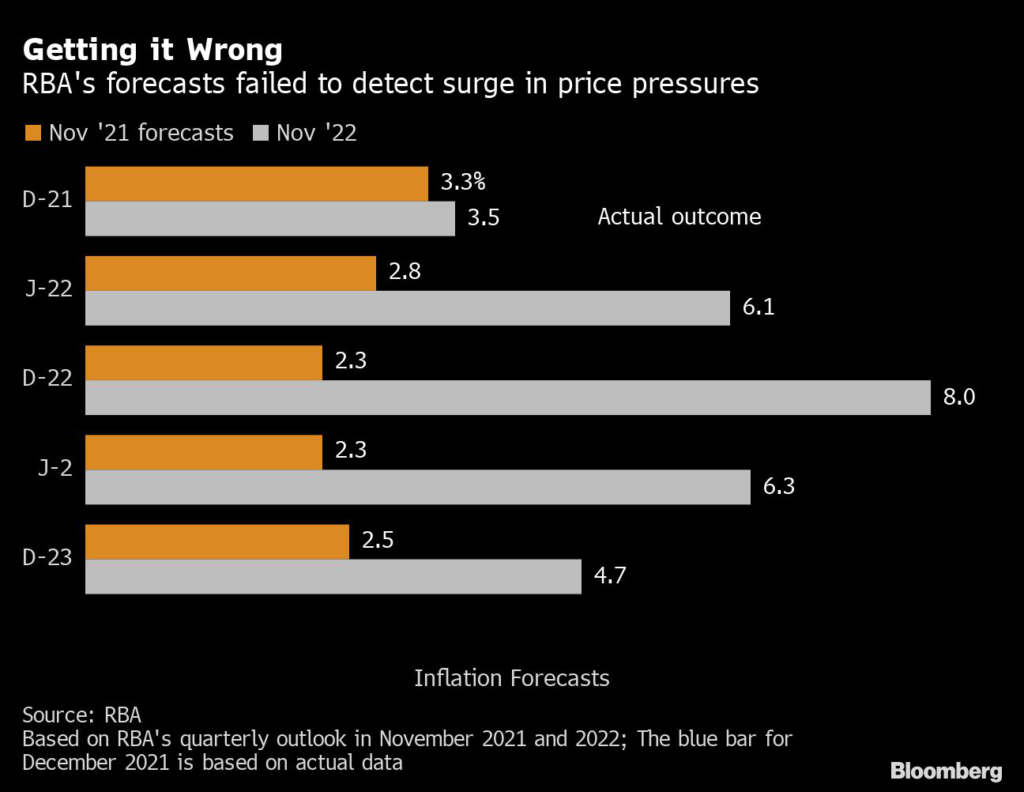
The central bank faced criticism over Governor Philip Lowe’s comments that, based on wages and inflation forecasts, rates were unlikely to rise before 2024, a line he stuck with until September last year. That brought sharp questions over accountability given the RBA began hiking in May and is delivering its most aggressive tightening cycle in a generation.

The evaluation of forward guidance is part of a series of internal assessments the RBA has conducted of its pandemic-era policies and comes ahead of an independent, government-ordered review. The latter is considering everything from a board shakeup to amending the central bank’s objectives, with the three-member panel’s final report due in March. 

Lowe delivered the 2024 forward guidance when the RBA first responded to the Covid outbreak as he sought to instill confidence in the community at a time when Australia’s economy was sliding into its first recession since 1991.

“Together with other policy measures, the RBA’s stronger forward guidance worked to lower funding costs and support the economy early in the pandemic,” the review found. “The policy response helped shore up confidence during a period of significant uncertainty and disruption.”

The criticism, though, is how long the governor stuck with time-based guidance. Lowe was still delivering the 2024 message in September last year — when markets and some economists were predicting rate rises in the period ahead. By mid-December, Lowe had conceded a little and amended his view to no hike in 2022.

Yet less than five months later the RBA was tightening, with the cash rate hitting 2.85% this month from a record-low 0.1% in May as the bank raced to contain soaring prices. 

“The time-based element of the guidance was very prominent in media and market commentary, and came to dominate the interpretation of the forward guidance,” the review showed. “The RBA attracted extensive criticism when the cash rate was increased much earlier.”

Greens Senator Nick McKim has called on the governor to resign for inducing “hundreds of thousands of Australians” to take out mortgages on the basis that rates wouldn’t rise until 2024.

In minutes of the Nov. 1 meeting, the RBA concluded that the case to raise its cash rate by 25 basis points was stronger than resuming 50 basis-point increases following hotter than expected third-quarter inflation.

“Acknowledging the uncertainty, members did not rule out returning to larger increases if the situation warranted,” the RBA said. “Conversely, the board is prepared to keep rates unchanged for a period while it assesses the state of the economy and the inflation outlook. Interest rates are not on a pre-set path.”

The RBA raised rates by 50 basis points at four consecutive meetings before downishifting to 25 basis points in the past two months

Earlier this year, the central bank released findings of an internal assessment of its yield target policy. It concluded that a disorderly exit from that program damaged the central bank’s credibility.

The message about the likely timing of future cash rate increases “was complicated” by the three-year yield target at 0.1%, today’s review said.

“The time-based element of guidance and the term for the yield target were mutually reinforcing. Neither were well suited to respond to the unprecedented global events.”

(Updates with minutes, additional details.)

More stories like this are available on bloomberg.com

©2022 Bloomberg L.P.

Buffett Takes $5 Billion Stake in TSMC, Sparking Surge in Shares

(Bloomberg) — Warren Buffett’s Berkshire Hathaway Inc. took a stake of about $5 billion in Taiwan Semiconductor Manufacturing Co., a sign the legendary investor thinks the world’s leading chipmaker has bottomed out after a selloff of more than $250 billion. Shares surged.

The Omaha-based conglomerate acquired about 60 million American depository receipts in TSMC in the three months ended September, it said in a filing. The Taiwanese company produces semiconductors for clients like Nvidia Corp. and Qualcomm Inc. and is the exclusive supplier of Apple Inc.’s custom Silicon chips. Apple remains the most valuable single holding in Berkshire’s portfolio.

Assuming Buffett bought TSMC’s ADRs at the average price for the third quarter, the stake would have cost him $5.1 billion. They currently trade at $72.80. TSMC’s shares rose as much as 9.4% in Taiwan after the disclosure, the largest intraday increase in more than two years.

The 92-year-old Buffett long shied away from the tech industry, making the case that he didn’t want to invest in businesses that he didn’t fully understand. That stance changed in recent years, however, and he has dedicated an increasing proportion of his company’s investments to the tech sector.

Chipmaking is one segment that promises sustained growth over the coming years as it’s essential to the expansion of nascent industries like self-driving and electric cars, artificial intelligence and connected home applications. Expansion of cloud services like Amazon.com Inc.’s AWS also promises to bring in more orders for silicon that goes into vast data centers.

What Bloomberg Intelligence Says

Technology’s deep-red bond returns this year may mask the robust cash flows and fortified balance sheets that underlie the sector. These traits could lead to outperformance in 2023 as investors weigh the potential for a recession. Tight spreads and limited rating downside underpin the sector’s strength.

— Robert Schiffman, BI analyst

Click here for the full research

TSMC, which has taken over from Intel Corp. as the firm advancing the cutting edge of chipmaking, has also emerged as a strategically vital player at a time when the US and China have clashed over leadership in the global technology industry. Taiwan’s most valuable company has the manufacturing prowess to make the world’s most advanced chips, instrumental to advancing every nation’s future commercial industries like EVs and AI but also feeding their military and cyberdefense ambitions. The US has imposed elevated sanctions on high-end chips produced for Chinese customers specifically to forestall them making their way into the hands of the Chinese military.

Biden’s Chip Curbs Beat Trump in Forcing World to Align on China

TSMC shares at home in Taiwan had dropped 28% this year through Monday’s close, as demand for chips has slowed with the economic downturn and investors fretting about oversupply. The company said in October it pulled back on capital spending to about $36 billion this year, which would still be a record high, down from at least $40 billion planned previously.

–With assistance from Cindy Wang.

(Updates with trading in Taiwan in third paragraph)

More stories like this are available on bloomberg.com

©2022 Bloomberg L.P.
Stocks Rise as Traders Weigh China Data, Fed Rates: Markets Wrap

(Bloomberg) — Asian stocks and US futures climbed Tuesday as investors weighed China’s economic outlook and the Federal Reserve’s interest-rate path.

Shares rose in Hong Kong and mainland China as a poor reading for retail sales underscored how much the economy has to benefit from the government’s recent efforts to recalibrate Covid curbs. A gauge of Asian equities headed for the highest in two months and contracts for the S&P 500 and the Nasdaq 100 were up.

The dollar and Treasury yields held their gains, with the 10-year rate around 3.86% after Federal Reserve speakers highlighted resolve to be persistent until inflation heads back down to levels consistent with the 2% target. Fed Vice Chair Lael Brainard briefly buoyed sentiment after she said it would be appropriate “soon” to slow the pace of interest-rate hikes.

“It’s certainly a time to be thinking about a recovery regime unfolding for markets,” Kristina Hooper, chief global market strategist at Invesco, said on Bloomberg Radio. “But it’s going to take a little time before we know if this really is something of a turning point for inflation and the Fed can be a lot more comfortable about hastening the end of tightening.”

While China’s economy slowed in October and industrial output missed estimate, sentiment has been supported by some eased virus measures and help for the property market. The People’s Bank of China kept the medium-term lending facility rate unchanged, injecting less money than expected in a possible sign  of optimism.

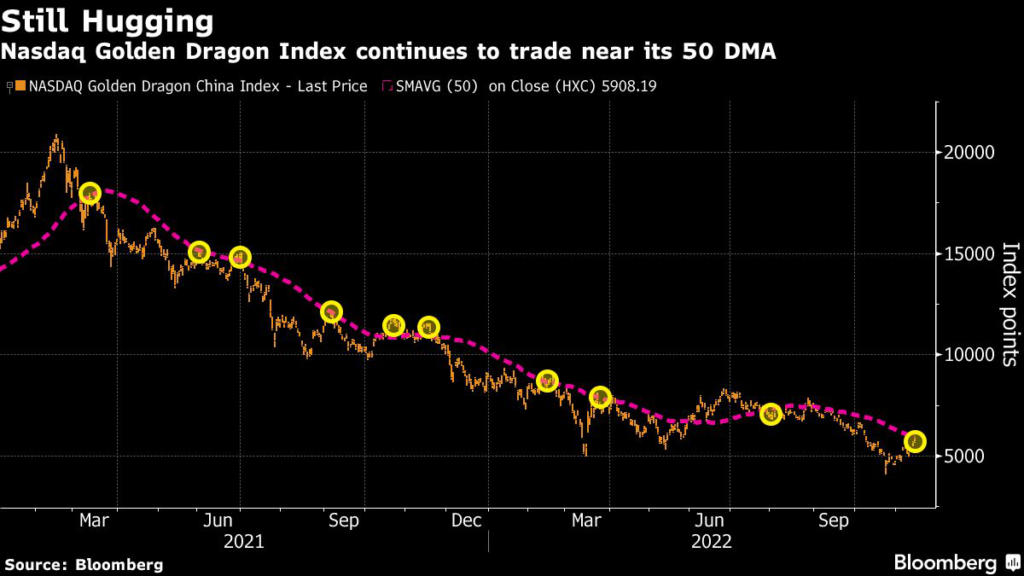
Chinese stocks listed in the US has extended their rally to a third day after Joe Biden and Xi Jinping called for reduced tensions between the world’s two biggest economies during a meeting in Bali, Indonesia. 

The Hang Seng China Enterprises Index has now risen more than 20% from a low on Oct. 31, meeting the common definition of a technical bull market. The easing of some virus controls and sweeping measures to support the property market have given traders confidence that Beijing is finally taking concrete steps to tackle the two biggest sore points for the economy and markets.

Despite these positive signs in Asia and indications of moderating inflation in the US, higher borrowing costs are a headwind for the global economy.

The cumulative impact of prior interest-rate hikes will continue to weigh on growth and corporate profits, according to Mark Haefele, chief investment officer at UBS Global Wealth Management, who recommends that investors take a defensive position. 

Read More: Wall Street Managers Are Pushing Back on Easing Inflation Hopes

In Japan, the economy shrank in the three months through September, as consumers spent less amid a resurgence of Covid cases and the weak yen battered trade. The yen traded around 140 versus the dollar on Tuesday, having strengthened from the 150 level seen in October.

Elsewhere, oil extended losses as concerns over the near-term demand outlook overshadowed signs of tightening supply heading into winter. Gold was steady.

Read More: From Bad to Worse? Next Year’s Economic Risks Are Already Here

Key events this week:

  • Former US President Donald Trump plans to make an announcement, Tuesday
  • US empire manufacturing, PPI, Tuesday
  • US business inventories, cross-border investment, retail sales, industrial production, Wednesday
  • Fed’s John Williams, Lael Brainard and SEC Chair Gary Gensler speak, Wednesday
  • ECB President Christine Lagarde speaks, Wednesday
  • Eurozone CPI, Thursday
  • US housing starts, initial jobless claims, Thursday
  • Fed’s Neel Kashkari, Loretta Mester speak, Thursday
  • US Conference Board leading index, existing home sales, Friday

Some of the main moves in markets:

Stocks

  • S&P 500 futures rose 0.4% as of 11:30 a.m. in Tokyo. The S&P 500 fell 0.9%
  • Nasdaq 100 futures rose 0.5%. The Nasdaq 100 fell 1%
  • Japan’s Topix index rose 0.3%
  • Hong Kong’s Hang Seng Index rose 3%
  • China’s Shanghai Composite Index rose 084%
  • Australia’s S&P/ASX 200 Index fell 0.4%

Currencies

  • The Bloomberg Dollar Spot Index was little changed
  • The euro was little changed at $1.0325
  • The Japanese yen fell 0.3% to 140.25 per dollar
  • The offshore yuan was little changed at 7.0478 per dollar

Cryptocurrencies

  • Bitcoin rose 2.1% to $16,734.06
  • Ether rose 2.7% to $1,259.58

Bonds

  • The yield on 10-year Treasuries advanced two basis points to 3.87%
  • Japan’s 10-year yield was little changed at 0.25%
  • Australia’s 10-year yield was little changed at 3.77%

Commodities

  • West Texas Intermediate crude fell 0.6% to $85.37 a barrel
  • Spot gold was little changed

This story was produced with the assistance of Bloomberg Automation.

–With assistance from Isabelle Lee.

More stories like this are available on bloomberg.com

©2022 Bloomberg L.P.

Close Bitnami banner
Bitnami
