Bloomberg

Musk Publicly Punishes Twitter Engineers Who Call Him Out Online

(Bloomberg) — Twitter Inc. owner Elon Musk, who has called himself a “free speech absolutist,” has resorted to firing company engineers who publicly criticize him on the social-media service.

In one case, Musk announced the firing in a tweet. In another, the former employee said he was fired after he openly rebuked Musk.

Engineer Eric Frohnhoefer, who worked on Twitter’s app for the Android mobile operating system, on Sunday reposted one of Musk’s tweets with a comment, saying that Musk’s understanding of a technical part of Twitter’s app was “wrong.” Musk replied and asked Frohnhoefer to elaborate, before writing, “Twitter is super slow on Android. What have you done to fix that?”

After attempting to explain his thinking in a number of tweets, Frohnhoefer was asked by another user why he hadn’t shared his feedback with his new boss privately. The engineer, who has worked at Twitter for more than eight years, replied, “maybe he should ask questions privately. Maybe use Slack or email.”

On Monday morning, Musk wrote that Frohnhoefer had been fired. Frohnhoefer retweeted that post, and included a saluting emoji that many employees used when they were laid off earlier this month. Twitter and Frohnhoefer didn’t immediately respond to requests for comment on his status.

Another engineer, Ben Leib, was also fired after calling out Musk. He retweeted the same technical post from Musk, writing, “As the former tech lead for timelines infrastructure at Twitter, I can confidently say that this man has no idea wtf he’s talking about.” Leib, who worked at Twitter for a decade, confirmed to Bloomberg that he was fired on Sunday.

Twitter has been thrown into chaos since Musk took over late last month. Many workers remain upset that Musk fired half of the company’s 7,000-plus employees, including most of the senior managers, within about a week of his $44 billion buyout.

The billionaire also rapidly changed the corporate culture. While it wasn’t previously routine for employees to challenge leadership publicly at Twitter, workers often spoke out on internal Slack channels and by email before Musk showed up, sometimes posting criticism or concerns to the entire company.

Musk’s changes have led to a lack of communication internally in terms of who is in charge and what the company’s priorities are, current and former staffers say.

The moves have also led to concerns that San Francisco-based Twitter is vulnerable to product breakdowns or technical outages. On Monday, Twitter implemented another coding freeze, halting product updates to the app, and employees weren’t given a clear reason why.

Read more: Twitter Pauses Subscriptions After Fake Accounts Proliferate

More stories like this are available on bloomberg.com

©2022 Bloomberg L.P.

Berkshire Takes Stake in Jefferies, Cuts Back on Other Banks

(Bloomberg) — Warren Buffett’s Berkshire Hathaway Inc. took a position in Jefferies Financial Group Inc. even as it trimmed its stake in financial stocks including US Bancorp and Bank of New York Mellon Corp.

The conglomerate held more than 433,000 shares of Jefferies, the New York-based investment bank, as of Sept. 30, according to a quarterly filing Monday.

Jefferies was one of three new bets unveiled by Berkshire. It also disclosed a position of 60 million American depository receipts of chipmaker Taiwan Semiconductor Manufacturing Co., as well as a stake in manufacturer Louisiana-Pacific Corp.

Berkshire was a net buyer of equities in the quarter, with $3.7 billion of purchases after sales. The company trimmed its exposure to financial stocks by roughly $4.7 billion in the period. Its stake in US Bancorp decreased from over 9% to about 3.6%, Berkshire said last week in a separate filing. And it sold $442.2 million of BNY Mellon shares in the period, cutting its holdings after eight quarters of no change.

Taiwan Semiconductor is a leading supplier to Apple Inc. Berkshire’s stake in Apple still represents its biggest stock bet in terms of market share.

The filing showed the extent to which Berkshire increased its stake in Occidental Petroleum Corp. in the third quarter, when it grew to north of 194 million shares. Including warrants, Berkshire owns almost 30% of the oil company, according to Bloomberg Intelligence.

Meanwhile, Berkshire indicated it no longer held a position in Store Capital Corp. Singaporean sovereign wealth fund GIC Pte. and Blue Owl Capital Inc.’s Oak Street said in September they would acquire the real estate investment trust in all-cash deal valued at about $14 billion.

(Updates with other firms starting in third paragraph.)

More stories like this are available on bloomberg.com

©2022 Bloomberg L.P.

US Stocks, Bonds Drop as Fed Signals Further Hikes: Markets Wrap

(Bloomberg) — US stocks ended a choppy session lower after two Federal Reserve officials highlighted the central bank’s resolve to be persistent until it brings inflation down meaningfully. 

The S&P 500 was down 0.9%, snapping a two-day rally. The tech-heavy Nasdaq 100 also fell. Treasury yields climbed, with the 10-year rate around 3.87%.

Fed Vice Chair Lael Brainard briefly buoyed sentiment after she said, during a Bloomberg event in Washington, that it would be appropriate “soon” for the central bank to slow its pace of interest-rate hikes. However, she also emphasized that the Fed had “additional work to do” to bring inflation down, which kept some investors on the edge. Brainard did not explicitly commit to a step-down to a half-point hike in December, nor did she elaborate what she meant by “soon.”

“I think Brainard’s comments underscore the uncertainty of the path forward and the data dependence of the Committee,” said Jake Schurmeier, portfolio manager at Harbor Capital Advisors. “They don’t want a slower pace of rate hikes to be confused for less restrictive policy.”

Earlier, Fed Governor Christopher Waller’s hawkish comments wobbled markets as investors mulled whether the post-CPI euphoria was overblown. 

Last week’s CPI-fueled rally, which propelled the S&P 500 to its best week since June, may be unsustainable, according to Christopher Smart, chief global strategist at Barings and head of the Barings Investment Institute.

“The bad news is that in an economic moment that remains so uncertain, the data is more likely than not to be messy and contradictory in the months ahead. The pace of decline will be uneven,” he said. “Moreover, there’s still a long way to go to get to the Fed’s target of 2% average inflation. That’s why Fed governors have been lining up to talk down any market euphoria that a real pivot is in sight.” 

The cumulative impact of prior interest-rate hikes will also continue to weigh on economic growth and corporate profits, according to Mark Haefele, chief investment officer at UBS Global Wealth Management, who recommends that investors take a defensive position. 

Read More: From Bad to Worse? Next Year’s Economic Risks Are Already Here

Meanwhile, Chinese stocks listed in the US extended their rally to a third day, after Joe Biden and Xi Jinping called for reduced tensions between the world’s two biggest economies during a meeting in Bali, Indonesia. 

Key events this week:

  • Fed’s John Williams moderates panel, Monday
  • China retail sales, industrial production, surveyed jobless, Tuesday
  • Former US President Donald Trump plans to make an announcement, Tuesday
  • US empire manufacturing, PPI, Tuesday
  • US business inventories, cross-border investment, retail sales, industrial production, Wednesday
  • Fed’s John Williams, Lael Brainard and SEC Chair Gary Gensler speak, Wednesday
  • ECB President Christine Lagarde speaks, Wednesday
  • Eurozone CPI, Thursday
  • US housing starts, initial jobless claims, Thursday
  • Fed’s Neel Kashkari, Loretta Mester speak, Thursday
  • US Conference Board leading index, existing home sales, Friday

Some of the main moves in markets:

Stocks

  • The S&P 500 fell 0.9% as of 4 p.m. New York time
  • The Nasdaq 100 fell 1%
  • The Dow Jones Industrial Average fell 0.6%
  • The MSCI World index rose 1.8%

Currencies

  • The Bloomberg Dollar Spot Index rose 0.2%
  • The euro fell 0.1% to $1.0333
  • The British pound fell 0.6% to $1.1758
  • The Japanese yen fell 0.7% to 139.74 per dollar

Cryptocurrencies

  • Bitcoin fell 0.7% to $16,246.64
  • Ether fell 0.2% to $1,213.63

Bonds

  • The yield on 10-year Treasuries advanced six basis points to 3.87%
  • Germany’s 10-year yield declined one basis point to 2.15%
  • Britain’s 10-year yield advanced one basis point to 3.37%

Commodities

  • West Texas Intermediate crude fell 4.1% to $85.30 a barrel
  • Gold futures rose 0.4% to $1,776.30 an ounce

This story was produced with the assistance of Bloomberg Automation.

–With assistance from Sujata Rao, Cecile Gutscher, Brett Miller and Vildana Hajric.

More stories like this are available on bloomberg.com

©2022 Bloomberg L.P.

Apple Offers Rare MacBook Deal to Businesses to Spur Holiday Quarter Sales

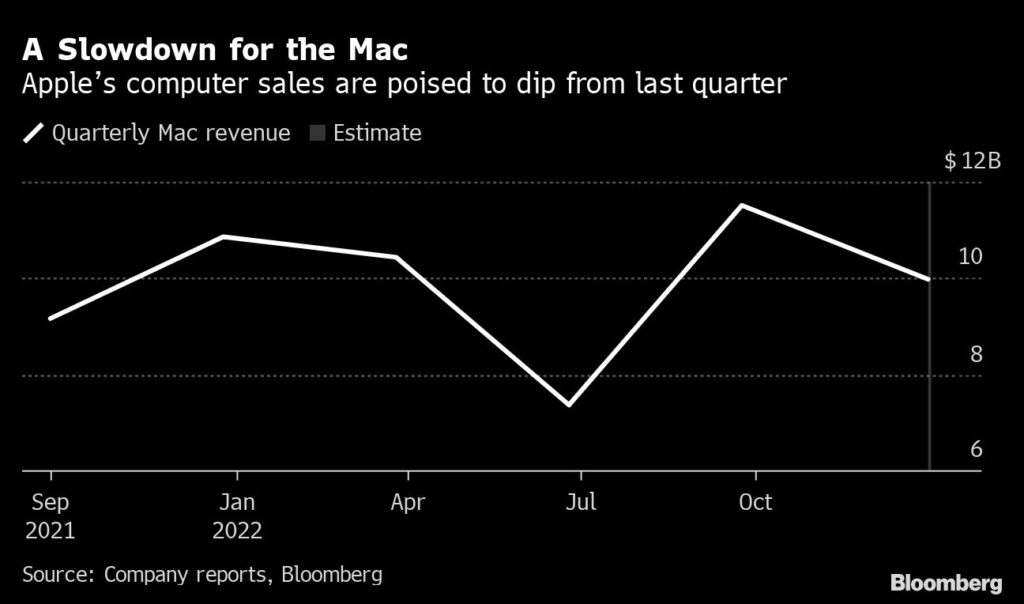
(Bloomberg) — Apple Inc. is trying to spur Mac sales with a rare promotional deal for small businesses that buy computers in bulk, an effort to cope with a slowdown during the holiday quarter.

The company is offering a discount of as much as 10% off its 14-inch and 16-inch MacBook Pros with M1-based chips, according to businesses and Apple retail employees. That tops the typical markdown given to small and midsize businesses.

The tactic is unusual for Apple and suggests it’s stepping up efforts to reinvigorate sales. The company warned last month that its holiday quarter would see slower growth than in the previous period due to Mac revenue declining “substantially.” The company doesn’t have as much of an enticement for Mac shoppers this holiday period: New high-end MacBook Pros launched in the year-ago quarter, and no such product is debuting this time around.

Mac computers generated more than $11.5 billion, or almost 13% of Apple’s total revenue, in the company’s fiscal quarter ending Sept. 24. It was the best sales period in history for the product line.

In its marketing material, Apple has described the new promotion as a “very special Mac campaign.” Sales employees were recently informed of the deal and have begun reaching out to businesses that Apple has prior relationships with to gauge interest. 

Representatives from small businesses said they rarely get calls from Apple to push promotions. The company, which hasn’t touted an offering like this in half a decade, declined to comment. 

Businesses that buy 5 to 24 MacBook Pros in any combination of screen size and configuration will get 8% off, while bulk purchases of 25 units or more will get a 10% discount. The deal runs through Dec. 24.

The Cupertino, California-based technology giant has long had a sales team aimed at small businesses. But discounts of 8% to 10% are typically reserved for the biggest spenders, whereas the current promotion is available to all business customers.

In addition to trying to bolster MacBook Pro sales, Apple could be looking to clear out some inventory before new models appear. Updated MacBook Pros with M2 Pro and M2 Max chips are expected to be released in the first few months of 2023, Bloomberg News has reported.

Though Apple rarely resorts to deep discounts, it has relied more on trade-in offers in recent years — especially with the iPhone. As part of the Mac special, the company is also touting its existing trade-in program for computers. 

In 2018, Apple’s marketing team rolled out a series of aggressive promotions for the iPhone XR to boost sales. A few weeks later, the company disclosed that the iPhone hadn’t sold as well as expected during the quarter. 

Though the current holiday sales period is still expected to be a record quarter for Apple, supply problems have tamped down expectations. The company has warned that Covid lockdowns in China will reduce unit shipments for the iPhone 14 Pro and Pro Max, two of its most popular devices.

More stories like this are available on bloomberg.com

©2022 Bloomberg L.P.

Google to Pay $391 Million Over ‘Crafty’ Location Tracking

(Bloomberg) — Google agreed to pay a total of $391.5 million to 40 US states to resolve a probe into controversial location-tracking practices that the Alphabet Inc. unit says it already discarded several years ago, in what state officials are calling the largest such privacy settlement in US history.

Google will “significantly improve” its location-tracking disclosures and user controls starting next year as part of the deal, according to a statement issued Monday by Oregon Attorney General Ellen Rosenblum, who led the negotiations with her Nebraska counterpart, Doug Peterson.

In an interview, Rosenblum called Google’s practices “crafty and deceptive” because the company had secretly recorded users’ movements and provided the data to advertisers for years, even after consumers believed they had turned off the location-tracking feature.

“They can’t deny what they did, which was incredibly misleading,” Rosenblum said, adding: “We’re never going to trust Google, but we can put controls on them that will make it a lot harder for them to track people” going forward.

Abortion and Privacy

Location history has become a particularly sensitive topic following the US Supreme Court decision overturning the right to an abortion, amid fears that prosecutors could use such data to track women’s movements to enforce state bans. Google has already said it would automatically delete records of user visits to sensitive locations, including abortion clinics, responding to the concerns.

The multi-state probe was triggered by a 2018 Associated Press article reporting that Google “records your movements even when you explicitly tell it not to,” according to a separate statement by Michigan Attorney General Dana Nessel. The states cited issues with two Google account settings: Location History and Web & App Activity.

Google said the policies in question are long gone.

“Consistent with improvements we’ve made in recent years, we have settled this investigation which was based on outdated product policies that we changed years ago,” spokesperson José Castañeda said in a statement.

Privacy and Ad Sales

Google can track users’ locations with sensors on their devices that connect with GPS, cell towers and Wi-Fi and Bluetooth signals, New Jersey Attorney General Matt Platkin said in a statement, adding that it can use those signals to track someone’s location “both outside and inside buildings,” he said.

“Digital platforms like Google cannot claim to provide privacy controls to users, then turn around and disregard those controls to collect and sell data to advertisers,” Platkin said.

Arizona in 2020 sued Google over the practice and earlier this year secured an $85 million settlement. That complaint accused Google of violating the state’s Consumer Fraud Act by gathering location data even after users opted out of a feature. 

Nessel said transparency requirements of the 40-state accord “will ensure that Google not only makes users aware of how their location data is being used, but also how to change their account settings if they wish to disable location-related account settings, delete the data collected and set data retention limits.”

Separately, Meta Platforms Inc. will pay $90 million to settle a suit over the use of browser cookies and Facebook’s “Like” button to track user activity. The settlement got final approval from a federal court in California on Nov. 10.

Read More: Facebook’s $90 Million ‘Like’ Button Tracking Suit Pact Approved

–With assistance from Julia Love.

(Updates with interview with Oregon attorney general)

More stories like this are available on bloomberg.com

©2022 Bloomberg L.P.

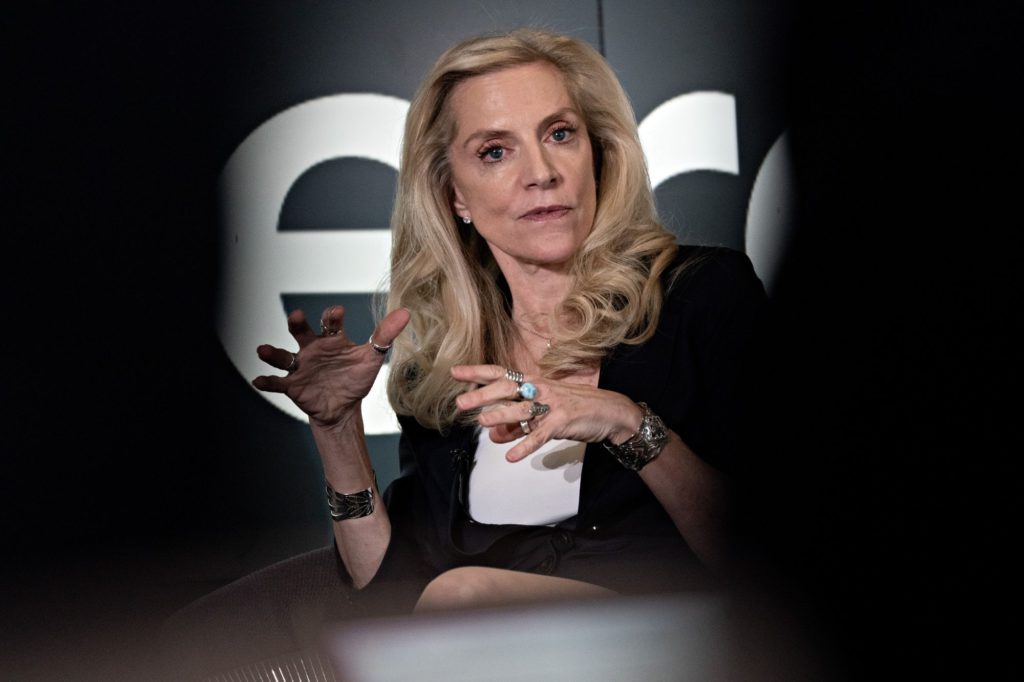
Fed’s Lael Brainard on Rates, Inflation, Crypto — and More

(Bloomberg) — Federal Reserve Vice Chair Lael Brainard sat down for a question-and-answer session with Bloomberg’s Washington Bureau Chief Peggy Collins on Monday. 

Here is the transcript from their discussion and the subsequent questions from other journalists. The text has been lightly edited:

Collins: I think we’ll start off this morning with a question about the CPI report that came out last week. It showed that inflation is slowing a bit and so I’m wondering: how strong now do you think the case is for downshifting at the December meeting to something more like a 50 basis-point cut? 

Brainard: I think the most recent CPI inflation print suggests that maybe the core PCE measure that we really focus on might be also showing a little bit of a reduction. When we get those October numbers later his month maybe from about 0.5 monthly — month over month — in August and September may be down to 0.3. And that would be welcome.

I think the inflation data was reassuring preliminarily, just in terms of showing a slowing in categories that I had been anticipating. 

So if you kind of pull it apart you know, obviously, food and energy — that reflects the war, Mr. Putin, and some weather issues. So we really are focused on those core numbers. 

Within core, we’re finally starting to see goods inflation starting to turn over and that is consistent with the data that we’ve seen on lower shipping times; more availability of automotive semiconductors, for instance, wholesale prices on used cars turning over; and just generally starting to see those goods prices turning down.

And that’s a really important trend that we’ll need to continue over the next year if we’re going to see overall disinflation.

Within services though, core services, housing remains quite strong. It’s going to take probably well until next year until we start to see those new lease numbers starting to filter through to the average housing services.

And then on non-housing core services, that’s where you’re seeing people moving their demand, which had been very strongly in goods, over to leisure and hospitality — restaurants, hotels.

Their wages are going to be more important over time, and that’s where labor demand-supply imbalances have been the greatest. And there too, we are starting to see the wage series — whether you look at the ECI or average hourly earnings on a quarter by quarter — they are stepping down, but that’s going to take time. 

So I’m happy to turn next to what that means for policy.

Downshift Timing

Collins: Yes, exactly. Do you think the downshift is coming?

Brainard: I think it will probably be appropriate soon to move to a slower pace of increases. But I think what’s really important to emphasize — we’ve done a lot, but we have additional work to do both on raising rates and sustaining restraint to bring inflation down to 2% over time. 

We have raised rates very rapidly by nearly four percentage points over about nine months and we’ve been reducing the balance sheet, and you can see that in financial conditions. You can see it in inflation expectations, which are quite well anchored. You can see it in interest-rate-sensitive sectors.

But as we said last meeting, there are likely to be lags and it’s going to take some time for that cumulative tightening to flow through. And so it makes sense to move to a more deliberate and a more data-dependent pace as we continue to make sure that there’s restraint that will bring inflation down over time.

Peak Rate

Collins: Another thing that Chair Powell brought up in his latest press conference was where we’ll end up — that peak — and he was essentially saying that he thinks we’ll end up at a higher peak than people may have originally thought. Do you agree with that?

Brainard: So these are questions that are very much going to be informed by the flow of data. Even for just the December meeting’s decision, we still will have additional data in hand by the time.

Members of the committee will be submitting their new projections. And of course, those projections are going to reflect that data both on inflation as well as on the labor-market activity more generally. But it is the case that we do have additional work to do on raising rates and that by moving forward at a pace that’s more deliberate we’ll be able to assess more data and be better able to adjust the path of rates to bring inflation down.

Recession Risk

Collins: Bloomberg Economics is forecasting 100% chance of a recession in the next 12 months. What is your forecast for where we end up in terms of unemployment by the end of next year?

Brainard: I think it’s very difficult to give firm projections, because this is a very unusual labor market. The pandemic led to a lot of departures from in-person services in particular. And if you look at hiring data, you can still see pretty healthy hiring in some of those in-person services where some businesses are still trying to catch up to levels of employment that may be appropriate for the kind of the run rate that they’re seeing. 

But it is the case that as rates move further into restrictive territory, and financial conditions remain tight, that does exert some restraint on demand to bring demand into better alignment with supply and so you will see some reallocation. 

Now vacancies are unusually high relative to unemployment. And that does suggest for the reasons that we were just talking about this sort of catch-up hiring. There’s some chance that we’ll see more of a diminution in those vacancies rather than putting as much emphasis on layoffs. But it’s likely there’ll be a combination of both, and so we’ll just be watching the labor market as well as inflation very carefully as we go forward.

Crypto Meltdown

Collins: You said in July that you didn’t see much interconnectivity yet between crypto and the broader financial market to imply a systemic risk. How has your view changed, given what’s happened in the past week with FTX?

Brainard: I don’t think my view has fundamentally changed. First of all, you know, it is really concerning to see that retail investors are really getting hurt by these losses. And it is also the case that despite a lot of hype — you heard a lot about how decentralized these markets are and how innovative and different — it turns out they’re highly concentrated, highly interconnected, and you’re just seeing a domino effect: Failures from one platform or one firm spilling over elsewhere.

It reinforces this need to make sure that crypto finance — because it is no different than traditional finance in the risks that it exposes investors to — needs to be under the regulatory perimeter. And it’s precisely these issues of interconnectedness, leverage, liquidity that are traditional financial risks, and consumer protection, retail protection — we really need to make sure that that environment has the appropriate regulatory guardrails, whether that means bringing some into compliance with existing rules or in some cases, expanding that regulatory perimeter. 

But in order for the innovation that is in some of those platforms to actually make a positive contribution, there need to be strong regulatory guardrails that assure that like risks are subject to like disclosures and like regulatory outcomes.

Strong Dollar

Collins: How much risk is posed by the strength of the dollar and could spillovers boomerang back to hurt the US economically?

Brainard: I think there are clearly complicated geostrategic risks. There are risks associated with very high inflation around most of the world’s economy and the need for rapid tightening to address that. That creates spillovers between different economies. And you’re seeing that in financial-market reaction.

In a highly uncertain environment with high volatility, it leads to the need for rapid adjustments. And that can sometimes strain liquidity in core funding markets, and that can also sometimes reveal pockets of hidden leverage that maybe were not so apparent to other market participants or even in some cases, to regulators. 

So we are very focused on potential spillovers. I think we’re highly cognizant that in a world where many large central banks or central banks and large jurisdictions are tightening at the same time that that is greater than the sum of its parts. 

In the case of the US, it reinforces the tightening that we’re doing here because not only do we see it in terms of reduced demand for our products abroad, ultimately, but we also see it through spillovers of tighter financial conditions and through the dollar. 

But for other countries, spillovers may also create some real risks. For instance, those as you were mentioning, who might be commodity importers or those subject to exchange-rate risk both in their trade balance but also in the mismatch between assets and liabilities. So we’re on the lookout, very vigilant about potential global risks.

Corporate Profits

Collins: You have recently mentioned corporate profit margins and markups. How much room is there for a reduction in margins and could that help bring inflation down?

Brainard: The data is not comprehensive, but certainly in the retail sector, you can look at retail margins, relative to how much wages have been growing in that retail activity. And you can look at that markup, and how it compares with inventory-to-sales ratios.

So normally, as inventory-to-sales ratios increase, you’d actually expect more competitive pressure to start bringing those markups down. That’s particularly true when consumers are price sensitive. That process has led to first of all very high retail markups, in some cases, many times the increase in the average hourly earnings in that sector, and now that inventory/sales ratios are improving and getting back to pre-pandemic levels, in some cases, even above them.

It’s been slow to sort of see that markup coming back down, but it’s a process that you would expect at this point in the cycle. So I’m certainly looking at that closely. And of course, that would contribute to disinflation in those sectors.

Fed’s Credibility

Collins: Turning to Fed credibility, both on its inflation-fighting performance and in connection with revelations about trading activity by some senior officials: How much damage do you think has been done to the Feds credibility over the past few years?

Brainard: I think that first of all, in those cases where our rules were not clear enough, or where there were inconsistencies with stronger rules at the board than at the Reserve Banks, even though we’re all FOMC members, that we’ve taken very rapid action to bring those rules into conformity and we also have put in place sort of ethics processes at the Reserve Banks that will better catch those issues sooner and lead to self-identification and stronger compliance with those roles.

So — critically important we understand that we serve the American public, that we have to build trust with the American public, and that we had some work to do following those breaches. And we’re very committed to continuing to strengthen the trust placed in the Federal Reserve, and I think that’s across both our rules but also our policymaking.

Labor Market

Collins: In August 2020, the Fed came out with a new framework, which included a commitment to seek broad and inclusive employment. How hard will it be to deliver on that commitment given that there’s so much pressure on the Fed to get inflation down?

Brainard: The focus on broad and inclusive employment is really core to our work. And so if you look right now, it’s a recovery in employment, what you’ll see is that unemployment is actually back around the level that was in place prior to the pandemic. And employment outcomes for demographic groups, racial and ethnic groups, are actually quite similar to where they were pre-pandemic. And of course, they had improved for Black workers and Hispanic workers in particular a great deal over the course of this very long recovery.

In terms of, going forward, I’d like to continue to see gains among those groups. Those disparities that we saw right prior to the pandemic are, again, evident today. But again, that was after some really important improvement had taken place.

The other things that we’re seeing is there was a lot of people who left leisure and hospitality as I noted earlier. The sort of in-person services arena continues to be an area where I think it’s harder to attract people back.

And early retirees is a huge new phenomenon. We’re missing a very large number of people from the workforce that would have been projected to be working. So we’re very focused on that.

But our mandate, our framework, our approach, is very much around the keeping inflation expectations anchored at 2%. And I think you’ve seen that we’ve worked hard at that. And that in fact, inflation expectations have been anchored. Very important.

We’ve shown very strong resolve to get inflation down. And I think we’ll continue to take the necessary steps while also being very mindful of the labor market.

Early Retirees

Collins: Do you think those early retirees will come back in any notable way?

Brainard: It does seem to be somewhat correlated among different demographic groups. So you see some of those early retirements being more concentrated among White workers and among college educated workers. I don’t know if that really tells us very much about whether they’re likely to come back or not.

But certainly, as we think about resolving imbalances, one of the important imbalances is labor demand, and labor supply, particularly in some of those in-person, services areas. And so, it would be great to see a return of workers. That of course, would be the best outcome. If we don’t see that, obviously, you need restraint on the demand side to bring it into alignment with that reduced supply.

Pivot Coming?

Collins: When you look ahead to next year, would you be surprised if the Fed actually reverses course and cut rates at some point next year as some people on Wall Street think might happen?

Brainard: I think what we talked about in the last meeting, which is taking into account the cumulative amount of tightening that is in place, and the lags with which tightening and financial conditions flows through to activity and to inflation.

I think by moving at a more deliberate pace, we’ll actually be able to see how that cumulative tightening is playing out and how much additional tightening. You know, as we get into restrictive territory or further into restrictive territory, risks become more two sided.

And in that environment, it’s really valuable to be able to take into account the data as we go, and so that should enable us to move to a restrictive level that is appropriate for bringing inflation down over some period of time. Exactly what that path looks like I think is really hard to say right now.

But I think it will be very much, you know, sort of better at balancing those risks by virtue of being able to take on board more data.

Pandemic’s Impact

Collins: How did the pandemic change you?

Brainard: The pandemic brought a lot of tragedy and heartache to families and workers around the country, really around the world. And we’re still seeing some of that, both in terms of people’s willingness to go back to some of the jobs that were so hard being on the front lines during the pandemic — you think about health care, you know, in person services, generally — those were really taxing and stressful jobs.

But the flip side of that is we also learned that we can do a tremendous number of things in a way that’s enabled by technology remotely, and effectively and productively. We did all of our operations remotely, which is a remarkable thing. If you’d asked me six months beforehand, would that be something that you would feel confident about, I would have said absolutely not. But we were able to do that and so it was, you know, companies all over the world.

So there’s some positive implications for the economy. It may take a while. But for people’s ability to work in ways that they are more productive and more satisfied and also for the economy, I think to be more productive, and hopefully more resilient into the future.

I think between the pandemic and the work, there’s probably some rethinking of cost savings versus resilience. Companies are reconfiguring supply chains to take those things into account. So I’m hopeful that some of these changes will actually lead to a more flexible economy going forward.

Labor Hoarding

Collins: Great. Well, I do want to open it up to questions. Does anyone from the audience have one? Would you mind giving your name and affiliation when you ask a question, just so the vice chair can know?

Chris Rugaber: Sure, hi. Chris Rugaber at Associated Press. You mentioned the potential for catchup hiring in areas like leisure and hospitality. And there’s also been plenty of anecdotes I think, including in the Beige Book about potential labor hoarding. Do those two combine potentially to create more labor demand than you might want to see going forward, therefore perhaps more wage pressure, even if the economy were to slow a bit?

Brainard: So you know, the stories about catchup hiring and labor hoarding — if you look at some of the recent hiring data, it does look actually like the strongest hiring has been in those catchup areas. So it’s really a sectoral story rather than an aggregate demand overall story, you know, and if you — which, of course, taking a look at wages, now if you look at the Employment Compensation index, which is probably the broadest measure, it’s stepped down quite a bit, actually, from about 6% in the first half of the year to about 4.3% in the third quarter.

And that is a similar kind of movement that we’ve seen in average hourly earnings. There I think it’s stepped down from about 4.7 in the first half of the year to about 3.9 in the three months leading up to October. So you know, that does suggest cooling, on aggregate, and lessening wage pressures, and I think it’s important to remember that wages have actually not kept up with inflation. Real incomes have actually, on aggregate, fallen, even though wages are higher than what would be consistent with the run rate associated with 2% inflation. So they’re really in the middle there and they are coming down.

Dual Mandate

Collins: Craig Torres from Bloomberg.

Craig Torres: Vice Chair, when inflation starts to fall, and if unemployment starts to rise, what kind of patience — inflation is a lagging indicator. How much patience will you show to get inflation back to 2, if it’s trending around 3, if the labor market is in distress?

Brainard: We have a 2% inflation target and that is what our monetary policy is designed to achieve along with also a maximum employment objective. So you know, as we go forward, obviously, risks are going to be more two sided as we get into more restrictive or further into restrictive territory. So we’ll be balancing those considerations.

But you know, we are very much focused on achieving our 2% inflation goal. It’s very important to keep inflation expectations anchored around that goal. And so we’ll just have to make judgments like that. As we go forward, what is the appropriate level of restraint on a sustained basis that’s going to be necessary to make that balance?

Global Hikes

Collins: Rachel, as promised, to you.

Rachel Siegel: Thank you. Hi, Vice Chair Brainard, Rachel Siegel from the Washington Post. To follow up on what you were saying about lag effects, can you walk us through what that timeline looks like over the coming year and if you talk about cumulative tightening, how much of that is just from the federal funds rate versus tightening from other central banks around the world too?

Brainard: Yeah, so different people are going to think about those things differently. When I think about cumulative tightening, I really think about financial conditions, because it’s financial conditions that transmit that to decision making by firms who might be borrowing or by households.

The cleanest read, perhaps, is on the Treasury yield curve. And if you just look at that, essentially, we’ve seen the entire curve from one to 10 years move above 1% in real terms. So that’s a big shift in a nine-month period. And that’s one way of thinking about cumulative tightening. And of course, that does take into account not only our actions here at home, but potential spillovers of financial conditions abroad.

In terms of thinking about lags: So there are a variety of different estimates that the research uses different methodologies. So some research methodologies leave you with, you know, many quarters of lags and some suggest that that transmission is somewhat shorter. And so you might be thinking, you know, maybe two to three quarters rather than the longer estimates of lags that come from the historical literature. But even with that, that suggests that it takes some time for that cumulative tightening to really be visible.

So if you think about the housing sector, for instance, you know, that’s where we can see it right away, right? Residential investment has come down extremely rapidly in response to much higher interest rates. But if you think about some of the other decisions that households are making that are perhaps less interest-rate sensitive, it may take quite a bit more time.

And so it’s really going to be, again, an exercise of watching the data carefully, and trying to assess how much restraint there is and how much additional restraint is going to be necessary and to sustain for how long and those are the kinds of judgments that lie ahead for us.

Dissenting Voices

Collins: I think we probably have time for one or two more questions. This side of the room — Howard?

Howard Schneider: Howard Schneider with Reuters. Thanks for being here and taking the questions. With one exception, the Fed has turned on this record-setting shift in monetary policy with only one dissent. And I’m wondering, do you think that’s a strength of the system, that there hasn’t been more sort of public discussion about this, that the language is so fully aligned behind the statements of the of the chair? And how hard has that been to achieve?

Brainard: Well, I do think that there is very strong agreement among committee members on the need to show resolve, the need to keep inflation expectations anchored at 2% and to stop high inflation from getting entrenched. And so I think that is reflected in this really strong support for the rapid, cumulative tightening that has taken place so far, again, almost 4 percentage points of tightening and a period of about nine months at the same time that the balance sheet is being reduced.

But we do have — and I think this is really important — we do have very full discussions among committee members, taking into account all the complicated judgment calls that we’ve been talking about here. How much restraint for how long? How, what data do we look at, given that a lot of data is looking in the rearview mirror? So, I think there’s healthy discussions and I do believe that it’s going to be very important to have those different perspectives, informing our policy deliberations.

Policy Lags

Collins: Time for just one last. Ed?

Edward Harrison, Bloomberg: There’s anecdotal evidence that price-level changes in rentals are coming down. But that’s not necessarily reflected in the data that we see in CPI, for example. How do you look at that in terms of thinking about, going forward, in terms of the lag of the effect of monetary tightening?

Brainard: So housing services is really important. It’s particularly important in CPI, but it’s also important in PCE inflation, and it’s really important in terms of how much money an average household spends each month on housing services. So it really is a big expenditure, usually the single biggest expenditure item for many households, and it’s very salient.

In terms of the data — so the cumulative tightening that’s taken place has really shown up in very large increases in mortgage rates in a very short period of time. You can see that reflected in house prices. House prices across the country had been rising very rapidly. Most indicators now suggest that at best, they’re flattening out and in some cases actually falling. And of course, in some parts of the country, house prices are now falling.

How does that translate into rental pricing? If you look at new rents on new leases — that’s where I think you’re referring to — we’re actually seeing those indices coming down. But for continuing leases, they may actually still be catching up to the market. And so what do we see in the inflation metrics? It’s really the aggregate of different housing services.

So we’re tracking those subcomponents very closely because they’ll give us a sense of when that component is likely to peak. And again, I would say, you know, well into next year, taking into account those offsetting forces, housing services in the inflation series isn’t likely to peak until well into next year. So that’s one of those persistent categories where continued restraint is going to be important to bring inflation down to 2% over time.

Collins: Vice Chair Brainard, thank you so much for the generosity of your time for being here, for answering our questions today.

More stories like this are available on bloomberg.com

©2022 Bloomberg L.P.

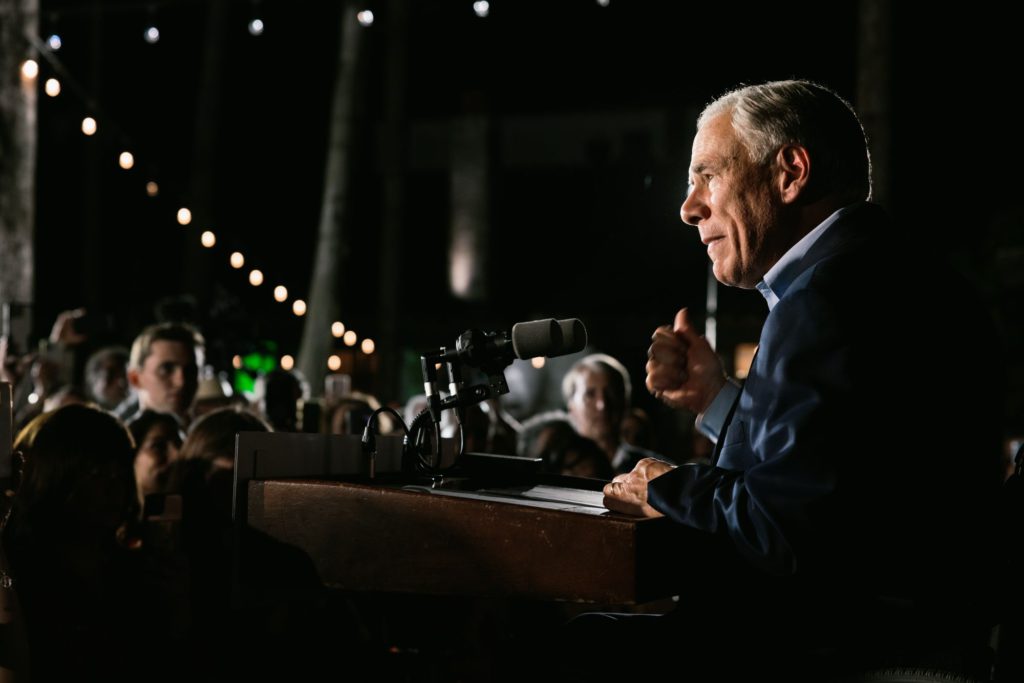
Texas Governor Abbott Calls for Probe Into Harris County Voting Issues

(Bloomberg) — Texas Governor Greg Abbott called for the state to investigate election-day voting issues in Harris County, home to Houston.

“The allegations of election improprieties in our state’s largest county may result from anything ranging from malfeasance to blatant criminal conduct,” Abbott said in a statement Monday. “Voters in Harris County deserve to know what happened.”

The county, the third-largest in the US, was the subject of a lawsuit filed late on election day that claimed at least a dozen voting locations opened late. A local judge ordered polls to remain open an additional hour, but the Texas Supreme Court blocked the order and said any ballots cast after the original closing time should be counted separately.

Some polling sites also reported running out of paper, which forced officials to temporarily halt voting at those locations. Harris County had the longest ballot in the nation, with as many as 103 races in some precincts, and the system requires individuals to cast votes on a computer that prints out the results and then are fed into another machine for storage. After the polls close, the computer drives are transported to a central counting facility for tabulation.

The Republican-controlled state has often sparred with the liberal-leaning county. The legislature last year enacted laws to bar some of the new voting measures used by Harris County during the pandemic, including 24-hour and drive-through voting.

After Abbott announced he would send state inspectors to monitor the voting process on election night this year, Harris County requested federal overseers from the Department of Justice. Both entities were present to observe last week.

After the March primary, it took Harris County more than 30 hours to count its votes, prompting the country’s top election official to resign.

(Adds extended voting hours in the third paragraph.)

More stories like this are available on bloomberg.com

©2022 Bloomberg L.P.

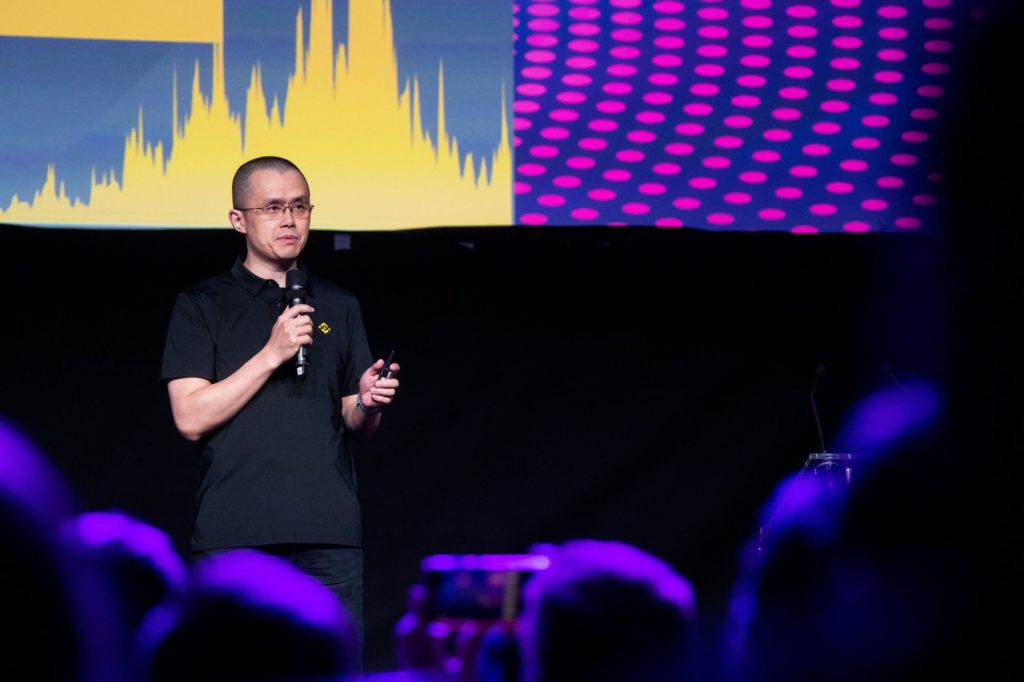
Binance’s Billionaire CEO Casts Himself as Crypto’s New Savior

(Bloomberg) — Among the many things shattered in the collapse of FTX was the image of Sam Bankman-Fried as the crypto industry’s benevolent king. Now the man who hastened his demise with a tweet appears to want that job for himself.

Changpeng “CZ” Zhao, head of Binance Holdings Ltd., issued a flurry of tweets and comments in recent days seemingly aimed at bolstering his credentials as crypto’s standard-bearer, capping them Monday by announcing a fund to aid crypto firms in crisis. That triggered a rebound in digital-asset prices even though he was short on detail. CZ also unveiled plans to help set up a global industry body for major crypto firms. 

“Crypto is not going away. We are still here. Let’s rebuild,” Zhao, 45, said in his Monday tweet thread announcing the recovery fund. Other recent public comments have highlighted the need to re-establish trust in a sector rocked by a series of scandals this year. A spokesperson for Binance had no comment. 

FTX’s bankruptcy has rekindled concerns about everything from the legitimacy of crypto’s leaders to the soundness of its fundamental structures, with former Treasury Secretary Lawrence Summers comparing the company to Enron Corp. — whose reorganization, coincidentally, was overseen by the man now tapped to run FTX. So if the industry ever needed a unifying voice to quell the skeptics and shore up its crumbling credibility, it’s now.

But Zhao’s own role in the latest meltdown might complicate his status as the industry’s champion, regardless of the fact that FTX’s financial issues were likely long in the making, as highlighted in a Nov. 2 CoinDesk story. The Binance CEO is no stranger to the tweet-first-ask-questions-later ethos of crypto, an industry where leaders routinely use the platform to disparage each other. 

Read more: Alpha-Male Crypto ‘Bloodsport’ Sows a Catastrophe at FTX

Zhao’s Nov. 6 tweet about selling a large chunk of FTX’s native token FTT further unsettled crypto markets, with investors yanking some $5 billion from Bankman-Fried’s exchange that same day. FTX quickly unraveled.

“CZ announced he was dumping half a billion worth of FTT for everyone to hear on Twitter,” said Max Gokhman, chief investment officer at asset manager AlphaTrAI. “That’s sort of like seeing someone at the bottom of a mountain and then kicking a snowball downhill. You know full well it’ll create an avalanche.”

In an “ask me anything” appearance on Twitter Spaces on Monday, Zhao accepted some responsibility for the episode but said he didn’t anticipate the fallout. 

“Five years later, when we look back at this, the industry will become stronger because of this,” he said. “So as much as some people blame me for whistle blowing, or poking the bubble, I apologize for that. But I actually didn’t know my tweet would cause so much change.”

Tensions between Bankman-Fried and Zhao, both so familiar inside and outside crypto that they go by their initials SBF and CZ, had been on full display for months before this crisis erupted. Their Twitter dueling descended into outright acrimony in October with a since-deleted tweet from 30-year-old Bankman-Fried that appeared to question Zhao’s status in Washington and by extension Binance’s relationship with regulators. 

Read more: Crypto’s Richest Man Faces Regulatory Crackdown, Brutal Winter

With FTX gone and Bankman-Fried’s reputation, career and fortune in tatters, Zhao stands as the lone giant of the industry. Binance handled almost half of global crypto trading volumes over the past week; runner-up Coinbase Global Inc. came in at just over 5%, data from CryptoCompare show. 

Richest Man in Crypto

Yet even those numbers capture only part of Zhao’s reach in crypto, with Binance a force in everything from venture capital to decentralized finance. Except for Bankman-Fried, only Ethereum co-founder Vitalik Buterin, Coinbase CEO Brian Armstrong and Galaxy Digital founder Michael Novogratz enjoy anything similar to Zhao’s global name recognition. 

Zhao also wields an $18.2 billion personal fortune, according to the Bloomberg Billionaires Index, far more than anyone else in crypto.

“CZ and Binance are one of the few groups, perhaps the only one, that can fill the current vacuum in terms of clout and size,” said Toby Lewis, the CEO of crypto analytics firm Novum Insights. 

Where Bankman-Fried struck deals to prop up stricken firms like Voyager Digital Ltd. and BlockFi, however, Zhao has so far stopped short of making major crypto rescue commitments backed by Binance’s balance sheet. It took him just over a day to pull out of a proposed deal to buy FTX after realizing what a precarious financial position his competitor was in. 

As Bankman-Fried disappeared from view and rivals like Crypto.com’s Kris Marszalek were forced to reassure customers that their funds are safe, Zhao kept a high profile, speaking at the Indonesia Fintech Summit and the Bali B20 event. Below is a selection of comments he’s made in recent days, on and off Twitter: 

Nov. 11: “We have a two-word thing in Binance, just protect users.”

Nov. 12: “Going forward, I will break this policy a bit and be more vocal about issues I see in the industry.”

Nov. 13: “If an exchange have to move large amounts of crypto before or after they demonstrate their wallet addresses, it is a clear sign of problems. Stay away. Stay #SAFU.”

Nov. 14: “Full disclosure: Binance never shorted FTT. We still have a bag of as we stopped selling FTT after SBF called me. Very expensive call.” 

Nov. 14: “We will try to get together with other industry players to form common business standards. All industry players need to increase transparency and work closely with regulators to make the industry more robust.”

Ascending to the status briefly bestowed on Bankman-Fried and the comparisons with John Pierpont Morgan and Warren Buffett that came with it might require more than words. 

Bankman-Fried was credited with helping to put a floor under this summer’s crypto turmoil by agreeing to backstop Voyager and BlockFi — although the Voyager deal has since collapsed and BlockFi has been forced to suspend withdrawals.  

It’s not as if Zhao hasn’t been active: Binance has committed $325 million to 67 projects so far this year, compared with $140 million for 73 projects in 2021, Bloomberg News reported in October. And Binance did bid for Voyager’s assets, but lost out to FTX. 

Buying a Bank?

Zhao has recently spoken about a desire to spend more on acquisitions, including potentially buying a bank. Where he’s drawn a line, though, is at ailing crypto lenders.  

“We did look at a lot of lenders in recent months, because that’s where all the issues are,” Zhao said in an interview in October. “Many of them, they just take a user’s money and give it to somebody else. There’s not a lot of intrinsic value.”

Zhao’s latest initiatives may yet land him the coveted status as industry savior, although details are scant. Besides his Twitter announcement saying “more details to come” and inviting other industry participants to co-invest, Zhao didn’t give any indication of how large the “recovery fund” will be, or how much Binance will put into it.

In his Twitter Spaces appearance on Monday, he said “four or five funds” have reached out about the initiative, without naming them. He added that the recovery fund wasn’t his idea but that “it came from one of our co-founders and we said, ‘Let’s embrace it.’”

On plans for a new industry association, Zhao said: “This has been requested by multiple regulators to me. But this association will not be run by Binance, it will not be controlled by Binance.” The new body would serve as a point of contact between regulators and key crypto players on matters such as policy and best practices, he said.

–With assistance from Anna Irrera and Vildana Hajric.

More stories like this are available on bloomberg.com

©2022 Bloomberg L.P.
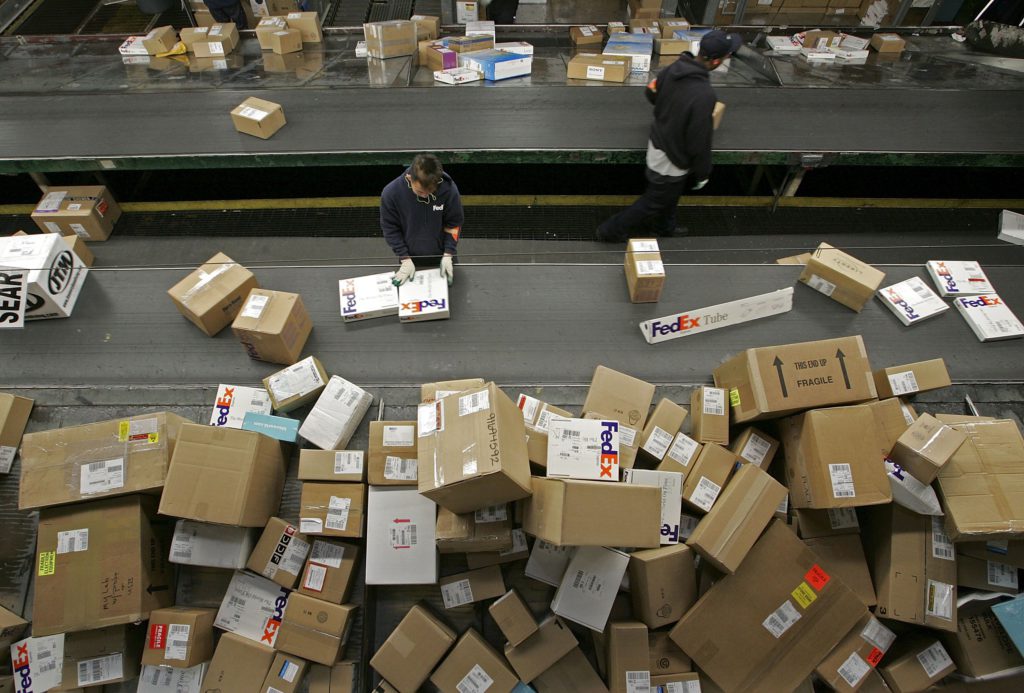
FedEx Freight Unit Furloughs Workers as Cargo Demand Slows

(Bloomberg) — FedEx Corp.’s freight unit is putting workers on furlough in some US markets, adding to mounting evidence of a cargo slowdown as the company joins other large employers trimming their ranks. 

The furloughed workers will continue to receive health benefits, the courier said Monday in an emailed statement. Some of the affected employees will be offered permanent transfers to areas that are still hiring. 

“The company will continue to evaluate the environment and bring back furloughed employees as business circumstances allow,” FedEx said in the statement. It didn’t specify how many workers would be affected in the freight business, which hauls less-than-truckload cargo for retail and industrial customers and is the company’s third-largest unit.

The move comes after FedEx said last week it’s cutting cargo flights and parking planes as the air-freight market declines. Many companies in third-quarter earnings cited a slowdown of demand as the Federal Reserve continues to boost interest rates to cool inflation. C.H. Robinson Worldwide Inc., a large freight broker, said it will cut costs by $175 million to cope with a downturn in 2023.

The staff reductions aren’t limited to freight companies. Online retail giant Amazon.com Inc. is preparing to cut about 10,000 positions beginning as soon as this week.

FedEx shares fell less than 1% in New York. The stock has declined 32% this year.

(Updates with details of freight business in third paragraph)

More stories like this are available on bloomberg.com

©2022 Bloomberg L.P.
FTX Collapse Probed by Federal Prosecutors in Manhattan

(Bloomberg) — The stunning collapse of the cryptocurrency platform FTX is being investigated by federal prosecutors in Manhattan, people familiar with the probe said.

The US Attorney’s Office for the Southern District of New York is examining the circumstances surrounding FTX’s demise, the people said, asking not to be identified because the probe hasn’t been announced publicly.

FTX’s sudden implosion with $9 billion of liabilities and only $900 million in assets on its balance sheet sent the crypto market into a tailspin last week. The platform filed bankruptcy proceedings, along with 130 entities tied to the company including FTX subsidiaries FTX.US and trading firm Alameda Research, on Friday.

Regulators and investigators will attempt to piece together how one of the world’s largest exchanges collapsed so quickly, including how it handled customer funds, the relationship between subsidiaries and oversight. By the time the market peaked in 2021, FTX had earned the trust of more than 5 million users worldwide, trading more than $700 billion worth of crypto that year alone.

Co-founder Sam Bankman-Fried was also interviewed by Bahamian police and regulators on Saturday, a person familiar with the matter told Bloomberg, as the authorities in the country investigate whether there was any criminal misconduct in FTX’s collapse. The firm is registered in the Bahamas.

Bankman-Fried’s wealth, which stood at around $16 billion at the start of the last week, has vanished along with the reputation of a crypto wunderkind who just recently was regarded as a savior of swathes of the industry.

FTX’s US general counsel didn’t immediately respond to a request for comment.

The SEC is scrutinizing FTX, its American arm FTX.US and Bankman-Fried’s trading house Alameda Research for potential securities violations, Bloomberg reported last week.

The regulator was already probing the crypto empire before its downfall.

While SDNY can prosecute criminal violations and the SEC focuses on civil enforcement, the agencies are known to run parallel investigations.

A spokesman from SDNY declined to comment.

SDNY has spearheaded some of the most high profile cryptocurrency investigations in recent years, including the alleged insider-trading case involving a former Coinbase employee and the prosecution of those behind the bogus crypto empire, OneCoin.

–With assistance from Seng Young Lee.

(Adds scope of probe in fourth paragraph.)

More stories like this are available on bloomberg.com

©2022 Bloomberg L.P.
Close Bitnami banner
Bitnami