Bloomberg

Buffett-Backed Nubank Says Profit Tripled on Record Revenue

(Bloomberg) — Nu Holdings Ltd., the Brazilian digital lender that counts Warren Buffett’s Berkshire Hathaway Inc. as a backer, posted third-quarter profits that beat analysts’ estimates, as stronger-than-expected revenue helped the fintech weather a surge in bad loans. 

Adjusted net income more than tripled from a quarter earlier to $63.1 million, topping the average estimate of $32.6 million in a survey of six analysts by Bloomberg. Nubank’s revenue surged to a record $1.3 billion, above the expected $1.1 billion, with clients climbing to 70.4 million. 

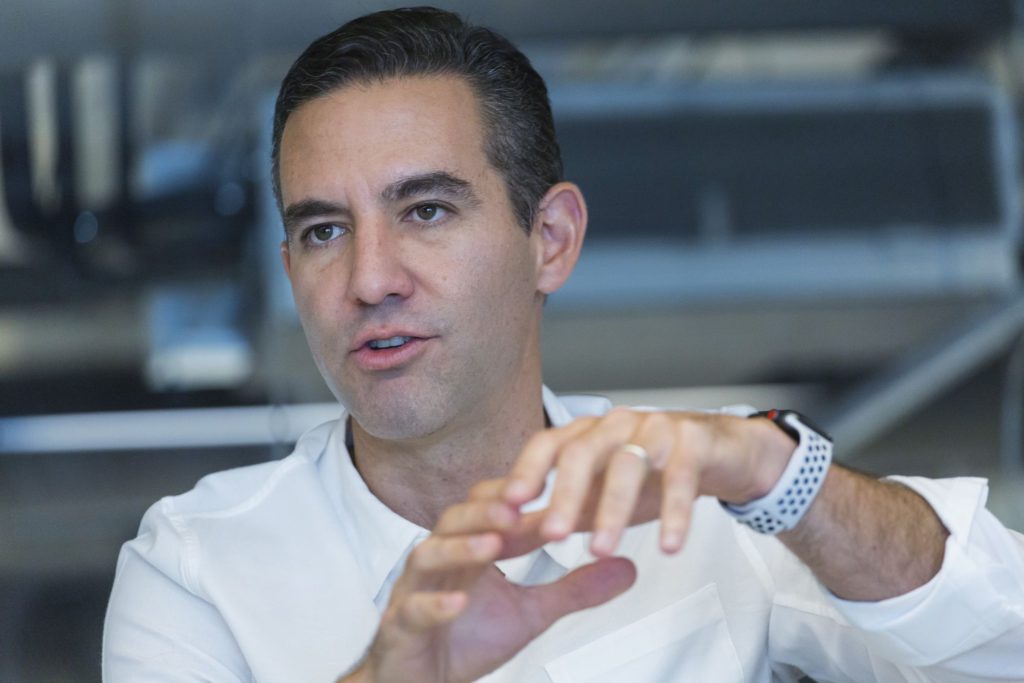
“Souring loans have been rising given the current stage of the economic cycle, but we’ve being able to price in that surge really well,” Chief Executive Officer David Velez said in an interview Monday. Efficiency gains and recent measures aimed at reining in funding costs also shored up results, Velez said. 

The percentage of loans more than 90 days overdue rose to 4.7% from 4.1% three months earlier, better than the 5% estimate by Goldman Sachs Group Inc. Banco Bradesco SA last week raised its guidance for bad-loan provisions, fueling concerns that credit quality in Latin America is deteriorating. 

“The pace of personal-loan origination has been slower than we expected as we’re carefully monitoring the macro backdrop, so origination was nearly flattish” compared to the second quarter, Velez said.

Fintech companies are expanding and boosting headcount across the region. Nubank will finish this year with at least 1,000 more employees, co-founder Cristina Junqueira said in a separate interview. The idea is to create “global platform teams” to replicate the success the Sao-Paulo-based firm has had in Brazil in Mexico and Colombia, where the fintech only offers credit cards, she said. The hirings are mostly in areas such as fraud prevention, collections and information security.

In Brazil, where Nubank offers services such as credit, debit cards and investments, the main focus is to expand into areas including secure lending and payroll loans, as it seeks to diversify revenue, Velez said. The firm should launch a “beta test” for its payroll-loan product in the fourth quarter and make it available to all clients in early 2023, he said, adding that more products for the “upmarket customer” are also planned. 

Acquisition Opportunities

After raising $2.8 billion in its initial equity offering in December, Nubank is “in a very, very strong position to look at acquisitions more actively,” Velez said, adding that “it would likely be verticals in financial services or even beyond in sectors where we haven’t built in-house.”

But he added that it’s unlikely the firm would pursue a big acquisition, given the opportunities it has to grow organically.

“It’s so important not to get too distracted with a shiny object that might be on sale somewhere else,” Junqueira said. 

Velez said he’s unfazed about recent elections that changed the leadership in some Latin America nations, since “both the right and the left kind of agree that more competition in financial services is a good thing, that more financial inclusion is a good thing.” 

Other key points:

  • The average revenue per active client, or ARPAC, rose to $7.90 in the third quarter from about $7.80 a quarter earlier
  • Early delinquency indicators, from 15 to 90 days, rose to 4.2% in September from 3.7% in June

–With assistance from Felipe Marques.

More stories like this are available on bloomberg.com

©2022 Bloomberg L.P.

Canadian Police Charge Battery Researcher With China Espionage

(Bloomberg) — A 35-year-old Hydro-Quebec employee who worked on battery materials research has been charged with espionage for allegedly obtaining trade secrets for China.

Yuesheng Wang, of Candiac, Quebec, was arrested following an investigation that began in August. Wang was charged with obtaining trade secrets — the first time such a charge has been laid in the country, according to the Royal Canadian Mounted Police.

Wang also faces charges of unauthorized use of a computer, fraud for obtaining trade secrets, and breach of trust by a public officer.

The investigation was sparked when the company’s security branch contacted authorities, the RCMP said. “While employed by Hydro-Quebec, Mr. Wang allegedly obtained trade secrets to benefit the People’s Republic of China, to the detriment of Canada’s economic interests,” the police force said in a news release.

Wang conducted research on battery materials at Hydro-Quebec’s Center of Excellence in Transportation Electrification and Energy Storage. The unit develops advanced technologies for electric vehicles and energy storage systems. His employment has been terminated for “serious violations” of the company’s code of ethics, Hydro-Quebec said in a news release. “He did not have access to information related to Hydro-Quebec’s core mission,” it said.

Wang used his position at Hydro-Quebec to do research at a Chinese university and other Chinese research centers, David Beaudoin, who heads the RCMP’s national security team in Quebec, said at a news conference. Wang allegedly “submitted scientific articles and submitted patents in association with this foreign actor.”

Wang, who will appear in court Tuesday in Longueuil, Quebec, is the only person facing criminal charges in this matter. The alleged activities took place between February 2018 and October 2022. Wang is no longer employed by Hydro-Quebec, the company said.

Canada-China relations have become increasingly strained in recent years. Last week, Prime Minister Justin Trudeau’s top diplomat called the country an “increasingly disruptive global power.” 

More stories like this are available on bloomberg.com

©2022 Bloomberg L.P.

Bitcoin Futures Slide Below Spot Price as FTX Fallout Spreads

(Bloomberg) — The turmoil caused by the implosion of crypto-empire FTX is rippling into the Bitcoin futures market.

The Bitcoin futures curve is in so-called backwardation, meaning its spot price is higher than its futures price, something that didn’t happen during previous selloffs, according to Ilan​ Solot, co‑head of digital assets at Marex Solutions. 

“The obvious answer is speculative shorts, perhaps by institutional players that skew towards futures trading,” Solot said in a note. “Some of it could be proxy hedging by investors with funds locked, staked or inaccessible.” 

Solot said the reversal may also reflect the unwinding of hedges. Exchanges or trading desks holding Bitcoin for clients may have sold them to reinvest the proceeds temporarily, using futures to hedge the risk the price would rise. With investors skittish since the FTX collapse, some of those trades could be in the process of being unwound as clients pull out funds.

“To unwind the trade, exchanges and trading desks need to sell the futures and buy back spot BTC (probably in the OTC market), making the curve invert,” he said.

Read more: Sam Bankman-Fried’s Magic Money Box Enriched Vast Crypto Network

The crypto market is undergoing a historic bout of volatility amid the swift implosion of the once-popular digital-assets exchange FTX, which filed for bankruptcy last week. 

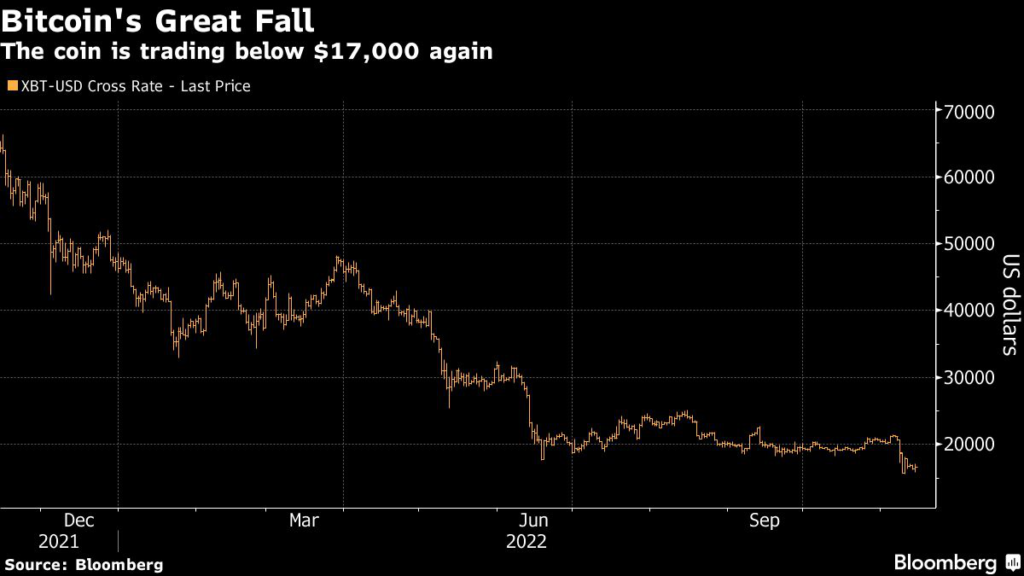
The price of Bitcoin, the largest token, is down more than 20% over the last week to around $16,500. It had touched nearly $69,000 just a year ago. Ether has shed about a quarter of its value, while the FTX token FTT has lost roughly 95% and is trading around $1.60, Bloomberg data show. 

More stories like this are available on bloomberg.com

©2022 Bloomberg L.P.

Google, Apple Rivals to Launch Ad Campaign for Bill Against Big Tech

(Bloomberg) — A group of small tech companies this week will launch an advertising campaign urging lawmakers to pass landmark legislation that would diminish the power of the country’s largest internet giants.

The small companies, which compete with Alphabet Inc.’s Google, Amazon.com Inc., Apple Inc. and Meta Platforms Inc., are hoping to push Congress to pass the bill by the end of this year, before a likely GOP majority takes over. Top Republicans have signaled that the legislation, called the American Choice and Innovation Online Act, would fail in a GOP-led House. 

“For years, Big Tech has acted as the fox guarding the hen house of online competition,” said Ben Kobren, head of public policy at Neeva Inc., an ad-free search engine that competes with Google. “The American Innovation and Choice Online Act is the first bipartisan legislation in decades to meaningfully level the playing field and spur American innovation.”

The six-figure ad buy, which was funded by companies including Neeva, search engine DuckDuckGo Inc. and price-comparison service Kelkoo Group Ltd., will run on major networks including CNN and MSNBC in the Washington market. The Tech Oversight Project, a group that says it opposes anticompetitive behavior by big tech companies, helped to coordinate the ad campaign. 

The lame-duck period after last week’s midterm elections is likely the last shot to pass the legislation, which would prevent the tech companies from using their platforms to thwart competitors. The measure would be the most significant expansion of antitrust law in over a century.

The ad buy shows that the most fervent advocates for the legislation, including supporters within the tech industry, are putting money, time and resources into the last-ditch push to get the bill across the finish line. 

The 30-second ad, which is structured like a movie trailer, features images of negative headlines about the largest tech companies. “One bill is the ticket to freedom,” the narrator says in the ad, adding that the legislation will “help unleash American competition, American freedom and American innovation.” 

“With a more than likely Republican House to take over in January, the time to get this done is now,” said Sacha Haworth, executive director of the Tech Oversight Project. 

Meanwhile, the major tech companies and their trade groups have spent more than $120 million on advertising against the bill, blitzing the airwaves across the country with messaging against the legislation — especially in states led by vulnerable Democrats with close elections last week. 

Ultimately, Senate Majority Leader Chuck Schumer and House Speaker Nancy Pelosi will decide whether to bring the measure to a vote before the end of the year. The White House is planning a post-midterms push in favor of the legislation.  

More stories like this are available on bloomberg.com

©2022 Bloomberg L.P.

Solana Leads Crypto Slump With FTX’s Serum Project In Distress

(Bloomberg) —

Major cryptocurrencies were mostly little changed after Binance Holdings Ltd.’s Chief Executive Officer Changpeng ‘CZ’ Zhao said the world’s largest digital-asset exchange plans to set up an industry recovery fund.

Zhao said Monday the goal was to “reduce further cascading negative effects” of the bankruptcy of rival exchange FTX, adding the fund will assist otherwise strong projects that are facing a liquidity squeeze. 

Bitcoin spiked after the tweet but later paired back some of those gains. At 2:56 p.m. in New York, the token down .9% to $16,200. Earlier, it approached the year’s low following a 3.4% intraday drop. It tumbled 23% last week. Solana, a token associated with Sam Bankman-Fried’s broken FTX empire, snapped a three-day retreat to add as much as 11%, before also paring its increase.

Caroline Pham of the Commodity Futures Trading Commission said the crypto sector suffers from poor risk management. 

“It is hard to see where the contagion might stop,” Pham told Bloomberg TV. “More news will come out as people continue to work through their exposures.”

Even though markets gained on Zhao’s tweet, such a fund may not be best for the industry, said Quantum Economics founder and Chief Executive Officer Mati Greenspan. Binance already has too much control in a decentralized market, he said.

“That sort of concentration of power makes me uncomfortable,” said Greenspan. “It’s the kind of thing crypto was designed to avoid and one of the lessons we should have learned from last week.”

Meanwhile, Elon Musk’s tweet that Bitcoin “will make it” also gave crypto markets a boost, said Greenspan. Dogecoin, a token the Tesla CEO has touted in the past, gained as much as 7.9%.

Zhao didn’t mention how big the fund might be. He invited other industry players to “co-invest” and said more details would follow. FTX’s wipeout continues to cast a long shadow after lopping about $200 billion off crypto market value in the past week. 


More stories like this are available on bloomberg.com

©2022 Bloomberg L.P.

Bitcoin ATM Operator Coin Cloud Hires Advisers to Rework Debt

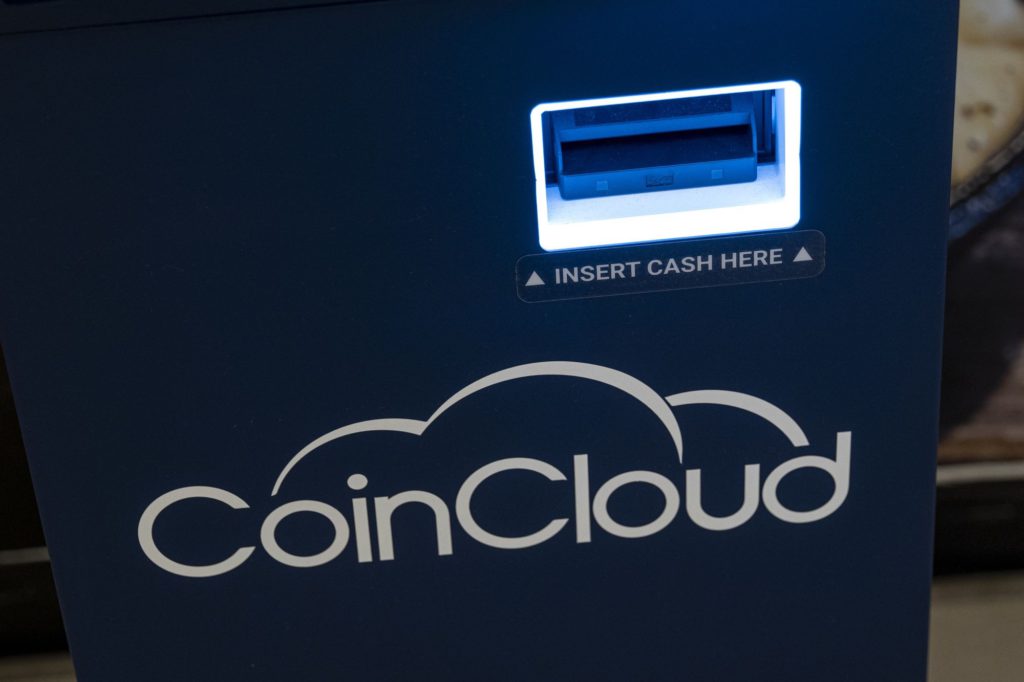
(Bloomberg) — Coin Cloud has tapped M-III Partners and B Riley Securities to help rework about $125 million of debt that the operator of Bitcoin automatic teller kiosks accumulated during a period of aggressive growth, according to people with knowledge of the situation.

A group of the company’s lenders is working with restructuring and advisory firm Ducera Partners, said the people, who asked not to be identified because the matter is private. The effort comes as crypto prices have suffered from a year-long meltdown made worse by the spectacular collapse Bahamas-based FTX last week. 

Representatives at Coin Cloud, M-III and Ducera didn’t respond to requests for comment. B Riley declined to comment.

Based in Las Vegas, Nevada, Coin Cloud runs ATM machines that allow people to buy and sell digital assets, including Bitcoin, Ethereum, and stablecoins. The company has kiosks in more than 5,000 locations such as liqueur stores and neighborhood bodegas across the US and Brazil. In January it hired Michael Tomlinson — who formerly worked at CoinStar and Redbox — to make digital currency as accessible as renting a DVD at a local grocery store. 

But some of Coin Cloud’s kiosks are located in rural areas that have weak foot traffic, the people said. Transactions through crypto ATMs globally have broadly slowed this year, with volume expressed in dollars falling to $227 million in October, from $349 million in January 2021, according to data from researcher Chainalysis.

The company doesn’t have direct exposure to beleaguered firms such as bankrupt Celsius Network or FTX, the people said. The dramatic unraveling of Sam Bankman-Fried’s FTX has sparked renewed concerns over contagion risks in the loosely-regulated crypto industry.

Related: FTX Downfall Shows CFTC Needs More Crypto Sway, Chairman Says

More stories like this are available on bloomberg.com

©2022 Bloomberg L.P.

Amazon, Meta Join Ranks of Tech Companies Slashing Thousands of Jobs

(Bloomberg) — Tech companies are trimming staff and slowing hiring as they face higher interest rates and sluggish consumer spending in the US and a strong dollar abroad. 

The tech industry shed 9,587 jobs in October, the highest monthly total since November 2020, according to Challenger, Gray & Christmas Inc., a consulting firm that tallies job cuts announced or confirmed by companies across telecom, electronics, hardware manufacturing and software development.

In recent earnings reports, Alphabet Inc., Amazon.com Inc., Meta Platforms Inc., Microsoft Corp. and others fell short of projections, sending shares plunging and shaving hundreds of billions of dollars from their market valuations. Meta, for instance, has lost more than 67% of its value so far this year.

Read More: It’s White-Collar Jobs That Are at Risk in the Next Recession

Here’s a running list of who’s cutting jobs and pulling back on hiring. 

Amazon

The e-commerce titan plans to cut about 10,000 jobs. The layoffs will likely target Amazon’s devices group, responsible for the Echo smart speakers and Alexa digital assistant, as well as the retail divisions and human resources, Bloomberg News reported.

In November, Amazon halted “new incremental” hiring across its corporate workforce. 

Apple

The iPhone maker has paused hiring for many jobs outside of research and development, an escalation of its plan to reduce budgets heading into next year, according to people with knowledge of the matter. The break generally doesn’t apply to teams working on future devices and long-term initiatives, but it affects some corporate functions and standard hardware and software engineering roles.

Chime

The digital-banking startup Chime Financial Inc. is cutting 12% of its staff, or 160 people. A spokesperson said the company remains well-capitalized and the move will position it for “sustained success.”

Dapper Labs

Dapper Labs Inc. founder and Chief Executive Officer Roham Gharegozlou said in a letter to employees that the company had laid off 22% of its staff. He cited macroeconomic conditions and operational challenges stemming from the company’s rapid growth. Dapper Labs created the NBA Top Shot marketplace for nonfungible tokens, a digital asset class that has seen a steep drop in demand since the crypto market downturn.

Digital Currency Group

Cryptocurrency conglomerate Digital Currency Group embarked on a restructuring last month that saw about 10 employees exit the company. As part of the shake-up, Mark Murphy was promoted to president from chief operating officer.

Galaxy Digital

Galaxy Digital Holdings Ltd., the crypto financial services firm founded by billionaire Michael Novogratz, is considering eliminating as much as 20% of its workforce. The plan may still be changed and the final number could be in a range of 15% to 20%, according to people familiar with the matter. Galaxy’s shares have plummeted more than 80% this year, part of a rout for cryptocurrencies.

Intel

Intel Corp. is cutting jobs and slowing spending on new plants in an effort to save $3 billion next year, the chipmaker said. The hope is to save as much as $10 billion by 2025, a plan that went over well with investors, who sent the shares up more than 10% on Oct. 28. Bloomberg News reported earlier that the headcount reduction could number in the thousands. 

Lyft

Lyft Inc.’s cost-saving efforts include divesting its vehicle service business. It’s eliminating 13% of staff, or about 683 people. The company had already said it would freeze hiring in the US until at least next year. It’s now facing even stiffer headwinds. 

“We are not immune to the realities of inflation and a slowing economy,” co-founders John Zimmer and Logan Green said in a memo. “We need 2023 to be a period where we can better execute without having to change plans in response to external events — and the tough reality is that today’s actions set us up to do that.”

Meta

The Facebook parent is cutting 11,000 jobs, the first major round of layoffs in the social-media company’s history. Meta’s stock has plunged this year, and the company is trying to pare costs following several quarters of disappointing earnings and a slide in revenue. The reductions equal about 13% of the workforce, and Meta will extend its hiring freeze through the first quarter. 

“I want to take accountability for these decisions and for how we got here,” CEO Mark Zuckerberg said in the statement. “I know this is tough for everyone, and I’m especially sorry to those impacted.”

Opendoor

Opendoor Technologies Inc. said that it’s laying off about 550 employees — roughly 18% of its headcount. The company, which practices a data-driven spin on home-flipping called iBuying, is coping with slowing housing demand because of higher mortgage rates.

Peloton

Peloton Interactive Inc. laid off 500 employees globally, or about 12% of the workforce, in October. It was the fourth time this year the company has cut staff. Along with other expense reduction measures, Peloton said the move will help it reach the break-even point on cash flow by the end of fiscal 2023.

“I know many of you will feel angry, frustrated and emotionally drained by today’s news, but please know this is a necessary step if we are going to save Peloton, and we are,” CEO Barry McCarthy said in an October memo. “Our goal is to control our own destiny and assure the future viability of the business.”

Qualcomm

Qualcomm Inc. said that it’s frozen hiring in response to a faster-than-feared decline in demand for phones, which use its chips. It now expects smartphone shipments to decline in the double-digit percent range this year, worse than the outlook it gave earlier.

Salesforce

Salesforce Inc. is focusing on margins as demand for its software products slow. The company has cut hundreds of workers from sales teams as it looks to improve profitability. Since 2017, Salesforce had almost tripled its workforce. 

Seagate

Seagate Technology Holdings Plc, the biggest maker of computer hard drives, said that it’s paring about 3,000 jobs. Computer suppliers, including Seagate and Intel, have been hard hit by a slowdown in hardware spending. Customers are sitting on a pile of extra inventory, hurting orders and weighing on Seagate’s financial performance, CEO Dave Mosley said. That necessitated cuts. “We have taken quick and decisive actions to respond to current market conditions and enhance long-term profitability,” he said.

Stripe

Payments company Stripe Inc., one of the world’s most valuable startups, is cutting more than 1,000 jobs. The 14% staff reduction will return its headcount to almost 7,000 — its total in February. Co-founders Patrick and John Collison told staff that they need to trim expenses more broadly as they prepare for “leaner times.”

Twitter

The upheaval at Twitter has more to do with its recent buyout — and the accompanying debt — than economic concerns. But the company has suffered some of the deepest cuts of its peers right now. Elon Musk, who bought Twitter for $44 billion, eliminated about 3,700 jobs by email. Musk also reversed the company’s work-from-anywhere policy, asking remaining employees to report to offices.

“Regarding Twitter’s reduction in force, unfortunately there is no choice when the company is losing over $4M/day,” Musk tweeted on Nov. 4.

Upstart

Upstart Holdings Inc., an online lending platform, said in a regulatory filing it cut 140 hourly employees “given the challenging economy and reduction in the volume of loans on our platform.”

More stories like this are available on bloomberg.com

©2022 Bloomberg L.P.

Google to Pay $391.5 Million Over ‘Crafty’ Location Tracking

(Bloomberg) — Google agreed to pay a total of $391.5 million to 40 US states to resolve an investigation into the company’s location-tracking practices, in what state officials are calling the largest such privacy settlement in US history.

The Alphabet Inc. unit will “significantly improve” its location-tracking disclosures and user controls starting next year as part of the deal, according to a statement issued Monday by Oregon Attorney General Ellen Rosenblum, who led the negotiations with her Nebraska counterpart, Doug Peterson.

Rosenblum called Google’s practices “crafty and deceptive.”

“For years Google has prioritized profit over their users’ privacy,” she said. “Consumers thought they had turned off their location tracking features on Google, but the company continued to secretly record their movements and use that information for advertisers.”

Abortion and Privacy

Location history has become a particularly sensitive topic following the US Supreme Court decision overturning the right to an abortion, amid fears that police and prosecutors could use such data to track women’s movements and enforce state bans. Google previously said it would automatically delete records of user visits to sensitive locations, including abortion clinics, responding to the concerns.

The multi-state probe was triggered by a 2018 Associated Press article reporting that Google “records your movements even when you explicitly tell it not to,” according to a separate statement by Michigan Attorney General Dana Nessel. The states cited issues with two Google account settings: Location History and Web & App Activity.

Google said the policies in question are long gone.

“Consistent with improvements we’ve made in recent years, we have settled this investigation which was based on outdated product policies that we changed years ago,” spokesperson José Castañeda said in a statement.

Privacy and Ad Sales

Google can track users’ locations with sensors on their devices that connect with GPS, cell towers and Wi-Fi and Bluetooth signals, New Jersey Attorney General Matt Platkin said in a statement, adding that it can use those signals to track someone’s location “both outside and inside buildings,” he said.

“Digital platforms like Google cannot claim to provide privacy controls to users, then turn around and disregard those controls to collect and sell data to advertisers,” Platkin said.

Arizona in 2020 sued Google over the practice and earlier this year secured an $85 million settlement. That complaint accused Google of violating the state’s Consumer Fraud Act by gathering location data even after users opted out of a feature. 

Nessel said transparency requirements of the 40-state accord “will ensure that Google not only makes users aware of how their location data is being used, but also how to change their account settings if they wish to disable location-related account settings, delete the data collected and set data retention limits.”

Separately, Meta Platforms Inc. will pay $90 million to settle a suit over the use of browser cookies and Facebook’s “Like” button to track user activity. The settlement got final approval from a federal court in California on Nov. 10.

Read More: Facebook’s $90 Million ‘Like’ Button Tracking Suit Pact Approved

–With assistance from Julia Love.

(Adds comments by Oregon attorney general in first section and New Jersey AG in third.)

More stories like this are available on bloomberg.com

©2022 Bloomberg L.P.
Climate Tech Deal Flow Holds Up Amid Threat of Economic Downturn

(Bloomberg) — Dealmaking for new technology to tackle climate change held roughly steady in the third quarter, suggesting enthusiasm for environmental innovation is persisting through growing signs of an economic downturn. 

Funds from venture capital and private equity went into 539 deals, compared with 547 in the three months to June, according to a review of climate-related sectors published Monday by BloombergNEF, a clean energy research group.

Strength in the number of deals contrasts with a drop-off in the amount of money being put to work in new technology to combat global warming. The $10.7 billion of funding in the period marks the third consecutive quarterly decline from the record $19.6 billion in the fourth quarter last year. However, that slide need not signal broader weakness in climate-tech funding.

Plenty of financiers have money to put to work, and when they find the right company they’re ready to participate, said Sarrah Raza, BloombergNEF analyst and author of the report. It’s a more positive picture than in broader financial markets, where stock indexes are slumping amid investor worries about a recession. 

“It’s not as grim as it might seem” in climate tech, Raza said. “Funds are still pouring out money to startups. The reason why there may be a lack of investment is because there just may not be enough startups” at the right stages now.

Buildings attracted a surprising amount of interest in the third quarter. Typically, when a significant amount of capital makes its way to this sector, this is due to one company raising an unusually large round. However, 39 startups in the buildings sector attracted $480 million in funding, suggesting investors are waking up to the importance of tackling the environmental challenges in this space. Buildings account for 10% of global energy-related CO2 emissions, according to the International Energy Agency, behind only power, industry and transportation.

“In 2021, there was no point even discussing the building sector because there was such a minuscule level of investment,” said Raza. “I think this comes from investor awareness that to actually decarbonize our planet requires attacking the harder-to-abate sectors, rather than some of the cooler areas like flying electric airplanes and sexy EVs.”

Energy was the big winner in the three months to September, accounting for 53% of the entire quarter’s funding, or $5.7 billion. Thirteen of the biggest deals were for companies focused on providing clean power, mainly from solar or energy storage. The biggest of the quarter was a $1.1 billion late-stage VC round and convertible note for Northvolt, the Stockholm-based battery company.

Transport was the second-largest sector. The total fell off notably from last year, to $2.2 billion, led by electric vehicle manufacturing. Agriculture had its weakest quarter since the start of last year, attracting $162 million.

Raza said that since fourth quarter of 2021 was so large, investment declines may continue in the current period. However, this should inspire rather than discourage: “If I take anything from this report, it’s a huge encouragement for founders, for techies to go ahead and do that startup because there is money out there looking to flow into these technologies.” 

More stories like this are available on bloomberg.com

©2022 Bloomberg L.P.

US Stocks Climb as Fed’s Brainard Buoys Sentiment: Markets Wrap

(Bloomberg) — US stocks climbed after Federal Reserve Vice Chair Lael Brainard said that it would be appropriate “soon” for the central bank to slow its pace of interest-rate hikes, which signaled to some investors that she favors a half-point hike as early as next month.

The S&P 500 rose after wavering for most of the session. The tech-heavy Nasdaq 100 also gained after falling as much as 1.3% earlier in the session. Treasury yields climbed, with the 10-year rate hovering around 3.87%.

Fed Governor Christopher Waller’s hawkish comments over the weekend had wobbled markets earlier on Monday as investors mulled whether the post-CPI euphoria was overblown. Brainard’s comments at a Bloomberg event in Washington buoyed market sentiment after she said it makes sense for the Fed to moderate the size of its rate hikes soon. However, she did caution that the Fed had “additional work to do” to bring inflation down, which still kept some investors on the edge.

Last week’s rally, which propelled the S&P 500 to its best week since June, may be unsustainable, according to Christopher Smart, chief global strategist at Barings and head of the Barings Investment Institute.

“The bad news is that in an economic moment that remains so uncertain, the data is more likely than not to be messy and contradictory in the months ahead. The pace of decline will be uneven,” he said. “Moreover, there’s still a long way to go to get to the Fed’s target of 2% average inflation. That’s why Fed governors have been lining up to talk down any market euphoria that a real pivot is in sight.” 

Read More: Wall Street Managers Are Pushing Back on Easing Inflation Hopes

Meanwhile, Chinese stocks listed in the US extended their rally to a third day, after Joe Biden and Xi Jinping called for reduced tensions between the world’s two biggest economies during a meeting in Bali, Indonesia. 

The DAX Index, Germany’s main equity benchmark, rallied 20% from its September low. It was set to enter a bull market as investors bought shares on optimism that China is easing Covid restrictions and that its relations with the US are improving.

Cryptocurrencies rose on plans by Binance Holdings Ltd. to set up a recovery fund to stabilize the industry after FTX’s bankruptcy sparked market-wide losses of around $200 billion in the past week. 

Key events this week:

  • Fed’s John Williams moderates panel, Monday
  • China retail sales, industrial production, surveyed jobless, Tuesday
  • Former US President Donald Trump plans to make an announcement, Tuesday
  • US empire manufacturing, PPI, Tuesday
  • US business inventories, cross-border investment, retail sales, industrial production, Wednesday
  • Fed’s John Williams, Lael Brainard and SEC Chair Gary Gensler speak, Wednesday
  • ECB President Christine Lagarde speaks, Wednesday
  • Eurozone CPI, Thursday
  • US housing starts, initial jobless claims, Thursday
  • Fed’s Neel Kashkari, Loretta Mester speak, Thursday
  • US Conference Board leading index, existing home sales, Friday

Some of the main moves in markets:

Stocks

  • The S&P 500 rose 0.3% as of 1:23 p.m. New York time
  • The Nasdaq 100 rose 0.1%
  • The Dow Jones Industrial Average rose 0.5%
  • The MSCI World index rose 1.8%

Currencies

  • The Bloomberg Dollar Spot Index rose 0.1%
  • The euro was little changed at $1.0353
  • The British pound fell 0.4% to $1.1787
  • The Japanese yen fell 0.9% to 140.04 per dollar

Cryptocurrencies

  • Bitcoin rose 1.2% to $16,557.69
  • Ether rose 1.8% to $1,238.08

Bonds

  • The yield on 10-year Treasuries advanced six basis points to 3.87%
  • Germany’s 10-year yield declined one basis point to 2.15%
  • Britain’s 10-year yield advanced one basis point to 3.37%

Commodities

  • West Texas Intermediate crude fell 3.3% to $86.06 a barrel
  • Gold futures rose 0.2% to $1,773.70 an ounce

This story was produced with the assistance of Bloomberg Automation.

–With assistance from Sujata Rao, Cecile Gutscher, Brett Miller and Vildana Hajric.

More stories like this are available on bloomberg.com

©2022 Bloomberg L.P.
Close Bitnami banner
Bitnami