
Bloomberg

FTX Latest: Police Interview Bankman-Fried; Mystery Outflows

(Bloomberg) — A day after Sam Bankman-Fried’s digital-asset empire filed for Chapter 11 protection, the former crypto mogul was interviewed by Bahamian police and regulators, according to a person familiar with the matter. 

Analysts say about $662 million in tokens mysteriously flowed out of both FTX’s international and US exchanges. FTX had begun moving some of its assets to offline wallets, and later expedited those moves “to mitigate damage upon observing unauthorized transactions,” according to the US platform’s general counsel Ryne Miller. 

According to investment materials seen by the Financial Times, FTX Trading International held just $900 million in liquid assets on Thursday against $9 billion of liabilities.

Former Treasury Secretary Lawrence Summers compared the meltdown to the demise of energy company Enron Corp. The Securities and Exchange Commission and the Commodity Futures Trading Commission are investigating whether FTX mishandled customer funds, according to people familiar with the matter.

Key stories and developments:

  • Bankman-Fried: From Crypto King to King of Tech Bubble’s Losers
  • Crypto Markets Take a Breather as FTX Heist Unfurls
  • ‘It’s All Gone’: FTX Bankruptcy Is Worst Fear for Retail Traders
  • Alpha-Male Crypto ‘Bloodsport’ Sows a Catastrophe at FTX

(All time references are New York)

Binance Is Stopping Deposits of FTX’s Token FTT (3:30 a.m.)

Binance halted deposits of FTT, FTX’s token, “to prevent potential of questionable additional supplies affecting the market,” Binance CEO Changpeng “CZ” Zhao said on Twitter. Zhao said that he would encourage other exchanges to do the same thing. Justin Sun said Huobi Global would echo Zhao’s advice.

Zhao added that FTT contract deployers moved all remaining FTT supplies worth $400 million, “which should be unlocked in batches.” Binance followed up to say it had noticed a “suspicious movement” of a large amount of FTT by the token’s contract deployers.

FTT fell as much as 21% on Sunday to $1.65, though had recovered to around $2 as of 8:26 a.m. in London.

Matrixport Says 79 Clients Affected by FTX, ‘No Risk of Insolvency’ (11:38 p.m.)

Crypto financial-services platform Matrixport “continues to operate normally and the company has no risk of insolvency with respect to the developments at FTX and Alameda,” according to Ross Gan, head of public relations.

Matrixport had 79 clients that incurred losses via exposure to three products on its platform that were linked to FTX, Gan said.

Kraken Freezes Accounts Possibly Related to FTX (11:33 p.m.)

Crypto exchange Kraken said it has frozen Kraken account access to certain funds it suspects to be associated with “fraud, negligence or misconduct” related to FTX. Kraken said in a tweet it’s in contact with law enforcement and plans to resolve each account on a case-by-case basis.

Bankman-Fried Interviewed by Police in Bahamas (9:42 p.m.) 

Former crypto mogul Sam Bankman-Fried was interviewed by Bahamian police and regulators on Saturday, according to a person familiar with the matter. Bankman-Fried didn’t immediately respond to a request for comment.

The inquiries from Bahamian authorities add to the mounting legal pressure that Bankman-Fried is facing since his FTX empire crumbled over the past week. In the US, he is facing scrutiny from the Securities and Exchange Commission over whether he broke securities rules.

Bahamas Says it Didn’t Authorize Local Withdrawals by FTX Exchange (9 p.m.)

Bankrupt crypto exchange FTX’s move to allow withdrawals in the Bahamas was questioned by the nation’s securities regulator.

The Securities Commission of the Bahamas in a statement Saturday said that it hadn’t “directed, authorized or suggested” the prioritization of local withdrawals to FTX Digital Markets Ltd.

It added that such withdrawals could be clawed back.

Jump Crypto Says It Remains Well Capitalized After FTX Exposure (5:59 p.m.)

Jump Crypto, a cryptocurrency trading firm, told customers on Saturday it remains “well capitalized” after exposure to FTX. In a series of tweets, Jump said its exposure was “managed in accordance with our risk framework.” The company did not specify the exact nature of its exposure to Sam Bankman-Fried’s collapsed digital-asset empire. Jump’s assurance comes after FTX was hit by a mysterious outflow of about $662 million in tokens.

FTX to Seek Enforcement Aid on Unauthorized Withdrawals (1:46 p.m.)

FTX is launching an investigation with law enforcement into unauthorized withdrawals from some of its crypto wallets, a company executive said. The company, which filed for bankruptcy this week, said it is cooperating and coordinating with “law enforcement and relevant regulators.”

Liabilities Dwarfed Liquid Assets: FT (1:13 p.m.)

FTX Trading held $900 million in liquid assets against $9 billion of liabilities the day before the bankruptcy filing, the Financial Times reported, citing investment materials and a spreadsheet the newspaper had seen. Most of the recorded assets are either illiquid venture capital investments or crypto tokens that are not widely traded. The biggest asset as of Thursday was listed as $2.2 billion worth of a cryptocurrency called Serum.

Some FTX Staffers Leaving for HK: Semafor (11:55 a.m.)

Engineers and traders working at FTX and Alameda Research in the Bahamas, where the crypto exchange is based, have left for Hong Kong and elsewhere, Semafor reported, citing people close to current and former Caribbean-based FTX employees. Bankman-Fried and most of his inner circle are still in the Bahamas, the report said.

Kraken to Help In Probing Unauthorized Withdrawals (11:51 a.m.)

Crypto exchange Kraken said it knows the identity of an attacker who performed unauthorized withdrawals from rival FTX’s platform. The perpetrator moved some funds from a Kraken account to the wallet they were using to hold some stolen tokens on Saturday, blockchain security firm Hacken.io said, citing transaction data. Kraken was then able to identify the attacker by checking its platform for data on the original address, its chief security officer Nick Percoco said in a tweet.

Crypto Markets Take a Breath (9:16 a.m.)

The price of the two largest tokens by value, Bitcoin and Ether, were largely unchanged Saturday, with prices across cryptoassets largely flat, as traders weigh their next moves following this week’s market selloff and collapse of FTX, once of the industry’s largest trading platforms. “We are in the midst of another deleveraging event in the crypto ecosystem and it is so far having limited spillover to broader equity markets beyond sentiment, as crypto institutions lent to each other,” analysts at Morgan Stanley said in a note on Friday.

Yellen Says Debacle Shows Need for Regulation (5:48 a.m.)

US Treasury Secretary Janet Yellen said the implosion of FTX “shows the weaknesses” within the sector and that the market for digital assets required “very careful regulation.” She added digital assets are not currently a threat to the wider financial system. 

FTX Hit by Mysterious Outflow of About $662 Million (3:03 a.m.)

Blockchain analytics firm Nansen, which gave the overall estimate of $662 million in withdrawals, said the coins flowed out of both FTX’s international and US exchanges. Elliptic said initial indications show almost $475 million had been stolen in illicit transactions, with the stablecoins and other tokens that were taken being rapidly converted to Ether on decentralized exchanges — “a common technique used by hackers in order to prevent their haul being seized.”


More stories like this are available on bloomberg.com

©2022 Bloomberg L.P.
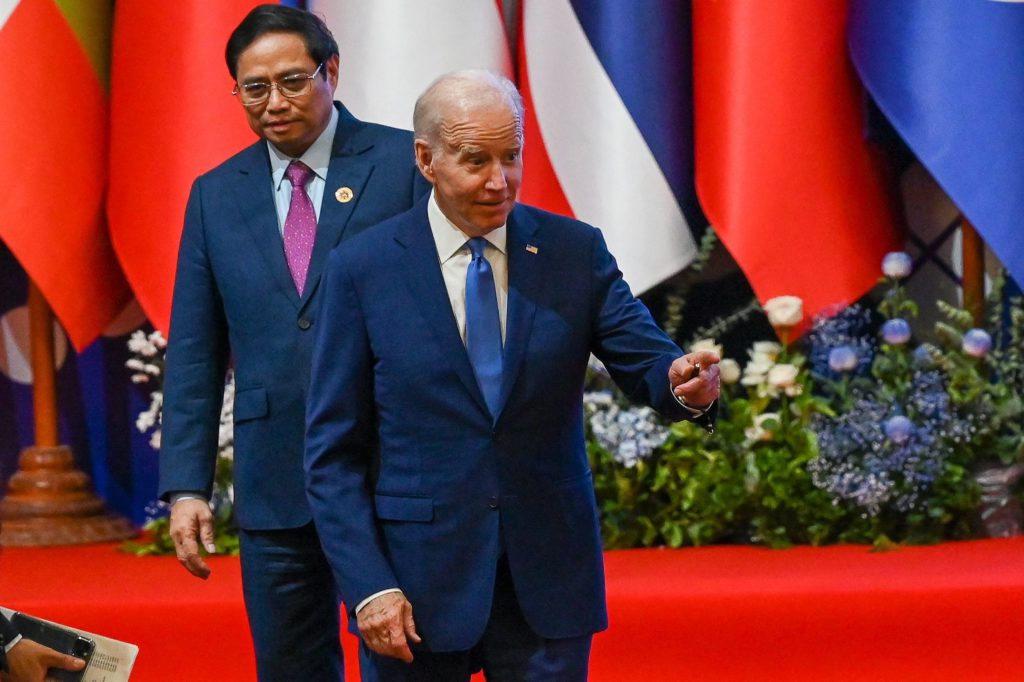
Asean Latest: Russia, US Disagree on East Asia Summit Statement

(Bloomberg) — Russia and the US failed to agree on language for a joint statement following an 18-nation summit in Cambodia, making it unlikely the Group of 20 nations will reach a consensus in Indonesia either this week. 

President Joe Biden said he is “coming in stronger” to his first in-person meeting with Chinese leader Xi Jinping on Monday, buoyed by the better-than-expected results in the midterm elections. 

Biden Set to Meet Xi With US-China Ties Headed Toward Rupture

Biden crossed paths first with Chinese Premier Li Keqiang at the East Asia Summit on Sunday in Cambodia, a precursor to the meeting with Xi in Bali, Indonesia.

He also met several Asian leaders, including US allies South Korea and Japan. Biden pledged the US would cooperate with the Association of Southeast Asian Nations on shared challenges such as the South China Sea and escalating violence in Myanmar. 

Highlights:

  • Russia, US Fail to Agree on Asean Statement in Bad Sign for G-20
  • Biden Says Senate Victory Gives Him ‘Stronger’ Hand With Xi
  • Biden Raises Concern With Cambodia Over China Ties to Naval Base
  • Biden to Tell Xi to Help With North Korea or Face More US Drills
  • China’s Li Says Nation to Boost Cooperation With Asean on Trade
  • China, Cambodia to Crack Down on Online Gambling, Telecom Scams
  • Indonesia Proposes Ban on Myanmar Junta Beyond Asean Summits

Here are the latest developments. All times Cambodia. 

G-20 Officials Still Discussing Communique, Albanese Says (2:35 p.m.)

Officials are still in discussions over a possible joint communique for the upcoming Group of 20 summit in Bali, Australian Prime Minister Anthony Albanese told reporters in Cambodia.

“That dialogue is continuing between officials,” he said. “You know the way that these conferences work. We’ve just got through an East Asia Summit in Asean meeting and a range of other summits. So we’re waiting to see what happens but I go into the G-20 with a great deal of confidence.” 

US Says Will Compete With China But Keep Communication Open (2:34 p.m.)

The US will “compete vigorously” with China and speak up about its human rights abuses, while keeping lines of communication open and ensuring competition does not veer into conflict, according to a White House readout of Biden’s discussion at the East Asia summit. 

Biden reiterated the importance of maintaining peace and stability across the Taiwan Strait. Biden also condemned Russia’s “brutal and unjust war against Ukraine in the strongest terms.”

Russia Says No Joint Statement After Asean Meeting (1:53 p.m.)

Russia’s Foreign Minister Sergei Lavrov said there won’t be a joint statement after the Asean meeting as the US and its allies have insisted on absolutely unacceptable language.

The US has been successful at dividing Asean and that the broader region was moving toward confrontation, Lavrov said in televised remarks after the summit in Cambodia.  

“There is a clear trend on militarization of the region through coordination of efforts of local US allies such Australia, New Zealand, Japan with NATO enlargement,” he said.

Indonesia Takes Asean Chair, Warns Global Powers (1:46 p.m.)

Indonesia President Joko Widodo said Asean should not be a proxy to any global power as he formally took over the Asean chair from Cambodian Prime Minister Hun Sen. Indonesia will hold the rotating chair for the bloc from 2023. 

“Asean must be a peaceful region and an anchor for global stability,” he told world leaders at the closing ceremony. Asean is not to be a proxy to any powers. 

Quad Already Sharing Data on Illegal Fishing with Southeast Asia (1:23 p.m.)

US along with Quad partners Australia, India and Japan are giving radio-frequency data and analysis from commercial satellite-clusters to an initial group of Southeast Asian partners that will improve monitoring of illegal fishing and help with rapid response to extreme weather events, the White House said.

In December a new radio frequency sensing satellite cluster will be launched and this will expand the program’s ability to rapidly collect and share information with Southeast Asia and the broader region, it said.

US, Quad Partners Announce Pact to Curb Illegal Fishing (2)

Australia, NZ and Asean Upgrade Free Trade Pact (11:43 a.m.)

Asean-Australia-New Zealand Free Trade Agreement upgrade negotiations have been substantially concluded, Australian Prime Minister Anthony Albanese said in a statement. 

The upgrade includes new chapters on micro, small and medium sized enterprise, trade and sustainable development, and enhanced provisions on electronic commerce, trade facilitation among others. The pact also offers more opportunities for cooperation on regional issues including the environment and climate change, Albanese said.

Biden Says ‘Coming in Stronger’ to Xi Meeting After Senate Win (10:48 a.m.)

Biden told reporters in Cambodia that he would be “coming in stronger’ to Monday’s meeting with China’s Xi Jinping after Democrats posted better-than-expected election results in the midterm elections, including retaining Senate control.

East Asia Summit Gets Underway in Cambodia (10:45 a.m.)

World leaders gathered under one roof on Sunday for the East Asia Summit in Phnom Penh, Cambodia as the region warned of worsening geopolitical pressures and the need to urgently address them. Expected to attend the summit were President Joe Biden, Russian Foreign Minister Sergei Lavrov, and Chinese Premier Li Keqiang.

Tensions have been hindering “efforts to promote sustainable development and causing greater hardship to people’s lives,” Cambodian Prime Minister Hun Sen said in his opening remarks as the rotating chair of the Association of Southeast Asian Nations.

Li Briefly Met With Albanese For First Time, Australian Media Report (9:30 a.m.)

China’s Premier Li Keqiang spoke briefly with Australian Prime Minister Anthony Albanese at Saturday’s gala dinner, Australian media reported.  Both leaders were sitting near each other at the head table.  

“It was the first time the PM had met Premier Li, they exchanged greetings, and they spoke briefly about the 50-year anniversary between our two countries,” the Australian Financial Review reported, citing Albanese’s office. 

AFR said it was Li who sought out Albanese for a conversation. Li was the one of the first Chinese leaders to congratulate Albanese on his election win in May and since then there has been a very gradual thaw in ties. 

China Says Global Coordination Needed to Avoid Recession (2:21 a.m.)

Chinese Premier Li Keqiang said countries should strengthen macroeconomic policy coordination to avoid a recession during a meeting with International Monetary Fund Managing Director Kristalina Georgieva, Xinhua reported. 

Such an effort would be conducive to maintaining world peace and stability, he said. 

Li said China is working hard to keep the operations of market entities stable, noting that China has more than 160 million such entities.

World Leaders Attend East Asia Summit Gala Dinner (7:30 p.m.)

The US President attended the gala dinner where world leaders were dressed in traditional Cambodian silk and tucked into local dishes. The leaders then settled into an evening of watching traditional and modern dances emphasizing peace and friendship. 

Biden Concerned Over Cambodia Naval Base With China Ties (7:25 p.m.)

Biden expressed concern to Cambodia’s leader about possible activities by China’s military at a naval base in the country, potentially exacerbating tensions around the South China Sea. 

Biden “raised concerns regarding the situation at Ream Naval Base and underscored the importance of full transparency about activities by the PRC military at Ream Naval Base,” the White House said in a statement. 

US, Asean Reinforce Ties with New Strategic Pact (7:17 p.m.)

US and Asean have formed a comprehensive strategic partnership in line with a push that Southeast Asian countries have been making to upgrade ties with some of the world’s biggest economies including India and China. 

This new partnership also has a focus on maritime cooperation through Asean-led mechanisms that aims to uphold freedom of navigation and overflight and peaceful resolution of disputes.

Asean Is Central to US Indo-Pacific Strategy, Biden Says  (5:30 p.m)

President Joe Biden pledged to work with Asean nations, saying the bloc is central to the U.S. strategy in the Indo-Pacific.

Biden, speaking at the start of a U.S.-ASEAN meeting in Cambodia, pledged cooperation on issues “from the South China Sea to Myanmar and to find innovative new solutions to shared challenges.”

In his brief speech, Biden at one point referred to host Cambodia as Colombia.

Europe to Push for ‘Concrete’ Chinese Pressure on Russia (5:20 p.m.)

European Council President Charles Michel said he plans to engage Chinese authorities over the war in Ukraine during the G-20 leaders summit and hopes they will exert “concrete” pressure on Russia over the war in Ukraine.

“It’s important to engage with China,” he told reporters on Saturday in Cambodia. China should “exercise a stronger influence on the Kremlin.” Michel said he has no plans to meet with Russian Foreign Minister Sergei Lavrov, who is also in Phnom Penh.

Biden Says Long Agenda to Get Through (4:39 p.m.)

US President Joe Biden said there was a long agenda to get through, ranging from the pandemic recovery to tackling rising energy prices. 

Ahead of a bilateral meeting with Cambodian Prime Minister Hun Sen, Biden said the US was committed to the return of democracy to Myanmar. He also thanked Hun Sen for Cambodia’s “clear” condemnation of Russia’s war in Ukraine. 

“We have a long agenda today, I know, and I’m anxious to get to it,” Biden told Hun Sen. 

Kishida Briefly Chats With Chinese Premier Li (4:30 p.m.)

Japanese Prime Minister Fumio Kishida told Premier Li Keqiang he wanted to build a stable and constructive relationship with China in the first face-to-face conversation in about three years, according to Kyodo News. 

Kishida’s conversation with Li lasted several minutes, according to Kyodo. Li also talked about the importance of bilateral ties, it said. 

Kishida will meet South Korean President Yoon Suk Yeol on Sunday, Kyodo reported, citing the Japanese government. 

Albanese Says G-20 Meeting With Xi Not Finalized (1:43 p.m.)

Australian Prime Minister Anthony Albanese said he was waiting to finalize a meeting with Chinese President Xi Jinping during the G-20 summit next week. “It’s a constructive thing if a meeting takes place,” he said, adding such arrangements at summits are usually last minute.

He also blasted Russia over the war in Ukraine and said he would not be seeking to meet with Foreign Minister Sergei Lavrov. “Certainly, yesterday’s revelations as well that some of the cyber-attacks in Australia have originated in Russia is a wake up call that Russia has a responsibility to stop criminal activity that’s having a real impact.”

Australia Names Ex-Macquarie CEO as Southeast Asia Envoy (1:33 p.m)

Albanese appointed former Macquarie CEO Nicholas Moore as the special envoy for Southeast Asia in a bid to deepen engagement with the region. 

Moore is the current Chair of the Financial Regulator Assessment Authority. He is also a member of the University of New South Wales’ Business School Advisory Council.

Ukraine Says Wanted to Meet with China’s Li at Asean (11:38 a.m.)

Ukraine Foreign Minister Dmytro Kuleba said he wanted to meet with Chinese Premier Li Keqiang at the sidelines of the Asean summit but plans had fallen through.

“We will be seeking for another occasion to speak,” Kuleba told reporters, adding that both countries were maintaining dialog “to make sure China uses its leverage on Russia to make them stop the war.”

Ukraine’s top diplomat said his Russian counterpart Sergei Lavrov did not ask for a meeting. “If he does we will thoroughly consider his request,” Kuleba said. But there is “not one indication Russia wants negotiations.”

US, China Tensions Undermine World’s Capacity for Challenges, UN Says (10:52 a.m.)

United Nations Secretary General Antonio Guterres said US and China live by two different sets of rules, currencies and strategies for technology that will “undermine the world’s capacity to respond to the dramatic challenges we face.”

Guterres said he is urging the Group of 20 to look at helping countries in the global south that have first been battered by the pandemic and are now struggling with higher food prices due to the war in Ukraine and crippling debt. “A stimulus package is needed to help governments in these developing countries that are struggling,” he told reporters in Cambodia. 

–With assistance from Matthew Burgess and Josh Wingrove.

More stories like this are available on bloomberg.com

©2022 Bloomberg L.P.
Big Investors Are Giving Up on Crypto Markets Going Mainstream

(Bloomberg) — Institutional investors were souring on cryptocurrencies even before this week. The sudden downfall of Sam Bankman-Fried’s FTX.com may have permanently damaged their prospects of being included in mainstream portfolios.

While plenty of industry die-hards remain, many professional money managers are saying the case for crypto as a portfolio diversifier or digital gold has been debunked. The losses are too great and the market structure is too risky, they say. 

“What’s become clear is it will not find a home in institutional asset allocation,” said Hani Redha, a multi-asset portfolio manager at Pinebridge Investments in London. “There was a period when it was being considered as a potential asset class that every investor should have in their strategic asset allocation and that’s off the table entirely.”  

Tiger Global, SoftBank Stare Down Fresh Losses on FTX Wagers

The implosions and scandals of the past few months have laid waste to the key arguments of crypto boosters, and all but obliterated the notion of Bitcoin as safe haven in turbulent times. But none of those events — from the TerraUSD collapse to the Celsius bankruptcy — were as damning as the revelation that even FTX, until recently considered one of the most blue-chip names in crypto, was unsound.

The FTX collapse is “raising questions on the viability of the crypto ecosystem,” said Salman Ahmed, chief investment strategist at Fidelity International, which oversees $646 billion from London. “It was always tough to make a case for including crypto, but the set up has come under more pressure.”

His firm launched an Bitcoin exchange-traded product in February, aimed at professional European investors. It has lost about 55% since inception. 

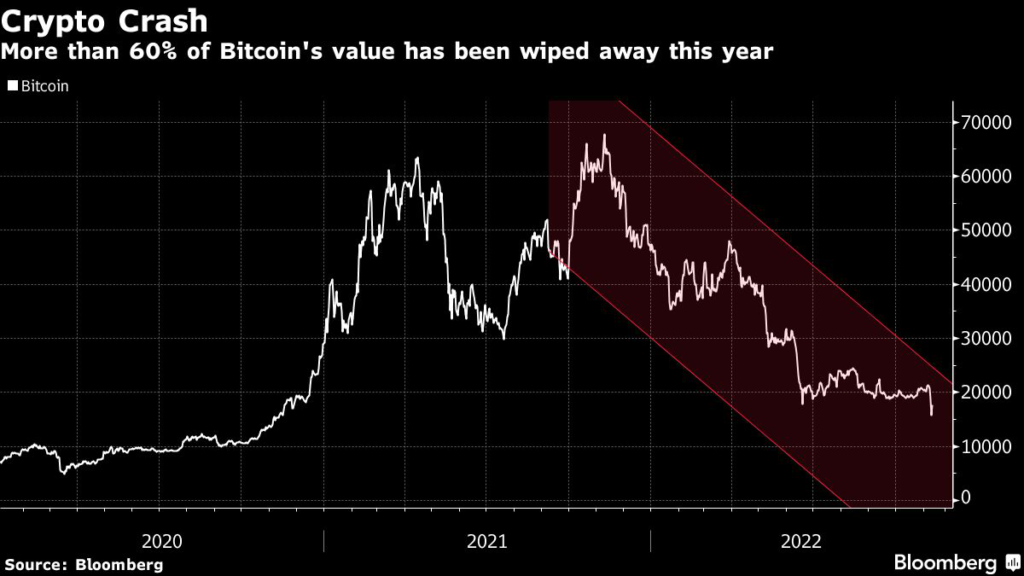
Just a year ago, crypto mania was at its height and Bitcoin had topped $67,000. In January, Bridgewater estimated that 5% of Bitcoin was held by institutional-level investors.

Frothy predictions were everywhere back then. JPMorgan Chase & Co. strategist Nikolaos Panigirtzoglou wrote Bitcoin could theoretically reach $146,000 in the long-term by crowding out gold. A survey by PWC from April found that 42% of crypto hedge funds were predicting Bitcoin to trade between $75,000 and $100,000 by the end of 2022. 

Now the views among investors are more restrained. Panigirtzoglou said in a report this week that Bitcoin could revisit the summer lows of $13,000. Bitcoin traded under $17,000 on Friday. 

“The argument in investing in crypto as diversification died some time ago,” he said in an interview. 

Bitcoin has crashed and recovered before. Some believers see hubris in the market is being flushed out, which will eventually put the industry on a path to maturity. FTX’s troubles may actually benefit established companies with a track record of risk management, like Nasdaq Stock Market and CBOE Global Markets Inc., wrote Mike Cyprys, an analyst at Morgan Stanley. 

However to Mark Dowding, the chief investment officer at BlueBay Asset Management, the case for Bitcoin becoming a version of digital gold is bogus. It’s only a matter of time until even more investors bail and crypto prices plunge again, he said. 

“It should have been clear that an industry that has been producing nothing, burning cash and offering alluring returns, was destined to fail,” he said.  

–With assistance from Eva Szalay and Anchalee Worrachate.

More stories like this are available on bloomberg.com

©2022 Bloomberg L.P.

Asean Latest: Biden Says Senate Win Gives Stronger Hand With Xi

(Bloomberg) — US President Joe Biden said he is “coming in stronger” to his first in-person meeting with Chinese leader Xi Jinping on Monday, buoyed by the better-than-expected results in the midterm elections. 

Biden crossed paths first with Chinese Premier Li Keqiang at the East Asia Summit on Sunday in Cambodia, a precursor to the meeting with Xi in Bali, Indonesia.

He will also hold discussions with several Asian leaders, including US allies South Korea and Japan. Biden pledged the US would cooperate with the Association of Southeast Asian Nations on shared challenges such as the South China Sea and escalating violence in Myanmar. 

Highlights:

  • Biden Says Senate Victory Gives Him ‘Stronger’ Hand With Xi
  • Biden Raises Concern With Cambodia Over China Ties to Naval Base
  • Biden to Tell Xi to Help With North Korea or Face More US Drills
  • China’s Li Says Nation to Boost Cooperation With Asean on Trade
  • China, Cambodia to Crack Down on Online Gambling, Telecom Scams
  • Indonesia Proposes Ban on Myanmar Junta Beyond Asean Summits

Here are the latest developments. All times Cambodia. 

Quad Already Sharing Data on Illegal Fishing with Southeast Asia (1:23 p.m.)

US along with Quad partners Australia, India and Japan are giving radio-frequency data and analysis from commercial satellite-clusters to an initial group of Southeast Asian partners that will improve monitoring of illegal fishing and help with rapid response to extreme weather events, the White House said.

In December a new radio frequency sensing satellite cluster will be launched and this will expand the program’s ability to rapidly collect and share information with Southeast Asia and the broader region, it said.

US, Quad Partners Announce Pact to Curb Illegal Fishing (2)

Australia, NZ and Asean Upgrade Free Trade Pact (11:43 a.m.)

Asean-Australia-New Zealand Free Trade Agreement upgrade negotiations have been substantially concluded, Australian Prime Minister Anthony Albanese said in a statement. 

The upgrade includes new chapters on micro, small and medium sized enterprise, trade and sustainable development, and enhanced provisions on electronic commerce, trade facilitation among others. The pact also offers more opportunities for cooperation on regional issues including the environment and climate change, Albanese said.

Biden Says ‘Coming in Stronger’ to Xi Meeting After Senate Win (10:48 a.m.)

Biden told reporters in Cambodia that he would be “coming in stronger’ to Monday’s meeting with China’s Xi Jinping after Democrats posted better-than-expected election results in the midterm elections, including retaining Senate control.

East Asia Summit Gets Underway in Cambodia (10:45 a.m.)

World leaders gathered under one roof on Sunday for the East Asia Summit in Phnom Penh, Cambodia as the region warned of worsening geopolitical pressures and the need to urgently address them. Expected to attend the summit were President Joe Biden, Russian Foreign Minister Sergei Lavrov, and Chinese Premier Li Keqiang.

Tensions have been hindering “efforts to promote sustainable development and causing greater hardship to people’s lives,” Cambodian Prime Minister Hun Sen said in his opening remarks as the rotating chair of the Association of Southeast Asian Nations.

Li Briefly Met With Albanese For First Time, Australian Media Report (9:30 a.m.)

China’s Premier Li Keqiang spoke briefly with Australian Prime Minister Anthony Albanese at Saturday’s gala dinner, Australian media reported.  Both leaders were sitting near each other at the head table.  

“It was the first time the PM had met Premier Li, they exchanged greetings, and they spoke briefly about the 50-year anniversary between our two countries,” the Australian Financial Review reported, citing Albanese’s office. 

AFR said it was Li who sought out Albanese for a conversation. Li was the one of the first Chinese leaders to congratulate Albanese on his election win in May and since then there has been a very gradual thaw in ties. 

China Says Global Coordination Needed to Avoid Recession (2:21 a.m.)

Chinese Premier Li Keqiang said countries should strengthen macroeconomic policy coordination to avoid a recession during a meeting with International Monetary Fund Managing Director Kristalina Georgieva, Xinhua reported. 

Such an effort would be conducive to maintaining world peace and stability, he said. 

Li said China is working hard to keep the operations of market entities stable, noting that China has more than 160 million such entities.

World Leaders Attend East Asia Summit Gala Dinner (7:30 p.m.)

The US President attended the gala dinner where world leaders were dressed in traditional Cambodian silk and tucked into local dishes. The leaders then settled into an evening of watching traditional and modern dances emphasizing peace and friendship. 

Biden Concerned Over Cambodia Naval Base With China Ties (7:25 p.m.)

Biden expressed concern to Cambodia’s leader about possible activities by China’s military at a naval base in the country, potentially exacerbating tensions around the South China Sea. 

Biden “raised concerns regarding the situation at Ream Naval Base and underscored the importance of full transparency about activities by the PRC military at Ream Naval Base,” the White House said in a statement. 

US, Asean Reinforce Ties with New Strategic Pact (7:17 p.m.)

US and Asean have formed a comprehensive strategic partnership in line with a push that Southeast Asian countries have been making to upgrade ties with some of the world’s biggest economies including India and China. 

This new partnership also has a focus on maritime cooperation through Asean-led mechanisms that aims to uphold freedom of navigation and overflight and peaceful resolution of disputes.

Asean Is Central to US Indo-Pacific Strategy, Biden Says  (5:30 p.m)

President Joe Biden pledged to work with Asean nations, saying the bloc is central to the U.S. strategy in the Indo-Pacific.

Biden, speaking at the start of a U.S.-ASEAN meeting in Cambodia, pledged cooperation on issues “from the South China Sea to Myanmar and to find innovative new solutions to shared challenges.”

In his brief speech, Biden at one point referred to host Cambodia as Colombia.

Europe to Push for ‘Concrete’ Chinese Pressure on Russia (5:20 p.m.)

European Council President Charles Michel said he plans to engage Chinese authorities over the war in Ukraine during the G-20 leaders summit and hopes they will exert “concrete” pressure on Russia over the war in Ukraine.

“It’s important to engage with China,” he told reporters on Saturday in Cambodia. China should “exercise a stronger influence on the Kremlin.” Michel said he has no plans to meet with Russian Foreign Minister Sergei Lavrov, who is also in Phnom Penh.

Biden Says Long Agenda to Get Through (4:39 p.m.)

US President Joe Biden said there was a long agenda to get through, ranging from the pandemic recovery to tackling rising energy prices. 

Ahead of a bilateral meeting with Cambodian Prime Minister Hun Sen, Biden said the US was committed to the return of democracy to Myanmar. He also thanked Hun Sen for Cambodia’s “clear” condemnation of Russia’s war in Ukraine. 

“We have a long agenda today, I know, and I’m anxious to get to it,” Biden told Hun Sen. 

Kishida Briefly Chats With Chinese Premier Li (4:30 p.m.)

Japanese Prime Minister Fumio Kishida told Premier Li Keqiang he wanted to build a stable and constructive relationship with China in the first face-to-face conversation in about three years, according to Kyodo News. 

Kishida’s conversation with Li lasted several minutes, according to Kyodo. Li also talked about the importance of bilateral ties, it said. 

Kishida will meet South Korean President Yoon Suk Yeol on Sunday, Kyodo reported, citing the Japanese government. 

Albanese Says G-20 Meeting With Xi Not Finalized (1:43 p.m.)

Australian Prime Minister Anthony Albanese said he was waiting to finalize a meeting with Chinese President Xi Jinping during the G-20 summit next week. “It’s a constructive thing if a meeting takes place,” he said, adding such arrangements at summits are usually last minute.

He also blasted Russia over the war in Ukraine and said he would not be seeking to meet with Foreign Minister Sergei Lavrov. “Certainly, yesterday’s revelations as well that some of the cyber-attacks in Australia have originated in Russia is a wake up call that Russia has a responsibility to stop criminal activity that’s having a real impact.”

Australia Names Ex-Macquarie CEO as Southeast Asia Envoy (1:33 p.m)

Albanese appointed former Macquarie CEO Nicholas Moore as the special envoy for Southeast Asia in a bid to deepen engagement with the region. 

Moore is the current Chair of the Financial Regulator Assessment Authority. He is also a member of the University of New South Wales’ Business School Advisory Council.

Ukraine Says Wanted to Meet with China’s Li at Asean (11:38 a.m.)

Ukraine Foreign Minister Dmytro Kuleba said he wanted to meet with Chinese Premier Li Keqiang at the sidelines of the Asean summit but plans had fallen through.

“We will be seeking for another occasion to speak,” Kuleba told reporters, adding that both countries were maintaining dialog “to make sure China uses its leverage on Russia to make them stop the war.”

Ukraine’s top diplomat said his Russian counterpart Sergei Lavrov did not ask for a meeting. “If he does we will thoroughly consider his request,” Kuleba said. But there is “not one indication Russia wants negotiations.”

US, China Tensions Undermine World’s Capacity for Challenges, UN Says (10:52 a.m.)

United Nations Secretary General Antonio Guterres said US and China live by two different sets of rules, currencies and strategies for technology that will “undermine the world’s capacity to respond to the dramatic challenges we face.”

Guterres said he is urging the Group of 20 to look at helping countries in the global south that have first been battered by the pandemic and are now struggling with higher food prices due to the war in Ukraine and crippling debt. “A stimulus package is needed to help governments in these developing countries that are struggling,” he told reporters in Cambodia. 

–With assistance from Matthew Burgess and Josh Wingrove.

More stories like this are available on bloomberg.com

©2022 Bloomberg L.P.
Exclusive Satellite Images Show Methane Cloud Near Pakistan Landfill

(Bloomberg) — Scientists say reducing emissions of methane, which has 84 times the warming power of carbon dioxide during its first two decades in the atmosphere, is one of the fastest and cheapest ways to cool the planet. Throughout COP27, Bloomberg Green will exclusively publish new satellite images of methane releases around the world, in collaboration with emissions monitoring firm GHGSat Inc.

Near Lahore, Pakistan, Nov. 10, 1:35 pm local time

The growth of South Asian megacities has spawned regional methane hotspots linked to landfills. GHGSat attributed the latest observation, outside of Lahore, to the waste sector and estimated the plume’s emissions rate at 1,403 kilograms per hour. 

The source of emissions in South Asia observed by satellite are different from major emitters such as the US or Russia, where the lion’s share of releases are linked to oil, gas and coal operations. Last year, more than half of all methane emissions measured globally from landfills by GHGSat were in Asia. 

Read more: The Trash Mountains of South Asia That Threaten the Climate

Piles of garbage generate the potent greenhouse gas when organic material such as food scraps break down in the absence of oxygen. Landfills and wastewater are responsible for about 20% of the methane emissions generated from human activity, and failing to curb releases from the sector could derail global climate goals.

The Pakistan Environmental Protection Agency didn’t immediately respond to an email sent outside normal business hours over the weekend. A spokesperson for the Ministry of Climate Change acknowledged a WhatsApp message seeking comment but did not immediately provide one. Diverting food scraps and other organics before they enter a landfill is crucial to limiting future emissions. The impact of legacy dumps can be mitigated through aerating piles of trash and gas capture systems.

Eastern Turkmenistan, Nov. 10, 2:21 pm local time

A large methane cloud has been observed in the Central Asian country of Turkmenistan, a global hotspot for the potent greenhouse gas. GHGSat attributed the plume to the nation’s oil and gas sector and estimated the emissions rate at about 8,501 kilograms per hour. 

Turkmenistan has the world’s fourth largest natural gas reserves and offers one of the biggest global opportunities to cut back on leaks of methane. Earlier this year, researchers identified 29 pieces of oil and gas equipment spewing enough methane each year to rival the annual emissions from all the cars in Alabama. The report found that the releases were mostly the result of poorly maintained or leaky equipment — and largely avoidable.

Read more: Asia’s Secretive Gas Dictatorship Hides a Climate Catastrophe

The country’s fossil fuel production is dominated by two state-owned companies, Turkmennebit and Turkmengaz. Neither company, nor its Ministry of Foreign Affairs, immediately responded to emails requesting comment outside of normal business hours over the weekend. 

Methane emissions are routinely observed in Turkmenistan’s western Caspian basin leaking from old Soviet infrastructure, and in the nation’s east, which is home to the large Galkynysh gas field, and where China National Petroleum Corp. has built new infrastructure to ship the fossil gas to the world’s most populous country.

Methane is the primary component of natural gas and responsible for about 30% of the Earth’s warming. Turkmenistan has so far declined to join the Global Methane Pledgee, a group of more than 120 countries that are aiming to cut releases of the gas 30% by the end of this decade from 2020 levels.

Quebec, Canada, Nov. 9, 1:36 pm local time

A cloud of methane was observed near a suburb of Montreal that GHGSat attributed to the waste sector. The satellite company estimated an emissions rate for the plume of 1,185 kilograms per hour. 

Environment and Climate Change Canada spokesperson Cecelia Parsons acknowledged a Bloomberg email asking if the agency was doing anything about the release and said she was looking into it. A spokesperson for Quebec’s ministry of environment also acknowledged a request for comment.

The release offers yet another disconnect between Canada’s climate ambitions and its emissions. Prime Minister Justin Trudeau has pitched the country as a global environmental leader but the nation’s methane and carbon dioxide releases have climbed more than any other G-7 country, relative to a 1990 baseline, according to European Commission data through early 2021.

Last month Bloomberg News reported on a methane plume near oil and gas production and pipelines that Canadian regulators said they were unaware of. Environment Minister  Steven Guilbeault has said the country is on track to cut methane emissions more than 40% by 2025, relative to a 2012 baseline. 

Read more: A Methane Cloud Highlights Cracks in Canada’s Climate Ambitions

Diverting food scraps and other organics before they enter a landfill is crucial to limiting future emissions. The impact of legacy dumps can be mitigated through aerating piles of trash and gas capture systems.

Pszczyna County, Poland, Nov. 8, 1:25 pm local time

Two distinct methane plumes were observed in southern Poland near the border with the Czech Republic by a GHGSat satellite on Nov. 8. The emissions monitoring firm attributed the concentrations of methane to the coal sector and estimated the combined rate for the two plumes at 3,410 kilograms per hour. 

Poland’s Ministry of Climate and Environment didn’t immediately respond to an emailed request for comment sent outside normal business hours. 

Methane can leak from coal mines when sedimentary rocks are crushed or coal seams are exposed. Miners often attempt to drain methane from coal seams before mining the fossil fuel to reduce the risk of explosions and fires. The sector is responsible for about 30% of the total emissions of the potent greenhouse gas coming from the energy sector. Halting intentional venting of methane and accidental leaks from coal mines and oil and gas infrastructure is viewed by scientists as some of the lowest hanging fruit in the fight against climate change.

Both plumes were near Poland’s KWK Pniówek coal mine, according to Global Energy Monitor, a San Francisco-based non-profit that catalogs global fossil fuel infrastructure. Vents for large underground mines can be several kilometers from where coal is coming is coming out of the ground. 

The KWK Pniówek mine was highlighted in a 2015 report from the U.S. Environmental Protection Agency as part of its Coalbed Methane Outreach Program that works with mines in the U.S. and internationally to encourage the economic use of coal mine methane that is otherwise vented to the atmosphere. 

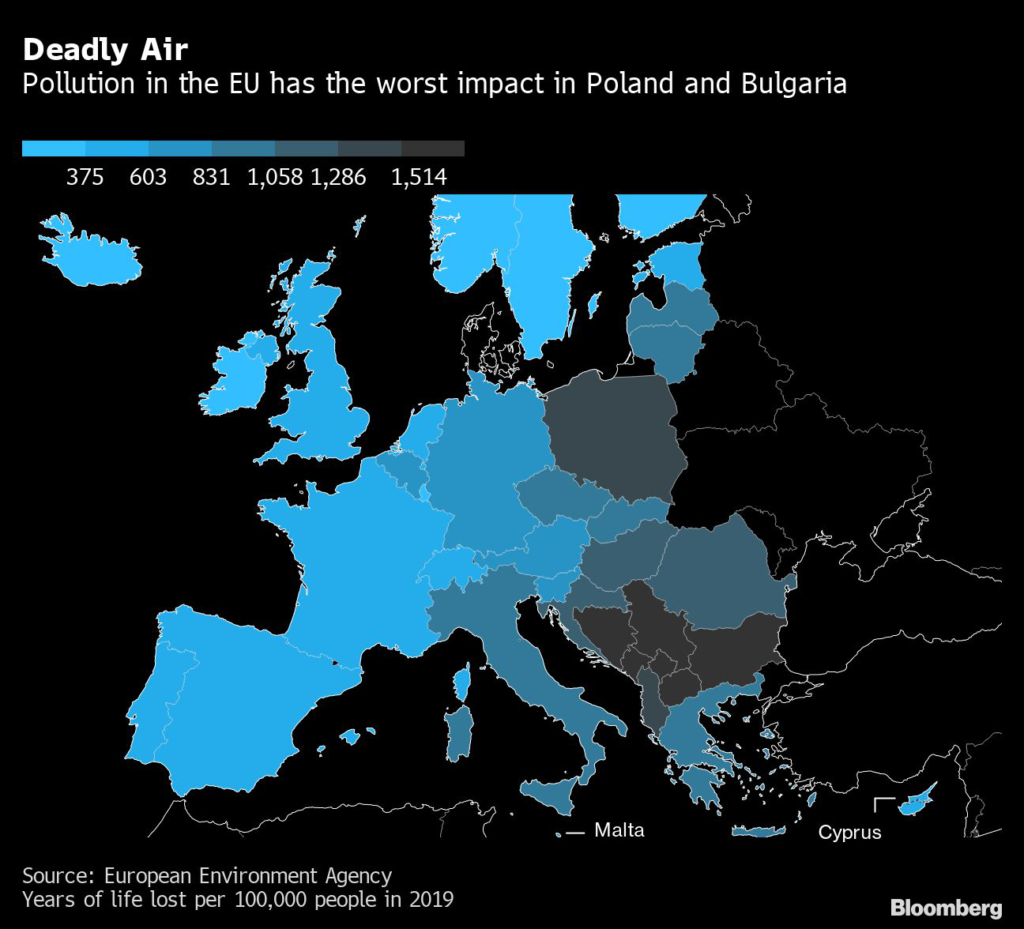
Poland remains heavily reliant on coal for home heating and the country is home to 40 of the 100 cities with the worst air quality in the European Union. The nation has one of the continent’s highest prevalence of premature deaths linked to contaminated air. 

Fars Province, Iran, Nov. 6, 9:25 am local time

A GHGSat satellite observed methane emissions near fossil fuel facilities Nov. 6 in a remote corner of Fars Province, in southern Iran. The emissions monitoring company attributed the plume to the oil and gas sector and estimated methane was spewing at a rate of 795 kilograms an hour at the time of the observation. 

Officials with the National Iranian Oil Co., the country’s government-owned oil and natural gas producer, didn’t immediately respond to an email sent outside normal business hours. 

The emissions occurred near the Arsanjan-Kheirgoo Gas Compressor Station. The site’s three compressors help ship as much as 110 million cubic meters of gas a day from the South Pars field 1,050 kilometers (650 miles) north to Tehran and were designed to increase transmission capacity during the winter heating season, according to a promotional video from the site’s operating subsidiary Sekafco.

National Iranian Oil spews more methane than any other global energy producer, according to a report by Global Energy Monitor. The non-profit group found that that just 30 fossil fuel companies account for nearly half of the sector’s emissions of the potent greenhouse gas.

Methane is the primary component of natural gas and responsible for about 30% of the Earth’s warming. Leaks can occur during extraction and transport of the fossil fuel.

The potent greenhouse gas, which has 84 times the warming power of carbon dioxide during its first two decades in the atmosphere, is also routinely generated as a byproduct of oil or coal production and if operators don’t have infrastructure to get the gas to market they may release it into the atmosphere. The International Energy Agency has called for oil and gas operators to halt all non-emergency methane venting. 

Near Kirtland, New Mexico, USA, Nov. 6, 1:48 pm local time

A GHGSat satellite observed methane emissions near a coal mine Nov. 6 in New Mexico that the emissions monitoring firm said was coming from a mine vent. The company estimated the release was spewing at a rate of 440.4 kilograms per hour. 

Operational coal mines often vent methane to reduce the risk of explosion. Closed or abandoned coal mines can leak methane for years if they aren’t properly sealed. 

GHGSat said they first detected emissions from the site through a demonstrator satellite in 2016. An official with the New Mexico Environment Department said Westmoreland Mining LLC is the operator of the facility near the plume. An official at Westmoreland didn’t immediately respond to a request for comment after normal business hours.Matthew Maez, a spokesperson for the New Mexico Environment Department said that fugitive emissions from coal mines are not subject to the department’s air quality rules.

Near Lucknow, India, Nov. 5, 1:28 pm local time

The satellite image was taken on Nov. 5 and shows a plume of methane that GHGSat attributed to a landfill in India. The estimated emissions rate was 1,328 kilograms per hour of methane. Landfills tend to be persistent emitters, according to the Montreal-based company. 

The detection highlights how waste is triggering some of the world’s strongest and most persistent methane emissions.

In India, more than 60% of waste is composed of organics that often originate from markets where vegetables, meat and poultry and other food are sold, according to the non-profit group Global Alliance for Incinerator Alternatives, known as GAIA. Prime Minister Narendra Modi’s Clean India campaign aims to spend 41.52 billion rupees ($519 million) to clean up legacy waste at landfills in more than 600 cities by 2026.

Near Daqing, China, Nov. 4 at 1:15pm local time

On Nov. 4 a satellite identified six methane releases in northeast China near the Daqing oilfield, according to GHGSat. Estimated emissions rates ranged between 446 and 884 kilograms per hour and the cumulative rate was 4,477 kilograms an hour. If the releases lasted for an hour at that rate they would have the same short-term climate impact as the annual emissions from about 81 US cars.

• Read more:  Countries Set to Bolster Global Methane Pledge at Climate Summit

The detections highlight the rapidly expanding ability of satellites to identify and track methane almost anywhere in the world that is driving a new era of climate transparency in which greenhouse gases will be quantified and attributed in near real-time to individual assets and companies.  

More companies and institutions are launching multi-spectral satellites that can detect methane’s unique signature. GHGSat has six satellites in orbit now dedicated to monitoring industrial methane and aims to launch another five by the end of next year. US non-profit Environmental Defense Fund plans to launch its MethaneSAT in 2023 and a consortium including Carbon Mapper, the state of California, NASA’s Jet Propulsion Laboratory and Planet Labs expects to launch two satellites next year. 

In 2021, concentrations of methane in the atmosphere had the biggest year-on-year jump since measurements began four  decades ago, according to the World Meteorological Organization. 


–With assistance from Golnar Motevalli.

(This story updates through Nov. 18 with new satellite images of methane releases around the world.)

More stories like this are available on bloomberg.com

©2022 Bloomberg L.P.
FTX’s Bankman-Fried Interviewed by Bahamas Police, Regulators

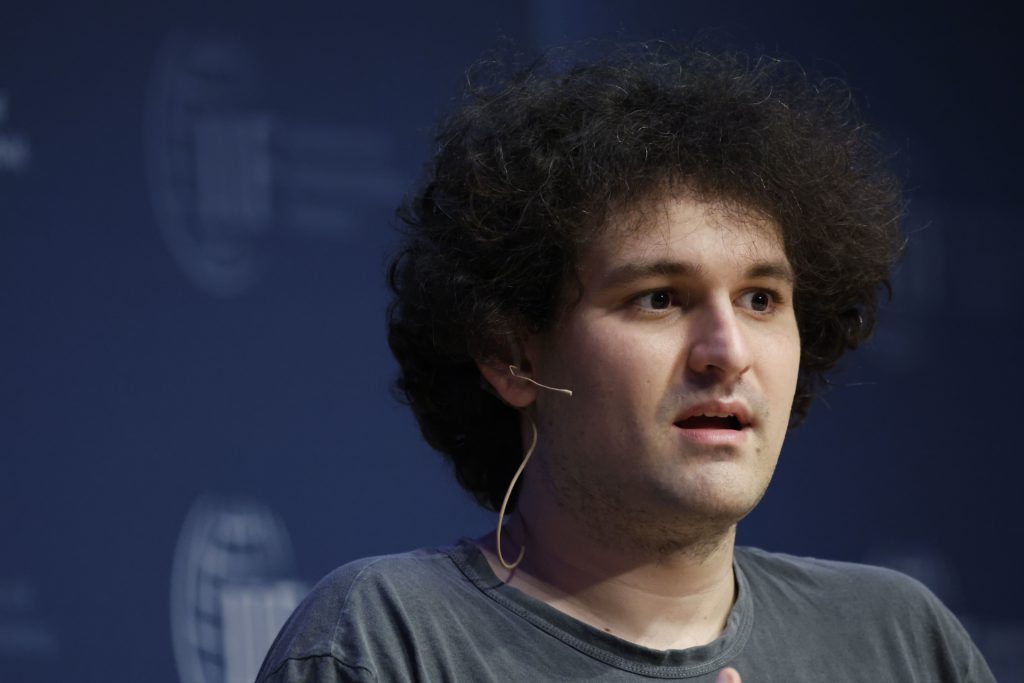
(Bloomberg) — FTX’s Sam Bankman-Fried was interviewed by Bahamian police and regulators on Saturday, according to a person familiar with the matter. 

Bankman-Fried didn’t immediately respond to a request for comment. In the Bahamas, law-enforcement inquiries don’t necessarily mean someone will be arrested or charged with a crime. 

Crisis quickly befell FTX this month after prices for the exchange’s native crypto token, FTT, plummeted and users raced to withdraw their assets.

The inquiries from Bahamian authorities add to the mounting legal pressure that Bankman-Fried is facing since his FTX empire crumbled over the past week. In the US, he is also dealing scrutiny from the Securities and Exchange Commission over whether he broke securities rules.

On Friday, more than 130 entities tied to FTX.com, FTX US and trading firm Alameda Research Ltd. were listed in bankruptcy filings at federal court in Delaware. Bankman-Fried resigned as chief executive officer of FTX Group as part of the filing.

–With assistance from Joanna Ossinger.

More stories like this are available on bloomberg.com

©2022 Bloomberg L.P.
Crypto Markets Take a Breather as FTX Heist Unfurls

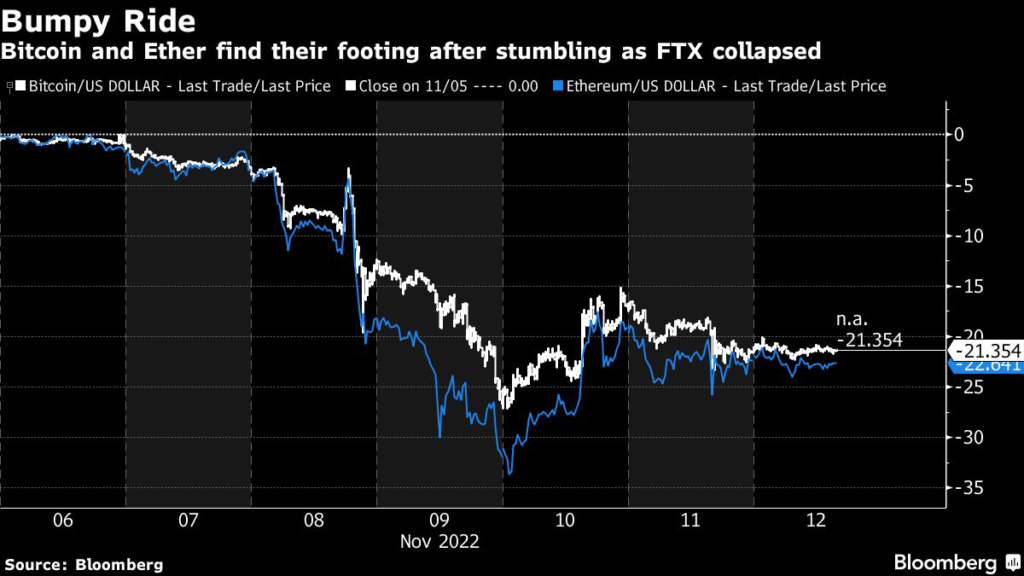
(Bloomberg) — Prices across cryptoassets were broadly flat on Saturday, as traders weighed their next move following a market selloff in the wake of failed crypto exchange FTX.com’s plunge into bankruptcy.

The two largest tokens by value, Bitcoin and Ether, were largely unchanged at 5 p.m. New York time at around $16,800 and $1,260, respectively, after steep declines during the week. One standout on the upside was Dogecoin, which jumped more than 10% after Tesla boss Elon Musk touted the coin on a Twitter Spaces conversation. 

Among losers, Solana and Serum — two coins tied to the Solana blockchain, which was backed by Bankman-Fried — sagged 5% and 9%, respectively, according to data compiled by Bloomberg and CoinMarketCap. The Financial Times reported Saturday that the biggest asset on FTX’s balance sheet just before it filed for bankruptcy was $2.2 billion worth of Serum, a token used on the decentralized derivatives exchange of the same name, which was co-founded by Bankman-Fried and runs on Solana.  

Notably, the crypto market’s convulsions have largely been contained within the digital-asset realm. Even Bitcoin has managed to hold up better than some analysts might have expected given the circumstances.

“Bitcoin’s price has been illogically stable in recent weeks given volatility in other markets,” said analysts at Morgan Stanley in a note on Friday. “We are in the midst of another deleveraging event in the crypto ecosystem and it is so far having limited spillover to broader equity markets beyond sentiment, as crypto institutions lent to each other.”

FTX, one of the industry’s largest crypto trading platforms, filed for bankruptcy on Friday after a week of rescue talks, token turmoil and the launch of several US investigations. The exchange appeared to suffer a heist in the early hours of Saturday, in which $473 million in tokens were stolen and others moved for safekeeping.

  • Read more: Bankrupt FTX Hit by Mysterious Outflow of About $662 Million (2)

Altcoin Solana, an ecosystem partly backed by FTX’s Sam Bankman-Fried, was down almost 3%, continuing its steady decline following his empire’s collapse. The token made up a significant amount of holdings by Bankman-Fried’s Alameda Research, according to Riyad Carey, a research analyst at Kaiko. 

Analysts at Morgan Stanley pointed to $12,500 as the next support level for Bitcoin, marking it as the token’s high in the third quarter of 2020. 

Stablecoins maintained their 1-to-1 values with the US dollar, despite a brief de-peg for Tether’s USDT on Thursday. Trading was halted for GeminiUSD, a stablecoin issued by crypto exchange Gemini, on Coinbase on Saturday morning following an outsize move that pushed its price as high as $1.68 on that exchange alone. A statement by Coinbase on its status page said teams were investigating the issue.

More stories like this are available on bloomberg.com

©2022 Bloomberg L.P.
Eight Things to Watch for as Global Leaders Meet in Bali

(Bloomberg) — Summits of Group of 20 nations invariably happen with at least one crisis burning, which shapes the discussions both in the meeting room and the one-on-one huddles in the hallways.

Leaders tend to gather around kindred spirits. Occasionally they gang up on one particular leader —  think Russia’s president in 2014 (after the annexation of Crimea) or the Saudi Crown Prince in 2018 (after the murder of critic Jamal Khashoggi).

This week’s summit on the tropical Indonesian resort island of Bali will be anything but breezy. In fact it could be the trickiest G-20 gathering to date. It comes against the backdrop of Russia’s war in Ukraine, plus increasingly confrontation between the US and China, and tensions over oil supply between the US and Saudi Arabia.

Here are eight things to watch as the meeting gets underway:

A Reduced Russian Presence

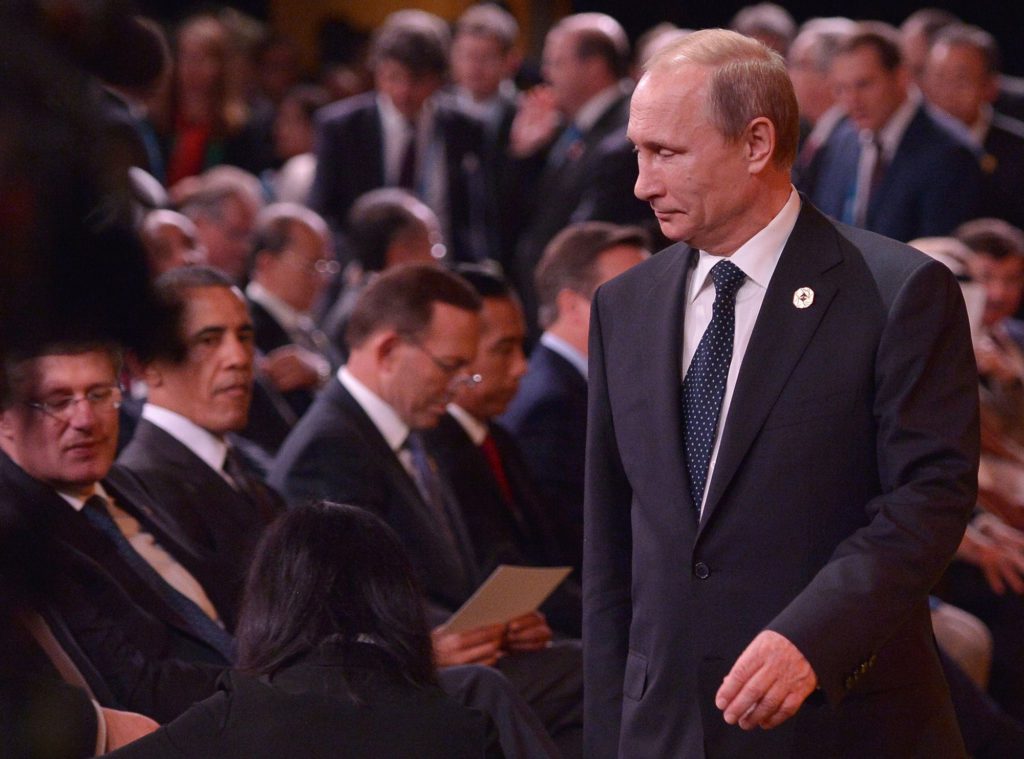
President Vladimir Putin is skipping the summit, which comes with his war in Ukraine in its ninth month. His troops are bogged down (and in places like Kherson in the south, they have withdrawn). His economy is under heavy sanction. US President Joe Biden is among the leaders who have said they would struggle to be in the same room with him.

Certainly he’d be unlikely to get even the tepid welcome he received in Australia in 2014 (where then-Canadian leader Stephen Harper told Putin he’d shake his hand but “you need to get out of Ukraine,” while host Tony Abbott had previously threatened to “shirtfront” the Russian president.)

Foreign Minister Sergei Lavrov gets to carry the can this time around. But it’ll be awkward whether Putin is there or not. Lavrov may join the leaders in some sessions. And does he take part in a traditional “family photo” or a gala dinner? 

Ahead of his trip to Bali, UK Prime Minister Rishi Sunak said the G-20 “will not be business as usual.” “We will call out Putin’s regime and lay bare their utter contempt for the kind of international cooperation respect for sovereignty forums like the G 20 represent,” he said.

Joe Biden Meets Xi Jinping

The presidents of the two biggest economies in the world are set to meet in Bali on Monday afternoon. It’s their first face-to-face chat since Biden took office. It comes shortly after Xi secured a third five-year term which saw him coalesce power within the Communist Party, and after Biden’s Democrats did better in in midterm congressional elections than predicted.


Tensions between the two countries are high — over trade policies, technology, market access, China’s actions on Taiwan and Hong Kong and the fact Xi has avoided direct condemnation of Putin for his February invasion of Ukraine.

Still, the importance of China and the US to each other as export markets has diminished somewhat in recent years, as tariffs, tensions and trade diversion to other countries have taken their toll on two-way trade. And they do have reason to reset some guardrails on the relationship, perhaps by focusing on common interests such as stemming climate change and preventing the use of nuclear weapons, particularly by Russia in Ukraine.

Ukraine Grain and a Russian Oil Price Cap

The July agreement to get Ukrainian grain moving again from the country’s ports was a breakthrough in helping poorer nations around the world cope with food shortages and put a lid on global inflation. It hit a hiccup last month when Putin briefly walked away from the agreement after an attack on his Black Sea Fleet, before being coaxed back by Turkey.

Either way the deal is up for renewal on Nov. 19, so the clock is ticking. Even if Putin balks at an extension, Ukraine, Turkey and the United Nations may opt to allow ships to keep coming and going. But shipping companies may decide the risks are too great, and the insurance costs too high.

Meanwhile Group of Seven leaders are still scrambling to finalize a planned cap on the price of Russian oil exports, needing to convince other countries to at least support a cap in principle in their price negotiations with Moscow.

Read more: One Missile Shook Ukraine’s Grain Trade. Another Might Kill It

Tensions Between Groups Within the G-20 

Putin’s war has exacerbated the divide between the leading economies that make up the G-7 — including the US, UK, Germany and France — and what is often called the “Global South,” — less developed nations with fewer tools to hand to counter food and energy shortages, the ravages of climate change and poverty.

That split will show up in full force in Bali. There’s a sense of resentment from some quarters at what they see as a lack of support from bigger states to counter these challenges. And about being pushed to fall into line on sanctions against Russia, or limits on purchases of its energy. It more broadly reflects an increasingly multipolar world where alliances are shifting around China as well as the US, and on a more regional basis around countries like Saudi Arabia.

The Deep Freeze Between Saudi Arabia and the US

Don’t expect to see Biden in a cozy corner chat with Saudi Arabia’s defacto leader, Crown Prince Mohammed Bin Salman. Their countries have been trading insults for weeks after Riyadh used its clout at OPEC+ to cut oil production. That’s despite Biden making a trip to the Kingdom in July in a bid to enlist Prince Mohammed’s help to temper oil prices at a time US gasoline prices were on the rise.

The White House accused Saudi Arabia of coercing other OPEC+ countries into agreeing to a huge cut in oil production. Some US lawmakers started making noises about curbing weapons sales to Saudi. For his part, the Crown Prince seemed unperturbed, and is sending a signal with reports that Xi will make a visit to Saudi next month.

Read more: Saudi Feud Leaves the US Asking If Relations Are Beyond Repair

A Clutch of First Timers

This summit will see some leaders making their G-20 debut. The meeting provides the chance to deepen relationships with others, but also can be riddled with pitfalls for someone navigating the complexities of the gathering for the first time.

The newbie list includes Australian Prime Minister Anthony Albanese and South Korean President Yoon Suk Yeol. Three G-7 countries have new representatives: Italian Prime Minister Giorgia Meloni, Sunak and German Chancellor Olaf Scholz. Although then-outgoing leader Angela Merkel invited Scholz to the last G-20 in Italy and included him in key meetings in a unusual and genteel handover process.

Brazilian President Jair Bolsonaro will likely be there as a lame duck, having recently lost a run-off vote to Luiz Inacio Lula da Silva.

Indonesia’s Logistical Tap Dance

The hosts will have their hands full just preventing the summit veering off course. There is the logistical nightmare of keeping some leaders who don’t want to see each other from accidentally meeting in a corridor. While Indonesia will want an end-meeting communique it’s hard to see how one can be agreed because Russia refuses to call its actions in Ukraine an invasion. Other summit traditions like a “family photo” of leaders are very much in doubt.

For Indonesia it’s about showing some progress, or at least statements of intent, on collective challenges like debt, food security and climate change. Yet the real business will be done in sideline meetings and late-night chats rather than in a big conference room. And perhaps the best Indonesia can hope for is that there are no massive dust-ups in public.

Read more: From Warships to Drones, Indonesia Boosts G-20 Security in Bali

The G-7 summit in Canada in June 2018 potentially represents a cautionary tale of how quickly things can go wrong. Leaders huddled late at night to hash out a communique in the face of vigorous objections by then-US President Donald Trump to the language on trade. An iconic photo showed leaders gathered around Trump, pressing him to sign off. Eventually he did — only to “unsign” hours later when he’d already left the summit, accusing host Justin Trudeau of being dishonest.

Outside Distractions

For Biden, the meeting risks being overshadowed by his old nemesis. Trump has been touting a “big announcement” this week — and the expectation is he’ll say he’s running for the Republican nomination for the 2024 presidential election.

If Trump does throw his hat into the ring, it’ll no doubt become the first thing any other leader asks Biden about, especially whether he will now commit himself to seeking re-election (Biden has talked about how he ran in 2020 in order to ward off a second Trump term).

Another person who might decide to intercede on Bali is North Korean leader Kim Jong Un, who has been letting off more missiles and has made preparations to potentially test an atomic device.

A North Korean nuclear event would immediately steal the spotlight with leaders from the US (foe), China (ally), Japan (foe), South Korea (foe) and Russia (ally) all in the one place.

–With assistance from Volodymyr Verbyany, James Mayger and Kitty Donaldson.

More stories like this are available on bloomberg.com

©2022 Bloomberg L.P.
Bankman-Fried: From Crypto King to King of Tech Bubble’s Losers

(Bloomberg) — Few could have anticipated the sudden collapse of Sam Bankman-Fried’s multibillion-dollar crypto empire.

Yet for all the twists, revelations and anguished Twitter threads, it’s a fall from grace with an unmistakable ring of familiarity.

A week that began with two crypto CEOs tweeting barbs ended with the bankruptcy of FTX, one of the largest and most prominent crypto exchanges, along with around 130 other companies that it owned. The business had been trying to cover a shortfall of as much as $8 billion, with the specifics of its failure — now subject to multiple investigations — yet to be revealed.

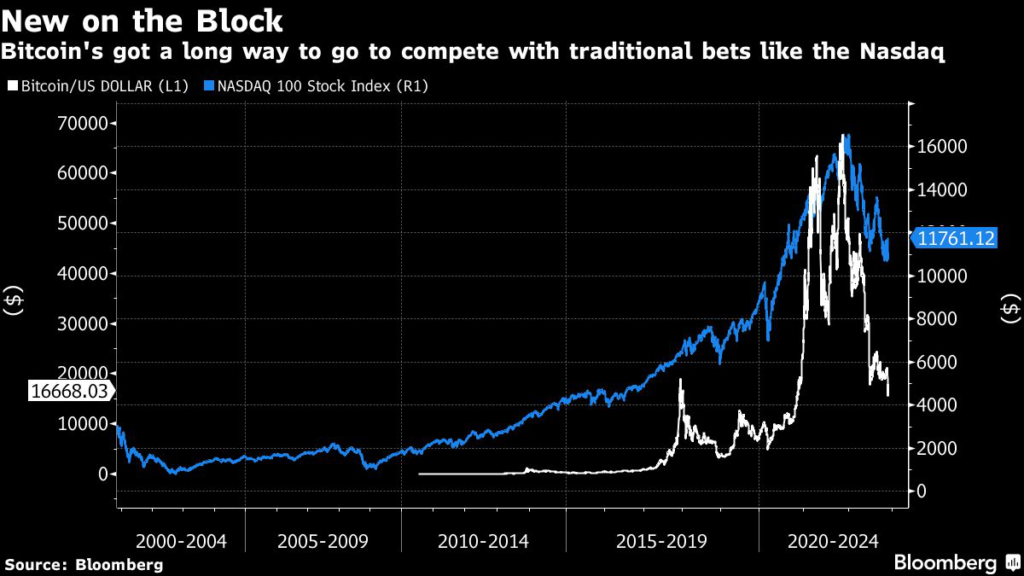
This much is clear: an intoxicating brew of easy money, wishful thinking and hyped innovation contributed to an implosion that while spectacular was also nothing new when considered next to scandals like Enron, WorldCom and Lehman Brothers before it. The particulars differ, but common to each were hubris, regulatory weakness and the realities of an economic cycle with plenty of precedent.

“We’ve had an industry that was really built primarily on FOMO and easy money, and now that governments around the world are raising interest rates and that restricts easy money, you’re just surviving on FOMO,” said Hilary Allen, a law professor at American University in Washington. “It’s not as appealing anymore.”

While blame is in no short supply, the arc of the FTX’s fortunes can also be seen as a garden-variety consequence of Federal Reserve policy. FTX, along with crypto itself and a host of other market gimmicks, from meme stocks to stay-at-home tech fads and special purpose acquisition companies, flourished as the Covid-19 pandemic spurred the Federal Reserve to cut interest rates to zero and leave them there for two years. 

Now, up against the Fed’s most aggressive tightening cycle in four decades, shaky empires are evaporating as fast as the liquidity that propped them up. FTX’s demise is a calamity, to be sure, unique in many respects, in which billions of dollars in paper wealth and trading profits are likely to be torched. But the failure of FTX is far less extraordinary when considered next to 11 months of wreckage in technology stocks and centuries of asset-bubble history.

FTX’s scandal has notable parallels with what befell Enron. Both were led by messianic figures in Bankman-Fried and Jeff Skilling who dazzled faithful with feats of technical wizardry. Both bathed in near-universal adoration from the press and the financial establishment. Both also seem to have made basic financial mistakes in trying to keep the party going. The crypto empire reportedly allowed its balance sheet to rest precariously on a token tied to its own fortunes, hearkening to Enron’s use of its own stock to prop up its financing structures.

In the end, a doomed hope that rising markets would hide mismanagement or outright fraud became the epitaph of a once-flourishing enterprise. When Bankman-Fried stepped down from his position as CEO of FTX.com Friday, his replacement was John J. Ray III — the former chairman and president of Enron left to pick up the pieces of its bust in the early 2000s. 

The boom-overbuild-bust cycle looks familiar to Bokeh Capital Partners Chief Investment Officer Kim Forrest. It’s happening in the whole economy at the moment, but the tech industry is the posterchild, she said. Where is crypto in that metaphor? “Ground zero.”

“I was a software engineer in the late 90s, I saw the excesses, ‘wow they’re hiring way too many people,’” Forrest said. “These companies had not been productive in hiring too much, not getting enough output and not showing the return of capital.”

For its own part, FTX had raised around $4 billion in funding across its network of affiliated companies, which included Alameda Research, a trading house co-founded by Bankman-Fried, FTX Ventures and a separate exchange for American investors. 

While more spectacular, FTX’s collapse shares storylines with much that has gone amiss in markets and the technology space in the pandemic era. Besides its obvious resemblance to fellow crypto casualties Three Arrows Capital, the Terra ecosystem and Celsius Network, its demise was fueled by complacency and belief in its own genius that bears hallmarks of the crises afflicting Meta Inc. and Twitter Inc. at present. 

As far as bubbles go, few were as enthusiastically foretold as this one. Along with meme stocks, the crypto craze has been ridiculed by securities industry veterans almost since the moment it began, with the pitch of the critique growing along with the price of Bitcoin in 2020. Charlie Munger once said he admired the Chinese for banning it, while Black Swan author Nassim Nicholas Taleb likened Bitcoin to a “tumor.”

They came off as cranks then. Now those predictions are coming true as the Fed tightens the screws. Meme stocks are little more than a sideshow, save for the occasional pop in the likes of AMC Entertainment Holdings and GameStop Corp. Highly speculative growth shares have crumbled, dragging Cathie Wood’s Ark Innovation exchange-traded fund — one of the highest-fliers of the pandemic era — to its lowest level since 2020.

A bull market masks a lot of sins, only to be laid bare by a turn of the cycle. History is littered with such examples, perhaps none more famous than the demise of Bernard Madoff’s massive Ponzi scheme, which hummed along for at least 15 years before plunging equity markets in 2008 led clients to seek more withdrawals than he could accommodate.

“You need to have a degree of volatility in financial markets because that will prevent overlevering and taking advantage of the system,” said Michael O’Rourke, chief market strategist at Jonestrading. “Madoff was only exposed because of the global financial crisis.”

Even with regulation seemingly on the horizon for the crypto industry, the off-shore location of many crypto firms (FTX included) has left authorities like the Securities and Exchange Commission with their hands tied. Hester M. Peirce, an SEC Commissioner, said that questions around lack of jurisdictional clarity are “partly our fault” given investors and businesses had asked the watchdog “time and time again to provide more clarity about where our jurisdiction lies and we’ve not done so.”

As a result, the financial playground that is crypto has been allowed to flourish with limited oversight. “There isn’t a holistic digital asset regime that is accepted globally, and that that creates massive opportunities,” said Jay Wilson, investment director at London-based venture capital firm AlbionVC.

The cost is clear to Bokeh’s Forrest: this will happen again. The players and details will be different, she said, but human psychology will be the same.

“People don’t change. People just don’t change,” Forrest said. “As much as we’d like to think we learn from the past — we may learn not to invest in WorldCom, but we don’t know to not look for another one.”

More stories like this are available on bloomberg.com

©2022 Bloomberg L.P.

Kraken to Assist In Probing FTX Unauthorized Crypto Withdrawals

(Bloomberg) —

Bankrupt digital-asset exchange FTX.com is launching an investigation with law enforcement into a series of unauthorized withdrawals that hit some of its crypto wallets on Saturday, an executive said.

Ryne Miller, general counsel for FTX’s US exchange, tweeted a statement attributed to the firm’s new chief executive John J. Ray that once the unauthorized withdrawals were spotted, “an active fact review and mitigation exercise was initiated immediately in response.” 

“We have been in contact with, and are coordinating with law enforcement and relevant regulators,” he added.

Rival crypto exchange Kraken said it will assist in the investigation. The perpetrator of the withdrawals moved some funds from a Kraken account to a wallet holding some of the stolen tokens on Saturday, blockchain security firm Hacken.io said, citing transaction data. Kraken was then able to identify the attacker by checking its platform for data on the original address, its chief security officer Nick Percoco said in a tweet.

FTX had begun moving some of its assets to offline wallets following its bankruptcy filing on Friday, Miller said previously in a tweet. It later expedited those moves “to mitigate damage upon observing unauthorized transactions,” he added. Miller reached out to Percoco over Twitter to ask if the two could work together.

“We can confirm our team is aware of the identity of the account associated with the ongoing FTX hack, and we are committed to working with law enforcement to ensure they have everything they need to sufficiently investigate this matter,” a Kraken spokesperson said in a text to Bloomberg News.

  • Bankrupt FTX Hit by Mysterious Outflow of About $662 Million (2)

The attacker was “rapidly converting” some of the stablecoins and tokens gained from the heist into Ether, blockchain analytics firm Elliptic said earlier on Saturday, using decentralized exchanges. It valued the pile of stolen assets at more than $400 million.

(Updates headline and first three paragraphs with information on FTX’s investigation)

More stories like this are available on bloomberg.com

©2022 Bloomberg L.P.

Close Bitnami banner
Bitnami
