

Bloomberg

Bankman-Fried Resigns From FTX, Puts Empire in Bankruptcy

(Bloomberg) — Sam Bankman-Fried’s digital-asset empire filed for Chapter 11 bankruptcy, capping the downfall of one of crypto’s wealthiest and most influential moguls and his collection of high-flying ventures including exchanges and a massive trading operation. 

More than 130 entities tied to FTX.com, FTX US and trading firm Alameda Research Ltd. were listed in filings at federal court in Delaware, with the Alameda petition listing assets and liabilities of at least $10 billion each. That easily makes it the biggest bankruptcy in the US this year, affecting investors and other counterparties around the world.

Though Chapter 11 lets companies continue operating while they work out a plan to repay creditors, FTX’s filing on Friday morning — a 23-page form checking boxes — offered no hint of reorganization plans.

Bankman-Fried resigned as chief executive officer of FTX Group as part of the filing, and John J. Ray III was appointed to replace him, according to a Twitter statement. Ray, a turnaround and restructuring expert, previously served senior roles in bankruptcies including Enron Corp.’s. The initial filings offered no explanation for the firm’s downfall.

“It’s such an unfortunate, stunning and shocking moment for the industry,” Owen Lau, analyst at Oppenheimer & Co. said by phone. “There will be a lot of angry investors, angry customers and angry regulators around the world.”

Even in a global cryptocurrency landscape that’s seen numerous firms rise and fall, FTX’s bankruptcy stands out. 

Not only did it operate one of the world’s largest exchanges for digital assets, it was rapidly on its way to mainstream recognition, establishing Bankman-Fried as a statesman for his industry who could speak easily with US lawmakers and regulators about shaping its future. By the time the market peaked in 2021, FTX had earned the trust of more than 5 million users worldwide, trading more than $700 billion worth of crypto that year alone.

A court will now weigh in on how to handle the interests of customers, creditors and business partners seeking to be made whole.

Arena Deal

Bankman-Fried, an avid supporter of Democrats, also made pledges to help others, promising that one day he’d give all of his wealth away to charity and political causes. The company’s name was ubiquitous across professional sports, including Formula 1 racing, soccer, baseball and basketball, even adorning the home arena of the National Basketball Association’s Miami Heat. That arena deal was supposed to last 19 years. 

Crisis quickly befell FTX this month after prices for the exchange’s native crypto token, FTT, plummeted and users raced to withdraw their assets. Rival crypto exchange leader Changpeng “CZ” Zhao had earlier said he would sell some $529 million of coins due to “recent revelations that came to light,” appearing to allude to a CoinDesk report that raised questions about Alameda’s financial health. 

Crypto assets dropped on the news, with Bitcoin slumping as much as 8% before regaining some ground. Ether and smaller tokens also declined. Solana, which was backed by Alameda, tumbled 10%. FTX’s implosion came almost exactly one year after Bitcoin peaked at around $69,000. BlockFi, a troubled crypto lender that received emergency financing from FTX US earlier this year, on Thursday said it will pause client withdrawals citing “a lack of clarity” over the status of Bankman-Fried’s empire. 

Zhao’s Binance Holdings tentatively agreed on Tuesday to buy FTX.com amid the exchange’s liquidity crunch, but backed out of the deal following a short period of due diligence. Bankman-Fried then pivoted to hold talks for last-ditch financing, including with fellow crypto entrepreneur Justin Sun.

Now US authorities are investigating Bankman-Fried as well as FTX. His wealth, which stood at around $16 billion at the start of the week, has vanished along with the reputation of a crypto wunderkind who just recently was regarded as a savior of swathes of the industry.

By Thursday, someone had removed the small-lettered signage on the Miami office door of FTX US, a domestic exchange that operates separately. On Twitter that day, Bankman-Fried reassured customers that FTX US was “100% liquid” and “not financially impacted” by FTX International’s problems. 

But inside those offices it was sparse. FTX caps sat on a bookshelf, and scattered employees in hoodies watched large computer screens. 

A “How are you holding up?” overheard in a hallway was met with a shrug of shoulders.

The case is FTX Trading Ltd., 22-11068, U.S. Bankruptcy Court for the District of Delaware. For crypto market prices: CRYP; for top crypto news: TOP CRYPTO.

–With assistance from Felipe Marques and Beth Williams.

(Updates with description of initial filings, additional analyst comment and background from third paragraph.)

More stories like this are available on bloomberg.com

©2022 Bloomberg L.P.
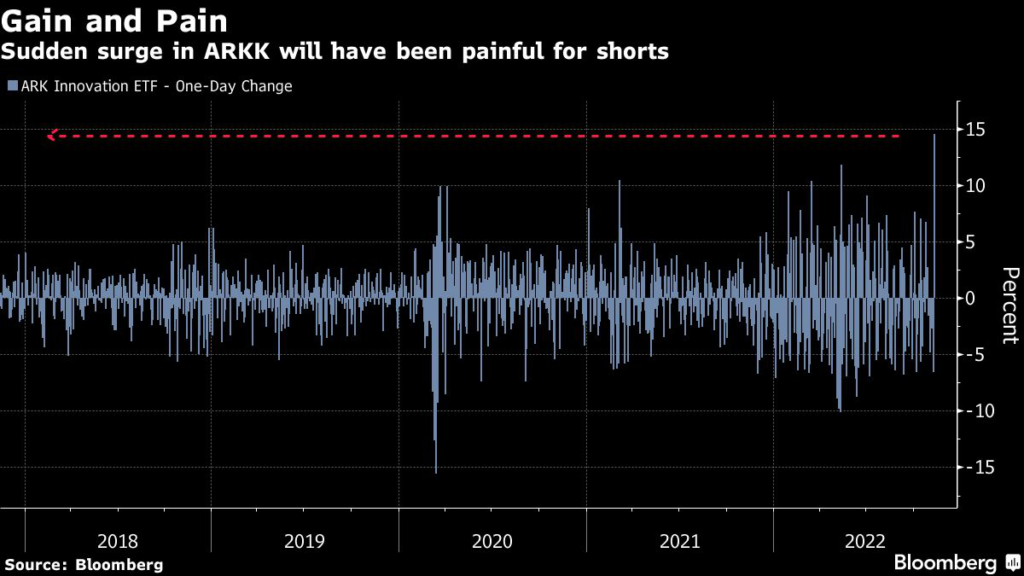
ARK Short Sellers Suffer $180 Million One-Day Hit as Fund Surges

(Bloomberg) — Stock bears have made a mint betting against Cathie Wood this year. On Thursday, they gave a chunk of money back.

Traders short selling the funds of ARK Investment Management — Wood’s firm — saw about $180 million wiped off the value of their positions as the firm’s entire lineup of funds rallied, according to technology and data analytics firm S3 Partners.

The flagship strategy, the ARK Innovation ETF (ticker ARKK), surged 15% for its best day on record amid a broad market rally sparked by slower-than-expected US inflation data. That’s raising hopes that the Federal Reserve may ease back from the aggressive monetary tightening that has hammered the speculative tech bets beloved by ARK. 

On paper, the ARKK move alone cost short sellers about $137 million, S3 said.

The good news for ARK short sellers is they seem well-positioned to absorb the loss. Even after Thursday’s hit, bets against ARK overall this year have earned about $2.4 billion in mark-to-market profits, according to S3, mostly from ARKK. Meanwhile, as the main fund has slumped, short interest as a percentage of shares outstanding has dropped to about 15% from more than 22% earlier this year. 

Since mid-September alone, short sellers’ notional exposure is down by an estimated $502 million, or about 32%, according to Matthew Unterman, a director at S3. 

“This implies bears have been taking profits opposed to reloading on the winning trade,” he said. “A potential sign of falling conviction.”

Read more: ARK Short Sellers Make $999 Million to Eclipse All Gains in 2021

Despite Thursday’s ARKK price jump, the ETF is still down about 75% from its record close of $156.58 in February last year. It ended the day at $37.30.

The fund was up about 4.8% as of 12:10 p.m. in New York on Friday.

More stories like this are available on bloomberg.com

©2022 Bloomberg L.P.
Twitter Auditors Missed Security Lapses Whistleblower Later Called ‘Egregious’

(Bloomberg) — A previously undisclosed government-ordered audit of Twitter Inc.’s privacy and data controls missed failures later exposed by a whistleblower — raising questions about oversight of major technology platforms.

The 2021 external audit, obtained by Bloomberg News in response to a public records request, concluded that the company had appropriate safeguards. Months later, the company’s cybersecurity chief had left and alleged that Twitter’s practices were marred by “egregious deficiencies.”

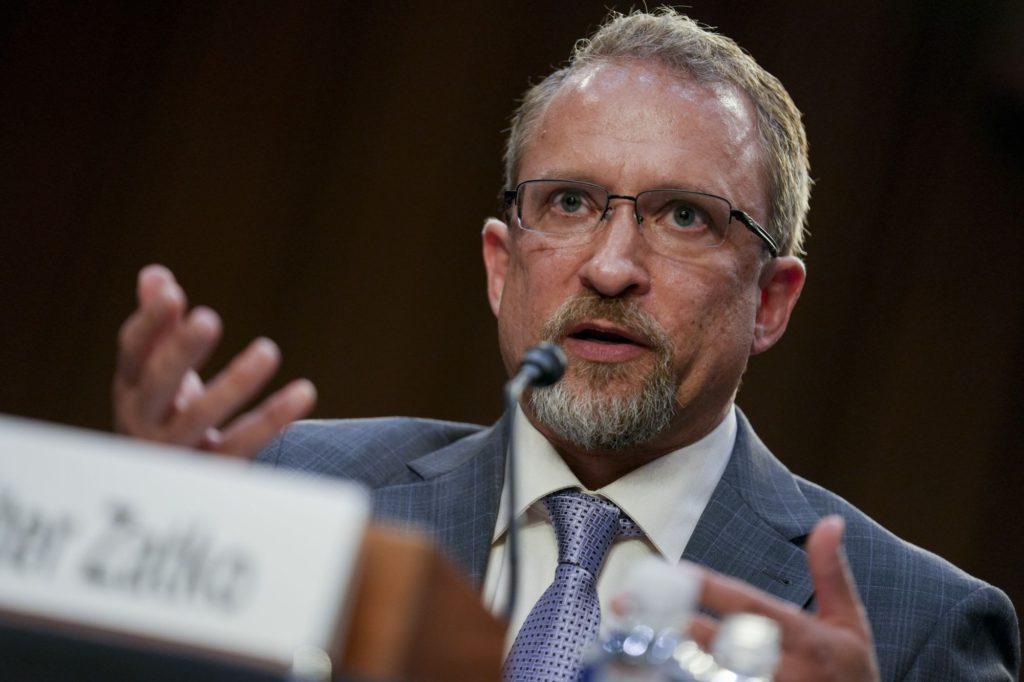
Ernst & Young LLP certified that Twitter’s information security program was appropriate for the company’s size and that its “security controls meet or exceed the protections required” by the US Federal Trade Commission under a 2011 consent decree. The whistleblower, Twitter’s ex-head of cybersecurity, Peiter Zatko, filed a complaint and testified before Congress earlier this year saying that the company was a “ticking bomb of security vulnerabilities.”

It’s not the first time that an FTC-ordered audit has neglected to uncover security weaknesses. FTC-ordered audits of Meta Platforms Inc.’s Facebook in 2015 and 2017 failed to identify the problems with the social media company that led to the Cambridge Analytica data breach. Uber Technologies Inc. and Alphabet Inc.’s Google are also subject to FTC orders.

Twitter’s practices are in the spotlight again amid an exodus of its security team and the FTC expressing concern about the company under new owner Elon Musk, who has fired thousands of employees and introduced new products and policies at a breakneck pace. Three of the company’s top privacy and security officials resigned this week.

Ernst & Young declined to comment on the audits, citing client confidentiality. Twitter didn’t respond to requests for comment for this story. It previously denied Zatko’s allegations, saying they are are “riddled with inconsistencies and inaccuracies,” and that access to data is controlled by monitoring systems and background checks.

Even though Musk took the company private last month, Twitter is still subject to FTC oversight under the consent order through at least 2042, meaning that any changes to the company’s privacy and data policies and new product offerings are subject to scrutiny by the agency. 

The FTC said in a statement Thursday that it’s tracking recent developments at Twitter with “deep concern.”

“No CEO or company is above the law, and companies must follow our consent decrees,” FTC spokesperson Douglas Farrar said. “Our revised consent order gives us new tools to ensure compliance, and we are prepared to use them.”

The FTC has been scrutinizing Twitter’s privacy and data-security compliance for more than a decade, requiring it to submit to independent audits every other year. The 2011 consent order resolved allegations that Twitter had failed to adequately protect user data in a 2009 hack of the social media platform that allowed intruders to send out phony messages from any user account. 

Twitter in May paid a $150 million penalty for violating the order by misusing email addresses provided for security purposes. The agency said Twitter used the emails for targeted advertising from 2013 to 2019.

Known by his hacker name “Mudge,” Zatko joined Twitter in late 2020 at the behest of former Chief Executive Officer Jack Dorsey to help address security concerns. He was fired in January 2022 over what the company said were performance shortcomings. 

In Senate testimony in September, Zatko criticized the FTC’s oversight of Twitter, comparing it to “letting companies grade their own homework.”

“The FTC is a little over their head,” Zatko told senators. “Foreign regulators were much more feared than the FTC.” He said the security lapses were so grave that they threatened national security and were dangerous for users.

Recent Actions

The agency, in a statement to Bloomberg News, said: “It’s clear from recent enforcement actions that the FTC is not afraid to take companies and their executives to court to protect the public and vindicate our orders.”

Much of the 2021 audit, which covers the period from Sept. 13, 2019 to Sept. 12, 2021 is redacted. A representative for Zatko said he couldn’t comment on whether he was among those interviewed as part of the audit because he is legally barred from discussing his whistleblower complaint except with Congress or other federal agencies that received it. 

–With assistance from Kurt Wagner.

More stories like this are available on bloomberg.com

©2022 Bloomberg L.P.
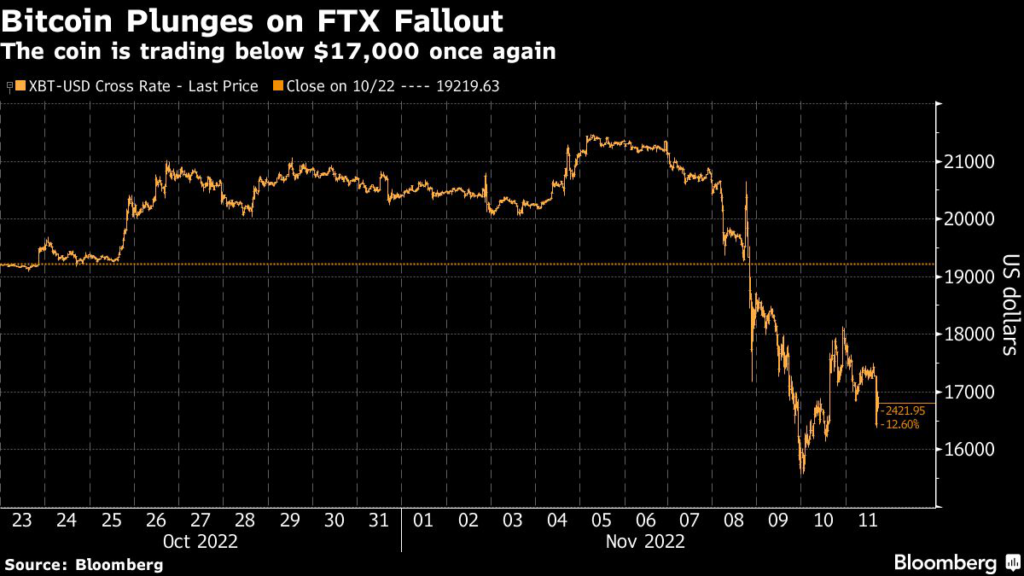
Crypto Markets Buckle as FTX Bankruptcy Spurs Search for Casualties

(Bloomberg) — The bankruptcy of FTX.com sent crypto markets reeling to two-year lows with investors braced for details on collateral damage from the failure of an institution whose influence pervaded the industry.

Bitcoin, the largest coin by market value, fell more than 8% at one point Friday to trade at $16,375. It dropped to around $15,500 earlier in the week. Other cryptocurrencies also plunged, and FTX’s token FTT suffered a 50% slide at its worst. The filing raised the prospect that billions of dollars in customer deposits will be subject to a drawn-out courtroom battle of uncertain resolution.

Losses for shares for cryptocurrency-exposed companies also deepened, with Riot Blockchain Inc. down 3%, MicroStrategy Inc. off by 3% and Marathon Digital Holdings Inc. lower by about 6% around noon in New York. 

“It’s going to put a major, major dent in investor trust,” said Emily Roland, co-chief investment strategist for John Hancock Investment Management, in an interview with Bloomberg TV. “We are probably going to see more writedowns here. It’s a really, really challenging backdrop.”

The failure of Sam Bankman-Fried’s crypto empire — a week ago arguably the industry’s highest-profile and best-respected company — is shaking the foundations of the cryptosphere. Urgent questions include which firms are exposed to FTX and its sibling company Alameda Trading, either through loans, investments, deposits or other entanglements.

FTX’s Chapter 11 filing said that approximately 130 affiliated companies have commenced voluntary proceedings. But the crisis has ensnared many others outside its immediate circle such as lender BlockFi, a troubled digital-asset lender once worth $3 billion but which has now limited activity on its platform. The company paused client withdrawals late Thursday, citing “a lack of clarity” over the status of FTX US as well as the uncertainty afflicting FTX.com and sister trading house Alameda Research.

“I don’t think it’s over yet. Clearly this overhang from crypto is not constructive,” Morgan Stanley’s Mike Wilson said on Bloomberg TV on Friday.

FTX and its subsidiaries had for a while been thought of as the cream of the crop in crypto. Retail investors and institutions alike used the platform. It had been Bankman-Fried, after all, who had stepped in to help over the summer when others were imploding. Before all this, he had been compared to John Pierpont Morgan. He hung out with Tom Brady and Gisele Bündchen. His company ran ads during the Super Bowl and had bought naming rights to the arena where the Miami Heat basketball team plays. But now, faith in him has crumbled, with a whole industry now demanding answers to what happened. 

“You’re seeing this wealth destruction,” said Peter Tchir, head of macro strategy at Academy Securities. “It’s affecting all the direct investors and, two, it’s really affecting people who are involved in the space completely. You really do have to call into question where you’re holding your money, how transparent they are, where they’re domiciled.” 

Trading firm Genesis is getting a $140 million equity infusion from its parent company Digital Currency Group, after it disclosed its derivatives business has $175 million in funds locked in a FTX trading account. And Anthony Scaramucci said his firm SkyBridge Capital is trying to repurchase the 30% of his company that FTX acquired months before the crypto exchange imploded.

Meanwhile, Sequoia Capital wrote down the full value of its $214 million investment in FTX, and debacle has also ensnared some of the biggest names in finance. Tiger Global Management, Third Point and Altimeter Capital Management are among hedge funds that recently participated in funding rounds for the once-high-flying crypto exchange. 

The full extent of the fallout will take weeks, if not months, to unfold. Hordes of retail investors who had money on the platform have also been affected. FTX had its assets frozen in the Bahamas, where the crypto exchange is based. The bankruptcy filing, at the very least, means that its creditors will soon be revealed. 

“The collapse and bankruptcy of FTX is a watershed moment for the crypto industry,” said Craig Johnson, chief market technician at Piper Sandler. “The failure of FTX will led to more rules and regulations around the world. These new rules will ultimately be a positive catalyst for Crypto adoption and bring some badly needed adult supervision to the industry.”

–With assistance from Isabelle Lee and Hannah Miller.

More stories like this are available on bloomberg.com

©2022 Bloomberg L.P.

ASML Shrugs Off China Chip Curbs With Demand Strong Elsewhere

(Bloomberg) — ASML Holding NV, awash in demand as countries race to build chip plants to prevent future supply issues, sees little impact from possible geopolitical disruptions in the Chinese semiconductor market.

In the unlikely event that “China would absolutely be excluded from any growth,” there’s still enough demand elsewhere, Chief Executive Officer Peter Wennink said Friday during the chip-equipment manufacturer’s Investor Day presentation. “There could be a temporary hiccup but ultimately, those chips need to be made.”

Wennink said that any curbs on China wouldn’t significantly change the company’s 2030 outlook.

Propelled by surging global demand for chips, the Dutch manufacturer announced Thursday that it targets sales of as much as €40 billion ($41 billion) by 2025 and as much as €60 billion by 2030. ASML is one of the very few producers of the sophisticated lithography machines needed to make midgrade semiconductors, and the manufacturer of an one-of-a-kind equipment needed to make the most cutting-edge chips. 

In early October, Washington unveiled sweeping regulations to curb the sales of advanced semiconductors and chipmaking equipment to China, sending shockwaves through the $550 billion industry. For now, ASML and other non-US chip production equipment companies face fewer hurdles in doing business in China. 

ASML hasn’t been able to sell its most advanced extreme ultraviolet lithography machines to China as the Dutch government refused to give it a license to do so, but the company has been able to sell its other machinery to the country. The Dutch company sees the total indirect impact from the new US measures to be about 5% of its backlog, it said on a call with investors in October. 

Meanwhile, major governments around the world have come up with subsidies and incentives to expand chip production capacities at home to avoid another round of semiconductor shortages that shaved off hundreds of billions from their economies during the pandemic. 

Even though the global chip industry is now facing a severe downturn, countries including the US and Japan have not slowed their pace in readying new plants to prepare for the next boom cycle. Taiwan Semiconductor Manufacturing Co. is even considering adding another advanced facility next to a $12 billion dollar plant that’s under construction in the US state of Arizona. 

Efforts by governments to build chip plants at home have just started and will accelerate, Wennink said Friday. “The drive for technological sovereignty is going to be very important driver for our business going forward.”

More stories like this are available on bloomberg.com

©2022 Bloomberg L.P.
Twitter’s Hectic Overhaul Puts World’s Regulators on Alert

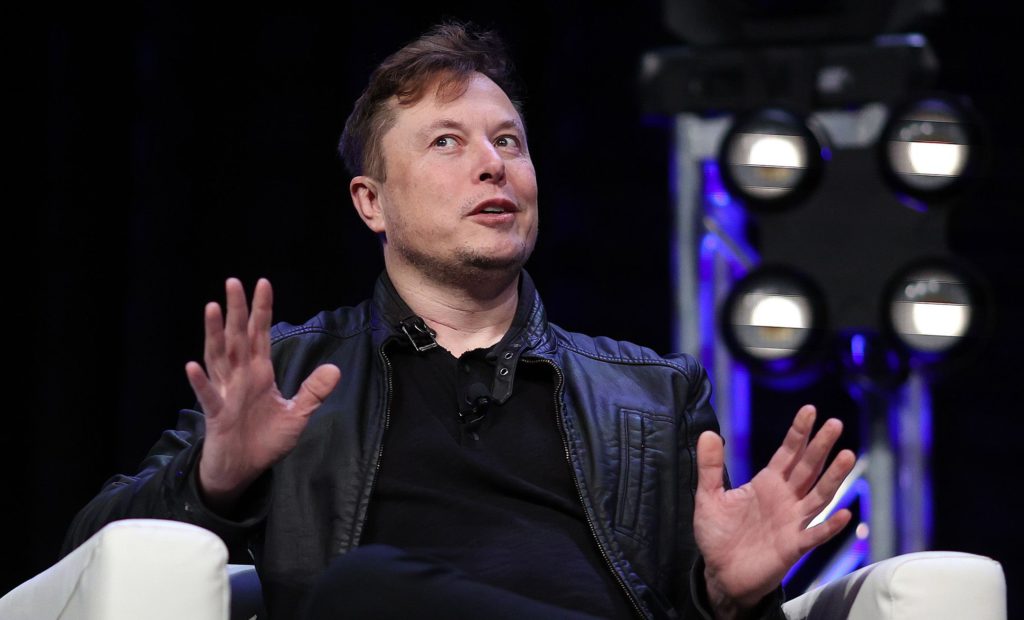
(Bloomberg) — Twitter Inc.’s frenetic overhaul under new owner Elon Musk is attracting attention from senior politicians and regulators worldwide, who are telling the world’s richest man they’re ready to hold his new acquisition to data protection, content moderation and employment law.

In the days since the SpaceX and Tesla Chief Executive Officer took charge, Musk has ordered thousands of job cuts and changed a string of central policies at San Francisco-based Twitter. There have also been senior voluntary departures: Since Wednesday, Head of Trust and Safety Yoel Roth, Chief Information Security Officer Lea Kissner, Chief Privacy Officer Damien Kieran and Chief Compliance Officer Marianne Fogarty have resigned.

In a rare intervention on Thursday, the US Federal Trade Commission said that it was tracking developments with “deep concern” and said that “no CEO or company is above the law.” 

The FTC regulates how Twitter handles user data and has been overseeing the company’s privacy and data security compliance since it put the company under a consent order in 2011, which requires Twitter to submit to independent audits every other year. 

Under Musk’s ownership, Twitter is subject to FTC oversight until at least 2042, meaning that any new products or changes to privacy and data policies are subject to the agency’s scrutiny.

Read More: Twitter’s Top Cyber, Privacy Officials Resign From Company 

“All of this is extremely dangerous for our users,” a Twitter employee said in a Slack message viewed by Bloomberg. Their identity is not known to Bloomberg. “Also, given that the FTC can (and will!) fine Twitter BILLIONS of dollars pursuant to the FTC Consent Order, extremely detrimental to Twitter’s longevity as a platform. Our users deserve so much better than this.”

Europe

Politicians and watchdogs across the Atlantic have also made it clear that they’re watching closely. It’s not gone unnoticed that Twitter offices globally suffered rapid layoffs, and daily rule changes have unleashed a parade of spoofs and impersonations.

Twitter will meet with the Irish Data Protection Commission next week. 

“In light of the coverage over the last 24 hours about the departure of senior staff, including the data protection officer, we want to establish with Twitter that they are going to be continuing to make decisions from their Irish office,” Graham Doyle, deputy commissioner at the authority, told Bloomberg by phone. Europe’s GDPR rules state companies must have a data protection officer. 

On Friday, the UK’s Advertising Standards Authority said “at a time when the law and regulation are asking more of these platforms in terms of the protections they afford, we think it’s important that any changes in personnel don’t undermine their ability to safeguard users and advertisers,” according to a spokesman.

Kevin Bakhurst, a director at Ofcom, which is set to regulate Twitter under Online Safety legislation, said the platform “seem to be losing some of their most important and talented people, including from the content moderation and public policy teams.” 

“I don’t understand the strategy at all, as online safety regulation is imminent in the UK and the EU,” Bakhurst said in a post on LinkedIn. “These are just the kind of people they need.”

UK business minister Grant Shapps told the Prospect union he’d been following Twitter job cuts closely and that he’d write to the company “to seek reassurance that they will be following all relevant statutory requirements.”

Read more: Fired Twitter Staff Seek Out UK Firm for Lawsuit Advice

Texas-based billionaire Musk has repeatedly said Twitter will champion “free speech.” He’ll have to do that while navigating a gauntlet of new online safety laws around the world concerning moderation and hate speech. 

The European Union recently signed the Digital Services Act into law, governing how tech companies moderate content and setting out fines of as much as 6% of annual sales for breaches. 

EU internal market commissioner Thierry Breton tweeted to warn Musk hours after he closed on the $44 billion deal last month that the company must “fly by our rules.” Musk previously told Breton he agreed “with everything” the senior EU official had said in a discussion about digital regulation.

Late on Thursday, French President Emmanuel Macron echoed Breton’s approach, asking Musk on Twitter “will the bird protect our children?” in reference to the site’s logo. Musk replied “absolument”.

–With assistance from Leah Nylen, Anna Edgerton and Stephanie Bodoni.

(Updates with detail on Irish regulator in eighth paragraph)

More stories like this are available on bloomberg.com

©2022 Bloomberg L.P.
Ransomware Gangs Shift Tactics, Making Crimes Harder to Track

(Bloomberg) — Ransomware gangs increasingly use their own or stolen computer code, moving away from a leasing model that made their activities easier to monitor, new research shows.

Numerous prominent hacking groups in recent years have functioned by leasing their malicious software and computing infrastructure to other bad actors, in what’s known as ransomware-as-a-service. That model, which experts say turbocharged the number of ransomware attacks, was offered by infamous groups such as Conti, which shuttered Irish health systems, and REvil, deemed responsible for a 2021 intrusion at the IT management firm Kaseya Ltd. 

But now the number of smaller hacking groups has rapidly increased, with many of them deploying their own code or stealing it from others, according to Allan Liska, a threat intelligence analyst at Recorded Future Inc. The shift has coincided with a reduction in activity by some higher-profile groups, according to research Liska presented Friday after the CYBERWARCON security conference.

The evolution is complicating efforts to track various new groups, such as Onyx, which researchers believe reuses Conti’s code and has claimed to target several victims. 

“In the last year, ransomware has become a race to bottom among ransomware groups,” Liska said. As a result, gangs are “stealing from each other, lying even more than usual to victims and creating havoc among investigators and law enforcement.”

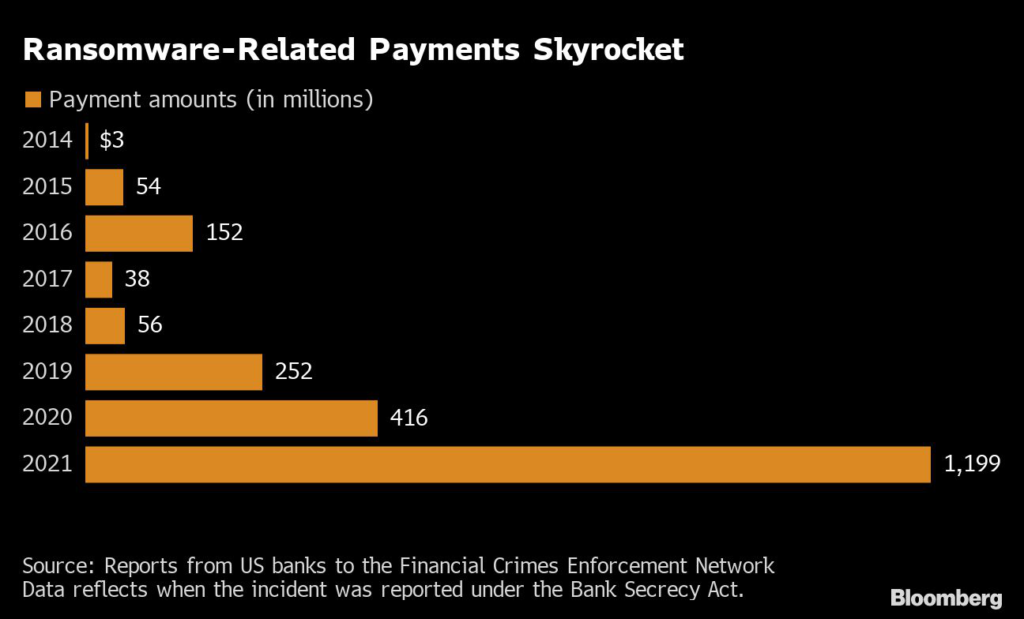
Ransomware is a type of malware that encrypts a victim’s computers. The attackers then demand a ransom payment to unlock them. Ransomware payments have skyrocketed in recent years, US government data shows, as many groups have adopted a type of double extortion. In addition to encrypting files and demanding money, they also are stealing private troves of data and threatening to release it if their demands aren’t met. 

The Treasury Department said that US financial institutions reported nearly $1.2 billion on likely ransomware-related payments in 2021, usually in response to breaches originating with Russian criminal groups.

The payments more than doubled from 2020, underscoring the pernicious damage that ransomware continues to wreak on the private sector.

Liska said changes in tactics may be because the groups fear being targeted if they’re part of a big group. The US Department of Justice on Thursday announced it had charged a dual Russian and Canadian national for allegedly working with the LockBit ransomware gang. Hackers associated with the Netwalker and REvil extortion groups have pleaded guilty in recent months. 

This month, the US hosted nearly three dozen countries for a ransomware summit in Washington. The pace and sophistication of those intrusions is increasing faster than the US government’s ability to disrupt them, a senior Biden administration has said.

More stories like this are available on bloomberg.com

©2022 Bloomberg L.P.

Twitter Called to Meet EU Data Watchdog Over Privacy Concerns

(Bloomberg) — Twitter Inc. will meet with its European Union data protection watchdog next week after a raft of firings and the resignation of its chief privacy officer, prompting concerns about the safety of users’ personal data.

Ireland’s Data Protection Commission, the lead watchdog for some of the biggest US tech giants with bases in the bloc, said under EU rules a company with a European base must have a data protection officer and this person must be available to contact when needed.

“In light of the coverage over the last 24 hours about the departure of senior staff, including the data protection officer, we want to establish with Twitter that they are going to be continuing to make decisions from their Irish office,” Graham Doyle, deputy commissioner at the authority, said by phone. 

Twitter has seen a tumultuous few days since Elon Musk bought the company, after he fired around 3,700 of Twitter’s global workforce, ushered out several executives and ordered the remaining employees to stop working from home.

Under the bloc’s General Data Protection Regulation privacy regulators across the bloc have powers to fine companies as much as 4% of annual sales for serious violations of data privacy. 

Twitter’s Top Cyber, Privacy Officials Resign From Company 

To be able to continue using Ireland as their EU base, “the decisions that are made in terms of the processing of personal data for EU users must take place in that country,” as well, said Doyle.

“If they’re not, that will have a knock on effect on their ability to avail of the main establishment.”

More stories like this are available on bloomberg.com

©2022 Bloomberg L.P.
Enron’s Liquidator to Oversee FTX’s Massive Crypto Bankruptcy

(Bloomberg) — When Sam Bankman-Fried’s empire collapsed into bankruptcy on Friday, the onetime crypto wunderkind handed the reins to the man who oversaw the unwinding of Enron Corp.

John J. Ray III is now the Chief Executive Officer of FTX Trading Ltd. and a host of related entities, court papers show. Ray, a restructuring expert, oversaw the liquidation of Enron Corp. and weighty settlements that followed its accounting scandal.

At Enron, Ray captained the return of more than $20 billion to creditors in the years following the energy company’s bankruptcy, according to a statement in 2008. Creditor recoveries surpassed 50 cents on the dollar at the time, beating initial estimates. 

At FTX, Ray will have no shortage of work to do. A web of more than 100 FTX-related entities began entering bankruptcy in Delaware on Friday, and the Bahamas Securities Commission moved to freeze the assets of one unit on Thursday. Regulators in the US are looking into the company’s downfall.

Former Treasury Secretary Lawrence Summers compared the FTX debacle to Enron’s downfall in an interview with Bloomberg Television. 

“The smartest guys in the room. Not just financial error but — certainly from the reports — whiffs of fraud,” Summers said. “Stadium namings very early in a company’s history. Vast explosion of wealth that nobody quite understands where it comes from.”

FTX Trading Ltd. listed assets and liabilities of at least $10 billion each in its Chapter 11 bankruptcy petition, making it the biggest filing of the year. 

“Ultimately I’m optimistic that Mr. Ray and others can help provide whatever is best,” Bankman-Fried tweeted on Friday. 

More stories like this are available on bloomberg.com

©2022 Bloomberg L.P.
Sunak Tax Plans Spark Panic in UK Tories Fearing Voter Backlash

(Bloomberg) — Rishi Sunak’s UK Conservatives are in a state of shock this week.

But it’s not the bullying scandal that forced Gavin Williamson to quit the new premier’s Cabinet after just two weeks that’s preoccupying Tory Members of Parliament. Rather, it’s a different set of headlines about major tax rises that Sunak and Chancellor of the Exchequer Jeremy Hunt are weighing to help fill a £35 billion ($41 billion) fiscal hole.

Reports they’re seeking to raise more money from income tax, windfall charges on energy companies and levies on inheritance have spread panic and skepticism across the Tory party, dominating conversations in the wood-paneled House of Commons tea room where British lawmakers meet daily for a gossip and a brew.

The grim mood was evident in conversations with multiple Tory MPs, ministers, aides and officials this week.

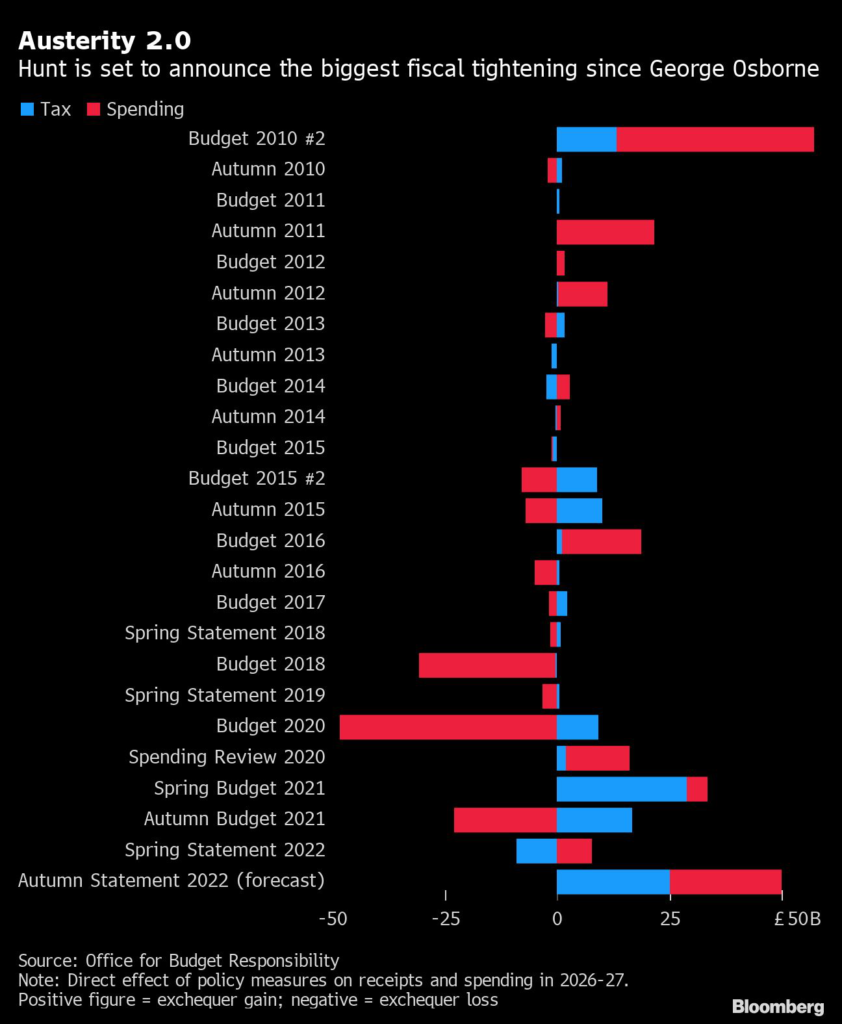
The party elected Sunak leader to restore calm after Liz Truss’s calamitous seven weeks in power unleashed chaos in the financial markets. But whereas Truss had promised a low-tax Tory nirvana, her successor appears to be heading the other way as he and Hunt prepare to unveil an Autumn Statement — a budget in all but name — on Nov. 17. 

Not only do the two men want to plug the yawning gap in the nation’s finances; they’re seeking a buffer in case things take a turn for the worse, meaning spending cuts and tax hikes could reach £50 billion or more.

Gloomy media reports about what Hunt is considering have dripped out daily, with the Treasury failing to knock them down. Measures being examined include increasing capital gains tax, reducing the tax-free allowance for dividend income and letting local authorities raise more money from council tax.

Some MPs are lobbying Sunak and Hunt to soften their proposals, warning they couldn’t vote for some of the ideas being floated. It’s a reminder that Sunak’s policies are dependent on the support of his MPs, and illustrates the breakdown in the government system of “whipping,” by which it enforces party discipline. Though not a whip, Williamson was a key enforcer for Sunak.

Flying Kites

In a sign the premier is listening — though not necessarily making promises — several Tories described being “blue ticked” by Sunak over the last few days: sending him a message on WhatsApp, seeing he’s come online and read it, before going offline without replying.

Many Tories believe some of the mooted tax rises are kites flown by government advisers to set expectations for the statement so low that the eventual announcements don’t seem so bad. It’s a tactic regularly deployed by Sunak when he was Chancellor.

Of most concern to Tory MPs is the suggestion that the top rate of income tax may be raised to 50%, a level not seen since the days of former Labour prime minister Gordon Brown, and a breach of the party’s 2019 election promises.

Multiple MPs told Bloomberg they don’t believe the proposal is genuine, arguing that when colleagues do moan about the contents of the eventual budget, Hunt will be able to say to it could have been worse. One said if he follows through, there would be no reason to vote Tory over Labour at the next election.

Stealth Taxes

Even if the tax rate isn’t touched, officials said Hunt could lower the threshold at which it’s paid. He is also considering extending a freeze on other income tax thresholds, pulling millions of people into higher tax bands thanks to soaring inflation. This so-called “fiscal drag” is a massive stealth tax that Conservatives should oppose, one MP said.

Another levy in the chancellor’s crosshairs is inheritance tax, according to officials. Traditionally, the Tory party has accused their Labour opponents of wanting to raise “death taxes.” But Hunt is mulling freezing the rate at which the tax starts to be paid– effectively a tax rise with inflation running at more than 10%. 

That would be unthinkable for the Conservatives heading into an election, another MP warned. The newspapers this week read like a Tory suicide note, they said, recalling a brutally effective 1992 Conservative poster campaign using a picture of a bomb with the words “Labour’s tax bombshell.” Their opponents could revive it and use it against them, the lawmaker said.

Business-minded Tory MPs are also unimpressed with the idea that Hunt could extend a windfall tax on oil and gas companies by reducing the saving for firms that invest in domestic extraction. This incentive was a key part of the tax, and lowering it would harm Britain’s energy security, said a former minister involved in its planning.

‘Bring Back the Lettuce’

The government is also set to announce the outcome of its consultation on an online sales tax, with one official saying it’s being seriously considered. Business lobbyists argue it would exacerbate a recession.

A budget consisting of stealth tax rises and deferred spending cuts could be framed as making those with the broadest shoulders bear the greatest burden, but walking the line between keeping markets calm and convincing voters the Tories are not presiding over economic carnage is a challenge that could define Sunak’s premiership.

Most Tory MPs agree that the richest should pay most, but their fears are centered on tax rises worsening the pain felt by middle class voters hammered by higher energy and mortgage bills.

At prime minister’s questions in the Commons on Wednesday, one Labour MP heckled Sunak: “Bring back the lettuce,” in reference to an unflattering tabloid newspaper depiction of Truss. The worry for Tory MPs now is that while Truss’s wide-ranging tax cuts were unpalatable to the markets, the risk is her successor goes too far in the other direction and puts off Conservative voters.

More stories like this are available on bloomberg.com

©2022 Bloomberg L.P.

Close Bitnami banner
Bitnami
