Bloomberg

Twitter Pauses $8 Subscription Program After Fake Accounts Proliferate

(Bloomberg) — Twitter Inc. suspended the $8 subscription program it launched earlier this week to combat a growing problem of users impersonating major brands, a person familiar with the move said.

Existing subscribers will still have access to their account, said the person who asked not to be identified because the information is private. The move was reported earlier by the website Platformer.

The company has also reinstated “official” badges for high-profile accounts, with the gray badge reappearing below the profiles of businesses and major media outlets Friday based on an internal approved list, according to the person. The identification marker was rolled out earlier this week before being scrapped. 

Twitter is struggling with impostor accounts since the company allowed paying subscribers to get verified blue check marks. One account claiming to be Nintendo Inc. posted an image of Super Mario holding up a middle finger, while another posing as pharma giant Eli Lilly & Co. tweeted that insulin was now free — forcing the company to issue an apology. A purported Tesla Inc. account joked about the carmaker’s safety record.

“To combat impersonation, we’ve added an ‘Official’ label to some accounts,” Twitter Support tweeted on Friday. 

Elon Musk tweeted the same day that all accounts engaged in parody must include “parody” in their name.

The world’s wealthiest man, who acquired Twitter last month for $44 billion, is facing a slew of challenges as top advertisers pull back from the platform amid concern over the company’s ability to tackle impostors and hate speech. Musk, who has also seen resignations among his leadership team, said this week in his first address to employees that the company could face bankruptcy, Bloomberg News previously reported.

(Adds details on ‘official’ designation from third paragraph)

More stories like this are available on bloomberg.com

©2022 Bloomberg L.P.

Musk’s Twitter Bankruptcy Remark Is Far From First Use of B-Word

(Bloomberg) — Most chief executive officers don’t repeatedly refer to the prospect of the companies they run going bankrupt.

Most CEOs aren’t like Elon Musk.

Two weeks after closing his acquisition of Twitter Inc., Musk said in his first address to employees that bankruptcy is a possibility if the social media company is unable to start generating more cash. The CEO said staff needed to move urgently to make its $8-a-month subscription product, Twitter Blue, something users will pay for in light of advertiser pullback from the platform.

Musk, 51, has used the B-word quite a few times while running electric-car maker Tesla Inc. and rocket company Space Exploration Technologies Corp. — sometimes for laughs, other times ostensibly to motivate his workforce, and still other times to describe the extreme stress the companies have made it through.

Here are some examples from over the years:

October

During the weekslong discourse over whether SpaceX would continue funding Ukraine’s access to the closely held company’s satellite communications system Starlink, Musk tweeted that the cost of supporting the country had reached about $80 million. He also referred to how other low-Earth orbit satellite companies have failed, and how he told attendees of a space conference that Starlink’s goal was to “not go bankrupt.”

May

In an email to Tesla employees elaborating on why it was important that executive staff return to the office, Musk referred back to the carmaker’s darkest days.

“The more senior you are, the more visible must be your presence,” Musk wrote. “That is why I lived in the factory so much — so that those on the line could see me working alongside them. If I had not done that, Tesla would long ago have gone bankrupt.”

While Tesla would later report having almost $19 billion of cash and equivalents by the end of the second quarter, its CEO also spoke in an alarmist way in late May about how much money the company was burning through while ramping up its newly opened plants in Germany and Texas.

“The past two years have been an absolute nightmare of supply-chain interruptions, one thing after another, and we’re not out of it yet,” Musk told the Tesla Owners of Silicon Valley in an interview posted online weeks later. “Overwhelmingly our concern is how do we keep the factories operating so we can pay people and not go bankrupt.”

November 2021

Musk addressed SpaceX employees about the difficulty the company was having producing Raptor engines for Starship, the interplanetary rocket it’s counting on to reach the moon and eventually Mars.

“We face a genuine risk of bankruptcy if we can’t achieve a Starship flight rate of at least once every two weeks next year,” the CEO wrote in an email obtained by Space Explored.

Musk tweeted a day later that while bankruptcy was unlikely, it also wasn’t impossible and referred to former Intel Corp. CEO Andy Grove’s axiom that only the paranoid survive.

July 2020

In underlining the importance of growth for Tesla, Musk quipped during an earnings call about what was acceptable in his mission to make the company’s cars more affordable.

“We need to not go bankrupt,” he said. “But we’re not trying to be super profitable either.”

June 2019

During a deposition given as part of a lawsuit filed by Tesla investors over the company’s 2016 buyout of panel installer SolarCity, Musk said he shifted resources from the solar company to save the carmaker from collapse.

“If I did not take everyone off of solar and focus them on the Model 3 program to the detriment of solar, then Tesla would have gone bankrupt,” Musk said. In April of this year, a judge faulted the billionaire for failing to properly recuse himself from the deal but found he didn’t improperly force fellow directors to accept it.

January 2019

Musk said on an earnings call that Tesla would be focusing on slashing expenses as it was bringing its cheaper Model 3 sedan to market.

“We have to be relentless about costs in order to make affordable cars and not go bankrupt,” he said. “That’s what our headcount reduction is about. We have to be super hardcore about it.”

December 2018

After giving an interview to Vox a month earlier in which he said that Tesla “cannot die,” Musk seemed to suggest otherwise to 60 Minutes when discussing why the company had open-sourced its patents.

“If somebody comes and makes a better electric car than Tesla, and it’s so much better than ours that we can’t sell our cars, and we go bankrupt, I still think that’s a good thing for the world,” he said. Musk also gave an interview to Axios around this time where he said Tesla was weeks away from failing when it was ramping up the Model 3.

April 2018

If it weren’t for his “funding secured” tweets months later about taking Tesla private, Musk’s most infamous posts might have been his April Fools’ Day thread in 2018.

The gag fell flat with investors, who sold off the stock the next day.

More stories like this are available on bloomberg.com

©2022 Bloomberg L.P.

‘I Got This Wrong’: CEO Apologies Abound Amid Mass Layoffs and Losses

(Bloomberg) — While Elon Musk is dominating headlines with his abrupt dismissal of half of Twitter’s workforce, other chief executive officers are taking a decidedly different approach — blaming themselves for misreading the market and apologizing for having to let people go.  

In lopping off more than 11,000 jobs this week, Meta Platform Inc.’s CEO Mark Zuckerberg took the “empathy management” approach, emphasizing his own poor decisions and providing support to affected workers. “I want to take accountability for these decisions and for how we got here,” Zuckerberg said in a statement that was sent to employees Wednesday and posted on the company’s website. “I know this is tough for everyone, and I’m especially sorry to those impacted.” 

Sam Bankman-Fried, who resigned Friday as CEO of now-bankrupt crypto exchange FTX, apologized for the exchange’s mismanagement and liquidity crisis in a series of tweets Thursday.  “At the end of the day, I was CEO, which means that I was responsible for making sure that things went well,” he said. “I, ultimately, should have been on top of everything. I clearly failed in that. I’m sorry.”  

The mea culpas are just the latest in a series that began as the market for tech and e-commerce stocks began to tank over the summer.

In July, Shopify CEO Tobi Lutke fell on his sword in a letter to employees in which he said he wrongly assumed pandemic-era online shopping frothiness would continue. “It’s now clear that bet didn’t pay off,” he said in explaining the 1,000 job cuts at the retail software provider. “What we see now is the mix reverting to roughly where pre-Covid data would have suggested it should be at this point. Still growing steadily, but it wasn’t a meaningful five-year leap ahead. Ultimately, placing this bet was my call to make, and I got this wrong.”

Read more: Investors Lose Billions as CEOs Misjudge Covid’s Online Surge

A month later, Niraj Shah, the CEO and co-founder of Wayfair Inc., also admitted he flubbed the pandemic’s signals. Wayfair’s sales surged in the first year after Covid hit the US, but then declined for five straight quarters. “We were seeing the tailwinds of the pandemic accelerate the adoption of ecommerce shopping, and I personally pushed hard to hire a strong team to support that growth,” Shah wrote in a letter to employees in August that announced about 900 job cuts. “This year, that growth has not materialized as we had anticipated. Our team is too large for the environment we are now in, and unfortunately we need to adjust.”

And let’s not forget Braden Wallake, the “crying CEO” of Columbus, Ohio-based marketing agency HyperSocial. In August, Wallake wrote a guilt-ridden LinkedIn post about having to lay off two of 17 employees, concluding with a teary-eyed selfie. After the post went viral, he declared himself “the crying CEO.” 

These missives stand in stark contrast to Twitter CEO Musk’s approach, which recalls that of longtime General Electric Co. CEO Jack Welch, who infamously made regular — and ruthless — layoffs a management tool.

Read more: Neutron Elon: Why Twitter’s Boss Is More Like Jack Welch Than You Think

Welch, however, operated in a very different environment from today’s. Employee expectations have risen significantly. “The willingness of employees to speak out when they feel that they’re treated unfairly has increased from a sort of, ‘keep your head down, do your work, do what you’re told,’” said Jeffrey Siminoff, who managed Morgan Stanley’s layoffs during the financial crisis and is now senior vice president of workplace dignity at the nonprofit group Robert F. Kennedy Human Rights. “I think executive teams and CEOs understand that very poorly executed processes that are done in very inhumane ways will create a lot of negative backlash that cannot be contained within the four walls of the organization.”

The biggest difference, though, is that Welch downsized while the labor market was weak, which meant he didn’t have to worry as much about GE’s brand as an employer, according to Peter Cappelli, director of the Center for Human Resources at the Wharton School of the University of Pennsylvania. The labor market today, by contrast, is extremely tight, with about 1.9 available jobs for every unemployed person.   

“It’s a good question to ask how much of the contemporary scene is playing to the current labor market because they don’t want to damage their employer brand too much,” Cappelli said.

In other words, it might not all be a new age of enlightened management, but a heavy dose of self-interest: Some of the visibly empathetic CEOs know they’ll probably need to hire back some of the people they laid off and could be positioning themselves to recruit again when the recovery comes. 

More stories like this are available on bloomberg.com

©2022 Bloomberg L.P.
Tosi’s WestCap Weighs Partial Sale of Cerebral Stake

(Bloomberg) — Laurence Tosi’s WestCap Management is considering selling shares of Cerebral Inc., one of its biggest wagers, seeking to trim its position in the mental health startup that’s facing a wave of scrutiny, according to people familiar with the matter.

WestCap, which first invested in Cerebral in 2020 and holds a seat on the board, had already slashed its valuation by half in the quarter ended June, Bloomberg reported earlier.

“We are not marketing and have never marketed our shares,” a spokeswoman for WestCap said in a statement. She said the firm received “one inbound” offer and declined. 

READ: Telehealth Drew Some People With Addiction. Deaths Followed

A spokesman for Cerebral declined to comment.

Tosi, who previously served as chief financial officer at Blackstone Inc. and Airbnb Inc., founded WestCap in 2019 and has focused on marketplace-oriented startups, funding several buzzy ventures including Celsius Network and Klarna. The growth equity firm has struggled, however, in this year’s tech rout. 

Cerebral has faced problems of its own. The company is under increased scrutiny around its online mental-health platform, and faces a federal investigation into its prescribing practices. The SoftBank Group Corp.-backed startup said in May that it would stop writing new prescriptions for drugs that treat attention deficit/hyperactivity disorder, such as Adderall and Ritalin. 

READ: Under Scrutiny, Some Telehealth Firms Are Rethinking ADHD Drugs

–With assistance from Polly Mosendz.

More stories like this are available on bloomberg.com

©2022 Bloomberg L.P.
FTX Meltdown Has ‘Whiffs’ of Enron-Like Scandal, Summers Says

(Bloomberg) — Former Treasury Secretary Lawrence Summers called for an expansion in the number of forensic accountants — though not necessarily an increase in regulation — in the wake of the meltdown in Sam Bankman-Fried’s crypto empire.

“A lot of people have compared this to Lehman. I would compare it to Enron,” Summers told Bloomberg Television’s “Wall Street Week” with David Westin. “The smartest guys in the room. Not just financial error but — certainly from the reports — whiffs of fraud. Stadium namings very early in a company’s history. Vast explosion of wealth that nobody quite understands where it comes from.”

The FTX.com crypto exchange, along with trading firm Alameda Research Ltd., have filed for bankruptcy in the wake of a race by FTX users to withdraw their assets. The exodus came amid a plunge in the digital coins issued by the exchange, and after Bankman-Fried took to Twitter to counter the circulation of “unfounded rumors.”

As part of the bankruptcy filings, John J. Ray III was appointed as the new chief executive of FTX Group. Ray previously served senior roles in bankruptcies — including Enron Corp.

“The regulatory community ought to draw two lessons from this” episode, said Summers, a Harvard University professor and paid contributor to Bloomberg Television. First is the need for “more forensic accountants” to help detect issues at both the corporate and national level, he said.

Second, there should be a rule for “everything that touches finance” that people in positions of responsibility take a week or two off each year, disconnected from their work. Other observers have pointed out that individuals engaged in financial malfeasance need constant monitoring of their positions to keep problems hidden.

“This is probably less about the complexities of the nuances of the rules of crypto regulation” than it is about classic financial fraud, Summers said.

(Updates to note new FTX CEO’s experience with Enron, in fourth paragraph.)

More stories like this are available on bloomberg.com

©2022 Bloomberg L.P.

Stocks Swing Higher in Seesaw Trade; Dollar Falls: Markets Wrap

(Bloomberg) — US stocks gained traction in a choppy session as investors assessed the prospects for a continued rally while turmoil in the crypto market weighed on risk sentiment. 

The S&P 500 ticked higher after falling 0.3% and the tech-heavy Nasdaq 100 also caught bids. Meanwhile, cryptocurrencies resumed a selloff Friday amid FTX’s deepening woes. In the latest twist in the saga, Sam Bankman-Fried’s crypto empire filed for Chapter 11 bankruptcy in Delaware. Cash Treasuries trading is closed for Veterans Day.

Stocks soared the most since 2020 on Thursday after a better-than-forecast cooling in US inflation improved the prospects of a dovish tilt by the Federal Reserve. On Friday, the University of Michigan’s preliminary November survey showed US consumer inflation expectations increased in the short and long run while sentiment retreated. 

The dollar slumped 1% on Friday, heading for a fourth successive week of losses. It is also the biggest weekly drop since the pandemic-fueled volatility in March 2020. 

Pinduoduo Inc. and JD.com Inc. jumped, leading US-listed Chinese stocks higher amid growing optimism Beijing is on its way to ending the crippling Covid Zero policy.

A gauge of Hong Kong-listed technology stocks surged 10% after China reduced the amount of time travelers and close contacts must spend in quarantine. The pivot came hot on heels of a call by leaders in Beijing for more precise and targeted virus control measures. The measures also validate persistent market expectations for an end to China’s Covid Zero policy, which officials have repeatedly denied.

Key events this week:

  • US University of Michigan consumer sentiment, Friday

Some of the main moves in markets:

Stocks

  • The S&P 500 rose 0.5% as of 10:34 a.m. New York time
  • The Nasdaq 100 rose 0.9%
  • The Dow Jones Industrial Average fell 0.3%
  • The Stoxx Europe 600 rose 0.2%
  • The MSCI World index rose 1.5%

Currencies

  • The Bloomberg Dollar Spot Index fell 1%
  • The euro rose 1% to $1.0314
  • The British pound rose 0.4% to $1.1759
  • The Japanese yen rose 1.2% to 139.29 per dollar

Cryptocurrencies

  • Bitcoin fell 5.5% to $16,833.25
  • Ether fell 4.5% to $1,262.09

Bonds

  • The yield on 10-year Treasuries was little changed at 3.81%
  • Germany’s 10-year yield advanced 15 basis points to 2.16%
  • Britain’s 10-year yield advanced six basis points to 3.35%

Commodities

  • West Texas Intermediate crude rose 4% to $89.94 a barrel
  • Gold futures rose 0.7% to $1,765.50 an ounce

This story was produced with the assistance of Bloomberg Automation.

–With assistance from Georgina Mckay, Masaki Kondo, Tassia Sipahutar, Farah Elbahrawy and Srinivasan Sivabalan.

More stories like this are available on bloomberg.com

©2022 Bloomberg L.P.
Bankman-Fried’s Assets Plummet From $16 Billion to Zero in Days

(Bloomberg) — The entire $16 billion fortune of former FTX co-founder Sam Bankman-Fried has been wiped out, one of history’s greatest-ever destructions of wealth.

The downfall of his crypto empire — which filed for bankruptcy on Friday along with his resignation — means assets owned by the mogul once likened to John Pierpont Morgan have become worthless. At the peak, the 30-year-old was worth $26 billion, and he was still worth almost $16 billion at the start of the week.

The Bloomberg Billionaires Index now values FTX’s US business — of which Bankman-Fried owns about 70% — at $1 because of a potential trading halt, from $8 billion in a January fundraising round. Bankman-Fried’s stake in Robinhood Markets Inc. valued at more than $500 million was also removed from his wealth calculation after Reuters reported it was held through his trading house, Alameda Research, and may have been used as collateral for loans. FTX.US and Alameda were also part of the bankruptcy filing.

In announcing it was filing for Chapter 11 bankruptcy, FTX said Friday in a statement that Bankman-Fried has resigned as chief executive officer and will be succeeded by John J. Ray III. Employees are expected to continue with the company and “assist Mr. Ray and independent professionals” during bankruptcy.

Read more: FTX Empire Goes Bankrupt After Exchange’s Rapid Downfall 

Bankman-Fried’s empire crumbled this week after a liquidity crunch at one of its affiliates. Its US exchange, FTX.US, said on Thursday that customers should close out any positions they want to and that trading may be halted in a few days. In the Bahamas, where FTX.com is based, authorities froze the assets of its local trading subsidiary and related parties. 

It’s possible Bankman-Fried owns assets not tracked by the Bloomberg index. Alameda made about $1 billion in profits last year and FTX made hundreds of millions more.

Tech news website The Information reported on Thursday that he had more than $500 million invested in funds managed by Sequoia and other venture capital firms, and was also an investor in media startup Semafor. But if those assets are held through Alameda they might be wiped out by its losses. 

For his part, Bankman-Fried is being investigated by the US Securities and Exchange Commission for potential violations of securities rules, a person familiar with the matter said. 

(Updates with bankruptcy filing and resignation starting in second paragraph, other possible assets in fifth paragraph.)

More stories like this are available on bloomberg.com

©2022 Bloomberg L.P.
Indian Agency Freezes $2.8 Million Bitcoins on Binance in Probe

(Bloomberg) — India’s anti-money laundering agency on Friday searched a wallet on Binance crypto exchange, deepening its investigation in a case involving a mobile gaming application, it said in a statement.

The Enforcement Directorate froze 228.2 million rupees ($2.8 million) in Bitcoins of mobile gaming application E-nuggets, which was designed for defrauding public, the agency said. Further investigation is ongoing in the case.

After collecting money from users, E-nuggets suddenly stopped withdrawals on the platform and then proceeded to delete all the data from its servers. The collected funds were allegedly used to buy cryptocurrencies and launder money through more than 300 accounts, the agency said.

Local media reported that police have arrested at least six people in connection with the alleged fraud. Efforts by Bloomberg News to trace officials from the gaming app for comments proved unsuccessful.

The Enforcement Directorate earlier registered a case against the founder of E-nuggets and seized 173.2 million rupees. It had also frozen Bitcoins worth 135.6 million rupees in a wallet on the Binance exchange and other cryptocurrencies worth 4.7 million rupees. 

Binance’s investigation team was helping the agency, a spokesperson for the crypto exchange wrote in an email. 

“It takes time to understand the full picture of a complex financial investigation as all facts do not appear at the initial stage,” Binance said. “It is logical to expand investigations to uncover a wider group of criminals,” the spokesperson added.

More stories like this are available on bloomberg.com

©2022 Bloomberg L.P.

California’s Solar Subsidy Plan Is Really About Batteries

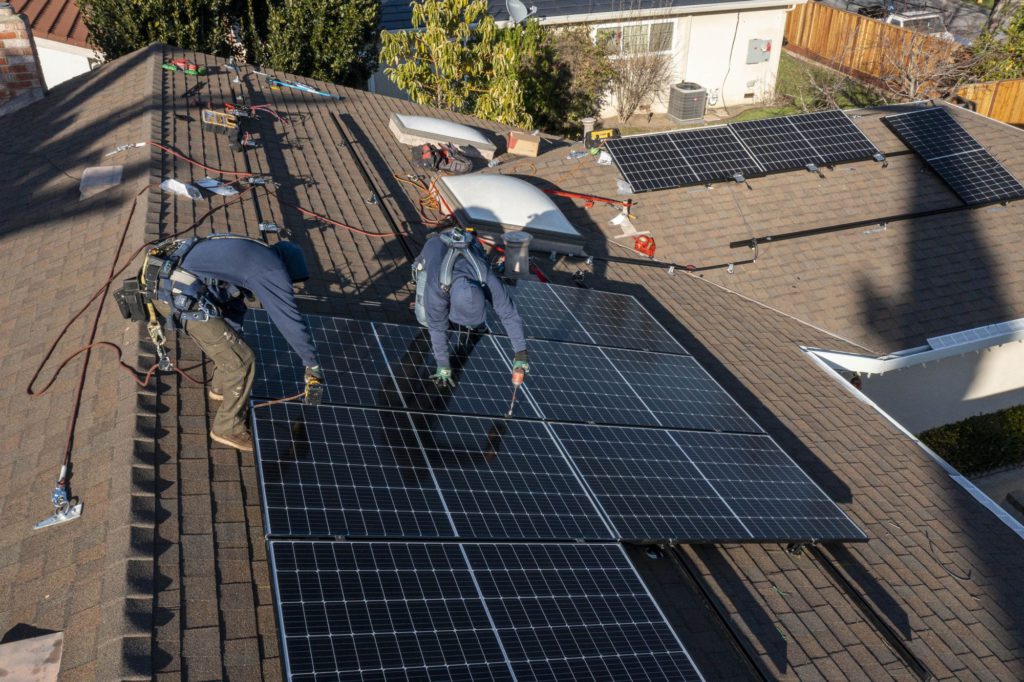
(Bloomberg) — California — the biggest US solar market — is poised to overhaul its landmark subsidy for rooftop panels to encourage homeowners to also install batteries to help stabilize its power grid and prevent blackouts.

A plan unveiled Thursday would give homeowners bigger incentives to install batteries along with solar systems instead of just panels alone. The plan threatens to slow the pace of rooftop installations, but would strengthen a state grid that has buckled during repeated summertime stretches of extreme heat.

California’s proposal signals a new direction for state-level solar policies across the US. While subsidies were once designed to move rooftop systems from the niche to the mainstream, panels are now ubiquitous in many communities. Today, state policymakers are focused on the reliability of a grid that’s become dependent on renewable power that fluctuates with the whims of the sky and air.

“All the additional rooftop-solar-and-storage systems will provide more grid stability,” Pol Lezcano, an analyst at BloombergNEF, said in an email. “The new rates will speed up the transition to solar-plus-storage.”

Read the proposal here

The solar industry recoiled at a proposal issued nearly a year ago that would have required new solar customers to pay monthly grid connection fees, prompting Governor Gavin Newsom and Hollywood celebrities to urge regulators to go back to the drawing board.

The new plan ditches those grid connection charges. It still reduces how much credit solar customers would get for exporting their excess power. It would also change electric rates to encourage people to store their solar energy during the day and either export it or use it later in the evening when power is more expensive.

Shares of Sunrun Inc., the biggest US residential installer, surged 27% on Thursday. The stock extended gains Friday, rising as much as 2.1% in New York.

But the state’s plan could be problematic for many solar companies.

While Sunrun, Sunnova Energy International Inc. and SunPower Corp. “are well-positioned with their storage experience and offerings, our checks suggest half of the California contractors don’t do storage today,” Roth Capital Partners analyst Philip Shen said Friday in a note. “These organizations will need to adapt, and we expect some to exit the industry.”

California’s proposal calls for a 75% reduction in the credit that new customers would get for exporting excess power to the grid, according to the California Solar & Storage Association, which criticized the plan.

If adopted, “I wouldn’t be surprised to see fewer installations in the market next year than this year,” Meghan Nutting, an executive vice president at Sunnova, said in an interview. “That’s a big change for the market.”

(Updates with analyst comment in 9th paragraph)

More stories like this are available on bloomberg.com

©2022 Bloomberg L.P.
Self-Driving Startup TuSimple Ousts CEO, Independent Directors

(Bloomberg) — TuSimple Holdings, a self-driving vehicle startup that recently went through a US national security review, ousted its interim chief executive officer and most of its board.

Investors constituting a majority of the voting stock removed four independent directors, according to a filing Thursday, and interim CEO Ersin Yumer was replaced by Cheng Lu, who led the company until quitting in March.

The moves consolidate control under co-founders Mo Chen and Xiaodi Hou, the sole continuing board member. Chen was named chairman, according to the filing, while Lu was added to the board.

The reshuffling could raise concerns withing the US government. One of the ousted board members, Reed Werner, was named to the board at the same time the company reached an agreement with the federal government following a review by the Committee on Foreign Investment in the US. That interagency panel reviews the national security implications of foreign investments.

Werner served as head of a government security committee that TuSimple established in April as part of the agreement with CFIUS. 

Shares of the company reversed an early drop to trade up 5% to $2.83 as of 10:16 a.m. in New York. The stock is down about 92% this year.

Management Churn

The past months have been marked by internal investigations and nonstop management churn at TuSimple. Lu left in March and was replaced by Hou, who was fired in late October when the board discovered some employees were working for a company with Chinese connections. Yumer took over as interim CEO at that time.

Hou, who also served as chairman and chief technology officer, was removed after the board’s audit committee found that TuSimple employees spent paid hours working on matters for Hydron Inc., a firm with significant operations in China. Mo Chen started Hydron.

Hydron was founded by Chen to develop hydrogen-powered freight trucks with autonomous capabilities. 

Under the agreement with the US government, two directors left TuSimple’s board. Charles Chao and Bonnie Yi Zhang of Weibo, an affiliate of China’s Sina Corp., were forced to step down. In addition, TuSimple had to come up with a technology control plan to make sure certain data didn’t go to its Asian subsidiary that the autonomous trucking company is now selling.

The investors acting to oust the board Thursday were identified in the filing as White Marble LLC, White Marble International Ltd., Gray Jade Holding Ltd., THC International Ltd. and Brown Jade Holding Ltd.

In addition to Werner, the three other directors who parted ways with TuSimple are Brad Buss, Karen Francis, Michelle Sterling. Without any independent directors, TuSimple is no longer in compliance with with Nasdaq listing rules, according to the filing. The company intends to get back into compliance.

(Updates with shares in sixth paragraph.)

More stories like this are available on bloomberg.com

©2022 Bloomberg L.P.
Close Bitnami banner
Bitnami

