Bloomberg

Crypto Broker Genesis to Get $140 Million Infusion After FTX Collapse

(Bloomberg) — Crypto brokerage Genesis will get a $140 million equity infusion from its parent company, the Digital Currency Group, after it disclosed its derivatives business has $175 million in funds locked in a FTX trading account. 

The capital infusion will be used to strengthen Genesis’s balance sheet, according to a note sent to a counterparty, confirmed by a spokesperson for DCG. The Block first reported on the note. 

The bankruptcy of Sam Bankman-Fried’s FTX empire has roiled the crypto sector and left investors on edge about the risk of contagion. Genesis said Thursday in a Twitter thread that “our operating capital and net positions in FTX are not material to our business. Circumstances surrounding FTX have not impeded the full functioning of our trading franchise.”

Genesis: Derivatives Business Has About $175m on FTX Platform

More stories like this are available on bloomberg.com

©2022 Bloomberg L.P.

Here’s What Happened in the City of London This Week

(Bloomberg) — Follow us at @BloombergUK and on Facebook, wrap up your day with The Readout newsletter with Allegra Stratton and listen to our weekly podcast In the City.

Good afternoon from Bloomberg’s UK finance team. Jeremy Hunt offers lenders an olive branch on tax, Wall Street looks to grow its footprint beyond the City, while the bankers backing Elon Musk’s Twitter deal must be starting to sweat. Here’s five stories that sum up the past five days.

1) Bankers Grumble on Tax as UK Rewinds Surcharge Plans to 2021Even though UK chancellor Jeremy Hunt plans to cut the surcharge on UK banks, bankers are frustrated and argue the tax regime is one of the world’s most onerous. 2)  Citigroup, Barclays Join Rivals in Cutting Investment-Banking JobsThe expected job cull on Wall Street has begun with lenders firing investment-bankers in response to plunging revenue from the business. 3) Wall Street Is Hiring More Bankers Outside London to Cut CostsFinancial hubs in cities such as Birmingham and Belfast are growing as firms target cheaper costs and skilled graduates.4)  $17 Billion Chicago Hedge Follows Millennium and BlueCrest in Push to DubaiBalyasny will open an office in Dubai in 2023, becoming the latest hedge fund to expand to the emirate. 5)  Musk Warns Twitter Bankruptcy Possible as Senior Executives ExitAnd if you thought your week was busy, here’s more on the tumultuous start to Musk’s reign at Twitter that’s seen mass layoffs and leaving Wall Street banks stuck with $13 billion of debt.

More stories like this are available on bloomberg.com

©2022 Bloomberg L.P.

Biden Agenda Will Depend on Flood of Regulations If GOP Wins Control

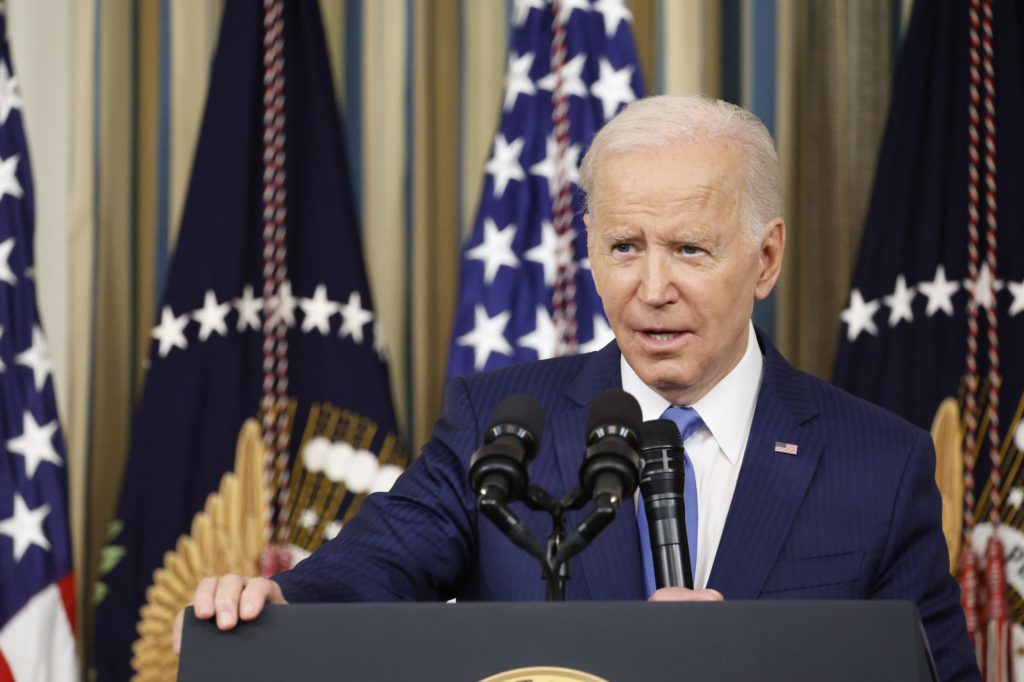
(Bloomberg) — From fighting climate change to protecting consumers, President Joe Biden’s agenda will depend on a flurry of federal regulations if the midterm elections hand Republicans control of Congress.

With little chance of legislative compromise on major initiatives under a House (and possibly a Senate) controlled by Republicans, the White House will be forced to rely on federal agencies to advance much of Biden’s priorities over the next two years, racing to finalize major regulations and craft new ones during his remaining time in office.

The potential change in power — the GOP appears poised to take back control of at least take the House — deals a blow to Biden’s ability to make good on a promise to provide $11.4 billion in international climate finance by 2024 just as the president arrives Friday at the UN climate summit in Egypt.

“There is a great deal the Biden administration can do with purely executive authority at this point and now is the time for them to begin,” Senator Sheldon Whitehouse, a Rhode Island Democrat, told reporters Thursday. 

Under a divided government, Biden’s climate ambitions will increasingly be pursued through the executive branch. The Environmental Protection Agency already is drawing on longstanding legal authority to write new regulations clamping down on greenhouse gas emissions from oil wells, power plants and vehicles. And the Inflation Reduction Act gave the Interior Department an explicit mandate to curtail methane leaks from oil and gas infrastructure on federal land, empowering the agency to set new limits.

“I don’t think the elections will change the fact that EPA has legislative authority” to “pursue the reduction of greenhouse gas emissions to protect public health and protect the planet,” EPA Administrator Michael S. Regan told Bloomberg TV on Thursday. “We’re going to continue to move forward and do our job.”

Prominent Democrats are encouraging Biden to go even further and use his executive powers to impose a carbon border tax, mandate carbon capture for major emitters and even declare a climate emergency that would allow him to shut down oil exports and route federal funding to renewable energy projects.

It’s not just game changing environmental regulations that are in the pipeline. Biden can use executive authority to implement other major parts of his agenda in areas like consumer protection, health care, student debt, and workers’ rights.

The administration is moving forward with a pair of regulations to enhance airline passenger consumer protections by requiring more transparency in ancillary fees and expanding the rights to refunds for canceled flights. Some Democratic lawmakers have proposed similar legislative action, but a GOP majority in either chamber would make that less likely.

Other major regulations include a Department of Labor proposal that makes it easier for gig workers to be classified as employees that threatens gig-dependent companies like Lyft Inc. and Uber Technologies Inc. Other rules in the works take aim at everything from telemarketers to organic pet food. 

To be sure, the Biden administration was planning to advance major rules, including those limiting greenhouse gas emissions from vehicles and oil wells, without the help of Congress, and federal agencies are busy working to implement programs created or expanded by the Inflation Reduction Act. But the election results put a premium on all that activity. 

Republicans’ lackluster performance in the midterms, in which an expected “red wave” never formed, may help motivate the White House to keep churning out more rules, said Susan Dudley, director of the George Washington University Regulatory Studies Center. The administration could start to craft new regulations in areas like social media and crypto currency, Dudley said.

“I really do think that the administration is interpreting this election as being a reinforcement they are on the right track,” said Dudley, who served as administrator of the White House Office of Information and Regulatory Affairs under President George W. Bush. “I wouldn’t be surprised if we saw an increase in regulatory actively.”

But the clock is ticking: Regulations finalized in the final months of an administration are particularly vulnerable to being overturned under the Congressional Review Act, using just a simple majority vote in the House and the Senate.

There’s also a risk to an approach that cuts Congress out of the picture. Major regulations will face inevitable legal challenges, and if a Republican wins the White House in two years, that next administration may opt not to vigorously defend Biden-era rules in court. 

“Real policy is getting made through regulation and every one of consequence will be challenged legally,” said Dan Bosch, director of regulatory policy for the American Action Forum, a Republican-aligned think tank. “I think we will see a lot of challenges to most if not all of the rules that come out over the next few years.”

–With assistance from Jennifer A. Dlouhy and Alan Levin.

More stories like this are available on bloomberg.com

©2022 Bloomberg L.P.

Schneider Ups Aveva Bid to £9.9 Billion on Investor Pressure

(Bloomberg) — Schneider Electric SE has agreed to raise its offer for Aveva Group Plc following push back from investors who wanted a higher price for the UK software company. 

The offer of £32.25 per share values Aveva at £9.86 billion ($11.6 billion), Schneider said in a statement on Friday. That’s up 4% from a previous bid that priced the industrial software maker at about £9.5 billion. 

Schneider, which already owns about 59% of Aveva, said the latest price will be its final offer unless a rival bidder emerges. The French industrial conglomerate was battling claims from some investors that its bid was opportunistic after a rout in technology stocks this year. The stock had declined 47% in the 12 months before Bloomberg reported that Schneider was weighing the bid. 

Hedge fund Davidson Kempner Capital Management, which was building a stake in Aveva, as well as M&G and Canada’s Mawer Investment Management, were among the shareholders who resisted the deal at the previous price.

Read More: Hedge Fund Seeks Higher Price on £9.5 Billion Aveva Deal 

Shareholders will also be able to receive an interim dividend of 13 pence per share, which was announced earlier this week, Schneider said in the statement. A vote on the deal is scheduled for Nov. 25. 

Aveva shares rose 23 pence to £31.68 in London trading at 2:46 p.m. Schneider rose 84 cents to €141.42. 

Cambridge, England-based Aveva provides software tools for utilities, oil and gas producers, transportation firms and other companies, according to its website. 

Schneider took control of Aveva after agreeing in 2017 to combine its own industrial software business with the British company. Aveva has since bulked up further through acquisitions, buying SoftBank Group Corp.-backed industrial software maker Osisoft in 2020 at a valuation of $5 billion including debt. 

Aveva’s original deal with Schneider prevented the French company from boosting its stake for two years after the deal closed, and capped its holding below 75% for a further 18 months unless certain conditions were fulfilled.

(Updates throughout with context.)

More stories like this are available on bloomberg.com

©2022 Bloomberg L.P.

Trump-Tied SPAC Has Wild Ride Triggered by Midterm Elections

(Bloomberg) — The blank-check company trying to merge with Donald Trump’s nascent social-media business is more than ever a bet on the former president’s political prospects.

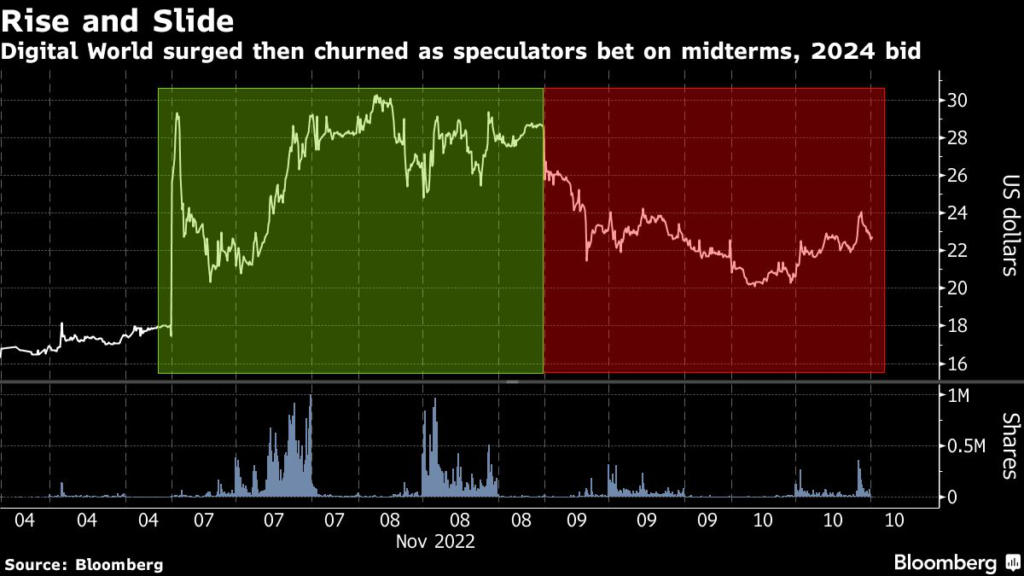
The shares of Digital World Acquisition Corp. soared 66% Monday, after Trump — campaigning for candidates he endorsed in the midterm elections — teased a possible announcement next week that he’s running for the White House again. The stock tumbled 20% Wednesday after those politicians fared worse than expected, prompting some pundits to say the Republican Party was moving on from Trump.

Shares will be in focus again today after Trump lashed out at Florida Governor and chief Republican rival Ron DeSantis on Thursday.

The volatility shows how closely tied Digital World is to Trump’s perceived political power, with all the risks that come with that. The special purpose acquisition company is one of the few remaining pockets of speculative fervor among individual investors after share prices plunged over the past year, largely bringing an end to the meme-stock era.

“DWAC’s performance has been intrinsically tied to Trump and the prospect of him running — and being successful — in 2024,” said Craig Erlam, senior market analyst at Oanda. Despite the setback for Trump in the midterms, interest in the stock could remain as “the expectation will be that people will flock to the platform in order to hear what he has to say.”

Digital World went public in September 2021 at the tail-end of a frenzy for blank-check companies. SPACs have a limited time to merge with a takeover target or they must return to investors the traditionally $10-a-share initial public offering price, plus interest. Even as risks mount to the planned deal with Trump’s media company, Digital World trades at a 123% premium to its cash value amid a flurry of buying from retail traders and Wall Street pros. It remains the best-performing SPAC on the market.

Buyers of the stock are ignoring a potential reckoning if the deal isn’t completed. The SPAC’s sponsors have failed to corral its retail trader base to vote on an extension to the deadline. Both the US Securities and Exchange Commission and Justice Department have launched probes that the companies have warned could derail the tie-up.

And while Twitter Inc. is in turmoil of its own, another risk for Trump Media and its social media platform, Truth Social, is Elon Musk signaling that he would welcome the former president back to Twitter after he was banned in January last year.

“The plethora of investigations into DWAC by several federal agencies and the apathy of its shareholders” makes it likely that the deal will fall apart, said Accelerate Financial Technologies Inc. CEO Julian Klymochko. Such a failure will leave investors with a roughly $10.40 payout, Klymochko believes, more than 50% below where the stock closed on Thursday.

Digital World didn’t immediately respond to a request for comment outside of US business hours.

The reawakened trade garnered attention from retail traders who plowed $11 million into the SPAC over the past week, data from Vanda Research show, the most since earlier this year. Still, that accounted for less than 0.2% of total retail buying over that stretch, the data show.

Tech Chart of the Day

The Nasdaq 100 Index surged 7.5% Thursday after data showed inflation cooled more than forecast in October, suggesting that one of the biggest headwinds facing the technology sector — aggressive rate hikes — may ease. The tech heavy index has not rallied as much following an inflation data announcement in at least 20 years. The index, which had seen about $5.7 trillion wiped off in market value this year, was trading higher on Friday.

Top Tech Stories

  • Elon Musk, in his first address to Twitter Inc. employees since purchasing the company, said bankruptcy was a possibility if it doesn’t start generating more cash, according to people familiar with the matter.
    • The issue of Twitter users impersonating big brands encroached on Musk’s personal space on Friday, when a purported Tesla Inc. account, complete with Blue verification check mark, started posting about the company.
  • Amazon.com Inc. has developed a robot capable of identifying and handling individual items, a milestone in the e-commerce giant’s efforts to reduce its reliance on human order pickers.
  • Advanced Micro Devices Inc., the second-biggest maker of computer processors, announced an update to its server chip lineup aimed at winning more share from rival Intel Corp. in a lucrative area.
  • Chip delivery times shrank by six days in October, the biggest drop since 2016, adding evidence that demand for electronic components is falling quickly.

–With assistance from Subrat Patnaik, Tom Contiliano and Brad Skillman.

(Updates to market open.)

More stories like this are available on bloomberg.com

©2022 Bloomberg L.P.

Cryptocurrencies Extend Losses as FTX Commences US Bankruptcy

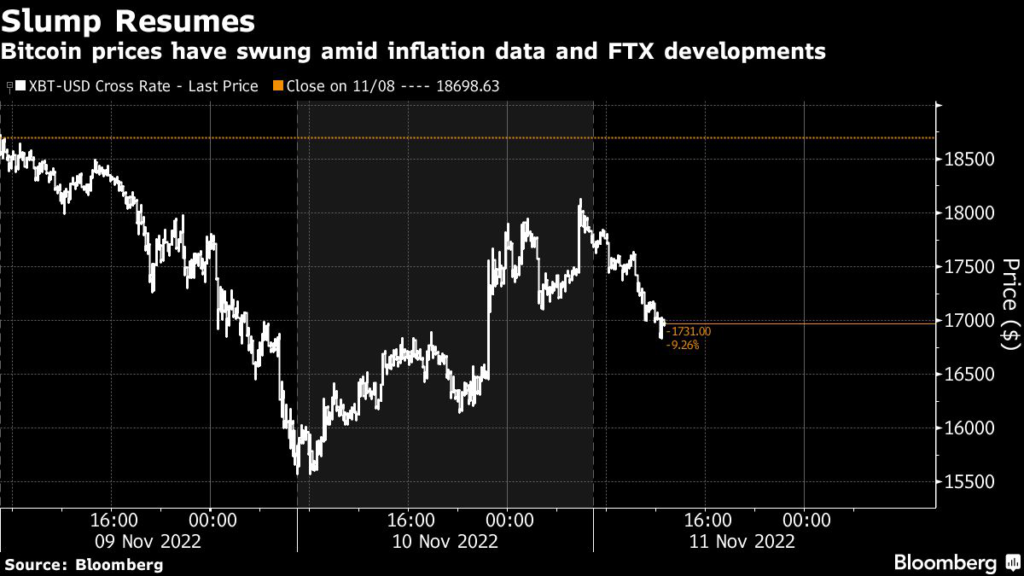
(Bloomberg) — Crypto markets extended losses on Friday morning after FTX Group said it has commenced bankruptcy proceedings in the US and that Sam Bankman-Fried has resigned as chief executive officer.

Bitcoin dropped as much as 8% to $16,376 as of 9:34 a.m. in New York. The largest digital asset by market cap had jumped 13% on Thursday as the latest CPI print came in lower than expected, fueling expectations that the Federal Reserve would slow the pace of interest-rate hikes.

Ether fell as much as 9.2%. FTX’s FTT token declined up to 50% on Friday. 

FTX.com said it filed for Chapter 11 bankruptcy in Delaware, capping a swift reversal of fortune for the crypto exchange led by Bankman-Fried.

“This is moving every minute because traders are adjusting their positions,” said Garry Krugljakow, founder of 0VIX and GOGO Protocol, an open-source DeFi protocol for asset management and savings. “I think eventually we will come back from this. This is somewhat expected.”

FTX founder Sam Bankman-Fried reportedly faces an investigation by the US Securities and Exchange Commission, and crypto lender BlockFi has halted withdrawals due to the turmoil. That’s on top of the Bahamas freezing FTX.com’s assets, and the general counsel of FTX.US telling staff he’s working with advisers to preserve what they can of the exchange.

Friday morning, Justin Sun’s Tron said his firm is prepared to provide billions of dollars to FTX.com should it go through with a deal to save the embroiled exchange. The uncertainty is likely to roil crypto markets for a while.

FTX Latest: EU License Under Threat as Asset Freeze Fuels Crisis

“We’re going to see definite lower volumes because people are going to hold back at this moment in time,” Coinbase Chief Financial Officer Alesia Haas said on Bloomberg Television. 

For crypto market prices: CRYP; for top crypto news: TOP CRYPTO

–With assistance from Sonali Basak.

More stories like this are available on bloomberg.com

©2022 Bloomberg L.P.

Fired UK Twitter Staff Tap London Law Firm for Potential Suits

(Bloomberg) — Twitter Inc.’s UK staff, fired shortly after Elon Musk bought the social media firm, have sought out employment advice about potential lawsuits from a London law firm that’s set to represent a “substantial” number of them.

Jo Keddie, a lawyer at Winckworth Sherwood LLP, said the firm has spoken with several dozen Twitter employees, who are still completely removed from the IT systems and office. She said her team was investigating what had happened, which could result in a slew lawsuits if any of Twitter’s actions didn’t comply with strict employment rules.

Musk dismissed around 3,700 of its global workforce soon after he took over the firm, one of many sweeping changes he’s made to the organization. In India, Musk fired more than 90% of its staff. However, he later did a U-turn and asked for some staff to come back. 

“We are presently taking many on as clients,” Keddie said in an emailed statement, declining to give an exact number as the situation was changing day-to-day. “We anticipate that a substantial number of those affected employees will be represented by us.”

In the UK, where Twitter employed 281 people as of last year, employers are required by law to prove there are grounds to remove workers from their jobs. 

If more than 20 are let go from a firm, the company needs to follow consultation requirements, including reporting to the government and allowing at least 30 days between starting the process and dismissal. 

Twitter spokespeople didn’t respond to a request for comment.

More stories like this are available on bloomberg.com

©2022 Bloomberg L.P.

Tron Is Ready to Provide FTX With Billions in Aid, Sun Says

(Bloomberg) — Tron is prepared to provide billions of dollars in aid to FTX.com should it go ahead with a deal to rescue the ailing cryptocurrency exchange, founder Justin Sun said.

FTX is currently nursing a shortfall of as much as $8 billion, with its founder Sam Bankman-Fried telling investors on Wednesday that the business will require at least $4 billion in fresh funding to remain solvent. Previous rescue talks with rival exchange Binance fell through on Wednesday, with Sun stepping in to hold discussions shortly after.

When asked whether Tron would have the funds to cover FTX’s financial shortfall, Sun said the firm is prepared to cover the loss once due diligence is done. “I don’t have an exact number, but on our side we know the concept, and I think at this kind of level there is something on the table here,” Sun told Bloomberg TV in an interview on Friday.

Read more: FTX Reaches Pact With Tron to Let Users Withdraw Some Tokens (1)

Tron is a base-layer blockchain network with roughly $10 billion in total locked value, deposited via the various tokens and applications built upon its code. Its hallmark token TRX had a market value of around $5.3 billion on Friday, according to pricing data from CoinGecko. 

The platform launched a plan with FTX on Thursday to allow users to withdraw some tokens from the exchange, using an initial capital injection of $13 million. Eligible tokens are those that hail from the Tron ecosystem, including TRX.

Sun said he is taking “a different approach” to that of Binance in his discussions with Bankman-Fried. “We will take care of our customers first and then we will start to measure it and see what we can do here,” he said. “We don’t want to come in too much in the first step.”

(Updates with context around Tron in the fourth and fifth paragraphs.)

More stories like this are available on bloomberg.com

©2022 Bloomberg L.P.

Bankman-Fried’s ‘Effective Altruism’ Implodes With His Fortunes

(Bloomberg) — With Sam Bankman-Fried’s crypto empire on the brink of utter collapse, the lofty promises he made about becoming an influential up-and-coming player in the world of philanthropy suddenly carry little weight.

That reality has hit the FTX Foundation, where its Future Fund team resigned.

“We are devastated to say that it looks likely that there are many committed grants that the Future Fund will be unable to honor,” the team wrote in a post on the EA Forum, a community for members of the philanthropic movement known as effective altruism. “We are so sorry that it has come to this. We are no longer employed by the Future Fund, but, in our personal capacities, we are exploring ways to help with this awful situation.”

The five people who signed the post, including William MacAskill, who co-founded the effective altruism movement to which Bankman-Fried subscribes, added that they have “fundamental questions about the legitimacy and integrity of the business operations” that funded the foundation.

The idea behind effective altruism is to try to have the greatest impact by carefully spending money to solve problems. Bankman-Fried, 30, embarked this year on bailouts of flailing crypto projects including Celsius and Voyager Digital. Another one, BlockFi, is now halting withdrawals due to “a lack of clarity” about the status of its onetime savior’s empire.

It’s just another way in which the rapid downfall of Bankman-Fried is reverberating around the globe. He’s being investigated by the US Securities and Exchange Commission for potential violations of securities rules, while his major assets have become worthless. The Bloomberg Billionaires Index, which at the start of this week estimated Bankman-Fried’s net worth at $15.6 billion, now considers him to have no material wealth.

The crypto luminary nicknamed SBF had big plans: the vast majority of his fortune would be dedicated to charity. He has been on philanthropic boards, funded advocacy groups and journalism nonprofits and earlier this year signed the Giving Pledge, a promise to send the majority of his wealth to charity in his lifetime or will. 

His letter for the Giving Pledge is just four sentences: “A while ago I became convinced that our duty was to do the most we could for the long run aggregate utility of the world,” it begins. “In the end, it’s the work my friends and colleagues at foundations do that matters the most. A more just world would shine a brighter light on them. In this world, I’m honored to be able to support their work.”

Or, put even more succinctly to Bloomberg Markets earlier this year: “I don’t want a yacht.”

The comments were seen by politicians and philanthropists as a breath of fresh air for someone who became so rich so fast. 

Effective Altruism

Before his downfall, Bankman-Fried focused his charitable endeavors on effective altruism. He has sat on the board of the Centre for Effective Altruism and Animal Charity Evaluators, a nonprofit that uses effective altruism for animal welfare. 

The philosophical movement, which Elon Musk has also joined recently, is what Bankman-Fried said he’d be funding with his billions of dollars — and crypto. 

Bankman-Fried told Markets that he gave away $50 million last year, including to pandemic relief in India and initiatives to fight climate change. This year he said he would donate at least a few hundred million dollars, and as much as $1 billion.

It’s unclear whether that ever happened. 

Bankman-Fried had barely gotten started on his charitable career. As of earlier this year, he donated less to charity than his firm spent on naming rights for the Miami Heat’s arena (cost: a net $90 million over 19 years) and airing a Super Bowl ad with comedian Larry David portraying a curmudgeonly crypto skeptic (an estimated $30 million). 

Now, Miami-Dade County is worried about the firm’s ability to pay, just a month after the FTX logo was placed on the arena’s roof. 

FTX established the FTX Foundation, primarily supported by Bankman-Fried, its website says. The EA Forum had a disclosure on its posts about Bankman-Fried even before the Future Fund team resigned.

“It was announced this week that FTX.com, Sam Bankman-Fried’s exchange, is facing a severe financial crisis,” it said. “The team is concerned for FTX’s individual depositors, who are facing the possibility of severe hardship, as well as about the situation as a whole.”

In tweets Thursday, Bankman-Fried apologized: “I f—ed up.” 

–With assistance from Zeke Faux.

More stories like this are available on bloomberg.com

©2022 Bloomberg L.P.

Ireland’s Financial Blind Spot Hit by Mass Tech Job Cuts

(Bloomberg) — The wave of job cuts across the technology industry is a particular concern for Ireland and its finances, thanks to its huge exposure to tax revenue from multinational corporations.

The announcement from Meta Platforms Inc. that it’s cutting 13% of its workforce — which would equate to about 350 roles in Ireland — followed news of huge reductions at Stripe Inc. and Twitter Inc. That’s hundreds of jobs lost or at risk within days, with more expected. 

“There will be further layoffs in other companies in the coming weeks,” Deputy Prime Minister Leo Varadkar told Ireland’s parliament Thursday. While the government hasn’t any details, “it’s likely to happen,” he said.

While the technology sector is a big employer in Ireland, the country’s exposure runs far deeper. 

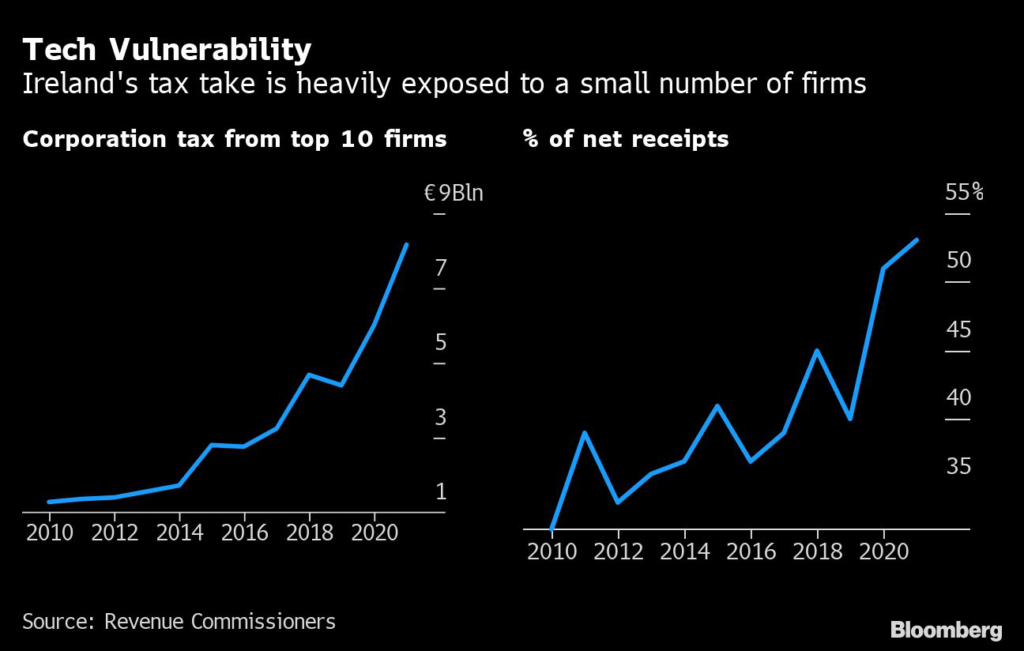
Companies account for about a quarter of tax revenue, and it’s heavily concentrated among a handful of big tech and pharmaceutical firms. More than half of corporate tax receipts come from just 10 businesses, according to Department of Finance analysis.

It’s a reliance that the department has described as a “blind spot,” noting that it can be a volatile income source.

Total corporate tax receipts jumped 30% to €15.3 billion in 2021 and the government expects them to reach €22-€23 billion in 2023.

As a revenue stream, it’s “getting to the point where it’s frightening,” Alan Barrett, director of Ireland’s Economic and Social Research Institute, said this week. “The worry is that it could evaporate.”

It’s not a risk that’s lost on the government, which estimates that up to €10 billion may be vulnerable to a shock. It’s planning to maintain a rainy-day reserve of €6 billion despite pressure to spend more on measures to ease a cost-of-living squeeze.

The energy-bill aid, in the wake of the vast sums spent during the Covid pandemic, means government finances are under strain. 

While the country’s debt ratio is expected to be less than 50% of GDP this year, that’s skewed by multinational activities. Measured against gross national income, it will be about 92%, according to the ESRI.

“Clearly any job loss is a major disappointment,” Minister for Public Expenditure Michael McGrath said in an interview. “But it is a scale of loss that we believe we can absorb. We are close to full employment.” 

Still, in the wake of the tech job shock, the government is finalizing a review of its enterprise policy. 

On Friday, the IDA acknowledged the challenges, but said there’s no indication any major tech firms are planning to leave Ireland entirely.

“The technology base in Ireland has been building for over 60 years and will continue to grow in the future, despite current challenges,” interim Chief Executive Mary Buckley said. “Ireland’s value proposition as a place to do business remains a compelling one.”

Meanwhile, Ireland also faces uncertainty from changes to the way multinational corporations are taxed under an OECD agreement. It stipulates that companies will in part be taxed on where they do business instead of where they book profits. 

The impact of this is hard to quantify, according to the IDA, Ireland’s inward investment agency.

In addition to corporate taxes, the tech slowdown may hit the take from income taxes. Multinationals typically pay higher salaries, so those employees contribute more to the public coffers.

The wave of job cuts has shone a light on the risk, according to the ESRI’s Barrett. “When you see people at Twitter and Stripe losing their jobs, income tax is a bit vulnerable as well,” he said.

(Updates with comment from IDA chief executive starting in 14th paragraph)

More stories like this are available on bloomberg.com

©2022 Bloomberg L.P.

Close Bitnami banner
Bitnami